R E S E A R C H A R T I C L E
Open Access
Internet-based cognitive behavioural
therapy for subthreshold depression: a
systematic review and meta-analysis
Ting Zhou, Xue Li, Ye Pei, Jianan Gao and Junhui Kong
*Abstract
Background:Subthreshold depression has a considerable impact on individuals’subjective well-being and psychosocial functioning and is a predictor of major depressive disorder. Internet-based cognitive behavioural treatments (iCBTs) have been used to reduce the symptoms of subthreshold depression. This meta-analysis aims to systematically review evidence indicating the efficacy of iCBT programs on the improvement of depressive symptoms in this population.
Methods:Articles published from January 2005 to July 2016 were searched in the following databases: Medline, PubMed, Web of Science, ScienceDirect, PsycArticles and the Cochrane Central Register of Controlled Trials. Only randomized controlled trials comparing the efficacy of iCBT programs with control groups for participants with subthreshold depression were selected. Both quantitative and qualitative analyses were conducted to examine the efficacy of iCBT interventions.
Results:Tenarticles from 8 randomized controlled trials were identified in this systematic review. The results suggested that iCBT programs had a superior efficacy compared to results from a non-active control group at the post-intervention stage (SMD =−0.28, CI [−0.42,−0.14]; I2= 49 %). However, evidence on the long-term efficacy of iCBT programs is still insufficient and needs further exploration.
Conclusion:There has been substantial evidence that iCBT intervention has a superior short-term efficacy compared to the results of control groups, while its long-term efficacy of iCBT for subthreshold depressive symptoms is inconclusive and must be examined in further research.
Trial registration:The protocol of this review has been registered with the International Prospective Register of Systematic Reviews (PROSPERO), Protocol No. CRD42015023390.
Keywords:Internet-based cognitive behavioural treatment, Subthreshold depression, Randomized controlled trial, Meta-analysis
Background
Depression is a global public health concern. In addition to depression with a full clinical diagnosis, subthreshold forms of depression also exist and are more prevalent [1–3]. Subthreshold depression has been defined in a wide range of forms, varying in the number, severity and duration of depressive symptoms [4, 5]. Generally speak-ing, people with subthreshold depression score above a certain cut-off in self-rating depression scales or exhibit at least one of the core symptoms for depression as well as one other symptoms, but do not meet the criteria of
the Diagnostic and Statistical Manual of Mental Disorders (DSM) for major depression [6, 7].
The results of previous research have shown that the prevalence of subthreshold depression in communities is 7.3 to 23.1 % [8, 9]. The prevalence in some populations, such as the elderly or patients suffering from chronic diseases, might be higher [10].
Although the criteria of major depression are not met, subthreshold depression has a considerable impact on individuals’subjective well-being and psychosocial func-tioning [2, 3, 11, 12]. People with subthreshold depres-sion report nearly the same degree of impairment in their health status and functional status as do those with major depression [13, 14]. In addition, subthreshold * Correspondence:[email protected]
School of Management, Beijing University of Chinese Medicine, #11 North Three-Ring Road East, Chaoyang District, Beijing, China 100029
© The Author(s). 2016Open AccessThis article is distributed under the terms of the Creative Commons Attribution 4.0 International License (http://creativecommons.org/licenses/by/4.0/), which permits unrestricted use, distribution, and reproduction in any medium, provided you give appropriate credit to the original author(s) and the source, provide a link to the Creative Commons license, and indicate if changes were made. The Creative Commons Public Domain Dedication waiver (http://creativecommons.org/publicdomain/zero/1.0/) applies to the data made available in this article, unless otherwise stated.
Zhouet al. BMC Psychiatry (2016) 16:356
depression has been considered as a risk factor for the development of major depression and other psychiatric disorders [6, 15]. Therefore, it is necessary to develop
appropriate interventions to manage subthreshold
depression problems.
Cognitive behavioural therapy (CBT) is one of the main psychological interventions that are used to treat depression. The traditional face-to-face CBT is effective in reducing symptoms of subthreshold depression and preventing major depression and the magnitude of effect size is small to moderate [7, 11, 16–18]. An initial evi-dence shows that psychological treatments such as CBT tend to be preferred by many individuals with elevated depressive symptoms, compared to medication [19]. However, given the limited access to qualified therapists and relatively high cost, it would be difficult to have face-to-face CBT interventions benefit each individual with subthreshold depression. Moreover, people with mild depressive symptoms might also be less motivated to seek intensive treatment. Based on the stepped care model to manage depression advocated by the National Institute for Health and Clinical Excellence, UK [20], the treatment of individuals with mild to moderate depressive symptoms could start with low-intensity psychological in-terventions. Internet-based cognitive behavioural therapy (iCBT) is such a less intensive intention compared to the face-to-face therapy.
ICBT programs are designed based on theories of cog-nitive behavioural therapy and usually include contents of psycho-education, cognitive restructuring, behaviour monitoring, and behaviour activation, among others. These programs are basically self-help interventions which are delivered in text, audio files and video clips. Some programs are entirely self-help programs without any human contact and support, while others involve therapist guidance to generate greater efficacy. Because iCBT programs can be provided anywhere and anytime as long as the Internet is accessible, it is possible to benefit a large number of people who otherwise would not seek treatment. Thus, effective iCBT program is an important addition to traditional face-to-face psychother-apy and an option used in the primary healthcare system.
In terms of the efficacy of iCBT interventions, there is evidence that iCBT is effective in improving symptoms of patients with major depressive disorder [21–25]. It is also superior to CAU (care as usual) alone in reducing mild to moderate depressive symptoms [26]. Interven-tions with therapist support have greater efficacy against programs without any support [21, 22]. Preliminary evidence shows that guided iCBT interventions could produce equivalent or even greater overall effects for
depression as regular face-to-face CBT [27, 28].
Although there have also been a number of randomized controlled trials examining the effectiveness of iCBT
programs on reducing depressive symptoms of people with subthreshold depression, the results are inconsistent. Some of them support the effectiveness of iCBT [29, 30], while others show that the improvement of symptoms is not significant [31]. Currently, there are no systematic reviews that evaluate the effectiveness of iCBT pro-grams in improving symptoms in populations with subthreshold depression.
Objectives
The aim of this systematic review is to evaluate evidence of the effectiveness of iCBT programs on improving the symptoms of subthreshold depression compared to con-trol groups.
Methods
Criteria for considering studies for this review Types of studies
Only randomized controlled trials (RCTs) containing at least one group of participants who received iCBT were included in the present study. Single group studies and non-randomized studies were excluded.
Types of participants
We included participants with subclinical depressive symptoms, as indicated by elevated depression scores on a standardized depression inventory.
We excluded (1) studies with subjects who were diag-nosed with major depressive disorder or dysthymia; (2) studies with subjects reportingsuicidal thoughts; (3) studies involving patients with other primary mental illness, patients with a primary diagnosis of alcohol or drug dependence or patients experiencing psychotic symptoms.
Types of interventions
Trials applying various iCBT programs were included in the present study. ICBT programs were defined as inter-ventions based on theories of cognitive behavioural therapy, not conducted at a clinic, and delivered to the participants via the internet.
Types of comparators (control groups)
Types of outcome measures
Primary outcomes Depression levels after the interven-tion program and during the follow-up were used as the primary outcome variables to indicate the effectiveness of iCBT programs.
Secondary outcomes Because anxiety problems have a high co-morbidity with depression, anxiety symptoms after the interventions and during the follow-up stages were included as secondary outcome variables.
In addition to anxiety levels, general psychological distress, social functioning and quality of life, which were closely correlated with individuals’ mental health, were also used as secondary outcome variables.
Data sources and searches The Cochrane Central Register of Controlled Trials in the Cochrane Library, Medline, PubMed, Web of Science, ScienceDirect and PsycArticles were searched in June 2015. The searches
were limited to the years 2005–2015. Additional
literature search was done in July 2016 to find the latest articles. The search terms related to subthreshold depression were “subclinical depression”, “subthreshold depression”, “minor depression”, “depressive mood” and “depression”. Intervention related terms were “ internet-based cognitive behavioural therapy”, “web-based cogni-tive behavioural therapy” and “computerized cognitive behavioural therapy”. Another term searched for was “randomized controlled trial”. The initial search was limited to the title, abstract and keywords. Reference lists of recent systematic reviews on iCBT were also manually searched.
Data extraction The results of the various searches were independently reviewed by three authors (GJ, LX, PY). Titles and abstracts were reviewed first to exclude non-RCTs and studies including participants diagnosed with major depressive disorder, dysthymia or other pri-mary mental illnesses. Then, full texts were retrieved, and more details were checked to determine whether the article met the inclusion criteria. Disagreement was resolved by group discussion with another two authors (ZT, KJ). The procedure for the selection of studies was recorded, and reasons for excluding studies were noted.
Four authors (GJ, LX, PY, ZT) participated in the data extraction process. The authors were assigned into small groups to ensure that data from one article was inde-pendently extracted by two authors. Disagreement was also resolved by group discussion.
As thefollowing data were extracted:
(1)The number and characteristics of participants (2)Descriptions of the intervention group and the
control group
(3)Symptoms of depression at baseline, the post-intervention stage and the follow-up stage (if applicable) (4)Secondary outcome variables such as anxiety
symptoms, psychological distress, social functioning and quality of life at baseline, the post-intervention stage and the follow-up stage (if applicable) (5)Data used to assess the risk of bias, such as the
method of randomization, the drop-out number and the method used to handle incomplete data
Depressive symptoms and other outcome variables, including anxiety symptoms and social functioning, were input into RevMan 5.1 for outcome measures.
Risk of bias assessment The quality of randomized controlled trials was assessed using the Cochrane risk of bias tool. As recommended by the Cochrane Handbook for Systematic Reviews of Interventions, sequence gener-ation, allocation concealment, blinding of participants, personnel, outcome assessors, incomplete outcome data, se-lective outcome reporting, and other threats to validity were assessed independently by two of the four authors (GJ, LX, PY, ZT). Disagreement was resolved by group discussion.
Strategies for data analysis RevMan 5.1 was used to analyse the data. A study-level meta-analysis was per-formed. The selection of a fixed effect model or a random effect model depended on the results of homogeneity ana-lysis. Continuous data were expressed as a weighted mean difference or a standardized mean difference (SMD), depending on the similarity of scales measuring an out-come. A narrative synthesis was also conducted.
Results
Study selection
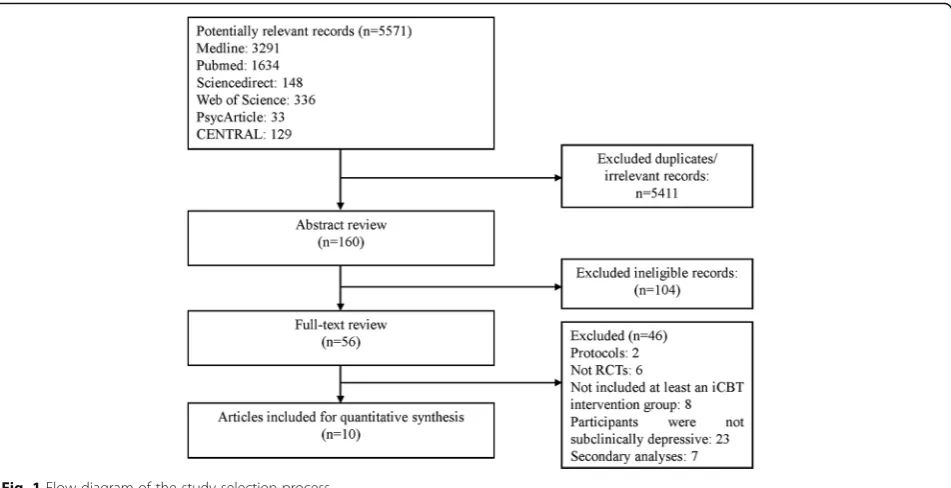
The initial search produced 5571 potentially relevant records. After removing the duplicates and obviously irrelevant records by reading the titles, 160 articles were identified. An abstract review disqualified 56 of them from the full text review. Finally, 10articles from 8 studies meeting the inclusion criteria were selected for this sys-tematic review. The procedure for study selection and the reasons for exclusion are displayed in Fig. 1.
Study characteristics
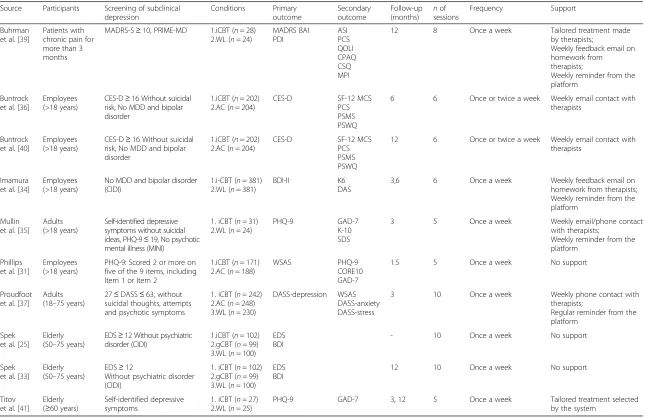
Characteristics of the included studies are listed in Table 1. Three articles from 2 studies recruited elderly participants, one study focused on individuals with chronic pain, and there were no special limits of partici-pants in other studies. The approaches for subthreshold depression screening varied among the studies. In some studies, the subthreshold depression criteria were clearly defined. Only participants who scored above certain depression scale cut-off scores and who did not receive a
diagnosis of major depression were included [32–34]. In other studies, although participants with severe depres-sive symptoms (e.g., suicidal ideation and attempts) and extremely high depression scores were usually excluded, the exclusion of major depression and dysthymia diagno-ses was not explicitly reported. The identification of sub-threshold depression was determined by checking participants’depression levels at baseline. We found that depression levels of the participants in these studies were mild to moderate compared with specific depres-sion scale cut-offs. Therefore, we considered that the participants in the included studies were very likely within the range of subthreshold depression.
Several iCBT programs were found in the included studies. The main contents included psycho-education, cognitive restructuring, behavioural activation and other related skills. The included programs lasted 3–10 weeks, with a frequency of one or two sessions per week. Participants usually took the courses at home or other places with Internet access on an individual basis. Some programs are entirely self-help intervention programs, while others are therapist-guided. Online group discus-sion was included in some studies as well. Examples of these courses include “Coping with depression” [32], “MoodGYM” [31], “e-couch” [30], “The UniWellbeing Course”[35] and“GET.ON Mood Enhancer”[36].
Five studies (6 articles) compared iCBT to the waiting list group only, and 2 studies (3 articles) compared iCBT to the attention control group only, in which participants were provided materials on how to cope with depression. In Proudfoot et al. [37], both the attention control group and the waiting list group were involved [37].
Depression was measured by the BDI (Beck Depres-sion Inventory) in 2 studies (3 articles), the PHQ-9 (Patients Health Questionnaire) in 3 studies (3 articles), the MADRS (Montgomery-Åsberg Depression Rating Scale), CES-D (Centre of Epidemiology Studies-Depression) and the depression subscale of the DASS (Depression, Anxiety and Stress Scales) in 1 study. Secondary outcomes were measured in 7 included studies (8 articles), as listed.
Risk of bias in the included studies
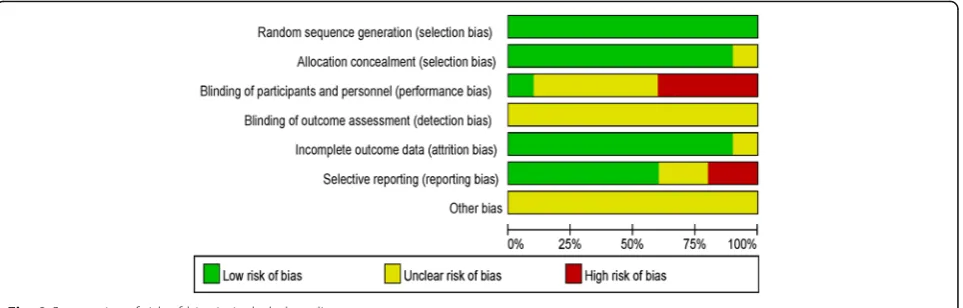
The results of the risk of bias assessment are shown in Fig. 2. Selection bias was assessed by the participant randomization and allocation procedures. The majority of included studies clearly described the randomization methods used and provided adequate information on the randomization concealment. Therefore, the selection bias was generally low.
Performance bias refers to the risk of participants or clinical personnel being aware of the treatment alloca-tion [38]. A high risk of such bias is difficult to avoid in studies involving a self-help psychological intervention group and a waiting list control group. For those studies using a low-intensity intervention control group, such as the attention control group, it is possible to hide the grouping assignment from the participants [31]. In the 8 included studies, participants were directly informed of which groups they were assigned to in 2 studies (3 arti-cles) [36, 39, 40]; grouping assignment was hidden in 1 study [31]; and the rest studies (6 out of 10 articles) did not clearly describe whether the participants and the ex-perimenters were blinded to the condition assignment, leaving the risk of performance bias unclear.
[image:4.595.62.538.87.331.2]Table 1Included study characteristics
Source Participants Screening of subclinical depression Conditions Primary outcome Secondary outcome Follow-up (months) nof sessions Frequency Support Buhrman et al. [39]
Patients with chronic pain for more than 3 months
MADRS-S≥10, PRIME-MD 1.iCBT (n= 28) 2.WL (n= 24)
MADRS BAI PDI ASI PCS QOLI CPAQ CSQ MPI
12 8 Once a week Tailored treatment made
by therapists;
Weekly feedback email on homework from therapists;
Weekly reminder from the platform
Buntrock et al. [36]
Employees (>18 years)
CES-D≥16 Without suicidal risk, No MDD and bipolar disorder
1.iCBT (n= 202) 2.AC (n= 204)
CES-D SF-12 MCS
PCS PSMS PSWQ
6 6 Once or twice a week Weekly email contact with therapists
Buntrock et al. [40]
Employees (>18 years)
CES-D≥16 Without suicidal risk, No MDD and bipolar disorder
1.iCBT (n= 202) 2.AC (n= 204)
CES-D SF-12 MCS
PCS PSMS PSWQ
12 6 Once or twice a week Weekly email contact with therapists
Imamura et al. [34]
Employees (>18 years)
No MDD and bipolar disorder (CIDI)
1.i-CBT (n= 381) 2.WL (n= 381)
BDI-II K6
DAS
3,6 6 Once a week Weekly feedback email on
homework from therapists; Weekly reminder from the platform
Mullin et al. [35]
Adults (>18 years)
Self-identified depressive symptoms without suicidal ideas, PHQ-9≤19, No psychotic mental illness (MINI)
1. iCBT (n= 31) 2.WL (n= 24)
PHQ-9 GAD-7
K-10 SDS
3 5 Once a week Weekly email/phone contact
with therapists;
Weekly reminder from the platform
Phillips et al. [31]
Employees (>18 years)
PHQ-9: Scored 2 or more on five of the 9 items, including Item 1 or Item 2
1.iCBT (n= 171) 2.AC (n= 188)
WSAS PHQ-9
CORE10 GAD-7
1.5 5 Once a week No support
Proudfoot et al. [37]
Adults (18–75 years)
27≤DASS≤63; without suicidal thoughts, attempts and psychotic symptoms
1. iCBT (n= 242) 2.AC (n= 248) 3.WL (n= 230)
DASS-depression WSAS DASS-anxiety DASS-stress
3 10 Once a week Weekly phone contact with
therapists;
Regular reminder from the platform
Spek et al. [25]
Elderly (50–75 years)
EDS≥12 Without psychiatric disorder (CIDI)
1.iCBT (n= 102) 2.gCBT (n= 99) 3.WL (n= 100)
EDS BDI
- 10 Once a week No support
Spek et al. [33]
Elderly (50–75 years)
EDS≥12
Without psychiatric disorder (CIDI)
1. iCBT (n= 102) 2.gCBT (n= 99) 3.WL (n= 100)
EDS BDI
12 10 Once a week No support
Titov et al. [41]
Elderly (≥60 years)
Self-identified depressive symptoms
1. iCBT (n= 27) 2.WL (n= 25)
PHQ-9 GAD-7 3, 12 5 Once a week Tailored treatment selected
by the system
Note:ACattention control,ASIAnxiety Sensitivity Index,BAIBeck Anxiety Inventory,BDIBeck Depression Inventory,CES-DCentre of Epidemiology Studies-Depression,CIDIComposite International Diagnostic Interview, CORE10Clinical Outcomes in Routine Evaluation,CPAQChronic Pain Acceptance Questionnaire,CSQCoping Strategies Questionnaire,DASSThe Depression, Anxiety and Stress Scales,DASThe Dysfunctional Attitudes Scale,EDSEdinburgh Depression Scale,gCBTgroup cognitive behavioural therapy,GAD-7Generalized Anxiety Disorder - 7 items,GHQgeneral health questionnaire,iCBTinternet-based cognitive behavioural therapy, K-6Kessler’s 6-item psychological distress scale,K-10Kessler’s 6-item psychological distress scale,MADRSMontgomery-Åsberg Depression Rating Scale,MINIMini International Neuropsychiatric Interview,MPI Multidimensional Pain Inventory,PCSPain Catastrophizing Scale,PDIPain Disability Index,PHQPatient Health Questionnaire,PSMSPearlln Mastery Scale,PSWQPenn State Worrying Questionnaire,QOLIQuality of Life Inventory,SDSSheehan Disability Scales,SF-12 MCSSF-12 Health Survey Mental Health Composite Subscale,SF-12 PCSSF-12 Health Survey Physical Health Composite Subscale,WSASThe Work and Social Adjustment Scale,WLwaiting list
Regarding the attrition bias, it is of great importance because of the relatively high dropout rate of the online intervention programs. Most of the included studies (7 out of 8) reported on efforts made to avoid this bias. For example, characteristics of the participants who did not complete the programs were compared to those of participants who completed the programs in most studies. This procedure ensured that the non-completers did not differ from the completers in terms of demographic features and mental health sta-tus at baseline. In addition, missing values were prop-erly imputed in the statistical analyses in most studies. Hence, the risk of attrition bias in most stud-ies was low.
Selective reporting bias was evaluated by comparing the reported outcome variables and those proposed in the protocols. Seven out of 8 studies provided clinical trial registration numbers, and all these research proto-cols were available. No differences in reported outcomes and proposed outcomes were found in 5 studies.
Primary outcome: effects on depressive symptoms At the post-intervention stage
All the eight included studies provided the depression scores of the iCBT groups and control groups at the end of the interventions. The results of homogeneity analysis for these 8 studies revealed considerable heterogeneities (I2= 86 %). As displayed in Fig. 3, a random effects ana-lysis of 8 studies with a total of 2360 participants found a significant treatment effect in favour of iCBT over con-trol groups (SMD =−0.46, CI [−0.70,−0.22]; I2= 86 %).
In 3 studies using the PHQ-9, the effect of iCBT on depressive symptoms was also significant (MD =−2.99, CI [−4.13,−1.86]; I2
= 93 %). Further, after excluding one study from the meta-analysis (41) to reduce the hetero-geneity, the iCBT group remained superior to the con-trol group in 2 studies using the PHQ-9 (MD =−1.24, CI [−2.54,−0.05]; I2
= 0 %).
At the follow-up stage
Depressive symptoms of the participants were followed up in all the 8 studies. Both qualitative and quantitative syntheses were conducted to examine the effectiveness of iCBT programs on depression improvement at the follow-up stage.
Depression scores were followed up at 6 weeks after the interventions in the study of Phillips et al. [31]. And researchers reported a non-significant effect of iCBT over the control group at the 6-week follow up.
Depression scores were followed up at 3 months after the interventions in 4 studies [34, 35, 37, 41]. Two of them revealed a significant within-group effect of iCBT interventions on depression improvement at the 3rd month post intervention but did not report the depres-sion scores of the control group at follow-up, leaving the between-group effects unexamined [35, 41]. And the other two studies did not find significant effects of iCBT interventions on reducing depression levels over the control group at the 3-month follow-up [34, 37].
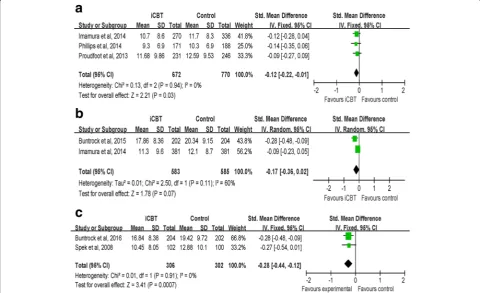
We tried to conduct a meta-analysis by grouping stud-ies following up depression levels of the iCBT group and the control group within 3 months. Three studies were included [31, 34, 37]. As displayed in Fig. 4a, The results indicated that the effect of iCBT interven-tion on reducing depression levels was significant at
the within 3-month follow-up (SMD =−0.12, CI
[−0.22, −0.01]; I2 = 0 %).
Two studies followed up on the depression scores of participants 6 months post intervention [34]. Results of Buntrock et al. [36] yielded a significant effect of iCBT over the control group while the results of the study of Imamura et al. [34] suggested that the depression levels of iCBT group were not different from that of the control group 6 months post intervention. A random effects ana-lysis of these 2 studies with a total of 1168 participants found the effect of iCBT over the control group was not significant at the 6-month follow-up (SMD =−0.17, CI [−0.36, 0.02]; I2
[image:6.595.59.541.88.242.2]Depression scores at the 12thmonth post intervention were available in 4 studies [33, 39, 41]. Two studies only assessed depression scores in the intervention group and the within-group comparison supported the long-term effectiveness of iCBT on reducing depressive symptoms [39, 41]. Studies of Buntrock et al. [40] and Spek et al. [33] provided depression scores of both the intervention group and the control group at follow-up and the between-group comparisons revealed a significant effect of iCBT in both studies. Results of a random effects analysis of these 2 studies indicated that a treatment effect
in favor of iCBT over the control group was significant (SMD =−0.28 CI [−0.44,−0.12]; I2= 0 %) (Fig. 4c).
Secondary outcome: effects on anxiety symptoms, psychological distress, social functioning and the quality of life
At the post-intervention stage
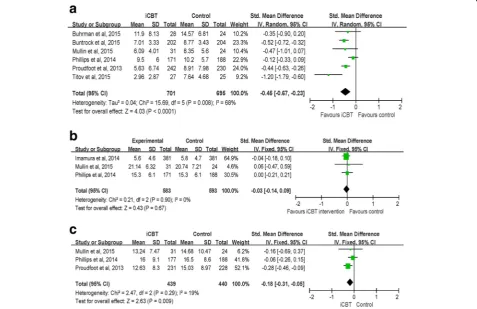
Six studies measured the anxiety symptoms for partici-pants in both the iCBT groups and control groups at the post-intervention stage. A random-effects analysis was conducted with a total of 1396 participants in 6 studies. Fig. 3Random effects meta-analysis of iCBT vs. controls for depression at the post-intervention stage
Fig. 4aFix effects meta-analysis of iCBT vs. controls for depression at the at the within 3-month follow-up.bRandom effects meta-analysis of iCBT vs. controls for depression at the at the 6-month follow-up.cFix effects meta-analysis of iCBT vs. controls for depression at the at the 12-month follow-up
[image:7.595.57.540.88.229.2] [image:7.595.57.538.410.703.2]The results suggested that there was a significant effect
favouring iCBT over control groups (SMD =− 0.45,
CI [− 0.67, − 0.23]; I2= 68 %) (observed in Fig. 5a). For the 3 studies using the GAD-7 (Generalized Anxiety Disorder-7 items) to measure anxiety, the effect of iCBT on reducing anxiety levels was also sig-nificant (MD =− 1.76, CI [− 2.73, − 0.78]; I2= 81 %). After removing one study to reduce the heterogeneity [41], a meta-analysis ofthe remaining 2 studies using the GAD-7 to measure anxiety revealed a non-significant effect of iCBT on anxiety improvement (MD =−0.97, CI [−2.07, 0.13]; I2= 9 %).
General psychological distress was measured as the secondary outcome variablein 3 studies. A fixed-effects analysis was conducted to examine the effect of iCBT on reducing general psychological distress. The result indicated that the treatment effect in favour of iCBT programs over control groups was not significant (SMD =− 0.03, CI [− 0.14, 0.09]; I2= 0 %) (observed in Fig. 5b).
Three studies observedsocial functioning as the second-ary outcome. The result of the meta-analysis indicated that iCBT groups had higher scores in social functioning compared with those of the control groups at the
post-intervention stage (SMD =−0.18, CI [−0.31,−0.05]; I2= 19 %) (observed in Fig. 5c).
At the follow-up stage
Seven studies measured secondary outcomes for 1–2 waves at the follow-up stages, resulting in data for one
6-week follow-up, four 3-month follow-ups, two
6-month follow-ups and two1-year follow-ups. Because of the great variety in measurements as well as the length of time at follow-up, it is inappropriate to run the meta-analysis. Only qualitative synthesis was conducted.
In the short-term follow-up, Phillips et al. [31] mea-sured anxiety symptoms, psychological distress, social functioning and quality of life at the 6th week post-intervention. No significant effects of iCBT on the secondary outcomes were found.
Four studies measured secondary outcomes at the 3rd month after the programs, 3 studies found that the effectiveness of iCBT lasted in the follow-up stage using the within-group comparisons. For example, Proudfoot et al. [37] measured anxiety and social functioning and both of them remained significantly different from the baseline. Similar findings were obtained in Mullin et al.
[image:8.595.60.538.396.705.2][35], measuring anxiety, psychological distress and social functioning, and in Titov et al. [41], measuring anxiety.
In the studies of Imamura et al. [34] and Buntrock et al. [36], the secondary outcome was measured in the 6th month after the interventions. The results of Imamura et al. [34] suggested that general psychological distress did not differ in the iCBT group and the control group while Buntrock et al. [36] found significant effect of iCBT on reducing anxiety symptoms at the 6-month follow-up.
Secondary outcomes at the 12th month post inter-vention were available in the study of Titov et al. [41] and Buntrock et al. [40]. In the former study, the researchers measured anxiety scores and found that iCBT had a significant effect on reducing anxiety symptoms at follow-up using within-group compari-sons. And the results of the latter study also yielded a significant effect of iCBT on improving anxiety symptoms using between-group comparisons.
Discussion
This systematic review included 8 studies that examined the efficacy of iCBT programs in individuals with sub-threshold depression compared to control groups. As the results indicated, the iCBT programs had a signifi-cant effect on the improvement of depressive symptoms in individuals with subthreshold depression at the post-intervention stage compared to control groups. The iCBT programs were also effective in reducing anxiety symptoms and improving social functioning for these in-dividuals. These results were consistent with previous meta-analysis research that focused on patients with major depressive disorder or anxiety disorder [21–25]. That is, the iCBT intervention is not only beneficial for depressive patients with clinical diagnosis but also help-ful in improving depressive symptoms in individuals with subthreshold depression.
Although the short-term efficacy of iCBT intervention in improving depressive symptoms was relatively robust, results on the long-term efficacy remained inconsistent. The effectiveness of iCBT programs was followed-up from 6 weeks to one year in the 8 included studies. More than half of the studies supported the efficacy of the iCBT intervention at the 3rd, 6th and 12th months after the programs, while two studies did not find advan-tages in improving depressive and related symptoms at follow-up stages [31]. Notably, 3 studies collected out-come variables at follow-up in the iCBT group but not in the control group and evaluated the effectiveness of iCBT by comparing depressive symptoms at follow-up and at baseline. The potential confounding effect of time could not be eliminated by this within-group compari-son. In line with the ideas of Spek et al. [25], we consider results on the long-term efficacy of iCBT programs for
subthreshold depressive symptoms to be still inconclu-sive and in need of further exploration.
Regarding the differences in magnitude of effectiveness of iCBT programs and the inconsistent results in the long-term effects in various studies, the roles of poten-tial moderators are noteworthy. As previous research in-dicated, therapist support is considered as an important factor that influences the efficacy of iCBT programs. ICBT programs with therapist support have greater effi-cacy compared to interventions without any professional support [22]. Characteristics of participants are also associated with outcomes of iCBT programs. Female gender and lower dysfunctional attitude could predict better outcomes at post-test and follow-up [30]. Results of effects of pre-treatment depression severity on iCBT effectiveness are controversial. High pre-treatment depression has been reported to be associated with greater efficacy of iCBT interventions in some studies [42, 43], while the opposite results was found in other studies [44]. Despite the overall effectiveness of iCBT intervention on depression has been established, moder-ator research is relatively few. Identifying predictors and moderators that influence outcomes of iCBT programs would be helpful to design appropriate iCBT interven-tions for specific target population with clinical or subthreshold depression.
It is also important to pay attention to the dropout rates of the programs. The average dropout rate is 34.5 % in the included studies, which is higher than the dropout rate (21 %) reported in the meta-analysis of Wantland et al. (2004) [45] and the rate (31 %) reported by Melville et al. (2010) [46]. Lack of a therapeutic rela-tionship might be a reason for the high dropout rate. Low exit cost and problems of understanding the pro-grams may also be related to the high dropout rate [22]. Based on the experience of previous research, modifying the course to be appropriate for the target population might be helpful in decreasing the dropout rate [35]. Therapist support is also effective to increase adherence of participants [22].
To summarize, intervention programs developed based on theories and practices of cognitive behavioural therapy are effective in improving depressive and related symptoms for individuals with subthreshold depression. ICBT programs could be easily spread via the Internet and could benefit a great number of people with some depressive symptoms but who have not received a full diagnosis of depression in a convenient way. This type of intervention is a promising method used in primary healthcare and could be effective in preventing the development of major depressive disorder.
There are some limitations in the present systematic review. First, there might be selective bias in the process of study selection. It was not always explicitly stated in
the studies whether participants met the criteria of subthreshold depression, and the required information on inclusion and exclusion criteria was sometimes in-complete. Second, subthreshold depression is a spectrum with a wide range. The criteria of subthreshold depres-sion varied across studies, as did the severity of depression levels. These variations might increase the heterogeneity among studies. Third, because of the small sample size, factors influencing efficacy of iCBT pro-grams for individuals with subthreshold depression were not examined in the present study. This is an important research topic that deserves further research attention.
Conclusion
In conclusion, substantial evidence has been found that iCBT intervention has a superior short-term efficacy compared to control groups for individuals with sub-threshold depression. However, the long-term effective-ness of iCBT for subthreshold depressive symptoms is inconclusive and must be examined in further research. ICBT intervention has the potential to be used as an im-portant primary healthcare tool to prevent the develop-ment of major depressive disorder.
Abbreviations
BDI:Beck depression inventory; CAU: Care as usual; CBT: Cognitive behavioural therapy; CES-D: Centre of epidemiology studies-depression; DASS: Depression anxiety and stress scales; DSM: The diagnostic and statistical manual of mental disorders; GAD-7: Generalized anxiety disorder - 7 items; iCBT: Internet-based cognitive behavioural treatment; MADRS: Montgomery-åsberg depression rating scale; MD: Mean difference; PHQ: Patients health questionnaire; RCT: Randomized controlled trail; SMD: Standardized mean difference
Acknowledgement
We would like to thank Dr. Han Mei for providing advice and comments on the manuscript.
Funding
This work was supported by the Humanities and Social Science fund of the Ministry of Education (Grant number 12YJA190010) and the National Natural Science Foundation of China (Grant number 81273875).
Availability of data and materials
All data generated or analyzed during this study are included in this published article.
Authors’contributions
ZT contributed to the study conception and design and led the data extraction and analysis as well as drafting and revision of the manuscript. LX, GJ and PY contributed to data extraction, data analysis and revision of the manuscript. KJ contributed to the study conception and design, data extraction and revision of the manuscript. All the authors read and approved the final manuscript.
Competing interests
The authors declare that they have no competing interests.
Consent for publication Not applicable.
Ethics approval and consent to participate Not applicable.
Received: 14 March 2016 Accepted: 4 October 2016
References
1. Cuijpers, P., R. de Graaf, and S. van Dorsselaer, Minor depression: risk profiles, functional disability, health care use and risk of developing major depression. J Affect Disord. 2004;79(1–3): p. 71–79.
2. Goldney RD, et al. Subsyndromal depression: prevalence, use of health services and quality of life in an Australianpopulation. Soc Psychiatry Psychiatr Epidemiol. 2004;39(4):293–8.
3. Rucci P, et al. Subthreshold psychiatric disorders in primary care: prevalence and associated characteristics. J Affect Disord. 2003;76(1–3):171–81. 4. Karsten J, et al. Subthreshold depression based on functional impairment
better defined by symptom severity than by number of DSM-IV symptoms. J Affect Disord. 2010;123:230–7.
5. Pincus HA, Davis WW, McQueen LE.‘Subthreshold’mental disorders. A review and synthesis of studies on minor depression and other‘brand names’. Br J Psychiatry. 1999;174:288–96.
6. Cuijpers P, Smit F. Subthreshold depression as a risk indicator for major depressive disorder: a systematic review of prospective studies. Acta Psychiatr Scand. 2004;109:325–31.
7. Cuijpers P, et al. Psychotherapy for subclinical depression: meta-analysis. Br J Psychiatry. 2014;205(4):268–74.
8. Geiselman B, Bauer M. Subthreshold depression in the elderly: qualitative or quantitative distinction? Compr Psychiatry. 2000;41(2Suppl1):32–8. 9. Fergusson DM, et al. Subthreshold depression in adolescence and mental
health outcomes in adulthood. Arch Gen Psychiatry. 2005;62:66–72. 10. Cole MG, Dendukuri N. Risk factors for depression among elderly community
subjects: a systemic review and meta-analysis. Am J Psychiatry. 2003;160:1147–56. 11. Cuijpers P, Smit F, Van Straten A. Psychological treatments ofsubthreshold
depression: a meta-analytic review. Acta Psychiatr Scand. 2007;115:434–41. 12. Chachamovich E, et al. Impact of major depression and subsyndromal
symptoms on quality of life and attitudes toward aging in an international sample of older adults. The Gerontologist. 2008;48(5):593–602.
13. Godib IH, Lewinsohn PM, Seeley JR. Symptoms versus a diagnosis of depression: differences in psychosocial functioning. J Consult Clin Psychol. 1995;63:90–100.
14. Wager HR, et al. Minor depression in family practice: functional morbidity, co-morbidity, service utilization and outcomes. Psychol Med. 2000;30:1377–90. 15. Johnson JG, Cohen P, Kasen S. Minor depression during adolescence and
mental health outcomes during adulthood. Br J Psychiatry. 2009;195(3):264–5. 16. Furukawa TA, et al. Telephone cognitive-behavioral therapy for subthreshold
depression and presenteeism in workplace: a randomized controlled trial. PLoS One. 2012;7(4):e35330.
17. Gould RL, Coulson MC, Howard RJ. Cognitive behavioral therapy for depression in older people: a meta-analysis and meta-regression of randomized controlled trials. J Am Geriatr Soc. 2012;60:1817–30.
18. van Zooner K, et al. Preventing the onset of major depressive disorder: a meta-analytic review of psychological interventions. Int J Epidemiol. 2014;43:318–29. 19. Cuijpers P, et al. Does cognitive behaviour therapy have an enduring effect
that is superiorto keeping patients on continuation pharmacotherapy? a meta-analysis. BMJ Open. 2013;3:e002542.
20. National Institute for Health and Clinical Excellence. Depression: the treatment and management of depression in adults. London: B.P. Society; 2009. 21. Andersson G, Cuijpers P. Internet-based and other computerized
psychological treatments for adult depression: a meta-analysis. Cogn Behav Ther. 2009;38(4):196–205.
22. Richards D, Richardson T. Computer-based psychological treatments for depression: a systematic review and meta-analysis. Clin Psychol Rev. 2012;32(4):329–42.
23. Arnberg FK, et al. Internet-delivered psychological treatments for mood and anxiety disorders: a systematic review of their efficacy, safety, and cost-effectiveness. Plos One. 2014;9(5):e98118.
24. Andrews G, et al. Computer therapy for the anxiety and depressive disorders is effective, acceptable and practical health care: a meta-analysis. Plos One. 2010;5:e13196.
25. Spek V, et al. Internet-based cognitive behaviour therapy for symptoms of depression and anxiety: a meta-analysis. Psychol Med. 2007;37:319–28. 26. Klein JP, et al. Effects of a psychological internet intervention in the treatment of
27. Andersson G, et al. Guided internet-based vs. Face-to-face cognitive behavior therapy for psychiatric and somatic disorders: a systematic review and meta-analysis. World Psychiatry. 2014;13(3):288–95.
28. Andersson G, et al. Internet-supported versus face-to-face cognitive behavior therapy for depression. Expert Rev. 2016;16(1):55–60.
29. Choi I, et al. Culturally attuned Internet treatment for depression amongst Chinese Australians: a randomised controlled trial. J Affect Disord. 2012;136:459–68. 30. Donker T, et al. Predictors and moderators of response to internet-delivered
interpersonal psychotherapy and cognitive behavior therapy for depression. J Affect Disord. 2013;151:343–51.
31. Phillips R, et al. Randomized controlled trial of computerized cognitive behavioural therapy for depressive symptoms: effectiveness and costs of a workplace intervention. Psychol Med. 2014;44:741–52.
32. Spek V, et al. Internet-based cognitive behavioural therapy for subthreshold depression in people over 50 years old: a randomized controlled clinical trial. Psychol Med. 2007;37:1797–806.
33. Spek V, et al. One-year follow-up results of a randomized controlled clinical trial on internet-based cognitive behavioural therapy for subthreshold depression in people over 50 years. Psychol Med. 2008;38:635–9. 34. Imamura K, et al. Effects of an internet-based cognitive behavioral therapy
(iCBT) program in manga format on improving subthreshold depressive symptoms among healthy workers: a randomized controlled trial. PLoS One. 2014;9:e97167.
35. Mullin A, et al. The UniWellbeing course: a randomised controlled trial of a transdiagnostic internet-delivered cognitive behavioural therapy (CBT) programme for university students with symptoms of anxiety and depression. Internet Interv. 2015;2:128–36.
36. Buntrock C, et al. Effectiveness of a web-based cognitive behavioural intervention for subthreshold depression: pragmatic randomised controlled trial. Psychother Psychosom. 2015;84:348–58.
37. Proudfoot J, et al. Impact of a mobile phone and web program on symptom and functional outcomes for people with mild-to-moderate depression, anxiety and stress: a randomised controlled trial. BMC Psychiatry. 2013;13:312–24.
38. Higgins JP, et al. The cochrane collaboration’s tool for assessing risk of bias in randomised trials. BMJ. 2011;343:d5928.
39. Buhrman M, et al. Individualized guided internet-delivered cognitive-behavior therapy for chronic pain patients with comorbid depression and anxiety: a randomized controlled trial. Clin J Pain. 2015;31:504–16. 40. Buntrock C, et al. Effect of a web-based guided self-help interventionfor
prevention of major depression in adults with subthreshold DepressionA randomized clinical trial. JAMA. 2016;315(17):1854–63.
41. Titov N, et al. Clinical and cost-effectiveness of therapist-guided internet-delivered cognitive behavior therapy for older adults with symptoms of depression: a randomized controlled trial. Behav Ther. 2015;46:193–205. 42. Johansson R, et al. Tailored vs. Standardized internet-based cognitive
behavior therapy for depression and comorbid symptoms: a randomized controlled trial. Plos One. 2012;7(5):e36905.
43. Button KS, et al. Factors associated with differential response to online cognitive behavioural therapy. Soc Psychiatry Psychiatr Epidemiol. 2012;47(5):827–33. 44. de Graaf LE, Hollon SD, Huibers MJH. Predicting outcome in computerized
cognitive behavioral therapy for depression in primary care: a randomized trial. J Consult Clin Psychol. 2010;78(2):184–9.
45. Wantland DJ, et al. The effectiveness of web-based vs. non-Web-based interventions: a meta-analysis of behavioral change outcomes. J Med Internet Res. 2004;6(4):e40.
46. Melville KM, et al. Dropout from internet-based treatment for psychological disorders. Br J Clin Psychol. 2010;49(4):455–71.
• We accept pre-submission inquiries
• Our selector tool helps you to find the most relevant journal • We provide round the clock customer support
• Convenient online submission • Thorough peer review
• Inclusion in PubMed and all major indexing services • Maximum visibility for your research
Submit your manuscript at www.biomedcentral.com/submit