N A N O E X P R E S S
Open Access
The study on the application of solid-state
method for synthesizing the polyaniline/noble
metal (Au or Pt) hybrid materials
Ruxangul Jamal
1,2,3*, Feng Xu
1,2, Weiwei Shao
1,2and Tursun Abdiryim
1,2,3*Abstract
The solid-state method was applied for synthesizing polyaniline (PANI)/noble metal hybrid materials with the presence of HAuCl4·4H2O or H2PtCl6·6H2O in the reaction medium. The structure, morphology, and electrochemical activity of the composites were characterized by Fourier transform infrared (FTIR) spectra, UV-visible (vis) absorption spectra, energy dispersive spectrum (EDS), X-ray powder diffraction (XRD), transmission electron microscopy (TEM), scanning electron microscopy (SEM), and cyclic voltammetry. The results from FTIR and UV-vis spectra showed that the oxidation degree and doping level of the PANI in composites can be influenced by HAuCl4·4H2O and
H2PtCl6·6H2O. The EDS data demonstrated that the composites contain a certain amount of Au (or Pt) element. XRD analysis indicated the presence of crystalline-state Au particles in PANI matrix prepared from the presence of HAuCl4·4H2O and revealed that the H2PtCl6·6H2O cannot be converted into metal Pt. The TEM and SEM images implied that the Au particles did exist in the polymer matrix with the size of about 20 nm. The enzymeless H2O2 sensor constructed with PANI/Au composite from the presence of HAuCl4·4H2O showed a short response time (within 5 s) and displayed an excellent performance in wide linear range.
Keywords:Solid-state synthesis, Polyaniline, Noble metal, Hybrid materials, Sensor
Background
Noble metal nanoparticles such as Au and Pt nano-particles have high catalytic activity, nontoxicity, and biocompatibility [1]. Conducting polymers are usually used as matrix to noble metal nanoparticles and then applied in biosensors [2,3], electrocatalysts [4], and supercapacitors [5], due to the synergy effect between polymer matrix and inorganic nanoparticles. Among various conducting polymers, polyaniline (PANI) has a potential use in a broad field because of its high envir-onmental stability, low cost, relatively facile preparation, and reversible control of conductivity by charge-transfer doping and protonation [6]. The composite of
PANI and Au (or Pt) nanoparticles, which have been in-tensively investigated, are also attractive materials as they combine the properties of large surface area, high conductivity, and excellent biocompatibility [7,8]. Up to now, PANI/Au (or Pt) hybrid material can be synthe-sized chemically or electrochemically. These methods have the advantages of easily controlling operating con-ditions. However, they have significant disadvantages such as the formation of toxic waste products and are not suitable for mass production. Solid-state synthesis is a mechanochemical reaction that occurs between pow-ders in the solid state [9]. It is a new synthetic method to develop green chemistry with obvious advantages: re-duced pollution, low costs, and simplicity in process and handling. Also, these factors are especially import-ant in the industry.
H2O2as a metabolic intermediate involved in many bio-logical reactions plays an important role in the fields of chemistry, biology, clinical control, and environmental protection; therefore, its detection is of great importance [10]. To date, various techniques including spectrometry, * Correspondence:[email protected];[email protected]
1Key Laboratory of Petroleum and Gas Fine Chemicals, Educational Ministry
of China, School of Chemistry and Chemical Engineering, Xinjiang University, Urumqi 830046, People’s Republic of China
2
Key Laboratory of Functional Polymers, Xinjiang University, Urumqi 830046, People’s Republic of China
3
Key Laboratory of Oil and Gas Fine Chemicals, Educational Ministry of China, College of Chemistry and Chemical Engineering, Xinjiang University, Urumqi 830046, People’s Republic of China
titrimetry, chemiluminescence, and electrochemistry have been employed for determination [1,11,12]. Among the developed techniques, electrochemical methods have be-come one of the predominant analytical techniques due to their high sensitivity, low cost, and low power requirement [13]. Moreover, among the electrochemical methods, amperometric sensors have shown great potential for de-veloping versatile analytical techniques for H2O2 deter-mination [14]. The conducting polymer/metal composite amperometric enzyme electrodes as sensors have been paid particular attention due to their advantages of high sensitivity and specificity [14,15]. However, an efficient electron transfer between the active site of the enzyme and the electrode surface is not quite stable and depends on the enzyme type, temperature, and pH as a function of time [15]. Therefore, an alternative sensor called ‘enzymeless sensor’, which try to mimic natural enzymes with the same effectiveness and selectivity, has been widely studied [16,17].
Herein, we report the exploration of synthesizing the polyaniline/noble metal hybrid materials by solid-state synthesis method at room temperature. The structure, morphology, and components of composites were char-acterized by Fourier transform infrared (FTIR), UV-visible (vis), X-ray powder diffraction (XRD), energy dispersed spectrum (EDS), scanning electron microscopy (SEM), and transmission electron microscopy (TEM) methods. Furthermore, the composite from the existence of HAuCl4·4H2O in the reaction medium was selected
for designing an enzymeless sensor on a glassy carbon electrode (GCE) for H2O2detection.
Methods
Aniline and ammonium peroxydisulfate were obtained from Xi’an Chemical Reagent Company (Xi’an, China). Chloroauric acid hydrated (HAuCl4·4H2O), chloroplatinic acid hydrated (H2PtCl6·6H2O), andp-toluenesulfonic acid (p-TSA) were purchased from Shanghai Aladdin Reagent Company (Shanghai, China). H2O2(30 wt.%) was obtained from Tianjin Chemical Reagent Company (Tianjin, China). Nafion, a 5-wt.% solution in a mixture of lower ali-phatic alcohols and 20% water, was obtained from Sigma-Aldrich (St. Louis, MO, USA). Before use, it was diluted with 0.5 wt.% isopropanol. All the reagents were of analyt-ical grade, aniline was purified by distillation under re-duced pressure and stored in a refrigerator, and all other chemicals and solvents were used as received without fur-ther purification. Phosphate buffer saline (PBS; 0.1 M) was prepared by mixing stock solutions of NaH2PO4 and Na2HPO4.
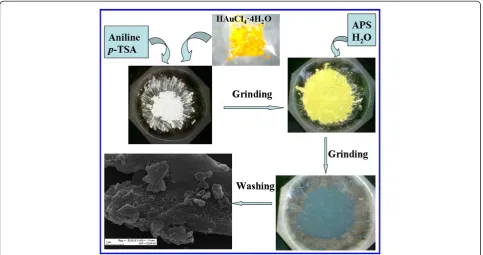
[image:2.595.57.541.459.714.2]A typical solid-state synthesis process for the compos-ites was as follows (as shown in Figure 1): 1 mL aniline was added quickly to the mortars containingp-TSA (1.9 g). After grinding for about 10 min, 0.1 g yellowish-red crys-talloid HAuCl4·4H2O (10.0 wt.% of the aniline monomer) and 1 mL H2O were added and ground homogeneously for 5 min, then 2.28 g was added, and the mixture was fur-ther ground for 30 min. The obtained powder was washed
with ethanol and distilled water until the filtrate was col-orless, and then the powder was dried under vacuum at 60°C for 48 h. The obtained hybrid materials were de-noted as PANI(HAuCl4·4H2O), which indicated that the composite was prepared from the reaction system with the existence of HAuCl4·4H2O. In a similar manner, we also prepared the composite with the presence of the same amount of H2PtCl6·6H2O (10.0 wt.% of the aniline mono-mer) in the reaction medium, and the composite was de-noted as PANI(H2PtCl6·6H2O), which indicated that the composite was prepared from the reaction system with the existence of H2PtCl6·6H2O. Pure PANI had also been prepared using the above-mentioned procedure. The yield of samples were 0.56 and 0.47 g for the PANI (HAuCl4·4H2O) and PANI(H2PtCl6·6H2O), respectively.
The FTIR spectra of the composites were obtained using a Bruker Equinox-55 Fourier transform infrared spectrometer (Bruker, Billerica, MA, USA) (frequency range 4,000 to 500 cm−1). The UV-vis spectra of the samples were recorded on a UV-vis spectrophotometer (UV4802, Unico, Dayton, NJ, USA). XRD patterns have been obtained using a Bruker AXS D8 diffracto-meter with monochromatic Cu Kα radiation source (λ = 0.15418 nm), the scan range (2θ) was 5° to 70°. SEM measurements were performed on a Leo 1430VP microscope (Zeiss, Oberkochen, Germany) with Oxford Instruments (Abingdon, Oxfordshire, UK). EDS expe-riments were carried out with a pellet which was pressed at 200 MPa and then adhered to copper platens.
A three-electrode system was employed to study the electrochemical performances of composites. Pt elec-trode was used as a counter elecelec-trode and satu-rated calomel electrode as a reference electrode. PANI (HAuCl4·4H2O)-modified GCE (diameter = 3 mm) was used as a working electrode. The working electrode was fabricated by placing a 5-μL dispersion (30 mg/L) on a bare GCE surface and air-dried for 10 min. All the ex-periments were carried out at ambient temperature and air atmosphere.
Results and discussion
Figure 2 shows the FTIR spectra of the pure PANI, PANI (HAuCl4·4H2O), and PANI(H2PtCl6·6H2O). As shown in Figure 2, the FTIR spectra of PANI(HAuCl4·4H2O) and PANI(H2PtCl6·6H2O) are almost identical to that of PANI. The band at approximately 3,235 cm−1is attributable to the N-H stretching vibration [18], while the two bands appearing at approximately 1,580 and 1,493 cm−1are asso-ciated to the stretching vibration of nitrogen quinoid (Q) and benzenoid (B) rings, respectively [19]. The band at ap-proximately 1,315 cm−1can be assigned to the C-N mode [20], while the band at approximately 1,146 cm−1 is the characteristic band of the stretching vibration of quinoid, and the band appearing at approximately 820 cm−1 is
attributed to an aromatic C-H out-of-plane bending vibra-tion [19].
Generally, the Q/B (I~1,580 cm−1 /I~1493 cm−1 ) value indicates the oxidation degree of PANI [21]. A comparison indi-cates that the composites exhibit a higher intensity ratio of Q to B ring modes than pure PANI, suggesting that there are more quinoid units in the composites than pure PANI. This result can be attributed to the adding of HAuCl4and H2PtCl6, which can serve not only as the resource of metal particles, but also as strong oxidants, which can enhance the oxidation degree of the PANI in composites [22,23].
[image:3.595.307.539.88.282.2]Figure 3 represents the UV-vis absorption spectra of PANI, PANI(HAuCl4·4H2O), and PANI(H2PtCl6·6H2O) in m-cresol solution. The characteristic peaks of PANI
[image:3.595.305.538.520.703.2]Figure 2FTIR spectra.Curves (a) PANI, (b) PANI(HAuCl4·4H2O), and (c) PANI(H2PtCl6·6H2O).
and composites at approximately 320 to 330 nm, ap-proximately 430 to 445 nm, and 820 to 870 nm are at-tributed to π-π*, polaron-π*, and π-polaron transitions, respectively [18]. Feng et al. reported that pure Au nanoparticles usually show an absorption peak at ap-proximately 510 nm as a result of the surface plasmon resonance [24], whereas Pt nanoparticles usually have no absorption peak at 300 to 1,000 nm [25,26]. However, in this case, the surface plasmon resonance bands of Au nanoparticles are not observed, which may be caused by the changing of their surrounding environment [7]. However, the absorption peaks ofπ-polaron change sig-nificantly, and the intensity ratio (A820–870/A320–330) of the composites is higher than PANI, indicating that the doping level of the PANI in composites is higher than that of pure PANI [27]. Therefore, the results from the UV-vis absorption spectra imply that the HAuCl4 or H2PtCl6have certain effects on the polymer chains.
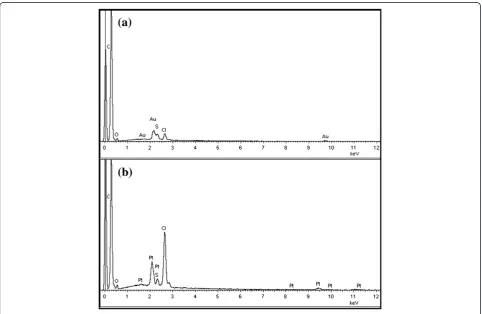
Figure 4 is the EDS of the composites. It can be con-cluded from Figure 4 that the Au and Pt elements do exist in the polymer matrix, and the weight percentages are 7.65 and 6.07 for Au and Pt elements, respectively. Figure 5 shows the XRD patterns of PANI, PANI(HAuCl4·4H2O), and PANI(H2PtCl6·6H2O). As indicated in Figure 5, the PANI exhibits two peaks at 2θ approximately 20° and
[image:4.595.306.538.88.275.2]approximately 26°, which are ascribed to the periodicity parallel and perpendicular to the polymer chains, respect-ively [28]. In the case of PANI(HAuCl4·4H2O), the strong peaks appeared at 2θ values of 38°, 44°, and 64.5° which can be assigned to Bragg's reflections from the (111), (200), and (220) planes of metal Au [3]. These Bragg's
[image:4.595.57.540.405.719.2]Figure 4EDS spectra of composites.(a) PANI(HAuCl4·4H2O) and (b) PANI(H2PtCl6·6H2O).
reflections are in good agreement with the data (JCPDS-ICCD, 870720), which can further prove the existence of Au nanoparticles in the PANI(HAuCl4·4H2O). However, there is no characteristic Bragg's reflection for metal Pt in the case of PANI(H2PtCl6·6H2O), which is a similar phenomenon to that of Pt nanoparticles deposited on carbon nano- tubes using PANI as dispersant and stabilizer [29]. Combined with the results from EDS analysis, it can be concluded that the Pt element may exist in the form of [PtCl6]2−, [PtCl5(H2O)]−, and [PtCl4 (H2O)2] in the polymer matrix because the deproton-ation reaction of the aqua ligands of H2PtCl6 are fully suppressed by the high concentration of protons in the reaction system by solid-state method [30]. However, these interesting results indicate the potential applica-tion of the solid-state method for polymer complex such as PANI-type conducting polymers Pt(IV) com-plexes. The general reactions for the reduction of HAuCl4and H2PtCl6by PANI in this reaction are illus-trated in Figure 6 [7,31].
Figure 7 indicates the SEM and TEM images of the PANI(HAuCl4·4H2O) and PANI(H2PtCl6·6H2O). As shown in the SEM and TEM images, the size and shape of PANI particles are irregular. Some Au nanoparticles (the bright spots in Figure 7a) disperse better in the sur-face of the PANI matrix. However, based on the results of EDS analysis, it can be concluded that the total amount of Au nanoparticles (7.65 wt.%) is not very well consistent with the estimated value of 10 wt.% (assuming all the Au salt is converted to Au(0)). If one considers the conversion rate of Au salt to Au nanoparticles in this solid-state reaction, the value of conversion rate is about 89.6% (Conversion rate = (Yield of sample) × (Elemental percentage of Au)/(Au in 100 mg HAuCl4·4H2O)). In addition, it is evident from Figure 7c that the size of the Au nanoparticles (the sand-like dark spots in Figure 7c) is about 20 nm. However, in the case of PANI (H2PtCl6·6H2O), there are not any Pt metal particles found in either SEM or TEM images. This phenomenon is consistent with the results of XRD patterns.
Figure 8 shows the cyclic voltammetry (CV) curves of PANI, PANI(HAuCl4·4H2O), and PANI(H2PtCl6·6H2O) electrodes measured from −0.2 to 0.8 V in 1 M H2SO4
electrolyte. Overall, the redox peaks of composites are similar to the pure PANI, indicating that the HAuCl4 and H2PtCl6 cannot affect the formation of PANI in composites. However, a comparison demonstrates that the oxidation peak currents of composites are higher than those of pure PANI and shift negatively to a lo-wer potential range than those of pure PANI. This phenomenon can be associated to the higher oxidation degree and doping level of the PANI in composites than that of pure PANI, which can improve the electrochem-ical activity of composites. Moreover, the oxidation po-tential of PANI(HAuCl4·4H2O) shifts to lower potential than those of others, which may be a result of the Au nanoparticles possibly enhancing the flow ability of elec-tron in the polymer chain [2].
As the XRD patterns of PANI(H2PtCl6·6H2O) did not show any characteristic Bragg's reflection for metal Pt, the PANI(HAuCl4·4H2O) was selected as a type of cata-lyzing electrode material, and an enzymeless H2O2 sen-sor was assembled by the dripping of the dispersion of PANI(HAuCl4·4H2O) on a GCE surface. Figure 9 shows the electrocatalytic responses of bare GCE and PANI (HAuCl4·4H2O)/GCE in 0.1 M PBS at pH 6.8 with and without 10 mM H2O2. It is clear that that there is no evident redox peak observed on a bare GCE which is due to the lack of substance with electrochemical activ-ity. On the contrary, the PANI(HAuCl4·4H2O)/GCE shows a pair of reduction (5 μA at−0.15 V) and oxida-tion (3 μA at 0.15 V) peak currents. It is common that PANI showed one pair of peaks in neutral pH environ-ment [32]. It is also important to note that both the re-duction and oxidation current for PANI(HAuCl4·4H2O)/ GCE increased after addition of H2O2. These observa-tions indicate that PANI(HAuCl4·4H2O)/GCE can act as catalysts for both the reduction and oxidation of H2O2.
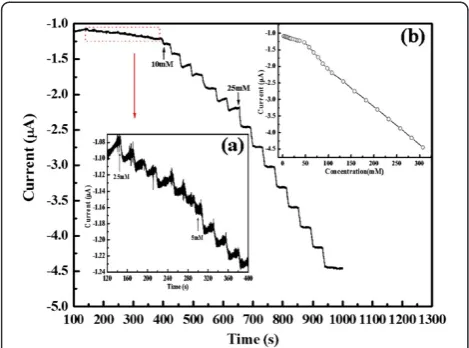
[image:5.595.58.541.629.715.2]The amperometric response of the enzymeless H2O2 amperometric sensor was investigated by successively adding H2O2 to a continuous stirring of 20 mL 0.1 M PBS at pH 6.8. Figure 10 demonstrates the typical current-time curve of the enzymeless sensor. As can be seen in Figure 10, a sharp increase in the current is ob-served in negative within a response time of less than 5 s after each addition of H2O2direction, which is lower
than the amperometric response(<2 s) of enzyme biosen-sor based on in situ electrosynthesized PANI/Au core-shell nanocomposite [14]. However, the linear regression equation wasi =−0.9256 −0.0057[H2O2] (mM), with a correlation coefficient of 0.997 (inset b in Figure 10). This reveals that this non-enzymatic sensor shows simi-lar performance in terms of wide linear range compared with enzyme-based biosensor [14].
Conclusions
[image:6.595.58.540.89.359.2]In this paper, the synthesis of the polyaniline/noble metal hybrid materials by solid-state method in the pres-ence of HAuCl4·4H2O or H2PtCl6·6H2O in the reaction system was investigated. These composites were charac-terized by FTIR, UV-vis, X-ray, TEM, SEM, and EDS as well as by the electrochemical measurements. The re-sults showed that the strong oxidation ability of
Figure 7TEM and SEM images of PANI(HAuCl4·4H2O) and PANI(H2PtCl6·6H2O).(a) SEM and (c) TEM images of PANI(HAuCl4·4H2O); (b) SEM and (d) TEM images of PANI(H2PtCl6·6H2O).
[image:6.595.304.538.504.686.2]Figure 8CV curves of PANI (a), PANI(HAuCl4·4H2O) (b), and PANI(H2PtCl6·6H2O) (c) in 1 M H2SO4electrolyte.Scan rate is 3 mV s−1. Mass of the active material is 3 mg, and graphite current collector was used (area 1 cm2) as the working electrode.
[image:6.595.57.292.508.683.2]HAuCl4·4H2O and H2PtCl6·6H2O was a main factor in increasing the oxidation degree and doping level of the PANI in composites. Furthermore, the results also indi-cated that the HAuCl4·4H2O can be converted into Au nanoparticles, while that of the H2PtCl6·6H2O cannot be converted into metal Pt, suggesting the formation of [PtCl6]2−, [PtCl5(H2O)]−, and [PtCl4(H2O)2] in the poly-mer matrix. Compared with the existing methods, the method demonstrated here was facile but effective and could be readily used for a large-scale preparation of the PANI/Au. However, the PANI/Pt was not successfully synthesized by this solid-sate method which may be a re-sult of the fully suppressed deprotonation reaction of aqua ligands of H2PtCl6 by the high concentration of protons in the reaction system. These interesting results indicated the potential application of the solid-state method for polymer complex such as PANI-type conducting polymer Pt(IV) complexes. Furthermore, the electrochemical measurements indicated that the ob-tained PANI/Au displayed a fast response to H2O2and excellent performance in wide linear range. The sensor could catalyze the oxidation and reduction of H2O2 at the same time, and it exhibited a fast amperometric re-sponse (about 5 s) to the reduction of H2O2in a wide linear range.
Competing interests
The authors declare that they have no competing interests.
Authors’contributions
RJ conceived the study, carried out data analysis, and drafted the manuscript. FX carried out the sample preparation and the experimental measure. WS participated in the study of material structures and the data analysis. TA coordinated the research and revised and finalized the manuscript. All authors read and approved the final version of the manuscript.
Acknowledgments
We gratefully acknowledge the financial support from the National Natural Science Foundation of China (nos. 20964004 and 21064007) and Xinjiang University institution cooperation project (XJDX1108-2012-03).
Author details
1Key Laboratory of Petroleum and Gas Fine Chemicals, Educational Ministry
of China, School of Chemistry and Chemical Engineering, Xinjiang University, Urumqi 830046, People’s Republic of China.2Key Laboratory of Functional
Polymers, Xinjiang University, Urumqi 830046, People’s Republic of China.
3Key Laboratory of Oil and Gas Fine Chemicals, Educational Ministry of China,
College of Chemistry and Chemical Engineering, Xinjiang University, Urumqi 830046, People’s Republic of China.
Received: 7 January 2013 Accepted: 14 February 2013 Published: 2 March 2013
References
1. Ning R, Lu W, Zhang Y, Qin X, Luo Y, Hu J, Asiri AM, Al-Youbi AO, Sun X:A novel strategy to synthesize Au nanoplates and their application for enzymeless H2O2detection.Electrochim Acta2012,60:13–16.
2. Sun XP, Dong SJ, Wang EK:High-yield synthesis of large single-crystalline gold nanoplates through a polyamine process.Langmuir2005,
21:4710–4712.
3. Xu Q, Leng J, Li HB, Lu GJ, Wang Y, Hu XY:The preparation of polyaniline/ gold nanocomposites by self-assembly and their electrochemical applications.React Funct Polym2010,70:663–668.
4. Xu Y, Dong Y, Shi J, Xu M, Zhang Z, Yang X:Au@Pt core-shell
nanoparticles supported on multiwalled carbon nanotubes for methanol oxidation.Catal Commun2011,13:54–58.
5. Nguyen VH, Shim J-J:Facile synthesis and characterization of carbon nanotubes/silver nanohybrids coated with polyaniline.Synth Met2011,
161:2078–2082.
6. Wu TM, Lin YW:Doped polyaniline/multi-walled carbon nanotube composites: preparation, characterization and properties.Polymer2006,
47:3576–3582.
7. Kinyanjui JM, Hatchett DW, Smith JA, Josowicz M:Chemical synthesis of a polyaniline-gold composite using tetrachloroaurate.Chem Mater2004,
16:3390–3398.
8. Palmero S, Colina A, Munoz E, Heras A, Ruiz V, Lopez-Palacios J: Layer-by-layer electrosynthesis of Pt–polyaniline nanocomposites for the catalytic oxidation of methanol.Electrochem Commun2009,11:122–125. 9. Bekri-Abbes I, Srasra E:Investigation of structure and conductivity
properties of polyaniline synthesized by solid–solid reaction.J Polym Res 2011,18:659–665.
10. Luo YL, Lu WB, Chang GH, Liao F, Sun XP:One-step preparation of Ag nanoparticle–decorated coordination polymer nanobelts and their application for enzymeless H2O2detection.Electrochim Acta2011,
56:8371–8374.
11. Song Y, Wang L, Ren C, Zhu G, Li Z:A novel hydrogen peroxide sensor based on horseradish peroxidase immobilized in DNA films on a gold electrode.Sensor Actuat B: Chem2006,114:1001–1006.
12. Bui MPN, Pham XH, Han KN, Li CA, Kim YS, Seong GH:Electrocatalytic reduction of hydrogen peroxide by silver particles patterned on single-walled carbon nanotubes.Sensor Actuat B: Chem2010,150:436–441. 13. Zhang B, Tang D, Liu B, Cui Y, Chen H, Chen G:Nanogold-functionalized
magnetic beads with redox activity for sensitive electrochemical immunoassay of thyroid-stimulating hormone.Analy Chim Acta2012,
711:17–23.
14. Li NF, Lei T, Ouyang C, He YH, Liu Y:An amperometric enzyme biosensor based on in situ electrosynthesized core–shell nanoparticles.Synt Met 2009,159:1608–1611.
15. Ates M, Saracs AS:Conducting polymer coated carbon surfaces and biosensor applications.Prog Org Coat2009,66:337–358.
16. Zen JM, Li CL, Su Y, Lv XY, Xia HL, Shi HJ, Yang XG, Zhang JQ, Wang YJ:
Controllable anchoring of gold nanoparticles to polypyrrole nanofibers by hydrogen bonding and their application in nonenzymatic glucose sensors.Biosens Bioelectr2012,38:402–406.
[image:7.595.56.291.89.263.2]17. Liu S, Wang L, Tian JQ, Luo YL, Zhang XX, Sun XP:Aniline as a dispersing and stabilizing agent for reduced graphene oxide and its subsequent Figure 10Amperometric response of the enzymeless sensor to
decoration with Ag nanoparticles for enzymeless hydrogen peroxide detection.J Coll Interf Sci2011,363:615–619.
18. Abdiryim T, Jamal R, Nurulla I:Doping effect of organic sulphonic acids on the solid- state synthesized polyaniline.J Appl Polym Sci2007,
105:576–582.
19. Ubul A, Jamal R, Rahman A, Awut T, Nurulla I, Abdiryim T:Solid-state synthesis and characterization of polyaniline/multi-walled carbon nanotubes composite.Synth Met2011,161:2097–2102.
20. Huang LM, Wen TC, Gopalan A:Synthesis and characterization of soluble conducting poly(aniline-co-2, 5-dimethoxyaniline).Mater Lett2003,
57:1765–1774.
21. Salvatierra RV, Oliveira MM, Zarbin AJG:One-pot synthesis and processing of transparent, conducting, and freestanding carbon nanotubes/ polyaniline composite films.Chem Mater2010,22:5222–5234.
22. Sun X, Dong S, Wang E:Large scale, templateless, surfactantless route to rapid synthesis of uniform poly(o-phenylenediamine) nanobelts.
Chem Commun2004,4:1182–1183.
23. Mallick K, Witcomb MJ, Dinsmore A, Scurrell MS:Polymerization of aniline by auric acid: formation of gold decorated polyaniline nanoballs.
Macromol Rapid Commun2005,26:232–235.
24. Feng XM, Mao CJ, Yang G, Hou WH, Zhu JJ:Polyaniline/Au composite hollow spheres: synthesis, characterization, and application to the detection of dopamine.Langmuir2006,22:4384–4389.
25. Zhang J, Li J, Yang F, Zhang B, Yang X:Preparation of prussian blue@Pt nanoparticles/carbon nanotubes composite material for efficient determination of H2O2.Sensor Actuat B: Chem2009,143:373–380. 26. Tsuji M, Jiang P, Hikino S, Lim S, Yano R, Jang SM, Yoon SH, Ishigami N,
Tang X, Kamarudin KSN:Toward to branched platinum nanoparticles by polyol reduction: a role of poly(vinylpyrrolidone) molecules.
Colloid Surface A2008,317:23–31.
27. Xia H, Wang Q:Synthesis and characterization of conductive polyaniline nanoparticles through ultrasonic assisted inverse microemulsion polymerization.J Nanopart Res2001,3:399–409.
28. Reddy KR, Sin BC, Ryu KS, Noh J, Lee Y:In situ self-organization of carbon black–polyaniline composites from nanospheres to nanorods: synthesis, morphology, structure and electrical conductivity.Synth Met2009,
159:1934–1939.
29. Hsu CH, Liao HY, Kuo PL:Aniline as a dispersant and stabilizer for the preparation of Pt nanoparticles deposited on carbon nanotubes.
J Phys Chem C2010,114:7933–7939.
30. Drelinkiewicz A, Zięba A, Sobczak JW, Bonarowska M, Karpiński Z, Waksmundzka-Góra A, Stejskal J:Polyaniline stabilized highly dispersed Pt nanoparticles: preparation, characterization and catalytic properties.
React Funct Polym2009,69:630–642.
31. Kinyanjui JM, Wijeratne NR, Hanks J, Hatchett DW:Chemical and electrochemical synthesis of polyaniline/platinum composites.
Electrochim Acta2006,51:2825–2835.
32. Yan W, Feng X, Chen X, Hou W, Zhu J-J:A super highly sensitive glucose biosensor based on Au nanoparticles–AgCl@polyaniline hybrid material.
Biosens Bioelectron2008,23:925–931.
doi:10.1186/1556-276X-8-117
Cite this article as:Jamalet al.:The study on the application of solid-state method for synthesizing the polyaniline/noble metal (Au or Pt)
hybrid materials.Nanoscale Research Letters20138:117.
Submit your manuscript to a
journal and benefi t from:
7Convenient online submission 7Rigorous peer review
7Immediate publication on acceptance 7Open access: articles freely available online 7High visibility within the fi eld
7Retaining the copyright to your article