EVALUATION OF DISASTER RESPONSE
MANAGEMENT IN IRAQ RESULTING
FROM TERRORISM
Hajer Faek Kudear AL-Dahash
EVALUATION OF DISASTER RESPONSE
MANAGEMENT IN IRAQ RESULTING
FROM TERRORISM
Hajer Faek Kudear AL-Dahash
School of the Built Environment
The University of Salford
Salford, UK
Submitted in Partial Fulfilment of the Requirements of the
Degree of Doctor of Philosophy
I
TABLE OF CONTENTS
TABLE OF CONTENTS ... I
LIST OF FIGURES ... VIII
LIST OF TABLES ... XII
ACKNOWLEDGEMENTS ... XIII
DEDICATION... XIV
DECLARATION... XV
ABBREVIATIONS ... XVI
ABSTRACT ... XVII
INTRODUCTION ... 1
1.1 Research Background ... 1
1.2 Research Problem ... 4
1.3 Aim, Objectives and Research Questions ... 8
1.3.1 Aim ... 8
1.3.2 Objectives ... 8
1.3.3 Research Questions ... 9
1.4 Scope of the Study ... 9
1.5 Research Methodology ... 9
1.6 Contribution to Knowledge ... 10
1.7 Organisation of the Thesis ... 11
1.7.1 Chapter 1: Introduction ... 11
1.7.2 Chapter 2: Literature Review ... 11
1.7.3 Chapter 3: Research Methodology ... 11
1.7.4 Chapter 4: Data Analysis and Interpretation of Results ... 12
1.7.5 Chapter 5: Research Findings ... 12
1.7.6 Chapter 6: Conclusion ... 12
1.8 Chapter Summary ... 12
LITERATURE REVIEW ... 13
II
2.2 Defining Disaster ... 13
2.3 Statistics about Disasters ... 15
2.4 Types of Disasters ... 16
2.4.1 Natural Disaster ... 18
2.4.2 Human-Made Disaster ... 18
2.4.3 Hybrid Disasters... 20
2.5 Terrorism... 22
2.6 Disaster and Conflict ... 24
2.7 Disaster Management ... 25
2.7.1 Disaster Management Cycle ... 26
2.8 Disaster Response Management ... 28
2.8.1 Aims of Disaster Response Management... 32
2.8.2 Disaster Response Activities ... 33
2.8.3 The Stages of Disaster Response Management ... 35
2.9 Challenges during Disaster Response Management ... 43
2.9.1 Planning Stage Challenges ... 43
2.9.2 Organising Stage Challenges ... 47
2.9.3 Directing Stage Challenges ... 53
2.9.4 Controlling Stage Challenges ... 58
2.10 Disaster Response Management Good Practice ... 62
2.11 Disasters in Iraq ... 67
2.12 Statistics about Terrorist Operations in Iraq ... 68
2.12.1 Number of Overall Incidents in Iraq Caused by Terrorists ... 68
2.12.2 Types of Incidents Caused by Terrorists ... 68
2.12.3 Number of Killed and Injured in Terrorist Operations ... 70
2.13 Disaster Management in Iraq and Countries Surrounding Iraq... 72
2.13.1 Disaster Management in Iraq ... 72
2.13.2 Disaster Management in Countries Surrounding Iraq ... 74
2.14 Chapter Summary ... 77
RESEARCH METHODOLOGY ... 78
3.1 Introduction ... 78
3.2 Research Methodological Design ... 78
3.3 Research Philosophy ... 80
3.4 Research Approach ... 81
3.5 Research Strategy ... 82
III
3.6 Research Choices ... 88
3.7 Time Horizon ... 89
3.8 Research Techniques ... 89
3.8.1 Data Collection Techniques ... 90
3.8.2 Sampling of Participants and Interviewees ... 93
3.8.3 The Pilot Study ... 95
3.8.4 The Main Study ... 96
3.8.5 Objectives of the Study and how they are addressed through the Data Collection Methods ... 97
3.9 Data Analysis Process ... 98
3.9.1 Analysis of Questionnaire Surveys ... 98
3.9.2 Analysis of Semi-Structured Interviews ... 99
3.10 Validity and Reliability ... 103
3.10.1 Validity of the Recommendations ... 103
3.11 Research Methodological Framework ... 104
3.12 Ethical Approval ... 106
3.13 Chapter Summary ... 107
DATA ANALYSIS AND INTERPRETATION OF RESULT ... 108
4.1 Introduction ... 108
4.2 Case Study Background ... 108
4.3 Interview Analysis – Planning Stage ... 110
4.3.1 Weaknesses during the Planning Stage ... 110
4.3.2 Strengths during the Planning Stage ... 124
4.3.3 Recommendations for the Planning Stage ... 129
4.3.4 Planning Stage Summary ... 133
4.4 Interview Analysis – Organising Stage ... 135
4.4.1 Weaknesses during the Organising Stage ... 135
4.4.2 Strengths during the Organising Stage ... 145
4.4.3 Recommendations for the Organising Stage ... 147
4.4.4 Organising Stage Summary ... 150
4.5 Interview Analysis – Directing Stage ... 152
4.5.1 Weaknesses during the Directing Stage ... 152
4.5.2 Strengths during the Directing Stage ... 162
4.5.3 Recommendations for the Directing stage ... 166
4.5.4 Directing Stage Summary ... 168
4.6 Interview Analysis – Controlling Stage ... 170
IV
4.6.2 Strengths during the Controlling Stage ... 175
4.6.3 Recommendations for the Controlling Stage ... 178
4.6.4 Controlling Stage Summary ... 180
4.7 Summary of the Interview Analysis ... 182
4.8 Implementation of Disaster Response Management Factors ... 183
4.8.1 Implementation of Disaster Response Management Factors at the Planning Stage ... 183
4.8.2 Implementation of Disaster Response Management Factors at the Organising Stage ... 187
4.8.3 Implementation of Disaster Response Management Factors at the Directing Stage ... 189
4.8.4 Implementation of Disaster Response Management Factors at the Controlling Stage... 193
4.9 Summary of the Questionnaire Survey Analysis ... 194
4.10 Document Analysis ... 195
4.10.1 Number of Killed in the General Directorate of Civil Defence in Baghdad and the Provinces ... 196
4.10.2 Staff Shortage... 197
4.10.3 Unfit to Work (Medically Classified) ... 198
4.10.4 Projects Classification ... 200
4.10.5 The Required Number of Civil Defence Centres in the Province of Baghdad ... 201
4.10.6 The Status of the Fire Nozzles in the Province of Baghdad ... 202
4.10.7 Summary of Document Analysis ... 202
4.11 Chapter Summary ... 203
RESEARCH FINDINGS ... 204
5.1 Introduction ... 204
5.2 Weaknesses during Disaster Response Management ... 204
5.2.1 Coordination between Organisations and Commanding the Scene... 205
5.2.2 Endowment of Equipment, Tools and Infrastructure ... 208
5.2.3 Citizens’ Irresponsible Intervention ... 209
5.2.4 Education on Disaster Risk ... 211
5.2.5 Difficulties in Reaching the Disaster Scene ... 213
5.2.6 Security Situation ... 213
5.2.7 Unplanned Random Development ... 214
5.2.8 Lack of Staff ... 215
5.2.9 Individual Mistakes and Mistake in Decision Making ... 216
5.2.10 Misuse of Machines, Equipment and Material ... 218
5.2.11 Security cordon ... 218
5.2.12 Financial Resources ... 219
5.2.13 Planning Process ... 220
5.2.14 Supporting Ordinances ... 226
V
5.2.16 Correspondence Delays and Red Tape ... 229
5.2.17 Nepotism and Cronyism... 229
5.2.18 Employees' Rights ... 230
5.2.19 Hierarchy and Centralization Problems ... 230
5.2.20 Staff Movement and Reduction of Sections ... 231
5.2.21 Communication and Information ... 232
5.2.22 Frequent Blackouts for the National Electricity ... 233
5.2.23 Morale and Financial Incentives ... 233
5.2.24 Providing the Right Relief Supplies for People in Need at the Right Time ... 234
5.2.25 Speed of response ... 235
5.2.26 Risk Assessments ... 236
5.3 Summary of the Weaknesses ... 237
5.4 Strengths during Disaster Response Management ... 237
5.4.1 Endowment of Equipment, Tools and Infrastructure ... 238
5.4.2 Disaster Response Team Characteristics... 239
5.4.3 Education about disaster risk ... 239
5.4.4 Planning Process ... 240
5.4.5 Supporting Ordinances ... 242
5.4.6 Coordination ... 243
5.4.7 Decision-Making... 244
5.4.8 Morale Incentives ... 245
5.4.9 Feedback ... 245
5.5 Summary of the Strengths ... 246
5.6 Recommendations for Disaster Response Management ... 246
5.6.1 Endowment of Equipment, Tools and Infrastructure ... 247
5.6.2 Education about Disaster Risk ... 248
5.6.3 Coordination ... 251
5.6.4 Specialist Staff ... 253
5.6.5 Planning Process ... 253
5.6.6 Financial Resources ... 256
5.6.7 Law Activation... 256
5.6.8 Employees' Rights ... 256
5.6.9 Attention for Obligations ... 257
5.6.10 Decision-Making ... 257
5.6.11 Risk Assessment ... 259
5.7 Summary of the Recommendations ... 259
VI
5.8.1 Refinement of the Recommendations ... 261
5.9 Final Recommendations ... 261
5.9.1 Endowment of Equipment, Tools, and Infrastructure ... 261
5.9.2 Education about Disaster Risk ... 262
5.9.3 Coordination ... 263
5.9.4 Planning Process ... 263
5.9.5 Specialist Staff ... 264
5.9.6 Employees' Rights ... 264
5.9.7 Financial Resources ... 265
5.9.8 Attention for Obligations ... 265
5.9.9 Decision-Making... 265
5.9.10 Law Activation... 266
5.9.11 Risk Assessment ... 266
5.10 Chapter Summary ... 268
CONCLUSION ... 270
6.1 Introduction ... 270
6.2 Synthesis on the Objectives of the Study ... 270
6.3 Objective 1: Critically Review the Significance and the Challenges of Disaster Management in General and the Disaster Response Management Stage in Particular. ... 270
6.4 Objective 2: Evaluate and Synthesise the Current Status of Disaster Response Management Stemming from Terrorism in Iraq. ... 272
6.5 Objective 3: Critically Evaluate the Weaknesses in the Disaster Response Management Stage with Particular Reference to Iraq. ... 273
6.6 Objective 4: Critically Evaluate the Strengths in the Disaster Response Management Stage with Particular Reference to Iraq ... 275
6.7 Objective 5: Make Recommendations to Improve the Effectiveness of Disaster Response Management Stemming From Terrorism in Iraq ... 275
6.8 Contribution to Theory ... 276
6.9 Contribution to Practice ... 277
6.10 Limitations of the Study ... 278
6.11 Further Research ... 280
6.12 Summary of Contribution to Knowledge ... 281
APPENDICES ... 282
VII
ELEMENT OF GOOD PRACTICE DISASTER RESPONSE MANAGEMENT
CATEGORISED BY MANAGEMENT STAGES ... 288
ETHICAL APPROVAL ... 293
QUESTIONNAIRE ... 294
INTERVIEW GUIDELINE ... 302
ACCESS DATA PERMISSION ... 304
INCLUDING NAME PERMISSION ... 305
RELEVANT DOCUMENT ... 306
I.1 Study Conclusion ... 306
I.2 Analysis of the Reality of Disaster Management in Iraq... 306
I.3 Hyogo Framework for Action 2013 – 2015 (HFA) ... 310
I.4 Main Themes of the Arab Strategy for Disaster Risk Reduction 2020 (Wehbe, 2013) ... 312
THE ORGANISATIONAL STRUCTURE OF THE GENERAL DIRECTORATE OF CIVIL DEFENCE 2009 ... 315
INVITATION LETTER ... 316
VALIDITY INTERVIEW GUIDELINES ... 317
VIII
LIST OF FIGURES
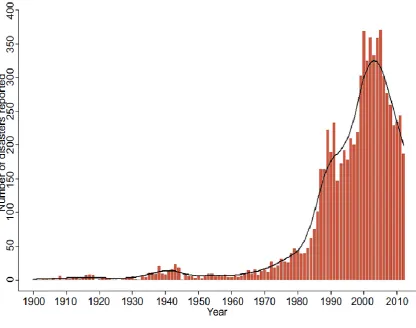
Figure 1.1 Total number of technological disasters reported in the world between 1900 and
2012 (Coppola, 2015, p. 32). Source: EM-DAT – International Disaster Database. ... 2
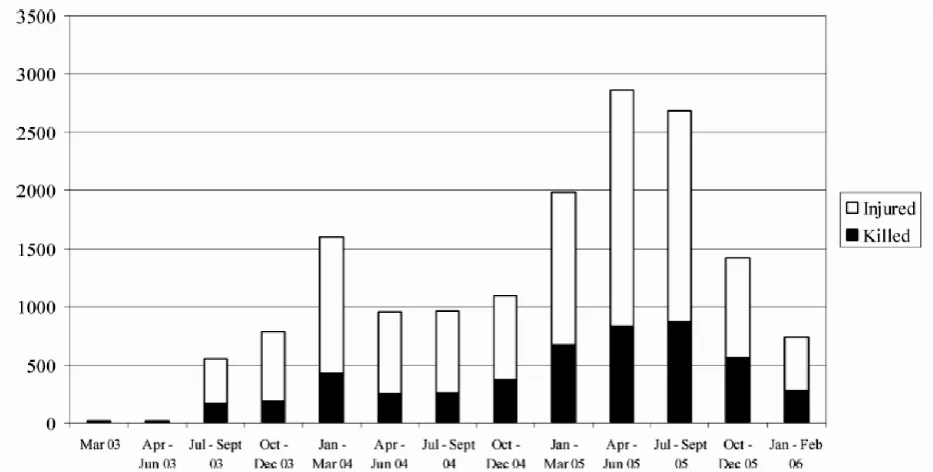
Figure 1.2 Number of Suicide Attacks in Iraq by Quarter, 2003–2006 (Hafez, 2006, p. 601) . 6 Figure 1.3 Number of Persons Killed and Injured in Suicide Attacks by Quater, 2003–2006 (Hafez, 2006, p. 606) ... 6
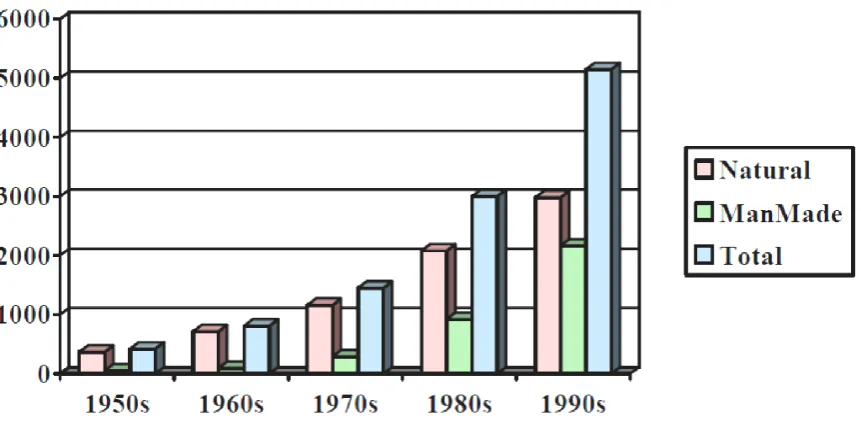
Figure 2.1 Frequency of Disasters Each Decade (Aitken & Leggat, 2012, p. 146) ... 15
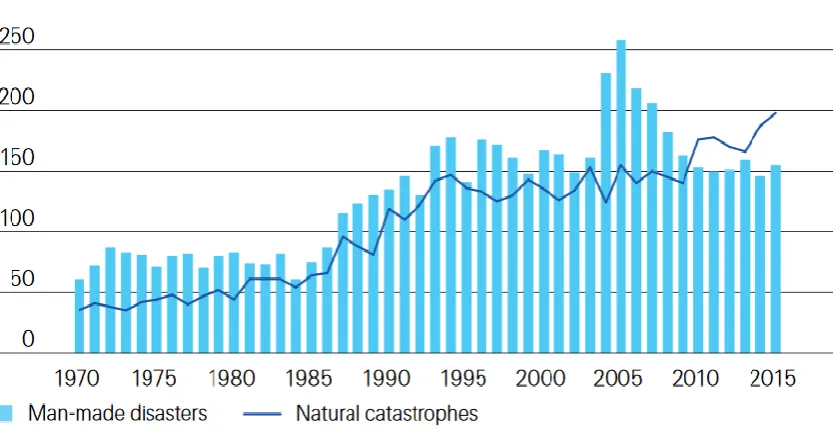
Figure 2.2 Number of Catastrophic Events, 1970–2015 (Bevere et al., 2016, p. 2) ... 16
Figure 2.3 Types of disasters (Biswas & Choudhuri, 2012, p. 13) ... 17
Figure 2.4 Types of disasters (Shaluf, 2007, p. 705) ... 17
Figure 2.5 Types of Human-Made Disasters (Shaluf, 2007, p. 705) ... 19
Figure 2.6 Type of Human-made Disasters Highlighted in this Research ... 22
Figure 2.7 Disaster Cycle (Gospodinov & Burnham, 2008, p. 28) ... 26
Figure 2.8 Disaster Management Cycle (Vasilescu, Khan, & Khan, 2008, p. 49) ... 27
Figure 2.9 Response Stage Highlighted in this Research ... 28
Figure 2.10 The Four Stages of Disaster Response Management ... 35
Figure 2.11 Four Functions of Management (Jones & George, 2003, p. 8) ... 36
Figure 2.12 The Control Process (Dixon, 2003, p. 141) ... 42
Figure 2.13 Close Relationship of Planning and Controlling (Weihrich & Koontz, 2005, p. 98) ... 42
Figure 2.14 Summary of the Challenges during Disaster Response Management stage ... 62
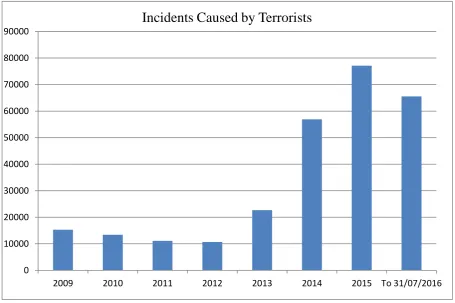
Figure 2.15 Number of Overall Incidents in Iraq Caused by Terrorists, 2009-2016 (Statistic Department, 2016) ... 68
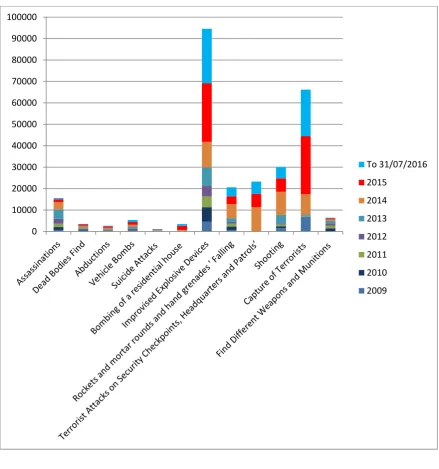
Figure 2.16 Types of Terrorist Operation, 2009-2016 (Statistic Department, 2016) ... 69
Figure 2.17 Number of Killed and Injured in Terrorist Operations, 2004-2016 (Planning and Resource Development Department, 2004-2016)... 70
Figure 2.18 Number of Males, Females, and Children Killed in Terrorist Operations, 2004-2016 (Planning and Resource Development Department, 2004-2004-2016) ... 71
Figure 2.19 Number of Males, Females, and Children Injured in Terrorist Operations, 2004-2016 (Planning and Resource Development Department, 2004-2004-2016) ... 72
Figure 2.20 Iraq and Countries Surrounding Iraq Highlighted in this Paragraph ... 77
IX
Figure 3.2 Saunders' Research Onion Model (Saunders et al., 2016, p. 164) ... 79
Figure 3.3 The Philosophical Stance Pertaining to the Study ... 81
Figure 3.4 Research Strategies within the Philosophical Continuum - Adapted from (Sexton, 2007) ... 83
Figure 3.5 Research Choices (Saunders et al., 2016, p. 152) ... 88
Figure 3.6 Sampling methods (adapted from Saunders et al. (2016)) ... 94
Figure 3.7 Radar Chart for Every Data Set to indicate Both Importance and Implementation’s Value ... 99
Figure 3.8 Example of Data Presentation Using Nvivo 10 ... 101
Figure 3.9 Methodology for this Research Adopted from Saunders’ Research Onion ... 102
Figure 3.10 Research Methodological Framework ... 105
Figure 4.1 Nodes for Planning Weaknesses ... 110
Figure 4.2 Simi-Generic Generator... 122
Figure 4.3 Weaknesses during the Planning Stage ... 123
Figure 4.4 Nodes for Planning Strengths ... 124
Figure 4.5 Strengths during the Planning Stage... 128
Figure 4.6 Nodes for Planning Recommendations ... 129
Figure 4.7 Recommendations for the Planning Stage ... 134
Figure 4.8 Nodes for Organising Weaknesses ... 135
Figure 4.9 Weaknesses during the Organising Stage ... 144
Figure 4.10 Nodes for Organising Strengths ... 145
Figure 4.11 Strengths during the Organising Stage ... 147
Figure 4.12 Nodes for Organising Recommendations ... 147
Figure 4.13 Recommendations for the Organising Stage ... 151
Figure 4.14 Nodes for Directing Weaknesses ... 152
Figure 4.15 Weaknesses during the Directing Stage ... 161
Figure 4.16 Nodes for Directing Strengths ... 162
Figure 4.17 Strengths during the Directing Stage ... 165
Figure 4.18 Nodes for Directing Recommendations ... 166
Figure 4.19 Recommendations for the Directing Stage ... 169
Figure 4.20 Nodes for Controlling Weaknesses ... 170
Figure 4.21 Weaknesses during the Controlling Stage ... 174
X
XI
XII
LIST OF TABLES
Table 1.1 Top 10 Countries Ranked by Terrorism Risk, 2010 (Coppola, 2011, p. 118) ... 5
Table 2.1 Types of Disasters (Shaluf, 2007)... 21
Table 2.2 Element of Good Practice Disaster Response Management Categorised by Management Stages ... 63
Table 2.3 Natural and Human Induced Vulnerabilities Faced by Iraq (Humayun & Al-Abyadh, N.D., p. 9) ... 67
Table 3.1 Values Designated for the Likert Scale ... 91
Table 3.2 Minimum Size for Non-Probability Sample (Saunders et al., 2016, p. 297) ... 95
Table 3.3 Objective of the Study and Method of Investigation ... 97
Table 4.1 Documents Details ... 195
Table 4.2 The Current and Required Number of Civil Defence Centres per 100,000 People in the Province of Baghdad (Urban Planning Department, 2014) ... 201
Table 4.3 The Number and Status of the Fire Nozzles in the Province of Baghdad in 2014 (Urban Planning Department, 2014) ... 202
Table 5.1 Weaknesses during Disaster Response Management Stages ... 204
Table 5.2 Strengths during Disaster Response Management Stages ... 238
Table 5.3 Recommendations for Disaster Response Management Stages ... 246
XIII
ACKNOWLEDGEMENTS
I would like to thank the following people and organisations for supporting me in numerous ways throughout my PhD. My first sincere appreciation is addressed to Dr Udayangani Kulatunga, who supervised me for the entire journey of my PhD. Her continuous support, encouragement and guidance helped me to stand on my own feet and climb through the ups and downs of my PhD journey. My journey would never have been this far without her wise advice. I would also like to extend my gratitude to my co-supervisor, Dr. Menaha Thayaparan, who has been supporting me throughout my research period.
I would also like to thank the Iraqi Ministry of Higher Education, for providing me with the scholarship, and special thanks to the interviewees and questionnaire survey respondents in the Iraqi General Directorate of Civil Defence, for spending their valuable time and providing invaluable information.
My special thanks to all my colleagues in room 346 of Maxwell building, who have been very supportive and inspiring to me throughout my whole PhD journey at the University of Salford. I wish to express my appreciation to Mrs Maggie Hardman who offered invaluable assistance in the preparation of this thesis. My gratitude is also forwarded to my friends Abdelsameea and Hussein for their support, they have been like brothers to me, since starting my PhD journey. Further, Shaymaa, Rasha, Ruqaya, and Ola are also thanked for their close friendship and support.
XIV
DEDICATION
XV
DECLARATION
This thesis is submitted under the University of Salford rules and regulations for the award of a PhD degree by research. While the research was in progress, some research findings were published in refereed journals and conference papers prior to this submission (refer to Appendix A).
The researcher declares that no portion of the work referred to in this thesis has been submitted in support of an application for another degree of qualification of this, or any other university or institution of learning.
XVI
ABBREVIATIONS
CBDM Community-Based Disaster Management CCC Crisis Command Centre
DHS Department of Homeland Security
DPRCM Disaster Prevention and Response Committees DPROPs Disaster Prevention and Response Operational Plans DRM Disaster Risk Management
DRR Disaster Risk Reduction
EM-DAT The International Disasters Database FEMA Federal Emergency Management Agency GIS Geographic Information System
GoI Government of Iraq
GPS Global Positioning System
ICRC International Committee of the Red Cross ICT Information and communications technology IGDCD Iraqi General Director of Civil Defence NGOs Non-Governmental Organisations SAR Search and Rescue
XVII
ABSTRACT
Since 2003, Iraq has been experiencing an unprecedented series of disasters; both human made and natural, and this has given rise to increased attention by policymakers to the country's arrangements for disaster management. Disaster response, which refers to actions “taken immediately before, during, or directly after an emergency occurs, to save lives [and] minimise damage to property” is one of the critical phases in the Disaster Management life cycle. The focus of this study is on disaster response management associated with the events caused by terrorism activities in Iraq.
The study analyses and evaluates the basic functions of disaster management operations (planning, organising, directing, controlling); these are presented as weaknesses, strengths and recommendations, which are identified for effective disaster response management. This research adopts a single holistic case study approach, where the Iraqi General Directorate of Civil Defence is the case study and disaster response management is the unit of analysis. The Iraqi General Directorate of Civil Defence is considered as the critical case for this study as they are the main administrative body responsible for responding to disasters stemming from terrorism in Iraq. A mixed methods approach is used to improve the validity and reliability of the research. As such, the findings are based on semi-structured interviews and questionnaire surveys with executives responsible for disaster response in the Iraqi General Directorate of Civil Defence. In addition, a documentary review of all major documents related to disaster response management in this directorate is undertaken. Conceptual content analysis is used to articulate the primary data and this is then analysed in the context of the secondary data, by conducting cross analysis between the four different stages of disaster response management. The findings show that disaster response management is a significantly important stage in the disaster management cycle, as an efficient and effective response will ultimately minimise the loss of life and damage to property. Whilst there are some weaknesses and limited implementation of several elements of good practice in disaster response management in the current disaster response practices, there are some strengths which should be built upon. The final recommendations are made up of eleven sets of different themes, based on findings from both the secondary and primary data.
XVIII
1
INTRODUCTION
1.1
Research Background
Disasters are as old as human history but the dramatic increase and the damage caused by them in the recent past have become a cause of national and international concern (Dey & Singh, 2006). ‘Disasters’ have become a common word to people all over the world. The whole world is prone to natural disasters as well as to abrupt human-made ones, which have been occurring repeatedly in recent history (Palliyaguru, Amaratunga, & Haigh, 2013).
Lynn (2016) define disaster as a “natural or human-made hazard resulting in significant physical damage or destruction, loss of life, or drastic change to the environment”. A disaster is classified as such and noted on the EM-DAT database when at least one of the following criteria are present (Guha-Sapir, Hoyois, & Below, 2016)
• 10 or more people are reported killed; • 100 or more people are reported affected; • There is a declaration of a state of emergency; • There is a call for international assistance.
2
[image:22.595.95.512.357.685.2]indicated, in the first decade of the 21st century, that the number of natural and human-made disasters had climbed inexorably, since from 1994 to 1998, the reported disasters average was 428 per year but from 1999 to 2003, this increased to an average of 707 disaster events per year; an increase of about 60 percent over the previous years. The biggest rise was in countries of low human development, which suffered an increase of 142 percent (Dey & Singh, 2006). Even in the 1990s, it was recognised that disasters, especially human-made ones, were an ever-present threat and were happening at an increasing rate worldwide (Desforges & Waeckerle, 1991). Over the course of the past century, according to Coppola (2015), human-made disasters grew at a rate much greater than natural disasters. Aitken and Leggat (2012) and Bevere, Sharan, and K S (2016) agree with this view presenting the significant rise in human-made disaster compared to natural disaster, as explained in Section 2.3 Figure 1.1 also shows a rise in human-made disaster numbers.
3
It can be seen in Figure 1.1, that the average number of reported technological disasters occurring worldwide grew significantly between 1900 and 2012, spiking from around the start of the 1990s and peaking at the start of the new century. The number was less than 50 per year in 1980 and this grew to almost 350 per year in 2000, representing a more than sevenfold increase in just 20 years (Coppola, 2015).
The post-cold war era brought many changes in international relations, some new allies were formed and organisations such as the UN have attempted to help with the challenges to the global community, an effort which remains in 2017. One of the main challenges has been the response to both natural and human-made disasters in situations of armed conflict. At the end of the 20th century, there were more than 35 armed conflicts worldwide that inflicted over 1,000 civilian or military deaths (Jenson, 1997). Since then, the number of disasters has increased dramatically, as shown in Figure 1.1.
In addition to this, there have been various terrorist attacks that have occurred throughout the world, causing destruction to lives and property. Different countries have faced major attacks, such as Germany, Russia, Spain, Iraq, the United Kingdom, Kenya, and Afghanistan. Suicide bombings, for instance, are becoming even more common in the Middle East (McEntire, 2015). According to Paffenholz (2005), two-thirds of the countries of the world are either suffering from political tensions and violent conflict or find themselves in the aftermath of a destructive conflict or war. Wisner, Blaikie, Cannon, and Davis (2004) agree with this view and added that a much greater proportion of the world’s population find their lives shortened by events that often go without being noticed: violent conflict, illnesses, and hunger. Such events have often been passed as normal existence in many parts of the world, especially (but not only) in developing countries. Not only the lives of people are at stake, based on Bush and Duggan (2015) the domestic knowledge infrastructure of societies can be frequently targeted directly and indirectly if conflicts multiply, interact and escalate. Therefore, damage resulting from armed conflict, depending on the nature of the weapons used and the possibilities of secondary damage linked to the conflict (for example, fires or floods) may resemble the impact of natural disasters (Teijgeler, 2006).
4
1.2
Research Problem
5
According to Haigh and Amaratunga (2010) disasters of human origin affected many people in the first decade of this century. Wars often resulted from the conflict in regions, for example, in Somalia, Afghanistan and Darfur. Losses from such wars exceeded the losses from “natural” disaster. Moreover, conflict causes disasters related to terrorist actions such as those in New York and Washington (2001), Madrid (2004), Bali (2005), London (2005) and Sri Lanka. Consequently, Haigh and Amaratunga (2010) emphasised that military conflict or actions carried out by terrorists should be placed within the context of wide-ranging disaster planning. There has been some discussion among researchers regarding the behavioural response to the disaster as applicable to large-scale destruction and acts of terrorism (Fischer, 1998, 2005, 2008; Furedi, 2007). It is widely believed that the world changed forever after the events of 11 September 2001. It became a more dangerous and uncertain place, where no-one is safe or immune from the threat of terror. Terrorism is the most salient hazard due to a remarkable upsurge in terrorist acts in the recent past (Coppola, 2015; Fischer, 1998, 2005, 2008). Continuing terrorist attacks worldwide are likely to sustain attention to disaster planning, especially in Middle Eastern countries (Perry & Lindell, 2003).
With regard to Iraq, the situation is not an exception, as shown in Table 1.1. Iraq was ranked number 1, out of the top 10 countries most at risk of terrorism (due to their vulnerability to global risks). It is generally believed that Iraq contains many terrorists and terrorist organisations (Fischer, 2005).
Table 1.1 Top 10 Countries Ranked by Terrorism Risk, 2010 (Coppola, 2011, p. 118)
Rank Country
1 Iraq
2 Afghanistan
3 Pakistan
4 Somalia
5 Lebanon
6 India
7 Algeria
8 Colombia
9 Thailand
6
Violence in Iraq has also become normalised, ranging from the Iraqi and US military assaults and sectarian militias, the threat of suicide bombings, to violent street crime (Wong, al-Saiedi, & Silva, 2005). According to Hafez (2006), shown in Figure 1.2, 443 suicide attacks took place in Iraq between 22 March 2003 to 20 February 2006.
[image:26.595.91.528.156.373.2]Moreover, due to the development of insurgency after the U.S.-led invasion in March 2003, the lethality of suicide attacks increased, as shown in Figure 1.3.
Figure 1.2 Number of Suicide Attacks in Iraq by Quarter, 2003–2006 (Hafez, 2006, p. 601)
[image:26.595.86.553.473.709.2]7
As Humayun and Al-Abyadh (2014) emphasise, multiple gaps and serious shortcomings have been revealed in the disaster risk reduction relating legal and institutional arrangements in Iraq. At governorate tier, the disaster management is traditionally operated based upon their conventional experience. Moreover, the institutional setups, as well as the laws, are poorly equipped to respond to diverse types of disasters.
War and post-war conflicts have crippled many essential services needed to reduce risks, manage hazards and respond to disasters (Humayun & Al-Abyadh, 2014). Due to a lower frequency of disasters associated with natural hazards in recent years, there has been no rigorous effort to institute a comprehensive multi-risk disaster risk management framework. The transition from war and internal conflict to functional governance has a direct bearing on the DRR architecture in Iraq. Further, there is no coordinating body or focal agency to ensure an integrated response by the multiple agencies working on Disaster Risk Reduction in Iraq (Humayun & Al-Abyadh, 2014).
It further emphasises that the lack of standards and criteria for assessing cases of disasters is considered one of the most significant weaknesses in Iraq’s existing disaster legislation. In particular, existing legal and institutional systems are ill-equipped to assess and respond to multi-hazard risks (Humayun & Al-Abyadh, 2014, N.D.).
Goodyear (2009) shows that comprehensive and coordinated disaster management is lacking in Iraq which includes a risk analysis based on an examination of hazards, vulnerabilities, capacities of populations local community, and the first responders charged to assist in times of emergencies. Further, with an extensive list of human-made hazards to address, Iraq is ill equipped at this time to encounter all these challenges without external support. As a result, the need for stronger infrastructural and technical capabilities within the Government of Iraq and other disaster risk reduction stakeholders is an imperative to plan for effectively respond to future disasters in Iraq.
8
There is a dearth of literature on the particular topic of disaster response management in Iraq. Indeed, Ren, Kiesler, and Fussell (2008) said that little is known about the challenges and obstacles when it comes to sharing and coordinating information effectively, and the lack of understanding can be attributed to sparse empirical studies in this area. This is compounded when researching the country of Iraq. This is supported by Oloruntoba (2005) and Steigenberger (2016), who argued that there is a focus on developed countries, while disasters that occur in developing countries have received scarce coverage.
In addition, while previous studies often involve a post-disaster evaluation, few have examined what is happening during the disaster response. Another gap in the literature is that the topic has usually been investigated from a single stakeholder’s perspective (Ren et al., 2008) rather than looking at multiple stakeholders.
This study will attempt to gather a wealth of information about Iraq which does not receive adequate coverage in the disaster literature. This will provide useful insight into the role of disaster response management in Iraq.
1.3
Aim, Objectives and Research Questions
1.3.1
Aim
This study aims to evaluate and make recommendations to disaster response management in Iraq with particular reference to terrorism to enhance the current disaster response practices. This exploration focuses on the achievement of the basic functions of the management operation (planning, organising, directing, controlling).
1.3.2
Objectives
In order to achieve the aforementioned aim, the following objectives have been defined: 1) To critically review the significance and the challenges of disaster management in
general and the disaster response management stage in particular.
2) To evaluate and synthesise the current status of disaster response management stemming from terrorism in Iraq.
9
4) To critically evaluate the strengths in the disaster response management stage with particular reference to Iraq.
5) To make recommendations to improve the effectiveness of disaster response management stemming from terrorism in Iraq.
1.3.3
Research Questions
The following research questions were formulated:
1) What is the status of disaster response management in Iraq?
2) Why is the response phase considered as one of the critical phases of the Disaster Management life cycle?
3) What are the weaknesses during disaster response management in Iraq?
4) What are the good practices to critically evaluate the disaster response management stage? 5) Why is the evaluation of disaster response management critical to future response
improvements?
1.4
Scope of the Study
This study is scoped to include Disaster Response Management of human-made disasters, such as terrorism activities, which occur in Iraq. The General Directorate of Civil Defence is a main administrative body that is responsible for the disaster response activity in Iraq. As such, this research focuses on the General Directorate of Civil Defence to investigate the current disaster response practices.
1.5
Research Methodology
10
that is responsible for disaster response activity in Iraq. Therefore, primary data was collected from experts who are involved in disaster response in the General Directorate of Civil Defence. To gather expert opinions regarding the phenomenon under consideration, semi-structured interviews and a questionnaire survey were used in this study in addition to documents that were reviewed as a supplement to the aforementioned data collection techniques.
For the analysis of the semi-structured interviews and document analysis, content analysis was used, whilst for the analysis of the questionnaire survey, descriptive statistics were used. By using the computer aided software programmes NVivo (version 10) and MS Excel, the data analysis process was supported. To increase the acceptability of the findings and to make the study more robust, the findings were corroborated by triangulating the sources of data. The primary and secondary data findings were validated by conducting expert interviews, in order to increase the robustness of the final sets of recommendations.
1.6
Contribution to Knowledge
Though several studies have been conducted on disaster management, there is a focus on developed countries, while very limited attempts have been made to explore disaster management in developing countries. Further, due to the fact that Iraq and the Middle Eastern region of the world do not receive adequate coverage in the disaster literature, this study has an important contribution to the literature in terms of its primary and secondary data which do not likely exist anywhere else in the world. Moreover, there is a dearth of research on the impact the current disaster response status in Iraq has in addressing the problems in disaster response management in Iraq, as very little empirical data is available in this field. This study will provide useful insight into the role of disaster response management in Iraq.
The original contribution to knowledge, therefore, is the identification of the challenges and obstacles facing disaster response management throughout the world in general and facing disaster response management during terrorist operations in Iraq in particular.
11
minimise the loss of life and damage to property, and will raise awareness and possibly address these weaknesses and enhance disaster response practices. The proposed recommendations, therefore, contribute to the sparse literature based in Iraq, thereby further enriching the knowledge of disaster response management in general.
To conclude, this study contributes to both the knowledge and the practices as follows: 1) Drawing up the challenges facing disaster response management throughout the world in
general, and those facing the Iraqi General Directorate of Civil Defence in particular. 2) Identifying the factors of good practice in disaster response management.
3) Identifying the overall gaps during disaster response management in Iraq.
4) Identifying points of weakness and strengths in the current disaster response practices in Iraq.
5) Proposing sets of recommendations for the Iraqi General Directorate of Civil Defence.
1.7
Organisation of the Thesis
The chapters of the thesis are organised as follows:
1.7.1
Chapter 1: Introduction
An overall view of the thesis was provided in Chapter 1 by presenting the key issues which led to the initiation of this study, its aims and objectives, a brief introduction to the research methodology and contribution to knowledge.
1.7.2
Chapter 2: Literature Review
Chapter 2 presents the literature review. From the literature, key issues were identified related to the disaster, disaster management, disaster response management, and the challenges faced in the response management stage. In addition to that, specific literature related to disaster response management in Iraq and countries surrounding Iraq is presented and synthesised.
1.7.3
Chapter 3: Research Methodology
12
1.7.4
Chapter 4: Data Analysis and Interpretation of Results
Chapter 4 shows the description and analysis of the single case study. To provide a general idea about the General Directorate of Civil Defence, the case study background is provided. Further, the analysis of the semi-structured interview transcripts is presented by categorising each stage as being either a weakness, strength, or recommendation for disaster response management. Subsequently, the implementation of good practice disaster response management factors is checked by conducting a questionnaire survey. The gaps between levels of importance and implementation are presented. The final section in this chapter examines different kinds of documents, such as unpublished internal statistics, reports and studies, and different laws related to the current disaster response management and response practices within the Iraqi General Directorate of Civil Defence.
1.7.5
Chapter 5: Research Findings
Chapter 5 presents and discusses the key research findings of the single case study based on the disaster response expert interviews, questionnaire survey, document analysis, and literature review. It also presents the final sets of recommendations, after a validation process, suggested to enhance the overall process to effectively respond to a disaster.
1.7.6
Chapter 6: Conclusion
Chapter 6 draws up conclusions by linking the objectives of the study with the overall research findings from the primary and secondary data. Moreover, theoretical and practical implications are also provided followed by the limitations of the study and future research areas.
1.8
Chapter Summary
13
LITERATURE REVIEW
2.1
Introduction
This chapter is important with respect to this research as it provides the initial information for disaster management in general and disaster response management in particular, to further advance the understanding of this phenomenon. To understand the concept of disaster, especially human-made disaster and its management, it is necessary to review the existing literature in several domains as listed below:
The first domain will explain the definition of disaster.
The second domain of this section will focus on types of disasters. The third domain will include the explanation of terrorism in Iraq.
The fourth domain will describe the disaster management cycle in general and the disaster response management phase in particular.
The fifth domain will present the four stages of disaster response management (Planning, Organising, Directing, and Controlling).
The sixth domain will illustrate the challenges during the four stages of disaster response management.
Finally, in the seventh domain, disaster and disaster management in Iraq and countries surrounding Iraq will be investigated.
2.2
Defining Disaster
14
all or some of the essential functions of the society, or its subdivision, is prevented”. In a similar way, Lindell (2013, p. 797) states that a disaster is “an event concentrated in time and space, in which a society or one of its subdivisions undergoes physical harm and social disruption, such that all or some essential functions of the society or subdivision are impaired”. Gospodinov and Burnham (2008, p. 26) agree with this view, stating that “the word disaster implies a sudden overwhelming and unforeseen event. At the household level, a disaster could result in a major illness, death, a substantial economic or social misfortune. At the community level, it could be a flood, a fire, a collapse of buildings in an earthquake, the destruction of livelihoods, an epidemic or displacement through conflict. When occurring at district or provincial level, a large number of people can be affected. Most disasters result in the inability of those affected to cope with outside assistance”.
In yet a further definition, Coles and Buckle (2004, p. 3) defined disaster as “a serious disruption to community life which threatens or causes death or injury in that community and/or damage to property which is beyond the day-to-day capacity of the prescribed statutory authorities and which requires special mobilisation and organisation of resources other than those normally available to those authorities”. Similarly, disasters are defined as “deadly, destructive, and disruptive events that occur when a hazard interacts with human vulnerability. Disasters are significant societal events that injure and kill people, damage infrastructure and personal property, and complicate the routine activities people undertake on a daily basis (e.g., bathing, cooking, travelling, going to school, working, etc.)” (McEntire, 2015, p. 3). On the other hand, according to Iyer and Mastorakis (2006, p. 2), disaster is “a dynamic mechanism that begins with the activation of a hazard and flows through the system as a series of events, in a logical sequence to produce a loss”. Using a narrower concept, Iyer and Mastorakis (2006, p. 2) define disaster as “an unintentional and unplanned event, for which a significant comprehensive emergency management plan should be included and developed”.
15
have a common element, which is their severity. Thus, no definition of disaster is universally accepted (Shaluf, 2007). By evaluating the above definitions, it can now be concluded that disaster is a situation or event which overwhelms local capacity, necessitating a request to a national or international level for external assistance. The aforementioned definition will be taken in this study.
2.3
Statistics about Disasters
[image:35.595.102.533.358.569.2]Figure 2.1 clearly shows a rise in disaster numbers each decade from the 1950s to the end of the 20th century (Aitken & Leggat, 2012). It also shows a significant rise in human-made disaster compared to natural disaster, although both rose in the last half of the 20th century. In fact, human-made disasters doubled in number between 1980 and the end of the century (Aitken & Leggat, 2012). Statistics indicate that the number of natural and human-made disasters climbed inexorably in the first part of the 21st century (Dey & Singh, 2006).
Figure 2.1Frequency of Disasters Each Decade (Aitken & Leggat, 2012, p. 146)
16
Figure 2.2Number of Catastrophic Events, 1970–2015 (Bevere et al., 2016, p. 2)
It can be seen from Figure 2.2 above that there were a greater number of human-made disasters than natural catastrophes between 1970 and 2010, at which point, natural catastrophes increased above the number of human-made disasters.
2.4
Types of Disasters
17
Figure 2.3 Types of disasters (Biswas & Choudhuri, 2012, p. 13)
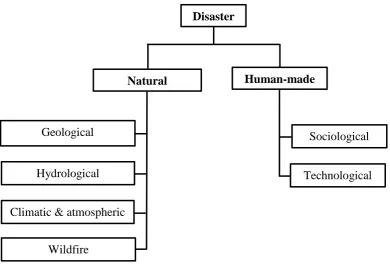
[image:37.595.117.508.52.316.2]Disasters are mainly classified by many researchers into two groups: natural disaster and human-made (Biswas & Choudhuri, 2012; Carrillo et al., n.d.; Fischer, 2008; Iyer & Mastorakis, 2006; Moe & Pathranarakul, 2006; Zimmerman, 1985). Figure 2.3 illustrates the different types of disaster. However, certain research such as Moe and Pathranarakul (2006) call human-made disaster by a different name; that of “technological disaster”.
Figure 2.4 Types of disasters (Shaluf, 2007, p. 705)
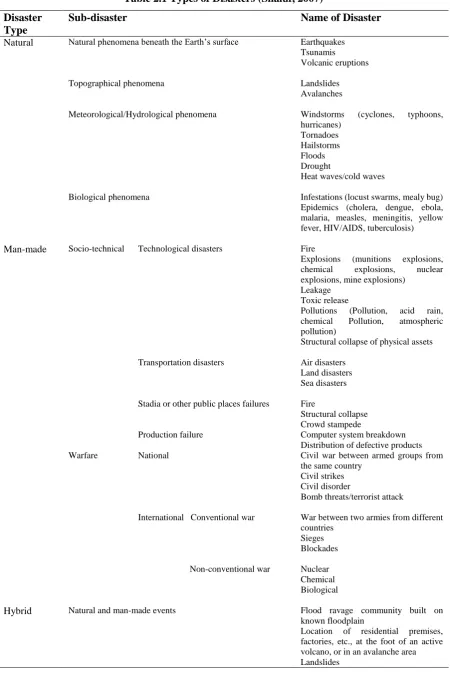
On the other hand, Shaluf (2007) classified it into three groups: natural, human-made and hybrid disasters as shown in Figure 2.4. Similarly, Hood and Jackson (1992, p. 112) categorised it into purely natural disasters, hybrid disasters and purely social disasters. What follows is a description of these types.
Disaster
Human-made
Sociological
Natural
Geological
Hydrological
Climatic & atmospheric
Wildfire
Technological
Disaster
Natural disaster Hybrid disaster
18
2.4.1
Natural Disaster
Broadly, a natural disaster has been defined as a consequence when humans are affected by a natural hazard (e.g., volcanic eruption or earthquake). Human vulnerability, caused by the lack of appropriate emergency management, leads to environmental, financial, or human impact (Biswas & Choudhuri, 2012, p. 14). In a similar way, Pelling et al. (2004, p. 98) defined it as “a serious disruption triggered by a natural hazard causing human, material, economic or environmental losses, which exceed the ability of those affected to cope”. Carrillo et al. (n.d., p. 28) state that these types of disaster occur naturally in proximity to, and pose a threat to, people, structures or economic assets. Biological, geological, seismic, hydrologic, or meteorological conditions or processes in the natural environment caused these types of disaster (e.g., cyclones, earthquakes, tsunami, floods, landslides, and volcanic eruptions). It is widely known that “Acts of God” are often termed as natural disasters (Shaluf, 2007). Natural disasters are classified by Biswas and Choudhuri (2012) into four types (geological, hydrological, climatic & atmospheric, and wildfire) as shown in Figure 2.3. However, Turner and Pidgeon (1997) cited in Shaluf (2007, p. 707) classified it in a different way, namely, natural phenomena beneath the earth’s surface, natural phenomena of complex physical origin on the earth’s surface, metrological/hydrological phenomena and biological phenomena. Finally, it is important to mention that natural disasters are considered catastrophic events, over which man has no control, resulting from natural causes such as volcanic eruptions, tornadoes, earthquakes, etc. (Shaluf, 2007).
2.4.2
Human-Made Disaster
19
Whereas the frequency and severity of natural disasters should be acknowledged, Harding (2007) states that human-made disasters are broader in scope and consequences. Furthermore, human-made disasters provoke a serious disruption of the agriculture, economy and health-care sectors of a society, typically producing long-lasting effects that perpetuate underdevelopment. To sum up, disaster management has traditionally emphasised natural hazards rather than made technological hazards (Zimmerman, 1985). This study will shed light on human-made disasters stemming from terrorism in Iraq.
2.4.2.1 Types of Human-Made Disasters
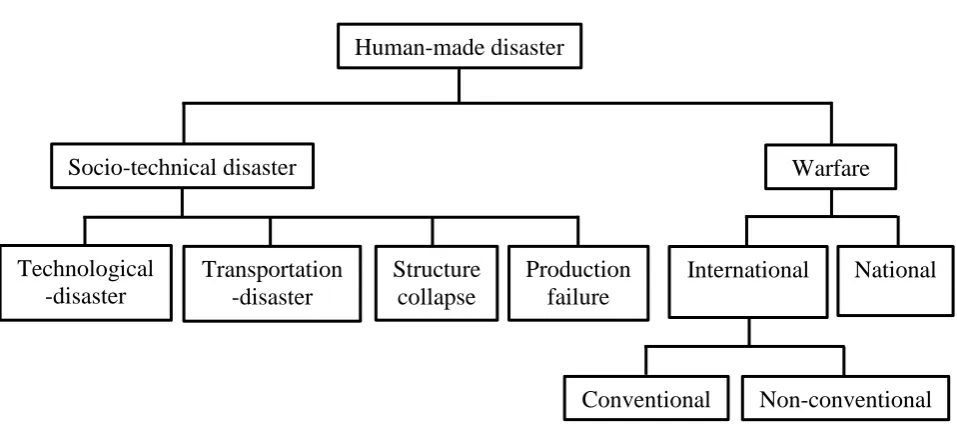
[image:39.595.85.564.505.717.2]Biswas and Choudhuri (2012) categorised human-made disasters into two types: technological and sociological. Technological disasters are the results of the failure of technology, such as transport disasters, engineering failures, or environmental disasters. Sociological disasters have a strong human motive, such as war, riots, criminal acts and stampedes (Biswas & Choudhuri, 2012, p. 14). However, the International Federation of Red Cross and Red Crescent Societies (2003) classified it by its occurrences, that can be sudden or long-term. Sudden human-made disasters include mine, structural and building collapses when this occurs independently without any outside force. Moreover, land, sea, and air disasters are all human-made disasters. Long-term human-made disasters tend to refer to international and national conflicts. Nevertheless, Turner and Pidgeon (1997) cited in Shaluf (2007, p. 707) categorised it due to its causes: (see Figure 2.5)
Figure 2.5 Types of Human-Made Disasters (Shaluf, 2007, p. 705)
Warfare Socio-technical disaster
Human-made disaster
National Technological
-disaster
Transportation -disaster
Structure collapse
Production failure
International
20
Caused by warfare:
1.Conventional warfare, including blockades and sieges; and
2.Non-conventional warfare (biological, chemical and nuclear).
Caused by accidents:
1. Vehicular (ships, cars, planes, trains); 2. Drowning;
3. Collapse of buildings and other structures; 4. Explosions;
5. Fires;
6. Biological; and
7. Chemical, including poisoning by pesticides and pollution.
2.4.3
Hybrid Disasters
According to Shaluf (2007), hybrid disasters are a result of both human error and natural forces. The extensive clearing of jungles causing soil erosion, and subsequently heavy rain causing landslides is considered one of many examples of hybrid disasters. In a similar way, Hood and Jackson (1992) cited in Shaluf (2007, p. 710) defined it as a compound of human decisions and volatile natural forces (e.g. floods ravage communities built on a known flood plain).
21
Table 2.1 Types of Disasters (Shaluf, 2007)
Disaster Type
Sub-disaster Name of Disaster
Natural Natural phenomena beneath the Earth’s surface Earthquakes Tsunamis Volcanic eruptions
Topographical phenomena Landslides Avalanches
Meteorological/Hydrological phenomena Windstorms (cyclones, typhoons, hurricanes)
Tornadoes Hailstorms Floods Drought
Heat waves/cold waves
Biological phenomena Infestations (locust swarms, mealy bug) Epidemics (cholera, dengue, ebola, malaria, measles, meningitis, yellow fever, HIV/AIDS, tuberculosis)
Man-made Socio-technical Technological disasters Fire
Explosions (munitions explosions, chemical explosions, nuclear explosions, mine explosions)
Leakage Toxic release
Pollutions (Pollution, acid rain, chemical Pollution, atmospheric pollution)
Structural collapse of physical assets
Transportation disasters Air disasters Land disasters Sea disasters
Stadia or other public places failures Fire
Structural collapse Crowd stampede
Production failure Computer system breakdown Distribution of defective products Warfare National Civil war between armed groups from
the same country Civil strikes Civil disorder
Bomb threats/terrorist attack
International Conventional war War between two armies from different countries
Sieges Blockades
Non-conventional war Nuclear Chemical Biological
Hybrid Natural and man-made events Flood ravage community built on known floodplain
22
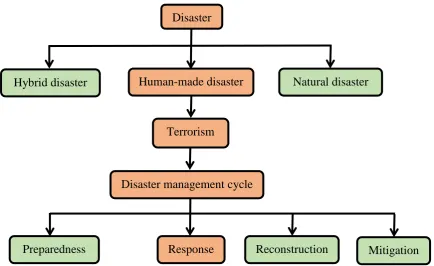
To sum up, sometimes natural and/or human-made disasters trigger subsequent disasters such as displaced people (International Federation of Red Cross and Red Crescent Societies, 2003). The subsequent disasters have social and economic impacts. Furthermore, the disruption of normal community functions through human-made disaster must be recognised for its broad-based, long-term impact (Harding, 2007). For this reason, human-made disaster with particular reference to terrorism in Iraq has been highlighted in this research (see Figure 2.6).
Figure 2.6 Type of Human-made Disasters Highlighted in this Research
2.5
Terrorism
Terrorism is considered the most salient hazard due to a remarkable upsurge in terrorist acts during the past decade particularly in Iraq (see Table 1.1). McEntire (2015) considered terrorism as one of the most deadly civil/conflict risks throughout history, and has unfortunately become even more pronounced in the past few years. Helbing, Ammoser, and Kühnert (2006) stated that terrorist attacks have become an increasingly serious concern. In many cases, terrorists try to gain public awareness for certain political or religious interests or a disregarded problem, for instance, a suppressed minority. The terrorist attacks on 11th September 2001 in New York and on 11th March 2004 in Madrid are the best illustration of such attacks.
After the events of 11 September 2001, the world changed, becoming a more dangerous and uncertain place, and no-one can consider themselves safe or immune from the threat of terror. According to Davies (2005), the threat of suicide bombers and the events of 9/11 have brought a completely new meaning to terrorist activity. As there is a willingness among terrorists to use almost any means to make chaos and wreak death and destruction, leading to an environment of fear caused by the threat alone. In agreement, Helbing et al. (2006) noted that in many cases, the ultimate goal of terrorists is maximum damage. Not only damage, Lemyre et al. (2005) indicated terrorism events, such as radiological, chemical, biological, and nuclear have
Disaster
Human-made disaster
Hybrid disaster Natural disaster
23
psychosocial consequences both at the emotional levels and normal behavioural and the clinical level. Arora and Arora (2013) noted that it is important to briefly mention the threat of a radiological or chemical attack being integrated into a suicide bombing. Though these have not yet been used with success, it has been attempted in bombings in Iraq using chlorine tankers. Arora and Arora (2013) added that first responders must have a basic knowledge of what to expect during suicide attack events along with their specific security, safety and management considerations. An understanding of the threat posed by explosive devices specifically targeting first responders is considered a key to such awareness. While the most important aspects of responder knowledge are awareness of the threat of secondary devices. In addition to that the most important initial steps in suicide attack responses are ensuring that the threats on scene have been neutralised (Arora & Arora, 2013).
Terrorism is defined in many ways by many scholars and institutions. According to Frykberg and Tepas 3rd (1988, p. 569), terrorism is the unlawful exercise of random and ruthless violence against property or individuals, usually innocent civilians, in order to intimidate governments or societies for political or ideological purposes. In a similar way Panzer, Butler, and Goldfrank (2003, p. 2) defined terrorism as the illegal use or threatened use of force or violence to instil fear in populations, and an intent to coerce societies or governments by inducing fear in their populations. While Miron and Cernuşca (2008, p. 65) and Romanian Law (535/2005) defined terrorism as “the unlawful use or threatened use of force or violence against people or property to coerce or intimidate governments or societies, often to achieve political, religious, or ideological objectives”. Similarly, McEntire (2015) defined terrorism as “the threat or use of violence to intimidate someone or a government. The perpetrators usually have ideological motives and a political objective to reach”. Perry and Lindell (2003) argue that whilst it is possible to use the general basic structures of disaster response management, in terms of using the planning knowledge, terrorist incidents are very different to other types of disaster, having unique aspects which need to be considered in the response plans.
24
Iraqi and US military assaults and sectarian militias, threat of suicide bombings, to violent street crime (Wong et al., 2005).
As discussed above, terrorist threats are a reality in Middle Eastern countries, particularly in Iraq. Accordingly, terrorist operations are the main reason leading to the increased number of disasters in Iraq. Thus, evaluation needs to be conducted to the system of disaster management in Iraq due to these operations.
2.6
Disaster and Conflict
Conflicts can be violent and militarised. As conflicts multiply, interact and escalate, the domestic knowledge infrastructure of societies is frequently targeted directly and indirectly (Bush & Duggan, 2015). Basically, conflicts can be prolonged or shortened by disasters (Keefer, 2009). Further, long-term disasters tend to refer to national and international conflicts (Shaluf & Ahmadun, 2006). Keefer (2009) believes that disaster recovery efforts can be improved or undermined by conflicts. In addition, disaster relief is often disrupted by conflict. Damage resulting from armed conflict, depending on the nature of the armaments employed and the possibilities of secondary damage linked to the conflict (e.g. fire, flood), may resemble the impact of natural disasters (Teijgeler, 2006). Based on Wisner et al. (2004), conflicts have continued to exacerbate natural extreme events such as drought in Afghanistan and the volcanic eruption in eastern Congo (2002). According to Keefer (2009), the reason behind the cause or exacerbation of conflict is that the underlying political conditions that weaken government response to natural hazards also make governments more vulnerable to insurgency. An association between conflict and disaster can be promoted by the political and strategic factors and causes distortions in the allocation of disaster relief (Keefer, 2009). Goodyear (2009) stated that the central link between hazards, disaster, conflict and economic development is vulnerability. In agreement, Humayun and Al-Abyadh (2014) noted that the vulnerability of the Iraqi people has been exacerbated by different kinds of hazards such as acute poverty, displacement and the continuing effects of conflict. According to Paffenholz (2005), two-thirds of the countries of the world are either suffering from political tensions and violent conflict or find themselves in the aftermath of a destructive conflict or war.
25
devastation from natural disaster can be exacerbated and complicated by human action – both by ineffective efforts to deal with the disaster and by the increased vulnerability that ensues from potential conflict (Wisner et al., 2004).
Human-made disasters (at the outset) often have a greater impact than natural disasters in the detrimental effects on people. Theft, war, civil disorder, terrorism, neglect and vandalism are human factors in the wilful destruction of the world (Teijgeler, 2001). Armed conflict and acts of terrorism remain particularly disturbing, since they have such a devastating effect on society and the heritage of countries (Teijgeler, 2006).
2.7
Disaster Management
26
are required at all phases of a disaster. Industry is one of the institutions interested in developed planning to address a disaster. Resource assessment, diagnosis and feedback in order to satisfy the goal of disaster reduction are a requirement of perfect planning. Dedicated commitments are required for disaster management by central, state and district levels. An effective disaster plan could be maintained by a structure with obviously defined authority and adequate budget. In general, it can now be concluded that better elaboration, planning, strategic mobilisation, training for relief project workers and techniques to push aid through unresponsive governments should be stressed by a disaster management system. Indeed, obvious procedures for systematic behaviour by different relief organisations will lead to more effective and efficient relief tasks (Lai, He, Tan, & Phua, 2009).
2.7.1
Disaster Management Cycle
In order to better understand the importance of the disaster response phase in the disaster management cycle, it is first important to provide a definition of what the disaster management cycle is. According to Warfield (2008) cited in Vasilescu et al. (2008), the disaster management cycle represents the ongoing procedure by which governments, civil society, and businesses plan for and decrease the influence of disasters, react during and immediately following a disaster, and take steps to recover after a disaster has occurred. Suitable actions at all cycle phases cause better warnings, greater preparedness, reduced vulnerability or the forbidding of disasters during the following repetition of the cycle. He also added that the whole disaster management cycle contains the modelling of public policies and plans that either modify the causes of disasters or mitigate their effects on people, property, and infrastructure. Using a narrower concept, Carrillo et al. (n.d., p. 27) define the disaster management cycle as “a cycle with phases that reduce or prevent disasters”. Whereas Iyer and Mastorakis (2006, p. 3) define it as a logical, integrated and progressive sequence of activities as a cycle of preparedness and action followed by disaster management.
27
Iyer and Mastorakis (2006, p. 3) identify the stages of disaster management cycle as, risk reduction, readiness, response, and recovery. Gospodinov and Burnham (2008, p. 28) divided the disaster cycle into four phases, namely, response, reconstruction, mitigation, and preparedness see Figure 2.7. Similarly, Muaafa et al. (2014) classify disaster management stages to mitigation, preparedness, response, and recovery. In a similar way, Vasilescu et al. (2008, p. 49) presented the phases of the disaster management cycle but in a different style (see Figure 2.8). It can be seen that Vasilescu et al. (2008, p. 49) classification have more stages than Gospodinov and Burnham (2008, p. 28) one but it already includes the four stages of Gospodinov and Burnham (2008, p. 28). These divisions use the same concepts but in different terms.
Even though all disaster management phases are interrelated (Muaafa et al., 2014), the focus of this study is on the response stage of terrorism in Iraq (see Figure 2.9). This is because the response phase is identified as the most critical phase of the disaster management life cycle (Baharin et al., 2009) since delays of minutes can cost lives and property (Lindell et al., 2006).
28
Figure 2.9 Response Stage Highlighted in this Research
2.8
Disaster Response Management
Having defined what is meant by the disaster management cycle, disaster response management definitions will be reviewed. Disaster response can be defined as action “taken immediately before, during, or directly after an emergency occurs, to save lives [and] minimise damage to property” (Godschalk, 1991, p. 136) cited in (McEntire, 2015). In the same way, response can be defined as “activities taken immediately before, during, or directly after an emergency that saves lives, minimize property damage, or improve recovery; e.g., emergency plan activation, activation of emergency systems, emergency instructions to the public, emergency medical assistance, manning emergency operations centres, reception and care, shelter and evacuation, and search and rescue” (McLoughlin, 1985). Or it is “the provision of emergency services and public assistance during or immediately after a disaster in order to save lives, reduce health impacts, ensure public safety and meet the basic subsistence needs of the people affected” (UNISDR, 2009). While Vasilescu et al. (2008, p. 47) defined response activity as initiatives taken in response to a disaster with the purpose to achieve early recovery and rehabilitation of affected communities, immediately after disaster strikes. Likewise, Madry (2015) defined response as “the immediate set of actions taken to save lives and property in a disaster, including search and rescue, sheltering, emergency medical assistance, and more”. In the same way, response is defined as “the set of actions conducted during the initial impact of these emergency situations, including those to save lives and prevent further property damage providing
Disaster
Human-made disaster
Hybrid disaster Natural disaster
Mitigation Terrorism
Response
Preparedness Reconstruction
29
emergency relief to victims of natural or human-made disasters” (Barbarosoğlu & Arda, 2004). Carrillo et al. (n.d., p. 50) agree with this view, stating that disaster response is “the sum total of actions taken by people and institutions in the face of disaster. These actions commence with the warning of an oncoming threatening event or with the event itself if it occurs without warning”. On the other hand, Iyer and Mastorakis (2006, p. 3) define it as “the core of the initial response to a disaster provided by the emergency services and thereafter, depending on its nature and scale by the local authorities and voluntary and utility services”. While Nazarov (2011) defined response as “the actions taken to save lives and prevent further damage in a disaster or emergency situation. Response is putting preparedness plans into action. Response activities may include damage assessment, search and rescue, firefighting, and sheltering victims. Response activities take place during an emergency” (Nazarov, 2011). Using a narrower concept, the World Health Organization (2002, p. 22) defined it as a set of activities implemented after the impact of a disaster. Coppola (2015, p. 305) stated that the beginning of the response process is as soon as the hazard event has become imminent and lasts until the emergency is declared to be over.
Having evaluated the views on disaster response management, the following has been established as the working definition for disaster response management: “actions taken immediately before, during, or directly after an emergency occurs, to save lives, minimize property damage, to achieve early recovery and rehabilitation of affected communities, immediately after disaster strikes”.
30