SERVICE ORIENTED REAL-TIME BUFFER MANAGEMENT
FOR QOS ON ADAPTIVE ROUTERS
1
SARAVANAN.K, 2R.M.SURESH
1 Asst.Professor,Department of Information Technology,
Velammal Engineering College, Chennai, Tamilnadu, India.600 080 2 Principal, Sri Muthukumaran Institute of Technology, Chennai, Tamilnadu, India
E-mail: [email protected]
ABSTRACT
To increase the quality of service in adaptive routers, this paper proposes a service oriented buffer management algorithm. This paper use different buffers for different service packets and the buffer controller maintains the buffer size according to flow of incoming packets. The buffer controller increases or decreases the buffer size at each input and output port by monitoring the rate of incoming packets and the size of buffer is fixed based on a flow threshold which is dynamic one. The value of flow threshold is computed using dynamic flow approximation algorithm. The proposed system reduces the packet dropping rate and increases the throughput.
Keywords: Adaptive Routers, Buffer Management, Packet dropping, QoS.
1. INTRODUCTION
The development of information technology induced people to use mobiles, internet and other tools. Peoples are using internet and web technologies to explore information’s about any topic and uses voice chat and video conferencing and etc. whatever the service they are using, all those information are transferred through the network layer. The network layer transfers the information in form of data flow which constitutes of data packets. The network layers consider all type of packets as flow packets.
The packets transmitted are destined to particular machine or instrument or device may pass through various networks. Each network has its own routers or switches which is the entry point to that particular network. A network may consist of few other intranets and which consists of number of computers or devices. So that there may be huge number of data packets arriving at the router of that network, all those packets have to be queued in a temporary storage medium and forwarded towards destination. The temporary storage medium where the router or switch stores the packet is called buffers. The router may have any number of input and output ports where it can receive or send
packets. For each port it has a unique queue allocated.
Once the incoming rates of packets are increased then the router could not store the packets in buffer and that all will be discarded or dropped if the router is not adaptive one. The adaptive router can handle the incoming traffic with intelligent manner and reduce packet drop. How the router is handling the traffic is called buffer management.
The buffer is a linear storage medium; you can visualize that as a queue. The size of buffer is constant one initially, but it can be increased or decreased at runtime according to algorithm used by the routers. Once there is not enough space in the buffer to store the incoming packets, then they will be dropped. Queue management algorithm is a particular calculation method to determine the order of sending data packets stored in the queue. So that there must be an intelligent queue management in the router for better service.
throughput there must be a high quality buffer management implemented on the adaptive router.
2. BACKGROUND
Various queue management algorithms are proposed earlier and this paper discuss few of them here.
In dynamic buffer management algorithm proposed in [1], buffer slots can dynamically be re-allocated for various applications to improve performance. In that reallocation is based on the number of hotspots using EBLA (Extended Buffer Loan Algorithm). In [2] they introduces Adaptive Backpressure, a novel scheme that improves the utilization of dynamically managed router input buffers by continuously adjusting the stiffness of the flow control feedback loop in response to observed traffic conditions. They modified the router's flow control mechanism little bit and heuristically limit the number of credits available to individual virtual channels based on estimated downstream congestion, aiming to minimize the amount of buffer space that is occupied unproductively.
A Two-levels of adaptive buffer for virtual channel router in NoCs [3], is proposed which use the two-level adaptive buffer for a virtual channel router, where the buffers units and the virtual channels are dynamically allocated to increase router efficiency in a NoC, even under rather different communication loads. With the proposed architecture the buffer and virtual channels in the input channels of the routers can be adapted at run time.
In [4] they introduces Adaptive Backpressure, a novel scheme that improves the utilization of dynamically managed router input buffers by continuously adjusting the stiffness of the flow control feedback loop in response to observed traffic conditions. They have done this using a simple extension to the router's flow control mechanism; it limits the number of credits available to individual virtual channels based on estimated downstream congestion, aiming to minimize the amount of buffer space that is occupied unproductively. This leads to more efficient distribution of buffer space and improves isolation
between multiple concurrently executing workloads with differing performance characteristics.
In [5] and [6] they proposed adaptive buffer allocation with virtual channel. In [5] dynamically allocates virtual channels and buffer slots according to network traffic conditions. Each input channel manages its virtual channels according to the number of header flits that arrive in the input channel, that is, for each new packet that reaches the input channel, a new virtual channel is allocated.
In [6] , they combined [5] with the loan process of buffer slots from other channels in the router to sustain performance in the presence of faults. The router architecture enables two-levels of adaptability, both dynamic virtual channel allocation and sharing buffer slots among input channels. There is only one buffer for the entire router shared among all channels, and a linked list controls the buffer status. The buffer stores flits and pointers for the next flit.
In [7], they proposed static virtual channel allocation policy that statically allocates channels to flows at each link when oblivious routing is used, and ensure deadlock freedom for arbitrary minimal routes when two or more virtual channels are available.
A Dynamically-Allocated Virtual Channel Architecture with Congestion Awareness for On-Chip Routers [8], in low rate, this structure extends Virtual Channel depth for continual transfers to reduce packet latencies. In high rate, it dispenses many Virtual Channels and avoids congestion situations to improve the throughput. This paper modifies the VC controller and VC allocation modules, while designing simple congestion avoidance logic. In Preemptive Virtual Clock: A Flexible, Efficient, and Cost-effective QOS Scheme for Networks-on-Chip [9] they discussed a new Qos Scheme which enables efficient reclamation of idle network bandwidth without per-flow buffering at the routers and with minimal buffering at the source nodes. PVC averts priority inversion through preemption of lower-priority packets.
They introduce a distributed algorithm that uses statistical learning to approximate the global knowledge required by the optimal algorithm, in
practice. In [13], they provide a general framework
for devising optimal routing algorithms to such networks under different objective functions and various real-life constraints. The key insight is to model the DTN as an equivalent time-independent graph; this allows the usage of well-known algorithms and techniques to achieve optimal results. These algorithms can be also used as approximation for less certain settings or as benchmarks to evaluate other routing algorithms. In addition, this paper extended the framework to deal with long-lived DTNs in which contacts are periodic.
3. PROPOSED METHOD
[image:3.612.98.302.455.595.2]The proposed method uses service oriented buffers for each input and output queues. There may be various service packets arriving at various channels of the router. The voice packet, video packets and data packets are arriving at single channel with varying priority. For example the voice and video conferencing packets are more prior other than normal textual contents.
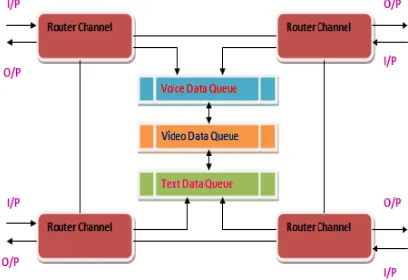
Fig 1: Shows The Buffer Architecture Of The Proposed Method.
Fig 1. Shows that there are three different queues namely voice, video, text data queues, each will store packets of that particular type. There are various components present in the proposed architecture, each has particular responsibility and they are buffer controller, dynamic threshold
manager, and scheduler. The buffer in this methodology is a shared medium, i.e. any type of packet can be placed in any type of queue under the circumstance that there are huge space available. The size of buffer is controlled by the value generated by DNC (Dynamic Threshold Controller). The packet handler is responsible for placing the packets in respective queues in both input and output port of the router.
Fig2: Proposed System Architecture.
3.1 Dynamic Threshold Controller:
The threshold value is the key which controls the size of the buffer used in adaptive router. It generates three different threshold values, i.e. for each buffer it generates different threshold. The threshold value computed is based on the flow and the size of buffer is computed using this threshold value. The dynamic threshold controller (DNC) always monitors the flow at each port of the router and each kind of packets. Whenever the flow varies in notifying rate it computes a new threshold value for that particular queue for that port. The buffer depth or size is dynamic in nature and it is assigned in design time. The optimum buffer size in this protocol is 3, and will be changing dynamically by computing flow approximation.
3.2 Dynamic Flow Approximation Algorithm: Step1: start
Step2: for each port Pi of router R
A- a constant selected by a router initially. End.
Step3: for each port Pi of router R
Initialize threshold Thi to a constant. Thi a constant selected by a router initially.
End.
Step4: for each port Pi of router R Compute flow Fi = NP/Ti. NP- number of packets arrived. Ti- time frame in seconds. If Fi > (BSi×(m/100))
BSi- Buffer Size of particular queue. BSi = ( Fi × m × 100).
m – is a constant used by router. The value of m is between 1.1 to 1.5
End End. Step5: Stop.
3.3 Buffer Controller:
Buffer controller assigns the place for the incoming packets and controls the size of the buffer. Whenever a new packet comes into the port it gets a request from the packet handler and this will assign a location for the new packet. The place this assigns is depending on the free space available in the respective queue. For example if there is a new voice data packet, but there is not enough space in the voice queue, then it will look for the space in video data queue and assigns it to that queue. The same will be done for all other kind of packets also.
Algorithm: Step1: start
Step2: receive request from packet handler. Step3: find out nature of packet Pi.
Step4: check space availability in respective queue Qi.
Step5: if BSi<NP then
Assign Pi to Queue Qi.
Increment NP by one NP=NP+1. Else
Check space availability in other queues Qx.
if BSx<NP then
Assign Pi to Queue Qx.
Increment NP by one NP=NP+1. End
End Step6: Stop.
3.4 Packet Handler:
The packet handler waits for the incoming packet, and requests the buffer controller to assign space for the new packet. Once the buffer controller assigns a space for the new packet it stores the packet in particular queue assigned and wait for the next packet. On the other end the packet scheduler which is default with the router will schedule the packets in output queue according to the algorithm implemented with the router.
4. RESULTS AND DISCUSSION
The service oriented real time buffer management produces good results with increased efficiency. It reduces the overall packet drop and it reduces the overall power consumption and increases the life time. the proposed method increases the throughput of the router. The dynamic and sharing nature of the buffer uses the space completely and by placing the packets in other queues reduces the packet drop in the router.
Fig3: Shows The Packet Drop Ratio
Fig 3, shows the packet drop ratio of the proposed method. This paper handled the flow rate efficiently to reduce the packet drop even in the worst case. If the flow rate increases suddenly the proposed system manages the buffer with other buffer space exists or buffer reallocation intelligently.
0 0.2 0.4 0.6 0.8 1
1
million million2 3million 5million
per
cen
ta
ge
of
p
ac
ket
s d
ro
pp
ed
Fig 4: Show The Ratio Of Power Consumption Due To The Increase Of Buffer Size.
[image:5.612.90.296.410.587.2]The power consumption to allocate the buffers and initialization and handling process will take more in other systems normally. This paper have reduced the power consumption in huge scale by reducing the probability of buffer reallocation. In this methodology the invocation probability of buffer reallocation process is very less because the methodology uses the space exist in other buffers for better buffer management , the buffer reallocation process will be called only at the time when there will be no space exist at all the buffers. This reduces the power consumption of overall system and increases the performance.
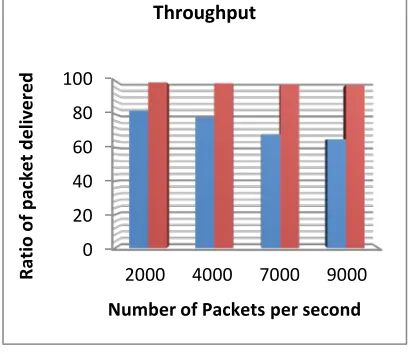
Fig 5: Shows The Throughput Ratio Of Different Algorithms.
The fig 5 shows the throughput ratio achieved by the proposed method and compared with other methods. It is clearly shows that this method have achieved higher throughput better than other methods. It shows that the number of packets arrived and number of packets re routed towards the destination.
Fig6 : Latency Of Proposed And Adaptive, Homogenous Routers.
The power results were obtained using the maximum frequency of each architecture. As previously commented, for the same average latency, the performance could be reached with buffer depth 4 in adaptive router and 9 in homogenous routers to the four mentioned traffic patterns.
Fig. 6 shows the results of latency for the proposed, adaptive and homogeneous router. The homogenous router presents all channels with a fixed buffer size of 4. The adaptive router uses a buffer depth allocator with a equal to 0.125, and in this case, the buffer depth is monitored and changed at run time when 128 packets pass through a router, each channel calculates a new buffer depth based in the traffic of the channel and the buffer depth increase up to 9, but for the protocol used here the initial buffer depth is 3 and reaches up to 6 according to flow approximation.
The service oriented real time buffer management reduces the power consumption 36% average and it uses smaller buffer depths to provide the same performance. For the same average latency, the frequency of proposed method is higher than the adaptive router, and also the area of consumption is also less.
5. CONCLUSION
The proposed system uses dynamically varying threshold which is controlled by threshold controller, which controls the size of buffer at each port. This phenomenon makes the router to handle packets without packet dropping. Also various kind of packets uses various buffers, because the 0
5 10 15 20
2000 4000 7000 9000
Po
w
er c
on
su
mp
tio
n
size of queue
Power overhead
0 20 40 60 80 100
2000 4000 7000 9000
Ra
tio
o
f p
ac
ket
d
el
iv
er
ed
Number of Packets per second
Throughput
0 20 40 60
v0 v1 v2 v3
La
ten
cy
(C
yc
les
)
incoming ratio of voice and video packets is higher than ordinary textual data packets. Using same buffer for both packets will reduce the throughput due to the size of buffer. To overcome this the paper uses dynamic threshold to control the size of buffer and sharing methodology of buffers to increase the throughput and reduce the packet drop ratio.
REFERENCES:
[1]. Umamaheswari s, Dynamic buffer management to improve the performance of fault tolerance adaptive Network-On-Chip applications, Recent Trends In Information Technology (ICRTIT), pages 452-457, 2012. [2]. Becker d u, Adaptive Backpressure: Efficient
buffer management for on-chip networks, Computer Design ICCD, IEEE, pages 419-426, 2012.
[3] Concatta c, Two-levels of adaptive buffer for virtual channel router in NoCs, IEEE VLSI-SOC, pages 302-307, 2011.
[4] George Michelogiannakis, William J. Dally, Daniel U. Becker, Nan Jiang, "Adaptive Backpressure: Efficient buffer management for on-chip networks," iccd, pp.419-426, 2012 IEEE 30th International Conference on Computer Design (ICCD), 2012
[5] Nicopoulos, C., Park, Kim, D., Vijaykrishnan, N., Yousif, S., Das C.: ViChaR: A Dynamic Virtual Channel Regulator for Network-on-Chip Routers, Proc. 39th Ann. Int. Symp. Microarchitecture (MICRO), 2006
[6] M. H. Neishaburi and Zeljko Zilic, “Reliability aware NoC router architecture using input channel buffer sharing”. Proceedings of the 19th ACM Great Lakes symposium on VLSI, pp. 517-522, 2009
[7] K. S. Shim et al., “Static Virtual Channel Allocation in Oblivious Routing,” in Proc. of the 3rd ACM/IEEE Int’l Symp. on Networks-onChip, 2009.
[8] M. Lai et al., “A Dynamically-Allocated Virtual Channel Architecture with Congestion Awareness for On-Chip Routers,” in Proc. of the 45th Design Automation Conf., 2008. [9] B. Grot et al., “Preemptive Virtual Clock: A
Flexible, Efficient, and Cost-effective QOS Scheme for Networks-on-Chip,” in Proc. of the
42nd IEEE/ACM Int’l Symp. on
Microarchitecture, 2009.
[10] “Kilo-NOC: A Heterogeneous Network-on-Chip Architecture for Scalability and Service Guarantees,” in Proc. of the 38th Int’l Symp. On Computer Architecture, 2011.
[11] Aruna Balasubramanian, Brian Neil Levine and Arun Venkataramani, (2007) “DTN Routing as a Resource Allocation Problem”, ACM SIGCOMM, Computer Communication Review, Vol. 37, No.4.
[12] Amir Krifa, Chadi Barakat, Thrasyvoulous Spyropolous, (2008) “An Optimal Buffer Management Policies for Delay Tolerant Networks”, in Proceedings of IEEE SECON 2008, pp. 260-268
[13] David Hay, Paolo Giaccone, (2009) “Optimal Routing and Scheduling for Deterministic Delay Tolerant Networks”, in Proceedings of the Sixth international conference on Wireless On Demand Network Systems and Services- 2009
[14] G.Fathima, Dr. R.S.D Wahidabanu, (2010). “Comparison of DTN routing protocols and their Buffer utilization using ONE simulator,” in Proceedings of International Conference on Wireless Networks- World Comp ’10, Vol.1 pp 252-256.