Initial Achievement Level Descriptors
and College Content-Readiness Policy
i
Introduction
The Smarter Balanced Assessment Consortium (Smarter Balanced) has developed an
interconnected system of initial achievement level descriptors (ALDs) for English language
arts/literacy (ELA/literacy) and mathematics that are aligned with the Common Core State Standards
(CCSS) and the Smarter Balanced assessment claims (see
Definition of Terms). ALDs are commonly used in K–12
statewide assessments to explain the knowledge, skills, and
processes that students display at predetermined levels of
achievement (e.g., Basic, Proficient, and Advanced). These
ALDs are often found on student-level score reports or on
state aggregate reports so that stakeholders, such as parents
and teachers, can understand the types of knowledge, skills,
and processes that students have demonstrated on an
assessment.
In its Content Specifications documents, Smarter Balanced
defines the assessment claims and articulates how the CCSS
would be demonstrated with assessment items and tasks. At
a finer level of detail, the Content Specifications also include
assessment targets that map the CCSS onto statements of
evidence that will be collected through the assessment. The
ALDs presented in this document have been developed by
referring consistently to the Content Specifications and the
CCSS. As a result, the ALDs reflect the depth and rigor of the
CCSS as well as the way in which Smarter Balanced intends to
assess the CCSS.
The ALDs presented in this document represent a new
direction in the focus and purpose of ALDs. In the past, ALDs
were developed near the end of the test development cycle
and could only summarize student performance. This new
approach allows for the development of ALDs at the beginning
of the test development cycle so that expectations for student
performance may guide the way tests are conceived and
produced.
There is an additional unique aspect of these ALDs. Because
the CCSS are grounded in expectations for college and career
readiness, the Smarter Balanced assessments are being
deliberately designed to measure each student’s progress
toward meeting those expectations. The ALDs presented here
are linked to an operational definition of college
content-readiness as well as a policy framework to guide score
interpretation for high schools and colleges. Smarter
Balanced does not yet have a parallel operational definition
and framework for career readiness; however, it is working toward this end and will amend this
document when those materials are ready for public review.
Definition of Terms
Assessment Claims are broad evidence-based statements about what students know and can do as demonstrated by their
performance on the assessments. At each grade level within mathematics and ELA/literacy, there is one overall claim encompassing the entire content area and four specific content claims. Students will receive a score on each overall claim and scores for the specific content claims. Content Categories are sub-categories that apply to some, but not all, specific
assessment claims. For example, within the specific content claim “Reading” there are two content categories: “Informational Text” and “Literary Text.”
Assessment Targets connect the CCSS to evidence that will be collected from the assessment. The targets map the standards in the CCSS onto assessment evidence that is required to support the contentcategories and claims. Assessment targets are used to guide the development of items and tasks that will measure the CCSS.
Standard Setting is the process whereby educators recommend threshold test scores that separate students into achievement levels.
Governing States are member states that have committed to using the Smarter Balanced Assessment System and have voting privileges on Consortium policy; 21 of the consortium’s 25 member states are governing states.
ii
process used to create the ALDs, describes the designation of college and career readiness for
Grade 11 students, and provides the proposed ALDs.
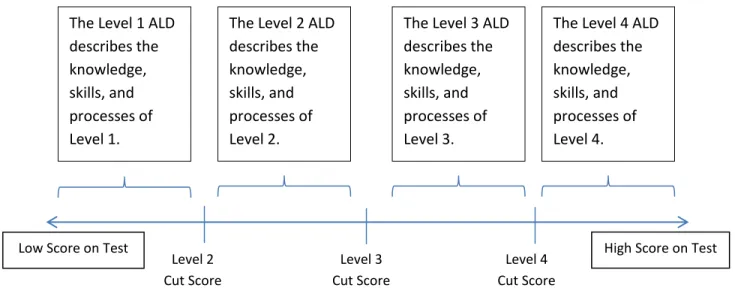
Figure 1. Relationship between Test Scale and ALDs
What Are Achievement Level Descriptors?
Achievement level descriptors (ALDs) are a means of describing performance on a standardized test
in terms of levels or categories of performance. For the Smarter Balanced assessments, outcomes
will be reported in terms of four levels of achievement: Level 1, Level 2, Level 3, and Level 4. The
ALDs are text descriptions of the knowledge, skills, and processes demonstrated by students in each
category of performance. The policy, range, and threshold ALDs (see page 3 for definitions of the
ALDs) provided with this report are labeled as “initial” because they all will be refined and finally
adopted by Smarter Balanced after student performance data are collected through a national field
test and after standard setting occurs. In addition, they will be augmented to include the reporting
ALDs. This will ensure a seamless integration of the ALDs with student performance measures.
1Figure 1 shows the relationship between performance on a standardized assessment and the ALDs.
The horizontal line in Figure 1 represents the test scale, which ranges from low test scores to high
test scores. Low test scores signify poorer performance on the test than do high test scores. The
horizontal line is separated by three cut scores into four levels of achievement. The cut scores
represent the test score necessary for a student to move from one level of achievement to the next
highest level.
A higher score on the test reflects a greater accumulation of knowledge, skills, and processes. ALDs
are cumulative, where the knowledge, skills, and processes of lower level ALDs are assumed by the
1The mathematics ALDs arise from the Smarter Balanced Assessment Targets and the closely associated CCSS. In some instances, the CCSS aligned to a particular target do not lend themselves to a range of 4 levels of ALDs as the associated skill requires mastery at the level 3 range. In such cases, there will appear no level 4 range ALD.
High Score on Test Low Score on Test
The Level 1 ALD
describes the
knowledge,
skills, and
processes of
Level 1.
students.
The Level 2 ALD
describes the
knowledge,
skills, and
processes of
Level 2.
students.
The Level 3 ALD
describes the
knowledge,
skills, and
processes of
Level 3.
students.
The Level 4 ALD
describes the
knowledge,
skills, and
processes of
Level 4.
students.
Level 2 Cut Score
Level 3 Cut Score
Level 4 Cut Score
iii
skills, and processes described in Levels 1 and 2.
The most commonly understood use of ALDs is to communicate the meaning of test scores. When
ALDs are used for reporting scores, parents, teachers, and other stakeholders are provided
summaries of the different levels of performance in terms that can be readily understood. It is
important to recognize, however, that there are other purposes for ALDs beyond score reporting,
including guidance for policy and standard setting (establishment of cut scores) as well as item
development. To address the entire set of purposes, Smarter Balanced has developed a system of
interrelated ALDs that support the entire testing program. This system includes four types of ALDs,
which are defined below and summarized in Table 1.
Policy ALDs
are general descriptors that articulate the goals and rigor for the final performance
standards. These descriptors set the tone for the subsequent descriptors. These ALDS are very
high-level and are most often used by policymakers. For Smarter Balanced, there will be two
types of policy ALDs, including the policy ALDs that are aligned to Smarter Balanced’s overall
claims and the Content ALDs that are aligned to Smarter Balanced’s content claims.
Range ALDs
are grade- and content-specific descriptors that may be used by test developers to
guide item writing; these ALDs describe the cognitive and content rigor that is encompassed
within particular achievement levels. The range ALDs are developed at the beginning of the
testing program. The knowledge, skills, and processes described in the range ALDs are ones that
are expected of students; in other words, they are knowledge, skills, and processes that students
should
have.
Threshold ALDs
are created in conjunction with or following range ALDs and are used to guide
standard setting. The threshold ALDs are a subset of the range ALDs and use only the
information from the range ALDs that defines the minimum performance required for meeting a
particular achievement-level expectation. As with the range ALDs, these ALDs also reflect the
knowledge, skills, and processes that are expected of students. As stated above, the knowledge,
skills, and processes in ALDs are cumulative. For the threshold ALDs, it is important to
understand that they reflect the cumulative skills of the range ALDs, not just the threshold ALDs.
The student who has achieved the threshold Level 3 is assumed to have the knowledge, skills,
and processes of the range Levels 1 and 2 ALDs.
Reporting ALDs
are the final ALDs that are developed following standard setting. They will
provide guidance to stakeholders on how to interpret student performance on the test. These
ALDs will be written after the standard setting in summer 2014. An important difference between
the reporting ALDs and the range/threshold ALDs is that the reporting ALDs reflect student test
performance. As such, they reflect the knowledge, skills, and processes that students
can
do.
These ALDs are not intended to provide guidance to classroom teachers for curriculum or individual
student decisions. Such guidance will be provided through the formative assessments.
iv
ALD Type Use Purpose Intended Audience
Policy Test development and conceptualization
Set tone for the rigor of performance standards expected by sponsoring agency
Policymakers
Range Item-writing guidance Define content range and limits Item writers and test developers
Threshold Cut-score recommendation and standard-setting guidance
Define threshold performance at each achievement level
Standard-setting panelists Reporting Test-score interpretation Describe the knowledge, skills, and
processes that test takers demonstrate and indicate the knowledge and skills that must be developed to attain the next level of achievement
Stakeholders, such as parents, students, teachers, K–12 leaders, and higher-education officials
A Note Regarding Mathematics ALDs. As elaborated in the Content Specifications (see pages 16 and
17 in particular), Smarter Balanced aims to assess multiple dimensions of mathematical proficiency.
These ALDs should be read and understood accordingly, with student achievement progressing not
only in familiar dimensions but in some new ways reflecting the coherence, focus, and rigor of the
standards. Familiar dimensions include the number of steps a student can perform to reach a
correct solution ( e.g., the size of denominators a student can work with in problems involving
fractions), while new dimensions include a student's ability to reason and his or her facility with
multiple representations ( e.g., in making use of functions).
Developing Achievement Level Descriptors for Smarter Balanced
The creation of ALDs was identified as a major work effort in Smarter Balanced’s overall work plan.
The ALDs and associated materials were developed in partnership with and under the guidance of
the developers at CTB/McGraw-Hill. The ALDs associated with this document were created at the
ALD-Writing Workshop and have been revised based on feedback from Smarter Balanced staff, work
groups and technical advisors; state K–12 and HigherEducation leads; and interested stakeholders
from Smarter Balanced Governing States.
ALD-Writing Workshop
Smarter Balanced held a workshop at the beginning of October 2012 to draft its initial policy, range,
and threshold ALDs. K–12 and higher-education representatives from each Governing State
participated in the workshop. The workshop panelists included K–12 teachers and administrators,
as well as faculty from two- and four-year colleges and universities. Individuals who had strong
knowledge of the CCSS and/or had participated previously in developing achievement level
descriptors or learning outcome statements were nominated by their states’ K–12 and
v
Smarter Balanced staff, volunteer leaders, and contractors. Members of the Smarter Balanced
Technical Advisory Committee and individuals from Student Achievement Partners who were primary
writers of the CCSS all attended the workshop to act as expert advisors. Appendix A lists all workshop
panelists as well as workshop facilitators.
To create the ALDs, the workshop panelists examined both the Smarter Balanced Content
Specifications (www.smarterbalanced.org/smarter-balanced-assessments/) and the CCSS
(www.corestandards.org). For the policy ALDs, the panelists delineated the Smarter Balanced overall
claims and content claims described in the Content Specifications into achievement levels. The
range and threshold ALDs drew upon the assessment targets in the Smarter Balanced Content
Specifications, as well as the specific content standards in the CCSS that underlie the assessment
targets.
Review Cycles and Public Feedback
Following the workshop, a series of reviews have taken place. First, an internal review by Smarter
Balanced staff was undertaken. This was followed by a public review period where Smarter Balanced
collected feedback through an online survey. Following the public review and associated revisions, a
final review was conducted by K–12 and Higher Education state leads.
In general, the review provided refinements in a variety of directions. Some particular concerns that
were raised and addressed included
greater distinctions between levels;
clarity regarding terminology throughout the document, with specific attention focused on the
defining phrases;
consistency of language throughout the document (such as between policy, range, and
threshold ALDs);
clarity regarding the impact of providing a college-readiness statement while a student is in
Grade 11;
clarity of the parameters of college readiness (e.g., is college readiness more than
academics?).
The initial ALDs presented in this document reflect the changes that were made as a result of the
review process.
College Content-Readiness
Representatives of higher education have been working closely with K–12 colleagues on the
development of the Smarter Balanced assessments. This partnership is important because a primary
goal of Smarter Balanced is that colleges and universities use student performance on the Grade 11
summative assessments in ELA and mathematics as evidence of readiness for entry-level,
transferable, credit-bearing college courses. Connecting student performance to a tangible
postsecondary outcome will send a clear signal to students, parents, and schools that the knowledge
and skills delineated in the Common Core State Standards (CCSS) matter, providing individual
vi
clear link between students’ K–12 experience and the demands of higher education.
The CCSS enable the development of policies to more clearly connect K–12 and higher education.
The standards were developed by both higher education faculty and K–12 content experts to clearly
articulate the knowledge and skills necessary for college readiness in English language arts and
mathematics. The Smarter Balanced draft Initial Achievement Level Descriptors and College
Content-readiness Policy takes that process a step further by defining the performance standards that
students must meet in order to be exempt from developmental coursework (not only what students
must learn but to what degree they must master the specified knowledge and skills).
2College Content-Readiness Policy
In order to guide colleges, universities, and schools in interpreting student performance, an
operational definition of “college content-readiness” and accompanying policy framework were
developed by state
Higher-Education and K–12 Leads, as well as the faculty and teachers
representing their states at the ALD-writing workshop (see Tables 2 and 3). Together, the operational
definition and policy framework describe how colleges, universities, and schools should interpret
student performance. The definition of college content-readiness, policy framework and related
stipulations were developed over the course of several meetings with the state K–12 and Higher
Education Leads, as well as discussion with participants at the ALD-writing workshop. After each
meeting, the draft was further refined. Like the ALDs, the definition and policy framework represent
initial work that will be refined once student performance data are collected and analyzed.
2 The term developmental coursework refers to non-credit courses designed to instruct students on material that is pre-requisite to entry-level, credit-bearing courses.
vii
Intended Audience. This document is not designed as a communications vehicle for students and
parents. Smarter Balanced will continue outreach to higher education (including officials who
specialize in student/parent communications such as admission officers and academic advisors) as
Reporting ALDs are developed and student score reports are designed. Further, while there will be
elements of student/parent communications that are common across the Consortium, the flexibility
built into the College Content-readiness Policy will require that each state customize communications
based on the policy choices made.
College Content-Readiness Definition
English Language Arts/Literacy3
Students who perform at the College Content-Ready level in English language arts/literacy demonstrate reading, writing, listening, and research skills necessary for introductory courses in a variety of disciplines. They also demonstrate subject-area knowledge and skills associated with readiness for entry-level, transferable, credit-bearing English and composition courses.
Mathematics
Students who perform at the College Content-Ready level in mathematics
demonstrate foundational mathematical knowledge and quantitative reasoning skills necessary for introductory courses in a variety of disciplines. They also demonstrate subject-area knowledge and skills associated with readiness for entry-level,
transferable, credit-bearing mathematics and statistics courses. .
3
Speaking is an element of the CCSS in English language arts/literacy, but practical and technological constraints do not allow for the assessment of speaking skills on the Smarter Balanced summative assessment. Therefore, at this time the College Content-readiness Policy does not include speaking.
College Readiness and College Content-Readiness.
Smarter Balanced recognizes that college readiness encompasses a wide
array of knowledge, skills, and dispositions, only some of which will be
measured by the Smarter Balanced assessments. As a result, Smarter
Balanced narrowed the focus of its “college readiness” definition to
“content-readiness” in the core areas of ELA/literacy and mathematics.
viii
Level Policy ALD Description Implications for Grade12
Implications for High School Graduates who Immediately Enter Higher Education
4 Student demonstrates thorough
understanding of and ability to apply the knowledge and skills associated with college content- readiness.
Student is exempt from developmental course work. (K-12 and higher education officials may jointly set Grade 12 requirements to maintain the exemption.)
Within each state, students may be required to satisfactorily complete Grade 12 English and/or
mathematics courses to retain the exemption from developmental course work (higher education and K-12 officials may jointly determine appropriate courses and
performance standards). Students are encouraged to take appropriate advanced credit courses leading to college credit while still in high school.
Colleges may evaluate additional data (courses completed, grades, placement test scores, writing samples, etc.) to determine appropriate course placement at or above the initial credit-bearing level.
3 Student demonstrates adequate understanding of and ability to apply the knowledge and skills associated with college content-readiness.
Student is conditionally exempt from developmental course work, contingent on evidence of sufficient continued learning in Grade 12.
Within each state, higher education and K–12 officials may jointly determine appropriate evidence of sufficient continued learning (such as courses completed, test scores, grades or portfolios). Students are encouraged to take additional 4th year courses as well as appropriate advanced credit courses leading to college credit while in high school.
For students who demonstrate evidence of sufficient continued learning in Grade 12, colleges may evaluate additional data (courses completed, grades, portfolios, placement test scores, etc.) to determine appropriate course placement at or above the initial credit-bearing level.
For students who fail to
demonstrate evidence of sufficient continued learning in Grade 12, colleges also may evaluate the same types of additional data to determine placement in
developmental or credit-bearing courses.
ix
Level Policy ALD Description Implications for Grade 12 Graduates who Immediately EnterHigher Education 2 Student
demonstrates partial
understanding of and ability to apply the knowledge and skills associated with college content- readiness.
Student needs support to meet college content-readiness standard.
States/districts/colleges may implement Grade 12 transition courses or other programs for these students. States also may choose to retest these students near the conclusion of Grade 12 (scoring will occur within two weeks, allowing opportunity for colleges to use scores the following fall).
Colleges may evaluate additional data (courses completed, grades, portfolios, placement test scores, etc.) to determine placement in developmental or credit-bearing courses.
1 Student demonstrates minimal
understanding of and ability to apply the knowledge and skills associated with college content- readiness.
Student needs substantial support to meet college content-readiness standard.
States/districts/colleges may offer supplemental programs for these students. States also may choose to retest these students near the conclusion of Grade 12.
Colleges may evaluate additional data (courses completed, grades, portfolios, placement test scores, etc.) to determine placement in developmental or credit-bearing courses.
Further Stipulations to the College Content-readiness Policy
Establishment of “Cut Scores” Aligned to the Achievement Level Descriptors and College
Content-readiness Policy. In the summer of 2014, after pilot and field tests have been
completed, K-12 and higher education representatives across the Consortium will jointly
determine recommended cut-scores for each achievement level on the Grade 11
assessments in math and English language arts through a structured standard-setting
process. Those recommended cut scores will then be subject to a vote of the Smarter
Balanced Governing States. As is the case with regard to approval of the Initial Achievement
Level Descriptors and College Content-readiness policy, this vote will require that K-12 and
higher education representatives agree on a shared state position.
Updates and Revisions to the College Content-Readiness Policy. This document is subject to
revision as student performance data are collected through the pilot and field tests, as
validation studies are conducted and as cut scores are established through the
standard-setting process. Further, as data are collected and analyzed as a result of operational testing
and use of the Smarter Balanced assessment by colleges and universities, the Consortium
may choose to revisit and revise this policy.
Multiple Measures of Content-Readiness. Smarter Balanced recognizes the limits of relying
on a single test score for making high-stakes decisions and fully supports the use of multiple
x
encompasses the evaluation of evidence of Grade 12 learning to determine whether an
exemption from developmental course work is warranted for all but the highest-performing
students and the use of additional data drawn from placement tests or other sources to
determine appropriate course placement in higher education. Furthermore, while this policy
is focused on the Smarter Balanced assessment, within states, K–12 and higher education
may establish policies that provide rigorous alternate means for students to demonstrate
readiness for credit-bearing courses (grades or portfolios, other assessment scores, etc.).
Grade 12 Expectations. Because even the strongest performing students’ skills can erode if
they do not take challenging math and English courses in Grade 12, the Content-readiness
Policy provides states the option of requiring that students who have earned an exemption
from developmental course work satisfactorily complete a prescribed course in Grade 12 in
order to retain their exemption. At Level 3, students must provide evidence of continued
learning in order to earn an exemption from developmental course work. State K–12 and
higher education officials may jointly determine the necessary conditions for meeting these
requirements.
Support for Emerging Approaches to Developmental Education. A growing movement in
higher education encourages liberal placement of students into credit-bearing courses with
co-requisite supports to compensate for any knowledge or skill deficits. To clearly
communicate high expectations and incentivize schools, teachers, and students, the
Content-readiness Policy asks colleges to guarantee students with strong performance that
they are exempt from developmental mathematics and English courses. However, it does not
preclude colleges from ultimately placing any student into credit-bearing courses; this
decision is left to the discretion of individual colleges and universities or college and
university systems.
Mathematics Requirements for Advanced Courses. The CCSS in mathematics were designed
to prepare all students for entry-level college mathematics and statistics courses that
typically require Algebra II or its equivalent as a prerequisite. The CCSS also include a set of
standards for additional mathematics that students should learn in order to take advanced
courses such as calculus, advanced statistics, or discrete mathematics. These standards are
typically referred to as the “Plus Standards” because they are designated by a plus symbol
(+) in the standards document. Because the Smarter Balanced Summative Assessment only
assesses knowledge and skills required of all students, it does not include items and tasks
aligned to the Plus Standards. The College Content-readiness Policy assumes that colleges
will need to assess additional evidence (grades, placement test scores, admission test
scores, etc.) for students seeking to enter more advanced mathematics courses.
College Content-Readiness and Admission. The College Content-readiness Policy operates
within the context of existing institutional admission policies; open-admission institutions will
serve many students who do not meet the college content-readiness performance
benchmark, and selective institutions may not admit students who score at Level 3 or 4 on
the assessment, just as they now may not admit students with high college admission test
scores or strong grade point averages. In addition, student course-taking decisions in high
xi
universities. For example, students at Level 4 who plan to seek admission to selective
institutions will make course choices for Grade 12 that comply with the requirements of
those institutions. By identifying students who are either on track or ready for credit-bearing
courses, high schools may be better able to advise students on college options and Grade 12
courses. Finally, at their discretion, institutions may choose to include Smarter Balanced
scores among the information they consider as they make admission decisions; however, the
Smarter Balanced Assessment was not designed for that purpose.
Score Expiration. Consistent with the policy framework, Smarter Balanced recommends that
scores only be considered valid for students who matriculate directly from high school to
college.
Support for Students at Levels 1 and 2. States and districts will make decisions about
support for these students, and may draw from an array of existing resources. There are a
number of projects underway (Southern Regional Education Board project on Transition
Courses, Carnegie Foundation Quantway/Statway project, etc.) that offer model courses and
other types of interventions that schools and colleges can implement to assist students in
addressing academic deficiencies before leaving high school. States may choose to adopt
and customize existing resources or build their own.
Next Steps
Validation. It will be important to validate the adopted cut scores through an array of studies,
including longitudinal studies of students who complete the Smarter Balanced assessments
in Grade 11 and subsequently enter higher education as well as studies that allow colleges
and universities to compare student performance on the Smarter Balanced assessment to
known measures (existing admission and placement tests). As Smarter Balanced develops
and implements its comprehensive validity research agenda, the Consortium welcomes input
on the best approach and criterion for testing this important element of validity.
Institutional Participation. In recognition that colleges will need to consider the performance
standards set in Summer 2014, after the field test and standard setting process are
complete, colleges will be asked to commit to implementing the College Content-readiness
Policy beginning in January 2015. This timing will allow students who take the Grade 11
summative assessment in Spring 2015 to know which colleges have agreed to use their
scores as evidence of readiness for credit-bearing courses, as described in the College
Content-readiness Policy. Smarter Balanced will assist colleges in making this determination
by providing information on how Smarter Balanced scores compare to scores on commonly
used admission and placement assessments as well as sharing results from its validation
studies.
Smarter Balanced recognizes that some colleges that have an expressed interest in
participating will need additional time to study student performance data before determining
the appropriateness of implementing the College Content-readiness Policy given the
institution’s particular mission, curriculum, and student population. In addition to the
information that Smarter Balanced will provide, state education agencies also may assist
xii
on privacy and data sharing). After this study and review period, colleges and universities
would decide whether to begin implementing the College Content-readiness Policy. As
colleges complete their study and review and make the decision to implement the College
Content-readiness Policy, this information will be shared with high schools, students and
parents.
Career Readiness. The Smarter Balanced overall claim asserts that a student can
demonstrate career readiness in addition to college readiness. Smarter Balanced is
committed to providing evidence of student readiness for the array of postsecondary options,
as specified by the CCSS. Smarter Balanced is working with experts in career readiness to
determine how the assessment can best advise students on their readiness for
postsecondary career pursuits. Further information will be made available once it is ready for
public review and comment.
Policy ALDs
For both ELA/literacy and mathematics, Smarter Balanced has an overall claim for Grades 3–8 and
an overall claim for Grade 11. In addition, there are four specific content claims in each of the two
main content areas (ELA/literacy and mathematics). Through these claims, Smarter Balanced has
made an assertion about the desired performance of students.
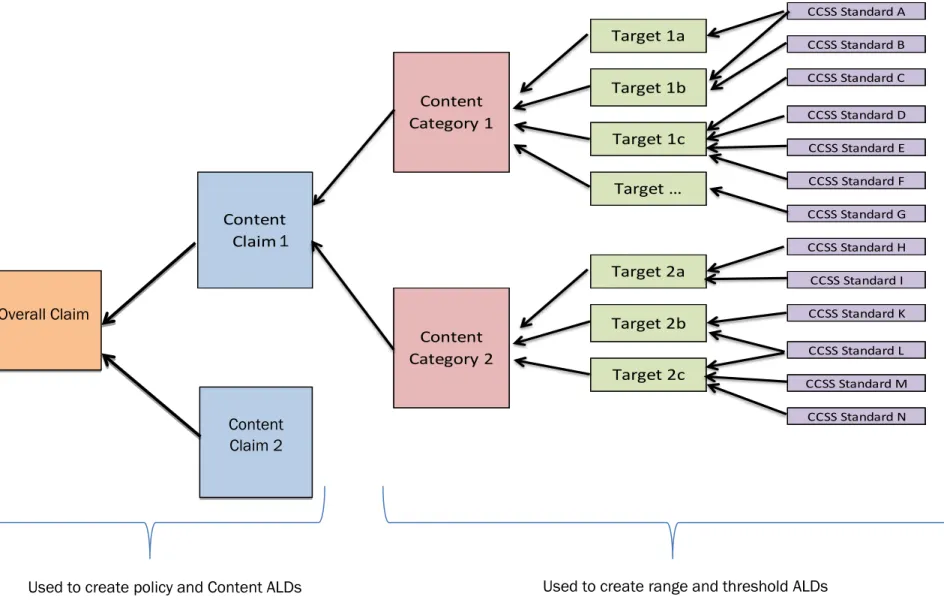
Figure 2 provides a graphic representation of the relationship of the claims to the content categories,
assessment targets, and the related standards in the CCSS. Each of these components was
important to creating the ALDs. There are policy ALDs associated with both the overall claims and the
specific content claims. For the sake of clarity, the ALDs associated with the overall claims will be
called “policy ALDs” and the ALDs associated with the specific content claims will be called “Content
ALDs.”
Policy ALDs. The overall claim was delineated into the following four levels (with the defining
phrases
4bolded):
The Level 4 student demonstrates thorough understanding of and ability to apply the English
language arts and literacy (mathematics) knowledge and skills needed for success in college
and careers, as specified in the Common Core State Standards.
The Level 3 student demonstrates adequate understanding of and ability to apply the English
language arts and literacy (mathematics) knowledge and skills needed for success in college
and careers, as specified in the Common Core State Standards.
The Level 2 student demonstrates partial understanding of and ability to apply the English
language arts and literacy (mathematics) knowledge and skills needed for success in college
and careers, as specified in the Common Core State Standards.
The Level 1 student demonstrates minimal understanding of and ability to apply the English
language arts and literacy (mathematics) knowledge and skills needed for success in college
and careers, as specified in the Common Core State Standards.
4Defining phrases provide context for the expectations of the student in each achievement level.
xiii
According to the current blueprint for the assessment (dated November 2012), students will receive
a sub-score for each of the specific content claims, with one exception: in mathematics, because of
the close relationship between problem solving and modeling, content claims 2 and 4 will be
combined for reporting purposes. Table 4 lists the specific content claims for ELA/literacy followed
by the Content ALD for each claim. Table 5 lists the same information for mathematics.
xiv
Content Claim Content ALD Level 1 Content ALD Level 2 Content ALD Level 3 Content ALD Level 4 Students can read closely and analytically to comprehend a range of increasingly complex literary and informational texts.The Level 1 student demonstrates minimal ability to read to comprehend a range of literary and informational texts of low complexity and to use minimal textual evidence to
demonstrate thinking.
The Level 2 student demonstrates partial ability to read closely to comprehend a range of literary and informational texts of moderate complexity and to use partial textual evidence that demonstrates critical thinking.
The Level 3 student demonstrates
adequate ability to read closely and analytically to comprehend a range of literary and
informational texts of moderate–to-high complexity and to use textual evidence to demonstrate critical thinking.
The Level 4 student demonstrates thorough ability to read closely and analytically to comprehend a range of literary and
informational texts of unusually high complexity and to use textual evidence effectively to demonstrate complex critical thinking. Students can produce effective and well-grounded writing for a range of purposes and audiences.
The Level 1 student demonstrates minimal ability to produce writing for a range of purposes and audiences.
The Level 2 student demonstrates partial ability to produce writing for a range of purposes and audiences.
The Level 3 student demonstrates adequate ability to produce effective and well-grounded writing for a range of purposes and audiences.
The Level 4 student demonstrates thorough ability to produce compelling, well-supported writing for a diverse range of purposes and audiences. Students can employ effective speaking and listening skills for a range of purposes and audiences.
The Level 1 student demonstrates minimal competency in employing listening skills.
The Level 2 student demonstrates partial ability to employ listening skills for a range of purposes with competency.
The Level 3 student demonstrates adequate ability to employ listening skills for a range of purposes with competency.
The Level 4 student demonstrates thorough ability to employ listening skills for a range of purposes with competency. Students can engage in research and inquiry to investigate topics, and to analyze, integrate, and present information.
The Level 1 student demonstrates minimal ability to use
research/inquiry methods to produce an explanation of a topic.
The Level 2 student demonstrates partial ability to use
research/inquiry methods to produce an explanation of a topic and analyze or integrate information.
The Level 3 student demonstrates adequate ability to use research/inquiry methods to explore a topic and analyze, integrate, and present information.
The Level 4 student demonstrates a thorough ability to use research/inquiry methods as a way to engage with a topic and then analyze, integrate, and present
information in a persuasive and sustained exploration of a topic.
xv
Content Claim Content ALD Level 1 Content ALD Level 2 Content ALD Level 3 Content ALD Level 4 Students can explain and apply mathematical concepts and carry out mathematical procedures with precision and fluency.The Level 1 student can minimally explain and in a minimal way apply mathematical concepts. The Level 1 student interprets and carries out
mathematical procedures with minimal precision and fluency.
The Level 2 student can partially explain and partially apply
mathematical concepts. The Level 2 student interprets and carries out mathematical procedures with partial precision and fluency.
The Level 3 student can adequately explain and adequately apply mathematical concepts. The Level 3 student interprets and carries out
mathematical procedures with adequate precision and fluency.
The Level 4 student can thoroughly explain and accurately apply mathematical concepts. The Level 4 student interprets and carries out
mathematical procedures with high precision and fluency. Students can
solve a range of complex, well-posed problems in pure and applied mathematics, making productive use of knowledge and problem-solving strategies.
The Level 1 student can make sense of and solve simple and familiar well-posed problems in pure and applied mathematics with a high degree of scaffolding, making minimal use of basic problem-solving strategies and given tools.
The Level 2 student can make sense of and solve familiar well-posed problems in pure and applied mathematics with a moderate degree of scaffolding, making partial use of knowledge, basic problem-solving strategies, and tools.
The Level 3 student can make sense of and persevere in solving a range of unfamiliar well-posed problems in pure and applied mathematics with a limited degree of scaffolding, making adequate use of knowledge and appropriate problem-solving strategies and strategic use of appropriate tools.
The Level 4 student can make sense of and persevere in solving a range of complex and unfamiliar well-posed problems in pure and applied mathematics with no scaffolding, making thorough use of knowledge and problem-solving strategies and strategic use of appropriate tools. Students can clearly and precisely construct viable arguments to support their own reasoning and to critique the reasoning of others.
The Level 1 student can construct simple viable arguments with minimal clarity and precision to support his or her own reasoning in familiar contexts.
The Level 2 student can construct viable arguments with partial clarity and precision to support his or her own reasoning and to partially critique the reasoning of others in familiar contexts.
The Level 3 student can construct viable arguments with adequate clarity and precision to support his or her own reasoning and to critique the reasoning of others.
The Level 4 student can construct viable arguments with thorough clarity and precision in unfamiliar contexts to support his or her own reasoning and to critique the reasoning of others.
Students can analyze complex, real-world scenarios and can construct and use mathematical models to interpret and solve problems.
The Level 1 student can identify familiar real-world scenarios for analysis and can use simple
mathematical models and given tools to solve basic problems.
The Level 2 student can reason quantitatively to analyze familiar real-world scenarios and can use mathematical models and given tools to partially interpret and solve basic problems.
The Level 3 student can reason abstractly and quantitatively to analyze complex, real-world scenarios and to construct and use mathematical models and appropriate tools strategically to adequately interpret and solve problems.
The Level 4 student can reason abstractly and quantitatively to analyze unfamiliar complex, real-world scenarios, to construct and use complex mathematical models and appropriate tools strategically to thoroughly interpret and solve problems, and to synthesize results.
xvi
Figure 2. Relationship among Content Claims, Content Categories, Assessment Targets, and Standards
CCSS Standard B CCSS Standard C CCSS Standard D CCSS Standard E CCSS Standard F CCSS Standard G CCSS Standard H CCSS Standard I CCSS Standard K CCSS Standard L CCSS Standard M
CCSS Standard N
Content
Category 2
Target 2b
Target 2c
Content
Category 1
Content
Claim
Target 1a
Target 1b
Target 1c
Target …
Target 2a
Overall Claim
Content
Claim 2
Used to create policy and Content ALDs
Used to create range and threshold ALDs
1
xvii
Range and Threshold ALDs
Range ALDs have been created for each assessment target and threshold ALDs for each content
category associated with the specific content claims. To create the original draft ALDs, the panelists
worked from an abbreviated version of the Smarter Balanced Content Specifications in which the
assessment targets were laid out side by side with the related standards from the CCSS. First, the
panelists delineated range ALDs for the four achievement levels using both the Smarter Balanced
Content Specifications and the CCSS. This method ensured a high level of fidelity to the standards.
Once the range ALDs were drafted, the panelists created threshold ALDs by identifying the
knowledge, skills, and processes within each range ALD that would be necessary to enter the
achievement level.
Presentation of ALDs
Table 6 shows generic versions of the policy, range, and threshold ALDs as they appear in the
following ALD matrices for ELA/Literacy, and Table 7 shows the same information for mathematics.
The ALDs are presented in matrices to emphasize the way in which all types of ALDs work together to
create a comprehensive final product. There are separate matrices for ELA/literacy and mathematics
at each grade level.
English Language Arts/Literacy ALDs
Within each matrix, the policy ALDs for the overall claim are shown on the top row (in blue). The
second row displays policy ALDs for one of the four specific content claims. Under the policy ALDs,
the range ALDs for each specific content claim are clustered by content category (in red). The range
ALDs are presented for each assessment target within a given content category (in green). At the end
of each content category, the threshold ALDs are presented. The threshold ALDs are presented at
the level of the content category, while the range ALDs are presented at the level of the assessment
target. The rows then repeat for each set of content categories under each specific content claim.
xviii
Title: ELA/Literacy, Grade LevelOverall Claim (e.g., Grade 11 ELA/literacy)
Policy ALD for Level 1
Policy ALD for Level 2
Policy ALD for Level 3
Policy ALD for Level 4 Specific Content Claim 1
(e.g., “Reading”)
Content ALD Level 1 based on Claim 1
Content ALD Level 2 based on Claim 1
Content ALD Level 3 based on Claim 1
Content ALD Level 4 based on Claim 1 Content Category 1 for Specific Content Claim 1
(e.g., “Reading: Literary Texts”) RANGE ALD for
Assessment Target 1 (e.g., “Key Details”)
Range ALD for Level 1 based on Assessment Target 1 and CCSS standards that underlie Target 1
Range ALD for Level 2 based on Assessment Target 1 and CCSS standards that underlie Target 1
Range ALD for Level 3 based on Assessment Target 1 and CCSS
standards that underlie Target 1
.
Range ALD for Level 4 based on
Assessment Target 1 and CCSS standards that underlie Target 1 Assessment Target 2
(e.g., “Central Ideas”) Range ALD for Level 1 … Range ALD for Level 2 … Range ALD for Level 3 … Range ALD for Level 4 …
.... .... .... .... ....
Threshold ALD for the
Content Category Threshold ALD for Level 2 student derived from range ALDs for Content Category 1
Threshold ALD for Level 3 student derived from range ALDs for Content Category 1
Threshold ALD for Level 4 student derived from range ALDs for Content Category 1 Content Category 2 for Specific Content Claim 1
(e.g., “Informational Text”) RANGE ALD for
Assessment Target 1 Range ALD for Level 1 … Range ALD for Level 2 … Range ALD for Level 3 … Range ALD for Level 4 …
Mathematics
Within each matrix, the policy ALDs for the overall claim are shown on the top row (in blue). The
second row displays policy ALDs for one of the four specific content claims. Under the policy ALDs,
the range ALDs for each specific content claim are clustered by content category (in red). For
mathematics, the content categories are either Domain #1 or Domain #2, which represents the
major or supporting targets, respectively, as indicated by the Smarter Balanced Summative Blueprint
and the Smarter Balanced Content Specifications. The range ALDs are presented for each
assessment target within a given content category (in green), and they are further divided according
to their CCSS domain. At the end of each CCSS domain, the threshold ALDs are presented. The
threshold ALDs are presented at the level of the domain, while the range ALDs are presented at the
xix
specific domain.
Table 7. Example of Policy, Range, and Threshold ALD Matrix for Mathematics Title: Mathematics, Grade Level
Overall Claim (e.g., Grade 11 Mathematics)
Policy ALD for Level 1
Policy ALD for Level 2
Policy ALD for Level 3
Policy ALD for Level 4 Specific Content Claim 1
(e.g., “Explain and Apply”
Content ALD Level 1 based on Claim 1
Content ALD Level 2 based on Claim 1
Content ALD Level 3 based on Claim 1
Content ALD Level 4 based on Claim 1 Content Category: Domain #1
Expressions and Equations RANGE ALD for
Assessment Target 1 (e.g., “Key Details”)
Range ALD for Level 1 based on Assessment Target 1 and CCSS standards that underlie Target 1
Range ALD for Level 2 based on Assessment Target 1 and CCSS standards that underlie Target 1
Range ALD for Level 3 based on Assessment Target 1 and CCSS
standards that underlie Target 1
.
Range ALD for Level 4 based on Assessment Target 1 and CCSS standards that underlie Target 1 Assessment Target 2
(e.g., “Central Ideas”) Range ALD for Level 1 … Range ALD for Level 2 … Range ALD for Level 3 … Range ALD for Level 4 …
.... .... .... .... ....
Threshold ALD for all Assessment Targets within Domain
Threshold ALD for Level 2 student derived from range ALDs for Content Category 1
Threshold ALD for Level 3 student derived from range ALDs for Content Category 1
Threshold ALD for Level 4 student derived from range ALDs for Content Category 1 Functions
RANGE ALD for
Assessment Target 3 Range ALD for Level 1 … Range ALD for Level 2 … Range ALD for Level 3 … Range ALD for Level 4 …
xx
The purpose of the ALD-writing workshop was to create drafts of the policy, range, and threshold
ALDs and to finalize the draft college content-readiness definition and policy framework that would
be reviewed and revised by a wider audience from the Smarter Balanced member states. The first
public review provided an opportunity for a wide array of constituents to provide feedback to Smarter
Balanced. The second review provided a final opportunity for member-state constituents to provide
feedback. The next step is review by the Smarter Balanced Executive Team and the vote by the
Governing States in mid-March to approve the initial ALDs and College Content-readiness Policy.
The following Achievement Level Descriptors were approved by state vote on March 20
th2013 and
will inform Smarter Balanced in their ongoing development activities.
Overall Claim: Students can demonstrate progress toward college and career readiness in English language arts and literacy.
POLICY ALD: The Level 1 student demonstrates minimal
understanding of and ability to apply the English language arts and literacy knowledge and skills needed for success in college and careers, as specified in the Common Core State Standards.
POLICY ALD: The Level 2 student demonstrates partial understanding of and ability to apply the English language arts and literacy knowledge and skills needed for success in college and careers, as specified in the Common Core State Standards.
POLICY ALD: The Level 3 student
demonstrates adequate understanding of and ability to apply the English language arts and literacy knowledge and skills needed for success in college and careers, as specified in the Common Core State Standards.
POLICY ALD: The Level 4 student
demonstrates thorough understanding of and ability to apply the English language arts and literacy knowledge and skills needed for success in college and careers, as specified in the Common Core State Standards.
CLAIM 1: Students can read closely and analytically to
comprehend a range of increasingly complex literary and informational texts.
CONTENT ALD: The Level 1 student demonstrates minimal ability to read to comprehend a range of literary and informational texts of low complexity and to use minimal textual evidence to demonstrate thinking.
CONTENT ALD: The Level 2 student demonstrates partial ability to read closely to comprehend a range of literary and informational texts of moderate complexity and to use partial textual evidence that demonstrates critical thinking.
CONTENT ALD: The Level 3 student
demonstrates adequate ability to read closely and analytically to comprehend a range of literary and informational texts of moderate-to-high complexity and to use textual evidence to demonstrate critical thinking.
CONTENT ALD: The Level 4 student
demonstrates thorough ability to read closely and analytically to comprehend a range of literary and informational texts of unusually high complexity and to use textual evidence effectively to demonstrate complex critical thinking.
Reading: Literary Texts RANGE ALD
Target 1. KEY DETAILS: Use explicit details and information from the text to support answers or basic inferences.
Level 1 students should be able to use explicit details and information from the text to support answers or basic inferences in texts of low complexity.
Level 2 students should be able to use explicit details and information from the text to support answers or basic inferences in texts of moderate complexity.
Level 3 students should be able to use explicit details and information from the text to support answers or basic inferences in texts of moderate-to-high complexity.
Level 4 students should be able to use explicit details and information from the text to support answers or basic inferences in texts of unusually high complexity.
RANGE ALD Target 2. CENTRAL IDEAS: Identify or summarize central ideas, key events, or the sequence of events presented in a text.
Level 1 students should be able to identify central ideas, key events, or the sequence of events presented in texts of low complexity.
Level 2 students should be able to identify or
summarize central ideas, key events, or the sequence of events presented in texts of moderate complexity.
Level 3 students should be able to identify or summarize central ideas, key events, or the sequence of events presented in texts of moderate-to-high complexity.
Level 4 students should be able to identify and summarize central ideas, key events, or the sequence of events presented in texts of unusually high complexity.
RANGE ALD Target 3. WORD MEANINGS: Determine intended meanings of words, including words with multiple meanings (academic/tier 2 words), based on context, word relationships, and word structure (e.g., common roots, affixes), or use of
Level 1 students should be able to determine intended meanings of words, including words with multiple meanings, based on context, word relationships, word structure, or use of resources in texts of low
complexity.
Level 2 students should be able to determine intended meanings of words, including words with multiple meanings, based on context, word relationships, word structure, or use of resources in texts of moderate complexity.
Level 3 students should be able to determine intended meanings of words, including words with multiple meanings, based on context, word relationships, word structure, or use of resources in texts of moderate-to-high complexity.
Level 4 students should be able to determine intended meanings of words, including words with multiple meanings, based on context, word relationships, word structure, or use of resources in texts of unusually high
resources (e.g., beginning dictionary). RANGE ALD
Target 4. REASONING & EVIDENCE: Use
supporting evidence to interpret and explain inferences about character traits, motivations, feelings, point of view, or author’s lesson or message.
Level 1 students should be able to use supporting evidence to interpret and explain their own inferences about character traits, motivations, feelings, point of view, or author's lesson or message in texts of low complexity.
Level 2 students should be able to use supporting evidence to interpret and explain their own inferences about character traits, motivations, feelings, point of view, or author's lesson or message in texts of moderate complexity.
Level 3 students should be able to use supporting evidence to interpret and explain inferences about character traits,
motivations, feelings, point of view, or author's lesson or message in texts of moderate-to-high complexity.
Level 4 students should be able to use supporting evidence to interpret and explain inferences about character traits,
motivations, feelings, point of view, or author's lesson or message in texts of unusually high complexity.
RANGE ALD Target 5. ANALYSIS WITHIN OR ACROSS TEXTS: Specify or compare relationships across texts (e.g., literary elements, problem-solution, and theme).
Level 1 students should be able to specify or compare relationships across texts (e.g., literary elements, problem-solution, and theme) in texts of low complexity.
Level 2 students should be able to specify or compare relationships across texts (e.g., literary elements, problem-solution, and theme) in texts of moderate complexity.
Level 3 students should be able to specify and compare and contrast relationships across texts (e.g., literary elements, problem-solution, and theme) in texts of moderate-to-high complexity.
Level 4 students should be able to specify and compare and contrast relationships across texts (e.g., literary elements, problem-solution, and theme) in texts of unusually high complexity.
RANGE ALD Target 6. TEXT STRUCTURES & FEATURES: Relate knowledge of text structures or text features (e.g., illustrations) to gain, interpret, explain, or connect information.
Level 1 students should be able to demonstrate knowledge of text structures or text features to explain, interpret, or connect information in texts of low complexity.
Level 2 students should be able to demonstrate knowledge of text structures or text features to explain, interpret, or connect information in texts of moderate complexity.
Level 3 students should be able to demonstrate knowledge of text structures and text features to explain, interpret, or connect information in texts of moderate-to-high complexity.
Level 4 students should be able to demonstrate knowledge of text structures and text features to explain, interpret, and connect information in texts of unusually high complexity.
RANGE ALD
Target 7. LANGUAGE USE: Interpret use of language by
distinguishing literal from non-literal meanings of words and phrases used in context.
Level 1 students should be able to interpret use of language by distinguishing literal from non-literal meanings of words and phrases used in context in texts of low complexity.
Level 2 students should be able to interpret use of language by distinguishing literal from non-literal meanings of words and phrases used in context in texts of moderate complexity.
Level 3 students should be able to interpret use of language by distinguishing literal from non-literal meanings of words and phrases used in context in texts of moderate-to-high complexity.
Level 4 students should be able to interpret use of language by distinguishing literal from non-literal meanings of words and phrases used in context in texts of unusually high complexity.
THRESHOLD ALD
Reading Targets 1-7 The student who just enters Level 2 should be able to: • Use some details and information from text to partially support answers or basic inferences. • In texts of low-to-moderate complexity,
summarize central ideas, key events, or the sequence of events presented in a text. • In texts of low-to-moderate complexity,
determine intended meaning of words through context, relationships, structure, or resources. • In texts of low-to-moderate complexity, explain his or her inferences about characters, feelings, and author’s message.
• Explain how information is presented or connected within or across texts of low-to-moderate complexity.
• Specify or compare relationships across texts of low-to-moderate complexity.
• Demonstrate knowledge of text structures or text features in texts of low-to-moderate complexity.
• Interpret use of language by distinguishing literal from non-literal meanings of words or phrases used in context in texts of low-to-moderate complexity.
The student who just enters Level 3 should be able to:
• Use explicit details and information from texts of moderate complexity to support answers or basic inferences. • Identify or summarize central ideas,
key events, or sequence of events presented in texts of moderate complexity.
• Determine intended meaning of words through context, relationships, structure, or resources in texts of moderate complexity.
• Interpret and explain inferences and author’s message and distinguish point of view in texts of moderate complexity.
• Specify and compare or contrast relationships across texts of moderate complexity.
• Demonstrate knowledge of text structures or text features to obtain, interpret, explain, or connect information in texts of moderate complexity.
• Interpret use of language by distinguishing literal from non-literal meanings of words or phrases used in context in texts of moderate complexity.
The student who just enters Level 4 should be able to:
• Use explicit details and information from the text to support answers and basic inferences in highly complex texts.
• Identify and summarize central ideas, key events, or the sequence of events presented in highly complex texts.
• Determine intended meaning of words through context, relationships, structure, or resources in highly complex texts.
• Use evidence to interpret and explain inferences and distinguish point of view from that of the
narrator/character in highly complex texts.
• Specify, compare, and contrast relationships across highly complex texts.
• Demonstrate knowledge of text structures and text features to interpret or explain/connect information in highly complex texts. • Begin to interpret use of language by
distinguishing literal from non-literal meanings of words or phrases used in context in highly complex texts. Reading: Informational Texts
RANGE ALD
Target 8. KEY DETAILS: Use explicit details and implicit information from the text to support answers or inferences about information presented.
Level 1 students should be able to use explicit details and information from the text to support answers or inferences about information presented in texts of low complexity.
Level 2 students should be able to use explicit details and information from the text to support answers and inferences about information presented in texts of moderate complexity.
Level 3 students should be able to use explicit details and information from the text to support answers or inferences about information presented in texts of moderate-to-high complexity.
Level 4 students should be able to use explicit details and information from the text to support answers and inferences about information presented in texts of unusually high complexity.
RANGE ALD Target 9. CENTRAL IDEAS: Identify or summarize central ideas/key events or procedures and details that support them.
Level 1 students should be able to identify central ideas/key events, procedures, or details that support them in texts of low complexity.
Level 2 students should be able to identify or
summarize central ideas/key events or procedures and details that support them in texts of moderate
complexity.
Level 3 students should be able to identify or summarize central ideas/key events or procedures and details that support them in texts of moderate-to-high complexity.
Level 4 students should be able to identify and summarize central ideas/key events, procedures, and details that support them in texts of unusually high complexity.
RANGE ALD Target 10. WORD MEANINGS: Determine intended meanings of words, including domain-specific (tier 3) words and academic (tier 2) words with multiple meanings, based on context, word relationships, word structure (e.g., common roots, affixes), or use of resources (e.g.,
beginning dictionary, glossary).
Level 1 students should be able to determine intended meanings of words, including domain-specific (tier 3) words and academic (tier 2) words with multiple meanings, based on context, word relationships, word structure, or use of resources in texts of low complexity.
Level 2 students should be able to determine intended meanings of words, including domain-specific (tier 3) words and academic (tier 2) words with multiple meanings, based on context, word relationships, word structure, or use of resources in texts of moderate complexity.
Level 3 students should be able to determine intended meanings of words, including domain-specific (tier 3) words and academic (tier 2) words with multiple meanings, based on context, word relationships, word
structure, or use of resources in texts of moderate-to-high complexity.
Level 4 students should be able to determine intended meanings of words, including domain-specific (tier 3) words and academic words (tier 2)with multiple meanings, based on context, word relationships, word
structure, or use of resources in texts of unusually high complexity.
RANGE ALD
Target 11. REASONING & EVIDENCE: Use
supporting evidence to interpret and explain how information is presented or connected within or across texts (e.g., author’s point of view, ideas and supporting details, relationships).
Level 1 students should be able to use supporting evidence to interpret and explain how information is presented or connected within or across texts of low complexity.
Level 2 students should be able to use supporting evidence to interpret and explain how information is presented or connected within or across texts of moderate complexity.
Level 3 students should be able to use supporting evidence to interpret and explain how information is presented or connected within or across texts of moderate-to-high complexity.
Level 4 students should be able to use supporting evidence to interpret and explain how information is presented and connected within or across texts of unusually high complexity.
RANGE ALD
Target 12. ANALYSIS WITHIN OR ACROSS TEXTS: Specify, integrate, or compare information within or across texts (e.g., cause-effect, integrate information).
Level 1 students should be able to specify, integrate, or compare information within or across texts of low complexity.
Level 2 students should be able to specify, integrate, or compare information within or across texts of moderate complexity.
Level 3 students should be able to specify, integrate, and compare information within or across texts of moderate-to-high complexity.
Level 4 students should be able to specify, integrate, and compare information within or across texts of unusually high complexity.