The Theory of Planned Behavior and Chinese
ESL Students’ In-class Participation
Davide Girardelli1
Wenzhou-Kean University, Wenzhou, China
Vijay K. Patel
Wenzhou-Kean University, Wenzhou, China
Abstract—Chinese demand for American-style education is on the rise as many Chinese students seek oppor-tunities to gain a true global education in China. However, importing US education style in China is challeng-ing. American education emphasizes the importance of students’ in-class participation; however, Chinese stu-dents’ reluctance to communicate in class is notoriously strong. To explain such reluctance, scholars have fo-cused their attention on constructs such as “willingness to communicate” and “communication anxiety” (Ellis, 2012). In our study we proposed a different approach to understand Chinese ESL students’ in-class participa-tion, by using the Theory of Planned Behavior (TPB; Fishbein & Ajzen, 2010). TPB applies to any human be-havior under volitional control and has been successfully applied in several fields, such as health psychology, sports, and marketing. Our theoretical TPB-based model was tested by administering a questionnaire to 133 Chinese university students enrolled in a Sino-American university located in South-East China. Data were analyzed using partial least squares (PLS) path modeling method (Hair, Hult, Ringle, & Sarstedt, 2014). Over-all, our findings provided some initial support to our proposed model. The model accounted 39% of explained variance in intention to participate in class. The stronger predictors for students’ participation were attitudes toward participation and self-efficacy. Gender also appeared to play a role: Female students reported statisti-cally stronger intentions to participate in class. In our future research we plan to further test our model and expand it by considering the contribution of additional constructs, such as face-saving and communication anxiety.
Index Terms—theory of planned behavior, SEM, partial least squares, in-class participation, willingness to communicate, Chinese ESL students
I. INTRODUCTION
Chinese demand for English-based and in particular American-style education is on the rise. According to the Insti-tute of International Education (2014), China is the leading place of origin of international students in the US. In the ac-ademic year 2013/2014, 274,439 Chinese students made up 31% of the total of international students in the United States, up by 16.5% from the previous academic year and by roughly 500% from 2000. Travelling to the United States is not the only option for Chinese students who seek opportunities to gain an American-style education: China is in fact the second largest importer of branch campuses (IBCs2) after the United Arab Emirates. Out of the 29 ICBs currently active in China, 11 result from partnerships with US educational institutions, making the United States the largest ex-porter of branch campuses in China.
Importing American-style education style in China has been shown to be challenging. On a macro level, Sino-American partnerships require several factors - such as sustained leadership, aligned organizational infrastructures, fac-ulty support – to be in place in order to allow meaningful, long-term relations between Chinese and US institutional partners (Fazackerley & Worthington, 2007; Julius & Leventhal, 2014). On a micro level, we can also observe major challenges in the instructor-students interactions. American education emphasizes the importance of “conversational style lectures”, where students’ participation and interactions with the instructor are regarded as crucial component of the learning process (Bain, 2004; Morell, 2007). For instance, interactivity is considered particularly important in Eng-lish-as-second-language (ESL) classrooms because it facilitates learners’ communicative competence in the target lan-guage, supports the active use of English, increases learning quality, and promotes an overall better student performance (Hsu, 2015; Weaver & Qi 2005). Executive education is another area where in-class participation is relevant. To be bet-ter prepared for their future managerial roles, business students need in fact to “think through problems, organize con-cepts, analyze information, formulate arguments, synthesize and evaluate evidence, and respond to diverse points of
1
Corresponding author: Correspondence concerning this article should be addressed to Davide Girardelli, Wenzhou-Kean University, 88 Daxue Rd, Ouhai, Wenzhou, Zhejiang Province, China (325060). Email: [email protected].
2
view” (Dallimore, Hertenstein, & Platt, 2010, p. 615). These are a set of core skills that are supported and developed by interactive-style classrooms.
Despite the recognized importance of in-class participation, non-native English Asian and in particular Chinese stu-dents are notoriously unwilling to communicate orally and tend to be passive in class (Hsu, 2015; Peng, 2012). This ret-icence leads to challenging in-class interactions. On one hand, US-trained instructors promote and expect a high-degree of students’ in-class participatory behaviors, such as asking questions or clarifications, engaging in group work, present-ing opinions in class, and volunteerpresent-ing to participate in class activities. On the other hand, Chinese students often con-sider these participatory behaviors demanding. They find themselves uncomfortable with American-style classroom norms, not only because of their lack of confidence in their English skills, but also because such norms are not deemed relevant or even appropriate in traditional Chinese education (Hsu, 2015).
To explain such reluctance, scholars have focused their attention on constructs such as “willingness to communicate” and “communication anxiety,” producing an extensive literature (Ellis, 2012). The present study extends the existing literature by applying the Theory of Planned Behavior (TPB; Fishbein & Ajzen, 2010) to explain Chinese ESL’s uni-versity student in-class participation. TPB is one the most frequently cited and employed theoretical approaches used to predict human social behavior (Ajzen, 2011a). TPB also provided the theoretical rationale to develop and evaluate be-havioral change interventions in different fields such as weight-loss, exercise, use of public transportations, and AIDS/HIV preventions.
In a recent article, Zhong (2013) first used TPB to explain Chinese students’ in-class participation, providing some evidence of the viability of applying TPB in this novel area. However, Zhong’s (2013) study used a qualitative method on a small sample, whereas TPB-based studies call for a large scale, survey-based approach. In the present paper, we are attempting a more traditional, quantitative approach to test whether TPB can explain ESL Chinese students’ in class participation. Our TPB-based theoretical model was tested by administering a questionnaire to 133 Chinese university students enrolled in a recently established Sino-American university located in South-East China. Data were analyzed using partial least squares (PLS) path modeling method (Hair, Hult, Ringle, & Sarstedt, 2014).
II. THEORY DEVELOPMENT
A. An Overview of the Theory of Planned Behavior
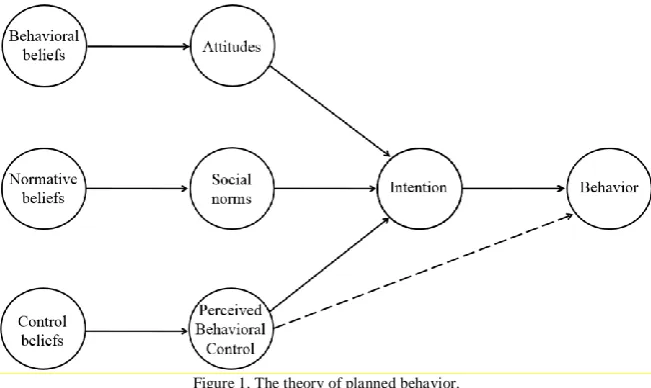
Fishbein and Ajzen’s (2010) Theory of Planned Behavior (see fig. 1) was developed to explain any specific human behavior under volitional control. TPB is one of the most influential theories in Social Psychology and has underpinned more than one thousand empirical papers (Fishbein & Ajzen, 2010). TPB has been successfully applied in several fields, such as health psychology, politics, sports, marketing, education and organizational behavior. The theory has been used to predict a wide range of behaviors, such as pro-environmental behaviors (de Leeuw, Valois, Ajzen, Schmidt, 2015), consumers’ intention to visit green hotels (Chen & Tung, 2014) and suggestion making behaviors in large organizations (Girardelli, 2014).
Figure 1. The theory of planned behavior.
In its basic form, TPB assumes that any behavior can be predicted by an individual’s intentions to perform such a havior. In turn, behavioral intentions are in a function of: a) attitudes towards the behavior; b) subjective norms; c) be-havioral control/self-efficacy.
Fitness Center” (context where the desired action should take place); “on Thursday night” (time when the desired action should take place). According to the goal of the research, target behaviors can be defined at different levels of generality.
Generality can go from a narrower level of individual discrete actions (for instance, “attending yoga classes”) to a
broader level of behavioral categories that encompass several discrete actions (for instance, “exercising”, which in-cludes “attending yoga classes” as well as other behaviors, such as “practicing body building”). Broader behavioral cat-egories tend to be more significant from a theoretical level than specific discrete behaviors; at the same time, behavioral categories are more challenging to measure and they need to be clearly defined to the study participants. For instance, “exercise” can be defined as “participating in active sports or vigorous physical activities long enough to get sweaty at least twice per week” (Fishbein & Ajzen, 2010, p. 36).
Behaviors are predicted by behavioral intentions. Behavioral intentions are defined as “indications of a person’s
readiness to perform a behavior” (p. 39) or “the subjective probability of performing a behavior” (p. 40). The higher the subjective probability of performing a behavior is, the more likely the behavior under consideration will be in fact per-formed. According to Fishbein and Ajzen (2010), TPB’s behavioral intentions include both “behavioral expectations” (self-prediction of performing a behavior despite possible obstacles or impediments) and “willingness to perform a be-havior” (a more reactive component associated with a lack of planning or premeditation in performing a behavior).
B. Determinants of Behavioral Intentions
Behavioral intentions are in turn in a function of three constructs: Attitudes toward the target behavior, perceived norms and perceived behavioral control/self-efficacy. Attitudes toward the target behavior are defined as a “latent dis-position or tendency to respond with some degree of favorableness or unfavorableness to a psychological object” (Fishbein & Ajzen, 2010, p. 76). Attitudes are a “bipolar evaluative dimension” (p. 76), namely they can range from positive to negative, with a neutral intermediate point. Attitudes include two major facets: An instrumental aspect that refers to the behavior’s perceived usefulness in terms of anticipated positive or negative consequences (beneficial vs. harmful or useful vs. useless); and an experiential aspect that covers the anticipated positive or negative feelings ex-pected by performing such a behavior (boring vs. interesting or pleasant vs. un pleasant).
Perceived norms refer to what is considered an acceptable or permissible behavior in a group or society. Perceived norms capture the total social pressure that the environment exerts on an individual to perform (or not perform) a given behavior (Fishbein & Ajzen, 2010). This second antecedent of behavioral intentions also encompasses two sub-components, namely injunctive norms and descriptive norms. The former refers to perceptions concerning what ought or should be done. The latter describes instead perceptions that significant others, such as family members, peers, friends and classmates, are actually performing (or not) the behavior under consideration.
Perceived behavioral control (PBC) is the third and last antecedent of behavioral intentions.PBC aredefined as “the extent to which people believe that they are capable of performing a given behavior, that they have control over its per-formance” (Fishbein & Ajzen, 2010, pp. 154-155). This construct is conceptually similar to Bandura’s (1997) perceived self-efficacy, defined as “people’s beliefs about their capabilities to exercise control over their own level of functioning
and over events that affects their lives” (p. 257). PBC includes the following two aspects: Capacity, namely an individ-ual’s perception of having adequate external or internal sources to perform a given behavior; and autonomy, namely perceptions that possible obstacles that may be encountered in performing such behavior can be overcome. According to Fishbein and Ajzen (2010), PBC is independent from the fact that skills, sources or obstacles are internal (for in-stance, willpower) or external (for instance money or time). Finally, it should be noted that according to TPB (see Fig. 1) PBC can also provide a small yet significant contribution in predicting behavior together with intentions when an indi-vidual’s perceptions of control accurately reflect his or her skills or resources. Similarly, self-efficacy has been found to be positively related with actual behavior (Stajkovic & Luthans, 1998).
The most important prerequisite for improving the prediction of behaviors from intentions is the principle of compat-ibility. Fishbein and Ajzen (2010) state that “an intention is compatible with a behavior if both are measured at the same level of generality or specificity” (pp. 44-45). In other words, intentions must be assessed using the same components (action, target, context, and time) and the same level of generality used in defining the target behavior. In the same manner, to improve the prediction of behavioral intentions, attitudes, perceived norms and PBC must be measured with the same level of generality used in defining behavioral intentions.
C. Determinants of Attitudes, Social Norms, and Perceived Behavioral Control
The next level of the theory of planned behavior, the level of beliefs, deals with the determinants of attitudes, social norms, and perceived behavioral control,which are behavioral beliefs, normative beliefs, and control beliefs respective-ly. Fishbein and Aizen (2010) define beliefs as “the subjective probability that an object has a certain attribute” (p. 96). For instance, a person may believe that “yoga” (the object) “improves one’s flexibility” (the attribute). Beliefs can be acquired not only by direct observation, but also by indirect sources, such as media, peers, teachers, and so on and so forth. Fishbein and Aizen (2010) clarify that only salient beliefs serve as determinants of attitudes, social norms, and
A limited set of salient behavioral beliefs is assumed to determine attitudes. Behavioral beliefs include belief strength, namely the strength of the belief that an object has a certain attribute, and attribute evaluation, a subjective evaluation. For instance, the statement “yoga improves one’s flexibility” can represent as a salient behavioral belief and we can de-termine the strength of such belief (how likely does the object possess such an attribute?) and evaluate the desirability of the attribute (is possessing such attribute good or bad?).
Just as attitudes, social norms are assumed to be based on a set of salient normative beliefs. In this case we distin-guish between beliefs strength (“people’s beliefs about the prescriptions of their salient referents”, p. 137), and motiva-tion to comply, or the specific perceived pressure to comply with a normative referent. For example, in the normative belief “my best female friend thinks I should join a yoga club” we can assess on one hand the strength of the belief and on the other hand the subjective evaluation to comply with that specific normative referent (“my best female friend”).
Lastly, perceived behavioral control is determined by a group of salient control beliefs. In particular, a list of specific control factors that may enable or interfere a given behavior should be first defined. Then, we distinguish between belief strength and each control factor’s power to facilitate the behavior under consideration. For instance, in the control belief “I will have enough time in the evening to attend yoga classes” we can evaluate the strength of the belief and the power of that specific control factor (“my having enough time in the evening would facilitate my ability to attend yoga clas-ses”).
D. Predictive Validity of the Theory of Planned Behavior
TPB’s meta-analytic reviews covering a wide range of different target behaviors reported an overall correlation be-tween behavior and intentions ranging from .45 to .62 (equivalent to R2 .20-.38). The role of PBC is in this sense lim-ited, explaining only an additional 2% of variance in behaviors (Armitage & Conner, 2001). Multiple correlation be-tween attitudes, subjective norms, and perceived behavioral control with behavioral intentions was in the .59-.66 range (equivalent to R2 .35-.44; Ajzen, 2011a, Armitage & Conner, 2001, Fishbein & Ajzen, 2010).The relationship among TPB’s constructs is therefore quite substantial with the strength of the overall correlation in the moderate area (Taylor, 1990).
In addition to the strong theoretical rationale that contributed in TPB “having the highest scientific impact score among US and Canadian social psychologists” (Ajzen, 2011a, p. 113), TPB has also been successfully used to design and evaluate several interventions intended to promote behavioral change among a target population. Example of be-haviors include among others: promoting fruit and vegetable consumption (Kothe, Mullan, & Butow, 2012); reducing overweight and obesity (Knowlden & Sharma, 2012); preventing binge drinking (French & Cooke, 2012); and reducing sexually transmitted infections (Tyson, Covey, & Rosenthal, 2014). Such interventions usually involve the development of persuasive messages that target critical TPB components and the measurement of the effects of the intervention on a cognitive as well as a behavioral level (Ajzen, 2011b; Fishbein & Ajzen, 2010; Hardeman et al., 2002).
In sum, Fishbein and Ajzen’s (2010) Theory of Planned Behavior provides a solid theoretical framework not only to explain and predict a variety of behaviors under volitional control, but also to design and evaluate targeted interventions in a systematic manner. The use of TPB to understand communicative volitional behaviors, such as in-class participa-tion, has been very limited so far. The only exception is Zhong’s (2013) qualitative study, which did not however in-clude any statistical evidence.
As we have seen, previous research highlighted a list of key constructs such as “willingness to communicate” and “communication anxiety” (Ellis, 2012) to explain Chinese students’ in-class participation. Recently, researchers such as Peng (2012) proposed comprehensive models intended to understand willingness to communicate in EFL classrooms by integrating many of these constructs in a unified framework. Despite the interesting findings, scholars argue for a more “theory-driven” approach in Social Science instead of creating “ad-hoc” models from an eclectic collection of con-structs (Fishbein & Ajzen, 2010). More importantly, such “ad-hoc” models do not have a proven record that demon-strates their ability to provide effective insights in designing and evaluating in-class interventions.
Expanding Zhong’s (2013) findings, in the present study we use TPB to explain ESL Chinese students’ in-class par-ticipatory behaviors, providing some preliminary statistical evidence based on a sample of Chinese students from a Si-no-American institution.
E. Research Hypotheses
The goal of the present exploratory study is to explain Chinese students’ in-class participation by applying TPB. Fol-lowing Zhong (2013), the target behavior under consideration is in-class participation, namely in-class communicative voluntary behaviors such as volunteering an answer to a question (including raising a hand), asking the professor a question or a clarification, presenting opinions in class, and taking the initiative to participate in class activities. Using TPB’s terminology, our target behavior is therefore a broader behavioral category that encompasses several different specific behaviors.
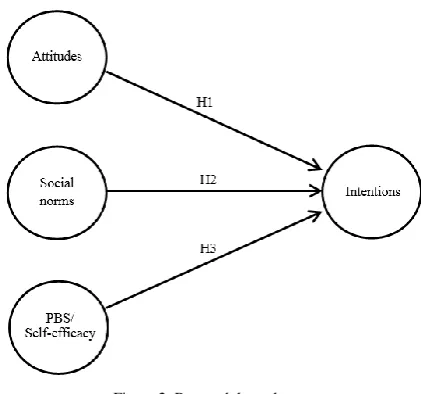
Figure 2. Research hypotheses.
As we have seen in the previous section, attitudes are defined as an individual’s overall evaluation regarding a given behavior. In our specific case, we hypothesize that the more a student feels that in-class participation is important, use-ful and rewarding, the more likely he or she will actually participate in class.
Hypothesis 1: The strength of a student’s intention to participate in class is a function of the student’s attitudes to-ward in-class participation.
Subjective norms refer to an individual’s perceived pressure to perform the target behavior. If a student perceives that his or her peers (e.g., classmates) support his or her in-class participation, we expect that the student will more likely participate in class.
Hypothesis 2: The strength of a student’s intention to participate in class is a function of the student’s subjective norms regarding in-class participation.
Perceived behavioral control (PBC)/self-efficacy is the third antecedent of intention and refers to an individual’s per-ceived control over a given behavior (Fishbein & Ajzen, 2010). As we have seen earlier, PBC overlaps with Bandura’s (1997) concept of self-efficacy. We hypothesize that a student will more likely participate in class if he or she perceives to have adequate skills and resources to do so.
Hypothesis 3: The strength of a student's intention to participate in class is a function of the student’s self-efficacy in in-class participation.
III. METHODOLOGY
A. Conceptual Design
The extant literature supports a conceptual design that integrates the constructs of attitude, norms, and self-efficacy as related to intention to participate in class. As previously noted, there is however limited empirical work directly relat-ing the constructs under study to intention to participate. The data collection and analysis was aimed at providrelat-ing empir-ical insights into drivers of intention to participate.
Independent variables. Attitudes towards participation are central to the intention to participate. Anecdotal observa-tion and empirical research both point to the importance of attitudes to the intenobserva-tion to participate. Where the attitudes are open and comfortable, students display a higher intention to participate and ultimately actual level of participation. The same viewpoint holds for norms – whether cultural or institutional – as potential enablers or barriers of in-class par-ticipation. Finally, where the level of self-efficacy and confidence in participating is high, a self-reinforcing and virtu-ous cycle of participation and experience is engaged.
Outcome variable. TPB applies across a wide range of behavioral contexts. Following Fishbein and Ajzen (2010), we posit that in the classroom context intention to participate is most likely the ultimate driver of the level of participation displayed by students. Simply put, where the intention is formed, the consequent participatory behavior will align with the intention.
B. Research Design
Research procedure, respondents, scale items and final sample. In order to create an authentic context for responses, we administered the survey within a classroom context in courses undertaken by Chinese students for whom English is a second language. Participants received a consent form containing basic information regarding the study on the first day of class. Five extra credits (equivalent to .5% of the final grade) were used as an incentive. Participants were in-formed that their participation was voluntary. All enrolled students agreed to participate in the study. After having signed the consent form, participants received the study questionnaire. The surveys were administered manually and results were compiled and cross-checked to create a data file in Excel for further analysis.
A total of 133 students completed the questionnaire. Chinese Mandarin was the first language for the entire sample. 74.4% of the respondents were female, 25.6% were males. The average age of the respondents was 20 year-old (SD=.52). Participants have been studying English for an average of 10 years (SD=1.87). They were undergraduate sophomores majoring in accounting (77.4%), English (14.3%), and International Business (8.3%).
Study variables were measured with the following scales. The intention to participate in class three-item scale was based on Ajzen (2002). The scale included the following items: “1) I intend to regularly participate in English in class during the coming semester”; “2) I will regularly participate in English in class during the coming semester”; and “3) I plan to regularly participate in English in class during the coming semester.” The items were intended to evaluate par-ticipants’ general readiness to engage in the target behavior.
Attitudes toward in-class participation was operationalized with a five-item scale based on Ajzen (2002) and includ-ed the following items: “1) In my opinion, regularly participating in English in class during the coming semester is use-less” (reverse scored); “2) In my opinion, regularly participating in English in class during the coming semester is im-portant”; “3) In my opinion, regularly participating in English in class during the coming semester is rewarding”; “4) In my opinion, regularly participating in English in class during the coming semester is boring” (reverse score), and “5) In my opinion, regularly participating in English in class during the coming semester is good.” Following Ajzen’s (2002) guidelines, items 1 and 2 cover the instrumental aspect of attitudes, items 3 and 4 refer to the experiential aspect, whereas item 5 was used as an overall evaluation of the target behavior.
Subjective norms regarding in-class participation were measured with a four-item scale developed by Armitage and Conner (1999), which included the following statements: “1) The large majority of my classmates thinks that I should regularly participate in English in class during the coming semester”; “2) The large majority of my classmates would approve of my participating regularly in English in class during the coming semester”; “3) The large majority of my classmates expect that I participate regularly in English in class during the coming semester”, “4) The large majority of my classmates will regularly participate in English in class during the coming semester”. Items 1, 2, and 3 cover the in-junctive aspect of subjective norms, whereas item 4 the descriptive aspect.
A four-item scale adapted from Midgley et al. (2000) was used to measure self-efficacyin in-class participation. The items included in the scale were the following “1) I am sure I have mastered the skills required to regularly participate in English in class”; “2) I am certain I have a good grasp on how to regularly participate in English in class”; “3) I find regularly participating in English in class very difficult” (revere scored); “4) I have not been prepared enough to regu-larly participate in English in class” (reverse scored). The four items mainly focused on the capacity aspect of perceived behavioral control/self-efficacy.
Respondents were instructed that the term “participation” in the items of the questionnaire referred to “in-class be-haviors such as volunteering an answer to the professor’s question (including raising a hand), asking the professor a question or a clarification, presenting your opinion in class, and volunteering to participate in class activities”. Re-spondents were asked to indicate their degree of agreement or disagreement with the items on a six-point Likert-type scale anchored by “strongly disagree” (1) and “strongly agree” (6). A composite score was obtained by averaging the values of the items of each scale, with listwise deletion of entries with one or more missing responses, resulting in a fi-nal N=130 respondents. Following Mak’s (2011) recommendation for similar samples of Chinese ESL students, a neu-tral point was not included in the scales to force respondents to commit themselves; in this manner we tried to avoid having most responses clustered in the neutral mid-point. Before the administration of the questionnaire, the full re-search instrument was reviewed by a Chinese member of the University’s Writing Center to assure that the items were understandable for the research participants. A full correlation table including all study variables is reported in Table I. Visual inspection of the correlations among the constructs suggests that multicollinearity is not at issue in the dataset.
TABLE I. CORRELATION TABLE.
Variables M SD 1. 2. 3. 4. 5. 6.
1. e 20.37 .52
2. Gendera 1.26 .44 .23**
3. Years of English 10.65 1.87 -.08 .14
4. Intentions 4.75 .79 .01 -.18* -.03
5. Attitudes 4.99 .63 -.03 -.05 .11 .42**
6. Norms 4.33 .75 .10 -.06 .08 .43** .43**
7. Self-efficacy 3.67 .87 .06 .02 -.07 .46** .29** .38**
a Gender: 1= female 2 = male
IV. RESULTS AND ANALYSIS
A. Structured Equation Modeling and Theory Development
Early theory development is demanding. The relationships are unconfirmed and under investigation. The constructs are subject to scale items that are adapted from previous scales, which have been developed in other contexts as is the case here. Increasingly researchers are using structured equation modeling (SEM) for theory development (Hair, Ringle & Sarstedt, 2011). A study completed by Babin and Boles (1996) showed not only an increase in the use of SEM, but also that SEM-based research tended to be highly regarded by academics. SEM techniques represent an advance on ex-isting multiple linear regression methods. In general, SEM has evolved into two major approaches: Covariance based (CB-SEM) and partial least squares based (PLS-SEM). CB-SEM optimizes path relationships among all constructs sim-ultaneously, while minimizing model error. PLS-SEM is directed more towards maximizing the R2,namely the level of variance explained in the model, while minimizing the overall error term (Astrachan, Patel & Wanzenried, 2014; Hair et al., 2014). The two approaches are complementary in general; however, for early theory development PLS-SEM is rec-ommended (Astrachan, Patel & Wanzenried, 2014; Hair et al., 2014). The advantage offered by PLS-SEM is that it en-ables retention of direct observable measures in contrast with the CB-SEM approach, which in the process of maximiz-ing path relationships globally can result in elimination of measures that may still have meanmaximiz-ingful face and/or content validity (Hair, Ringle & Sarstedt, 2011).
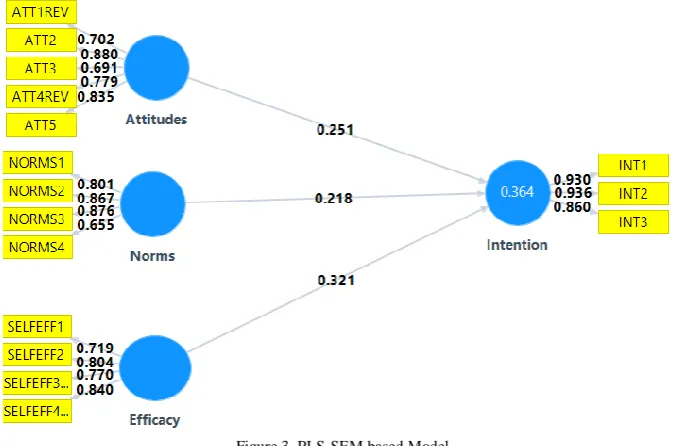
A CB-SEM analysis also calls for larger sample sizes compared to PLS-SEM because CB-SEM assesses the relation-ships among all variables. As a rule of thumb, CB-SEM requires a sample size that is five times the number of indica-tors in the original model. For instance, our tested model (see Fig. 3) includes 4 constructs marked with blue circles and 16 indicators marked with yellow rectangles. Therefore the required minimum sample size for a CB-SEM analysis would be in our case 80 (16 x 5) observations. Instead, PLS-SEM can work efficiently with smaller sample sizes be-cause the analysis proceeds in smaller components. In particular, PLS-SEM requires at least ten observations for each arrow pointing at a construct. Going back to the example based on our model in Fig. 3, the minimum required sample size for a PLS-SEM analysis is 30 (10 x 3) observations (Astrachan, Patel & Wanzenried, 2014).
Consequently, we have chosen PLS-SEM for our analysis of the empirical data collected. Fig. 3 provides the initial model and path coefficients using the software SmartPLS 3.0 (Ringle, Wende, & Becker, 2014).
B. Evaluation of the PLS-SEM Model
Both the outer model and the inner model as shown in Fig. 3 need to be evaluated. The outer model consists of the indicators (measures) and corresponding latent constructs. The inner model consists of the outcome variable and the path coefficients and the extracted R2 or variance explained among other key parameters that need to be checked for ac-ceptable and significant results. A series of steps are undertaken to validate the structural model as shown in Fig. 3. The indicator loadings and average variance extracted from the indicator items are examined as well as the composite relia-bility and its analog to Cronbach’s alpha.
Figure 3. PLS-SEM based Model.
TABLE II.
COMPOSITE RELIABILITY,CRONBACK’S ALPHA, AND AVES. Composite Reliability Cronbach’s Alpha AVE
Attitudes .886 .840 .610
Norms .879 .816 .647
Efficacy .865 .793 .616
Intention .935 .895 .827
Both composite reliability and the more conservative Cronbach’s alpha are indices of internal consistency of the measures, i.e. all items are interrelated and measuring a similar latent construct. Indices between .6 and .7 are consid-ered reliable (Hair et al., 2014). In this case, all items range between .793 and .935 exceeding the benchmark of .7. The AVEs measure the convergent validity of the items and relevance to the latent construct. AVEs must exceed .5 to be meaningful (Hair et al., 2014). The range of AVEs for the constructs is .61 to .827, hence they satisfy the requirement.
An important aspect of any model is to ensure that the constructs display discriminant validity. This ensures that the correlation between constructs (interconstruct correlations) does not exceed the AVE for each construct and is generally measured by the Fornell-Larcker criterion as shown in Table III. Discriminant validity is satisfactory as the square root of AVEs is larger than the interconstruct correlations in each case (Fornell & Larcker, 1981; Hair et al., 2014).
TABLE III.
FORNELL-LARCKER CRITERION FOR DISCRIMINANT VALIDITY.
Attitudes Norms Efficacy Intention Attitudes .781
Norms .451 .805
Efficacy .293 .382 .785
Intention .444 .478 .478 .909
Note: The square root of AVEs is shown on the diagonal. The interconstruct correlations are shown off-diagonal
The next step is to examine the path coefficients and significance between the independent and the proposed outcome variable. Table IV shows the path coefficients, relevant t-statistics and corresponding significance for each hypothe-sized relationship in the conceptual model. As can be seen, each of the proposed hypotheses is accepted at comfortable levels of significance. The overall R2 .364 is moderate-low suggesting the model is meaningful in providing an explana-tion of the intenexplana-tion to participate concept.
One advantage of PLS-SEM based analysis is the ability to measure predictive relevance by a blindfolding procedure. Predictive relevance or Q2 measures the ability of the model to predict the outcome variable indicators reliably, thus suggesting a degree of robustness. Values of Q2 above zero suggest acceptable predictive relevance. In this case the Q2 is a moderate .274.
TABLE IV.
HYPOTHESES AND SIGNIFICANCE.
Path Coefficients T Statistics (|O/STERR|) P Values Hypotheses - accept/reject
Att. -> Int. .251 3.022 .003 Accept
Norms -> Int. .218 2.696 .007 Accept
Eff. -> Int. .321 4.56 0 Accept
Overall R2 .364
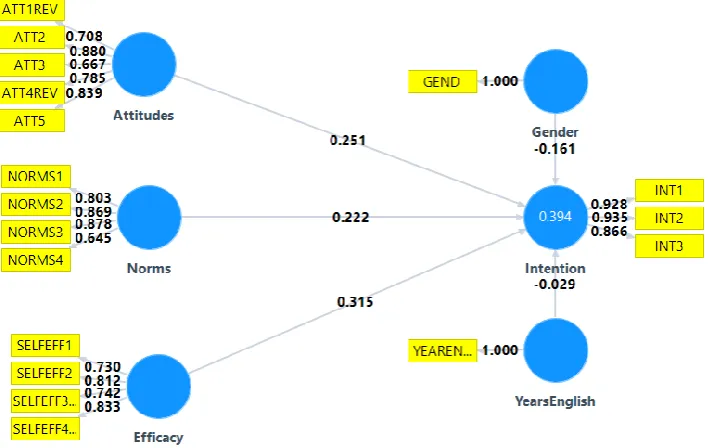
Controls are a valuable refinement to the base conceptual model. While the sample size is small, it is still possible to check for gender effects and the number of years of English as potential influencers. This analysis was carried out as illustrated by the following PLS model shown in Fig. 4. We tested for the potential impact on the dependent variable, intention to participate, and the significance of the path coefficients as shown in Table V. The T-statistics and equiva-lent p-values are provided. The gender control variable improved the R2 somewhat from .364 to .394. The improvement is meaningful. The path coefficient at -.161 is significant to p < .05. The number years of English study on the other hand did not make any improvement to the overall R2 and in any case the path coefficient is not significant. We can therefore conclude that gender has an appreciable effect on the student’s intention to participate, with female partici-pants reporting significant stronger intentions. Gender also improves the predictive relevance Q2 of the model marginal-ly from .274 to .300.
TABLE V.
HYPOTHESES AND SIGNIFICANCE (MODEL WITH CONTROLS)
Path Coefficients T Statistics (|O/STERR|) P Values Hypotheses - accept/reject
Att. -> Int. .251 3.164 .002 Accept
Norms -> Int. .222 5.096 0 Accept
Eff. -> Int. .315 2.614 .009 Accept
Gender -> Int. -.161 2.268 .024 Accept
Figure 4. PLS-SEM based model with controls.
V. DISCUSSION AND CONCLUSION
The results are significant and meaningful. The empirical data, albeit derived from the limited context of a single university, provided empirical support to the Theory of Planned Behavior as applied to intention to participate in a Chi-nese ESL context. All of the hypothesized drivers of intention to participate, namely attitudes, norms, and self-efficacy, have been shown to have meaningful path coefficients to intentions. As an additional significant aspect, our results vali-dated the scales used for the present study and adapted from Aizen (2002), Armitage and Conner (1999), and Midgley
et al. (2000). Such validation in a Chinese ESL context speaks well for the robustness of the scales and their potential wider applicability.
Additional insights have been provided by the use of gender and years of English study as controls. We would expect to find a positive relation between the number of years students have been studying English (as a proxy for English communication competence) and intentions to participate in class; however, the data did not support our expectation. On the other hand, gender appears to have a meaningful impact on intentions: Female students reported significantly stronger intentions to participate in class compared to their male colleagues. This aligns with observations by instructors in ESL contexts: Female students are generally more active communicators. If further supported in future research, this gender dimension may have significant pedagogical implications and call for differentiated, gender-based behavioral interventions to improve in-class participation in Chinese ESL contexts.
The R2 at .394 with gender control, while satisfactory, suggests that further constructs may add to the explanatory power. In our future research, we intend to extend our TPB-based model by including additional relevant constructs, in particular “willingness to communicate” (MacIntyre et al., 1998) and “communication anxiety” (Horwitz, Horwitz, &
Cope, 1986), which are two of the most studied constructs in the ESL literature (Ellis, 2012), as mentioned earlier. We are also interested in considering the role of “face-saving,” an indigenous Chinese personality construct that has also been found to contribute to Chinese students’ in-class participation (Zhong, 2013). Other potential control variables may also be tested, for instance teaching styles, seniority, and student background in terms of prior contact with English or immersion. By using the theoretical framework provided by the theory of planned behavior, it will be possible to un-derstand in a systematic manner the effect of those control variables on intention to participate.
The most important limitation in the present study regards the relationship between intentions to participate and actu-al in-class participation (see Fig. 1). Intentions have been found to predict behavior quite well across many studies (Armitage & Connor, 2001; Fishbein & Ajzen, 2010). Therefore, we assume here a positive, causal relationship based on the premises of TPB. However, we did not provide any empirical evidence to support this fundamental assumption. In future research we need to address this limitation by including either direct observations or self-reports.
Larger and more diverse samples of students from American, Asian, and European universities would enable further empirical evidence to make significant cultural comparisons and to inform and potentially improve pedagogical ap-proaches. We expect that larger diverse samples would also support a more thorough multi-group analysis to identify gender and other controls and interaction effects more precisely. Particularly interesting would be to analyze how effec-tive international exchange programs are and the effect of interacting with English naeffec-tive speakers within the class envi-ronment. Early observation shows that effects are positive in terms of participation and shifts in both attitude and per-ception of appropriate norms. Whether empirical evidence would support anecdotal observations remains an important question in this context.
Pedagogical Implications
Drawing from Fishbein and Ajzen’s (2010) Theory of Planned Behavior, in this paper we have outlined and tested a model that captures the factors that influence Chinese ESL students’ in-class participation. The findings from our ex-ploratory study provided an encouraging support to the application of TPB to ESL contexts and encourages further TPB-based investigations. Differently from other ad-hoc theoretical models, TPB is also intended to serve as a basis for behavioral interventions that should eventually promote better, namely more open and collaborative, classroom envi-ronments.
Our proposed model shows that attitudes, norms and perceived behavioral control/self-efficacy jointly influence Chi-nese students’ intentions to participate in class. In particular, self-efficacy turned out to have the stronger correlation to intentions. Perceived behavioral control/self-efficacy refers to students’ perceived confidence in their ability to display participatory behaviors in class, which we have operationalized in our study in their ability to execute actions such as volunteering an answer to a question, asking the professor a question or a clarification, presenting opinions in class, and taking the initiative to participate in class activities.
From a pedagogical point of view the results suggest that teaching approaches, which help build self-efficacy and improve attitudes and perspective of norms, would result in higher intent to participate and consequent actual participa-tion. Other factors, including gender, influence learners’ decision-making process to communicate proactively in class, therefore instructors should be able to motivate students’ participation using a variety of strategies that aim at fostering students’ intentions to participate. Our results highlight the importance of building students’ self-efficacy and confi-dence as an effective way to boost participation. Instructors, who wish to re-create the “conversational style lectures” typical of American education with their ESL Chinese students, should therefore continuously reinforce their students’ perceived competence in participating class, despite the expected initial frustration associated with dealing with reticent students, who often grew up in a cultural context that downplayed the importance of class interactivity.
REFERENCES
[1] Ajzen, I. (2002). Constructing a TPB questionnaire: Conceptual and methodological considerations. http://www.people.umass.edu/aizen/pdf/tpb.measurement.pdf (accessed 1/7/2015).
[2] Ajzen, I. (2011a). The theory of planned behaviour: Reactions and reflections. Psychology & Health 26.9, 1113–1127. doi:10.1080/08870446.2011.613995
[3] Ajzen, I. (2011b). Behavioral interventions: Design and evaluation guided by the theory of planned behavior. In M. M. Mark, S. I. Donaldson, & B. C. Campbell (eds.), Social psychology for program and policy evaluation (pp. 74–100). New York: Guil-ford.
[4] Armitage, C. J., & Conner, M. (1999). Predictive validity of the theory of planned behavior: The role of questionnaire format and social desirability. Journal of Community & Applied Social Psychology 9, 261–272.
[5] Armitage, C. J., & Conner, M. (2001). Efficacy of the Theory of Planned Behaviour: A meta-analytic review. British Journal of Social Psychology 40.4, 417–499. doi:10.1348/014466601164939
[6] Astrachan, C. B., Patel, V. K., & Wanzenried, G. (2014). A comparative study of CB-SEM and PLS-SEM for theory develop-ment in family firm research. Journal of Family Business Strategy 5.1, 116–128. doi: 10.1016/j.jfbs.2013.12.002
[7] Babin, B. J., & Boles, J. S. (1996). The effects of perceived co-worker involvement and supervisor support on service provider role stress, performance and job satisfaction. Journal of retailing 72.1, 57–75. doi:10.1016/S0022-4359(96)90005-6
[8] Bain, K. (2004). What the best teachers do. Cambridge, MA: Harvard University Press. [9] Bandura, A. (1997). Self-efficacy: The exercise of control. New York, NY: Freeman.
[10] Chen, M.-F., & Tung, P.-J. (2014). Developing an extended Theory of Planned Behavior model to predict consumers’ intention to visit green hotels. International Journal of Hospitality Management 36, 221–230. doi: 10.1016/j.ijhm.2013.09.006
[11] Cross-Border Education Research Team (2015, March 6). C-BERT Branch Campus Listing. [Data originally collected by K. Kinser and J. E. Lane]. http://globalhighered.org/branchcampuses.php (accessed 1/7/2015).
[12] Dallimore, E. J., Hertenstein, J. H., & Platt, M. B. (2010). Class participation in accounting courses: Factors that affect student comfort and learning. Issues in Accounting Education 25, 613–629. doi:10.2308/iace.2010.25.4.613.
[13] de Leeuw, A, Valois, P., Ajzen, I., & Schmidt, P. (2015). Using the theory of planned behavior to identify key beliefs underl y-ing pro-environmental behavior in high-school students: Implications for educational interventions. Journal of Environmental Psychology 42, 128–138. doi:10.1016/j.jenvp.2015.03.005.
[14] Ellis, R. (2012). Language teaching research and language pedagogy. Oxford: Wiley Blackwell. doi:10.1002/9781118271643. [15] Fazackerley, A. & Worthington, P. (eds.) (2007). British universities in China: The reality beyond the rhetoric. Agora
[16] Fishbein, M., & Ajzen, I. (2010). Predicting and changing behavior: The reasoned action approach. New York, NY: Psycholo-gy Press.
[17] Fornell, C., & Larcker, D. F. (1981). Evaluating structural equation models with unobservable variables and measurement error. Journal of Marketing Research 18.1, 39–50. doi:10.2307/3151312.
[18] French, D. P., & Cooke, R. (2012). Using the theory of planned behaviour to understand binge drinking: The importance of be-liefs for developing interventions. British Journal of Health Psychology 17.1, 1–17. doi:10.1111/j.2044-8287.2010.02010.x. [19] Girardelli, D. (2014). Modelling employees’ suggestion-making behavior. International Journal of Business and Management
5.1, 13–35.
[20] Hair, J. F., Hult, G. T. M., Ringle, C., & Sarstedt, M. (2014). A primer on Partial Least Squares Structural Equation Mode ling (PLS-SEM). Thousand Oaks, CA: SAGE.
[21] Hair, J. F., Ringle, C. M., & Sarstedt, M. (2011). PLS-SEM: Indeed a silver bullet. The Journal of Marketing Theory and Prac-tice 19.2, 139–152. doi:10.2753/MTP1069-6679190202.
[22] Hardeman, W., Johnston, M., Johnston, D. W., Bonetti, D., Wareham, N. J., Kinmonth, A. L. (2002). Application of the Theory of Planned Behaviour in behaviour change interventions: A systematic review. Psychology & Health 17, 123–158. doi: 10.1080/08870440290013644a
[23] Hsu, W-H. (2015). Transitioning to a communication-oriented pedagogy: Taiwanese university freshmen's views on class par-ticipation. System 49, 61–72. doi: 10.1016/j.system.2014.12.002.
[24] Institute of International Education. (2014). Top 25 places of origin of international students, 2012/13-2013/14. Open Doors Report on International Educational Exchange. http://www.iie.org/opendoors (accessed 1/7/2015).
[25] Horwitz, E. K., Horwitz, M. B., & Cope, J. A. (1986). Foreign language classroom anxiety. Modern Language Journal 70.2, 125–132. doi: 10.1111/j.1540-4781.1986.tb05256.x
[26] Julius, D., & Leventhal, M. (March 2014). Sino-American joint partnerships: Why some succeed and others fail. CSHE
Berke-ley Occasional Papers.
http://www.cshe.berkeley.edu/sites/default/files/shared/publications/docs/ROPS%20CSHE.1.2014.Julius%26Leventhal.Sino-AmericanHEPartnerships.3.16%202014.pdf (accessed 1/7/2015).
[27] Knowlden, A. P., & Sharma, M. (2012). Systematic review of family and home-based interventions targeting paediatric over-weight and obesity. Obesity Reviews 13.6, 499–508. doi:10.1111/j.1467-789X.2011.00976.x.
[28] Kothe, E. J., Mullan, B. A., & Butow, P. (2012). Promoting fruit and vegetable consumption. Testing an intervention based on the theory of planned behaviour. Appetite 58.3, 997–1004. doi:10.1016/j.appet.2012.02.012.
[29] MacIntyre, P.D., Clément, R., Dörnyei, Z., & Noels, K.A. (1998). Conceptualizing willingness to communicate in a L2: A sit u-ated model of confidence and affiliation. Modern Language Journal 82, 545–562. doi:10.1111/j.1540-4781.1998.tb05543.x. [30] Mak, B. (2011). An exploration of speaking-in-class anxiety with Chinese ESL learners. System 39, 202–214.
doi:10.1016/j.system.2011.04.002.
[31] Midgley, C., Maehr, M. L., Hruda, L., Anderman, E. M., Anderman, L., & Freeman, K. E. (2000). Manual for the patterns of adaptive learning scales (PALS). Ann Arbor, MI: University of Michigan.
[32] Morell, T. (2007). What enhances EFL students’ participation in lecture discourse? Student, lecturer and discourse perspectives. Journal of English for Academic Purposes 6, 222–237. doi:10.1016/j.jeap.2007.07.002.
[33] Peng, J.-E. (2012). Towards an ecological understanding of willingness to communicate in EFL classrooms in China. System 40, 203–213. doi:10.1016/j.system.2012.02.002
[34] Peng, J.-E., & Woodrow, L. (2010). Willingness to communicate in English: A model in the Chinese EFL classroom context. Language Learning 60.4, 834-876. doi: 10.1111/j.1467-9922.2010.00576.x.
[35] Ringle, C. M., Wende, S., & Becker, J. -M. (2014). SmartPLS 3.0. Hamburg: SmartPLS. http://www.smartpls.com (accessed 1/7/2015).
[36] Stajkovic, A. D., & Luthans, F. (1998). Self-efficacy and work-related performance: A meta-analysis. Psychological Bulletin 124, 709–725. doi:10.1037/0033-2909.124.2.240.
[37] Taylor, R. (1990). Interpretation of the correlation coefficient: A basic review. Journal of Diagnostic Medical Sonography 1.6, 35–39. doi:10.1177/875647939000600106.
[38] Tyson, M., Covey, J., & Rosenthal, H. E. S. (2014). Theory of planned behavior interventions for reducing heterosexual risk behaviors: A meta-analysis. Health Psychology 33.12, 1454–1467. doi:10.1037/hea0000047.
[39] Weaver, R. R., & Qi, J. (2005). Classroom organization and participation: College students' perceptions. The Journal of Higher Education 76.5, 570–601. doi:10.1353/jhe.2005.0038.
[40] Zhong, Q. (2013). Understanding Chinese learners’ willingness to communicate in a New Zealand ESL classroom: A multiple case study drawing on the theory of planned behavior. System 41, 740–751. doi 10.1016/j.system.2013.08.001.
Davide Girardelli received his Ph.D. in Communication from the University of Kentucky, Lexington (KY), USA, in 2006. He is currently Assistant Professor of Communication at Wenzhou-Kean University, Wenzhou, China.