Chad Haefele
Academic Librarians have been creating research guides since the 1950s. These resources were design to help patrons become familiar with the basics of a subject or discipline. Research guides evolved into course pages, which provide resources related to a single course. This study considers students’ perceptions, and how that effects their intent to use the course page in the future. The study seeks to answer the question, does students’ perception of usefulness, interactivity, ease-of-use, attitude, and satisfaction effect their intention to use course pages?
The method used for this study is adapted from the Technology Acceptance Model which looks for correlations between perceived usefulness, interactivity, ease-of-use, attitude, satisfaction, and intention to use. 47 undergraduate students from the University of North Carolina, Chapel Hill, responded to an online survey. These findings will help determine if student perceptions match the findings from previous studies regarding the usability and implementation of course pages.
Headings:
Web applications in libraries User Education
by Grace S. Sharrar
A Master’s paper submitted to the faculty of the School of Information and Library Science of the University of North Carolina at Chapel Hill
in partial fulfillment of the requirements for the degree of Master of Science in
Library Science.
Chapel Hill, North Carolina April 2017
Approved by
Table of Contents
Introduction ... 2
Literature Review... 4
Functionality ... 6
Context of Use ... 6
Quality of Outcome... 8
Ensure Safety ... 9
Save Energy and Time ... 11
Method ... 13
Results ... 16
Perceived Usefulness ... 16
Perceived Interactivity ... 18
Perceived Ease-of-use ... 19
Attitude ... 20
Satisfaction ... 22
Intention to use ... 24
Mean ... 24
Discussion and Conclusion ... 26
Bibliography ... 29
Introduction
Academic Librarians have been creating research guides since the 1950s (Vileno, 2007, p. 434). Originally a paper handout, these resources were design to help patrons become familiar with the basics of a topic, subject or discipline (Giullian and Zitser, 2015, p.171). Today, research guides are published to library websites as either a subject guide or as a course page. A subject guide provides resources related to a broad subject area, while a course page provides resources that are specific to a single course. Course pages were developed due to research which revealed that subject guides were too broad to be relevant to students’ information needs (Baker, 2014, 110). Course pages which could have a narrower focus, seemed to be the solution to this issue (Leighton and May, 2013, p. 127). Studies tend to focus on either the usability (Slemons, 2013) (Carrillo, 2012) or implementation (Leighton and May, 2013) of the course page. This study, however considers students’ perceptions and how that effects their intent to use the course page in the future.
interactivity, ease of use, attitude, satisfaction, and intention to use. The survey was distributed to undergraduate students who use course pages.
47 Undergraduate students responded to the survey. They were recruited through their course instructors or through recruitment posters displayed around campus. This data was analyzed using the Technology Acceptance Model (TAM) which looks for a correlation between user perceptions and intention to use (Davis, 1989, p. 319). Each of the statements within the self-reporting survey address different aspects of the definition for usefulness outlined in the literature review section of this study.
Literature Review
Intent to use is closely connected to usefulness since people tend to use technologies that are useful to them (Davis, 1989) (Park, 2009) (Yoon, 2016). Before intent to use can be measured, usefulness must be defined. Within the field of user experience, usefulness is defined as “the degree to which a product enables a user to achieve his or her goals, and it is an assessment of the user’s willingness to use the product at all” (Rubin and Chisnall, 2008, p. 4). A study by Francois Aubin, Hasmik Atoyan, Jean-Marc Robert, and Tigran Atoyan (2012), and the TAM method developed by Fred Davis (1989) both define usefulness. Both the definitions provided by Audin, et al. and Davis agree with the definition by Rubin and Chrisnall, that usefulness is
essentially about enabling the user. However, Aubin et al. and Davis provide more detail about what this means and how this can be measured (Aubin; Atoyan, H.; Robert; and Atoyan, T., 2012, p. 5267-5268) (Davis, 1989, 320).
Aubin, et al. used Maslow’s hierarchy of needs to define usefulness (2012, p. 5267). According to Maslow’s hierarchy, there are five levels of need, and any activity that we do is in response to one of these needs (Aubin; Atoyan, H.; Robert; and Atoyan, T., 2012, p. 5267). This includes an individual’s use of technology. For example, Aubin et al. explains that “the search for information can satisfy the need for food (e.g. where to buy food) and safety (e.g. how to build a safe house, etc.)” (2012, p. 5267). Using this premise, Aubin et al. conclude that usefulness is determined by the following
energy and time (2012, p. 5267-5268). These categories can be applied to the case of the library course page and give insight into the context in which a student uses a course page. The Technology Acceptance Method used in this study, similarly addresses these areas of usefulness. Below I have outlined how the different aspects of usefulness apply to course pages.
The questions in this survey were developed from the Technology Acceptance Model (TAM) which professes a correlation between perceived usefulness, ease of use and intent to use. This model was developed by Fred D. Davis in 1989 as a means to predict technology adoption by looking at correlations between user-perceptions and intent to use (Davis, 1989, p. 319). This model
is built on the theory of reasoned action (TRA), which suggests that an
individual’s behavior is initiated by his or her behavioral intention…. According to the TRA, the intention to act directly determines behavior because people generally behave as they intend to (Yoon, 2016, p. 688).
To measure this correlation, Davis developed a twelve-question survey. For this survey, a statement is made, and the participant is asked to indicate their level of agreement on the seven point Likert scale which goes from likely to unlikely (Davis, 1989, p. 340). Since Davis first introduced this model, modifications have been made it, including changes to the variables (Choi, Chung, 2013) (Doll and Deng, 1998) (Yoon, 2016).
identifies, then by its relationship to TAM and the undergraduate’s research experience. By examining the different aspects of usefulness, I hope to compare how librarians’ intentions for course pages match student perceptions.
Functionality
Aubin et al. defines functionality in terms of the user’s needs: “[P]roducts with features that better satisfy consumers’ basic needs, also have better long term survival rates” (2012, p. 5268). In other words, if something is functional than it is more likely to be used. Functionality can also be understood in terms of perceived ease-of-use and interactivity. Ease-of-use refers to a freedom from effort (Davis, 1989, 320), and interactivity regards the responsiveness, personalization, and connectedness of the application (Yoon, 2016, p. 689).
For a course page, the user (an undergraduate student) has the basic need to complete a class research assignment. To be functional, a course page must be both relevant to the course context (which is discussed further below) and it must be usable. Erin Carrillo (2012) conducted a usability evaluation which resulted in design
recommendation. Similarly, Megan H. Slemons (2013) conducted a study which considered the effect of design on the usage of course pages. While these are aspects of usefulness, they are not the whole. Subject guides may meet all of these
recommendations and still not receive a lot of traffic if they do not address an actual user need (Baker, 2014, 110).
Context of Use
relates to Davis’ definition of perceived usefulness which describes it as the “degree to which a person believes that using a particular system would enhance his or her job performance” (1989, 320). An application cannot be designed to “enhance…job performance” (Davis, 1989, 320) unless the context of that job, goal, or, in this case, research project, is known. This fact is clearly evident by the evolution of the course page over the years.
In the 1950s, librarians started using Pathfinders which were genre specific recommended reading lists (Vileno, 2007, p. 434). Eventually, pathfinders evolved into research guides. These were also printed list of resource, but this time they were a
throughout the semester (Alverson, J.; LeFager, J.; Schwartch, J.; and Brunskil, A, 2015, p. 131).
Librarians started utilizing course pages within their instruction sessions (Leighton and May, 2013, p. 135). By embedding the course pages within their
instruction sessions librarians were able to market this service to the students and teach them how to use the course page in their research (Brecher, 2013, p.7). Leighton and May conducted a study in 2003, which found that, while students reported finding the course page helpful, “less than one in ten students actually used four or more resources” (Leighton and May, 2003, p. 132). Leighton and May concluded that in order to get the best return on investment, instruction session should include an introduction to the course page as well as instruction in how to use the course page (Leighton and May, 2013, p. 130). In other words, students must be instructed on the relevance and use of a course page in relationship to their research assignment before they can understand the value it can offer. They need to be integrated into activities and assignments. By matching the course page to the students to the students learning and research experiences they can become relevant.
Quality of Outcome
with meeting the assignment parameters for source type and content, than for things such as source reliability, selection and evaluation (Kuhlthau, Heinstrom, and Todd; 2008; n.p.). The information resources they use are picked based off their effectiveness and ease of use so they can reach this desired outcome. Search results are relevant both to their topic, and to the requirements for the assignment (Alverson, et al., 2015, 131). For a course page, this means the listed resources must be relevant and accessible.
Ensure Safety
Safety is one of the basic levels of need as described by Maslow (Aubin, et al., 2012, p. 5267). In this study, this deals most closely with the students’ attitude (negative or positive feelings) towards both the course page and to the research process in general (Yoon, 2012, p. 689). Kuhlthau has produced a comprehensive body of research
regarding students’ attitudes toward the research process. Familiarity with her research can provide insight into why students may have certain attitudes towards course pages.
Kuhlthau’s model of Information Search Process (ISP) describes seven stages of the research process (Case, 2002, p. 145). In particular, she highlights the “feelings, thoughts, and actions” of the student (Case, 2002, p. 145). Kuhlthau acknowledges the role of emotions on the research process and emphasizes the negative emotions such as uncertainty and frustration, in the research process (Case, 2002, p. 146). But it’s not just the process that can cause frustration. Research tools can also illecite negative emotional responses causing the student to feel insecure or unsafe. Studies show that students “find that traditional library systems...are disappointing, frustrating, illogical, counter-intuitive, and intimidating” (Bawden and Vilar, 2006, p. 349). Uncertainty, frustration, and
If these feelings occur when using library services, such as course pages, then it will negatively influence the adaptation of these services by patrons (Aubin, et al, 2012, p. 5267-5271).
Cognitive load theory also highlights issues of safety that students may
experience when researching. Little found that ‘technology-based research tools” will help students in their research, but that these must be grounded in the context of a
“coherent education” or else they will not help alleviate the confusion and stress students experience when conducting research (Leighton and May, 2010, p. 54). Little went on to conclude that if librarians used the cognitive load theory as a framework for developing course pages and for sharing them during an instruction session, the students would “learn ways to complete research assignments and become effective information users” (2010, p. 55). The cognitive load theory identifies three types of cognitive load: Intrinsic, Extraneous, and Germane (Little, 2010, p. 54-55).
Librarians also need to be aware that undergraduates view themselves as being alone in their research process. This can also cause extraneous cognitive load. In 2009, Melissa Gross and Don Latham conducted a study to understand how undergraduate students perceived their own information literacy skills. They found that students perceived themselves to be self-taught researchers (Gross, M. and Latham, D., 2009, p. 344), and were successful because of their own curiosity, ability to synthesize
information, and perseverance (Gross, M. and Latham, D., 2009, p.341). Students also reported that they did not view librarians as someone they could ask for help, sicne that would be the same as admitting to failure (Valentine, 1993, p. 303). Other traits that students exhibit while doing research include wanting to take the path of least resistance (Kuhlthau, Heinstrom, and Todd, 2008, n.p.), working for a deadline instead of until the project is complete (Kuhlthau, Heinstrom, and Todd, 20008, n.p.), and a preference for using Google to other search tools (Cmor and Li, 2012, p. 451)(He, D., Wu, D., Yue, Z., Fu, A. and Thein Vo, K., 2012, p. 618). Course pages can combat feelings of anxiety by providing students with an obviously finite list of resources. This study should help determine if this is true based on whether or not a significant relationship is found between student perceptions and their intent to use.
Save Energy and Time
Aubin et al. explains that “Humans are constantly adapting to expend the least energy possible to achieve their objective” (2012, p. 5267). This includes the
often used by undergraduates is Google (Cmor and Li, 2012, p. 451) While some
researchers have found that library resources could compete with Google (Joint, 2010, p. 246), others reported that students almost entirely prefer Google over the library web site for all of their assignments (He, D., Wu, D., Yue, Z., Fu, A. and Thien Vo, K.; 2012, p. 618).
In her 2008 re-evaluation of the ISP, Kuhlthau explains the influence that the internet and digital resources have had on student’s expectations about how and where they are able to access information:
Research suggests that the Internet’s readily available information has change students’ conceptions of the research process, in that they expect to find
information quickly and without effort and where choice of topic is guided by an estimate of easy availability of information (Kuhlthau, Heinstrom, and Todd; 2008, n.p.).
Students will also gravitate towards tools they are familiar with (Valentine, 1993, p. 303). This includes going to familiar individuals for help, for example students will go to a friend first, then the course instructor or a librarian (Valentine,1993, p. 303-304). In order for course pages to provide value to undergraduate students in their research, and to be perceived as useful, they must save time and energy for the student.
Intention to use will be influenced by the usefulness, or value, that a service can provide. To be seen as useful to a student, course pages should be designed for:
Method
This study was a summative usability study conducted with the purpose of gather more information on student perception of the usefulness of course pages in correlation to their intent to use the course page in their research. The information gathered from this survey has the potential to reveal whether or not the library course pages are meeting their intended objectives.
Fifty-four undergraduate students participated in the study. Of these fifty-four, forty-seven completed the survey. The ones that did not complete the survey were removed from the final results so they would not skew the results. These participants were recruited through this study via their course instructors, and through recruitment posters posted in various undergraduate academic buildings. The intention for recruiting this way was to get participants who were actively required to use course pages in their class, and those who may have serendipitously used a course page but were not
necessarily directed by their instructor to do so.
results came from students who were actively using a course page within their course, the results may be biased to reflect that student population, instead of being representative of students who may not have been told about a corresponding course page by their
instructor. However, these findings can still be useful as they show the potential for how course pages can be perceived when embedded into a lesson plan or course assignment.
The TAM method was used to analyze the data in this study. In 2016, Hye-Young Yoon adapted TAM for a study regarding library applications (2016). Yoon’s survey has been modified to match the needs of this study. The survey contains six different
variables: perceived ease of use, perceived interactivity, perceived usefulness, attitude, satisfaction, and intent to use (Yoon, 2016, p. 690) (see Table 1). In each section, three different statements were made to capture different aspects of each variable. For example, usefulness involves both a sense that it will help with a class assignment and that it will save time. All the statements in the survey were positive (again see Table 1). For each of these statements, the students were asked to indicate their level of agreement on a seven point Likert scale (1=strongly disagree, 2=disagree, 3=somewhat disagree, 4=neutral, 5=somewhat agree, 6=agree, 7=strongly disagree) (See Appendix for full survey). The findings from this survey were then analyzed both for their trends in responses to each statement, the mean and standard deviation, and for correlations between various sections state. Our hypothesis is as follows:
At the end of the survey, participants were also given the opportunity provide feedback about course pages. This qualitative data provided insight into why certain trends may have been happening as they explained further the student’s perceptions.
Table 1.
Questionnaire items from survey.
Construct Statement and Identifier
Perceived Usefulness • I think library course pages are useful to me. (Q6_1)
• Using library course pages helps me with my class assignments. (Q6_2)
• I find library course pages save me time. (Q6_3)
Perceived Interactivity • I think the library course pages’ content is relevant to me. (Q12_4)
• It is convenient to use library course pages to access resources. (Q12_5)
• The links on library course pages work reliably. (Q12_6)
Perceived ease of use • I find library course pages are easy to navigate. (Q13_7)
• I understand the content on library course pages. (Q13_8)
• Overall, I think library course pages are easy to use. (Q13_9)
Attitude toward library
course pages •
It would be a wonderful idea to use library course pages. (Q14_10)
• I have positive feelings for library course pages in general. (Q14_11)
• It is better for me to use library course pages as compared to the main library search bar. (Q14_12)
Satisfaction with library course pages
• Overall, I am satisfied with the library course pages. (Q15_13)
• The library course pages meet my expectations. (Q15_14)
• The library course pages are a beneficial tool in improving life. (Q15_15)
Intent to use library course pages
• I intend to use library course pages whenever possible. (Q16_16)
• I intend to use a course page again in the future. (Q16_17)
Results
The data was analyzed for general trends including the percentages of the responses, the mean response and the standard deviation, and finally for correlation between different categories in order to determine relationships between the variables. The percentages are out of the 47 participants who fully completed the survey.
Perceived Usefulness
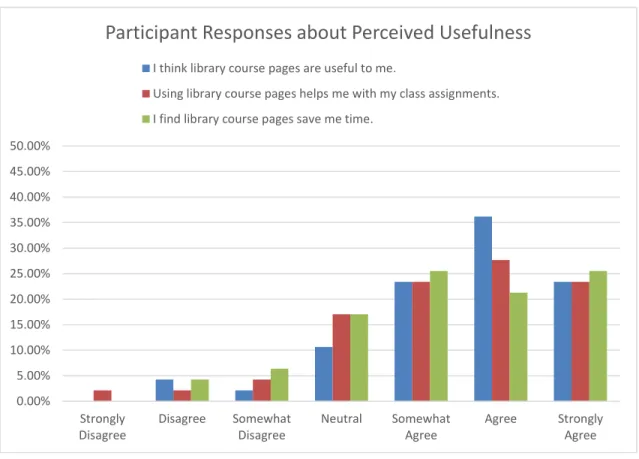
Figure 1. Participant responses about perceived usefulness
0.00% 5.00% 10.00% 15.00% 20.00% 25.00% 30.00% 35.00% 40.00% 45.00% 50.00%
Strongly Disagree
Disagree Somewhat Disagree
Neutral Somewhat Agree
Agree Strongly Agree
Participant Responses about Perceived Usefulness
I think library course pages are useful to me.
Using library course pages helps me with my class assignments.
Overall, students tended to agree with statements regarding the usefulness of the course page (See Figure1). The following are comments from the participants regarding their perception of the course page’s usefulness:
• “While I find them helpful to a specific course's material, it would also be helpful to have instructions as to how to search using other UNC search directories and a list of directories relevant to course content.”
• “They are very useful, and our librarians are awesome.”
• “Great resource, makes research a tinge easier, which is great when time is limited for us students!”
A significant correlation was also found between perceived usefulness and intent to use, which is shown in Table 2.
Table 2.
Correlation between usefulness and intent to use.
Correlation between Usefulness and Intent to use
Q6_2 Q16_17
Q6_2 Pearson Correlation 1 .380**
Sig. (2-tailed) .008
N 47 47
Q16_17 Pearson Correlation .380** 1
Sig. (2-tailed) .008
N 47 47
Perceived Interactivity
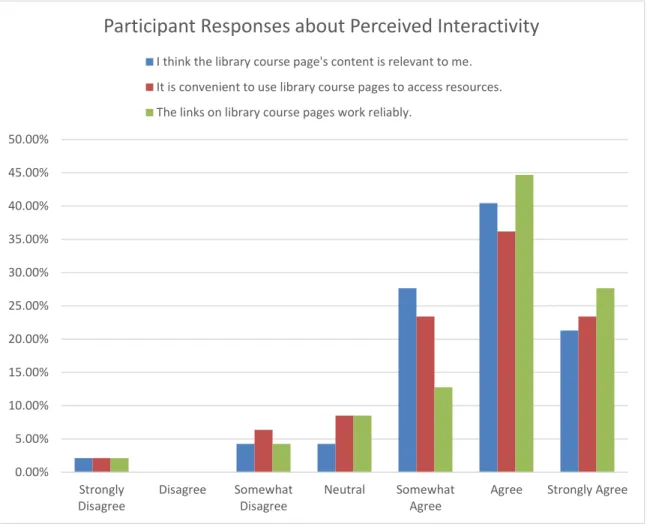
Figure 2. Participant responses about perceived interactivity.
For statements regarding perceived interactivity, participants again tended to agree (as seen in Figure 2 above). Participants made the following comments regarding the perceived interactivity of course pages:
• “Sometimes links are dead”
• “Sometimes they’re too busy and have so much going on it can feel overwhelming and hard to navigate”
• “Very nicely put together.”
A significant correlation was also found between perceived interactivity and intent to use as shown in Table 3 below:
0.00% 5.00% 10.00% 15.00% 20.00% 25.00% 30.00% 35.00% 40.00% 45.00% 50.00%
Strongly Disagree
Disagree Somewhat Disagree
Neutral Somewhat Agree
Agree Strongly Agree
Participant Responses about Perceived Interactivity
I think the library course page's content is relevant to me.
It is convenient to use library course pages to access resources.
Table 3.
Correlation between perceived interactivity and intent to use.
Correlation between Perceived Interactivity and Intent to use
Q12_4 Q16_18
Q12_4 Pearson Correlation 1 .604**
Sig. (2-tailed) .000
N 47 47
Q16_18 Pearson Correlation .604** 1
Sig. (2-tailed) .000
N 47 47
**. Correlation is significant at the 0.01 level (2-tailed).
Perceived Ease-of-use
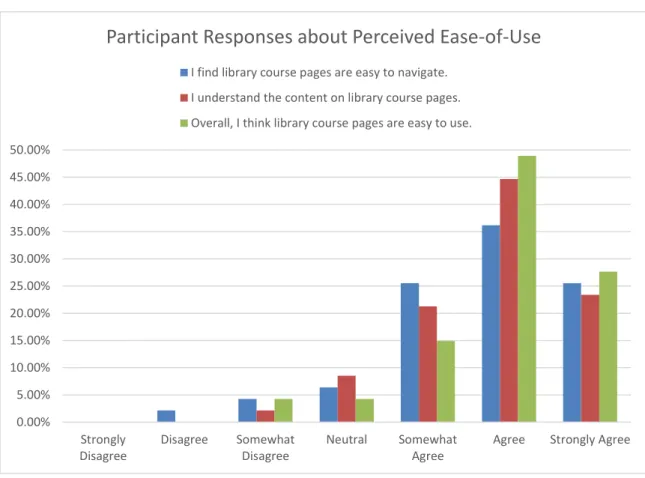
Figure 3. Participant responses to perceived ease-of-use.
0.00% 5.00% 10.00% 15.00% 20.00% 25.00% 30.00% 35.00% 40.00% 45.00% 50.00%
Strongly Disagree
Disagree Somewhat Disagree
Neutral Somewhat Agree
Agree Strongly Agree
Participant Responses about Perceived Ease-of-Use
I find library course pages are easy to navigate.
I understand the content on library course pages.
Figure 3 shows that most participant responses ranged from somewhat agree to strongly agree. One participant commented regarding perceived Ease-of-Use:
• “Find a way to combine with Sakai”
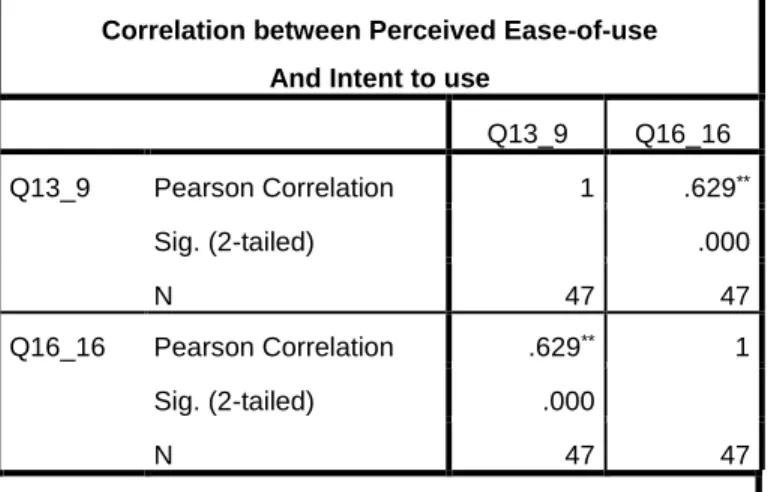
A significant correlation was also found between perceived ease-of-use and intent to use. Table 4 shows these results.
Table 4.
Correlation between perceived ease-of-use and intent to use.
Correlation between Perceived Ease-of-use And Intent to use
Q13_9 Q16_16
Q13_9 Pearson Correlation 1 .629**
Sig. (2-tailed) .000
N 47 47
Q16_16 Pearson Correlation .629** 1
Sig. (2-tailed) .000
N 47 47
**. Correlation is significant at the 0.01 level (2-tailed).
Attitude
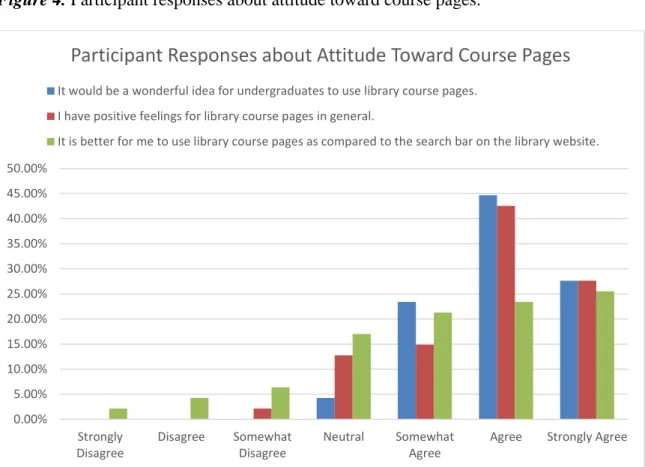
Figure 4. Participant responses about attitude toward course pages.
Figure 4, above, shows the response results for the statements regarding Attitude toward the course pages. For these responses, the participants tended to agree to these statements. One participant commented:
• “They’re great!”
As was the case with the other categories, a correlation between attitude toward and intent to use was found to be significant. These results are revealed in Table 5.
0.00% 5.00% 10.00% 15.00% 20.00% 25.00% 30.00% 35.00% 40.00% 45.00% 50.00%
Strongly Disagree
Disagree Somewhat Disagree
Neutral Somewhat Agree
Agree Strongly Agree
Participant Responses about Attitude Toward Course Pages
It would be a wonderful idea for undergraduates to use library course pages.
I have positive feelings for library course pages in general.
Table 5.
Correlation between attitude toward and intent to use.
Correlation between Attitude toward and Intent to use
Q14_10 Q16_17
Q14_10 Pearson Correlation 1 .691**
Sig. (2-tailed) .000
N 47 47
Q16_17 Pearson Correlation .691** 1
Sig. (2-tailed) .000
N 47 47
**. Correlation is significant at the 0.01 level (2-tailed).
Satisfaction
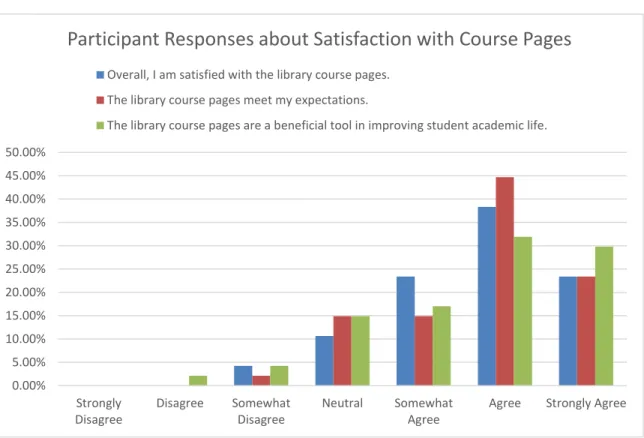
Figure 5. Participant response about satisfaction with course pages.
Similar to the other categories, the majority of participant responses to questions regarding to satisfaction ranged from somewhat agree to agree (see Figure 5). Comments from the participants were as follows:
0.00% 5.00% 10.00% 15.00% 20.00% 25.00% 30.00% 35.00% 40.00% 45.00% 50.00% Strongly Disagree Disagree Somewhat Disagree Neutral Somewhat Agree
Agree Strongly Agree
Participant Responses about Satisfaction with Course Pages
Overall, I am satisfied with the library course pages.
The library course pages meet my expectations.
• “Yes, Although I have had positive experiences in the 2 classes (AAAD214 and PSYC514) I have used them in, I have not heard much about them. I think it would be a great resource for all classes to use!”
• “They really do Provide a great starting point for research!”
The correlation between satisfaction and intent to use was tested and found to be significant. These results are shown in Table 6, below.
Table 6.
Correlation between satisfaction and intent to use.
Correlation between Satisfaction and Intent to use
Q15_14 Q16_18
Q15_14 Pearson Correlation 1 .600**
Sig. (2-tailed) .000
N 47 47
Q16_18 Pearson Correlation .600** 1
Sig. (2-tailed) .000
N 47 47
Intention to use
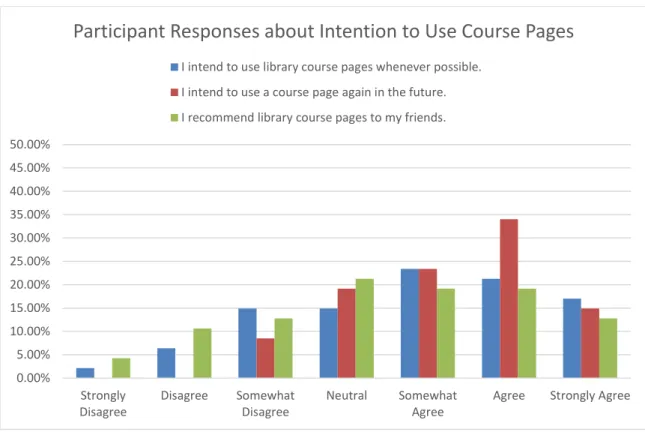
Figure 6. Participant responses about intent to use course pages.
Participant responses to Intent to use were more varied than their responses to statements in the other categories (see Figure 6). Here the majority of responses ranged from neutral to strongly agree. One participant commented regarding their intent to use library course pages:
• “I find them somewhat helpful, but often, I end up finding the sources I need on my own.”
As mentioned in previously, intention to use was found to have significant correlations with each of the other categories.
Mean
The mean of each statement was also calculated. These results are shown in Table 7 and Table 8. The means range from 4.49 to 5.96. Since the survey was on an ordinal
0.00% 5.00% 10.00% 15.00% 20.00% 25.00% 30.00% 35.00% 40.00% 45.00% 50.00%
Strongly Disagree
Disagree Somewhat Disagree
Neutral Somewhat Agree
Agree Strongly Agree
Participant Responses about Intention to Use Course Pages
I intend to use library course pages whenever possible.
I intend to use a course page again in the future.
scale, with 1=strongly disagree, 2=disagree, 3=somewhat disagree, 4=neutral, 5=somewhat agree, 6=agree, 7=strongly disagree, the average response seems to fall between the neutral (4) to agree (6) range. However, due to outlying responses of either strongly disagree or strongly agree, the standard deviation was also calculated. The higher the deviation, the more spread out the responses tended to be, this seems to be especially the case for Q16_16, and Q16_18 which were statements about intent to use.
Table 7.
Mean of participant responses to each statement.
Mean of participant responses to each statement 1
Q6_1 Q6_2 Q6_3 Q12_4 Q12_5 Q12_6 Q13_7 Q13_8 Q13_9
Mean 5.55 5.34 5.30 5.62 5.53 5.74 5.66 5.79 5.91
N 47 47 47 47 47 47 47 47 47
Std. Deviation 1.265 1.418 1.413 1.208 1.316 1.276 1.185 .977 .996
Table 8.
Mean of participant responses to each statement.
Mean of participant responses to each statement 2
Q14_10 Q14_11 Q14_12 Q15_13 Q15_14 Q15_15 Q16_16 Q16_17 Q16_18
Mean 5.96 5.81 5.23 5.66 5.72 5.62 4.83 5.28 4.49
N 47 47 47 47 47 47 47 47 47
Discussion and Conclusion
This study focused on whether or not undergraduates’ intention to use library course pages was affected by perceived usefulness, perceived interactivity, perceived ease-of-use, their attitude, and their satisfaction. From the study’s findings, these variables were found to have a significant correlation to the participants’ intent to use, support the study hypothesis. These findings also supported previous studies, such as Alverson et al., which use structured interview consisting of four different parts (research habit interview, unguided research task, research task using a research guide, and an exit interview) (2015, p. 126). In this study, they found that research guides should be used within a course and paired with library instruction (Alverson, et al., 2015, 131). Due to the recruitment method of this study, we know that most the participants used a library course page for a class assignment. Since these participants reported out that they had positive reactions to the course page, this study verifies the findings from previous studies which used different methods.
finding the sources I need on my own.” These contrary responses open up questions of how these course pages are used by students and their instructors. In the future, studies should be conducted to see if student usage matches the student’s self-reported perception of the course pages.
Student comments also implied a need to evaluate the interactivity of the course pages. Two students made comments regarding issues with the course page functionality and design:
• “Sometimes they’re too busy and have so much going on it can feel overwhelming and hard to navigate.”
• “Sometimes the links are dead.”
One previous study (Slemons, 2013, p. 31) found that too many words on a course page may deter student usage. The first student comment mentioned above seems to support this claim. An evaluation of the style and functionality of course pages may be a beneficial direction for future studies, especially to see if 1) librarians adhere to current best practices for publishing to the web, and 2) if those best practices match current user expectations.
Most of the course pages reviewed in this study were mostly used by
Bibliography
Alverson, J., LeFager, J., Schwartz, J., & Brunskill, A. (2015). Creating Audience and Environment-Friendly Research Guides: Findings from a User Study.
http://www.ala.org.libproxy.lib.unc.edu/acrl/sites/ala.org.acrl/files/content/confere nces/confsandpreconfs/2015/Alverson_Schwartz_Brunskill_Lefager.pdf
Baker, Ruth L. (2014) Designing Libguides as Instructional tools for critical thinking and effective online learning. Journal of Library & Information Services in Distance Learning, 8(3-4), 107-117.
Case, D. O. (2016). Looking for information: a survey of research on information seeking, needs, and behavior (Fourth ed.). Bingley, UK: Emerald.F
Cmor, D., & Li, X. (2012). Beyond boolean, towards thinking: Discovery systems and information literacy. Library Management, 33(8-9), 450-457.
doi:http://dx.doi.org/10.1108/01435121211279812
Doll, W. J., Hendrickson, A., & Deng, X. (1998). Using Davis's perceived usefulness and ease‐of‐use instruments for decision making: a confirmatory and multigroup invariance analysis. Decision Sciences, 29(4), 839-869.
Gibbons, S., & Reeb, B. (2004). Students, librarians, and subject guides: Improving a poor rate of return. Portal: Libraries and the Academy, 4(1), 123-130. Retrieved from
Giullian, John C., & Zitser, Ernest A. (2015) Beyond LibGuides: The past, present, and future of online research guides. Slavic & East European Information Resources, 16(4), 170-180.
Gross, M., & Latham, D. (2009). Undergraduate perceptions of information literacy: Defining, attaining, and self-assessing skills. College & Research Libraries, 70(4), 336-350.
He, D., Wu, D., Yue, Z., Fu, A. and Thien Vo, K. (2012) ‘Undergraduate students’ interaction with online information resources in their academic tasks’, Aslib Proceedings, 64(6), 615–640. doi: 10.1108/00012531211281715.
Joint, N. (2010). The one-stop shop search engine: A transformational library
technology? Library Review. 59(4): 240–248. doi:10.1108/00242531011038550 Kuhlthau, C. C., Heinström, J., & Todd, R. J. (2008). The ‘information search process’
revisited: Is the model still useful. Information Research, 13(4), 13-4.
Leighton, H. V., & May, D. (2013). The library course page and instruction: Perceived helpfulness and use among students. Internet Reference Services Quarterly, 18(2), 127-138. doi:http://dx.doi.org/10.1080/10875301.2013.804019
Little, J. J. (2010). Cognitive load theory and library research guides. Internet Reference Services Quarterly, 15(1), 53-63. doi:10.1080/10875300903530199
Morris, S. E., & Bosque, D. D. (2010). Forgotten resources: subject guides in the era of Web 2.0. Technical Services Quarterly, 27(2), 178-193.
Mussell, J., & Croft, R. (2013). Discovery layers and the distance student: Online search habits of students. Journal of Library & Information Services in Distance
Rubin, J., & Chisnell, D. (2008). Handbook of Usability Testing: How to Plan, Design, and Conduct Effective Tests (2). Hoboken, US: Wiley. Retrieved from
http://www.ebrary.com
Slemons, Megan. (2013). Design Standards for LibGuides: Does Better Design Lead to Greater Use? (Unpublished Master’s Thesis). University of Chapel Hill, NC.
Valentine, B. (1993). Undergraduate research behaviour: Using focus groups to generate theory. Journal of Academic Librarianship, 19(5), 300-304. Retrieved from http://libproxy.lib.unc.edu/login?url=http://search.proquest.com/docview/5729221 6?accountid=14244
Vileno, L. (2007). From paper to electronic, the evolution of pathfinders: a review of the literature. Reference Services Review, 35(3), 434-451.
Appendix: Survey
Are Course Pages Useful?
Q12 About the Study: You are being asked to participate in a study conducted by Grace Sharrar, a UNC Master's in Library Science student. The purpose of this study is to learn more about what undergraduates think of library course pages.
Your Participation: In order to be entered into the drawing for the $40 Amazon gift card, you must complete the entire survey and provide your email at the end. Your
participation in this survey is completely voluntary.
Risks and Benefits: We do not anticipate risk beyond that which you encounter in day-to-day life. There may be no direct benefit to you for participating in this study.
Your Privacy: Your email will not be associated with the data collected through this survey. Instead, data will be stored using a random identifier. Your survey will not be shared outside of the research project. In any publication that comes out of this study, you will not be personally identified. The data collected through this will be kept on UNC’s OneDrive storage or temporarily on an approved computer. The recordings and data collected will be kept until the project is completed, and then they will be deleted. This will take place no later than June 2017.
If you have Questions: If you have any questions after the interview has taken place you can contact me at [email protected]. If you have any questions or concerns about your rights as a study participant, you can contact the UNC Institutional Review Board (IRB) at 919-966-3113. Once you have finished reading the terms for participating in this study, please indicate below whether or not you agree to participate.
I have read the terms above and agree to participate in this survey. (1) I do not wish to participate. (2)
Display This Question:
If About the Study: You are being asked to participate in a study that is being conducted by Grace S... I do not wish to participate. Is Selected
Q11 Thank you for your time and have a great day!
Q15 Are you an undergraduate student at UNC? Yes (1)
No (2)
Display This Question:
If Are you an undergraduate student at UNC? No Is Selected
Q17 Unfortunately you do not meet the requirements to complete the survey. Thank you for your willingness to participate.
Condition: Unfortunately you do not me... Is Displayed. Skip To: End of Survey.
Q18 How many years have you been at UNC?
Q6 Have you ever used a library course page? (Some examples of library course pages are shown below).
Yes (1) No (2)
Display This Question:
If Have you ever used a library course page? No Is Selected
Q7 Unfortunately you do not meet the requirements to complete the survey. Thank you for your willingness to participate.
Condition: Unfortunately you do not me... Is Displayed. Skip To: End of Survey.
Q6 Below are a list of statements about library course pages. Please read each statement and indicate your level of agreement.
Strongly Disagree (1) Disagree (2) Somewhat Disagree (3) Neutral (4) Somewhat Agree (5) Agree (6) Strongly Agree (7) I think library course pages are useful to me. (1) Using library course pages helps me with my
class assignments.
(2)
I find library course pages save me time. (3)
Q12 Below are a list of statements about library course pages. Please read each statement and indicate your level of agreement.
Strongly Disagree (1) Disagree (2) Somewhat Disagree (3) Neutral (4) Somewhat Agree (5) Agree (6) Strongly Agree (7)
Q13 Below are a list of statements about library course pages. Please read each statement and indicate your level of agreement.
Q14 Below are a list of statements about library course pages. Please read each statement and indicate your level of agreement.
Strongly Disagre e (1) Disagre e (2) Somewha t Disagree (3) Neutra l (4) Somewha t Agree (5) Agre e (6) Strongl y Agree (7)
It would be a wonderful idea
for undergraduate s to use library course pages.
(10)
I have positive feelings for library course
pages in general. (11)
It is better for me to use library course
pages as compared to the search bar
on the library website. (12)
Q15 Below are a list of statements about library course pages. Please read each statement and indicate your level of agreement.
Strongly Disagree (1) Disagree (2) Somewhat Disagree (3) Neutral (4) Somewhat Agree (5) Agree (6) Strongly Agree (7)
Q16 Below are a list of statements about library course pages. Please read each statement and indicate your level of agreement.
Strongly Disagree (1) Disagree (2) Somewhat Disagree (3) Neutral (4) Somewhat Agree (5) Agree (6) Strongly Agree (7)
I intend to use library course pages whenever possible. (16)
I intend to use a course page
again in the future. (17) I recommend library course pages to my friends. (18)
Q7 Do you have any other comments about library course pages? Q18 Would you be willing to participate in a follow-up interview? Yes (1)
No (2)