NIST Big Data Interoperability
Framework:
Volume
4, Security and Privacy
Final Version 1
NIST Big Data Public Working Group
Security and Privacy Subgroup
This publication is available free of charge from:
http://dx.doi.org/10.6028/NIST.
SP.1500-4
NIST Big Data Interoperability Framework:
Volume
4
,
Security and Privacy
Final Version 1
NIST Big Data Public Working Group (NBD-PWG)
Security and Privacy
Subgroup
Information Technology Laboratory
This publication is available free of charge from:
http://dx.doi.org/10.6028/NIST.
SP.1500-
4
September 2015
U. S. Department of Commerce Penny Pritzker, Secretary National Institute of Standards and Technology Willie May, Under Secretary of Commerce for Standards and Technology and Director
National Institute of Standards and Technology (NIST) Special Publication 1500-4 75 pages (September 16, 2015)
NIST Special Publication series 1500 is intended to capture external perspectives related to NIST standards, measurement, and testing-related efforts. These external perspectives can come from industry, academia, government, and others. These reports are intended to document external perspectives and do not represent official NIST positions.
Certain commercial entities, equipment, or materials may be identified in this document in order to describe an experimental procedure or concept adequately. Such identification is not intended to imply recommendation or endorsement by NIST, nor is it intended to imply that the entities, materials, or equipment are necessarily the best available for the purpose.
There may be references in this publication to other publications currently under development by NIST in accordance with its assigned statutory responsibilities. The information in this publication, including concepts and methodologies, may be used by federal agencies even before the completion of such companion publications. Thus, until each publication is completed, current requirements, guidelines, and procedures, where they exist, remain operative. For planning and transition purposes, federal agencies may wish to closely follow the development of these new publications by NIST.
Organizations are encouraged to review all draft publications during public comment periods and provide feedback to NIST. All NIST publications are available at http://www.nist.gov/publication-portal.cfm.
Comments on this publication may be submitted to Wo Chang National Institute of Standards and Technology
Attn: Wo Chang, Information Technology Laboratory 100 Bureau Drive (Mail Stop 8900) Gaithersburg, MD 20899-8930
Reports on Computer Systems Technology
The Information Technology Laboratory (ITL) at NIST promotes the U.S. economy and public welfare by providing technical leadership for the Nation’s measurement and standards infrastructure. ITL develops tests, test methods, reference data, proof of concept implementations, and technical analyses to advance the development and productive use of information technology (IT). ITL’s responsibilities include the development of management, administrative, technical, and physical standards and guidelines for the cost-effective security and privacy of other than national security-related information in federal
information systems. This document reports on ITL’s research, guidance, and outreach efforts in IT and its collaborative activities with industry, government, and academic organizations.
Abstract
Big Data is a term used to describe the large amount of data in the networked, digitized, sensor-laden, information-driven world. While opportunities exist with Big Data, the data can overwhelm traditional technical approaches and the growth of data is outpacing scientific and technological advances in data analytics. To advance progress in Big Data, the NIST Big Data Public Working Group (NBD-PWG) is working to develop consensus on important, fundamental concepts related to Big Data. The results are reported in the NIST Big Data Interoperability Framework series of volumes. This volume, Volume 4,
contains an exploration of security and privacy topics with respect to Big Data. This volume considers new aspects of security and privacy with respect to Big Data, reviews security and privacy use cases, proposes security and privacy taxonomies, presents details of the Security and Privacy Fabric of the NIST Big Data Reference Architecture (NBDRA), and begins mapping the security and privacy use cases to the NBDRA.
Keywords
Big Data characteristics; Big Data forensics; Big Data privacy; Big Data risk management; Big Data security; Big Data taxonomy, computer security; cybersecurity; encryption standards; information assurance; information security frameworks; role-based access controls; security and privacy fabric; use cases.
Acknowledgements
This document reflects the contributions and discussions by the membership of the NBD-PWG, co-chaired by Wo Chang of the NIST ITL, Robert Marcus of ET-Strategies, and Chaitanya Baru, University of California, San Diego Supercomputer Center.
The document contains input from members of the NBD-PWG Security and Privacy Subgroup, led by Arnab Roy (Fujitsu), Mark Underwood (Krypton Brothers), and Akhil Manchanda (GE); and the
Reference Architecture Subgroup, led by Orit Levin (Microsoft), Don Krapohl (Augmented Intelligence), and James Ketner (AT&T).
NIST SP1500-4, Version 1 has been collaboratively authored by the NBD-PWG. As of the date of this publication, there are over six hundred NBD-PWG participants from industry, academia, and government. Federal agency participants include the National Archives and Records Administration (NARA), National Aeronautics and Space Administration (NASA), National Science Foundation (NSF), and the U.S. Departments of Agriculture, Commerce, Defense, Energy, Health and Human Services, Homeland Security, Transportation, Treasury, and Veterans Affairs.
NIST would like to acknowledge specific contributionsa to this volume by the following NBD-PWG members:
Pw Carey Orit Levin Sanjay Mishra
Compliance Partners, LLC Microsoft Verizon
Wo Chang Yale Li Ann Racuya-Robbins
NIST Microsoft World Knowledge Bank
Brent Comstock Akhil Manchanda Arnab Roy
Cox Communications General Electric Fujitsu
Michele Drgon Marcia Mangold Anh-Hong Rucker
Data Probity General Electric Jet Propulsion Laboratory
Roy D'Souza Serge Mankovski Paul Savitz
AlephCloud Systems, Inc. CA Technologies ATIS
Eddie Garcia Robert Marcus John Schiel
Gazzang, Inc. ET-Strategies CenturyLink, Inc.
David Harper Lisa Martinez Mark Underwood
Johns Hopkins University/ Applied Northbound Transportation and Krypton Brothers LLC Physics Laboratory Infrastructure, US Alicia Zuniga-Alvarado
Pavithra Kenjige William Miller Consultant
PK Technologies MaCT USA
The editors for this document were Arnab Roy, Mark Underwood, and Wo Chang.
a “Contributors” are members of the NIST Big Data Public Working Group who dedicated great effort to prepare
Table of Contents
EXECUTIVESUMMARY...XI 1 INTRODUCTION...1 1.1 BACKGROUND ...11.2 SCOPE AND OBJECTIVES OF THE SECURITY AND PRIVACY SUBGROUP...2
1.3 REPORT PRODUCTION ...3
1.4 REPORT STRUCTURE ...3
1.5 FUTURE WORK ON THIS VOLUME...3
2 BIGDATASECURITYANDPRIVACY...5
2.1 OVERVIEW...5
2.2 EFFECTS OF BIG DATA CHARACTERISTICS ON SECURITY AND PRIVACY...7
2.2.1 Variety...7 2.2.2 Volume...8 2.2.3 Velocity...8 2.2.4 Veracity...8 2.2.5 Volatility...9 2.3 RELATION TO CLOUD ...10
3 EXAMPLEUSECASESFORSECURITYANDPRIVACY...11
3.1 RETAIL/MARKETING ...11
3.1.1 ConsumerDigitalMediaUsage...11
3.1.2 NielsenHomescan:ProjectApollo...12
3.1.3 WebTrafficAnalytics ...12
3.2 HEALTHCARE...13
3.2.1 HealthInformationExchange...13
3.2.2 GeneticPrivacy...14
3.2.3 PharmaClinicalTrialDataSharing...14
3.3 CYBERSECURITY ...15
3.3.1 NetworkProtection...15
3.4 GOVERNMENT ...16
3.4.1 UnmannedVehicleSensorData...16
3.4.2 Education:CommonCoreStudentPerformanceReporting...17
3.5 INDUSTRIAL:AVIATION...17
3.5.1 SensorDataStorageandAnalytics ...17
3.6 TRANSPORTATION ...18
3.6.1 CargoShipping...18
4 TAXONOMYOFSECURITYANDPRIVACYTOPICS...20
4.1 CONCEPTUAL TAXONOMY OF SECURITY AND PRIVACY TOPICS ...20
4.1.1 DataConfidentiality ...20
4.1.2 Provenance...21
4.1.3 SystemHealth...22
4.1.4 PublicPolicy,SocialandCross‐OrganizationalTopics...22
4.2 OPERATIONAL TAXONOMY OF SECURITY AND PRIVACY TOPICS ...23
4.2.1 DeviceandApplicationRegistration ...24
4.2.2 IdentityandAccessManagement...24
4.2.3 DataGovernance...25
4.2.4 InfrastructureManagement...26
4.3 ROLES RELATED TO SECURITY AND PRIVACY TOPICS ...27
4.3.1 InfrastructureManagement...27
4.3.2 Governance,RiskManagement,andCompliance...28
4.3.3 InformationWorker...28
4.4 RELATION OF ROLES TO THE SECURITY AND PRIVACY CONCEPTUAL TAXONOMY ...29
4.4.1 DataConfidentiality ...29
4.4.2 Provenance...29
4.4.3 SystemHealthmanagement...30
4.4.4 PublicPolicy,Social,andCross‐OrganizationalTopics...30
4.5 ADDITIONAL TAXONOMY TOPICS...31
4.5.1 Provisioning,Metering,andBilling ...31
4.5.2 DataSyndication...31
5 SECURITYANDPRIVACYFABRIC ...32
5.1 SECURITY AND PRIVACY FABRIC IN THE NBDRA ...33
5.2 PRIVACY ENGINEERING PRINCIPLES...35
5.3 RELATION OF THE BIG DATA SECURITY OPERATIONAL TAXONOMY TO THE NBDRA...35
6 MAPPINGUSECASESTONBDRA...37
6.1 CONSUMER DIGITAL MEDIA USE...37
6.2 NIELSEN HOMESCAN:PROJECT APOLLO...38
6.3 WEB TRAFFIC ANALYTICS...39
6.4 HEALTH INFORMATION EXCHANGE ...40
6.5 GENETIC PRIVACY...42
6.6 PHARMACEUTICAL CLINICAL TRIAL DATA SHARING...42
6.7 NETWORK PROTECTION...43
6.8 UNMANNEDVEHICLESENSORDATA ...44
6.9 EDUCATION:COMMON CORE STUDENT PERFORMANCE REPORTING ...45
6.10 SENSOR DATA STORAGE AND ANALYTICS ...46
6.11 CARGO SHIPPING ...46
APPENDIXA:CANDIDATESECURITYANDPRIVACYTOPICSFORBIGDATAADAPTATION...A‐1 APPENDIXB:INTERNALSECURITYCONSIDERATIONSWITHINCLOUDECOSYSTEMS...B‐1 APPENDIXC:BIGDATAACTORSANDROLES:ADAPTATIONTOBIGDATASCENARIOS...C‐1 APPENDIXD:ACRONYMS... D‐1 APPENDIXE:REFERENCES...E‐1
Figures
FIGURE 1:CARGO SHIPPING SCENARIO ...19FIGURE 2:SECURITY AND PRIVACY CONCEPTUAL TAXONOMY...20
FIGURE 3:SECURITY AND PRIVACY OPERATIONAL TAXONOMY...24
FIGURE 4:NISTBIG DATA REFERENCE ARCHITECTURE ...33
FIGURE 5:NOTIONAL SECURITY AND PRIVACY FABRIC OVERLAY TO THE NBDRA...34 FIGURE B‐1:COMPOSITE CLOUD ECOSYSTEM SECURITY ARCHITECTURE...B‐1
Tables
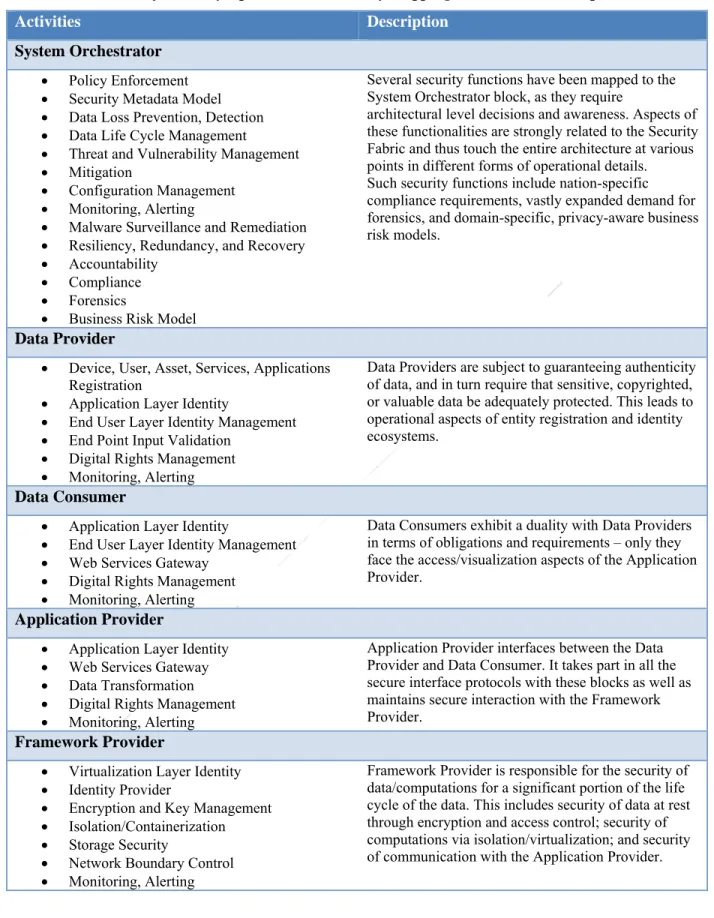
TABLE 1:DRAFT SECURITY OPERATIONAL TAXONOMY MAPPING TO THE NBDRACOMPONENTS...36
TABLE 2:MAPPING CONSUMER DIGITAL MEDIA USAGE TO THE REFERENCE ARCHITECTURE ...37
TABLE 3:MAPPING NIELSEN HOMESCAN TO THE REFERENCE ARCHITECTURE ...38
TABLE 4:MAPPING WEB TRAFFIC ANALYTICS TO THE REFERENCE ARCHITECTURE ...39
TABLE 5:MAPPING HIETO THE REFERENCE ARCHITECTURE...40
TABLE 6:MAPPING PHARMACEUTICAL CLINICAL TRIAL DATA SHARING TO THE REFERENCE ARCHITECTURE ...42
TABLE 7:MAPPING NETWORK PROTECTION TO THE REFERENCE ARCHITECTURE ...43
TABLE8:MAPPING MILITARY UNMANNED VEHICLE SENSOR DATA TO THE REFERENCE ARCHITECTURE...44
TABLE 9:MAPPING COMMON CORE K–12STUDENT REPORTING TO THE REFERENCE ARCHITECTURE...45
Executive Summary
This NIST Big Data Interoperability Framework: Volume 4, Security and Privacy document was prepared
by the NIST Big Data Public Working Group (NBD-PWG) Security and Privacy Subgroup to identify security and privacy issues that are specific to Big Data.
Big Data application domains include healthcare, drug discovery, insurance, finance, retail and many others from both the private and public sectors. Among the scenarios within these application domains are health exchanges, clinical trials, mergers and acquisitions, device telemetry, targeted marketing, and international anti-piracy. Security technology domains include identity, authorization, audit, network and device security, and federation across trust boundaries.
Clearly, the advent of Big Data has necessitated paradigm shifts in the understanding and enforcement of security and privacy requirements. Significant changes are evolving, notably in scaling existing solutions to meet the volume, variety, velocity, and variability of Big Data and retargeting security solutions amid shifts in technology infrastructure (e.g., distributed computing systems and non-relational data storage.) In addition, diverse datasets are becoming easier to access and increasingly contain personal content. A new set of emerging issues must be addressed, including balancing privacy and utility, enabling analytics and governance on encrypted data, and reconciling authentication and anonymity.
With the key Big Data characteristics of variety, volume, velocity, and variability in mind, the Subgroup gathered use cases from volunteers, developed a consensus-based security and privacy taxonomy, related the taxonomy to the NIST Big Data Reference Architecture (NBDRA), and validated the NBDRA by mapping the use cases to the NBDRA.
This document’s (Version 1) focus is predominantly on security and security-related privacy risks (i.e. risks that result from unauthorized access to personally identifiable information). Privacy risks that may result from the processing of information about individuals and potential mitigations will be explored in greater detail in future versions.
The NIST Big Data Interoperability Framework consists of seven volumes, each of which addresses a
specific key topic, resulting from the work of the NBD-PWG. The seven volumes are: Volume 1, Definitions
Volume 2, Taxonomies
Volume 3, Use Cases and General Requirements Volume 4, Security and Privacy
Volume 5, Architectures White Paper Survey Volume 6, Reference Architecture
Volume 7, Standards Roadmap
The NIST Big Data Interoperability Framework will be released in three versions, which correspond to
the three development stages of the NBD-PWG work. The three stages aim to achieve the following with respect to the NIST Big Data Reference Architecture (NBDRA).
Stage 1: Identify the high-level Big Data reference architecture key components, which are technology-, infrastructure-, and vendor-agnostic.
Stage 2: Define general interfaces between the NBDRA components.
Stage 3: Validate the NBDRA by building Big Data general applications through the general interfaces.
For this Version 1, the document is more focused on operational aspects of security and privacy rather than personal, social and legal aspects of privacy, which we briefly mentioned but did not expound on in detail.
Potential areas of future work for the Subgroup during Stage 2 are highlighted in Section 1.5 of this volume. The current effort documented in this volume reflects concepts developed within the rapidly evolving field of Big Data.
1 I
NTRODUCTION
1.1 B
ACKGROUNDThere is broad agreement among commercial, academic, and government leaders about the remarkable potential of Big Data to spark innovation, fuel commerce, and drive progress. Big Data is the common term used to describe the deluge of data in today’s networked, digitized, sensor-laden, and information-driven world. The availability of vast data resources carries the potential to answer questions previously out of reach, including the following:
How can a potential pandemic reliably be detected early enough to intervene?
Can new materials with advanced properties be predicted before these materials have ever been synthesized?
How can the current advantage of the attacker over the defender in guarding against cyber security threats be reversed?
There is also broad agreement on the ability of Big Data to overwhelm traditional approaches. The growth rates for data volumes, speeds, and complexity are outpacing scientific and technological advances in data analytics, management, transport, and data user spheres.
Despite widespread agreement on the inherent opportunities and current limitations of Big Data, a lack of consensus on some important fundamental questions continues to confuse potential users and stymie progress. These questions include the following:
What attributes define Big Data solutions?
How is Big Data different from traditional data environments and related applications? What are the essential characteristics of Big Data environments?
How do these environments integrate with currently deployed architectures?
What are the central scientific, technological, and standardization challenges that need to be addressed to accelerate the deployment of robust Big Data solutions?
Within this context, on March 29, 2012, the White House announced the Big Data Research and Development Initiative.1 The initiative’s goals include helping to accelerate the pace of discovery in science and engineering, strengthening national security, and transforming teaching and learning by improving the ability to extract knowledge and insights from large and complex collections of digital data.
Six federal departments and their agencies announced more than $200 million in commitments spread across more than 80 projects, which aim to significantly improve the tools and techniques needed to access, organize, and draw conclusions from huge volumes of digital data. The initiative also challenged industry, research universities, and nonprofits to join with the federal government to make the most of the opportunities created by Big Data.
Motivated by the White House initiative and public suggestions, the National Institute of Standards and Technology (NIST) has accepted the challenge to stimulate collaboration among industry professionals to further the secure and effective adoption of Big Data. As one result of NIST’s Cloud and Big Data Forum held on January 15–17, 2013, there was strong encouragement for NIST to create a public working group for the development of a Big Data Interoperability Framework. Forum participants noted that this
roadmap should define and prioritize Big Data requirements, including interoperability, portability, reusability, extensibility, data usage, analytics, and technology infrastructure. In doing so, the roadmap would accelerate the adoption of the most secure and effective Big Data techniques and technology.
On June 19, 2013, the NIST Big Data Public Working Group (NBD-PWG) was launched with extensive participation by industry, academia, and government from across the nation. The scope of the NBD-PWG involves forming a community of interests from all sectors—including industry, academia, and
government—with the goal of developing consensus on definitions, taxonomies, secure reference architectures, security and privacy, andfrom thesea standards roadmap. Such a consensus would create a vendor-neutral, technology- and infrastructure-independent framework that would enable Big Data stakeholders to identify and use the best analytics tools for their processing and visualization requirements on the most suitable computing platform and cluster, while also allowing value-added from Big Data service providers.
The NIST Big Data Interoperability Framework consists of seven volumes, each of which addresses a
specific key topic, resulting from the work of the NBD-PWG. The seven volumes are: Volume 1, Definitions
Volume 2, Taxonomies
Volume 3, Use Cases and General Requirements Volume 4, Security and Privacy
Volume 5, Architectures White Paper Survey Volume 6, Reference Architecture
Volume 7, Standards Roadmap
The NIST Big Data Interoperability Framework will be released in three versions, which correspond to
the three development stages of the NBD-PWG work. The three stages aim to achieve the following with respect to the NIST Big Data Reference Architecture (NBDRA.)
Stage 1: Identify the high-level Big Data reference architecture key components, which are technology-, infrastructure-, and vendor-agnostic.
Stage 2: Define general interfaces between the NBDRA components.
Stage 3: Validate the NBDRA by building Big Data general applications through the general interfaces.
The NBDRA, created in Stage 1 and further developed in Stages 2 and 3, is a high-level conceptual model designed to serve as a tool to facilitate open discussion of the requirements, structures, and operations inherent in Big Data. It is discussed in detail in NIST Big Data Interoperability Framework: Volume 6,
Reference Architecture. Potential areas of future work for the Subgroup during stage 2 are highlighted in
Section 1.5 of this volume. The current effort documented in this volume reflects concepts developed within the rapidly evolving field of Big Data.
1.2 S
COPE ANDO
BJECTIVES OF THES
ECURITY ANDP
RIVACYS
UBGROUPThe focus of the NBD-PWG Security and Privacy Subgroup is to form a community of interest from industry, academia, and government with the goal of developing consensus on a reference architecture to handle security and privacy issues across all stakeholders. This includes understanding what standards are available or under development, as well as identifying which key organizations are working on these standards.
The scope of the Subgroup’s work includes the following topics, some of which will be addressed in future versions of this Volume:
Provide a context from which to begin Big Data-specific security and privacy discussions; Gather input from all stakeholders regarding security and privacy concerns in Big Data
processing, storage, and services;
Analyze/prioritize a list of challenging security and privacy requirements that may delay or prevent adoption of Big Data deployment;
Develop a Security and Privacy Reference Architecture that supplements the NBDRA; Produce a working draft of this Big Data Security and Privacy document;
Develop Big Data security and privacy taxonomies;
Explore mapping between the Big Data security and privacy taxonomies and the NBDRA; and Explore mapping between the use cases and the NBDRA.
While there are many issues surrounding Big Data security and privacy, the focus of this Subgroup is on the technology aspects of security and privacy with respect to Big Data.
1.3 R
EPORTP
RODUCTIONThe NBD-PWG Security and Privacy Subgroup explored various facets of Big Data security and privacy to develop this document. The major steps involved in this effort included:
Announce that the NBD-PWG Security and Privacy Subgroup is open to the public in order to attract and solicit a wide array of subject matter experts and stakeholders in government, industry, and academia;
Identify use cases specific to Big Data security and privacy; Develop a detailed security and privacy taxonomy;
Expand the security and privacy fabric of the NBDRA and identify specific topics related to NBDRA components; and
Begin mapping of identified security and privacy use cases to the NBDRA.
This report is a compilation of contributions from the PWG. Since this is a community effort, there are several topics covered that are related to security and privacy. While an effort has been made to connect the topics, gaps may come to light that could be addressed in Version 2 of this document.
1.4 R
EPORTS
TRUCTUREFollowing this introductory section, the remainder of this document is organized as follows: Section 2 discusses security and privacy issues particular to Big Data.
Section 3 presents examples of security- and privacy-related use cases. Section 4 offers a preliminary taxonomy for security and privacy.
Section 5 introduces the details of a draft NIST Big Data security and privacy reference architecture in relation to the overall NBDRA.
Section 6 maps the use cases presented in Section 3 to the NBDRA. Appendix A discusses special security and privacy topics.
Appendix B contains information about cloud technology.
Appendix C lists the terms and definitions appearing in the taxonomy. Appendix D contains the acronyms used in this document.
Appendix E lists the references used in the document.
1.5 F
UTUREW
ORK ON THISV
OLUMEThe NBD-PWG Security and Privacy Subgroup plans to further develop several topics for the subsequent version (i.e., Version 2) of this document. These topics include the following:
Examining closely other existing templatesb in literature: The templates may be adapted to the Big Data security and privacy fabric to address gaps and to bridge the efforts of this Subgroup with the work of others;
Further developing the security and privacy taxonomy;
Enhancing the connection between the security and privacy taxonomy and the NBDRA components;
Developing the connection between the security and privacy fabric and the NBDRA; Expanding the privacy discussion within the scope of this volume;
Exploring governance, risk management, data ownership, and valuation with respect to Big Data ecosystem, with a focus on security and privacy;
Mapping the identified security and privacy use cases to the NBDRA; Contextualizing the content of Appendix B in the NBDRA; and
Exploring privacy in actionable terms based on frameworks such as those described in NISTIR 80622 with respect to the NBDRA.
Further topics and direction may be added, as warranted, based on future input and contributions to the Subgroup, including those received during the public comment period.
b There are multiple templates developed by others to adapt as part of a Big Data security metadata model. For
instance, the subgroup has considered schemes offered in the NIST Preliminary Critical Infrastructure Cybersecurity Framework (CIICF) of October 2013, http://1.usa.gov/1wQuti1 (accessed January 9, 2015.)).
2 B
IG
D
ATA
S
ECURITY AND
P
RIVACY
The NBD-PWG Security and Privacy Subgroup began this effort by identifying a number of ways that security and Privacy in Big Data projects can be different from traditional implementations. While not all concepts apply all of the time, the following seven principles were considered representative of a larger set of differences:
1. Big Data projects often encompass heterogeneous components in which a single security scheme
has not been designed from the outset.
2. Most security and privacy methods have been designed for batch or online transaction processing
systems. Big Data projects increasingly involve one or more streamed data sources that are used in conjunction with data at rest, creating unique security and privacy scenarios.
3. The use of multiple Big Data sources not originally intended to be used together can compromise
privacy, security, or both. Approaches to de-identify personally identifiable information (PII) that were satisfactory prior to Big Data may no longer be adequate, while alternative approaches to protecting privacy are made feasible. Although de-identification techniques can apply to data from single sources as well, the prospect of unanticipated multiple datasets exacerbates the risk of compromising privacy.
4. An increased reliance on sensor streams, such as those anticipated with the Internet of Things
(IoT; e.g., smart medical devices, smart cities, smart homes) can create vulnerabilities that were more easily managed before amassed to Big Data scale.
5. Certain types of data thought to be too big for analysis, such as geospatial and video imaging, will
become commodity Big Data sources. These uses were not anticipated and/or may not have implemented security and privacy measures.
6. Issues of veracity, context, provenance, and jurisdiction are greatly magnified in Big Data.
Multiple organizations, stakeholders, legal entities, governments, and an increasing amount of citizens will find data about themselves included in Big Data analytics.
7. Volatility is significant because Big Data scenarios envision that data is permanent by default.
Security is a fast-moving field with multiple attack vectors and countermeasures. Data may be preserved beyond the lifetime of the security measures designed to protect it.
2.1 O
VERVIEWSecurity and privacy measures are becoming ever more important with the increase of Big Data generation and utilization and increasingly public nature of data storage and availability.
The importance of security and privacy measures is increasing along with the growth in the generation, access, and utilization of Big Data. Data generation is expected to double every two years to about 40,000 exabytes in 2020. It is estimated that over one-third of the data in 2020 could be valuable if analyzed.3 Less than a third of data needed protection in 2010, but more than 40 percent of data will need protection in 2020.4
Security and privacy measures for Big Data involve a different approach than traditional systems. Big Data is increasingly stored on public cloud infrastructure built by employing various hardware, operating systems, and analytical software. Traditional security approaches usually addressed small-scale systems holding static data on firewalled and semi-isolated networks. The surge in streaming cloud technology necessitates extremely rapid responses to security issues and threats.5
Big Data system representations that rely on concepts of actors and roles present a different facet to security and privacy. The Big Data systems should be adapted to the emerging Big Data landscape, which is embodied in many commercial and open source access control frameworks. These security approaches
will likely persist for some time and may evolve with the emerging Big Data landscape. Appendix C considers actors and roles with respect to Big Data security and privacy.
Big Data is increasingly generated and used across diverse industries such as healthcare, drug discovery, finance, insurance, and marketing of consumer-packaged goods. Effective communication across these diverse industries will require standardization of the terms related to security and privacy. The NBD PWG Security and Privacy Subgroup aims to encourage participation in the global Big Data discussion with due recognition to the complex and difficult security and privacy requirements particular to Big Data.
There is a large body of work in security and privacy spanning decades of academic study and
commercial solutions. While much of that work is not conceptually distinct from Big Data, it may have been produced using different assumptions. One of the primary objectives of this document is to understand how Big Data security and privacy requirements arise out of the defining characteristics of Big Data, and how these requirements are differentiated from traditional security and privacy
requirements.
The following list is a representative—though not exhaustive—list of differences between what is new for Big Data and the requirements that informed previous big system security and privacy.
Big Data may be gathered from diverse end points. Actors include more types than just
traditional providers and consumers—data owners, such as mobile users and social network users, are primary actors in Big Data. Devices that ingest data streams for physically distinct data consumers may also be actors. This alone is not new, but the mix of human and device types is on a scale that is unprecedented. The resulting combination of threat vectors and potential protection mechanisms to mitigate them is new.
Data aggregation and dissemination must be secured inside the context of a formal,
understandable framework. The availability of data and transparency of its current and past use
by data consumers is an important aspect of Big Data. However, Big Data systems may be operational outside formal, readily understood frameworks, such as those designed by a single team of architects with a clearly defined set of objectives. In some settings, where such
frameworks are absent or have been unsystematically composed, there may be a need for public or walled garden portals and ombudsman-like roles for data at rest. These system combinations and unforeseen combinations call for a renewed Big Data framework.
Data search and selection can lead to privacy or security policy concerns. There is a lack of
systematic understanding of the capabilities that should be provided by a data provider in this respect.c A combination of well-educated users, well-educated architects, and system protections may be needed, as well as excluding databases or limiting queries that may be foreseen as enabling re-identification. If a key feature of Big Data is, as one analyst called it, “the ability to derive differentiated insights from advanced analytics on data at any scale,” the search and selection aspects of analytics will accentuate security and privacy concerns. 6
Privacy-preserving mechanisms are needed for Big Data, such as for Personally Identifiable
Information (PII). Because there may be disparate, potentially unanticipated processing steps
between the data owner, provider, and data consumer, the privacy and integrity of data coming from end points should be protected at every stage. End-to-end information assurance practices for Big Data are not dissimilar from other systems but must be designed on a larger scale.
Big Data is pushing beyond traditional definitions for information trust, openness, and
responsibility. Governance, previously consigned to static roles and typically employed in larger
organizations, is becoming an increasingly important intrinsic design consideration for Big Data systems.
Legacy security solutions need to be retargeted to the infrastructural shift due to Big Data.
Legacy security solutions address infrastructural security concerns that still persist in Big Data, such as authentication, access control and authorization. These solutions need to be retargeted to the underlying Big Data High Performance Computing (HPC) resources or completely replaced. Oftentimes, such resources can face the public domain, and thus necessitate vigilant security methods to prevent adversarial manipulation and preserve integrity of operations.
Information assurance and disaster recovery for Big Data Systems may require unique and
emergent practices. Because of its extreme scalability, Big Data presents challenges for
information assurance (IA) and disaster recovery (DR) practices that were not previously addressed in a systematic way. Traditional backup methods may be impractical for Big Data systems. In addition, test, verification, and provenance assurance for Big Data replicas may not complete in time to meet temporal requirements that were readily accommodated in smaller systems.
Big Data creates potential targets of increased value. The effort required to consummate
system attacks will be scaled to meet the opportunity value. Big Data systems will present concentrated, high-value targets to adversaries. As Big Data becomes ubiquitous, such targets are becoming more numerousa new information technology (IT) scenario in itself.
Risks have increased for de-anonymization and transfer of PII without consent traceability.
Security and privacy can be compromised through unintentional lapses or malicious attacks on data integrity. Managing data integrity for Big Data presents additional challenges related to all the Big Data characteristics, but especially for PII. While there are technologies available to develop methods for de-identification, some experts caution that equally powerful methods can leverage Big Data to re-identify personal information. For example, the availability of
unanticipated datasets could make re-identification possible. Even when technology is able to preserve privacy, proper consent and use may not follow the path of the data through various custodians. Because of the broad collection and set of uses of big data, consent for collection is much less likely to be sufficient and should be augmented with technical and legal controls to provide auditability and accountability for use.7
Emerging Risks in Open Data and Big Science. Data identification, metadata tagging,
aggregation, and segmentation—widely anticipated for data science and open datasets—if not properly managed, may have degraded veracity because they are derived and not primary information sources. Retractions of peer-reviewed research due to inappropriate data
interpretations may become more commonplace as researchers leverage third-party Big Data.
2.2 E
FFECTS OFB
IGD
ATAC
HARACTERISTICS ONS
ECURITY ANDP
RIVACYVariety, volume, velocity, and variability are key characteristics of Big Data and commonly referred to as the Vs of Big Data. Where appropriate, these characteristics shaped discussions within the NBD-PWG Security and Privacy Subgroup. While the Vs provide a useful shorthand description, used in the public discourse about Big Data, there are other important characteristics of Big Data that affect security and privacy, such as veracity, validity, and volatility. These elements are discussed below with respect to their impact on Big Data security and privacy.
2.2.1 V
ARIETYVariety describes the organization of the data—whether the data is structured, semi-structured, or unstructured. Retargeting traditional relational database security to non-relational databases has been a challenge.8 These systems were not designed with security and privacy in mind, and these functions are usually relegated to middleware. Traditional encryption technology also hinders organization of data based on semantics. The aim of standard encryption is to provide semantic security, which means that the encryption of any value is indistinguishable from the encryption of any other value. Therefore, once
encryption is applied, any organization of the data that depends on any property of the data values themselves are rendered ineffective, whereas organization of the metadata, which may be unencrypted, may still be effective.
An emergent phenomenon introduced by Big Data variety that has gained considerable importance is the ability to infer identity from anonymized datasets by correlating with apparently innocuous public databases. While several formal models to address privacy preserving data disclosure have been
proposed,9 10 in practice, sensitive data is shared after sufficient removal of apparently unique identifiers, and indirectly identifying information by the processes of anonymization and aggregation. This is an ad hoc process that is often based on empirical evidence11 and has led to many instances of de
anonymization in conjunction with publicly available data.12 Although some laws/regulations recognize only identifiers per se, laws such as HIPAA (the statistician provision), FERPA, and 45 CFR 46 recognize that combinations of attributes, even if not the identifiers by themselves, can lead to actionable personal identification, possibly in conjunction with external information.
2.2.2 V
OLUMEThe volume of Big Data describes how much data is coming in. In Big Data parlance, this typically ranges from gigabytes to exabytes and beyond. As a result, the volume of Big Data has necessitated storage in multitiered storage media. The movement of data between tiers has led to a requirement of cataloging threat models and a surveying of novel techniques. The threat model for network-based, distributed, auto-tier systems includes the following major scenarios: confidentiality and integrity, provenance, availability, consistency, collusion attacks, roll-back attacks and recordkeeping disputes.13 A flip side of having volumes of data is that analytics can be performed to help detect security breach events. This is an instance where Big Data technologies can fortify security. This document addresses both facets of Big Data security.
2.2.3 V
ELOCITYVelocity describes the speed at which data is processed. The data usually arrives in batches or is streamed continuously. As with certain other non-relational databases, distributed programming frameworks were not developed with security and privacy in mind.14 Malfunctioning computing nodes might leak
confidential data. Partial infrastructure attacks could compromise a significantly large fraction of the system due to high levels of connectivity and dependency. If the system does not enforce strong
authentication among geographically distributed nodes, rogue nodes can be added that can eavesdrop on confidential data.
2.2.4 V
ERACITYBig Data veracity and validity encompass several sub-characteristics:
Provenance—or what some have called veracity in keeping with the V theme—is important for both data
quality and for protecting security and maintaining privacy policies. Big Data frequently moves across individual boundaries to groups and communities of interest, and across state, national, and international boundaries. Provenance addresses the problem of understanding the data’s original source, such as through metadata, though the problem extends beyond metadata maintenance. Also as noted before, with respect to privacy policy, additional context is needed to make responsible decisions over collected data—this may include the form of consent, intended use, temporal connotations (like Right to be Forgotten) or broader context of collection. This could be considered a type of provenance broadly, but goes beyond the range of provenance information typically collected in production information systems. Various approaches have been tried, such as for glycoproteomics,15 but no clear guidelines yet exist. A common understanding holds that provenance data is metadata establishing pedigree and chain of custody, including calibration, errors, missing data (e.g., time stamp, location, equipment serial number, transaction number, and authority.)
Some experts consider the challenge of defining and maintaining metadata to be the overarching principle, rather than provenance. The two concepts, though, are clearly interrelated.
Veracity (in some circles also called Provenance, though the two terms are not identical) also
encompasses information assurance for the methods through which information was collected. For example, when sensors are used, traceability, calibration, version, sampling, and device configuration is needed.
Curation is an integral concept which binds veracity and provenance to principles of governance as well as to data quality assurance. Curation, for example, may improve raw data by fixing errors, filling in gaps, modeling, calibrating values, and ordering data collection.
Furthermore, there is a central and broadly recognized privacy principle, incorporated in many privacy frameworks (e.g., the OECD principles, EU data protection directive, FTC fair information practices) that data subjects must be able to view and correct information collected about them in a database.
Validity refers to the accuracy and correctness of data. Traditionally, this is referred to data quality. In the
Big Data security scenario, validity refers to a host of assumptions about data from which analytics are being applied. For example, continuous and discrete measurements have different properties. The field “gender” can be coded as 1=Male, 2=Female, but 1.5 does not mean halfway between male and female. In the absence of such constraints, an analytical tool can make inappropriate conclusions. There are many types of validity whose constraints are far more complex. By definition, Big Data allows for aggregation and collection across disparate datasets in ways not envisioned by system designers.
Several examples of “invalid” uses for Big Data have been cited. Click fraud, conducted on a Big Data scale, but which can be detected using Big Data techniques, has been cited as the cause of perhaps $11 billion in wasted advertisement spending. A software executive listed seven different types of online ad fraud, including nonhuman generated impressions, nonhuman generated clicks, hidden ads,
misrepresented sources, all-advertising sites, malicious ad injections, and policy-violating content such as pornography or privacy violations.16 Each of these can be conducted at Big Data scale and may require Big Data solutions to detect and combat.
Despite initial enthusiasm, some trend-producing applications that use social media to predict the incidence of flu have been called into question. A study by Lazer et al.17 suggested that one application overestimated the prevalence of flu for 100 of 108 weeks studied. Careless interpretation of social media is possible when attempts are made to characterize or even predict consumer behavior using imprecise meanings and intentions for “like” and “follow.”
These examples show that what passes for “valid” Big Data can be innocuously lost in translation, interpretation, or intentionally corrupted to malicious intent.
2.2.5 V
OLATILITYVolatility of data—how data management changes over time—directly affects provenance. Big Data is transformational in part because systems may produce indefinitely persisting data—data that outlives the instruments on which it was collected; the architects who designed the software that acquired, processed, aggregated, and stored it; and the sponsors who originally identified the project’s data consumers. Roles are time-dependent in nature. Security and privacy requirements can shift accordingly. Governance can shift as responsible organizations merge or even disappear.
While research has been conducted into how to manage temporal data (e.g., in e-science for satellite instrument data),18 there are few standards beyond simplistic time stamps and even fewer common practices available as guidance. To manage security and privacy for long-lived Big Data, data temporality should be taken into consideration.
2.3 R
ELATION TOC
LOUDMany Big Data systems will be designed using cloud architectures. Any strategy to achieve proper access control and security risk management within a Big Data cloud ecosystem enterprise architecture must address the complexities associated with cloud-specific security requirements triggered by cloud characteristics, including, but not limited to, the following:
Broad network access
Decreased visibility and control by consumer
Dynamic system boundaries and commingled roles and responsibilities between consumers and providers
Multi-tenancy Data residency Measured service
Order-of-magnitude increases in scale (on demand), dynamics (elasticity and cost optimization), and complexity (automation and virtualization)
These cloud computing characteristics often present different security risks to an organization than the traditional IT solutions, altering the organization’s security posture.
To preserve security when migrating data to the cloud, organizations need to identify all cloud-specific, risk-adjusted security controls or components in advance. It may be necessary in some situations to request from the cloud service providers through contractual means and service-level agreements that all require security components and controls to be fully and accurately implemented.
A further discussion of internal security considerations within cloud ecosystems can be found in Appendix B. Future versions of this document will contextualize the content of Appendix B in the NBDRA.
3 E
XAMPLE
U
SE
C
ASES FOR
S
ECURITY AND
P
RIVACY
There are significant Big Data challenges in science and engineering. Many of these are described in the use cases in NIST Big Data Interoperability Framework: Volume 3, Use Cases and General
Requirements. However, the primary focus of these use cases was on science and engineering
applications, and therefore security and privacy impacts on system architecture were not highlighted. Consequently, a different set of use cases, presented in this document, was developed specifically to discover security and privacy issues. Some of these use cases represent inactive or legacy applications, but were selected to demonstrate characteristic security/privacy design patterns.
The use cases selected for security and privacy are presented in the following subsections. The use cases included are grouped to organize this presentation, as follows: retail/marketing, healthcare, cybersecurity, government, industrial, aviation, and transportation. However, these groups do not represent the entire spectrum of industries affected by Big Data security and privacy.
The use cases were collected when the reference architecture was not mature. The use cases were collected from BDWG members to identify representative security and privacy scenarios thought to be suitably classified as particular to Big Data. An effort was made to map the use cases to the NBDRA. In Version 2, additional mapping of the use cases to the NBDRA and taxonomy will be developed. Parts of this document were developed in parallel, and the connections will be strengthened in Version 2.
3.1 R
ETAIL/M
ARKETING3.1.1 C
ONSUMERD
IGITALM
EDIAU
SAGEScenario Description: Consumers, with the help of smart devices, have become very conscious of price,
convenience, and access before they decide on a purchase. Content owners license data for use by consumers through presentation portals, such as Netflix, iTunes, and others.
Comparative pricing from different retailers, store location and/or delivery options, and crowd-sourced rating have become common factors for selection. To compete, retailers are keeping a close watch on consumer locations, interests, and spending patterns to dynamically create marketing strategies and sell products that consumers do not yet know they want.
Current Security and Privacy Issues/Practices: Individual data is collected by several means, including
smartphone GPS (global positioning system) or location, browser use, social media, and applications (apps) on smart devices.
Privacy:
o Controls are inconsistent and/or not established to appropriately achieve the following properties:
Predictability around the processing of personal information, in order to enable individuals to make appropriate determinations for themselves or prevent problems arising from actions such as unanticipated revelations about individuals.
Manageability of personal information, in order to prevent problems arising from actions such as dissemination of inaccurate information or taking unfair advantage of individuals based on information asymmetry in the marketplace
Disassociability of information from individuals in order to prevent actions such as surveillance of individuals.
Security:
o Controls are inconsistent and/or not established appropriately to achieve the following: Isolation, containerization, and encryption of data
Monitoring and detection of threats
Identification of users and devices for data feed
Interfacing with other data sources
Anonymization of users: while some data collection and aggregation uses anonymization techniques, individual users can be re-identified by leveraging other public Big Data pools.
Original digital rights management (DRM) techniques were not built to scale to meet demand for the forecasted use for the data. “DRM refers to a broad category of access control technologies aimed at restricting the use and copy of digital content on a wide range of devices.”19 DRM can be compromised, diverted to unanticipated purposes, defeated, or fail to operate in environments with Big Data characteristics—especially velocity and aggregated volume
Current Research: There is limited research on enabling privacy and security controls that protect
individual data (whether anonymized or non-anonymized) for consumer digital media usage settings such as these.
3.1.2 N
IELSENH
OMESCAN: P
ROJECTA
POLLOScenario Description: Nielsen Homescan is a subsidiary of Nielsen that collects family-level retail
transactions. Project Apollo was a project designed to better unite advertising content exposure to purchase behavior among Nielsen panelists. Project Apollo did not proceed beyond a limited trial, but reflects a Big Data intent. The description is a best-effort general description and is not an official perspective from Nielsen, Arbitron or the various contractors involved in the project. The information provided here should be taken as illustrative rather than as a historical record.
A general retail transaction has a checkout receipt that contains all SKUs (stock keeping units) purchased, time, date, store location, etc. Nielsen Homescan collected purchase transaction data using a statistically randomized national sample. As of 2005, this data warehouse was already a multi-terabyte dataset. The warehouse was built using structured technologies but was built to scale many terabytes. Data was maintained in-house by Homescan but shared with customers who were given partial access through a private web portal using a columnar database. Additional analytics were possible using third-party
software. Other customers would only receive reports that include aggregated data, but greater granularity could be purchased for a fee.
Then Current (2005-2006) Security and Privacy Issues/Practices:
Privacy: There was a considerable amount of PII data. Survey participants are compensated in exchange for giving up segmentation data, demographics, and other information.
Security: There was traditional access security with group policy, implemented at the field level using the database engine, component-level application security, and physical access controls. There were audit methods in place, but were only available to in-house staff. Opt-out data
scrubbing was minimal.
3.1.3 W
EBT
RAFFICA
NALYTICSScenario Description: Visit-level webserver logs are high-granularity and voluminous. To be useful, log
data must be correlated with other (potentially Big Data) data sources, including page content (buttons, text, navigation events), and marketing-level events such as campaigns, media classification, etc. There are discussions—if not deployment—of plans for traffic analytics using complex event processing (CEP) in real time. One nontrivial problem is segregating traffic types, including internal user communities, for which collection policies and security are different.
Opt-in defaults are relied upon in some countries to gain visitor consent for tracking of web site
visitor IP addresses. In some countries Internet Protocol (IP) address logging can allow analysts to identify visitors down to levels as detailed as latitude and longitude, depending on the quality of the maps and the type of area being mapped.20
Media access control (MAC) address tracking enables analysts to identify IP devices, which is a form of PII.
Some companies allow for purging of data on demand, but most are unlikely to expunge previously collected web server traffic.
The EU has stricter regulations regarding collection of such data, which in some countries is
treated as PII. Such web traffic is to be scrubbed (anonymized) or reported only in aggregate, even for multinationals operating in the EU but based in the United States. 21
3.2 H
EALTHCARE3.2.1 H
EALTHI
NFORMATIONE
XCHANGEScenario Description: Health Information Exchanges (HIEs) facilitate sharing of healthcare information
that might include electronic health records (EHRs) so that the information is accessible to relevant covered entities, but in a manner that enables patient consent.
HIEs tend to be federated, where the respective covered entity retains custodianship of its data. This poses problems for many scenarios, such as emergencies, for a variety of reasons that include technical (such as interoperability), business, and security concerns.
Cloud enablement of HIEs, through strong cryptography and key management, that meets the Health Insurance Portability and Accountability Act (HIPAA) requirements for protected health information (PHI)—ideally without requiring the cloud service operator to sign a business associate agreement (BAA)—would provide several benefits, including patient safety, lowered healthcare costs, and regulated accesses during emergencies that might include break-the-glass and U.S. Centers for Disease Control and Prevention (CDC) scenarios.
The following are some preliminary scenarios that have been proposed by the NBD PWG:
Break-the-Glass: There could be situations where the patient is not able to provide consent due
to a medical situation, or a guardian is not accessible, but an authorized party needs immediate access to relevant patient records. Cryptographically enhanced key life cycle management can provide a sufficient level of visibility and non-repudiation that would enable tracking violations after the fact.
Informed Consent: When there is a transfer of EHRs between covered entities and business
associates, it would be desirable and necessary for patients to be able to convey their approval, as well as to specify what components of their EHR can be transferred (e.g., their dentist would not need to see their psychiatric records.) Through cryptographic techniques, one could leverage the ability to specify the fine-grain cipher text policy that would be conveyed. (For related standards efforts regarding consent, see NIST 800-53, Appendix J, Section IP-1; US DHS Health IT Policy Committee, Privacy and Security Workgroup); and Health Level Seven (HL7) International Version 3 standards for Data Access Consent, Consent Directives)
Pandemic Assistance: There will be situations when public health entities, such as the CDC and
perhaps other nongovernmental organizations that require this information to facilitate public safety, will require controlled access to this information, perhaps in situations where services and infrastructures are inaccessible. A cloud HIE with the right cryptographic controls could release essential information to authorized entities through authorization and audits in a manner that facilitates the scenario requirement.
Current Security and Privacy Issues/Practices: Security:
o Lightweight but secure off-cloud encryption: There is a need for the ability to perform
lightweight but secure off-cloud encryption of an EHR that can reside in any container that ranges from a browser to an enterprise server, and that leverages strong symmetric
cryptography.
o Homomorphic encryption is not widely deployed but is anticipated by some experts as a
medium term practice.22
o Applied cryptography: Tight reductions, realistic threat models, and efficient techniques
Privacy:
o Differential privacy: Techniques for guaranteeing against inappropriate leakage of PII
o HIPAA
3.2.2 G
ENETICP
RIVACYScenario Description: A consortium of policy makers, advocacy organizations, individuals, academic
centers, and industry has formed an initiative, Free the Data!, to fill the public information gap caused by the lack of available genetic information for the BRCA1 and BRCA2 genes. The consortium also plans to expand to provide other types of genetic information in open, searchable databases, including the National Center for Biotechnology Information’s database, ClinVar. The primary founders of this project include Genetic Alliance, the University of California San Francisco, InVitae Corporation, and patient advocates. This initiative invites individuals to share their genetic variation on their own terms and with appropriate privacy settings in a public database so that their family, friends, and clinicians can better understand what the mutation means. Working together to build this resource means working toward a better understanding of disease, higher-quality patient care, and improved human health.
Current Security and Privacy Issues/Practices: Security:
o Secure Sockets Layer (SSL)-based authentication and access control. Basic user registration
with low attestation level
o Concerns over data ownership and custody upon user death
o Site administrators may have access to data—strong encryption and key escrow are
recommended
Privacy:
o Transparent, logged, policy-governed controls over access to genetic information
o Full life cycle data ownership and custody controls
3.2.3 P
HARMAC
LINICALT
RIALD
ATAS
HARING23Scenario Description: Companies routinely publish their clinical research, collaborate with academic
researchers, and share clinical trial information on public websites, atypically at three different stages: the time of patient recruitment, after new drug approval, and when investigational research programs have been discontinued. Access to clinical trial data is limited, even to researchers and governments, and no uniform standards exist.
The Pharmaceutical Research and Manufacturers of America (PhRMA) represents the country’s leading biopharmaceutical researchers and biotechnology companies. In July 2013, PhRMA joined with the European Federation of Pharmaceutical Industries and Associations (EFPIA) in adopting joint Principles for Responsible Clinical Trial Data Sharing. According to the agreement, companies will apply these Principles as a common baseline on a voluntary basis, and PhRMA encouraged all medical researchers, including those in academia and government, to promote medical and scientific advancement by adopting and implementing the following commitments:
Enhancing data sharing with researchers
Enhancing public access to clinical study information
Sharing results with patients who participate in clinical trials
Certifying procedures for sharing trial information Reaffirming commitments to publish clinical trial results
Current Security and Privacy Issues/Practices:
PhRMA does not directly address security and privacy, but these issues were identified either by PhRMA or by reviewers of the proposal.
Security:
o Longitudinal custody beyond trial disposition is unclear, especially after firms merge or
dissolve.
o Standards for data sharing are unclear.
o There is a need for usage audit and security.
o Publication restrictions: Additional security will be required to protect the rights of
publishers, for example, Elsevier or Wiley. Privacy:
o Patient-level data disclosure—elective, per company.
o The PhRMA mentions anonymization (re-identification), but mentions issues with small
sample sizes.
o Study-level data disclosure—elective, per company.
3.3 C
YBERSECURITY3.3.1 N
ETWORKP
ROTECTIONScenario Description: Network protection includes a variety of data collection and monitoring. Existing
network security packages monitor high-volume datasets, such as event logs, across thousands of workstations and servers, but they are not yet able to scale to Big Data. Improved security software will include physical data correlates (e.g., access card usage for devices as well as building entrance/exit) and likely be more tightly integrated with applications, which will generate logs and audit records of
previously undetermined types or sizes. Big Data analytics systems will be required to process and analyze this data to deliver meaningful results. These systems could also be multi-tenant, catering to more than one distinct company.
The roles that Big Data plays in protecting networks can be grouped into two broad categories:
Security for Big Data When launching a new Big Data initiative, new security issues often arise,
such as a new attack surface for server clusters, user authentication and access from additional locations, new regulatory requirements due to Big Data Variety, or increased use of open source code with the potential for defaulted credentials or other risks.24
Big Data for security Big Data can be used to enhance network security. For example, a Big Data
application can enhance or eventually even replace a traditional Security Incident and Event Management (SIEM).25
Current Security and Privacy Issues/Practices: Security
o Big Data security in this area is under active research, and maintaining data integrity and
confidentiality while data is in-motion and/or at-rest warrants constant encryption/decryption that works well for Small Data, but is still inadequate for Big Data. In addition, privacy concepts are even less mature.