BARRIERS AND FACILITATORS TO IMPLEMENTING PSYCHOSOCIAL DISTRESS ASSESSMENTS IN THE PEDIATRIC ONCOLOGY SETTING
Mercedes Laurel Stanley
A doctoral project submitted to the faculty at the University of North Carolina at Chapel Hill in partial fulfillment of the requirements for the degree of Doctor of Nursing Practice in the Department of Nursing in the School of Nursing.
Chapel Hill 2017
© 2017
ABSTRACT
Mercedes Laurel Stanley: Barriers and Facilitators to Implementing Psychosocial Distress Assessments in the Pediatric Oncology Setting
(Under the direction of Sheila Santacroce)
Objective. Our understanding of the barriers and facilitators to implementing
psychosocial distress screening in pediatric oncology settings is limited. This capstone project explored perceptions of staff at a small pediatric oncology clinic about the barriers and
facilitators to implementing psychosocial distress screening using the Psychosocial Assessment Tool (PAT) within their clinic.
Methods. Sixteen semi-structured interviews were conducted with clinic staff in various roles (licensced professional counselor n=1, child life specialists n=2, nurse practitioners n=2, physicians n=3, registered nurses n=7 and social worker n=1). Inductive thematic analysis was used to identify and interpret themes. Using the PDSA cycle (Institute of Healthcare
Improvement, 2016), further strategizing regarding implementation will be conducted. Results: Four main types of barriers to implementation emerged from the data: (1) patient family barriers including the ability to participate, reading level/language barrier, willingness to participate, fear of stigma, time; (2) staff barriers including time, lack of
programs. While the participants were not asked to directly provide strategies to
facilitate implementation, these data were interrelated with their responses regarding barriers and facilitators and should be used to help build an implememntation plan.
ACKNOWLEDGEMENTS
I would like to express my gratitude to my committee chair, Dr. Sheila Santacroce, whose unwavering patience and high expectations have molded me into the doctorally prepared nurse that I am today. Without her supervision, this project could not have been achieved. I would also like to thank my other committee members, Dr. Julee Waldrop and Dr. Justin Yopp, who have been sources of expertise and encouragement along the way.
TABLE OF CONTENTS
LIST OF TABLES ... IX LIST OF FIGURES ... X LIST OF ABBREVIATIONS ... XI
CHAPTER 1: INTRODUCTION ... 1
PURPOSE STATEMENT ... 3
CLINICAL PRACTICE QUESTION ... 4
CHAPTER 2: LITERATURE REVIEW ... 5
PSYCHOSOCIAL DISTRESS AND THE PSYCHOSOCIAL ASSESSMENT TOOL ... 5
RISK FACTORS FOR PSYCHOSOCIAL DISTRESS ... 6
BARRIERS TO IMPLEMENTATION OF PSYCHOSOCIAL DISTRESS SCREENING ... 7
CHAPTER 3: MODEL FOR IMPROVEMENT ... 9
CHAPTER 4: METHODS ... 11
PART I: THE THREE QUESTIONS ... 11
PART II: THE PLAN-DO-STUDY-ACT CYCLE ... 12
PLAN ... 12
DO ... 14
STUDY ... 16
ACT ... 17
BARRIERS TO PSYCHOLOGICAL SCREENING AS IDENTIFED BY THE PARTICIPANTS ... 19
STRATEGIES FOR ADDRESSING POTENTIAL BARRIERS ... 27
CHAPTER 6: DISCUSSION ... 35
PATIENT AND FAMILY BARRIERS ... 35
STAFF BARRIERS ... 37
CONTEXTUAL FACTORS ... 39
BARRIERS RELATED TO SCREENING TOOL ... 41
STRATEGIES FOR ADDRESSING POTENTIAL BARRIERS ... 41
NEXT STEPS ... 45
LIMITATIONS ... 46
APPENDIX A: COMMUNICATION WITH PARTICIPANTS ... 47
APPENDIX B: SEMI-STRUCTURED INTERVIEW GUIDE ... 49
LIST OF TABLES
LIST OF FIGURES
LIST OF ABBREVIATIONS BLS Basic Life Support
CLS Child Life Specialist EMR Electronic Medical Record
LPCA Licenced Professional Counselor Associate
MD Medical Doctor
NP Nurse Practitioner
PALS Pediatric Advanced Life Support PAT Psychosocial Assessment Tool PDSA Plan-Do-Study-Act
RN Registered Nurse
CHAPTER 1: INTRODUCTION
Each year in the United States, nearly 16,000 children and adolescents (ages 0-19 years, referred to hereafter as children) will be diagnosed with cancer (Ward, DeSantis, Robbins,
Kohler, & Jemal, 2014). These children and their close family members experience psychosocial distress throughout the illness trajectory (Barrera, et al., 2014; Kazak, et al., 2011; Wiener, et al., 2006) and particularly during transitions such as diagnosis, beginning a new phase of therapy and treatment completion/transition to survivorship care. Relative to cancer, psychosocial
distress is described as an unpleasant emotional experience that results in psychological pain due to the diagnosis of life-threatening illness. This psychological pain can affect how people feel, think and act. Responses to the diagnosis can range from normal feelings of sadness and fear to irrational fears, depression, panic, social isolation and anxiety at levels so severe that functioning is affected and professional intervention is required. These responses to psychological distress can lead to noncompliance with treatment regimens and thus poorer treatment outcomes (National Comprehensive Cancer Network, 2015).
distress, evaluate the results, and then refer as indicated for full assessment and intervention. The recommendation has six components:
1. A documented cancer committee meeting should be held during which psychosocial distress and screening is discussed. This committee is formed of individuals from the interprofessional team and does not include the patient. A representative from the institution’s leadership must attend the meeting (eg: physician, nurse manager), along with a psychosocial representative, who may be an oncology social worker, clinical psychologist or other person trained in mental health (Pirl, et al., 2014).
2. The time of screening needs to be clear within the cancer center. The goal is to conduct initial screening of all patients and/or families within the first week of diagnosis.
Recommendations regarding follow-up screening should be set by each cancer center. 3. The screening method should be established (e.g. patient-administered vs clinician
administered or a dual basis) including who will perform or initiate the screening. 4. The screening tool that will be used must be determined.
5. How evaluation of the results and referrals as indicated will be managed must be established.
6. The screening methods, results, and the plan to address any distress and its source should be documented in the patient’s medical record (Pirl, et al., 2015).
The Psychosocial Assessment Tool (PAT) (Kazak, et al., 2001) is one means of
Psychosocial Preventive Health Model, and this risk category informs the level of psychosocial care offered to the child and family (Kazak, Scheider, Didonato, & Pai, 2015).
While no study has examined psychosocial screening rates in pediatric oncology settings, in adult settings these rates range from 47-73% (Deshields, Zebrack, & Kennedy, 2013; Zebrack, et. al., 2015). Assuming that the pediatric oncology screening rates are similar, these data
suggest a pressing need to improve practice regarding universal cancer-related psychosocial distress screening including in the pediatric oncology setting.
Problem Statement
Despite the recommendation from multiple oncology professional associations (Pirl, et al., 2014), the literature suggests that psychosocial distress screening has not been widely implemented. The problem of inconsistent screening for psychosocial distress in pediatric oncology populations has been evidenced in multiple studies (Barrera, et al., 2014; Kazak, et al., 2011; Wiener, et al., 2006). By implementing psychosocial distress screening, pediatric
oncology providers can identify the most vulnerable families who need intensive psychosocial care to sustain their function and also more resilient families who require usual psychosocial care, which may be more intensive during transition periods such as the time around diagnosis (Kazak, et al., 2011; Barrera, et al., 2014). A necessary first step to using the PAT in a pediatric oncology setting to both comply with the recommendation concerning universal distress
screening and inform psychosocial care level is to identify barriers and facilitators to implementation.
Purpose Statement
Clinical Practice Question
CHAPTER 2: LITERATURE REVIEW Psychosocial Distress and the Psychosocial Assessment Tool
Childhood cancer is a life-threatening chronic illness and the leading cause of death from disease in children. The American Cancer Society (2015) reports that 15,780 children ages 0-19 years are diagnosed with cancer each year. Of these children, 83% will survive their disease. This overall survival rate is attributable to treatment regimens that are typically multi-modal and aggressive. Parents of children with cancer experience multiple potential traumatic stressors throughout the illness trajectory. The child will often undergo chemotherapy, radiation, surgeries, and multiple procedures that require sedation (e.g. bone marrow aspirates, lumbar punctures, site biopsies); parents must authorize these procedures and are often present while they are performed. Witnessing or participating in these traumatic events can be a source of psychosocial distress for parents (Rosenberg, et al., 2013).
Psychosocial distress has been widely studied and identified within the realm of childhood cancer. The findings of a recent systematic review of 138 studies suggest that symptoms of psychosocial distress are common among parents of children diagnosed with cancer, with 25-30% of parents reporting distress even many years after the diagnosis and treatment completion (Kearney, Salley, & Muriel, 2015). Given the critical role that parents and other family caregivers play in their child’s treatment for cancer, psychosocial screening
Another recent review of the literature found substantial high-quality evidence that supports implementation of the recommendation for regular systematic psychosocial screening in childhood cancer clinical settings (Kazak, et. al., 2015). Implementing use of the Psychosocial Assessment Tool (Kazak, et al., 2001) for psychosocial distress around the time of the child’s diagnosis could be a means to identify parent, patient, sibling and family-level risk factors, risk level and thus inform the level of psychosocial care to be provided.
Risk Factors for Psychosocial Distress
Pre-existing parent, patient, sibling and family-level factors can heighten risk for
psychosocial distress among families of children diagnosed with cancer.
Parent risk factors. Regardless of race or the child’s cancer type, parents of children with cancer with low levels of social support, financial resources, and employment have an
increased risk for cancer-related psychosocial distress (Karlson, et al., 2013). Other risk factors include single-parent households (Kazak, et al., 2001), lower level of parent education (Karlson, et al., 2013) and a history of mental illness or substance abuse in one or both of the parents (McCarthy, Ashley, Lee, & Anderson, 2012).
Patient risk factors. Children with cancer will undergo multiple therapies and
distressing procedures during treatment. Children who enter their cancer experience with
pre-existing emotional or behavioral concerns are at an increased risk for ongoing or worsening
distresses. For example, a child with attention-deficit disorder or anxiety is more likely to have
poor coping skills. Additionally, children who are less mature than their peers or have
developmental delays will generally have ongoing issues or concerns (Kazak, et al., 2001).
and lack of attention from parents and other family members. Due to the already decreased
levels of attention from parents, an increased number of siblings may increase risk for
psychosocial distress (Yang, et al., 2016). Siblings with pre-existing mental or behavioral
problems put the family at increased risk for psychosocial distress (Kazak, et al., 2001).
Additionally, specific risk-factors for distress in siblings include the sibling being younger than
the child with cancer, younger age in general, and the sibling being female (Buchbinder, et al.,
2011).
Family-level risk factors. Usual life transitions such as marital separation or divorce (Karlson, et al., 2013) or family expansion through childbearing or adoption of a sibling (Kazak, et al., 2001) can be stressors that contribute to risk for psychosocial distress among families of
children with cancer.
Every family enters the cancer diagnosis with unique concerns and pre-existing
risk-factors. Understanding these risk-factors and their importance to psychosocial distress and
adjustment allows direct care providers to focus on problem areas and provide support
accordingly.
Barriers to Implementation of Psychosocial Distress Screening
Despite existing recommendations and available tools, psychosocial distress screening is not routine practice. Patient and family member perceptions can be potential barriers to
As with any new recommendation, contextual factors can act as perceived barriers and facilitators to implementation. While several studies have examined barriers and facilitators of psychosocial distress screening, no published study is specific to pediatric oncology. Among adult oncology clinicians, time to screen is the most reported barrier (Mitchell, 2013).
Additionally, clinicians report lacking training and confidence to administer the screening tool and evaluate the results (Mitchell, 2013) and lack of available resources to address identified psychosocial distress (Mitchell, 2013; Dilworth, Higgins, Parker, Kelly & Turner, 2014). Similarly, oncology social workers report concerns about inadequate resources to address identified needs (Deshields, Zebrack, & Kennedy, 2013). Screening was less burdensome and more effective when the results linked to an algorithm for mandatory referral (Mitchell, 2013).
While the use of studies conducted in adult oncology settings can be informative, unique barriers and facilitators may exist in pediatric oncology. Currently, no known study has
examined the barriers and facilitators that pediatric oncology clinicians, including nurses, perceive relative to their role in psychosocial distress screening as a component of
comprehensive childhood cancer care. Further, the published adult oncology studies were conducted at comprehensive cancer centers. In general, community cancer centers have fewer available resources, which may heighten contextual barriers to implementation and referral. In contrast to clinicians at comprehensive centers, clinicians who practice in community-based adult or pediatric oncology programs may perceive different barriers and facilitators as they are in contact with fewer patients and fewer disciplines tend to be involved in these clinical
CHAPTER 3: MODEL FOR IMPROVEMENT
The Model for Improvement (Associates in Process Improvement, 2016) shown in Figure 1 will guide this practice improvement project. This 2-part model describes a cyclic process to efficiently affect measurable improvement (Institute for Healthcare Improvement, 2016). In part
one, three questions are addressed: 1. What are we trying to accomplish? 2. How will we know the change is an
improvement? 3. What change can we make that will result in improvement (Langley, et al., 2009)? These three
questions can be asked in any order, as long as each of them is answered (Langley, et al., 2009).
To address question one, the specific aim for the improvement project is identified. This aim is often called a “charter” and provides a clear focus for the project. The aim is similar to a purpose statement and requires that the system being improved, the timeframe of the project, and the goals of the project be outlined in a clear, concise method
(Langley, et al., 2009). The second question asks, “How will we know the change is an improvement?” To address this question, measurable meaningful outcomes are defined. While large complex systems often require specific data be collected as evidence of change,
The third question asks, “What change can we make that will result in improvement?” To address this question, small yet important changes towards the ultimate aim are identified.
CHAPTER 4: METHODS Part I: The Three Questions
The answers for these questions were provided by both the direct care providers in the community-based pediatric oncology clinic where the project took place and the literature. The following answers are in direct correlation with the purpose of this clinical project.
Question 1. What are we trying to accomplish? The charter for this project, that is, the answer to question one is to understand perceived barriers and facilitators to psychosocial distress screening as a first step in implementing the recommendation in the project site. Obtaining this information occurred over 1-2 months. The future goal is to have full implementation of the six-part recommendation within a year.
Question 2. What change can we make that will result in improvement? Using the knowledge that was gained from interviewing the clinic staff, an implementation plan and dissemination is being propelled forward. With careful preparation by using data given from the specific site, a summary of the results will be presented to the clinic staff to help aid in their implementation.
Part II: The Plan-Do-Study-Act Cycle
The following PDSA cycle was the first of many cycles within this clinic prior to complete adherence to th psychosocial distress assessment recommendations. Using this framework, clear steps were outlined to begin the first cycle.
Plan
Design. This project is the first cycle in a clinical practice improvement project. Prior to implementation of psychosocial distress screening in children with cancer and their families, qualitative data was obtained regarding perceived barriers and facilitators in this pediatric oncology environment. To obtain this data, participants from different disciplines of the healthcare team participated in semi-structured interviews with the project leader. Once these data were collected, barriers and facilitators were analyzed and used to help guide the planning for the implementation of the PAT.
Setting. The setting was a small privately funded community pediatric cancer program. The project site was St. Jude Affiliate Clinic at Novant Health Hemby Children’s Hospital in Charlotte, North Carolina. The population within this center consists of patients from both urban and rural areas. Due to the St. Jude Research Hospital Affiliation, many of these patients are in clinical studies and all treatments are closely evaluated. The patient age range is 0-23 years; this clinic provides care for patients who are somewhat older than the typical pediatric and adolescent age range (0-19 years) if they have been diagnosed with a childhood cancer. The provider group consists of four pediatric hematology-oncologists and four nurse practitioners; they rotate
Subjects. Participants were adults (aged 18 years or more) who are employees of the St. Jude Affiliate Clinic at Novant Health Hemby Children’s Hospital in Charlotte, North Carolina. The sample was purposeful to fully capture the perspectives of the members of the various disciplines providing direct care (pediatric oncologists [3], nurse practitioners [2], the social worker [1], nurses [7], child life specialists [2], and the licensed professional counselor associate [1]). The goal was to achieve data saturation (i.e., themes were being repeated and no new themes emerged) and was proportionate to receive input from at least 50% of each specialty to help fully reflect the perspectives held by the direct care providers. The sample size was 16 direct care providers. Inclusion in the project improvement interview required: being part of the direct clinical care pediatric oncology healthcare team. Excluded from the study will be support staff who do not provide direct patient care.
The Screening Tool. Participants were asked their opinions about barriers and
Direct care providers were asked to consider the facilitators and barriers to distributing the tool to the family within the first week of the child’s diagnosis and then collecting completed tools which will be scored by a trained staff member(s). Generally the tool is distributed, filled out, and collected the same day. Although the PAT is comprehensive, the parent, parents, or legal guardian of the child can respond to all of the 14 short sections in less than10 minutes (Kazak, et al., 2001). The goal is that direct care providers will use this tool to screen risk for psychosocial distress in all families of children with a pending or new diagnosis.
The results are used to determine risk category (e.g., Universal, Targeted or Clinical) and subsequent level of care according to scoring criteria and the Pediatric Psychosocial Preventative Health Model (Kazak, Scheider, Didonato, & Pai, 2015). Families that fall into the Universal Risk category are considered well equipped to cope with their child’s needs and their own fears and anxieties and require only usual general support. Families that fall into the Targeted Risk category are those that come into diagnosis with predisposed risk factors such as previous depression or financial hardships, or poor coping skills and are anticipated to need more than usual psychosocial support. Families in the Clinical Risk category presents with multiple defined risk factors, the most barriers to and/or the least functional coping skills. These families require referral for further assessment and intervention (Kazak, et al., 2001).
Do
Project data collection was initiated after the project was reviewed and approved by the Institutional Review Board (IRB) at the University of North Carolina Chapel Hill and Novant Health. The project was also reviewed by the Nursing Research Council at Novant Health.
regarding the Psychosocial Assessment Tool and how it can be used was presented at the staff meeting. The short and long-term project goals were presented and staff was provided an email address where they could contact the project leader if they wanted to be involved in the study. Additionally, an email that included information about the study was sent to all direct care providers. Also, fliers with information about the study, including the contact information, was placed in popular areas around the clinic such as the bathroom, break room, and staff-only areas to inform staff who were not present at the meeting. See Appendix A for copies of these
communications about the study.
Consent. Individuals who expressed interest in participating in the project were provided opportunities to ask their questions. Written informed consent to be audio-recorded was
obtained prior to an individual’s data being collected. Participants were counseled on the
anonymity of their responses. To ensure confidentiality of their identity and their information, no personal identifying information was gathered in the audio-recording and all information about specific roles were removed from the data report. Each participant received a $10 gift card to either Target or Panera Bread based on their preference after completing the interview.
Data collection. After written informed consent is obtained, each participant was asked to provide demographic data. Next, the participant was asked to engage in a pre-screening implementation interview; with the participant’s permission the interview was audio-recorded and the interviewer made notes about the interview process after the interview had been completed. The interview was semi-structured in format, consisting of both closed and open-ended questions, and required between 8-60 minutes to complete, depending on the level of input the participant had. The demographic data form and the interview guide can be found in
literature regarding barriers to psychosocial distress screening in adult oncology settings
(Absolom, et al., 2011; Dilworth, Higgins, Parker, Kelly & Turner, 2014; Oktay, Nedjat-Haiem, Davis & Kern, 2012). These questions addressed six themes:
• Knowledge of distress screening recommendation
• Thoughts on prevalence of psychosocial distress in children who have been diagnosed with cancer and their family members
• View of professional role of their discipline in psychosocial distress detection • Knowledge of available screening tools and ideas on usability of these tools • Knowledge of supportive services for the children diagnosed with cancer and
their family members that are accessible in the community
• Barriers and facilitators to implementation of psychosocial distress screening and their ideas about how these barriers could be reduced or facilitators promoted. Study
participant to allow for comparisons, contrasts and linkages among themes and interviews, the goal being to address the barriers and build up the facilitators.
Act
Following this analysis, summary information about the identified barriers and
CHAPTER 5: RESULTS Sample
Sample characteristics are shown in Table 1. In total, sixteen out of the possible twenty-five (64%) participants who provide direct patient care volunteered to be interviewed. Each direct patient care group was represented in the sample. Participants had a mean 17.8 (11.3, 1.5-40) years of professional experience. The majority of the sample (68%) had spent most of their professional experience working with children with cancer, the mean being 13.1 (10.1, 0.41-33) years in pediatric oncology. Their level of education ranged from a diploma in nursing to a doctorate with 50% having a graduate degree; one participate had both clinical and research training at the doctoral level.
Table 1. Sample Characteristics (N=16)
Professional Role Participants of this type (n) Percent of those eligible (%) Licensed Professional
Counselor Associate
1 100%
Child Life Specialist 2 66%
Registered Nurse 7 58%
Nurse Practitioner 2 50%
Physician 3 75%
Barriers to Psychological Screening as Identifed by the Participants
Barriers were conceptualized as any actual or perceived process that could impede implementation of the PAT and the six requirements outlined in the psychosocial distress screening recommendation. Barriers were comprised of patient/family barriers staff barriers, contextual factors, and barriers specific to the PAT.
Patient/family barriers. Multiple themes were identified in relation to barriers that related specifically to patient and family factors that made psychosocial screening difficult. These themes included: patient/family ability to participate, reading level and language barriers, patient/family willingness to participate, fear of stigma, and patient/family time.
Patient/family ability to participate. For a screening tool to be successful, it is necessary that the patient or the caregivers are able to think clearly and fully participate. The
recommendation is that screening be performed within the first or second week after a new cancer diagnosis (Pirl, et al., 2014). Staff commented that the medical diagnosis and typical psychological response to the diagnosis could impede on the family’s ability to think as clearly as required for full participation in psychosocial screening. One of the child life specialists noted this barrier,
... for a new diagnosis that first week, … you have all of this new
information…still trying to figure out … the treatment plan … getting all of these resources/support thrown at you … families may not be 100% committed to filling out the assessment, or it may just be too overwhelming at that point and you don’t get a true full assessment ...
… how do you handle individuals and their education level? And I know there’s a lot of families … that wouldn't be able to do a very effective job because I don't think they would understand it too well. Is this going to be translated into all the different languages of the families that we treat?”
Additionally, one of the physicians commented,
A lot of our … parents are very proud and don’t want to share that they don’t read well. And this is a very comprehensive form…it would be kind of overwhelming. So, it might be helpful for us to have a social worker or some other person help with the tool and answering these questions to get them done.
Patient/family willingness to participate. Much of the staff was concerned about patients’ and parents’ willingness to participate in the psychosocial screening.
More the willingness of the families…seeing it’s (psychosocial care) a good thing and getting them to participate in it. I feel like that’s going to be the most
challenging, because I mean we struggle to get some of our patients here just to get (medical) treatment.
Due to this potential lack of willingness, staff felt that patients and families may not provide accurate responses on the PAT.
… whether patients are completely honest or not…you’ve just done the tool, it … starts the conversation, but … be sensitive that there may be things that people don’t disclose … that show up later.
Fear of stigma. Two staff members - a nurse practitioner and a physician, discussed fear of stigma related to psychosocial issues.
NP: …getting labeled that they need psychosocial help might be something too. MD: … there is a stigma associated with seeking behavioral health services or mental health services so people … may not … feel at ease kind of talking about things, which they may not realize directly impact the patient and the family.
psychosocial screening would be well accepted, patient and family time had not been previously considered.
MD: A lot of our parents …want to get out, they’ve got to go to work … (the PAT) is 15 more minutes or so.
LPCA: …if they have other social stressors…finances…other kids they are trying to keep on a regular schedule in school, … trying to keep their jobs, they want to be able to use their time for other things.
While patient and family time and ability to participate due to ability to focus during difficult times, reading level and/or level of education, and competing demands on their time are barriers to any type of medical care, themes related to fear of stigma and willingness to
participate are identified specifically toward implementing a psychosocial distress screening program that uses the PAT. Overall, these themes were reported by each role group and have a large impact on how the staff perceives the ease of implementation with patients and families.
Staff barriers. Staff members have a large responsibility in the implementation of the PAT and the ongoing assessment and follow-up that it requires. They identified multiple barriers that include: staff time, lack of training/confidence, and evaluating results, staff “buy-in,” and ownership.
Barriers are finding the time … we basically put our foot in the door and we are off and running … until the end of the day.
Another nurse stated,
We’re struggling now with our work flow … rooming the patient, med
reconciliation, … assessments of their needs, accessing their central line, drawing labs, education for the parents … one nurse has so much and you only have 30 minutes and sometimes they’ll double book …our schedule is so jammed pack. Additionally staff felt that although psychosocial screening is important, approaching it appropriately takes time and thus is often left out.
…one of the more important parts … also take the longest to get out of somebody …you only have so much time. So time is a big factor, yeah.
On the other hand, participants stated that time cannot be an excuse. For example, one nurse specified,
...the first pushback you are going to get is, “Ahhh, I don’t have time…, when am I going to do that?” Well, … we need to figure it out; we need to make time.
Lack of training/confidence. Multiple staff members representing a variety of disciplines noted that they felt uncomfortable with some of the questions on the PAT, and therefore they did not have the training and confidence needed to perform the screen and evaluate the results. This discomfort caused staff to exhibit “avoidance tendencies” related to asking difficult or
uncomfortable questions. Additionally, staff did not want their lack of training to burden patients and families. One of the physicians summarized this, saying,
… staff might not be trained in this area, and feel very uncomfortable approaching families at… acute points of distress… in the first couple of weeks of their
diagnosis … are you putting another undue burden on the family?
diagnosis, staff noted multiple times that implementing psychosocial screening assessments were not necessarily widely accepted as being required within the clinic.
You’ve got a lot of old ways of doing things and a lot of protectiveness and a lot of ‘we don’t ask those questions’…how do you battle that?
…everybody has to be on the same page…some of those questions to me, if they are identified as a stressor …as in “cancer is a death sentence” …who is going to address those? … a big change and …buy-in from everybody. And I mean everybody.
Staff, particularly registered nurses, felt that the assessment could feel like an additional, and potentially unnecessary, “box to check off.” Many nurses felt that psychosocial care is performed well within the clinic.
…our group does a great unofficial way of documenting and managing… (patient and family) stress on a relationship level and trying to pick out things that are worrisome and getting resources… because of relationship building and assessments.
…we throw so much paper at people when they walk through the door … they sign and move on… And we have so much paper thrown (at us)… I’d hate for it to become… another “Let me get this done, so I can move on.” Social work added,
...is this going to be something that’s not as important as making sure that a family has a place to live, or that …I go to an IEP meeting… when does (psychosocial screening) become a chore or a priority?
Of note, one staff member stated that the fact that the screening is a recommendation and not a requirement might influence the resistance to change.
NP: …who is going to own this? ... our social worker … is very strapped for time. MD: I’ve been at places where people are designated, and paid for (doing
screening)
CLS: Someone would have to take ownership… not sure whose role that would be.
RN: …this would have to be set on somebody … [besides nursing]. Is that where we are going … this is something all in itself.
SW: … it may be that we have another counseling position … if we decide to implement this, maybe that’s part of their role.
Overall, each staff barrier related to the inherent fear or concerns that healthcare workers face on a regular basis - that they may not be able to do well what they need to do to meet the needs of their patients.
Contextual factors. Although contextual factors influence practice improvements in any setting, these factors can be particularly influential in the development of something entirely new to the context. The main contextual factors identified within the clinic were available resources, clinical program size, and documentation and confidentiality of sensitive information derived from the PAT.
Available resources. Although the general topic of resources were mentioned 16
I don’t know who … nursing is managing a larger volume of patients every day . . . the human resource part is going to be our biggest limitation…you have to grow to … overflowing and then you can hire some new people.
Reimbursement for psychosocial care was a common concern. One physician stated, … psychosocial issues are not often reimbursed, we … put them to the backburner… we’re trying to be more efficient … do more with less, and less people … psychosocial issues is something that’s suffered.
Despite the concern that resources may not be readily available, staff noted that the need for additional resources would not be fully recognized until screening was in place.
…you’re not going to have the resource if you don’t even know there’s a problem… the only way... to make that resource available is by identifying that need…
Clinical program size. The clinical program has a relatively small population of patients in the treatment phase (roughly 30 patients) of the illness trajectory, which was reported as a barrier to implementation of psychosocial screening due to insufficient supportive infrastructure. Many pediatric oncology programs are larger and/or part of academic health care systems and thus have more human capital and other resources to draw on to accelerate innovations in quality cancer care.
...a lot of pediatric hematology/oncology programs are academic based…a whole different structure for behavioral health support …staff in behavioral health of different levels …psychology and things like that.
…maybe it’s the infrastructure …more of the team, the layers of the team, and bridging that gap between behavioral health and …our patients.
...I am in a little bit of a silo here….to not have anybody here with any real expertise in this makes it hard.
…this clinic is so small …people feel so protective of the families.
I wonder if the (another discipline) … want to protect the patients from what they think may make them feel bad.
Lastly, given the small size of the clinical program, inadequate physical space was also as a barrier to screening. Specifically, if attaining additional staff to do screening is possible, a barrier to screening implementation becomes the limited amount of private spaces where patients and families could be screened in private outside of the exam room and not disrupt patient flow.
Documentation and confidentiality. Due to the sensitive nature of some PAT items, documentation in the medical record and confidentially were concerns for nurses, social workers, and physicians. Interviewees expressed fears that the information could be accessible to others via the electronic medical record (EMR), and that there could be repercussions for the family. For example,
…some things are a little more private…there are some things on (the PAT) that, you know, don’t necessarily need to be known by everyone, all the time.
…confidentiality may be another aspect to a barrier or something that just needs to be thought out, in terms of how to make this work.
Staff also noted that, while the screening results should be noted in the patient’s chart, some responses would not warrant immediate intervention but in retrospect could foreshadow future incidents. Concern was raised about the implications for staff in the event of an audit and questions about how these issues were addressed.
Barriers related to the screening tool. The PAT was the suggested tool for this psychosocial screening in project site. Staff felt that the PAT did not provide space for explanation within the form, and that it may be too long for screening (as compared to comprehensive psychosocial assessment). For example,
…some things require some clarification…sadness meaning depressed or does keep to him or herself mean …that temperament? …a victim of …abuse, or violence…is that…currently being investigated? …this form does not allow you the tools to write down some of those other things.
On the other hand, another interviewee said, “…3 pages …it needs to be as easy as possible.”
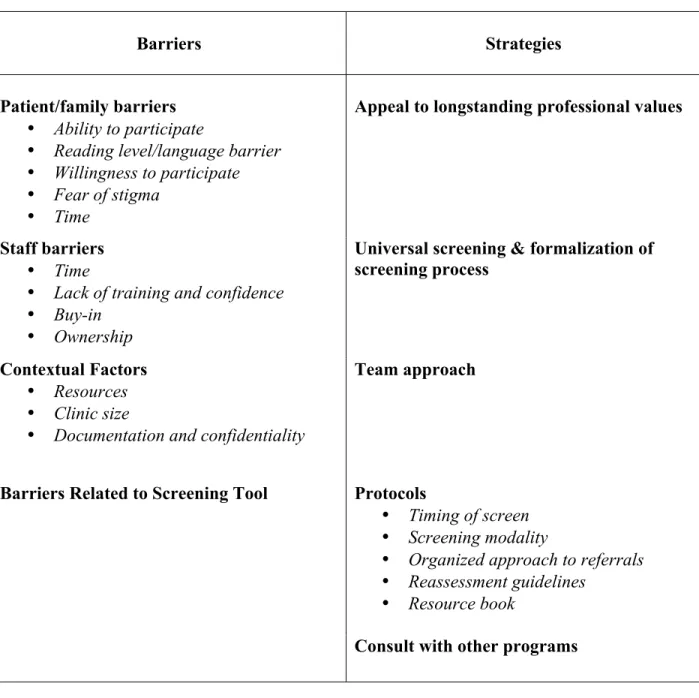
Overall, barriers identified were related to four broad themes, including barriers specific to the patient and family, barriers specific to the staff, barriers specific to contextual factors, and barriers related to the screening tool itself.
Strategies for Addressing Potential Barriers
Facilitators, or strategies, for addressing potential barriers were conceptualized as
processes identified by the interviewees to improve the chances of successful implementation of psychosocial screening. These strategies included using universal screening and formalizing the screening process, appealing to longstanding values held by healthcare providers, using a team approach, building protocols for substantial findings on the PAT, and consulting with programs that already use the PAT.
Universal screening/formalizing the screening process. No other individual category of barriers or strategies had more comments than the need for universal screening and a
NP: …if it was just part of the process … it would be easier…an expected thing for families instead of …an option.
MD: Psychosocial evaluation should be a component of what we do … how we were doing it, it was like it was an addendum.
RN: … it needs to be said up front … this is just part of our program and it’s expected. We’re not saying you’re crazy, we’re not saying you need help … we’re saying that everybody is stressed and we recognize that … it should be presented as, “This is your new medicine, this is your testing, this is what your life is going to look like, and this is to help you.”
Most staff agreed that this process should begin with the patients who are newly diagnosed. LPCA: …best to start with new patients, so people who are coming immediately at that point, verses introducing it now.
RN: … starting with new diagnosis … to get the ball rolling rather than someone that’s been getting treatment for a year and a half … all of the sudden you have this new program, and “I’m not really interested in doing that.”
Rational behind the universal screening included preventing “misses,” controlling for subjective judgments about whom to screen and when to screen them, and “normalizing” the process for patients and their families, and possibly staff too.
NP: …we can be misled by families…families may seem like they have it together, but …they really may be in a lot of distress…other families, they may seem …scattered and apart, but they’re okay, that’s how they handle things. We make judgments (based on) the perception of that provider or nurse that day…a formal tool may make that a more objective.
MD: …I’ve certainly met families where I've thought, "Oh this family is so intact, so together” … two months into their treatment, things just blow up. I look back and thought, “Oh, I thought I had asked this that and the other” Any screening, review of systems, physical exam, if you do it on every patient, you’re not likely to miss an issue that could have been addressed early.
Appeal to longstanding professional values. When asked, “How do you feel that your professional role plays a part in distress assessments,” participants spoke to having been trained to provide “holistic care” for patients and their families. Nurses, physicians and social workers noted that psychosocial care should be routine and required.
When I was trained…that was part of the whole person, and getting them prepared for consent, to find out what were the social and psychosocial barriers. …I appreciate you taking this on …as a nurse realizing that it’s part of their treatment … part of our care.
… it needs to be said upfront …“This is what you’re going to get … we want to be sure that you’re holistically taken care of.”
Whether or not we provide this service or not, we need to … realize that, parents staying together … are part of the success of this treatment and the wellbeing of this child. To say, “Well we are only treating the child,” is not really treating the child … we need to remember that …
These responses focused on the inherent need to provide holistic care to every patient, despite the potential barriers. By reflecting on the missing aspects of the care provided at this clinic, staff was able to identify with longstanding values they received in their various educations.
Using a team approach. Staff was asked about their role in performing distress
completed, but not to screen. Child life viewed their role as being able to provide support as indicated based on the screening results.
SW: …it would probably be most appropriate for me to complete the assessment…I don’t think it would be so much of an issue doing it initially. RN: …nurses can play a role in administering a tool …not sure we’re the best ones to do that, but we definitely could be. For sure, nursing plays a role in identifying patients who need further assessment.
NP: . . .(the NPs) do patient education at the very beginning with the
handbook…medication information…we could give them the assessment tool as part of that process.
MD: To facilitate, to make sure that it’s done…I can help with that, but I’m not a psychosocial professional, although sometimes I feel like it.
CLS: …child life would have a part in following up and providing support, …supportive listening and therapeutic conversation.
Most of the disciplines agreed that a team approach was key. Specifically, participants acknowledged that patients and families connect with different individuals and may feel more comfortable with those staff members distributing the PAT to them. This means that everyone would be involved in ongoing assessments and communication with patients and families about the requirement. Furthermore, one nurse explained that the more inclusive and team-oriented the approach, the greater chance for success in implementing the screening recommendation.
MD: I’m old school, I believe that the physician…nursing…the whole team, should assess…families disclose just a little bit different to each person. RN: …organizing a team is paramount. It’s not a one-man show. You have to have several members of your team on board with this.
scoring would be done in real time or after the form is completed by caregivers, an organized approach to referrals, reassessment guidelines, and a resource book.
Timing of screening. Opinions about the timing of the screening varied among staff. Although the recommendation suggests screening within 1-2 weeks of diagnosis, opinions about this varied, mostly due to the fear that early screening would overwhelm families in crisis.
MD: (within the first week) they’re captured … in the hospital usually for a week to two weeks … after about the first week … they’re bored, if things are going well. So that would be a good time for them to … get into this, or reject it outright, but at least they would be in a position to do it I think.
RN: … it would have to be done at every time to capture what the heck is going on, because stuff changes all the time … might be good for a snapshot … you’re not going to capture what happens in the meantime.
A strategy suggested by the social worker was to ask previous families to look over the screening tool and give feedback on timing could be useful prior to implementation.
SW: How would you feel if I asked you this question at week number two … might be valuable feedback … they might say, “Oh my gosh this is
overwhelming, I don’t know what I would do if you asked me … these are things that I didn’t think about...”
Screening modality. Another part of the protocol that would need to be addressed prior to implementation involved thinking about how initial screening would be performed. The tool could be distributed to the patient and family by a staff member, and then scored and addressed with the family at another time. Alternatively, a staff member could conduct the assessment. The staff member would use the tool to guide their assessment and record the responses to the PAT items. Modality could be patient dependent and follow algorithms agreed upon prior to
implementation.
we can help with…things that the school can help with…things that were so far in the past, they’ve resolved?” …we need to figure (that) out…
Organized approach to referrals. Due to the small size of the clinic and limited
resources, psychosocial support will not always be available within the clinic, which was anxiety producing for staff. One of the strategies identified to facilitate implementation included
establishing referrals based on screening results.
MD: …we need to know…who’s that “go-to” person for a family that needs marital counseling…to deal with addiction issues…we fly by the seat of our pants. But there are resources out there…having an organized mindset about that is not out of reach.
SW: …I (will) need some back up support to deal with the more serious issues…. depression or suicidal thoughts…I’m not saying that we’re going to have lots of those, but we need to make sure that we have tools and resources in place… Reassessment guidelines. While follow-up on initial assessments will depend on individual scores and responses, reassessments are not as straightforward. Furthermore, the literature does not give recommendations about reassessment. Staff acknowledged that the protocol should include guidance about reassessments. Additionally, one of the nurses noted that asking for information without a plan for ongoing reassessment is irresponsible. After
determining how frequently psychosocial needs should be reassessed, building reminders into the EMR might be a useful strategy. For example,
SW: That’s what worries me about asking it every three months, for some of these things that are really difficult, I mean maybe you just have them look over it, kind of like you do when you go back to the doctor and they say “has anything changed?”
RN: …when they come in for off-therapy…we pull the off-therapy road map …make sure that they have everything…once that awareness is there, then we can go, “Oh great!”
Resource book. One of the most discussed strategies to improve staff confidences to perform psychosocial screening was a resource book. Compared to a Pediatric Advanced Life Support (PALS) curriculum, this resource book could provide staff information about “what to do when” and “how tos” for addressing psychosocial distress. Additionally, education and practice/role play were mentioned as strategies.
MD1: …perhaps set up a, kind of like we do PALS, we practice. If someone’s heart stops, or they stop breathing, we know where the crash cart is…If someone says, “I’m not doing well, I want to hurt myself, or I want to hurt someone else” that we have a process, …a plan, a development.
RN: …you could always have a resource for them to go to and say, “Well gosh they’re disclosing this really private matter to me, I really don’t know what to do with this information.” Maybe it’s just educating the nurses about what they do… Consulting with other programs. Although only mentioned once, one strategy mentioned was to seek advice from the neighboring hospital regarding the logistics of implementing the PAT, making referrals and following-up.
SW: …brainstorming with people who are already using (the PAT), finding out what are the benefits…the barriers…we are a small clinic, how would you recommend that we start out?
Table 2: Barriers and Strategies Identified
Barriers Strategies
Patient/family barriers • Ability to participate
• Reading level/language barrier • Willingness to participate • Fear of stigma
• Time
Appeal to longstanding professional values
Staff barriers • Time
• Lack of training and confidence • Buy-in
• Ownership
Universal screening & formalization of screening process
Contextual Factors • Resources • Clinic size
• Documentation and confidentiality
Team approach
Barriers Related to Screening Tool Protocols
• Timing of screen • Screening modality
• Organized approach to referrals • Reassessment guidelines
• Resource book
CHAPTER 6: DISCUSSION
The purpose of this project was to identify barriers and facilitators to implementing psychosocial distress screening in a small pediatric oncology clinical program and then to use these findings to inform the development of an implementation plan. Four overarching thematic barriers were discovered (e.g., patient and family barriers, staff barriers, contextual factors, and barriers related to the screening tool). Additionally, five facilitators, or strategies, to improve implementation were identified (e.g., appeal to longstanding professional values, universal screening/formalization of screening, using a team approach, building protocols, and consulting with other programs that had successfully implemented screening).
Patient and Family Barriers
answering honestly on the screening tool, especially within the first few weeks of meeting a new team.
Patient and family time was also identified as a barrier, and although previous
examinations of psychosocial screening of adults with cancer did not specifically address patient time, this finding can be considered consistent with the literature in terms of the broad findings of time as a barrier (Mitchell, 2013). Though the screening tool may not take more than 10-15 minutes to complete, time is a scarce resource for parents of children with cancer, as they try to maintain usual routines for siblings and continue working to provide insurance and/or financial resources for their family.
Two other themes emerged regarding staff views on potential barriers for patients and families: the patient/family ability to participate and their reading levels and/or language barriers. Interviews with pediatric oncology staff identified that the patient/family may not be able to fully participate due to distress related to the child’s cancer diagnosis as a distinct factor. Given
evidence that the diagnosis of cancer in a child can be highly distressing and potentially
Lastly, while reading levels and/or language barriers were not previously addressed in the adult literature, this finding may also extend to other pediatric and adult oncology settings
particularly in settings that serve patients and families vulnerable to health disparities (Office of Disease Prevention and Health Promotion, 2017). Although using a translator may not always be easy or efficient for staff in terms of their time, this resource is essential to providing equitable care to all patients and families, including equitable access and informed decisions about enrollment in clinical trials. The PAT is available in the Spanish language, but other languages would require a translator to read the English language form of the tool and record the parent’s responses. Additionally, even if the screening tool is translated into the family’s preferred language, the parent’s health literacy level will likely influence whether s/he can comprehend and respond meaningfully to the PAT items (Centers for Disease Control and Prevention, 2016). If the parent cannot read or comprehend the meaning of the tool, the screeing will not be useful. Staff Barriers
Four sub-themes of staff barriers were identified through the interviews with participants (e.g., time, lack of training and confidence related to screening, buy-in, and lack of ownership of the screening process). Consistent with the literature (Mitchell, 2013), staff time was repeatedly addressed in the interviews. In a context where many tasks are time-sensitive, staff can feel overwhelmed by the amount of work required within a given time frame. Adding new processes not initially understood or not perceived as important can be a challenge. Even though most staff verbalized that this screening was important, that did not change the reality of the multiple competing demands on their time. Additionally, also consistent with previous literature
prepared to evaluate the results and address them as indicated. Time and lack of
training/confidence can be related to one another as a feeling of inadequacy often correlates to a longer time to accomplish a task (Mitchell, 2013). Thus, time and lack of confidence/training could be addressed by building protocols and related resource materials that enable the staff to build their knowledge base and confidence related to screening. This will be discussed in greater detail in the strategies section.
Although not unique with regard to practice innovation (Rogers, 2010), staff buy-in, resistance to change, and feelings of already providing adequate care has not been previously identified in the literature about psychosocial screening implementation in oncology settings. Theories of change (e.g., Diffusion of Innovation (Rogers, 2010), Theory of Planned Behavior (Ajzen, 1991) have been developed to understand how people and settings change over time and inform implementation of practice improvements. Also, although subjective, the staff felt that they provided adequate psychosocial screening and care to their patients. This perception alone can be a source of resistance to change.
Lastly, a largely noted staff barrier was lack of ownership of the new recommendation and its implementation. This barrier was not addressed in previous literature, but may be
would require other staff members to help take ownership of the screening process and further assessment, which was not something that staff mentioned they were necessarily willing to do. Contextual Factors
Three contextual factors and/or barriers were discovered through the interviews (e.g, resources, clinical program size, documentation and confidentiality of results). These factors can be viewed as barriers or simply as areas to be addressed in subsequent PDSA cycles. While specifics are unique to the clinic, the broader issues are consistent with the literature and may be generalizable to other settings. For example, lack of resources was previously reported in adult literature as a barrier to implementing psychosocial screening (Deshields, Zebrack, & Kennedy, 2013). Lack of resources made it difficult for screening implementation, as needs were
discovered but could not always be appropriately addressed. One of the most significant
differences between pediatric as compared to adult oncology is that children overall rely on their parents for care, and a parent’s ability to perform clinical tasks and otherwise support the child can affect the child’s treatment and treatment outcomes. For example, a mother with extensive substance abuse or history of suicidal ideations may need referral for full assessment and treatment, yet the clinical program focuses on the child and specifically on the child’s cancer. And while the child cannot be treated in silo, the expertise of the pediatric oncology staff is not adult mental health. As a result, some issues identified through psychosocial screening can be difficult for clinic staff to address and thus they may prefer to not screen. These issues must be discussed and contingencies explicated going forward toward implementation.
resources and private space. Additionally, the small nature of the clinic has fostered close and protective relationships between the staff and patients and families. In this, staff tended to be protective over the idea that the PAT may make some families feel uncomfortable. This
protectiveness also led into another noted contextual barrier: documentation and confidentiality. Due to the increasing need to document care and findings, discussion around how documentation would be performed caused concern with staff, specifically related to the
sensitive nature of some of the PAT items. Furthermore, this clinical program uses an EMR that allows patient records to be accessed by anyone within the system. This means that PAT results and actions taken would be readily accessible to the patient’s primary care provider, consulting physicians, and so on. Concerns about documentation of sensitive issues related to psychosocial screening are not apparent in either the adult oncology literature or in pediatric oncology
literature specific to the PAT. Few tools are as comprehensive as the PAT, and the
Barriers Related to Screening Tool
Although the PAT was the screening tool used in this project, this tool is not required. Some staff expressed feelings that the tool was too lengthy or too comprehensive, yet lacked room for explanation. Shorter, less comprehensive pediatric distress tools are available and a different one could be discussed and agreed upon within the clinic.
Strategies for Addressing Potential Barriers
Despite the number of barriers and contextual factors identified through the interviews, staff discussed strategies for implementing a psychosocial distress screening program. In total, five main strategies were identified (appeal to longstanding professional standards, universal screening and formalization of screening process, using a team approach, building protocols, and consulting with other programs). Only one - building a protocol - was cited in previous literature (Mitchell, 2013). This may be particularly appealing within the pediatric oncology setting due to the familiarity of staff with the use of protocols to guide both medical and supportive care. For example, pediatric cancer treatments are generally in the form of protocols with distinct
roadmaps for treatment. These protocols extend into survivorship and have specific task lists for specific treatments. Additionally, emergency protocols for basic and advanced life support (BLS and PALS) are both required and routine education for pediatric oncology health professionals.
strategy that can be used to help explain and bring relevance to the need for psychosocial distress screening within the clinic. Although the screening would still be an additional task for staff, using this approach may bring clarity to staff.
Additionally, a strategy commented on more than any other, was making the screening process formal and universal for all patients and families. This was not discussed in previous literature and may be due to prior implementation of this universal process. In context of this clinic, a prior attempt to build a psychosocial program failed, which many attributed to its “optional” status. While this study looks specifically at implementing a screening tool, staff came from an experience where there was significant confusion around how their role applied to psychosocial care, and who would receive this care. Thus, this may not be an issue in other settings but may be motived by previous experiences for this clinic. This strategy is in line with the recommendation that all patients and families are screened (Pirl, et al., 2014) and may help bring clarity and normalization to the program for both staff and families.
approach may reduce the need for one specific “owner” of the program moving forward; rather a leader may emerge but the team is consistently involved in the process and hopeful success of the program.
One of the most in-depth strategies discussed in the interviews was to develop protocols around screening. Specifically, five subthemes were identified (timing of screening, combined assessment or filling out tool prior to meeting, “go-to” referrals, follow-up and reassessments, and a resource book). This is not a novel finding, as previous work in adult settings found that screening implementation was more effective when algorithms were in place for mandatory referrals (Mitchell, 2013). Additionally, most medical therapy for children with cancer is protocolized, thus the clinic staff is very comfortable with following protocols. However, the recommendation regarding psychosocial distress screening does not detail when or how screening should be performed or what should be done with the results. This leaves a “grey” area that can be very anxiety producing for staff as they move towards improving care for their patients, especially staff in a clinical area that has advanced medical outcomes through
expect, and reduce the amount of time they would need to spend searching for answers they would not otherwise know.
One way to help build protocols, and another strategy mentioned, was meeting with other programs that currently use the PAT to screen patients and families and getting feedback on their experiences. This may help alleviate some of the stress of the “unknown” and get insight into how protocols could be built to address the needs of this clinic. This was not mentioned in previous literature, but sharing knowledge is not a new concept in general. For other small communities that have access to staff at larger facilities, this may also be an effective strategy to employ. See Table 3 for relationships between barriers and strategies.
Table 3: Potential Strategies for Identified Barriers
Identified Barrier Potential Strategy for Specific Barrier
Patient/family ability to participate
Allow for timing of screen to be within 1-2 weeks of diagnosis, but not within the first few
days
Reading level/language barrier Translator, screening modality should include staff performing screen with patient/family
Patient/family willingness to participate Universal screening, part of holistic care
Patient/family fear of stigma
Universal screening, part of holistic care, build reassessment protocol to factor in for potential
initial information withholding
Staff time Team approach, build protocol to aid in efficiency, consult with other programs
Staff lack of training/confidence Organized approach to referrals, resource book
Staff “buy-in” Appeal to longstanding professional standards
Staff ownership of process Team approach
Resources Organized approach to referrals, resource book
Clinic size Universal screening/formalized process to help reduce protective feelings
Documentation and confidentiality If able, building into EMR. Making PAT a “locked document” within EMR.
Barriers related to the screening tool Staff can choose to use the PAT or find another preferred tool
Next Steps
Each of the themes that were discovered in adult oncology settings regarding barriers and facilitators to implementing a psychosocial distress screening program were reported in this study, in addition to seven barriers and four strategies. Moving forward toward implementation plan, the findings regarding the barriers and facilitators identified by the participants from this clinic should be presented to them in summary form prior to initiating subsequent PDSA cycles.
the data they provided, and determine how to “act” moving forward. Using the strategies that they identified to address the identified barriers is a necessary step toward successful
implementation. Therefore, finding team leaders who are able to help implement screening and using those leaders to help build protocols will be useful. Additionally, the participants will need to “plan” before moving into implementation. They will need to follow-up with the strategies they suggested (e.g. speaking with previous patient families, consulting with other families) to help prepare them for building the protocols they need.
Further work should evaluate how long it would take to build this program from the ground up, as this clinic is doing. Additionally, after implementation of the psychosocial distress screening program, further studies should evaluate the effectiveness of the implementation strategies, how these strategies can be used in other clinics with their own unique barriers and facilitators, and how the PDSA cycles can be reformed to help improve efficient implementation.
Limitations
APPENDIX A: COMMUNICATION WITH PARTICIPANTS
Request for participation in a practice improvement project
“Barriers and Facilitators to Implementing Psychosocial Distress Assessments in
the Pediatric Oncology Setting”
Background and purpose
This is a request for you to participate in a practice improvement project that intends to assess barriers and facilitators to implementing psychosocial distress assessment
recommendations in your clinic – the St. Jude Affiliate Clinic.
What does the study entail?
Data will be collected through interviews with direct care providers from every interprofessional team including:
• Counselors
• Child life specialists • Physicians
• Nurses
• Nurse Practitioners • Social workers
v Interviews will take between 15-20 minutes to complete and will include questions related to personal views and experiences around psychosocial distress in your patients and ways to improve their care.
v With your permission, your interview will be audio-recorded.
v The project leader will come to your clinic to do the interview and will be available on multiple different days. Interviews will be on a scheduled or drop-in basis depending on the needs of the clinic, or can be over the phone before or after clinic hours.
v When your interview is completed, you will be given a $10 gift card to thank you for your help with the project.