MIGRATION, SOCIAL DISADVANTAGE, SEXUAL PARTNERSHIPS, AND HIV/STI
IN THE GARÍFUNA POPULATION OF HONDURAS
Anisha D. Gandhi
A dissertation submitted to the faculty at the University of North Carolina at Chapel Hill in
partial fulfillment of the requirements for the degree of Doctor of Philosophy in the
Department of Epidemiology in the Gillings School of Global Public Health.
Chapel Hill
2014
Approved by:
Audrey Pettifor
Clare Barrington
Frieda Behets
Stephen Marshall
iii
ABSTRACT
Anisha D. Gandhi: Migration, Social Disadvantage, Sexual Partnerships, and HIV/STI in the Garífuna Population of Honduras
(Under the direction of Audrey Pettifor)
This study examined the relationships between HIV/STI status and the social and behavioral factors
that are posited to shape the risk of these outcomes in the Garífuna population of Honduras. The
Garífuna are a people with African and indigenous origins among whom high rates of HIV and other
STIs have been observed. Research from multiple disciplines suggests migration patterns, sexual
behavior norms, and social marginalization as a racial/ethnic minority have contributed to this disease
burden among the Garífuna. However, gaps in the public health literature pertaining to these
relationships persist. Data were collected from a population-based sample of Garífuna men and
women in 2012 (n=629) through a survey of sexual behavior and HIV/STI prevalence among key
populations in Honduras. Participants completed surveys and provided samples for the diagnosis of
HIV, HSV-2, and non-viral STIs. Weighted log-binomial regression models were used to produce
prevalence ratios.
The first aim of this study assessed whether temporary migration was associated with multiple sexual
partnerships and concurrent sexual partnerships in the last 12 months. Multiple sexual partnerships
were more prevalent among migrant men and migrant women relative to migrant men and
non-migrant women, respectively. Concurrent sexual partnerships were also more prevalent among men
and women who migrated, relative to men and women who did not migrate.
The second aim assessed the relationships between HIV, HSV-2 and non-viral STI prevalence and
the following measures of social status and social disadvantage: education, unemployment, lack of
income or financial support, labor migration, and experience of discrimination. There were no cases
of HIV among men or women who had migrated within the last 12 months. Relationships between
iv
magnitude. While HIV prevalence has declined in Honduras, the estimated prevalence in this sample
of the Garifuna population was 4.1%; HSV-2 and non-viral STI prevalence likewise remained high in
comparison to previous estimates. Future research on the social and structural determinants of
HIV/STI vulnerability in the Honduran Garífuna population would benefit from continued investigation
v
ACKNOWLEDGMENTS
Funding that supported this dissertation was provided by The Graduate School, The Graduate and
Professional Student Federation, and the Carolina Population Center at the University of North
Carolina at Chapel Hill, as well as by the Task Force for Global Health, Inc.
I am indebted to the principal investigators, coordinators, field staff, and the participants of the
Encuesta de Vigilancia del Comportamiento Sexual y Prevalencias de Infecciones de Transmisión
Sexual (ITS) y Virus de la Inmunodeficiencia Humana (VIH) en poblaciones clave de Honduras
(ECVC-II), the study from which the data analyzed in both aims were derived. The study directors and
collaborators at the Honduras Ministry of Health and at CDC generously welcomed my involvement in
the implementation of this study; I gained so much from their expertise and from my time in
Honduras. Likewise, the generosity of my host family and other members of the study staff based in
La Ceiba will not be forgotten.
My dissertation committee has provided invaluable insight throughout the research process, and I
thank them for their intellectual contributions, their patience, and their support. I am so incredibly
thankful for my family, who have championed my academic pursuits and offered every possible form
of assistance throughout my graduate training. And finally, I would like to offer my profound, eternal
thanks to my friends and fellow classmates, whose encouragement was as crucial as their
vi
TABLE OF CONTENTS
List of Tables ... viii
List of Figures ... ix
List of Abbreviations ... x
Chapter I: Specific Aims ... 1
Chapter II: Background ... 4
1. Significance ... 4
2. Social and structural context of the HIV/STI epidemics among the Honduran Garífuna... 6
3. Innovation of following analyses ... 13
Chapter III: Methods ... 15
1. Data source and study population ... 15
2. Analytic methods common to Aims 1 and 2 ... 21
3. Aim 1 Methods ... 22
4. Aim 2 Methods ... 27
5. Limitations ... 34
Chapter IV: Aim 1 ... 38
Introduction ... 38
Methods ... 40
Results ... 44
vii
Chapter V: Aim 2 ... 55
Introduction ... 55
Methods ... 57
Results ... 62
Discussion ... 64
Chapter VI: Discussion ... 75
Summary of findings ... 76
Contributions to the public health literature ... 78
Limitations ... 82
Directions for future research... 85
Avenues for intervention ... 87
Conclusions... 88
Appendix ... 89
viii
List of Tables
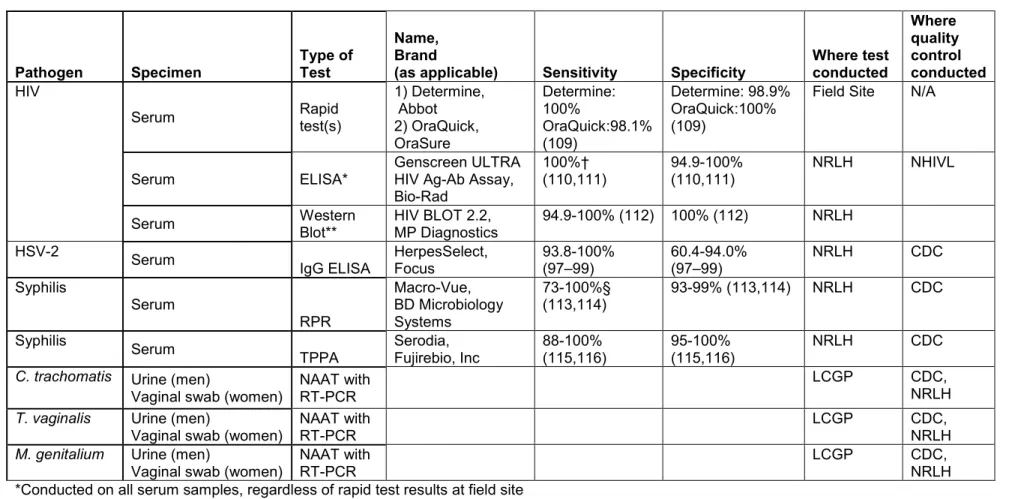
Table 3.1: Summary of diagnostic testing protocol for biological outcomes used in Aim 2…………...36
Table 4.1: Demographic and behavioral characteristics by gender in a population- based sample of Garífuna adults in Honduras, 2012.……….………...50
Table 4.2: Recent migration and sexual partnership characteristics by gender in a
population-based sample of Garífuna adults in Honduras, 2012………...51
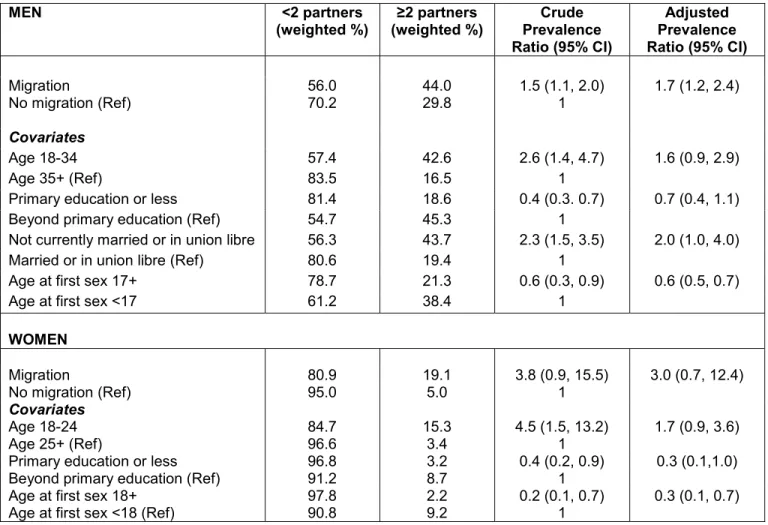
Table 4.3: Multiple sexual partnerships in last 12 months by recent migration history among men and women in a population-based sample of Garífuna adults in Honduras, 2012……...52
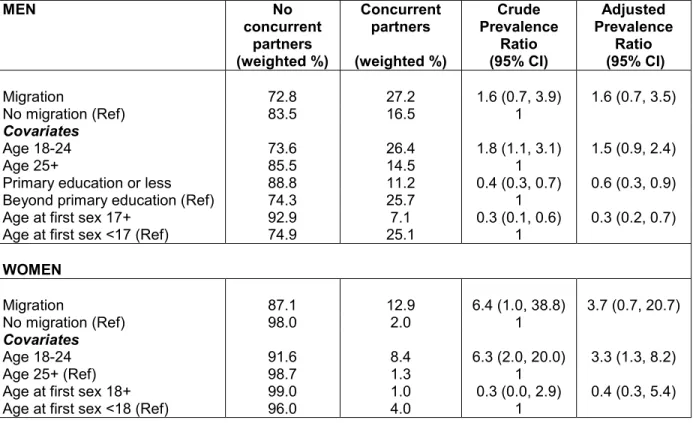
Table 4.4: Concurrent sexual partnerships in last 12 months by recent migration history among men and women in a population-based sample of Garífuna adults in
Honduras, 2012………..53
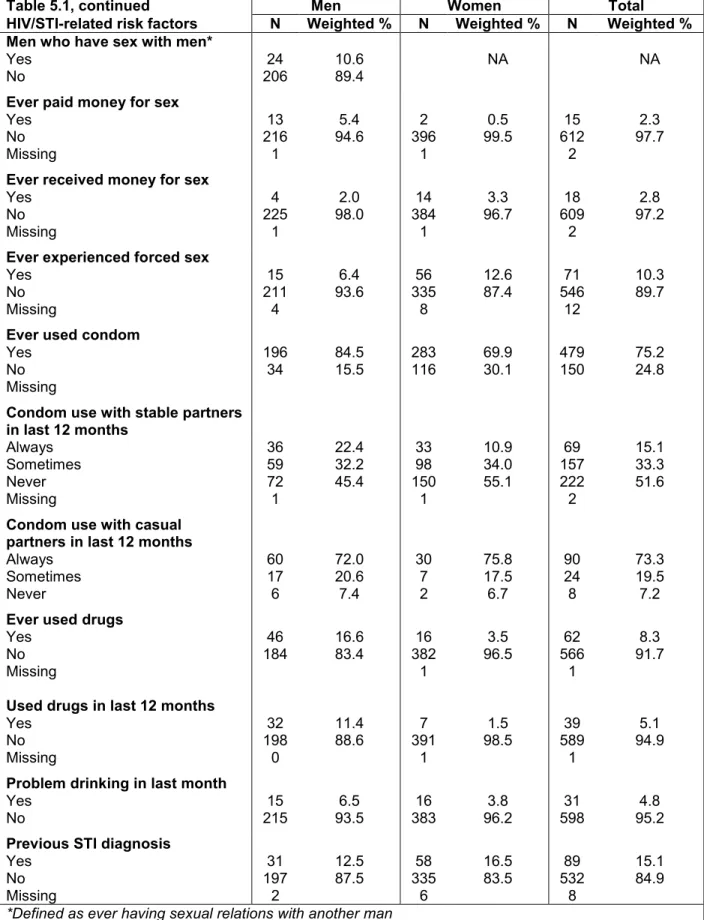
Table 5.1: Demographic characteristics and prevalence of HIV/STI-related risk factors by gender in a population-based sample of Garífuna adults in Honduras, 2012……….………66
Table 5.2: Prevalence of HIV and other sexually transmitted infections among men and women in a population-based sample of Garífuna adults in Honduras, 2012………...68
Table 5.3: Association between risk factors and HIV status in a population-based sample of Garífuna adults in Honduras, 2012……….……….…….69
Table 5.4: Association between risk factors and HSV-2 by gender in a population- based sample of Garífuna adults in Honduras, 2012……….…..70
Table 5.5: Association between risk factors and non-viral STI status by gender in a population-based sample of Garífuna adults in Honduras, 2012………....72
Table A-1: Multiple sexual partnerships in last 12 months by cumulative recent migration history among men and women in a population-based sample of Garífuna adults in Honduras, 2012………..…....99
ix
List of Figures
Figure 2.1: Pathways for the effect of educational attainment on HIV infection……….…...…12
Figure 5.1: HSV-2 Prevalence among men and women, by age group in a
x
List of Abbreviations
APR Adjusted Prevalence Ratio
CDC Centers for Disease Control and Prevention, Atlanta
CI Confidence Interval
ECVC-I Encuesta Centroamericana de Vigilancia de Comportamiento Sexual y Prevalencia
de VIH/ITS en Poblaciones Vulnerables de Honduras, 2006
ECVC-II Encuesta de Vigilancia del Comportamiento Sexual y Prevalencias de Infecciones de
Transmisión Sexual y Virus de la Inmunodeficiencia Humana en poblaciones clave de Honduras, 2012
ELISA Enzyme-linked immuno-absorbent assay
HIV Human Immunodeficiency Virus
HSV-2 Herpes Simplex Virus 2
IgG Glycoprotein G antibody
LCGP Laboratorio Conmemorativo Gorgas, Panama (Regional HIV/STI Reference
Laboratory)
NAAT Nucleic acid amplification test
NHIVL National HIV Laboratory of Honduras
NRLH National STI Reference Laboratory of Honduras
RT-PCR Real-time polymerase chain reaction
RPR Rapid plasma reagin
STI Sexually transmitted infection
TPPA Treponema pallidum particle agglutination assay
1
Chapter I: Specific Aims
This study examined the relationships between HIV and sexually transmitted infection (STI) status
and the social and behavioral factors that are posited to shape the risk of these outcomes in the
Garífuna population of Honduras. The Garífuna are a people with African and indigenous origins
whose presence in modern-day Honduras dates to 1797. While much of the Garífuna population still
exists in Honduras, large diasporas have since formed in Belize, Guatemala, Nicaragua, and the
United States. In Central America, the Garífuna have fought to preserve a distinct cultural identity as
they simultaneously adapt to modern social and economic realities. Since the late 1990s, surveillance
has detected elevated rates of HIV in Garífuna communities in comparison to regional and national
averages, spawning further research on the social, structural, and behavioral factors that shaped HIV
risk within this population. Research from multiple arenas and disciplines asserted that migration
patterns, sexual behavior norms -- specifically, the practice of having multiple sexual partners --
contributed to the disproportionate HIV burden, as did the diminished access to health resources that
resulted from the low social status occupied by the Garífuna as a racial and ethnic minority.
Migration, having multiple partners or concurrent partners, and social marginalization have all been
linked to increased HIV vulnerability. Temporary migration, during which individuals leave their home
community, often to pursue better employment opportunities, and then return home periodically to
their existing social and sexual networks, characterizes much of the Honduran Garífuna migration
process. The presence and propagation of HIV within rural Garífuna communities is often attributed to
migrants; narratives in qualitative work detail in particular how some migrant men engage in sexual
relations with partners in other cities or countries, and then infect new or existing sexual partners
when they return home. The transmission of HIV and other STIs in the Garífuna population may be
enhanced through the increased frequency of having multiple sexual partners, and through the
2
overlap. Whether migration is associated with sexual partnership patterns in the Garífuna has not yet
been determined in the epidemiologic literature.
Aim 1, assessed the relationship between temporary migration and having multiple sexual partnerships or concurrent partnerships among Garífuna men and women. Data collected through a nationally representative survey of 629 Garífuna adults in Honduras were analyzed to
assess whether temporary migration (defined as spending more than one month away from home)
was associated with 1) having two or more sexual partners in the last 12 months; or 2) having
concurrent sexual partners in the last 12 months. Concurrency was measured using the first and last
dates of sexual contact with study participants’ three most recent sexual partners, and then assessing
whether temporal overlap was present in at least two of those partnerships. All analyses were
conducted separately for men and women. It was hypothesized that having multiple partnerships and
concurrent partnerships would be more common among men, and that temporary migration would be
positively associated with both outcomes among both men and women.
Social marginalization has also been posited to contribute to the higher HIV and STI rates among the
Garífuna in Honduras. Prior research indicates that low socioeconomic status and racial/ethnic
discrimination contribute to less access to and utilization of health services, such as HIV/STI testing
and treatment. These structural factors may also fuel labor migration, as Garífuna leave rural
communities and even urban neighborhoods where they have limited educational and employment
opportunities in order to access better wages in bigger cities, tourist destinations, and abroad.
Aim 2 examined whether socioeconomic status, experience of discrimination, and labor migration were associated with current HIV/STI status among Garífuna men and women. This aim used self-reported survey data and laboratory-confirmed diagnoses of 1) HIV; 2) Herpes Simplex
Virus 2; and 3) non-viral STIs including Chlamydia trachomatis, Treponoma pallidum, Trichomonas
vaginalis, and Mycoplasma genitalium from the same nationally representative study described in Aim
1. Socioeconomic status was measured by three separate self-reported indicators, including: highest
3
Discrimination was defined as a composite variable combining self-report of recent and lifetime
exposure to various manifestations of discrimination for being Garífuna. Labor migration was defined
as having migrated for work and spending more than one month away from the home community in
the last 12 months, and was assessed among participants and their partners. It was hypothesized
that each measure of social disadvantage, as well as labor migration, would be positively associated
with disease status, but that the magnitude of association would differ between men and women.
These aims will help determine whether relationships between multiple social and structural risk
factors, sexual risk behaviors, and current disease status exist in a large, representative sample of
the Garífuna population as they have been posited in prior qualitative literature. Identifying segments
of the population with greater HIV/STI vulnerability will help more effectively target existing treatment
4
Chapter II: Background 1. Significance
The Burden of HIV and Sexually Transmitted Infections in Honduras
An estimated 1.5 million people in Latin America and the Caribbean are living with HIV (1). Within this
region, Honduras has historically been one of the most heavily afflicted nations, with an estimated
26,000 people living with HIV as of 2012 (2). The most recent estimates place the national prevalence
at 0.5% (1,2), which represents a decrease from estimates between 1-2% in the 1990s and early
2000s (3,4). The HIV epidemic in Honduras is primarily fueled through heterosexual transmission,
with concentrated epidemics occurring among men who have sex with men, female sex workers, and
within the Garífuna population (5). National prevalence estimates for diagnosed STIs are not
available, but the 2011-2012 wave of the Honduras Demographic and Health Surveys indicated that
12% of women and 2% of men had been diagnosed with or experienced symptoms of a sexually
transmitted infection within the last 12 months (6). HIV/AIDS is the seventh highest contributor to
years of life lost and disability-affected life years in Honduras; both figures experienced over a 200%
increase from 1990-2010 (7).
The National Strategic Plan against HIV/AIDS Honduras includes free provision of voluntary testing
and counseling, prevention of mother-to-child transmission services, and antiretroviral therapy (8).
However, the coverage of these services remains low. Less than 13% of adults nationally reported
being tested for HIV in the last 12 months and receiving their results (6); less than 63% of
HIV-positive women received ART for the prevention of vertical transmission, and only 49% of those with
advanced HIV and in need of ART are receiving it (5).
HIV and STI Epidemics among the Garífuna in Honduras
Despite a nationwide decline in HIV prevalence, Northern Honduras continues to face a generalized
5
with the most concentrated population of Garífuna. The Garífuna are an ethnic minority descended
from Black Caribs, a group that emerged on the Caribbean island of St. Vincent through the mixture
of West African and indigenous Carib and Arawak populations (9). In 1797, the Black Caribs were
deported from St. Vincent to Honduras after surrendering to British forces following defeat in the
Carib War (9). Further mixing with the African and Creole populations already present in Honduras
led to the creation of the Garífuna as a distinct group in the 1800s (10). With a population between
46,000 and 250,000 (11–13), the Garífuna comprise one of the largest ethnic minorities in Honduras;
the wide range in the reported size of the group reflects discrepancies in estimates between national
census data and reports from civil society organizations representing the Garífuna and other
autochthonous communities in Honduras. Sizeable Garífuna diasporas also exist near the Caribbean
coasts of Belize, Guatemala, and Nicaragua, and in a number of US cities (10,14–16).
In Honduras, the Garífuna have been identified as a priority population for HIV prevention (8,17). A
study conducted across four established Garífuna communities in 1997-1998 documented an
average HIV prevalence of 8.4% (8.5% among women and 8.2% among men), which was
comparable to prevalence estimates obtained contemporaneously from men who had sex with men
(8.0%) and ambulatory sex workers (9.0%) (18). Of 305 Garífuna participants surveyed in that
sample, 18% of men and 13% of women reported having symptoms or being diagnosed with another
STI in the past year. In a 2006 bio-behavioral surveillance study among a representative sample of
Garífuna adults across eight Garífuna communities in both rural and urban areas, HIV
seroprevalence was estimated at 4.5% (5.1% among women and 3.8% among men). Thus, the HIV
prevalence among the Garífuna population was more than three times the estimated national average
at the time. The burden of STIs was also high, with 10.5%, 6.8% and 7.1% testing positive for
Trichomonas vaginalis, Chlamydia trachomatis, and Mycoplasma genitalium, respectively. Fifty-one
percent of participants were infected with HSV-2 (19), which was notably higher than what has been
reported elsewhere in Latin America (20,21). HSV-2 now accounts for the largest share of genital
6
HIV awareness is high within the Honduran Garífuna population (10,22), and prevention programs
are ongoing that specifically address relevant contextual factors (23) and market safer sexual
practices (24–26). While such programs receive material and technical support through national and
international agencies, only 17% of the national AIDS prevention budget was allotted to most-at-risk
populations including the Garífuna, based on a 2012 evaluation (5). While the WHO recommends
syndromic antiviral treatment with acyclovir when HSV-2 prevalence exceeds 30% (27), this therapy
is not routinely available in primary care facilities in Honduras, and access is not guaranteed per
national treatment guidelines.
2. Social and structural context of the HIV/STI epidemics among the Honduran Garífuna
The role of migration in HIV/STI risk among the Honduran Garífuna
The Garífuna of Honduras have, throughout their existence, been characterized as a highly mobile
population, such that migration has been deemed central to their existence (28). While both women
and men migrate, men are more likely to migrate and to migrate for longer duration (29), often taking
jobs in the agricultural or fishing industries (10,16,28,29), or in urban centers that offer superior
training and employment opportunities compared to those available within Garífuna communities
(22,30). While large numbers of Garífuna have emigrated permanently to other countries, short-term
mobility within Honduras is still common (8,29).
Migrants have long been recognized as a population with increased vulnerability to sexually
transmitted infections, including HIV (31–33). Cassels et al highlight three pathways through which
migration can affect HIV risk: the intrinsic risk pathway, the bridging pathway, and the community
displacement pathway (34). In summary, migrants may have an intrinsically different risk profile than
non-migrants; those who are willing to migrate may be more adventurous and more likely to engage
in higher-risk sexual behavior. Conversely, the act of migrating, may enable the uptake of risk
behaviors -- such as increased drug and alcohol use, engaging in transactional sex, or simply
engaging in relations with new sexual partners -- beyond what occur when confined to one’s social
7
sexual partners at a new destination also bridges distinct sexual networks, and can facilitate HIV/STI
transmission if migrants subsequently engage in sexual relations with a different partner upon their
return. Finally, risk behaviors at home may alter as a result of high rates of out-migration, such that
partners of migrants may be more likely to acquire additional partners or engage in transactional sex
during periods of separation (44,45).
Among the Garífuna, mobility has consistently been implicated as a major driver of the HIV epidemic
(10,19,22,29,46–48). In 2011, a formative study was conducted among populations prioritized for
HIV/STI prevention in Honduras, in preparation for the national surveillance study used for the
following analyses. Focus groups and in-depth interviews were conducted to better characterize key
factors related to HIV/STI risk within those populations. In that assessment, Garífuna community
leaders described the general pattern believed to be contributing to the HIV/AIDS problem:
“Our youth, and often our adults, men and women have to leave our communities to go to the cities, we’re talking about San Pedro Sula and Tegucigalpa or they go to the Bay Islands, or out of the country... When they’re back in the country periodically, they come to our communities, to find their partner or to visit their family and they have sex and later they again leave the community and this has brought us serious, serious problems because most of our population that’s gone away…they come from San Pedro Sula infected with HIV/AIDS.”
“When he goes away, if a man leaves his family… he always goes to find another family… And yes, it affects us in terms of sexuality because a man has one, two, or three women, or the woman will have another partner too.” (27, translated)
A rural community member also described the changed relationship of partners who are separated by
migration, even when they are reunited:
“When one…returns already you won’t have the same trust with the woman, because maybe the woman had another lover or he had a lover [out] there and it’s not the same, and then comes the break-up.” (27, translated)
Similar narratives are echoed elsewhere (10,22,47), usually describing circumstances in which males
leave rural or semi-rural Garífuna communities for larger cities or international destinations, engage in
unprotected sexual relations while away, and then return home and infect new or existing female
partners who are unwilling to use condoms or unable to negotiate their use (22,29,47). Thus, the
8
pathways described -- the enabling of higher-risk behaviors such as increased numbers of partners,
the bridging of Garífuna communities with sexual networks that have greater HIV/STI prevalence, such as urban centers in Honduras and elsewhere with well-established sex work industries, and the
disruption of sexual partnership patterns in home communities.
Migrants who leave economically-depressed areas to pursue better employment opportunities may
also be at greater risk for HIV/STI due to social and economic vulnerability. Migrants from Mexico and
Central America often face discrimination, poorer wages, and diminished access to health and social
services due to their migrant status, whether they migrate within the region or to other destinations
such as the United States (42,49,50). Migrants may have less knowledge of or resources to access
health providers or prevention services in transit or at their destination; those that migrate without
sufficient documentation may be particularly vulnerable, if they avoid contact with safety net health
providers for fear of identification and deportation (33,44,50,51). Thus, access to health information,
prevention, testing and treatment services for HIV and other STIs may be limited.
The role of multiple and concurrent sexual partnerships in the Garífuna HIV/STI epidemics
Prior research underscores that migration, and specifically temporary migration, leads to an increase
in sexual partners, and enables the practice of sexual concurrency -- defined as having two or more
sexual relationships that have a temporal overlap. Both multiple serial partners and concurrent
partnerships have been implicated as risk factors for HIV transmission. The role of concurrency in
fueling HIV/STI epidemics has been contentious (52–55), but continues to be a focus of investigation
in describing potential risk factors for HIV/STI transmission. Concurrent partnerships, and even serial
partnerships with short intervals between them, may allow a secondary transfer of infection to the
partners of the individual engaging in concurrency (52,56). Thus, concurrency is linked to facilitating
transmission of infection, rather than acquisition—the individual practicing concurrency may not be at
increased risk themselves. However, empirically concurrency has also been linked to STI acquisition
(57), which suggests that individuals engaging in concurrency may be more likely to form
9
concurrency on HIV/STI epidemics is dependent on a number of other factors including the stage of
the epidemic, types and duration of sexual partnerships, coital frequency, and sexual mixing patterns
(52,55).
Several studies have indicated that multiple sexual partnerships are common among the Garífuna,
irrespective of migration (10,19,22,58). In the most recent national survey of the Garífuna in
Honduras (ECVC-I, the prior wave of the national surveillance study used for this analysis), 57% of
men and 44% of women reported having more than one sexual partner in the last 12 months (19). A
study of Garífuna men and women living in Trujillo, Honduras found that 38% of men and 22%
reported multiple regular sex partners, though the sample was small (n=55) (10). Of note, estimates
of multiple partnerships in the latter study were at least twice those reported among Garífuna men
and women who had migrated to New York (10). Among 531 Garífuna living in Belize, 59% of men
and 33% of women reported having more than one sexual partner in the last 30 days (58). These
figures suggest that either multiple partnerships may be more common in men (47), or that there may
be differential reporting of such behaviors by gender, as has been found elsewhere (59–61).
Regardless, the frequency of multiple recent sexual partnerships occurring among Garífuna men and
women appear to be much higher than those reported in the general Honduran population, which
averaged only 16% among men and 1% among women nationwide (6,62). The practice of having
multiple partners across a lifetime is not in and of itself broadly stigmatized within Garífuna culture
(9,63,64), but it is reproached in women to the extent that it impacts their ability to support their
children (64). Among men, having multiple partners may be expected; Grieb writes:
“Men’s desire for more than one sexual partner is considered natural, and in the past a man’s fidelity was often thought to be the result of sorcery. Although it is
acknowledged that women experience great sexual urges as well, their sexual infidelities are not generally acceptable.” (10)
In a small sample of Garífuna individuals in Trujillo, Honduras, 54% of men and 74% of women
agreed that it was socially acceptable for men to have many sex partners, 60% of men and 69% of
women believed it was acceptable for men could have sex outside of a relationship. In contrast, a
10
sex partners or having sex outside of a relationship (47% of men and 18% of women). However,
modernization and the importation of attitudes and experiences of US-bound migrants into Garífuna
communities has decreased the tolerance for male infidelity and potentially increased the practice of
female infidelity (10). In summary, Garífuna culture may sanction having multiple sexual partners and,
to a lesser extent, having overlapping sexual partnerships. Still, condom use remains inconsistent
(10,19,22,29,47); only 11% of participants in ECVC-I reported always using condoms with stable
partners, and 41% reported always using condoms with casual partners (19). In concert, these
norms increase HIV/STI risk.
Social disadvantage in the Garífuna population
As an ethnic minority with both African and indigenous heritage and a language and culture distinct
from the mestizo mainstream, the Garífuna occupy a distinct social space in Honduras (15,65). While
much of the population continues to reside in one of the 40+ nearly-exclusively Garífuna communities
situated along the Caribbean coast, significant segments of the population are also found in the
largest towns and cities in Northern Honduras (10,12). The Garífuna have encountered social
adversity throughout their history; much of the population was decimated by European colonial forces
prior to their deportation to Honduras (9), and through the early 20th century, were considered
unequal to their mestizo counterparts (persons of European and indigenous ancestry):
“Together with indigenous groups in the region, the garinagu [Garífuna] occupied the lowest position on the social hierarchy that was based on class and race, which was dominated by white foreigners and the local ladino elites. During the first half of the
20th century, the garinagu (Garífuna) continued to occupy the lowest position in a
country that officially defined itself as “mestizo.” (12, translated)
Civil rights movements beginning in the 1950s led to an official recognition of the rights of Garífuna
and other racial/ethnic minority groups in Honduras, and their cultural contributions are now
celebrated as part of the rich and diverse heritage of the Honduran people (16,65). However, the
Garífuna continue to face social marginalization that is both personal and institutionalized
(12,15,16,47,48,66). At the institutional level, Garífuna land rights have been challenged such that
access to both traditional livelihoods and tourism-based income are under threat (48,66), and rural
11
water, and health services (48). Socially, Garífuna continue to be “othered” as both racial and ethnic
minorities; reports of racial slurs and stereotypes are not uncommon (12,48), and individuals are
denied educational and vocational advancement that is instead offered to their mestizo peers (48).
Traditional Garífuna communities offer limited educational and employment opportunities, such that
socioeconomic advancement is challenging for those who remain permanently within them.
Nationally, 45% of Garífuna households surveyed had at least one basic need unmet (such as food,
non-crowded housing, and sanitation) (11). Recent ecological disasters have demolished agricultural
endeavors in some communities, forcing relocation or shifts to other forms of subsistence (67).
Educational resources may be especially limited in rural areas, where illiteracy rates among Garífuna
are twice as high compared to Garífuna residing in urban areas (12% vs. 6%) (11). Secondary and
post-baccalaureate education is not available in some of the most isolated and impoverished
communities, so youth desiring advanced education are required to migrate (30). These factors
contribute to the longstanding culture of migration among the Garífuna.
The role of social disadvantage in HIV/STI risk
In Aim 2, the following factors are explored in their relationship to HIV, HSV-2 and STI status:
temporary migration of individuals and their partners; education; unemployment; lack of financial
resources; and discrimination. The role of migration in shaping HIV/STI vulnerability is described
above in relation to Aim 1; the remaining factors are discussed below.
Education
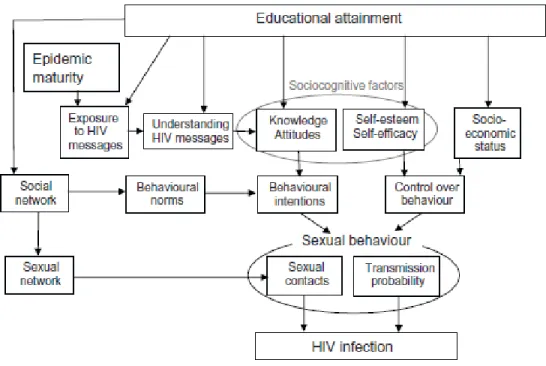
Jukes et al highlight the pathways through which education affects HIV risk (Figure 2.1). Education
may alter the knowledge, attitudes, and perceived control of sexual behavior and HIV prevention, the
social and sexual networks to which individuals are exposed, and subsequent socioeconomic status
(68). A systematic review of findings from sub-Saharan Africa suggest that in later stages of
epidemics, when awareness of mechanisms of HIV transmission and prevention were more
widespread, more educated individuals had a lower risk of infection, while inversely, in some
12
study in the United States, having less than a high school education was highly predictive of new HIV
infections (70). Data are largely lacking that quantify the relationship between education and HIV
status in Latin America and the Caribbean, but a combined analysis of data from Demographic and
Health Surveys across eight countries in the region suggested that less education was associated
with earlier sexual debut and higher rates of sexual violence, both of which increase HIV risk (71).
Figure 2.1. Pathways for the effect of educational attainment on HIV infection
(From Jukes et al, (68))
Poverty and Unemployment
Poverty reduces access to health services, including testing and treatment for STIs that may increase
the risk of HIV infection (44). Particularly among women, having low or no income may increase
exposure to higher-risk sexual encounters, through engagement in transactional or survival sex,
diminished power within partnerships to negotiate condom use, and increased risk of intimate partner
violence or sexual violence (44,51,72). Though difficult to separate its effects from poverty,
13
(47,73), engagement in transactional sex (73), and increased sexual activity due to lack of other
recreational outlets (73,74). In the United States, household poverty was associated with individual
HIV infection (70), while the concentration of poverty and unemployment was associated with HIV
incidence in an ecological analysis of 80 cities (75). Recent research underscores that socioeconomic
inequality may be an even more salient predictor of HIV infection than individual or area-level
measures of income, education, and employment alone (51,71,75).
Discrimination
A recent meta-analysis found that perceived discrimination was associated with worse physical and
mental health, a decrease in healthy behaviors, and an increase in unhealthy behaviors (76).
Discrimination’s effect on physical health may be mediated by post-traumatic stress, changes in
immune and inflammatory responses, along with altered health-related behaviors (76–81). At the
population level, racial discrimination may increase HIV/STI vulnerability through the segregation of
communities into social networks in which poverty is more abundant, and sexual networks in which
infections are more prevalent (72,82,83). Individual experience of discrimination can lower self-worth
and the perceived control over one’s health (79,84), thus diminishing the likelihood of engaging in
protective behaviors. In African American and Latinos in the United States, experience of racial
discrimination has been linked to unprotected intercourse, a greater number of sexual partners, and
engagement in transactional sex (80,84–87). Discrimination can also result in diminished access to
health services including testing and treatment for HIV/STIs. Garífuna community members have
reported neglect in health care settings when there are non-Garífuna patients that need attending
(48) and a lack of STI diagnostic and treatment resources in village clinics (88); full-scale health
facilities can be difficult to access from the more remote communities and often have long wait times.
3. Innovation of following analyses
Aim 1
While qualitative literature has linked migration and the practice of having multiple or concurrent
14
factors has not been rigorously assessed in the epidemiologic literature. The prevalence of
concurrent partnerships within the Garífuna population remains unmeasured. The high proportion of
multiple partners within the last 30 days (50.4%) among Belizean Garífuna suggests a high proportion
of concurrency (58), but it is unknown whether these partnerships were serial or overlapping. In
ECVC-I, migration among Honduran Garífuna was defined by whether individuals had worked outside
their city or country in the last 12 months (19), but did not incorporate the duration of time away or
information regarding migration of participants’ partners. In that study, the association between
migration and the number of sexual partners or HIV/HSV-2/STI status was not reported, and having
multiple sexual partners was not associated with increased HSV-2 prevalence (19). It is possible that
the high HIV/STI rates and a high frequency of multiple and possibly concurrent partnerships within
Garífuna communities, temporary migration of individuals or their partners may not confer additional
risk of infection. Assessing the HIV/STI risk behavior associated with mobility among the Garífuna will
enhance the specificity of prevention messaging for both migrants and non-migrants in this
population.
Aim 2
The association between HIV/STI status and socioeconomic status or individual experience of
discrimination has not been assessed in a large sample of heterosexual adults in Latin America
outside of the context of commercial sex work. The relationship between labor migration and HIV/STI
has not been well-characterized in the Latin American context, and has not been substantiated with
epidemiologic evidence within the Garífuna population. Research has highlighted the intersecting
effects and sequelae of undereducation, poverty, unemployment, discrimination, and labor migration,
but the individual and joint effects of these factors may differ in the Garífuna context. This study will
allow us not only to identify whether increased prevalence of HIV, HSV-2, and other non-viral STIs
are associated with a number of markers of social disadvantage, but will enable us to determine
whether these effects differ between men and women. Identifying segments of the population with the
highest burden of infection will improve targeting of testing and treatment services in a setting where
15
Chapter III: Methods 1. Data source and study population
The analyses conducted for Aims 1 and 2 utilized data derived from the same study and population;
that study and population will be described here prior to addressing the analytic methods employed
for each individual aim. In 2012 and 2013, the Honduran Ministry of Health conducted the second
survey of sexual behavior and HIV/STI prevalence among key populations in Honduras (ECVC-II),
implemented by TEPHINET Inc. and in collaboration with the CDC Global AIDS Program for Central
America and the Universidad del Valle, Guatemala. The first such surveillance study (ECVC-1) was
conducted in 2006 (19). This second cross-sectional study was conducted in accordance with
national and global recommendations to monitor HIV/STI prevalence and relevant risk behaviors in
order to guide and influence the design, implementation and assessment of national HIV and STI
control programs. Four key populations were sampled separately for this study, including: female sex
workers, men who have sex with men, persons living with HIV/AIDS, and persons identified as
Garífuna. As the sole focus of this work is the Garífuna population in Honduras, the subsequent
description will pertain only to that arm of the parent surveillance study.
Formative research
In 2011, a formative assessment was conducted in order to explore key themes that would be
addressed and the terminology used in the questionnaire that would be administered to the Garífuna
population in ECVC-II. Four focus groups were convened to capture different segments of the
Garífuna population: urban men, urban women, rural men, and rural women (total n=30). Five
in-depth interviews were also conducted with leaders of Garífuna community organizations in Tela and
La Ceiba, two cities with large Garífuna populations. Field work was conducted by technical experts
from the STI/HIV/AIDS Department of the Honduras Ministry of Health, from TEPHINET, Inc, public
16
organization of the town of Corozal. Field staff attended a two-day training workshop prior to
conducting the focus groups and interviews. All individuals provided informed consent prior to
participation, and were audio-recorded during data collection. Interviews were transcribed,
summarized, and coded to identify and ultimately summarize response categories and emergent
themes.
Key findings included the substantial effect migration was perceived to have on the concentration of
HIV within Garífuna communities, and that Garífuna people experienced several types of both social
and institutional discrimination related to their racial/ethnic identity. Additionally, field staff confirmed
the appropriate terminology to use when probing survey participants about different types of sexual
partners (stable/regular; casual; and commercial). These findings were detailed in a final report (48)
that informed the planning and questionnaire finalization for ECVC-II.
Sample design of Garífuna population in ECVC-II
The study population was intended to be a representative sample of the Garífuna population of
Honduras. The intended sample size was 800 participants (400 men and 400 women), with half of the
sample being recruited from urban areas, and half of the sample being recruited from rural Garífuna
communities. The sample size of 800 was designated based on the desired statistical power of being
able to detect a 5% change in key indicators such as HIV prevalence across the entire sample, or an
8% change within the urban or rural subsample. It was anticipated that the study would have the
statistical power to detect a 10% change in key behavioral indicators such as drug use.
The Garífuna population of Honduras was enumerated in a 2001 national census, which indicated
that 84% of the total Garífuna population of Honduras resided in Atlántida, Colón, and Cortés, three
contiguous departments in Northern Honduras along the Caribbean coast. The sampling frame for the
study was thus limited to these three departments. Within the 20 municipalities with the densest
Garífuna populations across these departments, five urban districts and five rural communities were
selected with probability proportional to size of the Garífuna population. In 2012, a second census
17
old and who self-identified as Garífuna. Households were entered into the study sampling frame if
they had at least one Garífuna man or woman residing there; probability of selection into the sample
was proportional to the number of eligible Garífuna adults within the household. Ultimately, the
projected sample included 335 men and 465 women, as proportional to the imbalanced sex ratio in
the Garífuna population captured by the 2001 census (11).
Coordinating and field staff
Study implementation was directed by technical experts of TEPHINET, Inc. and the Universidad del
Valle, Guatemala, with additional managerial and laboratory support from the Honduras Ministry of
Health and CDC. Prior to implementation, a four-day training workshop was held in September 2012.
The workshop took place in La Ceiba, a large city in Honduras with reasonable proximity to most of
the field sites than the capitol, where trainings for the other arms of the study had been held. All field
staff from all sites were strongly encouraged to attend, though some interviewers that were
subsequently hired were trained at their respective study sites as data collection was initiated. Each
site had a designated physician, microbiologist, and interviewers, as well as a nurse and/or
counselor. The workshop reviewed in detail the objectives of the study and the procedures involved.
The entire survey instrument was reviewed with workshop participants, and particular attention was
given to how to assess sexual partnership concurrency. Time was provided for questions and
concerns to be addressed, and for modifications to be made to the study protocol and survey
instrument as necessary. Teams from each site were also given time to rehearse the flow of study
procedures and practice survey administration. The field teams were primarily recruited from the staff
already posted at the study sites as regular clinical staff, but additional personnel were appointed
(such as interviewers) specifically for the purpose of the study. Staff comprised both Garífuna and
non-Garífuna individuals. Given the small size and interconnectedness of some of the Garífuna
communities in which the study was implemented, the importance of obtaining informed consent and
18 Subject recruitment and eligibility
Field staff were provided the name, age and address of each individual selected to participate. Small
teams visited the household of each prospective participant to briefly describe the study and them to
take part. Participants were considered eligible for the study if they were at least 18 years of age,
self-identified as Garífuna, and either lived or regularly visited the area in which they were sampled.
Willing and eligible individuals were given a written invitation to visit the designated study site for that
area, where they would complete all study procedures. If the selected individual was not available at
the time of the visit, the study staff obtained permission from other household residents to make up to
three additional visits to recruit the individual. If the selected individual was again not available or
refused to participate, field staff approached the next household to the right that had at least one
Garífuna person residing there of the same gender as the original recruit.
Data collection procedures
Data collection occurred at seven public health centers that were situated near or within the
communities and neighborhoods sampled in the study. The sites were generally well-known by the
local population, and in some cases were the sole health facility in the area. All study procedures
were conducted in Spanish. Previous work has demonstrated that while the Garífuna maintain an
indigenous language, Spanish is universally spoken and its exclusive use would not undermine the
representativeness of the study population.
Upon arrival to the study site, a staff member would review the informed consent form and obtain
written consent. The staff nurse or counselor would then administer HIV pre-test counseling, after
which a trained professional (often the physician or microbiologist/laboratory scientist) would collect a
serum sample to conduct a rapid HIV test and other diagnostic tests (described below). A rapid
syphilis test was also conducted using serum of women who reported they were pregnant. An
interviewer, counselor or other trained staff member would then initiate the survey administration in a
19
Following the interview, the participant would receive a clinical pelvic/genital examination from the
staff physician, who would also record a brief medical history in regards to current symptoms of STIs.
Male participants then provided a urine sample, while female participants provided a vaginal swab
sample collected by clinical study staff. Participants who presented with a history or symptoms of one
or more STIs were provided a prescription or treatment, based on national guidelines for syndromic
management of the infection(s) in question. Participants were also given a small card with their study
identification number and the expected time frame in which they could return to the study site to claim
their final STI results. Upon completion of the clinical examination, subjects then returned to the
nurse/counselor to receive the results of their HIV test (and syphilis rapid test, when applicable) as
well as post-test counseling. Participants receiving a positive HIV test result were referred to a local
health center for follow-up and to receive antiretroviral therapy as indicated per national guidelines.
Subjects completing the survey and/or providing biological specimens were given a small gift (a
recharge card for one of the major national cellular telephone companies, and a purse or shoulder
bag) valued around $4 USD in compensation for their time and cost of transport. The data collection
period ran from September-December 2012.
Survey Instrument
The survey instrument addressed participant sociodemographic characteristics; recent migration
history; drug and alcohol use; sexual history and behavior; HIV/STI knowledge, attitudes and
practices; and experience of discrimination as a member of the Garífuna community. The introductory
section of the survey (registration of participant identification code; verification of eligibility;
sociodemographic characteristics; and migration history) was administered by the staff member, after
which willing subjects with sufficient literacy self-administered the remainder of the questionnaire.
Subjects who self-administered the questionnaire were instructed to notify the staff member when
they arrived at the survey section regarding concurrent partnerships, which was to be administered by
the staff member. This was done to help increase the proportion of complete responses, given the
documented difficulty in obtaining accurate data on the dates of first and last sex with recent partners
20
concurrent partnerships from female sex workers in an earlier round of study implementation, even in
the context of a high number of recent sexual partnerships. However, the interviewer was often
crucial in prompting recall of specific dates of sexual contact. Questionnaire responses were recorded
either on electronic tablets, or on paper. If the participant chose to self-administer the majority of the
interview, the interviewer provided a tutorial on how to enter responses electronically or on paper, and
remained in the same private area as the participant for the duration of the interview in case
additional assistance was needed. Paper surveys were subsequently entered into the electronic
tablet by study staff. All surveys stored on tablets were then wirelessly uploaded into a central
database, after which data were reviewed and cleaned by TEPHINET technical staff.
Diagnostic tests
Specimens were collected to test for the following infections: HIV; HSV-2; Syphilis (T. pallidum);
Chlamydia (Chlamydia trachomatis); gonorrhea (N. gonorrhoeae); trichomoniasis (T. vaginalis);
Mycoplasma genitalium; and bacterial vaginosis. Details regarding bacterial vaginosis testing,
estimation of HIV incidence, and HIV genotyping have been omitted as they are not included in the
analysis. Details regarding specific assays used, laboratory sites and quality control sites can be
found in Table 3.1. Both serum and urogenital specimens were re-tested at the National Reference
Laboratory of Honduras and/or at CDC-Atlanta for quality control.
Ethical considerations
All study procedures were approved by the Biomedical Research Ethics Committee of the National
Autonomous University of Honduras, and the statistical analyses described in this dissertation were
approved by the Office of Human Research Ethics at the University of North Carolina at Chapel Hill.
In order to protect confidentiality, neither participants’ names nor personal identifying information
were attached to any of the survey forms or biological samples. All forms and samples were
21
2. Analytic methods common to Aims 1 and 2
Analytic sample
Of the 800 participants (335 men and 465 women) selected to participate, survey data was collected
from 629 individuals (overall response rate 79%). Of the 171 missing observations, 18 were due to
surveys that were completed but lost before data could be recorded in the master study database. It
is unknown whether the remaining 153 persons selected to participate declined or could not be
located and/or replaced. However, the vast majority of non-responses occurred at two of the most
remote rural sites of Cusuna and Punta Piedra, from which survey data are available for only 16%
and 6% of the proposed sample, respectively. During mid-implementation evaluation, it was found
that these study sites were not consistently equipped with field staff that was willing and able to
recruit and matriculate participants; interviews at these two sites were only conducted on four dates in
the final weeks of the study. In contrast, data were available for 82-100% of the projected samples
from each of the other eight sites. Participation was thus lower than expected in rural areas (61%)
and lower among men (69%) compared to women (86%), based on the available survey data.
Analytic methods
All analyses were conducted using Stata 12.1 (90), and employed the svy prefix to adjust parameter
estimates and standard errors to account for the complex sampling design. The weighted results thus
account for the stratification (rural or urban) and clustering (by neighborhood/community sampled) of
the observations. The primary sampling unit was defined as the community or district from which the
participant was selected (n=10), and each sampling unit grouped into either the urban or rural stratum
(n=2). Probability weights were constructed by multiplying the inverse of the total individual probability
of selection by the non-response factor based on the fraction of the expected sample who
participated:
probability weight= (1/[(probability of community selection)*(probability of individual selection)] )*(total
22
such that the probability weights across the 10 sites ranged from 40.7-139.0. These weights were
constructed by the TEPHINET technical staff in consultation with the National Statistics Institute of
Honduras, such that the weighted population estimates of the survey would most accurately reflect
the status of the Garífuna population as measured by the 2001 national census. Unaltered weights
were used in so that analyses would remain consistent and comparable to those conducted by
collaborators in Central America.
The difference in the distributions of parameters between weighted and unweighted data were
typically not substantial, except that the proportion of the sample classified as residing in “rural”
increased in the weighted analysis, which was expected. As expected, confidence intervals widened
and hypothesis tests were less likely to indicate significant differences between groups in the
weighted data due to the decrease in precision produced by the clustered sampling design.
3. Aim 1 Methods
Aim 1 examined the association between temporary migration and the outcomes of 1) multiple sexual partnerships and 2) concurrent sexual partnerships.
Exposure measures
In the survey instrument, participants were asked several questions regarding their mobility in the
prior 12 months, including the following: whether they left their community in the last 12 months;
where they traveled within and outside of Honduras; the cumulative amount of time they spent away
from their community; the frequency and duration of their return trips home; and whether and where
they worked outside of their community. Participants were also asked if their spouse or partner had
worked outside the community where the participant lived in the last 12 months; where they had
worked; the cumulative time spent away; and the frequency and duration of the partner’s return trips.
Questions regarding partner migrant were not restricted to a current partner. We explored the
distribution of each of these measures and noted the poor validity and response rate of the questions
regarding the frequency and duration of trips home. These questions may have been misinterpreted
23
home on a daily basis. Supporting literature was reviewed when choosing the definition of migration
for this aim; previous studies do not use a consistent unit to define migrant or mobile persons (34,91–
93), but several studies assessing the relationship between migration and HIV risk defined migrants
as those who had spent at least one month away from home in the past 12 months (91,94,95). This
was an appropriate measure for this study context, as it was a sufficient amount of time to undertake
both domestic and international travel patterns described in prior research on the Garífuna culture
(9,10,16) and to form sexual partnerships while away from home; but was sensitive enough to
capture shorter-term or seasonal mobility. The definition used allowed for more flexibility in
multivariable regression analyses than had the definition of migrant been restricted to those who
spent more cumulative time away. For this aim, the definition of mobility was not restricted to
labor-related migration, as multiple and/or concurrent partnerships occurring among migrants would not be
restricted to those traveling for work.
The survey question used to define individual migration was “In the last 12 months, how much time
did you spend outside the city or community where you currently live?” The response choices were:
1) I did not leave; 2) Less than one week; 3) Between one week and one month; 4) More than one
month and up to three months; 5) More than three months and up to six months; 6) More than six
months and up to nine months; and 7) More than 9 months. Responses were then grouped into a
dichotomous variable: non-migrants were those who did not leave or spent a maximum of one
month away from their home city or community, whereas migrants were those who spent more than one month away. Partner migration was defined similarly; participant had migrant partners if they reported that a partner spent more than one month away from where the participant
lived in the last 12 months, whereas individuals without migrant partners either had partners who did
not spend more than one month away, or reported not having a partner in the last 12 months. The
change in results when migration was defined by more or less cumulative time was spent away from
24 Outcome measures
Multiple sexual partnerships. Having multiple sexual partnershipswas defined as reporting two
or more sexual partners in the past 12 months. Details regarding recent sexual partnership history were captured in five sections of the survey. Participants were asked in successive sections to
enumerate the number of stable, occasional, and commercial partners they had in the last 12 months,
respectively, with a sexual partner defined as someone with whom the participant engaged in anal or
vaginal sex. Clarifications for what signified “stable,” “casual” and “commercial” partners were
provided in written format or read by the interviewer to prevent double-reporting of the same sexual
partner in multiple sections. Participants were then asked to report whether they had any partners
from whom they received money in exchange for engaging in sexual relations in the past year, and to
provide an average weekly and daily number of partners who provided money in exchange for sex.
While a cumulative number of paying partners in the last 12 months was not collected, only three
participants (<0.5%) reported receiving money for sex. The number of each type of partner was
summed to provide an estimate of the total number of sexual partners in the last year.
This composite measure was then validated against a single item in a subsequent section of the
survey, which asked: “In the last 12 months, in total, with how many people have you had sexual
relations?” For this question, the participant was reminded to include all stable and casual partners
with whom they had anal or vaginal sex in this count, but to restrict inclusion of partners whom they
had paid or received payment from for sexual relations to those persons with whom they had
engaged in transactional sex at least three times in the last 12 months. Thus, this summary item may
have underestimated the total number of recent sexual partners among those who provided or
received money for sex, but this affected only 6 participants (<1% of total sample) and did not result
in misclassification of whether participants had multiple sexual partners. Additional data cleaning and
validation improved consistency between the values of the composite measure and single-item count
25
agreement regarding whether participants had 0-1 sexual partners or 2+ sexual partners in the last 12
months, as defined by Cohen’s kappa statistic (96). For the remaining inconsistencies in number of
sexual partners that would have affected classification of whether the participant did or did not have
multiple sexual partnerships, the value for the single-item question was used. As subjects had already
been prompted to recall different types of partners and the number of each type of partner prior to the
administration of this question, it was expected that this might have been a more comprehensive,
accurate, and straightforward assessment of number of partners. Based on this final count of
participants’ total number of sexual partners in the last 12 months, having multiple sexual
partnerships was defined as reporting 2 or more partners in the last 12 months, while those who
reported having 0-1 partners in the last 12 months did not have multiple sexual partners.
Concurrent sexual partnerships. After reporting their total number of sexual partners in the last 12
months, participants were asked by the interviewer to recall their three most recent sexual partners,
starting with the person with whom they most recently had anal or vaginal sex. For each of these
three most recent partners, participants were asked to provide a number of details, including the
dates of first and last sexual contact with that partner. The participant was encouraged to provide the
exact date, rather than just the month or year of first and last sexual contact with each respective
recent partner. When subjects could not recall the exact date of first or last sex, interviewers were
trained to assist respondents in estimating the date by asking whether the sexual contact in question
occurred before or after holidays, birthdays, etc. Subjects who reported having more than one partner
in the last 12 months were at risk of having concurrent partnerships within that time period. The dates
of first and last sex with each reported partner was individually reviewed for each of the 106
participants who reported at least two sexual partners in the last 12 months. Participants were
26
conservative estimate was chosen as the default outcome definition, the change in results when all
missing observations were defined as concurrent or non-concurrent was explored (Chapter 4).
Statistical Analysis
All analyses were conducted separately by sex. It was expected that the frequency of the exposure
and outcomes would differ in men and women, and that a stratified analysis would allow for a more
thorough description of the migration and sexual behavior patterns of Central American women, for
which data are sparse in the existing public health literature. This also allowed for the evaluation of
the presence of effect measure modification by gender, as it was hypothesized that the magnitude of
association between migration and both outcomes may differ between men and women. No other
variables were considered or evaluated as effect measure modifiers.
A number of variables were evaluated for their potential to confound the relationship between the
exposure and outcomes, including age, education, marital status, rural residence, age at first sex,
having financial dependents, and experiencing forced or transactional sex. The distribution of age
was explored across exposure and outcome groups, and the predicted probabilities of each outcome
were graphed in men and women within 5-year and 10-year age groups. Exponential transformations
of age were also examined. Ultimately, age was incorporated into bivariate analyses and
multivariable models as a binary variable (Age 18-24 vs Age 25+, and Age 18-34 vs Age 35+,
respectively). These age brackets also allowed for greater comparability to national estimates of
sexual behavior (6).
The variables characterizing education, marital status, and having financial dependents were each
defined by evaluating the distribution of a single survey item and collapsing response categories to
create binary variables that were meaningful and maximized statistical efficiency by reducing the risk
of extremely small cell sizes that would hinder multivariable analyses. Rural residence (vs. urban) did
not require any transformation as a variable. The distributions of age at first sex and its variations
27
multivariable models as a binary variable. I used a cutpoint of the median age at first sex for men
(17+ versus 16 and under) and women (18+ versus 17 and under) based on recent national data (6).
Crude and adjusted prevalence ratios were estimated using binomial regression models with a
Poisson distribution. Full models began included all potential confounders that were significantly
associated with the exposure, and with the outcome among the unexposed at a level of p<0.10, or
that were strong predictors of the outcome (p<0.10 or OR≥2.0 or ≤0.5). In order to maximize the
precision of effect estimates, covariates were successively dropped from the regression model if
doing so did not result in more than a ten percent change in the main effect estimate or increase the
standard error corresponding to that estimate.
4. Aim 2 Methods
Aim 2 examined the association between social disadvantage and HIV/STI status among Garífuna men and women. To this end, the association between six exposures (education; unemployment; income or financial support; individual labor migration; partner labor migration; and experience of discrimination) and three biological outcomes (HIV infection; HSV-2 infection; non-viral sexually transmitted infection) was assessed.
Exposure measures
Socioeconomic status was measured by three separate indicators: education, employment, and
access to income.
In the study questionnaire, education was assessed by a single question: “What was the last level of
education that you finished?” The response choices were as follows: 1) I did not attend school 2)
Primary school incomplete 3) Primary school complete 4) Secondary school incomplete 5) Secondary
school complete 6) University incomplete 7) University complete. The distribution of responses was
examined; less than 10 percent of respondents fell into the extreme categories of not attending
school or attending some university, while roughly equal proportions attended some or all of primary
school, or some or all of secondary school. Different categorizations of education were explored as