Jessica S. Powell
A dissertation submitted to the faculty of the University of North Carolina at Chapel Hill in partial fulfillment of the requirements for the degree of Doctor of Philosophy in the School of Education.
Chapel Hill 2013
Approved by: George Noblit
Cheryl Mason Bolick
Madeleine Grumet
Kristal Moore Clemons
iii ABSTRACT
JESSICA S. POWELL: "You Don't Just Stay in One Place" Culture, Curriculum, and Change
(Under the direction of Professor George Noblit)
iv ~For Eliza~
&
v
ACKNOWLEDGEMENTS
The journey to complete this dissertation was supported by many important people. First, I am eternally grateful to my participants, the Cooper and Jordan families, who opened their hearts, minds, and homes to me. Without their support this dissertation would not have been possible.
I am so fortunate to have had such a strong and dedicated doctoral advising committee. Professor Rebecca New, thank you for your warmth, advice, and commitment to supporting my evolving research over the years. You have always been an advocate for my success. Professor Cheryl Mason Bolick, I am so grateful for your words of wisdom shared throughout my studies and for your support in strengthening my practice as a teacher educator. Professor Kristal Moore Clemons, I feel so fortunate to have met you in our Teacher Education course years ago. The ways in which you integrate your
scholarship with your service to the community has always been an inspiration. Professor Madeleine Grumet, thank you for consistently challenging me to become a stronger thinker, writer, and woman. Your thoughtful feedback provided me with invaluable encouragement and motivation. And Professor George Noblit, I am honored to have had the opportunity to work with you over the years. Thank you for pushing me to be a more thoughtful critical scholar and educator.
vi
To my PhD cohort and friends, I am so fortunate to have met and studied with all of you. The ways in which we challenged one another with genuine warmth and love will always be appreciated
To Mayra De La Torre, we are so lucky to have found you. I could not have completed this dissertation without the comfort you provided. Cuidaste a nuestra hija, Eliza, con cariño y amor como si fuera la tuya. Te estaré eternamente agradecida. You cared for our daughter, Eliza, with the warmth and love as if she you were your own. I am eternally grateful.
And finally, to my family. It is all of you to which I owe and dedicate this accomplishment.
To my grandparents: thank you for your constant love, for instilling a deep connection to my past and future, and for all your stories that have shaped me.
To my sister: your unmatched creativity compels me to constantly search my soul. To my brother: your tough love and long nights revising my graduate school application under the candlelight of La Lanterna, pushed me to achieve this dream.
To my mom and dad: thank you for always encouraging me to find my strength and for a love that words fail to capture. Through you I have learned the value of family and the meaning of limitless love.
To my daughter, Eliza: you have always been with me, long before you were born. Your curious gaze skyward always reminds me to notice, and to look up.
vii
viii
TABLE OF CONTENTS
LIST OF FIGURES...xi
LIST OF TABLES...ii
I. MOVING STORIES: TURNING TOWARD THE PHENOMENON Introduction ...1
Overview of Study...4
Guiding Questions ...8
Conceptual Framework ...8
Significance ...18
Dissertation Organization ...21
II. TURNING TOWARD THE LITERATURE: SPEAKING TO AND AGAINST DISCOURSES ON RACE AND EDUCATION Introduction...24
Segregated Schools, Education, and Desegregation ...25
African American Family Involvement in Education...40
Conclusions ...53
III. MOVING OTHER PEOPLE'S STORIES: A POSTCRITICAL METHOD OF INQUIRY Your Story, My Story, Our Story ...55
ix
Introductions ...72
Geopolitical Context ...78
IV. EACH MOVE WAS AN UPWARD MOVE: JORDAN FAMILY NARRATIVES Moving Toward ...82
Staying Away...91
Representation...99
Staying Together...102
Education and Intergenerational Investment ...110
V. BE MORE THAN WHAT I AM: COOPER FAMILY NARRATIVES Moving Toward ...119
Staying Away ...124
Staying Together...131
Representation ...135
Education and Intergenerational Investment ...138
VI. BECOMING THROUGH MOBILITY: INTERGENERATIONAL FAMILY PEDAGOGY AND COMMUNITY CULTURAL WEALTH Introduction...148
Thematic Analysis...151
Community Cultural Wealth ...180
Familial and Generational Comparison ...188
x
VII. MOVING ON: CONTRADICTIONS, CONCLUSIONS, AND (IM)POSSIBILITIES
Writing Into the Contradictions...195
Complicating the Narratives...200
Implications...207
Conclusion & (Im)Possibilities...210
APPENDIX...212
xi
LIST OF FIGURES
Figure 1. It Takes a Village...23
Figure 2. Jordan Family Tree...81
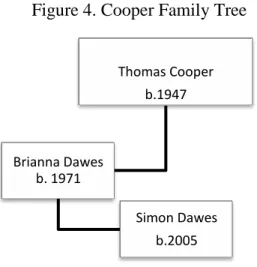
Figure 3. Cooper Family Tree...119
xii
LIST OF TABLES
"You Don't Just Stay in One Place": The Intergenerational Pedagogy of Two African American Families in the South
CHAPTER 1
Moving Stories: Turning Toward the Phenomenon
“What the map cuts up the story cuts across.” (De Certeau, 1984, p.129) In my family, my father is the storyteller. In those moments when his mind returns to a faraway place, his eyebrows raise and a smile carves his cheek as he asks, "Have I told you about that time...?" The accurate answer to that that question is almost always, "Yes." I've heard it many times before. But I always, without hesitation, answer "no." It's not that I'm trying to humor him or condescend to an aging mind. Rather, I answer "no" and relish this new moment of an old story as his aging mind, rich with (hi)stories, forms and transforms memories from old to new and back again. Each time it sounds different and feels different. Sometimes I ask new questions and discover that just when I thought I knew the whole story, I learn of new back-stories or trivial details. And other times I simply listen and watch him perform his memories with an embodied connection to his past, present, and future. The roots of this dissertation were tilled decades ago, as a young, Jewish New Yorker growing up in a house of stories. Although my family storytelling tradition is different in many ways from the storytelling of the participants in this study, I attempt to be mindful of my own experiences, histories, and expectations every step I take along this ethnographic path.
2
participants' embodied histories through story. Then I return inward again to examine my positionality and the interaction of my histories with those of my participants that emerged through our storysharing encounters.
This notion of movement helps to conceptualize the ways in which our histories and lived experiences are moved by the stories we share. Ana Tsing (2005) describes
movement as threefold: changes in position or location, an emotional response such as desire or aversion, and an alliance of individuals working toward a political, social, or artistic aim. In this inquiry of the moving stories of two African American families in the South, the concept of movement takes all three of these forms. First, their stories move across time and place as they are shared and transformed across generations as well as re-presented by the researcher in the form of this dissertation. Second, through listening and retelling their stories, feelings such as nostalgia, frustration, and hope were evoked by participants, the researcher, and perhaps now the readers of this work. And third, their stories are narratives of movement, addressing the shifts and changes families made to provide better opportunities for subsequent generations. And although the families are not participating in political movements per se, their moves, choices, and values shared across generations are connected to the socio-political context within which they live and
represent family members working toward a common aim: intergenerational social and educational mobility.
3
same story has always been changing, for things that do not shift and grow cannot continue to circulate (1989 p. 123).” In this dissertation, I conceptualize stories as fluid, ephemeral, and dialogical performative encounters. The stories shared across generations are rich with cultural, political, historical and temporal contexts, performing cultural iterations while they transform and create new histories and possibilities. This study moves beyond simply exploring the memories of African American families, but asks “whose are they, where do they come from, and how do they operate in history, especially insofar as they cultivate the subjects of history (Pollock, 1998 p.19)?” This study approaches oral histories as historical actions, not just reflecting on history, but making it.
Throughout this dissertation, the use of the term stories should be interpreted as (hi)stories. History, when distinct from story, becomes an accumulation of facts in linear form with an emphasis on Truth (Minh-Ha, 1989). However, history that is contingent on our stories reflects truth as local and interpretive. Minh Hah writes that the earliest known stories were memories “transmitted from mouth to ear, body to body, hand to hand (p. 121).” This perception of a story draws on the notion of embodied experiences. While history aims to inform us as to what happened at a particular time and location, stories allow us to experience events sensually and ephemerally in unspecified time and place (Minh-Ha, 1989). (Hi)stories can be defined as the interpretive, embodied, and local experiences that reflect an accumulation of our and other’s experiences, invoking our pasts, presents, and futures.
4
2005). Emerging out of the phenomenological traditions of Edmond Husserl and Martin Heidegger as well as the critical pedagogy of Paulo Freire, historicity engages the everyday interactions of individuals as spaces where histories manifest through agency and action (De Lessovoy, 2007; Freire, 2005; Hirsch & Stewart, 200). Della Pollock (1998), in her work on performance and history, explains, “[I]n historicity, the body practices history ”(p.4). In this dissertation, I explore how the stories shared across generations embody history in action, and how this living history speaks to the white-stream political discourse on families in education.
Overview of the study: A Postcritical Ethnography
We must have moved four times. But each time, it was an upward move. Now they couldn't understand it then, but I had to put them at ease to say that each move is a better move. You don't just stay in one place. Not when you can do better. So you have to move. And each move has been an upward move. That's just how it is. (Sheryl Jordan)
I want my kids, my grandkids, to be more than what I am. I want those grandkids to continue to do well in school, respect their elders, behave...Be what you want to be. (Thomas Cooper)
[Our teachers] weren't scared to go into the housing project, they weren't afraid to say, "I'll take you home, it's dark." My class growing up may have been the last branch of that tree. So, that has broken. (Melissa Jordan)
This dissertation shares the stories of the Jordan and Cooper families1, two African American families living in Parrish City, a medium sized city in the southeastern United States with a particularly complex history of Black mobility, destructive urban renewal, and community resistance. In this study, I engage family stories to understand the varied histories of Parrish City that are embodied in the everyday lives of its residents. Although this study is focused on local experiences, it also allows us to understand the “broader
1 Pseudonyms are used for all people and places in this study to protect the anonymity of the
5
historical currents of our society and world (Butchart, 1986, p.5).” While the experiences of those living in Parrish City are in many ways unique, they also reflect patterns of race and family-school dynamics evident in our culture and society in general. Further, studying local may generate ideas and questions that can be further investigated in other
communities. Finally, the deeply historical understandings of family and education are played out locally, in schools, neighborhoods, and homes. In this sense, all action is local. This is the scene where families must negotiate with meanings prescribed in educational policy.
I have chosen to approach this study as a postcritical ethnography because I believe it is my obligation to engage in critique not only of institutional and societal structures of power and privilege, but also of myself and the complications I bring to the entire research process. Postcritical ethnography, as proposed by Noblit, Flores, & Murillo, Jr. (2004), problematizes reflexivity, positionality, objectivity, and representation by requiring a critique of both the researcher and the social structures being scrutinized. Postcritical ethnography moves beyond critiques of grand narratives and structures of power and prompts researchers to question their relationship to that which they study and to re-imagine methods of representation that honor the interpretive nature of this research. A more thorough discussion of my positionality and the challenges of this study will be discussed further in the chapters to follow.
Each of the two families included three participants ranging from six to seventy years old. Over a nine month period, I met with the first and second generation
6
stories. After completion of the interviews I transcribed and coded each transcript through an iterative analysis process: coding, rethinking, rereading, and coding again. Using Atlas TI, narratives were analyzed cross-sectionally as well as across generations. One major narrative, or overarching storyline, emerged across both families that became the focus of thematic coding: the narrative of social and educational mobility shared across generations through an intergenerational family pedagogy. The following five themes, which emerged from the analysis, will be the subject of discussion in chapter five of this dissertation: Moving Toward, Staying Away, Staying Together, Representation, Education and Intergenerational Investment. The aforementioned themes will show how an
intergenerational family pedagogy enabled these two families to navigate de jure and de facto segregated communities in hopes for a better future for themselves, their children, and the generations to follow. To be clear, this navigation toward educational and social mobility was not in spite of segregation. It was, as their stories suggest, because of it.
The family narratives represented in this dissertation reveal a strong cultural capital that was evident among the families and their communities growing up in the Jim Crow South and persisted through generations. In this dissertation, I argue that the family narratives describe an intergenerational family pedagogy shared among their families, within largely segregated communities, that protected them from some of the oppressive conditions many desegregated schools and communities faced. Growing up in
7
years post Brown v Board of Education (1954), the families' narratives reveal a strong criticism of contemporary public schools, especially those within de facto segregated neighborhoods. The stories expose a shift when segregated education (either de jure or de facto) became segregated schooling and was no longer a suitable option for their children and grandchildren.
Mwalimu Shujaa (1994) provides an important framework for the families' critique, in delineating a distinction between schooling and education. By distinguishing between schooling and education, Shujaa’s theory provides a new angle for understanding African American family involvement in education. Schooling can be defined as, “…[A] process intended to perpetuate and maintain society’s existing power relations and the institutional structures that support those arrangements (p. 15).” In the case of schooling in the United States, the epistemology and values that are transmitted are those held by the dominant class, i.e. white Anglo-Saxon Protestants. Education, on the other hand, is defined by Shujaa as:
[T]he process of transmitting from one generation to the next knowledge of the values, aesthetics, spiritual beliefs, and all things that give a particular cultural orientation its uniqueness. Every cultural group must provide for this transmission process or it will cease to exist. (p.15)
8 experiences in the home and community.
Guiding Questions
A thorough study of the literature on parent involvement in education as well as the rich historiography of school segregation and desegregation has led me to the following broad question: What are the stories of schooling, education, segregation and
desegregation across three generations within two African American families and how might these experiences speak to the contemporary view of family-school relationships? This dissertation hopes to respond to this question by exploring the interconnectedness of memory and history embodied in the Cooper and Jordan family stories of their everyday lives. Stemming from the above broad question, the following research questions will guide this inquiry:
1. What are the stories of segregation, desegregation, schooling, and education that are shared across generations within the family?
2. What are the continuities or discontinuities of these stories as they are represented across generations?
3 . How do the stories perform a critique (or not) of the dominant discourse and/or counter narratives of African American families and their
relationship to education?
4. How do these stories perform a critique (or not) of contemporary schooling and education?
Conceptual Framework-Mobility, Intergenerational Family Pedagogy, and Cultural Wealth
“We reconceptualize the ways we know the world not to update our abstractions, but to confirm Sartre’s conviction that to name something is to change the world. Thus to reconceptualize is to reform. (Grumet, 1992, p.28)”
9
American family-school relationships and historical narratives/counternarratives of African American experiences with segregation and desegregation. This postcritical ethnography intends to bridge these two bodies of research with an exploration of cross-generational familial (hi)stories. But more intimately, my own prior experiences as a white, first grade teacher in a de facto segregated school community furthered my belief that a deeper inquiry into the varied educational experiences of families of color must come from a strength based lens. To this end, this study explores the Copper and Jordan family stories to better understand the moves, choices, and messages that are shared across generations, which enabled them to navigate systems of inequality and institutionalized racism. As a white researcher working with African American participants, it is important to note that I do not see this study as a vehicle to amplify their otherwise silenced or powerless voices. I approach this project as an opportunity to engage with voices that are already enacting a family pedagogy of power and praxis with hopes of strengthening and texturizing our own understandings of African American educational experiences in a raced society. The stories shared in this dissertation reveal an intergenerational family pedagogy that speak against deficit theories prominent in studies on African American social mobility, historically segregated communities, and family involvement in education.
10
engaged by families battling oppression"(p.51). The families in Hughes' study embodied an Oppressed Family Pedagogy by first recognizing their struggle, then developing discursive strategies to combat the structures of power and oppression that operate in their communities. Through this oppressed family pedagogy families passed down messages of resiliency and positivity as well as strategies for accessing systems of support (2006).
Hughes' theorizing of Oppressed Family Pedagogy helped me understand the ways some families of color navigate the struggles of racism and educational inequality in their communities. However, when considering how oppressed family pedagogy applies to my participants in Parrish City , I did not feel comfortable framing and naming the families as oppressed. The Cooper and Jordan families occasionally eluded to their struggles and challenges, but explicitly did not want to focus their narratives on concepts of struggle nor did they identify as oppressed. While I understand that the society in which the families were navigating is fraught with unequal distribution of power and steeped in a history of institutionalized racism, the Coopers and Jordans did not emphasize their relationship to these structures in our interviews. As a white researcher aiming to understand the
meanings the families ascribe to their lives through the narratives they shared, I find that it is more accurate to frame their approach as an intergenerational family pedagogy.
11
Building off of Hughes' and Philipsen's perspectives, intergenerational family pedagogy as demonstrated by the Cooper and Jordan families is moved by processes of hope and friction and contextualized by their memories of the past. While I initially approached this study as an exploration of family pedagogies, after a thorough analysis it became clear that their stories, and more specifically their intergenerational pedagogies, were tied up in narratives of mobility. Thus, in my analysis, I will elaborate on the concept of intergenerational family pedagogy through the theoretical framework of Community Cultural Wealth (Yosso, 2004). This lens provides a language to understand and articulate how the family stories speak to and against larger narratives of social and educational mobility.
Almost four hundred years after the first Africans involuntarily crossed the middle passage, five generations post abolition, and about two generations since the legal end to Jim Crow, African American communities continue to invest in their children a sense of hope and commitment to education as an avenue toward mobility and justice. The
emerging narratives of movement in the families' lives spoke to the larger issues of social and educational mobility among African American families. After an extensive
12
misunderstood my participants' mobility narratives and led me to reconceptualize my analysis.
This reconceptualization pushed me to pay closer attention to the meanings that the participants themselves ascribed to their experiences. For example, the first theme that emerged for me was the trope of moving away. It seemed that families used strategies to move away from their neighborhoods, communities, and schools in hopes for a better, safer place. However, after recognizing that much of the mobility literature focused on individuals escaping poverty, I realized that this notion of escaping did not fit my
participants. In fact, although they sought better opportunities in their lives, their stories of their working class or sharecropping upbringings were largely positive, noting that "they weren't hurting for anything" and that they "didn't know that they were poor." This is not to say that they did not encounter struggle or institutionalized racism, or that there was in fact something that they were moving away from. However, for the purposes of this study, I recognize that I must attend to the meanings the participants make from their lived
experiences, and this was just one example of having to push against my own analysis as I likewise push against the deficit perspectives of African American communities.
Much of the literature on African American mobility, primarily located in fields of economics, public policy, cultural psychology, and sociology focuses on the
intergenerational transmission of status and emphasizes financial capital as a main
13
families, which reveal the complex relationships between families and the institutions they are navigating. There is a paucity of critical analyses exploring the experiences of working class and middle class African American families, particularly through a strength based lens. Many studies also largely focus on the negative effects of poverty on child
development and families living in low income communities, suggesting middle class status as an escape from poverty (Hardaway & McLoyd, 2002). There is a difference between condemning the capitalistic and racialized structures that fuel systems of poverty, and critiquing the experiences of individuals living in poverty; it is the latter which leads to a cultural deprivation model of African American mobility.
Jarrett (1997) addresses the limitations of some studies that explore the prospects of mobility among families living in poverty. She argues that though there are important insights from many of these studies, they fail to capture the processes and experiences that enable certain children and families to become upwardly mobile despite the economic challenges they face. She highlights two major theories in the field of mobility that fail to effectively explore the phenomenon of children and families growing up in low income communities: neighborhood resource theory and collective socialization theory.
soci-14
economic class system fraught with structural inequality and a false meritocracy, where certain forms of capital, valued over others, allow for the transmission of mobility through social classes. He describes three primary contributors to this theory: habitus, capital, and field. Habitus, a set of dispositions such as preferences in food, art, music, and general taste are learned experientially through childhood and into adulthood. These dispositions are directly related to the inheritable resources (capital) individuals utilize to navigate various settings and institutions (known as fields). Cultural capital can manifest in the objectified forms of books, instruments, and technology. It can also manifest in an
embodied state, such as through knowledge, behavior, and dispositions (Bourdieu, 1986). Bourdieu goes on to include various forms of capital which yield economic and social profits depending on the field where they are applied:
Economic capital, which is immediately and directly convertible into money and may be institutionalized in the form of property rights; ...cultural capital, which is convertible...into economic capital and may be institutionalized in the form of educational qualifications; and...social capital, made up of social obligations ('connections'), which is convertible...into economic capital and may be institutionalized in the form of nobility. ( 1986 p.47)
15
(mis)used to fuel cultural deprivation paradigms, particularly evident among studies of low income communities of color.
Lareau and Weininger (2003) provide a critique of the application of Bourdieu's theory of capital in educational research. While cultural capital is largely understood as "highbrow" dispositions and resources, they contend that Bourdieu himself provided a more adaptable and generic description. Laureau and Weininger suggest that cultural capital in educational research can be understood in broad terms as "specialized skills [that] are transmissible across generations, are subject to monopoly, and may yield advantages or profits" (p.598). Likewise, Farkas et al. (1990), described in a study of intergenerational mobility by Roksa and Potter (2011), suggest cultural capital plays out in the field of education where the standards of schools reward certain "skills, habits, and styles" (Farkas et al. 1990, p.27).
16
transmitted in these families create forms of cultural capital that, when activated, are either valued or disvalued by educational institutions.
These broader definitions of cultural capital have been applied to research examining the prospects of mobility among working class and middle class African Americans. Roksa and Potter's (2011) study suggest that the cultural capital conveyed by parenting styles is an important element of the transmission of upward mobility. However, their study consists of the limited understanding of parenting style, defined as participation in elite status cultural activities and concerted cultivation as defined by Laureau (2003), and does not elaborate on the processes working class families engage to provide opportunities for mobility and success for their children.
Recent qualitative studies, however, have explored more deeply the experiences of families who have been historically marginalized by schools and address the family's role in providing opportunities for mobility (Rios-Aguilar et al., 2011; Bettie, 2002;
Dominiguez & Watkins, 2003; Higginbothom & Weber, 1992; Yosso 2005). For example, Rios-Aguilar et al. (2011) elaborate on Moll's (1992) work on Funds of Knowledge which they define as:
Families’ social and labor history, household practices, division of labor, ideas about childrearing, and values about education...[that are] often bartered through social networks with other households, in essence becoming the currency for these exchanges, thus an important aspect of the household economy. (p. 164)
17
and approaches to educational involvement among families of color without neglecting the institutional barriers to the activation of such capital.
Tara Yosso (2005) incorporates a new framework to understanding the relationships and interactions between the funds of knowledge experienced among families of color and the institutions they are navigating. She theorizes Community Cultural Wealth as a
response to the varied ways Bourdeiu's work on cultural capital has been applied to understanding communities of color and their experiences with education. Yosso's theory of Community Cultural Wealth, Moll et al.'s framework for funds of knowledge (1992) and Aguilar et al.'s (2011) integration of capital and funds of knowledge challenge the
dominant perspective that families of color lack cultural capital. Yosso rejects the deficit premise and elaborate on the ways these funds are activated, translated, and valued by educational institutions.
In this study I will engage Yosso's theory of Community Cultural Wealth as a framework to examine the participants' narratives of social and educational mobility. Yosso defines culture as "behaviors and values that are learned, shared, and exhibited by a group of people [as well as] material and nonmaterial productions of a people (p.75)." She goes on to define wealth as the total amount of individual's accumulated assets and
resources. Thus, Yosso defines Community Cultural Wealth as, "An array of knowledge, skills, abilities and contacts possessed and utilized by Communities of Color to survive and resist macro and micro-forms of oppression (2005, p.77)." Informed by Critical Race Theory, particularly by its tenets of centering race and examining the strengths of
18
resistant capital and 6 ) linguistic capital. In my analysis of the family stories I will use five of these forms of capital to understand the processes the Cooper and Jordan families undergo to navigate educational and social structures. Linguistic capital, defined as the multiple languages or language styles used in the home which contribute to intellectual development, is important in the lives of children and families of color. However, this form of capital was not a salient element of the narratives shared by the Cooper and Jordan families, hence, I have chosen to focus on the other five forms of capital in this analysis.
In this dissertation I view intergenerational family pedagogy as a conceptual umbrella to which the capital forms of community cultural wealth contribute. Using this framework, I will illustrate how the an intergenerational family pedagogy and the strengths of the segregated Black communities provided the necessary scaffolding for educational achievement and social mobility. Despite the well documented conditions of many Black segregated school communities (limited resources, unjust funding, and designation of separate and unequal) in this dissertation I will focus on the memories of segregation from the perspective of the Cooper and Jordan families. Contrary to the negative images often portraying the historically segregated communities, their stories remember their segregated schools and neighborhoods as locations of possibility and the spaces where their paths toward mobility took root.
Significance
19
inherently deficient; 3) research on African American upward mobility that fails to explore the complex socio-historical contexts of and meanings families ascribe to mobility; and 4) educational policy informed by the aforementioned research that often fails to consider the perspectives of families of color and their experiences navigating a raced educational system.
Shifting accountability away from policymakers, administrators, and teachers, school policies are placing increased emphasis on parents' role in the academic
achievement of their children. Responding to the scholarship of educational researchers (Booth & Dunn, 1996; Epstein, 1985; 2001; Jeynes, 2005, among others), educational policies proposed over the past ten years, including No Child Left Behind (NCLB) (2003) and the reauthorization of the Elementary and Secondary Education Act (2010), underscore the importance of family involvement in education. In one provocative example in which educational policy defines acceptable forms of parental involvement, NCLB asked schools to require parents to monitor, “attendance, homework completion and television
watching,” as well as “volunteering in their child’s classroom and participating, as appropriate, in decisions relating to the education of their children and positive use of extracurricular time" (U.S. Department of Education, 2001). Consistent with the widely accepted definition addressed in the educational literature, these forms of parental involvement are those commonly attributed to white, middle class families (Auerbach, 2007; Nakagawa, 2000).
20
focuses on the perceived under-involvement of many families of color, in particular Latino/a and African American families (Nakagawa, 2000). Moreover, research on family-school partnerships regularly addresses strategies to increase levels of involvement, but fails to provide a textured narrative of a community’s relationship with schooling over time. These studies subtly position many African American communities as uninvolved, disadvantaged, or problematic. However, Gerardo Lopez (2001) urges scholars to move away from this deficit view of families of color toward reconceptualizing family
involvement through a more culturally responsive lens. Lopez’s study suggests that families who have been disenfranchised by the system of schooling may be involved with their children’s education in ways that are not transparent to, or valued by, many educators.
Heeding Lopez’s call, this dissertation will contribute to: 1) research exploring African American Families relationship to education as socially and historically situated and through a strength based lens; 2) the counternarratives of segregated education that reveal the strengths of these communities ;and 3) the critical studies on social mobility among communities of color where more complex understandings of cultural capital are explored. This dissertation brings a new perspective to the family involvement discourse by arguing that our understandings of family-school partnerships can be strengthened by analyzing families and their relationships to education as historically and contextually situated. Moreover, this study challenges the image of family in policy and practice, which is largely instrumental and ahistorical, by suggesting that families of color have deep histories which they bring to the instrumental demands of educational policy.
21
record local histories, events, and doctrines. The term palimpsest, from ancient Greek, means literally “to scrape again” (Oxford English Dictionary, 2010). The writings on these tablets were scraped off so that new entries could be written, but remnants of the previous passages were evident in ghost-like layers. This metaphor may also eloquently describe how our family (hi)stories are aesthetically situated in our everyday lives. Drawing from the field of architectural archaeology, the palimpsest is a trope to capture the layers of history and iterations evident in any existing structure. Family stories are much like an old building, redesigned and translated for modernity and post-modernity. They provide sensual experiences of time and place, layered so deeply that it’s possible to not even notice how we are embodying the cultural, social, political, and personal histories of our lineages. This dissertation seeks to explore these palimpsest-like stories, not as specters of the past, but rather as breathing performances that inhale and exhale history.
Organization of Dissertation
22
CHAPTER TWO
Turning Toward the Literature: Speaking to and Against Discourses on Race and Education
Figure 1. It Takes A Village
News and Observer (2005)
It was 11:30 in the morning when I walked down the hall and into a small, windowless room. I was surrounded by four walls of white cinderblock, a refrigerator, sink, and bathroom, all exclusively reserved for teachers. The air was saturated with the smell of melting plastic from the laminating machine. I sat down and began to unpack my lunch; with only 15 minutes to eat I had to be quick. As I inhaled my peanut butter and jelly sandwich I looked down and noticed a cartoon (above) from the daily newspaper laid out in the middle of the table with a yellow post-it note beside it that read, “So true!” I took the newspaper clipping, folded it, and slipped it into my pocket.
24
found it necessary to explore the literature on the historical perspectives of African American education, spanning Jim Crow through contemporary society. The majority of research addressing African American family-school relationships neglect to engage these historical contexts or the strengths of communities of color, a gap to which this dissertation speaks.
In this dissertation, I will engage the Cooper and Jordan family stories as they speak to and against educational research and policy. In this chapter I will provide a review of the discourses that the stories speak against as well as those to which the stories
contribute. A more thorough analysis of how these stories respond to these discourses will be addressed in Chapter Six. This discussion will be divided into two broad thematic sections: narratives and counternarratives of segregation and desegregation and narratives and counternarratives of family involvement in education.
It's important to note that the Cooper and Family stories exemplify the patterns and nuances of Black family life in a raced society. Their stories are unique but also at times representative of experiences other families face while navigating their community, educational, and social systems for the benefit of future generations. It's important to recognize that the family narratives are not always clearly delineated into either the counter or master discourses. Rather, at times they respond to and offer critiques of both. While noting that the counter and master narrative dichotomy is not always representative of the Cooper and Jordan family experiences, the following analytical review reflects my process of inquiry into the discourses from which I came to understand the family stories.
25
schooling and families of color. It is important to turn our gaze backward, to the middle of the last century, to better understand how racism permeated not only our systems of
education, but the policies ostensibly aimed to reform them.
Segregated and Desegregated Schooling and Education
Master Narratives of Segregated School
They would not call it slavery, but some other name. Slavery has been fruitful in giving herself names...and it will call itself by yet another name; and you and I and all of us had better wait and see what new form this old monster will assume, in what new skin this old snake will come forth. (Douglass, 1865) Today education is perhaps the most important function of state and local governments…. It is the very foundation of good citizenship. In these days, it is doubtful that any child may reasonably be expected to succeed in life if he [sic] is denied opportunity of education. Such an opportunity, where the state has undertaken to provide it, is a right which must be made available to all on equal terms. We come, then, to the question presented: Does segregation of children in public schools solely on the basis of race, even though the physical facilities and other “tangible” factors may be equal, deprive the children of the minority group of equal educational opportunities? We believe it does.
(Brown v Board Decision, 1954)
An understanding of the master narrative of segregated African American communities is best framed by the supreme court decision that resulted in dismantling them, Brown v. Board of Education (1954). The Brown decision to end de jure
segregation and make public schools the theatre of operation for one of the largest battles against racial injustice in American history strongly reflected the dominant and deficit views of segregated communities of color of the time.
26
white schools offered. Beyond discrepancies in tangible resources, segregated Black schools were portrayed by white politicians, lawmakers, and researchers as culturally bankrupt and unable to provide the necessary opportunities for children to succeed (Morris, 2008). The language of Brown provides insight into the dominant views of schooling and the deleterious outcomes of many desegregated schools:
Today it [education] is the principal instrument in awakening the child to cultural values, in preparing him for later professional training, and in helping him adjust normally to his environment…To separate them (Black children) from others of similar age and qualifications solely because of their race generates a feeling of inferiority as to their status in the community that may affect their hearts and minds in a way unlikely to ever be undone … A sense of inferiority affects the motivation of a child to learn. Segregation with the sanction of the law therefore has a tendency to retard the educational and mental development of Negro children… (Brown v. Board of Education, 1954)
27
an integrated system " (Green, 2004, p. 272). Ellman’s statement alludes to the notion that only Black students experience the detrimental effects caused by segregation. Atkinson (1993) claims that the Brown decision implied that Black children were inferior and dependent upon the presence of whites for social and intellectual development.
Additionally, Ellman’s statement above suggests that the Black schools were substandard and did not motivate children to learn.
Common depictions of Black community schools emphasized substandard
education, highlighted by dilapidated facilities, lack of transportation, high teacher-student ratios, poor attendance, poor behavior, and overcrowding (Siddle Walker, 2000). It is well documented that many segregated schools experienced unequal distribution of resources and funding. Major discrepancies in per pupil spending in many Southern states revealed just how dramatic the unequal distributions of funding were. For example, in Mississippi during the 1940's, 2,120 one room and one teacher school houses existed of which 95% served Black students (Clotfelter, 2004). Likewise, major incongruities in school
equipment, building quality, and class sizes were evident in North Carolina public schools as well as in other Southern states (Clotfelter, 2004; Siddle Walker 1996).
28
who have investigated the quality of segregated Black schools, uncovering a revisionist history that engages memories of strength, racial uplift, and intellect.
Counternarratives of Segregated Education and Desegregation
All our teachers at Booker-T Washington were black women. They were committed to nurturing intellect so that we could become scholars, thinkers and cultural workers--black folks who used our ‘minds.’ We learned early that our devotion to learning, to a life of the mind, was a counter-hegemonic act, a fundamental way to resist every strategy of white racist colonization. Though they did not define or articulate in theoretical terms, my teachers were enacting a revolutionary pedagogy of resistance that was profoundly anti-colonial (hooks, 1994 pp. 2-3).
In the excerpt above from her book Teaching to Transgress (1994), bell hooks affectionately recalls her experiences in a segregated Black school prior to desegregation. This section will explore the counternarratives to the deficit portrayals of Black
community schools through a discussion of two themes: memories of segregated schools and African American perspectives on desegregation.
memories of segregated schools.
Despite the image of segregated Black schools as pathological and segregated Black communities as culturally deprived, the following narratives counter the dominant views that contributed to the Brown decision and its aftermath. Many critical scholars have participated in a revisionist history of Black community schools by providing analyses of oral histories and ethnographic studies on segregated schools prior to desegregation. Thomas Sowell (1972; 1976) helped to shape the early counternarratives of segregated schools. His studies of Black Excellence among segregated Black community high schools and elementary schools recounted memories of the schools as places of rigorous and high standards as well as nurturing support.
29
ethnographic study interrogates the memories of a segregated Black school community in the Jim Crow South. The oral histories reveal a profound dedication among families and teachers to provide a rich education for their children. The findings of Siddle Walker’s case study of the Caswell County Training School (CCTS), which revealed a strong communal support for education, were not anomalous. The goals were to “uplift the Negro race” and develop citizens with “high degree of character" (Siddle Walker, 1996 p. 26). Black parents and other community members contributed labor, materials, transportation, and finances to develop CCTS in Siddle Walker’s study. But the development of this school took decades and required advocacy and agency among the Black community. Community members frequently had to battle the local school board, advocating for resources that were often denied. With limited financial capital, but rich in cultural capital, Black families strived for educational opportunities that were not afforded to them as slaves or descendants of slaves. Resisting the status quo of poor educational facilities and lack of curricular resources, CCTS hired teachers with bachelors or graduate degrees and worked with the community to develop extra-curricular activities and a curriculum that blended the state mandated industrial courses with classical philosophies of education. Many teachers, although not all, incorporated ideas of Black self-reliance.
30
Other studies have revealed similar suggestions, highlighting Black schools as a “pillar of strength” and hope among the Black community (Kelly, 2010; Lee & Slaughter-Defoe, 1995; Morris, 1999; Noblit & Dempsey 1993). These schools were remembered as institutions deeply enmeshed within the community, dependent on families and community members for economic, social, and political support (Noblit & Dempsey, 1993; Siddle Walker, 1996).
Noblit and Dempsey (1996) share recollections of the stature teachers held: "There was prestige. My parents thought preachers were good, but teachers were great" (p.123). A former principal in this study also reflected on the expectations among teachers in the segregated community school, "They wanted their kids to have an understanding of their culture and history, and what they were doing...what they were needing to do" (p.124). Teachers in these segregated community schools were not only postured by prestige, but were also active members of the community, organizing and advocating for better quality schools and resources (Siddle Walker, 2005). Siddle Walker's study of the organizing tradition and resistance among Black educators in Georgia between the years 1878-1938 provided a deeper look at Black teachers as change agents working against structural conditions and policies that attempted to limit the educational opportunities of children of color. This study sheds light on the political lives of Black teachers in the Jim Crow South, suggesting that Black teachers were, in fact, the drivers of the civil rights movement, propelling the resistance forward through tactical organizing and action (Siddle Walker, 2005).
31
curriculum that specifically focused on racial uplift, counternarratives, and strategies for socio-political action (Payne, 1995). Septima Clark and Ella Baker were two of the many influential educators who developed the citizenship curriculum for these schools (Payne, 1995). Freedom Schools were designed not solely for the benefit of education and achievement, but for communal and political solidarity. Unlike CCTS which offered a rich and diverse curriculum, many schools in Mississippi lacked subjects such as foreign language, drama, art, and advanced mathematics (Payne, 1995). In order to provide their communities with comparable experiences to whites, the Freedom Schools incorporated these disciplines into their social justice oriented curriculum. The citizenship curriculum of the Freedom Schools was ideologically related to DuBois’ beliefs of Black self reliance, racial uplift and social reconstruction.
The aforementioned studies support the notion that education rather than schooling often comprised the curriculum and pedagogy of the segregated community classrooms. Fairclough (2000) argues, “[B]lack teachers tilled the soil and planted the seeds of what eventually became a full blown revolt against segregation and discrimination: the civil rights movement" (pp. 67-68). Deep understandings of Black epistemologies and historical perspectives provided fertile opportunity for meaningful education to occur.
perspectives on desegregation.
Given these memories of segregated schools, it seems logical to assume that many Black families, teachers, and administrators would have resisted or at least been skeptical of integration. However, the predominant literature on desegregation highlights resistance to integration solely among the white community. While some Black ideological
32
skeptical, acknowledging the pervasiveness of racism and questioning the panacean quality of integration in a white supremacist society. Many Black activists, including the NAACP, were strong advocates for integration, however, DuBois among other Black activists, educators, and community members expressed apprehension over the movement to desegregate (Faltz & Leake, 1996; Siddle Walker, 1996). For many Black families it was not integration nor segregation that they sought, but a quality education (Faltz and Leake, 1996; Morris 2008). This sentiment echoes DuBois message that is as relevant today as ever:
Theoretically, the Negro needs neither segregated schools nor mixed schools. What he [sic] needs is an education. What he must remember is that there is no magic, either in mixed schools or segregated schools. A mixed school with poor and unsympathetic teachers, with hostile public opinion, and no teaching of truth concerning black folk, is bad. A segregated school with ignorant placeholders, inadequate equipment, poor salaries…is equally bad. Other things being equal, the mixed school is the broader more natural basis for education of all youth…But other things seldom are equal, and in that case Sympathy, Knowledge, and the Truth outweigh all that mixed school can offer. (1935, p.335)
33
integration and the burden it placed on Black children, teachers, and leaders did not go unnoticed and unchallenged by the Black community of Hyde County (Cecelski, 1994).
The counternarratives of the segregated Black schools are important since they challenge the dominant cultural deprivation and deficit models of Black families, teachers, and schools prior to Brown. Moreover, they reveal a strong sense of agency among Black communities whose critique of integration foreshadowed the tenets of Critical Race Theory that were raised decades later. Many families, teachers, and community members
anticipated the challenges that desegregation would bring and the negative impact it would have on their communities long before Critical Legal and Race scholars articulated their critique of the legal proceedings and aftermath of Brown. This dissertation revisits
memories of segregated schooling and education, not only for what those memories tell us about the desegregation era but also what they tell us about contemporary schooling and education. Thus, I will close this section with a brief discussion of the consequences of Brown. For a more thorough analysis of desegregation see (Atkinson,1993; Bell, 2005;Irving & Irvine, 1983; Ladson-Billings, 2004; Morris, 2008).
Frederick Douglass' statement, shared at the beginning of this section, hauntingly anticipates the pervasiveness of racism in our society that maintains its power through shape-shifting social reform: "...[Y]ou and I and all of us had better wait and see what new form this old monster will assume, in what new skin this old snake will come forth." Critical Legal and Race Studies pioneer Derrick Bell (2004), theorizing of the permanence of racism echoes Douglass' caution above. Racism is a permanent fabric of our society, inherent in the paradoxical nature of our nation's political system that values both
34
that paradox and moving away from a system that perpetuates white supremacy. He contends that the racism that allowed slavery, Jim Crow, and other forms of racial
oppression to exist continues to thrive in insidious forms. Permanence of racism refers to racism as “normal science,” the way society typically operates. It is “the common,
everyday experience of most people of color in this country" (Delgado & Stefancic, 2001 p. 7). This perspective elaborates Heidegger’s discussion of the everyday, which provides a method of understanding the human experience as patterned behaviors and motivations “grounded in social processes and framed by historical moments "(Holt, 1995 p. 9). Holt argues that through everydayness, race and the marking of the Other is reproduced, “long after its original historical stimulus-the slave trade and slavery-have faded. It is at this level that seemingly rational and ordinary folk commit irrational and extraordinary acts" (p.7).
35
schools where many were being educated to mixed schools and de facto segregated schools where they were, and continue to be, schooled.
As Bell’s theory on the permanence of racism contends, racism would prevail despite what appeared to be gains in the justice system. White resistance to Brown was strong across the nation, but was particularly potent in the south. Resistance came in the form of state court decisions as well as political leaders and school districts refusing to initiate desegregation, due in large part to the ambiguous language of Brown II: with all deliberate speed (Ladson Billings; Bell; Clotfelter, 2004; Green, 2004). In one jarring editorial in the Mississippi Daily News, published the day after the Brown decision was announced, the author framed desegregation in a violent, near apocalyptical fashion:
Human blood may stain Southern soil in many places because of this decision but the dark red stains of that blood will be on the marble steps of the United States Supreme Court building. White and Negro children in the same schools will lead to miscegenation. Miscegenation leads to mixed marriages and mixed marriages lead to the mongrelization of the human race. (Daily News of
Mississippi, 1954)
Resistance also came in the form of the white flight. According to Brown II, schools were to desegregate with all deliberate speed; however this Supreme Court decision did not effectively take into consideration the grave reality of a backlash. Clotfelter (2004) writes: "Hence, the execution of the policy of desegregation was frustrated, and ultimately blunted, by four factors: apparent white aversion to interracial contact, the multiplicity of means by which whites could sidestep the effects of the policy, the willingness of state and local governments to accommodate white resistance, and the faltering resolve of the prime movers of the policy" (p.8).
36
reform around the mid twentieth century. Southern districts felt confident that many
families of color could not or would not opt to move their children to predominantly white schools, thereby keeping a de facto Jim Crow schooling intact. Sherick Hughes (2005) study revealed the ways some African American families in North Carolina engaged in an Oppressed Family Pedagogy to counteract the freedom of choice programs that attempted to limit their educational opportunities. Hughes' study addresses ways the freedom of choice plan was designed by discursive innovation, the reification and reshaping of words to suggest a new and important policy change. Although Freedom of Choice programs were ruled unconstitutional, contemporary school reform programs continue to use school choice as a means of educational opportunity, but are often limiting to many families in low income communities to whom the realities of choice are not a viable option.
In addition to freedom of choice, the increase of private school enrollment in the south, post Brown, revealed another method of resistance and maintenance of segregated schools. Although the reasons families turn to private schools are often complex,
Clotfelter's (2004) analysis in his text, After Brown: The Rise and Retreat of School
Segregation, revealed a rise of non denominational private school enrollment among white families as implementation of integration was initiated. While segregation within and between schools remains continues to thrive among public schools today, almost sixty years after Brown, many African American families are engaging in educational control and choosing to remove their children from a system of public schooling, in search of a place of education.
37
schools are no longer institutions of white privilege and supremacy, African Americans must assume control over their educational decisions and seek out places of education, such as homeschooling or independent schools. With these moves, their quality of life and educational achievements must match their high expectations while paired with a critique of the oppressive structural conditions which impose barriers to educational opportunity. Shujaa posits that only when parents choose an education that does not reinforce existing power relations nor the dominant European-American ways of knowing, can a new social order ensue. However, he notes that many African American families choose to place their children in independent and private schools for a variety of reasons. Often families choose alternative schooling options that can provide better opportunities for their children, but their choices do not always explicitly refer to society's structural conditions of privilege and oppression. Oftentimes an African American family's choice to resist public schooling is focused on providing an alternative avenue to access the privileges of the existing power relations(Shujaa, 1993).
Based on the aforementioned critique of the Brown decision, it is clear that desegregation alone was not capable of eliminating racism or redistributing power and resources. Because of the permanence of racism in our society, the promise of Brown seems unfulfilled. Despite the good intentions of the Brown decision, the roadmap to integration was flawed. This analysis has shown that the way our society implemented desegregation resulted in the breakdown of the Black community schools, which were the cornerstone of Black solidarity and education. Contemporarily, de facto segregated schools are on the rise in many states and unequal distribution of school resources remains
38
why so many African American youth are alienated by public schools. While some hypotheses attempt to link this alienation to either a cultural mismatch between schools and students or to more widespread social and economic inequalities, our understanding of African American experiences in schools post Brown continues to evolve (Foster, 1994 In Sujaah).
As bell hooks (1994) recognized as a child, the Brown decision did not bring about the educational opportunities anticipated.
When we entered racist, desegregated, white schools we left a world where teachers believed that black children rightly would require political
commitment. Now we were mainly taught by white teachers whose lessons reinforced racist stereotypes. For Black children, education was no longer about the practice of freedom. Realizing this, I lost my love of school. (p. 3) With the abrupt removal of Black teachers and leaders, the strong potential for positive educational experience was lost. African American teachers and administrators held extremely high expectations for their students and served as “indispensible role models" (Green, 2004 p.276). This loss may account, at least partially, for the decline in
achievement among Black students. Desegregation may have negatively impacted students self esteem by placing students in environments fraught with discrimination and unfamiliar curricula (Clotfelter, 2004). With the removal of the Black educators and schools, Black families were disconnected from the Euro-centric schools their children now attended. A shared commitment of resilience, collaboration, and collective struggle was now
diminished by the breakdown of this community. In desegregated schools, Black families often contended with dialect and cultural barriers, segregation within schools (such as tracking), and teachers’ low expectations of students (Fields Smith, 2005).
39
According to Barbara Shircliffe (2001), our memories are not only shaped by our past experiences, but also by the consequences of those experiences, subsequent events, and contemporary state of affairs. The stories we share perform social, historical, and political identities that may act as “artful critique” of the status quo. Just as a performative understanding of history resists objectivity and singular truths, stories embedded in oral accounts may perform commentaries on the past, present, and future. Shircliffe (2001) explores the role of nostalgia in counter narratives of segregated schooling among African Americans. She writes:
…the study of nostalgia, literally defined as “homesickness”— a yearning for something past that is no longer recoverable— allows historians to explore how individuals invest past experiences with meaning and use historical memory as a starting point for social commentary. Through nostalgia we can invest past events and experiences with significance largely informed by our present concerns. Our nostalgia for the past in a sense is an informal way we comment and make sense of history, revealing our responses to and desires for social change (p. 62).
40
Kelly’s premise has prompted me to question why only the counter narratives of segregated schools are labeled as romanticized or nostalgic, as if the dominant collective memory was [T]ruly the way it was. While various perspectives and memories of segregation and desegregation exist, it seems that only those that portray the strengths of the segregated Black community are examined for nostalgic influences. Drawing from the work of Kelly, I approach this dissertation of family histories with the following
understandings: 1) memories do not need be based on direct experience, they can be developed vicariously through other’s memories or texts; 2) memories are embodied and acted upon, not static objects and; 3) there exist a variety of perspectives and memories of the past and no single one should hold authority over another.
In the following section I will address the ways African American families have been involved in their children's education, both before and after Brown. As this review will demonstrate and despite the negative consequences of persistent structural racism, Black families continue to strive for educational success and opportunity, challenging and exploding the barriers to African American mobility that institutionalized racism has attempted to etch in stone.
African American Family Involvement in Education
Family Involvement in Education as Whitestream Discourse
41
structured by the power and privileges of the dominant European-American experiences (Denis, 1997; Grande, 2005). Drawing to the surface how our discourses and actions are raced, in this section I will describe the literature and policies of family involvement that perpetuate whiteness as the norm.
A preponderance of literature on family structures, academic achievement, and family involvement assumes a deficit perspective of families of color (Peters, 1997; Few, 2007; Jones,2007; Dechenes et al, 2003; Nakagawa, 2000; Lopez, 2001). Many studies argue that parental involvement has strong implications for student’s achievement in schools (Jeynes, 2003). However, they are consistently defining family involvement as school and home based in ways that reinforce white middle class values. Therefore, it is not just any form of involvement that is perceived to support achievement in schooling, but rather the specific forms of school valued involvement. Families who are involved with their children’s education in alternative forms are often viewed as uninvolved and uncaring since they are not perceived as offering acceptable forms of capital. In various studies, their homes are seen as places of instability, limited learning, and non- intellectual
experiences. For example, a study by Lee and Burkam (2002) and another by Magnuson et al. (2004) on social background and school readiness examined the family activities of what they term “disadvantaged” minority families. They determined that Black and
42
By reviewing the legislation and trends in school policies, it is evident that educators are increasingly placing high value on the role of parents in their child’s education (Trotman, 2001). Shifting the burden of accountability off the shoulders of teachers and administrators, school policies reveal an ever-increasing parental
responsibility to ensure the academic achievement of their children. Responding to the widely read research on parent involvement in education, in particular Joyce Epstein who has published extensively on the effects of parent involvement on children’s education (1985; 1987; 2001), policy makers have included parent involvement as key elements of school reform programs. In 2000, the Department of Education’s National Education Goals specified as its eighth goal: “Every school will promote partnerships that will increase parental involvement and participation in promoting the social, emotional, and academic growth of children" (Nakagawa, 2000, p.444). Likewise, the No Child Left Behind Act (NCLB), proposed by the Bush administration, required schools to develop a compact with parents that ensured their commitment to supporting their child’s education:
Such compacts shall...describe the ways in which each parent will be responsible for supporting their children’s learning, such as monitoring attendance, homework completion, and television watching; volunteering in their child’s classroom; and participating, as appropriate, in decisions relating to the education of their children and positive use of extracurricular
time…(U.S. Department of Education, 2003)
And more recently, the Obama administration's Reauthorization of the Elementary and Secondary Education Act (2010), continued to echo the same value of family
involvement, although its comprehensive family and community engagement plan did not outline specific demands on parents as did NCLB. Of the importance of family
43
Education, 2010)." This broader statement emphasizes the significance of parent or family involvement in education, but hesitates to define such involvement.
These aims proposed by scholars and policy makers largely assume a standard definition of family involvement that places specific demands on parents and families with regard to their child’s academic achievement. Even President Obama's statement failed to broaden the conception involvement to that of the family rather than solely the parent. This definition of involvement held by many teachers and administrators, as well as many middle class European-American families, reveals various assumptions. It assumes that mother and father are the main caretakers (hence the nomenclature, parent involvement) and that involvement in their child’s education can take three forms: school based support (assisting in the classroom or involvement in school programs), home-based involvement (assisting with homework and other academic activities), and participation in school planning and management teams (PTA) (Epstein, 1987; Green et al, 2007; Hoover Dempsey, 1995; Fantuzzo, Tighe & Childs, 2004; Jeynes,2003; Weissberg et al. 1999). Whitestream definitions of family and home implicitly shape the expectations of family-school relationships that are prominent in the discourse on education and family-schooling (Nakagawa, 2000). The ideal caregiver is viewed as a white, middle class, biological mother whose pedagogical relationship with her child mirrors the dominant values of school and society at large (Jones, 2007). These values include using authoritative and responsive behavior management, providing opportunities for reading and writing at home, completing homework together, and engaging in dialogue that encourages rational decision making and a sense of entitlement (Jones, 2007; Laureau, 2003). Jones (2007) explains: