THE USE OF AN INNOVATIVE, GAME-BASED EDUCATIONAL SIMULATION TO PROMOTE INTERPROFESSIONAL COLLABORATION BETWEEN NURSES AND
WOMEN’S HEALTH PROVIDERS
Morenike A. Kritzer
A project submitted to the faculty at the University of North Carolina at Chapel Hill in partial fulfillment of the requirements for the degree of Doctor of Nursing Practice in the School of
Nursing.
Chapel Hill 2020
ABSTRACT
Morenike Kritzer: The Use of an Innovative, Game-Based Educational Simulation to Promote Interprofessional Collaboration Between Nurses and Women’s Health Providers
(Under the direction of Rhonda Lanning)
Interprofessional collaboration occurs when multiple health workers from different professional backgrounds work together with patients, families, caregivers, and communities to deliver the highest quality of care (World Health Organization [WHO], 2010).
Interprofessional collaboration is important because it leads to better patient outcomes and more efficient use of resources (Bosch et al., 2009; Lemieux-Charles & McGuire, 2006; Zwarenstein, Goldman, & Reeves, 2009). Multiple healthcare associations support national quality and safety goals related to interprofessional collaboration (National Academy of Medicine [NAM], 2011). The primary purpose of this Doctor of Nursing Practice (DNP) project was to promote interprofessional collaboration by creating an evidence-based
feasible intervention with high participant satisfaction. Improvements for future
ACKNOWLEDGEMENTS
TABLE OF CONTENTS
LIST OF TABLES ... ix
LIST OF ABBREVIATIONS ... x
CHAPTER 1: INTRODUCTION ... 1
Problem Statement ... 1
Purpose of the Project ... 3
Significance to Nursing and Healthcare ... 3
CHAPTER 2: REVIEW OF THE LITERATURE ... 5
Literature Search Process ... 5
Characteristics of the Studies ... 5
Sample and Setting Characteristics ... 7
Outcomes Associated with Escape Room Simulations ... 8
CHAPTER 3: CONCEPTUAL MODEL ... 13
CHAPTER 4: METHODS ... 15
Project Design ... 15
Project Site and Population ... 15
Measurements ... 16
Analysis... 19
Implementation Process ... 19
CHAPTER 5: DATA ANALYSIS AND OUTCOMES ... 22
Sample Characteristics ... 22
Implementation Outcomes ... 26
Participant Satisfaction ... 27
CHAPTER 6: DISCUSSION ... 30
Interprofessional Collaboration ... 30
Implementation Outcomes ... 31
Participant Satisfaction ... 31
CHAPTER 7: STRENGTHS AND LIMITATIONS OF DNP PROJECT ... 33
CHAPTER 8: IMPLICATIONS FOR PRACTICE ... 35
CHAPTER 9: SUSTAINABILITY AND DISSEMINATION ... 36
CHAPTER 10: CONCLUSION ... 37
APPENDIX A: A MODEL FOR INTERPROFESSIONAL COLLABORATION ... 39
APPENDIX B: NEEDS ASSESSMENT RESULTS FOR INTERPROFESSIONAL POSTPARTUM HEMORRHAGE SIMULATION ... 40
APPENDIX C: THE INTERPROFESSIONAL COLLABORATIVE COMPETENCY ATTAINMENT SCALE (REVISED) ... 45
APPENDIX D: ACCEPTABILITY OF INTERVENTION MEASURE (AIM), INTERVENTION APPROPRIATENESS MEASURE (IAM), & FEASIBILITY OF INTERVENTION MEASURE ... 46
APPENDIX E: STUDENT SATISFACTION AND SELF-CONFIDENCE IN LEARNING ... 48
APPENDIX F: PROJECT BUDGET ... 49
APPENDIX G: ESCAPE THE PPH GAMEPLAY DESIGN ... 50
APPENDIX H: DEMOGRAPHICS INTAKE SHEET ... 53
LIST OF TABLES
Table 1: ICCAS Results ... 24
Table 2: ICCAS Transition Item Results ... 26
Table 3: AIM, IAM, and FIM Results ... 27
LIST OF ABBREVIATIONS
AACN American Association of Colleges of Nursing
AHEAD Academy for Health Professions Education and Academic Development AIM Acceptability of Intervention Measure
AWHONN Association of Women’s Health, Obstetric and Neonatal Nurses DNP Doctor of Nursing Practice
DRH Duke Regional Hospital
DUHS Duke University Health System FIM Feasibility of Intervention Measure IAM Intervention Appropriateness Measure
ICCAS Interprofessional Collaborative Competency Attainment Survey IP interprofessional
IPEC Interprofessional Education and Care IRB Institutional Review Board
M mean
MIC Model for Interprofessional Collaboration NAM National Academy of Medicine
NLN National League of Nursing OBGYN obstetrics and gynecology PPH postpartum hemorrhage SD standard deviation
SSSC Student Satisfaction and Self-Confidence in Learning UNC-CH University of North Carolina at Chapel Hill
CHAPTER 1: INTRODUCTION
Problem Statement
The WHO (2010) defines interprofessional collaboration as “when multiple health workers from different professional backgrounds work together with patients, families, caregivers, and communities to deliver the highest quality of care” (p. 7). Effective teams are linked to better patient outcomes and more efficient use of resources (Bosch et al., 2009; Lemieux-Charles & McGuire, 2006; Zwarenstein et al., 2009). The NAM (2011) emphasizes the importance of interprofessional collaboration throughout its report, TheFuture of Nursing: Leading Change, Advancing Health. Further, the Joint Commission, the Commission on Collegiate Nursing Education, the National League of Nursing (NLN), and the Association of American Medical Colleges endorse national quality and safety goals related to
interprofessional collaboration (NAM, 2011). The NAM further recommends the promotion of interprofessional education activities through simulation, case studies, and clinical practice (2011).
participated in the simulation and to create a sustainable option for promoting interprofessional collaboration in the future, in both hospital and academic settings.
Informal discussions with stakeholders revealed that postpartum hemorrhage (PPH) is a critical patient complication for which nurses and providers could benefit from a collaborative simulation experience. During informal discussions, staff members, management teams, and leadership teams noted that PPH and interprofessional simulation opportunities are limited at the project site. Although labor and delivery nurses at the project site regularly partake in PPH drills and simulations with women’s health providers (M. Murray, personal communication, March 2019), postpartum nurses at the project site do not participate. Although most PPHs occur during the first 24 hours after delivery, this clinical complication can take place later in the postpartum period (The American College of Obstetricians and Gynecologists’ Committee on Practice Bulletins–Obstetrics, 2017). Since PPH is an important contributor to maternal deaths in the United States (Kacmar, Mhyre, Scavone, Fuller, & Toledo, 2014), stakeholders were interested in opportunities to improve education and collaborative approaches to
managing this obstetric emergency among all staff members and providers.
where people are locked into a room as a group and have to find a way to escape by finding various clues and solving puzzles to unlock the room. More recently, escape rooms have made their way into nursing, medicine, pharmacy, and other health professional education as training opportunities to practice teamwork and collaborative behaviors in safe, low-stakes, and
engaging environments (Zhang et al., 2018).
Purpose of the Project
The primary purpose of this DNP project was to promote interprofessional
collaboration by creating an evidence-based intervention for an interprofessional group of registered nurses, certified nurse midwives, and physicians and measuring effectiveness of the intervention by assessing interprofessional collaboration competency attainment. A secondary purpose was to determine the acceptability, appropriateness, feasibility, reach, and participant satisfaction of the intervention itself.
Significance to Nursing and Healthcare
directly aligned with this practice initiative and provided an opportunity for the DNP student, who served as project leader, to display qualities of leadership and teamwork to foster
CHAPTER 2: REVIEW OF THE LITERATURE
Literature Search Process
Due to the novelty of escape rooms, the search process was relatively direct and concise. Using only the search term “escape room,” four different databases were used to identify applicable articles. A search across the PubMed, CINAHL, Web of Science, and Scopus databases produced 23 entries after duplicates were removed and a title and abstract screening was completed. The next step was a full text screening using exclusion and inclusion criteria. Exclusion criteria were informational pieces that did not include a study design and articles not written in the English language. The inclusion criterion was that the escape room had to be used in a healthcare setting or an academic institution with healthcare professional students. There was not a limit placed on the publication year. After the full text review, 14 articles remained for data extraction.
Characteristics of the Studies
The 14 studies identified for this literature review were published between 2017 and 2019. The articles in this review represented a variety of disciplines in healthcare including nursing, medicine, pharmacy, and other interprofessional teams. All of the 14 studies included in this review were single descriptive or qualitative studies (Adams, Burger, Crawford, & Setter, 2018; Backhouse & Malik, 2019; Brown, Darby, & Coronel, 2019; Cain, 2019; Campanella & Elmore, 2019; Clauson et al., 2019; Eukel, Frenzel, & Cernusca, 2017;
& Jetty, 2019; Styling, Welton, Milijasevic, Peterson, & Sia, 2018; Wu, Wagenschutz, & Hein, 2018). Employing Melnyk and Fineout-Overholt’s hierarchy of evidence model (2018), all of the studies are level VI.
The studies shared many of the same weaknesses and limitations considering they used similar designs. A small or inconsistent sample size was the most frequently noted limitation in the studies reviewed (Adams et al., 2018; Backhouse & Malik, 2019; Brown et al., 2019; Friedrich et al., 2018; Gómez-Urquiza et al., 2019; Jambhekar et al., 2019; Kinio et al., 2019), while the lack of a control group was another weakness (Eukel et al., 2017; Jambhekar et al., 2019; Kinio et al., 2019). None of the 14 studies used an implementation science approach to assess outcomes associated with executing the intervention. By omitting implementation measures, data on acceptability, appropriateness, and feasibility of the intervention were not provided by the studies. Another weakness of the studies was the lack of details about the measurement tools used. The studies employed various surveys to measure intervention outcomes associated with effectiveness and satisfaction, but none of the investigators reported validity or reliability of the tools used in their methods section. One last weakness identified was the minimal diversity of professions represented in the studies. Only two of the studies (Friedrich et al., 2018; Styling et al., 2018) used an interprofessional approach, while the rest recruited participants from the same professional and educational backgrounds.
professions as represented in this DNP project. A final strength was the consistency of the results across the studies despite the various measurement tools used to collect data. All of the studies reported similar findings related to satisfaction, enjoyment, communication, teamwork, and learning among participants.
Sample and Setting Characteristics
There were a total of 976 participants across all but one of the studies included in this review (Adams et al., 2018; Backhouse & Malik, 2019; Brown et al., 2019; Cain, 2019; Clauson et al., 2019; Eukel et al., 2017; Friedrich et al., 2018; Gómez-Urquiza et al., 2019; Gordon et al., 2019; Jambhekar et al., 2019; Kinio et al., 2019; Styling et al., 2018; Wu et al., 2018); the project by Campanella and Elmore (2019) did not specifically mention a sample size. The participants were both pre- and post-licensure and represented various disciplines within healthcare such as nursing (Adams et al., 2018; Brown et al., 2019; Campanella & Elmore, 2019; Gómez-Urquiza et al., 2019), medicine (Backhouse & Malik, 2019; Jambhekar et al., 2019; Kinio et al., 2019; Wu et al., 2018), pharmacy (Cain, 2019; Clauson et al., 2019; Eukel et al., 2017; Gordon et al., 2019), and other interdisciplinary teams (Friedrich et al., 2018; Styling et al., 2018).
Most of the projects and studies were conducted within the US and were affiliated with academic institutions or hospitals (Adams et al., 2018; Backhouse & Malik, 2019; Brown et al., 2019; Cain, 2019; Campanella & Elmore, 2019; Clauson et al., 2019; Eukel et al., 2017;
Outcomes Associated with Escape Room Simulations
Satisfaction, enjoyment, and engagement among participants. The results
concerning participants’ satisfaction, enjoyment, and engagement with an escape room activity as a mode of simulation were overwhelmingly positive. Adams et al. (2018) reported that 100% (n = 46) of experienced nurses and 97% (n = 162) of nurse residents who participated in an escape room based on safety concerning common nursing tasks were very satisfied or satisfied with the quality of the escape room experience. Backhouse and Malik (2019)
collected qualitative information on the medical students who completed their escape room on patient safety, finding that participants described it as “really enjoyable” and “interactive and engaging.” In a study on an escape room intervention with pharmacy students exploring knowledge about human resources, Cain (2019) found that compared to a typical classroom experience, 91% (n = 126) of participants were more engaged in thinking about the problems, and 89% (n = 116) enjoyed the escape room activity more. Nurses preparing for Baby-Friendly designation in a hospital found an escape room learning activity “interactive,” “creative,” “fun,” and “hands on” in a quality improvement project by Campanella and Elmore (2019). Friedrich et al. (2018) created an interprofessional escape room for healthcare students and discovered 78.6% (n = 11) of pilot participants agreed that the experience was enjoyable.
game fun to play (4.67 rating), and did not prefer didactic lectures to the game (1.98 rating). In a study with medical students learning about vascular surgery, Kinio et al. (2019) reported that all of the participants (n = 13) enjoyed the experience and that 53.8% (n = 7) of participants stated they would like to see the escape room format included in the medical curriculum. Wu et al. (2018) used an escape room with medical students and found that on a 5-point scale ranging from 1 = poor, 3 = neutral, to 5 = excellent, 92% (n = 24) of survey respondents reported the activity as excellent (mean 4.92).
Communication, teamwork, and interprofessional collaboration among
participants. Themes concerning communication, teamwork, and interprofessional collaboration in escape rooms were apparent throughout the literature. Brown et al. (2019) conducted an escape room with nursing students to focus on critical thinking while caring for a patient with urosepsis. The investigators found that participants unanimously agreed (n = 9) that the simulation improved their ability to delegate tasks and to work as a team. Cain (2019) reported 93% (n = 129) of the students participating in the escape room he developed agreed with the statement “My team worked collaboratively to solve the problems in this escape room activity,” and 91% (n = 126) agreed “all members of my team played an active role in solving the problems of this escape room activity.” In an escape room designed for pharmacy students to learn about diabetes management, Eukel et al. (2017) discovered participants learned from their peers and engaged with teammates to learn new material. Friedrich et al. (2018) found that an escape room activity promoted teamwork and communication (64.2%, n = 8 in the pilot study; 79.5%, n = 113 in curricular embedded escape room).
results. The researchers found a statistical increase (p < 0.05) in the percentage of students who strongly agreed or agreed with affirmative statements concerning teamwork, communication, and team member contribution after completing the escape room activity. Jambhekar et al. (2019) received positive feedback concerning teamwork and intraprofessional collaboration when surveying the radiology residents who completed their escape room, reporting
agreements with statements such as “The escape room encouraged the use of communication skills” and “This activity encouraged the use of collaboration skills.” The researchers also described qualitative information about their escape room activity with multiple resident responses that endorsed team building. All of the medical students in the study by Kinio et al. (2019) felt that collaboration and proper communication were essential for completing the escape room activity successfully. Styling et al. (2018) reported 100% of the interprofessional team members who participated in their escape room felt that it was great team building activity.
Knowledge, learning, skill development, self-efficacy or confidence, and leadership
among participants. Knowledge, learning, skill development, and leadership were other topics that emerged from studies in this literature review. In the quality improvement project by Adams et al. (2018), the investigators found that 100% (n = 46) of experienced nurses and 91% (n = 152) of nurse residents strongly agreed or agreed that the escape room activity provided an opportunity for them to demonstrate their knowledge, 100% (n = 46) of
reported that 100% of the medical students who participated in their escape room agreed or strongly agreed they gained new knowledge, skills, and insights; furthermore, 100% felt confident or very confident they would be able to apply what they had learned in their future practice. Participants in the escape room created by Brown et al. (2019) unanimously agreed that the simulation contributed to their learning. Campanella and Elmore (2019) evaluated pre-post-test knowledge results on Baby-Friendly practices and found increases ranging from 27% to 35% in test scores for the nurses who completed their escape room activity. While Clauson et al. (2019) did not see an increase in knowledge from pre-assessment to post-assessment when students completed their escape room, the investigators did note that 96% (n = 51) of students felt the exercise improved clinical skills and facilitated learning despite scoring lower on the post-test.
In the study by Eukel et al. (2017), students’ mean score for the post-knowledge assessment, 81%, was statistically significantly higher than students’ mean score for the pre-knowledge assessment, 56%, as revealed by a t-test (p<.01). Gómez-Urquiza et al. (2019) found that nursing students who completed their escape room rated the statement “I
remembered and applied knowledge of the subject during the game” with a mean score of 4.7 on a 5-point Likert-type scale, indicating the intervention promoted knowledge application. The radiology residents in the study by Jambhekar et al. (2019) agreed the escape room simulation promoted retention of information, identification of knowledge gaps, and
58% (n = 15) of students reported using all five leadership competencies (leading self,
CHAPTER 3: CONCEPTUAL MODEL
The Model for Interprofessional Collaboration (MIC), originally developed by Dr. Laura Bronstein, underpinned this DNP project (see Appendix A for a diagram of the MIC). The MIC includes five constructs that constitute interprofessional collaboration:
interdependence, newly created professional activities, flexibility, collective ownership of goals, and reflection on process (Bronstein, Mellin, & Iachini, 2018). Each part of this model corresponds to an aspect of this DNP project. Bronstein et al. (2018) explain interdependence as relying on each other to accomplish goals and tasks; they further explain that in high-quality collaboration, professionals and team members value and maximize each other’s expertise. In this DNP project, nurses and women’s health providers worked together to master the escape room. Since the escape room included multiple puzzles that focus on features of nursing and medicine, the participants had to collaborate and refer to one another in order to be successful. The next construct of the MIC, newly created professional activities, is made up of
organizational developments that occur unexpectedly when high-quality interprofessional collaboration in practiced (Bronstein et al., 2018). It is hopeful that this DNP project will serve as a conduit for the creation of novel professional activities between nurses and women’s health providers.
Flexibility is another component of the MIC, and it involves a small amount of
CHAPTER 4: METHODS
Project Design
The project leader developed, planned, implemented, and evaluated an interprofessional practice initiative in the form of an escape room aimed at registered nurses, OBGYN and family medicine resident and attending physicians, and certified nurse midwives caring for postpartum patients using a program evaluation design. During the month of December 2019, a game-based interprofessional simulation focusing on the management of a PPH was offered to staff. Evaluation components included the use of various reliable and valid tools to assess interprofessional collaboration competency attainment, implementation measures, and
participant satisfaction. The project leader also collected field notes and qualitative data based on participant feedback.
Project Site and Population
The DNP project took place at Duke Regional Hospital (DRH) on the mother-baby/postpartum floor. Fifty registered nurses serve this population, and they are either associate or baccalaureate prepared. They range from new graduate, novice nurses to expert nurses with over 40 years of experience. The four-year OBGYN residency program through Duke University School of Medicine trains eight physicians per class for a total of 32
Certified nurse midwives provide care to low-risk obstetric patients in collaboration with physicians. Attending physicians, certified nurse midwives, and resident physicians work collaboratively together.
The unit has a nurse manager, supervisor, and educator who assisted with the
facilitation of the DNP project. The management team helped with recruitment, and the nurse educator served a role as a simulation facilitator and project committee member. Selection recruitment strategies for the project included voluntary enrollment offered to any registered nurse or women’s health provider who was interested, with no specific exclusion criteria.
At the time of the implementation of the DNP Project, the simulation and
interprofessional collaboration educational services offered on this unit were, and still are, limited. There were no PPH simulations for nurses to complete and no formal opportunities for interprofessional teamwork and relationship building between nurses and women’s health providers. An initial needs assessment sent to registered nurses and OBGYN resident physicians revealed high levels of interest in the intervention proposed for this DNP project (see Appendix B for results of needs assessment).
Measurements
Primary aim measures. In order to measure the primary purpose of this DNP project, the established Interprofessional Collaborative Competency Attainment Survey (ICCAS) was employed. This tool assesses behaviors associated with patient-centered, team-based
collaborative care and has evidence of reliability and validity for measuring self-report retrospective pre and post interprofessional education intervention competency attainment for interprofessional collaborative care (Archibald, Trumpower, & MacDonald, 2014). The ICCAS has 20 items and aligns with six interprofessional core competencies: communication,
conflict management and resolution, and team functioning (Schmitz et al., 2017). All of the items on the ICCAS are positively worded to assess participants’ ability to interprofessionally collaborate, and responses are rated using a five-point, unbalanced, qualitative scale: 1 = poor; 2 = fair; 3 = good; 4 = very good; 5 = excellent (Schmitz et al., 2017).
A “transition item” is included at the conclusion of the revised ICCAS, and Schmitz et al. (2017) state its use as a solitary measure of interprofessional collaboration ability. Schmitz et al. explain this item, separate from the rest of the survey, is also rated on a five-point scale and captures participants’ assessments of how much their ability to collaborate
interprofessionally changed after the intervention (1 = much better now; 2 = somewhat better now; 3 = about the same; 4 = somewhat worse now; and 5 = much worse now). Since this item is not part of the original instrument, it was analyzed separately.
The ICCAS has demonstrated internal consistency at 0.87-0.90 and concurrent validity with Cohen’s d effect sizes of 0.51-0.94 (Schmitz et al., 2017). Intervention participants were asked to complete the survey following the escape room (see Appendix C for ICCAS
instrument).
0.82-0.94), structural validity (Cronbach’s alpha 0.85-0.91), and test retest reliability (Cronbach’s alpha 0.83-0.88). Intervention participants were asked to complete the scales after finishing the escape room (see Appendix D for AIM, IAM, and FIM instruments).
Reach is another outcome that was assessed to evaluate the secondary purpose of the project. Reach is “the absolute number, proportion, and representativeness of individuals who are willing to participate in a given initiative, intervention, or program” (Glasgow et al., 2019). This measured how well access, appropriateness, and awareness of the escape room
intervention were addressed to meet the targeted nurses’ and women’s health providers’ needs and recruit them as participants. This outcome did not use a specific, established tool; rather, the proportion of participants to total people offered the intervention was analyzed.
Qualitative measures. To assess Escape the PPH using qualitative measures, the project leader collected field notes during each session of the simulation. In addition, a brief open-ended survey was sent to participants via email after completing the simulation.
Analysis
Demographic data were reported by measures of central tendency and ranges. The data gathered from the measurement instruments mentioned previously were analyzed using
descriptive statistics. Since the chosen measurement instruments were distributed
post-intervention and employed Likert-type scales, which are ordinal types of measurement, means and standard deviations were calculated. For the ICCAS tool, which uses a retrospective pre- and post-intervention evaluation method, a t-test was carried out to compare the means of the collected data and assess the effectiveness of the intervention. Qualitative data from the online survey were used to provide context and depth to the quantitative data.
Implementation Process
Pre-implementation. Recruitment to the escape room took place in early November 2019 immediately following approval by the Duke Institutional Review Board (IRB) and University of North Carolina at Chapel Hill (UNC-CH) IRB. Emails were sent to the mailing list for registered nurses on the unit, the mailing list for OBGYN and family medicine
designing Escape the PPH, researching and collecting the necessary items for the room, and creating the materials used during the simulation. The project leader covered the costs associated with design of the escape room. Development of the escape room included the project leader’s time and cost of materials and incentives (see Appendix F for project budget). A pilot of Escape the PPH took place the week preceding the actual simulations and was done with DRH nurse educators and the unit supervisor who provided feedback on areas to improve. Nurse and provider participation in the escape room simulation was voluntary.
Implementation. The escape room was held during the second week of December 2019. A total of 19 healthcare professionals including registered nurses, certified nurse
midwives, and physicians participated in Escape the PPH. The participants were split into five separate groups, with each group containing three to five people. Each group took roughly one and a half hours to complete the briefing session, escape room simulation, and debriefing session. The group who completed the escape room the fastest won an Amazon gift card for each member.
The MIC was referenced during implementation of Escape the PPH. The end goal of the simulation was to work together to find all the pieces of the MIC, which were hidden in lock boxes throughout the room. During the briefing session, the project leader explained the MIC and how it related to practice as well as how it pertained to the simulation. A poster of the MIC was placed on the door of the patient room, and the participants found the five pieces of the MIC, which were cutout and laminated, as they worked through the simulation. They then attached the pieces they discovered to a poster of the MIC that had Velcro stickers on it with the corresponding model constructs. Throughout the simulation, participants displayed the five components of the MIC, interdependence, newly created professional activities, flexibility, collective ownership of goals, and reflection on process (Bronstein et al., 2018).
CHAPTER 5: DATA ANALYSIS AND OUTCOMES
Sample Characteristics
There were a total of 19 participants representing various healthcare professions: 3 attending physicians, 3 resident physicians, 3 certified nurse midwives, and 10 registered nurses. Years in practice ranged from 1 to 20 years, with a mean of 7.5 years and a median of 5 years. Years in maternity practice ranged from 1 to 26 years with a mean of 7.1 years and a median of 4 years. Highest levels of education included 3 Associate Degrees in Nursing, 7 Bachelor of Science in Nursing degrees, 3 Master of Science in Nursing degrees, and 6 Doctor of Medicine degrees. A total of 8 people rated themselves as “very confident” in the
management of PPH care. Appendix H shows the demographic sheet used to collect information from the participants.
Interprofessional Collaboration
Field notes collected during sessions of Escape the PPH revealed that the groups who worked together, employed delegation, and displayed values of teamwork finished in quicker times than those who did not. The quieter groups who did not collaborate with each other as much required more hints and completed the escape room slower.
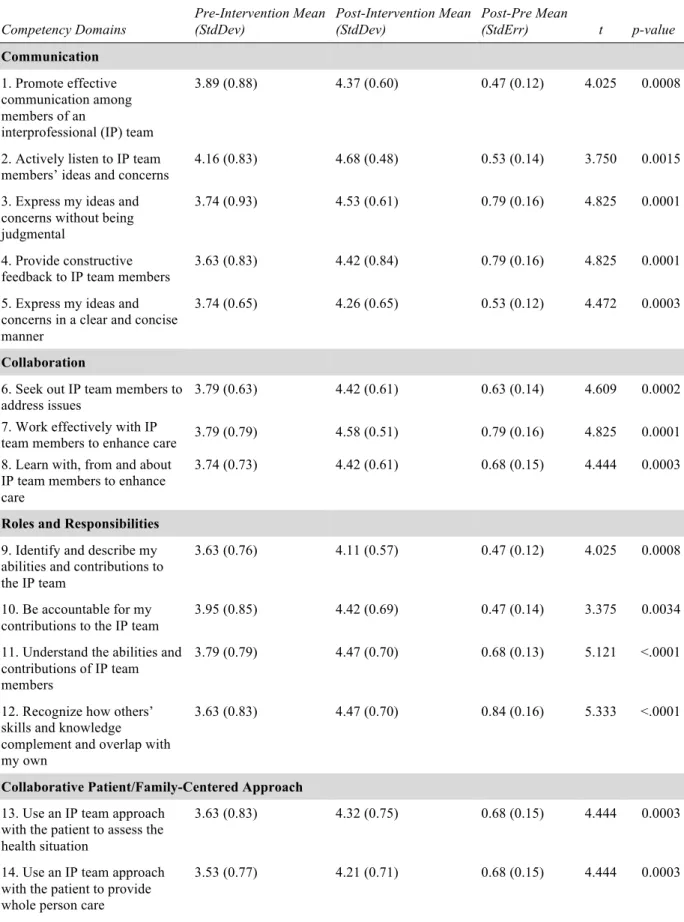
Table 1: ICCAS Results(n = 19). The two prompts were: “before/after participating in the learning activities, I was able to.”
Competency Domains Pre-Intervention Mean (StdDev) Post-Intervention Mean (StdDev) Post-Pre Mean
(StdErr) t p-value
Communication
1. Promote effective communication among members of an
interprofessional (IP) team
3.89 (0.88) 4.37 (0.60) 0.47 (0.12) 4.025 0.0008
2. Actively listen to IP team
members’ ideas and concerns 4.16 (0.83) 4.68 (0.48) 0.53 (0.14) 3.750 0.0015
3. Express my ideas and concerns without being judgmental
3.74 (0.93) 4.53 (0.61) 0.79 (0.16) 4.825 0.0001
4. Provide constructive
feedback to IP team members 3.63 (0.83) 4.42 (0.84) 0.79 (0.16) 4.825 0.0001
5. Express my ideas and concerns in a clear and concise manner
3.74 (0.65) 4.26 (0.65) 0.53 (0.12) 4.472 0.0003
Collaboration
6. Seek out IP team members to
address issues 3.79 (0.63) 4.42 (0.61) 0.63 (0.14) 4.609 0.0002
7. Work effectively with IP
team members to enhance care 3.79 (0.79) 4.58 (0.51) 0.79 (0.16) 4.825 0.0001
8. Learn with, from and about IP team members to enhance care
3.74 (0.73) 4.42 (0.61) 0.68 (0.15) 4.444 0.0003
Roles and Responsibilities
9. Identify and describe my abilities and contributions to the IP team
3.63 (0.76) 4.11 (0.57) 0.47 (0.12) 4.025 0.0008
10. Be accountable for my contributions to the IP team
3.95 (0.85) 4.42 (0.69) 0.47 (0.14) 3.375 0.0034
11. Understand the abilities and contributions of IP team members
3.79 (0.79) 4.47 (0.70) 0.68 (0.13) 5.121 <.0001
12. Recognize how others’ skills and knowledge complement and overlap with my own
3.63 (0.83) 4.47 (0.70) 0.84 (0.16) 5.333 <.0001
Collaborative Patient/Family-Centered Approach
13. Use an IP team approach with the patient to assess the health situation
3.63 (0.83) 4.32 (0.75) 0.68 (0.15) 4.444 0.0003
14. Use an IP team approach with the patient to provide whole person care
Competency Domains Pre-Intervention Mean (StdDev) Post-Intervention Mean (StdDev) Post-Pre Mean
(StdErr) t p-value
15. Include the patient/family in
decision-making 3.79 (0.71) 4.05 (0.78) 0.26 (0.13) 2.041 0.0562
Conflict Management/Resolution
16. Actively listen to the perspectives of IP team members
3.89 (0.74) 4.63 (0.50) 0.74 (0.17) 4.379 0.0004
17. Takes into account the ideas
of IP team members 4.05 (0.85) 4.63 (0.60) 0.58 (0.14) 4.158 0.0006
18. Address team conflict in a
respectful manner 3.63 (0.76) 4.16 (0.96) 0.53 (0.14) 3.750 0.0015
Team Functioning
19. Develop an effective care plan with IP team members
3.89 (0.74) 4.42 (0.69) 0.53 (0.14) 3.750 0.0015
20. Negotiate responsibilities within overlapping scope of practice
3.68 (0.75) 4.42 (0.77) 0.74 (0.13) 5.715 <.0001
Total Collaborative Competency Scores
3.78 (0.63) 4.40 (0.49) 0.62 (0.09) 7.053 <.0001
While all the participants filled out the original section of the ICCAS, only 37% (n = 7) of the escape room participants completed the transition item at the end of the revised
Table 2: ICCAS Transition Item Results (n = 7)
Prompt Mean Standard Deviation
Compared to the time before the learning activities, would you say your ability to
collaborate interprofessionally is…
1.7 0.70
Implementation Outcomes
Implementation outcomes were evaluated using the AIM, IAM, and FIM instruments. Results related to acceptability, appropriateness, and feasibility are displayed in Table 3. All 19 participants returned the survey. Overall, Escape the PPH had high scores related to the
Table 3: AIM, IAM, and FIM Results (n = 19) Scale (Associated
Implementation Measure)
Mean Standard Deviation
AIM (Acceptability) 4.95 0.11
IAM (Appropriateness) 4.85 0.29
FIM (Feasibility) 4.87 0.30
The implementation outcome of reach was evaluated by analyzing the proportion of enrollees to total people offered participation in Escape the PPH. During the month of
November 2019, 217 registered nurses, certified nurse midwives, and physicians affiliated with or employed by DRH were invited by email to participate in Escape the PPH. A final total of 19 people completed the escape room. This provides a proportion of enrollees to people offered participation equating to 0.09 or 9%.
Participant Satisfaction
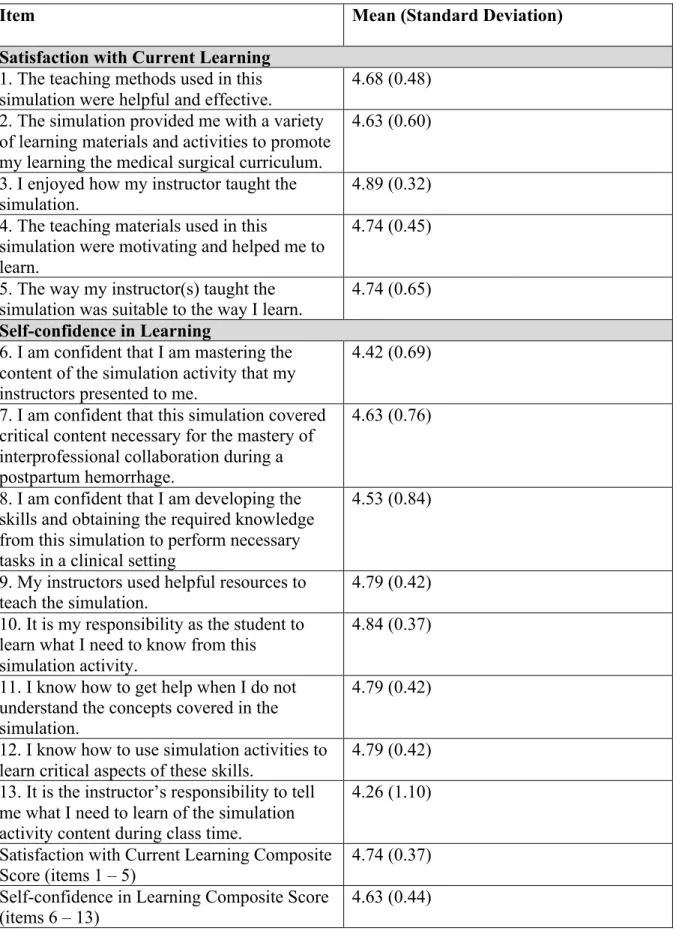
Participant satisfaction was measured using the SSSC, and data related to this instrument are listed in Table 4. All 19 participants returned the survey for a 100% response rate. Overall, the participants reported high levels of satisfaction and self-confidence with
Escape the PPH. The highest rated item in the Satisfaction with Current Learning subscale was “I enjoyed how my instructor taught the simulation” (M = 4.89; SD = 0.32). The highest rated item in the Self-confidence in Learning subscale was “It is my responsibility as the student to learn what I need to know from this simulation activity” (M = 4.84; SD = 0.37). Both of the composite scores for each of the subscales displayed high levels of satisfaction as well.
Open-ended survey responses revealed likes and dislikes regarding Escape the PPH. One participant commented, “The atmosphere for learning was fun and didn't feel
the activity was a brief overview, and I would have loved even more information or practice around managing postpartum hemorrhage. For example, handling some of the equipment (e.g. Bakri), seeing medications (e.g. Pitocin is a drip vs. [misoprostol] is a pill), or reviewing the team steps to order and administer blood products (in other parts of the health care system there are lots of problems with ordering blood products correctly and delays in getting /
Table 4: Student Satisfaction and Self-Confidence Scale Results (n = 19)
Item Mean (Standard Deviation)
Satisfaction with Current Learning
1. The teaching methods used in this simulation were helpful and effective.
4.68 (0.48) 2. The simulation provided me with a variety
of learning materials and activities to promote my learning the medical surgical curriculum.
4.63 (0.60)
3. I enjoyed how my instructor taught the simulation.
4.89 (0.32) 4. The teaching materials used in this
simulation were motivating and helped me to learn.
4.74 (0.45)
5. The way my instructor(s) taught the
simulation was suitable to the way I learn. 4.74 (0.65)
Self-confidence in Learning
6. I am confident that I am mastering the content of the simulation activity that my instructors presented to me.
4.42 (0.69)
7. I am confident that this simulation covered critical content necessary for the mastery of interprofessional collaboration during a postpartum hemorrhage.
4.63 (0.76)
8. I am confident that I am developing the skills and obtaining the required knowledge from this simulation to perform necessary tasks in a clinical setting
4.53 (0.84)
9. My instructors used helpful resources to teach the simulation.
4.79 (0.42) 10. It is my responsibility as the student to
learn what I need to know from this simulation activity.
4.84 (0.37)
11. I know how to get help when I do not understand the concepts covered in the simulation.
4.79 (0.42)
12. I know how to use simulation activities to learn critical aspects of these skills.
4.79 (0.42) 13. It is the instructor’s responsibility to tell
me what I need to learn of the simulation activity content during class time.
4.26 (1.10)
Satisfaction with Current Learning Composite
Score (items 1 – 5) 4.74 (0.37)
CHAPTER 6: DISCUSSION
Interprofessional Collaboration
The primary purpose of this DNP project was to promote interprofessional collaboration by implementing an evidence-based intervention with a group of registered nurses, certified nurse midwives, and physicians and to measure the effectiveness of the
intervention by assessing interprofessional collaboration competency attainment. The results of this project suggested the primary purpose of the project was met as evidenced by a statistically significant increase in interprofessional collaboration competencies measured by the ICCAS. There was only one competency that was not greatly affected by the intervention, “include the patient/family in decision-making.” This item did show an increase in competency; however, it was not statistically significant. There was an effort made by the project leader, who acted as the patient and simulation facilitator, to interact with the participants to promote patient-centered care, but it seems as though this could have been improved as reflected by the results. In addition, participants, possibly due to overlooking it as a final question, did not consistently answer the transition item on the revised ICCAS.
There were limited data on interprofessional collaboration and the use of escape rooms in healthcare settings because most studies involved people from the same profession, with the exception of two studies. Similar to the results of this project, the prior studies found that participants reported that escape rooms promoted teamwork, communication and
Implementation Outcomes
One of the secondary purposes of this DNP project was to determine the acceptability, appropriateness, feasibility, and reach of the escape room intervention. Through the use of various tools and calculations, this secondary purpose of the project was met. The results from the instruments used to collect data on acceptability, appropriateness, and feasibility indicated high levels of implementation success. The reach of this intervention was not as large as expected. Despite emails sent to potential participants and promotion of the project through unit-wide flyers, only a small percentage of potential participants engaged in Escape the PPH.
This may be due to lack of awareness of the intervention as only a portion of the women’s health providers contacted were regularly on the postpartum unit to see the promotional flyers. Emails may have been overlooked. Furthermore, staff members were not required to attend the escape room, which posed as a barrier to recruitment.
Other studies reporting on the use of escape rooms in the healthcare setting did not formally measure implementation outcomes, so there is not a strong basis to which the results of this DNP project can be compared. With time, it is hopeful that more projects and research will be completed on the innovative use of escape rooms in healthcare.
Participant Satisfaction
Another secondary purpose of this DNP project was to determine participant
CHAPTER 7: STRENGTHS AND LIMITATIONS OF DNP PROJECT
One strength of this DNP project was the use of the valid, reliable ICCAS tool because it provided more consistent, accurate results concerning the effect of Escape the PPH on interprofessional collaboration. The same could be stated for the various tools used to measure the implementation outcomes and participant satisfaction. Another strength was the design of the project, which encouraged all participants to fill out the survey packets at the end of the escape room rather than asking them for feedback at a later time. This made it possible to have a 100% response rate and provided for a more robust data set. A final strength of the DNP project was the low associated budget to develop the escape room.
the transferability of the project findings. This can be improved in the future with better recruitment strategies (e.g. recruiting at clinics rather than only at the hospital) and making the escape room activity part of a required skills day for staff. The lack of patient-centered care in the escape room posed another limitation and was indicated in the results from the ICCAS. This can modified in future healthcare escape rooms by the facilitator playing a more active role with participants. A final limitation is that the intervention addresses short-term promotion of interprofessional collaboration. In order to sustain effects of the escape room on
CHAPTER 8: IMPLICATIONS FOR PRACTICE
Outside of DRH, interprofessional escape room activities such as the one presented in this DNP project could be implemented throughout the Duke University Health System (DUHS). DUHS employs a variety of professionals from different backgrounds at several campuses, and an interprofessional escape room activity could serve as a method for bringing these people together and encouraging teamwork. An interprofessional escape room could be part of orientation for new employees, unit-based onboarding processes, and regularly
scheduled skills days for staff members. The DNP prepared nurse is trained in effective communication, collaborative skills, and leadership (AACN, 2006) and could work with other professionals to create an escape room activity for their colleagues.
CHAPTER 9: SUSTAINABILITY AND DISSEMINATION
Sustainability of the project is promising. The escape room intervention was successful and received positive feedback. After the completion of Escape the PPH, multiple nurses and women’s health providers who were not able to attend expressed interest and inquired about when another escape room would be held. In addition, there has been discussion to include it as an annual competency for nurses and women’s health providers.
CHAPTER 10: CONCLUSION
In summary, this DNP project provided evidence that an escape room used in a
healthcare setting could promote interprofessional collaboration between nurses and women’s health providers. An escape room is an acceptable, appropriate, and feasible intervention with high levels of participant satisfaction. This is supported by results drawn from the data of valid, reliable instruments used during implementation of the project and qualitative data provided by participants. In the future, better efforts should be placed on maximizing the reach of the intervention to include more participants.
The results of this DNP project are consistent with the present literature and
information on healthcare escape rooms in regard to teamwork, communication, collaboration, and positive feedback. However, while most other healthcare escape rooms focused on
evaluation of Escape the PPH demonstrated that the activity could meet the needs of individuals interested in fostering interprofessional collaboration in a healthcare setting.
In the future, those wishing to implement an escape room activity in a healthcare institution in order to promote interprofessional collaboration can make improvements to address the limitations of the intervention in this DNP project. These amendments include an interprofessional development team, the use of a tool that specifically addresses satisfaction with an interprofessional activity, a larger sample size, a patient- and family-centered focus, and frequent offerings of the escape room to encourage long-term promotion of
APPENDIX A: A MODEL FOR INTERPROFESSIONAL COLLABORATION
APPENDIX C: THE INTERPROFESSIONAL COLLABORATIVE COMPETENCY ATTAINMENT SCALE (REVISED)
APPENDIX D: ACCEPTABILITY OF INTERVENTION MEASURE (AIM), INTERVENTION APPROPRIATENESS MEASURE (IAM), & FEASIBILITY OF
INTERVENTION MEASURE
Response Scale: 1= Completely disagree, 2 = Disagree, 3 = Neither agree nor disagree, 4 = Agree, 5 = Completely agree
Acceptability of Intervention Measure (AIM)
1) The interprofessional postpartum hemorrhage simulation meets my approval. Response (1-5): ____
2) The interprofessional postpartum hemorrhage simulation is appealing to me. Response (1-5): ____
3) I like the interprofessional postpartum hemorrhage simulation. Response (1-5): ____
4) I welcome the interprofessional postpartum hemorrhage simulation. Response (1-5): ____
Intervention Appropriateness Measure (IAM)
1) The interprofessional postpartum hemorrhage simulation seems fitting. Response (1-5): ____
2) The interprofessional postpartum hemorrhage simulation seems suitable. Response (1-5): ____
3) The interprofessional postpartum hemorrhage simulation seems applicable. Response (1-5): ____
4) The interprofessional postpartum hemorrhage simulation seems like a good match. Response (1-5): ____
Feasibility of Intervention Measure (FIM)
1) The interprofessional postpartum hemorrhage simulation seems implementable. Response (1-5): ____
2) The interprofessional postpartum hemorrhage simulation seems possible. Response (1-5): ____
4) The interprofessional postpartum hemorrhage simulation seems easy to use. Response (1-5): ____
From “Psychometric assessment of three newly developed implementation outcome
APPENDIX E: STUDENT SATISFACTION AND SELF-CONFIDENCE IN LEARNING
APPENDIX F: PROJECT BUDGET
Final Costs for DNP Project
Item Individual Cost Quantity Total Expense
4 digit combination padlock
$6.99 1 $6.99
Mini combination padlock
$4.99 1 $4.99
Set your own word combination padlock
$7.69 1 $7.69
Directional combination lock
$7.21 1 $7.21
Lock & key padlock $5.37 1 $5.37
Storage box $12.99 5 $64.95
Copies of
measurement tools to distribute to participants
$0.00 30 $0.00
Digital timer $11.99 1 $11.99
Invisible UV black
light ink markers $6.25 1 $6.25
Black light $7.99 1 $7.99
Printing costs for posters and signs, lamination costs
$75.11 N/A $75.11
Snacks for
participants $13.68 N/A $13.68
Amazon gift cards $10.00 3 $30.00
License to use healthcare escape room design guide from University of Minnesota
$100.00 1 $100.00
Taxes paid on project items
$11.80 N/A $11.80
APPENDIX G: ESCAPE THE PPH GAMEPLAY DESIGN
Scenario
Dawn, a 26-year old gravida 5 para 4 is admitted to the hospital. She has a rapid labor and delivers a baby boy weighing 4500g (9lb 4 oz) over an intact perineum. Two hours later, she is transferred to the postpartum unit. At the initial postpartum assessment, Dawn’s fundus is firm, at the level of the umbilicus. Lochia is heavy, with occasional small clots expressed. Vital signs are unchanged from prenatal norms. Her admission labs included an H&H of 13/39.3. You are called to the room by Dawn who is requesting to speak to her care providers. She is very anxious about her risks of having a postpartum hemorrhage after her sister had one last year, and she has done a fair amount of Google searching already. She would like for you to explain what is known about postpartum hemorrhages, including signs/symptoms,
management, interventions, etc. At the same time, there is another patient calling your team concerning discharge questions. Search around the room for additional clues and puzzles that review common information on postpartum hemorrhages. As you work through the room, you will find pieces of “A Model for Interprofessional Collaboration” (MIC).
GOAL: 1) Solve the puzzles containing the information Dawn is asking about, and 2) Find all the pieces of the MIC before time runs out and your other patient leaves.
Posters/visuals in room:
• Flowchart for PPH management from California Maternal Quality Care Collaborative • MIC
• Utertonic drugs puzzle
Puzzle Details/Answers
Step (Not necessarily
in order)
Problem Solution Output
1
Players go to link provided
(http://go.unc.edu/EscapePPHStep1) to complete Step 1.
Players read a list of Dawn’s factors and determine which are risks for PPH.
Select all the applicable factors to reveal the code.
Reveals code 8829 to open Box 1.
2
Box 1 is locked. Use the code
from Step 1 to open the 4 digit lock on the box.
Find black light flashlight inside Box 1 and piece of MIC “Flexibility.” + 4Ts puzzle 3 The mnemonic device puzzle must
be completed.
Identify “the 4 Ts” of bleeding
by
unscrambling the letters. Use the letters in the numbered cells to discover the code word.
4
Box 2 is locked. Players ask to
see Dawn’s name band (clue from Step 3), which has a hidden number code (30-00-10) written on it that is revealed using the black light.
Players find the box under the bed.
Input the revealed code into the number dial lock to open the box.
Box 2 contains a piece of the MIC “Interdependence” and “1.
Methergine”
5
Box 3 is locked. Players find
other numbered utertonic drugs (in drawer, Dawn’s water bottle, behind Duke symbol on mirror) Use them to figure out the contraindicatio n puzzle. Use the solution to the puzzle to solve
lock (down, right, up, left) to open the box.
6
Box 4 (from suitcase) is locked. Players must solve
management puzzle to reveal number code (9457081) that will open the lock box, which contains the key for Box 4.
Box 4 contains a piece of the MIC “Reflection on Process” & crossword puzzle
7
Box 5 is locked. Players must
solve a crossword puzzle that reveals a hidden message from highlighted letters.
Code to lock = DONE
Input “DONE” into letter lock to unlock box.
APPENDIX H: DEMOGRAPHICS INTAKE SHEET
Escape the PPH!
An Interprofessional Postpartum Hemorrhage Simulation
Thank you for your willingness to participate in this escape room! We appreciate you taking the time to learn more about this significant maternal event while engaging with colleagues on the unit. Please take a moment to fill out the following demographic information. This survey is anonymous.
1. Role in the organization. Please check one: o Attending physician
o Resident physician o Certified nurse midwife o Registered nurse
2. Number of years in practice (total): __________ 3. Number of years in practice (maternity): __________
4. What is your highest level of education? ________________________
5. How confident are you with providing postpartum hemorrhage care? Please check one: o Not at all confident
o Slightly confident o Moderately confident o Very confident o Extremely confident
REFERENCES
Adams, V., Burger, S., Crawford, K., & Setter, R. (2018). Can you escape? Creating an escape room to facilitate active learning. Journal for Nurses in Professional Development,
34(2), E1–E5. doi:10.1097/NND.0000000000000433
American Association of Colleges of Nursing. (2006). The Essentials of Doctoral Education for Advanced Nursing Practice. Washington, DC.
Archibald, D., Trumpower, D., & MacDonald, C. J. (2014). Validation of the interprofessional collaborative competency attainment survey (ICCAS). Journal of Interprofessional Care, 28(6), 553–558. doi:10.3109/13561820.2014.917407
Backhouse, A., & Malik, M. (2019). Escape into patient safety: Bringing human factors to life for medical students. BMJ Open Quality, 8(1), e000548. doi:10.1136/bmjoq-2018-000548
Bosch, M., Faber, M. J., Cruijsberg, J., Voerman, G. E., Leatherman, S., Grol, R. P. T. M., … Wensing, M. (2009). Review article: Effectiveness of patient care teams and the role of clinical expertise and coordination: A literature review. Medical Care Research and Review, 66(6 Suppl), 5S–35S. doi:10.1177/1077558709343295
Bronstein, L. R., Mellin, E., & Iachini, A. L. (Eds.). (2018). A model for interprofessional collaboration. In A Guide for Interprofessional Collaboration (pp. 23–31). Alexandria, VA: Council on Social Work Education, Inc.
Brown, N., Darby, W., & Coronel, H. (2019). An escape room as a simulation teaching strategy. Clinical Simulation in Nursing, 30, 1–6. doi:10.1016/j.ecns.2019.02.002 Cain, J. (2019). Exploratory implementation of a blended format escape room in a large
enrollment pharmacy management class. Currents in Pharmacy Teaching & Learning,
11(1), 44–50. doi:10.1016/j.cptl.2018.09.010
Campanella, I., & Elmore, A. (2019). Preparation for Baby-Friendly designation with
innovative education methods. Journal of Obstetric, Gynecologic & Neonatal Nursing,
48(3), S80. doi:10.1016/j.jogn.2019.04.137
Clauson, A., Hahn, L., Frame, T., Hagan, A., Bynum, L. A., Thompson, M. E., & Kiningham, K. (2019). An innovative escape room activity to assess student readiness for advanced pharmacy practice experiences (APPEs). Currents in Pharmacy Teaching & Learning,
11(7), 723–728. doi:10.1016/j.cptl.2019.03.011
Eukel, H. N., Frenzel, J. E., & Cernusca, D. (2017). Educational gaming for pharmacy students - Design and evaluation of a diabetes-themed escape room. American Journal of
Pharmaceutical Education, 81(7), 6265. doi:10.5688/ajpe8176265
curriculum. Journal of Interprofessional Care, 1–3. doi:10.1080/13561820.2018.1538941
Gentry, S. V., Gauthier, A., L’Estrade Ehrstrom, B., Wortley, D., Lilienthal, A., Tudor Car, L., … Car, J. (2019). Serious gaming and gamification education in health professions: Systematic review. Journal of Medical Internet Research, 21(3), e12994.
doi:10.2196/12994
Glasgow, R. E., Harden, S. M., Gaglio, B., Rabin, B., Smith, M. L., Porter, G. C., …
Estabrooks, P. A. (2019). RE-AIM Planning and evaluation framework: Adapting to new science and practice with a 20-year review. Frontiers in Public Health, 7, 64. doi:10.3389/fpubh.2019.00064
Gómez-Urquiza, J. L., Gómez-Salgado, J., Albendín-García, L., Correa-Rodríguez, M., González-Jiménez, E., & Cañadas-De la Fuente, G. A. (2019). The impact on nursing students’ opinions and motivation of using a “Nursing Escape Room” as a teaching game: A descriptive study. Nurse Education Today, 72, 73–76.
doi:10.1016/j.nedt.2018.10.018
Gordon, S. K., Trovinger, S., & DeLellis, T. (2019). Escape from the usual: Development and implementation of an “escape room” activity to assess team dynamics. Currents in Pharmacy Teaching & Learning, 11(8), 818–824. doi:10.1016/j.cptl.2019.04.013 Jambhekar, K., Pahls, R. P., & Deloney, L. A. (2019). Benefits of an escape room as a novel
educational activity for radiology residents. Academic Radiology. doi:10.1016/j.acra.2019.04.021
Jeffries, P. R., & Rizzolo, M. A. (2006). Designing and implementing models for the
innovative use of simulation to teach nursing care of ill adults and children: A national, multi-site, multi-method study. National League of Nursing/Laerdal Medical. Retrieved from http://www.nln.org/docs/default-source/professional-development-programs/read-the-nln-laerdal-project-summary-report-pdf.pdf?sfvrsn=0
Kacmar, R. M., Mhyre, J. M., Scavone, B. M., Fuller, A. J., & Toledo, P. (2014). The use of postpartum hemorrhage protocols in United States academic obstetric anesthesia units.
Anesthesia and Analgesia, 119(4), 906–910. doi:10.1213/ANE.0000000000000399 Kinio, A. E., Dufresne, L., Brandys, T., & Jetty, P. (2019). Break out of the classroom: The use
of escape rooms as an alternative teaching strategy in surgical education. Journal of Surgical Education, 76(1), 134–139. doi:10.1016/j.jsurg.2018.06.030
Lemieux-Charles, L., & McGuire, W. L. (2006). What do we know about health care team effectiveness? A review of the literature. Medical Care Research and Review, 63(3), 263–300. doi:10.1177/1077558706287003
and Education, 1(3). doi:10.22230/jripe.2010v1n3a36
Melnyk, B. M., & Fineout-Overholt, E. (2018). Critically appraising quantitative evidence for clinical decision making. In Evidence-Based Practice In Nursing & Healthcare: A Guide To Best Practice (4th ed., p. 131). Philadelphia, PA: Wolters Kluwer.
National Academy of Medicine. (2011). The Future of Nursing: Leading Change, Advancing Health. Washington (DC): National Academies Press (US). doi:10.17226/12956 Schmitz, C. C., Radosevich, D. M., Jardine, P., MacDonald, C. J., Trumpower, D., &
Archibald, D. (2017). The Interprofessional Collaborative Competency Attainment Survey (ICCAS): A replication validation study. Journal of Interprofessional Care,
31(1), 28–34. doi:10.1080/13561820.2016.1233096
Styling, G., Welton, C., Milijasevic, N., Peterson, E., & Sia, S. (2018). You can escape, but did you learn? Using escape rooms to measure knowledge and increase awareness.
Canadian Journal of Respiratory Therapy, 54(2), 51–51.
The American College of Obstetricians and Gynecologists’ Committee on Practice Bulletins– Obstetrics. (2017). ACOG Practice bulletin no. 183: Postpartum hemorrhage.
Obstetrics and Gynecology, 130(4), e168–e186. doi:10.1097/AOG.0000000000002351 Weiner, B. J., Lewis, C. C., Stanick, C., Powell, B. J., Dorsey, C. N., Clary, A. S., … Halko, H.
(2017). Psychometric assessment of three newly developed implementation outcome measures. Implementation Science, 12(1), 108. doi:10.1186/s13012-017-0635-3 World Health Organization. (2010). Framework for action on interprofessional education &
collaborative practice . (D. Hopkins, Ed.) (pp. 1–64). Geneva, Switzerland: The World Health Organization.
Wortley, D. (2013, March 13). Gamification: Concepts and applications. Retrieved August 2, 2019, from https://www.slideshare.net/dwortley/dropbox-file
Wu, C., Wagenschutz, H., & Hein, J. (2018). Promoting leadership and teamwork development through escape rooms. Medical Education, 52(5), 561–562. doi:10.1111/medu.13557 Zhang, X. C., Lee, H., Rodriguez, C., Rudner, J., Chan, T. M., & Papanagnou, D. (2018).
Trapped as a group, escape as a team: Applying gamification to incorporate team-building skills through an “escape room” experience. Cureus, 10(3), e2256. doi:10.7759/cureus.2256
Zwarenstein, M., Goldman, J., & Reeves, S. (2009). Interprofessional collaboration: Effects of practice-based interventions on professional practice and healthcare outcomes.