ORGANIC WINES AND LITTLE DEBBIES IN THE NEW COMPANY TOWN: THE POST-INDUSTRIAL POLITICS OF RURAL REDEVELOPMENT
Rachel Anna Cotterman
A thesis submitted to the faculty at the University of North Carolina at Chapel Hill in partial fulfillment of the requirements for the degree of Master of Arts in the Department of
Geography.
Chapel Hill 2016
© 2016
ABSTRACT
Rachel Anna Cotterman: Organic Wines and Little Debbies in the New Company Town: The Post-Industrial Politics of Rural Redevelopment
(Under the direction of Elizabeth Ann Olson)
ACKNOWLEDGEMENTS
Abundant thanks to all the participants, mentors, colleagues, and loved ones who made this project possible. First and foremost, thank you to numerous members of the Saxapahaw community for allowing me to ask difficult questions and for responding generously and honestly. Thank you to the faculty I was so fortunate to work with on my thesis committee— Altha Cravey, Alvaro Reyes, and my advisor, Betsy Olson— for invaluably growing, steering, and supporting this project. Many thanks to the Center for the Study of the American South for funding my summer fieldwork. Last but not least, I am deeply grateful for my incredible community of graduate colleagues (particularly Chris Neubert and Ben Rubin for writing exchanges and Cory Keeler and Sertanya Reddy for quantitative consultations and
PREFACE Welcome to Saxapahaw….
(Excerpted from the author’s field notes) January 17, 2016
Sitting in the café, sunlight streaming in through tall windows. Bicyclists crowd the tables, decked out in spandex. I hear the clicks of their clip-on shoes and the hum of a tour bus parked outside. H walks in and tells us that someone just said to her, “This place is like
locally-sourced Deliverance." L, the village’s self-proclaimed “quality control,” wants to know what all the Corvettes are doing parked down the hill.
February 16, 2015
The wind whips against the side of the truck, swollen clouds loitering just over the next hill. It’s called Bass Mountain, he tells me, and they ran all through the woods and fields when they were kids. J hesitates for a moment and then turns down the gravel road. We’ve just passed his grandparents’ homeplace, where the tobacco barn has been swallowed by overgrowth, but the chinaberry tree stands its ground firmly before a small weather-worn house. His grandma made medicine from that tree whenever they were sick, he says. A few moments before, we'd passed his uncle’s former home, where we'd shared a long laugh as he recounted how this uncle used to cut everyone’s hair too short so he wouldn’t be the only bald-headed one around.
We drive a few hundred yards down the gravel road and J puts on the brakes. A deep, slow intake of breath. He barely recognizes this place. It was all open fields the last time he was here. Must have been near 30 years. He drives a bit farther and stops again. Is he wondering what’s around the next bend? Unsure he wants to find out? The stop-and-go dance continues down the long drive. I imagine he is wading through layers of time, holding out a cautious question like a lamp: what is this place now? And an even dimmer light: do I belong here?
December 18, 2014
A mist has risen to the inside of the deli case, clouding labels so there are only single words marooned: raw, pecorino, buffalo, cacao.
Loose-leaf teas grown in silty river soil on the other bank, and tiny bags of scent-free kitty litter. Liters of Mountain Dew stare down the kombucha in the opposing cooler,
and—as a travel writer so pointedly confessed— Little Debbies and organic wines play strange bedfellows on the wire racks that tower over booths crowded with eaters.
The long line of tables in the middle of the room hearkens back to family style.
TABLE OF CONTENTS
LIST OF FIGURES...viii
CHAPTER 1: Introduction and Methodology……….1
I. Introduction………...1
II. Research Site………...5
III. Quantitative Indicators of Gentrification………...7
IV. Methodology………10
V. Chapter Outline……….18
CHAPTER 2: Literature Review – Gentrification and the Politics of Rural Redevelopment………..20
I. Urban Gentrification…..……….21
II. Rural Gentrification………...28
III. Examining Rural Gentrification in the American South………..35
CHAPTER 3: Spatial Practices – Social Capitalism in a Company Town………38
I. Paternalism in the Early Mill Village……….40
II. Mid-Century Welfare Capitalism………..55
II. Socially-Conscious Capitalism and a “Rural Renaissance”………..72
CHAPTER 4: Representations of Space – Imaginaries of Rural Modernity………82
II.Limits of Power and Social Difference..……….100
III. Beyond Nostalgia and Progress……….103
CHAPTER 5: Representational Spaces – Everyday Experiences of Power and Difference………..106
I. Lived Spaces of Social Difference………108
II. Lived Structures of Power………...118
III. Alternate Claims to Place………...125
CHAPTER 6: Conclusions – The Challenge of Difficult Interrelatedness………..128
LIST OF FIGURES
Figure 1: Saxapahaw and NC Population Change by Census Track...5
Figure 2: Saxapahaw CDP Boundary…...6
Figure 3: Change in median property sale values, Sax. & Alamance County 1995-2014...8
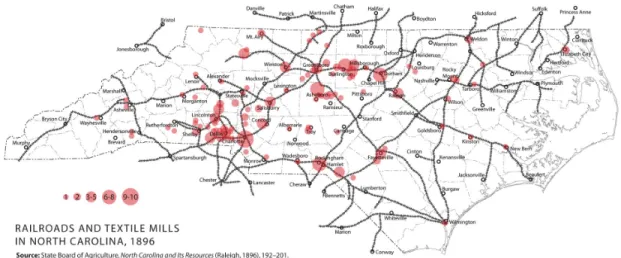
Figure 4: Railroads and Textile Mills in NC, 1896...48
Figure 5: Saxapahaw Textile Workers, 1848...53
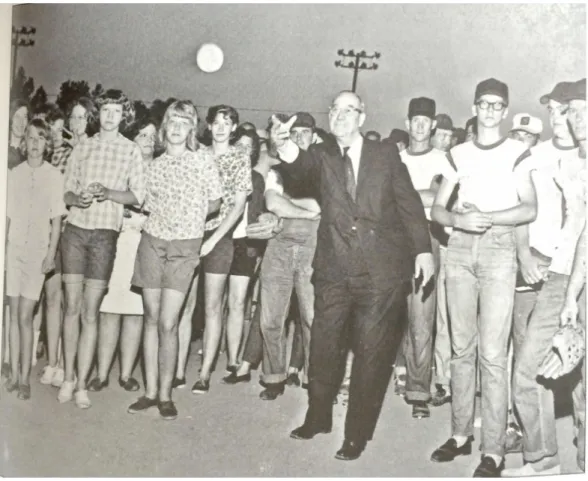
Figure 6: B Everett Jordan throws the first pitch at a company team baseball game...63
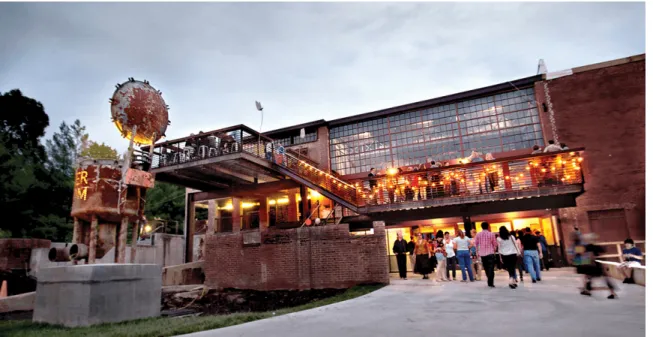
Figure 7: Renovated mill houses in Saxapahaw...71
Figure 8: The renovated dye house...76
Figure 9: Preface to Mac Jordan’s thesis, “Of the Rural Mill Hill”...78
Figure 10: Textile Progress Edition Headline, 1917...95
Figure 11: Amenities highlighted on the village’s website…...96
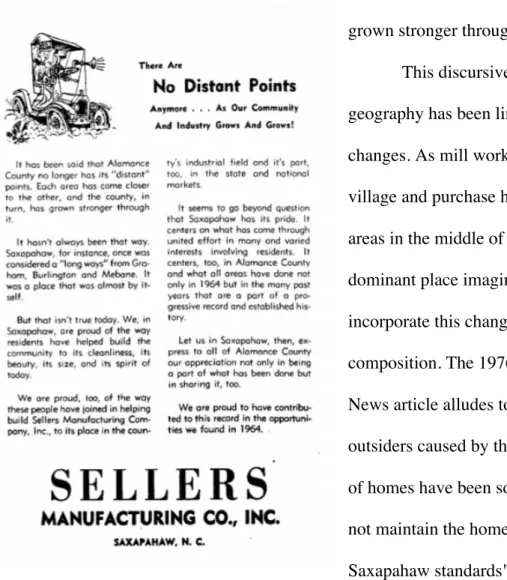
Figure 12: Advertisement for Sellers Manufacturing, 1965…...98
CHAPTER 1 – INTRODUCTION & METHODOLOGY
Many newcomers’ first experience of Saxapahaw is the general store, a gourmet grill
and grocery housed inside a gas station. I have a distinct memory of my own first impression
upon entering the building—a smudged, squeaky door opens up to a crowded and colorful
array of local produce, crafts, and specialty goods interspersed with standard convenience store
fare. Saxapahaw, a former textile mill community in rural central North Carolina, has attracted
widespread local and national media attention since the village was redeveloped as a hub for
local food, arts, and outdoor recreation in the early 2000s. Many of these articles have been
quick to comment on the general store’s eclectic offerings. In 2011, a travel writer for the
Washington Post summed it up: “Outside, a biodiesel pump stands near the regular unleaded,
while inside, local organic wines are up the aisle from the Little Debbies.” A quote from a
local resident follows, framing the implicitly harmonious nature of this juxtaposition: “We call
it the Saxapahaw miracle” (Daniel, 2011).
Framing this phenomenon as miraculous, however, subtly points to larger forces at play that threaten the precarious balance of organic wines and Little Debbies.
Saxapahaw has been widely celebrated as an example of “rural renaissance done right” (Rivermill Apartments), uplifted as a rare example of a post-industrial mill community reborn both economically and culturally. While this narrative reveals important elements of truth about the village’s contemporary moment, it also conceals some of the deeper social
transformations taking place. What are the terms of this redevelopment and how are they set? Who benefits and who stands to lose? What are the flows and structures of power that shape this process of economic revitalization?
On the periphery of the Research Triangle, one of the fastest growing metropolitan areas in the country (US Census Bureau, 2015), the rural villages that were once home to a booming Piedmont textile industry have begun to buzz with renewed activity in the early 21st century. In the last decades of the previous century, the economic restructuring of the textile industry drove companies overseas, leaving behind high working-class unemployment rates and a rural landscape dotted with abandoned brick factories and clusters of houses
characteristic of the “company town” era. As these villages redevelop and are incorporated into the region’s new service and consumption-based economy, they are home to a wide range of encounters across lines of social difference. Long-term residents’ claims to space and place collide and intersect with those of new migrants and tourists, and existing social hierarchies shaped by race, class, and gender are renegotiated and reinforced.
The last two decades have seen a proliferation of scholarship on rural gentrification,
most recently responding to Loretta Lees’ (2011) call for “geographies of gentrification” that
restructuring in a diverse range of geographical contexts across the globe. Leading rural
gentrification scholar Martin Phillips (1993; 2004; 2010) argues that rural gentrification is
both locationally-specific and driven by widespread trends, identifying transformations that are
both economic (including the rise of real estate speculation and the shift towards
service-oriented accumulation in post-industrial economies) and cultural (such as contemporary
middle-class communities’ rejection of the suburbs and parallel the-city and
back-to-the-country migration movements). While Phillips acknowledges that rural gentrification is a
“chaotic concept,” he locates its usefulness in its political character, vital for overcoming rural
studies’ longstanding aversion to theorizing class (Phillips, 2010: 541). Urban areas are often
positioned as the sole site of political struggle in both public and scholarly discourse, but the
social reorganization of select rural areas by an influx of capital and middle-class migration
has brought renewed scholarly attention to the ways in which the rural sphere is also shaped
and re-shaped by systems of power.
The US American South remains a widely under-examined region in rural
gentrification scholarship. In this thesis, I explore Saxapahaw as a contested site of rural
gentrification, arguing that this theoretical lens offers key insights into the distinctly political
nature of the social transformations that lie buried within—and altogether beyond—the
depoliticized story of organic wines and Little Debbies. I also examine the limitations of this
framework (as it has been widely theorized) in understanding Saxapahaw’s social complexity.
Saxapahaw’s status as a site of gentrification is contested in multiple ways: in the sense that it
is associated with experiences of discomfort, disconnection, and struggle; in the sense that it is
the locus of debate (my interviews with community members confirm, complicate, and dispute
transformation of the village’s commercial landscape hasn’t yet resulted in a significant
affordable housing shortage in the area, for example).
Additionally, Saxapahaw’s redevelopment is a story of as much continuity as it is of
change. Rather than framing Saxapahaw’s gentrification process as an exceptional or
temporally-isolated phenomenon, I read it as one moment in a much longer arc of capitalist
development: a history that has always been marked by pronounced social inequalities that
differentially distribute the benefits and consequences of economic change. This history has
also consistently included a range of attempts—with varying degrees of success—to mediate
and contest forms of social inequality. I argue that Saxapahaw’s current period of
consumption-based accumulation exhibits many striking similarities with the economic
ideologies, political structures, and social dynamics of the previous company town era. This
continuity requires a theory of rural gentrification that understands this process as necessarily
linked to earlier phases of capitalist accumulation and their enduring structural, social, and
symbolic legacies.
II. Research Site
Saxapahaw is located in southeastern Alamance County, in a largely rural region between two rapidly growing metropolitan areas in central North Carolina—the Piedmont Triad (Winston-Salem, Greensboro, Highpoint) and Research Triangle (Raleigh, Durham, Chapel Hill). The village center is nestled along a steeply sloping hill that rises above the Haw River. Since the early 2000s, the two brick mill complexes have been redeveloped into a range of commercial and residential spaces including a pub, brewery, co-working space, butcher shop, charter school, café and performance venue as well as loft apartments and condos. The village center also includes several dozen small, single-family mill houses rented by a real estate company run by one of the families that previously owned and managed the mill. On the other side of the river, another cluster of mill houses that were sold to individual homeowners in the late 1970s are known collectively to many locals as “Free Sax.” Many of the current residents commute to nearby cities for employment or work remotely, while others are employed by local businesses or farms.
Figure 1: Saxapahaw and NC Population Change by Census Track Base map: Carolina Demography, UNC Population Center
<http://demography.cpc.unc.edu/resources/nc-neighborhood-change-2000-2010/>
While Saxapahaw was home to just over 1,600 residents in 2010, the amount of activity in the village varies widely due to the large numbers of tourists and visitors who flock there from nearby cities and farther afield. On any given weekday, the village center may be fairly quiet. But on Saturday evenings in the summer, hundreds of cars pack the roadsides (and the makeshift parking lot in a large field) to attend the free music series and farmers market. When the performance venue features a well-known touring act, the village is similarly flooded with visitors. Pleasant weather on a weekend morning brings crowds out to brunch, as well as large group of cyclers out for a country ride.
As an unincorporated rural community, defining the boundaries of Saxapahaw is a slippery act. When I asked one of my interview participants what he would consider
Saxapahaw, he laughed and said: “as far as you can see 360 degrees from the general store?” While many members of the community
would agree, many others would challenge this geography—and particularly the placement of the
redeveloped mill at its center. One of my interview participants—a longtime resident and elder in the black
community—did so explicitly, telling me “now this is Saxapahaw” when we entered the neighborhood just east of the village center where he spent much of his
childhood. Figure 2: Saxapahaw CDP Boundary.
The demographic and property sale data that I consulted pertains to the Census Designated Place of Saxapahaw (Figure 2), a boundary that excludes this largely black and Latino neighborhood on the east side of town. Beyond this initial exploration of quantitative data, however, the scope of my analysis expands beyond this neat—and necessarily
incomplete—boundary to explore much wider and more malleable spatial parameters, including many overlapping and contested articulations of this “place” and the inward and outward flows that constitute it as part of larger geography.
III. Quantitative Indictors of Gentrification
This project embraces the complex nature of gentrification, acknowledging that the
defining characteristics of this process remain an area of much debate. Quantitative studies of
gentrification include a wide range of metrics including property value, median income, racial
composition, educational attainment level, and sectors of employment. Rather than seeking to
establish a stable, quantifiable definition of the term and assess Saxapahaw’s alignment with
this definition, I employ this framework as a theoretical imperative to qualitatively examine
the politics and uneven impacts of redevelopment. Nonetheless, in establishing the saliency of
Saxapahaw as a site of gentrification, I will briefly examine several quantitative indicators as
means of “triangulating” (Denzin, 1978) and complicating the qualitative data that prompted
me to employ this analytical framework.
One commonly employed metric of gentrification is property value. I consulted
Alamance County tax data to identify the change in median property sale values over five-year
periods within the last 20 years. This data confirms that property values are rising
disproportionately within Saxapahaw CDP when compared to surrounding areas. Median
a number of much more highly-developed urban and industrial areas such as Burlington,
Mebane, and Elon), but rose significantly faster than the rest of the county between 1995 and
2009. In the last five years, the initial burst of redevelopment growth in Saxapahaw slowed
slightly (while the Alamance median picked up pace) but the upward trend continues.
My ability to access demographic data from Saxapahaw was limited by the extremely
small size of the CDP, which renders the US Census Bureau’s American Community Survey
estimates unreliable. I was therefore unable to assess household income or housing statistics
for the date ranges relevant for the scope of this project. Additional research is needed to
determine whether there has been a significant increase in the median income of Saxapahaw’s
resident population. More reliable data on racial demographics, however, is available through
the decennial census. Between 2000 and 2010, the white, non-Hispanic population of
Saxapahaw’s CDP declined slightly from 81.2% to 78.7%. This was largely due to an increase in people identifying as “Some Other Race”—many of whom are part of the growing Latino
Figure 3: Change in median property sale values, Sax. & Alamance County, 1995-2014.
population, which rose from 6.2% to 13.4%. At the same time, the Black population declined slightly from 13.4% to 11.1%.
Rural sites of gentrification in the southern United States complicate the urban conception of gentrification as a process of demographic whitening. Many of the poor and working-class communities leaving these areas—both due to pre-existing financial strains in the restructured rural economy and because of gentrification-linked displacement—are white. Additionally, in-migrants to redeveloping rural communities may include people of color who have themselves been displaced by urban gentrification (Keene & Padilla, 2010) or who are intentionally reversing Great Migration movements of previous generations (Stack, 1996). Lastly, the massive migration patterns of Latin-American communities to the Southern US (Cravey, 1997) often collides with gentrification processes in rural communities, either as geographically proximate but distinct processes or as linked processes that bring low-wage service workers to new centers of rural amenity migration (Nelson et al, 2010).It is also important to note, however, that while Saxapahaw is not becoming more demographically white, these quantitative measures alone cannot speak to the complexity of the village’s racial politics. My qualitative data indicates the village’s redevelopment process includes significant forms of racialized disparity and exclusion.
More generally, while many gentrification studies identify the direct displacement of lower-income communities from sites of gentrification, many scholars have emphasized that gentrification can more widely include any process which attempts to transform a space for more affluent users, regardless of whether this is accompanied by direct displacement
methods help construct a more holistic picture of the types of social struggles which
accompany redevelopment. Residents’ confirmations of the continued availability of relatively low-cost housing within and immediately surrounding the village indicates that direct
displacement due to rising housing costs may not be a primary characteristic of Saxapahaw’s current gentrification process—at least for now. But the question remains as to what other impacts the mill redevelopment project—which is primarily driven by higher-cost, niche-market services and consumption-based development—presents for the diverse members of this community, as well as what historic social and economic processes led to this
contemporary moment.
IV. Methodology Researcher Positionality
This project is first and foremost rooted in participant observation in a community in
which I have deep personal roots. I grew up in a rural community in neighboring Orange
County, and have spent the large majority of my adult life living in rural areas throughout
Orange and Alamance. Neither of my parents are native Carolinians, however, and my lack of
a significant local accent marks me as an outsider in certain spaces. For most of my life, I have
inhabited spaces that are characterized by the co-presence of both inter-regional migrants and
long-time Southern communities.
I lived in Saxapahaw from 2012-2014 while I was working at a social justice retreat
and training center nearby, and these personal experiences greatly inform my analysis. During
this time, I was also occasionally employed by the performance venue and a local daycare
center. My interest in this project arose from a growing sense of discomfort about the fact that
the village than I did local residents from Alamance County. While I lived in Saxapahaw, a
new set of condos entered the market with starting values of $300,000. The question of
whether Saxapahaw was becoming a site of rural gentrification arose from everyday
conversations with a range of village residents. As a feminist geographer, I believe that my
personal ties to the community in Saxapahaw enrich my scholarship, providing an intimate
knowledge of everyday life and an ethic of care and personal commitment (Lawson, 2009).
Nevertheless, I acknowledge that it is essential to bring critical attention to my own
positionality and interrogate and mitigate the personal biases my subject position brings to my
research (Rose, 1997). I am a highly educated, politically progressive white woman from a
middle-class background—making me more or less the precise demographic target of the
redevelopment efforts. My access to long-term residents, particularly working-class
communities and communities of color, was limited by my identity as an agent of
gentrification. I have worked to bring critical attention to the silences, gaps, and barely-skirted
topics that emerged from my interviews, examining how these might relate to my positionality
as a researcher.
Additionally, as a critical scholar and organizer for racial and economic justice, my
personal politics shape my research questions and analysis. This thesis is not a comprehensive
representation of the place of Saxapahaw and the experience of all its inhabitants, but pursues
a particular set of questions and highlights a particular type of experiences based on an explicit
commitment to working towards greater social equity. I do not see this commitment as a
barrier to my scholarship but as a central contribution—one that must nevertheless be
Research Questions
My research questions were informed by everyday conversations with village residents,
which frequently returned to a sense of bewilderment about the genesis of the contemporary
moment: How did this happen? How did Saxapahaw get to be this way? Again and again,
conversations ended with a shrug and heads shaken in alternatively—or simultaneously—
cheerful and uneasy disbelief. Many of my fellow newcomer residents identified the same
vaguely disconcerting inkling that brought me to this project: a sense of stepping into a
complex social and political landscape of which they had very little understanding—and yet
had become active participants. While this project also includes a preliminary exploration of
the impacts that this process of redevelopment is having on the daily lives of a diverse range of
residents, I have chosen to focus largely on the multiple, overlapping processes that have
produced contemporary Saxapahaw. My research questions include:
1. How has Saxapahaw has been produced as a site for redevelopment and gentrification—materially, symbolically, and socially?
2. How did Saxapahaw’s early development as a mill village shape the village’s socio-spatial structure?
3. How do racially- and socioeconomically-diverse long-time residents and newcomers experience the current process of redevelopment and gentrification?
4. What theoretical insights do Piedmont textile villages offer the wider rural gentrification literature?
Lefebvrian Approach
Responding to the tendency of rural gentrification scholarship to reinforce the division
between production- and consumption-side theories of gentrification that has characterized
much of the urban gentrification literature (see Chapter 2), I follow Phillips’ (2002) lead in
applying a Lebfebvrian method of exploring the production of rural gentrified spaces.1
In The
Production of Space (1974), critical scholar Henri Lefebvre outlines a three-part process
through which spaces are produced: spatial practices (processes of production and
reproduction), representations of space (hegemonic means of conceptualizing space), and
representational spaces (the direct, lived experiences of a space’s inhabitants). Phillips extends
this framework to examine gentrification as:
“(i) a change in the built fabric of spaces relating to the investment of material resources; (ii) a symbolic creation enacted in the discourses of the popular media, as well as in a range of advertising, specialist building and life-style texts; and (iii) a ‘cultural texture’…enacted and performed within gentrified spaces” (Phillips, 2002: 285).
This triad disrupts the binary between production and consumption, enabling an
exploration of the complex intersections of production and consumption—capital and
culture—that align to create sites of rural gentrification. I organize my own analysis along
these lines, exploring the production of contemporary Saxapahaw through a three-part analysis
of the economic and political processes that have shaped its social and material landscape
(Chapter 3), the dominant representations of its place identity (Chapter 4), and the lived
experiences of its inhabitants (Chapter 5).
Historical Approach
Applying a Lefebvrian approach to the case of Saxapahaw illuminates the need for
rural gentrification studies that consider a longer temporal range than is frequently employed.
The productive forces that have shaped this village did not begin with the most recent phase of
its redevelopment, but build on (and rub up against) previously existing forms of economic
and political structuration, cultural identity, and social life. The need for a longer-range
historical approach is particularly evident in this case study for several reasons.
Firstly, the cycles of investment and disinvestment that have produced sites of rural
scholars have widely examined how processes of urban renewal, red-lining, and planned
shrinkage produced a disinvested inner-city landscape with profitable opportunities for
reinvestment throughout the United States (Smith, 1996). In the rural context, studies of
“post-productivist” rural landscapes have explored how the decline of agriculture and industry have
increased the viability of rural real estate and consumption-based development, but these
studies have been primarily located within the unique rural policy environment of the UK
(Kneale et al, 1992). In this thesis, I examine some of the equivalent processes in the context
of the post-industrial countryside on the outskirts of the growing metropolitan centers of the
American South, examining how these processes produced the unique social and material
landscape that is being re-valued in Saxapahaw today.
Additionally, Saxapahaw—like many rural communities—has distinctly nostalgic
elements of its cultural identity. Just as they work to transform the village, leaders of the
redevelopment project have also explicitly attempted to preserve and recreate elements of the
village’s past. As I will explore in the following chapters, these acts of preservation reinforce
and reanimate elements of the village’s historical company town structure—in ways that are
both intended and unintended, explicitly celebrated and implicitly obscured. Understanding
this historic social structure is therefore necessary for understanding the social and political
dynamics of the village’s contemporary period. My interviews indicate that there are many
social processes playing out in contemporary Saxapahaw that cannot be explained without this
necessary context—particularly those shaped by historic racial divisions, class relations, and
Theoretical Frameworks
My analysis is grounded in a Marxist critique of political economy, as well as
neo-Marxist and other critical scholarship—particularly from feminist and black radical
traditions—which draws attention to the ways in which race, gender, and other social
categories play central organizing roles in the social relations of capitalist
production. Capitalism, for Lefebvre and other Marxist geographers, “secretes" a particular
type of space—one defined by abstraction and domination (Lefebvre, 1974), high levels of
uneven development (Harvey, 2011; Smith, 1984), and simultaneous movements towards
homogenization and fragmentation (Massey, 2005). Capitalist space valorizes certain social
relationships and marginalizes others, normalizing particular ideas of order and disorder. It
both enables the reproduction of the social relations of production and embodies their
contradictions. In the following chapters, I trace how shifts in the modes of production in
Saxapahaw have been accompanied by both the renegotiation and re-entrenchment of
particular sets of social relations.
Within a classical Marxist framework, class struggle between the industrial proletariat
and the bourgeoisie is seen as the primary social contradiction of capitalism (Marx & Engels,
2002, Marx 1967). Capitalist production begins with the expropriation of peasants from the
land and the alienation of workers from the means of production, the formative conditions for
the wage labor contract. The space of the factory produces new forms of social organization,
through which labor realizes its own potential and ultimately works to “expropriate the
expropriators,” collectively reclaiming the means of production.
The contemporary transition to predominantly post-industrial societies in late capitalist
splintered and reconstituted following the decline of working-class industrial jobs and the rise
of low-wage service work. More recent Marxist scholarship has brought increased attention to
constitutive class dynamics that extend beyond the proletariat/bourgeoisie relationship,
including the persistent presence of unemployed surplus populations (McIntyre & Nast, 2011)
within capitalist regimes of production. It has also brought attention to the centrality of Marx’s
“third class” of landed property (Neocosmos, 1986) particularly within the context of the
global rise of real estate speculation and urban redevelopment as a primary means of
accumulation under late capitalism (Soja, 1980). At the same time, “post-capitalist” scholars
such as JK Gibson-Graham (1992; 2000) have emphasized the multiple and overlapping nature
of class identities, calling for an end to the theorization of class as a stable structure in favor of
a social performance based analysis and theory of overdetermination.
Moving beyond class as their sole analytic, feminist and black radical scholars have
brought critical attention to additional social categories like race and gender that are central
organizing principles in the relations of production and social reproduction under capitalism.
Feminist scholars have highlighted the enclosure of white women to the domestic sphere as a
key moment in the formation of the capitalist working-class (Federici, 2004; Mies 1998), as
well as bringing attention to the many forms of reproductive and other unwaged labor—often
performed by women and people of color, immigrant communities, and other
socially-marginalized groups—which remain unrecognized and yet critical to the operation of the
capitalist system. The black radical tradition draws attention to the lasting impacts of Marx’s
“primitive accumulation”—the processes of conquest, domination, and enslavement that
generated the initial capital that enabled the industrial revolution and created a fundamental
subjects under colonial capitalism. Black radical scholars also emphasize race as a key
mechanism of division within the working-class, preventing strategic alliances between
lower-class whites and people of color (Du Bois, 1935; Fanon, 1952).
I draw on this literature to theorize the historical process of rural change in Saxapahaw
within wider economic, political, and social systems. I also follow the lead of post-structuralist
thinkers in conceptualizing social relations not as fixed, immutable structures but as flows of
power and relationality that must be maintained, performed, and struggled over. Lastly, I draw
on cultural geographic scholarship to explore the symbolic and representational dimensions of
place production, bringing a cultural perspective to historical materialism. Lefebvre’s triad of
space allows for the synthesis of these varied perspectives.
Data Collection Methods
out in the commercial spaces in the village center, visiting friends and former neighbors, and occasional volunteer work at a food pantry run by a group of local churches during the early months of 2016. During the summer of 2015, I conducted 10 in-depth qualitative interviews— ranging from 1 to 4 hours in length—with members of the Saxapahaw community,2 as well as a member of the county planning department and a resident of another nearby redeveloping mill community. Interview participants included both long-term residents and newer migrants3 from a range of socioeconomic class positions and ethnic/racial identities. After receiving several requests for anonymity from interview participants, I have chosen to withhold the names and conceal the identities of interviewees due to the sensitive nature of some of the data and the small size of the community.4
V. Chapter Outline
Chapter 2 provides an overview of both urban and rural gentrification scholarship, examining the primary assertions of the field and the empirical, methodological, and
theoretical gaps my project seeks to address. I turn to an examination of “spatial practices” in Chapter 3, outlining three major periods of Saxapahaw’s capitalist development—the strict paternalism of the early mill, the welfare capitalism of the mid-20th century, and the
contemporary redevelopment era—and examining how they have produced a distinctive social and material landscape. Chapter 4 examines “representations of space” through an analysis of
2 In this paper, “members of the Saxapahaw community” include people who work in Saxapahaw or have family
ties in the village as well as those who are current residents.
3 While I will attempt to differentiate between these groups periodically throughout the paper, the distinction is
certainly a blurry one, as significant in-migration to the village has existed since the first mill village houses were sold and renovated in the late 1970s. I general, I refer to “newcomers” or “new residents” as people who have moved to the village over the last decade since the mill itself was redeveloped.
CHAPTER 2 - LITERATURE REVIEW Gentrification and the Politics of Rural Redevelopment
In The New Urban Frontier, Neil Smith interrogates the persistence of frontier logic in
the contemporary urban imaginary: privileged and “cultured” communities returning to the
city to breathe new life into what is often perceived as a barren landscape. Since the
publication of Smith’s landmark text in 1996, a renewed wave of scholarship on gentrification
has identified the near-ubiquitous prevalence of this phenomenon in the revitalizing urban
centers of highly-developed, post-industrial countries—and, increasingly, across the
mega-cities of the developing world as well. Smith’s examination of the pioneer mentality as an
organizing logic of gentrification, however, hints at its interconnection with rural processes as
well. What does the pioneer mentality tell us about the symbolic imbrication of pristine rural
nature and urban wilderness? How has the rural countryside itself been re-produced as a
frontier for migration and capital investment in the late 20th
and early 21st
centuries?
The emerging literature on rural gentrification has begun to fill in this gap, pointing to
larger cultural and economic transformations that shape both urban and rural spheres in
post-industrial societies, while also illuminating the specificities of gentrification processes as they
occur in the countryside. In this chapter, I provide a brief overview of the urban gentrification
literature and then turn to the growing body of scholarship that examines this process as it
occurs in rural settings. Finally, I identify some of the empirical, methodological, and
I. Urban Gentrification: Production, Consumption, and Class Struggle
Ruth Glass first coined the term gentrification in her 1964 study on the influx of
affluent in-migrants to working-class residential areas of inner-city London, examining how
this process led to the eventual displacement of former residents and sweeping changes in the
social character of these neighborhoods (Glass 1964). In the subsequent decades, gentrification
has gained an increasingly strong foothold in popular consciousness and remained an issue of
concern for wide-ranging academic disciplines including sociology, urban planning, and
geography. Primarily focused on back-to-the-city migration movements and inner-city
economic revitalization processes in post-industrial countries, the literature coalesced around
an impasse that developed between production- and consumption-side theories in the 1980s
and 90s (Lees, 2000).
Production-side theories of gentrification emphasize the role of economic and political
forces like financial institutions and development policy in driving migration patterns. Neil
Smith’s rent-gap theory (1979) has been central to this interpretation. Smith locates the
primary cause of gentrification in the disparity between actual and potential rent levels in
urban centers caused by cycles of capital depreciation and revaluation. Gentrification occurs
when investors, developers, and political leaders align forces in the interest of capitalizing on
this disparity and attracting higher-income populations to newly re-valued spaces.
Directly challenging the emergence of alternate theories of gentrification as a primarily
cultural phenomenon driven by a back-to-the-city movement of more affluent classes, Smith
points to findings from his study of Philadelphia’s gentrifying neighborhood of Society Hill
that suggest the majority of gentrifiers move to the city center from other parts of the same
causal role for culture in this process, however, acknowledging that the relationship between
production and consumption is symbiotic. He nevertheless maintains that, “it is a symbiosis in
which production dominates” (1979: 540).
Smith’s rent-gap theory positions gentrification as a predictable outcome of the high
levels of uneven development that are inherent to capitalist economies. In a system based on
private property ownership, perpetual market growth, and the mechanism of competition,
capital must constantly relocate to new frontiers of investment in a search for ever-higher
profit margins, a process that geographer David Harvey (2001) calls the “spatial fix” of
capitalism. Harvey teases out the multiple meanings of the term, examining how the “fixing”
of capital through investment in the built environment is necessary for accumulation, but leads
the system into a bind or “fix” by creating a barrier to growth. The only “fix” that can resolve
this bind is the constant relocation of capital and the re-working of the built environment to
generate new arenas of accumulation.
The systematic, state-driven disinvestment from the residential communities in the city
centers of many post-industrial countries during the mid 20th
century—defined by policies of
red-lining, urban renewal, and planned shrinkage in the U.S.—produced a landscape ripe for
the possibility of profitable reinvestment in the subsequent decades (Smith, 2006). By
examining these historical legacies, production-side theories of urban gentrification have
helped to situate gentrification as one phase within a much larger arc of economic and social
transformation, not a unique or isolated phenomenon.
Adversely, consumption-side theories privilege the role of migration and the shifting
consumer demands of middle- and upper-class populations that have reversed white flight and
who have contributed to this theorization continue to engage (at least marginally) with an
analysis of productive forces, but draw greater attention to the impact of user preferences.
David Ley’s (1996) work on the cultural and political leanings of gentrifiers and their impacts
on the housing market, commercial zones, and public space in cities has been central to this
turn Scholars who focus on consumption often highlight lifestyle changes among the
middle-class, such as Gregory Lipton’s argument that the rising rate of couples that marry later in life,
have fewer children, and more readily divorce has been a major driving factor in the
re-urbanization of the middle-class (Lipton, 1977).
Consumption-side theories have made important contributions to the field, particularly
by examining the diversity of gentrifying classes, challenging the notion that gentrifiers are a
homogenous group. Scholars have examined the complex, intersectional identities that emerge
along lines of race (Taylor, 1992), class (Ley, 1994), sexuality (Lauria, 1995), and gender
(Bondi, 1991) within these populations. Many of these studies illuminate how initial migration
patterns to gentrifying neighborhoods are often linked to cultural or economic displacement
occurring in other places, as many communities that become gentrifying agents upon moving
to new neighborhoods are fleeing some form of marginalization in their previous social
landscape.
Scholars from the cultural turn have also clarified important distinctions between the
different stages of gentrification as it commonly occurs in cities (Rose, 1984). First-stage
gentrification is often characterized by less affluent and more socially marginal populations
(including artists and LGBTQ and immigrant communities) moving into inner-city
neighborhoods and investing sweat equity into renovating low-cost residential properties as
financialization of the real estate market, as investors identify the potential profitability of
purchasing and reselling houses in gentrifying neighborhoods. This leads to progressively
wealthier populations of in-migrants, declining levels of long-term homeownership as earlier
waves of gentrifiers are displaced, increased cultural homogeneity, and the direct and indirect
displacement of working-class communities and communities of color through repressive
policing, cultural alienation, and declining availability of affordable housing and services
(Lees et al, 2013).
Much of the urban gentrification literature since the cultural turn has been limited by a
one-sided preoccupation with the cultural practices and identities of gentrifying classes
themselves, neglecting a nuanced examination of the diverse identities and experiences of
long-term residents. Tom Slater reflects:
My purpose here is not to criticize research…that seeks to understand the urban experiences of more advantaged social groups, and certainly not to demonize gentrifiers, whose identities are multiple and whose ambivalent politics often contradict assumptions of a group intent…but rather to point out that there is next to nothing published on the experiences of non-gentrifying groups living in the neighbourhoods into which the much-researched cosmopolitan middle classes are arriving en masse” (Slater, 2006: 743).
Caitlin Cahill’s (2007) work is a notable exception to this trend. Using a Participatory
Action Research model, Cahill collaborates with youth co-investigators of color in gentrifying
neighborhoods in New York City, working to articulate an embodied geopolitics that bears
witness to the impacts of global economic restructuring on existing residents’ everyday
experiences Cahill—and her young working-class women of color co-investigators from the
Lower East Side—document the sense of loss these women experience as their neighborhood
history and culture are both commodified and erased. They analyze the tension between
performing the “grit” and the “glamor” of their geographic identities as their neighborhoods
While the cultural turn has contributed to a more nuanced understanding of the
diversity of gentrifying classes and the cultural drivers and stages of gentrification, it has also
led to increased polarization around the social impacts of this process. Slater (2006) identifies
an attempted “eviction” of critical perspectives from the gentrification literature beginning in
the late 1980s. Slater laments the divergence from earlier gentrification literature which
critically examined the role of both private and public institutions in driving the displacement
of working-class residents and people of color, identifying clear patterns that enabled a
political response. He argues that the increased focus on cultural trends in more recent
scholarship has diluted the political relevance of gentrification studies and contributed to a
growing ambivalence toward its damaging impacts.
Sociologist Jon Caulfield’s work was central to the rise of the ambivalence that Slater
identifies. Caulfield’s 1989 study of gentrification in Toronto argued against the limitations of
Marxist, production-side critiques and found that revitalization policies could offer valuable
opportunities for diverse community formation, arguing that “old city places offer difference
and freedom, privacy and fantasy…the city is ‘the place of our meeting with the other’”
(Caulfield, 1989: 625). Caulfield finds that the cultural mixing that occurs in gentrifying
neighborhoods can actually subvert the dominance of hegemonic culture and provide
opportunities for new ways of living together across lines of difference (Lees 2000). This
“emancipatory” discourse of gentrification has also been heavily influenced by the writing of
urban studies theorist Richard Florida. In his seminal work, The Rise of the Creative Class
(2002), Florida heralds the positive trickle-down effects of urban revitalization for all city
residents.
trend, catalyzed by Neil Smith’s publication of The new urban frontier: gentrification and the
revanchist city in 1996. Condemning Caulfield’s notion of emancipatory social practice as
‘Foucault run amok’ (Smith, 1996: 43), Smith’s “revanchist city” theory denounces
gentrification as a violent recolonization of urban spaces by affluent classes, leading to combat
zones of social struggle and the displacement of the working-class. Urban planner Peter
Marcuse has also made key contributions to this critical resurgence, theorizing gentrification
as a socially-corrupt product of neoliberal development and emphasizing the close linkages
between abandonment, reinvestment, and displacement processes (Marcuse, 1986).
Many of these more recent critical studies complicate the earlier literature’s
overreliance on class as the sole form of social stratification in gentrifying spaces, identifying
the distinctly racialized processes of disinvestment and devaluation that have produced many
inner-city neighborhoods as frontiers for profitable reinvestment. Sociologist Loic Wacquant
analyses the process of ghettoization and the racialized forms of territorial stigmatization that
have marked physical spaces inhabited by working-class communities of color with enduring
stains of poverty and subaltern ethnicity (Wacquant 2007). Urban geographer Elvin Wyly has
written extensively on the racial meanings of housing in the contemporary U.S. (2004; 2012),
connecting the dots between the “exclusionary” racism of red-lining and the “inclusionary”
discrimination of predatory subprime mortgage lending. Wyly examines how these historic
forms of racial housing discrimination have effectively restricted homeownership as a means
of wealth creation to white communities, contributing to the unequal impacts of contemporary
gentrification.
Despite the apparent intractability between production- and consumption-side theories
Ley and Neil Smith] became, in the hands of other writers, the most overdrawn contest in the
history of urban studies…with the serious effect of making gentrification a subject where
many researchers ended up taking sides and ‘throwing rocks from behind barricades’” (Clark,
1992: 359). In the last decade, gentrification scholars have increasingly worked to complicate
and transcend this binary in order to uncover the complex and interwoven economic and
cultural processes that produce this phenomenon.
Much of the more recent gentrification literature has also responded to Loretta Lees’
call for “geographies of gentrification” (Lees, 2000) that highlight the differential landscapes
of gentrification that occur in diverse locations. A rising awareness of the gentrification
processes occurring in cities in the Global South was central to provoking this call for more
geographically-specific analysis. In her 2000 article, Lees identifies a growing need for
comparative urbanisms, citing Andrew Harris’ study of London and Mumbai as a promising
example (Harris, 2008). Lees (2012) finds fertile ground in the connections and divergences
between state-led campaigns of “mega-gentrification” and explicit mass displacement
occurring in cities in the Global South and the neoliberal gentrification processes occurring in
the Global North that are often masked by narratives of mixed-income development.
Many contemporary scholars are responding to this call for comparative geographies of
gentrification. The authors of Whose Urban Renaissance? explore the patterns of spatial
restructuring in disinvested urban neighborhoods experiencing reinvestment across the globe,
with a focus on the varied forms of state action (Porter, 2009). Uprooting Urban America
brings multi-disciplinary perspectives to the impacts of gentrification on housing, health,
education, and community-organizing through comparative case studies of cities across the
issue on contemporary gentrification in March 2014 situates the unique,
geographically-specific processes occurring in the Netherlands within a global context (Doucet, 2014). All of
these authors have contributed to an understanding of gentrification that is both comparative
and situated, linked to global processes and shaped by local particularities.
II. Rural Gentrification: Exclusive Consumption of the Countryside
The recent turn toward geographies of gentrification has been accompanied by a
growing interest in the changing cultures and economies of rural areas and their connection to
larger patterns of development, investment, and migration. The origin of the concept of “rural
gentrification” is often traced to geographer Martin Phillips’ (1993) application of the term in
a study of class colonization in rural villages in Gower. In this study, Phillips identifies a
strong case for the presence of a rural rent-gap in Britain, while also cautioning against
viewing gentrification as a purely economically-driven process, highlighting the diversity of
motives among gentrifying classes. Phillips remains a leading voice in the field, and his work
has been central to integrating production- and consumption-side theories within the rural
context. Nonetheless, the division has persisted in rural studies, as has the predominance of
cultural analyses that focus on shifting middle-class consumer preferences.
The task of examining rural gentrification has been taken up most prominently in the
U.K., where the historical legacies of a landed gentry, pastoral national identity, and post-War
development policies have contributed to a unique geography of gentrification. The authors of
the 2011 Interface section, “Exclusive Countrysides?” in Planning, Theory, and Practice
explore the prevalence of migration to exclusive rural housing markets in the U.K (Scott et al,
more marginal gentrifiers who may have previously been displaced from urban areas by rising
housing costs (Scott et all 2011, 601).
Similarly, Aileen Stockdale’s (2010) study of gentrification in rural Scotland
emphasizes that in-migration is not necessarily synonymous with gentrification, and that even
where rural gentrification does occur it gives rise to very differing impacts across locations.
Her study examines the wide range of demographic and socio-economic trends that shape
migration decisions. Some of the defining variations that Stockdale identifies are the diverse
class backgrounds of the migrants, the unique characteristics of local housing markets, a
variety of motivating factors including employment, housing, and perceived quality of life, and
the distinction between displacement (out-migration caused by in-migration) and replacement
(in-migration following out-migration).
Despite this variation, authors in the U.K. have identified large-scale trends that verify
the need to explore social inequalities associated with rural in-migration through the analytical
framework of rural gentrification. In his 2009 assessment of the state of the literature, Phillips
finds that rural gentrification still lacks sufficient discursive space as a concept because it has
been infrequently used and often inadequately defined. Counter-urbanization, on the other
hand, has attracted a far greater number of studies. Phillips concludes that both
counter-urbanization and rural gentrification are simultaneously useful and “chaotic” concepts, but he
locates the value of gentrification in its political character. Gentrification is never a unified
process with fixed actors. However, it can be a useful lens for examining the economic and
social changes occurring in some rural areas precisely because it can help to re-politicize
spaces that have often been cast as stagnant and apolitical in contrast to the dynamic and
of class politics (Phillips, 2009: 541).
The vast majority of this renewed interest in class in studies of rural redevelopment,
however, has been restricted to a focus on the class-formation practices of gentrifiers
themselves. Many of these studies rely heavily on Peter Bourdieu’s notion of habitus (Hines,
2010; Scott et al, 2011; Stockdale, 2010) to analyze the distinct complex of social norms,
habits, and beliefs that constitute the place-based cultural identity of these communities.
Darren Smith and Debbie Phillips (2001) propose an alternate term, “greentrification,”
signaling the increasing desirability and consumer demand among the middle-class for
residential spaces that are perceived as green, sustainable, and natural. According to Smith and
Phillips, the spatial differentiation that produces rural areas as highly valued spaces is often
inextricable from the exclusion of undesirable “others.” This is mirrored in Mark Shucksmith’s
description of Northumberland residents who celebrate when their villages are officially
labeled “unsustainable” communities:
Why would anyone wish their community to be labeled unsustainable?...Because no further development would now be permitted, so ensuring that these villages become ever more socially exclusive, enhancing property values and extending their social distance from poorer groups in society…Perhaps this is the “dark side” of sustainability? (Scott et al 2001: 605)
The scholarship on rural gentrification in the U.S. has been less extensive but points to
similar trends, particularly the commodification of rural areas for middle-class consumption. J
Dwight Hines (2010) explores the class formation practices of middle-class newcomers in his
ethnographic study of a rapidly changing community in south-central Montana. Hines
distinguishes them as a post-industrial middle-class, for whom experiences’ have begun to
supplant commodities as the principal markers of class status. For rural middle-class
newcomers, key class status markers include outdoor activities with an emphasis on personal
civic enfranchisement through participation in local politics. Hines finds that class-formation
was primarily achieved through the collective narration of these experiences as observed in a
local coffee shop.
Several similar studies have explored U.S. rural landscapes as theaters of consumption.
Peter Walker and Louise Fortman’s 2003 study of Nevada County, CA chronicles the attempts
of the an environmentalist-dominated county government to incorporate aesthetic and
environmental principles into county planning in response to the consumptive demands of
in-migrants. Rina Ghose (2004) explores the cultural change spurred by middle-class migrants’
search for a relaxed, outdoor recreation-based “Rocky Mountain lifestyle.”
Notably absent from both these studies, however, is an in-depth analysis of the range of
impacts experienced by previously existing populations in these rural areas. Ghose does survey
some long-time residents and concludes they are concerned by the changes taking place in
their communities, but she admits that all of the long-term residents included in her study were
middle-class homeowners and therefore represented limited perspectives. While rural
gentrification studies have explored the specific characteristics of gentrifying classes, more
nuanced analyses of the complex ways in which class, race, gender, sexuality, religion,
political affiliation, and culture also shape the experiences of long-time residents are still
needed in order to understand the full social and political implications of this process.
Japonica Brown-Saracino’s work (2009; 2013) addresses this gap by including the
perspectives of non-gentrifying groups in her comparative studies on urban gentrification in
Chicago and rural gentrification in New England. She finds a range of opinions on the process;
many long-time residents identify gentrification as a positive form of redevelopment in an
displacement and community change. Brown-Saracino’s work has also brought attention to the
range of political orientations and attitudes that rural gentrifiers hold towards the continued
presence of long-term residents. She identifies a unique class of “social preservationist”
in-migrants—particularly common to rural areas—that share many socio-economic
characteristics with other gentrifiers but who perceive “original” residents as desirable markers
of authentic community and therefore seek to maintain their presence. While Brown-Saracino
finds that this impulse can sometimes lead to genuine commitments and actions for social
inclusion, affordable housing protections, and cultural preservation, her work also highlights
how this impulse often laced with a desire to selectively control which histories, cultures, and
people are preserved. She finds that this weakens the possibility of true solidarity, democratic
participation, and equitable community formation and development.
There has also been a notable scarcity of production-side studies of rural gentrification
in the years since Martin Phillips initial examination of the rural rent-gap. One exception is
Eliza Darling’s 2005 study of rising property values in New York State’s Adirondack Park.
Following Phillips’ lead in applying rent-gap theory, Darling explores the
geographically-specific role of land management policies in wilderness lands. She argues that zoning policies
that promote concentrated population density in hamlet zones within tracks of conservation
land have lead to a crisis of affordable housing, particularly for the local service workforce that
plays many key roles in the operations of the park (Darling, 2004). Through this analysis, she
demonstrates both the usefulness of the concept of the rent-gap for rural gentrification studies
as well the need to rework this concept when it is transferred to new locations. Darling finds:
The disparity springs from the mechanism which draws capital toward one location as opposed to another in each of these landscapes…What gets produced in the process of urban
Darling’s study thus begins to bridge the gap with more cultural- and
consumption-oriented studies, while including a detailed analysis of the economic and structural context
within which individual consumer choices and class-based cultural trends are embedded.
According to her analysis, individual and collective desires are deeply revealing of and
consequential for larger systems, not isolated or apolitical. The emerging field of rural
gentrification studies in the U.S. could benefit from taking Darling’s lead in integrating
production- and consumption-side theories, bridging a critical analysis of the structural forces
behind gentrification with the rich specificity of cultural study.
Lise and Peter Nelson’s work on the “linked migration” of rural amenity migrants and
Latino service workers across the U.S. (2010) also begins to complicate the consumption and
production binary by examining the interplay between structural and cultural forces that drive
these interwoven migration streams. As urban professional classes have become the primary
beneficiaries of globalized capital accumulation—and much of their labor de-territorialized
through communications technology—moving to amenity rich rural locations becomes an
increasingly viable and culturally attractive option for these communities. Nelson and
Nelson’s study also challenges the conception of gentrification as a process of ubiquitous
racial whitening and income elevation, arguing that the arrival of amenity migrants to rural
spaces often drives an accompanying influx of low-wage Latino service workers.
The existing rural gentrification literature illustrates how the rural application of this
concept provides unique empirical data and theoretical insights that can enrich the paralyzed
debate in gentrification studies as a whole. Firstly, rural areas display high levels of variation
in the roles played by public policy and the state. While urban centers are generally managed
government in rural areas ranges from highly deregulated county administrations to carefully
managed conservation areas like the Adirondacks. This variation can help to complicate and
enrich an understanding of the diverse ways public policy drives gentrification. Secondly, the
sheer abundance of developable land in many rural areas (through certainly not in all areas as
Darling’s study highlights) frequently leads to a less direct relationship between in- and
out-migration. Economically-driven physical displacement caused by crises of housing availability
and affordability may not be a defining quality of gentrification in all rural areas
(Brown-Saracino, 2009; Stockdale, 2010). This may help to spur the expansion of the term beyond its
strictly displacement-dependent definitions. Tom Slater argues that this evolution is long
overdue, citing Jason Hackworth’s conclusion that we must consider any process that
transforms a space for my more affluent users a form of gentrification, even if the relationship
with displacement is not direct or immediate (Slater, 2006: 744).
The rural gentrification literature continues to be vexed by the question of how broadly
this term can be applied to different forms of development and in-migration while retaining its
conceptual integrity (Phillips, 2010). How is rural gentrification inclusive of or distinct from
suburbanization, urban expansion, amenity migration, or tourism-based development in rural
spaces? If, however, we follow Phillips’ lead in embracing the chaotic nature of the term and
mobilizing it for its politicizing effect, the most pressing questions become less about what
“counts” as rural gentrification and more about what this lens can illuminate about the social
inequalities associated with various forms of economic restructuring and redevelopment in
previously disinvested rural areas.
Given that the existing research has focused on identifying, defining, and quantifying
interwoven social and structural forces that drive this process, transcending the
consumption/production binary and connecting large-scale patterns with local particularities.
Also needed are in-depth examinations of the complex consequences of this process as they
are experienced by both in-migrants and long-time residents in rural communities.
Additionally, the existing literature can be enriched by an expanded empirical scope that
incorporates regions that have thus far been largely overlooked, including the American South.
III. Examining Rural Gentrification in the American South
As one of the fastest growing regions in the country (Mackum, 2011), the U.S.
American South is a key location for the study of rural gentrification. Many counties on the
rural periphery of the South’s larger cities are experiencing high rates of population growth in
the first decades of the 21st
century (Johnson, 2006), along with growing national media
attention (Auletta, 2014; Webster, 2011) and renewed waves of capital investment (Kotkin,
2013). A small number of studies have begun to point to the key insights offered by studying
this region, but it is has remained largely underexplored.
Brandon Scott Saunders’ unpublished thesis (2010) points to the Appalachian
mountain region as a promising site for the study of rural gentrification. Using domestic
colony theory to understand the systematic underdevelopment and resource extraction that has
characterized this region and driven its production as a site of profitable reinvestment,
Saunders integrates qualitative and quantitative data from two rapidly developing counties in
Western North Carolina to examine the range of cultural, economic, and demographic impacts
on these communities as they gentrify. Several studies have also identified in-migration and
development patterns occurring in rural coastal areas of the Carolinas (Boucquey et al, 2012;