OpenCommons@UConn
Doctoral Dissertations University of Connecticut Graduate School1-26-2015
The Development and Psychometric Testing of the
Nurse Practitioner Role Transition Scale
Sally N. Strange
Follow this and additional works at:https://opencommons.uconn.edu/dissertations
Recommended Citation
Strange, Sally N., "The Development and Psychometric Testing of the Nurse Practitioner Role Transition Scale" (2015).Doctoral Dissertations. 661.
The Development and Psychometric Testing of the Nurse Practitioner Role Transition Scale Sally Nelson Strange, PhD
University of Connecticut, 2015
Background and Purpose: Nurse practitioners (NPs) are formidable members of the health care system providing high quality, cost-effective care. Their transition into practice is often fraught with unexpected challenges. In support of this dissertation, a series of three studies was
conducted to improve the process of NP role transition by increasing our knowledge and understanding of the defining constructs and the development and validation of the NP role transition scale (NPRTS).
Methods: The NPRTS is a self-report survey designed to measure NP’s perceptions of role transition experiences during the first year of practice. Two individual studies supported the development and evolution of the NPRTS through factor analyses and reliability assessments. In a third study, a qualitative analysis including a subset of neonatal NPs was conducted to further our understanding of role transition constructs and support the revisions of the NPRTS.
Results: Two samples comprised of 182 and 427 NPs representing a variety of specialties and practice settings participated in the scale development studies. Multiple factor analyses provided empirical support for the existence of the resulting three factor eighteen indicator model. Internal consistency for the final three factors was high. A qualitative analysis of 70 neonatal NPs
revealed four themes that described the reattainment of expert status during role transition: 1) First impressions: Am I prepared? 2) The transition, 3) Making it as a real NNP, and 4) The helpers and hinderers.
Conclusions: The resulting NPRTS model is inferred as a valid and reliable measure of the constructs of NP role transition including: 1) confidence, comfort, and competence in the role; 2) collegial relationships; and 3) understanding of the role by clients. Implications for practice include the implementation of the NPRTS as a beginning model for NP role transition discussions and as a means to assess transition progress in the clinical setting. Continued research is warranted to progress the understanding of NP role transition and for the refinement and validation of the NPRTS.
The Development and Psychometric Testing of the Nurse Practitioner Role Transition Scale
Sally Nelson Strange
B.S.N., University of Wisconsin, [1983] M.S.N., University of Hartford, [1998]
A Dissertation
Submitted in Partial Fulfillment of the Requirements for the Degree of
Doctor of Philosophy at the
University of Connecticut
ii Copyright by Sally Nelson Strange
iii
Doctor of Philosophy Dissertation
The Development and Psychometric Testing of the Nurse Practitioner Role Transition Scale
Presented by
Sally Nelson Strange, B.S.N., M.S.N.
Major Advisor ___________________________________________________________________ Regina Cusson Associate Advisor ___________________________________________________________________ Cheryl Beck Associate Advisor ___________________________________________________________________ Stephen Walsh University of Connecticut [2015]
iv
This research was supported by funding from the Dr. Lorraine G. Spranzo Scholarship and the University of Connecticut, School of Nursing Doctoral Scholarship. I am thankful for my major advisors, Regina Cusson, for her nurse practitioner expertise, guidance, and ongoing support; Committee Members: Cheryl Beck for her expertise in qualitative and quantitative methods and commitment to quality research, Stephen Walsh for his statistical expertise and data analysis reporting, Robert Gable for his expertise and guidance in factor analysis methodologies, and Ora Strickland for her ongoing support and expertise in nursing measurement procedures.
I am most appreciative for my former committee members and readers, all the professors and mentors from the School of Nursing and other academic programs that provided education, guidance, and insight that supported my nursing career development. In addition, I am grateful for the nurse practitioners who were willing to participate in these studies.
Lastly, I am very thankful for my family and friends; specifically, my parents who
fostered family values embracing inquiry, integrity, and caring; and my husband and children for their unending love and support.
v
Table of Contents
Chapter 1 Introduction 1
References 9
Figure – Transitions: A Middle-Range Theory 13
Chapter 2 Article #1: Development and Pscyhometric Testing of the Nurse Practitioner Role Transition Scale
14
Abstract 15
Introduction 16
Background and Conceptual Framework 17
Procedures for the Development of the NPRTS 20
Methods 22
Results 25
Discussion 29
References 33
Tables 37
Chapter 3 Article #2: Neonatal Nurse Practitioner Role Transition: The Process of Reattaining Expert Status
42 Abstract 43 Introduction 44 Literature Review 44 Methods 49 Results 51 Discussion 60 References 62 Tables 65
Chapter 4 Article #3: Revision and Validation of the Nurse Practitioner Role Transition Scale
67 Abstract 68 Introduction 70 Conceptual Framework 71 Background 74 Study Aim 78 Methods 78 Results 83 Discussion 89 References 96
Tables and Figures 102
Chapter 5 Discussion and Review 107
Chapter 1 Introduction
Nurse practitioners (NPs) have been a part of the healthcare delivery system for nearly 50 years. The NP role evolved in the mid-1960’s in response to a nationwide shortage of healthcare services. The NP’s value was recognized early on demonstrating an increase in healthcare services along with patient and physician satisfaction with their care (Mendenhall, Repicky, & Neville, 1980; Sox, 1979). Additionally, NPs were shown to provide similar or superior patient care outcomes as compared to those provided by physicians (Geiss & Cavaliere, 2003; Horrocks, Anderson, & Salisbury, 2002; McMullen, Alexander, Bourgeois, & Goodman, 2001; Mundinger, 1994). These findings supported the growth of NPs utilization and provided the basis for
education, practice, and licensing standards that are used today. NPs have continued to advance in number and scope to meet the expanding need for accessible, cost-effective care. Today there are over 192,000 NPs in the U.S. as reported by the American Association of Nurse Practitioners [AANP] (2014).
In modern practice, sophisticated clinical skills, critical thinking ability, political savvy, and a high level of decision-making are required of NPs (Hoffman, Happ, Scharfenbert,
DiVirgilio-Thomas, & Tasota, 2004; Kelly & Mathews, 2001). The scope and standards of academic and clinical competence as well as professional performance are defined by The National Organization for Nurse Practitioner Faculties [NONPF] (2014) and in the AACN Scope and Standards for Acute Care Nurse Practitioner Practice as developed by the American
Association of Critical Care Nurses [AACN] (2012). The National Council of State Boards of Nursing established a common definition of nursing advanced practice and set minimum standards for licensure.
Despite the advanced development and standardization of the NP role both academically and clinically, the actual transition into practice for newly graduated NPs is described by many as fraught with challenges resulting in negative experiences including a diminished level of confidence and subpar performance (Bosch, 2000; Brown & Draye, 2003; Cusson & Strange, 2008; Fleming & Carberry, 2011; Szanton, Mihaly, Alhusen, & Becker, 2010). This undesirable transition experience consequently leads to feelings of isolation, uncertainty, and insecurity (Brown & Olshansky, 1998; Kelly & Mathews, 2001; Nicolson, Burr, Powell, 2005). Further compounding the transition, NPs are at times thought of as a high functioning nurse or as a substitute for a resident or junior doctor contributing to role confusion (Nicolson, Burr, & Powell; Poronsky, 2013). An overall lack of support and structure in the new role was cited as a main contributor to a poor transition experience and an inability to meet the challenges of the new role (Forbes & Jessup, 2004; Hayes, 2001; Woods, 1998).
The transition of new NPs into practice has been commonly described in the literature as themes or a process in which the practitioner moves through a series of identified stages in order to overcome barriers and attain mastery of the role responsibilities (Brown & Olshansky, 1998; Carryer, Boddy, & Budge, 2011; Chang, 2006; Fleming & Carberry, 2011; Heitz, Steiner, Burman, 2004; Stanley, 2005). Other studies make recommendations regarding factors and strategies that influence a successful transition including a structured orientation and a residency training program (Bahouth & Esposito-Herr, 2009; Flinter, 2011; Kleinpell & Hravnak, 2005; Szanton, Mihaley, Alhusen, & Becker, 2010; Yeager, 2010). Outcomes from the orientation programs and one residency training model begin to indicate evidence of healthy transitions (Flinter, Yeager). However, the specific factors and influencing indicators for successful transition remain essentially undefined and untested as a quantitative measure for NP role transition.
At this time, there is not an accepted consensus on the conclusive constructs that
comprise NP role transition and the factors that influence it. Furthermore, many new NPs are not aware of or adequately prepared to manage the impending transition challenges and have no means to evaluate their progress or identify specific constraints to success (Roberts, Tablowski & Bova, 1997). This lack of preparation and role transition structure can ultimately, impact the care of patients. Currently, there exists a gap in our knowledge of and ability to define and measure the elements of NP role transition.
Conceptual Framework
Conceptually, transition is depicted by Bridges (1980) as a sequence of phases, in which one encounters difficulties and a period of adjustment; that is, . . . “letting go of the person you used to be and then finding the new person you have become in the new situation” (p. 75). Adding to the concept from a nursing perspective, Transitions, a middle-range theory, was developed (Meleis, Sawyer, Im, Messias, & Shumacher, 2000). See Figure 1. In this theory, transition is referred to as a process and outcome of complex person-environment interactions involving passage from one state, condition, or place to another (Chick and Meleis, 1986). In this process, a person is required to incorporate new knowledge and alter behavior in order to change the definition of self (Meleis, 1997). This multi-dimensional process incorporates both the nature (i.e., types, patterns, and properties) of the transition as well as the involved facilitators and inhibitors (Meleis, et. al, 2000), which combine to affect one’s pattern of response. Accordingly, patterns of response include process indicators (i.e., feeling connected, interacting, location and being situated, and developing confidence and coping) and outcome indicators (i.e., mastery and fluid integrative identities). A healthy transition is characterized by process indicators that can be identified and assessed in an effort to intervene and move the transition to a healthy outcome
versus one of vulnerability and risk. The inability to resolve or overcome process barriers may hinder or halt the transition process.
In nursing, the conventional premise is that one moves into a new role as a novice and overtime completes several stages of development to attain expert status (Benner, 1984). This model is especially related to the graduate RN. Despite these defined processes, nurses can become stuck, per se, if they are unable to manage or overcome the elements within a particular stage, which can have devastating effects hampering performance and job satisfaction. In the Benner model, it is possible to not attain the final level of expertise, and the rationale for failure to advance is not always clear.
Contrary to this premise, studies reveal that in NP role transition, the actual experience is reversed (Cusson & Strange, 2008; Forbes & Jessup, 2004) referring to the phenomenon as moving “from expert to novice”. This reflects the notion of attained expertise as a RN before completion of education and training as a NP. It is often assumed that this expertise will automatically carry over into the NP role such that the new graduate enters the workforce with the same level of expertise. However, it was found in these studies that expertise in one role is not transferable to other roles, even in the same discipline. The rationale for this mismatch is not totally clear. One could argue that the NP role transition is truly just experiencing the traditional novice to expert process over again. Based on the results of the above studies, the previous experience of attaining expert nursing status contributes to the nature and conditions of the transition experience.
Key to the transition theory conceptual framework is that the transition process varies based on previous experiences and individual responses; however, common facilitators and inhibitors related to personal beliefs, expectations, knowledge and skills, environment, planning, and emotional and physical well-being are recognized as having a negative or positive effect on
the outcome. A structured model that describes specific elements of the role transition into practice of newly graduated NPs fits well into this theory.
Significance and Rationale
In today’s healthcare, NPs are established as highly skilled front line care providers. They contribute to the mounting gap in healthcare services and in cost containment initiatives. As a unique group of healthcare providers, NPs require specialized training and mentoring to fulfill their expected roles. It is essential that new NPs entering the work force be quickly and easily acclimated. Failure to do so potentially jeopardizes both the NP and the patients as well. There is then a need to establish transition conditions (i.e., facilitators and inhibitors) and process
indicators that promote and measure a successful transition for NPs entering their first year of practice. Consistency in academic preparation addressing the issues of role transition is
additionally needed to foster the success of new NPs in practice. The information attained from these studies will provide an assessment survey, which will enable the identification of NP role transition factors providing early recognition of successes and barriers. This early detection will better support the new NP and their mentors to develop strategies in order to acknowledge achievements, overcome barriers, and to avoid undue stress and anxiety in the role transition process. A valid and reliable measure of NP role transition can be used to guide the development of or enhance current academic preparation as well as orientation program structures and
processes. To address transition issues and to narrow the knowledge gap, a series of studies was conducted to better understand and to quantify the constructs and indicators of NP role transition. Study Aim
The aim of this dissertation project was to develop and test an instrument that defines and measures the constructs and indicators of NP role transition during the first year of practice. It was hypothesized that the experience of NP role transition consists of specific constructs and
indicators as based on content validity and expert opinion. The following studies were conducted as means to develop and test the hypothesized model.
Study 1: Develop a draft of the nurse practitioner role transitions scale (NPRTS) and assess its psychometric properties.
Study 2: Describe the role transition experience of a group of neonatal nurse practitioners as means to enhance the understanding of the factors affecting progress and success. Study 3: Refine and revise the resulting NPRTS from Study 1 and assess its psychometric properties.
Review of Studies
A brief review of the three studies is presented here as means to provide an introduction and understanding of the development and testing of the NPRTS. Specific details of each study are outlined following in chapters 2, 3, and 4. Chapter 5 provides an overview and discussion of the findings as they relate to and inform the current knowledge of NP role transition as well as implications to practice and future research.
The first study, Development and Psychometric Properties of the Nurse Practitioner Role Transition Scale, developed an initial draft of the NPRTS and assessed its psychometric
properties. Based on content validity and expert judgment, the original proposed structure consisted of five hypothesized dimensions represented by 31 indicators. These included: (a) perception of the adequacy of the nurse practitioner educational program [8 Items]; (b)
perception of expertise as a novice practitioner [4 Items]; (c) relationships with colleagues and co-workers [9 Items]; (d) availability of a mentor for guidance and feedback [2 Items]; and (e) the socialization of the nurse practitioner into a nursing or medical arena [8 Items]. The final sample included 182 practicing NPs from a variety of specialties and practice settings from around the U. S. Exploratory factor analysis (EFA) was conducted to examine the structure for
validity and reliability resulting in a three factor model comprised of 16 indicators. The final factors were similar to those originally hypothesized and included: Factor 1 - Developing
Comfort and Building Competence in the Role, Factor 2 – Understanding of the Role by Others, and Factor 3 – Collegial Support.
In an effort to refine the NPRTS and conduct additional testing with a new sample an updated review of the literature and content analysis was conducted including incorporation of findings from the second study in this series, Neonatal Nurse Practitioner Role Transition: The Process of Reattaining Expert Status (Cusson & Strange, 2008). Responses to narrative questions related to their role transition experience from 70 neonatal NPs were included. These questions were included in the survey completed by the respondents in the first study. The neonatal NPs were selected for this study due to the large number of respondents from a single specialty and to add to the neonatal NP role transition literature previously conducted by these authors. The narrative data were found to be rich in describing role transition experiences. Using descriptive qualitative methodology, four themes describing NP role transition during the first year of practice emerged as Theme 1 – First impressions-Am I prepared?, Theme 2 – The transition, Theme 3 – Making it as a real NP, and Theme 4 – The helpers and hinderers. The underlying main theme central to NP role transition in this study reflects an emerging concept of “expert to novice” in which new NPs not only were expected by others to perform at their previous RN level of expertise, but they themselves anticipated the same. Due to a lack of structure and clear definition of role transition parameters, new NPs demonstrated great distress in the process.
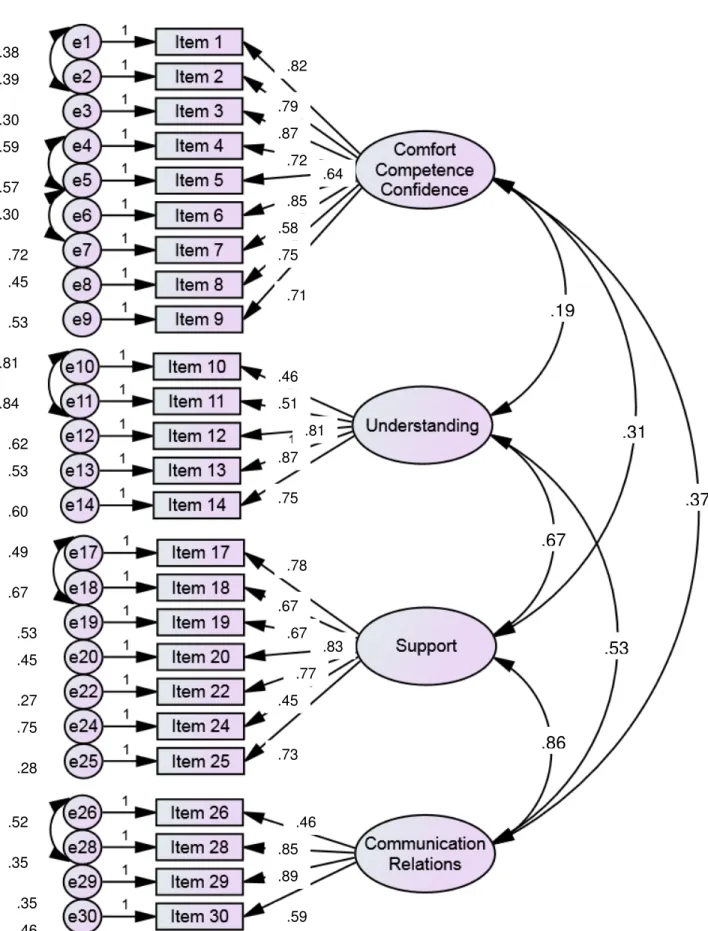
In the third study, Revision and Validation of the NPRTS, the instrument was refined by modifying item strings as well as adding an additional factor and indicators to the resulting model from the previous EFA in the first study. Representing NP role transition, the revised model was comprised of four hypothesized dimensions and 31 indicators including (1)
Developing Comfort and Building Competence in the Role, (2) – Understanding of the Role by Others, (3) Collegial Support, and (4) Communications and Relations. The NPRTS was
administered to a new sample (n = 427) of NPs from a variety of specialties and practice settings with the goal to confirm the model fit using confirmatory factor analysis (CFA). However, the CFA resulted in a poor model fit. Despite model respecifications, only a marginal fit was
attained as determined by critical fit indices (χ² = 831.84, df = 263, p < .01, CFI = 0.91, RMSEA
= .07, and SRMR = .06). Additional examination of the data underwent EFA, which revealed a valid and reliable three factor model consisting of 18 indicators. The factors were also found to be similar to those from the hypothesized constructs from the initial draft of the NPRTS and the resulting model from the first EFA study. These included (1) Role Confidence, Comfort and Competence; (2) Collegial Relationships; and (3) Understanding of the Role by Clients. Because the latest version of the NPRTS developed during this study’s analyses results from EFA, an additional round of sampling and CFA will be necessary before finalizing the instrument’s content.
References
American Association of Critical Care Nurses [AACN] (2012). The scope and standards for acute care nurse practitioner practice. Retrieved from
http://www.aacn.org/wd/practice/docs/acnp- scope-and-standards.pdf American Association of Nurse Practitioners [AANP] (2014). Retrieved from
http://www.aanp.org/about-aanp/historical-timeline
Bahouth, M. N., & Esposito-Herr, M. (2009). Orientation program for hospital-based nurse practitioners. AACN Advanced Critical Care, 20, 82-90.
Bosch, J. M. (2000). Experience of military nurse practitioners during their first year of practice. Unpublished master’s thesis, Uniformed Services University of the Health Sciences. Benner, P. (1984). From Novice to Expert. Menlo Park, CA: Addison-Wesley.
Bridges, W. (1980). Transitions: Making sense of life’s changes. Reading, MA: Addison- Wesley Publishing.
Brown, M. A., & Draye, M. A. (2003). Experiences of pioneer nurse practitioners in establishing advanced practice roles. Journal of Nursing Scholarship, 35, 391-97.
Brown, M., & Olshansky, E. F. (1998). From limbo to legitimacy: A theoretical model of the transition to the primary care nurse practitioner role. Nursing Research, 46, 46-51.
Carryer, J., Boddy, J., & Budge, C. (2011). Rural nurse to nurse practitioner: An ad hoc process. Journal of Primary Health Care, 3, 23-28.
Chang, W., Mu, P., & Tsay, S. (2006). The experience of role transition in acute care nurse practitioners in Taiwan under the collaborative practice model. Journal of Nursing Research, 14, 83-91.
Chick, N., & Meleis, A. (1986). Transitions: A nursing concern. In P. L. Chinn (Ed.), Nursing Research Methodology: Issues and Implementation (pp. 237-257). Rockville, MD: Aspen Publishers.
Cusson, R., & Strange, S. (2008). Neonatal nurse practitioner role transition: The process of reattaining expert status. The Journal of Perinatal and Neonatal Nursing, 22, 329-337. Fleming, E., & Carberry, M. (2011). Steering a course towards advanced nurse practitioner: A critical care perspective. Nursing in Critical Care. British Association of Critical Care, 12, 67-76.
Flinter, M. (November 28, 2011). From new nurse practitioner to primary care provider: Bridging the transition through FQHC-based residency training. OJIN: The Online Journal of Issues in Nursing, 17.
Forbes, V. J., & Jessup, A. L. (2004). From expert to novice: The unnerving transition from experienced RN to neophyte APN. Journal of Holistic Nursing, 22, 180-185.
Geiss, D. M., & Cavaliere, T. A. (2003). Neonatal Nurse Practitioners Provide Quality, Cost-Effective Care. Pediatric Annals. 32, 577-629.
Hayes, E. F. (2001). Factors that facilitate or hinder mentoring in the nurse practitioner
preceptor/student relationship. Clinical Excellence for Nurse Practitioners, 5, 111-118. Heitz, L., Steiner, S., & Bruman, M. (2004). RN to FNP: A qualitative study of role transition.
Journal of Nursing Education, 43, 416-420.
Hoffman, L. A., Happ, M., Scharfenberg, C., DiVirgilio-Thomas, D., Tasota, F. (2004).
Perceptions of physicians, nurses, and respiratory therapists about the role of acute care nurse practitioners. American Journal of Critical Care, 13, 480-488.
Horrocks, S., Anderson, E., & Salisbury, C. (2002). Systematic review of whether nurse practitioners working in primary care can provide equivalent care to doctors. British Medical Journal, 324, 819-823.
Kelly, N. R., & Mathews, M. (2001). The transition to first position as a nurse practitioner. Journal of Nursing Education, 40, 156-162.
Kleinpell, R., & Hravnak, M. (2005). Strategies for success in the acute care nurse practitioner role. Critical Care Nursing Clinics of North America, 17, 177-181.
Mckay, H. (2006). Trauma nurse practitioners-baptism by fire! Variations in role orientation. Journal of Trauma Nursing, 13, 102-104.
McMullen, M., Alexander, M., Bourgeois, A., & Goodman, L. (2001). Evaluating a nurse practitioner service. Dimensions of Critical Care Nursing, 20(5), 30-34.
Meleis, A. (1997). Theoretical nursing: Development and progress. (3rd ed.). Philadelphia: Lippincott Williams & Wilkens.
Meleis, A., Sawyer, L., Im, E., Schumacher, K., & Messias, D. (2000). Experiencing transitions: An emerging middle-range theory. Advances in Nursing Science, 23, 12-28.
Mendenhall, R., Repicky, P., Neville, R. (1980). Assessing the utilization and productivity of nurse practitioners and physician assistants: Methodology and findings on productivity. Medical Care, 18, 609-623.
Mundinger, M. (1994). Advanced-practice nursing – good medicine for physicians? New England Journal of Medicine, 330, 211-214.
Nicolson , P., Burr, J., & Powell, J. (2005). Becoming an advance practitioner in neonatal nursing: A psycho-social study of the relationship between educational preparation and role. Journal of Clinical Nursing, 14, 727-738.
National Organization of Nurse Practitioner Faculties [NONPF] (2014). Nurse practitioner core competencies content. Retrieved from
http://c.ymcdn.com/sites/nonpf.site-ym.com/resource/resmgr/Competencies/NPCoreCompsContentFinalNov20.pdf
Poronsky, C. (2013). Exploring the transition from registered nurse to family nurse practitioner. Journal of Professional Nursing, 29, 350-358.
Roberts, S., Tabloski, P., & Bova, C. (1997). Epigenesis of the nurse practitioner role revisited. Journal of Nursing Education, 36, 67-73.
Sox, H. (1979). Quality of patient care by nurse practitioners and physicians’ assistants: A ten-year perspective. Annals of Internal Medicine, 91, 459-468.
Stanley, M. (2005). A nurse practitioner model of care in maintenance dialysis: A personal and professional reflective journey. Renal Society of Australasia Journal, 1, 40-49.
Szanton, S. L., Mihaley, L. K., Alhusen, J., & Becker, K. L. (2010). Taking charge of the challenge: Factors to consider in taking your first nurse practitioner job. Journal of the American Academy of Nurse Practitioners, 20, 356-360.
Woods, L.P. (1988). Identifying the practice characteristics of advanced practitioners in acute and critical care settings. Intensive and Critical Care Nursing: The Official Journal of the British Association of Critical Care Nurses, 15, 308-317.
Yeager, S. (2010). Detraumatizing nurse practitioner orientation. Journal of Trauma Nursing, 17, 85-101.
Figure 1. Transitions: A Middle-Range Theory applied to NP role transition defines a process including the nature of the transition (i.e., types, patterns, and properties), addresses facilitator and inhibitor conditions, and includes pattern of response indicators for processes and outcomes. Nurse mentors and professional colleagues influence the transition process by using promotive, preventive, and interventive therapeutics. Adpated from “Experiencing Transitions: An
Emerging Middle-Range Theory,” by A. Meleis, L. Sawyer, E. Im, K. Schumacher, & D. Messias, 2000, Advances in Nursing Science, 23, p. 17. (Reproduced with permission)
Development and Psychometric Properties of the Nurse Practitioner Role Transition Scale Regina M. Cusson, PhD, NNP-BC, APRN, FAAN
University of Connecticut, School of Nursing Sally Nelson Strange, MSN, PhD Candidate University of Connecticut, School of Nursing
Stephen J. Walsh, ScD
University of Connecticut, School of Nursing Jacqueline Conelius, PhD
Beyhan Duran, PhD Diane Merkle Melissa Mokel
Abstract
Background and Purpose: Nurse practitioners (NP) are crucial to health care delivery, positively affecting patient outcomes. Newly graduated NPs often experience a poor transition during their first year of practice resulting in stress and suboptimal performance. The elements of NP role transition are not well understood. The purpose of this study was to develop a new instrument, the NP Role Transition Scale (NPRTS), and to assess its psychometric properties. Methods: The NPRTS is a self-report instrument that was initially configured to measure five hypothesized constructs of NP role transition using 31 items. Content validity was based on the literature and the judgment of content experts. Subsequently, a national sample of NPs
completed the initial instrument. Exploratory component analysis and reliability assessments were conducted to investigate construct validity and to refine the scale.
Results: A sample of 182 NPs who had experienced role transition and were actively practicing participated in the study. Exploratory component analysis provided empirical support for the existence of a 16-item, three component scale with high internal consistency for the data from each component. Analysis of the response categories supported meaningful score interpretations. Conclusions: Validity and reliability analyses supported the NPRTS as a three dimension
instrument designed to measure NP role transition. NP role transition is defined as developing comfort and building confidence, understanding of the role by others, and collegial support. A positive role transition for NPs is important. The NPRTS provides a means to evaluate that experience during the first year of practice.
Keywords: nurse practitioner, instrument development, role transition, exploratory component analysis
Development and Psychometric Properties of the Nurse Practitioner Role Transition Scale Upon graduation, a new nurse practitioner (NP) transitions into a role of increased responsibility and complexity. The role of the NP requires sophisticated clinical skills, critical thinking ability, political savvy, and a high level of decision-making (Hoffman, Happ,
Scharfenbert, DiVirgilio-Thomas, & Tasota, 2004; Kelly & Mathews, 2001). The scope and standards of clinical competence and professional performance are defined in the AACN Scope and Standards for Acute Care Nurse Practitioner Practice as developed by the American
Association of Critical Care Nurses [AACN] (2012).
Despite these standards, current research reveals that graduate NPs experience stress during the transition to the NP role, accompanied by feelings of isolation and confusion along with thoughts of uncertainty and insecurity (Bahouth & Esposito-Herr, 2009; Brown &
Olshansky, 1997; Cusson & Strange, 2008; Kelly & Mathews, 2001; Nicolson, Burr, & Powell, 2005; Poronsky, 2013). In addition, many NPs report multiple challenges when transitioning into their first advanced role, which impacts their performance and level of confidence (Bosch, 2000; Brown & Draye, 2003; Cusson & Strange, 2008; Kelly & Mathews; Szanton, Mihaly, &
Alhusen, & Becker, 2010) and contributes to an unsatisfactory transition experience (Roberts, Tabloski, & Bova, 1997). It is also suggested that in any specialty, the NP may be seen as a substitute for a junior doctor, which creates role confusion (Nicolson et al., 2005) that further compounds the role transition process. A lack of support and structure contributes to poor transitions for many new NPs, resulting in adjustment difficulties, knowledge insecurity, and inability to meet the challenges of the new role (Forbes & Jessup, 2004; Hayes, 2001; Sullivan-Benz, et al., 2010; Woods, 1998).
The advanced practice registered nurse is a crucial member of the health care team. In practice, NPs have been shown to positively impact patient care outcomes as well as increase
staff and patient satisfaction (Geiss & Cavaliere, 2003; Horrocks, Anderson, & Salisbury, 2002; McMullen, Alexander, Bourgeois, & Goodman, 2001). With the current challenges in health care and the shortage of providers, it is vital that each graduate NP transitions from student to
competent practitioner efficiently and effectively. Academic and health care institutions are ultimately responsible for the education and competent performance of NPs, but are often ineffective in mentoring staff into the role successfully. Without structure and support, new NPs are often forced to rely on their own devices, frequently inhibiting their transition experience. Developing a way to define and measure role transition dimensions will advance the
understanding of this concept in newly graduated NPs.
Background and Conceptual Framework Background
The underlying latent constructs of NP role transition and influencing componenets have not been conclusively established. The majority of available studies include qualitative
descriptions of advanced practice nurses’ experiences transitioning to a new role. The evidence reveals that most NPs undergo a series of stages or a process while mastering role transition as a novice practitioner. Brown and Draye (2003) described a central organizing concept of role transition as “advancing autonomy to make a difference in patient care,” which was manifested in six stages. A linear progression comprising four themes from educational preparation to beginning feelings in the new role to final development of confidence is described by Cusson and Strange (2008). In Brown and Olshansky’s (1988) work, their theoretical model, limbo to legitimacy, is described by four primary role transition processes including laying the
foundation, launching, meeting the challenge, and broadening the perspective. The metaphor, from the side to the head of the bed, is reported in Cusson and Viggiano (2002), which describes the transition experience of novice neonatal nurse practitioners (NNP) in leading the
management for infants while positioned at the head of the bed versus the less authoritative position at the side of the bed.
The aforementioned articles express role transition from the novice to expert perspective, which is the traditionally understood and accepted model in nursing. However, a new concept emerges in Forbes and Jessup’s (2004) case report, in which a reversed experience, “expert to novice,” is described in context to advanced practice registered nurse (APRN) role transition. Similarly, Cusson and Strange (2008) identify an overarching theme in neonatal nurse
practitioner role transition as the reattainment of expert level practice, which depicts the movement from expert RN to novice neonatal nurse practitioner (NNP) and back to eventual expert level NNP. In this research, new nurse practitioners entered their role as previously established expert staff RNs only to quickly discover they were thrust into the novice world of a new NP. Their familiar competence and confidence were no longer available to offer support, thus forcing an inevitable transition to the role. These findings distinguish the NP role transition from traditional novice to expert experiences observed in new staff nurses, but fail to thoroughly describe the processes or to identify the fundamental properties specific to NP role transition.
The reviewed literature revealed no studies that quantitatively defined or measured the underlying latent constructs of the NP role transition experience. Thus, there is a need to develop measurements that enable examination and evaluation of the construct variables comprising NP role transition. A quantitative measure of NP role transition can be used as an assessment and evaluation instrument to assist NPs, their mentors and their colleagues to optimize role transition by recognizing and managing supports and alleviating barriers. The purpose of this study was to develop a new instrument, the NP Role Transition Scale (NPRTS), and to assess its psychometric properties.
Conceptual Framework
The transition concept is central to the discipline of nursing manifested at the individual, familial, and organizational levels. Advances in clinical practice roles, comprising a change in setting, functions, and/or scope of practice often necessitate a personal transformation. Meleis’ transition theory serves as the conceptual framework for the development of the NPRTS (Meleis, Sawyer, Im, Schumacher, & Messias, 2000). Early writings described transition as a process involving three phases: an ending, a neutral phase, and a new beginning phase (Bridges, 1980, 1986). Expanding the concept, Chick and Meleis (1986) define transition as a passage or movement from one state, condition, or place to another referring to both the process and the outcome of complex person-environment interactions. Applied to nursing, Meleis (1997) characterizes transition as “a change in health status, in role relationships, expectations or
abilities. . . requiring the person to incorporate new knowledge, to alter behavior, and therefore to change the definition of self in social context” (p. 108). Although the transition process varies by individual, universal commonalities have been identified across the four different types of transition (developmental, situational, health/illness events, and organizational) according to Schumacher and Meleis (1994). In addition, important influencing components have been recognized in all transitions. Referred to as transition conditions or facilitators and inhibitors, these components include personal beliefs and meanings, expectations, level of knowledge and skill, the environment, level of planning, and emotional and physical well-being. These
commonalities and conditions work together to influence levels of response to both processes and outcomes. Promotive, preventive, and interventive nursing therapeutics have the potential to impact all segments of the model thus guiding the transition process toward positive outcomes.
A transition to the advanced practice NP role fits well within this model. New nurse practitioners move from one state (e.g., staff nurse) to another (NP) after completion of their
education program. Such a transition process or career development is further characterized as a lifelong series of choices that individuals make to express their changing needs (McAuliffe, 1993). Indicators that both facilitate and/or inhibit the transition process contribute to the unpredictable and often bumpy course experienced by many NPs. Why one individual’s transition progresses well and another’s does not, given similar situations, is still a mystery. Little theory-based research is available to help identify and measure the components that contribute to role transition in newly graduated nurse practitioners. More evidence is needed to deepen the profession’s understanding of the role transition constructs, processes, and the
predictability of influencing components. Identification and structure of the variables comprising NP role transition will enable nurse educators and mentors to knowledgeably guide new NPs through their first year of practice.
Procedures for the Development of the Nurse Practitioner Role Transition Scale The NPRTS was developed to measure the construct of self-concept of NP role transition during the first year of practice post-graduation. Procedures in instrument development as
described by McCoach, Gable, and Madura (2013) and DeVellis (2003) were used to guide this research. The initial phase consisted of a thorough examination of the literature conducted by a panel of four experienced NPs and one registered nurse, of which one was a doctoral-level faculty member and the others were doctoral students. Members reviewed the literature independently extracting representative characteristics and attributes of NP role transition. Collaboratively, the group developed an original item pool based on their literature findings and personal experiences. The item pool was reviewed by a convenience group of practicing NPs for readability, understanding, and an accurate depiction of first year NP role transition experience. Additional edits and formatting of the item strings along with instrument design concluded the final phase of development. Principles of literacy and reading ease were applied to the final
survey. A pilot test for expert review was conducted, which included ten practicing NPs who had experienced first year role transition.
Establishing content validity, final edits were made based on practice expertise, literature findings, and consensus of the panel resulting in the five hypothesized dimensions of NP role transition being depicted in 31 items (see Table 1). The proposed dimensions of NP role
transition included: (a) perception of the adequacy of the nurse practitioner educational program [Items 1, 2, 11, 16, 20, 22, 28, 31]; (b) perception of expertise as a novice practitioner [Items 3, 10, 12, 21]; (c) relationships with colleagues and co-workers [Items 4-9, 19, 26, 27]; (d)
availability of a mentor for guidance and feedback [Items 13, 14]; and (e) the socialization of the nurse practitioner into a nursing or medical arena [Items 15, 17, 18, 23-25, 29, 30].
The final NPRTS including 31 self-report statements related to the respondents’ role transition experience used a 5-point Likert-type scale with summative scoring. The instructions directed participants to read each item string and to indicate the number that corresponded to how strongly they agreed or disagreed with each statement in regards to their role transition experience when first becoming a nurse practitioner. Response options included: 1 = Strongly Disagree, 2 = Disagree, 3 = Neither disagree nor agree; 4 = Agree, and 5 = Strongly Agree. A high score was expected to represent a better perception of role transition ease; a low score should indicate less transition ease. The dimension labels were not included in the survey and items were listed in random order. Both positive and negative response formats were used in the item strings. Demographic and open-ended narrative questions were included as means to describe the characteristics of the participant pool and add insight into role transition responses and patterns.
Methods Study Design
A survey study design was used to examine the NPRTS to determine the possible
existence of latent constructs underlying the concept of NP role transition during the first year of practice post-graduation. Descriptive statistics, exploratory component analysis, reliability statistics, and item response analysis were used to analyze the data.
Sample
The target population was defined as NPs who were actively practicing in their specialty for at least one year and were willing to complete the survey. Additional inclusion criteria
comprised having experienced a role transition from NP student to a NP clinical practice position and being able to read and write English. NPs of all ethnic backgrounds, practice specialties, ages, and genders were eligible to participate.
For this study, a total of 155 to 310 participants (i.e., 5-10 per item) was desired. Although there is no absolute formula for an appropriate sample size, sources report a general range of consensus. Tinsley and Tinsley (1987) suggest a ratio of 5 to 10 subjects per item up to 300 subjects.
Procedure
Following IRB approval from the institution’s Human Subject’s Review Board, a convenience sample was recruited. The NPRTS was distributed via U.S. postal service in paper form to NPs obtained from the NP Central mailing list. NP Central is a non-profit organization dedicated to the practice development, advancement and educational support of NPs.
Additionally, the survey was posted on the NP Central and other professional organization websites using a commercial survey vendor, Formsite. Personal NP contacts known to the research group were also sent a survey using postal mail or personal email. A total of 370 paper
surveys were mailed. All survey formats provided information regarding the survey including a brief description of the study, inclusion criteria, directions for completion, and contact
information. An addressed, stamped return envelope was included with the mailed surveys to increase ease of participation. Voluntary completion of the survey indicated consent. A single mailing strategy was used to avoid repeat participation. Measures were taken to secure data and eliminate identification possibilities. No payment was given and there was no identified risk for participating in the survey. Data obtained were collated, entered into a database, and analyzed using the computer statistical analysis program, SPSS (Version 22.0).
Approaches to Reliability and Validity Assessment
Construct validity analysis techniques were employed as important criteria to evaluate data generated from the NPRTS as it corresponds to the theoretical concepts (constructs) concerning NP role transition. Exploratory component analysis (EFA) was conducted to
empirically examine interrelationships among the items in order to identify or verify clusters of items that share sufficient variation to justify their existence as a construct of NP role transition. The goal was to explore and identify the basic structure and underlying constructs of NP role transition reflected by the NPRTS instrument.
The appropriate use component analysis of the inter-correlation matrix of instrument items was evaluated through the Kaiser-Meyer-Olkin (KMO) measure of sampling adequacy and Bartlett’s test of sphericity. The acceptance level for the KMO was set at 0.80 (Tabachnick & Fidell, 2007).
Exploratory factor analysis commenced with a principal component analysis (PCA). This method was chosen to explain all the variance in the set of items and to reduce the number of variables into a smaller set for further analysis (McCoach, Gable and Madura, 2013). Listwise deletion was employed as a means to manage missing data. Reverse scoring of the respondent
data for negative item strings was required. The number of components extracted was
determined using Kaiser’s criterion (Kaiser, 1960). An examination of the Cattell (1966) scree test was performed to provide additional insight into component selection. Both the varimax and oblique rotations were conducted. Examining results of oblique rotation provides information regarding the magnitude of the correlations between components for a theoretically based scale under development. Items with loadings of .40 or greater were identified and listed in clusters. Items were examined for multiple loadings and retained for factor examination when the
difference between items was greater than .10. In dual loadings having less than a .10 difference, a decision was made regarding final component placement based on internal
consistency-reliability findings and content meaningfulness. The oblique rotation provided additional evidence of component relationships by examining the component intercorrelations. For intercorrelations greater than .40 researchers can consider collapsing the components into one. After examining the data from both rotations, the components were interpreted and named based on the size of the loadings and their content meaning.
To assess the homogeneity of the items within the defined components of the NPRTS, internal consistency-reliability analyses were conducted using Cronbach’s coefficient alpha. The coefficient alpha statistic for each component of the NPRTS reflects the degree to which the individual items measure a latent construct. DeVellis (2003) suggests an acceptable level for the coefficient alpha to be greater than .70.
Respondent scores representing their perception of the role transition experience as a newly graduated NP were determined by summing responses to items loading on each
component. Using a 5-point scale, the mean value provides a summary transition score with a high score reflecting more ease in role transition ease and a low score indicative of less ease in role transition.
Results Sample Demographics
The final sample consisted of 182 NP respondents, which included 129 returned from mailed surveys (a 35% return rate) and an additional 53 from online postings. The characteristics of the respondents are shown in Table 2. The average age of participants was 48.4 years with a range of 29-68 years. All respondents had worked at least one year in an advanced practice role with a mean of 10 years in practice. The majority were also experienced RNs who had worked an average of 11 years before attaining NP status. The most common areas of practice included neonatology (41%) and family practice (24%). The respondents’ current practice setting was divided nearly equally between acute care (hospital 25% and neonatal intensive care 24%) and outpatient settings (private office 29% and hospital based clinic 15%). The sample represented 30 of the United States, Canada, and the U.S. Virgin Islands.
Exploratory Component Analysis
Two statistical procedures were applied to examine the inter-correlations matrix. The KMO measure of sampling adequacy was 0.8, which supported the use of component analysis, suggesting that the data may be grouped into a smaller set of underlying components. The results of Bartlett’s test of sphericity revealed χ² = 2158.81, df = 465, p < .001, reflecting a strong
relationship among the variables. These results indicate that the inter-correlation matrix was appropriate for component analysis. Additionally, the sample size was sufficient to support such an analysis because the case to variable ratio was 5.9 to 1 (Tabachnick & Fidell, 2007).
In examining the EFA output, the variables were found to have extraction loadings between .53 and .82, indicating moderate-to-high individual item correlations with latent dimensions and considerable potential for most items to load significantly on one or more component. Using the eigenvalue-greater-than-1 (Kaiser) criterion as part of the component
analysis, nine components with eigenvalues greater than 1.0 were extracted. The solution of nine components accounted for 69.4% of the total variance explained, with the first unrotated
component accounting for 24.6% and the other eight ranging from 9.9% to 3.4% of the variance of the 31 survey variables before rotation. Visual examination of the scree plot indicated a leveling off after the fourth component, suggesting an optimal component solution between three and four.
To further the interpretation of the concepts and their defining components, the varimax and oblique rotations were compared. Both rotations extracted nine components with variable loadings supporting three similar strong components. Component 1 shared seven common items in each rotation, with Item 10 being the consistent top loading variable. With the minimum loading value set at .40, one item (11) did not load on any component in the varimax rotation. Four items had dual loadings in the varimax rotations and one in the oblimin rotation. Following decisions regarding component placement for items with dual loadings, a total of four
components were eliminated in both rotations due to a low number of item loadings (< 3
items/component), low item loading values (< .40), or lack of support for a meaningful construct. In the component correlation matrix from the oblimin rotation, none of the components had intercorrelations greater than .40, which supported the decision to not combine individual components into a larger one.
At this point in the component analysis, the remaining five components underwent qualitative evaluation relative to the expert judgment and literature review that had formed the basis for establishing content validity. Based on this assessment, the varimax solution was found to be more meaningful in identifying constructs of NP role transition.
Assessment of the resulting component correlation matrix revealed a wide range of variable inter-correlations with the majority being values around .20 to .30 indicating a weak to
moderate relationship with the variables to the purported construct and supporting the varimax rotation solution. Moderate to high correlations (.40 – .70) were found among the variables contributing to the first component.
In the varimax solution, five components were preliminarily identified to represent the underlying latent constructs of NP role transition. These components contained 22 of the original 31 items and were labeled using Roman numerals (I – V). Table 3 presents the loadings for the items assigned to each of these components.
Reliability and Item Analysis
To assess the homogeneity of the items within the newly defined components of the NPRTS, internal consistency-reliability analyses were conducted. In these analyses, the sample size varied due to the lack of respondent data for some items. Components IV and V had
reliability levels less than .66. Item correlations and loadings within these components were low and some items loaded on both components. Accordingly, both components were dropped from the NPRTS scale.
Internal consistency-reliability levels were high for the remaining three components ranging from .80 to .88, seen in Table 4. Furthermore, item correlations were high within these components and there was no evidence that dropping any individual item would substantially improve the coefficient alpha for any component. Correlations between simple summary scores based on the items within these components were moderate (I vs. II: r = .31, I vs. III: r = .36, and II vs. III, r = .50). These three factors were judged to constitute the dimensions of the NPRTS scale noting a moderate correlation between the constructs of role understanding and collegial support.
Interpretation, Naming, and Scoring of Final Components
Component I was named Developing Comfort and Building Competence in the Role as the eight items defining this component described the attainment of comfort in managing the patient case load, ability to transition into the NP role, and the development of confidence. The means scores for these items (listed in Table 5) ranged from 2.77 (Item 21 – I felt it was easy to transition from nurse to NP) to 3.65 (Item 22 – I felt I had the skills to deal with role transition). The difference in means for Items 21 and 22 demonstrates acknowledgment from the participants that, while it was not necessarily easy to transition into the NP role, they believed that they possessed the skills to actually deal with the transition. These perceptions and the other items support the concepts of comfort, competence, and a level of confidence as descriptors of role transition.
Component II was named Understanding of the Role by Others because the five included items described the understanding of the role by others as perceived by the NP. Multiple groups including patients, colleagues, supervisors, and co-workers comprised this component. As others understand, and hopefully accept, the new NP, the ease of transition is expected to increase. The mean scores for these items ranged between a low of 2.23 (Item 8 – My NP role was very well understood by the public) and a high of 3.26 (Item 5 – My NP role was very well understood by my physician colleagues). In addition, Item 8 was noted to be the lowest scoring of the final 16 items with only 9 respondents reporting a score of 4.0 or 5.0 on the survey. The NPs’ perception of a lack of understanding of their role by the public is demonstrated here as contributing to a less than desirable transition. To provide the best care, it is easier to work with groups who have an understanding of the NP role, which then fosters trust and collaboration. A strong level of understanding allows more time for a new NP to focus on the duties at hand by decreasing distractions and time needed to explain and justify the role. In this sample, a stronger perception
of understanding of the role by physician colleagues was observed, which supports an enhanced role transition. Physicians are often assigned as medical collaborators or supervisors for new NPs, so an understanding of the role fosters overall learning and assimilation.
Component III was named Collegial Support as the retained three items represented feelings of isolation and a sense of support and professionalism as contributors to NP role
transition. The mean scores ranged from 3.18 (Item 18 – I felt that I was isolated) to 3.61 (Item 4 – I was treated as a professional by my colleagues). This component depicts the elements of perceived isolation and support as well as professional behavior from colleagues as affecting role transition.
In the resulting 16-item model, the total mean transition score was 3.08 + 0.67, indicating a moderate transition experience among the total group of responding NPs. The examination of the subscale mean values for Component I (The Development of Comfort and Competence) was 3.09 + 0.82, Component II (Understanding of the Role by Others) was the lowest at 2.82 + 0.88, and Component III (Collegial Support) was highest at 3.45 + 0.98. In this group, a higher degree of collegial support contributing to a positive role transition was identified. And, the
understanding of the role by others offered the lowest contribution to perceived role transition ease. The development of comfort and competence was similar to the overall total NP role transition score. These scores can be used to assess the status of a new NPs role transition experience on a 1.0 to 5.0 scale and assist in identifying inhibiting concepts as measured by the NPRTS.
Discussion
The ongoing demand for high performing advanced practice providers, such as NPs, in healthcare continues as a means to provide safe, quality patient care. However, this demand does not foster the best circumstances for transitioning a newly graduated NP into the work place
successfully as articulated in the literature. An awareness of the impending transition process and of conditions (Poronsky, 2013; Roberts, Tabloski & Bova, 1997) that may facilitate or inhibit development is essential to the successful outcome of NPs’ role transition along with the integration of strategies designed to foster continued growth and development (Kleinpell & Hravnak, 2005; Sullivan-Bentz et al., 2010). The findings of this psychometric analysis
contribute to advances in the measurement of NP role transition during the first year of practice. The final format of the NPRTS, a three component model, measures NP role transition related to the development of comfort, confidence, and competence in the new role, quantifies the understanding of the role by others as perceived by the NP, and assesses the support from colleagues, physicians, and supervisors. These components are consistent with Meleis’s Transition Theory (Meleis et al., 2000) by giving specificity to NP role transition conditions related to level of knowledge and skill, expectations, personal beliefs and meanings, level of planning, and the environment. A resulting score (1.0 to 5.0) depicts the level of transition a new NP is experiencing for each dimension. In using the model, NPs with high scores would be assumed to have better mastered the elements of role transition by attaining confidence and competence with good support and understanding from colleagues and others. Low scores would indicate a less desirable transition to the NP role manifested in a lack of confidence and
competence as well as limited collegial support and understanding.
The data obtained from this study supports the recommendations of Szanton et al. (2010) that faculty and employers should not only be aware of challenges in the transition process, but be able to provide guidance and develop strategies that address the issues as well. The constructs of the NPRTS (i.e., competence, collegial support, and role understanding) also reinforce the proposed strategies for successful NP transition described by Kleinpell and Hravnak (2005). Utilization of a NP role transition survey is a supporting vehicle, which fosters early recognition
and ongoing assessments. Collaborating physicians, nurse mentors, and other professional colleagues have great responsibility and opportunity to influence the transition process as they provide direct supervision of the new NP. Stalemate in the transition process can lead to a protracted hindrance in attaining competence, resistance to the role among co-workers, and inability to achieve expectations of lifelong learning.
Limitations
This study was conducted as a first step in identifying the structure of NP role transition. Its exploratory nature implies that validation of the ability of the NPRTS to predict role transition success requires further investigation. In the course of the exploratory component analysis, 15 original items were eliminated from the resulting component model due to inadequate
component loading and lack of meaning. Even though the final components aligned well with the original constructs, the decision to drop items may have been premature. The reliability of
statistical analyses depends heavily on characteristics of the study sample. The sample met the size recommendation, but was on the lower end of the range. While a heterogeneous sample was sought, some specialty areas (e.g., neonatology/perinatal), were over-represented. This may be related to the recruitment of NPs via the National Association of Pediatric Nurse Practitioners using a purchased membership list. Furthermore, it may be more dependable to evaluate NP’s who have more recently transitioned to the role. The numerous years of experience in the NP role by many respondents, may have skewed the memories of their experiences as a new practitioner.
Conclusion
This theory-based instrument development process and exploratory component analysis produced a potentially valid and reliable measure of NP role transition constructs occurring during the first year of practice. The resulting three-component, 16-item scale supports
identification of the properties comprising NP role transition as related to three major constructs including comfort and confidence in the role, others’ understanding of the role, and collegial support. The findings further enhance the specific assessment and measurement of variables that both facilitate and hinder the role transition experience in novice NPs. Accurate identification of response patterns to role transition in new NPs fosters the therapeutic use of early interventions and ultimately, the avoidance of poor outcomes including a lack of confidence, stress,
suboptimal performance, and role confusion.
Recommendations for the use of the developed NPRTS are for implementation with newly hired NPs as a means to measure current transition status and identify both real and potential inhibitors as related to the survey’s constructs. Early identification of transition barriers assists NPs and mentors to seek assistance and voice concerns with the goal of developing meaningful interventions that will move the NP toward an easy transition and satisfying practice. Further testing is needed to definitively establish the instrument’s validity in reflecting critical components of role transition from RN to NP.
References
American Association of Critical Care Nurses (2012). The scope and standards for acute care nurse practitioner practice. Retrieved from http://www.aacn.org/wd/practice/docs/acnp-scope-and-standards.pdf
Bahouth, M. N., & Esposito-Herr, M. (2009). Orientation program for hospital-based nurse practitioners. AACN Advanced Critical Care, 20, 82-90.
Bosch, J. M. (2000). Experience of military nurse practitioners during their first year of practice. Unpublished master’s thesis, Uniformed Services University of the Health Sciences. Bridges, W. (1980). Transitions: Making sense of life’s changes. Reading, MA: Addison- Wesley
Publishing.
Bridges. (1986). Managing organizational transition. Organizational Dynamics, 14, 24-33. Brown, M. A., & Draye, M. A. (2003). Experiences of pioneer nurse practitioners in establishing
advanced practice roles. Journal of Nursing Scholarship, 35, 391-97.
Brown, M., & Olshansky, E. F. (1997). From limbo to legitimacy: A theoretical model of the transition to the primary care nurse practitioner role. Nursing Research, 46, 46-51. Cattell, R. B. (1966). The scree test for the number of factors. Multivariate Behavioral Research,
1, 245-276.
Chick, N., & Meleis, A. (1986). Transitions: A nursing concern. In P. L. Chinn (Ed.), Nursing Research Methodology: Issues and Implementation (pp. 237-257). Rockville, MD: Aspen Publishers.
Cusson, R. M., & Strange, S. N. (2008). Neonatal nurse practitioner role transition: The process of reattaining expert status. Journal of Perinatal and Neonatal Nursing, 22, 325-333. Cusson, R., & Viggiano, N. (2002). Transition to the neonatal nurse practitioner role: making the
DeVillis, R. F. (2003). Scale development theory and applications. (2nd ed.). Thousand Oaks,
CA: Sage Publications.
Forbes, V. J., & Jessup, A. L. (2004). From expert to novice: The unnerving transition from experienced RN to neophyte APN. Journal of Holistic Nursing, 22, 180-185.
Geiss, D. M., & Cavaliere, T. A. (2003). Neonatal Nurse Practitioners Provide Quality, Cost-Effective Care. Pediatric Annals. 32, 577-629.
Hayes, E. F. (2001). Factors that facilitate or hinder mentoring in the nurse practitioner
preceptor/student relationship. Clinical Excellence for Nurse Practitioners, 5, 111-118. Hoffman, L. A., Happ, M., Scharfenberg, C., DiVirgilio-Thomas, D., Tasota, F. (2004).
Perceptions of physicians, nurses, and respiratory therapists about the role of acute care nurse practitioners. American Journal of Critical Care, 13, 480-488.
Horrocks, S., Anderson, E., & Salisbury, C. (2002). Systematic review of whether nurse practitioners working in primary care can provide equivalent care to doctors. British Medical Journal, 324, 819-823.
Kaiser, H. F. (1960). The application of electronic computers to factor analysis. Educational and Psychological Measurement 20, 141-151.
Kelly, N. R., & Mathews, M. (2001). The transition to first position as a nurse practitioner. Journal of Nursing Education, 40, 156-162.
Kleinpell, R., & Hravnak, M. (2005). Strategies for success in the acute care nurse practitioner role. Critical Care Nursing Clinics of North America, 17, 177-181.
McAuliffe, G. J. (1993). Constructive development and career transition: implications for counseling. Journal of Counseling and Development, 72, 23-28.
McCoach, D., Gable, R., & Madura J. (2013). Instrument Development in the Affective Domain. School and Corporate Applications (3rd ed.). New York: Springer.
McMullen, M., Alexander, M., Bourgeois, A., & Goodman, L. (2001). Evaluating a nurse practitioner service. Dimensions of Critical Care Nursing, 20(5), 30-34.
Meleis, A. (1997). Theoretical nursing: Development and progress. (3rd ed.). Philadelphia: Lippincott Williams & Wilkins.
Meleis, A., Sawyer, L., Im, E., Schumacher, K., & Messias, D. (2000). Experiencing transitions: An emerging middle-range theory. Advances in Nursing Science, 23, 12-28.
Nicolson, P., Burr, J., & Powell, J. (2005). Becoming an advance practitioner in neonatal nursing: A psycho-social study of the relationship between educational preparation and role. Journal of Clinical Nursing, 14, 727-738.
Poronsky, C. (2013). Exploring the transition from registered nurse to family nurse practitioner. Journal of Professional Nursing, 29, 350-358.
Roberts, S., Tabloski, P., & Bova, C. (1997). Epigenesis of the nurse practitioner role revisited. Journal of Nursing Education, 36, 67-73.
Schumacher, K. L., & Meleis, A. I. (1994). Transitions: A central concern in nursing. Image: Journal of Nursing Scholarship, 26, 119-127.
Sullivan-Benz, M., Humbert, J., Cragg, B., Legault, F., Laflamme, C., Bailey, P., & Doucette, S. (2010). Supporting primary health care nurse practitioners’ transition to practice.
Canadian Family Physician, 56, 1176-1182.
Szanton, S. L., Mihaley, L. K., Alhusen, J., & Becker, K. L. (2010). Taking charge of the challenge: Factors to consider in taking your first nurse practitioner job. Journal of the American Academy of Nurse Practitioners, 20, 356-360.
Tabachnick, B., & Fidell, L. (2007). Using Multivariate Statistics (5th ed.). Boston: Pearson
Tinsley, H. E. A., & Tinsley, D. J. (1987). Uses of factor analysis in counseling psychology research. Journal of Counseling Psychology, 34, 414-424.
Woods, L.P. (1988). Identifying the practice characteristics of advanced practitioners in acute and critical care settings. Intensive and Critical Care Nursing: The Official Journal of the British Association of Critical Care Nurses, 15, 308-317.