3846
ENHANCING EXTRACTION YIELD AND PURITY
OF MITRAGYNINE FROM MITRAGYNA
SPECIOSA THROUGH SEQUENTIAL SOLVENT
EXTRACTION AND CHARACTERISATION
USING NMR TECHNIQUE
Radhiahtul Raehan Mustafa, Rashidah Sukor, Siti Mariam Mohd Nor, Nazamid Saari and Farah Asilah Azri
Abstract—Mitragynine is the main alkaloid in Mitragyna speciosa which are commonly used to treat various illness. In this study, the extraction of mitragynine were performed using successive solvent extraction at different solvents‘ polarities. Purification of the extract produced 0.075 (g/g) of pure mitragynine. The Rf values was identified at 1.60 (hexane extract) and 0.80 (hexane-chloroform and hexane-chloroform-methanol extract). GC-MS analysis confirmed the presence of mitragynine in the extracts. Finally, 98% (w/w) of pure mitragynine was compared based on average intensity ratio of carbon signals to the standard. This study demonstrated high yield of pure mitragynine was successfully extracted from M. speciosa leaves.
Index Terms— Column chromatography, GC-MS, mitragynine, NMR, polarity, solvent extraction and TLC
—————————— ——————————
1 INTRODUCTION
PLANTherbs are the source of essential bioactive compounds that are needed by humans for nutrients and supplements. Mitragyna speciosa is an ethnomedicinal plant herb that is commonly found in the Southeast Asian region including Malaysia, Thailand, and Myanmar. In Thailand, this leaf is known as kratom, ithang, kakuam, kratom or thom, while in Malaysia, people call it biak-biak or ketum. Since the early 19th century, the M. speciosa has been traditionally used as a leaf poultice for treating muscle pain, diarrhea, cough, and intestinal infection [1] [2]. The leaves of M. speciosa can be consumed in various ways including by boiling it in water for drinking, smoking it using bamboo pipe, and eating it fresh. Previous studies have shown that drinking the juice of M. speciosa leaves was common among drug users in the Northern States of Peninsular Malaysia to manage opiate withdrawal symptoms after extended use [2]. The drug users commonly consume it in a form of cocktail with the addition of other ingredients including cola beverages, codeine- or diphenhydramine-containing cough syrup, mosquito coils, herbicide, and many other toxic substances to enhance the cocktail's effect. Besides Malaysia, M. speciosa is also consumed in other countries including Sweden, Poland, Denmark, Australia, Myanmar, Germany, United States, and the United Kingdom as traditional medicine for alcohol withdrawal and chronic pain [2] [3]. However, most countries have banned the usage of M. speciosa leaves due to addictive potential, toxicity and other health concerns such as nausea,weight los, muscle tremor and nystagmus [1] [2] [4] [5]. Mitragynine or scientifically known as 9-methoxy-corynantheidine, C23H30N24 (MW 398.50, Figure 1) is the main
active alkaloid in M. speciosa leaves, in which the content may vary according to the geographical area. Due to its unique properties and potential application in drug discovery as well as toxicology and pharmacological studies, it has attracted many researchers to study their properties, extraction methods and potential applications. For instance, several extraction techniques have been reported for the extraction of mitragynine from M. speciosa leaves such as the Soxhlet extraction, [6], [7], [8], [9] methanolic and hot methanolic extraction, [10], [11]. [12] methanolic with pH modification extraction, [13] ultrasonic-assisted extraction (UAE), [14] ultrasonic-assisted, and freeze-dry extraction. [15] However, the ultrasonic-assisted could cause the degradation of the compound at high frequencies of ultrasound energy [16]. Meanwhile, freeze-dry extraction method which is consider as an expensive and complex method [17]. Besides, the Soxhlet extraction with methanol was found to be tedious and time-consuming due to the slow process. In addition, the subsequent purification method such as acidification or neutralization process is needed to obtain pure mitragynine. [6].
Figure 1. Chemical structure of mitragynine
————————————————
Radhiahtul Raehan Mustafa (Mrs.), Department of Food Science, Faculty of Food Science and Technology, Universiti Putra Malaysia, 43400 Serdang, Selangor, Malaysia Rashidah Sukor (Dr.) (Corresponding author), Department of Food Science, Faculty of
Food Science and Technology, Universiti Putra Malaysia, 43400 Serdang, Selangor, Malaysia
Siti Mariam Mohd Nor (Dr.), Department of Chemistry, Faculty of Science, Universiti Putra Malaysia, 43400 Serdang, Selangor, Malaysia
Nazamid Saari, (Prof.) Department of Food Science, Faculty of Food Science and Technology, Universiti Putra Malaysia, 43400 Serdang, Selangor, Malaysia
3847 A good extraction method especially for plant alkaloids is
vital to produce compounds with high purity. The purity of the extract will be demonstrated by a well separated chromatographic peak for a targeted compound. It is also important to obtain pure compound from plant extract to prevent undesirable side effects on the medical or pharmacological application due to the change of chemical properties of the compound. In order to obtain a pure compound, purification plays important role in the extraction process. Basically, purification of target compound using silica gel by column chromatography is performed to separate the desired compound from mixture, based on their different absorption capabilities towards the silica gel. The effectiveness of column chromatography in isolating mitragynine [18], 7-hydroxyspeciociliatine [19], oxindole and indole alkaloid from M. speciosa leaves [20] were previously reported. A purified compound can be further analyzed using GC-MS [21], HPLC SFC [22], LC-MS [23] [24] [25] and UPLC-MS [26] to determine the efficiency of the extraction method. Apart from obtaining a pure extract, the selection of a suitable solvent for the extraction process is also crucial in producing a targeted compound with high purity [27]. The solvent selection is also driven by the characteristic of the targeted bioactive compound (alkaloid) [28]. Solvents with different polarities have been widely used for isolating target compound from the mixture according to their relative polarities. Previous study reported the use of solvents with different polarities in extracting antioxidant compounds including flavonoids, lignans, and xanthone from ethnobotanical [29]. In another study, similar use of solvents with different polarities was applied for extraction of major polyphenols in ―misai kucing” (Orthosiphon stamineus), which showed significant free radical-scavenging activity [30]. In sequential extraction method, a non-polar solvent (e.g., hexane, petroleum ether) is first used to extract the non-polar compounds such as fat, wax, chlorophyll, pigments, alkane, fatty acid and sterols. The intermediate polar solvents (e.g., chloroform, dichlorometane) is then used to further solubilise the intermediate polar compounds such as flavonoids and lipophilic compounds. Finally, the high polar solvents such as methanol and ethanol are commonly used to extract high polar compounds including alkaloid, tannis and other hydrophilic compounds [31]. The efficient extraction of mitragynine with a combination of polar and non-polar organic solvents were previously reported [23] [27]. Hence, our study employed a combination of polar and non-polar organic solvents to extract mitragynine from M. speciosa leaves.In this study, we report the extraction of the mitragynine from M. speciosa leaves using a sequential solvent extraction method. The non-polar solvent of hexane was first employed to remove wax, chlorophyll, and pigment. Then, chloroform was used as the intermediate solvent while, methanol was employed as the high polar solvent to extract the mitragynine. This sequential extraction technique offers a simpler method over other methods with high yield of mitragynine from M. speciosa leaves. The extracted and purified mitragynine can be further used for various applications, where standard is limited and extremely costly.
2
MATERIALS
AND
METHODS
2.1 Chemical and solvents
Organic solvents including n-hexane, chloroform, ethyl acetate, and methanol used for preparing crude extracts were of analytical grade and purchased from Fisher Scientific (Loughborough, UK). Pure mitragynine standard (98%) was purchased from Chromadex (Irvin, USA). Ultra-pure water (18.2 MΩ-cm) was obtained from the water purification system (ELGA, Lane End, UK).
2.2 Plant materials
M. speciosa leaves were obtained from Teluk Intan, Perak, Malaysia. Authentication of the M. speciosa leaves was verified by a botanist from Herbarium, Faculty of Forestry, Universiti Putra Malaysia. The herbarium voucher specimens were deposited for future references (H 008).
2.3 Extraction of mitragynine
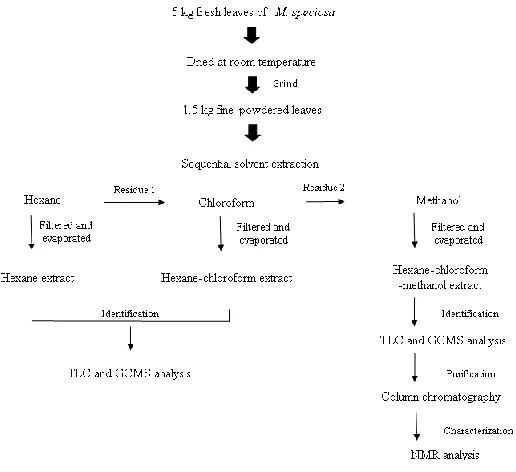
Fresh leaves of M. speciosa (5.0 kg) were washed with water to remove dirt and air-dried at room temperature (28°C) for seven days. The dried leaves were ground into fine powder using a blender. The leaves were then soaked with solvents of different polarities, from non-polar (hexane), followed by intermediate polar (chloroform), and polar (methanol) according to previous study with some modification [29]. Briefly, M. speciosa leave powder (1.5 kg) was soaked in 2.5 L of hexane at room temperature to remove fat. Mitragynine from defatted M. speciosa leaves were then sequentially extracted using chloroform, followed by methanol under similar conditions. The extraction and evaporation process using rotary evaporator were repeated three times. Fractions from the same solvent extracts were pooled, filtered using filter paper (Whatman, 125 mm Ø) and further concentrated using a rotary evaporator (BUCHI, Flawil, Switzerland) at 40ºC. The dried crude extracts from different solvents were subjected to TLC and GC/MSanalyzes. The flow of the extraction process is shown in Figure 2.
2.4 Determination of mitragynine content at each extraction stage
2.4.1 Thin layer chromatography (TLC)
The crude extracts from each extraction stage were monitored using a 6 cm × 4 cm silica gel 60 F254 sheets (0.040–0.063 mm, Merck KGaA, Germany) as stationary phase. The spots were developed in hexane and ethyl acetate (3:2) and visualized under UV at 254 nm. Identification of UV inactive compound was carried out by staining with potassium permanganate (KMnO4) solution. The spots were observed on
the TLC plate and Rf values were recorded.
2.4.2 Gas Chromatography/Mass Spectrometry (GC/MS)
3848 column and oven were maintained at 50°C and 250°C,
respectively. The mass range was scanned from 40 to 670 amu. The compounds were identified by comparing their retention times to mitragynine standard at major ion of m/z 398.
Figure 2. Schematic diagram of a successive mitragynine extraction using solvent with different polarities (i.e., hexane, chloroform and methanol).
2.4.3 Purification of mitragynine using column chromatography
From the TLC result, hexane-chloroform-methanol crude extract was further purified using column chromatography, packed with silica gel 60 (200-300 mesh, 40-63 mm, Darmstadt, Merck, Germany). For column packing, the column was rinsed with acetone to remove dirt and dried. Then, glass wool was inserted at the bottom of the column and a slurry of silica gel (50 g) in hexane (55 mL) was poured into the glass column (40 x 300 mm). Sea sand (1 cm, 50–70 mm) was added at the bottom of the column to prevent sample distraction during addition of the solvent. Hexane was allowed to flow during the packing process to the level of 1 cm above the stationary phase. The packed column was kept overnight to remove bubbles. Crude extract (ca. 1 g) was ran through the packed column in hexane: ethyl acetate (3:2) as a mobile phase at a flow rate of 3 mL/min. Approximately 15 mL of mobile phase was collected for each fraction and analyzed on the TLC plate. Similar spots of the residue on the TLC plate were then combined and concentrated in the rotatory evaporator to obtain the final product.
2.4.4 Charaterization of purified mitragynine extract by nuclear magnetic resonance (NMR)
The spectra of ¹H NMR and 13C NMR were obtained from JEOL JMTC Spectrometer (Tokyo, Japan) at 500 MHz and 125 MHz, respectively using deuterated chloroform (CDCl3).
Chemical shifts (δ) were recorded in parts per million (ppm).
The signals for ¹H NMR were analyzed with an appropriate abbreviation for multiplicities as a singlet (s), doublet (d), triplet (t), and multiplet (m). The integration curve for each proton reflected the abundance of individual protons.
3
RESULTS
AND
DISCUSSION
3.1 Extraction of mitragynine
3849 to a greater solubility as compared to the weak attraction
between mitragynine and hexane which lead to lesser solubility. Previous study investigated the use of solvents with different polarities in extracting bioactive compounds from pepper [41]. Petroleum ether was adopted in the study as the primary non-polar solvent for extracting lipids. In another study, hexane, chloroform and methanol were employed in the extraction of chemical constituent in Cinnamommun microphyllum [29].
3.2 Determination of mitragynine content at each extraction stage
3.2.1 Thin layer chromatography (TLC)
TLC is a cost-effective, quick, simple and the most common method used for identification of targeted compounds in the natural products. It is a preliminary step to separate the targeted compounds from the crude extract. After the sequential extraction of mitragynine, the crude extracts from hexane, hexane-chloroform and hexane-chloroform-methanol were examined on TLC for the presence of mitragynine. The mitragynine content in each extraction stage was qualitatively identified with TLC using hexane: ethyl acetate (3:2) as the mobile phase. The retention factor (Rf) of the crude extract in each stage were compared to the mitragynine standard. As shown in Table 1, the Rf values of mitragynine in hexane-chloroform and hexane-hexane-chloroform-methanol extracts were 0.8, which were comparable to the standard. This result is in accordance with previous studies, who also found mitragynine spots at Rf comparable with the standard, however at different value than we obtained in our study, i.e 0.54 and 0.92 respectively [38] [42]. The differences could be due to the dissimilarities in the mobile phase and ratio employed [43]. Mitragynine, being polar was retained in the stationary phase, resulted in low Rf value of chloroform and hexane-chloroform-methanol extracts as compared to the hexane extract. The Rf value of hexane extract was observed at 1.60 on TLC analysis. This indicates that, the extract contained non-polar compounds and suggests that mitragynine was absent in the extract. The non-polar compound in hexane extract was less retained on the stationary phase than the polar compounds in hexane-chloroform and hexane-chloroform-methanol extracts. From the TLC analysis, the variation in texture and colour of the solvent extracts were identified. The result demonstrates that, there were differences in physical properties of crude extracts in each extraction stage. In crude hexane extract, the TLC analysis appeared as a green-coloured spot which may be due to the presence of chlorophyll pigment [28]. In addition, the viscous characteristic of the extract is due to the presence of waxes and fats of the leaves [37]. Thus, the use of hexane is effective in removing waxes, chlorophyll pigments, and fat [44] which also correlates with the finding in our study. However, the hexane-chloroform and hexane-chloroform-methanol extracts showed the greenish-brown spots with a slightly coarse texture, which indicates the presence of mitragynine. The findings agreed with previous studies, who reported similar spot colour of greenish brown [6, 38].
Table 1. Rf values and spot colour of mitragynine in different
solvents obtained from TLC using hexane and ethyl acetate (3:2) as mobile phase
Sample/Extract
Distance travelled by solute (cm)
Rf
values Spot colour
Hexane 6.40 1.60 Greenish
Hexane-chloroform 3.20 0.80 Greenish brown
Hexane-chloroform-methanol
3.20 0.80 Greenish brown
Mitragynine standard 3.30 0.82 Greenish brown
Rf values of chloroform and methanol were similar with mitragynine standard
TLC: Thin layer chromatography
Rf: Retention factor; calculated as distance travelled by solute / distance travelled by solvent (4.0 cm)
3.2.2 Gas Chromatography/Mass Spectrometry (GC/MS)
GC/MS is an analytical technique which used to separate individual target compound from the chemical mixture. Mitragynine from sequential extraction was further identified using GC-MS. This chromatographic technique was able to identify mitragynine from crude extract in each extraction stage by separation process. The characteristic of the compound can be identified in an optimized condition which produces a good separation of the compound from the mixture. The attributes of mitragynine were determined using the GC-MS analysis with a full scan mode (TIC) of 40 to 670 amu. The mitragynine peak in crude extracts was identified by comparing the retention time and mass spectrum to the mitragynine standard as shown in Figure 3.From the full scan mass spectrum, the result indicates that mitragynine peaks were identified in hexane-chloroform and hexane-chloroform-methanol extracts at the retention time of 90 min. A strong ion signal was obtained at m/z 398 was identified as the molecular ion of mitragynine, which was in agreement with previous reports [6] [14] [25]. Fragment ions at m/z 186, 214, 269, and 383 were similar with mitragynine standard. This observation also showed that the molecular ion was stable. No peak was identified in hexane extract at 90 mins of retention time with product ions of m/z 430 and 165, which confirms the absence of mitragynine in the extract. In addition, it was also observed that two additional peaks appeared adjacent to the mitragynine at the retention time of 91 and 92 mins. Those peaks were identified as paynatheine and speciogynine, which correspond to mitragynine analogues, with molecular masses (M+) of m/z 396.20 and 398.50, respectively [15]. The GC-MS results showed a satisfactory mitragynine extraction with reduced impurities at each stage of the sequential solvent extraction process. The major peak impurities at the retention time of 75.0–80.0 from hexane extract to the hexane-chloroform-methanol extract were significantly reduced as solvent polarities increased. Result obtained from the GC-MS analysis supports the TLC result and indicated that the mitragynine obtained from final crude extract after three solvent extractions had minimal impurities.
3850 Figure 3. GC-MS chromatograms and mass spectra of
mitragynine standard (1A,1B) and different crude extracts: crude 1; hexane (2A,2B), crude 2; hexane, chloroform (3A,3B) and final crude; hexane, chloroform and methanol (4A,4B). Mass spectra of mitragynine are shown at peak retention time of 90 mins (pointed by arrow).
3.2.3 Purification of mitragynine using colum
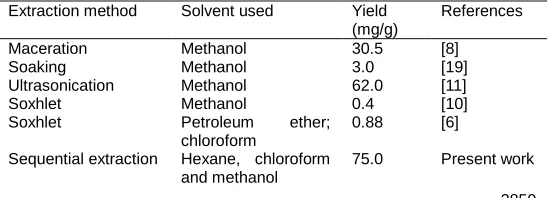
The separation of mitragynine from the hexane-chloroform-methanol crude extract was performed using silica gel column chromatography. The solvent system used in column chromatography was similar with TLC, i.e., hexane: ethyl acetate (3:2). About 1.0 g of crude extract was purified by using column chromatography which produced 34 fractions of 15 mL mitrgaynine residues. The fractions attained were screened to determine the purity of mitragynine using TLC. From the TLC observation, the 15th to 29th fractions had similar Rf values and spot characteristics of mitragynine as previously described. These fractions were then combined and concentrated using a rotary evaporator. The final product achieved from the column chromatography was approximately 75 mg of mitragynine (0.075 g/g). The mitragynine yield from our study was higher as compared to previous reports. Other studies have shown that mitragynine were produced at 0.0008 g/g using chloroform [6] and 0.03, 0.062 and 0.003 g/g using methanol extract [8] [11] [19]. Therefore, this study suggests that the combination of solvent with different polarities produces a higher yield of mitragynine as compared to the extraction methods using single solvent. Table 2 summaries the different extraction methods and yields of mitragynine obtained from previous studies in comparison with the present work.
Table 2. Comparison of mitragynine yield between the present
work to other published methods
In this study, the target compound, i.e. mitragynine, has a polar characteristic which was eluted later from the column chromatography. The main factor that influences column chromatography performance was the molecular affinity between the solvent and solute, where the higher the polar compound the more it will be retained in the column. Furthermore, the characteristics of the compound e.g., adsorption and solubility, influenced the adhesion strength to the absorbent [45]. Besides, other impurities and least polar
compounds were eluted earlier, followed by other compounds in its order of increasing polarity. This could be due to the properties of the silica gel adsorbent, the more polar compound such as mitragynine was strongly retained in the stationary phase, i.e. the silica gel [46].
3.2.4 Characterization of purified mitragynine extract by nuclear magnetic resonance (NMR)
The structure elucidation of the mitragynine was achieved by the NMR analysis in the 13C and ¹H spectra. The carbon and proton number displayed the number of carbon and hydrogen atom presented in the mitragynine with the chemical formula of C23H30N2O4. NMR of
1
H and 13C NMR spectra of purified mitragynine were compared to the mitragynine standard which was recorded in CDCl3 at room temperature. Chemical shifts
(δ) are given relative to the mitragynine standard. Figure 4 shows the proton NMR spectra of purified mitragynine and standard. The integration shows that 30 hydrogen atoms were similar to the mitragynine standard, which includes the number of hydrogen, nitrogen, and oxygen atom presented in the mitragynine structure.
Figure 4.1H NMR spectra of (A) mitragynine standard and (B) isolated mitragynine from final crude extract
The sharp signals at δH 3.6, δH 3.7, and δH 3.8 indicated the
presence of methoxy groups at H-22, H-9, and H-17, which were comparable to the standard. The signal of methoxy groups obtained were in agreement with the NMR spectroscopic data reported by previous study where, the methoxy groups signals were found at 3.70 (3H, s, 22-OCH3),
3.87 (3H, s, 9-OCH3) and 3.71 (3H, s, 17-OCH3) [19]. Previous
study identified the signal peaks of methoxy groups at 3.84 (3H, s, 9-OCH3), 3.78 (3H, s, 17-OCH3) and 3.68 (3H, s,
22-Extraction method Solvent used Yield (mg/g)
References
Maceration Methanol 30.5 [8]
Soaking Methanol 3.0 [19]
Ultrasonication Methanol 62.0 [11]
Soxhlet Methanol 0.4 [10]
Soxhlet Petroleum ether; chloroform
0.88 [6]
Sequential extraction Hexane, chloroform and methanol
3851 OCH3) [6]. The presence of a single peak at downfield region
at δH 7.9 ppm attributed to the H group. Similar signal of
N-H group was also reported in other studies at δH 7.8 (1H, br-s,
N-H) and δH 7.68 (1H, br-s, N-H) respectively [6] [19].The
chemical shifts at δH 29.7, δH 40.6 and δH 111.4 were referred
to as H-14, H-15, and H-16 which were comparable to the data reported by previous finding and the mitragynine standard [8]. Figure 5 shows a comparison of 13C NMR spectra of purified mitragynine with the mitragynine standard which represents 23 carbons. All peaks identified were akin to the spectra of the mitragynine standard. From the 13C spectra, three methoxy groups were present with the signal obtained at δC 61.4, δC
55.2, and δC 51.2, which were in agreement with the report by
previous study with similar groups reported at δC 61.6, δC 55.4
and δC 51.4 [6]. The chemical shift of C21 that represented
C=O produced a signal at δC 69.21, which was comparable to
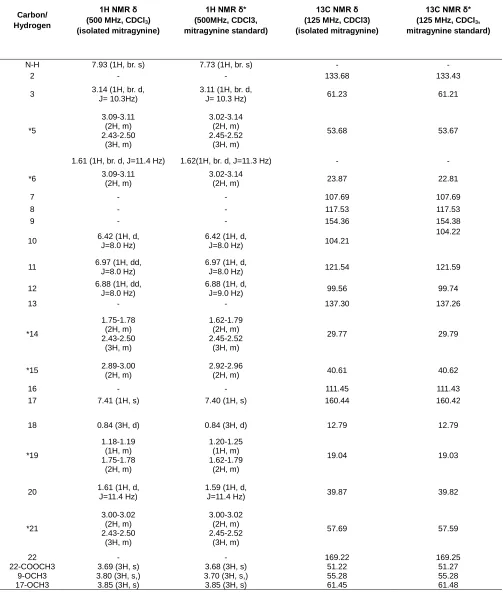
the mitragynine standard (Table 3). All peaks were reflective of the number of actual mitragynine signals by comparing their NMR spectroscopic data with the previous reports [7] [8] [9]. The mitragynine obtained in this study had a purity of 98% based on the average intensity ratio between the carbon and proton signals of mitragynine with those with a trace of impurity observed at the baseline of the NMR [12]. A summary of the carbon and proton NMR data analysis is shown in Table 3.The 1H and 13C NMR spectroscopic data of mitragynine obtained in this study were at par to the mitragynine standard and with those previously reported [6] [7] [8] [9] [19]. Hence, the present study shows a good yield of pure mitragynine was successfully isolated from M. speciosa leaves using sequential extraction method.
Figure 5. 13C NMR spectra of mitragynine standard (A) and isolated mitragynine from methanol extract (B).
4
CONCLUSIONS
Natural plant herb such as M. speciosa leaves consist of multi-component mixtures of alkaloids. In summary, extraction of mitragynine by employing sequential extraction method and supported by chromatographic techniques gave higher yield and purity. Purification using silica gel column chromatography produced mitragynine (0.075 g/g) with a purity of 98% based on average intensity ratio in NMR. This sequential extraction method offers an inexpensive technique with minimum technical knowledge and use of less complex technology. Therefore, the method is reliable and convenient to be used in any laboratory with less tedious and minimise the need of using special instrument. Hence, pure mitragynine obtained can be used for future application e.g., pharmaceutical, pharmacological and development of test kits. This study can provide an additional knowledge to the present method of the extraction target alkaloid in natural product with higher yield and purity.
ACKNOWLEDGMENT
This work was supported by the Ministry of Education, Malaysia under Grant [FRGS/UPM/5524655] and MyBrain Scholarship.
3852 Table 3. Analysis data of 13C NMR and 1H NMR for mitragynine
Carbon/ Hydrogen
1H NMR δ (500 MHz, CDCl3) (isolated mitragynine)
1H NMR δ* (500MHz, CDCl3, mitragynine standard)
13C NMR δ (125 MHz, CDCl3) (isolated mitragynine)
13C NMR δ* (125 MHz, CDCl3, mitragynine standard)
N-H 7.93 (1H, br. s) 7.73 (1H, br. s) - -
2 - - 133.68 133.43
3 3.14 (1H, br. d, J= 10.3Hz)
3.11 (1H, br. d,
J= 10.3 Hz) 61.23 61.21
*5
3.09-3.11 (2H, m) 2.43-2.50
(3H, m)
3.02-3.14 (2H, m) 2.45-2.52
(3H, m)
53.68 53.67
1.61 (1H, br. d, J=11.4 Hz) 1.62(1H, br. d, J=11.3 Hz) - -
*6 3.09-3.11
(2H, m)
3.02-3.14
(2H, m) 23.87 22.81
7 - - 107.69 107.69
8 - - 117.53 117.53
9 - - 154.36 154.38
10 6.42 (1H, d, J=8.0 Hz) 6.42 (1H, d, J=8.0 Hz) 104.21
104.22
11 6.97 (1H, dd,
J=8.0 Hz)
6.97 (1H, d,
J=8.0 Hz) 121.54 121.59
12 6.88 (1H, dd,
J=8.0 Hz)
6.88 (1H, d,
J=9.0 Hz) 99.56 99.74
13 - - 137.30 137.26
*14
1.75-1.78 (2H, m) 2.43-2.50
(3H, m)
1.62-1.79 (2H, m) 2.45-2.52
(3H, m)
29.77 29.79
*15 2.89-3.00
(2H, m)
2.92-2.96
(2H, m) 40.61 40.62
16 - - 111.45 111.43
17 7.41 (1H, s) 7.40 (1H, s) 160.44 160.42
18 0.84 (3H, d) 0.84 (3H, d) 12.79 12.79
*19
1.18-1.19 (1H, m) 1.75-1.78
(2H, m)
1.20-1.25 (1H, m) 1.62-1.79
(2H, m)
19.04 19.03
20 1.61 (1H, d,
J=11.4 Hz)
1.59 (1H, d,
J=11.4 Hz) 39.87 39.82
*21
3.00-3.02 (2H, m) 2.43-2.50
(3H, m)
3.00-3.02 (2H, m) 2.45-2.52
(3H, m)
57.69 57.59
22 - - 169.22 169.25
22-COOCH3 3.69 (3H, s) 3.68 (3H, s) 51.22 51.27
9-OCH3 3.80 (3H, s,) 3.70 (3H, s,) 55.28 55.28
3853
REFERENCES
[1] S. Ramanathan, S. Parthasarathy, V. Murugaiyah, E. Magosso, S. C. Tan, S. M. Mansor, ―Understanding the physicochemical properties of mitragynine, a principal alkaloid of Mitragyna speciosa, for preclinical evaluation,‖ Molecules. vol. 20, no. 3, pp. 4915–4927,
2015.
[2] Z. Hassan, M. Muzaimi, V. Navaratnam, N. H. Yusoff, F.W. Suhaimi, R. Vadivelu, B. K. Vicknasingam, D. Amato, S. Von Horsten, N. I. Ismail, N. Jayabalan, A. I. Hazim, S. M. Mansor and C.P. Müllerc, ―From kratom to mitragynine and its derivatives: physiological and behavioural effects related to use, abuse, and addiction,‖ Neurosci. Biobehav, vol. 37, no. 2, pp. 138-151, 2013.
[3] C. Veltri and O. Grundmann, ―Current perspectives on the impact of Kratom use,‖ Subst Abuse Rehabil. vol. 10, pp. 23-31, 2012.
[4] European Monitoring Centre for Drugs and Drug Addiction. ―The state of the drugs problem in Europe,‖ Annual report 2010: EMCDDA. 2012.
[5] R. V. Ancuceanu, M. Dinu, A. I. Anghel, O. C. Rebegea, O. T. Olaru, D. Popescu, G. Popescu, ―Recent prohibition of certain psychoactive ―ethnobotanicals‖ in Romania,‖ Farmacia. vol. 58, no. 2, pp. 121-127, 2010.
[6] G. T. Beng, M. R. Hamdan, M. J. Siddiqui, M. N. Mordi, S. M. Mansuri, ― A simple and cost effective isolation and purification protocol of mitragynine from M. speciosa Korth (ketum) leaves,‖ Malaysian J. Anal. Sci. vol. 15, no. 1, pp. 54-60, 2011.
[7] D. Ponglux, S. Wongseripipatana, H. Takayama, M. Kikuchi, M. M. K. Kurihara, N. Aimi, D. Sakai, D, ―A new indole alkaloid, 7alpha- Hydroxy- 7H-mitragynine, from Mitragyna speciosa in Thailand,‖J. Nat Med. vol. 60, no. 6, pp. 580-581, 1994.
[8] P. J. Houghton, A. Latiff and I. M Said, ―Alkaloids from Mitragyna speciosa,” Phytochem. vol. 30, no. 1, pp. 347-350, 1991.
[9] K. L. R. Jansen and C. J Prast, ―Ethnopharmacology of kratom and the mitragyna alkaloids,‖
Enthnopharmacol. vol. 23, no. 1, pp. 115-119, 1988. [10]S. N. Harizal, S. M. Mansor, J. Hasnan, J. K.
Tharakan, J. Abdullah,‖Acute toxicity study of the standardized methanolic extract of Mitragyna speciosa Korth in rodent,‖ J. Enthnopharmacol. vol. 131, no. 2, pp. 404-409, 2010.
[11]R. Kikura-Hanajiri, M. Kawamura, T. Maruyama, M. Kitajima, H. Takayama, Y. Goda, ―Simultaneous analysis of mitragynine, 7-hydroxymitragynine, and other alkaloids in the psychotropic plant ―kratom‖ (Mitragyna speciosa) by LC-ESI-MS,‖ Forensic Toxicol. vol. 27, no. 2, pp. 67-74, 2009.
[12]B. Janchawee, N. Keawpradub, S. Chittrakarn, S. Prasettho, P. Wararatananurak, K. Sawangjareon, ―A high-performance liquid chromatographic method for determination of mitragynine in serum and its application to a pharmacokinetic study in rats,‖ Biomed Chromatogr. vol. 21, no. 2, pp. 176-183, 2007.
[13]K. Srichana, B. Janchawee, S. Prutipanlai, P. Raungrut, N. Keawpradub, ―Effects of mitragynine and
a crude alkaloid extract derived from Mitragyna speciosa Korth. On permethrin elimination in rats,‖ Pharmaceutics. vol. 7, no. 2, pp. 10-26, 2015.
[14]M. M. Sanagi, M. F. M. Ayob, N. Omar, W.A.W. Ibrahim, I Hussain, ―Determination of mitragynine for the identification of mitragyna species in Kedah (Malaysia) by gas chromatography-mass spectrometry,‖ Der Pharma Chem. vol. 5, no. 5, pp. 131-138, 2013.
[15]M.R.H.M. Haris, C. S. Lai, S. N. Idris, M. Abdul Rahman, ―An optimized recovery of mitragynine from Mitragyna speciosa using freeze drying and ultrasonic-assisted extraction method,‖ Int. J. Sci. Technol. vol. 15, no. 3, pp. 1077-1083, 2013.
[16]N. Medina-Torres, T. Ayora-Talavera, H. Espinosa-Andrews, ―Ultrasound assisted extraction for the recovery of phenolic compounds from vegetable sources,‖ Agronomy. vol. 47, no. 7, pp. 1-19, 2017. [17]N. N. Azwanida, ―A review on the extraction methods
use in medicinal plants: Principle, strength and limitation,‖Med. Aromat. Plant. vol. 4, no. 3, pp. 3-8, 2015.
[18]C.P. Kumar and J. Sachin, ―Extraction and isolation of bioactive compounds from Ficus racemosa bark and Cissampelos pareira root by chromatographic techniques,‖ Int. J. Pharm. Sci. Rev.Res. vol. 20, no. 2, pp. 101-106, 2013.
[19]M. Kitajima, K. Misawa, N. Kogure, Y. Hatori, T. Murayama, H. Takayama, I. M. Said, S. Horie, ―A new indole alkaloid, 7-hydroxyspeciociliatine, from the fruits of Malaysian Mitragyna speciosa and its opioid agonistic activity,‖ J. Nat. Med. vol. 60, no. 1, pp. 28-35, 2005.
[20]Z. Ali, H. Demiray, I. A. Khan, ―Isolation, characterization, and NMR spectroscopic data of indole and oxindole alkaloids from Mitragyna speciosa,‖ Tetrahedron Lett. vol. 55, no. 2, pp. 369-372, 2014.
[21]A. A. Philipp, M. R. Meyer; D. K. Wissenbach, A. A. Weber, S. W. Zoerntlein, P. G. M. Zweipfenning, H. H. Maurer, ―Monitoring of kratom or krypton intake in urine using GC-MS in clinical and forensic toxicology,‖ Anal. Bioanal. Chem. vol. 400, no. 1, pp. 127-135, 2011.
[22]M. Wang, E. J. Carrell, Z. Ali, B. Avula, C. Avonto, J. F. Parcher, I. A. Khan, ―Comparison of three chromatographic techniques for the detection of mitragynine and other indole and oxindole alkaloids in Mitragyna speciosa (kratom) plants,‖ J. Sep. Sci. vol. 37, no. 12, pp. 1411-1418, 2014.
[23]K. B. Chan, C. Pakiam, R. A. B. Rahim, ―Psycoactive plant abuse: The identification of mitragynine in ketum and in ketum preparations,‖ Narcotics. vol. 57, no. 2, pp. 249-256, 2005.
[24]A. A. Philipp, D. K. Wissenbach, A. Weber, J. Zapp, S. W. Zoerntlein, K. Kanogsunthornrat, H. H. Maurer, ―Use of liquid chromatography coupled to low- and high-resolution linear ion trap mass spectrometry for studying the metabolism of paynantheine, an alkaloid of the herbal drug kratom in rat and human urine,‖ Anal. Bioanal. Chem. vol. 396, no. 7, pp. 2379-2391, 2010.
3854 ―Quantitative analysis of mitragynine in human urine
by high performance liquid chromatography-tandem mass spectrometry,‖ J Chromatogr. B: Anal. Technol. Biomed. Life Sci. vol. 877, no. 24, pp. 2499-2505, 2009.
[26]P. K. Vuppala, S. Jamalapuram, E. B. Furr, C. R. McCurdy, ―Development and validation of a UPLC‐MS/MS method for the determination of 7‐hydroxymitragynine, a μ‐opioid agonist, in rat plasma and its application to a pharmacokinetic study. Biomed. Chromatogr. vol. 27, no. 12, pp. 1726-1732, 2013.
[27]H. Takayama and T. Maruyama, ―Simultaneous analysis of mitragynine, 7-hydroxymitragynine, and other alkaloids in the psychotropic plant "kratom" (Mitragyna speciosa) by LC-ESI-MS,‖ Forensic Toxicol. vol. 27, pp. 67-74, 2009.
[28]S. Sasidharan, Y. Chen, D. Saravanan, K. M. Sundram, Y. L. Latha, ―Simultaneous analysis of mitragynine, 7-hydroxymitragynine, and other alkaloids in the psychotropic plant "kratom" (Mitragyna speciosa) by LC-ESI-MS,‖ Afr. J. of Tradit. Complement and Altern. Med. vol. 8, no. 1, pp. 1-10, 2011.
[29]M. A. Norazah, M. Rahmani, S. Khozirah. H. B. M. Ismail, M. A. Sukari, A. M. Ali, G.C.L Ee, ―Chemical constituents and antioxidant activity of Cinnamomum microphyllum,” Pertanika J. Sci. Technol. vol. 18, no. 2, pp. 263-270, 2010.
[30]G. A. Akowuah, Z. Ismail, I. Norhayati, A. Sadikun, ―The effects of different extraction solvents of varying polarities on polyphenols of Orthosiphon stamineus and evaluation of the free radical-scavenging activity,‖ Food Chem. vol. 93, no. 2, pp. 311-317, 2005.
[31]V. Seidel, ―Initial and Bulk Extraction of Natural Products Isolation,‖ Springer Nature- Methods in Molecular Biology, S. D. Sarker and L. Nahar, eds., Natural Products Isolation, Springer Science and Business Media, pp. 27-41, 2012.
[32]M. Romdhane and C. Gourdou, ―Investigation in solid-liquid extraction: influence of ultrasound,‖ Chem. Eng. J. vol. 87, no. 1, pp. 11-19, 2002.
[33]F. Lin and M. M, Giusti, ―Effects of solvent polarity and acidity on the extraction efficiency of isoflavones from soybeans (Glycine max),” J. Agric. Food Chem. vol. 53, no. 10, pp. 3795-3800, 2005.
[34]I. Ahmad, Z. Anwar, K. Qadeer, A. Sabah, A. Arif, A. Arsalan, ―Effect of solvent polarity on the extraction of components of pharmaceutical plastic containers,‖ Pak. J. Pharm. Sci. vol. 30, no. 1, pp. 247-252, 2017. [35]M. A. Hossain, S. S. Hdhrami, A. M. Weli, Q.
Al-Riyami, J. N. Al-Sabahi,‖ Isolation, fractionation and identification of chemical constituents from the leaves crude extracts of Mentha piperita L. grown in Sultanate of Oman,” Asian Pac. J. Trop. Biomed. vol. 4, no. 1, pp. 368-372, 2014.
[36]T. U. Nwabueze and K. S. Okocha, ―Extraction performances of polar and non-polar solvents on the physical and chemical indices of African breadfruit (Treculia africana) seed oil,‖ Afr. J. Food Sci. vol. 2, no. 2, pp. 119-125, 2008.
[37]A. Gupta, M. Naraniwal and V. Kothari, ―Modern extraction methods for preparation of bioactive plant
extracts,‖ Int. J. Appl. Nat. Sci. vol. 1, no. 1, pp. 8-26, 2012.
[38]D. Singh, S. Narayanan, C.P Muller, M. T. Swogger, N. J. Y. Chear, E. B. Dzulkapli, N. S. M. Yusoff, D. Ramachandram, F. Leon, C. R. McCurdy and B. Vicknasingham. ―Motives for using kratom (Mitragyna speciosa Korth.) among regular users in Malaysia,‖ J. Ethnopharmacol. vol. 233, pp. 34-41, 2019.
[39]K. J. Sufka, M. J. Loria, K. Lewellyn, J. K. Zjawiony, Z. Ali, N. Abe, I. A. Khan, ― The effect of Salvia divinorum and Mitragyna speciosa extracts, fraction and major constituents on place aversion and place preference in rats,‖ J. Ethnopharmacol. vol. 151, pp. 361-364, 2014.
[40]J. J. Kirkland, ―Analytical Chemistry,‖ Journal of Chromatography Library, L. R Synder and J. J. Kirkland. New York: John Wiley & Sons. pp 431-482, 1979
[41]C. Kouassi, ―Profiles of bioactive compounds of some pepper fruit (Capsicum L.) varieties grown in Côte d‘Ivoire, ―Innov. vol. 11, no. 9, pp. 23-31, 2012. [42]S. Parthasarathy, J. B. Azizi, S. Ramanathan, S.
Ismail, S. Sasidharan, M. I. M. Said, S. M. Mansor, ― Evaluation of antioxidant and antibacterial activities of aqueous, methanolic and alkaloid extracts from Mitragyna speciosa (rubiaceae family) leaves,‖ Molecules. vol. 14, pp. 3964-3974, 2009.
[43]M. Kotzé, J. N. Eloff, P. J. Houghton, “Extraction of antibacterial compounds from Combretum microphyllum (Combretaceae),‖ S. Afr. J. Bot. vol. 68, no. 1, pp. 62-67, 2016.
[44]P. Cos, A. J. Vlietinck, D. V. Berghe, L. Maes, ―Anti-infective potential of natural products: How to develop a stronger in vitro ‗proof-of-concept‘,‖ J. Ethnopharmacol. vol. 106, no. 3, pp. 290-302, 2006. [45]B. A. Olsen, ―Hydrophilic interaction chromatography
using amino and silica columns for the determination of polar pharmaceuticals and impurities, ―Afr. J. Food Sci. vol. 913, no. 1, pp. 113-122, 2001.