INTERNATIONAL RESEARCH JOURNAL OF PHARMACY
www.irjponline.com
ISSN 2230
–
8407
Research Article
DISSOLUTION METHOD DEVELOPMENT AND ENHANCEMENT OF SOLUBILITY OF
CLOPIDOGREL BISULFATE
Zainab E. Jassim ٭, Ahmed A. Hussein
Department of Pharmaceutics, College of Pharmacy, University of Baghdad, Baghdad, Iraq
*Corresponding Author Email: [email protected]
Article Received on: 25/04/17 Approved for publication: 28/06/17
DOI: 10.7897/2230-8407.08691
ABSTRACT
Dissolution of drug is the rate determining step for oral absorption of the poorly water soluble drugs and solubility is the basic requirement for the absorption of the drug from GIT. The development of a soulful dissolution procedure for drug products with lower water solubility has been a provocation to both the pharmaceutical industry and the agencies that regulate them. This study demonstrates the systematic development o f a discriminatory dissolution method for clopidogrel bisulfate, a BCS class II drug exhibiting highly pH-dependent solubility. The method was developed by testing solubility of clopidogrel bisulfate in different concentrations of sodium lauryl sulfate. The results showed 900 ml of 0.1 N HCl and phosphate buffer pH 6.8 containing 1% SLS with a paddle speed of 50 rpm was selected as discriminative dissolution test conditions for clopidogrel bisulfate tablets. In conclusion surfactants and pH changes are very effective ways to increase solubility. The in vitro dissolution must serve as both a quality control tool and a potential surrogate marker of drug bioavailability and bioequivalence.
Keywords: Clopidogrel bisulfate, Dissolution, BCS Class II, phosphate buffer
INTRODUCTION
Development of the dissolution method for poorly soluble or insoluble drug has been a challenge for scientists. Drugs with limited water solubility are usually lipophilic, and drug release is usually the rate-limiting process for oral drug absorption of these substances1.
To release the drug from the dosage form it may involve mainly two steps: the disintegration which ensure liberation of the drug from the formulation matrix, then followed by the dissolution of the drug in the liquid medium2.
According to the biopharmaceutical classification system (BCS) of drugs, the class II category has low solubility and high permeability drugs and identified as potential drug candidates for investigation. Bioequivalence problems arise in class II and class IV categories of the biopharmaceutical classification of drugs. The low solubility aspects can be handled in order to develop a biorelevant and discriminating method for dissolution. A dissolution medium containing surfactant can better simulate the environment of the gastrointestinal tract than a medium containing organic solvents or other non-physiological substances, making the dissolution test conditions more useful in evaluating drug quality3- 4.
Generally, when developing adissolution procedure, one goal is to have sink conditions, which defined as the volume of medium at least three times that required in order to form a saturated solution of drug substance as outlined in USP 5.
It has also been recommended that the drug concentration in the
sink conditions may give unpredictable release kinetics and suppression of release profiles6.
Clopidogrel bisulfate is a thienopyridine antiplatelet drug known chemically as methyl (+)-(S)- α-(2chlorophenyl)-6,7-dihydrothieno[3,2-c] pyridine-5(4H)-acetatesulfate (1:1). It has a chemical formula (C16H16ClNO2S.H2SO4) and a molecular weight of 419.9 g/mol. It has a dissociation constant (pKa) value of 4.557-8. The chemical structure of clopidogrel bisulfate is
shown in (Figure 1).
Clopidogrel bisulfate appears as a white to off–white powder. It has a melting point of about 184˚C. It is practically insoluble in water at neutral pH; freely soluble in aqueous buffer at pH 1, and in methanol, sparingly soluble in methylene chloride, and practically insoluble in ethyl ether8-3 .
The dissolution medium available in the monographs for clopidogrel bisulfate consisted of 1000 mL of a pH 2.0 hydrochloric acid buffer; the objective of this study was to determine the saturation solubility of the drug in different buffer and the effect of surfactant concentration to obtain sink condition suitable for the dissolution of clopidogrel bisulfate solid oral dosage forms by using phosphate buffer pH 6.8 to support product development and quality control efforts. MATERIALS AND METHODS
Clopidogrel bisulfate sample was supplied by Zhejiang Menovo Pharmaceutical Co.,LTD,China. Citric acid monohydrate was supplied from Mumbai, India. Di-sodium hydrogen-o- phosphate Na2HPO4 from Qualikems Fine Chem Pvt.Ltd. India.
Calibration Curves of Clopidogrel Bisulfate
Standard solutions of clopidogrel bisulfate in 0.1 N HCl and phosphate buffer (pH 6.8) solutions were prepared from stock solutions. Clopidogrel bisulfate stock solution of concentration (0.12 mg/ml) was prepared; samples were analyzed spectrophotometrically at the wave length of maximum absorbance in 0.1N HCl and in phosphate buffer (pH 6.8) with 1% sodium lauryl sulfate. Absorbance was recorded and plotted versus concentration9.
Determination of Clopidogrel Bisulfate Saturation Solubility
The solubility of clopidogrel bisulfate in various solutions was determined by saturation solubility technique. An excess amount of clopidogrel bisulfate was added separately to 20 ml of 0.1 N HCl (pH 1.2), acetate buffer solutions at pH (3.5, 4, 4.5 and 5.12), and phosphate buffer solution at pH (6.6, 6.8).
The saturation solubility of clopidogrel bisulfate in phosphate buffer (pH 6.8) solution containing 0.25%, 0.5% and 1% w/v of sodium lauryl sulfate as a surfactant was also determined. The mixtures were shaken for 24 hours at 37○C then filtered using filter paper 0.45μm and the filtrate was diluted suitably so that can be analyzed spectrophotometrically (at wave length specific for each media) for the amount dissolved10,11.
Preparation of Phosphate Buffer pH 6.8
The composition of phosphate buffer pH 6.8 was shown in (Table 1), equation (1) was used to prepare 100 ml of buffer solution in which the value of x is 23.5.
X ml (A) + (100-x) ml (B) --- equation (1)12
In Vitro Dissolution Profile of Clopidogrel Bisulfate Tablets
In vitro dissolution study was performed using USP dissolution test apparatus-II (paddle assembly). The dissolution was performed using 900 ml of 0.1 N HCl solution (pH 1.2) and phosphate buffer solution (pH 6.8) (containing 1% SLS) as dissolution media maintained at 37 ± 0.5°C and 50 rpm.
Samples (5ml) were withdrawn at regular intervals of 10 minutes for 60 minutes in 0.1N HCl (pH 1.2) and 120 minutes in phosphate buffer solution and replaced with fresh dissolution medium to maintain sink condition. Samples were filtered through filter paper and assayed spectrophotometrically on UV-visible spectrophotometer at 270 nm wavelength for 0.1 N HCl (pH 1.2) and at 269 nm for phosphate buffer solution (pH 6.8). For each formulation, the release was repeated in triplicate, results are expressed as a mean ±S.D.
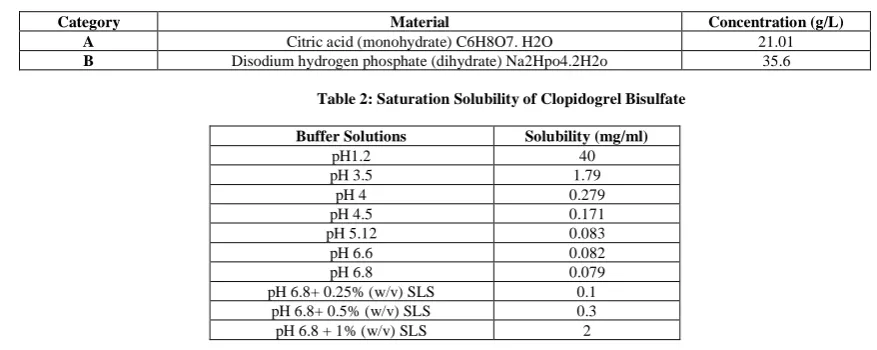
Table 1: Composition of Phosphate Buffer Solution (pH 6.8) 12
Category Material Concentration (g/L)
A Citric acid (monohydrate) C6H8O7. H2O 21.01
B Disodium hydrogen phosphate (dihydrate) Na2Hpo4.2H2o 35.6
Table 2: Saturation Solubility of Clopidogrel Bisulfate
Buffer Solutions Solubility (mg/ml)
pH1.2 40 pH 3.5 1.79
pH 4 0.279 pH 4.5 0.171 pH 5.12 0.083 pH 6.6 0.082 pH 6.8 0.079 pH 6.8+ 0.25% (w/v) SLS 0.1
pH 6.8+ 0.5% (w/v) SLS 0.3 pH 6.8 + 1% (w/v) SLS 2
Table 3: Saturation Solubility and Relative Sink Conditions of Clopidogrel Bisulfate in Phosphate Buffer (pH 6.8) at Different Surfactant Concentrations
Buffer Solution Solubility (mg/ml) Sink condition (Cs/Cd)
pH 6.8+ 0.25% (w/v) SLS 0.1 0.92 pH 6.8+ 0.5% (w/v) SLS 0.3 2.8
pH 6.8 + 1% (w/v) SLS 2 18.4
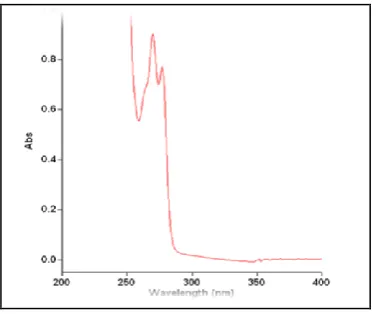
Figures 2: UV scan of clopidogrel bisulfate in 0.1 N HCl (pH 1.2) Figure 3: UV scan of clopidogrel bisulfate in phosphate buffer pH 6.8 with 1% w/v sodium lauryl sulfate
Figure 4: Calibration curve of clopidogrel bisulfate in 0.1N HCl (pH 1.2)
Figure 5: Calibration curve of clopidogrel bisulfate in phosphate buffer solution (pH 6.8) containing 1% SLS
RESULTS AND DISCUSSION
The UV scan of standard solutions between 200-400 nm showed the absorption maxima at 270 nm, 277 nm in 0.1N HCl and at 269 nm, 276 nm in phosphate buffer solution pH 6.8 as shown in (Figure 2 and 3). This means that a change in the pH of buffer causes shifting in the max.
The Beer’s law was verified from the calibration curve by plotting a graph of concentration versus absorbance, the plot shown in (Figure 4 and 5). Regression analysis showed very good correlation. The calibration plot revealed zero intercept which is clear by the regression analysis equation Y= m X+C (where Y is absorbance, m is the slope and X is the concentration) the results obtained which indicate that these curves obey Beer- Lambert’s law within the concentrations used13.
Determination of Clopidogrel Bisulfate Saturation Solubility
According to the Biopharmaceutics Classification System (BCS), clopidogrel bisulfate is categorized as a class II agent (poorly water soluble and highly permeable)14. The results of
saturation solubility of clopidogrel bisulfate are showed in (Table 2). It showed wide variation in solubility in physiological pH range. Clopidogrel bisulfate exhibited higher solubility in pH 1.2 of 0.1N HCl. In case of pH 6.8 phosphate buffer, solubility was found to be less as compared to solubility in acidic conditions. These findings are highly expected because clopidogrel is weak base with pKa value of 4.510. Therefore,
clopidogrel solubility is strongly pH dependent and it is very soluble at pH value < 315.
Sodium lauryl sulfate (SLS) is an anionic surfactant which lowers the surface tension of the medium in which it is dissolved, and/or the interfacial tension with other phases. It has high hydrophilic–lipophilic balance (HLB) value of 40, but the solubilization process depends on the concentration of SLS added16, 17. SLS is the most popular surfactant suggested by
FDA to use in dissolution media, SLS was selected as suitable surfactant for solubilization of clopidogrel bisulfate in phosphate buffer solution (pH 6.8) and to maintain sink condition in the dissolution study. A marked increase in solubility was found when SLS was added in media. Maximum effect on solubility was observed when the concentration of SLS was 1% w/v in phosphate buffer solution (pH 6.8). To determine the concentration of SLS that will maintain sink condition can be obtained from Cs/Cd ratio.
The ratio of saturation solubility to drug concentration (dose), expressed as Cs/Cd, represents the closeness to sink conditions; values greater than 3 being considered sink. Sink conditions is the volume of medium at least three times greater than that required to form a saturated solution of drug substance18, 19. The
concentration of 1% w/v of SLS gave Cs/Cd greater than 3 as shown in (Table 3). Hence 1% SLS was selected as satisfactory concentration for the dissolution media to maintain sink condition.
Cs indicates saturation solubility of clopidogrel bisulfate in 900 mL of dissolution medium, Cd dose of clopidogrel bisulfate in tablet formulation. Being a weak base, clopidogrel bisulfate presents a pH-dependent solubility profile, solubility decreasing with increasing pH as in (Figure 6) and being predictive of intestinal-dissolution and/or absorption limitations.
Understanding the physicochemical characteristics of the active pharmaceutical ingredient API is a key starting point for any
dissolution method development. In particular, information on equilibrium solubility provides quick direction on the selection of a suitable dissolution medium. The results of the equilibrium solubility studies for clopidogrel bisulfate demonstrate that its solubility is highly pH-dependent, which is consistent with earlier reports.
The choice of a medium, like any other experimental conditions for dissolution testing should be linked to appropriate physiological characteristics which are similar to those of the gastrointestinal tract20. The most common dissolution medium is
dilute hydrochloric acid, however other media commonly used include buffers at physiological pH and stimulated gastric or intestinal.
In this case, we examined the dissolution of clopidogrel bisulfate in two media (hydrochloric acid and phosphate buffer pH 6.8) in order to see which one was suitable for dissolving it. The solubility results of the two media demonstrate that 0.1N HCl was the best media for dissolving clopidogrel bisulfate and the phosphate buffer was the least suitable.
Dissolution Release Profiles Comparison
The dissolution profile results showed a significant difference in the dissolution profile of the drug, the percent released was almost 100% after 55 minutes, in 0.1N HCl while in phosphate buffer pH 6.8 with 1% w/v SLS the percent released was 100% after 75 minutes as shown in (Figures 7 and 8) respectively.
From the study of percentage drug release profiles it was observed that it is possible to establish dissolution test parameters, which could be used as an alternative to food and drug administration FDA dissolution test for clopidogrel tablets. The use of 900 ml of 0.1 N HCl and phosphate buffer pH 6.8 solutions at 37°, USP-II dissolution apparatus at the paddle speed of 50 rpm provided discriminative results for clopidogrel tablet.
Based on the results obtained above, 900 ml of 0.1 N HCl and phosphate buffer pH 6.8 solutions with a paddle speed of 50 rpm were selected as discriminative dissolution test conditions for clopidogrel bisulfate tablets.
CONCLUSION
Understanding the physicochemical properties of a drug is crucial for determining the most effective strategy for enhancing dissolution. Typically, the greatest enhancement in the dissolution of poorly soluble compounds is made by changing the dissolution medium to increase compound solubility. Surfactants and pH changes are very effective ways to increase solubility. The in vitro dissolution must serve as both a quality control tool and a potential surrogate marker of drug bioavailability and bioequivalence. The proposed method could be applied for routine analysis in quality control laboratories and to help researchers in their own projects.
ACKNOWLEDGEMENT
Authors are thankful to Zhejiang Menovo Pharmaceutical Co., LTD, China, for providing us the gift sample of pure drug. REFERENCES
marketed formulations. Dissolution technologies. 2008;15(2):31.
2. Gowthamarajan K, Singh SK. Dissolution testing for poorly soluble drugs: a continuing perspective. Dissolution technologies. 2010;17(3):24-32.
3. Shah VP, Konecny JJ, Everett RL, McCullough B, Noorizadeh AC, Skelly JP. In vitro dissolution profile of water-insoluble drug dosage forms in the presence of surfactants. Pharmaceutical research. 1989;6(7):612-8.
4. Brown CK, Chokshi HP, Nickerson B, Reed RA, Rohrs BR,
Shah PA. Dissolution testing of poorly soluble compounds. Pharm. Technol. 2004 Dec;28:56-43.
5. Fatima S, Usman S, Jamil S. Effect of surfactant on dissolution of simvastatin tablets; comparison with usp. World Journal of Pharmacy and Pharmaceutical Sciences 2014;3(3):142-150.
6. Amidon GL, Lennernäs H, Shah VP, Crison JR. A theoretical basis for a biopharmaceutic drug classification: the correlation of in vitro drug product dissolution and in vivo bioavailability. Pharmaceutical research. 1995;12(3):413-20.
7. Koradia V, Chawla G, Bansal AK. Qualitative and quantitative analysis of clopidogrel bisulfate polymorphs. Acta pharmaceutica. 2004;54(3):193-204.
8. MoffatA. OM WB. Clarke's analysis of drugs and poisons. 12th ed ed: The pharmaceutical press 2005.
9. Savani P, Chauhan S, Jain V, Raj H, Patel S. Development and validation of analytical method for clopidogrel bisulphate and irbesartan by simultaneous equation spectroscopic method. Pharmaceutical and Biological Evaluations. 2016;3(2):215-23.
10.Zupančič V, Smrkolj M, Benkič P, Simonič I, Plevnik M, Ritlop G, et al. Preformulation investigation of some clopidogrel addition salts. Acta chimica slovenica. 2010;57(2).
11.Mosher GL, Wedel RL, Johnson KT, Machatha SG, Cowee JA, Cushing DJ. Formulations containing clopidogrel and sulfoalkyl ether cyclodextrin and methods of use. Google Patents; 2014.
12.Lentner C. Geigy Scientific Tables. volume 3: Physical chemistry, Composition of blood, Hematology, Somatometric data. Basel, Switzerland: Ciba-Geigy. 1984. 13.Gopal KN, Gangaiah K, Bhargavi LM, Rao MG, Anitha M,
Anusha P, et al. UV-visible spectrophotometric estimation of amlodipine in pharmaceutical dosage form. International Journal of Research and Reviews in Pharmacy and Applied sciences.2015;5(2): 1251-56.
14.Takagi T, Ramachandran C, Bermejo M, Yamashita S, Yu LX, Amidon GL. A provisional biopharmaceutical classification of the top 200 oral drug products in the United States, Great Britain, Spain, and Japan. Molecular Pharmaceutics. 2006;3(6):631-43.
15.Aubry AS, Sciascia DO. Development of a single in vitro
dissolution method for a combination trilayer tablet formulation of clopidogrel and pravastatin. Dissolution Technologies 2011:12-19.
16.Razzak S, Khan F, Hossain M, Anika T, Moon SA. Impact of sodium lauryl sulphate on the release of carbamazepine from methocel K15M CR based matrix tablets. Bangladesh Pharm J. 2012;15(1):79-82.
17.Sun W, Larive CK, Southard MZ. A mechanistic study of danazol dissolution in ionic surfactant solutions. Journal of pharmaceutical sciences. 2003;92(2):424-35.
18.Gupta A, Gaud RS, Ganga S. Development of discriminating dissolution method for an insoluble drug: nisoldipine. Int J Pharm Tech Res. 2010;2(1):931-9. 19.Jamzad S, Fassihi R. Role of surfactant and pH on
dissolution properties of fenofibrate and glipizide—a technical note. AAPS PharmSciTech. 2006;7(2):E17-E22. 20.Qureshi S. Dissolution-drug dissolution testing: selecting a
dissolution medium for solid oral products. American Pharmaceutical Review. 2009;12(1):18.
Cite this article as:
Zainab E. Jassim and Ahmed A. Hussein. Dissolution method development and enhancement of solubility of clopidogrel bisulfate. Int. Res. J. Pharm. 2017;8(6):25-29 http://dx.doi.org/ 10.7897/2230-8407.08691
Source of support: Nil, Conflict of interest: None Declared