INTRODUCTION
The sugar mill in western Utter Pradesh, India is a key factor in rural economy of the state. Sugar factory is one of the most important agro based industry in India. India is the largest sugar producing country in the world. The sugar industry plays an important role in India’s economy. It is the second largest industry in the country, next to textiles and provides direct employment to more than 3.6 lakes person. The cultivation and transportation of sugarcane to the sugar mills provides a source of
www.orientjchem.org
Est. 1984
An International Open Free Access, Peer Reviewed Research Journal CODEN: OJCHEG 2012, Vol. 28, No. (4): Pg. 1899-1904
A Comparative Study of Sugar Mill Treated
and Untreated Effluent- A Case Study
WEQAR A. SIDDIQUI and MUHAMMAD WASEEM
Department of Applied Sciences and Humanities, Faculty of Engineering and Technology, Jamia Millia Islamia, New Delhi - 110 025, India.
*Corresponding author E-mail : [email protected]
(Received: August 10, 2012; Accepted: September 18, 2012)
ABSTRACT
The treated and untreated effluent sample from Sir Shadi sugar mill Ltd. Shamli Distt Muzaffarnager of Western Utter Pradesh India during 2011-12 were collected and brought into laboratory for studying Physico-chemical parameters like Color, temperature, pH, DO, BOD, COD, TDS, TS, TSS, Chlorides, Sulphate and Oil & grease, heavy metals seed germination pattern of some important cereal crops. Untreated sugar mill effluent is found to have high contents of COD, BOD, TSS, TDS, and low contents of DO. Attempts were made to study the influence of sugar mill treated and untreated effluent on seed germination and seeding growth of cereal crops. The high concentration of distillery untreated effluents was found to inhibit the germination of cereal crops. According to the permissible limit suggested the Bureau of Indian Standards (BIS) the untreated effluents is toxic to plant so it is not permissible for irrigation. The results reflect that the treated effluents of sugar industry are not highly polluted and they satisfy the BIS Indian standards values and therefore can be used for irrigation purposes.
Key words: Sugar Mill effluent, Physico-chemical parameters, Seed germination, Heavy Metals, Irrigation.
income to large number of farmers, laborers, technicians, and transport operators.
The main final products1 of sugar cane
with annexed alcohol distilleries generally release an average of 155 l of stillage and 250 Kg bagasse per 1,000 Kg of sugar cane to obtain 12 l of alcohol and 95 Kg of sugar. Bagasse can be used in boilers during combustion, while stillage is mainly disposed to field crops, incorporating a risk for aquatic pollution. Surface water pollution potential is mainly due to the high contents of organic matters in stillage. Organic matters cause oxygen depletion by heterotrophic bio-degradation when enter in surface water. Stillage also contains high concentration of potassium which can accumulate at toxic levels in the soil. The objective of this study was to evaluate the Physico-chemical parameters, heavy metals and seed germination of treated and untreated effluent of sugar industry especially for irrigation purposes.
MATERIAL AND METHODS
For the present study the samples of treated and untreated effluent from a sugar industry located at Shamli western Utter Pradesh India were collected during the crushing session of 2011-12. A comprehensive study was carried out primarily data collection for the related work and secondary literature survey took place. Then to obtain basic ideas of the quality, characteristics and chemical composition of the effluent of sugar factory samples of treated and untreated effluents were collected in1 liter polythene-carbuoys bottle and mixed well in equal proportion to get homogeneous samples (Rain water and Thatcher, 1960) Random selection procedure was adopted for the selection of both sampling unit and the sampling point in given site (APHA1985). Tape water and 8 M HNO3 were used to wash the bottles, which were used for the sample preservation followed by washing them with distilled water and finally with double distilled water (Jeffery 1996). Then the bottles were rinsed thrice with effluent samples stored in refr igerator. Temperatures, pH, electrical Conductivity (EC) were measured at the sample collection site. Physico-chemical properties such as total dissolved solids (TDS) chemical Oxygen Demand (COD), chloride, TSS, TS, Sulphate and oil grease, heavy metals were measured using APHA standard method9.
For physical and chemical analysis of the samples a number of sophisticated instruments
were used and standard methods were followed. To measure the effluent parameters of the collected samples the Physico-chemical studies and heavy metals determinations were performed in sophisticated laboratory of Environmental Science lab, Faculty of Engineering & Technology, Jamia Millia Islamia New Delhi 110025.Heavy metal determination were performed using Atomic Absorption Spectrophotometer model 3100 (Perkin Elmer, USA).
For Studying germination pattern in treated and untreated effluents for different types of cereal crops seed viz Peniselium typhorides (Bajra), cicer arientinum (Chana), zea myes (Maize) and Triticum aestivum (wheat) were selected. Twenty five seeds of each were soaked in untreated effluent and another set in treated effluent as control for 24 hour in separate Petri dishes using filter paper method (Aggarwal 1995), the seeds were folded in germinating paper. Each paper contains 10 seeds. The folded paper along with seeds were tied with thread and kept in 500 ml beaker. 200 ml untreated effluent was poured in it, while another beaker was kept as control by using treated effluent. After every two days interval, water was added as per requirements depending upon rate of absorption. After seven days the germinated seeds were removed and then shoot & root lengths and weight of the seeding were measured and analyzed.
RESULTS AND DISSCUSSION Colour
According to the present study the colour of the untreated effluent was dark brownish and treated effluents appeared light brownish. Colour is very important factor for aquatic life for making food from sun rays. The photosynthesis activity is found to be reduced due to dark coloration also affecting other parameters like temperature DO and BOD etc.
Temperature
Table 1: The Physico-chemical parameters of treated and untreated sugar mill effluent S. No Parameter Untreated Effluent Treated Effluents BIS standards
1. Colour Dark Brown Light Brown
-2. Temperature 40OC 38°C
-3. pH 5.0 6.8 6.5-9.0
4. Dissolved Oxygen 1.30 mg/lit 2.3 mg/lit 4-6 mg/lit
5. BOD 98 mg/lit 88 mg/lit 50 mg/lit
6. COD 35.0 mg/lit 255 mg/lit 250 mg/lit
7. TDS 2980 mg/lit 1920 mg/lit 2100 mg/lit
8. TS 2700 mg/lit 2010 mg/lit 2700 mg/lit
9. TSS 110 mg/lit 100 mg/lit 600 mg/lit
10. Chlorides 210 mg/lit 175 mg/lit 600 mg/lit
11. Sulphate 760 mg/lit 420 mg/lit 1000 mg/lit
12. Oil and Grease 16 mg/lit 10 mg/lit 10 mg/lit
Table 2: The effect of treated and untreated effluents on seed germination of some cereal crops
S. No Characteristics Sample Bajra Gram Maize Wheat
1 Seed Germination (%) Treated 85.00 87.00 24.00 90.00
Untreated 05.00 20.00 82.00 30.00
2 Root Length (cm) Treated 1.3±0.4 01.0±0.2 2.80±0.30 4.80±0.3
Untreated 0.00 0.30+0.1 3.10±0.3 00.20±0.1
3 Shoot length (cm) Treated 00.60 2.20±0.2 0.311±02 5.10±0.2
Untreated 0.00 0.90±0.1 2.80±0.2 2.00±0.1
4 Weight of the root (mg) Treated 00.21 00.70 1.30 00.25
Untreated 0.00 00.15 0.28 00.10
5 Weight of shoot (mg) Treated 00.20 00.59 00.85 00.78
Untreated 0.00 00.30 00.21 00.25
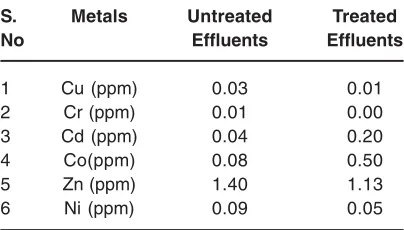
Table 3: The concentration of heavy metals in the sugar mill treated and untreated effluents are given
S. Metals Untreated Treated
No Effluents Effluents
1 Cu (ppm) 0.03 0.01
2 Cr (ppm) 0.01 0.00
3 Cd (ppm) 0.04 0.20
4 Co(ppm) 0.08 0.50
5 Zn (ppm) 1.40 1.13
6 Ni (ppm) 0.09 0.05
land adversely. The temperature of untreated effluent was recorded 40°C and treated effluent was recorded 38 °C. The temperature of the discharge should not exceed 35 °C. The high tem i.e. 40°C of the untreated effluent has adversely affected the germination process.
pH
Sulfur dioxide during cleaning of sugar cane juice. pH is one of the important biotic factor that serves as index for pollution. If such water is used for irrigation for a longer period the soil becomes acidic resulting in poor crops growth and yield. The factors like photosynthetic exposure to air, disposal of industrial effluent and domestic sewage also affect the pH of the soil.
Dissolved Oxygen
The analysis of DO is very important in water pollution control as well as waste water control. Aquatic ecosystem totally depends on DO, various biochemical changes and its effects on metabolic activities of microorganism were very well documented. Its presence was essential to maintain variety of forming of biological life in water and effect of water discharge in water body are largely determined by oxygen balance of the system. According to the BIS standard the DO of the effluent should be within the range 4 to 6 mg/lit. In the present investigation the DO of the untreated and treated effluent sample was recorded 1.30 and 2.30 mg/lit respectively which is sufficiently low than the BIS Indian standard (3) values.
BOD
Biochemical Oxygen Demand (BOD) is defined as amount of oxygen required by micro-organism while stabilizing biological decomposable organic matter in water under aerobic conditions. The biological oxidation is very slow process during oxidation; organic pollutants are oxidized by certain microorganism into carbon dioxide and water using dissolved Oxygen. Hence lowering in dissolved oxygen value is the measure of BOD relation. In the present investigation the BOD of the untreated effluent was 98 mg/l while the treated effluent recorded 88 mg/l. According to BIS Indian3 standard
the BOD should not exceed the 50 mg/l.
COD
The chemical Oxygen demand test determines the oxygen required for chemical oxidation of organic matter with the help of strong chemical oxidant. The COD is a test which is used to measure pollution of domestic and industrial waste. The effluent is measured in term of quality of oxygen required for oxidation of organic matter to produce carbon dioxide and water. It is a fact of all organic
compounds with few exceptions that they can be oxidized by the action of strong oxidizing agents under acidic conditions. COD is useful in pinpointing toxic condition and presence of biological matters. In the present investigation the COD of the untreated effluents was 350 mg/l while treated effluent was recorded 255 mg/l. In untreated effluent it is appreciably high compared to BIS standard (250 mg/L). This indicated high organic pollutants in the sample.
TDS
The total dissolved solids concentration in the effluent represent the colloidal form and dissolved specters. The probable reason for the fluctuation or value of total solids and subsequent the value of dissolved solid due to convent collision of the colliding particles. The rate of collision aggregated process is also influenced by pH of this effluent. In the rainy season less concentration of total dissolved solids are obtain due to dilution of waste effluent with rain water (Hosetti et.al 1994.) In the present investigation the total solids in untreated effluent was 2980 mg/l and 1920 mg/l in treated effluent. In both the samples in TDS values are much higher compared to BIS Indian Standards (500 mg/L).
TSS
The total suspended solids affect the light intensity of water; suspended solids are the cause of suspended particle inside the water body influencing turbidity and transparency. According the present investigation the suspended solids of untreated effluent were 110 mg/l and 100 mg/l respectively.
Chlorides
The presence of chloride in natural water is attributed to dissolution of salt deposit, discharge of effluents from chemical industries oil well operations. In the present study chlorides of untreated was 210 mg/l and in treated effluent was recorded 175 mg/l. This is well within the limits of BIS Indian Standard.
Sulphate
Sulphur itself has never been limiting factor in aquatic system, the normal levels of sulphate are more than adequate to meet plants needs. Odors conditions are easily greater when water is over loaded with organic wastes which reduce the oxygen, SO4 an electron acceptor is often used for the breakdown of organic matters and produces H2S causing bad smell of rotten egg (Welch 1980). In the present investigation sulphate in untreated effluent was 760 mg/l and treated effluent was recorded 420 mg/l according BIS Indian standard3
the sulphate should not exceed the 100 mg/l. High SO42- amount in both the effluents is attributed to the
use of sulphur during crystallization
Oil and grease
In the present investigation oil and grease present in untreated and traded effluent showed 16 mg/l and 10 mg/l respectively this is almost in accordance with the BIS Indian Standard.
The germination percentage values shown in the table-2 reveal the fact that percent germination of Bajra, Gram and wheat seeds is considerably high in treated effluent ie with the decreased concentration of undesirable matter compared to treated effluent. However a reverse trend is shown in the case of Maize, where 82% of seed germination is observed with untreated effluent with high concentration, while only 24 % of germination of Maize seed has been observed in treated water.
Maize seeds show the same trend while measuring the other parameters like root lengths, shoot length, weight of root and shoot (Table-2). While observing the germination process of Bajra, Maize and wheat seeds the lengths of roots and shoots are appreciably more in treated effluents compared the untreated effluent. In case of Maize
seeds the lengths of roots and shoots both are mere in untreated effluent compared to treated effluent. After measuring the weight of roots and shoots of these germinated seeds it is obvious that except for maize seeds, considerably high germination have occurred with treated effluent. Osmotic pressure associated with higher concentration of untreated sugar factory effluent may have reduced the germination of seeds in untreated effluent.
Concentration of heavy metals like Cu, Cr, Cd, Co, Zn and Ni in treated and untreated effluents of sugar mill is listed in table-3. Results show that concentration of heavy metals in both treated and untreated effluent is below the permissible limit. Hence no effect of heavy metals on crops growth has been observed with treated and untreated effluents of sugar mill.
CONCLUSION
The sugar industry situated at shamli, Muzaffarnager western Utter Pradesh is one of the good factory as it has own distillery unit in its own premises for waste which is generated from the sugar factory. Even though the mill takes care to avoid pollution, additional measures for environmental protection initiated by the sugar industry with some modification in effluent treatment plant are necessary.
Thus the sugar industry effluent which is untreated exhibits high COD, BOD, TDS, contents and low contents of DO which is toxic to plants, so it is not permissible for irrigation. Treated effluent of sugar industry which is well balanced of chemicals if it is diluted with other fresh water, will be suitable for irrigation purposes. The treated effluents of sugar industry are not highly polluted and they satisfy the BIS Indian standard values.
REFERENCES
1. Dr. A. S. Kolhe, Ingale S. R. & Sarode A.G. Physico Chemical Analysis of Sugar mill effluents, Sodh Samiksha auur Mulyankan (International Research Journal) ISSN-0974-2832 pp 307-311.
2. D. Shivappa, E.T. Puttaiah and B R. Kiran
sugar factory A Case Study of Kumbhi Kasari Sugar Factory, Khditre, Kolhapur Universal of Environmental Research and Technology 1: 51-57 (2011).
4. BIS., Indian Standard specifications for drinking water IS: 10500 Bureau of Indian Standard New Delhi (2010).
5. A.S. Kohle, Ingale S.R. & Sarode A.G. Physico-chemical Analysis of Sugar Mill Effluents. S. S. M. International Research Journal 1: 307-311.
6. Amathussalam, M.N. Abubakar and N. Jayabai. Impact of Sugar mill effluents on ground water, A case study Jr. of Industrial pollution 18(2): 119-124 (2002).
7. Gunter Gunkel , Jan Kosmol, Maria Sobral, Hendryk Rohn., Sugar cane Industry as a Source of Water Pollution-Case Study on the
Situation in Ipojuca, Pernambuco, Brazil. Water Air Soil Pollutant 180: 261-269 (2007). DOI 10.1007/s11270-0069268-x.
8. N.J. Pawar, G.M. Pondhe, S.F. Patil, Groundwater Pollution due to sugar mill effluent, at Sonai, Maharashtra, India Environmental Geology 34 (2/3) May 1998 © Springer (pp 151-156).
9. Standard methods for the examination of water and waste water, 1985, 16th Edition
APHA, AWWA and WPCF Inc. New York. 10. Vibha Agrawal, S.A. Iqbal and Dinesh
Agarwal, Orient J. Chem., 26(4): 1345-1351 (2010).