https://doi.org/10.5194/tc-13-1215-2019
© Author(s) 2019. This work is distributed under the Creative Commons Attribution 4.0 License.
Marked decrease in the near-surface snow density retrieved
by AMSR-E satellite at Dome C, Antarctica,
between 2002 and 2011
Nicolas Champollion1,a, Ghislain Picard1, Laurent Arnaud1, Éric Lefebvre1, Giovanni Macelloni2, Frédérique Rémy3, and Michel Fily1
1Institut des Géosciences de l’Environnement (UMR 5001), CNRS/UGA/Grenoble-INP/IRD,
CS 40700, 38058 Grenoble CEDEX 9, France
2Institute of Applied Physics, IFAC/CNR, Via Madonna del Piano 10, 50019 Fiorentino, Italy
3Laboratoire d’Étude en Géophysique et Océanographie Spatiales (UMR 5566), UPS/CNRS, 18 av. Edouard Belin,
31401 Toulouse CEDEX 9, France
anow at: The Climate Lab, University of Bremen, Celsiusstrasse 2 FVG–M2040, 28359 Bremen, Germany
Correspondence:Champollion Nicolas ([email protected]) Received: 30 November 2018 – Discussion started: 7 December 2018
Revised: 11 March 2019 – Accepted: 17 March 2019 – Published: 12 April 2019
Abstract.Surface snow density is an important variable for the surface mass balance and energy budget. It evolves ac-cording to meteorological conditions, in particular, snowfall, wind, and temperature, but the physical processes govern-ing atmospheric influence on snow are not fully understood. A reason is that no systematic observation is available on a continental scale. Here, we use the passive microwave obser-vations from AMSR-E satellite to retrieve the surface snow density at Dome C on the East Antarctic Plateau. The re-trieval method is based on the difference of surface reflec-tions between horizontally and vertically polarized bright-ness temperatures at 37 GHz, highlighted by the computa-tion of the polarizacomputa-tion ratio, which is related to surface snow density. The relationship has been obtained with a mi-crowave emission radiative transfer model (DMRT-ML). The retrieved density, approximately representative of the top-most 3 cm of the snowpack, compares well with in situ mea-surements. The difference between mean in situ measure-ments and mean retrieved density is 26.2 kg m−3, which is within typical in situ measurement uncertainties. We apply the retrieval method to derive the time series over the pe-riod 2002–2011. The results show a marked and persistent pluri-annual decrease of about 10 kg m−3yr−1, in addition to
atmosphere-related seasonal, weekly, and daily density vari-ations. This trend is confirmed by independent active mi-crowave observations from the ENVISAT and QuikSCAT
satellites, though the link to the density is more difficult to establish. However, no related pluri-annual change in mete-orological conditions has been found to explain such a trend in snow density. Further work will concern the extension of the method to the continental scale.
1 Introduction
speed, and air temperature (Brun et al., 2011; Champollion et al., 2013; Libois et al., 2014; Fréville et al., 2014). How-ever, their links are complex and not well known. For exam-ple, snowfall can lead to different surface density behaviours depending on initial snow conditions: over hard and dense surface snow, snowfall results in a decrease in surface snow density; over surface hoar crystals, snowfall increases surface snow density. The interactions between the different meteo-rological effects are more complex. Wind often increases sur-face snow density (Sommer et al., 2018), and water vapour fluxes into the snowpack are regularly oriented towards the atmosphere, resulting in a decrease in the density near the surface. However, wind can also contribute to the sublima-tion of snow and thus change snow metamorphism (Domine et al., 2008).
Estimating the surface snow density in Antarctica remains difficult (Eisen et al., 2008; Groot Zwaaftink et al., 2013). It is presently not retrieved from satellite remote sensing (Groh et al., 2014), and the snow density estimates from regional climate and snowpack modelling are highly uncertain close to the surface (Brun et al., 2011; Fettweis et al., 2013). Nev-ertheless, Schwank and Naderpour (2018) recently presented encouraging results about the retrieval of snow density from ground-based L-band radiometry. However, this method is valid only for a soil bottom layer. In addition, despite some recent progress towards automatically measuring the snow density in the field (Mittal et al., 2009; Gergely et al., 2010), manual measurements are more accurate, with a typical accu-racy around 11 % (Conger and McClung, 2009). This results in a low spatial and temporal coverage of Antarctica, espe-cially on the East Antarctica Plateau where data are mainly acquired during traverses or close to stations (Favier et al., 2013; Groot Zwaaftink et al., 2013). Close to the surface, the measurements are more difficult and uncertain due to the surface irregularity, resulting in uncertainties higher than 11 % (Gallet et al., 2011, 2014; Champollion et al., 2013; Li-bois et al., 2014). Finally, an intercomparison exercise has recently shown that snow densities measured by different methods in the Swiss Alps agree within 9 % and that the ver-tical density variations are not completely captured (Proksch et al., 2016).
The objective of this study is to develop and validate a new method of determining the snow density near the surface from passive microwave satellite observations. The study is performed at Dome C (75◦060S, 123◦210E), on the East Antarctic Plateau, where the French–Italian base of Concor-dia is located, combining in situ data of snow properties and electromagnetic modelling. Except for melting regions, the method has the potential for a global spatial coverage of the Antarctic Ice Sheet, which will be addressed in further work. Following Brucker et al. (2011), we first simulate the snow microwave emission and thus quantify its sensitivity to snow properties. Qualitatively, it is well known that the permittiv-ity of snow is highly dependent on denspermittiv-ity (Mätzler et al., 1984; Warren and Brandt, 2008) and thus changes in the
dif-ferent layers of the snowpack. The electromagnetic reflec-tions at each interface between layers with different densities (air–snow or internal snow–snow interfaces) are calculated with Fresnel equations that use the snow permittivity and de-pend on the polarization (Born and Wolf, 1999). As a conse-quence, snow density greatly influences the polarization of microwave radiation, which was noted in previous studies (Shuman et al., 1993; Shuman and Alley, 1993; Abdalati and Steffen, 1998; Liang et al., 2009; Champollion et al., 2013; Brucker et al., 2014; Leduc-Leballeur et al., 2015, 2017). Using the Dense Media Radiative Transfer - Multi Layers model (DMRT-ML, Tsang et al., 2000a; Roy et al., 2012; Pi-card et al., 2013; Dupont et al., 2013), we quantitatively de-termine the influence of surface snow density on microwave polarization ratio. This relationship is then used to retrieve the density from satellite observations, which are measured by the Advanced Microwave Scanning Radiometer – Earth observing system (AMSR-E) instrument. In situ measure-ments of snow properties are used as input for the DMRT-ML model. Active microwave observations and in situ mea-surements of surface snow density are used to validate the method.
Section 2 presents remote sensing and in situ data and the microwave emission model. Section 3 presents some el-ements of the theoretical background of microwave radiative transfer, and Sect. 4 presents the method of retrieving the sur-face snow density. Section 5 presents the time series of the retrieved surface snow density and its validation and analy-sis.
2 Data and model
Satellite remote sensing datasets, measurements of snow properties, and the microwave radiative transfer model are described in the three following sections.
2.1 Satellite observations 2.1.1 Passive microwave data
Passive microwave satellite observations were acquired at 18.7 and 36.5 GHz by the AMSR-E instrument on-board the Aqua satellite in dual-polarization mode with an observation zenith angle of 54.8◦ over the entirety of the instrument’s lifetime, i.e. from 18 June 2002 to 4 October 2011. Daily av-eraged brightness temperatures (TB) at Dome C are extracted
A detailed analysis of the spatial and temporal variabil-ity of passive microwave data close to Dome C is given by Long and Drinkwater (2000), Macelloni et al. (2007), Picard et al. (2009), and Brucker et al. (2011). As in these previ-ous studies, we assume that (1) only one or a few in situ measurements are sufficient to model the brightness temper-ature of an entire satellite pixel and (2) the pixel containing in situ measurements is representative of the satellite pixels around Dome C. These assumptions have been validated us-ing ground-based radiometers by Picard et al. (2014), who found that the Dome C area was sufficiently homogeneous. 2.1.2 Active microwave data
Two complementary datasets of active microwave observa-tions are used for comparison with the retrieved snow den-sity. The first dataset was acquired by the nadir-looking Radar Altimeter 2 (RA-2) instrument on-board the ENVI-ronment SATellite (ENVISAT) at 13.6 GHz (Ku band). The dataset contains the total backscatter power from 12 March 2002 to 8 April 2012 based on along-track data and the Ice-2 retracking algorithm (Legrésy et al., Ice-2005; Rémy et al., 2014). Radar backscatter corresponds to the ratio between the energy emitted by the satellite and the energy reflected by the snow surface and is expressed in decibels. Due to the 35 days of ENVISAT revisit time and the selection of four orbit tracks that are less than 17 km away from Concordia station, temporal sampling of RA-2 observations is typically 8–10 days. The along-track spatial sampling over the Antarc-tic Ice Sheet is 330 m, and its typical footprint is of the order of 5–10 km (Rémy and Parouty, 2009). The sensor precision for determining surface elevation is 47 cm.
The second dataset of active microwave observations was acquired by the SeaWinds instrument on-board the Quick SCATterometer (QuikSCAT) at 13.4 GHz in dual-polarization mode. Zenith viewing angles are 46 and 54.1◦ for horizontal and vertical polarizations, respectively. Nor-malized radar cross sectionsσ0 were extracted at Dome C from the “egg images of SeaWinds on QuikSCAT Enhanced Spatial Resolution Image Sigma-0 Products – version 2” pro-vided by the National Aeronautics and Space Administra-tion – Scatterometer Climate Record Pathfinder (http://www. scp.byu.edu/data/Quikscat/SIRv2/Quikscat_sirV2.html, last access: 8 April 2019, Long and Daum, 1998; Early and Long, 2001; Long et al., 2001). The pixel size is 2.225 km×2.225 km and the relative error is 0.2 dB (Spencer et al., 2000; Early and Long, 2001). The dataset contains the daily averaged backscatter coefficient by com-bining multiple passes of QuikSCAT (near-polar orbit) from 19 July 1999 to 23 November 2009.
2.2 In situ snow measurements
Snow observations include the snow density near the surface and the vertical profiles of snow temperature, density, and specific surface area (SSA).
2.2.1 Surface snow density
Three time series of snow density were measured at Dome C. The first set of measurements is from the CALVA programme (CALibration-VAlidation of climate models and satellite re-trieval, Antarctic coast to Dome C). Surface snow density was measured every 3 to 5 days from 3 February 2010 to 4 October 2011 by using a cylinder cutter (10 cm length and diameter of 5 cm) inserted horizontally so that the cut-ter top grazes the surface. The value used here is the aver-age of three measurements. The two other sets of measure-ments are from the project MAPME (Monitoring of Antarctic Plateau by means of Multi-Frequency Microwave Emission) funded by PNRA (Programma Nazionale di Ricerche in An-tartide). The second dataset contains the snow density mea-sured from 9 May 2008 to 4 October 2011 by using a cylin-der cutter of 25 cm height and a diameter of 4.5 cm. Measure-ments were performed at 0.1 m depth every 15 days in a snow stake network composed of eight poles placed 10 m apart . The value used here is the average of eight measurements. The last dataset contains the snow density measured in snow pits, which were excavated every month from 18 Decem-ber 2007 to 4 OctoDecem-ber 2011. Density values were collected every 10 cm in the 0–1 m depth range. A single measurement was collected at each depth of the snow pit.
The mean density value is 329, 344, and 321 kg m−3,
respectively, for the CALVA dataset and the two PNRA datasets. The standard deviation is, respectively, 43, 40, and 54 kg m−3. The density is representative of the topmost 5 cm of the snowpack for the CALVA dataset and of the top 10 cm for the two PNRA datasets. Uncertainties associated with the three datasets are equal to or higher (due to the low cohesion of surface snow) than the uncertainty estimated for classic density measurements (11 %, Conger and McClung, 2009).
For the first time, the spatial variability of surface snow density measurements has been assessed with three series of 40 measurements (measurements taken every 1, 10, and 100 m). The averages and standard deviations are, respec-tively, 298.7±29.3, 317.6±24.7, and 307.9±59.8 kg m−3 for metre, decametre, and hectometre scales. Considering all measurements (n=120), we found a mean density and stan-dard deviation of 308.3±41.6 kg m−3. Under the
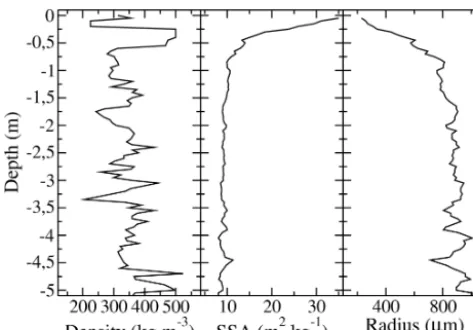
Figure 1.The measured profiles of snow density, SSA, and DMRT-ML radius at Dome C, Antarctica. DMRT-DMRT-ML radius is derived from SSA measurements and is the input of the model (Sect. 2.2.4 and Eqs. 1 and 2).
2.2.2 Snow temperature profile
Snow temperature was recorded every hour from 1 Decem-ber 2006 to 4 OctoDecem-ber 2011 and from the surface to 21 m depth, with 35 probes initially installed every 0.1 m down to 0.6 m depth, every 0.2 m down to 2 m, every 0.5 m down to 5 m, and every 1 m down to 21 m. The probes are lo-cated around 1 km west of the Concordia station. All probes (100platinum resistance sensors with an accuracy better than±0.1 K at 223 K) were inter-calibrated with a precision of ±0.02 K. The probes are continuously being buried over time due to snow accumulation, which is estimated to be around 0.1 m yr−1(Frezzotti et al., 2005, 2013; Arthern et al., 2006; Eisen et al., 2008; Brucker et al., 2011; Verfaillie et al., 2012). Initial probe depths are corrected as a function of the date measurements. In addition, the temperature measure-ments closest to the surface become deeper and deeper over time. This means that no measurements are taken in the upper snowpack. To correct for this issue, we extrapolate the pro-files using an exponential function between the uppermost probe in the snowpack and the temperature at the surface (Pi-card et al., 2009; Brucker et al., 2011; Groot Zwaaftink et al., 2013). The latter is approximated by the 2 m air temperature. Air temperature was extracted from the global ERA-Interim reanalysis provided by the European Centre for Medium-range Weather Forecasts (ECMWF, Dee et al., 2011), which is considered the superior reanalysis in the East Antarctica region (Xiie et al., 2014). We use passive microwave obser-vations that are daily, which is why we calculate daily av-eraged temperature by averaging two hourly profiles (14:00 and 00:00 LT).
2.2.3 Snow density profile
The snow density profile (Fig. 1) is considered constant and is composed of two different datasets. The first dataset was measured in January 2010 by determining the mass and vol-ume of snow and firn core samples every 5 cm, collected up to 20 m depth. However, the cohesion of the first 0.3 m of the snow core was very low and impossible to sample correctly. Thus, a second dataset was measured in Decem-ber 2010 to complete the snow density profile from the sur-face down to 0.3 m depth. This second dataset is an average of 13 short density profiles (up to 0.5 m depth) measured in a snow pit with a dedicated cutter for Antarctic snow (Gallet et al., 2011).
The snow core and snow pit density profiles below 0.3 m depth are close together. Indeed, the mean and standard deviation of both profiles (0–0.5 m deep) are about 340±8 kg m−3 for the snow core dataset and about 355±21 kg m−3 for the snow pit dataset. In addition, the overlapping part (between 0.3 and 0.5 m depth) shows sim-ilar values. Uncertainties associated with both methods are similar: at least 10 % for measurements of snow and firn core samples (Arthern et al., 2010) and at least 11 % for snow cutter measurements in a snow pit (Conger and McClung, 2009).
2.2.4 Snow-specific surface area profile
The snow SSA (Fig. 1) is the surface area of ice crystals divided by the mass of snow (Domine et al., 2006; Arnaud et al., 2011). Its profile up to 20 m depth was measured in January and December 2010 using the Profiler Of Snow-Specific Surface area Using short-wave infrared reflectance Measurement instrument (POSSSUM, Arnaud et al., 2011) and the Alpine Snow Specific Surface Area Profiler (ASS-SAP, Champollion, 2013; Libois et al., 2014), which is a lightweight version of POSSSUM adapted for shallow snow-packs (maximum 2 m deep). These two instruments are based on the relationship between snow reflectance in the near-infrared domain and snow SSA (Domine et al., 2006; Matzl and Schneebeli, 2006). Using a laser at 1310 nm illuminat-ing the face of a snow hole and a specific data processilluminat-ing algorithm (Arnaud et al., 2011), POSSSUM and ASSSAP instruments determine the snow SSA as a function of depth in the field. Uncertainty associated with SSA measurements from POSSSUM is about 10 % (Arnaud et al., 2011). Both instruments are very similar and have been compared multi-ple times, thereby ASSSAP uncertainty is considered to be 10 % as well.
13.2 and 13.9 m2kg−1 for POSSSUM. Due to an artefact that increases the measured SSA when the hole is drilled for snow below 5 m (Picard et al., 2014), we removed the measured values and replaced them with a constant value (SSA5 m). This value is optimized following Brucker et al.
(2011) (Sect. 5.1).
The snow SSA is not directly used in DMRT-ML model. The snow parameter that characterizes the snow grain size in the electromagnetic model (rDMRT-ML, Fig. 1) is related
to the optical radius (ropt). The relationships between snow
SSA, DMRT-ML radius, and optical radius are given by the following equations:
rDMRT-ML=φ·ropt, (1)
SSA=(3·φ)/(ρice·ropt), (2)
whereφis a snow microstructure parameter that depends on the shape of snow crystals and the stickiness and size dis-tribution of ice crystals (Brucker et al., 2011; Roy et al., 2012; Dupont et al., 2013) andρiceis the density of ice, i.e.
917 kg m−3. Theφparameter is optimized as in Brucker et al. (2011) (Sect. 5.1).
2.3 Microwave emission model 2.3.1 Snow microwave emission
The snow microwave emission model DMRT-ML (Picard et al., 2013) has already been applied and validated in sev-eral studies (Brucker et al., 2011; Roy et al., 2012; Dupont et al., 2013; Picard et al., 2014) and is freely available (http:// pp.ige-grenoble.fr/pageperso/picardgh/dmrtml/, last access: 8 April 2019). It allows the computation of the top-of-snowpack emerging brightness temperature for a given snow-pack at different viewing angles, at different frequencies, and at both vertical and horizontal polarizations. The model is composed of two parts: (1) the DMRT theory to calculate the absorption and scattering coefficients for all snow layers – in the model, the snowpack is composed of horizontally semi-infinite and vertically homogeneous snow layers of dense ice spheres, completely defined by the layer thickness, tem-perature, density, and optical radius of snow – and (2) the DIScrete Ordinate Radiative Transfer method (DISORT, Jin, 1994) to propagate the thermal emission of each snow layer from the bottom of the snowpack to the atmosphere. DIS-ORT accounts for multiple scattering between layers. Layers are assumed to be planes, parallel, and much thicker than the wavelength.
We use the model in a non-sticky grain configuration, i.e. grains which do not form aggregates, and with a unique opti-cal radius of snow grains, i.e. no grain size distribution. Snow crystal aggregates are not considered in this study because the φ parameter used to convert snow SSA into an optical radius partly integrates this snow property (Roy et al., 2012; Löwe and Picard, 2015). We also use a semi-infinite bottom snow layer to consider the firn of the Antarctic Ice Sheet.
In addition, two criteria must be respected in the framework of DMRT theory: snow density less than 300–350 kg m−3
(Liang et al., 2006; Tsang et al., 2008) and low optical ra-dius with respect to the wavelength (Rayleigh scattering). The latter is always respected in our study sincerDMRT-ML
never exceeds 0.6 wavelengths and most of the time is lower than 0.1. Regarding when the density is sometimes higher than 350 kg m−3in our profile (Fig. 1), Picard et al. (2013) explained that the deviation in scattering and absorption co-efficients remains moderate.
2.3.2 Atmospheric contribution
The atmosphere attenuates the microwave emissions emerg-ing from the surface and itself emits microwaves due to its own temperature (Rosenkranz, 1992). Although this effect is low over the Antarctica Plateau because of the low spheric humidity and the small size of scatterers in the atmo-sphere (Walden et al., 2003; Genthon et al., 2010), both ef-fects are taken into account in our modelling on a daily basis with a simple non-scattering radiative transfer scheme. Top-of-atmosphere (TOA) brightness temperatures are computed using the method and equations from Rosenkranz (1992) and following Picard et al. (2009). Upward and downward atmosphericTB’s are calculated using atmospheric
temper-ature and moisture profiles from ERA-Interim reanalysis. The transmission coefficient is 0.960 at 37 GHz and 0.987 at 19 GHz, and the downward cosmic TOATBis 2.75 K.
3 Theoretical background in microwave remote sensing
Some elements of the theoretical background of microwave satellite remote sensing are described in the next two sec-tions.
3.1 Passive microwave remote sensing
We use the brightness temperature polarization ratio (PR) at 19 and 37 GHz to increase the sensitivity of passive mi-crowave observations to surface properties (Shuman et al., 1993; Surdyk, 2002a; Champollion et al., 2013):
PRν=
TB(ν, h) TB(ν, v)
, (3)
where TB(ν, α) is the brightness temperature, ν the
fre-quency, andαthe polarization.
a non-linear combination of surface and internal reflections (Leduc-Leballeur et al., 2017).
In order to understand the polarization ratio evolution, two cases are explored: (1) snow properties that vary with depth but are constant in time and (2) snow properties that also vary over time. For case (1), the PR evolution is only due to changes in the snow density near the surface. For case (2), PR evolution is also influenced by changes in the snow density stratification. Snow evolution is mainly influenced by atmo-spheric conditions. The surface is first affected and then at-mospheric influence diffuses deeper into the snowpack. This process is slow on the Antarctica Plateau (Surdyk, 2002b; Brucker et al., 2011; Picard et al., 2014; Libois et al., 2014) and implies a slower evolution of snow deeper into the snow-pack than near the surface. As a result, the PR evolution is primarily influenced by surface snow density variations (the relevance of this assumption is explained in Sect. 5.5). 3.2 Active microwave remote sensing
The signal returned by the snowpack is a complex combi-nation of surface and volume scattering (Rémy and Parouty, 2009; Rémy et al., 2014; Tedesco, 2015; Adodo et al., 2018). The surface-to-subsurface signal ratio is used to determine the main contributor to radar backscatter observations. On the East Antarctica Plateau this ratio is high (Lacroix et al., 2008, 2009), and thus surface echo is the main contributor to the radar backscatter at Dome C. Consequently, the long-term evolution of ENVISAT observations mainly depends on surface snow density and roughness.
Because the incidence angles of the SeaWinds instrument are close to the Brewster angle for the air–snow interface, the surface reflection at vertical polarization is weakly influ-enced by the near-surface snow density. Consequently, the evolution of the radar backscatter coefficient at vertical po-larization is mostly dependent on surface roughness changes. Therefore, considering the independence of volume scatter-ing from the polarization (Tsang et al., 2000b; Picard et al., 2013), as well as the independence of surface roughness ef-fect from the polarization (Ulaby et al., 1982; Adodo et al., 2018), we defined the radar polarization ratio (RPR) to be primarily influenced by the snow density near the surface (Liang et al., 2008):
RPR=σ
0 h σ0 v
'r
0 h,surface
rv,0surface, (4)
whereσ0 is the radar backscatter coefficient,r0is the part of backscatter coefficient considering only the surface reflec-tion, andhandvare the polarizations. For simplicity, theν index is not written.
4 Method
The different steps of the method of retrieving the surface snow density are described in this section. Surface density variations are deduced from the PR evolution. However, to correctly simulate PR evolution, we first need to simulate the mean state of the PRs.
1. In the first step, we follow the forward modelling ap-proach of Brucker et al. (2011) to simulate the time se-ries of brightness temperatures, using the vertical pro-files of snow properties, which, except for the temper-ature, are kept constant over time. From the simulated brightness temperatures, we calculate the time series of polarization ratios and show the correct simulation of the mean polarization ratios and the poor modelling of their temporal variations.
2. In the second step, we simulate the polarization ratio variations due to changes in the properties of a 0.03 m snow layer on top of the snowpack theoretically (as in Leduc-Leballeur et al., 2015, 2017), and we also show the strong relationship between PR at 37 GHz and the density of this surface layer.
3. The third step corresponds to the retrieval algorithm it-self. We estimate the time series of surface snow density by minimizing the deviations between the modelled and observed polarization ratio at 37 GHz.
Some studies have reported high vertical snow stratifica-tion around Dome C (Gallet et al., 2014; Picard et al., 2014). They observed very dense and thick snow layers (about 500 kg m−3 for 0.3–0.5 m thick), and thin and low-density layers (less than 150 kg m−3 for a thickness of few cen-timetres). The poor modelling of the horizontally polarized brightness temperature could be due to an underestimation of the snow stratification (Macelloni et al., 2007; Brucker et al., 2011; Champollion et al., 2013; Picard et al., 2013; Leduc-Leballeur et al., 2015). In order to correctly simulate the mean horizontally polarized brightness temperatures, and thus the mean polarization ratios, we added, at 0.1 and 0.2 m depth in our snow density profile, two layers that were 0.1 and 0.2 m thick with a density equal, respectively, to 225 and 500 kg m−3.
5 Results and discussion
Figure 2. Time series of modelled (lines) and observed (dots) brightness temperatures, at 19 and 37 GHz and at vertical and hori-zontal polarizations –TB(19, V),TB(19, H),TB(37, V)TB(37, H) – at Dome C, Antarctica, during the calibration period (2007–2009) and the validation period (2010–2011).
5.1 Time series simulation
TOA horizontally and vertically polarized brightness tem-peratures at 19 and 37 GHz – written TB(19, V),TB(19, H), TB(37, V) andTB(37, H) – are simulated with the DMRT-ML
model during the 3 years (from 1 December 2006 to 31 De-cember 2009) when the temperature profiles were recorded. The two parameters SSA5 mandφare optimized during this
period of calibration by minimizing the root-mean-square er-ror (RMSE) between the modelled and observed TB(19, V)
andTB(37, V). As in Brucker et al. (2011), only the vertical
polarization is used because of its high sensitivity to snow SSA and reduced sensitivity to density changes. TOA bright-ness temperatures are then simulated over nearly 2 years of validation (from 1 January 2010 to 4 October 2011) using the optimized SSA5 mandφparameters. RMSEs are defined by
the following equations:
RMSEν,α=
v u u t 1 n·
n
X
i=1
TB,iobs(ν, α)−TB,imod(ν, α)2, (5)
RMSEν=
q
0.5(RMSE2ν,v+RMSE2ν,h), (6) RMSE=
s 1 p·
X
ν,α
RMSE2ν,α, (7)
where n is the number of observations, TB,iobs(ν, α) and TB,imod(ν, α) the observed and modelled brightness tempera-tures atνfrequencyαpolarization, andp=4 the number of polarizations and frequencies used.
The time series of observed and modelled brightness tem-peratures are shown in Fig. 2. The optimized SSA5 mandφ
parameters are, respectively, equal to 10.1 m2kg−1 and to
Figure 3.Time series of modelled (lines) and observed (dots) po-larization ratios at 19 and 37 GHz (PR19 and PR37) at Dome C, Antarctica, during the calibration period (2007–2009) and the vali-dation period (2010–2011).
2.5, which is in the range of those found by Brucker et al. (2011) and Picard et al. (2014), respectively, 2.8 and 2.3, with an RMSE of 1.6 K. Observed brightness temperatures are well reproduced by the DMRT-ML model both in terms of absolute value and evolution, except for 19 GHz at horizontal polarization. The RMSE calculated by excludingTB(19, H)
is indeed 2.6 K, whereas RMSE19, h is 7.4 K. Table 1
sum-marizes all errors between observed and modelledTB’s. The
RMSE during the calibration and validation periods are very close, showing the high performance of the optimization. We also found a slight improvement in the modelledTB(19, H)
compared to Brucker et al. (2011) with an RMSE19, h of
7.4 K instead of 8–10 K. These results confirm the represen-tativeness of the in situ measurements for the satellite pixel encompassing Dome C (25 km×25 km).
The polarization ratio evolution, calculated from the sim-ulated brightness temperatures, does not reproduce the ob-served variations, and the 5-year average of modelled PR19
overestimates the observations by 0.033 (Fig. 3). This rep-resents around 46 % of the maximum amplitude of observed PR19variations. On the other hand, mean PR37is well
mod-elled. The simulated mean PR37is indeed 0.904, whereas the
observed mean PR37is 0.896. The difference represents only
11 % of the maximum amplitude of observed PR37
varia-tions. Table 2 summarizes all errors between observed and modelled PRs.
The poor simulation of the mean PR19comes from an
in-correct simulation ofTB(19, H) which, as explained in
Arth-ern et al. (2006), is mainly due to the stratification of the snowpack. Because PR37is well reproduced, and considering
that penetration depth is, respectively, around 5 and 1 m for 19 and 37 GHz (Surdyk, 2002b), the stratification in the first metre of the snowpack is adequately represented. Hence, the discrepancy between observed and modelled PR19 is
Table 1.Errors between modelled and observed brightness temperatures (K) for the calibration and validation periods.
RMSE19, v RMSE19, h RMSE37, v RMSE37, h
Calibration period 0.63 7.6 2.1 3.7 Validation period 1.6 7.2 3.6 4.1
RMSEv RMSEh RMSE
Calibration period 1.6 6.0 4.4 Validation period 2.8 5.9 4.6
Table 2.Errors between modelled and observed polarization ratios for the calibration and validation periods.
RMSEPR,19 RMSEPR,37 RMSE
Calibration period 0.039 0.017 0.030 Validation period 0.031 0.011 0.023
the stratification deeper into the snowpack. The poor simula-tion of the mean PR19is not a major issue in this work since
we study the time variations in polarization ratios. However, we decided to exclude 19 GHz data frequency in the follow-ing in order to avoid introducfollow-ing bias in the retrieved density. In contrast to the long-term average, the seasonal and faster variations in the polarization ratio at 37 GHz are not reproduced. We explain this by the fact that the evolution of polarization ratio is mainly governed by variations in the snow density close to the surface, whereas we have consid-ered the snow density profile constant over time in our simu-lation here.
5.2 Sensitivity analyses
In order to represent the snow evolution close to the surface and thus to simulate PR37 variations, a thin layer (0.03 m
thick) is added on the top of the previous snowpack. Then a sensitivity analysis of PR37to the snow parameters of this
top layer is performed using the DMRT-ML model. The PR37
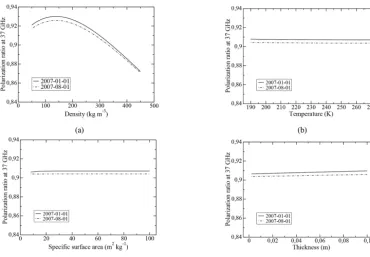
variations that occur due to changes of a single snow param-eter of the upper layer (density, temperature, SSA or thick-ness), by keeping the other variables constant (equal to those of the next layer), are shown in Fig. 4. The simulations are performed for two temperature profiles corresponding to typ-ical summer and winter conditions (1 January and 1 August). The results clearly show that only the density of the first layer can significantly change the polarization ratio. For comparison, large variations in SSA from 10 to 100 m2kg−1, thickness from 0.01 to 0.1 m, and temperature from 190 to 270 K result in small changes of PR37(respectively, around
2 %, 5 %, and 1.5 % of the PR variations are caused by den-sity changes from 150 to 450 kg m−3). In addition, varia-tions in snow density between 150 to 450 kg m−3simulate all of the observed range of temporal PR variations between
0.88 and 0.92. Moreover, this simulation shows the weak influence of the temperature profile on polarization ratio. The larger variation due to the different temperature pro-files is 0.0043, which represents only 7.25 % of the larger PR variation caused by surface density changes (from 150 to 450 kg m−3). This sensitivity analysis demonstrates the strong relationship between the polarization ratio at 37 GHz and surface snow density and thus shows the possibility of re-trieving the densityρsatfrom the PR37satellite observations.
5.3 Surface snow density evolution
Surface snow density ρsat is estimated every day by
mini-mizing the RMSE between the observed and modelled PR37
and only changing the snow density of the top layer. The RMSE minimization is done though a Newton approach (scipy.optimize.newton function of Python). This method en-sures a quick convergence (typically after 3–5 iterations) with a residual RMSE less than 0.001. That translates into a precision of surface snow density equal to 3.5 kg m−3. We use a constant vertical profile of temperature equal to the 5-year average of the vertical temperature profile measured in the field. This choice is motivated by the fact that no temper-ature data are available before December 2006. However, the results are weakly affected by this assumption (Sect. 5.5). Because of the 5-year average, the temperature profile is also nearly constant with depth around 218.5 K, which is the mean annual temperature at Dome C between 2006 and 2011 (periods where temperature measurements are avail-able). The SSA and the thickness of the top snow layer are 60.0 m2kg−1and 30 mm, respectively (Champollion, 2013; Libois et al., 2015; Leduc-Leballeur et al., 2017). The re-trieved density is approximately representative of the mass of snow integrated over 3 times the wavelength, which corre-sponds to around the top 3 cm of the snowpack (Ulaby et al., 1981, 1982; Tsang et al., 2000b), the wavelengths of AMSR-E being 8.2 mm at 37 GHz in the air. This representative-ness can change slightly (between 2 and 5 cm) depending on the type of crystals present on the surface (Leduc-Leballeur et al., 2017).
The time series of ρsat from 18 June 2002 to 4
typ-Figure 4.PR37variations caused by changes in the snow properties of the top layer:(a)density,(b)temperature,(c)SSA, and(d)thickness. The two different dates correspond to typical winter and summer temperature profiles.
Figure 5.Time series of the snow density near the surfaceρsatat Dome C, Antarctica, retrieved from AMSR-E passive microwave observations and covering the period from 18 June 2002 to 4 Octo-ber 2011.
ical timescale of few days and are certainly linked to wind and precipitation, which are frequent atmospheric processes with a potentially large impact on snow density (Picard et al., 2012; Champollion et al., 2013; Libois et al., 2014; Brucker et al., 2014; Leduc-Leballeur et al., 2017). Hoar formation on the surface, for a typical duration of 1 week, can also greatly impact surface snow density (Champollion et al., 2013).
The annual cycles have a mean amplitude of about 30 kg m−3, using two extreme years (2007 and 2010, when the amplitude reached nearly 60 kg m−3) that correspond to
two summers with low accumulated precipitation and a large increase in the snow grain size in the first 5 cm of the snow-pack (Picard et al., 2012). These conditions probably involve intense metamorphism of the snow near the surface during the summer and can potentially result in a longer presence of hoar crystals on the surface or larger hoar crystals (Champol-lion et al., 2013) that decrease surface snow density (Gallet et al., 2014). The year 2008 is also peculiar, due to its lack of an annual cycle.
A pluri-annual decrease trend of−13.2 kg m−3yr−1is ob-served over the 10 years of AMSR-E observations. This evo-lution represents a significant change and could result from an increase in precipitation (recent snow being usually less dense than old snow), a decrease in wind speed (wind usu-ally compacts surface snow), or a longer and more frequent presence of hoar and sublimation crystals on the snow sur-face (hoar and sublimation crystals usually being less dense than small rounded grains, Domine et al., 2006).
5.4 Comparison and validation
5.4.1 Comparison with in situ measurements
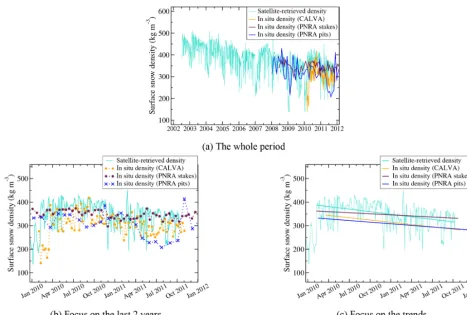
Figure 6 shows the time series of ρsat and the three time
Octo-ber 2011 (when all datasets are available), the mean surface snow density is 339.8±58.8, 304.2±48.7, 346.4±43.9 and 303.4±57.6 kg m−3, respectively, for the satellite, CALVA
measurements, PNRA stake, and PNRA pit measurements. The datasets are consistent with one another and the mean values are within the uncertainty range. However, we observe three notable differences: (1) measurements in snow pits are regularly lower by 35–40 kg m−3than satellite and stake es-timates, (2) spatial variability of snow density (41.6 kg m−3) is of the same order of magnitude as the differences between the mean value of datasets (higher difference is 43 kg m−3), and (3) satellite density (standard deviation is 63.5 kg m−3) is generally more variable than the in situ measurements (stan-dard deviations are 43, 40, and 54 kg m−3). The last obser-vation (3) could be the result of the approximative thickness of the retrieved satellite surface snow density (2–5 cm) com-pared with the in situ measurements (about 5 cm for CALVA measurements and 10 cm for PNRA measurements).
The four time series of surface snow density show a pluri-annual decreasing trend. The linear trends during the com-mon period (February 2010 to October 2011) for the four time series are of the same order of magnitude, between
−20 and−40 kg m−3yr−1. The trend over 10 years of the satellite-retrieved density is −13 kg m−3yr−1and the trend over 4 years of the two PNRA in situ datasets are −6 and
−8 kg m−3yr−1.
5.4.2 Comparison with existing studies
Gallet et al. (2014) measured the snow density very close to the surface and found a range of density between 125 and 165 kg m−3for the first centimetre of snow and between 202
and 290 kg m−3 for the second centimetre. In Gallet et al.
(2011), the authors sampled the density near the surface in snow pits (at around 2 cm depth) and found a snow density range from 146 to 325 kg m−3. Libois et al. (2014) mea-sured the snow density near the surface between 150 and 360 kg m−3. In a study dedicated to spatial variability, Pi-card et al. (2014) found a range of snow density from 270 to 520 kg m−3in the first metre of the snowpack. During the 2010–2011 summer campaign at Dome C, we measured sur-face snow densities between 270 and 380 kg m−3. We also measured the density of hoar crystals present at the surface. The mean value was 178 kg m−3, in agreement with the mea-surements of hoar crystal density performed in Greenland of 150 kg m−3(Shuman et al., 1993). All surface snow density measurements are coherent together, showing lower density values when surface snow is covered by hoar crystals (about 125–178 kg m−3). The surface snow densities retrieved from satellite are between 136 and 508 kg m−3. The average den-sity over the 10 years is 377 kg m−3 and the standard de-viation is 63.5 kg m−3. The retrieved densities are slightly higher than those found in existing studies or those mea-sured during the 2010–2011 summer campaign (upper bound is 380 kg m−3). The average ofρsatis close to the mean
den-sity of the first 3–5 m of snow at Dome C, which is about 350–360 kg m−3 with a range between 250–260 and 480–
490 kg m−3(Frezzotti et al., 2005; Brucker et al., 2011;
Ver-faillie et al., 2012; Groot Zwaaftink et al., 2013). The time series ofρsatshows a large range of density and all its values
have frequently been observed in previous field studies. Champollion et al. (2013) linked the presence of hoar crystals on the snow surface and passive microwave obser-vations. We reassess this former study here by examining the variations in the retrieved density during hoar formation and disappearance events from 23 November 2009 to 4 Oc-tober 2011. Among the 14 hoar formation events observed with an automatic camera in the field,ρsat decreases in 10
of them, with an average amplitude of −49.0 kg m−3 in a single day. For the four remaining events,ρsat slightly
in-creases by 15.0 kg m−3; for the 15 hoar disappearance events observed from the ground,ρsatincreases as expected for 14
of them, with an average amplitude of +47.0 kg m−3; for
the remaining event, ρsat decreases by −10.0 kg m−3. The
good agreement between the quickρsatvariations and hoar
evolution confirms the precision of the detection of density changes from AMSR-E. The influence of surface properties on passive microwave observations has also been confirmed in Brucker et al. (2014) and Leduc-Leballeur et al. (2017). 5.4.3 Comparison with active microwave observations The QuikSCAT 7-year time series of the residual backscatter at vertical and horizontal polarization and the radar polariza-tion ratio are shown in Fig. 7. The time series are smoothed with a 5-day moving window in order to reduce the influ-ence of the QuikSCAT viewing angle variations. The three curves feature quick variations (daily to monthly), an an-nual cycle (clearly visible only after 2004 for RPR time se-ries), and a pluri-annual trend. The linear trend of vertical polarized backscatter is nearly constant, whereas the time series of horizontal polarization backscatter shows a linear decrease of −0.03 dB yr−1. The RPR time series increases by 0.0042 yr−1, which is comparable to the observed trends of passive microwave observations: 0.0032 yr−1 for PR37,
0.0033 yr−1for PR19, and 0.0024 yr−1for PR10. We can
con-clude from the absence of a trend in theσv0time series that surface roughness has not evolved much between 2002 and 2009 at Dome C, Antarctica. Furthermore, the negative trend of the horizontal backscatter and the positive trend of RPR are certainly associated with a slow decrease in surface snow density since 2002, and thus QuikSCAT observations con-firm the density retrieved from AMSR-E satellite.
Figure 6.Time series of the snow density near the surface at Dome C, Antarctica, retrieved from AMSR-E passive microwave observations and measured in the field (three different datasets) from 18 June 2002 to 4 October 2011(a). Panel(b)focuses on the last two years, and panel(c)focuses on the trends during the last two years.
cycles are caused by changes in the volume echo of the EN-VISAT observations (Adodo et al., 2018).
The pluri-annual trend of ENVISAT–RA-2 observations of −0.1 dB yr−1 comes mainly from a progressive evolu-tion of surface snow density or surface roughness (Sect. 3.2). Lacroix et al. (2008, 2009) quantified the influence of indi-vidual snow parameters on radar backscatter by modelling the waveform of the altimetric signal. We use the relationship found by Lacroix et al. (2008, 2009) to convert backscat-ter coefficient changes to surface snow density variations: for a smooth surface, a surface snow density increase of 100 kg m−3 results in a backscatter coefficient increase of 0.3 dB at Ku band. It results in an estimation of the surface snow density decrease from ENVISAT–RA-2 observations of around−30 kg m−3yr−1, which is about 2.3 times larger in amplitude than the trend found from AMSR-E observations.
5.5 Uncertainties and discussion
We first present an assessment of the uncertainties and then discuss the importance of several caveats that may affect the accuracy ofρsat: the effects of using a constant vertical
pro-file of temperature, of variations of the azimuthal viewing
angle, and of considering the temporal evolution of the sur-face roughness and the snow deeper into the snowpack. 5.5.1 Uncertainty assessment
We use here the signal-to-noise ratio (SNR) to characterize the significance of our results. SNR is the ratio between the mean of the observed data over the standard deviation of the background noise. In our time series of surface snow den-sity, we assume that the standard deviation of quick varia-tions to be noise even though part of it may be a natural signal. That gives an upper limit of the noise. We found a SNR of 5.9. This value is high enough to conclude that a real signal emerges from the noise, and thus the nega-tive trend of surface snow density is significant at Dome C. Furthermore, the spatial variability of surface snow density (41.6 kg m−3) was measured near Concordia Station, which
Figure 7. Time series of the residual vertical and horizontal backscattering coefficients and the radar polarization ratio from QuikSCAT at Dome C, Antarctica, from 18 June 2002 to 23 Novem-ber 2009. Grey lines are the original data and red, blue, and black dots are the 5-day moving averages. Note the different vertical axis scales for horizontal polarization (H-pol) and vertical polarization (V-pol)
Figure 8. Time series of the backscattering coefficient from ENVISAT–RA-2 at Dome C, Antarctica, from 12 March 2002 to 8 April 2012.
Figure 9.Time series of the snow density near the surfaceρsatat Dome C, Antarctica, retrieved from AMSR-E passive microwave observations and covering the period from 1 December 2006 to 4 October 2011: (black dots) using the temperature profile of each day and (solid grey line) using a temperature profile that is constant over time.
of dense and hard snow and light and loose snow areas. They found smaller density variations at larger scales which indi-cate that the spatial variability of density exists at smaller scales than the AMSR-E satellite pixel (625 km2). They con-clude that changes in emissivity, as observed by Lacroix et al. (2009), might be solely due to changes in the proportion of dense and hard snow features without significant changes in surface properties. In this study, we conclude that the de-crease in surface snow density can not be solely due to a decrease in the proportion of dense and hard snow features because the trend is observed in other datasets which have very different spatial scales, from a scale of a few metres for in situ measurements up to hectometre or kilometre scales for active microwave observations.
5.5.2 Caveats affecting the accuracy of the retrieved density
The vertical profile of temperature
Figure 9 shows the time series ofρsatusing either the vertical
temperature profile of the day or a temperature profile that is constant over time as used in Sect. 5.3 to retrieve the sur-face snow density. Both curves overlap each other very well which confirms the small influence of the temperature profile onρsat. This is not surprising, since we already showed the
The azimuthal viewing angle
If satellite observations were performed over an isotropic sur-face, the azimuth angle would have no effect on the mea-surements. This is not the case over the Antarctic Plateau, as many studies demonstrated the effect of azimuthal varia-tion on satellite measurements (Fung and Chen, 1981; Tsang, 1991; Shuman et al., 1993; Li et al., 2008; Narvekar et al., 2010). However, this effect is weak in our study because we use daily averaged observations and the first two compo-nents of the Stokes vector that minimize the effect of vari-ations in the azimuthal viewing angle (Long et al., 2001; Li et al., 2008; Narvekar et al., 2010). Furthermore, pas-sive microwaves are less sensitive than active microwaves to the azimuth viewing angle of the observations (Ulaby et al., 1981). Lastly, the surface is flat around Dome C, lower than 1 m km−1(Rémy et al., 1999), and thus the effect of azimuthal variations in the surface roughness on bright-ness temperature remains limited (Rémy and Parouty, 2009; Narvekar et al., 2010).
The surface roughness
The roughness of the snow surface has a direct influence on passive and active microwave observations (Rémy and Min-ster, 1991; Shuman et al., 1993; Flament and Rémy, 2012; Rémy et al., 2014; Adodo et al., 2018). Surface roughness ranges from ice sheet topography (100 km wavelength) and large dune fields (1 to 10 km wavelength) to small features on the surface, from millimetre to metre scales (hoar crys-tals and sastrugi, Shuman et al., 1993; Long and Drinkwater, 2000; Libois et al., 2014). Our method requires the surface roughness to have a negligible effect, and thus we discuss this assumption first for active observations and then for pas-sive observations.
The radar backscatter is often reduced by an increase in the surface roughness. The slopes of the large-scale topogra-phy around Dome C are small enough, less than 1 m km−1, to only have a minor impact of the radar backscatter (Fla-ment and Rémy, 2012). The pluri-annual trend can, however, be reduced considering a rough surface (Lacroix et al., 2008; Adodo et al., 2018). Nevertheless, even with a lesser negative trend, ENVISAT and QuikSCAT observations confirm the decrease in the surface snow density observed at Dome C by AMSR-E with completely independent data. QuikSCAT ob-servations also suggest a slow evolution of the surface rough-ness.
Concerning passive microwave observations, as discussed in Champollion et al. (2013), the surface roughness influence is higher at vertical polarization than at horizontal polariza-tion. The surface roughness tends to increase the polarization ratio and reduce the retrieved density. As a result, the trend of the retrieved surface snow density can be reduced by an in-crease in the surface roughness with time. The following rea-sons argue in favour of a small effect of the surface roughness
even though we can not conclude this definitively: (1) Long and Drinkwater (2000) found a relatively low sensitivity of the polarization ratio to surface roughness; (2) the surface roughness is mainly governed by wind and, during the last decade, no clear wind evolution was found; and (3) most of the time, the lower the frequency, the higher the sensitivity of active microwave observations to surface roughness. This relationship is unclear for AMSR-E observations due to the difference of zenith viewing angle (Tsang, 1991; Liang et al., 2009). However, we should observe a frequency dependence of the polarization ratio evolution if the surface roughness has evolved with time, at least for small-scale roughness. Yet, the PR trends from AMSR-E are 0.00319 and 0.00326 at, re-spectively, 37 and 19 GHz, which is thus compatible with a limited evolution of the small-scale roughness. Concerning the large-scale topography around Dome C, the minor im-pact on satellite observations has been previously discussed. The snow at depth
The snow below the top layer up to few metres depth in-fluences the polarization ratio through internal reflections. Changes in volume scattering (due to snow grains), caused by the evolution of snow deeper into the snowpack, certainly have a negligible direct effect on the retrieved density. How-ever, snow evolution can change the penetration depth of the microwave emissions and consequently change the number of snow–snow interfaces caused by abrupt changes in the snow density profile. Interface reflections are nearly indepen-dent of the wavelength according to Fresnel coefficients. The influence onρsatof snow changes deeper into the snowpack
should thus be independent of the frequency. We consider an extreme case where the density stratification is always in-creasing with the decrease in surface snow density, keeping other snow parameters constant. The amount of internal re-flections influences the PR more than the amplitude of the density difference between two layers. In addition, surface reflection is at least 4–5 times higher than internal reflections (Fig. 10). The case considered here (increase in density strat-ification) leads to a decrease in the PR with time and thus an increase in the retrieved surface snow density. As a result, the trend of the retrieved density can be reduced by an in-crease in the snow density stratification. However, this effect probably remains small because changing the density of the second layer from 200 to 400 kg m−3involves changes in the relationship betweenρsatand PR37lower than 20 % (Fig. 10).
Figure 10.PR37 variations caused by changes in snow density of the top layer for different snow densities of the second layer.
6 Conclusions
The snow density near the surface at Dome C on the East Antarctic Plateau has been estimated from passive mi-crowave observations over nearly 10 years. The surface snow density retrieval method is based on the difference of Fres-nel reflection coefficients between horizontally and verti-cally polarized brightness temperatures at the air–snow inter-face. The brightness temperatures were acquired by AMSR-E from 2002 to 2011. The DMRT-ML model has been used to compute the polarization ratio (the ratio of horizontal on vertical brightness temperature) at the TOA using in situ pro-files of snow parameters following Brucker et al. (2011). The comparison between modelled and observed brightness tem-peratures at 19 and 37 GHz, as well as the polarization ratio sensitivity analyses to parameters of the top snow layer (3 cm thick), has highlighted a relationship between the variations in the polarization ratio at 37 GHz and the variations in the snow density very close to the surface (approximately the top 3 cm of snow).
The main result of this study is the significant nega-tive pluri-annual trend of surface snow density of about
−13 kg m−3yr−1. We have not found a similar trend in the climatic conditions to explain such trend, even though it is likely that the cause is a change of atmospheric origin. This result has important consequences for surface mass balance estimation or regional climate modelling. Snow precipitation over the East Antarctic Plateau is expected to increase dur-ing the comdur-ing century (Krinner et al., 2007). The time se-ries also show an annual cycle as well as daily to weekly large density variations. The annual cycle could be linked to the amount of precipitation and the growing rate of surface snow crystal size during the summer (Picard et al., 2012). The quick variations are certainly the result of interactions between the wind and the surface snow as well as the
forma-tion and disappearance of hoar crystals (Champollion et al., 2013; Libois et al., 2014).
The retrieved time series of surface snow density has been compared to data available in the literature and to in situ measurements. All data agreed on the range of sur-face density values. Hoar crystals have a density between 125 and 178 kg m−3 and, when absent, surface snow den-sity varies between 150 and 520 kg m−3 according to in situ measurements and between 136 and 508 kg m−3 for satellite-retrieved density. In situ measurements show the same negative trend as the satellite observations of about 10 kg m−3yr−1. The pluri-annual decrease in surface snow density is also visible in active microwave observations (radar backscatter coefficient extracted from ENVISAT–RA-2 and radar polarization ratio calculated from SeaWinds– QuikSCAT). As a result, SeaWinds–QuikSCAT observations also show a probable absence of evolution of the surface roughness. An overestimation of the decrease in surface snow density can, however, not be totally excluded, espe-cially if surface roughness and/or density stratification in the snowpack increase in parallel with time.
Thanks to the passive microwave observations that are all-weather, daily, and available for more than 30 years, this method can potentially be applied to the whole Antarctic Ice Sheet, after addressing the following issues: (1) the inclu-sion of surface roughness, which can be more significant in other regions than at Dome C (Adodo et al., 2018), and the snow at depth in the retrieval method; (2) the inclusion of the regions where melt occurs (Picard et al., 2007); and (3) the inter-calibration of the different passive microwave satellites.
Code and data availability. References describing the individual satellite datasets are provided in the method section. DMRT-ML model code is available at http://pp.ige-grenoble.fr/pageperso/ picardgh/dmrtml/ (last access: 8 April 2019). The snow property profiles, the surface snow density observations, and the retrieved surface snow density are publicly available online through Zenodo at https://doi.org/10.5281/zenodo.2590150 (Champollion, 2019).
Author contributions. GP, MF, LA, and NC conceived the study. NC performed the simulation, collected and interpreted QuikSCAT data, carried out the data analysis, interpreted the results, and wrote the manuscript with the important help of GP. GP collected AMSR-E data and is the main developer of the DMRT-ML model. LA and EL measured the snow temperature profiles. LA performed the mea-surements devoted to the study of the surface snow density variabil-ity. NC, GP, LA, GM, and EL participated to the collection of all other in situ measurements. FR collected and interpreted ENVISAT data. All the co-authors discussed the results and participated in the writing of the manuscript.
Acknowledgements. AMSR-E, RA-2 and QuikSCAT data were, respectively, obtained from the National Snow and Ice Data Center (NSIDC) at the University of Colorado, the Centre for Topographic studies of the Ocean and Hydrosphere (CTOH) supported by the European Space Agency (ESA) ENVISAT–RA-2 programme, and from the NASA-sponsored scatterometer climate record pathfinder (SCP) at Brigham Young University. We are very grateful to Ilhan Bourgeois, Sylvain Lafont, and Sébastien Aubin for making snow density measurements at Dome C during the polar winter. Field measurements around Concordia Station were made possible by the joint French–Italian Concordia Program, which established and currently runs the permanent Concordia station at Dome C. We warmly thank the French polar institute (Institut Paul Emile Victor, IPEV) and the Italian polar programme (Programma Nazionale di Ricerca in Antartide, PNRA). Finally, this work was supported by the Programme National de Télédétection Spatiale (PNTS), the IPEV programmes (IPEV–CALVA and IPEV–GLACIOLOGIE) and the project MAPME (Monitoring of Antarctic Plateau by means of Multi-Frequency Microwave Emission) funded by PNRA. We are grateful to the two reviewers and the editor, whose comments and discussion improved and clarified the manuscript.
The article processing charges for this open-access publica-tion were covered by the University of Bremen.
Review statement. This paper was edited by Martin Schneebeli and reviewed by Zoe Courville and one anonymous referee.
References
Abdalati, W. and Steffen, K.: Accumulation and hoar effects on mi-crowave emission on the Greenland ice sheet dry snow zones, J. Glaciol., 44, 523–531, 1998.
Adodo, F. I., Remy, F., and Picard, G.: Seasonal variations of the backscattering coefficient measured by radar altimeters over the Antarctic Ice Sheet, The Cryosphere, 12, 1767–1778, https://doi.org/10.5194/tc-12-1767-2018, 2018.
Alley, R. B., Bolzan, J. F., and Whillans, I. M.: Polar firn densifica-tion and grain growth, Ann. Glaciol., 3, 7–11, 1982.
Arnaud, L., Picard, G., Champollion, N., Domine, F., Gallet, J.-C., Lefebvre, E., Fily, M., and Barnola, J.-M.: Instruments and Methods. Measurement of vertical profiles of snow specific sur-face area with a 1 cm resolution using infrared reflectance: instrument description and validation, J. Glaciol., 57, 17–29, https://doi.org/10.3189/002214311795306664, 2011.
Arthern, R. J., Winnebrenner, D. P., and Vaughan, D. G.: Antarctic snow accumulation mapped using polarization of 4.3-cm wave-length microwave emission, J. Geophys. Res., 111, 2156–2202, https://doi.org/10.1029/2004JD005667,2006.
Arthern, R. J., Vaughan, D. G., Rankin, A. M., Mulvaney, R., and Thomas, E. R.: In situ measurements of Antarctic snow com-paction compared with predictions of models, J. Geophys. Res., 115, F03011, https://doi.org/10.1029/2009JF001306, 2010. Born, M. and Wolf, E.: Principles of Optics
Electro-magnetic. Theory of Propagation, Interference and Diffraction of Light, Cambridge University Press, https://doi.org/10.1017/CBO9781139644181, 1999.
Brucker, L., Picard, G., Arnaud, L., Barnola, J.-M., Schnee-beli, M., Brunjail, H., Lefebvre, E., and Fily, M.: Model-ing time series of microwave brightness temperature at Dome C, Antarctica, using vertically resolved snow temperature and microstructure measurements, J. Glaciol., 57, 171–182, https://doi.org/10.3189/002214311795306736, 2011.
Brucker, L., Dinnat, E., Picard, G., and Champollion, N.: Effect of Snow Surface Metamorphism on Aquarius L-Band Radiometer Observations at Dome C, Antarctica, IEEE T. Geosci. Remote, 52, 7408–7417, https://doi.org/10.1109/TGRS.2014.2312102, 2014.
Brun, E., Six, D., Picard, G., Vionnet, V., Arnaud, L., Bazile, E., Boone, A., Bouchard, A., Genthon, C., Guidard, V., Le Moigne, P., Rabier, F., and Seity, Y.: Snow/atmosphere coupled sim-ulation at Dome C, Antarctica, J. Glaciol., 57, 721–736, https://doi.org/doi:10.3189/002214311797409794, 2011. Cavalieri, D., Markus, T., and Comiso, J.: AMSR-E/Aqua Daily L3
25 km Brightness Temperature & Sea Ice Concentration Polar Grids. Version 3, NASA National Snow and Ice Data Center Dis-tributed Active Archive Center, https://doi.org/10.5067/AMSR-E/AE_SI25.003, 2014.
Champollion, N.: Évolution de la surface de neige sur le plateau Antarctique: observation in situ et satellite, PhD thesis, Univer-sité de Grenoble Alpes, Grenoble, 2013.
Champollion, N.: Snow properties measurements (in situ & retrived from satellite) at Dome C, East Antarctica Plateau [Data set], The Cryosphere, Zenodo, https://doi.org/10.5281/zenodo.2590150, 2019.
Champollion, N., Picard, G., Arnaud, L., Lefebvre, E., and Fily, M.: Hoar crystal development and disappearance at Dome C, Antarctica: observation by near-infrared photography and passive microwave satellite, The Cryosphere, 7, 1247–1262, https://doi.org/10.5194/tc-7-1247-2013, 2013.
Conger, S. M. and McClung, D. M.: Comparison of density cut-ters for snow profile observations, J. Glaciol., 55, 163–169, https://doi.org/10.3189/002214309788609038, 2009.
Dee, D. P., Uppala, S. M., Simmons, A. J., Berrisford, P., Poli, P., Kobayashi, S., Andrae, U., Balmaseda, M. A., Balsamo, G., Bauer, P., Bechtold, P., Beljaars, A. C., van de Berg, L., Bid-lot, J., Bormann, N., Delsol, C., Dragani, R., Fuentes, M., Geer, A. J., Haimberger, L., Healy, S. B., Hersbach, H., Hólm, E. V., Isaksen, L., Kållberg, P., Köhler, M., Matricardi, M., Mc-Nally, A. P., Monge-Sanz, B. M., Morcrette, J., Park, B., Peubey, C., de Rosnay, P., Tavolato, C., Thépaut, J., and Vitart, F.: The ERA-Interim reanalysis: configuration and performance of the data assimilation system, Q. J. Roy. Meteor. Soc., 137, 553–597, https://doi.org/10.1002/qj.828, 2011.
Domine, F., Salvatori, R., Legagneux, L., Salzano, R., Fily, M., and Casacchia, R.: Correlation between the specific surface area and the short wave infrared (SWIR) re-flectance of snow, Cold Reg. Sci. Technol., 46, 60–68, https://doi.org/10.1016/j.coldregions.2006.06.002, 2006. Domine, F., Albert, M., Huthwelker, T., Jacobi, H.-W.,
Kokhanovsky, A. A., Lehning, M., Picard, G., and Simp-son, W. R.: Snow physics as relevant to snow photochemistry, Atmos. Chem. Phys., 8, 171–208, https://doi.org/10.5194/acp-8-171-2008, 2008.
bub-bly ice: Applications to blue ice and superimposed ice in the Antarctic and Arctic, IEEE T. Geosci. Remote, 52, 6639–6651, https://doi.org/10.1109/TGRS.2014.2299829, 2013.
Early, D. and Long, D.: Image Reconstruction and Enhanced Reso-lution Imaging from Irregular Samples, IEEE T. Geosci. Remote, 39, 291–302, https://doi.org/10.1109/36.905237, 2001.
Eisen, O., Frezzotti, M., Genthon, C., Isaksson, E., Magand, O., Van den Broeke, M. R., Dixon, D. A., Ekaykin, A., Holm-lund, P., Kameda, T., Karlöf, L., Kaspari, S., Lipenkov, V., Oerter, H., Takahashi, S., and Vaughan, D. G.: Ground-based measurements of spatial and temporal variability of snow accumulation in East Antarctica, Rev. Geophys., 46, 1–39, https://doi.org/10.1029/2006RG000218, 2008.
Favier, V., Agosta, C., Genthon, C., Arnaud, L., Trouvillez, A., and Gallée, H.: Modeling the mass and surface heat budgets in a coastal blue ice area of Adelie Land, Antarctica, J. Geophys. Res., 116, F03017, https://doi.org/10.1029/2010JF001939, 2011. Favier, V., Agosta, C., Parouty, S., Durand, G., Delaygue, G., Gallée, H., Drouet, A.-S., Trouvilliez, A., and Krinner, G.: An updated and quality controlled surface mass bal-ance dataset for Antarctica, The Cryosphere, 7, 583–597, https://doi.org/10.5194/tc-7-583-2013, 2013.
Fettweis, X., Franco, B., Tedesco, M., van Angelen, J. H., Lenaerts, J. T. M., van den Broeke, M. R., and Gallée, H.: Estimating the Greenland ice sheet surface mass balance contribution to fu-ture sea level rise using the regional atmospheric climate model MAR, The Cryosphere, 7, 469–489, https://doi.org/10.5194/tc-7-469-2013, 2013.
Flament, T. and Rémy, F.: Dynamic thinning of Antarctic glaciers from along-track repeat radar altimetry, J. Glaciol., 58, 830–840, https://doi.org/10.3189/2012JoG11J118, 2012.
France, J. L., King, M. D., Frey, M. M., Erbland, J., Picard, G., Preunkert, S., MacArthur, A., and Savarino, J.: Snow optical properties at Dome C (Concordia), Antarctica; implications for snow emissions and snow chemistry of reactive nitrogen, At-mos. Chem. Phys., 11, 9787–9801, https://doi.org/10.5194/acp-11-9787-2011, 2011.
Fréville, H., Brun, E., Picard, G., Tatarinova, N., Arnaud, L., Lanconelli, C., Reijmer, C., and van den Broeke, M.: Us-ing MODIS land surface temperatures and the Crocus snow model to understand the warm bias of ERA-Interim reanaly-ses at the surface in Antarctica, The Cryosphere, 8, 1361–1373, https://doi.org/10.5194/tc-8-1361-2014, 2014.
Frezzotti, M., Pourchet, M., Flora, O., Gandolfi, S., Gay, M., Urbini, S., Vincent, C., Becagli, S., Gragnani, R., Propos-ito, M., Severi, M., Traversi, R., Udisti, R., and Fily, M.: Spatial and temporal variability of snow accumulation in East Antarctica from traverse data, J. Glaciol., 51, 113–124, https://doi.org/10.3189/172756505781829502, 2005.
Frezzotti, M., Scarchilli, C., Becagli, S., Proposito, M., and Urbini, S.: A synthesis of the Antarctic surface mass bal-ance during the last 800 yr, The Cryosphere, 7, 303–319, https://doi.org/10.5194/tc-7-303-2013, 2013.
Fujita, S., Holmlund, P., Andersson, I., Brown, I., Enomoto, H., Fujii, Y., Fujita, K., Fukui, K., Furukawa, T., Hansson, M., Hara, K., Hoshina, Y., Igarashi, M., Iizuka, Y., Imura, S., In-gvander, S., Karlin, T., Motoyama, H., Nakazawa, F., Oerter, H., Sjöberg, L. E., Sugiyama, S., Surdyk, S., Ström, J., Ue-mura, R., and Wilhelms, F.: Spatial and temporal variability of
snow accumulation rate on the East Antarctic ice divide between Dome Fuji and EPICA DML, The Cryosphere, 5, 1057–1081, https://doi.org/10.5194/tc-5-1057-2011, 2011.
Fung, A. and Chen, M.: Emission from an innhomogeneous layer with irregular interfaces, Radio Sci., 16, 289–298, https://doi.org/10.1029/RS016i003p00289, 1981.
Gallet, J.-C., Domine, F., Arnaud, L., Picard, G., and Savarino, J.: Vertical profile of the specific surface area and den-sity of the snow at Dome C and on a transect to Du-mont D’Urville, Antarctica – albedo calculations and compar-ison to remote sensing products, The Cryosphere, 5, 631–649, https://doi.org/10.5194/tc-5-631-2011, 2011.
Gallet, J.-C., Domine, F., Savarino, J., Dumont, M., and Brun, E.: The growth of sublimation crystals and surface hoar on the Antarctic plateau, The Cryosphere, 8, 1205–1215, https://doi.org/10.5194/tc-8-1205-2014, 2014.
Genthon, C., Town, M. S., Six, D., Favier, V., Argentini, S., and Pellegrini, A.: Meteorological atmospheric bound-ary layer measurements and ECMWF analyses during sum-mer at Dome C, Antarctica, J. Geophys. Res., 115, D05104, https://doi.org/10.1029/2009JD012741, 2010.
Gergely, M., Schneebeli, M., and Roth, K.: First exper-iments to determine snow density from diffuse near-infrared transmittance, Cold Reg. Sci. Technol., 64, 81–86, https://doi.org/10.1016/j.coldregions.2010.06.005, 2010. Groh, A., Ewert, H., Rosenau, R., Fagiolini, E., Gruber, C.,
Flori-cioiu, D., Abdel Jaber, W., Linow, S., Flechtner, F., Eineder, M., Dierking, W., and Dietrich, R.: Mass, Volume and Velocity of the Antarctic Ice Sheet: Present-Day Changes and Error Effects, Surv. Geophys., 35, 1481–1505, https://doi.org/10.1007/s10712-014-9286-y, 2014.
Groot Zwaaftink, C. D., Cagnati, A., Crepaz, A., Fierz, C., Ma-celloni, G., Valt, M., and Lehning, M.: Event-driven deposi-tion of snow on the Antarctic Plateau: analyzing field mea-surements with SNOWPACK, The Cryosphere, 7, 333–347, https://doi.org/10.5194/tc-7-333-2013, 2013.
Jin, Y.-Q.: Electromagnetic scattering modelling for quan-titative remote sensing, World Scientific, 348 pp., https://doi.org/10.1142/2253, 1994.
Krinner, G., Magand, O., Simmonds, I., Genthon, C., and Dufresne, J.-L.: Simulated Antarctic precipitation and surface mass balance at the end of the twentieth and twenty-first centuries, Clim. Dy-nam., 28, 215–230, https://doi.org/10.1007/s00382-006-0177-x, 2007.
Lacroix, P., Dechambre, M., Legrésy, B., Blarel, F., and Rémy, F.: On the use of the dufrequency ENVISAT al-timeter to determine snowpacks properties of the Antarc-tic ice sheet, Remote Sens. Environ., 112, 1712–1729, https://doi.org/10.1016/j.rse.2007.08.022, 2008.
Lacroix, P., Legrésy, B., Rémy, F., Blarel, F., Picard, G., and Brucker, L.: Rapid change of snow surface prop-erties at Vostok, East Antarctica, revealed by altimetry and radiometry, Remote Sens. Environ., 113, 2633–2641, https://doi.org/doi:10.1016/j.rse.2009.07.019, 2009.