PHYTOCHEMICAL SCREENING AND CHEMICAL COMPOSITION
OF FIXED OIL FROM STEMS OF
ANDROGRAPHIS PANICULATA
Sharika Farhana1, Shirin Akhter Banu1, Tahmina Khondkar Mitu1, Shahin Aziz2,
Sharif Md. Al-Reza1*
1
Department of Applied Chemistry and Chemical Engineering, Islamic University, Kushtia-7003, Bangladesh.
2
Senior Scientific Officer, Chemical Research Division, BCSIR Laboratories, Dhaka-1000, Bangladesh.
ABSTRACT
Andrographis paniculata is one of the medicinally important plant belonging to the family of Acanthaceae which is widely used for the traditional medicine of diseases. The present study attempts to evaluate the phytochemicals and fatty acids composition from stems of
Andrographis paniculata. The presence of some phytochemicals like alkaloids, saponins and flavonoids explained the medicinal action of the plant encountered in its therapeutic uses. The fatty acid compositions of the petroleum ether extract of stems of this plant were determined by Gas Chromatography-Mass Spectrophotometer. Ten compounds were identified and the major constituent was methyl palmitate (54.22%).
KEYWORDS: Andrographis paniculata,phytochemicals, fatty acids, Gas
Chromatography-Mass Spectrophotometer.
INTRODUCTION
A large number of medicinal plants are being exploited from the natural flora and meet increasing demand for plant-based drugs.[1] These can be derived from any parts of the plant like leaves, flowers, barks, roots, fruits and seeds etc.[2] Traditionally, natural plant products have been the source in the search for new drugs by pharmaceutical companies.[3,4] Plant medicines are 100% natural and very effective against serious diseases and widely used because of its therapeutic characteristics.[5-7] Certainly, the public demands and the markets
Volume 8, Issue 9, 186-194. Research Article ISSN 2277– 7105
Article Received on 13 June 2019,
Revised on 03 July 2019, Accepted on 23 July 2019,
DOI: 10.20959/wjpr20199-15573
*Corresponding Author
Dr. Sharif Md. Al-Reza
Department of Applied
Chemistry and Chemical
Engineering, Islamic
University, Kushtia-7003,
have been increased but the extinction or less genetic diversity of many medicinal are also in a great risk.[8] For the synthesis of complex chemical substances, the knowledge of the chemical constituents is so valuable.[9]
Andrographis paniculata (Burm.F) Ness (A. paniculata), belonging to Acanthaceae family is an annual herb commonly known as “Kalmegh” or “King of bitters” cultivated in many regions of South Asian countries reason of its well-known medicinal value.[10,11] A. paniculata is the traditional medicines of India, China, Hongkong, Pakistan, Bangladesh, Malaysia, Philippines, Indonesia and Thailand are broadly used this plan.[12,13] It grows erect to a height of 30-110 cm (12-43 in) in moist, shady places. The slender stem is dark green, squared in cross-section with longitudinal furrows and wings along the angles. It can be found in a variety of habitats, such as plains, hillsides, coastlines, and disturbed and cultivated areas such as roadsides, farms, and wastelands. In India A. paniculata is consumed for the hepatic disorders above 50% of herbal compositions materialistic.[14]
A. paniculata has been used as medicinal plant for its several pharmacological properties especially anti-microbial, anti-cancer, anti-inflammatory, anti-oxidant, immunostimulant, anti-diabetic, anti-infective, hepato-renal protective, anti-angiogenic, anti-allergic,anti-diarrheal, anti-hepatitis, anti-HIV, anti-hyperglycemic, anti-malarial, cardiovascular, cytotoxic, hepatoprotective and sexual dysfunctions.[15-18]
In addition, a great number of researches have been accomplished on A. paniculata but a very few systematic researches on fatty acid composition of the plant by GC-MS analysis has been reported. Consequently, the present study was assumed with an aspiration to bring off a complete investigation of the composition of fatty acids from petroleum ether extract of A. paniculata with GC-MS analysis.
MATERIALS AND METHODS
Collection of plant material
Preparation of sample
The matured stems of A. paniculata were washed to remove dirt. Then it was oven-dried at reduced temperature less than 45oC to make it suitable for grinding purpose. The screened (20 mesh) powder was then stored in air-tight container with marking for future experiments.
Solvents
Petroleum ether b p - erck ermany of analytical grade was used for extraction of plant material. Solvent from extract were recovered under distillation and the dried extracts were stored in a sealed vial at 4oC until further analysis.
Extraction of fatty acids and preparation of methyl ester (FAMEs)
The stem of A. paniculata were collected and washed individually from running tap water to remove soil particles and other dust. Then they were dried at room temperature and powdered by Fritsch mortar grinder, Germany. The natural fatty acids were extracted separately from the stem powder (100 gm) of the plant with petroleum ether (b.p 40oC-60oC) in a Soxhlet apparatus for 72 h. The extracts were concentrated under reduced pressure in a rotary evaporator. The extracts were filtered using Whatman No.1 filter paper and then vacuum distilled to remove solvent completely. The extracts from the stem of A. paniculata was 4.46 gm (4.46% w/w). Petroleum ether extracts for stems of A. paniculata were kept in a nitrogen atmosphere in a refrigerator. The fatty acids present in the extracts were converted to fatty acid methyl esters (FAMEs) first and analyzed according to the method reported by Griffin[19] for GC-MS analysis.
The fatty acid composition was determined by analysis of their methyl esters. The fatty acid methyl esters (FAMEs) were prepared by esterification reaction by using BF3-MeOH
complex according to AOAC method.[20] 10 mg of extract was taken in a screw capped glass tube. 1 ml of BF3-MeOH complex were added and then heated at 100 °C for 1 hour in a water
bath. After that it was cooled at room temperature and 1 ml of deionized water and 2 ml of hexane was added. The glass tube was vortexed and centrifuged at low RPM for two minutes. The upper layer was collected by means of syringe and kept in closely tight glass vial in refrigerator. Then the prepared FAMEs were ready to analyze.
Gas Chromatograph-Mass Spectrum analysis
injection system. The GC was fitted with a HP-5MS capillary column (30 m × 0.25mm: film thickness: 25μm The temperature program was as follows: injector temperature 260o
C, initial oven temperature at 70oC, then increased at 10oC/min to 150oC for 5 min. then 12oC/min to 200oC for 15 min. and then 12oC/min to 220oC for 15 min. Helium was used as the carrier gas at 17.69 psi pressure with flow 0.6ml/min. Samples were dissolved in methanol and 1μl aliquot was injected automatically. MS was set in scan mode. The ionization was electron ionization. The mass range was set in the range of 50-550 m/z. MS spectra of separated components were identified on NIST libraries for fatty acid compositions.
Alkaloid Determination[21]
5 gms of powdered sample were taken into a 250 ml conical flasks and 200 ml of 10% acetic acid in ethanol were added, covered the contains by aluminum foil and allowed to stand for 2 days then filter. After filtration, the extract was reduced to one fourth of its original volume on a water bath. To the reduced volume of the extract, concentrate ammonium hydroxide was added in drops until the precipitation was completed. The whole solution was allowed to settle and the precipitate was collected by filtration, dried and weighed.
Saponin Determination[22]
5 gms of powdered sample were taken into a 250 ml conical flask, 250 ml of 25% ethanol was added, the suspension was heated with continuous stirring on a water bath at about 60oC for 4 hrs. The mixture was filtered and the residue re-extracted with another 200 ml of 20% ethanol and then filtered. The combined extracts were reduced to 40 ml over water bath at 90oC. The concentrate mixture was transferred into a 250 ml separating funnel and 20 ml of diethyl ether was added and shaken vigorously. The aqueous layer was recovered into 250 ml conical flask while the ether layer was discarded. The purification process was repeated thrice; 60 ml of n-butanol was added. The combined n-butanol extracts were washed with 10 ml of 5% aqueous sodium chloride. The remaining solution was heated in a water bath. After evaporation, the sample was dried in the oven to a constant weight. The saponin content was calculated in percentage.
Flavonoid Determination[23]
filter paper 42 (125 mm). The filtrate was then transferred into a crucible and evaporated to dryness over a water bath and weighed.
RESULTS AND DISCUSSION
Fatty acid analysis
GC-MS analysis of fatty acids of stems of A. paniculata from petroleum ether extracts showed the presence of 10 compounds. GC-MS analyzed results which include the active principles with their retention time, molecular formula, molecular weight and composition of the fatty acids of stems of A. paniculata from petroleum ether extracts are presented in Table 1 and Figure-1, respectively.
Table 1: GC-MS analysis of fatty acids from petroleum ether extract of A. paniculata stems.
SL Retention time (min) Name of the compound Molecular Formula Conc. (%)
1. 9.96 Methyl Myristate C15H30O2 1.13
2. 10.71 Methyl Pentadecanoate C16H32O2 0.50
3. 11.58 Methyl Palmitate C17H34O2 54.22
4. 12.56 Methyl Heptadecanoate C18H36O2 1.22
5. 13.65 Methyl Stearate C19H38O2 6.66
6. 13.81 Trans-9-Elaidic acid methyl ester C19H36O2 9.00
7. 13.96 Cis-9-Oleic acid Methyl ester C19H36O2 8.15
8. 14.57 Methyl Linoleate C19H34O2 16.54
9. 15.35 Methyl Arachidate C21H42O2 1.40
10. 16.07 Methyl Eicosanoate C22H44O2 1.22
Total 10 fatty acids were identified as their methyl esters in the case of stem A. paniculata. The major constituent was Methyl Palmitate (54.217%) with retention time 11.58 min.
1. Methyl Myristate 2. Methyl Pentadecanoate
3. Methyl Palmitate 4. Methyl Heptadecanoate
[image:5.595.75.520.560.759.2]
7. Cis-9-Oleic acid Methyl ester 8. Methyl Linoleate
9. Methyl Arachidate 10. Methyl Eicosanoate
Fig. 1: Structure of the identified fatty acid ester from petroleum ether extracts of A. paniculata stems.
Phytochemical Content
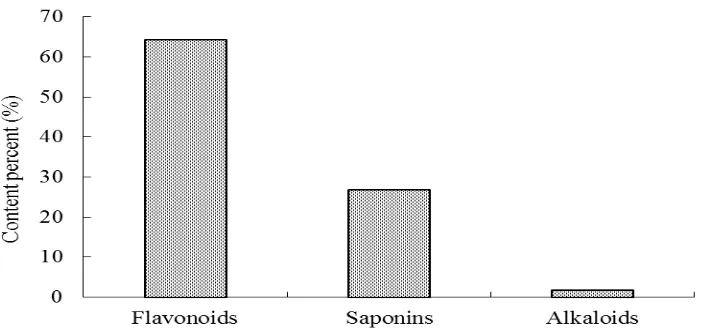
[image:6.595.78.538.73.216.2]The present investigation showed that stems of A. paniculata contain phytochemicals such as flavonoids, alkaloids and saponins in significant quantities (Fig.-2). It was found that stems of this medicinal plant exposed higher flavonoids content (64.31%), saponins and alkaloids present as 26.79% and 1.71%, respectively. Flavonoids has been used a wide range of pharmacological activities including allergic, microbial, inflammatory, anti-oxidant, anti-viral and anti-diarrheal.[24] The amphipathic nature of saponins gives the activity as surfactants, possibly making saponins useful for development of cosmetics and drugs, vaccines, dietary supplements. Saponins also used in oxidant, cancer, anti-inflammatory and weight loss etc.[25] Alkaloids have been reported to possess analgesic, antispasmodic and bactericidal, antimalarial and analgesic activities.[26] The presence of these secondary metabolites suggests that the plant might be of medicinal and industrial importance.
[image:6.595.124.483.574.740.2]
CONCLUSION
The present study found 10 constituents from stems of A. paniculata from petroleum ether extracts by Gas Chromatography-Mass Spectroscopy (GC-MS) analysis. The presence of these chemical compounds justified the extensive uses of stems of the plant by traditional physician to treat various disorders. It could be concluded that contains various chemical constituents that can be bioactive compounds of medical importance. However, further studies are needed to evaluate its bioactivity and toxicity profile.
ACKNOWLEDGEMENTS
We are grateful to Division In Charge, Chemical Research Division, BCSIR Laboratories, Dhaka and Director, BCSIR Laboratories, Dhaka for providing necessary facilities to carry out this research work.
REFERENCES
1. Kalaisenlvan A, Gokulakrishnan K, Anand T. Gas Chromatrography- Mas spectrum analysis of bioactive components of the ethanol extract of Andrographis paniculate. J Pharma Biomed Sci, 2012; 20(15): 1-3.
2. Cragg GM, David JN. Natural product drug discovery in the next millennium. J Pharm Biol, 2001; 39: 8-17.
3. Dilard CJ, German JB. Review phytochemicals: nutraceuticals and human health. Society of Chemical industry. J S food Agric., 2000; 80: 1756-74.
4. Ivanova D, Gerova D, Chervenkov T, Yankova T. Polyphenols and antioxidant capacity of Bulgarian medicinal plants. J Ethanopharm, 2005; 96: 145-50.
5. Oubre AY, Carlson TJ, King SR, Reaven EM. From plant to patient, an ethnomedical approach to the identification of new drugs for the treatment of non-insulin dependent diabetes mellitus. Diabetologia, 1997; 40: 614-17.
6. Deora G. In vitro assessment of antioxidant and antiproliferative efficacy of A. paniculata. Int j pharmaceut sci res, 2017; 5(10): 4456-66.
7. Calixto JB. Efficacy, safety, quality control, marketing and regulatory guidelines for herbal medicines (Phytotherapeutic agents). Braz J Med Biol Res, 2000; 33: 179-89. 8. Kim DH, Yoon BH, Kim YM, Lee S, Shin BY, Jung JW et al. The seed extract of cassia
9. Aziz S, Khatun R, Al-Reza SM. Analysis of fixed oil from the seed of Cassia obtusifolia
by GC-MS. J Pharmaco Phytochem, 2018; 7(4): 1482-84.
10.Okhuarobo A, Falodun JE, Erharuyi O, Imieje V, Falodun A, Langer P. Harnessing the medicinal properties of Andrographis paniculata for diseases and beyond: a review of its phytochemistry and pharmacology. Asian Pac J Trop Dis, 2014; 4(3): 213-22.
11.Richard EJ, Murugan S, Bethapudi B, Illuri R, Mundkinajeddu SD, Velusami CC. Is Andrographis paniculata extract and andrographoide anaphylactic? Toxicol Reports, 2017; 4: 431-37.
12.Kabir MH, Hasan N, Rahman MM, Rahman MA, Khan JA, Hoque NT, Bhuiyan MR, Mou SM, Jahan R, Rahmatullah M. A survey of medicinal plants used by the Deb barma clan of the Tripura tribe of Moulvibazar district, Bangladesh. J Ethnobiol Ethnomed, 2014; 10: 19.
13.Govindarajan R, Vijayakumar M, Pushpangadan P. Antioxidant approach to disease management and the role of „Rasayana‟ herbs of Ayurveda. J Ethnopharmacol, 2005; 99(2): 165-78.
14.Ajaya Kumar R, Sridevi K, Vijaya Kumar N, Nanduri S, Rajagopal S. Anticancer and immunostimulatory compounds from Andrographis paniculata. J Ethnopharmacol, 2004; 92(2-3): 291-95.
15.Rajagopal S, Kumar RA, Deevi DS, Satyanarayana C, Rajagopalan R. Andrographolide, a potential cancer therapeutic agent isolated from Andrographis paniculata. J Experiment Therapeu Oncol, 2003; 3(3): 147-58.
16.Li W, Xu X, Zhang H et al. Secondary metabolites from Andrographis paniculata. Chem Pharma Bull., 2007; 55(3): 455–58.
17.Sheeja K, Shihab PK, Kuttan G. Antioxidant and anti-inflammatory activities of the plant Andrographis paniculata nees. Immunopharmacol Immunotoxicol, 2006; 28(1): 129–40.
18.Wiart C, Kumar K, Yusof MY, Hamimah H, Fauzi ZM, Sulaiman M. Antiviral properties of ent-labdene diterpenes of Andrographis paniculata Nees, inhibitors of herpes simplex virus type 1. Phytotherapy Res., 2005; 19(12): 1069–70.
19.Griffin RC. ASTM, technical method of Analysis, 2nd ed. McGraw-Hill Co. Inc Publication, New York and London: 1960.
21.Harbone JB. Phytochemicals methods, Chapman and Hall, London publications, 1973; 113.
22.Harbone JB. Phytochemicals methods. A guide to modern techniques of plant analysis, Chapman and Hall, London Publications, 1973; 49-188.
23.Bohm AB, Kocipai AC. Flavonoid and condensed tannin from leaves of Hawaiin Vaccinium Vaticlm and Vicalcinium. Pacific Sci., 1994; 48: 458-63.
24.Evans WC. Trease and Evans Pharmacognosy. 15th edition, Elsevier, India, 2002; 27(46): 183-84, 289-91, 411-13, 434, 485-86.
25.Frankel E. Nutritional benefits of flavonoids. International Conference on Food Factors: Chemistry and Cancer Prevention. Hamamatsu, 1995; 2–6.