THE RECENT CHRONIC
Abaedha Susan Kuriakose, Anjali
Pharm D, National College of Pharmacy, Manassery, Mukkam, Kozhikode,
ARTICLE INFO ABSTRACT
The increased HMGco A
explained by potent LDL and total cholesterol lowering ability. population receiving daily sta
improved understanding of long term effects of commonly used statins are necessary to reduce the accumulation of drug induced complications in hospitals. Long term effects of statins include neuropsychiatry adverse
Diabetics, risk of carcinoma, interstial lung disease, and myopathy were few among vast data. and CKD patients, long
decrease the intra
vasodilatation of liver vasculature. In the treatment of neurological diseases like multiple sclerosis, stroke and Parkinsonism statins s
excessive angiogenesis and invasion of endometrial endothelial cells which is associated with locally elevated inflammatory cytokinesis. The improved understanding of long term effects
used statin can considerably reduce accumulating drug induced complications in hospitals.
Copyright © 2016 Abaedha Susan Kuriakose et al. This
unrestricted use, distribution, and reproduction in any medium, provided the original work is properly cited.
INTRODUCTION
Dyslipidemia is elevated total cholesterol, low density lipoprotein (LDL) cholesterol, or triglycerides. The common practice after diagnosing dyslipidemia is initiating statin therapy immediately without considering lipid levels. The increased HMG CoA reductase inhibitor therapy can be well explained by potent LDL and total cholesterol lowering ability. The percentage of the Indian population receiving daily statin dose increased from 3.35 to 7.78, because of the cardiovascular
burden in the country. [1]Many large clinical trials suggests that
patients undergoing statin therapy for an average of 5 years can reduce the incidence of morbidity and mortality in patients because of CHD (Coronary Heart Disease) and stroke. Since statins are less suspected for its long
improved understanding of long term effects of commonly used statins are necessary to reduce the accumulation of drug induced complications in hospitals. This intensive use of statins as monotherapy or combination therapy in all cardiova
*Corresponding author: Neethu Poulose,
Pharm D, National College of Pharmacy, Manassery, Mukkam, Kozhikode, Kerala, India – 673602.
ISSN: 0975-833X
Vol.
Article History:
Received 28th November, 2015
Received in revised form 15th December, 2015
Accepted 19th January, 2016
Published online 27th February,2016
Key words:
HMG CoA reductase, Statins,
Long-term statin therapy, Dyslipidemia,
Protective effect.
Citation: Abaedha Susan Kuriakose, Anjali, S., Ann Mary Paul, Maria C Kuriakose and Neethu Poulose, dynamic future of Statins : Risks vs benefits”, International Journal of Current Research,
RESEARCH ARTICLE
THE RECENT CHRONIC-INTENSIVE USE AND DYNAMIC FUTURE OF
STATINS : RISKS VS BENEFITS
Anjali, S., Ann Mary Paul, Maria C Kuriakose and
Pharm D, National College of Pharmacy, Manassery, Mukkam, Kozhikode, Kerala, India
ABSTRACT
The increased HMGco A reductase therapy in the field of cardiovascular disease can be well explained by potent LDL and total cholesterol lowering ability. About
population receiving daily statin therapy. Since statins are less suspected for its long term events, the improved understanding of long term effects of commonly used statins are necessary to reduce the accumulation of drug induced complications in hospitals. Long term effects of statins include neuropsychiatry adverse effects like cognitive impairment, dementia and short term memory loss. Diabetics, risk of carcinoma, interstial lung disease, and myopathy were few among vast data. and CKD patients, long-term statin therapy reduced the rates ADR and death rates a
decrease the intra-hepatic vascular resistance in a cirrhotic liver and improves the flow mediated vasodilatation of liver vasculature. In the treatment of neurological diseases like multiple sclerosis, stroke and Parkinsonism statins shows a benefited effect. Statins are used for treating endometriosis, excessive angiogenesis and invasion of endometrial endothelial cells which is associated with locally elevated inflammatory cytokinesis. The improved understanding of long term effects
used statin can considerably reduce accumulating drug induced complications in hospitals.
This is an open access article distributed under the Creative Commons Att use, distribution, and reproduction in any medium, provided the original work is properly cited.
is elevated total cholesterol, low density lipoprotein (LDL) cholesterol, or triglycerides. The common practice after diagnosing dyslipidemia is initiating statin therapy immediately without considering lipid levels. The tor therapy can be well explained by potent LDL and total cholesterol lowering ability. The percentage of the Indian population receiving daily statin dose increased from 3.35 to 7.78, because of the cardiovascular nical trials suggests that patients undergoing statin therapy for an average of 5 years can reduce the incidence of morbidity and mortality in patients
because of CHD (Coronary Heart Disease) and stroke. [2, 3]
Since statins are less suspected for its long term events, the improved understanding of long term effects of commonly used statins are necessary to reduce the accumulation of drug induced complications in hospitals. This intensive use of statins as monotherapy or combination therapy in all cardiovascular
Pharm D, National College of Pharmacy, Manassery, Mukkam,
diseases calls the need of risk Vs benefit study. In most cases, the benefits of chronic use of statins in cardi
complication highly outweigh risk. Hence this review focuses on creating awareness on long term
CoA reductace inhibitors and its impact on comorbid condition.
Historical perspective of statins
The cholesterol was first isolated from gallstone in 1784, which was a mile stone in medical history .It was followed by serious cholesterol research on biosynthesis of cholesterol. In 1950’s, it was well known that the only possible way to decrease the risk of coronary artery complication was to reduce cholesterol
biosynthesis. [4] Insite of above knowledge, research have come
across many decades and scientist could develop remarkably effective cholesterol lowering a
The late 1980’s introduced first generation statins (lovastatin, pravastatin and fluvastatin)which marked
statin saga, followed by second generation (atorvastatin and simvastatin) which are the widely prescribed statins, have the ability to reduce greater than 30% LDL comparing to first generation. The third generation includes rosuvastatin and
Available online at http://www.journalcra.com
International Journal of Current Research Vol. 8, Issue, 02, pp.26456-26461, February, 2016
INTERNATIONAL
Anjali, S., Ann Mary Paul, Maria C Kuriakose and Neethu Poulose, 2016. “ International Journal of Current Research, 8, (02), 26456-26461.
INTENSIVE USE AND DYNAMIC FUTURE OF
, S., Ann Mary Paul, Maria C Kuriakose and *Neethu Poulose
Kerala, India - 673602
reductase therapy in the field of cardiovascular disease can be well About 5 to 7.78 percentage of Indian s suspected for its long term events, the improved understanding of long term effects of commonly used statins are necessary to reduce the accumulation of drug induced complications in hospitals. Long term effects of statins include effects like cognitive impairment, dementia and short term memory loss. Diabetics, risk of carcinoma, interstial lung disease, and myopathy were few among vast data. In CAD term statin therapy reduced the rates ADR and death rates and also statins can hepatic vascular resistance in a cirrhotic liver and improves the flow mediated vasodilatation of liver vasculature. In the treatment of neurological diseases like multiple sclerosis, hows a benefited effect. Statins are used for treating endometriosis, excessive angiogenesis and invasion of endometrial endothelial cells which is associated with locally elevated inflammatory cytokinesis. The improved understanding of long term effects of commonly used statin can considerably reduce accumulating drug induced complications in hospitals.
is an open access article distributed under the Creative Commons Attribution License, which permits
diseases calls the need of risk Vs benefit study. In most cases, the benefits of chronic use of statins in cardiovascular complication highly outweigh risk. Hence this review focuses on creating awareness on long term –intensive use of HMG CoA reductace inhibitors and its impact on comorbid condition.
Historical perspective of statins
lated from gallstone in 1784, which was a mile stone in medical history .It was followed by serious cholesterol research on biosynthesis of cholesterol. In 1950’s, it was well known that the only possible way to decrease the risk ation was to reduce cholesterol Insite of above knowledge, research have come across many decades and scientist could develop remarkably effective cholesterol lowering agents which lead to statin saga. The late 1980’s introduced first generation statins (lovastatin, pravastatin and fluvastatin)which marked the beginning of
followed by second generation (atorvastatin and simvastatin) which are the widely prescribed statins, have the to reduce greater than 30% LDL comparing to first generation. The third generation includes rosuvastatin and
INTERNATIONAL JOURNAL OF CURRENT RESEARCH
pitavastatin. They are called super statins because of their high potency and are reserved for patients at high risk of developing
statin intolerance. [5,6]
Long term effect of statin
The major long term effect of statin is cognitive impairment. Almost all widely used statins are associated with memory loss
[simvastatin, atorvastatin, pravastatin].[7]One of the study
showed that 60 patients who had memory loss were associated with statins, among them 36 were treated with simvastatin, 23
atorvastatin, and 1 pravastatin.[8] Atorvastatin and Rosuvastatin
has reported cases of increase in onset of diabetes with long
term use. [9, 10]Most of the strong statins were associated with
changes in laboratory values of the liver enzymes, HbA1C, CK
with short term use itself. [11] The statin has been clinically well
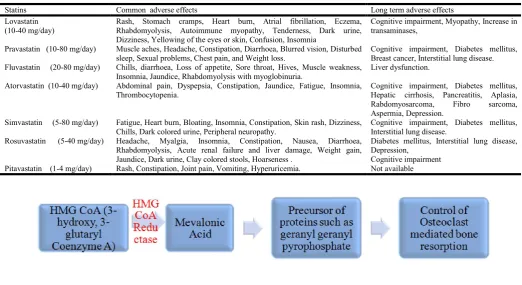
known for complication ranging from myopathy to rabdomyolysis. Even genetic basis has been reported for many cases. That is statin induced myopathy has been running families because of the genetic polymorphism of SLCO1B1 gene. The long term effects of statin are summarized in Table 1.
Statins use in CKD
Renoprotective nature of statins is well studied clinically and experimentally. The studies revealed that in CAD and CKD (chronic kidney diseases) patients, long-term statin therapy reduced the rates of both MACE (major adverse cardiac events) and all-cause death/cardiac death by 20.5% and 28.6%/27.7%
respectively. [12] One of the Meta analysis concluded that
High-intensity statin therapy could clearly reduce the risk of stroke in
patients with CKD. [13] Even though useful effects of statins
found to be smaller in stage 5 CKD patients and those under dialysis, large Meta analysis support beneficiary effect of statin
in less severe renal impairment. [14] The strong statins
(atorvastatin, rosuvastatin ,pitavastatin) were more effective in
CKD patients while comparing with regular statins
(pravastatin, simvastatin, fluvastatin) which had no
considerable effect. [15] Beneficial effects of statins include
reducing the 24hr urinary protein excretion and are also associated with a rise in GFR. Statins exert its renoprotective action by diminishing the proliferation of mesangial and vascular smooth muscle cells, suppressing mesangial matrix expansion, and inhibiting macrophage infiltration and the
production of cytokines so that it reduces the renal injury. [16, 17]
The renal and cardiovascular injury is related to decrease NO bioavailability and increased ANG II activation of NADPH oxidase, which further result in vascular oxidative stress and upregulation of vascular proinflammatory gene expression. The role of statins in decreasing the oxidative stress has been
widely studied. [18] Among all the HMG CoA reductace
inhibitor, atorvastatin use is associated with a significantly larger beneficial effect on the rate of kidney function loss.
[19]
That is clinically significant risk reduction can be observed from atrovastatin therapy. One of the studies has shown that atorvastatin significantly reduced the proteinuria by 15% to 23.8%. Another study revealed clinically relevant proteinuric benefits from the use of simvastatin in moderate to severe
kidney disease, especially those with proteinuria. [20,21] Also
statins in combination with ACE inhibitor or ARB in patients
with CKD and dyslipidemia considerably involved in reducing
protein urea. [22] Further more clinical evidence is needed to
support the use of statin in CKD so as to create a more effective treatment plan by adding statins in the management of CKD.
Statins in portal hypertension
Experimental data suggests that statins can decrease the intra-hepatic vascular resistance in a cirrhotic liver and improves the flow mediated vasodilation of liver vasculature. Statins act as true liver selective vasodilators due to its liver selective nitric
oxide production. [23,24,25] Similar to other statins, simvastatin
increases nitric oxide production by acting on sinusoidal endothelial cells through nitric oxide synthase enzymatic
activity. [24] Molecular pathways such as Rho A/ Rho – kinase
pathway which are dysfunctional in cirrhosis will be specifically activated by the use of statins and thereby decreases AKT mediated eNOS phosphorylation and over
expression of caveolin-1. [26] One of the study suggests that
atorvastatin can act by resolving endothelial dysfunction and also blunting inflammatory pathways, thereby reduces the
fibrinogenesis.[27]Thus statins seems to be having an important
role in the treatment of portal hypertension.[28] A double blind
randomized controlled trial concluded that simvastatin can reduce Intra vascular resistance in cirrhotic patients. After 1month of treatment, their hepatic venous pressure gradient (HVPG) reduced to target hemodynamic response without
affecting their systemic hemodynamics. [29] Secondary
prophylaxis of varicel haemorrhage due to portal hypertension became the new indication of simvastatin.
Statins in neurology
Along with lipid lowering effect, additional properties such as endothelial protection via actions on the nitric oxide synthase system as well as antioxidant, inflammatory and anti-platelet effects of statins might have potential therapeutic implications in various neurological disorders such as stroke, Alzheimer's disease (AD), Parkinson's disease, multiple sclerosis and primary brain tumors. Statins reduce the risk of ischemic stroke and it lowered their risk of having a second stroke by one-fifth on average. But it also slightly increased the risk of hemorrhagic stroke in less than 1% of patients. Evidences from human epidemiological studies, human neuro pathological studies, and experiments using animal models of Alzheimer’s diseases pointed that high levels of cholesterol,
particularly low-density lipoprotein cholesterol, were
associated with developing of Alzheimer’s diseases.[30]
Cholesterol increases the activity of the β- or γ-secretase enzymes that generate amyloid peptide (Aβ) from amyloid precursor protein (APP), decrease the flux of APP through the non amyloidogenic α-secretase pathway, or affect various non amyloid factors, such as local inflammation or tau
metabolism.[31,32,33]In the years since the connection between
cholesterol level and AD was elucidated, many studies were conducted for use of statins as AD-modulating compounds. The reports of clinical studies suggesting decreased effect of statins in Alzheimer’s diseases creates a dilemma on overall
Statins suppress the production of inducible nitric oxide and secretion of tumour necrosing factor alpha by interferon omega which plays important roles in inflammatory process in multiple sclerosis. The immune modulatory effects of statins is defined by binding directly to lymphocyte functional antigen and inhibiting its interaction with intracellular adhesion molecule and this class of drug may be new path to patients with diseases like multiple sclerosis, rheumatoid arthritis and
SLE.[36] Protective effect of statins in parkinsonism is
described by anti-inflammatory mechanism by glial cell activation, inhibiting oxidative stress, suppressing the
aggregation of α-synuclein protein and protecting
dopaminergic neurons in animal models of parkinsonisom. Along with above protective mechanism, statins inhibit coenzyme 10 known as ubiquinone antioxidant which plays a protective effect in parkinsonism, thus potentially increasing the risk and worsening the course of parkinsonism. According to these various biologic theories, statins may either have a
protective or a deleterious effect regarding parkinsonism.[37]
Statins were associated with neuropsychiatry adverse effects like cognitive impairment, dementia and short term memory loss. Simvastatin appeared to be associated with worsened cognition impairment following rosuvastatin, atorvastatin,
lovastatin.[38] Pravastatin seems to safer from neuropsychiatric
impairment when comparing with other statins. Lower cognitive function associated with statins has found to be more
vulnerable to elderly patients, with increased disability. [39,40]
Fracture and statins
The Conversion of HMG CoA to mevalonic acid is inhibited by the statins and this mevalonic acid is the major precursor of cholesterol as well as proteins such as geranyl geranyl
pyrophosphate. Antiresorptive action of bisphosponates like alendronate and risendronate is exerted by suppressing the generation of geranyl geranyl pyrophosphate in the mevalonate pathway and it is very important in the control of osteoclast
mediated bone resorption [Figure 1]. [41]According to one of the
recent study, current statin use excert a protective effect on bone fractures especially fractures of hip, vertebral body and
foot.[42,43] However, some of the studies could not observe any
effect of statin use on reducing fracture risk.[41,44]
Teratogenic risk of statins in pregnancy
Among those affected, women of reproductive age also with familial hypercholestremia, polycystic ovary disease are in much concern about the teratogenic effects of these
medications especially the statins [45]. There is an increase of
about 4 fold in the use of this statins in recent decades and reported that 50% of antihyperlipidemic medications dispensed during pregnancy were statins. From a population based study it founds that approximately 1in 100 women used statins or
other contraindicated medications during pregnancy [46].
Cholesterol, which is an essential factor for cell reproduction and development naturally increases its level during pregnancy. Therefore the major therapy behind the statin induced
teratogenecity is the interruption of cholesterol synthesis [47].
Lipophilicity of statins are considered one of the trigger factor for increasing teratogenic potential since high lipid soluble
drugs or chemicals can pass easily across the placenta
[48-50]
.Mostly used lipophilic statins are lovastatin and
simvastatin while hydrophilic were rosuvatatin and
[image:3.595.46.552.74.347.2]pravastatin.One of the reason that could lead to poor pregnancy outcome is the interruption of production of dolichol and
Table 1. Long term adverse effects of statins
Statins Common adverse effects Long term adverse effects
Lovastatin (10-40 mg/day)
Rash, Stomach cramps, Heart burn, Atrial fibrillation, Eczema, Rhabdomyolysis, Autoimmune myopathy, Tenderness, Dark urine, Dizziness, Yellowing of the eyes or skin, Confusion, Insomnia
Cognitive impairment, Myopathy, Increase in transaminases,
Pravastatin (10-80 mg/day) Muscle aches, Headache, Constipation, Diarrhoea, Blurred vision, Disturbed sleep, Sexual problems, Chest pain, and Weight loss.
Cognitive impairment, Diabetes mellitus, Breast cancer, Interstitial lung disease. Fluvastatin (20-80 mg/day) Chills, diarrhoea, Loss of appetite, Sore throat, Hives, Muscle weakness,
Insomnia, Jaundice, Rhabdomyolysis with myoglobinuria.
Liver dysfunction.
Atorvastatin (10-40 mg/day) Abdominal pain, Dyspepsia, Constipation, Jaundice, Fatigue, Insomnia, Thrombocytopenia.
Cognitive impairment, Diabetes mellitus, Hepatic cirrhosis, Pancreatitis, Aplasia, Rabdomyosarcoma, Fibro sarcoma, Aspermia, Depression.
Simvastatin (5-80 mg/day) Fatigue, Heart burn, Bloating, Insomnia, Constipation, Skin rash, Dizziness, Chills, Dark colored urine, Peripheral neuropathy.
Cognitive impairment, Diabetes mellitus, Interstitial lung disease.
Rosuvastatin (5-40 mg/day) Headache, Myalgia, Insomnia, Constipation, Nausea, Diarrhoea, Rhabdomyolysis, Acute renal failure and liver damage, Weight gain, Jaundice, Dark urine, Clay colored stools, Hoarseness .
Diabetes mellitus, Interstitial lung disease, Depression,
Cognitive impairment Pitavastatin (1-4 mg/day) Rash, Constipation, Joint pain, Vomiting, Hyperuricemia. Not available
[image:3.595.35.558.76.361.2]isoprenoids which are involved in intracellular signaling and insulin like growth factor system necessary for placental
growth by statins[51]. Besides these factors, the women using
statins often have comorbid disease states and take concomitant medication that could contribute to congenital malformation. Based on the initial animal studies, FDA categorized the statins as pregnancy category X:contraindicated at any time during pregnancy.
Statins and women health
Statins are used for treating endometriosis, excessive angiogenesis and invasion of endometrial endothelial cells which is associated with locally elevated inflammatory
cytokinesis. Currently surgery is the treatment for
endometriosis due to anti inflammatory effects but presently statins are investigate for this. Statins decrease endothelial cell invasion, inhibiting excessive cellular growth and decreasing the elevated levels of inflammatory cytokines in endometriosis
[52-55]
. Another potential use of statins are for the treatment of women with polycystic ovary syndrome. This decrease results in chronic systemic inflammation, elevated serum androgen levels and endothelial dysfunction in a variety of vascular beds
[56]
. Some studies shows that atorvastatin and simvastatin can decrease circulating androgen concentration compared with placebo and simvastatin therapy resulted in lower androgen
levels than the standard therapy with metformin [57,58]. In
addition to this, simvastatin and atorvastatin can lower the levels of pro-inflammatory markers in women with polycystic
ovary syndrome. [59,60]
Pharmacoeconomic consideration of Statins
All the statins have shown to be effective for reducing the total cholesterol and LDL cholesterol. However considering pharmacoeconomic part, the CER(cost effective ratio: cost/outcome) of statins was very high which increases the need of life style modifications, including dietary changes,
exercise and meditation as the preferable choice.[61,62]
Atorvastatin is the cheapest statin available comparing to other statins. The statins such as simvastatin, lovastatin or pravastatin were quite expensive. The pharmacoeconomics evaluation studies showed that atorvastatin as the most effective drug with less cost to reach the therapeutic goal when compared to
pravastatin, fluvastatin and simvastatin.[63] In a cohort study it
was found that rosuvastatin 10 mg is the most effective choice
for diabetic patients with dyslipidemia.[64]
Conclusion
The health care professionals looks forward for the imminent future of statins which have wide health outcomes. The improved understanding of long term effects of commonly used statin can considerably reduce accumulating drug induced complications in hospitals. Further more evidence and pharmacoeconomics studies should be conducted for improved decision making and effective health management.
REFERENCES
1) Choudhry NK, Dugani S, Shrank WH, Polinski JM, Stark
CE, Gupta R, Prabhakaran D, Brill G, Jha P. 2014.
Despite increased use and sales of statins in India, per capita prescription rates remain far below high-income countries. Health Aff (Millwood), feb;33(2):273-82
2) Joshua S. Benner, Robert J. Glynn, Helen Mogun, Peter J.
Neumann, Milton C. Weinstein, Jerry Avorn. 2002. Long-term persistence in use of statin therapy in elderly patients. JAMA. 288 (4):455-61. doi: 10. 1001/jama. 288. 4. 455.
3) Edward J. Mills1,Christopher O'Regan, Oghenowede
Eyawo, Ping Wu1,Fergal Mills,Otavio Berwanger et al. 2011. Intensive statin therapy compared with moderate dosing for prevention of cardiovascular events: a meta-analysis of >40 000 patients. Eur Heart J., 32 (11): 1409-15. doi: 10.1093/eurheartj/ehr035
4) Akira ENDO. 2010. A historical perspective on the
discovery of statins. Proc Jpn Acad Ser B Phys Biol Sci., May 11; 86(5): 484–493.
5) Maji D, Shaikh S, Solanki D, Gaurav K. 2013. Safety of
statins. Indian J Endocr Metab [serial online] [cited 2015 Nov 22];17:636-46. Available from: http://www.ijem. in/text.asp?2013/17/4/636/113754
6) Kapur NK, Mususnuru K. 2008. Clinical efficacy and
safety of statins in managing cardiovascular risk. Vasc
Healt Risk Manag., 4:341-53.
7) King DS1, Wilburn AJ, Wofford MR, Harrell TK,
Lindley BJ, Jones DW.Cognitive impairment associated with atorvastatin and simvastatin. Pharmacotherapy. 2003 Dec;23(12):1663-7.
8) Wagstaff LR1, Mitton MW, Arvik BM, 2003.
Doraiswamy PM.Statin-associated memory loss: analysis of 60 case reports and review of the literature. Pharmacotherapy, Jul;23(7):871-80.
9) Nakata M, Nagasaka S, Kusaka I, Matsuoka H, Ishibashi
S, Yada T. 2006. Effects of statins on the adipocyte maturation and expression of glucose transporter 4
(SLC2A4): Implications in glycaemic control.
Diabetologia, 49: 1881 – 892.
10) Ridker PM, Danielson E, Fonseca FA, Genest J, Gotto
AM Jr, Kastelein JJ, et al. 2008. JUPITER Study Group. Rosuvastatin to prevent vascular events in men and women with elevated C-reactive protein. N Engl J Med., 359: 2195 – 207.
11) Keijiro S, Zhang B, Noda K. 2011. Randomized
Head-to-Head Comparison of Pitavastatin, Atorvastatin, and Rosuvastatin for Safety and Efficacy (Quantity and Quality of LDL). Circ J., 75: 1493–505.
12) Huang H, Zeng C, Ma Y, Chen Y, Chen C, Liu C, Dong
Y. 2015. Effects of Long-Term Statin Therapy in Coronary Artery Disease Patients with or without Chronic Kidney Disease. Huang H, et al. Dis Markers.
13) Yan Y, wang Q, Deng S, Wu L, Jing X, Lin Du J. 2014.
High-intensity statin therapy in patients with chronic kidney disease: a systematic review and meta-analysis.
BMJ Open. 2015;5:e006886doi:10.1136/
bmjopen-2014-006886
14) Hou W, Jicheng Lv, Perkovic V, Yang L, Zhao N, Meg J.
Jardine. 2013. Effect of statin therapy on cardiovascular and renal outcomes in patients with chronic kidney disease: a systematic review and meta-analysis. Eur
Heart J., 34 (24): 1807-1817. doi: 10.1093/eurheartj/
15) Rysz J, Gluba-Brzózka A , Banach M, Więcek A. Should we use statins in all patients with chronic kidney disease without dialysis therapy? The current state of knowledge.
International Urology and Nephrology, 2015;vol47.
16) Campese VM, Nadim MK, Epstein M. Are
3-hydroxy-3-methylglutaryl-CoA reductase inhibitors renoprotective? J Am Soc Nephrol 16, Suppl 1: S11–S17, 2005.
17) Heusinger-Ribeiro J, Fischer B, Goppelt-Struebe M.
Differential effects of simvastatin on mesangial cells. Kidney Int 66: 187–195, 2004.
18) Zhou MS, Adam AG, Jaimes EA, Raij L. In salt-sensitive
hypertension, increased superoxide production is linked to functional upregulation of angiotensin II. Hypertension 42: 945–951, 2003
19) SabrinaSandhu,NatashaWiebe,LindaF.Fried,†andMarcell
oTonelli§.StatinsforImprovingRenalOutcomes:AMeta Analysis.JAmSocNephrol17:2006–
2016,2006.doi:10.1681/ASN.2006010012
20) Douglas K., O'Malley P. G., Jackson J. L. Meta-analysis:
the effect of statins on albuminuria. Annals of Internal Medicine. 2006;145(2):117–124. doi: 10.7326/0003-4819-145-2-200607180-00009.
21) Bancha Satirapoj, * Anan Promrattanakun, Ouppatham
Supasyndh, and Panbuppa Choovichian.The Effects of Simvastatin on Proteinuria and Renal Function in Patients with Chronic Kidney Disease. Int J Nephrol., 2015; 2015: 485839.
22) Zoja C1, Corna D, Gagliardini E, Conti S, Arnaboldi L,
Benigni A, Remuzzi G.Adding a statin to a combination of ACE inhibitor and ARB normalizes proteinuria in experimental diabetes, which translates into full renoprotection. Am J Physiol Renal Physiol., 2010 Nov;299(5):F1203-11. doi: 10.1152/ajprenal.00045.2010. Epub 2010 Aug 18.
23) Abraldes JG, Rodrigues – vilarrupla A, Graupera M et al.
Simvastatin treatment improves liver sinusoidal epithelial dysfunction in CC14 cirrhotic rats. J Hepatol., 2007; 46: 1040-1046.
24) Trebicka J, Hennenberg M, Laleman W, et al.
Atorvastatin lowers portal pressure in cirrhotic rats by inhibition of Rho A/ Rho- Kinase and activation of endothelial NO synthase. Hepatology. 2007; 46: 242-253.
25) Zafra C, Abraldes JG, Turnes J, et al. Simvastatin
enhances hepatic NO production and decreases the hepatic vascular tone in patients with cirrhosis.
26) Ramirez G, Briceno J, Rojas A. Statins and portal
hypertension: a new pharmacological challenge. Current
Vascular Pharmacology, 2012; 10: 767-772.
27) Trebicka J, Hennerberg M, Odenthal M, et al.
Atorvastatin attenuates hepatic fibrosis in rats after bile duct ligation via decreased turnover of hepatic stellate cells. Journal of Hepatology, 2010; 53: 702-12.
28) Abraldes JG, Albillos A, Banares R, Turnes J, Gonzalez
R, Garcia- pagan JC, Bosch J. Simvastatin lowers portal
pressure in patients with cirrhosis and portal
hypertension: a randomized controlled trial.
Gastroenterology. 2009 May; 136(5): 1651-8.
29) Sanerbruch T, Trebicka J. Future therapy of portal
hypertension in liver cirrhosis: a guess. F 1000 Prime Reports. 2014; 6: 95.
30) Shepardson NE, Shankar GM, Selkoe DJ. Cholesterol
Level and Statin Use in Alzheimer Disease: I. Review of Human Trials and Recommendations. Arch Neurol,
2011;68(11):1385-1392. doi:10.1001/archneurol.2011.
242.
31) Yaffe K, Barrett-Connor E, Lin F, Grady D. Serum
lipoprotein lev els, statin use, and cognitiv e function in older women. Arch Neurol. 2002; 59(3):37 8-384.
32) Solomon A, Kåreholt I, Ngandu T, et al. Serum
cholesterol changes after midlife and latelifecognition: twenty -one-y ear follow-up study. Neurology. 2007 ;68 (1 0):7 51 -7 56.
33) Kiv ipelto M, Helkala EL, Laakso MP, et al.
Apolipoprotein E ε4 allele, elev ated midlife total cholesterol lev el, and high midlife sy stolic blood pressure are independent risk factors for late-life Alzheimer disease. Ann Intern Med., 2002;1 37 (3):1 49-1 55.
34) Statins, incident Alzheimer disease, change in cognitive
function, and neuropathology . Arvanitakis Z, Schneider JA, Wilson RS, Bienias JL, Kelly JF,. Evans DA, Bennett DA, Neurology May 6, 2008 vol. 70 no. 19 Part 2 1795-1802.
35) Shepardson NE, Shankar GM, Selkoe DJ. Cholesterol
Level and Statin Use in Alzheimer DiseaseII. Review of Epidemiological and Preclinical Studies. Arch Neurol., 2011;68(12):
36) Zamvil SS, Steinman L. cholesterol lowering statins
possess anti inflammatory activity that might useful for treatment of MS. Neurology. 2002(59) 970-71.
37) Greenwood J, Steinman L, Zamvil SS. Statin therapy in
autoimmunity: from protein prenylation to
immunomodulation. Nat rev immunol., 6(5)
38) Friedman B, Lahad A, Dresner Y, Vinker S. Long-Term
Statin Use and the Risk of Parkinson's Disease. American
Journal of Managed Care, Published Online: August 12,
2013.
39) Galatti L, Salvo F , Romani M, Sessa A, Spina E
.Short-Term Memory Loss Associated with Rosuvastatin. Pharmacotherapy Publications Inc .published online: 6 JAN 2012,DOI: 10.1592/phco.26.8.1190 2006.
40) Wagstaff LR, Mitton MW, Arvik BM, Doraiswamy
PM.Statin-Associated Memory Loss: Analysis of 60 Case Reports and Review of the Literature. Pharmacotherapy Publications Inc.Published online: 16 JAN 2012;DOI: 10.1592/phco.23.7.871.32720. 2003.
41) Van Staa TJ, Wegman S, De Vrics F, Leufkens B,
Cooper Cyrus. JAMA.2001; 285(4): 1850 – 1855.
42) Meier CR, Schlienger RG, Kraenzlin ME, Schlegel B,
Jick H. HMG Co A reductase inhibitors and the risk of fractures. JAMA. 2000; 283: 3208-3210.
43) Wang PS, Solomon DH, Mogun H, Avorn S. HMG CoA
reductase inhibitors and the risk of hip fractures in elderly patients. JAMA. 2000; 282.
44) Chan AK, Andradese, Boles M. et al. Inhibitors of
hydroxymethyl glutaryl – Coenzyme A reductase and risk of fracture among older women. Lancet. 2000; 355: 2186-2188.
45) Raval AD, Hunter T, Stuckey B, Hart RJ. Statins for
trying to conceive. Cochrane Database Syst Rev 2011;10:CD008565.
46) Gagne JJ, Maio V, Berghella V, Louis DZ, Gonnella JS.
Prescription drug use during pregnancy: a population-based study in Regione Emilia-Romagna, Italy. Eur J
Clin Pharmacol., 2008;64:1125-32.
47) Ito MK, McGowan MP, Moriarty PM. Management of
familial hypercholesterolemiasin adult patients:
recommendations from the National Lipid Association Expert Panel on familial hypercholesterolemia. J Clin
Lipidol., 2011;5:S38- 45.
48) Briggs GG, Freeman RK, Yaffe SJ. Lovastatin. In: Drugs
in pregnancy and lactation. 9th ed. Philadelphia, PA: Wolters Kluwer, 2011:855-7.
49) Syme MR, Paxton JW, Keelan JA. Drug transfer and
metabolism by the human placenta. Clin Pharmacokinet., 2004;43:487-514.
50) Berlin CM Jr. Effects of drugs on the fetus. Pediatr Rev.,
1991;12:282-7.
51) Forbes K, Hurst LM, Aplin JD, Westwood M, Gibson
JM. Statins are detrimental to human placental development and function; use of statins during early
pregnancy is inadvisable. J Cell Mol Med.,
2008;12:2295-6.
52) Sokalska A, Wong DH, Cress A, Piotrowski PC,
Rzepczynska I, Villanueva J, et al. Simvastatin induces apoptosis and alters cytoskeleton in endometrial stromal cells. J Clin Endocrinol Metab., 2010;95:3453–9.
53) Sokalska A, Cress A, Bruner-Tran KL, Osteen KG,
Taylor HS, Ortega I, et al. Simvastatin decreases invasiveness of human endometrial stromal cells. Biol
Reprod, 2012;12:1–6.
54) Bruner-Tran KL, Osteen KG, Duleba AJ . Simvastatin
protects against the development of endometriosis in a nude mouse model. J Clin Endocrinol Metabol., 2009;94:2489–94.
55) Oktem M, Esinler I, Eroglu D, Haberal N, Bayraktar N,
Zeyneloglu HB. High-dose atorvastatin causes regression of endometriotic implants: a rat model. Hum Reprod., 2007;22(5):1474–80.
56) Banaszewska B, Pawelczyk L, Spaczynski RZ, Duleba
AJ. Effects of simvastatin and metformin on polycystic ovary syndrome after six months of treatment. J Clin
Endocrinol Metab., 2011;96:3493–501
57) Rashidi B, Abediasl J, Tehraninejad E, Rahmanpour H,
Sills ES. Simvastatin effects on androgens, inflammatory mediators, and endogenous pituitary gonadotropins among patients with PCOS undergoing IVF: results from a prospective, randomized, placebo-controlled clinical trial. J Investig Med., 2011;59:912–6.
58) Sathyapalan T, Smith KA, Coady AM, Kilpatrick ES,
Atkin SL. Atorvastatin therapy decreases
androstenedione and dehydroepiandrosterone sulphate
concentrations in patients withpolycystic ovary
syndrome: randomized controlled study. Ann Clin
Biochem., 2012;49(Pt 1):80–5.
59) Rashidi B, Abediasl J, Tehraninejad E, Rahmanpour H,
Sills ES. Simvastatin effects on androgens, inflammatory mediators, and endogenous pituitary gonadotropins among patients with PCOS undergoing IVF: results from a prospective, randomized, placebo-controlled clinical trial. J Investig Med., 2011;59:912–6.
60) Raja-Khan N, Kunselman AR, Hogeman CS, Stetter CM,
Demers LM, Legro RS. Effects of atorvastatin on vascular function, inflammation, and androgens in women with polycystic ovarysyndrome: a double-blind, randomized, placebo-controlled trial. Fertil Steril. 2011;95:1849–52.
61) Sanmukhani J, Shah V. Statins: Cost analysis in Indian
scenario from eight major clinical trials. J Postgrad Med., 2010;56:196-200
62) Kelley GA, Kelley KS, Franklin B. Aerobic exercise and
lipids and lipoproteins in patients with cardiovascular disease: A meta-analysis of randomized controlled trials.
J Cardiopulm Rehabil., 2006;26:131-44.
63) Tárraga-López PJ, Celada-Rodríguez A, Cerdán-Oliver
M, Solera-Albero J, Ocaña-López JM, López-Cara MA, De Miguel-Clave J.A Pharmacoeconomic evaluation of statins in the treatment of hypercholesterolaemia in the primary care setting in Spain. Pharmacoeconomics, 2005;23(3):275-87.
64) Bener A, Dogan M, Barakat L, Al-Hamaq AO.
Comparison of efficacy, safety, and cost effectiveness of various statins in dyslipidemic diabetic patients. Indian J
Pharmacol., 2014;46:88-93.