© 2019, IRJET | Impact Factor value: 7.211 | ISO 9001:2008 Certified Journal | Page 530
Review of Transient Stability Enhancement in Multi-Machine Power
System by using Power System Stabilizer (PSS) and Static Var
Compensator (SVC)
Snehal B. Sahare
1, U.G. Bonde
21
PG Scholar, Dept. of Electrical Engineering, Shri Sai Collage of Engineering and Technology, Bhadrawati,
Maharashtra, India
2
Professor, Dept. of Electrical Engineering, Shri Sai Collage of Engineering and Technology, Bhadrawati,
Maharashtra, India
---***---Abstract –
Increase in the complexity modern powersystem, requires stability, particularly for transient and small disturbances. Transient stability plays a major role in stability throughout fault and large disturbance. This paper presents review of various techniques used for enhancement of power system stability. Combination of PSS’s and FACT’s devices such as the SVC based PID damping controller and PSS, which is used for enhancing transient stability in power system are reviewed in this paper. The information collected in this paper is sufficient for finding out relevant references in the field of power system stability.
Key Words: FACTS, multi-machine system, PSS, SVC,
transient stability.
1. INTRODUCTION
Modern power systems are increasingly complex
nonlinear interconnected networks comprising
interconnected generator power plants, transformers and transmission lines with differences in loads. The interconnection of smaller subsystems is useful in reducing operating costs (e.g. fuel costs, sharing resources) and variety of loads improves the reliability of the system [1]. However, these possess technical challenges like low frequency electro-mechanical oscillation caused by electrical disturbances [2]. The power system stability is that the ability of the system to come back to its original operating condition after the disturbance [3]. In modern power systems, increased in the power demand results the overloading in long transmission lines (above normal limits), exacerbating the problem of transient stability, which has become a serious limiting factor in electrical engineering.
The transient stability of a system is defined as the ability of the system to maintain the system in stable condition after occurrence of the large disturbances, like fault and switching of lines. There are many ways for improving transient stability, including circuit breakers, fast-acting exciters and reduction within the transfer reactance of the system [1]. Under small disturbances, to remain synchronization the machine requires positive damping, generally from a power system stabilizer (PSS) provides positive damping to the system, which is one of the most common controls used to damp out oscillations.
The main role of PSS is to introduce modeling signal acting through the excitation system for oscillation damping [4]. It should be capable of providing stabilization signals over a broad range of operating conditions and disturbances; however, within nonlinear systems, the function of PSS is limited [5]. Many complex power systems are now stabilized using Flexible Alternating Current Transmission System (FACTS), which can control network conditions with optimum speed and enhance transient, voltage and steady state stabilities [6].
There are numerous classes of FACTS controllers, including shunt, series, combined series-series and combined series-shunt types. FACTS devices include a group of multiple controllers used to regulate system parameters like damping oscillation at different frequency, phase angle, voltage, current and impedance [7]. In this paper, SVC is discussed. It is a shunt type, used to connect as a controller which enhances the transient stability and damping the power oscillation with more reliable operation [8], [9].
The organization of this paper is as follows: Section II power system stabilizer PSS structure and the effect of damping oscillation; Section III models of static Var compensator SVC and explains SVC principles and its effectiveness to improve damping oscillation and explain the structure of the SVC controller; and Section IV presents the conclusion of the work.
2. POWER SYSTEM STABILIZER (PSS)
© 2019, IRJET | Impact Factor value: 7.211 | ISO 9001:2008 Certified Journal | Page 531
Fig -1: Block diagram of the PSS2.1 Overview of PSS Structures
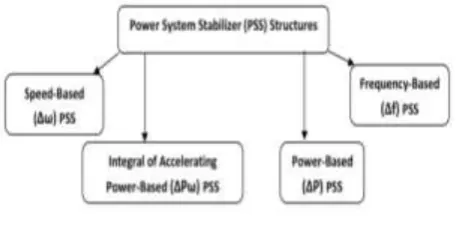
The commonly used input signals to the PSS are electrical power and terminal frequency and shaft speed. Different forms of PSS have been developed using these signals. This section describes the advantages and limitations of the different PSS structures.
Fig -2: Overview of PSS Structures
2.1.1 Speed-Based (Δω) Stabilizer
These are stabilizers that employ a direct measurement of shaft speed. Run-out compensation must be inherent to the method of measuring the speed signal to minimize noise caused by shaft run-out (lateral movement) and other sources.
While stabilizers supported direct measurement of shaft speed is used on several thermal units, this kind of stabilizer has many limitations. The primary disadvantage is the need to use a torsional filter to attenuate the torsional components of the stabilizing signal. This filter introduces a phase lag at lower frequencies which has a destabilizing effect on the "exciter mode", thus imposing a maximum limit on the allowable stabilizer gain. In several cases, this is often restrictive and limits the overall effectiveness of the stabilizer in damping system oscillations. In addition, the stabilizer has to be custom-designed for each type of generating Power-Based (ΔP) PSS unit depending on its torsional characteristics.
2.1.2 Frequency-Based (Δf) Stabilizer
Here, the terminal frequency signal is either used directly or terminal voltage and current inputs are combined to generate a signal that approximates the machine’s rotor speed, often referred to as compensated frequency. The frequency signal is more sensitive to modes of oscillation between large areas than to modes involving only individual units, including those between units within a power plant. Thus greater damping contributions are
obtained to these inter-area modes of oscillation than would be, with the speed input signal.
Frequency signals measured at the terminals of thermal units contain torsional components. Thus, it is necessary to filter torsional modes once used with turbine units. In this respect frequency-based stabilizers have the same limitations as that the speed-based units. Phase shifts within the ac voltage, resulting from changes in power system configuration, produce large frequency transients that are then transferred to the generator’s field voltage and output quantities. In addition, the frequency signal typically contains power system noise caused by large industrial loads like arc furnaces.
2.1.3 Power-Based (ΔP) Stabilizer
Due to the simple structure of power measurement and its relationship to shaft speed, it had been thought-about to be a natural candidate as an input signal to early stabilizers. The equation of motion for the rotor is written as follows:
(1)
Where: H = inertia constant; ΔPm = change in mechanical power input; ΔPe = change in electric power output and Δω = speed deviation
If variations of mechanical power are neglected, this equation implies that, signals are proportional to shaft acceleration (i.e. one that leads speed changes by 90°) is available from the scaled measurement of electrical power. This principle was implemented as the basic for many several stabilizer designs. In combination with both high and low-pass filtering, the stabilizing signal derived in this manner might provide pure damping torque at specifically one electromechanical frequency.
But at a same time this design has two major disadvantages. First, it can’t be set to produce a pure damping contribution at more than one frequency and thus for units affected by both local and inter-area modes a compromise is needed. The second limitation is that an unwanted stabilizer output is made whenever mechanical power changes occur. This severely limits the gain and output limits that will be used with these units. Even modest loading and unloading rates produce large terminal voltage and reactive power variations, unless stabilizer gain is severely restricted. Many power-based stabilizers are still in operation though they’re rapidly replaced by units supported the integral-of- accelerating power design.
2.1.4 Integral-of-Accelerating Power (ΔPω)
Stabilizer
[image:2.595.46.276.264.377.2]© 2019, IRJET | Impact Factor value: 7.211 | ISO 9001:2008 Certified Journal | Page 532
location, a method of indirectly deriving the accelerating [image:3.595.52.284.105.226.2]power was developed as shown in fig.2.
Fig - 3: Accelerating Power PSS Model
The principle of this stabilizer is illustrated by rewriting equation (1) in terms of the integral of power.
∫
(2)
The integral of mechanical power is related to electrical power and shaft speed as given bellow:
∫
∫
(3)
The ΔPω stabilizer makes use of the (3) simulate a signal proportional to the integral of change in mechanical power by adding signals proportional to shaft-speed change and integral of electrical power change. On horizontal shaft units, this signal will contain torsional oscillations unless a filter is used. Because mechanical power changes are relatively slow, the derived integral of mechanical power signal can be conditioned with a low-pass filter to attenuate torsional frequencies. The overall transfer function for deriving the integral-of accelerating power signal from measurement of electrical power and shaft speed is given bellow
∫
[
]
(4)Where, G(s) is the low-pass filter’s transfer function.
The major advantage of a ΔPω stabilizer is that there is no requirement for a torsional filter in the main stabilizing path including the ΔPe signal. This alleviates the exciter mode stability problem, thereby permitting a higher stabilizer gain that result in better damping of system
oscillations. A conventional end-of-shaft speed
measurement or compensated frequency signal can be used with this structure.
3. STATIC VAR COMPENSATORS (SVCs)
The single-line diagram of a SVC and a simplified block diagram of its control system is shown in fig3. Static Var compensators (SVCs) rated at 50 ~ 300 MVar, consisting of voltage source inverters using gate-turn-off (GTO) thyristors, are employed in improving power factor and stabilizing transmission systems. By controlling the amount of reactive power injected into or absorbed from
the power system the SVC regulates voltage at its terminals. The SVC generates reactive power (SVC capacitive) when system voltage is low and absorbs the reactive power (SVC inductive) when the system voltage is high. The SVC can adjust the amplitude of the ac voltage of the inverters by pulse-width modulation (PWM) or by controlling the dc bus voltage, thus producing either leading or lagging reactive power.
Fig -4: single-line diagram of a SVC and a simplified block diagram of its control system.
A pulse-width-modulated SVC, in which the dc voltage is controlled to remain at a constant value, responds rapidly to a change in reactive power at the expense of increasing the switching and snubbing losses. High efficiency and high reliability are a priority in practical power system applications of the SVCs. On the other hand, a dc voltage-controlled SVC, which directly controls the dc capacitor voltage by causing a small amount of active power to flow into or out of the voltage-source inverters, results in less switching and snubbing losses because the switching frequency is low. However, the dc voltage-controlled SVC is inferior to the Pulse Width Modulated (PWM) SVC in the transient response of reactive power. A model of the SVC based on the pq theory [17] is developed, and has the ability to deal with the power flow between the ac and dc sides in a transient state.
3.1. Modelling of the SVC
[image:3.595.317.554.181.354.2]© 2019, IRJET | Impact Factor value: 7.211 | ISO 9001:2008 Certified Journal | Page 533
[
] √
[
]
(5)
Where, VS is the rms voltage of the supply and ωO is its angular frequency. The above assumptions lead to the following ac voltage of the SVC:
[
] √
[
]
(6)
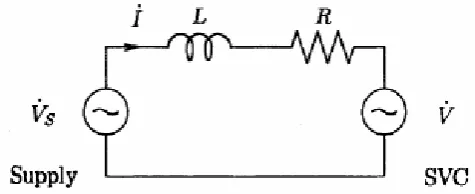
[image:4.595.43.281.272.369.2]Where, φ is the angle of the fundamental ac voltage with respect to the supply voltage, and K is the ac to dc voltage ratio of the SVC.
Fig -5: Model of the SVC: Single-Phase Equivalent
Using Fig. 2.10, one obtains the following equation:
[
]
[
] [
]
(7)
Invoking Assumption 3 results in the following equation for active power:
(8)
The pq theory can be used to transform,
[
] [
] [
]
(9)
( )
(10)
In (9) and (10), ip is an instantaneous active current and iq is an instantaneous reactive current. The instantaneous reactive power which is drawn from the supply,
is given as:
(11)
3.1. SVC Control
The SVC can be operated in two different modes: In voltage regulation mode (the voltage is regulated within limits) and in var control mode (the SVC susceptance is kept constant). The block diagram of the control circuit is shown
in fig.5. Due to the use Reactive power feedback using a PI controller; it is possible to improve the transient response of the reactive power. The pq transform circuit calculates the instantaneous reactive power qs from the three-phase supply voltages and the three-phase currents. The calculated reactive power qs and the reference reactive power q*s are applied to the proportional-integral (PI) controller. The output of the PI controller is a reference signal representing the phase angle φ*.
[image:4.595.317.551.286.410.2]The counter produces the phase information, ω0t, from a signal generated by the phase locked loop (PLL) circuit. The phase comparator compares Ф with ω0t, and determines the time at which the corresponding switching device is turned on or off. The gate control circuit prevents each switching device from being switched-on more than once in one cycle due to fast changes in Ф.
Fig -4: Block Diagram of SVC Control Circuit
3. CONCLUSIONS
A study of Power System Stabilizer (PSS), Static Var Compensator (SVC) based controllers has been carried out. The design of these controllers was discussed in brief and their effectiveness in enhancing power system stability assessed.
In the PSS design, Particle Swarm Optimisation (PSO) was employed where the search for the optimal controller parameter settings that optimize the objective function was done. To guarantee the robustness of the proposed controller, the design process was carried out considering a wide range of operating conditions: Heavy, normal and light loading. The SVC design process employed gate turn-off thyristors and dc voltage-control.
The SVC enhances system stability by controlling the amount of reactive power injected into or absorbed from the power system. On the other hand, the PSS has for a long time found application in the exciters of synchronous machines as an effective means of damping the generator unit’s characteristic electromechanical oscillations by modulating the generator excitation.
© 2019, IRJET | Impact Factor value: 7.211 | ISO 9001:2008 Certified Journal | Page 534
REFERENCES
1) Omar Mohammed Benaissa, Samir Hadjeri, Sid Ahmed
Zidi, “Impact of PSS and SVC on the Power System Transient Stability”, 8th International Conference on Modelling, Identification and Control (ICMIC-2016) Algiers, Algeria- November 15-17, 2016.
2) Khoshnaw Khalid Hama Saleh, Ergun Ercelebi,
“Transient Stability Improvement in Multi-Machine System Using Power System Stabilizer (PSS) and Static Var Compensator (SVC)”, World Academy of Science, Engineering and Technology International Journal of Computer and Systems Engineering Vol:9, No:12, 2015.
3) G. Hingorani and L. Gyugyi, “Understanding FACTS, Concepts, and Technology of Flexible AC Transmission Systems”, Piscataway, NJ: IEEE Press, 2000.
4) Demello, Francisco, and Charles
Concordia.(1969),"Concepts of Synchronous Machine Stability as Affected by Excitation Control." IEEE Transactions on Power Apparatus and Systems: 316-29.
5) Shamsollahi, P., and O.P. Malik, (1997), "An Adaptive Power System Stabilizer Using On-line Trained Neural Networks," IEEE Transactions on Energy Conversion: 382-87.
6) Lu, J., M.H. Nehrir, and D.A. Pierre. "A Fuzzy Logic-based Adaptive Power System Stabilizer for Multi-machine Systems." 2000 Power Engineering Society Summer Meeting (Cat. No.00CH37134).
7) Noroozian, M., M. Ghandhari, G. Andersson, J. Gronquist, and I. Hiskens.(2001). "A Robust Control Strategy for Shunt and Series Reactive Compensators to Damp Electromechanical Oscillations", IEEE Transactions on Power: 812-17.
8) Ghandhari, M., G. Andersson, and I.A. Hiskens.(2001). "Control Lyapunov Functions for Controllable Series Devices", IEEE Transactions on Power Systems: 689-94.
9) Smith, J.R., D.A. Pierre, I. Sadighi, and M.H. Nehrir.(1989). "A Supplementary Adaptive VAr Unit Controller for Power System Damping." IEEE Transactions on Power Systems: 1017-023.
10)Hideaki Fujita, Shinji Taminaga, Hirofumi Akagi, “Analysis and Design of a DC Voltage Controlled Static Var Compensator Using Quad-Series Voltage Source Inverters”, IEEE Transactions on Industry and Applications, Vol. 32, No.4, July/August 1996.
11)Dash. P. K, Selta Morris and Mishra. S, “Design of a nonlinear Variable Controller for FACTS Devices”, IEEE Transactions on Control System Technology, Vol. 12. 3 May 2004.
12)M. A. Abido, “Analysis and assessment of STATCOM based damping stabilizers for Power system stability
enhancement” Electric Power System Research,73, 177- 185,2005
13)Mohan Mathur, Rajiv K. Varma, “Thyristor-Based Facts Controllers for Electrical Transmission Systems”, John Wiley &Sons, Inc. Publication, 2002, pp 93-138. 14)B T Ooi, M Kazerrani, R Marcean, Z Wolanski, F D
Galiana, D. Megillis, G. Joos, “Midpoint sitting of FACTS devices in transmission lines”, IEEE Tran. On Power Delivery, Vol. 1 No. 4, 1997, pp. 17171722.
15)S. M. Barakati, S. Khanmohamadi, S. H. Hosseini, “Improving the Power Stability using Fuzzy Logic Controlled Static Var Compensator”, The 4th Iranian Conference on Electrical Engineering, ICEE-97, 1996. 16)E. Z. Zhou, “Application of Static Var Compensators to
Increase Power System Damping”, IEEE Transactions on Power Systems, Vol. 8, NO. 2, 1993.
17)H. Akagi, Y. Kanazawa, A. Nabae, “Generalized Theory of the Instantaneous Reactive Power in Three-Phase Circuits”, IPEC'83 - Int. Power Electronics Conf., Tokyo, Japan, 1983, pp. 1375-1386.
18)Sidhartha Panda and N. P. Padhy, “Thyristor Controlled Series Compensator-based Controller Design Employing Genetic Algorithm: A Comparative Study”, International Journal of Electronics, Circuits and Systems Volume 1 Number 1.
19)Kundur, P., Power System Stability and Control, McGraw-Hill, 1994, Section 12.5.
20)Grondin, R., I. Kamwa, L. Soulieres, J. Potvin, and R. Champagne, "An approach to PSS design for transient stability improvement through supplementary damping of the common low frequency," IEEE Transactions on Power Systems, 8(3), August 1993, pp. 954-963.
21)IEEE recommended practice for excitation system models for power system stability studies: IEEE St. 421.5-2002(Section 9).
22)M. J. Gibbard, “Co-Ordinated Design of Multimachine Power System Stabilisers Based on Damping Torque Concepts”,IEE Proc. Pt. C, 135(4)(1988), pp. 276–284. 23)M. Klein, L.X. Le, G.J. Rogers, S. Farrokhpay, and N.J.
Balu, “H∞ Damping Controller Design in Large PowerSystems”, IEEE Trans. on Power Systems, 10(1)(1995), pp. 158 –166
24)M. A. Abido, “Optimal Design of Power System Stabilizers Using Particle Swarm Optimization”, IEEE Trans. onEnergy Conversion, 17(3)(2002), pp. 406– 413.