PII: S0262-8856(16)00014-7
DOI: doi:10.1016/j.imavis.2016.01.002
Reference: IMAVIS 3455
To appear in: Image and Vision Computing
Received date: 19 March 2015 Revised date: 2 October 2015 Accepted date: 4 January 2016
Please cite this article as: Christos Sagonas, Epameinondas Antonakos, Georgios Tz-imiropoulos, Stefanos Zafeiriou, Maja Pantic, 300 faces In-the-wild challenge: Database and results,Image and Vision Computing(2016), doi: 10.1016/j.imavis.2016.01.002
ACCEPTED MANUSCRIPT
300 Faces In-The-Wild Challenge: Database and
Results
Christos Sagonasa,∗
, Epameinondas Antonakosa,∗∗
, Georgios Tzimiropoulosb,
Stefanos Zafeirioua, Maja Pantica,c
a
Imperial College London, Department of Computing, London, U.K.
b
University of Nottingham, School of Computer Science, Nottingham, U.K.
c
Faculty of Electrical Engineering, Mathematics, and Computer Science, University of Twente, The Netherlands
Abstract
Computer Vision has recently witnessed great research advance towards auto-matic facial points detection. Numerous methodologies have been proposed dur-ing the last few years that achieve accurate and efficient performance. However, fair comparison between these methodologies is infeasible mainly due to two is-sues. (a) Most existing databases, captured under both constrained and uncon-strained (in-the-wild) conditions have been annotated using different mark-ups and, in most cases, the accuracy of the annotations is low. (b) Most pub-lished works report experimental results using different training/testing sets, different error metrics and, of course, landmark points with semantically differ-ent locations. In this paper, we aim to overcome the aforemdiffer-entioned problems by (a) proposing a semi-automatic annotation technique that was employed to re-annotate most existing facial databases under a unified protocol, and (b) presenting the 300 Faces In-The-Wild Challenge (300-W), the first facial landmark localization challenge that was organized twice, in 2013 and 2015. To the best of our knowledge, this is the first effort towards a unified annota-tion scheme of massive databases and a fair experimental comparison of exist-ing facial landmark localization systems. The images and annotations of the new testing database that was used in the 300-W challenge are available from http://ibug.doc.ic.ac.uk/resources/facial-point-annotations/.
Keywords: facial landmark localization, challenge, semi-automatic annotation
tool, facial database
∗Corresponding author. E-mail: mailto:[email protected]
∗∗The contribution of the first two authors on writing this paper is equal, with Christos
ACCEPTED MANUSCRIPT
1. Introduction
During the last decades we notice a wealth of scientific research in com-puter vision for the problem of facial landmark points localization using visual deformable models. The main reason behind this are the countless applica-tions that the problem has in human-computer interaction and facial expres-sions recognition. Numerous methodologies have been proposed that are shown to achieve great accuracy and efficiency. They can be roughly divided into two categories: generativeanddiscriminative. The generative techniques, which aim to find the parameters that maximize the probability of the test image being generated by the model, include Active Appearance Models (AAMs) [1, 2], their improved extensions [3, 4, 5, 6, 7, 8, 9, 10] and Pictorial Structures [11, 12]. The discriminative techniques can be further divided to those that use discriminative response map functions, such as Active Shape Models (ASMs) [13], Constrained Local Models (CLMs) [14, 15, 16] and Deformable Part Models (DPMs) [17], those that learn a cascade of regression functions, such as Supervised Descent Method (SDM) [18] and others [19, 20, 21], and, finally, those that employ random forests [22, 23].
Arguably, the main reason why many researchers of the field focus on the problem of face alignment is the plethora of publicly available annotated facial databases. These databases can be separated in two major categories: (a) those captured undercontrolled conditions, e.g. Multi-PIE [24], XM2VTS [25], FRGC-V2 [26], AR [27], and those captured under totally unconstrained conditions
(in-the-wild), e.g. LFPW [28], HELEN [29], AFW [17], AFLW [30], IBUG [31]. All of them cover large variations, including different subjects, pose, illumi-nation, expressions and occlusions. However, for most of them, the provided annotations appear to have several limitations. Specifically:
• The majority of them provide annotations for a relatively small subset of images.
• The annotation mark-up of each database consists of different number of landmark points with semantically different locations.
• The accuracy of the provided annotations in some cases is limited.
The above issues are due to the fact that manual annotation of large databases is a highly time consuming procedure that requires enormous workload and a trained expert. Moreover, factors like fatigue and lack of concentration are among the reasons why, in some cases, annotations are inaccurate. This high-lights the need of creating a (semi-) automatic annotation tool.
ACCEPTED MANUSCRIPT
• Authors compare their techniques against other state-of-the-art, but they do so by using, in many cases, completely different databases for training compared to the ones that the other methods were originally trained on.
• Authors compare their techniques on specific databases by replicating the originally presented curves and not the experiment.
• In some cases, authors report results on databases from which only a part can be used by the community, as some of the training/testing images are no longer publicly available.
Evidence shows that there is a lack of access to properly evaluate existing meth-ods. Even though there exist open-source implementations of various state-of-the-art techniques (the most characteristic example is Menpo [32]), researchers still do not employ a unified benchmark. Since we are unaware of the achieved performances, it is impossible to investigate how far we are from attaining satis-factory performance. Therefore, a new evaluation needs to be carried out, using a unified experimental protocol.
Various methods have been proposed in the literature for the task of land-mark localization under semi-supervised or weakly-supervised settings [33, 34, 35, 36]. However, there are two major limitations of these methods. Firstly, most existing methodologies require additional information regarding the input images. Specifically, [33] employs the corresponding facial mask for each of the training images. The purpose of these masks is to indicate which pixels belong to the facial area and the only way to produce them is by manually annotating each image. In [34], the training procedure requires as input the orientation of each face depicted in the training images. Secondly, and most importantly, existing methods, such as [35] and [36], have only been applied on images that are captured under controlled conditions. The aforementioned issues, make the existing methods incapable for the task of semi-automatic annotation of large databases with in-the-wild images (most of the images are downloaded from the web with simple search queries), which is a much more challenging task.
Semi-automatic annotation systems can greatly benefit from the employment of generative models. Let us assume that we have cohorts of both annotated and non-annotated images. By training a generative model, such as AAMs, using the annotated images, we get a parametric model that describes the facial shape and appearance. Most importantly, the model can naturally generate novel instances of human face, by combining the shape and appearance variance of the training annotated images. This could enable the generation of instances that resemble accurately with the shape and appearance of the subjects in the non-annotated images. For instance, by training a model using images from one view (e.g. pose 15◦
) with neutral expression and images from another view (e.g. pose 0◦
) with a non-neutral expression, one can fit the model to an instance that has the non-neutral expression with pose of 15◦
ACCEPTED MANUSCRIPT
is Active Orientation Models (AOMs) [3, 4]. AOMs are shown to be robust in cases with large variations, such as occlusions, extreme illumination etc., and outperform discriminative methodologies, such as CLMs [15], DPMs [17] and SDM [18].
Motivated by the success of AOMs in generic face alignment, we propose, in this paper, a semi-automatic technique for annotating in a time efficient manner massive facial databases. We employed the proposed tool to re-annotate all the widely used databases, i.e. Multi-PIE [24], XM2VTS [25], FRGC-V2 [26], AR [27], LFPW [28], HELEN [29] and AFW [17]. The resulting annotations1
are, in many cases, more accurate than the original ones and employ a unified mark-up scheme, thus overcome the limitations explained above.
Furthermore, in order to offer to the research community the ability to carry out rational comparisons between existing and future proposed methods, we organized two versions of the 300 Faces In-The-Wild Challenge (300-W), the first automatic facial landmark detection in-the-wild challenge. The first challenge2
was organized in 2013 in conjunction with the IEEE International Conference on Computer Vision (ICCV’13) [31]. The second conduct3of the challenge was
completed in the beginning of 2015. In both conducts, the training set consisted of the XM2VTS, FRGC-V2, LFPW, HELEN, AFW and IBUG databases that were annotated using the proposed semi-automatic procedure. Additionally, we collected and annotated a new challenging in-the-wild database that was used for testing4. The 300-W database consists of 300Indoor and 300Outdoor
images downloaded from the web, thus captured under totally unconstrained conditions. The performance of the submitted methods was evaluated using the same fitting accuracy metric. The major difference between the two conducts of the challenge is that in the first version we provided the bounding boxes of the testing images to be used as initializations, while in the second version the participants were required to submit systems that performed both face detection and alignment. Additionally, contrary to the first version, in the second one the submitted methods were also compared with respect to their computational costs.
The contribution of this paper can be summarized as follows:
1. We propose a semi-automatic methodology for facial landmark points an-notation. The proposed tool was employed in order to re-annotate large facial databases and overcome the major issues of the original annotations. 2. We present and analyse the results of the 300 Faces In-The-Wild Chal-lenge (300-W), the first facial landmark localization chalChal-lenge, that was
1The annotations of XM2VTS, FRGC-V2, LFPW, HELEN, AFW and IBUG are publicly
available from http://ibug.doc.ic.ac.uk/resources/facial-point-annotations/.
2
The first conduct of the 300-W Challenge (2013) is available in http://ibug.doc.ic.ac.uk/resources/300-W/
3The second conduct of the 300-W Challenge (2015) is available in
http://ibug.doc.ic.ac.uk/resources/300-W IMAVIS/
4The 300-W database is publicly available from
ACCEPTED MANUSCRIPT
conducted twice, in 2013 and 2015. The challenge is the first attempt to-wards a fair comparison of existing methods using a unified experimental protocol.
3. We make the very challenging 300-W dataset publicly available to the research community. It was employed as testing set in both conducts of the 300-W competition.
The rest of the paper is organized as follows: Section 2 gives an overview of the available facial databases. Section 3 presents the proposed semi-automatic methodology for facial landmark points annotations along with the re-annotated databases. The 300-W challenge and the results are described in details in Section 4. Finally, Section 5 summarizes the results of this work and draws conclusions.
2. Overview of Existing Facial Databases
There exist numerous facial databases which partially justifies the research advances for the task of face alignment. These databases exhibit large variations in resolution, image quality, identity, head pose, facial expression, lighting con-ditions and partial occlusion. As mentioned before, the existing databases can be split in two major categories. The first category includes databases that are captured undercontrolled conditions, normally within special indoor laborato-ries/studios in which the camera position and the lighting source and intensity can be controlled. In most of these databases, each subject is asked to perform a posed facial expression, thus we find more than one images per subject. The most popular such databases are Multi-PIE [24] (used for face recognition, ex-pressions recognition, landmark points localization), FRGC-V2 [26] (used for face recognition), XM2VTS [25] and AR [27] (both used for face recognition and landmark points localization). The facial databases of the second major category consist of images that are captured under totallyunconstrained
condi-tions (in-the-wild). In most cases, these images are downloaded from the web
by making face-related queries to various search engines. The most notable databases of this category are LFPW [28], HELEN [29], AFW [17], AFLW [30] and IBUG [31] (all used for facial landmark points localization).
The majority of the aforementioned databases provide annotations for a relatively small subset of images. Moreover, as shown in Fig. 1, they all have different annotation schemes between them, leading in different number of points with semantically different locations. There are also cases in which the accuracy of the provided annotations is limited. Sections 2.1, 2.2 and Table 1 provide an overview of the characteristics of all the commonly-used existing databases.
2.1. Facial databases under controlled conditions
ACCEPTED MANUSCRIPT
(a) MultiPIE/IBUG (b) XM2VTS (c) FRGC-V2 (d) AR
(e) LFPW (f) HELEN (g) AFW (h) AFLW
Figure 1: Landmarks configurations of existing databases. Note they all have different number of landmark points with semantically different locations.
different expressions (neutral, scream, smile, squint, surprise, disgust). The accompanying facial landmark annotations consist of a set of 68 points (Fig. 1a) for images in the range [−45◦
,45◦ ].
XM2VTS:The Extended Multi Modal Verification for Teleservices and Se-curity applications (XM2VTS) [25] database contains 2360 frontal images of 295 different subjects. Each subject has two available images for each of the four different sessions. All subjects are captured under the same illumination condi-tions and in the majority of images the subject has neutral expression. Facial landmark annotations of the whole database are available, where 68 points are provided for each image (Fig. 1b). However, the accuracy of the annotations in some cases is limited and the locations of the provided points do not correspond to ones of Multi-PIE.
FRGC-V2: The Face Recognition Grand Challenge Version 2.0 (FRGC-V2) database [26] consists of 4950 facial images of 466 different subjects. Each subject session consists of images captured under well-controlled conditions (i.e., uniform illumination, high resolution) and images captured under fairly un-controlled conditions such as non-uniform illumination and poor quality. The provided annotations consist of 5 landmark points (Fig. 1c) only.
ACCEPTED MANUSCRIPT
Database conditions # faces # subjects # points pose
Multi-PIE
controlled
∼750000 337 68 [−45◦
,45◦ ]
XM2VTS 2360 295 68 0◦
FRGC-V2 4950 466 5 0◦
AR ∼4000 126 22 0◦
LFPW
in-the-wild
1035
−
35
[−45◦
,45◦ ]
HELEN 2330 194
AFW 468 6
AFLW 25993 21
IBUG 135 68
Table 1: Overview of the characteristics of existing facial databases.
126 subjects (70 male, 56 female). The images were captured in two sessions per subject and have frontal pose with variations in facial expressions, illumination conditions and occlusions (sunglasses and scarf). The images are annotated using 22 landmark points (Fig. 1d).
2.2. Facial databases under in-the-wild conditions
LFPW:The Labeled Face Parts in the Wild (LFPW) database [28] contains 1287 images downloaded from the internet (i.e., google.com, flickr.com, and yahoo.com). This database provides only the web URLs and not the actual images. We were therefore able to download only a subset of 811 out of 1100 training images and 224 out of 300 test images, due to broken links. These images contain large variations in pose, expressions, illumination conditions and occlusions. The provided ground truth annotations consist of 35 landmark points (Fig. 1e) and low accuracy is observed in several cases.
HELEN: The HELEN [29] database consists of 2330 images downloaded from flickr.com web service, that contain a broad range of appearance variation, including pose, illumination, expression, occlusion and identity. The approxi-mate face size of each image is 500×500 pixels. The provided annotations are very detailed and contain 194 landmark points (Fig.1f), but the accuracy is limited.
AFW:The Annotated Faces in-the-wild (AFW) [17] database consists of 250 images with 468 faces, that is, more than one faces are annotated in each image. The images exhibit similar variations with those in the aforementioned in-the-wild databases. Facial landmark annotations are available for the whole database, but the annotation mark-up consists of only 6 points (Fig. 1g).
AFLW:The Annotated Facial Landmarks in the Wild (AFLW) [30] database consists of 25993 images gathered from Flickr, exhibiting a large variety in ap-pearance (e.g., pose, expression, ethnicity, age, gender) as well as general imag-ing and environmental conditions. However, the employed annotation scheme only includes 21 landmark points (Fig. 1h).
ACCEPTED MANUSCRIPT
with large variations in expression, illumination and pose. The provided facial landmark annotations are produced by employing the annotation scheme of Multi-PIE (Fig. 1a).
3. Semi-Automatic Annotation Tool
In this section, we propose a technique for semi-automatic annotation of large databases, which takes advantage of the good generalization properties of AOMs [3, 4].
3.1. Active Orientation Models
AOMs is a variant of AAMs [2]. Similar to AAMs, they consist of parametric statistical shape and appearance models, and a deformation model. However, the difference is that AOMs employ kernel PCA based on a similarity criterion that is robust to outliers. Specifically, the appearance model of AOMs consists of the principal components of image gradient orientations [37], which makes them generalize well to unseen face instances.
Let us assume that we have a set ofDtraining images,{I1, . . . ,ID},
anno-tated withN landmark points that represent the ground truth shape of each image. A shape instance is defined as the 2N×1 vectors= [x1, y1, . . . , xN, yN]T,
where (xi, yi) are the coordinates of the i-th fiducial point. The shape model
is constructed by first aligning all training shapes using Generalized Procrustes Analysis in order to remove global similarity transformations and then applying Principal Component Analysis (PCA) on the aligned shapes to retrieve:
¯
s,US∈R2N
×NS
, (1)
where ¯sis the mean shape andUSconsists of the firstNSeigenvectors with the
highest variance. A novel shape instance can be generated as:
s= ¯s+USp, (2)
wherep= [p1, . . . , pNS]T denotes theNS×1 vector of shape parameters. The
deformation model consists of a warp function, denoted asW(p), which maps
all the pixels that belong into a shape instance generated from Eq. 2 with parameterspto their corresponding locations in the mean shape ¯s. We employ the Piecewise Affine Warp, which evaluates the mapping using the barycentric coordinates of the triangles extracted with Delaunay triangulation.
The appearance model of an AOM is based on normalized gradients [37]. Let us denote an image in vectorial form asiwith sizeL×1, thusLis the number of pixels. Moreover, we denote gx, gy to be the image gradients and φ =
arctan(gx/gy) the corresponding gradient orientation vector. The normalized
gradients extraction function is defined as:
Z(i) = √1
L[cosφ T
ACCEPTED MANUSCRIPT
where cosφ = [cosφ(1), . . . ,cosφ(L)]T and sinφ = [sinφ(1), . . . ,sinφ(L)]T.
By employing the deformation model, we can define the shape-free normalized gradients of an imageias the 2LA×1 vector:
z(p)≡ Z(i(W(p))), (4)
whereLZ is the number of pixels that belong to the mean shape ¯s, which has
the role of the reference shape. By applying PCA on the warped normalized gradients of the training images, i.e. {z1, . . . ,zD}, we construct anappearance
model of the form:
UZ∈R2LZ
×NZ, (5)
whereUZstores the firstNZ eigenvectors with the highest variance. Note that
in order to preserve the robust property of the normalized gradients kernel, we don’t subtract the mean appearance vector from the training set, so it ends up as the first eigenvector. A novel appearance instance can be generated as:
z=UZc, (6)
wherec= [c1, . . . , cNZ]T denotes theNZ×1 vector of appearance parameters.
Given a testing imagetin vectorized form and the trained shape, appearance and deformation models, the fitting procedure aims to minimize:
arg min p,c
kz(p)−UZck2, (7)
where z(p) denotes the normalized gradients of t, as defined in Eq. 4. This optimization can be efficiently solved in an inverse compositional alternating manner, as shown in [3, 4, 38].
3.2. Method
The main idea behind the proposed tool is to take advantage of the gener-alization qualities of AOMs by building a model using annotated images with various poses and expressions and generate the annotations on images with dif-ferent poses and expressions. Specifically, let us denote a database that consists ofNsubj subjects asDB. We assume that for each subject, images with
differ-ent expressions{Ej}, j∈ {1,2, . . . , Nexp}, and poses{Pk}, k∈ {1,2, . . . , Npos}
are available. LetV be a subset of annotated images and Q a subset of non-annotated images ofDB. The goal of our tool is to(1)generate annotations for the subjects inQwhich appear inV with different expressions and poses, and (2)generate annotations for the subjects ofQ that are not included inV. For example, in Multi-PIE, the annotations for subjects with expressions “disgust” at 0◦
and “neutral” at 15◦
are provided and we want to produce the annota-tions for subjects with expression “disgust” at 15◦
. In this case the annotated and non-annotated subsets are defined as V = {Disgust,0◦
,Neutral,15◦
} and
Q={Disgust,15◦
}, respectively.
ACCEPTED MANUSCRIPT
Build person speci c AOM
N
Y
N Y
Train AOM
= {Disgust, 00, Neutral, 150}
Detect landmark points
= {Disgust, 150}
== t- t-1 0 Fi ng Procedure : Good : Bad Fi ng procedure Manual correc ons (if necessary) Final annota ons t #Imgs/Subj Input
Itera ve Procedure PSMs
Annota ons
U Train AOM
t
t t-1 t
Figure 2: Flowchart of the proposed tool. Given a set of landmarked imagesVwith various poses and expressions, we aim to annotate a set of non-annotated imagesQ(1) with the same subjects and different poses and expressions, or (2) with different subjects but similar pose and expressions.
aims to augment the set of correctly annotated images inV and build a more powerful AOM. Specifically, we fit the trained AOM to each image in Q and manually classify the fitting results into two sets: Good denoted asQandBad
denoted as W =Q \ Q. After this procedure is completed, the initial set of annotated images is augmented withQ, i.e. V ← V ∪ Q, a new AOM is built using the updatedVand the fitting procedure is repeated. This iterative process is repeated until the cardinality of the subsetW has not changed between two consecutive iterations i.e., |Wt| − |Wt−1| == 0, thus we end up with fitting
results for all the images inQ. Note that we employ DPMs [17] to estimate the initial landmarks locations for the first iteration of the above procedure.
In case Q has multiple images per subject (e.g. Multi-PIE, XM2VTS, FRGC-V2, AR), the above method can be extended to further improve the generated annotations. Specifically, let us assume that we have a subset of images for each subjectQp ⊆ Q with Np number of images each, where p∈
{1,2, . . . , Nsubj}. For each such subset, we build and fit a Person Specific Model
(PSM) [39] in an “one-vs-rest” manner, that is we fit each imagei∈ Qp using
the PSM trained on the restNp−1 images. This person-specific adaptation
fur-ther improves the results, especially since we employ person-specific AOMs. The generated annotations of the images inQcan be further manually improved, as a final step, although the above methodology ensures that minor corrections will be required. Figure 2 and Algorithm 1 present the flowchart and pseudocode, respectively, of the proposed semi-automatic annotation technique. Finally, the above method can be readily applied to annotate a database DB1 using an
already annotated databaseDB2by settingV=DB2andQ=DB1.
3.3. Annotations
In this section, we present how the proposed tool was used in order to re-annotate the databases presented in Sec. 2. The advantages of the generated annotations1are twofold: (1) They all have the same landmarks configuration,
ACCEPTED MANUSCRIPT
Algorithm 1Semi-automatic database annotation tool Require: Annotated subsetV, Non-annotated subsetQ
Ensure: Annotations ofQ
1: Initialize landmarks locations ofQ. 2: InitializeQ1=∅,V1=VandW1=Q. 3: t= 1.
4: repeat
5: Train an AOM usingVt. 6: Fit the AOM toWt.
7: Manually classify the fittings toQt (Good) andWt+1=Wt\ Qt (Bad). 8: UpdateVt+1← Vt∪ Qt.
9: t→t+ 1.
10: until|Wt| − |Wt−1|== 0
11: if multiple images per subject inQ.then
12: foreach subjectp= 1,2, . . . , Nsubj do
13: Qp⊆ Qis the subset with theNpimages of the subject. 14: foreach imagei∈ Qpdo
15: Train a person-specific AOM usingQp\ {i}. 16: Fit the person-specific AOM to the imagei.
17: end for 18: end for
19: end if
20: Check and manually correct, if necessary, the generated annotations ofQ.
Multi-PIE: The available Multi-PIE annotations cover only the neutral expression with pose [−45◦
,45◦
] and multiple non-neutral expressions with pose 0◦
. We employed the proposed tool to annotate 12570 images for 6 expressions, all 337 subjects and poses in range [−30◦
,30◦ ].
XM2VTS:The images of XM2VTS’s first session were semi-automatically annotated by settingVto be the subjects of Multi-PIE with neutral expression and [−15◦
,15◦
] poses. Subsequently, the annotated images of the first session were employed to annotate the images of the second session, and so on for all four available sessions. This procedure resulted in annotating 2360 images.
FRGC-V2: In the case of FRGC-V2, we first annotated a subset consisting of two images per subject with two different illumination conditions. This subset was annotated by employing images from Multi-PIE with six expressions and [−15◦
,15◦
] poses asV. The rest of FRGC-V2 was annotated using this initial subset.
LFPW:Since LFPW database does not provide information regarding pose and expression characteristics for any image, we manually clustered the images in different poses{Pk}in the range [−30
◦
,30◦
]. The images of each such pose cluster were semi-automatically annotated using images from Multi-PIE with the same pose.
ACCEPTED MANUSCRIPT
(a) Multi-PIE (b) XM2VTS
(c) FRGC-V2 (d) LFPW
(e) HELEN (f) AFW
Figure 3: Examples of the annotated images. For each database, the image on theleft has the original annotations and the one on theright shows the annotations generated by the proposed tool. Note that in the case of Multi-PIE, even though the original and generated annotations have the same configuration, the generated ones are more accurate.
using a common procedure. Specifically, Q consisted of the non-annotated databaseDBi, andVwas set equal to all the rest annotated in-the-wild databases
DBj, j={1,2, . . . , i−1}.
Figure 3 shows examples for each database with the original annotations and the annotations produced using the proposed semi-automatic methodology.
3.4. Efficiency
ACCEPTED MANUSCRIPT
annotations of good quality for 1393 out of 1450 images. The annotations for the rest 57 images were not adequately good mainly due to the existence of extreme poses, occlusions and illumination conditions. Given that an expert human annotator needs around 5 minutes to manually annotate from scratch one image, we have to spend 7250 minutes in order to annotate all the images. Instead, by using the proposed tool we dropped the requirement time for the creation of annotations in 1671 minutes. More specifically, we spent 820 minutes for the manual classification of fittings inGood andBad, 549 minutes in order to refine the automatically created 1393 annotations, and 285 minutes for the manually annotation of the rest 57 images.
0 2 4 6 8 10 12
0 200 400 600 800 1000 1200 1400 1600 1800
Iteration
Number of images
W V
Figure 4: The cardinality ofWandVper iteration.
3.5. Discussion
In order to assess the variance of the manually annotated landmarks, we considered the simplest case of annotating images with frontal faces without any occlusion or expression. To this end, we selected such images ofN = 80 different subjects with frontal pose from the Multi-PIE database. All these images were manually annotated by three expert annotators. Figure 5 plots the variance of the manual annotations for each landmark point using an ellipse. Note that the ellipses are coloured based on the standard deviation of the annotations, normalized by the size of the face.
ACCEPTED MANUSCRIPT
0.008 0.012 0.016 0.020 0.024 0.028 0.032
No
rm
ali
ze
d S
tan
da
rd
De
via
tio
n
Figure 5: Each ellipse denotes the variance of each landmark point with regards to three expert human annotators. The colours of the points rank them with respect to their standard deviation normalized by the face size.
4. 300 Faces In-The-Wild Challenge
In this section, we present the 300 Faces In-The-Wild Challenge (300-W), the first facial landmark localization challenge that was held twice, in 2013 and 2015. The ultimate goal of the challenge is to provide a fair comparison between different automatic facial landmark detection methods. To this end, the 300-W database was collected and annotated using the same unified annotation scheme described in Sec. 3, in order to be used as testing set. Section 4.1 gives more details about the database and Sections 4.2 and 4.3 analyse the results of the two conducts of the competition.
4.1. 300-W Database
The 300-W database4is a newly-collected challenging dataset that consists
ACCEPTED MANUSCRIPT
Indoor Outdoor
# faces 300 300
# images 222 177
Image size (range in pixels) [20.3k, 17.3M] [27.2k, 21.0M]
Face size (range in pixels) [5.0k, 0.8M] [4.7k, 2.0M]
Interoccular Distance (range in pixels) [42, 477] [39, 805]
Table 2: Overview of the characteristics of the 300-W database.
Table 2 summarizes the characteristics of the database. Many images of the database contain more than one annotated faces (293 images with 1 face, 53 images with 2 faces and 53 images with [3,7] faces). Consequently, the database consists of 600 annotated face instances, but 399 unique images. Finally, there is a large variety of face sizes. Specifically, 49.3% of the faces have size in the range [48.6k, 2.0M] and the overall mean size is 85k (about 292×292) pixels.
4.2. 300-W Challenge: First Conduct (2013)
The first conduct of the 300-W challenge2was held in conjunction with IEEE
International Conference on Computer Vision (ICCV) in 2013 [31].
Training. LFPW, AFW, HELEN, XM2VTS and FRGC-V2 were provided for
training, along with the corrected annotations produced with the semi-automatic annotation tool (Sec 3). The fact that only a very small proportion of images in LFPW and HELEN have expressions different than “smile” motivated us to collect and annotate the IBUG database. It consists of 135 images with highly expressive faces under challenging poses and was provided to the participants as an additional option for training. Furthermore, we computed the bounding boxes of all the aforementioned databases by using our in-house face detector, the one that is also employed in [16], which is a variant of [17]. Both the anno-tations and the bounding boxes were made publicly available at the challenge’s website2. Note that the participants were encouraged but not restricted to use
only the provided training sets and annotations.
Testing. To ensure a fair comparison between the submitted methodologies,
participants did not have access to the 300-W testing database. They were requested to send us the compiled (binary) files of their pre-trained systems. On our behalf, we extracted the face’s bounding box for each of the testing images using the same methodology as the one employed for the training images4. These
bounding boxes were passed in to the submitted executables as initializations. The accuracy of the fitting results was measured by the point-to-point RMS error between each fitted shape and the ground truth annotations, normalized by the face’s interoccular distance, as proposed in [17]. Specifically, by denoting the fitted and ground truth shapes as sf = [xf
1, y f 1, . . . , x
f N, y
f
ACCEPTED MANUSCRIPT
Figure 6: The 51-points mark-up is a subset of the 68-points one after removing the 17 points of the face’s boundary. The interoccular distance is defined between the outer points of the eyes.
[xg1, y g 1, . . . , x
g N, y
g
N]T respectively, then the error between them is computed as:
RMSE =
PN
i=1
q
(xfi −xgi)2+ (yf i −y
g i)2 douterN
, (8)
where douter is the interoccular distance computed as the Euclidean distance
between the outer points of each eye, as shown in Fig. 6. For the employed landmark configuration of Fig. 1a, the interoccular distance is defined asdouter= p
(xg37−x g 46)2+ (y
g 37−y
g 46)2.
Participants. In total, there were six participants in this version of the challenge.
Below is a brief description of the submitted methods:
• Baltrusaitis et al. [40] propose a probabilistic patch expert technique that learns non-linear and spatial relationships between the pixels and the probability of a landmark being aligned. To fit the model they propose a novel non-uniform regularised landmark mean-shift optimization tech-nique which takes into account the reliabilities of each patch expert.
• Jaiswal et al. [41] use Local Evidence Aggregated Regression [42], in which local patches provide evidence of the location of the target facial point using Support Vector Regressors.
ACCEPTED MANUSCRIPT
0 0.01 0.02 0.03 0.04 0.05 0.06 0.07 0.08 0 0.1 0.2 0.3 0.4 0.5 0.6 0.7 0.8 0.9 1 Images Proportion
Point−to−point Normalized RMS Error (a) Indoor + Outdoor, 68 points
0 0.01 0.02 0.03 0.04 0.05 0.06 0.07 0.08 0 0.1 0.2 0.3 0.4 0.5 0.6 0.7 0.8 0.9 1 Images Proportion
Point−to−point Normalized RMS Error (b) Indoor + Outdoor, 51 points
0 0.01 0.02 0.03 0.04 0.05 0.06 0.07 0.08 0 0.1 0.2 0.3 0.4 0.5 0.6 0.7 0.8 0.9 1 Images Proportion
Point−to−point Normalized RMS Error (c) Indoor, 68 points
0 0.01 0.02 0.03 0.04 0.05 0.06 0.07 0.08 0 0.1 0.2 0.3 0.4 0.5 0.6 0.7 0.8 0.9 1 Images Proportion
Point−to−point Normalized RMS Error (d) Indoor, 51 points
0 0.01 0.02 0.03 0.04 0.05 0.06 0.07 0.08 0 0.1 0.2 0.3 0.4 0.5 0.6 0.7 0.8 0.9 1 Images Proportion
Point−to−point Normalized RMS Error
(e) Outdoor, 68 points
0 0.01 0.02 0.03 0.04 0.05 0.06 0.07 0.08 0 0.1 0.2 0.3 0.4 0.5 0.6 0.7 0.8 0.9 1 Images Proportion
Point−to−point Normalized RMS Error
[image:18.612.161.500.112.548.2](f) Outdoor, 51 points
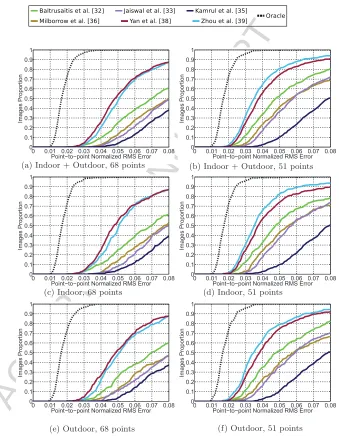
Figure 7: Fitting results of thefirstconduct of the 300-W challenge in2013. The plots show the Cumulative Error Distribution (CED) curves with respect to the landmarks (68 and 51 points) and the condtions (indoor, outdoor or both).
ACCEPTED MANUSCRIPT
Participant 68 points 51 points
Baltrusaitis et al. [40] 0.0486 0.0388 Jaiswal et al. [41] 0.0527 0.0506 Kamrul et al. [43] 0.0543 0.0551 Milborrow et al. [44] 0.1126 0.1145 Yan et al. [46] 0.0211 0.0199 Zhou et al. [47] 0.0205 0.0182 Oracle 0.0038 0.0040
Table 3: Median absolute deviation of the fitting results of thefirstconduct of 300-W challenge in2013, reported for both 68 and 51 points.
• Yan et al. [46] employ a cascade regression framework, where a series of regressors are utilized to progressively refine the shape initialized by the face detector. In order to handle inaccurate initializations from the face detector, they generate multiple hypotheses and learn to rank or combine them in order to get the final results. They estimate the parameters in both “learn to rank” and “learn to combine” using a structural Support Vector Machine framework.
• Zhou et al. [47] propose a four-level convolutional network cascade, where each level is trained to locally refine the outputs of the previous network levels. Moreover, each level predicts an explicit geometric constraint (face region and component position) to rectify the inputs of the next levels, which improves the accuracy and robustness of the whole network struc-ture.
Results. The performance of the submitted systems was assessed based on both
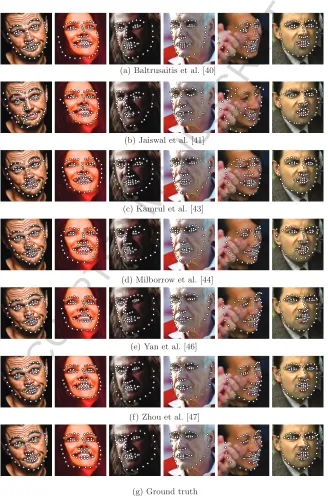
the 68 and 51 points. As shown in Fig. 6, the 51 points are a subset of the 68 points after removing the 17 points of the face’s boundary. Figure 7 shows the Cumulative Error Distribution (CED) curves using the error metric of Eq. 8. The plots are divided based on the number of points (68 and 51) as well as the images subsets (Indoor,Outdoor andIndoor +Outdoor). Table 3 reports the median absolute deviation of the results and Fig. 10 shows some indicative fitting shapes.
ACCEPTED MANUSCRIPT
Indoor Outdoor
# faces 300 300
# images 300 300
Image size (range in pixels) [16.2k, 3.3M] [11.2k, 4.5M]
Face size (range in pixels) [5.0k, 0.8M] [4.7k, 2.0M]
Interoccular Distance (range in pixels) [42, 477] [39, 805]
Table 4: Overview of the characteristics of the cropped images of the 300-W database.
Based on the results, the winners were (a) Yan et al. [46] from The National Laboratory of Pattern Recognition at the Institute of Automation of the Chi-nese Academy of Sciences, and (b) Zhou et al. [47] from Megvii company. It is worth to mention that all groups achieved better results in the case of 51 points. In order to show whether there is any room for further improvement on the performance, we also report an Oracle curve. We built a statistical shape model using the shapes of the training databases, as explained in Eq. 1, and kept the first 25 components. Using this model, we compute and plot the reconstruction error for each shape of the 300-W database. The reconstruction of a shapes is achieved by first projecting aspr =UT(s−¯s), and then reconstructing as
sr= ¯s+Upr. The resulting curve shows that the 300-W dataset is not saturated
and there is considerable room for further improvement.
4.3. 300-W Challenge: Second Conduct (2015)
The second conduct of the 300-W challenge was completed in the beginning of 2015. The biggest difference compared to the previous conduct is that we were no longer providing the bounding boxes of the images to the fitting methods. On the contrary, the participants were required to submit systems that perform both face detection and landmark localization. The three main reasons that led us to this change are:
1. Various techniques perform differently when initialized with bounding boxes that cover different facial region. For example, DPMs [17] tend to return bounding boxes that only include facial texture and not any of the subject’s hair, as usually done by the Viola-Jones detector [48]. 2. There are methods, like DPMs [17] and Pictorial Structures [11, 12], that
do not require any initialization.
3. There are algorithms for which the training is coupled with the face de-tector, such as SDM [18].
Of course, this change made the task even more challenging than before, since the search region of each image became much larger with a lot of background information.
300-W Images Cropping. As mentioned in Sec. 4.1, many of the 300-W images
ACCEPTED MANUSCRIPT
Figure 8: Indicative examples of the way the images were cropped for the second conduct of the 300-W challenge.
was performed in such a way to ensure that (1) only a single face is included in each image and (2) DPMs [17] and Viola-Jones [48] achieve the best true positive rate that they possibly can. Table 4 reports the characteristics of the cropped images. Naturally, the only thing that changes compared to the ones of the initial images in Tab. 2 is the image size (resolution). The mean size of the cropped images is 0.4M pixels, which is much smaller than the 3.3M pixels of the non-cropped images. Figure 8 shows some representative examples of the way that the images were cropped. Note that the cropped images are provided along with the original images of the 300-W database4.
Training. The training instructions were the same as in the previous conduct.
The authors were encouraged, but not restricted, to use LFPW, AFW, HELEN, IBUG, FRGC-V2 and XM2VTS databases with the provided annotations.
Testing. The testing procedure followed the same rules as in the previous version
ACCEPTED MANUSCRIPT
0 0.01 0.02 0.03 0.04 0.05 0.06 0.07 0.08 0 0.1 0.2 0.3 0.4 0.5 0.6 0.7 0.8 0.9 1 Images Proportion
Point−to−point Normalized RMS Error (a) Indoor + Outdoor, 68 points
0 0.01 0.02 0.03 0.04 0.05 0.06 0.07 0.08 0 0.1 0.2 0.3 0.4 0.5 0.6 0.7 0.8 0.9 1 Images Proportion
Point−to−point Normalized RMS Error (b) Indoor + Outdoor, 51 points
0 0.01 0.02 0.03 0.04 0.05 0.06 0.07 0.08 0 0.1 0.2 0.3 0.4 0.5 0.6 0.7 0.8 0.9 1 Images Proportion
Point−to−point Normalized RMS Error (c) Indoor, 68 points
0 0.01 0.02 0.03 0.04 0.05 0.06 0.07 0.08 0 0.1 0.2 0.3 0.4 0.5 0.6 0.7 0.8 0.9 1 Images Proportion
Point−to−point Normalized RMS Error (d) Indoor, 51 points
0 0.01 0.02 0.03 0.04 0.05 0.06 0.07 0.08 0 0.1 0.2 0.3 0.4 0.5 0.6 0.7 0.8 0.9 1 Images Proportion
Point−to−point Normalized RMS Error
(e) Outdoor, 68 points
0 0.01 0.02 0.03 0.04 0.05 0.06 0.07 0.08 0 0.1 0.2 0.3 0.4 0.5 0.6 0.7 0.8 0.9 1 Images Proportion
Point−to−point Normalized RMS Error
[image:22.612.161.500.111.547.2](f) Outdoor, 51 points
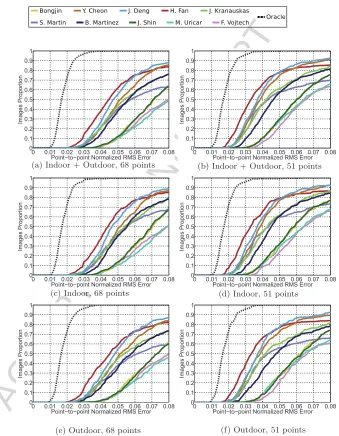
Figure 9: Fitting results of thesecond conduct of the 300-W challenge in2015. The plots show the Cumulative Error Distribution (CED) curves with respect to the landmarks (68 and 51 points) and the condtions (indoor, outdoor or both).
ACCEPTED MANUSCRIPT
Participant # images mad timings (secs)
with detection 68 points 51 points
Bongjin 584 (97.3%) 0.0271 0.0249 12.9 Y. Cheon 600 (100%) 0.1078 0.1040 0.17 J. Deng 599 (99.8%) 0.0226 0.0213 1.97 H. Fan 526 (87.7%) 0.0309 0.0294 1.29 J. Kranauskas 600 (100%) 0.0693 0.0659 2.46 S. Martin 597 (99.5%) 0.3461 0.3228 5.81 B. Martinez 600 (100%) 0.0514 0.0497 42.5 J. Shin 585 (97.5%) 0.0303 0.0287 12.6 M. Uricar 592 (98.7%) 0.0970 0.0945 3.46 F. Vojtech 591 (98.5%) 0.1047 0.0998 4.05
Oracle − 0.0038 0.0040 −
Table 5: Second conduct of the 300-W challenge.2nd column:Number of images for which an estimation of the landmarks was returned.3rd and 4th columns:The mean absolute deviation of the fitting results for both 68 and 51 points. 5th column: Mean computational cost per method.
Results. The number of participants in this version of the competition was 10.
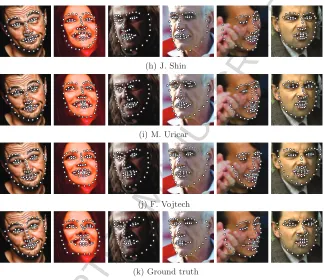
Figure 9 shows the CED curves of the submitted methodologies. Table 5 reports the number of images for which an estimation of the landmarks was returned, the mean absolute deviation of the results, as well as the mean computational costs. The common subset of images for which all methods returned a detection consists of 517 images. Figure 11 shows some indicative fitting results.
ACCEPTED MANUSCRIPT
(a) Baltrusaitis et al. [40]
(b) Jaiswal et al. [41]
(c) Kamrul et al. [43]
(d) Milborrow et al. [44]
(e) Yan et al. [46]
(f) Zhou et al. [47]
[image:24.612.142.470.129.627.2](g) Ground truth
ACCEPTED MANUSCRIPT
(a) Bongjin
(b) Y. Cheon
(c) J. Deng
(d) H. Fan
(e) J. Kranauskas
(f) S. Martin
ACCEPTED MANUSCRIPT
(h) J. Shin
(i) M. Uricar
(j) F. Vojtech
(k) Ground truth
Figure 11: Fitting examples of thesecondconduct of the 300-W challenge in2015. Each row shows the fitted landmarks for each participating method.
5. Discussion and Conclusions
The results of both conducts of the 300-W challenge shown in Figs. 7 and 9 clearly prove that, even though much progress has been made during the last years, the research community is still far from accurately solving the prob-lem of face alignment and that there is much room for further improvement. This is indicated by the gap between the participants’ curves and the Ora-cle, which is the minimum error that can be achieved using the specific train-ing databases. Table 6 reports the percentage of images with error less than
[image:26.612.143.468.132.412.2]{0.02,0.03,0.04,0.05,0.06}for the top techniques of both competitions as well as the Oracle and makes it obvious that the gap is still huge, especially for small error values.
ACCEPTED MANUSCRIPT
Method <0.02 <0.03 <0.04 <0.05 <0.06
Yan et al. [46] 0.17% 4.17% 25.8% 54.0% 71.0% Zhou et al. [47] 0% 2.50% 20.7% 47.7% 69.2% J. Deng 0.17% 4.33% 26.8% 55.5% 74.3% H. Fan 0.33% 14.3% 38.2% 62.0% 75.2% Oracle 72.8% 97.2% 99.7% 99.8% 100%
Table 6: Percentage of images with fitting error less than the specified values for the winners of the first (Yan et al. [46], Zhou et al. [47]) and second (J. Deng, H. Fan) 300-W challenges, and Oracle. The error is based on 68 points using both indoor and oudoor images.
Zhou et al. [47] (convolutional network framework), can continually achieve better results with continuous rise in the amount of training data.
Additionally, the 300-W challenge was only focused on the task of sparse
facial landmark points detection. Alignment using dense landmark mark-ups is much more difficult and the performance would get worse. This is because the more landmarks exist in the shape, there is more ambiguity about the semantic locations at which they are located. Consider for example the 41 boundary landmark points of the HELEN mark-up in Fig. 1f. Their locations have no special semantic discrimination. On the contrary they are just located with an approximately equal distance between them. Consequently, it is very hard to accurate detect such points since there is no discriminative texture information that describes them and which could drive the fitting procedure. This highlights the need to further research how to select a relatively high number of landmark points that are capable to describe all the characteristic areas of an object.
Moreover, another factor that contributed towards creating more accurate and efficient alignment techniques is the great progress in the task of face de-tection. Most landmark localization methodologies are very sensitive to the initialization, thus the face detection performance. The results presented in the Face Detection Data Set and Benchmark (FDDB) [49] show that current state-of-the-art techniques achieve very good true positive rates. However, there is still room for further improvement especially on images with in-the-wild condi-tions.
ACCEPTED MANUSCRIPT
6. Acknowledgments
This work is funded by the EPSRC project EP/J017787/1 (4D-FAB). The work by S. Zafeiriou is also partially supported by the EPSRC project EP/L026813/1 Adaptive Facial Deformable Models for Tracking (ADAManT). The work by M. Pantic is further supported by the European Community Horizon 2020 [H2020/2014-2020] under grant agreement no. 645094 (SEWA). The work of G. Tzimiropoulos is also partially supported by EPSRC project EP/M02153X/1 Facial Deformable Models of Animals.
[1] T. F. Cootes, G. J. Edwards, C. J. Taylor, Active appearance models, IEEE Transactions on Pattern Analysis and Machine Intelligence 23 (6) (2001) 681–685.
[2] I. Matthews, S. Baker, Active appearance models revisited, International Journal of Computer Vision 60 (2) (2004) 135–164.
[3] G. Tzimiropoulos, J. Alabort-i-Medina, S. Zafeiriou, M. Pantic, Generic active appearance models revisited, in: Proceedings of Asian Conference on Computer Vision (ACCV), Daejeon, Korea, 2012, pp. 650–663.
[4] G. Tzimiropoulos, J. Alabort-i-Medina, S. Zafeiriou, M. Pantic, Active orientation models for face alignment in-the-wild, IEEE Transactions on Information Forensics and Security, Special Issue on Facial Biometrics in-the-wild 9 (2014) 2024–2034.
[5] G. Tzimiropoulos, M. Pantic, Optimization problems for fast aam fitting in-the-wild, in: Proceedings of IEEE International Conference on Computer Vision (ICCV), 2013.
[6] E. Antonakos, J. Alabort-i-Medina, G. Tzimiropoulos, S. Zafeiriou, Hog ac-tive appearance models, in: Proceedings of IEEE International Conference on Image Processing (ICIP), Paris, France, 2014, pp. 224–228.
[7] J. Alabort-i-Medina, S. Zafeiriou, Bayesian active appearance models, in: Proceedings of IEEE International Conference on Computer Vision & Pat-tern Recognition (CVPR), 2014.
[8] J. Alabort-i Medina, S. Zafeiriou, Unifying holistic and parts-based de-formable model fitting, in: Proceedings of IEEE International Conference on Computer Vision & Pattern Recognition (CVPR), 2015, pp. 3679–3688.
[9] G. Tzimiropoulos, M. Pantic, Gauss-newton deformable part models for face alignment in-the-wild, in: Proceedings of IEEE International Confer-ence on Computer Vision & Pattern Recognition (CVPR), IEEE, 2014, pp. 1851–1858.
ACCEPTED MANUSCRIPT
[11] P. F. Felzenszwalb, D. P. Huttenlocher, Pictorial structures for object recog-nition, International Journal of Computer Vision 61 (1) (2005) 55–79.
[12] M. Andriluka, S. Roth, B. Schiele, Pictorial structures revisited: People detection and articulated pose estimation, in: Proceedings of IEEE Inter-national Conference on Computer Vision & Pattern Recognition (CVPR), IEEE, 2009, pp. 1014–1021.
[13] T. F. Cootes, C. J. Taylor, D. H. Cooper, J. Graham, Active shape models-their training and application, Computer Vision and Image Understanding 61 (1) (1995) 38–59.
[14] D. Cristinacce, T. Cootes, Feature detection and tracking with con-strained local models, in: Proceedings of British Machine Vision Conference (BMVC), Vol. 3, 2006, pp. 929–938.
[15] J. M. Saragih, S. Lucey, J. F. Cohn, Deformable model fitting by regular-ized landmark mean-shift, International Journal of Computer Vision 91 (2) (2011) 200–215.
[16] A. Asthana, S. Zafeiriou, S. Cheng, M. Pantic, Robust discriminative response map fitting with constrained local models, in: Proceedings of IEEE International Conference on Computer Vision & Pattern Recogni-tion (CVPR), IEEE, 2013, pp. 3444–3451.
[17] X. Zhu, D. Ramanan, Face detection, pose estimation, and landmark local-ization in the wild, in: Proceedings of IEEE International Conference on Computer Vision & Pattern Recognition (CVPR), IEEE, 2012, pp. 2879– 2886.
[18] X. Xiong, F. De la Torre, Supervised descent method and its applications to face alignment, in: Proceedings of IEEE International Conference on Computer Vision & Pattern Recognition (CVPR), IEEE, 2013, pp. 532– 539.
[19] X. Cao, Y. Wei, F. Wen, J. Sun, Face alignment by explicit shape regression, International Journal of Computer Vision 107 (2) (2014) 177–190.
[20] A. Asthana, S. Zafeiriou, S. Cheng, M. Pantic, Incremental face alignment in the wild, in: Proceedings of IEEE International Conference on Computer Vision & Pattern Recognition (CVPR), IEEE, 2014, pp. 1859–1866.
[21] G. Tzimiropoulos, Project-out cascaded regression with an application to face alignment, in: Proceedings of IEEE International Conference on Com-puter Vision & Pattern Recognition (CVPR), IEEE, 2015, pp. 3659–3667.
ACCEPTED MANUSCRIPT
[23] V. Kazemi, J. Sullivan, One millisecond face alignment with an ensemble of regression trees, in: Proceedings of IEEE International Conference on Computer Vision & Pattern Recognition (CVPR), IEEE, 2014, pp. 1867– 1874.
[24] R. Gross, I. Matthews, J. Cohn, T. Kanade, S. Baker, Multi-pie, Image and Vision Computing 28 (5) (2010) 807–813.
[25] K. Messer, J. Matas, J. Kittler, J. Luettin, G. Maitre, Xm2vtsdb: The extended m2vts database, in: Second international conference on audio and video-based biometric person authentication, Vol. 964, Citeseer, 1999, pp. 965–966.
[26] P. Phillips, P. Flynn, T. Scruggs, K. Bowyer, J. Chang, K. Hoffman, J. Mar-ques, J. Min, W. Worek, Overview of the face recognition grand challenge, in: Proceedings of IEEE International Conference on Computer Vision & Pattern Recognition (CVPR), IEEE, 2005, pp. 947–954.
[27] A. M. Martinez, The ar face database, CVC Technical Report 24.
[28] P. N. Belhumeur, D. W. Jacobs, D. Kriegman, N. Kumar, Localizing parts of faces using a consensus of exemplars, in: Proceedings of IEEE Inter-national Conference on Computer Vision & Pattern Recognition (CVPR), IEEE, 2011, pp. 545–552.
[29] V. Le, J. Brandt, Z. Lin, L. Bourdev, T. S. Huang, Interactive facial feature localization, in: Proceedings of European Conference on Computer Vision (ECCV), Springer, 2012, pp. 679–692.
[30] M. Kostinger, P. Wohlhart, P. M. Roth, H. Bischof, Annotated facial land-marks in the wild: A large-scale, real-world database for facial landmark localization, in: Proceedings of IEEE International Conference on Com-puter Vision (ICCV-W), Workshop on Benchmarking Facial Image Analy-sis Technologies, IEEE, 2011, pp. 2144–2151.
[31] C. Sagonas, G. Tzimiropoulos, S. Zafeiriou, M. Pantic, 300 faces in-the-wild challenge: The first facial landmark localization challenge, in: Proceedings of IEEE International Conference on Computer Vision (ICCV-W), Work-shop on 300 Faces in-the-Wild Challenge (300-W), Sydney, Australia, 2013.
[32] J. Alabort-i-Medina, E. Antonakos, J. Booth, P. Snape, S. Zafeiriou, Menpo: A comprehensive platform for parametric image alignment and visual deformable models, in: Proceedings of the ACM International Con-ference on Multimedia, Open Source Software Competition, Orlando, FL, USA, 2014, pp. 679–682.
ACCEPTED MANUSCRIPT
[34] M. Pedersoli, T. Tuytelaars, L. V. Gool, Using a deformation field model for localizing faces and facial points under weak supervision, in: Proceedings of IEEE International Conference on Computer Vision & Pattern Recognition (CVPR), 2014, pp. 3694–3701.
[35] Y. Tong, X. Liu, F. W. Wheeler, P. H. Tu, Semi-supervised facial landmark annotation, Computer Vision and Image Understanding 116 (8) (2012) 922– 935.
[36] Y. Wu, Z. Wang, Q. Ji, A hierarchical probabilistic model for facial feature detection, in: Proceedings of IEEE International Conference on Computer Vision & Pattern Recognition (CVPR), 2014, pp. 1781–1788.
[37] G. Tzimiropoulos, S. Zafeiriou, M. Pantic, Subspace learning from image gradient orientations, IEEE Transactions on Pattern Analysis and Machine Intelligence 34 (12) (2012) 2454–2466.
[38] G. Papandreou, P. Maragos, Adaptive and constrained algorithms for in-verse compositional active appearance model fitting, in: Proceedings of IEEE International Conference on Computer Vision & Pattern Recogni-tion (CVPR), IEEE, 2008, pp. 1–8.
[39] R. Gross, I. Matthews, S. Baker, Generic vs. person specific active appear-ance models, Image and Vision Computing 23 (12) (2005) 1080–1093.
[40] T. Baltrusaitis, P. Robinson, L.-P. Morency, Constrained local neural fields for robust facial landmark detection in the wild, in: Proceedings of IEEE International Conference on Computer Vision (ICCV-W), Workshop on 300 Faces in-the-Wild Challenge (300-W), 2013, pp. 354–361.
[41] S. Jaiswal, T. Almaev, M. Valstar, Guided unsupervised learning of mode specific models for facial point detection in the wild, in: Proceedings of IEEE International Conference on Computer Vision (ICCV-W), Workshop on 300 Faces in-the-Wild Challenge (300-W), 2013, pp. 370–377.
[42] B. Martinez, M. F. Valstar, X. Binefa, M. Pantic, Local evidence aggre-gation for regression-based facial point detection, IEEE Transactions on Pattern Analysis and Machine Intelligence 35 (5) (2013) 1149–1163.
[43] M. Hasan, C. Pal, S. Moalem, Localizing facial keypoints with global de-scriptor search, neighbour alignment and locally linear models, in: Pro-ceedings of IEEE International Conference on Computer Vision (ICCV-W), Workshop on 300 Faces in-the-Wild Challenge (300-W), 2013, pp. 362–369.
ACCEPTED MANUSCRIPT
[45] D. G. Lowe, Object recognition from local scale-invariant features, in: Pro-ceedings of IEEE International Conference on Computer Vision (ICCV), Vol. 2, IEEE, 1999, pp. 1150–1157.
[46] J. Yan, Z. Lei, D. Yi, S. Li, Learn to combine multiple hypotheses for ac-curate face alignment, in: Proceedings of IEEE International Conference on Computer Vision (ICCV-W), Workshop on 300 Faces in-the-Wild Chal-lenge (300-W), 2013, pp. 392–396.
[47] E. Zhou, H. Fan, Z. Cao, Y. Jiang, Q. Yin, Extensive facial landmark local-ization with coarse-to-fine convolutional network cascade, in: Proceedings of IEEE International Conference on Computer Vision (ICCV-W), Work-shop on 300 Faces in-the-Wild Challenge (300-W), 2013, pp. 386–391.
[48] P. Viola, M. Jones, Rapid object detection using a boosted cascade of simple features, in: Proceedings of IEEE International Conference on Computer Vision & Pattern Recognition (CVPR), IEEE, 2001.