40
©IJRASET: All Rights are Reserved
A Distributed Approach for Optimal Scheduling of
Power in Smart Grid Network Using ADMM
Pankaj Kumar1, Prof. Dr. Siddhartha Choubey2
1, 2
Shri Shankaracharya Technical Campus Dept. of Computer Science and Engineering Bhilai, Chhattisgarh, India
Abstract: This paper proposes a new method for Nano grids to operate efficiently. The cost and power are major issues in the existing power distribution technique. To optimize the cost and power, this paper proposes a Nobel method in combination with Hadoop MapReduce and ADMM algorithm. The proposed method effectively balances the power and optimizes the load requirement of grid systems in order to maintain power need. The balancing of power demand and supply are considered in this paper and implemented using distributed environment.
Keywords: ADMM, Smart Grid, Big Data, Hadoop, Mapreduce, Power Optimization.
I. INTRODUCTION
Electrical power has turned into an indispensable piece of modern day life. [1] and [2] styled the present electric power framework as a multifaceted arrangement of power generation, transmission, and distribution. With the global economy more dependent on reasonable advancement of energy, a progression of issues, for example, energy deficiency, electricity power outage and global warming are picking up consideration. [3] Pointed out that there are determined monetary and in addition ecological urgings for the restoration of the customary power frameworks, and its supplanting with a Smart Electrical Power Grid or simply Smart Grid. A smart grid is an electricity network that utilizations computerized and other progressed innovations to screen and deal with the vehicle of electricity from all generation sources to meet the shifting electricity demands of end-clients.
Energy demand from the clients changes progressively in various eras. The current power grids require ideal adjusting of electricity demand and supply between the clients and the utility suppliers. To address these necessities in smart grid, the energy management frameworks (EMS) such as building energy management system (BEMS), demand side management (DSM) and home energy management (HEM) are coordinated. A smart grid permits different renewable energy sources to have an effective management of supply and demand. The unique normal for a smart grid is its heterogeneous design, which incorporates Demand Response (DR), distributed generation, resource planning, and constant pricing model.
In a smart grid condition, various gadgets are executed, for example, smart meters, substations, micro grids, home apparatuses, sensor nodes, and communication organize gadgets. Smart meters, sent in the distribution destinations, produce enormous information for constant correspondence with the utilities. To deal with such huge information productively and successfully, smart grid depends on the use and mix of advanced information innovations. One of the imperative patterns in the present information management is outsourcing errands to distributed computing, which has been viewed as the next edge figuring and capacity worldview.
II. SMARTGRID
Smart Grid screens power utilize, adjusts utilization to coordinate power expenses and framework load, and integrates new sorts of renewable energy sources with regular power creating frameworks. It relates each dispersed electricity maker (independent power producer) in the energy market from regular thermal, hydroelectric and atomic power plants to new sorts of renewable energy frameworks with every electricity consumer, from ventures to residence, and to each heap connected to the electric system. The carefully controlled, self-checking and self-mending Smart Grid gives two-path correspondence for energy generation, transmission and distribution, control and observing, supply and demand adjusting, and so on with more customer decisions. As per NIST "a modernized grid that empowers bidirectional streams of energy and utilizations two-way correspondence and control capacities that will prompt a variety of new functionalities and applications".
41
©IJRASET: All Rights are Reserved
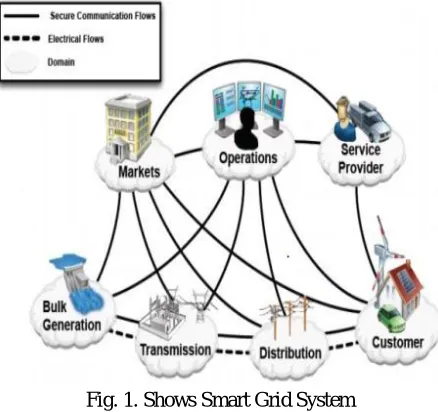
frameworks, and partners. Errands performed by at least one on-screen characters inside a space are called applications (home automation, and energy management).An imperative normal for a smart grid is controlling electricity utilization at the clients' closures [4, 5]. To accomplish this metering and observing, a couple of segments are consolidated in the smart grid design. These key parts of smart grid are examined as under:
A. Advanced Metering Infrastructure
Advanced metering infrastructure (AMI) is a coordinated arrangement of smart meters, correspondences systems, and information management frameworks that empowers two-path correspondence amongst utilities and clients. Smart meters at the client site are the electrical meters that record ongoing readings i.e. utilization of electrical energy, and voltage quality that are expected to be perused occasionally in shorter interims (range from minutes to milliseconds). As a rule, AMI bolster information correspondence engineering by including programming and electronic/computerized equipment.
[image:2.612.196.415.364.570.2]Health and execution observing of transformers, feeders, capacitors, circuit breakers, condition monitoring of lines (e.g. PLCs), fault detection and replacement of benefits can be performed adequately what's more, proficiently by the investigation of information detected at consistent intervals by the keen observing framework. With the improvement of sensors that use minimal effort, ultra-low-power processors and correspondence connections to transmit information, another administration of sensors known as the smart sensors have as of late come into presence [6]. Broad research in the remote innovation reducing signal noise, power necessity and improving the range has made the remote innovation a potential for joining with smart sensors to convey correspondence with utilities. Improvement of compelling system topologies for example, multi-jump connect systems and productive wireless signal routing algorithm have additionally progressed the range and diminished power utilization; henceforth made the coming of conventions like [7]. A few cases of sensors show in the business area are Tollgrade's Lighthouse MV sensors, USi's Power Donut, ABBs Grid Sync, Grid Sense's Line IQ, Sentient screen, and Grid Sentry's Line sentry. The size, cost and weight restriction of the sensors specified above have represented the prevention to their wide acknowledgment.
Fig. 1. Shows Smart Grid System
III. LITERATURESURVEY
Goldfarb D., et al [8]. presents one calculation that requires the two capacities to be smooth with Lipschitz consistent inclinations and one calculation that necessities just a single of the capacities to be so. Calculations in this paper are Gauss-Seidel compose methods, as opposed to the ones proposed by Goldfarb and Ma in (Fast different part calculations for convex optimization, Columbia University, 2009) where the calculations are Jacobi write methods. Numerical outcomes are accounted for to help our hypothetical decisions and exhibit the down to earth capability of our calculations.
42
©IJRASET: All Rights are Reserved
Zhan R., et al [10]. proposes an asynchronous ADMM calculation by utilizing two conditions to control the asynchrony: incomplete obstruction and limited postponement. The proposed calculation has a straightforward structure and great union ensures (its meeting rate can be lessened to that of its synchronous partner). Analyses on various appropriated ADMM applications demonstrate that asynchrony decreases the time on arrange pausing, and accomplishes quicker meeting than its synchronous partner as far as the divider clock time.
Agarwal A., et al [11]. examines the convergence of angle based optimization calculations that construct their updates in light of deferred stochastic inclination data. The primary use of our outcomes is to inclination based conveyed optimization calculations where an ace hub performs parameter refreshes while specialist hubs register stochastic angles in light of neighborhood data in parallel, which may offer ascent to delays because of asynchrony. Author take inspiration from factual issues where the measure of the information is large to the point that it can't fit on one PC; with the coming of tremendous datasets in science, space science, and the web, such issues are presently normal. Primary commitment is to demonstrate that for smooth stochastic issues, the postponements are asymptotically insignificant and we can accomplish arrange ideal merging outcomes.
Hong M., et al [12]. breaks down the meeting of the ADMM for fathoming certain no convex agreement and sharing issues. This paper demonstrate that the established ADMM focalizes to the arrangement of stationary arrangements, gave that the punishment parameter in the increased Lagrangian is been adequately huge. For the sharing issues, we demonstrate that the ADMM is focalized paying little respect to the quantity of variable squares. Examination does not force any suspicions on the repeats produced by the calculation and is comprehensively appropriate to numerous ADMM variations including proximal refresh rules and different adaptable piece determination rules.
IV. METHODOLOGY
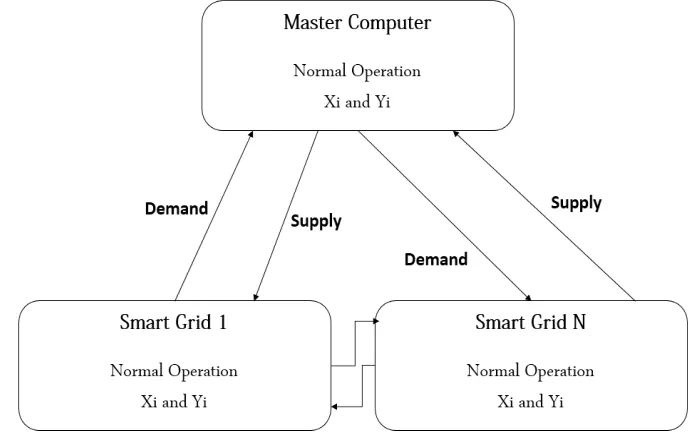
[image:3.612.130.475.363.580.2]In this section we present the proposed flow in detail. The proposed flow is presented below in fig. 2 Step by step.
Fig. 2. Proposed System Work Flow
In the above proposed work flow there are 2 main components.
A. Master Nodes
The Master Nodes generated the power. It generated power from various sources such as from nuclear power plant, hydroelectric plant, sun rays, wind etc. These power are stored and transferred to the slave nodes also known as smart grids.
B. Slave Nodes / Smart Nano Grids
Smart grids are those which are capable of producing some power to fulfill the demand of their area. They produce small amount of power which are required for their area need.
43
©IJRASET: All Rights are Reserved
Fig. 3. ADMM Algorithm
C. Condition for Optmization
There are two major cases arrives when the smart grid and main grid flow needs to be optimized in case of the power failure from. 1) Main Grid to Smart Grid: When there is surplus supply there is no need for optimization and running ADMM algorithm. When
there is breakage of power from main grid to any of the smart grids, then the ADMM algorithm must be applied in order to optimize the flow.
2) Smart Grid to Smart Grid: When there is surplus supply there is no need for optimization and running ADMM algorithm. When there is breakage of power from smart grid to the smart grids, then the ADMM algorithm must be applied in order to optimize the flow. The various other grids helps each other when there is shortage of power. They all work in cooperative mode when power shortages tool place.
V. RESULTS
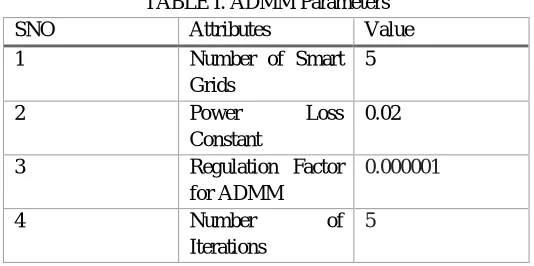
[image:4.612.173.440.566.699.2]In this section we present the experimental results performed using Hadoop MapReduce and ADMM algorithm to optimize the flow of power. There are various parameters used, shown in table I, which are helpful in running ADMM jobs.
TABLE I. ADMM Parameters
SNO Attributes Value
1 Number of Smart
Grids
5
2 Power Loss
Constant
0.02
3 Regulation Factor
for ADMM
0.000001
4 Number of
Iterations
5
44
©IJRASET: All Rights are Reserved
Fig. 4. Shows the input file
The input file contains,
COL-1 → Serial Number
COL-2 → Smart Grid Number
COL-3 to 7 → Power exchange protocol
[image:5.612.177.435.298.472.2]COL-8 → Power Demand
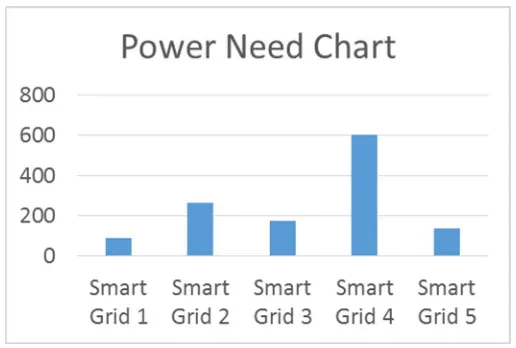
Fig. 5. Shows the power distribution chart
The above figure shows the power are curtailed down in order to balance the system. For example smart grid 1 demand for power 108 KW. After some imbalances, the system undergoes optimization process hence, after optimization the smart grid 1 needs to cut down its power by 88.63 KW in order to maintain the equilibrium.
VI. CONCLUSION
In this paper, we propose new model for the Nano grid power optimization problem with the distributed activity. The proposed issue creates an ideal power plan with an insignificant measure of load diminishing when Nano grid need to switch into the distributed activity. We apply the ADMM-based decomposition strategy to break down the vast scale unified enhancement issue into various sub-issues in which each sub-issue relates to the improvement in each distributed case. Experimental results shows that the power can also be scheduled and optimized based on power demand.
REFERENCES
[1] M. V. Afonso, J. M. Bioucas-Dias, and M. A. T. Figueiredo, “An Augmented Lagrangian Approach to the Constrained Optimization Formulation of Imaging Inverse Problems,” IEEE Transactions on Image Processing, vol. 20, pp. 681–695, 2011.
[2] E. Anderson, Z. Bai, C. Bischof, J. Demmel, J. Dongarra, J. D. Croz, A. Greenbaum, S. Hammarling, A. McKenney, and D. Sorenson, LAPACK: A portable linear algebra library for high-performance computers. IEEE Computing Society Press, 1990.
[3] K. J. Arrow and G. Debreu, “Existence of an equilibrium for a competitive economy,” Econometrica: Journal of the Econometric Society, vol. 22, no. 3, pp. 265–290, 1954.
45
©IJRASET: All Rights are Reserved
[5] K. J. Arrow and R. M. Solow, “Gradient methods for constrained maxima, with weakened assumptions,” in Studies in Linear and Nonlinear Programming, (K. J. Arrow, L. Hurwicz, and H. Uzawa, eds.), Stanford University Press: Stanford, 1958.
[6] H. H. Bauschke and J. M. Borwein, “On projection algorithms for solving convex feasibility problems,” SIAM Review, vol. 38, no. 3, pp. 367–426, 1996. [7] A. Beck and M. Teboulle, “A fast iterative shrinkage-thresholding algorithm for linear inverse problems,” SIAM Journal on Imaging Sciences, vol. 2, no. 1, pp.
183–202, 2009.
[8] Donald Goldfarb · Shiqian Ma · Katya Scheinberg, "Donald Goldfarb · Shiqian Ma · Katya Scheinberg", Math. Program., Ser. A, 2012.
[9] Tom Goldstein, Brendan O’Donoghue, Simon Setzer, and Richard Baraniuk, "Fast Alternating Direction Optimization Methods", SIAM J. IMAGING SCIENCES 2014 Society for Industrial and Applied Mathematics Vol. 7, No. 3, pp. 1588–1623.
[10] Ruiliang Zhang, James T. Kwok, "Asynchronous Distributed ADMM for Consensus Optimization", Proceedings of the 31 st International Conference on Machine Learning, Beijing, China, 2014. JMLR: W&CP volume 32.
[11] A. Agarwal and J. C. Duchi. "Distributed delayed stochastic optimization", 51st IEEE Conference on Decision and Control December 10-13, 2012. Maui, Hawaii, USA
[12] mingyi hong, zhi-quan luo, and meisam razaviyayn, "convergence analysis of alternating direction method of multipliers for a family of nonconvex problems", 2016, vol. 26, no. 1, pp. 337–365.