A BLEND OF SULFONATED POLYETHER ETHER KETONE AND POLYETHER ETHER SULFONE FOR
DIRECT METHANOL FUEL CELL
SrinivasanGuhan, Rethinasabapathy Muruganantham,
Department of Chemistry, Anna University, Chennai 600 025, India
ARTICLE INFO ABSTRACT
Fuel cells are considered to be the promising alternatives to conventional power engines. In our investigation, we have synthesized blend membranes of sulfonated poly(ether ether ketone) (SPEEK) and poly(ether ethersulfone) (PEES) for electrochemical and especially Direct Methanol Fuel Cell applications (DMFC). The ion exchange capacity, water and alc
durability were found to be promising for its application. When compared to SPEEK, since the methanol absorption is low, the methanol permeability was also found and it was suitable for applications in DMFC. The membranes were characterize
UTM, SEM and XRD. From the FT
interact with PEES. TGA gave an idea about the thermal stability of the membrane. The membranes were stable up to 200°C which is very
obtained from DMA. The UTM studies clearly revealed an appreciable mechanical behaviour. The tensile strength of the blend with 10% PEES exhibited the maximum tensile strength of 19.25 MPa. From the XRD studies, t
membranes was found to be in the order of 10 The performances of the membrane membranes at
350 and 590 mA/cm
INTRODUCTION
Recently, the fuel cells have emerged strongly as a viable alternative source of power conversion owing to their high energy efficiency and eco-friendly nature [1, 2]. Among the different types of fuel cells, the Direct Methanol Fuel Cell (DMFC) looks to be an ideal power source for various household as well as industrial applications. Though Proton Exchange Membrane Fuel Cells (PEMFC) offers a better power output when compared to DMFC, the safety issues much while handling hydrogen in the case of PEMFC as there are possibilities for hydrogen to explode when it crosses the critical limit of 4% in the atmosphere. The storage of hydrogen and its transportation also arise critical issues.As a result, the DMFC proves to be the best option in which liquid methanol is used as the fuel instead of hydrogen gas at the anode. The proton exchange membrane (PEM) as electrolytes in fuel cells have been well established over the past two decades and are successfully commercialized as electrical power sources in spacecrafts and submarines [3,4]. The polymeric membrane that has been commercialized at present is perfluorosulfonic polymers and is severely hindered by the hiccups that include (i) high cost of the membrane
results in an increase in the overall cost of the fuel cell, (ii) non eco-friendly nature due to the fluorine background, (iii) loss in proton conduction at elevated temperatures due to the
*Corresponding author: [email protected]
ISSN: 0975-833X
Article History:
Received 15th October, 2011 Received in revised form 18th November, 2011 Accepted 7th December, 2011 Published online 31st January, 2012
Key words: DMFC, SPEEK, PEES, Blend Membrane, Proton Conductivity.
RESEARCH ARTICLE
A BLEND OF SULFONATED POLYETHER ETHER KETONE AND POLYETHER ETHER SULFONE FOR
DIRECT METHANOL FUEL CELL
SrinivasanGuhan, Rethinasabapathy Muruganantham, and Dharmalingam Sangeetha
Department of Chemistry, Anna University, Chennai 600 025, India
ABSTRACT
Fuel cells are considered to be the promising alternatives to conventional power engines. In our investigation, we have synthesized blend membranes of sulfonated poly(ether ether ketone) (SPEEK) and poly(ether ethersulfone) (PEES) for electrochemical and especially Direct Methanol Fuel Cell applications (DMFC). The ion exchange capacity, water and alc
durability were found to be promising for its application. When compared to SPEEK, since the methanol absorption is low, the methanol permeability was also found and it was suitable for applications in DMFC. The membranes were characterized by means of FT
UTM, SEM and XRD. From the FT-IR studies, the sulfonic acid grouping of SPEEK was found to interact with PEES. TGA gave an idea about the thermal stability of the membrane. The membranes were stable up to 200°C which is very well suitable for DMFC. The Tg values were obtained from DMA. The UTM studies clearly revealed an appreciable mechanical behaviour. The tensile strength of the blend with 10% PEES exhibited the maximum tensile strength of 19.25 MPa. From the XRD studies, the crystalline nature was studied. The proton conductivity of the membranes was found to be in the order of 10-3 S/cm which is optimum for application in DMFC. The performances of the membrane-electrode assembly (MEA), in DMFC, using the blend membranes at room temperature and 60 °C were evaluated by single cell test and are found to be 350 and 590 mA/cm2, respectively.
Copy Right, IJCR, 2012, Academic Journals
Recently, the fuel cells have emerged strongly as a viable alternative source of power conversion owing to their
high-friendly nature [1, 2]. Among the cells, the Direct Methanol Fuel Cell (DMFC) looks to be an ideal power source for various household as well as industrial applications. Though Proton Exchange Membrane Fuel Cells (PEMFC) offers a better power output when compared to DMFC, the safety issues are much while handling hydrogen in the case of PEMFC as there are possibilities for hydrogen to explode when it crosses the critical limit of 4% in the atmosphere. The storage of hydrogen and its transportation also arise critical issues.As a DMFC proves to be the best option in which liquid methanol is used as the fuel instead of hydrogen gas at the anode. The proton exchange membrane (PEM) as electrolytes in fuel cells have been well established over the past two commercialized as electrical power sources in spacecrafts and submarines [3,4]. The polymeric membrane that has been commercialized at present is perfluorosulfonic polymers and is severely hindered by the hiccups that include (i) high cost of the membranes which results in an increase in the overall cost of the fuel cell, (ii) friendly nature due to the fluorine background, (iii) loss in proton conduction at elevated temperatures due to the
evaporation of water and (iv) dependence on relative humidity in maintaining appreciable proton conductivity [5] and (v) high methanol permeability especially in DMFC which limits its application as electrolyte membranes. To overcome these limitations of the perfluorosulfonic acid membranes, focus of the fuel cell researchers fell on alternative polymer membranes that could be a perfect replacement for Nafion in DMFC. From the application and commercial point of view, any membrane even the one without fluor
but having high temperature resistance, mechanical strength and high proton conductivity would be an ideal replacement [6]. In the past years, attention was given to aromatic hydrocarbon based polymers that include polysulfone [7 sulfonated polyether ether ketone [10
polyphenylene oxide [6, 13], polybenzimidazole [14
sulfonated polyether ether sulfone [17] as an ideal substitute for the perfluorinated polymers. Among the various materials, SPEEK membranes have been demonstrated to exhibit stable performance comparable to Nafion in a fuel cell under a low temperature of 50oC for more than 4,300 hours [18]. To further enhance the SPEEK membranes for use in high temperature fuel cells, several approaches like pol inorganic hybrids, polymer-polymer blends, cross techniques have been used [19
investigations, we synthesized composite membranes of SPEEK with inorganic acids like phosphotungstic acid and silicotungstic acid [5, 25, 26].
Available online at http://www.journalcra.com
International Journal of Current Research Vol. 4, Issue, 01, pp.181-187, January, 2012
INTERNATIONAL
A BLEND OF SULFONATED POLYETHER ETHER KETONE AND POLYETHER ETHER SULFONE FOR
Dharmalingam Sangeetha
*Department of Chemistry, Anna University, Chennai 600 025, India
Fuel cells are considered to be the promising alternatives to conventional power engines. In our investigation, we have synthesized blend membranes of sulfonated poly(ether ether ketone) (SPEEK) and poly(ether ethersulfone) (PEES) for electrochemical and especially Direct Methanol Fuel Cell applications (DMFC). The ion exchange capacity, water and alcohol absorption, durability were found to be promising for its application. When compared to SPEEK, since the methanol absorption is low, the methanol permeability was also found and it was suitable for d by means of FT-IR, TGA, DMA, IR studies, the sulfonic acid grouping of SPEEK was found to interact with PEES. TGA gave an idea about the thermal stability of the membrane. The well suitable for DMFC. The Tg values were obtained from DMA. The UTM studies clearly revealed an appreciable mechanical behaviour. The tensile strength of the blend with 10% PEES exhibited the maximum tensile strength of 19.25 he crystalline nature was studied. The proton conductivity of the S/cm which is optimum for application in DMFC. electrode assembly (MEA), in DMFC, using the blend room temperature and 60 °C were evaluated by single cell test and are found to be
, Academic Journals. All rights reserved.
evaporation of water and (iv) dependence on relative humidity in maintaining appreciable proton conductivity [5] and (v) high methanol permeability especially in DMFC which limits its application as electrolyte membranes. To overcome these he perfluorosulfonic acid membranes, focus of the fuel cell researchers fell on alternative polymer membranes that could be a perfect replacement for Nafion in DMFC. From the application and commercial point of view, any membrane even the one without fluorine in the backbone, but having high temperature resistance, mechanical strength and high proton conductivity would be an ideal replacement In the past years, attention was given to aromatic hydrocarbon based polymers that include polysulfone [7-9], ulfonated polyether ether ketone [10-12], sulfonated polyphenylene oxide [6, 13], polybenzimidazole [14-16] and sulfonated polyether ether sulfone [17] as an ideal substitute for the perfluorinated polymers. Among the various materials, e been demonstrated to exhibit stable performance comparable to Nafion in a fuel cell under a low C for more than 4,300 hours [18]. To further enhance the SPEEK membranes for use in high temperature fuel cells, several approaches like
polymer-polymer blends, cross-linking techniques have been used [19-24]. In our earlier investigations, we synthesized composite membranes of SPEEK with inorganic acids like phosphotungstic acid and silicotungstic acid [5, 25, 26]. However, polymer blends with
a sulfonated polymer having appreciable proton conductivity
in combination with a non-conductive engineering
thermoplastic has become a very popular contemporary approach to the development of improved PEM materials. Aromatic polymers such as poly(ether ethersulfone) (PEES) are important engineering plastics that display excellent resistance to oxidation as well as hydrolysis. The work described herein considers blends of SPEEK with PEES. SPEEK was proved to have excellent thermal stability, mechanical strength, good proton conductivity, durability etc., and PEES was chosen due to the ether linkages that it possess in order to improve the flexibility of the resulting blend membrane. Also the hydrophobic nature of PEES is considered for lowering the diffusion of methanol. Various parameters like Ion Exchange Capacity (IEC), water/ alcohol absorptions, durability were found to be promising. The thermal stability was analyzed by means of TGA and the blends were found to be stable up to 220oC. The XRD technique was used to study the variation in the crystalline behaviour of SPEEK upon adding PEES. The Tg values were obtained from DMA. The tensile strength and percentage elongation were found to be appreciable as determined by UTM. The proton conductivity of the blend membranes were found to be in the order of 10-3 S/cm. The performances of the Membrane Electrode Assembly (MEA), in DMFC, using the blend membranes at room temperature and 60 °C were evaluated by single cell test and are found to be 350 and 590 mA/cm2, respectively.
MATERIALS AND METHODS
Materials and Chemicals
PEEK was procured from Victrex, England and was dried overnight at 100°C before use. PEES was obtained from Sigma-Aldrich, USA. Catalysts (Pt and Pt-Ru) were purchased from Arora Matthey, India. Sulfuric acid and N-Methyl pyrollidone (NMP) were obtained from SRL Chemicals, India and were used as received.
Preparation of blend membrane
Initially, polyether ether ketone was sulfonated and the detailed procedure was reported earlier [5]. To prepare the polymer blend membranes, a desired amount of SPEEK was dissolved in NMP. Then, calculated amount of PEES dissolved in NMP in a separate beaker was slowly added to SPEEK solution under stirring and it was heated to 50oC for 6 hours with continuous stirring. The homogenous solution obtained was filtered and poured onto a clean, dry petri dish. The solution was kept in a hot air oven at 90°C for 12 hours. The obtained membrane was clear, pale brown and transparent. It was removed from the petri dish by immersing the dish with membrane in deionised water for 2 hours. It was then boiled in hot water for 30 min and was stored for further investigation. The variations in the composition of the different blends are given in Table 1.
Characterization
The ion exchange capacity (IEC) indicates the number of milli equivalents of ions in 1g of the dry polymer. It was determined by titration method. The membrane in its acid form was
weighed and then soaked in an aqueous solution containing a large excess of KCl in order to extract all the protons from the membrane. The electrolyte solution was then neutralized using a dilute Na2CO3 solution of known concentration (0.01N). The
EW (equivalent weight) values were calculated from the dry weight of the membrane divided by the volume and the normality of the Na2CO3 solution. The IEC values were
expressed as number of meq. ofsulphonic groups per gram of dry polymer. The amount of solvent intake by the membranes was studied. The dried membranes were weighed and soaked in water and methanol separately and allowed to get equilibrated at room temperature for 24 hours, above which the weight was constant. The swollen membranes were then quickly weighed after blotting the surface water and the values noted. The swelling degree was determined using the formula,
Mwet - Mdry
SW = ——————- x 100 % Mdry
Where,
Mwet = Weight of wet membrane,
Mdry = Weight of dry membrane.
The methanol permeability is a serious factor which reduces the efficiency of the fuel cell particularly in Direct Methanol Fuel Cell (DMFC). The permeation not only allows the methanol fuel to the cathodic compartment but also mixing of the fuel and the incoming oxidant (Oxygen) at the cathode. This drastically reduces the performance of the fuel cell. The methanol permeability of the blend membranes was analyzed using a diaphragm diffusion cell, consisting of two glass bottles that can be interconnected with a capacity of 50cm3 as reported by Tiezhu Fu et al [27]. The membrane can be clamped between the two compartments. Initially 25ml of deionised water was taken in compartment A and 25ml of 20% v/v methanol was taken in the compartment B. As a result of concentration difference between the two compartments, methanol flux arises across the membrane. The increase in the methanol concentration with respect to time in compartment A was followed using a PAL II digital refractometer. The measurements of proton conductivity, σ (S/cm) of the membranes were carried out using
AutolabPotentiostatGalvanostat impedance analyser.
Membranes with required dimensions were cut and pre-treated with 0.01N Sulfuric acid and kept in water for 100% hydration. Then it was placed between two silver electrodes with an area of 1.33 cm2 with a uniform pressure applied to hold the system. The cell set-up is Ag/SPEEK + PEES/Ag. The resistance offered by the membrane was calculated and then converted to conductivity values using the formula;
σ = L / (R x A)
to 80° with a scanning rate of 2° per min. All the spectra were taken at ambient temperatures (25 ± 2 ° C). The crystallinity noted by XC, corresponds to the fraction of crystalline phase in
the investigated sample. XC and the average crystallite size are
related structural parameters of materials since both are extracted from the width of a corresponding reflection peak of XRD pattern. There is an empirical relation between XC and
β002 and the relation is given as,
β002 x 3√ XC = KA
where, XC is the crystallinity degree, is the full width of the
peak at half intensity of β002 reflection and KA is a constant,
0.24. For checking the durability of the blend membranes, the following procedure was adopted. Initially, a 4ppm ferrous ammonium sulfate in 3% H2O2 was freshly prepared and the
temperature of the solution was maintained at 80°C. The blend
membrane with the dimension of 0.5 cm2 was cut and soaked
in the solution. The time required for the physical disintegration of the blend membrane is carefully noted down and reported. TGA analysis is mainly carried out to determine the thermal stability of the blend membranes. The change in weight of the membrane with increase in temperature at a heating rate of 20°C/min in the range of the temperature between 30°C and 800°C in nitrogen atmosphere is followed using a SDT Q600 US analyser. The dynamic mechanical measurements were made using the Dynamic Mechanical Analyzer 242C instrument supplied by NETZSCH, Germany. The temperature ranged from 150°C to 250°C with the heating rate of 5°C/min at a frequency of 1 Hz. The mechanical properties were obtained from Hounsfield Universal Testing Machine. The samples were cut into a size of 5 mm x 50 mm as reported earlier [5] with a thickness of 60 microns. The cross head speed was set at a constant speed of 10 mm/min. For each sample, at least three measurements were made and the average value was reported.
MEA Preparation
Membrane electrode assembly (MEA) was obtained by sandwiching the SPEEK/PEES blend membrane between the anode and cathode. For DMFC, the electrocatalysts used were 40 wt% Pt:Ru (1:1) on Vulcan XC-72 and 20 wt% Pt on
Vulcan XC-72 in the anode (loading 0.5 mg/cm2) and cathode
(loading 0.5 mg/cm2), respectively. The catalyst layer is obtained by mixing the catalyst, isopropy alcohol (IPA), deionized water and Nafion solution as binder and coated on the carbon cloth. The electrodes were of 5 cm x 5 cm (area = 25 cm2). The MEA was fabricated uniaxially by hot pressing the anode and cathode onto the membrane at 100 °C with a pressure of 150 kg/cm2 for 3 min.
Single Cell Test
Performance of the membranes was measured with DMFC test station. A single cell with a 25 cm2 active area was used for the experiment. The external load was applied by means of an electronic load which is manually controlled. The fabricated MEA was placed in the test cell and the bolts were tightened with an equal torque on each bolt. The experiment has been conducted with 2M methanol at a flow rate of 20 mL/min in the anode side and in the cathode side, O2 with a flow rate of
40 mL/min is maintained.
RESULTS AND DISCUSSION
Ion Exchange Capacity
The ion-exchange capacity plays a vitalrole in deciding the water uptake and proton conducting ability of the blend membranes. The IEC values obtained for Nafion 117, virgin SPEEK and the various blends are given in table 1. IEC values gradually decreased with increase in the content of PEES. Actually, the H+ ions available in the sulfonic acid groupings of SPEEK are responsible for the ion-exchange property. When the content of PEES is increased in the blend, the effective concentration of SPEEK and hence the SO3H grouping of
SPEEK in the blend decreases. This may be the reason that could be attributed to the decreasing trend in the IEC values with increasing concentration of PEES. However, the IEC values of all the blends were higher than that of Nafion 117.
Table 1. Composition and Properties of Blend Membranes
Membrane Code
% Composition SPEEK:PEES
IEC, millieqiv/g
Absorption, % Durability, hours Water Methanol
Nafion 117 SE 0 SE 2 SE 4 SE 6 SE 8 SE10
- 100:00
98:02 96:04 94:06 92:08 90:10
0.91 1.30 1.21 1.16 1.08 1.00 0.91
16.65 14.14 11.54 9.26 8.07 6.57 5.62
18.46 15.16 10.20 8.69 7.16 6.54 5.83
[image:3.595.301.571.374.458.2]>8.00 6.45 7.10 7.25 7.50 >8.00 >8.00
Table 2. Proton Conductivity, Methanol Permeability and Selectivity Ratio
Membrane Code Proton
Conductivity, x 10-3
S/cm
Methanol Permeability,
cm2/s
Selectivity Ratio,
Sscm-3
Nafion 117 SE 0 SE 2 SE 4 SE 6 SE 8 SE 10
29.5 12.46 10.39 8.06 6.04 4.80 3.76
2.65 x 10⁻⁶
1.46 x 10⁻⁵
6.87 x 10⁻⁵
2.91 x 10⁻⁶
7.53 x 10⁻⁶
2.61 x 10⁻⁷
5.85 x 10⁻⁷
1.11 x 10³
8.53 x 10²
1.51 x 10²
2.77 x 10³
8.02 x 10²
18.39 x 10³
[image:3.595.332.525.479.745.2]6.43 x 10³
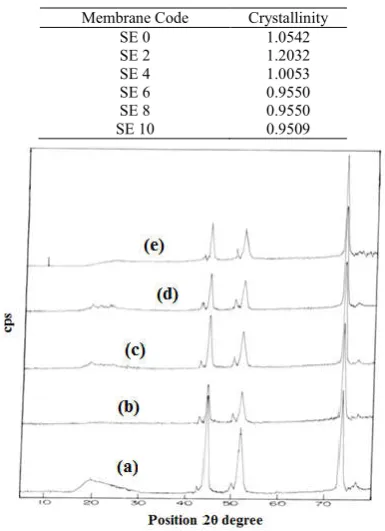
Table 3. Crystallinity of SPEEK and blends with PEES
Figure 1. XRD patterns XRD Spectra of SPEEK with (a) 2% PEES (b)4%PEES (c) 6% PEES (d) 8% PEES and
(e) 10% PEES
Membrane Code Crystallinity SE 0
SE 2 SE 4 SE 6 SE 8 SE 10
1.0542 1.2032 1.0053 0.9550 0.9550 0.9509
Figure 2. TGA curves of SPEEK blended with (a) 2%PEES (b) 4% PEES (c) 6% PEES (d) 8% PEES and (e) 10% PEES
Solvent Absorption
The results of water/alcohol absorptions are given in
[image:4.595.301.560.58.201.2]The absorbed water molecules play an important role in the proton conducting ability of the blend membranes. The absorbed water acts like a canal for the passage of protons from the anode to the cathode of the fuel cell. However, excess water
Figure 3. DMA patterns of SPEEK blended with (a) 2% PEES (b) 4% PEES (c) 6% PEES (d) 8% PEES and (e) 10% PEES
Figure 4. FT-IR Spectra of blends of SPEEK with (a) 2% PEES (b) 4% PEES (c) 6% PEES (d) 8% PEES and (e) 10% PEES
uptake can lead to the deterioration of the mechanical properties of the membranes. This will limit
applications of the membrane in fuel cells. The process of sulfonation increases the water absorbing capacity as the sulfonic acid groups are hydrophilic in nature.
TGA curves of SPEEK blended with (a) 2%PEES (b) 4% PEES (c) 6% PEES (d) 8% PEES and (e) 10% PEES
The results of water/alcohol absorptions are given in Table 1. The absorbed water molecules play an important role in the conducting ability of the blend membranes. The absorbed water acts like a canal for the passage of protons from the anode to the cathode of the fuel cell. However, excess water
DMA patterns of SPEEK blended with (a) 2% PEES 6% PEES (d) 8% PEES and (e) 10% PEES
IR Spectra of blends of SPEEK with (a) 2% PEES (b) 4% PEES (c) 6% PEES (d) 8% PEES and (e) 10% PEES
[image:4.595.322.554.232.408.2]uptake can lead to the deterioration of the mechanical properties of the membranes. This will limit the practical applications of the membrane in fuel cells. The process of sulfonation increases the water absorbing capacity as the sulfonic acid groups are hydrophilic in nature.
Figure 5. Mechanical properties of SPEEK
0 50 100 150 200 250 300 0.00
0.05 0.10 0.15 0.20 0.25 0.30 0.35 0.40 0.45 0.50 0.55 0.60 0.65 0.70
Vol
tage (
V)
Current D ensity (m A/cm
Figure 6. Polarization curve of SPEEK/PEES blend membranes with different PEES (2-10%) content at room temperature.
0 50 100 150 200 250 300 0.00
0.05 0.10 0.15 0.20 0.25 0.30 0.35 0.40 0.45 0.50 0.55 0.60 0.65 0.70 0.75
Current Density (mA/cm
Vol
ta
ge
(V)
Figure 7. Polarization curve of SPEEK/PEES blend membranes with different PEES (2
On the other hand, polysulfones are not hydrophilic, but are quite hydrophobic [17]. On increasing the content of PEES in the blend, there is a gradual reduction in the water absorption as evidenced by the results reported in table 1. The
trend may be attributed to the hydrophobicity of PEES. A similar trend was observed with methanol also. But the methanol absorption was found to be lower than the water
Mechanical properties of SPEEK – PEES blends
300 350 400 450 500 550 600 650 700 750
C urrent D ensity (m A/cm2)
2 wt% PEES 4 wt% PEES 6 wt% PEES 8 wt% PEES 10 wt% PEES
Polarization curve of SPEEK/PEES blend membranes 10%) content at room temperature.
300 350 400 450 500 550 600 650 700 750 800
Current Density (mA/cm2)
2 wt% SPEEK 4 wt% SPEEK 6 wt% SPEEK 8 wt% SPEEK 10 wt% SPEEK
Polarization curve of SPEEK/PEES blend membranes with different PEES (2-10%) content at 60˚C.
[image:4.595.39.289.340.479.2] [image:4.595.323.559.452.647.2] [image:4.595.40.290.522.684.2]absorption indicating that theprepared blends can play an efficient role as an electrolyte membrane in the case of direct methanol fuel cell wherein methanol is used as the fuel. The absorption capacity for the industrial standard, Nafion 117, was found to be higher than SPEEK as well as the blend membranes. A better absorption of water could be beneficial, but in the case of methanol it could be critical. This is because an increase in the absorption of methanol could also result in a higher methanol permeation.
Methanol Permeability
The methanol permeability of Nafion 117, SPEEK and the blend membranes are given in table 2. When compared with Nafion, the permeation of methanol in the case of SPEEK is higher. PEES is a hydrophobic polymeric material. So, one could expect a decrease in the methanol permeation upon loading it with SPEEK. As expected, there is a decrement in the permeation of methanol through the membrane. The methanol permeability of the blend membranes SE 8 and SE 10 are one order lower when compared with Nafion 117.
Proton Conductivity and Selectivity Ratio
The proton conductivity was studied by means of impedance spectroscopy and the results are given in table 2. In accordance with the IEC values and water absorption results, there is a decrease in the proton conducting ability. The decreasing trend may be attributed to two major factors, (i) there is a decrease in the amount of exchangeable protons (SO3H protons) with
increase in the content of PEES and (ii) there is a reduction in the water absorption with increase in the content of PEES. When compared to the virgin SPEEK membrane, all the blend membranes have a lower proton conducting ability. However, the proton conductivity of Nafion 117 was found to be superior when compared with the blend membranes which could be due to the higher water absorptive capacity of Nafion. The protons present in the absorbed water could also be effective in improving the proton conductivity.
An electrolyte membrane particularly for DMFC should have two important properties; the proton conductivity should be as high as possible and the methanol diffusion should be as low as possible. That is to say, the higher the ratio of proton conductivity to methanol permeability (referred to as the selectivity ratio), the better the membrane is. The selectivity ratio of pristine SPEEK as well as the blends are given in table 2. The pristine SPEEK electrolyte membrane exhibited a selectivity ratio of 8.53 x 10² Sscm-3 while the blend membranes exhibited a higher ratio. The higher selectivity ratio of the blend membranes when compared with pristine SPEEK indicate that they are better candidates as electrolyte membranes for DMFC.Infact, the selectivity ratio of the blends with 8% and 10% PEES content are slightly higher than Nafion indicating that they can be successful as a replacement of Nafion 117 in the case of DMFC.
XRD Analysis
Figure 1 shows the XRD pattern of the blend membranes. PEEK is semi crystalline [28]; however SPEEK is amorphous perhaps due to the introduction of the sulfonic acid groups that
could induce disorderliness to the polymer structure. In the case of the polymer blends, there is a broad peak developing between 2θ= 10° and 30°. This may be due to the introduction of PEES with SPEEK material. The crystallinity of SPEEK and the blends with PEES are given in table 3. Except SE 2, the other blends exhibited lower crystallinity when compared to SPEEK. The lower crystallinity indicates that the blends are more amorphous and hence exhibit a better flexibility when compared to SPEEK.
Durability
In the durability study, the time taken for the physical disintegration of the various blend membranes was studied and the results are shown in table 1. It is evident from the figure that there is a gradual increase in the withstanding ability of the blends with increase in the PEES content. The possible reason could be that there is an interaction between the two constituent polymeric materials as evidenced by FT-IR. The blends with PEES content higher than 6 showed durability similar to Nafion 117.
Thermogravimetric Analysis
The TGA patterns of the blend membranes are given in figure 2. In the case of SPEEK, three-stage degradation was observed. The first weight loss upto 150°C may be attributed to the loss of physically and chemically bound water molecules along with some trace amount of solvent that remains in the blend membrane. The second loss between 220°C and 375°C may be due to the loss of the sulfonic acid groupings present in SPEEK. The final degradation that occurred between 475°C and 600°C may be due to the degradation of the polymer backbone. The blends also display a similar behaviour. However, the residue that remains at 900°C in the case of blend membranes was slightly higher than that of virgin SPEEK membrane. This increase in the amount of residue at 900°C may be due to the decrease in the effective concentration of the sulfonic acid groupings with increase in the content of PEES.
Dynamic Mechanical Analysis
The DMA pattern of the blend membranes are given in figure 3. The tangent delta (tan δ) is the dissipation factor which is defined as the loss modulus over storage modulus. This parameter provides an indication of the strength of the material’s ability to store and dissipate energy. A high tangent delta value indicates that the material is dissipating most of the energy supplied to it and hence the materials possess a high damping properties and viscous behaviour. On the other hand, a low tangent delta indicates that the material is storing most of the energy supplied to it and hence show low damping properties and elastic behaviour. The peak of the tangent delta plot as a function of temperature provides a less ambiguous value of glass transition temperature when compared to DSC. The DMA of SPEEK suggested that the glass transition temperature was around 160°C which was consistent with the values reported elsewhere [29,30] DMA study ensures a good compatibility among the constituents, SPEEK and PEES, in the blend. The Tg values tends to increase with increasing
content of PEES. The Tg values of the polymer blends namely
SE 2, SE 4, SE 6, SE 8 and SE 10 were found to be 122°C, 132°C and 178°C, 202°C and 208°C respectively. With
increase in the content of PEES in the polymer blend, the Tg values were found to be increasing. The increase in the Tg values may be attributed to the higher Tg values of PEES (Tg = 192°C) when compared to SPEEK.
FT-IR
The FT-IR spectra of the blend membranes are given in figure 4. There is a broad envelope in the high energy region 3445 cm-1. It includes the OH stretch of SO3H group of SPEEK and
C-H vibrations of the aromatic ring. The C=O vibration gives its peak at 1600 cm-1. The asymmetric O=S=O stretch of the sulfonic acid occurs close to 1300 cm-1. There is a band at 1015 cm-1 which is due to the symmetric O=S=O stretch.
Mechanical Properties
The tensile strength and percentage elongation at break of SPEEK and the blend membranes are given in figure 5. The two polymers are compatible with each other and hence an increase in the tensile strength is observed with increasing content of PEES, thus making the membrane stiffer. On the other hand, the percentage elongation decreases with increasing content of PEES. Once again, as the membranes are getting more and more stiffer with the addition of PEES, the membranes resist to elongate much and hence break without much elongation.
Performance Evaluation
Figs. 6 and 7 show the polarization curve of the single cell (25 cm2) SPEEK/PEES blend membranes with different PEES (2-10%) content. The performance of the single cell was measured at room temperature and 60 °C. Fig. 6 shows the performance of the single cell at room temperature with increasing content of PEES from 2% to 10%. The performance of the single cell increased with increase in PEES content. It can be seen that the highest cell current density of 700 mA/cm2 is obtained at 0.2 V. The same effect, increase in the performance with increase in PEES content, is observed when the cell is operated at 60 °C. At 60 °C as shown in figure 7, the single cell delivered a maximum output current density of 750 mA/cm2 around 0.35 V. The results clearly indicate that the blending of PEES with PEEK decreases the methanol crossover thereby increasing the performance of the fuel cell.
CONCLUSION
In this paper, the preparation and characteristics of the SPEEK/PEES blend was reported. The IEC, water and methanol absorptions, and proton conductivity were found to be decreasing withincreasing content of PEES. The XRD spectra clearly revealed a very good compatibility between the two polymers. There is a decrease in the crystallinity with increasing content of PEES indicating a more flexible character. Durability of the blends increased with increasing dosages of PEES. The tensile strength was found to be in an increasing trend when the content of PEES was increased in the polymer blends. The thermal studies revealed excellent stability of the polymer blends upto 200°C indicating its suitability for DMFC as an electrolyte blend membrane. Even though, the proton conductivity of the blend membranes are less than that of pristine SPEEK, they exhibit a better
selectivity ratio than SPEEK. The performances of the membrane-electrode assembly (MEA) using the blend membranes at room temperature and 60 °C in DMFC were evaluated by single cell test and are found to be 350 and 590 mA/cm2 at 0.4 V, respectively.
ACKNOWLEDGEMENT
The authors would like to thank The Board of Research in Nuclear Sciences (BRNS), Mumbai for their financial assistance vide letter Nos. 2007/36/08-BRNS/597 and 2007/36/08-BRNS/0045.
REFERENCES
[1] K.D. Kreuer, On the development of proton conducting
polymer membranes for hydrogen and methanol fuel cells, J. Membr. Sci., 185 (2001) 29-39.
[2] A.J. Appleby, F.R. Foulkes, Fuelcell Handbook, van
Nostrand Reinhold, New York, 1989.
[3] J. Larminie, A. Dicks, Fuel cell system explained, Wiley, West Sussex, 2000.
[4] W. Becker, G. Schmidt-Naake, Proton exchange
membranes by irradiation grafting of styrene onto FEP and ETFE: influences of the crosslinker N,N-methylene-bis-acrylamide, Chem Eng. Technol. 25 (2002) 364-370.
[5] S. Guhan, N. Arun Kumar, D. Sangeetha, Sulphonated
polyether ether ketone/ polyvinyl alcohol/
phosphotungstic acid composite membranes for fuel cells, Chinese J. Polym. Sci. 27 (2009) 1-8.
[6] B. Smitha, S. Sridhar, A.A. Khan, Synthesis and
characterization of proton conducting polymer
membranes for fuel cells, J. Membr. Sci. 225 (2003) 63-76.
[7] P. Geneva-Dimitrova, B. Baradie, D. Foscallo, C.
Poinsignon, J.Y. Sanchez, Ionomeric membranes for proton exchange membrane fuel cell (PEMFC):
Sulfonated polysulfones associated with
phosphatoantimonic acid, J. Membr. Sci. 185 (2001) 59-71.
[8] J. Kerres, W. Cui, S. Reichle, New sulfonated
engineering polymers via the metalation route. I.
Sulfonated poly(ether sulfone) PSU Udel® via
metalation-sulfination-oxidation, J. Polym. Sci. A, 34 (1996) 2421-2438.
[9] R. Nolte, K. Ledjeff, M. Bauer, R. Mulhaupt, Partially sulfonated poly(arylene ether sulfone) – A versatile proton conducting membrane material for modern energy conversion technologies, J. Membr. Sci. 83 (1993) 211-220.
[10] G. Alberti, M. Casciola, L. Massinelli, B. Bauer, Polymeric proton conducting membranes for medium temperature fuel cells (110°C-160°C), J. Membr. Sci. 185 (2001) 73-81.
[11] S.M.J. Zaidi, S.D. Mikhailenko, G.P. Robertson, M.D. Guiver, S. Kaliaguine, Proton conducting composite membranes from polyether ether ketone and heteropoly acids for fuel cell applications, J. Membr. Sci. 173 (2000) 17-34.
[13] R. Mohr, V. Kudela, J. Schauer, K. Richau, Comparison of different cells for resistance determination of freely standing polymer membranes developed for direct methanol fuel cell (DMFC) applications, Desal. 147 (2002) 191-196.
[14] P. Staiti, Proton conductive membranes based on silicotungstic acid/silica and polybenzimidazole, Mater. Lett. 47 (2001) 241-246.
[15] D.J. Jones, J. Roziere, Recent advances in the functionalisation of polybenzimidazole and polyether ketone for fuel cell applications, J. Membr. Sci. 85 (2001) 41-58.
[16] D. Weng, J.S. Wainright, U. Landau, R.F. Savinell, Electro-osmotic drag coefficient of water and methanol in polymer electrolytes at elevated temperatures, J. Electrochem. Soc. 143 (1996) 1260-1263.
[17] J. Benavente, J.M. Garcia, R. Riley, A.E. Lozano, Javier
de Abajo, Sulfonated poly(ether ethersulfones)
characterization and study of dielectrical properties by impedance spectroscopy, J. Membr. Sci. 175 (2000) 43-52.
[18] T. Soczka-Guth, J. Baurmeister, G. Frank, R. Knauf, Method for producing a membrane used to operate fuel cells and electrolysers, US Pat 6,355,249 B1 (2002). [19] P.C. Deb, L.D. Rajput, V.R. Hande, S. Sasane, A.
Kumar, Modification of sulfonated poly(ether ether ketone) with phenolic resin, Polym. Adv. Technol. 18 (2007) 419-426.
[20] D.J. Jones, J. Roziere, Recent advances in the functionalisation of polybenzimidazole and polyether ether ketone for fuel cell applications, J. Membr. Sci. 185 (2001) 41-58.
[21] S. Sambandam, V. Ramani, SPEEK/functionalized silica composite membranes for polymer electrolyte fuel cells, J. Pow. Sour., 170 (2007) 259-267.
[22] B. Bonnet, D.J. Jones, J. Roziere, L. Tchicaya, G. Alberti, M. Casciola, L. Massinelli, B, Bauer, A. Peraio, E. Ramunni, Hybrid organic-inorganic membranes for a
medium temperature fuel cell, J. New
Mater.Electrochem. Syst. 3 (2000) 87-92.
[23] B. Lakshmanan, W. Huang, D. Olmeijer, J.W. Weidner, Polyether ether ketone membranes foe elevated temperature PEMFCs, Electrochem. Solid State Lett.6 (2003) A282-A285.
[24] J. Chen, Y. Maekawa, M. Asano, M. Yoshida, Double crosslinked polyether ether ketone based polymer electrolyte membranes prepared by radiation and thermal crosslinking techniques, Polymer. 48 (2007) 6002-6009.
[25] S. Guhan, D. Sangeetha, Evaluation of sulfonated polyether ether ketone/ silicotungstic acid composite membranes for fuel cell applications, Intl. J. Polym.Mater.58 (2009) 87-98.
[26] S. Guhan, D. Sangeetha, Preparation of proton conducting composite membranes from sulfonated polyether ether ketone and silicotungstic acid, ICFAI Univ. J. Chem. 1 (2008) 7-18.
[27] T. Fu, C. Zhao, S. Zhong, G. Zhang, K. Shao, H. Zhang, J. Wang, H. Na, J. Pow. Sources, 165, 708 (2007).
[28] J. Font, J. Muntasell, E. Cesari, Binary mixtures of semicrystalline/ nanocrystalline polymers formed by ball milling, Mater. Res. Bull. 34 (1999) 2221-2230.
[29] P.X. Xing, G.P. Robertson, M.D. Guiver, S.D. Mikhailenko, K.P. Wang, S. Kaliaguine, Synthesis and characterization of sulfonated poly(ether ether ketone) for proton exchange membranes, J. Membr. Sci. 229 (2004) 95-106.
[30] S. Kaliaguine, S.D. Mikhailenko, K.P. Wang, P. Xing, G. Robertson, M.D. Guiver, Properties of SPEEK based PEMs for fuel cell application, Catal. Tod. 82 (2003) 213-222.