ScholarWorks
Walden Dissertations and Doctoral Studies Walden Dissertations and Doctoral StudiesCollection
2019
Using a Pediatric Early Warning Score Algorithm
for Activating a Rapid Response Team
Ruthann Kosick
Walden University
Follow this and additional works at:https://scholarworks.waldenu.edu/dissertations Part of theNursing Commons
This Dissertation is brought to you for free and open access by the Walden Dissertations and Doctoral Studies Collection at ScholarWorks. It has been accepted for inclusion in Walden Dissertations and Doctoral Studies by an authorized administrator of ScholarWorks. For more information, please [email protected].
Walden University
College of Health Sciences
This is to certify that the doctoral study by
Ruthann Kosick
has been found to be complete and satisfactory in all respects, and that any and all revisions required by the review committee have been made.
Review Committee
Dr. Eileen Fowles, Committee Chairperson, Nursing Faculty Dr. Margaret Harvey, Committee Member, Nursing Faculty
Dr. Sue Bell, University Reviewer, Nursing Faculty
The Office of the Provost
Walden University 2019
Abstract
Using a Pediatric Early Warning Score Algorithm for Activating a Rapid Response Team
by Ruthann Kosick
MSN, Walden University, 2010 BSN, Seton Hall University, 1994 Diploma, Ann May School of Nursing, 1985
Project Submitted in Fulfillment of the Requirements for the Degree of
Doctor of Nursing Practice
Walden University November 2019
Abstract
The nursing culture of an inpatient pediatric unit was resistant to activating pediatric rapid response team (PRRT) alerts despite guidelines for activation. Nurses routinely assessed patients and assigned a pediatric early warning score (PEWS); however, the level of illness severity was not interpreted consistently among nurses and a PEWS action algorithm did not exist to guide nurses’ minimal actions based on the PEWS score. Guided by 3 adult learning theories (Knowles, Kolb, and Bandura) and 1 evaluation model (Kirkpatrick), this staff education project sought to educate pediatric nurses on a PEWS action algorithm and determine whether this project improved nurses’ knowledge, situational awareness, and attitude toward activating PRRT alerts. A convenience sample of 30 pediatric nurses completed a preeducation knowledge survey (EKS), attended an interactive PEWS education class, and completed a postEKS. After participating in the class, correct responses on the EKS increased from 43% to 82% and, using the Wilcoxon-signed rank test, a significant increase was noted in nurses’ responses to questions related to self-efficacy, factual knowledge, and application. The overall increase in the nurses’ self-efficacy and knowledge about the PEWS might enhance critical-thinking skills, foster identification of patients at risk for clinical deterioration, and empower nurses to follow the PEWS action algorithm including activation of PRRT alerts when indicated. This project has the potential to effect positive social change by supporting nurses’ actions designed to improve pediatric patient outcomes.
Using a Pediatric Early Warning Score Algorithm for Activating a Rapid Response Team
by Ruthann Kosick
MSN, Walden University, 2010 BSN, Seton Hall University, 1994 Diploma, Ann May School of Nursing, 1985
Project Submitted in Fulfillment of the Requirements for the Degree of
Doctor of Nursing Practice
Walden University November 2019
Dedication
I am truly blessed to have the love and support of my family and friends. To my mother, Vivian, I thank you for being the “wind beneath my wings”. Although you are unaware of my recent accomplishment, I know that you would be proud of me and happy to celebrate my success. To my father, Wasil, I thank you for teaching me to work hard and the value of a strong work ethic and a formal education. You have been my guardian angel since I was 17 years old and I know that if you were here, you would be bursting with pride and flashing your big smile.
I thank all my family and friends for your encouragement and support throughout my journey. You had faith in my abilities when I doubted myself. You helped me to take things one day at a time and keep my eyes on the prize. Thank you for your patience and understanding of my absence from many social events. I look forward to
reconnecting with you all.
To my greatest mentor, personal cheerleader, and dear friend, the late Dr. Richard Hader, I dedicate my DNP in your memory. You continue to influence my personal and professional life as your legacy is alive and well within me. You have touched the lives of so many people with your kindness and generosity of spirit that your legacy will always burn bright.
Acknowledgments
I am so grateful to all my professional educators and colleagues who invested their time and energy to support my educational and professional goals. To Dr. Eileen Fowles, my DNP Chair, thank you for your kindness, understanding, and patience for the many challenges of life that arouse during my DNP journey. You have been an
invaluable resource for me. Thank you for sharing your time, knowledge, and insights. Most of all, thank you for your personal concern for me and commitment to my success. God bless you! I could not have done this without you.
To Dr. Christine Hader, my career mentor, your 34 years of commitment to my professional success is a priceless gift for which I am grateful. You pushed me to overcome my self-imposed barriers by challenging, mentoring, coaching, and encouraging me throughout my career.
I am grateful for the incredible team of nurses, nurse scientists, staff at the center for nursing research, librarians, and members of the nursing research and
multidisciplinary and interdepartmental committees. Special thanks to Dr. Catherine Ballance, Ann Marie Conte, Dr. Kathryn Fleming, Linda Houseal, Dr. Matthew
McCarrick, Kathleen McCarthy, Beth Ann McKeown, Mani Paliwal, Darlene Robertelli, Dr. Susan Weaver, Dr. Teri Wurmser, and Bonnie Zimmerman.
I have a very special appreciation for the key stakeholders in this project, the pediatric clinical nursing staff. Your voluntary participation in this project and
commitment to learning and improving patient outcomes are priceless attributes. I could not have done this without you. Thank you!
i
Table of Contents
List of Tables ...v
List of Figures ... vi
Section 1: Nature of the Project ...1
Introduction ...1
Problem Statement ...5
Purpose ...6
Nature of the Doctoral Project ...7
Significance...10
Summary ...13
Section 2: Background and Context ...14
Introduction ...14
Concepts, Models and Theories ...15
Definition of Terms...26
Relavence of Nursing Practice ...27
Local Background and Content ...29
Role of the DNP Student...34
Summary ...36
Section 3: Collection and Analysis of Evidence ...39
Introduction ...39
Practice-Focused Question...39
ii
Synthesis of Evidence ...44
Evidence Generated for Doctoral Project ...51
Analysis and Synthesis of Project Data ...52
Summary ...54
Section 4: Findings and Recommendations ...56
Introduction ...56
Findings...59
Implications...67
Recommendations ...68
Strengths of the Project ...69
Limitations of the Project...71
Unanticipated Limitations/Outcomes ...72
Recommendations for Future Projects ...72
Section 5: Dissemination Plan ...74
Dissemination Plan ...74
Analysis of Self ...74
Summary ...78
References ...81
Appendix A1: Information Sheet for Participation in PEWS Education Project ...91
Appendix A2: Information Sheet for Participation in PEWS Education Project ...92
Appendix B: Project Recruitment Email ...93
iii
Appendix D1: PEWS Preeducation Knowledge Survey...95
Appendix D2: PEWS Preeducation Knowledge Survey...96
Appendix E1: PEWS Posteducation Knowledge Survey...97
Appendix E2: PEWS Posteducation Knowledge Survey...98
Appendix F: Demographic Data Sheet ...99
Appendix G1: PEWS Education Project Evaluation Form...100
Appendix G2: PEWS Education Project Evaluation Form...101
Appendix H: PEWS Scoring Tool ...102
Appendix I: PEWS Action Algorithm ...103
Appendix J: Criteria for Activating Pediatric Rapid Response Team ...104
Appendix K1: PEWS Education PowerPoint Presentation ...105
Appendix K2: PEWS Education PowerPoint Presentation ...106
Appendix K3: PEWS Education PowerPoint Presentation ...107
Appendix K4: PEWS Education PowerPoint Presentation ...108
Appendix K5: PEWS Education PowerPoint Presentation ...109
Appendix K6: PEWS Education PowerPoint Presentation ...110
Appendix K7: PEWS Education PowerPoint Presentation ...111
Appendix K8: PEWS Education PowerPoint Presentation ...112
Appendix L1: PEWS Policy………...……….……....113
Appendix L2: PEWS Policy………...……….……....114
Appendix L3: PEWS Policy………...……….……. .115
iv
Appendix L5: PEWS Policy………...……….……....117
Appendix L6: PEWS Policy………...……….……....118
Appendix L7: PEWS Policy………...……….……....119
Appendix L8: PEWS Policy………...……….……....120
Appendix L9: PEWS Policy………...……….……....121
Appendix M1:Abbreviations……….…….……….122
v List of Tables
Table 1. Summary of Demographic Data (n = 30) ...………60
Table 2. Self-Efficacy Subscale ...64
Table 3. Factual Knowledge Subscale ...65
vi List of Figures
Figure 1. Knowles’s adult learning theory ...17
Figure 2. Kolb’s model of experiential learning ...20
Figure 3. Bandura’s social cognitive theory ...22
Figure 4. Kirkpatrick’s four-level evaluation model ...25
Figure 5. Self-efficacy – Average total score ...63
Figure 6. Factual knowledge – Average total score ...65
Section 1: Nature of the Proposal
Introduction
Researchers have demonstrated that pediatric patients outside of intensive care unit (ICU) areas who required resuscitation for cardiac and/or respiratory arrest had exhibited signs of deterioration in the hours preceding the arrest (Agulnik, Forbes, Stenquist, Rodriguez-Galindo, & Kleinman, 2016; Gold, Mihalov, & Cohen, 2014; Jankuloski, Shihab, O’Neil, Van Taak, & Abuhasna, 2011; Murray, Williams, Pignataro, & Volpe, 2015). As a result, the pediatric early warning system (PEWS) was developed to standardize language, assessment criteria, and the process for identifying early clinical deterioration in pediatric patients in non-ICU areas as well as guiding nursing actions for additional assessments and prompt immediate treatment (Agency for Healthcare
Research and Quality (AHRQ), 2009; Murray et al., 2015). Various forms of the PEWS have since emerged and been implemented by several children’s hospitals to identify pediatric patients in an early stage of clinical deterioration (Agulnik et al., 2016; AHRQ, 2009; Haines, Perrott, & Weir, 2006). The concept of the PEWS as an evidence-based practice (EBP) is relatively new which accounts for the lack of widespread adoption and use in U.S. children’s hospitals (AHRQ, 2009; Haines et al., 2006; Jankuloski et al., 2011; Murray et al., 2015).
The PEWS of interest for this doctoral capstone project included two components: (a) revised PEWS scoring tool, and (b) new PEWS action algorithm (Agulnik et al., 2016; AHRQ, 2009; Bell et al., 2013; Demmel, Williams, & Flesch, 2010). The nurse assigns a PEWS score for the pediatric patient by using a table to assess specific criteria
within three physiologic systems: patient behavior (neurologic); cardiovascular; and respiratory (Agulnik et al., 2016; Demmel et al., 2010; Tucker, Brewer, Baker, Dermitt, & Vossmeyer, 2009). The revised PEWS scoring tool includes the three physiologic systems plus a section for scoring extra points based on blood pressure (BP) and respiratory status: (a) score 5 extra points for hypotension or the required use of a nonrebreather O2 mask; and/or (b) score 2 extra points if a STAT Albuterol treatment is
repeated twice in 1 hour or 1 hour of continuous Albuterol treatment is necessary. The PEWS action algorithm provides nurses with step-by-step workflows to follow based on the individual patient’s PEWS score, including the activation of the pediatric rapid response team (PRRT) when necessary (Demmel et al., 2010).
Health care providers often miss observable warning signs exhibited by patients prior to a health crisis event (AHRQ, 2009; Douglas, Collado, & Keller, 2016; Murray et al., 2015; Tucker et al., 2009). Retrospective studies have shown that hospitalized patients displayed signs of physiologic deterioration within the 6- to 8-hour period preceding cardiopulmonary arrest (AHRQ, 2009; Douglas et al., 2016). Failure to identify signs of clinical deterioration and/or provide early interventions is known as
failure to rescue, which has been associated with poor patient outcomes including death (AHRQ, 2009). Increasing regulations and expectations regarding quality have led to numerous initiatives for improving the quality and safety of care (AHRQ, 2009; Bellamo, 2012; Demmel et al., 2010; Douglas et al., 2016). Simple early warning scores (EWSs) have been successfully used in the hospitalized adult population to quickly assess a patient’s condition and reliably predict the likelihood of deterioration (AHRQ, 2009;
Murray et al., 2015). These adult scores have been modified for use in children to reflect the anatomical and physiological factors unique to the pediatric population (infants to adolescents) which varies significantly from adults (Murray et al., 2015).
In 2004, the Institute of Health care Improvement (IHI) launched its 100,000 Lives Campaign with the goal of saving a minimum of 100,000 patient lives in U.S. hospitals (Demmel et al., 2010; Jankuloski et al., 2011). This major quality improvement project focused on six initiatives for improving safety and quality, one of which was the deployment of an emergency response team to the bedsides of deteriorating patients outside of critical care areas (Demmel et al., 2010). This emergency response team is called the rapid response team (RRT) and its purpose is to bring skilled, intensive care directly to the patient’s bedside (Demmel et al., 2010). In 2006, Cincinnati Children’s Hospital Medical Center (CCHMC) developed and implemented a PEWS that
incorporated the activation of RRT alerts (AHRQ, 2009). CCHMC’s PEWS included a simple scoring system called the PEWS scoring tool and a corresponding PEWS action algorithm (AHRQ, 2009). The CCHMC’s PEWS scoring tool was found to be a reliable and effective tool for predicting patients who were likely to deteriorate after evaluating 40,000 scores for 3,000 patients (AHRQ, 2009). In 2007, the Child Health Corporation of America (CHCA) recommended for hospitals to implement the reliable and valid PEWS scoring tool to identify children at risk for clinical deterioration, manage
deterioration by getting immediate help to the bedside and/or transferring the child to a higher level of care (Bell et al., 2013). Other organizations calling to improve early recognition and response to changing patients’ conditions include the National Institute
for Health and Clinical Excellence (NICE) and The Joint Commission on Accreditation of Healthcare Organizations (TJC) (Bell et al., 2013; Demmel, Williams, & Flesch, 2010; Douglas, Collado, & Keller, 2016; Murray et al., 2015).
The positive social change that may be attributed to this doctoral project is the promotion of improved pediatric patient outcomes. Teaching the pediatric nursing team to understand the purpose and use of the comprehensive PEWS program (revised PEWS scoring tool and new PEWS action algorithm) should promote early recognition of children showing signs of clinical deterioration and empower nurses to act, ensuring timely and rapid intervention(s) (AHRQ, 2009; Demmel et al., 2010).
The PEWS has been shown to effectively identify patients at risk of clinical deterioration thereby; enhancing the timeliness of interventions (AHRQ, 2009; Demmel et al., 2010). The PEWS has been credited for decreasing the rates of many negative consequences associated with the failure to rescue such as adverse outcomes, rapid transfers to the pediatric intensive care unit (PICU), decreased lengths of stay (los) in the PICU, unexpected returns to the PICU, cardiac and/or respiratory arrests outside of the PICU, and preventable hospital deaths (AHRQ, 2009). The use of a PEWS has been reported to improve communication and teamwork between the interdisciplinary health care team and led to a sense of empowerment within the nursing team (AHRQ, 2009; Demmel et al., 2010). The implementation of the PEWS at CCHMC led to a decreased code rate outside of the PICU from five down to zero in a 30-month period (AHRQ, 2009). The 11% mortality rate for children transferred to the PICU decreased to 0%
within the first year of implementing the PEWS and the los in PICU was reduced by one day after the first year (AHRQ, 2009).
Problem Statement
The nursing culture of the inpatient pediatric unit was resistant to activating PRRT alerts despite clear guidelines for activation established in the hospital’s PRRT policy. According to Williams et al. (2011), it is not unusual for nurses to decide against activating PRRT alerts even when a child exhibits clear signs of deterioration (Astroth, Woith, Stapleton, Degitz, & Jenkins, 2013; Jenkins, Astroth, & Woith, 2015). Rationales provided by the pediatric inpatient nurses for not activating PRRT alerts when
appropriate included negative attitudes and comments expressed by the PRRT, belief that the pediatric resident’s and/or attending physician’s awareness of the situation was enough and/or insecurities related to their nursing competencies (Astroth et al., 2013; Jenkins et al., 2015).
The local children’s hospital and health care practitioners are committed to providing safe, high quality, evidence-based care to the pediatric population they serve. As such, the hospital planned to incorporate a PEWS action algorithm into its existing PEWS program by the second quarter of 2019. Incorporating a PEWS action algorithm will provide a comprehensive evidence-based PEWS program. Nurses assign PEWS scores to patients using standardized assessment criteria (Agulnik et al., 2016; AHRQ, 2009; Demmel et al., 2010; Tucker et al., 2009). Based on the individual patient PEWS scores, nurses reference the PEWS action algorithm for guidance to perform additional patient assessments and/or interventions including the activation of PRRT alerts when
appropriate (AHRQ, 2009; Tucker et al., 2009). Utilizing a PEWS action algorithm not only provides nurses with guidance for action, it also empowers them to act, increases their critical thinking skills, increases self-efficacy, and improves their interdisciplinary communication and teamwork skills (AHRQ, 2009; Demmel et al., 2010).
Purpose
The children’s hospital had an incomplete PEWS. The hospital previously adopted the CHCA’s recommendation for implementing a PEWS scoring tool; however, the hospital did not implement a PEWS action algorithm to guide nurses’ minimal actions based on the individual child’s PEWS score (Bell et al., 2013; Tucker et al., 2009). The hospital planned to implement a PEWS action algorithm by the second quarter of 2019. The pediatric nursing team consistently assessed each patient every four hours using a preexisting PEWS scoring tool, then assigned and documented the PEWS scores. The PEWS scores were not routinely shared during hand-off of care or with other members of the health care team. In addition, the pediatric nurses and members of the
interdisciplinary team did not have a shared mental model for the level of illness severity corresponding with the PEWS scores and color-coded system. My purpose in this project was to educate the pediatric nursing staff on a comprehensive PEWS program: (a) revised existing PEWS scoring tool; and (b) new PEWS action algorithm. My goals in this project were to increase the nurses’ situational awareness of subtle changes in their patients’ physiological status and empower nurses to activate PRRT alerts when necessary to improve patient outcomes.
The PICOT question for this doctoral project was as follows: In the pediatric nurses working within a children’s hospital, how does the education of a PEWS action algorithm impact the knowledge, situational awareness and attitude of pediatric nurses in activating PRRT alerts as measured by post-education knowledge surveys (EKSs) when compared to the pre-EKSs prior to the education on the PEWS action algorithm?
I addressed the gap-in-practice by providing the health care team with a comprehensive PEWS that included both of the required components of an evidence-based PEWS: (a) reliable and valid PEWS scoring tool to identify children at risk for clinical deterioration; and (b) action algorithm to promptly manage clinical deterioration (Agulnik et al., 2016; AHRQ, 2009; Bell et al., 2013; Demmel et al., 2010). The nursing staff received education on the revised PEWS scoring tool and new PEWS action
algorithm to accomplish the following goals: (a) increase their knowledge of the standardized language of the PEWS score, assessment criteria and the process for identifying early clinical deterioration in pediatric patients; (b) develop a shared mental model for the illness severity of a patient based on the PEWS score; (c) understand the process of the PEWS action algorithm to ensure a timely response from the medical team to diagnose the issue and order appropriate and timely interventions; (d) improve
communication skills; (e) improve team building skills; (f) empower them to act; and (g) increase their self-efficacy to act (AHRQ, 2009; Murray et al., 2015).
Nature of the Doctoral Project
Early recognition of children at risk for deterioration has become a focus for improving outcomes for hospitalized children (Akre et al., 2010; Bell et al., 2013;
Bellamo, 2012; Demmell et al., 2010; Douglas et al., 2016; Duncan, Hutchison & Parshuram, 2006; Haines et al., 2006; Parshuram, Bayliss, Reimer, & Blanchard, 2011; Skaletzky, Raszynski, & Totapally, 2012; Tucker et al., 2009). PEWSs were developed to include objective clinical indicators and risk assessment tools to identify children at risk for deterioration and enable early recognition of changes in a child’s physiologic condition (Akre et al., 2010; Duncan, Hutchison and Parshuram, 2006; Haines, Perrott, & Weir, 2006; Parshuram et al., 2011; Skaletzky et al., 2012; Tucker et al., 2009).
According to Shein et al. (1990), Franklin et al. (1994), and Buist et al. (1999), a substantial number of researchers highlight the fact that avoidable adverse clinical events are experienced by hospitalized patients (Jankuloski et al., 2011). Buist et al. (1999) argued that these adverse clinical events are “rarely sudden and unpredictable” as they are often preceded by one or more signs of physiologic and/or biochemical deterioration (Jankuloski et al., 2011). DeVita et al. (2006) identified flaws in the traditional health care model for responding to subtle signs of clinical deterioration and fault this model for substantial delays in response and initiation of treatment for patients exhibiting early signs of clinical deterioration (Jankuloski et al., 2011). DeVita et al. (2006) recommend for the traditional health care model to implement the following six steps to successfully identify and respond to early signs of clinical deterioration in patients:
• Timely response by all staff in a well-coordinated manner. • Correct diagnosis of the problem.
• Communicating an accurate assessment of severity of the patient’s condition. • Take prompt and appropriate action.
• Document the actions taken.
• Document the patient response to the intervention(s) (Jankuloski et al., 2011). The six steps described by DeVita et al. (2006) were easily applied to this
education project. A comprehensive PEWS includes a PEWS scoring tool and PEWS action algorithm. Used in conjunction, these tools provide the health care team with a standardized language, assessment criteria and process for identifying early clinical deterioration in pediatric patients (AHRQ, 2009; Murray et al., 2015). The nurse performs patient assessments and assigns PEWS scores on every pediatric patient in his/her care every four hours. The PEWS score provides the health care team with an accurate assessment of the patient’s illness severity. Based on the PEWS score, the PEWS action algorithm provides guidance for nursing actions to ensure a timely response for intervention in a well-coordinated manner. The action algorithm also includes a process for escalating communication with the health care team as well as additional assessments by the primary nurse and other members of the interdisciplinary team (AHRQ, 2009; Murray et al., 2015). The PEWS action algorithm also directs nurses to document actions taken by the nurse and interventions administered to the patient as well as the patient’s response to the intervention. The sources for evidence to measure the success of this project were the EKSs that were administered and collected immediately prior to and after the PEWS education session (pre- and post-EKSs).
My purpose in this project was to educate the pediatric inpatient nursing staff on a comprehensive PEWS with an emphasis on learning how to use the new PEWS action algorithm. The goal of educating nurses on this comprehensive PEWS is to improve
patient outcomes by standardizing language, assessment criteria, and the process for identifying early clinical deterioration in pediatric patients, decreasing and/or eliminating barriers associated with escalation of care, and providing a tool to guide nursing actions for prompt immediate treatment (Agulnik et al., 2016; AHRQ, 2009; Bell et al., 2013; Demmel et al., 2010; Murray et al., 2015). In addition, I intended this project to
empower the nursing team by increasing their self-efficacy and confidence in their skills of assessment, critical thinking, and communication to promote a cultural change from one that is resistant to activating PRRT alerts to one that proactively activates them when indicated. Other goals included the development of a shared mental model among nurses for a patient’s illness severity and an understanding of the relationship between early identification of risk for deterioration, activation of PRRT alerts, timely interventions, and improved patient outcomes.
Significance
The setting for this project was a children’s hospital within a Magnet designated suburban, not-for-profit, teaching university medical center in the mid-eastern United States. Although I focused this project on the inpatient pediatric unit, numerous stakeholders existed beyond the physical location of the unit. The senior nursing leadership team members were stakeholders in this project because they are responsible for leading initiatives focused on patient safety and quality as well as achieving the organization’s goal of zero patient harm (A. Conte, personal communications, August 16, 2017). This leadership team had the power to provide resources to support the various phases of the project: education, implementation and evaluation. Members of the senior
nursing leadership team included the senior vice president of nursing and network chief nursing officer (CNO), vice president and hospital chief nurse executive (CNE), senior manager of patient care services, corporate director of nursing education and quality, Magnet program director, manager of corporate education, and director of center for nursing. Local nursing leader stakeholders in the children’s hospital included the nurse managers and nurse manager assistants of the pediatric and PICU departments, the nurse manager of the nursing supervisor team, pediatric clinical nurse educator, and co-chairs of the unit-based professional practice committee. These local leaders supported the project leader on the unit level. The primary stakeholders for this project were the staff nurses working in the inpatient pediatric unit. Nurses providing direct patient care are responsible for accurately assessing pediatric patients’ level of risk for deterioration by using the PEWS scoring tool and following the PEWS action algorithm to guide nursing actions based on the PEWS score. The success of this project was dependent on the knowledge and attitudes of staff nurses about the PEWS and their ability to use the PEWS tools properly. Buy-in consisted of more than nurses adopting the concept of PEWS, it required active learning to use the PEWS tools and understand the processes of the PEWS. The nursing staff was part of the interdisciplinary team therefore; members of the medical team were included as key stakeholders as they are responsible for
responding to the nurse’s call for action. The medical team included the chairman of the pediatric department, director of women’s and children’s services, PICU intensivists, pediatric hospitalists and pediatric resident physicians. Interdisciplinary education and
collaboration should foster improvements in communication and teamwork, putting the patient at the center of care.
The potential contribution of this doctoral project to nursing practice is the improvement of patient outcomes by educating nurses about an evidence-based PEWS inclusive of a PEWS action algorithm. This project demonstrated that a well-planned education project had a positive impact on pediatric nurses’ confidence to activate PRRT alerts. The education program increased the nurses’ knowledge and self-efficacy, which should empower them to act in the future. This project has the potential to be
transferable to inpatient pediatric units in other children’s hospitals by demonstrating the effectiveness of an EBP that addresses similar interests among children’s hospitals which may strongly influence the transferability of information (Burchett, Mayhew, Lavis, & Dobrow, 2012). The use of the PEWS scoring tool may also be transferable to pediatric emergency departments (EDs) to determine the level of patient care assigned for a
pediatric patient and PICUs to determine a patient’s readiness to be transferred to a lower level of care (Gold et al., 2014). The potential for positive social change is improved outcomes for the pediatric patient population. Providing education on a comprehensive, evidence-based PEWS should provide the staff nursing team with a process for
identifying early clinical deterioration in their pediatric patients and guide their nursing actions for additional assessments and prompt immediate treatment (AHRQ, 2009; Murray et al., 2015).
Summary
A growing body of evidence reveals that health care providers often miss observable signs of clinical deterioration exhibited by pediatric patients outside of ICU areas in the hours preceding a cardiac and/or respiratory arrest (Gold et al., 2014;
Jankuloski et al., 2011; Murray et al., 2015). Research also demonstrates there are delays in implementation of interventions and nurses are often reluctant to activate PRRT alerts even when a child exhibits clear signs of deterioration secondary to personal and/or system barriers (Astroth et al., 2013; Jenkins et al., 2015). Failure to rescue patients has been associated with poor patient outcomes (AHRQ, 2009). A PEWS is an EBP that provides tools for tracking PEWS scores and triggering actions guided by the PEWS action algorithm. The goal of a PEWS is to improve patient outcomes for hospitalized children in non-ICU areas by using a reliable and valid PEWS scoring tool to identify children at risk for clinical deterioration in combination with a PEWS action algorithm to guide nursing actions to get prompt, immediate help to the bedside (Agulnik et al., 2016; Bell et al., 2013; Demmel et al., 2010).
Section 2: Background and Context
Introduction
Despite clear hospital guidelines for activating the PRRT when a child demonstrates signs and symptoms of clinical deterioration, the nursing culture of the inpatient pediatric unit was resistant to activating the PRRT. This culture was consistent with studies that identified a variety of barriers preventing nurses from activating PRRTs even when a child exhibits clear signs of deterioration (Astroth et al., 2013; Carter, 2015; Jankuloski et al., 2011; Jenkins et al., 2015; McLellan, & Connor, 2013). Nurses
reported a variety of reasons for not activating the PRRT when appropriate including negative attitudes, remarks, and comments conveyed by the PRRT, belief that the pediatric resident’s and/or attending physician’s awareness of the situation was enough, and/or lack of self-efficacy in their nursing competencies (Astroth et al., 2013; Jenkins et al., 2015).
The PICOT question for this doctoral project was as follows: In the pediatric nurses working within a children’s hospital, how does the education of a PEWS action algorithm impact the knowledge, situational awareness and attitude of pediatric nurses in activating PRRT alerts as measured by post-EKSs when compared to the pre-EKSs prior to the education on the PEWS action algorithm?
The purpose of this project was to educate the pediatric nursing staff on a comprehensive PEWS program: (a) revised existing PEWS scoring tool; and (b) new PEWS action algorithm. My goals in this project were to increase the nurses’ situational
awareness of subtle changes in their patients’ physiological status and empower them to activate PRRT alerts when necessary to improve patient outcomes.
Concepts, Models, and Theories
My focus in this doctoral project was education. An abundance of literature is available on the principles of adult learning however; one single theory is not fully supported over another due to the diverse manners in which adults learn (Curran, 2014). As such, I blended key components of three complementary education theories to provide the theoretical underpinnings for this education project: (a) Knowles’s adult learning
theory; (b) Kolb’s model of experiential learning; and (b) Bandura’s social cognitive
theory (SCT) (Curran, 2014). I used Kirkpatrick’s four level evaluation model to guide my doctoral project and evaluation of the outcome.
Knowles’ adult learning theory is learner-focused and collaborative in nature (Curran, 2014; Mitchell & Courtney, 2005). Knowles describes the andragogical model as the art and science of helping adults to learn (Curran, 2014; Mitchell & Courtney, 2005). Knowles’s theory is rooted in the humanistic philosophies of Maslow and Carl Rogers (Mitchell & Courtney, 2005). According to Worley (2001), Merriam, and Caffarella, Knowles’s humanistic approach to learning influences the thought processes, behaviors, and emotions of the learner (Mitchell & Courtney, 2005). Adult learners, according to Knowles, are less interested in the content of education than they are in the learning process and its relevance to their life circumstances (Curran, 2014). The foundation of Knowles’s theory is based on six key assumptions about adult learners:
• Need for autonomy and self-direction.
• Life experience serves as a resource for learning.
• Readiness and/or applicability of the information to the learner’s life situation. • Motivation to learn.
• Problem-solving or task-focused orientation to learning (Curran, 2014; Mitchell & Courtney, 2005).
All the key assumptions of Knowles’s adult learning theory applied to this project. The participants were recruited by providing them with information about the project, purpose and goals which satisfied the adult learner’s need to know why they should learn about the PEWS. It also provided the nurses with a motivation to learn. The voluntary nature of participation satisfied the learner’s need for autonomy and self-direction as well as the readiness to learn information relevant to the learner’s professional knowledge base, skills and responsibilities. The clinical scenarios (case studies) provided in the PEWS class engaged learners in problem-solving and/or task-focused learning events and provided opportunities for learners to share life experiences which may have served as additional resources for learning (Curran, 2014; Mitchell & Courtney, 2005). Knowles’s adult learning theory is illustrated in Figure 1.
Figure 1. Knowles’s adult learning theory. Reprinted from Educational and
Instructional Technology by Andragogy: The adult learning theory of Malcolm Knowles, 2014, http://edtechtutorials.blogspot.com/2014/09/adragogy.html. Copyright 2014 by Andragogy. The adult learning theory of Malcolm Knowles.
Kolb’s model of experiential learning is a middle-range learning theory based on Kolb’s belief that learning occurs by the “grasping” (understanding) of experience (Fowler, 2008; Lisko & O’Dell, 2010; Manolis, Burns, Assudani, & Chinta, 2013). Kolb’s model facilitates learning through the following actions:
• By doing.
• While experiencing.
• With hands on practice. • With reflection (Hill, 2017).
Kolb (1984, p. 38) described learning as the ‘process whereby knowledge is created through the transformation of experience’ (McLeod, 2013, p. e1). Kolb’s theory includes a four-stage cycle of learning and four distinct learning styles (Hill, 2017; McLeod, 2013). The four stages of the experiential learning cycle include:
• Concrete experience (CE).
• Reflective observation (RO).
• Abstract conceptualization (AC).
• Active experimentation (AE) (Hill, 2017; Manolis et al., 2013; McLeod, 2013).
The four learning styles include:
• Accommodating (CE/AE).
• Converging (AC/AE).
• Diverging (CE/RO).
• Assimilating (AC/RO) (Manolis et al., 2013; McLeod, 2013). Learners may enter the cycle of learning at any stage however; for learning to be
effective, they must progress through each stage of the learning cycle in sequence (Lisko & O’Dell, 2010; McLeod, 2013). An individual’s preferred learning style is the product of two pairs of variables along the process and perception continuums, develop over time and influenced by factors such as the individual’s cognitive structure, social
environmental and educational experiences (Lisko & O’Dell, 2010; Manolis et al., 2013; McLeod, 2013). Kolb illustrated the continuums by using lines of an axis, each of which has conflicting learning styles at either end: (a) the east-west axis represents the process
continuum (AE/RO); and the north-south axis represents the perception continuum (CE/AC) (Manolis et al., 2013; McLeod, 2103). The model can also be seen viewed as a two-by-two matrix which represents a combination of two preferred styles (McLeod, 2013).
The interactive nature of the PEWS class supported Kolb’s description of learning as the ‘process whereby knowledge is created through the transformation of experience’ (McLeod, 2013, p. e1). The PEWS class provided didactic information that was
reinforced by the learner’s experience by doing, while experiencing, with hands on practice, and with reflection (Hill, 2017). Clinical scenarios (case studies) provided opportunities for learners to calculate PEWS scores and use the PEWS action algorithm to guide actions based on the PEWS score. The learners shared past experiences and reflected on how the new information and PEWS tools may have affected outcomes in the past. Kolb’s Model of Experiential Learning is illustrated in Figure 2.
Figure 2. Kolb’s model of experiential learning. Reprinted from Simply Psychology by McLeod, 2017, https://www.simplypsychology.org/learning-kolb.html. Copyright 2017 by McLeod.
Bandura’s SCT is a middle-range behavior and learning theory that postulates that people learn from one another by means of observation, imitation, and modeling (Garcia, 2016; McEwen & Mills, 2014). SCT differs from other behavioral change and social learning theories in that its foundation is based on the concept of reciprocal determinism
in which Bandura (1986) affirms that human behavior is influenced by continuous, bidirectional interplay of three key elements: personal factors (cognition, affect, and biological events), environmental influences, and resulting behavior (Garcia, 2016; Hodges & Videto, 2011). SCT emphasizes that cognition plays a critical role in peoples’ ability to alter their environment, self-regulate, translate information, and execute
human agency in which people are individual agents who proactively participate in their self-development and can create outcomes based on their own actions (Hodges & Videto, 2011). The three core constructs of SCT are self-efficacy, self-control, and expectations
(Elmore & Sharma, 2013; Hodges & Videto, 2011; Sosa, 2012). According to Bandura (1986), a crucial element for the human agency is self-efficacy (Grossklaus & Marvicsin, 2104, p. 72; Hodges & Videto, 2011). Other constructs of SCT include environment, behavioral capacity, observational learning, and reinforcements (Knol et al., 2016).
The concept of reciprocal determinism is applicable to this project because nurses were reluctant to activate PRRTs secondary to barriers such as their lack of knowledge, guidance for action, and self-efficacy in their nursing competencies (AHRQ, 2009; Astroth et al., 2013; Jenkins et al., 2015). My purpose in this project was to educate the pediatric nursing staff on a comprehensive PEWS program with goals of increasing the nurses’ situational awareness of subtle changes in their patients’ physiological status and providing them with an action algorithm to empower them to activate PRRT alerts when necessary to improve patient outcomes. Bandura’s SCT is illustrated in Figure 3.
Figure 3. Bandura’s social cognitive theory. Reprinted from SBCC for Emergency Preparedness by Johns Hopkins University, 2016, http://www.euromonitor.com/. Copyright 2016 by Johns Hopkins University.
Promoting and facilitating the integration of evidence into nursing practice improves and enhances nursing practice-related outcomes (Curran, 2014). Successful integration of EBP requires education methods that promote learning by actively engaging the learners in the process, transfer of learning into nursing practice. and organizational knowledge and excellence (Curran, 2014). The various learning styles of adult learners requires educators to be creative in their teaching methods (Curran, 2014; Lisko & O’Dell, 2010). The three for mentioned adult learning theories capture key elements associated with adult learning and in some cases, share overlapping concepts. Infusing the elements of three different learning theories helped ensure learning transfer by incorporating learning styles that best matched the preferred learning style of each
nurse (McLeod, 2013). The validity and reliability of these learning theories promoted their application in the health care arena for nursing and patient education, and they have been successfully applied to motivate behavioral changes in learners (Curran, 2014; Lisko & O’Dell, 2010). The application of these three learning theories contributed to meeting my goals in this capstone project which were to increase situational awareness of the pediatric nurses and empower them to activate PRRT alerts when necessary to
improve patient outcomes. Learning the level of illness severity associated with individual PEWS scores and following the corresponding PEWS action algorithm were relevant to the pediatric nurses’ clinical practice therefore; should promote critical thinking, autonomy to act, and self-efficacy (Curran, 2014; Lisko & O’Dell, 2010).
Kirkpatrick’s four level evaluation model was used to guide the development of my education project and evaluate the outcome. Kirkpatrick’s four level approach was developed in the 1950s by Donald Kirkpatrick as a model for evaluating learner
outcomes for the training program industry (Frye & Hemmer, 2012; Kirkpatrick & Kirkpatrick, 2007). According to Bates (2004), Kirkpatrick’s model has been used as the primary organizing plan for evaluating training programs for by a variety of institutions and organizations such as education, business, and research (Abdulghani, Shaik, & Khamis, 2014; Frye & Hemmer, 2012). Kirkpatrick’s evaluation model provides an action-oriented design and useful tools for developing results driven education programs (Kirkpatrick & Kirkpatrick, 2007). This model also provides a logical and systematic approach for gathering data useful for evaluation (Abdulghani et al., 2014). Kirkpatrick’s model focuses on program outcomes in relation to the program’s objectives, goals, and
mission not simply learner satisfaction (Frye & Hemmer, 2012). This model is composed of four hierarchal levels for evaluating program outcomes, with each level impacting the next level:
1. Level 1,Reaction – learner satisfaction or how the participant feels about the
program.
2. Level II,Learning – evaluates acquisition of knowledge and skills.
3. Level III, Behaviors – evaluates the application of learning into practice. 4. Level IV,Results – evaluates the programs impact on outcomes in the context
of the program’s overall mission and impact on society such as patient outcomes and/or improved health care team performance) (Abdulghani et al., 2014; Frye & Hemmer, 2012; Mann, Sargeant, & Hill, 2009).
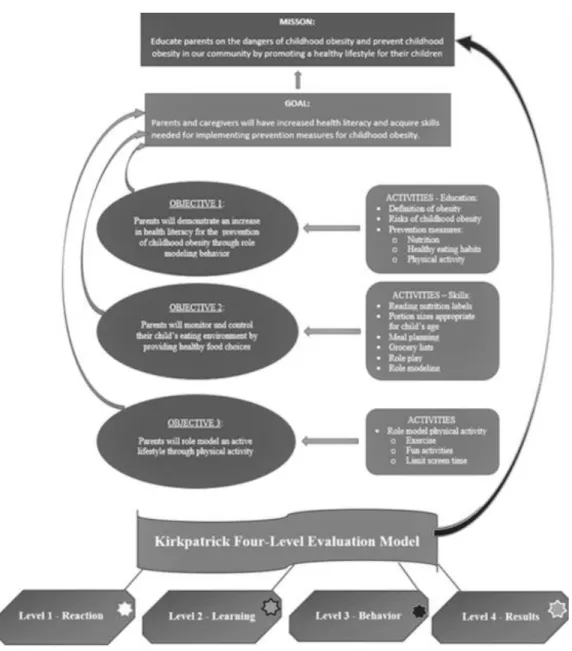
Given the purpose of this DNP project and the time constraints for teaching the PEWS class, Levels I and II of Kirkpatrick’s model were evaluated, reaction and learning respectively. An accurate evaluation of levels III and IV require a longer timeframe for nurses to apply learning into practice and even longer for practice changes to affect outcomes (Kirkpatrick & Kirkpatrick, 2007). Kirkpatrick’s four level evaluation model is illustrated in Figure 4.
Figure 4. Kirkpatrick’s four level evaluation model. Adapted from Adapted from
Implementing the four levels: A practical guide for effective evaluation of training programs by Kirkpatrick & Kirkpatrick, 2007. Copyright 2007 by Berrett-Koehler Publishers, Inc.
Definition of Terms
Abstract conceptualization: concluding and/or learning from experience by using logic and ideas to understand the situation or problem (Lisko & O’Dell, 2010; McLeod, 2013).
Accommodation: “learn through apprehension and active, hand-on experimentation” (Lisko & O’Dell, 2010, p. 107).
Active experimentation: tests theory by planning and/or trying out what was learned through an experience (Lisko & O’Dell, 2010; McLeod, 2013).
Apprehension: understanding occurs through participation in the concrete experience (Lisko & O’Dell, 2010).
Assimilation: learn by comprehension and internalize the learning (Lisko & O’Dell, 2010, p. 107).
Comprehension: understanding occurs outside the concrete experience through abstract conceptualization (Lisko & O’Dell, 2010).
Concrete experiences: the source of learning comes from the learner doing or having an experience (Lisko & O’Dell, 2010; McLeod, 2013).
Converging: “learn by comprehension, considering abstract ideas separate from the actual experience” (Lisko & O’Dell, 2010, p. 107).
Diverging: learn through apprehension and internalize via reflection (Lisko & O’Dell, 2010).
Expectations: belief that specific behaviors will result in positive outcomes (Elmore & Sharma, 2013; Hodges & Videto, 2011; Pajares, 2002, electronic; Sosa, 2012).
Perception continuum: an individual’s emotional responses, or how one thinks or feels about something (McLeod, 2013)
Processing continuum: how individual approaches a task (McLeod, 2013).
Reciprocal determinism: “dynamic interaction of a person, his or her behavior, and the environment in which the behavior is performed” (Garcia, 2016, p. 172).
Reflective observation: to make sense of, and organize the concrete experience (Fowler, 2008; Lisko & O’Dell, 2010; McLeod, 2013).
Self-control: ability to adjust behavior to achieve self-rewards and goals (Elmore & Sharma, 2013; Hodges & Videto, 2011; Sosa, 2012).
Self-efficacy: one’s self-confidence and belief that he/she can control his/her
thoughts, feelings, and behaviors to actively engage in specific, recommended actions to achieve desired outcomes (Elmore & Sharma, 2013; Garcia, 2016; Hodges & Videto, 2011; Sosa, 2012).
Self-regulate: controlling oneself (Garcia, 2016).
Relevance to Nursing Practice
Hospitalized patients frequently suffer from avoidable adverse clinical events (Jankuloski et al., 2011). According to Buist et al. (1999), adverse clinical events are seldom sudden and unpredictable as they are typically preceded by one or more signs of physiologic and/or biochemical deterioration (Jankuloski et al., 2011). Unfortunately,
health care professionals frequently miss recognizable warning signs of clinical deterioration shown by patients well in advance of a health crisis event (AHRQ, 2009; Douglas et al., 2016; Murray et al., 2015; Tucker et al., 2009). This failure to rescue patients has been associated with poor patient outcomes including death (AHRQ, 2009). According to DeVita et al. (2006), our flawed health care model inhibits clinicians’ recognition of, and response to subtle signs of clinical deterioration thereby causing substantial delays in response and initiation of treatment for patients exhibiting early signs of clinical deterioration (Jankuloski et al., 2011). The six recommended steps outlined by DeVita et al. (2006) are designed to successfully identify and respond to early signs of clinical deterioration in patients:
• Timely response by all staff in a well-coordinated manner. • Correct diagnosis of the problem.
• Communicating an accurate assessment of severity of the patient’s condition.
• Take prompt and appropriate action.
• Document the actions taken.
• Document the patient response to the intervention(s) (Jankuloski et al., 2011).
I used this doctoral project to fill the identified gap-in-practice by educating the pediatric nurses on a comprehensive PEWS. The revised PEWS scoring tool enabled nurses to identify children at risk for clinical deterioration and the PEWS action
by activating PRRT alerts (Bell et al., 2013). The education project was designed to address the six steps previously outlined by DeVita et al. (2006) (Jankuloski et al., 2011).
The past practice for this pediatric unit was to assess pediatric patients every four hours and assign a PEWS score using an outdated PEWS scoring tool. PEWS scores were not shared with the health care team and the frequency of patient assessments did not increase with higher scores. In addition, the previous scoring tool was insufficient for identifying increased risk because there were no extra points assigned for specific
physiologic disturbances. There was no trending of the PEWS scores to identify patients who were exhibiting increased risk for deterioration. The nursing team and pediatric interdisciplinary team did not have a shared mental model for illness severity or
standardized responses. These inconsistencies likely contributed to the resistant culture for activating PRRT alerts and delaying necessary interventions. This was evidenced by the lack of PRRT alerts over a two-year period despite transfers from the pediatric unit to the PICU.
Local Background and Context
My clinical observations and conversations with the nursing and physician staff in the pediatric unit indicated that the current nursing culture was resistant to activating PRRT alerts despite clear guidelines for activation established in the hospital’s PRRT policy. The average number of PRRT activations in the inpatient pediatric unit is two per year (P. Chapple, April 4, 2018). In 2017, one PRRT was activated in the inpatient pediatric unit even though 40 children were transferred from the inpatient unit to the PICU for clinical deterioration (P. Chapple, personal communications, April 4, 2018).
Many nurses, including members of the management team state, “we almost had a rapid response today”. When questioned about what happened, it was clear the patient was exhibiting signs of deterioration but rather than activate the PRRT, the nurses talked amongst each other, made multiple phone calls to the resident physician, and/or waited between 3-6 hours before receiving orders for interventions.
On one occasion, a practitioner entered a patient’s room to assist an experienced nurse and noted that the infant was having periods of apnea related to seizure activity. The practitioner informed the nurse that she was going to activate the PRRT and was stunned when the nurse replied, “please don’t call a rapid”. When the nurse was asked why not, she responded that she didn’t want to “make a big deal of it” and didn’t want “all the doctors mad” at her. She stated that she had notified the pediatric resident who came to evaluate the infant and had since been in touch with the attending physician and pediatric intensivist. She had been waiting over an hour for follow-up orders. The practitioner respectfully declined her request not to activate the PRRT and activated it. The team arrived immediately. The patient was transferred to the PICU within 5 minutes of the PRRTs arrival. The infant was subsequently intubated in the PICU.
One of the most troubling events occurred on the night shift when a 14-year-old, narcotic naïve patient was received from a sister hospital. Upon arrival, the transport nurse reported that he gave 15 mg of IV morphine to the patient in transit in addition to the 2 mg she received in the sending ED (total dose of 17 mg of IV morphine within the period of one hour). Shortly after her arrival, the child became obtunded and had significant respiratory depression with frequent episodes of apnea. The nurse called the
pediatric resident and requested for the patient to be transferred to PICU. The resident evaluated the patient at different times and told the nurse the patient was breathing fine when he examined her. The nurse documented that she informed the resident that she would “call the PRRT if he did not return to the bedside immediately.” All three nurses working on the unit at the time actively advocated for the patient to be transferred to PICU but none of them escalated their concerns by activating the PRRT alert, calling the attending physician or nursing supervisor. The patient remained on the pediatric
inpatient unit even though she received hourly doses of IV Narcan (totaling five doses) to reverse the respiratory effects of her acute narcotic overdose. Thankfully the patient recovered and was discharged without harm. This incident highlighted nurses’ confusion about activating the PRRT and lack of knowledge and/or confidence for escalating patient care despite an existing policy for activating the PRRT and a PEWS scoring program. It is important to note that the PEWS score for this patient did not represent the clinical presentation of the patient.
The existing PEWS used in the hospital consisted of a PEWS scoring tool only. Nurses routinely assigned PEWS scores to patients every four hours using standardized assessment criteria (Agulnik et al., 2016; AHRQ, 2009; Demmel et al., 2010; Tucker et al., 2009). The PEWS scores were not routinely assessed for trends or shared with members of the health care team to promote situational awareness of a child’s level of risk for deterioration. Although PEWS scores were assigned, the nurses did not process the significance of the PEWS score or escalate care based on the PEWS score
and use of a PEWS action algorithm provided guidance for additional assessments and/or actions based on a child’s PEWS score. The PEWS score and correlating escalation of care recommendations within the PEWS action algorithm should help to increase the nurses’ critical thinking skills and self-efficacy. In turn, nurses should improve their interdisciplinary communication and teamwork skills, all of which should empower them to act (AHRQ, 2009). The inclusion of a PEWS action algorithm with the revised PEWS scoring tool provides the hospital with a comprehensive evidence-based PEWS (AHRQ, 2009).
The setting for this education project was a Magnet designated suburban, not-for-profit, teaching university medical center in the mid-eastern United States. It has a trauma department, pediatric emergency department, pediatric inpatient unit, pediatric same day stay, PICU, NICU, and maternal child health department. The medical center provides services a diverse population encompassing two counties with a population of nearly 1.8 million. The unit was an inpatient pediatric unit housed in a children’s hospital within a hospital and is part of the area’s state designated children’s hospital. This children’s hospital is also part of the region’s only level II trauma center. The pediatric inpatient unit occupies two floors in the hospital and is licensed for 44 beds. The average volume of annual admissions is approximately 2,900 (not including observation patients), average daily census (ADC) was 19.5, and the average length of stay (ALOS) was 1.9 days. The pediatric nursing leadership team included the senior manager of patient care services for the children’s hospital, one nurse manager for the pediatric department, and four nurse manager assistants for the inpatient pediatric unit.
There were 34 permanent registered nurse (RN) team members and 14 float RNs who are supported by an ancillary team of eight patient care technicians (PCTs) and five nursing unit assistants. All patient assessments were performed by RNs. Direct patient care was performed by RNs with some care responsibilities appropriately delegated to the PCT team members. The physician team was board certified. There were three pediatric intensivists, five pediatric hospitalists, 18 pediatric resident physicians, one nurse
practitioner (NP), and four child life specialists (CLSs). The children’s hospital also had board certified pediatric surgeons, urologists, orthopedists, neurosurgeons,
gastroenterologists, endocrinologists, pulmonologists and neonatologists. The top five admitting diagnoses year-to-date (YTD) were seizure, asthma, bronchiolitis and RSV infections, general surgery and gastrointestinal disorders.
The landmark report by the Institute of Medicine (IOM) in 1999, To Err is Human: Building a Safer Health System, captured the attention of the health care
legislators and the health care industry worldwide, serving as the catalyst to create a safer health care environment (Demmel et al., 2010). The U.S. Congress responded by
adopting The Patient Safety and Quality Act in 2005, requiring U.S. hospitals to develop a culture of safety (Demmel et al., 2010). Many health care quality groups have
advocated for hospitals to improve the safety and quality of care delivery through quality initiatives such as RRT programs and EWSs (Bell et al., 2013; Bellamo, 2012; Demmel et al., 2010; Douglas et al., 2016; Edwards, Powell, Mason, & Oliver, 2009; Ennis, 2014). These and other quality initiatives were endorsed by health care and professional
and Medicaid Services, American Medical Association (AMA), TJC, and Association of American Medical Collages (AAMC) (Bellamo, 2012).
NICE recommended for hospitals to implement EWSs for the adult population that uses “multiparameter and aggregate-weighted scoring systems” to identify patients at risk for deterioration (Edwards et al., 2009, p. 604). NICE (2007) and Pearson (2008) reported that international and local recommendations were made for hospitals caring for children to incorporate EWSs into the routine care of hospitalized children (Ennis, 2014). According to the CHCA, early recognition of subtle signs of clinical deterioration in children with prompt intervention is essential for preventing cardiopulmonary arrest in hospitalized children (Bell et al., 2013). As such, the CHCA recommends for children’s hospitals to implement reliable and validated PEWS tools to identify children at risk for clinical deterioration, noting that higher PEWS scores are associated with poorer
outcomes (Bell et al., 2013). Improving health care providers’ recognition and responses to changes in a patient’s condition were initially advocated by the IHI, NICE, and TJC (et al., 2016) prior to TJC including it as a National Patient Safety Goals (NPSG) for
hospitals in 2009 (Demmel et al., 2010).
Role of the DNP Student
I performed this project in the pediatric inpatient unit where I was employed as the pediatric clinical nurse educator. As the clinical nurse educator for the pediatric department, I was responsible for all the education and orientation of RNs and PCTs, development and maintenance of policies and procedures, guideline development, performance improvement projects, and other projects as assigned. I had developed
positive, collaborative working relationships with the nursing leadership team, nursing staff, ancillary staff and members of the interdisciplinary team.
I was the primary educator for this project. I used Kirkpatrick’s four level evaluation model to guide the development of my education program and evaluate the outcome of my DNP project. I incorporated key elements from three complimentary adult education theories to guide my teaching methods: Knowles’s adult learning theory, Kolb’s model of experiential learning and Bandura’s SCT. I worked with an
interdisciplinary team to revise the existing PEWS scoring tool and create a PEWS action algorithm. The nursing leadership supported the education plan by relieving nurses to attend formal classes. I elicited help from the hospital’s center for nursing research to analyze the project data.
The motivation for this project came from my firm commitment to providing safe, quality, evidence-based nursing care. Nurses shared their confusion regarding the
appropriate circumstances and time for activating a PRRT alert. Nurses often reported that they didn’t call a PRRT because the doctor was aware of the situation and following up with the patient. As the DNP student, it was my responsibility to provide the nursing team with education and training for providing excellent nursing care, including their ability to identify and respond to early signs of clinical deterioration in hospitalized children. As a staunch patient and nurse advocate, I believe I have a duty to empower the nursing team to act, increases their critical thinking skills, increases self-efficacy, and improve their interdisciplinary communication and teamwork skills. The inclusion and education of a PEWS action algorithm with the hospital’s revised PEWS scoring tool
provides the hospital with a comprehensive evidence-based PEWS (AHRQ, 2009). Providing nurses with EBP PEWS action algorithm should promote a cultural change within the pediatric inpatient unit, fostering nurses and members of the interdisciplinary team to embrace the PEWS and realize the patient benefits of activating PRRT alerts.
There was a potential for bias with this project because I worked at the project site and had personal relationships with many of the pediatric nurses. To limit or eliminate bias, I had objective members of the nursing research committee review the content of the education PPT, data collection tools, and pre- and post-EKSs to ensure objectivity. I had an attendant from each class assess my presentation and verify that it was presented free of bias by signing a declaration statement at the end of the presentation. Anonymity was ensured amongst the nursing team members when forms were collected by having each participant seal her data collection forms in a plain, unmarked envelope which was collected by a volunteer from the class and placed randomly in the collection file box.
Summary
A growing body of evidence reveals that health care clinicians frequently miss observable signs of clinical deterioration exhibited by pediatric patients outside of ICU areas in the hours preceding a critical clinical event (Gold et al., 2014; Jankuloski et al., 2011; Murray et al., 2015). Research demonstrates nurses are often reluctant to activate PRRT alerts even when a child exhibits clear signs of deterioration (Astroth et al., 2013; Jenkins et al., 2015). Frequent delays in implementation of interventions and follow-up assessments may lead to situations of failure to rescue (AHRQ, 2009; Astroth et al., 2013; Jenkins et al., 2015). A comprehensive PEWS is an EBP that provides tools for
tracking PEWS scores and triggering actions guided by the PEWS action algorithm (Agulnik et al., 2016; Bell et al., 2013; Demmel et al., 2010). My focus for this doctoral project was education about a comprehensive PEWS inclusive of a PEWS action
algorithm to enable nurses to recognize children at risk for clinical deterioration and guide their actions to get prompt, immediate help to the bedside. I used Kirkpatrick’s four level evaluation model to guide the development of my education program and evaluate the outcome of my DNP project. The key elements of the three complimentary adult education theories were incorporated in my plan to guide my teaching methods:
• Knowles’ adult learning theory:
o Need to know why they should learn something.
o Need for autonomy and self-direction.
o Life experience serves as a resource for learning.
o Readiness and/or applicability of the information to the learner’s life situation.
o Motivation to learn.
o Problem-solving or task-focused orientation to learning (Curran, 2014; Mitchell & Courtney, 2005).
• Kolb’s model of experiential learning:
o Learner’s experience by doing.
o While experiencing.
o With hands on practice.
• Bandura’s SCT:
o Self-efficacy.
o Self-control.
o Expectations (Elmore & Sharma, 2013; Hodges & Videto, 2011; Sosa, 2012).
Reviewing the evidence related to comprehensive PEWSs helped me to plan my
education project, design my education PowerPoint (PPT), and develop evaluation tools.
Section 3: Collection and Analysis of Evidence
Introduction
Despite clear hospital guidelines for activating the PRRT, the nursing culture of the inpatient pediatric unit was resistant to activating PRRT alerts. This culture was consistent with studies that found it is not unusual for nurses to decide against activating PRRTs even when a child exhibits clear signs of deterioration (Astroth et al., 2013; Jenkins et al., 2015). Nurses reported a variety of reasons for not activating PRRT alerts when appropriate including negative attitudes and remarks conveyed by the PRRT, belief that the pediatric resident’s and/or attending physician’s awareness of the situation was enough, and/or lack of self-efficacy in their nursing competencies (Astroth et al., 2013; Jenkins et al., 2015). The purpose of this project was to educate the pediatric nursing staff on a comprehensive PEWS program inclusive of a PEWS action algorithm.
Practice-Focused Question
The nursing culture in the pediatric inpatient nursing unit was resistant to
activating PRRT alerts despite clear guidelines for activation established in the hospital’s PRRT policy. As the pediatric clinical nurse educator, I received beeper and email messages when a PRRT alert was activated. The annual average activation of PRRT alerts was two or less even though there were numerous PICU transfers related to clinical deterioration. Nurses shared information with me about patient situations that upset them because they believed that the physicians should have intervened sooner or transferred the patient to PICU. Several nurses have retrospectively reported that they should have activated PRRT alerts for specific patient care situations. I witnessed situations that
required the activation of a PRRT alert according to the PRRT policy, but the primary nurse was reluctant to activate the team for fear of negative repercussions. There have been many instances when PRRT alerts should have been activated according to the patient’s clinical presentation but the lack of knowledge, guidance for action,
self-efficacy, and standardized language created barriers for the nursing team (AHRQ, 2009). The preexisting PEWS used in the hospital consisted of the PEWS scoring tool only. Nurses routinely assigned PEWS scores to patients every 4 hours using standardized assessment criteria however; they did not routinely share their patients’ PEWS scores with other members of the health care team, assess trends in their patients’ PEWS scores, increase the frequency of patient assessments and PEWS scoring, promote situational awareness of a child’s level of risk for deterioration, and/or use the PEWS score to guide their actions.
My project question originated from the clinical practice problem and gap-in-practice. The narrative PICOT question for this doctoral project was as follows: In the pediatric nurses working within a children’s hospital, how does the education of a PEWS action algorithm impact the knowledge, situational awareness and attitude of pediatric nurses in activating PRRT alerts as measured by post-EKSs when compared to the pre-EKSs prior to the education on the PEWS action algorithm?
The PICOT format for the clinical practice question was: • P: Pediatric nurses working within a children’s hospital. • I: Education of a PEWS action algorithm.