
Theses
6-2020
Human-in-the-Loop Learning From Crowdsourcing and Social
Human-in-the-Loop Learning From Crowdsourcing and Social
Media
Media
Tong Liu [email protected]Follow this and additional works at: https://scholarworks.rit.edu/theses
Recommended Citation Recommended Citation
Liu, Tong, "Human-in-the-Loop Learning From Crowdsourcing and Social Media" (2020). Thesis. Rochester Institute of Technology. Accessed from
This Dissertation is brought to you for free and open access by RIT Scholar Works. It has been accepted for inclusion in Theses by an authorized administrator of RIT Scholar Works. For more information, please contact [email protected].
by
Tong Liu
A dissertation submitted in partial fulfillment of the requirements for the degree of
Doctor of Philosophy
in Computing and Information Sciences
B. Thomas Golisano College of Computing and Information Sciences
Rochester Institute of Technology Rochester, New York
by Tong Liu
Committee Approval:
We, the undersigned committee members, certify that we have advised and/or supervised the candidate on the work described in this dissertation. We further certify that we have reviewed the dissertation manuscript and approve it in partial fulfillment of the requirements of the degree of Doctor of Philosophy in Computing and Information Sciences.
Dr. Christopher Homan Date
Dissertation Advisor
Dr. Cecilia Ovesdotter Alm Date
Dissertation Committee Member
Dr. Rui Li Date
Dissertation Committee Member
Dr. Raymond Ptucha Date
Dissertation Committee Member
Dr. Dan Phillips Date
Dissertation Defense Chairperson Certified by:
Dr. Pengcheng Shi Date
Ph.D. Program Director, Computing and Information Sciences
c
2020 Tong Liu All rights reserved.
Tong Liu Submitted to the
B. Thomas Golisano College of Computing and Information Sciences Ph.D. Program in Computing and Information Sciences
in partial fulfillment of the requirements for the
Doctor of Philosophy Degree
at the Rochester Institute of Technology
Abstract
Computational social studies using public social media data have become more and more popular because of the large amount of user-generated data available. The richness of social media data, coupled with noise and subjectivity, raise significant challenges for computationally studying social issues in a feasible and scalable manner. Machine learning problems are, as a result, often subjective or ambiguous when humans are involved. That is, humans solving the same problems might come to legitimate but completely different conclusions, based on their personal experiences and beliefs. When building supervised learning models, particularly when using crowdsourced training data, multiple annotations per data item are usually reduced to a single label representing ground truth. This inevitably hides a rich source of diversity and subjectivity of opinions about the labels. Label distribution learning associates for each data item a probability distribution over the labels for that item, thus it can preserve diversities of opinions, beliefs, etc. that conventional learning hides or ignores. We propose a humans-in-the-loop learning framework to model and study large volumes of unlabeled subjective social media data with less human effort. We study various an-notation tasks given to crowdsourced annotators and methods for aggregating their contributions in a manner that preserves subjectivity and disagreement. We introduce a strategy for learning label distributions with only five-to-ten labels per item by aggregating human-annotated labels over multiple, semantically related data items. We conduct experiments using our learning framework on data related to two subjective social issues (work and employment, and suicide prevention) that touch many people worldwide. Our methods can be applied to a broad variety of problems, par-ticularly social problems. Our experimental results suggest that specific label aggregation methods can help provide reliable representative semantics at the population level.
guidance, motivation, support, enthusiasm, and patience he has provided throughout the years of my Ph.D. study and research. Without him, this dissertation would not have been possible. It is also a genuine pleasure to express my gratitude to my committee members Dr. Cecilia Oves-dotter Alm, Dr. Rui Li, Dr. Raymond Ptucha, for their expertise, assistance, encouragement. I want to thank Dr. Henry Kautz, Vincent Silenzio, Qijin Cheng, Ann Marie White, and Megan Lytle-Flint to provide insights and resources to my research.
Moreover, I would like to thank Dr. Pengcheng Shi for his valuable guidance and support through-out my studies and thank Joyce hart, Lorrie Jo Turner, and Min-Hong Fu for their services. My appreciation goes to my colleagues and good friends Akash Venkatachalam, Pratik Sanjay Bongale, Cyril Weerasooriya, James Spann, Hongda Mao, Lei Hu, Siyu Zhu, Xuan Guo, Weishi Shi, Ziyi Bai, Lingjia Deng, Cheng Guo, Mengyao Chu, Long Sha for the inspiring discussions, and their support.
My sincere gratitude also goes to my beloved parents for their unlimited and unconditional support over the years. They give me the confidence and courage to continue my study and work.
Last but not least, I would love to thank my wonderful wife and my best friend, Chen Chen, for her priceless company, support, and understanding. She brought more wisdom, courage, and joy to my life and helped me pursue my dreams and to be a better man.
1 Introduction 1
1.1 Main Challenges . . . 3
1.1.1 Subjectivity . . . 4
1.1.2 Problems without Ground Truth . . . 4
1.1.3 Informal Language . . . 4
1.1.4 Data Scarcity . . . 5
1.2 Thesis Contributions . . . 6
1.3 Thesis Outline . . . 7
2 Background and Related Work 9 2.1 Crowdsourcing . . . 10
2.1.1 Quality Control and Evaluations . . . 11
2.1.2 True Label Determination . . . 12
2.1.3 Label Noise in Classification . . . 14
2.1.4 Learning without Ground Truth . . . 16
2.2 Multi-label Scenarios . . . 18
2.2.1 Common Learning Methods . . . 18
2.2.2 Label Distribution Learning . . . 19
2.2.3 Evaluation Measures . . . 20
2.3 Active Learning . . . 21
2.3.1 Active Learning Scenarios . . . 21
2.3.2 Query Strategies . . . 23
2.3.3 Adding Humans to Active Learning Loops . . . 26
2.4 Natural Language Processing . . . 28
2.4.1 Humans-in-the-Loop NLP . . . 28
2.4.2 Text Mining and Categorization . . . 28
2.4.3 Social Media . . . 29
2.4.4 Neural Network Models . . . 30
3 Human-in-the-Loop Active Text Mining 34 3.1 Initial Steps to Study Social Issues . . . 34
3.1.1 Data . . . 36
3.1.2 Annotations . . . 37
3.1.3 Modeling Experiments . . . 41
3.2 Progressive Labeling in a Humans-in-the-Loop Setting . . . 43
3.2.1 Data . . . 44
3.2.2 Annotation Task Design . . . 44
3.2.4 Modeling Experiments . . . 47
3.2.5 Results and Discussions . . . 50
3.3 Building a Twitter Job/Employment Corpus using the Humans-in-the-Loop Frame-work . . . 53
3.3.1 Data . . . 53
3.3.2 Humans-in-the-Loop Framework . . . 54
3.3.3 Experiment Details to Extract Job-Related Tweets . . . 55
3.3.4 Determining Sources of Job-Related Tweets . . . 66
3.3.5 Twitter Job/Employment Corpus . . . 69
4 Population Label Distribution Learning 70 4.1 Problem Statement . . . 71
4.1.1 Label Probability Distribution . . . 72
4.2 LDL Algorithms . . . 73
4.2.1 Clustering Algorithms for Estimating Ground Truth . . . 73
4.2.2 Supervised Learning for Predicting Label Distributions . . . 75
4.3 Data and Labels . . . 75
4.3.1 Job-related Annotation . . . 77
4.3.2 Suicide-related . . . 81
4.4 Experiments . . . 82
4.4.1 Clustering Experiments for Ground Truth Estimation . . . 83
4.4.2 Supervised Learning Experiments . . . 85
4.6 Summary . . . 92
5 Future Work 93 5.1 Active Learning with Humans in the Loop . . . 93
5.2 Proposed Details . . . 95 5.2.1 Loss Function . . . 95 5.2.2 Query Strategies . . . 96 5.2.3 Training Convergence . . . 97 6 Conclusion 99 Bibliography 101 Appendices 123 A Supplementary materials for Section 4.3.1 124 A.1 Employment Situations in Census Data . . . 124
A.1.1 Employed . . . 125
A.1.2 Unemployed . . . 125
A.1.3 Not In Labor Force . . . 126
A.2 Mapping Frames to Employment Stages . . . 126
1.1 The main algorithmic idea this thesis work explores. The black dots represent data items. (Left:) Five labelers annotate each data item, where the color of the person indicates the label that person chose. If we view these five labels as a sample of the underlying population’s beliefs, the sample size is probably too small for there to be much confidence in the population-level result. (Right:) We cluster together (indi-cated by the circles) similar rater response items, and then pool together all the labels in each cluster into a single, larger sample which, according to our learning strategy, is a good representation of—and thus label distribution for—the population-level beliefs about each item in the cluster. . . 3 1.2 A conventional learning agent and data item. The shaded circle indicates that the
data item has an observable state. The rectangles represent multivariate contain-ments, i.e., the learning agent is dealing with multiple users, items, and predictions. Each user contributes labels to numerous items. . . 6 1.3 A standard learning problem. The item and label with shaded circles indicate
observ-able conditions. Each item is assumed to have a true label, which may be different from the annotation labels. . . 7 1.4 Our problem model in which there is no true label for the item. The crowdsourced
labels from annotators are assumed to represent the interpretation of broad popula-tions. . . 8
2.1 A diagram showing how different pieces of background and previous work are orga-nized and related. . . 9
2.2 Plate notation of Dawid and Skene’s model [1]. . . 13
2.3 Plate notation of Welinder and Perona’s model [2]. . . 14
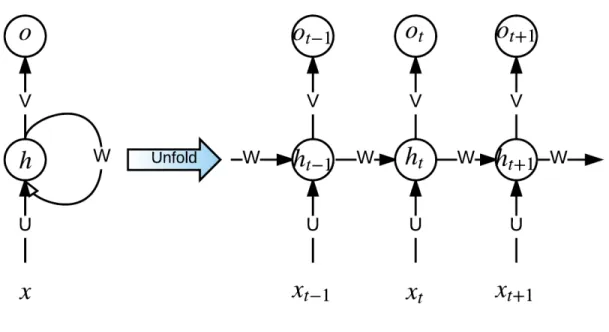
2.4 A recurrent neural network model (left) with its unfolding illustration in the process of forward computation (right). Adapted according to LeCun et al. [3]. . . 31
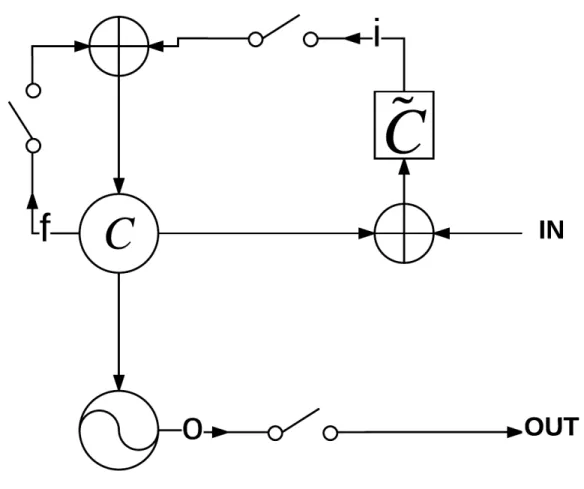
2.5 An illustration of an LSTM module. i, f and o are the input, forget and output gates, respectively. The variables c and ˜c demote the memory cell and the new memory cell content, respectively. Adapted from Chung et al. [4]. . . 32
3.1 Summary of experiments in Homan et al. [5]. Twitter data are labeled by annotators with different expertise and then used to build SVM classifiers. . . 35
3.2 Example input for annotator. Each line is one tweet. The target tweet being anno-tated is indicated by >>>. . . 37
3.3 Distribution of distress level annotations from Novice 1 and Expert. Note that these two datasets are disjoint (N = 1000 tweets, respectively). . . 39
3.4 Distribution of distress level annotations on the tweets annotated by Novices 1 and 2 (N=250, identical set). . . 40
3.5 Summary of experiments in [6]. . . 43
3.6 Comparisons between R1S and R2U. . . 48
3.7 Comparisons between two expert annotators in Round 2. . . 49
3.8 Learning curves for models C1 toC5 during the training process. Y axis represents area under the ROC curve. Dashed lines with circle markers represent training scores for each model, abbreviated as T in legend box. Solid lines with square markers represent cross-validation scores, noted as CV. C1: blue; C2: green; C3: cyan; C4: red; and C5: yellow. . . 51
3.9 Comparisons of performance metrics for C1 toC5. . . 52
3.11 Our humans-in-the-loop framework collects labeled data by alternating between hu-man annotation and automatic prediction over multiple rounds. Each diamond rep-resents an automatic classifier (C), and each trapezoid represents human annotations (R). Each classifier filters and provides machine-predicted labels to tweets that are published to human annotators in the following annotation round. The human-labeled tweets are then used as training data for the next learning round. We use two types of classifiers: rule-based classifiers (C0 and C4) and support vector ma-chines (C1,C2,C3 and C5). This framework serves to reduce the amount of human effort needed to acquire large amounts of high-quality labeled data. . . 56
4.1 Each histogram above represents the label distribution of a lone data item in the jobQ3MT+ data set. The X-axis ranges from 1 to 12, matching the Q3 choices in Example 4.3.1. The Y-axis denotes the label counts. Similar distributions are grouped by color: 1-8 red, 9-11 cyan, 12-18 brown, 19-21 green, 22-32 blue, 33-41 orange, and 42-50 purple. . . 72 4.2 The job status cycle, plus example tweets. . . 78 4.3 Our experiment workflow involves obtaining crowdsourced labels for raw data
(yield-ing empirical label distributions for each data item), try(yield-ing various unsupervised strategies for aggregating those labels, and finally testing how each approach affects the efficiency of supervised learning prediction. Note there are two testing phases: one for how well each aggregation strategy fits the data and one for supervised learn-ing performance. We also list key terms, keywords, and abbreviations associated with each phase of the workflow. . . 82
5.1 Illustration of our humans-in-the-loop active learning framework to progressively learn the accurate distribution of label probabilities. DU on the top row denotes the unlabeled data pool, which is consumed gradually (t, t+1, t+2, t+3, . . .) (represented as from dark blue to light blue along the time line). The probabilistic distribution of labels of the tweets (bars on the bottom row) in the validation set are updated after each round of model training—bars with darker shade indicates more accurate class probability estimation. At each time stept, we aim to exploit the current model (θt)
predictions to intelligently query the estimated most informative samples from DtU and then train a new model att+1 with new labels collected from human annotators (represented as trapezoids). . . 94
2.1 The notation used in Section 2. . . 12
3.1 Summary statistics and thematic category distributions of the collected dataset. The Twitter data were collected from NYC, obtained from [8]. The categories are based on LIWC [9] and Jashinsky et al. [10]. . . 36
3.2 Distress-related categories used to annotate the tweets. . . 38
3.3 Cohen’s kappa inter-annotator agreement between Novice 1 and 2. . . 38
3.4 Confusion Matrix for LIWC for Novice 1 and 2. . . 39
3.5 Confusion Matrix for Thematic Category for Novice 1 and 2. . . 40
3.6 Confusion Matrix for 250 tweets for Novice 1 and 2. . . 41
3.7 Performance of SVM-based classification when the training and testing sets are alter-nately Novice 1 (N1) or the Expert (E). Because we are most interested in detecting distress, we report precision and recall for the distress class, which combined LD and HD into a single D label in the binary classification task. . . 42
3.8 Statistics of labels obtained from different methods of annotations. R1: Crowd-sourced annotations. R2: Expert annotations. S: Each tweet label comes from the system aggregated majority vote rules. U: Each tweet label is the unanimously voted choice among five annotators. +: Union operation to combine elements in different sets. Total: The actual counts of tweets. . . 47
3.9 Statistics of features from different sources of annotations, to train modelsC1 toC5.
Uni, Bi, and Tri denote unigrams, bigrams and trigrams respectively. . . 50
3.10 Summary of crowdsourced annotations (R1, R2 and R4). . . 55
3.11 Inter-annotator agreement performance for our three rounds of crowdsourced anno-tations (R1, R2 and R4). Average ± stdev agreements are Good, Very Good and Moderate [11], respectively. . . 57
3.12 Summary of R3 community-based reviewed-and-corrected annotations. . . 58
3.13 Summary of combinations of annotated data to train different SVM classifiers. +: Union operation to combine data items into an united set. . . 58
3.14 The lexicons used byC0 to extract thejob-likely set. . . 59
3.15 Summary of annotations in R2 (showing when 3 / 4 / 5 of 5 annotators agreed). . . 61
3.16 Inter-annotator agreement combinations and sample tweets. Y representsjob-related and N represents job-related. . . 62
3.17 Crowdsourced validations of samples identified by modelsC0,C1,C2 and C3. . . 63
3.18 Performances ofC5. . . 64
3.19 Top 15 features for both classes of C5. . . 65
3.20 Crowdsourced validations of samples identified by models C0, C1, C2, C3 and C5, with the best model highlighted in red. . . 66
3.21 Estimated effective recalls for different trained models (C1,C2,C3andC5) to identify job-related tweets in real world settings. . . 67
3.22 Counts of tweets containing the queried hashtags only, and their subsets of tweets with URL embedded. . . 67
3.23 Evaluation of heuristics to determine the type of accounts (personal vs. business), job-related tweets sampled by different models in Table 3.17. . . 68
4.1 Basic properties of our crowdsourced label sets. For the job-related data set with three questionsjobQ1/2/3,FE andMT represent the labels from the platforms Fig-ure Eight and Amazon Mechanical Turk, respectively. jobQ1/2/3BOTH integrates labels from both FE and MT sources into one set. jobQ1/2/3MT+ denote the addi-tional MT labels used in one experiment setting (deep split). Densityis the average number of labels per data item. MVTD (majority-voted-true-class deviation) and
RMSD (root-mean-square deviation) describe inter-rater reliability across all the tasks and estimate the variety and divergence of human labels in different label sets, motivated by the literature on scale and outlier description [12, 13, 14]. MVTD is the average deviation of the majority-voted label over all data items: MVTD = 1−Pn
i=1maxj{yˆij}/n. RMSD is the L2 deviation from the average label distribu-tion: RMSD =Pn
i=1
p
(ˆyi−y)T(ˆyi−y)/n, whereyis the average label distribution
over all data. . . 76 4.2 The optimal label aggregation models on each label set using two splits (Broad and
Deep) are achieved with the presented number of clusters (p). . . 83 4.3 KL divergence based on the chosen label clustering models in Table 4.2. Average and
standard deviation are based on the KL divergence scores of the gray-highlighted rows (jobQ1BOTH, jobQ2BOTH, jobQ3BOTH and Suicide). The lowest KL is highlighted in yellow for each split. . . 84 4.4 Counts of worker-item pairs, grouped by #labels per worker per data item. . . 85 4.5 Entropy gap obtained between the optimal label aggregation model and text-based
clustering on each dataset using two splits. “EG”: Normalized entropy gap (i.e., the average entropy gap per data item). Average and standard deviation are based on the EG scores of the gray-highlighted rows (jobQ1BOTH, jobQ2BOTH, jobQ3BOTH and Suicide). The lowest EG is highlighted in yellow for each split. . . 86 4.6 KL divergence obtained between the optimal label aggregation model and text-based
clustering on each dataset using two splits. Average and standard deviation are based on the EG scores of the gray-highlighted rows (jobQ1BOTH, jobQ2BOTH, jobQ3BOTH and Suicide). The lowest KL is highlighted in yellow for each split. . . 87 4.7 KL divergence and accuracy of theBroadsplit. Average and standard deviation are
based on the gray-highlighted rows (jobQ1BOTH, jobQ2BOTH, jobQ3BOTH and Suicide). The lowest KL andhighest accuracy are highlighted in yellow. . . 88
4.8 KL divergence and accuracy of the Deepsplit. Average and standard deviation are based on the gray-highlighted rows (jobQ1BOTH, jobQ2BOTH, and jobQ3BOTH). The lowest KL andhighest accuracy are highlighted in yellow. . . 89
Introduction
Social media are, among other things, venues for the (semi-)public disclosure of personal information that allow individuals to broadcast themselves, record events (significant or otherwise) in their lives, and express opinions and emotions whenever and wherever possible. This mixture of detail and scale in textual, temporal, and geo-spatial information that they provide is unprecedented and contributes significantly to an emerging research area,computational social science [15].
Due to greater activity on social media now more than ever [16], any understanding of personal or public behavioral patterns or health issues must take people’s online activities into account. Personal narratives in social media can reflect an individual’s experiences, states of mind, and behavioral patterns. Thus, social media is a prominent source of data on social behaviors at scales ranging from international to personal. More importantly, social media is rife with subjective domains, i.e., situations where the “best” answers to specific questions depend heavily on whom is asked, and there is no gold standard or ground truth data. For instance, taste and pain are both subjective in the sense that no authoritative or consensus-based scale exists to measure either. Many real-world problems could have different reasonable and acceptable answers, depending on whom is asked, even when the domain of answers is fixed (i.e., closed domain) or more than one answer is allowed (i.e.,a multilabel setting). For instance, events that are ordinary or unmemorable to most people can trigger intense reactions from those who have post-traumatic stress disorder (PTSD).
Subjective information is prevalent in social media: people discuss the same topic in different ways, thus greatly increasing the difficulty of computational modeling and understanding. In the
meantime, the benefits of data richness provided by social media motivate us to build computational models that are capable of extracting salient information from semi-structured, noisy social media data and generating fine-grained structured descriptions to overcome the problem of information overload [17] and facilitate downstream applications in various settings.
A typical machine learning goal is to map each given data item to a single (or set of, but in any case, deterministic) label(s) according to some standard of ground truth. However, in the cases discussed above, a single (set of) label(s) cannot meaningfully solve the problem, or may hide important dissenting beliefs or opinions. The impact of AI agents failing to recognize diversity in a representative fashion ranges from banal to harmful on a societal level. We have read several failure stories. For example, in 2016, contestants from over 100 countries from around the world submitted images of themselves to Beauty.ai’s website, and their proprietary deep learning agent, trained on publicly available facial images, chose winners in 44 different beauty pageant categories [18]. The algorithm, perhaps due to biases in the trained data, showed strong signs of racial bias: 37 of the winners had distinctly European facial features [18]. Microsoft built a Twitter bot called Tay that was supposed to learn new language skills, but it had to be shut down soon after launch because it learned to deny the holocaust and demonize feminism [19]. ProPublica reported that Northpointe risk assessment software, used by judges in Florida to help determine incarceration lengths, systematically assigned higher risk scores to black defendants than to white ones [20].
Label distribution learning (LDL) replaces the conventional goal of predicting, for each data item, a single (set of) label(s) with the more challenging and complex task of predicting a probability distribution (known as alabel distribution) over the label choices [21]. A growing body of work has used this approach, e.g., to predict beauty in images [20] and rate movies [22]. Until now, prior work has focused broadly on the problems that distinguish LDL from other forms of probabilistic learning. There is also evidence that, even in situations where ground truth exists but is difficult to obtain, predicting label distributions is more informative and accurate than aggregating the opinions of multiple labelers into a single (set of) discrete choice(s) [23]. We focus on population-based LDL (PLDL), the special case of when the learning goal is to predict the distribution of beliefs in a population of human annotators about the best label(s) to associate with each data item.
A major resource bottleneck in PLDL is the number of human annotations needed to achieve a reliable learning outcome. For any large population of labelers, any individual data itemx, and any multiple-choice question posed ofx to the labelers, the numbermof labels needed to estimate (i.e., taken as a sample of) the underlying population’s true distribution of beliefs aboutxis rather large,
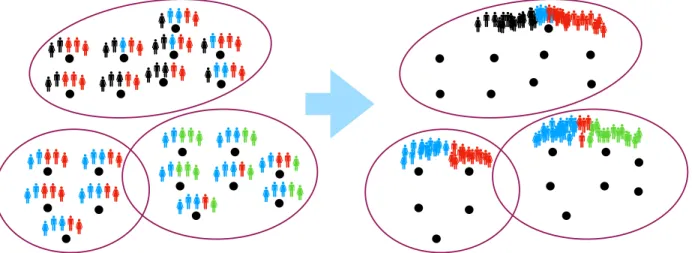
Figure 1.1: The main algorithmic idea this thesis work explores. The black dots represent data items. (Left:) Five labelers annotate each data item, where the color of the person indicates the label that person chose. If we view these five labels as a sample of the underlying population’s beliefs, the sample size is probably too small for there to be much confidence in the population-level result. (Right:) We cluster together (indicated by the circles) similar rater response items, and then pool together all the labels in each cluster into a single, larger sample which, according to our learning strategy, is a good representation of—and thus label distribution for—the population-level beliefs about each item in the cluster.
depending on the size of the label space and desired confidence/significance level. Meanwhile, the number of data itemsnneeded for supervised learning usually runs into the thousands. Thus, taken independently, the total numberm×nof human labels required for training on label distributions grows quadratically and can easily run into the millions.
In this thesis work, we contribute a new algorithmic framework for reducing the total number of human labels needed per data item, by pooling together the labels of data items determined by clustering in the space of label distributions to be similarly rated with similar semantics. Figure 1.1 illustrates the main idea behind this approach.
1.1
Main Challenges
We face a series of social and technical challenges in developing our algorithmic solution to solve the population-based label distribution learning problems based on social media data. They are summarized as:
1.1.1 Subjectivity
Social media records individual feelings, desires, perspectives, judgments, perceptions, understand-ings, beliefs, and so on. All of these can be described assubjective, a word that is commonly used to explain various factors that have influences, impacts, or biases on people’s reactions and opinions about facts or realities [24]. People with diverse life experiences may describe the same event or topic in entirely different and maybe contrary ways.
We have to deal with these subjective varieties when extracting and studying personal narratives on specific topics from social media (compared to the tasks like news and public event extractions that mainly focus on facts or truths). Subjectivity poses such a challenge to us because there is no best or correct label in subjective domains. There might be more than one acceptable solution or answer to this type of problem, or answers are judged by their acceptability rather than correctness [25]. Subjectivity comes from not only different user-generated messages themselves but also in how different readers/annotators with diverse backgrounds, perspectives, and opinions interpret these messages. To obtain high-quality annotations for further modeling and evaluation, we must deal with annotators’ subjective judgments.
1.1.2 Problems without Ground Truth
When we seek to model and understand a specific social issue computationally, another obvious challenge is the lack of unambiguous and accurate definitions of the topic, i.e., there is no ground truth or gold standard available for modeling real-world problems concretely. We often have little or no authoritative datasets with which to seed, boost, validate, or evaluate our machine learn-ing process and outcome. It proves dauntlearn-ing to derive the ‘ground truth’ underlylearn-ing subjective assessments of problems such as similarities among artists’ styles [26].
1.1.3 Informal Language
The language used in public social media is more informal than that of newspapers, books, forums, or blogs. Users of social media like Twitter frequently write short or incomplete phrases and use creative spellings and non-standard grammar in their tweets. Such inherent linguistic noisiness poses a significant challenge to modeling the narratives.
1.1.4 Data Scarcity
Another challenge is that any particular topic of interest may represent only a tiny fraction of total texts exchanged in any social media. Machine learning classifiers tend to perform poorly when suffering from scarcity and class-imbalance of data.
Problem Statement
Different from uncertainty, subjectivity does not assume that a data point must have a true label, even it may be just difficult or impossible to obtain. This distinction makes many probabilistic machine learning strategies inappropriate because their assumptions and designs are typically based on uncertainty measures. This distinction also has impacts on the choice of objective/loss function and evaluation metric that would be used in these modeling problems.
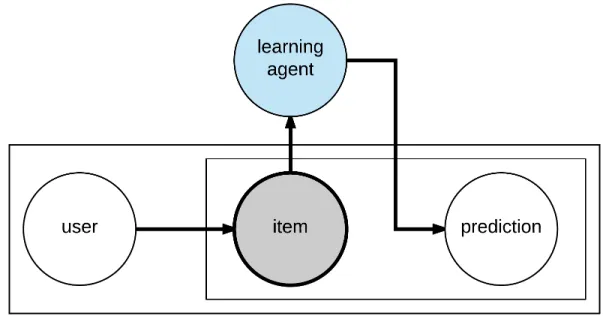
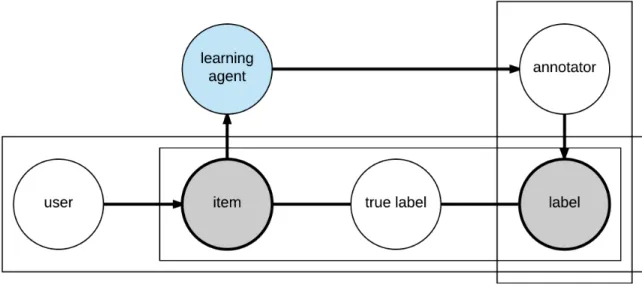
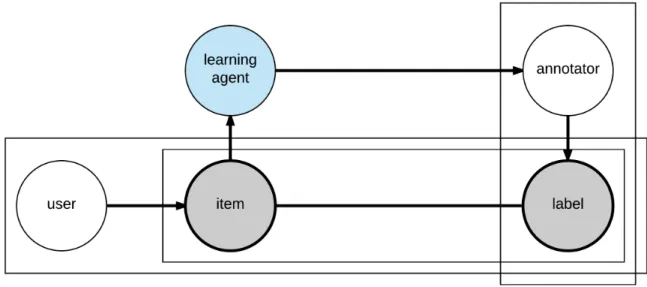
Our work approaches the challenges summarized above with a humans-in-the-loop label distribu-tion learning framework, in which we develop annotadistribu-tion schemes to select samples for manual annotation, summarize and infer labels with probabilities from multiple annotators having various knowledge levels and opinion diversities, and develop unsupervised and supervised models to pre-dict population-level label distributions. We collected datasets and human annotations covering different problem domains to evaluate the effectiveness and generalizability of this framework. Figures 1.2—1.4 show the main differences between our approach and conventional supervised learning scenarios. Figure 1.2 shows the simplified relationship between a learning agent and a data item. Each item (such as a car) has observable features, and the agent’s goal is to learn to predict the label of new unseen data items based on a set of labeled data. Sometimes (such as in open domain settings [27]), there is uncertainty about the labels. Figure 1.3 shows a setting where human annotators provide labels. Here, in addition to uncertainty, there may also be disagreement among the annotators as to the correct label. Nonetheless, we assume that each item has a true, gold-standard, ground-truth label. Figure 1.4 shows our setting, where there is no true hidden label (though there may be other hidden states), and the annotators’ labels are a sample of the human population’s interpretation of the data item. In this case, noise may be present, as before. However, the labels themselves are additional variables whose distributions depend on whom is asked, and the goal becomes to learn these underlying distributions.
Figure 1.2: A conventional learning agent and data item. The shaded circle indicates that the data item has an observable state. The rectangles represent multivariate containments, i.e., the learning agent is dealing with multiple users, items, and predictions. Each user contributes labels to numerous items.
1.2
Thesis Contributions
This thesis makes the following contributions to human-assisted machine learning and computa-tional social science:
1. It introduces a human-in-the-loop active learning framework that integrates the human anno-tations, label determinations, model training, updating and testing that progressively improve the learning performance.
2. It provides an extensible solution to solve problems like extracting complex subjective topics from massive noisy social media in a cost-effective manner. In application domains, we study the work and employment in-depth in the context of Twitter and expand to other topics. 3. It establishes the premise for our probabilistic approach through a real-world example where
there is substantial disagreement over the annotators’ interpretations of 50 data items in a common social domain, but where the label distributions appear visually in a histogram to
Figure 1.3: A standard learning problem. The item and label with shaded circles indicate observable conditions. Each item is assumed to have a true label, which may be different from the annotation labels.
cluster into a limited number of distinct classes.
4. It introduces an algorithmic framework for label distribution learning on as few as five-to-ten labels per data item that involves an unsupervised learning phase to yield hidden classes of semantically-related data items and assigns to each class an aggregated label distribution, followed by a supervised learning phase based on the labels the unsupervised phase produces. 5. It shows that, for larger label spaces, predictions based on unsupervised learning models that use our clustering strategy outperform those that do not, thus providing supervised learning validation for our approach.
6. Our analysis is performed on natural language data. This is among the first explorations of LDL on linguistic data from social media [28].
1.3
Thesis Outline
We organize the rest of this thesis as follows: Chapter 2 introduces the background and related work about human computation with crowdsourcing, active learning with humans in the loop,
Figure 1.4: Our problem model in which there is no true label for the item. The crowdsourced labels from annotators are assumed to represent the interpretation of broad populations.
label distribution, and multilabel learning. Chapter 3 reviews our previous research about text classification of social media data built with crowdsourcing techniques. And it contains our research on comparing and combining non-expert and expert annotations in different experimental settings and introduces a humans-in-the-loop active learning framework we developed to understand social issues like work and employment. Chapter 4 introduces our label distribution learning approaches for tackling subjectivity and presents a series of experiments for evaluating our proposed learning framework. It introduces our annotation schemes for collecting labels from multiple annotators and new metrics to monitor and measure learning performance. Chapter 5 continues to discuss future work. Finally, Chapter 6 concludes our work and contributions.
Background and Related Work
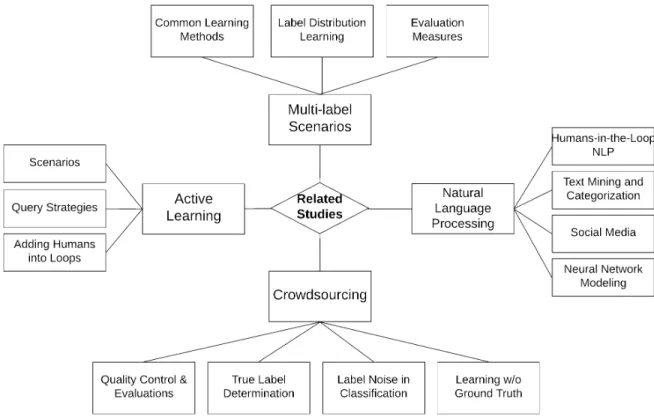
Figure 2.1: A diagram showing how different pieces of background and previous work are organized and related.
2.1
Crowdsourcing
According to Daren Brabham [29],
Crowdsourcing is a type of participative online activity in which an individual, an in-stitution, a non-profit organization, or company proposes to a group of individuals of varying knowledge, heterogeneity, and number, via a flexible open call, the voluntary undertaking of a task. The undertaking of the task, of variable complexity and modular-ity, and in which the crowd should participate bringing their work, money, knowledge, and/or experience, always entails mutual benefit. The user will receive the satisfac-tion of a given type of need, be it economic, social recognisatisfac-tion, self-esteem, or the development of individual skills, while the crowdsourcer will obtain and utilize to their advantage what the user has brought to the venture, whose form will depend on the type of activity undertaken.
Crowdsourcing is a common way for obtaining labels for supervised learning. Through a clever use of online annotation games, von Ahn pioneered the idea of crowdsourcing to collect annotations of images [30] and word relations [31]. The fast growth of crowdsourcing techniques has made the collection of large numbers of human labels much easier than before: a global base of paid workers (mostly non-experts) on various web crowdsourcing platforms can be employed to complete annotation tasks in a significantly cheaper and faster way than having experts annotate at the same scale.
Amazon Mechanical Turk (AMT), as representative of a global crowdsourcing platform, has been widely used to collect annotations. AMT is an online labor market where workers get paid (usu-ally a small amount of money) to complete given tasks from requesters. Requesters and workers (some terms called as Turkers) must first create an Amazon account. Requesters publish tasks to workers in the form ofhuman intelligence tasks (HITs) that contain an arbitrary number of tasks. Requesters can specify the number of submissions from unique workers (identified by IDs) per HIT and set up payment and reward criteria. AMT allows requesters to choose particular workers that satisfy pre-defined qualifications to work on their HITs, for example: living in a specific country or having a minimum level of experience with sufficient accepted submissions in the past. Re-questers decide to approve or reject submissions from workers, and Amazon handles the payment transactions. In recent years, a variety of crowdsourcing platforms with advanced features and user-friendly interfaces have launched [32].
Snow et al. [33] investigated the effectiveness and reliability of Amazon Mechanical Turk on a variety of natural language annotation tasks (affect recognition, word similarity, textual entailment recog-nition, event temporal ordering, and word sense disambiguation). They collected ten independent annotations for each item in the task and found that obtaining labels from multiple non-experts could improve the data quality and reach high agreements with existing gold-standard labels pro-vided by experts. They suggested that individual labelers (including experts) tend to have a bias (which our research [5] confirmed). They also suggested that multiple annotators may contribute to diversity, thus reducing annotation bias and noise and helping produce gold-standard quality training sets (i.e, by taking for each data item the average of multiple non-experts converges on the performance of a single expert). Callison-Burch [34] and Denkowski et al. [35] extended this series of linguistic experiments to evaluate machine translation quality and confirmed the feasibility of using AMT in complex tasks. In Callison-Burch’s work [34], crowdsourcing workers rank candidate choices in order of preference (i.e., preference ranking) and then an overall ordering of labels is computed [36]. AMT has also been widely used to obtain transcriptions of speech [37, 38], create taxonomies [39], disambiguate word senses [40, 41], and so on.
2.1.1 Quality Control and Evaluations
The annotations collected from multiple crowdworkers are inevitably noisy, because the workers may not have specific expertise in, or may not pay full attention to, their given annotation tasks due to distraction or exhaustion, or have a poor understanding of the task that they have been asked to perform. Obtaining high-quality annotations is fundamentally important, as machine learning algorithms rely on annotated data (and labels). We discuss previous research on assuring the quality of crowdsourced annotations.
For consistency and readability purpose, Table 2.1 lists the notations used in Section 2.
Snow et al. [33] proposed methods for collecting reliable annotations from multiple annotators. They recommended hiring more workers—if budget allows—to “average out” noise or bias, and to utilize the crowdsourcing platform’s compensation mechanism to collect higher-quality contribu-tions. Also, they suggested requesting annotations only from workers with high scores1 because they are assumed to be more reliable than those with low scores.
Besides these suggestions, Snow et al. proposed to jointly model labels and workers in order to correct for the biases of non-expert annotators [33]. Suppose the data item x has a true label
1
N number of data items zi (hidden) true label forxi
yik label forxi provided by the annotator k
y set of multiple annotations K number of annotators
πk quality of label provided by the annotator k
π overall annotators’ quality/reliability,π ={πk}Kk=1 ζ priors onzi
Table 2.1: The notation used in Section 2.
z∈ {A, B}(we use a binary domain here for demonstration simplicity) and crowdsourced workerk annotatesxasyk(k≤K). Each worker’s judgment is modeled independently of the other workers, given z as: P(y1, y2, . . . , yK, z) = Y k P(yk|z) p(z). (2.1)
Then, multiple annotations are integrated via Bayes rule to infer the posterior log-odds ofz for x as: logP(z=A|y 1, y2, . . . , yK) P(z=B|y1, y2, . . . , yK) =X k logP(y k|z=A) P(yk|z=B) + log P(z=A) P(z=B). (2.2)
According to a worker’s performance on a gold standard set, we can estimate their response likeli-hoods P(yk|z=A) andP(yk|z =B). Thus, Equation 2.2 describes a weighted voting rule based on the log likelihood ratios of workers’ responses and suggests an approach for examining accuracy and reliability on annotation tasks.
2.1.2 True Label Determination
It is usually assumed that there exists a true (ground truth) label for each data point that can be determined from multiple annotations using established methods.
One straightforward approach is to take only the unanimous vote among multiple annotators as the single ground truth label for each data item. Setting restrictions to unanimous vote can
guarantee the quality of the final label since it achieves the highest inter-annotator agreement, especially when the number of annotators is large. However, it is not always easy for multiple annotators to reach an agreement, as we observed in a multiple-choice questions setting [6], and samples that have not been unanimously annotated became unusable.
An alternative strategy is to take the plurality vote of multiple annotations as ground truth. However, this approach has the problem that it assumes all the annotators are equally reliable and qualified in making judgments, which is not true in practice. Simply taking the majority vote could neglect minority opinions and skew the true label due to annotators’ various knowledge levels and skill sets.
There exist a few sophisticated methods studied for inferring the true label from multiple annota-tions for data. Dawid and Skene [1] developed a probabilistic model to learn the weight of each annotation, as illustrated in Figure 2.2, where the (hidden) true label zi (i∈ N) and the
annota-tion qualityπk jointly determines the observed labelyki provided by the annotatork(k≤K). The
quality of labelπk can be learned using EM [1], and then applied to infer the “true” labels.
Figure 2.2: Plate notation of Dawid and Skene’s model [1].
Another model for learning from multiple annotators was introduced by Welinder and Perona [2] (Figure 2.3). For a data item xi (i∈ {1, . . . , N}), the observed labelyik is determined by both the
Figure 2.3: Plate notation of Welinder and Perona’s model [2].
(hidden) true label zi (parameterized by ζ) and the annotation quality πk. The joint probability
distribution of annotation process is calculated as: p(y, z, π) = N Y i=1 p(zi|ζ) K Y k=1 p(πk|π) Y yik∈y p(yik|zi, πk). (2.3)
Welinder and Perona’s method can jointly estimate how reliable a particular label is and how well annotators perform. Therefore, this model can be used to validate the feasibility of our crowdsourcing annotation schemes and simultaneously evaluate the participants quantitatively.
2.1.3 Label Noise in Classification
Label noise is ubiquitous in real-world datasets and practical machine learning problems, especially those powered by multiple non-expert annotators with crowdsourcing techniques. Previous studies have various descriptions about noise: Hickey [42] defined noise as “anything which obscures the relationship between description and class.” Quinlan [43] defined noise as non-systematic errors. Considering the many potential negative consequences of label noise, much prior research has focused on the study of label noise and solutions to eliminate it or reduce its impact.
features of data items, and (2) class noise, which alters the observed labels [43, 44]. It is important to note that class noise (label noise) only affects the observed label of an instance, not its true class. Class noise is empirically shown to be more harmful than feature noise [44, 45], which can be explained by the fact that, for each instance, it is assumed there exists one observed label and multiple features. If the label is incorrectly introduced with significant class noise, the learning process would be distorted, even if the feature sets are perfectly without noise.
The observed label often corresponds to the instance’s true label, but it may be subjected to noise [46, 47]. Label noise is commonly considered to be a stochastic and complex process, with independent labeling errors from each labeler [47, 48], but without a fully specified model.
Handling label noise is closely related to outlier detection [49, 50, 51, 52] and anomaly detection [53, 54, 55, 56, 57] because each mislabeled instance usually has a low chance of occurrence, and this looks anomalous to the assigned class. However, label noise does not necessarily equal the other two, such as when the labels are about subjective topics [58] or the instances themselves are simply rare events with confusing features [59].
Potential sources of label noise include: (1) the provided information being insufficient to make reliable judgments [42,60,61]; (2) unreliable annotators making mistakes in the labeling process [42]; (3) the labeling task being subjective and leading to high inter-annotator variability [62, 63, 64, 65, 66]; (4) data encoding errors and communication ambiguities leading to label noise [44, 47, 60]. Among these, the third most closely matches our problem of subjective domains.
There are three common strategies for managing label noise. The first is to employ label noise-robust models, which are not sensitive to and less influenced by the presence of label noise during the learning process [46]. However, this approach does not consider or handle label noise. The second strategy is to improve the quality of training data by cleaning (filtering, relabeling or removing) mislabeled instances in label noise-polluted datasets [46, 67]. The third approach, label noise-tolerant learning algorithms, takes both the classification and the label noise models into consideration simultaneously during learning [46]. Here, the third approach is relevant to our subjectivity problem, though it cannot be directly applied because it assumes there exist single true (best) labels for instances, while we do not hold such assumptions.
Under the third approach, Benoˆıt Fr´enay and Michel Verleysen summarized two families of methods: probabilistic and model-based [46]. Probabilistic methods include Bayesian approaches [68, 69, 70], frequentist methods [51, 71, 72, 73, 74, 75], clustering-based methods [76, 77, 78, 79], and belief functions [80, 81, 82, 83]. Apart from probabilistic methods, many previous studies proposed label
noise-tolerant variants of popular machine learning models and algorithms, such as: SVMs with robust loss functions [84,85,86,87,88], neural networks [89,90,91,92,93], decision trees [94], boosting methods [95, 96, 97, 98, 99, 100, 101, 102], and semisupervised learning approaches [103, 104, 105, 106, 107, 108].
A number of researchers have exploredclusteringamong related data items to improve the quality of inferring ground-truth labels. For instance, Zhang et al. [109] introduced a new approach, what they call ground truth inference using clustering, to better integrate labels for multi-class labeling tasks. They showed that clustering-based latent classes, compared to existing multi-class ground truth inference algorithms (majority voting, Dawid & Skene’s, ZenCrowd and Spectral DS), better estimate the semantics of the data items in their comparative experiments, thus providing empirical support for a family of clustering approaches in the context of supervised learning, (which they did not study in the same work). McCallum [110] studied clustering in a semi-supervised learning context: they described a Bayesian approach to infer the distribution over mixture weights and the word distributions for documents. In both studies, clustering is performed in feature space as part of the learning process.
2.1.4 Learning without Ground Truth
Crowdsourcing facilitates the process of collecting labels from multiple annotators. Even after applying quality control and label inference approaches and canceling out label noises, there is still an underlying assumption that a (set of) correct answer(s) exists in solving these (supervised) machine learning problems. However, it is infeasible to obtain (or get access to) objective ground truth (gold standard) or indirect to confirm the ground truth for real-world problems in many scenarios.
For example, in the medical domain of cancer diagnosis, multiple radiologists may visually exam-ine medical images (from X-ray, CT scan or MRI) and provide their subjective judgments about whether some regions are cancerous or not. One way to approach the ground truth is a biopsy of the patient’s tissue, in which process it might not be cheap, safe or noninvasive. Under this circumstance, Raykar et al. [111] introduced a probabilistic supervised learning approach for train-ing computer-aided diagnosis (CAD) classifiers without objective gold standards. They presented a solution that jointly learns a binary classifier, the annotator’s reliabilities, and the actual true labels [111]. They measured annotator performance using sensitivity and specificity with respect to an unknown gold standard [111]. They presented a two-coin model (with priors to capture different skill levels) for the annotators to derive maximum-a-posterior (MAP) estimates of their
reliabili-ties. They then presented a maximum likelihood learner using the expectation maximization (EM) algorithm to iteratively estimate the posterior probabilities of ground truth labels, measure anno-tator performance, and update estimates of ground truth labels. Raykar et al. [111] discussed the extensibility of their algorithm to multi-class, ranking, and regression problems.
Aroyo and Welty show in a semantic parsing task that crowdworkers can perform at a level compa-rable to domain experts when they agree with each other. When crowdworkers have disagreement, it is often for good reason, and in fact usually more desirable than collapsing an item’s annotations to a single label [112]. Schaekermann et al. [113] describe a framework for identifying unresolvable annotator disagreement. Chen et al. [114] argue persuasively that to a wide spectrum of social scientists the volume of unstructured data available for qualitative analysis generated by social media is so great that automated methods like machine learning are needed to keep up. They also argue that preserving annotator disagreement is essential to applying qualitative methodologies like grounded theory at scale.
In active learning scenarios, there is an increasing volume of research in recent years on multiple annotators (with varying expertise). Yan et al. [115] presented a probabilistic multi-labeler model in active learning loops to query the most helpful samples and, simultaneously, annotators. They modeled the observed labels for the data items by assuming two types (Gaussian and Bernoulli) of distributions based on varying reliabilities for labelers. They used a (multinomial) logistic regression model for true unknown labels in classification problems. Similar to the approach reported by Raykar et al. [111], Yan et al. [115] employed EM algorithm to calculate estimations and solved an opimization problem to achieve the joint learning goals. They applied the uncertainty sampling query strategy to select data points that have 50% accuracy in a binary scenario and calculated a template for the samples to be queried. They chose annotators whose labels had the highest confidence ratings. In a similar setting, Krempl et al. [116] presented a probabilistic active learning approach that models the true label and posterior for the query candidate. For each candidate, the expected gain in classification performance from requesting its label is calculated. Its posterior (of the positive class) is estimated based on its labeled neighborhood candidates. The candidate is then queried if its expected gain falls under the overall expected performance gain. Krempl et al. claim that their probabilistic active learning algorithm is statistically optimal in achieving density-weighted probabilistic gain in both disjoint and continuous neighborhood settings. Using their approach, querying candidates from the pool is a linear time (with respect to the size of the data pool) operation [116].
2.2
Multi-label Scenarios
When we attempt to solve subjectivity problems using machine learning, we need to account for multiple labels with probabilistic distributions for each data item. Thus, it is necessary to under-stand recent research in multi-label learning.
2.2.1 Common Learning Methods
Multi-label learning usually refers to either multi-label classification or multi-label ranking depend-ing on the learndepend-ing goal [117]. Multi-label classification can be described as the learndepend-ing task that maps a data item x ∈ U (U represents the universe of data items) to more than one label (It is assumed that there exists a predefined set of labels where these multiple labels belong). Compared to the common multi-class classification problems that assume the ground truth label for each single data item is mutually exclusive, multi-label classification holds the assumption that each data item can belong to multiple classes, instead of one and only one class in multi-class classification [117]. Multi-label ranking introduces the learning task to predict the rankings of all labels, beyond the multi-label classification task that distinguishes the relevant labels from irrelevant ones [118]. Multi-label data and learning problems have attracted significant attention from academic and industrial communities and witnessed many approaches proposed and developed in recent years. Madjarov et al. [117] presented a comprehensive overview of methods for multi-label learning. They extended their previous summary [119] and summarized the methods for multi-label learning, dividing them into three categories: algorithm adaptation, problem transformation and ensemble methods [117].
The algorithm adaptation methods include adapting, extending or customizing existing machine learning algorithms for multi-label learning tasks [117], including: boosting [120, 121], k-nearest neighbors (k-NN) [122, 123, 124, 125], decision trees [126, 127], support vector machines [128], and neural networks [129].
Problem transformation methods, as the name implies, transform multi-label learning problems into single-label problems that can be solved using common machine learning algorithms [117]. Madjarov et al. grouped these problem transformation methods into three types: binary relevance, label power-set, and pair-wise methods [117]. The simplest strategy—binary relevance—converts a multi-label classification problem into a series of binary classification problems, based on the one-against-all strategy [119]. An alternative binary relevance approach is the classifier chain
method [130], which links a chain of binary classifiers. Godbole et al. [131] adapted SVM binary classifiers to multi-label learning by extending the training set and improving the class margins in forming the separating hyperplane. Label power-set methods (or label combination methods) are the second problem transformation type [119, 132, 133]. They form a single-label problem by combining the original possible label subsets into atomic (single) labels [132, 133, 134]. HOMER, a variant of label power-set methods, can learn classifiers from a hierarchical set of labels [135]. The third problem transformation type are pair-wise methods: all labels are paired with binary classifiers which can vote for the relevant labels for each data item in the multi-label learning problem [136, 137, 138, 139].
Based on the state of the art algorithm and problem transformation methods, researchers developed ensemble methods for multi-label learning. Tsomakas et al. utilized the label power-set method with a small random subset of labels to build classifiers [132]. Read et al. improved the computational efficiency of label power-set methods using the ensembles of pruned sets [133]. They also developed classifier chains methods to predict labels [130]. Kocev applied predictive clustering trees in the form of ensembles to make multi-label predictions [140].
2.2.2 Label Distribution Learning
Each data item is associated with multiple labels in multilabel learning [141]. However, it does not typically distinguish between multiplicity due to disagreement (where different annotators might believe that only one label is correct, but disagree on which one), ambiguity (where an annotator might believe multiple labels are valid), or uncertainty. Such distinctions may have significant so-cial impacts, espeso-cially when disagreements fall along cruso-cial demographic boundaries or indicate important but opposing perspectives that should be preserved in machine learning predictive mod-els. Moreover, there are settings where label distributions are important but multilabel approaches do not naturally apply, such as when the prediction domain is ordinal (e.g., Likert-scaled) or real-valued. We are interested in capturing the diversity of beliefs across a population, where each member of the population may only associate a data item with one (set of) label(s), but different people may disagree on which ones.
Learning over probability distributions has a long history [1, 142, 143, 144]. While label distribution learning (LDL) adopts many of the same algorithmic approaches from this body of work it differs from conventional learning (a) in conventional probabilistic learning probability is used to model uncertainty; in LDL probabilities model ground truth. Thus (b) while conventional probabilistic learning evaluates performance in terms of accuracy, precision, and recall (even though probabilistic
measures may be used as loss functions during training) etc., in LDL performance is measured in terms of functions, such as Kullback-Leibler (KL) divergence, that operate directly on probabilities. Geng pioneered the systematic study of label distribution learning [21], where the objects to be predicted are probability distributions over labels/classes. He and colleagues studied applications of LDL in many settings, some of which are related to predicting population-level distributions [20, 22, 23] while others are not [145, 146]. Nearly contemporary work to ours has extended the maximum entropy models in [21] to account for covariance in the label distribution space [147]. Several of these studies acknowledge the difficulty of obtaining valid label distributions that rep-resent the underlying beliefs of human annotators; in fact, most of them are based on data and labels that were originally collected for the purpose of conventional (i.e., non-probabilistic labels) supervised learning problems. This line of research has thus far assumed that the label distributions obtained are ground truth, i.e., without questioning the statistical validity of the data, even though the sample size of the labels for each item is small.
2.2.3 Evaluation Measures
In contrast to the classical single-label learning problem, multi-label learning demands different performance evaluation measures due to the additional degrees of freedom associated with the multiple-label setting [117].
There are mainly two categories of measures for evaluating the performance of multi-label learning systems: bipartition andrank-based measures [117, 148].
For the bipartition-based measures, the differences between the predicted labels and the ground truth labels are calculated, based on either examples or labels over the test set [117]. Common example-based evaluation measures used in the multi-label experiments include hamming loss, accuracy, precision, recall, F1 score, and subset accuracy. Micro/macro-precision, micro/macro-recall and micro/macro-F1 score are common label-based evaluation measures [117].
The rank-based measures calculate the differences between the predicted ranking of multiple labels and the ground truth ranking for each example in the test set, using measures such as one-error, coverage, ranking loss, or average precision [117].
2.3
Active Learning
Subjective domains are open, without definite answers or an easy way to obtain representative labeled data. There are sometimes situations—supervised learning on social media data is one such case—where unlabeled data are abundant, but obtaining manual labels is time-consuming, expensive and difficult. In these cases, active learning algorithms can facilitate this process.
The key hypothesis behind active learning is that a machine learning algorithm can achieve better results with lower training costs if the training data are intelligently selected throughout the learning process. Active learning systems ask queries as an intermediate step to overcome the labeling bottleneck, and aim to achieve good performance with a limited amount of labeled data. Queries are usually in the form of unlabeled data instances that request labels from an oracle (such as a human annotator or another computational model/agent) [149].
Let DU
0 denote a pool of unlabeled data items with size |DU0| = n, and let DL0 = ∅ denote the initial empty labeled set. Let DtL and DUt denote the labeled and unlabeled data respectively at time stept. The class of x∈D0U is denoted y∈ {1,· · ·, m}. Sometimes it is helpful to model the data probabilistically. In this case,x(respectively,y) is a random variable representing a data item (respectively, data label). LetP rθ(y =j|x) represent the probability of the sample xbelonging to category j under modelθ.
In terms of Mitchell’s [150] definition of a well-formed machine learning problem, we define active learning for a generic classification task as:
Task function: f : U → {1,· · · , m} where U represents the universe of data items with the corresponding true labels, and{1,· · ·, m} represents theclasses.
Performance metric: Precision, recall, F1-score, etc.
(Active) learning experience: The active learner selects unlabeled samples Xt ⊆ DtU at each
time stept, according to a query strategy Sq, and request labels for each item sampled from
theoracle. After the query and labeling at time stept,DLt+1 =DLt ∪XtandDtU+1=DtU−Xt.
2.3.1 Active Learning Scenarios
Stream-based selective sampling [151, 152] (a.k.a. stream-based/sequential active learning) assumes that the active learner can make decisions about whether or not to request a label for an unlabeled instance when scanning through the data sequentially in real time to get sample at a very low cost. This approach reduces the memory size needed by the learning algorithm by either querying or discarding the current single sample (query strategies will be introduced in the next section), thus making this sampling method more appropriate for settings where memory or computational power may be limited, for example in mobile and embedded devices [149]. Several natural language processing applications have used and studied the stream-based scenario, for example in part-of-speech tagging [153], word sense disambiguation [154], information retrieval [155] and so on.
In pool-based sampling [156], instances to be labeled by the oracle are greedily and selectively queried from a large pool of unlabeled data. Compared to stream-based selective sampling, which samples the data sequentially and individually, pool-based sampling first ranks the entire unlabeled collection according to some informativeness measure before making the selection of the instances for the oracle [149].
Pool-based sampling appears to be the most popular approach and has been used in a wide range of real-world learning settings. In [149], Settles had an overview of the domains and applications where this approach has been used: text classification [156, 157, 158, 159], information extraction [160, 161], image classification and retrieval [162, 163], video classification and retrieval [164, 165], speech recognition [166], cancer diagnosis [167], etc.
There is another less common active learning scenario calledmembership query synthesis[168], in which the active learner may request labels from the oracle after creating (or synthesizing) query instances. This approach typically sends samples that are synthesized in the active learning process to the oracle, instead of using the existing instances in the data pool. This setting is usually efficient and tractable for finite problem domains [169], and can be extended to regression learning tasks like predicting robot hand coordinates in a continuous process [170]. However, this approach may in practice synthesize instances without natural meanings for the oracle, such as unidentifiable synthetic symbols in handwritten characters, or meaningless synthetic text or speech in natural language processing tasks. This makes the labeling process, especially when the oracle is a human annotator, boring and unprofitable. Stream-based selective sampling or pool-based sampling can address the above limitations.
2.3.2 Query Strategies
Settles gave a comprehensive overview of the query strategies used to evaluate and select unlabeled instances for labeling requests [149]. They are introduced below with related concepts, terms and their pros/cons.
Uncertainty Sampling
Uncertainty sampling [156] may be the most straightforward and widely used query strategy, where the active learner chooses to query the least certain samples based on some uncertainty measure. Measures previously used include: (1) confidence about the predicted label of the instances [156, 171]; (2) margin sampling, which incorporates the posterior of the first and second most likely labels [172]; (3)entropy, which considers the probability distributions over all possible class labels [173]. Compared to confidence, margin sampling could correct for the drawback that only one possible class is considered. However, margin sampling becomes a problem again when the label sets are large. Entropy-based approaches can generalize to multi-class models with more complex structured instances.
Uncertainty sampling strategies are useful for both probabilistic and non-probabilistic classification, and can also apply to regression problems (optimal experimental design) [174].
Confidence [156, 171]. All the instances in DU are sorted according to their θ-predicted prob-abilities of their target class j: P rθ(y =j|x). Then the instances with the lowest probabilities in the sorted array are queried.
xLC = arg min x
P rθ(y=j|x), (2.4) This uncertainty measure can be interpreted as the expected 0/1-loss, i.e., the degree of lack of confidence that the modelθ classifies xi into the right classj.
Margin Sampling [172]. The confidence strategy only considers the most probable class, and ignores all other information about the remaining class distribution. For this reason, another multi-class uncertainty sampling strategy emerged [172].
xM S = arg min x
where for the sample x, j1 and j2 are respectively the first and second most probable class labels predicted by the model θ. This algorithm aims to find the instance in DU with the least margin between the two most likely classes. In other words, the least margin is a representation of the most uncertainty the model θ has towards the sample x: instances with small margins are intuitively more ambiguous to judge and predict since it is challenging for the classifier to differentiate the top two ranked classes.
Entropy [173]. Using entropy as an uncertainty measure is possibly the most general and popular uncertainty sampling strategy.
xEN = arg min x m X j=1 P rθ(y=j|x) logP rθ(y=j|x), (2.6) where y = j ranges over all m possible categories. In information theory, entropy measures the expected value of the information encoded in a message. Here, it represents the amount of infor-mation about the label distribution: higher entropy suggests more uncertainty in the classification process. The entropy sampling approach generalizes well to probabilistic multi-class models built with complex structured instances [161].
Query-By-Committee (QBC)
The query-by-committee strategy relies on a committee of models that are all trained on the current labeled set with competing underlying hypotheses [175]. Each committee model votes on the class labels of query candidates. Then this approach selects the instances about which the committee models have the most disagreement. There are several approaches to measure the level of disagreement: (1) vote entroy [153]; (2) average Kullback-Leibler (KL) divergence [157]; (3) Jensen-Shannon divergence [176]. The QBC framework fundamentally minimizes the version space—a hierarchical representation of knowledge supplied by learning examples [150]—to precisely search for an optimal model from labeled instances, even with a small committee size [157,161,175]. This framework can be employed in regression settings [177] too.
Expected Model Change—Expected Gradient Length (EGL)
The expected model change strategy uses a decision-theoretic approach when making the instance selections. Assuming the instance label is given, we query those instances with the greatest potential
change to the current model [161, 178]. The intuition behind this strategy is that instances that could have the greatest impacts on the model’s parameters are preferred. This strategy can be applied in any gradient-based learning setting. However, it is computationally expensive to apply when both the feature space and labeling sets are very large, and becomes less accurate in practice when features are not properly scaled.
Expected Error Reduction
Another approach is to measure how much the model’s generalization error is likely to be reduced by the query instances [179]. After estimating the model’s expected future error (total number of incorrect predictions) on the remaining unlabeled set, instances with minimal expected error are queried. This strategy can theoretically be employed to minimize loss functions and maximize any generic performance measures, such as precision, recall, F1-score, or area under the ROC curve. Compared to other query strategies, this one is the most computationally expensive and impractical in application.
Variance Reduction
This method chooses instances that minimize the model’s squared-loss with respect to the objective function [180]. This strategy has advantages over approaches like error reduction in that there is no need to retrain the model since an approximated output variance simulates retraining. It has shortcomings in terms of computational complexity for larger numbers of parameters.
Density-Weighted Methods
The intuition behind the information density strategy is that the queried instances should not only be the most uncertain, but also be “representative” of the underlying distribution/density of the entire input space [161, 181]. Density-based approaches can outperform other methods [154, 157, 161, 182, 183] and allow real-time interactive active learning when densities of instances in the entire input space are pre-computed and cached for later use efficiently.
2.3.3 Adding Humans to Active Learning Loops
Humans-in-the-loop is a machine learning setting where humans serve the role of oracle.
A common assumption behind active learning is that the labels from the oracle are reliable and consistent. For example, that one can usually expect to collect labels from one single oracle, or that the oracle is always reliable in humans-in-the-loop settings. Experts who have been well trained to solve specific experience-oriented problems are often assumed to serve the roles of oracle in active learning with their professional knowledge.
Assumptions like this do not always hold in practice. Even when domain experts are the oracles, there is inevitably noise resulting in unreliable labels that can impair the performance of machine learning. Sources of noise include: (1) instances to be labeled are naturally ambiguous and sub-jective for people to annotate; (2) human annotators can get distra
![Figure 2.2: Plate notation of Dawid and Skene’s model [1].](https://thumb-us.123doks.com/thumbv2/123dok_us/526986.2562052/32.918.291.632.598.946/figure-plate-notation-dawid-skene-s-model.webp)
![Figure 2.3: Plate notation of Welinder and Perona’s model [2].](https://thumb-us.123doks.com/thumbv2/123dok_us/526986.2562052/33.918.131.787.129.445/figure-plate-notation-welinder-perona-s-model.webp)
![Figure 3.1: Summary of experiments in Homan et al. [5]. Twitter data are labeled by annotators with different expertise and then used to build SVM classifiers.](https://thumb-us.123doks.com/thumbv2/123dok_us/526986.2562052/54.918.150.780.477.958/figure-summary-experiments-twitter-annotators-different-expertise-classifiers.webp)
