Managing Information Sharing
Within an Organizational Setting: A
Social Network Perspective
John-Paul Hatala and Joseph George Lutta
I
n the current information-driven and technologi-cally based global economy, organizations are be-coming increasingly dependent on the cumulative knowledge of their employees, suppliers, customers, and other key stakeholders. An organization’s ability to share this knowledge among organizational members is key to its competitive advantage (Bock, Zmud, Kim, & Lee, 2007; Brown & Duguid, 2000; Small & Sage, 2006). Information sharing is critical to an organiza-tion’s competitiveness and requires a free flow of information among members that is undistorted and up-to-date (Childhouse & Towill, 2003; Li & Lin, 2006; Moberg, Cutler, Gross, & Speh, 2002; Rahman, 2004; Tan, Lyman, & Wisner, 2002). However, extensive information sharing within organizations still appears to be the exception rather than the rule (Bock et al., 2007; Davenport & Prusack, 1998; Li & Lin, 2006). According to Li and Lin (2006), intensified competi-tion and globalized markets are some of the challenges associated with getting products and services to the right place at the right time and at the lowest cost. These challenges, for instance, have forcedorganiza-tions to realize that it is not enough to improve their efficiencies; rather, their entire supply chains have to be made competitive. One way for organizations to do this is to support information sharing among their work groups (Li & Lin, 2006).
This article explores organizational information sharing as it relates to individuals within and between work groups. A review of the literature on organizational structure and information sharing was conducted to examine the research in this area. A case example then illustrates how a social network approach (SNA) was used to explore the process of measuring the social
5
P E R F O R M A N C E I M P R O V E M E N T Q U A R T E R L Y , 2 1 ( 4 ) P P . 5 – 3 3 &2009 International Society for Performance Improvement
Information sharing is critical to an organization’s competitiveness and re-quires a free flow of information among members if the organization is to re-main competitive. A review of the lit-erature on organizational structure and information sharing was conducted to examine the research in this area. A case example illustrates how a social net-work approach was used to explore the process of measuring the social structure of an organization and the implementation of change interven-tions to increase connectivity and man-age information sharing. The process of conducting social network analysis is described using the case example. In-terventions for increasing information flow are discussed. The authors provide an information-sharing model that de-monstrates the various domains of con-nectivity within an organization at any given state. The benefits of using social network analysis for information shar-ing and the implications for further research and practice are discussed.
structure of an organization and the implementation of change interventions to increase connectivity and manage information sharing. An explanation of SNA and its application to studying the interpersonal dynamics and work environment in which information exchange among individuals, groups, and the organization (actors) takes place are also provided. It is believed that SNA provides an effective methodology for determining the extent of information sharing between groups of the organization and goes beyond the mere description of complex systems of interaction among individuals in organi-zations by illustrating the connectivity within and between work groups. In addition, an information-sharing model is introduced to demonstrate the various domains of connectivity within an organization. Finally, the benefits of using an SNA to enhance information sharing and the implications for further human resource development (HRD) research and practice are discussed. This article has the following objectives:
~ To conduct a review of literature on organizational information
sharing and how it relates to organizational effectiveness.
~ To construct an information sharing model that demonstrates the
various domains of connectivity at any given time in organizations.
~ To illustrate the benefits of using an SNA process to enhance
information sharing.
~ To provide implications for HRD research and practice.
Method
A holistic and systematic review of the literature related to information sharing, knowledge management, organizational social structure, barriers to information sharing, and social network relationships was conducted through a search from EBSCOhost and its related electronic library data-bases: Academic Search Premier, Ingenta, ERIC, and other sources such as ProQuest and Questia databases. The following key words were used in the literature search:information sharing, information exchange, organizational social structure, social network analysis, organization members, knowledge management, organizational networks, knowledge sharing, information ex-change, and barriers to information sharing. The main emphasis was to explore these questions:
1. What are the implications of information sharing in organizations? 2. What are the barriers to information sharing in organizations? 3. What methods are used to overcome information sharing barriers? 4. How is organizational social structure important in information
sharing?
5. How can social network analysis be used as a methodology to measure organizational, peer, and supervisory support?
6. What are the implications of social network analysis for future research and practice in the field of HRD?
Four bodies of literature were reviewed with the goal of addressing these questions: management information systems, knowledge management, hu-man resource development, and sociology. The HRD literature formed the foundation of information sharing theory and addressed questions 1 through 3; knowledge management, sociology, and management information sys-tems were used as examples of fields that support the theories presented in questions 4, 5, and 6. The focus of the literature review was intended to identify the social dynamics inherent in the information sharing environ-ment and their impact on information sharing in organizations. Further-more, this review aimed at defining barriers to the information sharing process. The literature review sought to determine how SNA could be used to identify and overcome these barriers, consequently answering question 3, and was addressed through a case example. Future directions for HRD were generated from this research in addressing question 6.
Information Sharing
Moberg et al. (2002) observe that information sharing is a key ingredient for organizations seeking to remain competitive. The understanding and practice of information sharing is becoming increasingly essential for organizations to stay competitive and boost profitability. Research on supply chain management suggests that the key to the profitability of an organiza-tion lies in the seamless supply chain. This is possible by making available undistorted and up-to-date marketing information to every node within the organization (Childhouse & Towill, 2003; Li & Lin, 2006; Rahman, 2004; Tan et al., 2002). Further research demonstrates that restricted information flow through application of stringent rules not only renders organizations unable to prepare for sudden changes in the environment but also impedes their adaptation to environmental changes (Barua, Ravindran, & Whinston, 2007; Johanson, 2000; Wagner, 2006).
The free flow of information relates to the movement of information or data between members of an organization. Most discussions of information sharing and knowledge management distinguish data, information, and knowledge. Miller and Morris (1999), for instance, define knowledge as the intersection of information, experience, and theory. This can be extended to include wisdom, which might be defined as successfully applied knowl-edge. This kind of knowledge is often tacit in nature (Small & Sage, 2006). Cook and Brown (1999) distinguish organizational knowledge from organi-zation knowing. They hold that knowledge is something that an individual possesses as the epistemology of possession. Knowing is characterized as epistemology of practice.
The information sharing needs and behaviors in organizations have been found to be driven by the characteristics of the organizational culture and its subcultures (Drake, Steckler, & Koch, 2004). The significance of information sharing among organizational members can be viewed from the perspective of disaster emergency situations. Dantas and Seville (2006), in their study of
New Zealand road construction organizations, examined how information is shared both within and between organizations to support crisis decision making, weigh the potential benefits of better sharing, and visualize implica-tions of better data and information sharing frameworks. They report considerable performance gains in response activities by organizational members during disasters. They note that in disasters, multiple organiza-tions are collecting, collating, and communicating data and information to help determine how to allocate resources aimed at minimizing social and economic impacts. For a coordinated and effective action, organizations and individuals require accessing information about the disaster’s intensity, location, related damages, and availability of human and physical resources to respond to the crisis. To facilitate timely response activities, information sharing between and among organization members needs to be encouraged and supported by the culture itself (Britton & Clark, 2000; Dantas & Seville, 2006; Haythornthwaite, 1996; Marincioni, 2001; National Research Council, 2005; Oliva, 2005).
For increased performance to occur, new information needs to be disseminated continually to key individuals within organizations and as a result is treated as an economic resource (Berry, Towill, & Wadsley, 1994; Fairchild, 2006; Phan, 2002; Wagner, 2006). If information is an economic resource (Fairchild, 2006), it has a number of characteristics that make it unique. Li and Lin (2006), in an empirical study of the impact of environ-mental uncertainty, intraorganizational facilitators, and interorganizational relationships on information sharing and information quality in supply chain management, conclude that information sharing is a key ingredient for any supply chain management system. They further observe that information sharing is fostered by top management support, trust among work groups or individuals, and shared vision among supply chain partners. Therefore, organizations must encourage and enable information sharing within and between work groups not only for their success but also for their very existence (Chauvel & Despres, 2002; Drake et al., 2004; Li & Lin, 2006).
Drake et al. (2004) relate information sharing to a value chain within organizational subcultures. Each subculture tends to (1) require different data, information, and knowledge to do its work, (2) have different abilities and propensities to collect and acquire its own information, (3) gather data in different categories, and (4) have different requirements for and uses of the outputs of its information. They further observe that each subculture sees itself with different roles in, contributions to, and purposes for the value chain, with differences leading to challenges in coordinated and productive information sharing. Continuous dissemination of new informa-tion to key individuals within organizainforma-tions is likely to lead to improved performance since quality and timely information help top management in decision making (Li & Lin, 2006; Small & Sage, 2006; Wagner, 2006). Research on information sharing and social networks demonstrates that if information sharing is encouraged between and among organizational members, it is likely to lead to reduced product development cycle times and customer service response times, which could result in increased
organizational productivity (Axley, 2000; Barua et al., 2007; Harshman & Harshman, 1999).
Developing positive information sharing behaviors will lead to increased productivity among workers (Baird & Henderson, 2001; Teece, 2000). An organization can speed up information flow, improve efficiency and effec-tiveness, and respond to customers’ changing needs faster when information sharing is encouraged. Organizations that encourage information sharing have been found to gain competitive advantage in the long term (Barua et al., 2007; Wagner, 2006). Knowledge has become an important foundation of competitive advantage and a primary driving force behind an organization’s success (Bock et al., 2007). Contextual factors
such as industry type, organization size, and type of organizational structure may influence the quality of information being shared (Li & Lin, 2006). For example, hierarchical structures often result in information overload due to the restric-tions on acquisition of new information and rules that lead to bureaucratic red tape, causing delays in decision making.
Useful information and knowledge reside within individuals who create, recognize, archive, access, and apply information in carrying out their tasks (Grant, 1996; Nonaka & Konno, 1998). The movement of information across individual and organizational boundaries into organizational routines and practices is dependent on employees’ information sharing behaviors. Lim-ited information sharing across an organization is most likely to result in information gaps (Baird & Henderson, 2001; Teece, 2000). Information exchange within organizations generally involves networks of organizational members (Barua et al., 2007; Hatala, 2006). Members with high-intensity networks are more likely to access higher-quality information (Parker, Cross, & Walsh, 2001; Sinkula, 1994) than those with lower-intensity networks. Information may be acquired from direct experience, the experiences of others, or organizational memory. Seeking and obtaining information from others encompasses common practices such as benchmarking, forming joint ventures, networking, making strategic alliances, and working with lead customers and other important stakeholders (Fiol & Lyles, 1985; Li & Lin, 2006; Slater & Narver, 1995).
Organizational Social Structure
Many conceptions of social structure have been developed to provide explanatory frameworks that encompass human behavior and organiza-tional change. Three major approaches to social structure have been identified: (1) social structure as a configuration of social relations and positions, (2) social structure as the substratum that underlies all of social life and history, and (3) social structure as a multidimensional space of the differentiated social positions of the people in a society or other collectivity
Organizations that
encourage information
sharing have been found to
gain competitive
(Blau, 1964; Cook & Whitmeyer, 1992; Dhillon & Ward, 2002; Johanson, 2000; Liebowitz, 2005). Social structure is one of the central concepts in sociological analysis (Hatala, 2006) and is also at the center of many influential theories that explain not only the relationships among organiza-tional members but also how these members seek and receive information within organizations. Top management support and information technol-ogy enablers are considered the intraorganizational facilitators for informa-tion sharing and quality informainforma-tion. This has been identified (Li & Lin, 2006) as part of a social structure in innovative organizations (Barua et al., 2007; Bock et al., 2007; Cook & Whitmeyer, 1992; Johanson, 2000).
Both formal and informal social network structures play an important role in information exchange (Cross & Parker, 2004; Hatala, 2006; Johanson, 2005). Individuals seeking advice and collaboration, for instance, are likely to turn to their formal networks (Coleman, 1988) for information. Individuals seeking friendships are likely to turn to their informal networks for informa-tion (Haythornthwaite, 1996). Informainforma-tion relainforma-tionships indicate what kind of information is being exchanged, between whom, and to what extent. The pattern of relationships among individuals in organizations may increase exposure to particular kinds of information and also the likelihood of considering that information to be authentic and authoritative (Hanneman, 2005; Haythornthwaite, 1996; Liebowitz, 2005). According to Haythornthwaite (1996), patterns of forwarding and receiving information describe networks that show how information moves around an environment and how actors are positioned to facilitate or control the information flow. In separate studies of information exchange using SNA, Haythornthwaite (1996) and Liebowitz (2005) separately concluded that information sharing in organiza-tions depends to a large extent on relaorganiza-tionships and organizational structure. Relationships are often used to measure what kinds of information are exchanged and between whom. These data are also used to indicate characteristics of positions held in a network and the characteristics of the network structure within organizations. Positions in a network reveal who controls, facilitates, or inhibits the information flow and who has similar information needs or uses.
These findings are consistent with earlier research (Bondonio, 1998; Johanson, 2000) showing the importance of relationships and the network structures as facilitators and motivators of information exchange in organiza-tions. Johanson (2000) observed that organizational hierarchy is designed to form an unbroken line from top managers to operative employees on the scalar principle. This connectivity can be achieved only when every level in the network structure is attuned to providing communication to other levels. Failure to do so at any level disconnects the whole network of communication. In today’s competitive market, formal and informal social networks are becoming crucial in information exchange between and among organiza-tional members (Chia-Hui, 2006). Therefore, it is possible to conceptualize social structure as a configuration of social relations and positions within organizations (Scott, 2000). Homans (1964) views social structure as emer-ging from elementary forms of behavior. According to this perspective, social
structures change over time in response to changes in the elementary forms of behavior by aggregates. Johanson (2000) observes that organizations have often sought to resolve information processing pressures by restricting the search for new information and depending heavily on rules.
Chia-Hui (2006) observes that people use at least two criteria to categorize organizational experiences as relational exchanges: the extent to which their agreement with the organization is formally defined and the extent to which their agreement’s mutual obligations are specified. ‘‘In a social exchange,’’ Chia-Hui (2006) writes, ’’the individual and the organiza-tion hold an agreement defining reciprocal obligaorganiza-tions that are not specific in nature. In an economic exchange, the individual and the organization hold an explicit agreement defining reciprocal obligations that is mutual in nature. It is important to understand the difference between an economic exchange and a social exchange’’ (p. 204). Both types of exchanges are based on the expectation of some future return. An economic exchange is a contractually based transaction in which receipt of a given reward is clearly contingent on the performance of a certain behavior (Blau, 1964; Cross & Parker, 2004; Johanson, 2000; Parker et al., 2001). However, social interactions can be expensive, taking time, money, and energy and sometimes eliciting unplea-sant experiences (Blau, 1964).
The relationships that exist in social networks can be seen in the light of the exchange of information and other resources among and between partners. Social networks and the relationships in them play several roles. They are used in information exchange, as a model of information seeking behavior, as providers to identify groups of individuals engaged in informa-tion exchange activities, and as identifiers of the key players in informainforma-tion provision. Understanding the social networks and relationships in organiza-tions is thus critical to the successful implementation of any planned organizational change process (Adamic & Adar, 2005; Haythornthwaite, 1996).
Individuals dynamically shape their social networks by extending new network ties to others, engaging in the mobilization of resources, and using social institutions to facilitate their actions (Rosenkopf, Metiu, & George, 2001). Organizations typically facilitate the development of formal network structures. Informal networks emerge as information exchange routes based on local needs (Coleman, 1988). According to Haythornthwaite (1996), the proliferation of new ways of accessing information—the Web, the Internet, e-mail, and online journals, among many others—and the way in which information needs cross institutionalized roles suggest the importance of informal networks in an information-based economy. While knowledge is thought to move through social networks, research has been at the organiza-tion and work group level but has rarely examined how individuals obtain needed knowledge resources (Hansen, 1999; Li & Lin, 2006). The role of organizations in the establishment of networks through which knowledge and other vital information is shared among members can be seen in the light of the relationships that already exist. Organization members frequently share vital information with those within their social networks. Information
that is not considered vital is given to members considered outside their networks (Adamic & Adar, 2005; Haythornthwaite, 1996).
Tucker, Dale Meyer, and Westerman (1996) cite examples of organiza-tions that have created new approaches to knowledge creation and reduced barriers to information sharing. McKinsey and Company, the major world-wide management consulting firm, works with client companies to design and implement horizontal organizations that create new ways of managing people and processing work. These kinds of organizations are said to reduce information sharing barriers and are therefore efficient. Understanding social network dynamics in organizations also helps in thinking beyond resistance to planned change. ‘‘We must attend to the more specific reasons for resistance, such as loss of control or loss of self efficacy, to diagnose problems more accurately, and to overcome them more efficiently and effectively. This means we must determine the information flow and exchange between and among organization members’’ (Jansen, 2000, p. 55).
Barriers to Information Sharing
Some organizations deliberately limit sharing of information and knowl-edge because of the threats associated with industrial espionage and con-cerns about diverting or overloading employees’ work-related attention (Constant, Kiesler, & Sproull, 1994; Drake et al., 2004). Individuals are also likely to withhold information from others if they perceive that sharing such information will lead to their loss of power, position of influence, or promotion (Bock et al., 2007; Burt, 1992). For organizations to compete successfully, they must understand the processes of learning, behavioral change, and performance improvement. These processes have been shown to occur in organizations that facilitate and promote information sharing among and between their members (Fiol & Lyles, 1985; Senge, 1990; Singula, 1994; Slater & Narver, 1995). Information sharing is a three-stage process: information acquisition, information dissemination, and interpretation of the information (Drake et al., 2004; Sinkula, 1994).
Invisible barriers such as security, politics, regulations, and management decisions cripple the seemingly simple act of sharing information in orga-nizations. The global acceptance and success of the Internet, for instance, has been due in part to the advantages of shared information. Government, business, and society benefit from removing barriers that slow or prevent information exchange (Oliva, 2005). Several barriers have been shown to affect information sharing. Most of them are related to the use of organiza-tional systems, the interest of organizations in knowledge sharing, relation-ships between organization members, and how information and knowledge are treated as assets (Barua et al., 2007; Drake et al., 2004; Fountain, 2001; Li & Lin, 2006; Oliva, 2005).
Organizational structure and individual positions within organizations may be barriers to information sharing. Lack of equity among organizational members makes it difficult for exchange of information to occur. Ibara and
Andrews (1993) observed that social network and information processing theory was developed to explain people’s attitudes, perceptions, and beliefs concerning organizational phenomena. Attitudes and perceptions are so-cially constructed. According to theory, the social environment provides cues that make certain dimensions of the workplace more salient and more desirable in furnishing information on other people’s evaluations of those dimensions. Thus, the social environment determines in large part the effectiveness of information sharing among organization members (Blau, 1964; Cross, Borgatti, & Parker, 2002; Coleman, 1988).
Sharing information using databases is often viewed as mediated sharing, since the database acts as a medium from which people later retrieve information. This requires organization members to exihibit responsible behavior in all their communications in order to contribute to the informa-tion exchange process. Organizainforma-tional social structure is very important to information sharing among organization members. Users of information also need motivation to initiate a database search (Barua et al., 2007; Li & Lin, 2006). The medium used in the sharing of information may also be a source of problems rather than the willingness to share information among organiza-tion members. Barua et al. (2007) observed that people may be willing to share information, but the effort of using technology to do so may be too great. Information sharing also requires support by the organization in terms of requisite social structures.
Another problem for information sharing in organizations can be linked to what Tucker et al. (1996) refer to as ‘‘the lack of theoretical relationship between organizational communication processes and the development of internal strategic capabilities’’ (p. 55). Spender (1996) argues that there are two levels of knowledge within an organization: knowledge that resides within the individuals in the organization and knowledge that exists at the collective level, independent of individuals. Knowledge that resides at the collective level is easily shared among and between organization members. Information at the individual level is more difficult to access, especially in organizations with rigid social structures (Spender, 1996). Organizations that support both formal and informal communication systems encourage information sharing among their members. The opposite is true for organi-zations that are traditional and have silo-like organizational structures (Blau, 1964; Coleman, 1988; Cross, Parker, Prusak, & Borgatti, 2001).
An individual difference in levels of knowledge is another barrier to information sharing among organization members. Constant, Sproull, and Kiesler (1996) explain that information providers with higher levels of expertise are more likely to believe fewer others would provide the right information. At the same time, information seekers with less expertise are likely to believe that the information provided will solve their problems. People who are more knowledgeable also perceive that they personally own the knowledge, and their propensity to share is higher (Barua et al., 2007; Britton & Clark, 2000). Having more information to share than others, more knowledgeable people may feel less threatened by sharing since their knowl-edge supply is not greatly diminished by each act of sharing. Demographic
factors such as diversity can also be barriers to information sharing in organizations. These factors have been found (Drake et al., 2004) to contribute to the perception of ownership and propensity to share information in research conducted by Jarvenpaa and Staples (Constant et al., 1996).
Another factor that is likely to influence information sharing is copying. Sharing a copy leaves the originator in his or her original state less the cost of sharing, which can reduce, increase, or leave unchanged the value of information. Not losing one’s own possession of information seems likely to lower the barrier to information sharing. It must also be recalled that people do not participate equally in information sharing activities. Further-more, there are costs associated with sharing, such as loss of exclusivity to information and investment of time and effort for sharing. It is therefore important for organization members to be provided with some positive motivation beyond the barrier reduction to participate in information sharing (Barua et al., 2007).
It is further suggested that knowledge is better managed as a public good, causing organization members to contribute as a result of moral obligation (Beaman, 1997; Constant et al., 1996; Levine, 2001; Yamagishi & Cook, 1993). Further survey research (Liebowitz, 2005) shows that the motivation for sharing information is more intrinsic and relies on subjective preference. Personal norms, organizational structure, and individual motivation were shown to result in more stable information sharing than sharing induced by organization culture (Friedlander & Brown, 1974; Garavan, 1991; Harshman & Harshman, 1999; Hsu, Ju, Yen, and Chang, 2007; Jacobs & Jones, 1995; Lynch & Kordis, 1991; Moosbruker & Loftin, 1998). A survey conducted among university personnel to examine several determinants of information sharing in collaborative electronic media provided further support for several findings by Constant et al. (1996): information perceived to be owned by the organization was less likely to be shared through a collaborative electronic system than privately owned information (Harshman & Harsh-man, 1999; Hsu et al., 2007; Liebowitz, 2005).
Information Sharing Model
Any planned change in an organizations can be facilitated or resisted depending on the dynamics of the social structure that spans the organiza-tion’s internal boundaries. Individual behavior is a reflection of the environ-ment, and specific behavioral responses cannot accurately be predicted without knowledge of the context in which the individual or group functions. Thus, it is important for organizations to have a good understanding of the interpersonal systems that exist and how an individual’s response to those relationships affects the work environment (Hatala, 2006; Jansen, 2000; Koehly & Shivy, 1998). To form such working alliances requires an under-standing of the relational forces at play and the network structures within the organization. More specifically, there is a need to understand how
organiza-tion members seek and share informaorganiza-tion in the context of their social interactions. A grasp of how information is shared among organization members will help execute planned organizational change but also help manage such change.
The information sharing model developed for this article demonstrates the domains of connectivity within an organization (Figure 1). Ultimately the goal of an organization is to become connected to the point where perfor-mance is seen as optimal and the necessary structural support mechanisms for information sharing and knowledge management are in place to maintain a stable network. Network structures are dynamic; hence, individuals within organizations are likely to shift their relational positions depending on their perceived benefits from such networks. According to Hanneman (2002), social networks involve actors and relational patterns reflecting relationships and flows between people, groups, organizations, and computers or other information and knowledge processing entities. Coleman’s (1988) explana-tion of social networks shows how fluid and dynamic these structures are: ‘‘All social relations and social structures facilitate some forms of social capital; actors establish relations purposefully and continue them when they continue to provide benefits’’ (p. 54).
The position of an organization at any given time is constantly changing. Depending on the network structure, an organization can be well connected at one moment in time and severely disconnected a short time later. Because network structure is constantly in flux as members enter and leave the network, structural support mechanisms need to be employed and reviewed continuously. Placing an organization within one of the quadrants of the information sharing model depends on three factors; density levels, social structure, and demographic characteristics. Density level refers to the level of connectivity among and between various groups within a network and can be accomplished through network analysis (Hatala, 2006). Uncovering the social structure of an organization can be identified through the position of actors (centrality) in the network, as well as through an examination of the formal structure (Scott, 2000; Wasserman & Faust, 1994). Demographic characteristics can be examined through company records and traditional surveys and interviews.
Connected (Open) Interconnected (Dysfunctional) Intraconnected (Control) Disconnected (Entropy) Sharing Within Group Limited Sharing Between Group Sharing Between Groups Limited Sharing Between Groups FIGURE 1. Domains of Connectivity Within an Organization.
The two columns in Figure 1 represent whether information sharing occurs or does not occur within a group, and the two rows represent whether information sharing is occurring or not occurring between two or more groups:
Column 1: Optimal information sharing within a work group Column 2: Minimal information sharing within a work group Row 1: Optimal information sharing between work groups Row 2: Minimal information sharing between work groups
There is a high level of density within and between work groups in the upper left quadrant. This is the ideal quadrant for an organization to be situated. Information is exchanged often and freely, as the culture of the organization supports the concept of information as a tool—one that is used to accomplish the organization’s mission, vision, and strategic direction. A high level of connectivity exists among all organizational work group members. The organization has social support mechanisms in place that promote information sharing and knowledge management.
The upper right quadrant involves a high level of density between groups within an organization but not within a group. The number of groups is not limited to two, and the desired density level is based on the information sharing required for optimal performance. Access to information across groups, departments, units, and divisions is promoted and carried out. However, information sharing within a group is limited. For example, managers are effectively communicating within their own work groups but fail to share information among other managers. The culture of this type of organization is likely to view information as power, and thus individuals feel compelled to suppress access to information so that their personal agendas can be furthered. In the lower left quadrant, information sharing between groups is minimal. Organizational or departmental silos are likely the norm, and although information may flow freely within groups, it is not shared within the organization. This organizational culture and communication patterns are likely to be task focused. For example, someone might say, ‘‘I only speak with engineers.’’ This is not necessarily a derogatory statement, but rather may reflect the attitude that ‘‘only engineers understand my issues so that is who I communicate with.’’ This style can be effective in traditional linear processes, but even within this type of operations, this style leads to lost improvement opportunities.
In the bottom right quadrant, the organization as a whole has little connectivity, is minimally dense, and is drifting apart; hence, the descriptive termentropycharacterizes this. Information is not shared freely and is not easily accessible; thus, little to none of the potential of the organization is achieved. It can be expected that without change, the organization will face extreme challenges. In this type of organization, it is difficult to introduce planned organizational change since the level of resistance will typically be high. Knowledge management as a strategy for managing change and obtaining competitive advantage is not developed.
The Social Network Approach
Social network theory explains the interpersonal mechanisms and social structures that exist among interacting units: small groups, large groups, departments, units, within organizations, and between organizations (Was-serman & Faust, 1994). More specifically, it is the study of how the relation-ships of a person, group, or organization affect beliefs or behaviors. The theory relates to a number of levels of analysis that can be used to determine the interaction between individuals and their environment. The term net-worktypically refers to a set of objects or nodes and the mapping of the interaction and relationships between the objects (Parker et al., 2001; Wasserman & Faust, 1994). Social network theory refers to the objects as people or groups of people. By measuring the interactivity of individuals through mapping relationships, researchers can uncover the dynamics that exist between and within groups.
Social capital is one example of why social network theory is studied. By understanding the mappings connecting individuals to a set of others, we stand to learn much about how individuals use their connections to achieve desired outcomes (Coleman, 1988). From an organizational context, actors within the network can increase performance or move upward based on the connections they possess. In addition, the level of social capital helps to determine how individuals use their position within a network to accumulate power in social settings (Tucker et al., 1996). The process in which social network theories were tested and validated involved the empirical rigor of social network analysis.
Some of the formal theoretical properties in the network perspective include centrality (betweenness, closeness, and degree), position (structur-al), strength of ties (strong or weak, weighted or discrete), cohesion (groups, cliques), and division (structural holes, partition) (Scott, 2000; Wasserman & Faust, 1994). These represent the building blocks for developing and conceptualizing network theory (White, 1997). Network theories of social structure are concerned not only with quantitative studies of social networks but the process in which theory is established and the identification of linkage and context effects.
Social Network Analysis
Social network analysis (SNA) can provide an empirical measure of an organization’s work environment by focusing on the relationships between people, while at the same time using attribute characteristics (Scott, 2000; Wasserman & Faust, 1994). These relationships include the feelings people have for one another, the exchange of information, and issues of power. By mapping these relationships, SNA helps to uncover the informal commu-nication patterns to compare them against existing formal structures in the hope of explaining organizational phenomena. More specifically, the posi-tion of an individual within the social structure of an organizaposi-tion helps to
explain his or her exposure to and control over information based on the relationships that exist (Burt, 1997).
Social network analysis uses a general set of procedures that employs indexes of relatedness among individuals, which produces representations of the social structures and social positions inherent in organizations. These representations are important for describing the nature of the work envir-onment and the impact it has on an individual’s ability to acquire new knowledge. According to Wasserman and Faust (1994), there are some basic assumptions to the network perspective:
~ Actors and their actions are viewed as interdependent, rather than
independent, autonomous units.
~ Relational ties (linkages) between actors are channels for transfer or
flow of resources—material or nonmaterial.
~ Network models focus on how individuals view the structural
en-vironment of a network as providing opportunities for or constraints on individual action.
~ Network models conceptualize structure (social, economic, political,
and so forth) as lasting patterns of relations among actors.
The main focus of SNA remains on the interactional component. Attribute data can be collected as well, such as age, gender, and race, and can provide profiles of network members. (For a detailed review of the literature on SNA, see Hatala, 2006.)
Social structure can be viewed as a set of actors with the additional property that the relational characteristics of these networks may be used to interpret the social behavior of the individuals involved (Adamic & Adar, 2005; Fairchild, 2006; Liebowitz, 2005). Moreover, we may use the prism of the SNA approach to view organizations in society as a system of interrelated objects (e.g., people, groups, and organizations) joined by a variety of relationships. The concern of network analysis is with the structure and patterning of these relationships and seeks to identify both their causes and consequences (Borgatti & Cross, 2003; Cross et al., 2002; Koehly & Shivy, 1998). The ability to explore an organization’s social structure provides insight into the relational characteristics that shape the extent to which people are connected with each other within the organization and with others from outside.
Using SNA to Examine Information Sharing:
A Case Example
A midsized engineering consulting firm located in central Ontario, Canada, was chosen for examination. Senior officials felt that there was a lack of collaboration and information sharing not only between work groups but within groups as well. The organizational structure was hierarchal in nature.
Social network analysis was employed to examine how individuals and work groups interacted to get their work done. The network survey consisted of three questions examining bounded networks and focused on information seeking, knowledge acquisition, and professional support. For information seeking, respondents were asked how often they spoke with others regarding technical and nontechnical information. For knowledge acquisition, they were asked to identify individuals who provided information necessary to get their work done, and for professional support, respondents were asked to list individuals who provided information toward their career development within the organization. The initial analysis (pretest) was conducted to determine a baseline on the existing connectivity within the division. After the initial analysis, recommendations would be made to determine what structural support mechanisms could be employed to maintain or improve information sharing among staff. A follow-up analysis (posttest) would be conducted several months later to determine if the anticipated change took place.
Three locations within the organization consisting of seven departments were used in the analysis. Each of the seven departments was represented by work groups in each location and was led by a project manager. A general manager oversaw the entire operation with individual project directors in each location. For the pretest, location 1 had the largest number of staff, consisting of 40 members, and was located at the home office. Location 2 had 24 people, and location 3 had 6 individuals. For the posttest, location 1 experienced turnover and as a result had an increase in staff from 40 to 46. Both locations 2 and 3 gained 1 staff member.
There was a 100% response rate. Among the respondents, 58% were males, 30% were scientists, 27% project managers, 10% project directors, 9% specialists, 8% assistant project manager, 5% technicians, and 10% classified as other, plus the general manager. An e-mail was sent out by the general manager requesting that all staff complete the network survey. Every respondent was to rate each staff member in the department based on the frequency of contact (15not very often, 55very often, 05did not know the person). Follow-up e-mails were sent out to remind staff to fill out the surveys. Data and demographic information were collected from company records.
Determining the Change Interventions
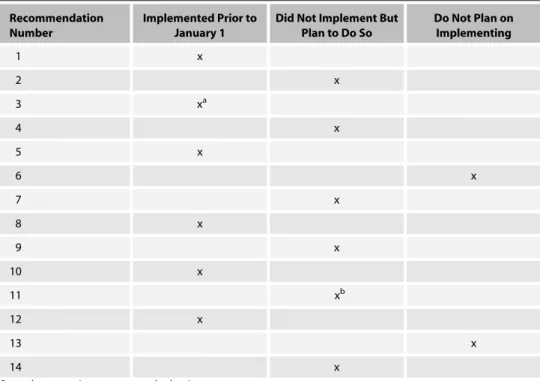
Interventions selected for this organization were based on the pretest results. A combination of the SNA results and interviews with management and nonmanagement personnel was used to recommend interventions based on the culture and existing structure of the organization. In this example, interventions were suggested by the researcher and implemented by the HR department of the organization. The interventions recommended are set out in Table 1.
The interventions listed in Table 1 were not all implemented by the human resource department. Decisions for implementation were based on available resources at the time of the first SNA. For the most part, the
organization was open to the recommendations that were made after the pretest. Some interventions were implemented immediately, while others were either delayed or were not considered. Table 2 indicates which ones were used.
Social Network Analysis Results
To understand information seeking, knowledge acquisition, and profes-sional support behaviors among staff, UNICET (Borgatti, Everett, & Free-man, 2002) was employed to measure density levels within and among groups and identify central members to the network. The density measure examines the percentage of actual ties over the total number of possible ties (Scott, 2000). For example, if A communicates with B and B with C and C with A in a three-person network, there is a 100% density. However, if A communicates with B and B with C, but not C with A, the density would be only 67%. This is calculated by the number of lines present divided by the number of points (people), multiplied by the number of points, minus 1, divided by 2. So in the first example, there are 3 lines divided by 3 points, multiplied by 3 points minus 1, divided by 2 equals 1, or 100%. The greater the density measure, the greater the connectivity between network members.
For directed relationships, the centrality degree measures network activity for both the out-degree (those members who share information) and in-degree (those members who seek information). This is calculated in terms of the number of points to which a particular point is adjacent (Scott, 2000). Therefore, the higher the degree, the more central the member is to the network. The following questions were part of the survey administered to
TABLE 1
Interventions Recommended After Pretest
1. Create communities of practice.
2. Develop and create a career development plan for each employee. 3. Encourage small group discussion around specific topics.
4. Add a project description to the newsletter highlighting the members involved. 5. Further develop the intranet (e.g., add a calendar of events, employee directory). 6. Create cross-location project teams.
7. Develop a communications plan.
8. Identify knowledge champions in each location. 9. Assess support roles for right fit with existing employee.
10. Initiate regular events for employees to share knowledge and build trust.
11. Increase management’s frequency of visits to locations to highlight successful projects. 12. Bring in highly central (key) employees to help with communications.
13. Hold workshops of project teams to give progress reports.
the participants. Analysis of the responses to these and other questions led to the formulation of interventions.
Question 1: How often do you speak with individuals regarding technical and nontechnical information?The density for the posttest for all locations (within and between groups) was 22%, with the densities within groups ranging from 46% to 66%. Between groups ranged from 3% to 12% (see Table 3). For the posttest density measures, there was a decrease in density levels within locations 1 and 2 and an increase in location 3. Within groups, there was an increase in density between location 1 and location 2, location 2 and location 1, and location 2 and location 3.
Centrality degree measures forall locationsat the pretest interval for out-degrees ranged from 2.90 to 50.73, while in-out-degrees ranged from 1.45 to 69.57 for all locations with a mean of 24.31 (see Table 4). Respondents with higher in-degrees were more likely to seek out information from individuals in the network, and respondents with higher out-degrees were more likely to share information with other members. For the posttest interval, the out-degrees ranged from 2.60 to 40.26, while in-out-degrees ranged from 3.90 to 55.84 with a mean of 21.91. There was a decrease in overall network activity from pre- to posttest (see Table 4).
TABLE 2 Interventions Implemented After Pretest
Recommendation Number
Implemented Prior to January 1
Did Not Implement But Plan to Do So Do Not Plan on Implementing 1 x 2 x 3 xa 4 x 5 x 6 x 7 x 8 x 9 x 10 x 11 xb 12 x 13 x 14 x a
Started a mentoring program and other improvements. b
Centrality degree measures for location 1 at the pretest interval for out-degrees ranged from 5.13 to 84.62 with a mean of 45.45. The in-degree ranged from 2.56 to 92.31. The posttest measures ranged from 4.44 to 68.89 with a mean of 39.71 for the out-degree and 6.67 to 95.56 for the in-degree (see Table 4). There was a decrease in network activity overall for this location.
Centrality degree measures for location 2 at the pretest for out-degrees ranged from 0.00 to 43.48 and for in-degrees 0.00 to 34.78, with a mean of 11.23 (see Table 4). At the posttest, the out-degrees ranged from 20.83 to 75.00 and the in-degrees from 12.50 to 100.00. There was an increase in network activity at the posttest for this location.
Centrality measures for location 3 at the pretest ranged from 0.00 to 20.00 for out-degrees and 0.00 to 80.00 for in-degrees, with a mean of 13.33 (see Table 4). Posttest measures indicated a range for out-degrees at 83.33 to 100.00 and in-degrees at 66.67 to 100.00, with a mean of 95.24. There was an overall increase in network activity from pre- to posttest.
Question 2: Identify those individuals who provide information necessary to get your work done.Locations 2 (11%) and 3 (21%) experienced density growth, while location 1 demonstrated a decrease of 2%, at the posttest interval (see Table 5). Between-group density measures ranged from 2% to 18% at the pretest and were 3% to 7% at posttest. There was a decrease in density at the posttest between location 1 and location 2, location 3 and
TABLE 3
Densities for Question 1: Pretest and Posttest
Location 1 Location 2 Location 3
Pretest Posttest Pretest Posttest Pretest Posttest
Location 1 46% 40% 3% 4% 9% 3%
Location 2 3% 4% 58% 50% 12% 9%
Location 3 6% 5% 8% 10% 66% 95%
TABLE 4
Centrality (Degrees) for Question 1: Pretest and Posttest
Pretest Posttest Out-Degree Shares Information (Mean) In-Degree Seeks Information (Mean) Out-Degree Shares Information (Mean) In-Degree Seeks Information (Mean) All locations 24.31 24.31 21.91 21.91 Location 1 45.45 45.45 39.71 39.71 Location 2 11.23 11.23 50.33 50.33 Location 3 13.33 13.33 95.24 95.24
location 1, and location 3 and location 2. Increases in density were experienced between location 2 and location 1, and location 2 and location 3. There was no change at posttest between locations 1 and 3.
Centrality measures for all locations increased to 15.25 at the posttest interval and ranged from 1.30 to 33.77 for out-degrees and 0.00 and 48.05 for in-degrees (see Table 6). For location 1, mean centrality measures decreased, with out-degree measures ranging from 2.22 to 57.78 and in-degree mea-sures ranging from 2.22 to 80.00, with a mean of 26.04. Location 2 experienced an increase in centrality measures, with a range of 12.50 to 66.67 for out-degree scores and 0.00 to 100.00 for in-degree scores. The overall mean was 38.67 and increase of 11.13 over the pretest. The third location experienced an increase in overall mean of 88.10. Out-degree scores ranges from 66.67 to 100.00 and 66.67 to 100.00 at the posttest interval.
Question 3: List those individuals who provide information toward your career development within the organization.The density measure for the posttest for location 1 was 11%, the same as the pretest. Location 2 experienced an increase in density, up from 11% to 12% (see Table 7). Location 3 had a decrease in density from 13% to 10% at posttest interval. Decreases between location 1 and location 2, location 1 and location 3, and location 3 and location 1 were experienced at posttest. Location 2 and location 1, and location 3 and location 2, remained the same, while an increase in density of 3% was realized between location 2 and location 3.
Centrality measures for all locations at pretest for out-degrees ranged from 0.00 to 42.03, with a mean of 5.92 (see Table 8). There was a slight
TABLE 5 Densities for Question 2: Pretest and Posttest
Location 1 Location 2 Location 3
Pretest Posttest Pretest Posttest Pretest Posttest
Location 1 28% 26% 2% 3% 7% 3%
Location 2 18% 3% 28% 39% 3% 2%
Location 3 5% 5% 2% 7% 67% 88%
TABLE 6 Centrality (Degrees) for Question 2: Pretest and Posttest
Pretest Posttest Out-Degree Shares Information (Mean) In-Degree Seeks Information (Mean) Out-Degree Shares Information (Mean) In-Degree Seeks Information (Mean) All locations 13.85 13.85 15.25 15.25 Location 1 27.50 27.50 26.04 26.04 Location 2 27.54 27.54 38.67 38.67 Location 3 66.67 66.67 88.10 88.10
increase in out-degrees in the posttest, ranging from 0.00 to 25.97, with a mean of 5.94. In-degree measures at pretest ranged from 0.00 to 30.44, with a mean of 5.92. Posttest in-degree measures slightly increased, with a range of 0.00 to 29.87 and a mean of 5.94.
Centrality measures for location 1 out-degrees ranged from 0.00 to 46.15, with a mean of 11.03 and slightly increased at posttest with a range of 0.00 to 31.11 and a mean of 11.06 (see Table 8). In-degree measures at pretest ranged from 0.00 to 51.28, with a mean of 11.03 to a range of 0.00 to 51.11, with a mean of 11.06 for the posttest.
Centrality measures for location 2 for out-degree at pretest ranged from 0.00 to 43.48, with a mean of 11.23 (see Table 8), and increased at posttest, ranging from 0.00 to 37.50, with a mean of 12.33. In-degrees ranged from 0.00 to 34.78, with a mean of 11.23 at pretest and at posttest ranged from 0.00 to 50.00, with a mean of 12.33.
Centrality measures for location 3 at pretest ranged from 0.00 to 80.00 for out-degrees, with a mean of 13.33, and at posttest they ranged from 0.00 to 33.33 and had a decrease in mean at 7.14 (see Table 8). In-degrees at pretest ranged from 0.00 to 20.00, with a mean of 13.33 and ranged from 0.00 to 33.33 with a decrease in mean (7.14) at posttest.
Aligning Interventions With the SNA Results
The task of aligning interventions with the SNA occurs throughout the entire process. The pretest SNA provided the baseline and the initial assessment of which social support mechanisms would increase information
TABLE 7
Densities for Question 3: Pretest and Posttest
Location 1 Location 2 Location 3
Pretest Posttest Pretest Posttest Pretest Posttest
Location 1 11% 11% 2% 2% 8% 3%
Location 2 1% 1% 11% 12% 3% 3%
Location 3 0% 1% 0% 3% 13% 10%
TABLE 8
Centrality (Degrees) for Question 3: Pretest and Postttest
Pretest Posttest Out-Degree Shares Information (Mean) In-Degree Seeks Information (Mean) Out-Degree Shares Information (Mean) In-Degree Seeks Information (Mean) All locations 5.92 5.92 5.94 5.94 Location 1 11.03 11.03 11.06 11.06 Location 2 11.23 11.23 12.33 12.33 Location 3 13.33 13.33 7.14 7.14
sharing. The posttest SNA helped to confirm the impact of the interventions. In the sample organization, not all interventions were implemented (see Table 2). As a result, there was minimal impact on information sharing. However, this is the first step in an ongoing process for managing informa-tion sharing within the organizainforma-tion. Specific effects of the interveninforma-tions on the social structure for the example organization will be discussed.
Managers (project managers, project directors, and others) were found to be the most sought after members for information among all questions presented in the survey. Although this may have demonstrated that manage-ment was being effective in providing support to their groups, it was important for the organization to be cautious of potential bottlenecks that might lower productivity. Follow-up interviews revealed that certain man-agers required that all information flow through them before going out to the rest of the group. As a result of this finding, measures were introduced to ensure that information sources were well represented among a number of network members (intervention 1). In addition, management increased the frequency of travel to all locations throughout the division to ensure that communication lines were open among all staff and the opportunity to get feedback in a more efficient manner was provided (intervention 11).
It appeared that the turnover of individuals since the first SNA had little impact on the overall flow of information. The new members of the group picked up where the old members had left off. This was not to say that network connectivity could not improve. It was important for management to promote the effectiveness of a connected network within and between locations. In addition, the members who had left the organization were individually ranked high on centrality measures (in-degree) regarding career development (question 3), and subsequently, new members to the network were also ranked high in the same area. If actions are not taken to ensure that career development issues are dealt with, turnover may occur again. Although it was suggested that a career development plan be developed for each staff member (intervention 2), the organization had not implemen-ted a process prior to the posttest. The lack of career development focus at pretest may have accounted for the turnover experienced shortly after the first SNA. The results at posttest indicated that the new members were seeking career information, and if they did not get this interformation, unwanted turnover could occur again.
Due to the turnover experienced at pretest, the SNA encouraged the organization to quickly integrate new members into a positive networked environment that would ensure the free flow of information and the like-lihood that the individuals would remain with the organization (interven-tions 3, 5, and 10). The central members identified in this analysis for product knowledge were used to ensure that a consistent flow of information was being shared among staff. Central members were designated knowledge champions, thereby providing a link to information for existing and new members (intervention 8). However, measures to go beyond identifying knowledge champions and include highly central nonmanagement mem-bers in company communications was not taken after the pretest
(interven-tion 12). The division wanted to make sure that a process was in place to update these individuals with information in a timely fashion to ensure that company communications were accurate and positive. The organization decided to take the necessary time to develop the process and plans on implementing it in the near future.
In most cases, density levels were maintained over the two surveys. Information strategies will continue to be developed to increase the baseline density scores identified in the first survey. Over time, the ideal density level will emerge and may serve as a metric for ensuring the appropriate flow of information and the desired mixture of staff for projects and new members. The organization plans to conduct SNAs every 12 months to help monitor information sharing and manage the social support mechanisms in place.
It was also identified that the majority of employees sought information within their own locations. Encouraging members to go outside their location was essential for innovation and to avoid redundant activities on client projects (interventions 5 and 10). It was also suggested that individuals identified as central to the network and were sought for information actually matched the role they had been designated (i.e., if a specialist is to provide support to the larger group, he or she may be sought out by other members— intervention 9). The SNA also served as a measurement for determining whether a staff member in a particular position was actually providing information to the rest of the network. Positions identified as high informa-tion providers were linked to individuals in the network analysis. If an individual’s position required high levels of information sharing and it was not occurring, the staff member was required to develop an action plan on how to increase information flow to network members.
By identifying network members who had high in-degree centrality measures, the organization was able to determine the information seeking activities for specific members. The major issue to be addressed was whether the information being sought was relevant to the individual’s job or was more social in nature and the person to whom the individual typically went to for this information. Conversely, members who experienced low scores were monitored to determine if their information seeking activities were consis-tent with their position and if it was having an impact on their overall performance. Members who had low in-degree centrality scores were required to attend regular group discussions to ensure that they were not re-creating solutions already developed by other group members or in other offices and to ultimately increase collaboration efforts (intervention 3). It was recommended that the organization implement (intervention 6) cross-location project teams, which would help to ensure that ideas were trans-ferred across staff, but the cost associated with developing teams across locations was not viewed as economically viable. However, although there may be a higher cost to cross-location project teams in the short term, it could be outweighed by the long-term benefits of avoiding redundancy in client solutions and essentially reducing the time to project completion.
It was also found through the SNA and interviews that there was a lack of awareness of expertise or project experience within locations. To leverage
knowledge and solutions across locations, the organization implemented solutions that would dramatically improve efficiency in client pro-jects (interventions 1, 3, 5, 8, and 10). Creating a forum for staff to come together helped to increase information sharing by allowing them to learn about colleagues’ skills and expertise (intervention 10). The regular newsletter that was sent out to staff was identified as an essential vehicle for communicating employee expertise and will be used in the near future (intervention
4). Project directors were encouraged to create their work teams according to the individual’s network position, ensuring that there was a mixture of central and peripheral members involved in order to promote cohesiveness. Managers can promote network flexibility by reallocating decision rights. In addition, making sure that those central members were well informed of information and making subtle shifts in decision making would substantially improve the network’s flexibility and responsiveness.
One major factor for the minimal increase in information flow from pre- to posttest that the division experienced was the inability for the organization to implement a communications plan (intervention 7). The creation of a com-munications plan will help guide the organization to creating a stable network by highlighting the essential components for connectivity. Essentially the communications plan will highlight the need to have an open and free-flowing exchange of information among management and nonmanagement staff members. Policies (intervention 14) that are included in the plan will include hiring practices and the process for designating members to project teams. Once the communications plan is in place, it will allow the organization to monitor the flow of information and help manage structural support mechan-isms that promote high connectivity among network members.
Implications for HRD Research and Practice
For researchers and practitioners interested in information sharing initiatives or otherwise desiring to encourage knowledge exchange within their organizations, SNA is an appropriate methodology. There is need to emphasize efforts to nurture the targeted social relationships and inter-personal interactions of employees before launching these initiatives. The SNA approach can be used to study the characteristics of work context that lead to high or low levels of organizational citizenship, which frequently nurtures the mutual social exchange relationships critical to information-sharing intentions. SNA can also provide vital information to management to support the formation and maturation of robust referent communities within the workplace (Hatala & Fleming, 2007). The decision to use extrinsic or intrinsic incentives as primary motivators to encourage individuals to engage in information sharing can be determined by examining social
If an individual’s position
required high levels of
information sharing and it
was not occurring, the staff
member was required to
develop an action plan on
how to increase
information flow to
network members.
structures and interpersonal relationships within organizations. Toward this end, the conceptual model in Figure 1 offers the theoretical framework from which analyses of organizations can provide an understanding of their information sharing statuses. More work is required to study the domains and their implications for moving an organization toward greater connec-tivity. Future research should focus on identifying organizational structures that lie within each domain to foster an understanding of the phenomena that occur at each level. How an organization moves from one domain to another is important to understanding how social dynamics contribute to organiza-tional effectiveness and requires further study.
Manev and Stevenson (2001) observed that contemporary organizations are increasingly characterized by openness to the environment, with perme-able boundaries that allow and encourage open communication among and between organizational members. This opening of the organizational boundaries encourages information seeking and sharing by organization members. Making these boundaries permeable is imperative if information sharing is to exist within and between work groups. If organizations can move toward the connected domain, communication channels will be much faster, and information sharing among organization members will be possible (Dess, Rasheed, McLaughlin, & Priem, 1995).
As a result of these new boundaries, restructuring efforts have resulted in new ways of coordinating and organizing work. The coordination and work processes increasingly occur through informal networks of relation-ships instead of the traditional formal structures (Kahn, Cross, & Parker, 2004). Recognizing and using these informal networks that cut across the core work processes may promote organizational flexibility, innovation, and efficiency through pooling of expertise of various members within the network (Cross et al., 2002; Ibara & Andrews, 1993; Manev & Stevenson, 2001). Through the use of SNA, the network structure of an organization can be measured and placed within the information sharing model (see Figure 1). Based on its connectivity, interventions can be developed and implemented to support the networked environment required for the free flow of information.
It is important for organizations to encourage information sharing among their members as well as with the external environment (Manev and Stevenson, 2001). Dismantling the hierarchical silos that exist within organizations and impede information flow will help to transform the way information is exchanged between members. For instance, if an individual with a lot of influence and many relational connections within the organiza-tion leaves, those dependent on him or her for informaorganiza-tion may lose not only the connection but all the connections that individual possessed. Conse-quently, the social network to which the individual plays a key role will be disconnected, and information flow will be disrupted. To deal with these changing dynamics, the organization requires an explicit way of determining the existing connectivity. By measuring connectivity, an organization can monitor relationships and manage the social support mechanisms important to information flow.
Conclusion
Information sharing within and between work groups is critical to meeting organizational objectives. Measuring the flow of information within an organization helps to determine the overall connectivity that exists among its members. SNA can illuminate the social structure of an organization and help determine which interventions will open up the lines of communica-tion. Once this is accomplished, the ability to manage information sharing will enable a more collaborative working environment within and between all work groups. Organizations should aim at supporting informal and formal structures to encourage information flow among its members. Using the information sharing model we have proposed (see Figure 1) can help organizations identify the extent of information sharing among their mem-bers. Moreover, the proposed framework could act as a benchmark against which organizations can compare their information flow processes.
The objective of this article was to explore the information sharing dynamics within and between individuals in work groups. From the literature review on organizational structure and information sharing coupled with the case example presented, it is evident that organizations are increasingly becoming open with permeable boundaries, allowing and encouraging free communication among and between various individuals. Moreover, indivi-duals’ attitude toward information sharing is primarily contingent on antici-patedreciprocal relationships regarding information sharing and the subjective norm concerning information exchange (Bock et al., 2007; Fairchild, 2006). It has also emerged that organizational social structures help in the way individuals seek and share information in work groups. Social network analysis provides an empirical measure of an organization’s work environment by focusing on the relationships between people, as well as using attribute characteristics. By mapping interpersonal relationships, SNA helps to uncover informal communication patterns to compare them against existing formal structures, subsequently explaining various organizational phenomena.
One of the desirable aspects of SNA is its versatility in dealing with information sharing between and within individuals in organizations. It can be used to analyze the interpersonal relationships that characterize work groups in organizations, thereby providing an understanding of how in-dividuals create, recognize, archive, access, and exchange information in executing their job tasks. Moreover, organizations need to move toward the connected domain in order to foster information sharing within and between work groups. This is likely to result in much faster communication channels and make information sharing among organization members possible. Through the use of SNA, the network structure of an organization can be measured and placed within the information sharing model (see Figure 1).
The findings from this case study suggest that a focus on social networks and social structures within organizations can go a long way toward helping researchers and practitioners in HRD to reduce the resistance to planned organization changes that results from poor information sharing models. Moreover, embedding SNA as a benchmark for analyzing information sharing