Dams Sector
Roadmap to Secure
Control Systems
Foreword
The Dams Sector Roadmap to Secure Control Systems describes a plan for voluntarily improving cybersecurity in the Dams Sector. Control systems roadmaps provide an opportunity for industry experts to offer opinions concerning the state of con trol systems cybersecurity and to communicate recommended strategies for improvement within their sector.This roadmap brings together Dams Sector stakeholders, including government agencies and owners and operators, with a common set of goals and objectives. It also provides milestones to focus specific efforts and activities for achieving the goals over the next 10 years, while addressing the Dams Sector’s most urgent challenges, longer-term needs, and practices for reducing cyberse curity risk to control systems.
The U.S. Department of Homeland Security’s Office of Infrastructure Protection and the National Cyber Security Division facilitated the development of this roadmap with volunteers from Dams Sector and industry stakeholder organizations. This roadmap provides a beginning point and a template for action as industry and government work together to achieve a common objective for securing control systems within the Dams Sector.
Acknowledgments
The U.S. Department of Homeland Security, Office of Infrastructure Protection, Sector-Specific Agency Executive Management Office, Dams Sector Branch, would like to acknowledge the Dams Sector Council members for their contributions in the development of the Dams Sector Roadmap to Secure Control Systems.
Executive Summary
The Dams Sector Roadmap to Secure Control Systems describes a plan and strategic vision for voluntarily improving the cybersecurity posture of control systems within the Dams Sector. Designing, operating, and maintaining a facility to meet essential reliability, safety, and security needs require careful evaluation and analysis of all risk factors, including physi cal, cyber, and human.The interaction of both internal and external process and business systems must also be considered. A cyber event, whether caused by an external adversary, an insider threat, or inadequate policies and procedures, can initi ate a loss of system control resulting in negative consequences. This roadmap recognizes this interconnectivity, but restricts its scope by addressing the cyber issues of control systems. Many of the control systems used today were initially designed for operability and reliability during an era when security received low priority.These systems operated in fairly isolated environments and typically relied on propri etary software, hardware, and/or communications tech nologies. Infiltrating and compromising these systems often required specific knowledge of individual system architec tures and physical access to system components. However, newer control systems are highly network-based and use common and open standards for communication protocols; this interoperability has the potential to expose network assets to cyber infiltration and subsequent manipulation of sensitive operations.
Challenges to cybersecurity consist of the direct risk factors that increase the probability of a successful cyber attack and the factors that limit the ability to implement ideal security enhancements. A majority of owners and operators within the Dams Sector do not have adequate inventories of their critical assets and associated control systems, or a good understand ing of the risks (threats, vulnerabilities and consequences) of a cyber attack.The growing number of nodes and access points has also made identifying vulnerabilities more complex; widely accepted industry standards, consistent metrics and reliable measuring tools are not readily available.
Some control systems will have poorly designed connections between control systems and enterprise networks, use unauthenticated command and control data, and do not provide adequate access control for remote access points. Security improvements for legacy systems are limited by the existing equipment and architectures that may not be able to accept security upgrades without degrading performance. An additional challenge is the lack of information sharing among owners and operators and other cyber stakeholders regarding cybersecurity threats, events, and their
consequences due to concerns as to how the information will be used, disseminated, and protected. Possibly, as a result of this lack of information sharing, the return on investment for vendors to sustain control system and security tool improvement, including R&D to advance the technology, is unclear. A further complication is that vendors currently do not have adequate requirements or standards to design, build and maintain cybersecurity into control systems. Evolving cyber threats, changes in cyber-intrusion technologies, and developments in information technology can pose challenges to building security into control systems with long lifecycles. While sector partners actively manage the risk to their operations through monitoring and mitigation activities designed to prevent daily incidents from becoming significant disruptions, increasingly sophisticated threats require a more thorough examination of risks associated with cybersecurity.
The control systems roadmap provides an opportunity for the Dams Sector community to identify its concerns, commu nicate recommended strategies for improvement, and provide a venue for government assistance. It also provides the Dams Sector with specified milestones on which to focus specific efforts and activities to achieve key goals over the next 10 years, while addressing the sector’s most urgent challenges. These challenges include developing mitigating solutions, defining longer-term needs, and articulating control system security guidelines and practices for improvement.
Table of Contents
Foreword
. . .i
Acknowledgments
. . .iii
Executive Summary
. . .v
1. Introduction
. . .1
Roadmap Purpose . . . 1 Roadmap Scope . . . 2 National Context . . . 2 Action Plan. . . 32. Control System Landscape
. . .5
Key Stakeholders . . . 7
A Framework For Securing Control Systems . . . 7
Vision. . . 7
Control Systems Security Goals. . . 8
Dams Sector Perspectives. . . 9
Background. . . 9
Sector Regulations. . . 10
Dams Sector Cybersecurity Coordination . . . 12
3. Challenges And Milestones
. . .17
Challenges . . . 17
Milestones For Securing Control Systems. . . 18
Goal 1 - Measure And Assess Security Posture . . . 18
Challenges . . . 18
Milestones . . . 18
Goal 2 - Develop And Integrate Protective Measures. . . 20
Challenges . . . 20
Milestones . . . 20
Goal 3 - Detect Intrusion And Implement Response Strategies. . . 22
Challenges . . . 22
Milestones . . . 22
Goal 4 - Sustain Security Improvements. . . 24
Challenges . . . 24
Goal 5 - Secure-By-Design . . . 26
Challenges . . . 26
Milestones . . . 26
4. Roadmap Implementation
. . .29
Implementation Challenges. . . 29
Outreach,Training, and Education Needs . . . 30
Information Sharing . . . 30
Implementation Framework. . . 30
Socialization . . . 30
Implementation Activities. . . 30
Outputs And Impacts. . . 32
An Ongoing Process . . . 32
Roles And Responsibilities. . . 32
Guiding And Aligning Existing Efforts . . . 33
5. References
. . .35
6. Acronyms
. . .37
Appendix A: Glossary/Definition of Terms
. . .39
Appendix B: National Policy Guidance on Cyber Control System Security
. . .41
Appendix C: Industrial Control System Details
. . .43
Importance of Industrial Control Systems in the Dams Sector. . . 43
Industrial Control Systems . . . 43
Securing Industrial Control Systems in the Dams Sector. . . 49
Identification of Critical Functions & Operations Dependent on Industrial Control Systems . . . 49
Identification and Screening of Critical Cyber Elements. . . 49
Identification of Common Cyber Access Points. . . 49
Interconnections. . . 50
Identification of Access Points . . . 50
Assessing Risks of Critical Cyber Elements. . . 51
Threat Considerations. . . 51
Consequence Assessment. . . 52
Vulnerability Analysis. . . 53
Approaches for Prioritizing Critical Cyber Elements. . . 53
Summary of Sector Challenges and Development . . . 53
Cost/Benefit Analysis . . . 53
Consequence Mitigation Approaches. . . 53
Key Challenges . . . 54
Path Forward Solutions and Next Steps . . . 55
Appendix D: Roadmap Milestones
. . .57
Near Term (0-2 years) . . . 57
Goal 1: Measure and Assess Security Posture. . . 57
Goal 2: Develop and Integrate Protective Measures . . . 57
Goal 3: Detect Intrusion and Implement Response Strategies . . . 57
Goal 4: Sustain Security Improvements. . . 57
Goal 5: Secure-by-Design. . . 57
Mid Term (2-5 years) . . . 58
Goal 1: Measure and Assess Security Posture. . . 58
Goal 2: Develop and Integrate Protective Measures . . . 58
Goal 3: Detect Intrusion and Implement Response Strategies . . . 58
Goal 4: Sustain Security Improvements. . . 58
Goal 5: Secure-by-Design. . . 58
Long Term (5-10 years) . . . 58
Goal 1: Measure and Assess Security Posture. . . 58
Goal 2: Develop and Integrate Protective Measures . . . 58
Goal 3: Detect Intrusion and Implement Response Strategies . . . 58
Goal 4: Sustain Security Improvements. . . 59
1. Introduction
Leaders from the nation’s CIKR sectors and government agen cies recognize the need to plan, coordinate, and focus ongo ing efforts to improve control system security.They agree that a concise plan, with specific goals and milestones for implementing security across individual sectors, is required to prioritize critical needs and gaps to assist critical infra structure owners and operators in reducing the risk of future cyber attacks on control systems.The need to address the risks associated with cyber systems has prompted Dams Sector partners to step forward and collaborate on a unified cyber and control systems security strategy to address the most significant issues and concerns regarding cybersecurity and control systems within the Dams Sector, including the criti cality of control systems in all areas related to dam operations. In recent years, roadmaps have been developed to guide the efforts of individual sectors in securing their control sys tems. Roadmaps provide an opportunity for industry and government experts within a sector to collectively address issues concerning the state of control system cybersecurity and appropriate strategies for securing their sector.The U.S. Department of Homeland Security (DHS) is leveraging this industry perspective to help the sector stakeholder com munity develop programs and risk mitigation measures that align with the sector’s plan. In addition to owners and opera tors, other sector stakeholders include control system ven dors, system integrators, and academia, which can use these roadmaps to map supporting activities with industry. Because the roadmap goals are voluntary, implementation of the ideas and concepts presented in this document are addressed based on the organizations overall cybersecurity policies and procedures. Still, roadmaps are recognized as quality documents that provide excellent descriptions of con trol systems risk challenges and general methods for improv ing the security of control systems over the ensuing decade. The roadmap provides a comprehensive framework and recommended strategies focused on the protection of control systems across the Dams Sector.This framework will enhance
the sector’s understanding and management of cyber risks; facilitate the identification of practical risk mitigation solu tions; promote information sharing and improve sector-wide awareness of cybersecurity concerns. In addition, the roadmap will guide the sector in developing a more refined understanding of common vulnerabilities and potential con sequences, and the programs, outreach, and research efforts that can assist in developing and implementing cost-effective risk management and mitigation strategies. Specific control systems security goals and corresponding milestones were established in response to those challenges and are detailed in Chapter 3 of this roadmap.
Roadmap Purpose
This roadmap builds on existing government and industry efforts to improve the security of control systems within the Dams Sector.
The roadmap is intended to help coordinate and guide related control system security efforts within the Dams Sector, and highlight recommended strategies to address the sector’s most urgent challenges, mitigation requirements, and long-term research and development (R&D) needs.This roadmap will provide a strategic vision to improve the cybersecurity posture of control systems within the sector, by defining a common strategy that addresses the needs of owners and operators.This roadmap:
• Presents a vision, along with a supporting framework of goals and milestones, to improve the cybersecurity posture of control systems within the sector;
• Defines a consensus-based strategy that addresses the spe cific cybersecurity needs of owners and operators within the sector;
• Proposes a comprehensive plan for improving the security, reliability, and functionality of control systems over the next 10 years;
Roadmap Purpose
y Present the Dams Sector’s security vision
y Define a consensus-based stategy for the sector
y Propose a comprehensive plan to improve security
y Encourage stakeholder participation and compliance
y Guide industry, academia, and government effort
y Identify opportunities for cross-sector cooperation
y Promote continuous improvement in security posture
y Strengthen government programs to improve protection
y Support implementation of goals in the Dams Sector-Specific Plan
• Proposes methods and programs that encourage participa tion of all stakeholders;
• Guides efforts by industry, academia, and government; • Identifies opportunities for cooperative work across sec
tors in cybersecurity awareness, training and information sharing;
• Promotes continuous improvement in the security posture of control systems within the sector;
• Strengthens government programs designed to improve the protection of control systems; and
• Supports the implementation of the goals included in the Dams Sector-Specific Plan related to cybersecurity and control systems.
Roadmap Scope
This roadmap addresses cybersecurity issues related specifi cally to control systems owned and operated by Dams Sec tor partners whose facilities are part of the Nation’s CIKR. The functional and organizational composition of critical infrastructure sectors is defined in the National Infrastruc ture Protection Plan (NIPP) and associated Sector-Specific Plans (SSPs).
Designing, operating, and maintaining a facility to meet essential reliability, safety, and security needs requires the careful evaluation and analysis of all risk factors, including physical, cyber, and human.The interaction of both inter nal and external process and business systems must also be considered. Attacks on a cyber system may involve only
the cyber components and their operation, however those impacts can extend into the physical, business, human, and environmental systems to which they are connected. A cyber event, whether caused by an external adversary, an insider threat, or inadequate policies and procedures, can initiate a loss of system control, resulting in negative consequences. This roadmap recognizes this interconnectivity, but restricts its scope by addressing the cyber issues of control systems. Interactions with physical, business, and safety systems and their security components are an accepted reality necessitat ing the appropriate coordination of interfaces for secure and reliable operation.
Cyber risk to control systems encompasses elements of the business network and Internet to the extent they are con nected to control systems. Securing access to and control of the business network and Internet is generally the respon sibility of information technology (IT) personnel, and thus outside the scope of this roadmap. While security for IT systems is outside the scope of this roadmap, interfaces between the Industrial Control Systems (ICS) networks, business system networks, and Internet connections must be coordinated to ensure proper application of security mea sures and responsibilities.
Physical access to cyber systems is also a significant contrib uting factor in cyber risk. Similarly, physical damage result ing from cyber compromise is one of the principal factors contributing to control systems risk.This roadmap includes both of these factors in understanding and planning for cybersecurity enhancements; however, actual engagement in describing physical access control and physical consequence management is outside the scope of this roadmap.
This roadmap covers goals, milestones, and needs over the near (0–2 years), mid (2–5 years), and long (5-10 years) terms. Security needs encompass R&D, new technologies, systems testing, training and education, accepted industry practices, standards and protocols, policies, information sharing, and outreach and implementation.The roadmap will be periodically updated to meet changing needs and to accommodate the dynamic nature of cybersecurity for control systems.
National Context
Homeland Security Presidential Directive 7 (HSPD-7) Criti cal Infrastructure Identification, Prioritization, and Protec tion, required the development of the NIPP to provide the collaborative framework and unifying structure for the integration of existing and future CIKR protection efforts for the government and private sector.
HSPD-7 also assigned Sector-Specific Agencies (SSAs) for each of the CIKR sectors, as the lead agencies responsible for collaborating with other Federal, State, local, tribal,
territorial, and private sector partners. SSAs among other
things, implement and encourage the development of information sharing and analysis mechanisms, including the sharing of information regarding physical and cyber threats, vulnerabilities, incidents, potential protective measures, and accepted industry practices. The Office of Infrastructure Protection (IP) within DHS serves as the SSA for the Dams Sector.
The Dams Sector operates under the Critical Infrastructure Partnership Advisory Council (CIPAC) framework, which provides a forum for government and private sector part ners to engage a broad spectrum of activities to support and coordinate CIKR protection.The CIPAC consists of Sector Coordinating Councils (SCC) and Government Coordinating Councils (GCC).
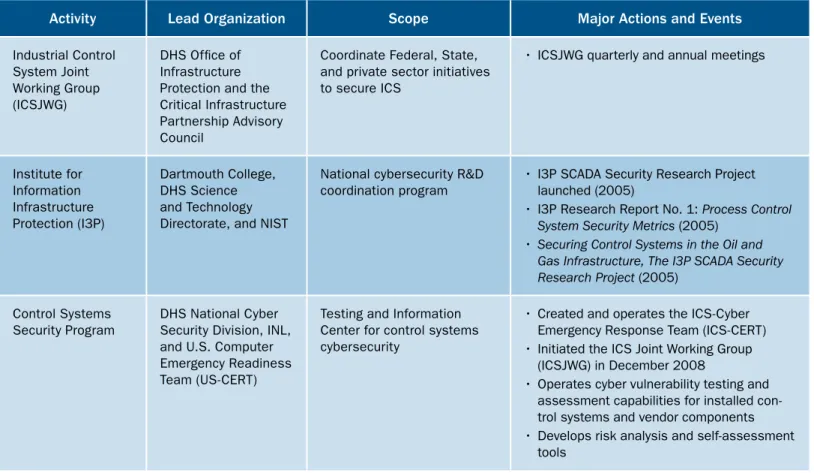
SCCs are self-organized, self-run, and self-governed indus try organizations that represent a spectrum of key stake holders within a sector. Within the Dams Sector, the Dams SCC serves as the private sector interface with the Federal Government on issues related to the security of dams, locks, and levees. Its primary purpose is to determine the nature of risks posed against sector assets so that appropriate and timely information as well as mitigation strategies can be provided to the entities responsible for the operation and protection of those assets.The SCC also serves as the princi pal asset owner interface with other CIKR sectors as well as with DHS, Federal Energy Regulatory Commission (FERC), and other government agencies, including the Dams GCC. The Dams Sector GCC acts as the government counterpart and partner to the SCC to plan, implement, and execute sector-wide security programs for the sector’s assets. It com prises representatives from across various levels of govern ment (Federal, State, local, and tribal), including Federal owners and operators, and State and Federal regulators of sector assets. Its primary activities include identifying issues that require public-private coordination and communica tion; bringing together diverse Federal and State interests to identify and develop collaborative strategies that advance critical infrastructure protection; assessing needs and gaps in plans, programs, policies, procedures, and strategies; acknowledging and recognizing successful programs and practices; and leveraging complementary resources within government and between government and industry. In addition, in 2004 the DHS National Cyber Security Division (NCSD) established the Control Systems Security Program (CSSP), which is chartered to work with con trol systems security stakeholders through awareness and outreach programs that encourage and support coordinated control systems security enhancement efforts. In December 2008, the CSSP also established the Industrial Control Sys tems Joint Working Group (ICSJWG) as a coordination body to facilitate the collaboration of control systems stakeholders
and to accelerate the design, development, and deployment of enhanced security for control systems.
In compliance with HSPD-7, the Dams Sector is also required to develop and maintain a SSP that details the sector’s plans to protect human resources, cyber systems, and physical assets. The Dams Sector Roadmap to Secure Control Systems pro vides a logical and cohesive framework to design and imple ment a strategy to carry out the goals of the Dams SSP. Appendix B summarizes national policy guidance on secur ing cyber control systems.
Action Plan
This roadmap proposes a strategic framework for investing in control system security and for industry and govern ment action toward improving defenses against cyber events that would disrupt operations. It identifies the challenges and activities that should be addressed, and outlines spe cific milestones that should be accomplished over the next 10 years to achieve the outlined goals and vision. While it contains many actionable items, as a plan, it is only useful to the extent that financial resources and leadership trans late these priorities and milestones into productive projects, activities, and products.
2. Control System Landscape
The Dams Sector comprises dam projects, hydropower plants, navigation locks, levees, dikes, hurricane barriers, mine tailings and other industrial waste impoundments, or other similar water retention and water control facilities. Within the Dams Sector, control systems are used either on-site or remotely to control and/or monitor the operations of these structures. A control system is a device or group of devices that manage, command, direct, or regulate the behavior of other devices or group of devices.Typically, a control system will collect information about the operations taking place within the project as well as the status of the components in the facilities, such as gate position, reservoir level, hydroelectric generator output, and water flow.This information is then converted to electrical signals for pro cessing and, if needed, enables corrective actions to be taken automatically or with human interaction.
Within the Dams Sector, the term “control system” is frequently interchanged with the term “Industrial Con trol System” (ICS). ICS is a general term that encompasses several types of control systems and, for the purpose of this roadmap, it is defined as the facilities, systems, equipment, services, and diagnostics that provide the functional moni toring, control and protection capabilities necessary for effective and reliable operation. In some cases, an ICS may comprise non-electronic relay-based components without cyber assets connected to them, therefore having a low risk of being affected in the occurrence of a cyber event. Many of the ICS used today were designed for operability and reliability during an era when security received low priority.These systems operated in fairly isolated environ ments and typically relied on proprietary software, hard ware, and/or communications technologies. Infiltrating and compromising these systems often required specific knowl edge of individual system architectures and physical access to system components.
In contrast, newer ICS are highly network-based and use common and open standards for communication protocols; many controllers are also Internet Protocol (IP) addressable. Owners and operators have gained immediate benefits by extending the connectivity of their ICS.They have increas ingly adopted commercial off-the-shelf (COTS) tech nologies that provide the higher levels of interoperability required among today’s modern infrastructures. Standard operating systems such as Windows or UNIX are increas ingly being used in central supervisory stations, which are typically connected to remote controllers via private and/or public networks provided by telecommunications com panies. In addition, common telecommunications tech nologies such as the Internet, public-switched telephone networks, or cable or wireless networks are often used. A typical system configuration is shown in Figure 1. The potential for system accessibility resulting from this interoperability exposes network assets to cyber infiltra tion and subsequent manipulation of sensitive operations. Furthermore, increasingly sophisticated cyber attack tools can exploit flaws in COTS components, telecommunication methods, and common operating systems found in mod ern control systems.The ability of owners and operators to discover and understand such emerging threats and system vulnerabilities is a prerequisite to developing effective secu rity polices and countermeasures.
Even though ICS are quite reliable, security policies and practices are often undependable. Detailed analyses of the potential threats and associated consequences are also lacking in some facilities. As operating practices have evolved to allow real-time operation and control of critical assets, protecting ICS from cyber risks has become more difficult. Some of the most serious security issues inherent in current ICS, related to the increased ICS vulnerability to threats, include:
Figure 1: SCADA System General Layout (Stouffer et al, 2008)
HMI Engineering Workstations Data Historian Modem PLC
WAN Card IED
Modem
RTU Control Server
(SCADA - MTU) Communications Routers
Control Center Field Site 1
Field Site 2
Field Site 3 Switched Telephone,
Leased Line or Power Line Based
Communications
Radio, Microwave or Cellular Satellite Wide Area Network
• Increased Connectivity. Today’s ICS are being increas ingly connected to company business systems that rely on common operating platforms and are accessible through the Internet. Even though these changes improve oper ability, they also create serious vulnerabilities because improvements in the security features of ICS outpace those platforms.
• Interdependencies. Due to the high degree of interdepen dency among infrastructure sectors, failures within one sector can spread into others. A successful cyber attack may be able to take advantage of these interdependencies to produce cascading impacts and amplify the overall economic damage.
• Complexity. The demand for real-time control has increased system complexity in several ways. Access to ICS is being granted to more users; business and ICS are interconnected; and the degree of interdependency among infrastructures has increased. Dramatic differences in the training and concerns of those in charge of IT systems and those responsible for control system operations have also led to challenges in coordinating network security between these two key groups.
• Legacy Systems. Although older legacy supervisory control and data acquisition (SCADA) systems may operate in more independent modes, they tend to have inadequate pass word policies and security administration, no data protec tion mechanisms, and protocols that are prone to snoop ing, interruption, and interception. These insecure legacy systems have long service lives and will remain vulnerable for years to come unless these problems are mitigated.
• Wireless Connection & Communication. Even limited connection to the Internet exposes ICS to all of the inher ent vulnerabilities of interconnected computer networks, including viruses, worms, hackers, and terrorists. Control channels that use wireless or leased lines that pass through commercial telecommunications facilities may also provide minimal protection against forgery of data or control mes sages. These issues are of particular concern in industries that rely on interconnected business and control networks with remote access from within or outside the company. Virtual Private Network (VPN) technology is increasingly being used by organizations to give employees secure remote access to their computing and control resources. However, malicious actors continually look for weak nesses in VPN implementation and develop methods to circumvent VPN security and gain remote access to control systems and networks.
Protection Issues
y Increased connectivity
y Interdependencies
y Complexity
y Legacy systems
y Wireless Connection & Communication
y Offshore reliance
• Offshore Reliance. There are no feasible alternatives
to the use of COTS products in ICS. Many software, hardware, and control system manufacturers are under foreign ownership or develop systems in countries whose interests do not always align with those of the United States. Also of concern is the practice of contracting ICS support, service, and maintenance to third parties located in foreign countries.
• Information Availability. Information that would aid a potential attacker is widely available and easily accessible via internet searches. The sources of this information may range from manuals and training videos on ICS; National SCADA Test Bed reports regarding common SCADA vulnerabilities; and malicious information on the Internet that describes particular vulnerabilities, including how to exploit them. This issue is exacerbated by the increas ing use of COTS products and the prevalence of common operating systems found in modern control systems. A more in-depth description of typical ICS and their vulnerabilities and currently available general security enhancements can be found on the United States Com puter Emergency Readiness Team (US-CERT) Control Sys tem website at http://www.us-cert.gov/control_systems/ csvuls.html, as well as the National Institute of Standards and Technology Special Publication 800-82, “Guide to ICS (ICS) Security, Recommendations of the National Institute of Standards and Technology.”
Key Stakeholders
ICS security is a shared responsibility among owners and operators, vendors, and stakeholders who manage and govern critical infrastructure assets.The ICS stakeholder community also includes government agencies, industry organizations, commercial entities, and researchers, each of which brings specialized skills and capabilities for improving control system security and protecting CIKR. Key stakeholder groups and sample members include:
• Asset owners and operators ensure that ICS are secure by making the appropriate investments, reporting threat information to the government, and implementing protective practices and procedures;
• Federal, State, local, tribal, and territorial agencies securely share threat information and collaborate with industry to iden tify and fund gaps in ICS security research, development, and testing efforts;
• Industry organizations provide coordination and leadership across multiple sectors to help address important barri ers, form partnerships, and help to develop standards and guidelines specific to the needs of their sector membership;
• Commercial entities such as system and software vendors and system integrators, develop and deliver control system products and services to meet the security needs of owners and operators;
• R&D organizations, funded by government and industry that explore long-term security solutions, develop new tools, and address solutions for ICS system vulnerabilities, hard ware, and software; and
• Universities and colleges, chartered to provide education for future generations, ideally provide courses and degrees that satisfy the needs and requests of industry.
A Framework For Securing Control Systems
Protecting infrastructure ICS is a formidable challenge requir ing a comprehensive approach that addresses the urgent security concerns of today’s systems while preparing for the needs of tomorrow. Owners and operators must understand and manage cyber risks, secure their legacy systems, apply security tools and practices, and consider new control system architectures—all within a competitive business environment. Government has a large stake in the process because infrastruc ture sectors are critical to national security and have interde pendencies that could result in cascading impacts during a cyber event. Still, cybersecurity enhancements must compete with other investment priorities, and many executives find it difficult to justify security expenditures without a strong busi ness case. Sector-specific roadmaps play an essential role in sup porting the national strategy to articulate the essential goals for improving control system security and to align and integrate the efforts of industry and government to achieve those goals. The roadmap presents a framework that consists of establish ing a vision, defining top-level goals aimed at achieving that vision, and then identifying the challenges associated with the goals. Milestones are then identified that, if implemented and successful, will address the challenges and assist in meet ing the goals.
Vision
The vision of the Dams Sector with respect to control sys tems security is:
Within 10 years, control systems throughout the Dams Sector will be able to operate securely, robustly, resiliently, and be protected at a level commensurate with
risk. Control systems throughout the Dams Sector will be able to operate with no loss of critical function in vital applications during and after a cyber event without
It is envisioned that the roadmap will serve as an initial
framework and mechanism to provide owners and operators with goals, recommendations, and guidelines focused on enhancing control systems security to a level at which risk is tolerable and at which the Dams Sector is able to function in a cost-effective manner and to mitigate cybersecurity prob lems in a rational manner.
Control Systems Security Goals
Today’s ICS have become an essential element in the man agement of complex processes and production environ ments.The risk of exploitation by physical or cyber means with the intent to cause harm is real and can have negative impacts on an asset owner’s business, public safety, the environment, and national security. Owners and operators within the nation’s critical infrastructure must understand and manage this risk by securing their installed systems, conducting vulnerability assessments, applying security tools and practices, and considering security as they procure and install next-generation systems.
Attention to ICS cybersecurity has been increasing over the past several years. Based on previous efforts in the Energy, Water, and Chemical Sectors, five general goals have been selected as the guiding objectives of this roadmap.These goals are structured after rather classical security models that measure and assess, protect, detect, defend (detain or elimi nate as may be required), recover, build-in security (rather than attaching it as an after-thought), and provide continual improvement.They are also constructed in a classic problem-solving pattern: identify the problem, establish a problem solving methodology, solve the problem, and evaluate the problem in the future to ensure continuing fixes as needs arise.The first three goals are technical, the fourth encom passes programmatic, management, and cultural achieve ments, and the fifth encourages and facilitates a partnership between owners and operators and ICS vendors to make secu rity an integral part of the specified and produced systems. The following list briefly describes each goal:
Measure and assess security posture. Companies and oper ational entities will have a thorough understanding of their current security posture to determine where control system vulnerabilities exist and what actions may be required to address them. Within 10 years, the sector will help ensure that owners and operators have the ability and commitment to perform fully automated security state monitoring of their control system networks, with real-time remediation. Develop and integrate protective measures. As security problems are identified or anticipated, protective measures will be developed and applied to reduce system vulnerabili ties, system threats, and their consequences. Examples of security measures that can be incorporated into the system during the design phase are as follows:
1) Isolating the control system from all other business or commercial communications channels;
2) Utilizing serial channels;
3) Employing passive file transfer solutions; and
4) Using appropriate communications protocols/firewalls/ demilitarized zones for external connectivity.
Appropriate security solutions will be devised by the sec tor; as well as vendors and R&D organizations outside the sector; however, legacy systems will be constrained by the inherent limitations of existing equipment and con figurations. As legacy systems age, they will be replaced or upgraded with next-generation control system com ponents and architectures that offer built-in, end-to-end security. This replacement will typically not be driven solely by security-related concerns.
Detect intrusion and implement response strategies. Cyber intrusion tools are becoming sophisticated to the degree that any system can become vulnerable to emerging threats. Within 10 years, the Dams Sector will be operating networks that automatically provide contingency and reme dial actions in response to attempted intrusions.
Sustain security improvements. Maintaining aggressive and proactive cybersecurity of ICS over the long term will require a strong and enduring commitment of resources, clear incentives, and close collaboration among stakehold ers. Over the next 10 years, Dams Sector owners and opera tors will collaborate within the sector, across sectors, and with government to remove barriers to progress and create policies that accelerate a sustained advancement in securing their ICS.
Secure by design. ICS products will be secure-by-design within 10 years. Dams Sector owners and operators will insist, through specifications and orders, that vendors pro vide systems that are secure-by-design and will work with vendors to achieve this goal.
These goals provide a logical framework for organizing the collective efforts of industry, government, and other key stakeholders to achieve the vision.
Dams Sector Vision Statement
Within 10 years, control systems throughout the Dams Sector will be able to operate securely, robustly, resiliently, and protected at a level commensurate with risk. Control systems throughout the Dams Sector will be able to operate with no loss of critical function in vital applications during and after a cyber event without impacting the overall mission of the project.
Roadmap Goals
Goal 1 Goal 2 Goal 3 Goal 4 Goal 5 Measure and assess security posture Develop and integrate protective measures Detect intrusion and implement response strategies Sustain security improvements Secure-by-design
Dams Sector Perspectives
This section addresses issues specific to the Dams Sector that have an impact on potential security solutions.
Background
As previously referenced, the NIPP provides the unifying structure for the integration of CIKR protection and resilience efforts as part of a coordinated national program.The NIPP includes 18 SSPs that detail the application of the overall risk management framework to each specific sector.
According to the Dams SSP, the Dams Sector comprises dam projects, hydropower plants, navigation locks, levees, dikes, hurricane barriers, mine tailings and other industrial waste impoundments, or other similar water retention and water control facilities. Dam projects are complex facilities that may include multiple water impoundment or control structures, reservoirs, spillways, outlet works, powerhouses, and canals or aqueducts. In some cases, navigation locks are also part of the dam project. Levees can also be systems with multiple components that include embankment sections as well as floodwall sections, pumps and pumping stations, interior drainage works, closure structures, penetrations, and transitions.
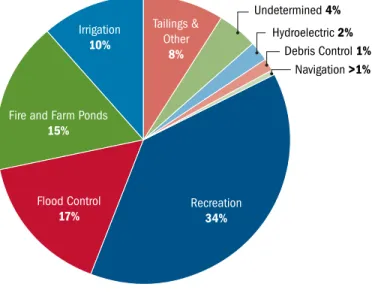
The Dams Sector is a vital and beneficial part of the Nation’s infrastructure and continuously provides a wide range of eco nomic, environmental, and social benefits, including hydro electric power, river navigation, water supply, wildlife habitat, waste management, flood control, and recreation. Figure 2 shows the distribution of dams by function.
Figure 2: Distribution of Dams by Primary Purpose
Undetermined 4% Hydroelectric 2% Debris Control 1% Navigation >1% Irrigation 10%
Fire and Farm Ponds 15% Flood Control 17% Recreation 34% Tailings & Other 8%
Some examples of the benefits derived from sector assets are discussed below:
• Water Storage and Irrigation: Dams create reservoirs throughout the United States that supply water for a multi tude of industrial, municipal, agricultural, and recreational uses. Ten percent of American cropland is irrigated by using water stored behind dams and thousands of jobs are tied to producing crops grown with irrigation water; • Electricity Generation: The United States is one of the
largest producers of hydropower in the world, second only to Canada. Dams in the United States produce more than 270,000 gigawatt hours, contributing 7 percent of the Nation’s electricity and representing 70 percent of the Nation’s renewable energy generation;
• “Black Start” Capabilities: There are 4,316 megawatts of “incremental” hydropower available at sites with exist ing hydroelectric facilities. Incremental hydropower is defined as capacity additions or improved efficiency at existing hydro projects. During the August 2003 blackout in the Northeast, hydropower projects in New York and several other States were able to quickly start generating electricity, leading the way to restoring power to millions of Americans;
• Recreation: Dams and other sector assets provide prime recreational facilities throughout the United States. In 2002, a total of 105.7 million recreation user days and nights were provided at hydropower projects licensed by the Federal Energy Regulatory Commission (FERC). In addition, about 400 million people annually visit a project of the U.S. Army Corps of Engineers (USACE), and about 90 million visit a project of the Bureau of Reclamation (Reclamation) in a year;
• Navigation: Navigation projects constitute an essential component of the U.S. waterway system, which includes 236 lock chambers at 192 lock sites owned and/or operated by the USACE. A principal value of the inland and intrac oastal navigation system is the ability to efficiently convey large volumes of bulk commodities moving long distances. If the cargo transported on the inland waterways each year had to be moved by another mode, it would take an addi tional 6.3 million rail cars or 25.2 million trucks to carry the load. The ability to move more cargo per shipment makes barge transport both fuel efficient and environmen tally advantageous;
• Flood Risk Reduction: Many dams and levees function as flood control projects, thereby reducing the poten tial human health and economic impacts of flooding.
Reservoirs and levees built by USACE reportedly prevented
more than $19 billion in potential damages during the 1993 Midwest Flood. USACE levee systems currently provide a 6:1 return ratio on flood damages prevented compared to initial costs; robust levee systems provide a 24:1 return ratio on investments. Levees and hurricane bar riers reduce flood damages to rural communities as well as major metropolitan areas;
• Sediment Control: Some dams enhance environmental protection by controlling detrimental sedimentation; and • Impoundment of Mine Tailings and Industrial Waste
Materials: More than 1,500 mine tailings and industrial waste impoundments controlled by dams in the Nation facilitate mining and processing of coal and other vital min erals and manufacturing while protecting the environment. Like all critical infrastructures, the technological and national security environment in which the dam infrastructure is operated and maintained continues to evolve over time. New threats to the continued reliability and integrity of all infra structures require vigilance.
Many dam projects are required to allow access to areas sur rounding their facilities, including the dam and navigational lock operations area, and may even encourage public visits and guided tours. Primary access roads to the generation facility and/or control center are secured. In addition, the area outside the facility’s perimeter is open to the public for viewing, and recreational access is provided for boating and fishing. As a result, dam owners and operators actively manage the risk from human access through monitoring and mitigation activities. However, increasingly sophisti cated threats are requiring a more thorough examination of cyber risk.
Due to the high degree of interdependency among infra structure sectors, failures within one sector can spread into others. A successful cyber attack may be able to take advan tage of these relationships to produce cascading impacts and amplify the overall physical, social, and economic damages. The following sectors are linked to the Dams Sector: • The Agriculture and Food Sector depends on a continued
source of water for irrigation and water management; • The Transportation Systems Sector relies on dams and locks
to manage inland waterways for navigation;
• The Water Sector supplies potable water stored by dams to concentrated populations and commercial facilities in the U.S.;
• The Energy Sector provides approximately 8 to 12 percent of the Nation’s power needs with hydropower dams; and
• The Emergency Services Sector relies on Dams Sector assets for firefighting water supply, emergency water supply, and waterborne access in the event of a significant disaster.a The potential risks in the event of asset failures within the Dams Sector are considerable and could result in signifi cant destruction, including loss of life, massive property damage, and severe long-term consequences. A successful cyber attack could affect dam operations in a variety of ways, some with potentially devastating repercussions. An attack could:
• Disrupt the operation of ICS by delaying, blocking, or shutting down the flow of information, thereby denying network availability to dam control system operators; • Send false information to control system operators, either
to disguise unauthorized changes or to initiate inappropri ate actions by automated ICS operators;
• Modify the system’s software, producing unpredictable results, or worse, planned disruptive or dangerous results such as overtopping or large releases;
• Interfere with the operation of safety and protection sys tems, resulting in the potential damage to equipment; • Make unauthorized changes to programmed instructions
in controllers, change alarm thresholds, order premature shutdown of processes (such as prematurely shutting down generators, operating or disabling sluice and spill gates, control valves, etc.) or even disable control and safety equipment;
• Interfere with the operation or security systems of nearby projects by using the attacked project’s system as a cover; and • Disrupt the quality of electrical services.
Sector Regulations
In the United States, the safety of dams is regulated by a number of different agencies. Many facilities throughout the Dams Sector are multi-purpose, and therefore must adhere to multiple standards corresponding to the different operations the facility provides.The agency or agencies that maintain regulatory oversight of a dam can also depend on the ownership as well as its purpose. For example, the U.S. Bureau of Reclamation (Reclamation) and USACE each self-regulates its projects.
Within the Dams Sector, non-Federal dams that produce hydroelectric power are regulated by FERC and/or State dam safety offices. Federally owned dams are self-regulated, and most non-Federal/non-hydropower dams are regulated by State dam safety offices.
a Department of Homeland Security, 2008, National Infrastructure Protection Plan -
Due to the strong interface between the Dams Sector and hydroelectric power generation, it is necessary to briefly discuss the North American Electric Reliability Corporation (NERC). NERC is a self-regulatory organization subject to oversight by FERC and governmental authorities in Canada. NERC has been a driver in establishing cybersecurity stan dards that are used to meet FERC requirements.
In response to the power blackout in 2003 in the northeast ern United States, NERC promoted the development of a new mandatory system of reliability standards and compli ance that would be backstopped by FERC.These standards would focus on ensuring all entities responsible for the reliability of the bulk electric systems in the United States identify and protect critical cyber assets that control or could impact the reliability of those systems.
In August 2003, an interim “urgent action” cybersecurity standard (designated UA 1200) was initially adopted by NERC, and later proposed as a permanent standard (desig nated NERC 1300) in August 2005. In May 2006, a revised and modified version of NERC1300 was developed under NERC’s American National Standards Institute accredited process (which incorporated thousands of comments from experts and operations personnel) and was subsequently adopted by NERC as the Critical Infrastructure Protection (CIP) Reliability Standards, CIP-001 through CIP-009. In January 2008, FERC issued Order 706, “Mandatory Reli ability Standards for Critical Infrastructure,” which approved eight CIP Reliability Standards, CIP-002 through CIP-009b (CIP-001 was previously approved).The CIP standards are mandatory and require bulk power system users, owners, and operators, including hydroelectric power plants in the U.S., to identify and document cyber risks and vulnerabili ties, establish controls to secure critical cyber assets from physical and cyber sabotage, report security incidents, estab lish plans for recovery in the event of an emergency, and certify their level of compliance with the standards. Entities to which the standards apply are subject to NERC audits and fines for noncompliance.
Descriptions of the CIP standards are provided below. As these standards may be subject to future revision, the suffix that denotes the revision status (e.g., -2) is not included in the list:
• CIP-001 - Sabotage Reporting: Requires a responsible entity to define, process and track disturbances or unusual occurrences, suspected or determined to be caused by sabotage and shall report to appropriate governmental agencies and/or regulatory bodies.
b CIP-002 through CIP-009 has undergone several revisions since first approved.
For additional information pertaining to the CIP Standards, access the NERC website at http://www.nerc.com/page.php?cid=2|20.
• CIP-002 - Critical Cyber Asset Identification: Requires a responsible entity to identify its critical assets and critical cyber assets using a risk-based assessment methodology. • CIP-003 - Security Management Controls: Requires a
responsible entity to develop and implement security man agement controls to protect critical cyber assets identified pursuant to CIP-002.
• CIP-004 - Personnel and Training: Requires personnel with access to critical cyber assets to have identity veri fication and a criminal check. It also requires employee training.
• CIP-005 - Electronic Security Perimeters: Requires the identification and protection of an electronic security perimeter and access points. The electronic perimeter is to encompass the critical cyber assets identified pursuant to the methodology required by CIP-002.
• CIP-006 - Physical Security of Critical Cyber Assets: Requires a responsible entity to create and maintain a physical security plan that ensures that all cyber assets within an electronic perimeter are kept in an identified physical security perimeter.
• CIP-007 - Systems Security Management: Requires a responsible entity to define methods, processes, and pro cedures for securing the systems identified as critical cyber assets, as well as the non-critical cyber assets within an electronic security perimeter.
• CIP-008 - Incident Reporting and Response Planning: Requires a responsible entity to identify, classify, respond to, and report cybersecurity incidents related to critical cyber assets.
• CIP-009 - Recovery Plans for Critical Cyber Assets: Requires the establishment of recovery plans for critical cyber assets using established business continuity and disaster recover techniques and practices.
Other cybersecurity guidelines developed, such as those by NIST (National Institute of Standards and Technology) spec ified under the NIST Special Publication (SP) 800-53 “Rec ommended Security Controls for Federal Information Sys tems” and NIST SP 800-82 standards “Guide to Industrial Control Systems Security” generally offer more granularities in the context of defining an electronic security perimeter around ICS assets. NIST SP 800-53 was originally developed to apply to traditional government-operated IT systems and contains specifications for information security controls that are binding for all non-national security information and information systems belonging to, or operated for, Federal agencies. However, NIST SP 800-53 has also been used in non-government IT and control system environments.
As part of the ongoing initiative to develop a unified infor mation security framework for the Federal government and its contractors, NIST SP 800-53 revision 3 includes security controls for both national security and non-national secu rity systems.The updated security control catalog incorpo rates best practices in information security from the U.S. Department of Defense, Intelligence Community, and Civil agencies, to produce the most broad-based and comprehen sive set of safeguards and countermeasures ever developed for information systems.The standardized set of manage ment, operational, and technical controls provides a com mon specification language for securing Federal informa tion systems processing, storing, and transmitting national security and non-national security information.The revised security control catalog also includes state-of-practice safeguards and countermeasures needed by organizations to address advanced cyber threats capable of exploiting vulner abilities in Federal information and ICS. In 2006, NIST also established the “Industrial Control System Security Project” to improve the security of public and private sector ICS; a major part of the project is to research the applicability of SP 800-53 to ICS and to clarify/rectify any problems expe rienced in applying SP 800-53 to ICS.
NIST standards are mandatory for Federal facilities under the Federal Information Security Management Act (FISMA) guidelines.The Federal Information Security Management Act of 2002 (“FISMA”, 44 U.S.C. § 3541, et seq.) was enacted as Title III of the E-Government Act of 2002 (Pub.L. 107-347, 116 Stat. 2899).The act recognized the impor tance of information security to the economic and national security interests of the United States.The act requires each Federal agency to develop, document, and implement an agency-wide program to provide information security for information and information systems.
Since the NIST cybersecurity guidelines specified under the NIST SP 800-53 revision 3 and NIST SP 800-82 stan dards offer more granularities in the context of defining an electronic security perimeter around ICS assets, Dams Sector owners and operators believe that the NIST guide lines, rather than the CIP Standards, lead to better results with respect to hardening control systems. In addition, the NIST standards allow owners and operators to use a risk-based approach when meeting the standards, whereas the mandatory CIP Standards are primarily focused on compli ance with pre-established requirements, which may not be compatible with a risk-informed, site-specific analysis. The CIP Standards, to which the hydropower facilities within the Dams Sector must comply, present a number of significant challenges to sector stakeholders. Interpretation of the requirements and application to the specific realities of Dams Sector facilities is difficult as many facilities are confronted with compliance requirements for multiple stan dards, some of which are conflicting. Owners and operators
believe that the lack of clear and established policies and guidelines associated with the CIP Standards makes their implementation difficult because of conflicting interpreta-tions.These concerns were apparent during the “Dams Sec tor Cybersecurity Summit” conducted on June 24-25, 2009 in Chicago, IL, which was organized to provide industry and government experts with the opportunity to discuss the most significant issues and concerns regarding cybersecu rity and control systems.
The CIP Standards, from the owner and operator perspec tive, do not provide the most cost-effective measures by requiring implementation of physical mitigations to “criti cal” cyber assets, as it is unclear as to what those “critical” cyber assets are. In addition, the CIP Standards primarily focus on access control (both physical and cybersecurity) of a dam’s hydropower features, rather than on the security of the dam itself.This represents a shift from cyber mitigation efforts to the physical mitigation of a cyber threat. It is very difficult for some dam owners to comply with all of the CIP Standards since it may not always be feasible to implement a security perimeter around their cyber assets. Many owners and operators of hydropower facilities are more concerned with the possible consequences associated with a dam fail ure than with those of a hydropower plant shutdown caused by a cyber attack.This represents an overarching concern of the sector since costly fines are levied for non-compliance with the standards.
During the cybersecurity summit, participants also strongly highlighted the need to develop guidance in order to ensure owners and operators understand the CIP Standards and its applicability to their respective facilities, as well as recommendations pertaining to the implemen tation process to ensure compliance is achieved. Further more, there is a need to develop guidance for owners and operators that addresses the potential implications of future requirements as they are identified.
Dams Sector Cybersecurity Coordination
As previously referenced, the NIPP relies heavily on the sector partnership framework as the primary organizational struc ture for coordinating CIKR efforts and activities. As part of the partnership framework, the Dams Sector Council members conduct meetings on a quarterly basis to discuss the status of various ongoing collaborative efforts and initiatives focused on enhancing the protection and resilience of physical, human, and cyber infrastructure of the Dams Sector, as well as to identify future requirements associated with the preven tion, protection, security, and resilience of sector assets.
Dams Sector Coordinating Council
The Dams SCC currently consists of the following industries, trade associations, and other dam stakeholders:
• Allegheny Energy
• Ameren Services Company • American Electric Power
• Association of State Dam Safety Officials • Association of State Floodplain Managers • AVISTA Utilities
• CMS Energy
• Colorado River Energy Distributors Association • Dominion Resources
• Duke Energy • Exelon Corporation • Hydro-Quebec
• National Association of Flood and Stormwater Management Agencies
• National Hydropower Association
• National Mining Association (ex-officio member) • National Water Resources Association
• New York City Department of Environmental Protection (ex-officio member)
• New York Power Authority • Ontario Power Generation • Pacific Gas and Electric Company • PPL Corporation
• Progress Energy
• Public Utility District 1 of Chelan County, Washington • Scana Corporation
• Seattle City Light
• South Carolina Public Service Authority (Santee-Cooper) • Southern California Edison (ex-officio member)
• Southern Company Generation • United States Society on Dams • Xcel Energy
Dams Government Coordinating Council
The Dams GCC currently consists of the following Federal, State, local, tribal, and territorial government entities: • Bonneville Power Administration
• Environmental Protection Agency • Federal Energy Regulatory Commission
• Tennessee Valley Authority
• State of California, Department of Water Resources • State of Colorado, Division of Water Resources • State of Nebraska, Department of Natural Resources • State of New Jersey, Department of Environmental
Protection
• State of North Carolina, Department of Environment and Natural Resources
• State of Ohio, Department of Natural Resources • State of Pennsylvania, Department of Environmental
Protection
• State of Washington, Department of Ecology • US Department of Agriculture, Natural Resources
Conservation Service
• US Department of Commerce, National Weather Service • US Department of Energy
• US Department of Defense, U.S. Army Corps of Engineers • US Department of Homeland Security, Office of
Infrastructure Protection
• US Department of Homeland Security, Federal Emergency Management Agency
• US Department of Homeland Security, US Coast Guard • US Department of Homeland Security, Science and
Technology Directorate
• US Department of the Interior, Bureau of Reclamation • US Department of Labor, Mine Safety and Health
Administration
• US Department of State, International Boundary and Water Commission
• Western Area Power Administration
Levee Sub-Sector Coordinating Council
Within the Dams Sector, a Levee Sub-Sector Coordinating Council (LSCC) was established to lead efforts pertaining to the security and protection of levees and flood damage reduction systems.The LSCC currently consists of the fol lowing members:
• American Society of Civil Engineers (ex officio) • Association of State Floodplain Managers
• State of California, Department of Water Resources • FM Global (ex officio)
• Louisiana State Police, Levee District
• Metropolitan Water District of Southern California
• National Association of Flood and Stormwater Management Agencies
• Reclamation District 1000, Sacramento, CA • Southeast Louisiana Flood Protection Authority • South Florida Water Management District • South La Foursche Levee District, Galiano, LA • U.S. Society on Dams
Levee Sub-Sector Government Coordinating Council
In addition, a Levee Sub-Sector Government Coordinating Council (LGCC) was established to serve as the counterpart and partner to the LSCC to develop, implement, coordinate, and execute protective programs and resilience-enhancing strategies relevant to levees and flood-risk reduction infra structure systems across and between government agencies. The LGCC currently consists of the following members: • State of California, Department of Water Resources • US Department of Defense, U.S. Army Corps of Engineers • US Department of Agriculture, Natural Resources
Conservation Service
• US Department of Homeland Security, Office of Infrastructure Protection
• US Department of Homeland Security, Federal Emergency Management Agency
• US Department of State, International Boundary and Water Commission
In addition to the Dams Sector Councils noted above, the DHS Cross-Sector Cyber Security Working Group (CSC SWG) and the Industrial Controls System Joint Working Group (ICSJWG) provide further coordination on cyber issues. In addition, the US-CERT and the Industrial Con trol System Cyber Emergency Response Team (ICS-CERT), which are also DHS organizations, provide cybersecurity information along with the State organization—Multi-State Information Sharing and Analysis Center (MS-ISAC), described below.
Cross-Sector Cybersecurity Working Group
As with the SCCs and GCCs, the CSCSWG was established under the auspices of CIPAC to allow for government and private sector collaboration.This working group serves as a forum to bring the government and the private sec tor together to address cybersecurity risk across the CIKR sectors.This cross-sector perspective facilitates the sharing
of viewpoints and knowledge about various cybersecurity concerns, such as common vulnerabilities and protective measures, and leverages functional cyber expertise in a comprehensive forum. Managing cyber risk and securing cyberspace is an issue that cuts across the nation’s CIKR, and the cross-sector perspective ensures effective coordination with all of the sectors. Members of the Dams Sector Coun cils actively participate as members of the CSCSWG.
Industrial Control System Joint Working Group
The ICSJWG also operates under the auspices of CIPAC and was established in December 2008. The ICSJWG is a collaborative coordination body operating under CIPAC. It was established to facilitate the collaboration of ICS stakeholders and to accelerate the design, development, and deployment of enhanced security for ICS. ICSJWG participants include international stakeholders, govern ment, academia, owner/operators, systems integrators, and the ICS vendor community. Although its objective is to reduce the risk of cyber ICS, which is the same as that of this roadmap, the ICSJWG scope is coordination across all CIKR Sectors, whereas this roadmap’s focus is within the Dams Sector. Members of the Dams Sector Councils also are active members of the ICSJWG.
United States Computer Emergency Readiness Team
The US-CERT was established in 2003 and is a partner ship between DHS and the public and private sectors that is designed to help secure the Nation’s Internet infrastructure and coordinate defenses against and responses to cyber attacks across the Nation. The US-CERT provides a 24/7 single point of contact for cyberspace analysis and warn ing, information sharing, incident response and recov ery for a broad range of users, including government, enterprises, small businesses, and home users. US-CERT is responsible for:
• Analyzing and reducing cyber threats and vulnerabilities; • Disseminating cyber threat warning information; and • Coordinating cyber incident response activities. US-CERT also assists in the management, response, and handling of incidents, vulnerabilities, and mitigation of threat actions specific to critical control systems functions. A special section of US-CERT is devoted specifically to control system security, as described below.
Industrial Control System – Cyber Emergency Response Team
The ICS-CERT operates as a functional element of the US CERT for cyber incidents related to ICS.The ICS-CERT is responsible for analyzing and responding to cyber threats or issues affecting ICS security in critical infrastructure. DHS has recognized the need to expand upon these technical and response capabilities in order to improve situational
aware-ness and incident response and to mitigate vulnerabilities. This expansion encourages government and private sector participation by reporting and sharing incident and vulner ability information.
Homeland Security Information Network – Critical Sectors
DHS’s Homeland Security Information Network-Critical Sectors (HSIN-CS) is a Web-based system that provides situ ational awareness and facilitates information sharing and collaboration with public and private homeland security partners, domestically and internationally.
HSIN-CS is an important aspect of the Dams Sector infor mation-sharing environment, as it provides a forum for its members to access sensitive but unclassified information relevant to a number of sector issues.The HSIN-CS Dams Portal, managed by the Dams SSA within IP, provides trusted and vetted public and private sector partners, including owners and operators, an effective web-based tool with multiple capabilities and information-sharing components. The portal includes various communities of interest focused on specific activities and initiatives within the sector; a reference library to provide information pertaining to issues such as security, protective measures, and crisis manage ment; capabilities for suspicious activity reporting; and access to training modules.
Multi-State Information Sharing And Analysis Center
The MS-ISAC is a collaborative organization with participa tion from all 50 States, the District of Columbia, local gov ernments, and U.S.Territories.The mission of the MS-ISAC is to provide a common mechanism for raising the level of cybersecurity readiness and response in each State and with local governments and the Territories. It provides a central resource for gathering information from the States on cyber threats to critical infrastructure and providing two-way sharing of information between and among the States and with local government.
Operating under the auspices of MS-ISAC, the Local Gov ernment Cyber Security Committee was established to help identify the cybersecurity challenges facing localities and work toward solutions.This committee, which is voluntary and collaborative, comprises individuals representing towns, counties, cities, and school boards along with a mix of State government representatives.