U
NIVERSITÀ DEGLI
S
TUDI DI
N
APOLI
F
EDERICO
II
D
IPARTIMENTO DI
I
NGEGNERIA
C
HIMICA
,
DEI
M
ATERIALI E
DELLA
P
RODUZIONE
I
NDUSTRIALE
XXIX
P
HD
P
ROGRAMME INI
NDUSTRIALP
RODUCT ANDP
ROCESSE
NGINEERINGC
URRICULUM ONP
RODUCTIONT
ECHNOLOGY ANDS
YSTEMS PHDPROGRAMME COORDINATOR:PROF.ING.GIUSEPPE MENSITIERIOn the manufacturing techniques of lightweight
hemp-epoxy composites and improvement of their flame
resistance
P
HD
P
ROJECTS
UPERVISORP
HD
C
ANDIDATEP
ROF.
I
NG.
F
ABRIZIOM
EMOLAC
APECEM
INUTOLOL
UCAB
OCCARUSSOP
HD
P
ROJECTC
O-S
UPERVISORDOTTORATO IN INGEGNERIA DEI PRODOTTI E DEI PROCESSI INDUSTRIALI
PIAZZALE TECCHIO 80—80125NAPOLI—ITALIA TEL.(3981)7682512/7682552
XXIX
P
HD
P
ROGRAMME INI
NDUSTRIALP
RODUCT ANDP
ROCESSE
NGINEERINGC
URRICULUM ONP
RODUCTIONT
ECHNOLOGY ANDS
YSTEMS PHDPROGRAMME COORDINATOR:PROF.ING.GIUSEPPE MENSITIERIOn the manufacturing techniques of lightweight
hemp-epoxy composites and improvement of their
flame resistance
P
HD
P
ROJECTS
UPERVISORP
HD
C
ANDIDATEP
ROF.
I
NG.
F
ABRIZIOM
EMOLAC
APECEM
INUTOLOL
UCAB
OCCARUSSOP
HD
P
ROJECTC
O-S
UPERVISORTo my parents, Eugenio and Giustina. Constant sources of inspiration and role model.
i
List of Contents
Acknowledgements ... i
List of Tables ... ii
List of Figures ... iii
Abstract ... vi
1 Chapter 1: Introduction and Overview ... - 1 -
1.1 Introduction ... - 1 -
1.2 Literature Review ... - 2 -
1.2.1 Sandwich Structures ... - 5 -
1.2.2 Flame Retardants and Flammability Testing Techniques ... - 7 -
1.3 Aim of the Thesis ... - 12 -
References ... - 13 -
2 Chapter 2: Biocomposites ... - 17 -
2.3 Introduction to Biocomposites... - 17 -
2.4 Natural Fibres Composites (NFCs) ... - 19 -
2.4.1 Matrix selection... - 20 -
2.4.2 Bio-derived Thermoplastic as Matrix ... - 21 -
2.4.3 Thermoset Polymers as matrix ... - 22 -
2.4.4 Process Techniques ... - 23 -
2.5 Natural Fibres: Source and Classification ... - 26 -
2.5.1 Comparison of Cellulose Fibres ... - 27 -
2.6 Historical background of Natural Fibres Composites (NFCs) ... - 30 -
2.6.1 Natural Fibre Composites Market ... - 33 -
ii
2.7.1 Advantages ... - 34 -
2.7.2 Disadvantages ... - 36 -
References ... - 39 -
3 Chapter 3: Materials and Method ... - 44 -
3.3 Materials Selection ... - 44 -
3.3.1 Hemp as Reinforcement for composites ... - 45 -
3.3.2 Epoxy Resin as Matrix ... - 59 -
3.4 Experimental Procedure... - 64 -
3.4.1 Lightweight Hemp Manufacturing ... - 64 -
3.4.2 Flame Resistance Improvement ... - 71 -
References ... - 75 -
4 Chapter 4: Results and Discussions on the Manufacturing of Lightweight Hemp Structure - 78 - 4.1 Part 1: Use of an Innovative Infusion Process... - 78 -
4.2 Part 2: Conventional and Un-conventional Processes ... - 83 -
4.3 Part 3: Continuous Impregnation Process ... - 87 -
5 Chapter 5: Results and Discussions on the Improvement of Fire Properties ... - 102 -
5.3 Cone calorimeter analysis ... - 102 -
5.4 Flammability test ... - 107 -
5.5 DMA test ... - 108 -
5.6 Mechanical Tests ... - 110 -
References ... - 113 -
i
Acknowledgements
This thesis would not have been possible without the support of my supervisors Prof. Fabrizo Memola Capece Minutolo and Prof. Massimo Durante. I would like to express to them my sincere gratitude for their significant suggestions, inspiring guidance and immense knowledge.
ii
List of Tables
Table 1.2-1 Example of structural efficiency of sandwich panels in terms of weight. ... 6
-Table 2.5-1 Properties of glass and natural fibres. ... 27
-Table 2.5-2 The prices of some fibres. ... 28
-Table 2.5-3 Commercially available fibre sources and their production. ... 28
-Table 2.5-4 Physical characteristics of bast fibres. ... 29
-Table 2.5-5 Percentage chemical composition of cellulose fibres. ... 29
-Table 2.7-1 Comparison between natural and glass fibres. ... 35
-Table 3.3-1 Typical physical and mechanical properties of hemp... 53
-Table 3.32 Tensile properties of hemp fibers as reported by different authors. ... 53
-Table 3.3-3 Chemical composition of hemp fibres as reported by different authors. ... 55
-Table 3.3-4 Properties of the unidirectional woven hemp fabric . ... 59
-Table 3.3-5 Properties of the bidirectional woven hemp fabric ... 59
-Table 3.3-6 Highlight points of epoxy resin SX10. ... 62
-Table 3.3-7 Technical data sheet. ... 63
-Table 3.3-8 Suggested curing cycles. ... 63
-Table 3.3-9 Mechanical Properties data sheet. ... 64
-Table 3.4-1 Produced laminates and their properties. ... 71
-Table 3.4-2 Chemical composition and physical properties of APP. ... 72
-Table 3.4-3 Denomination of the different samples and their composition. ... 73
-Table 4.11 Comparison among the mechanical properties of the hemp, aluminum and divinycell core. . 80
-Table 4.2-1 Tensile and flexural properties. ... 84
-Table 4.3-1 Main mechanical properties of the hemp tow. ... 88
-Table 4.3-2 Span length evaluated for each typology. ... 97
-Table 4.3-3 Compression test results. ... 99
-Table 5.3-1 Combustion parameters obtained from cone calorimeter tests (standard deviations between square brackets). ... 105
-Table 5.3-2 Residual mass, TSR and average emission of CO and CO2 (standard deviations between square brackets). ... 105
-Table 5.4-1 V12 tests results (standard deviations between square brackets). ... 108
-iii
List of Figures
Figure 1.2-1 Sandwich construction with honeycomb core. ... 5
-Figure 1.2-2 Example of sandwich core structures... 6
-Figure 1.2-3 Demonstration of the self-sustaining polymer combustion cycle; a–d represent potential modes of flame retardants]. ... 8
-Figure 1.2-4 Schematic representation of an experimental setup in a cone calorimeter. ... 10
-Figure 1.2-5 Schematic representation of setup in vertical burning test. ... 11
-Figure 2.3-1 Classification of biocomposites based on material constituents. ... 18
-Figure 2.5-1 Overview of natural fibres. ... 26
-Figure 2.5-2 Classification of natural fibre that can be used as reinforcements in polymers. ... 26
-Figure 2.6-1 Automobile components based on polymer composites reinforced with lignocellulosic fibres … ... 31
-Figure 2.6-2 Car from hemp by Henry Ford . ... 31
-Figure 2.6-3 Some Applications of natural fibres... 32
-Figure 3.3-1 Hemp composites in mobility applications ... 46
-Figure 3.3-2 (a) Aria column speaker 900 from FOCAL and (b) El Capitan Blackbird Guitar BLACKBIRD. ... 47
-Figure 3.3-3 a) The Hemp Chair by Werner Aisslinger and (b) the Geometric Hemp chair by Ko-Ho. Photo by Samuel Hoisko. ... 48
-Figure 3.3-4 Female hemp plant. ... 50
-Figure 3.3-5 Cross section of a hemp stem. ... 51
-Figure 3.3-6 Composition of hemp stem. ... 52
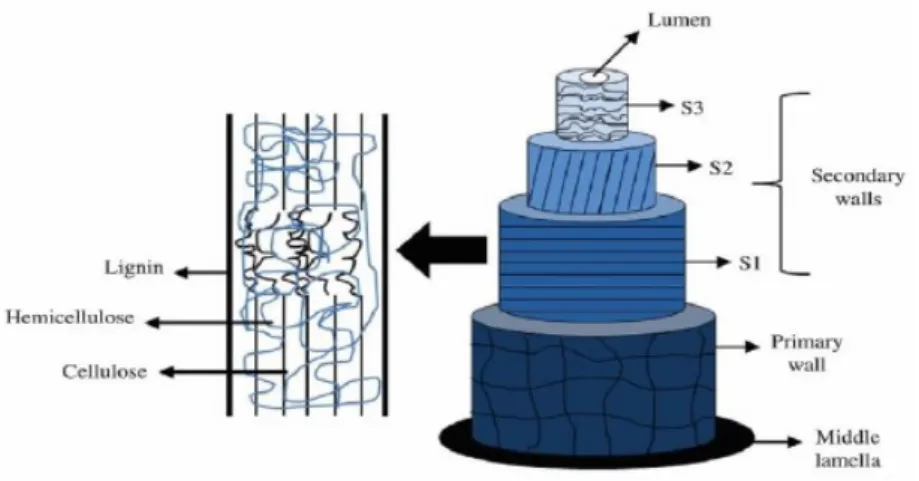
-Figure 3.3-7 Schematic representation of plant fibre structure: S1-external secondary wall, S2-middle secondary wall and S3internal secondary wall... 55
-Figure 3.3-8 Structure of cellulose. ... 56
-Figure 3.3-9 Unidirectional (a) and bidirectional (b) woven hemp fabric used. ... 58
-Figure 3.3-10 Epoxy ring. ... 60
-Figure 3.3-11 Chemical structure of DGEBA. ... 61
-Figure 3.4-1 Woven hemp fabric before (a) and after (b) the enlargement of the mesh. ... 66
-Figure 3.4-2 Steps of the proposed infusion process: Configurations number I (a), number II (b) and number III (c). ... 67
-Figure 3.4-3 Composite laminate surfaces. ... 69
-iv
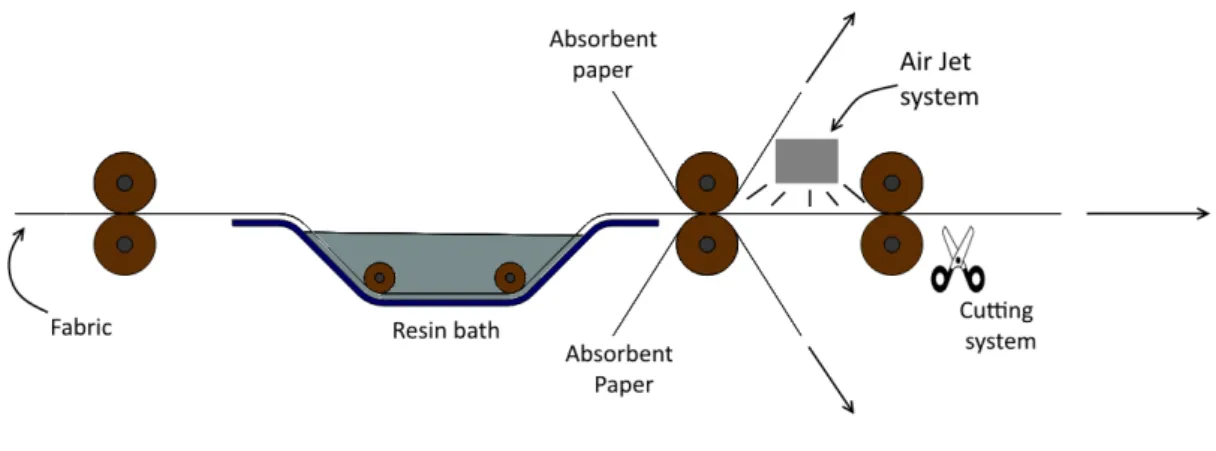
Figure 3.4-5 Schematization of the idealized system to produce impregnated hemp fabric in a continuous
manner. ... 70
-Figure 3.4-6 Unidirectional hemp fabric used in the experimental campaign (A), magnification of 1 cm of hemp yarn that composes the fabric (B), hierarchical yarn structure (C) and infusion process of a biocomposite laminate (D). ... 72
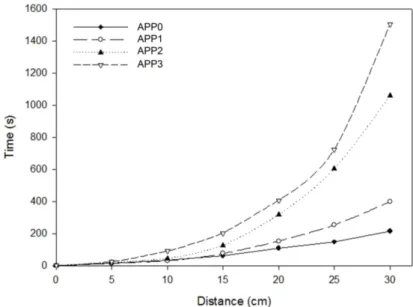
-Figure 3.4-7 Impregnation time versus distance of impregnating flow for untreated and treated samples. 73 -Figure 4.1-1 Stressstrain curves of the hemp core composites in the flatwise compression. ... 78
-Figure 4.1-2 Stressstrain curves of the hemp core composites in the3point bending conditions. ... 79
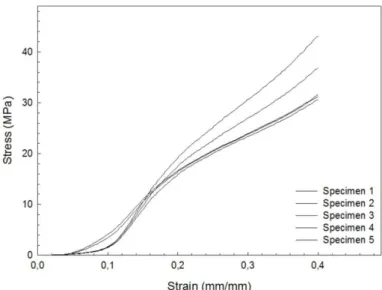
-Figure 4.1-3 Stressstrain curves of the hemp core composites in the tensile conditions... 79
-Figure 4.1-4 Force deflection curves of the sandwich composites under bending. ... 81
-Figure 4.1-5 Indentation phenomenon during the three-point bending test of the divinycell sandwich (A). Failure of the divinycell (B) and hemp sandwich(C). ... 82
-Figure 4.2-1 Tensile stressstrain (a) and specific stressstrain curves (b). ... 83
-Figure 4.2-2 Bending stress-strain (a) and specific bending stress-strain curves with example of specimens at the end of the test (b). ... 85
-Figure 4.2-3 Impact and specific impact resistance of the hemp composites and example of specimens at the end of the test... 86
-Figure 4.3-1 Tensile test setup. ... 87
-Figure 4.3-2 Tensile test results for each sample typology. ... 89
-Figure 4.3-3 Typical tensile stressstrain curves for each typology. ... 90
-Figure 4.3-4 Summarized results for each typology: maximum tensile stress and modulus (a) and maximum strain (b)... 90
-Figure 4.3-5 Experimental and theoretical comparison for the tensile strength (a) and E modulus (b). .... 91
-Figure 4.3-6 Threepoint bending test results for each sample typology. ... 92
-Figure 4.3-7 Typical bending stress-strain curves for each sample typology with image examples of the specimens during the test. ... 93
-Figure 4.3-8 Summarized results for each typology: maximum bending stress and modulus (a) and strain at first failure (b)... 93
-Figure 4.3-9 Results of threepoint bending test conducted on short beam for each sample typology. ... 95
-Figure 4.3-10Maximum σfand τf for each sample typology and image examples of the specimens at the end of the test. ... 96
-Figure 4.3-11 Results of three-point bending test conducted on short beam on A10 and B10 sample typology. ... 98
-Figure 4.3-12 Typical compression stressstrain curves for A10 and B10 typology. ... 99
-Figure 4.3-13 Impact resistance results and example of specimens at the end of the test. ... 100
-Figure 5.3-1 Cone calorimeter equipment used (A) and execution of a test (B). ... 102
-v
Figure 5.3-3 Heat release rate versus time for untreated and treated samples. ... 104
-Figure 5.3-4 Mass loss versus time for untreated and treated samples. ... 105
-Figure 5.3-5 Residues at the end of the cone calorimeter test: APP0 (A), APP1 (B), APP2 (C) and APP3 (D). ... 106
-Figure 5.3-6 Top surface of the cone calorimeter specimens at the end of the test: APP1 (A) and APP2 (B)… ... 107
-Figure 5.4-1 Example of a specimen during the test. ... 107
-Figure 5.4-2 Specimens at the end of the V12 test: APP0 (A), APP1 (B), APP2 (C) and APP3 (D). ... 108
-Figure 5.5-1 DMA test in threepoint bending mode. ... 109
-Figure 5.5-2 Storage modulus versus temperature for untreated and treated samples. ... 110
-Figure 5.5-3tan δ versus temperature for untreated and treated samples. ... 110
-Figure 5.6-1 Threepoint bending test. ... 111
-vi
Abstract
The thesis work has been focused on the study of manufacturing technologies used to produce lightweight hemp/epoxy composites for their future applications as lightweight components, such as in the transportation industry. In this field, apart from the mechanical properties, good flame resistance is also required and then to increase the flame resistance of these components was another goal of this thesis. For this purpose, woven hemp fabrics with large mesh were used to produce porous structures and then lightweight hemp/epoxy composites for their future application both as independent structural components and as core for sandwich structures.
The thesis work is structured in the following six sections.
The first one begins with an overview on the state of the art of the hemp/epoxy composites and the main concepts about the flame retardants and the flame resistance techniques was presented. In this section, the need to investigate the possible use of hemp/epoxy composite materials, the study of their manufacturing processes (easily applicable for the industrial production) to produce low density composites and the study of techniques able to improve their flame resistance are highlighted. Therefore, an overview about biocomposites, their classification, their advantages and disadvantages, and their manufacturing technologies are reported in the second section.
The materials and the methods used to conduct the experimental campaign, both for the manufacturing of lightweight structures and for the improvement of their flame resistance, are presented in the third section, which is structured as follows:
- Firstly, a detailed description on the materials and in particular on the hemp fibres is reported;
- Subsequently, in order to produce natural fibre reinforced composites with different density values the use of different processes, i.e. infusion, vacuum infusion, brushing hand lay-up and injection moulding were described. To achieve this goal, the section is divided in three sub-sections (Part 1, Part 2 and Part 3); each sub-section is focuses on one of the above-mentioned technologies;
- Finally, the methods used to improve the flammability resistance of hemp composites, mixing the epoxy resin with different percentage content of APP (ammonium Poly-phosphate), are described.
vii
The subsequent sections of the thesis (Section 4 and 5) focus on the results and the discussion on both the feasibility of the illustrated processes and on the properties of the obtained products. Therefore, a full characterization in terms of tensile, flexural, compression, impact and flame resistance properties are carried out and then discussed.
Conclusive remarks, where the main results are summarized, close the thesis work
- 1 -
1
Chapter 1: Introduction and Overview
1.1
Introduction
Due to the increasing environmental awareness, depletion of petroleum resources, disposal problems after use, and introduction of new rules and regulations by legislative authorities to satisfy the new demands of the society, the new products must minimize the environmental impact. This aspect is especially relevant in the composite manufacturing field, where petroleum polymers and synthetic fibres are still widely used. This concept is directly connected with an efficient use of the material and of the energy resources, waste management and with the use of products and technologies with less impact on the environment. It is also clear that the search of lightweight composites structures is increasing in different industrial fields, i.e. automotive components, building materials and aeronautic industry and in general in the transportation industry, where the drive for weight and costs saving is greatest. Indeed, the products required from this filed should be as light as possible as well as cheap, together with high mechanical properties. Considering that the use of bio-based materials matches very good both the environmental, the costs and the lightweight requirements and highlighting the tremendous advantages and opportunities associated with the use of these materials such as low cost, less tool wear during processing, high specific properties and their availability as a renewable resource, there is still need to investigate and to increase their engineering application fields. Under this point of view, the use of natural fibres as reinforcement in composite materials is attracting more and more interest [1, 2, 3] and a large amount of researches were conducted in order to study a range of recyclable materials based on natural fibres such as jute, oil, palm, coconut, flax, hemp, kenaf and many more [4, 5, 6, 7, 8, 9, 10]. Among various kinds of natural fibres, hemp is one of the most interesting plants, it can easily be grown around the world, it has low cost, low density, ability of extracting heavy metals from the soil makes, high specific strength when compared to glass or aramid fibers and it is available as a renewable resource. The hemp fibre had a considerable history in terms of providing high tensile strength, especially in the use for roping, and in being part of a large productive system [11]. After a few decades of oblivion, due to drug production-related issues, the availability of varieties with low tetrahydro-cannabinoids (THCs) content, allowed hemp production to resume [12]. It is therefore necessary in this moment to raise the profile of fibre use towards more engineered components, which may be of interest in several fields, including building, automotive and leisure sectors [13].
- 2 - Regarding the matrix used for the composite manufacturing, its selection is limited by the temperature at which natural fibres degrade. Most of the natural fibres used for reinforcement in natural fibre composite are thermally unstable above 200 °C, although under some circumstances it is possible for them to be processed at higher temperature for a short period [3].
Due to this limitation, only thermoplastics that soften below this temperature and thermosets, which can be cured below this temperature, are useable as a matrix [14].
Thermoplastics are capable of being repeatedly softened by the application of heat and hardened by cooling and have the potential to be the most easily recycled, which has seen them most favoured in recent commercial uptake, whereas a better emphasis of the fibres mechanical properties are generally achieved by using thermosets as matrix.
In fact, thermoset polymers are particularly attractive as matrix materials for natural fibre reinforced composite production as they generally have reactive functional groups that make them compatible with hydrophilic fibre surfaces [15]. Among these, the epoxy is one of the most interesting polymer resins that used as matrix for the natural fibre composites shows very high mechanical properties of the final product [3].
However, as organic materials, the polymers and the natural fibres are very sensitive to flame, then the improvement of the flame resistance is becoming more and more an important topic for the use of natural fibre composites products in any application fields where fire problems can occur, such as in the transportation industry. Therefore, for these applications an improvement of the flame resistance is strictly required in order to allow the termination of the burning process before that the actual ignition occurs.
1.2
Literature Review
The main application fields where the use of hemp composites found success are in building and automotive applications because in this fields there are an enormous demand to decrease the energy consummation.
For example, in the building sector two main strategies have been followed for the energy efficient : (i) reducing energy consumption during the building service life, for instance by adopting the “Zero Energy Building” approach [16, 17]; (ii) reducing energy consumption also in the pre-service life, including raw materials extraction and manufacturing [16, 18], for instance by developing new building materials based on renewable resources (such as hemp) and/or involving less energy consuming manufacturing processes [19]. Following this latter approach, novel sustainable
- 3 - composites for the building industry have recently been proposed [16, 20] and several studies are still in progress. However, the aim of these studies is to investigate on the durability of the hemp composites and to highlight their good thermal and sound insulation properties and then their use for both internal and external thermal insulating products but no applications for structural component was founded [16].
Recently, the automotive industry has begun to employ natural fibres in the manufacture of both interior and exterior vehicle components to reduce the overall weight of the car whilst increasing its fuel efficiency and sustainability [21]. Several multinational companies, such as Daimler Chrysler, Mercedes Benz and Toyota, have introduced natural fibre composites into their products and plan to further increase their use in future components [22]. Jaguar and Land Rover [23] developed a prototype car door from flax/polypropylene and reported that the natural fibre component offers an excellence performance compared to current parts. Their results showed that this prototype is approximately 60% lighter than the equivalent steel part for the same stiffness, while Jaguar’s prototype is roughly 35% lighter than a glass filled polypropylene component with the same thickness. But in the last years several research was done, indeed the issue is still open, indeed in the last years many researchers showed that composites based on natural fibres can, if correctly designed, offer comparable properties to those based on conventional fibres. Mallaiah et al. [24] compared the properties of bio-based and synthetic fibre based sandwich structures and demonstrated that a hybrid structure based on bamboo and glass fibres offers higher values of core shear stress and face bending stress than those structures manufactured from either pure glass or bamboo fibres.
Recently, lightweight composite structures have seen dramatically increasing use in aircraft and satellites, where the drive for weight saving is greatest. Composite sandwich structures are recognised as offering a high strength to weight ratio as well as high specific bending stiffness and strength characteristics under distributed loads.
As known, these structures are composed of a core, which is light but thick with low strength, and two skins, that are stiffer and stronger [21]. A lot of alternative forms of sandwich panels can be accomplished by combing different core and skin materials combined with different geometries. Honeycomb, foam, truss and corrugated core are the most widely used cores in sandwich panels. Researchers proposed alternative forms for sandwich panels: Xu et al. [25] introduced a new idea that combined graded material and lattice core for forming the graded lattice core sandwich structures, which was different from the convectional truss core structures. Zuhri et al. [21] studied the properties of square and triangular honeycomb core materials based on co-mingled flax fibres reinforced polypropylene and polylactide polymers. Rao et al. [26] characterized the bond strength and energy absorption capabilities of recycled sandwich panels made from sawdust polypropylene composites.
- 4 - Cicala et al. [27] showed the feasibility of using hemp/epoxy biocomposite materials as base for an hexarchiral auxetic truss-core made with RTM techniques.
Based on this overview, it is clear that there is still need to investigate the possible use of these materials and to study manufacturing processes that are in the same time no complex, easy to industrial scale-up and able to produce low density composites.
In addition, since the aim to extend the application fields of the natural fibre composites, there are a lot of applications in which fire problems can occur and then the improvement of the flame resistance can be deeply felt, considering that as organic materials, the polymers and the natural fibres are very sensitive to flame.
One of the most expeditious method used to improve the flame retardancy is the incorporation of additive that can interfere with the combustion during a particular stage of the burning process [28]. The most widely used additive types are inorganic compounds, halogenated compounds and phosphorous compounds [29, 30]. In addition, boric acid, ammonium phosphates and borates, ammonium sulphate and chlorides, zinc chloride and borate, antimony oxide, sodium borate and dicyanodiamide are also used [28].
An example of a widely used inorganic flame retardant is the ammonium polyphosphate (APP) which, unlike the other phosphorus-based additives, is not harmful to health.
The flame retardants can be used either by direct incorporation into polymer matrix during the process or by impregnation or grafting onto natural fibres. Several authors demonstrated the interest
to modify natural fibres surface using phosphorous compounds:
Dorez et al. [31] investigated the thermal degradation and fire behaviour of different natural fibres/PBS biocomposites additivated with APP. This addition was beneficial to the formation of a strong char barrier and for a significant decrease of the peak of heat rate release (PHRR); Shumao et al. [32] studied the influence of APP on the flame retardancy of a ramie fibres-reinforced poly (lactic acid). The authors obtained better flame retardancy with the incorporation of APP both in fibres and in matrix; Nie et al. [33] used microencapsulated APP as flame retardant in poly (butylenes succinate)/bamboo composites. The results of cone calorimeter showed that PHRR and the total heat release (THR) decrease substantially with the addition of the flame retardant;
Schartel et al. [34] studied the incorporation of APP in flax/PP biocomposites. They delivered a comprehensive characterization of the fire response for forced flaming combustion.
- 5 - Generally, in these researches single fibres were employed with a good distribution into the matrix but, nowadays, the fabrics represent the most widely used long fibres reinforcement that ensure good directionality with no filament winding technologies.
Therefore, it is clear that the improvement of the fire resistance of the natural fibres reinforcement is deeply felt and then the study of technologies able to manufacture products with this property using fabric as reinforcement an open issue.
1.2.1
Sandwich Structures
Since the use of fabric characterized from an high value of the mesh could be used to produce porous structures, it is interesting to note that among different applications they can be used as core for sandwich structures. Indeed, an example of the use of natural fibre reinforcement composites (NFRCs) for these structures is presented. Therefore, in this section a short overview on the sandwich structure design is proposed.
Amongst all possible design concepts in composite structures, the idea of sandwich construction has become increasingly popular because of the development of man-made cellular materials as core materials. Sandwich structures consist of: (i) a pair of thin stiff, strong skins (faces, facings or covers); (ii) a thick, lightweight core to separate the skins and carry loads from one skin to the otherand (iii) an adhesive attachment which is capable of transmitting shear and axial loads to and from the core, Figure 1.2-1.
- 6 - The separation of the skins by the core increases the moment of inertia of the panel with little increase in weight, producing an efficient structure for resisting bending and buckling loads. Table 1.2-1 shows illustratively the flexural stiffness and strength advantage of sandwich panels compared to solid panels using typical beam theory with typical values for skin and core density. By splitting a solid laminate down the middle and separating the two halves with a core material, the result is a sandwich panel.
Table 1.2-1 Example of structural efficiency of sandwich panels in terms of weight.
The new panel weighs little more than the laminate, but its flexural stiffness and strength is much greater; by doubling the thickness of the core material, the difference is even more striking.
Thus, sandwich panels are popular in high performance applications where weight must be kept to a minimum, for example for aeronautical structures, high speed marine craft and racing cars. In the most critical weight applications, composite materials are used for the skins cheaper alternatives such as aluminium alloy, steel or plywood are also commonly used. Materials used for cores include polymers, aluminium, wood, and composites. To minimise weight these are used in the form of foams, honeycombs or with a corrugated construction (see Figure 1.2-2).
- 7 - Due to the increase of the moment of inertia of the panel due to the separation of the skins by the core, these structures maximize their use under flexural loads.
Therefore, to produce lightweight hemp/epoxy laminates for future applications as lightweight component, such as cores for sandwich structures, an aim of this thesis is to present their production through different technological techniques, allowing to obtain laminates with different density values. Therefore, the feasibility of the processes was studied and a mechanical characterization of hemp composites in terms of tensile, flexural, compression and impact strength was carried out.
1.2.2
Flame Retardants and Flammability Testing Techniques
Because the thesis is also focused on the improvement of the fire resistance of NFCs, a brief introduction on flame retardants and on flammability testing technique is required and then it is proposed below.
1.2.2.1
Flame Retardants
The Flame retardants (FMs) impart flame retardancy character to materials such as coatings, thermoplastic or thermoset polymers, textiles and composite materials. These FRs can prevent, minimize, suppress or stop the combustion process of materials. They act to break the self-sustaining polymer combustion cycle shown in Figure 1.2-3, and consequently reduce the burning rate or extinguish the flame in several ways: (i) the modification of the pyrolysis process in order to decrease the quantity of evolved flammable volatiles, this normally involves in the formation of a char (less flammable) serving as barrier between the polymer and flame (stage ‘a’); (ii) the isolation of the flame from the oxygen/air supply (stage‘b’); (iii) the introduction into the polymer formulations of those compounds that will release efficient flame inhibitors (e.g. chlorine andbromine) (stage ‘c’); and (iv) the lowering of thermal feedback to the polymer to prevent further pyrolysis (stage ‘d’) [35, 36]. To protect polymer materials from fire, there are different approaches to be considered and of the most expeditious method is the use of flame retardant additives (FRAs).
- 8 - Figure 1.2-3 Demonstration of the self-sustaining polymer combustion cycle; a–d represent potential modes of flame retardants [35].
Flame retardant systems can act either chemically or physically in the solid, liquid or gas phase. Such actions do not occur singly but should be considered as complex processes in which various individual stages occur simultaneously, with one dominating. They are dependent on the nature of flame retardant system in place [35, 37].
The action mechanisms of flame retardants can happen both in the condensed phase, in which the degradation of the polymer occurs, and in the gas phase, in which the combustion of the volatile products occurs. In both cases, these mechanisms can be chemicals (blocking the radical process of combustion, dehydration process with char formation and intumescence resulting phenomenon, etc) or physical (cooling, dilution, coating, etc).
An example of a widely used inorganic phospurous flame retardant is the ammonium polyphosphate (APP) which, unlike the other phosphorus-based additives, is not harmful to health; it is a combination of polyphosphoric acid and ammonia.
The APP are stable and nonvolatile compounds. Those with long chains start decomposing at temperatures above 300 °C giving polyphosphoric acid and ammonia, whereas the short chain ones decompose at 150 °C. It is thus important to adapt a crystalline form of APP to the decomposition temperature of a polymer. When an APP is incorporated into a polymer that contains oxygen and/or nitrogen atoms, polymer charring occurs. Thermal degradation of APP creates free acidic hydroxyl groups that condense by thermal dehydration yielding a cross linked structure of ultraphosphate and polyphosphoric acid with a highly cross linked structure. Polyphosphoric acid reacts with oxygen and/or nitrogen containing polymers and catalyses their dehydration reaction and char formation.
- 9 - However, the effectiveness of an APP is dependent on the loading concentration. In non-self-charring polymeric materials, the APP can modify the degradation mechanism of the polymer [38].
The APP interferes with the process of initiation and development of the flame through different processes:
• release of water and gas, which dilutes the gases produced by the flame;
• cooling of the material surface;
• production of a resistant and non-flammable layer on the material surface, that acts as insulator both for the heat and the volatile fuels.
1.2.2.2
Flammability Testing Techniques
Flammability of polymers and/or composites can be characterized by the ignitability, flame spread rate and heat release. Several small, intermediate and/or full scale flammability tests are used in industrial and/or academic laboratories. They are used for either screening materials during production or testing manufactured products. The most common flammability test techniques are: the cone calorimetry, the pyrolysis combustion flow calorimetry (PCFC), the limiting oxygen index (LOI) and the vertical burning test.
1.2.2.2.1
Cone Calorimetry
Cone calorimetry is a technique used to quantify the flammability of materials by determining various flammability parameters. It was first reported on by the National Bureau of Standards (NBS), now known as the National Institute of Standards and Technol-ogy (NIST), in 1982.
Cone calorimetry is one of the most effective medium sized fire behaviour tests used to study the rate of heat released by materials exposed to radiant heat flux. Its principle is based on the measurement of decreasing oxygen concentration in the combustion gases of the sample that is subjected to a given heat flux (10–100 kW m−2). It has been standardized in the United States (ASTM E 1354) and now in an international standard (ISO 5660) [35, 37].
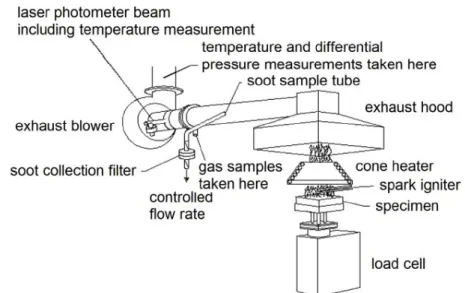
Figure 1.2-4 shows an experimental schematic representation of a cone calorimeter. A sample of 100 × 100 mm dimensions is horizontally (occasionally vertically) placed in a sample holder on a load cell for evaluation of the mass loss during the experiment. The sample is aluminium foil wrapped on
- 10 - the sides and at the bottom. It is put in a retainer frame over low density ceramic wool and the retainer frame is secured to the specimen holder.
Figure 1.2-4 Schematic representation of an experimental set-up in a cone calorimeter.
A conical radiant electrical heater uniformly irradiates the sample from above, and the combustion is triggered by an electrical spark. The combustion gases that are produced pass through the cone and are removed by means of an exhaust duct system with a centrifugal fan and an extraction hood. The centrifugal fan is situated in the combustion gas line to set the flow rate of combustion products. Along the combustion gas line there is a gas sampling ring positioned before the fan. The gas sampled in the ring is first passed through two filters to remove particles. It is then passed through a cold trap and a drying agent to remove possible water. Finally, it reaches the gas analysers. Between the gas sampling ring and the fan there is also a smoke measurement system. This system determines the amount of smoke produced using a laser photometric beam [35, 39].
To perform the basic cone calorimeter experiments, only an oxygen analyser is required. Furthermore, to better understand the burning process and minimize the uncertainties in the results, additional analysers are usually fitted. These may be CO and CO2 analysers. To further analyse combustion
products and gaseous species, a Fourier transform infrared (FTIR) spectrometer can be coupled through a heated line [35, 40].
The measurements of gas flow and oxygen concentration are used to calculate the quantity of heat released per unit of time and surface area (heat release rate, HRR) expressed in kW m−2 and its mean value (HRRm). The development of HRR over time i.e. the value of its peak maximum (PHRR) or
HRR maximum is considered in order to assess the fire properties of materials, as well as the time to reach the peak (TTP). The calculation of HRR is based on Huggett’s observation in a study of the
- 11 - estimation of HRR via oxygen consumption measurements [41]. Huggett observed that most organic materials release an amount of heat that is practically proportional to the amount of oxygen consumed while burning. The proportionality factor is constant from one material to another and is equal to 13.1 kJ g−1consumed oxygen, with an accuracy of approximately 5%. Integration of the heat release rate (HRR) versus time curve gives the total heat release (THR) expressed in MJ m−2 [35]. Cone calorimetry, in addition to the aforementioned parameters, enables also the characterization of time to ignition (TTI), time to flame out (TFO), mass loss rate, levels of oxygen, carbonmonoxide and carbon dioxide, and total smoke released (TSR). Furthermore, it provides more detailed fire characteristics, with HRR being the most widely used parameter for evaluating the fire properties. The cone calorimetry is regarded as the most versatile medium sized fire testing method ever invented.
1.2.2.2.2
Vertical burning test
According to FAR25.853A standard, the vertical burning test V12, the specimen was held vertically and a flame fuelled by natural gas was applied to the centre line of the lower edge of the specimen; this one must stay to 19 mm above the top edge of the burner (see Figure 1.2-5). The flame was applied for 12 s and removed, and the time required for flaming combustion to cease (after flame time) is noted as tf. The distance between the burner and the specimen must remain constant during
flame application. Instead, the length of the damaged area is noted as Lb. If some drops fall from the
specimen, their burning time is known as td. Before the test, rectangular specimens, 310 mm x 75
mm, were conditioned for 24 h at 27 °C and with a humidity of about 50%. Methane 99% pure was employed for this type of test.
- 12 - The Vertical burning V12 test is widely used both in industry and academic research centres. It is intended to meet industrial requirements as well as classify polymeric materials hierarchically. The information obtained remains limited due to its basic and unrefined character. For specimens that flow, the test seems less appropriate than for more cohesive materials [37].
Therefore, on the base of the above considerations, in this thesis the epoxy resin was mixed with APP particles, to use this mixture in the infusion process and to study the technological feasibility of the process to manufacture hemp/epoxy composites with good mechanical and fire resistance properties.
1.3
Aim of the Thesis
After an overview on the state of the art of the hemp/epoxy composites discussed in this section, it was highlighted that there is still need to investigate on the possible use of these materials. The study on manufacturing processes, easily applicable for the industrial production, to produce low density natural composites and the study of techniques able to improve their flame resistance is still an open issue. Therefore, the thesis work has been focused on the study of manufacturing technologies used to produce lightweight hemp/epoxy composites for their future applications as lightweight components, such as in the transportation industry. In this field, apart from the mechanical properties, good flame resistance is also required and then to increase the flame resistance of these components was another goal of this thesis. Processes such as, vacuum infusion, brushing hand lay-up, injection moulding and continuous impregnation process were investigated and used both for the manufacturing of lightweight hemp structures and to produce hemp/epoxy composite with high flame resistance properties.
- 13 -
References
[1] K. Rohit and S. Dixit, “A Review - Future Aspect of Natural Fiber Reinforced,” Polymers from Renewable Resources, vol. 7, no. 2, pp. 43-59, 2016.
[2] M. Garcia, I. Garmendia and J. Garcia, “Influence of natural fiber type in eco-composites,”
Journal of Applied Polymer Science, vol. 107, no. 5, pp. 2994-3004, 2008.
[3] K. Pickering, M. Aruan Efendy and T. Le, “A review of recent developments in natural fibre composites and their mechanical performance,” Composites: Part A, vol. 83, pp. 98-112, 2016. [4] M. R, K. V and N. YS, “Recent development in natural fiber reinforced polypropylene
composites.,” J Reinf Plast Compos, vol. 28, no. 10, pp. 1169-89, 2009.
[5] Z. L and M. M, “Commingled natural fibre/polypropylene wrap spun yarns for structured thermoplastic composites.,” Compos Sci Technol, vol. 70, no. 1, pp. 130-135, 2010.
[6] B. B, S. M and B. L, “Manufacture and characterisation of thermoplastic composites made from PLA/hemp co-wrapped hybrid yarn prepregs.,” Composites Part A, vol. 50, pp. 93-101, 2013. [7] P. S, B. J, L. L, H. P and V. I, “Characterization of flax/epoxy prepregs before and after cure,”
J Reinf Plast Compos, vol. 32, no. 11, pp. 777-785, 2013.
[8] G. N and M. J, “A comparison of the mechanical characteristics of kenaf and lyocell fibre reinforced poly(lactic acid) (PLA) and poly(3-hydroxybutyrate) (PHB) composites.,”
Composites Part A, vol. 42, no. 12, pp. 2010-2019, 2011.
[9] R. AK, M. A, M. BC, J. R, R. R and B. AN, “Short jute fiber-reinforced polypropylene composites: effect of compatibilizer,” J Appl Polym Sci, vol. 69, no. 2, pp. 329-338, 1998. [10] S. M, S. P and B. A. Law S, “Interface modification and mechanical properties of natural
fiber-polyolefin composite products.,” J Reinf Plast Compos, vol. 24, no. 2, pp. 121-130, 2005. [11] C. Hill and M. Hughes, “Natural fibre reinforced composites: opportunities and challenges,” J
Biobased Mater Bioenergy, vol. 4, no. 2, pp. 148-152, 2010.
[12] D. Lachenmeier, L. Kroener, M. F and B. Madea, “Determination of cannabinoids in hemp food products by use of headspace solid-phase microextraction and gas chromatography-mass spectrometry,” Anal Bioanal Chem, vol. 378, no. 1, pp. 183-189, 2004.
[13] I. De Rosa, H. Dhakal, C. Santulli, F. Sarasini and Z. Zhang, “Post-impact static and cyclic flexural characterisation of hemp fibre reinforced laminates,” Composites: Part B, vol. 43, no. 3, pp. 1382-1393, 2012.
- 14 - [14] d. S. PA, G. JC, A. J and M. G., “Natural fibers plastic composites for automotive applications.,”
in In: 8th Annual automotive composites conference and exhibition (ACCE 2008)., Troy, MI: SPE Automotive & Composites Division, 2008.
[15] M. S. Islam, P. KM and N. Foreman, “Influence of alkali fiber treatment and fiber processing on the mechanical properties of hemp/epoxy composites,” Journal of Applied Polymer Science,
vol. 119, p. 3696–3707, 2011.
[16] E. Sassoni, S. Manzi, A. Motori, M. Montecchi and M. Canti, “Experimental study on the physical–mechanical durability ofinnovative hemp-based composites for the building industry,”
Energy and Buildings, vol. 104, pp. 316-322, 2015.
[17] A. Marszal, P. Heiselberg, J. Bourrelle, E. Musall, K. Voss, I. Sartori and A. Napolitano, “Zero energy building—a review of definitions and calculation methodologies,” Energy Build, vol. 43, pp. 971-979, 2011.
[18] E. Franzoni, “Materials selection for green buildings: which tools for engineers and architects?,” Procedia Eng, vol. 21, pp. 883-890, 2011.
[19] A. Korjenic, V. Petrànek, J. Zach and J. Hroudovà, “Development and performanc evaluation of natural thermal-insulation materials composed of renewable resources,” Energy Build, vol. 43, pp. 2518-2523, 2011.
[20] E. Sassoni, S. Manzi, M. Montecchi and M. Canti, “Novel sustainablehemp-based composites for application in the building industry: physical, thermal and mechanical characterization,”
Energy Build, vol. 77, pp. 219-226, 2014.
[21] M. Zuhri, Z. Guan and W. Cantwell, “The mechanical properties of natural fibre based honeycomb core materials,” Composites: Part B, vol. 58, pp. 1-9, 2014.
[22] J. Holbery and D. Houston, “Natural-fiber-reinforced polymer composites in automotive applications,” JOM, vol. 58, no. 11, pp. 80-86, 2006.
[23] B. Weager, “High-performance biocomposites: novel aligned natural fibre reinforcments,” JEC Compos Mag, vol. 55, pp. 36-47, 2010.
[24] S. Mallaiah, K. Sharma and M. Krishna, “Development and comparative studies of bio-based and synthetic fiber based sandwich structures,” Int J Soft Compos Eng, vol. 2, pp. 232-235, 2012.
[25] G. XU, J. Zhai, T. Zeng, H. Wang, S. Cheng and D. Fang, “Response of composite sandwich beams with graded lattice core,” Composite Structures, vol. 119, pp. 666-676, 2015.
- 15 - [26] S. Rao, K. Jayaraman and D. Bhattacharyya, “Micro and macro analysis of sisal fibre
composites hollow core sandwich panels,” Compos: Part B, vol. 43, pp. 2738-45, 2012. [27] G. Cicala, G. Recca, L. Olivieri, Y. Perikleus, F. Scarpa, C. Lira, A. Lorato, D. Grube and G.
Ziegmann, “Hexachiral truss-core with twisted hemp yarns: Out-of-plane shear properties,”
Composite Structures, vol. 94, pp. 3556-3562, 2012.
[28] M. Sain, S. Park, F. Suhara and S. Law, “Flame retardant and mechanical properties of natural fibre-PP composites containing magnesium hydroxide.,” Polym Deg Stab, vol. 83, pp. 363-367, 2004.
[29] M. Rigolo and R. Woodhams, “Basic magnesium carbonate flame retardants for polypropylene.,” Polym Eng Sci, vol. 32, no. 5, pp. 327-334, 1992.
[30] M. Mngomezulu, M. John, V. Jacobs and A. Luyt, “Review on flammability of biofibres and biocomposites.,” Carbohydr Polym, vol. 111, pp. 149-182, 2014.
[31] G. Dorez, A. Taguet, L. Ferry and J. Lopez-Cuesta, “Thermal and fire behavior of natural fibers/PBS biocomposites,” Polym Deg Stab, vol. 98, pp. 87-95, 2013.
[32] L. Shumao, R. Jie, Y. Hua, Y. Tao and Y. Weizhong, “Influence of ammonium polyphosphate on the flame retardancy and mechanical properties of ramie fiber reinforced poly(lactic acid) biocomposites,” Polym Int, vol. 59, no. 2, pp. 242-248, 2009.
[33] S. Nie, X. Liu, G. Dai, S. Yuan, F. Cai and B. Li, “Investigation on flame retardancy and thermal degradation of flame retardant poly(butylene succinate)/bamboo fiber biocomposites,” J Appl Polym Sci, vol. 125, pp. E485-489, 2012.
[34] B. Schartel, U. Braun, U. Schwarz and S. Reinemann, “Fire retardancy of polypropylene/flax blends.,” Polymer, vol. 44, no. 20, pp. 6241-6250, 2003.
[35] M. E. Mngomezulu, M. J. John, V. Jacobs and A. S. Luyt, “Review on flammability of biofibres and biocomposites,” Carbohydrate Polymers, vol. 111, pp. 149-182, 2014.
[36] D. Price, G. Anthony and P. Carty, “Introduction: Polymer combustion, con-densed phase pyrolysis and smoke formation,” in Fire retardant materials, Woodhead Publishing Limited, 2001, pp. 1-30.
[37] F. Laoutid, L. Bonnaud, M. Alexandre, J. M. Lopez-Cuesta and P. Dubois, “New prospects in flame retardant polymer materials: From fundamen-tals to nanocomposites,” Materials Science and Engineering R,, vol. 63, pp. 100-125, 2009.
[38] S. Bourbigot and G. Fontaine, “Flame retardancy of polylactide: An overview,” Polymer Chemistry, vol. 1, p. 1413–1422, 2010.
- 16 - [39] R. Carvel, T. Steinhaus, G. Rein and J. L. Torero, “Determi-nation of the flammability
properties of polymeric materials: Anovel method,” Polymer Degradation and Stability, vol. 96, pp. 314-319, 2011.
[40] J. Lindholm, A. Brink and M. Hupa, “Cone calorimeter – A tool for measur-ing heat release rate,” 2009. [Online]. Available: http://www.ffrc.fi/FlameDays 2009/4B/LindholmPaper.pdf. [41] C. Huggest, “Estimation of rate of heat release by means of oxygen consump-tion
- 17 -
2
Chapter 2: Biocomposites
2.3
Introduction to Biocomposites
The fibre-reinforced composites market is a multi-billion euro business with applications in the automotive, construction, marine, electronics, sporting goods, appliance, aerospace, and consumer product industries. These materials are attractive due to their unique ability to combine the properties of various materials to produce a high-performance, easily tailored and efficient system. Thus, the market for composite materials is fast growing and lucrative. The establishment of the fibre reinforced polymer (FRP) composites industry dates back to the early 1900s when fibres were first combined with phenolic resins and later reached commodity status during the 1940s with the development of glass-fibre reinforced unsaturated polyester [1]. Since then, the FRP industry has seen a steady increase with glass-fibres being the dominant reinforcing material in use. Not surprisingly, the demand for composite materials continues to grow as new applications are found.
In recent years, there have been growing economic concerns regarding the depletion of petroleum resources as well as an increased awareness of the environmental effects of producing, using and disposing of synthetic materials. Additionally, in the past decade several government based initiatives such as the Energy Policy Act of 2005, Biomass Research and Development Act of 2000, and the Farm Security and Rural Investment Act of 2002 (U.S. Public Law 107-17), have offered economic incentive to consider biobased alternatives to petroleum based materials [1].
Economic and environmental concerns coupled with these government initiatives have encouraged research into more environmentally benign alternatives to common glass and petroleum-derived composites. Many of these researches focused on the development of biocomposites and other natural renewable materials.
Biocomposites can be broadly defined as a composite material that makes use of one or more environmentally friendly materials such as natural fibre reinforcements or biopolymers, so biocomposites have various levels of environmental friendliness based on their constituent materials and their ability to biodegrade. A schematization of these composites categories under the current definition of biocomposites is shown in Figure 2.3-1.
- 18 - Figure 2.3-1 Classification of biocomposites based on material constituents.
Depending on the type of polymer used, these composites can also be entirely biodegradable, suggesting the highest level of economic and environmental benefits. For the class of biocomposite materials to be successful and long-lasting, it is important that their development follow a promising economical route.
For both glass fibres and petroleum-derived polymers the manufacturing processes were well developed which ensure that the resulting GFRPs are produced at relatively low cost. Although most biopolymers currently cost more than traditional petroleum-based polymers, it is expected that increased demand and further technological developments will reduce the cost of these biomaterials. Furthermore, the low cost of natural fibre reinforcements can help to bring down the overall composite costs.
Several researchers showed that the energy consumption required to produce a natural fibre mat (9.7 MJ/kg), including cultivation, harvesting, and fibre digestion, is less than a quarter of the energy required to produce a comparable glass fibre mat (54.8 MJ/kg) [2]. Furthermore, the density of most plant fibres is also around 40 percent lower than that of glass fibres. This allows for additional cost savings in different application fields such as in transportation applications (automotive, aeronautic). From the above reasons, it is clear that biocomposites offer many potential advantages over traditional synthetic composites.
Considering the definition of biocomposite reported in the Review “Biocomposites: technology,
environmental credentials and market forces” [3] in which a biocomposites is defined as a composite
material when one or more phase(s) derives from a biological origin, the composite considered in this study and manufactured by using hemp fibres and epoxy resin can be considered as a biocomposite.
- 19 -
2.4
Natural Fibres Composites (NFCs)
Glass is the most common reinforcing fibres for use in polymer (thermoset and thermoplastic) matrix composites. The major advantage of glass fibre includes low price, high tensile stress, high chemical resistance and relative ease of processing. However, it is characterized by several disadvantages. It has low yield modulus, relatively high specific gravity among other conventional fibres, sensitivity to abrasion with handling, relatively low fatigue resistance, and high hardness which causes excessive wear on moulding dies and cutting tools [4]. The biggest problem with glass and other conventional fibres is that they are not biodegradable or easily recyclable and their disposal is difficult. Alternative synthetic fibres such as aramid and carbon are limited to industrial applications such as aerospace and ballistics, where cost of the product is less important than maximising the performance (high strength, stiffness and low density) to an extremely higher level.
The use of natural fibres as reinforcement in polymer matrix composites (PMCs) to replace conventional fibres like glass is currently receiving more increasing attention because of the growing environmental awareness and advantages (low cost, low density, high specific properties, abundant availability) they possess. The annual agricultural crop fibres (e.g. hemp, flax) have higher mechanical strength as compared to commonly used wood based fibres (e.g. wood flour, wood fibre) and the PMCs produced using these fibres as reinforcements can result in significant property improvements. Recent research on the use of annual growth agricultural crop lignocellulosic fibres suggests that they have the potential to be used as reinforcement both in thermoset and thermoplastic matrices. Of these fibres, hemp and flax are the least used fibre in the production of PMCs, they have the best mechanical and thermal properties. However, there are many problems associated with incorporating natural fibre into polymer matrices, namely: (i) poor compatibility of a hydrophilic fibre and a hydrophobic matrix that results in poor mechanical properties of the composites, (ii) high sensitivity of natural fibre towards moisture that results in composite dimensional instability and loss in mechanical properties through swelling [5], and (iii) relatively poor thermal stability. Both thermoset and thermoplastic polymers are used as matrix for NFCs:
Thermoset resins (e.g. epoxy, polyester, phenolic, and polyurethane) are used for natural fibre composites (NFCs) in applications where higher performance is required. These thermoset polymers contain reactive functional groups that aid the development of an interface with the natural fibres. Thermoset composites have superior thermal stability and lower water absorption compared to thermoplastic composites. Epoxy and phenolic are known to possess the ability to form covalent bonds with plant cell walls through -OH groups [6]. Moreover, composite products can be achieved using low viscosity epoxy that cure at room temperature and the polymerisation of epoxy (curing
- 20 - reaction) is carried out by addition reaction without evolution of volatiles which is a desirable property to prepare void-free products. Therefore, although epoxy resins are relatively expensive than polyesters, they have good potential for the development of NFCs [7].
Thermoplastic composites can be recyclable, have low processing costs and the ability to be moulded into complex parts when compared to thermoset composites. Composites based on petroleum originated thermoplastic matrices such as PP and PE are very common today and are being extensively used in automotive applications, building materials, and household products. However, growing environmental awareness is forcing the industries to find more environmentally friendly materials for their products. Therefore, materials derived from natural resources of plant origin (e.g. cellulose and starch), synthetic polymers from natural monomers (e.g. PLA), and polymers from microbial fermentation (e.g. PHB) are being assessed by researchers [8, 9] for use as potential matrices in biodegradable and ecologically friendly composites. The study of PLA and especially of natural fibre/PLA composites is very limited [10, 11]. However, Bodros et al. [12] showed that the tensile strength and the young modulus of PLA/flax composites are higher than PP/flax composites and that the specific tensile strength and modulus of flax/PLA composite are very close to glass/polyester composites.
For natural fibres to be able to compete with synthetic fibres, improvement of the mechanical and thermal properties of the composites is necessary. This can be achieved by obtaining better adhesion between fibre and matrix and by using better composite processing conditions.
2.4.1
Matrix selection
The matrix is an important part of a fibre-reinforced composite. It provides a barrier against adverse environments, protects the surface of the fibres from mechanical abrasion and it transfers load to fibres. The most common matrices currently used in NFCs are polymeric as they are light weight and can be processed at low temperature. Both thermoplastic and thermoset polymers have been used for matrices with natural fibres [13].
Matrix selection is limited by the temperature at which natural fibres degrade. Most of the natural fibres used for reinforcement in natural fibre composite are thermally unstable above 200 °C, although under some circumstances it is possible for them to be processed at higher temperature for a short period of time [14].
Due to this limitation, only thermoplastics that soften below this temperature such as polyethylene (PE), PP, polyolefin, polyvinylchloride and polystyrene and thermosets (which can be cured below this temperature) are useable as a matrix [15]. However, it can be noted that the thermoplastics named
- 21 - constitute the most common thermoplastics consumed by the plastics industry and outweighs the use of any other thermoplastic matrices generally used. Indeed, PP and PE are the two most commonly adopted thermoplastic matrices for NFCs. The main thermosets used are unsaturated polyester (UP), epoxy resin, phenol formaldehyde and VE resins. Thermoplastics are capable of being repeatedly softened by the application of heat and hardened by cooling and have the potential to be the most easily recycled, which has seen them most favoured in recent commercial uptake, whereas better realisation of the fibre properties are generally achieved using thermosets [15].
Replacement of petroleum-based with bioderived matrices has been explored. Of these, PLA is the clear front-runner from a mechanical property perspective, and has been shown to give higher strength and stiffness with natural fibres than PP.
2.4.2
Bio-derived Thermoplastic as Matrix
Cellulose fibres (e.g. hemp, flax, jute) are widely used with conventional thermoplastic polymers (e.g. PP, PE) as reinforcement in composite production to improve mechanical properties. In fact, the history of composites from renewable resources is far longer than conventional polymers. The study and utilization of natural polymers is an ancient science. Typical examples, such as paper, silk, skin, and bone arts, can easily be found in museum around the world. In the biblical
Book of Exodus, Moses’s mother built the ark from rushes, pitch and slime, a kind of fibre reinforced composite, according to the current classification of material. During the opium war, more than 1000 years ago, the Chinese built their castles to defend against invaders using a kind of mineral particle reinforced composite made from gluten rice, sugar, calcium carbonate and sand [16].
However, the availability of petroleum at a lower cost and the bio-chemical inertness of petroleum based products have proven disastrous for the market of natural polymers. It is only about last two decades when the significance of eco-friendly materials has been realized. Now polymers from renewable resources have started drawing an increasing amount of attention. The two main reasons for that are the environmental concerns [17], and the realization that the petroleum resources are limited. Generally, polymers from renewable resources can be classified into three groups: (i) natural polymers such as starch, protein, and cellulose (ii) synthetic polymers from natural monomers, such as PLA and (iii) polymers from microbial fermentation, such as polyhydroxy butyrate (PHB). Like numerous other petroleum based polymers, many properties of polymers from renewable resources can be improved through composite production [16]. The development of synthetic polymers like PLA using monomers from natural resources has been a driving force for the development of biodegradable polymers from renewable resources. Therefore, in today’s world PLA is the most promising among bio-derivable polymers [16]. PLA can be processed (e.g. compression moulding,
- 22 - pultrusion, extrusion and injection moulding) like petroleum based polyolefins and its mechanical property is better than the widely-used polymer PP [18]. On the degradation, PLA does not emit any carbon dioxide to the environment like other biodegradable materials from renewable resources. The degradation occurs by hydrolysis to lactic acid, which is metabolized by micro-organisms to water and carbon dioxide. If PLA is comprised together with other biomass, the biodegradation occurs within a couple of weeks and the material can fully disappear within a month [16]. Chemically, it is a linear aliphatic polyester of lactic acid which can be obtained by fermentation of renewable agricultural materials like corn, sugarcane and sugar beets. Lactic acid is converted to a cyclic lactide dimer which is then polymerised to PLA through a ring opening reaction.
The major applications of PLA products are in household wastes as plastic bags, barriers for sanitary products and diapers, planting, and disposable cups and plates. However, many authors reported the possibilities of developing fully bio-degradable composite products by using biodegradable polymers as matrix and natural fibres as reinforcements [17, 18]. Keller et al. [19] reported that PLA should produce fibre reinforced composites with high mechanical properties for
light weight construction materials. Oksman et al. [15] observed that PLA had good potential as a polymer matrix in flax fibre reinforcement for composites production. They reported that the composite strength produced with PLA/flax was about 50% better than that of PP/flax composites. Due to the increasing commercial interest for natural fibre reinforced polymer composites for use in automotive applications and building constructions as well as demands for environmentally friendly materials, the development of fully biodegradable composites for many applications could be an interesting area of research.
2.4.3
Thermoset Polymers as matrix
Much of the early work used thermosetting resins as matrix material for composite production. Products like tufnol which is made from cotton fibres and epoxy resin, have been available for some time, having good stiffness and strength [20]. In the last few years there has been renewed interest in these products for use in automotive applications. To achieve reinforcing effects in composites it is necessary to have good adhesion between the fibres and resins. Epoxy and phenolic thermosetting resins are known to be able to form covalent cross-links with plant cell walls via -OH groups [6]. Composite manufacture can be achieved using low viscosity epoxy and phenolic resins that cure at room temperature. In addition, epoxy resin does not produce volatile products during curing which is most desirable in production of void free composites. Therefore, although epoxy resins are relatively more expensive than polyester, they have potential for the development of high added value plant fibre composites, where long fibres at a high content are required. In fact, generally the
- 23 - highest tensile and flexural properties for NFCs are achieved with thermoset matrices for which the highest values in descending order are for epoxy, vinyl ester then unsaturated polyester, relating to the order of expected degree of adhesion with the fibre and hence stress transfer capability [15].
2.4.4
Process Techniques
Normally, natural fibre polymer composites are fabricated by using traditional manufacturing techniques that are designed for conventional fibre reinforced polymer composites and thermoplastics. These techniques include resin transfer moulding (RTM), vacuum infusion, compression moulding, direct extrusion, compounding and injection moulding. Nevertheless, such techniques have been well developed and accumulated experience has showed their success for producing composites with controllable quality [21]. However, their suitability for natural fibre reinforced polymer composites is still unsure due to the materials, geometrical, mechanical, thermal and structural properties of the natural fibres and biodegradable polymers are somehow, different with synthetic fibres and petroleum-based plastics, respectively. For example, chemical treatments on the fibre surface are normally required to compensate its incompatible bonding effect at the interface between the hydrophilic fibre and hydrophobic matrix. Other technical problems such as the uniformity of fibre distributed inside the composites, thermal degradations and weathering effect of fibre and matrix, water absorption of both fibre and matrix, wettability of resin impregnated into spaces between fibrils and the breakage of fibres during mechanical stirring/mixing stages during the manufacturing processes also limit the use of natural fibres and biodegradable polymers for new composite development. Recently, seeking for technologies for developing fireproof natural fibre reinforced polymer composites is also one of key topics worldwide to apply them for aircraft interior components. Therefore, the resultant properties of composites in relation to the selections of right materials, pre-processing methods and manufacturing process are inextricably intertwined [21].
Suitable manufacturing processes must be utilised to transform the materials to the final shape without causing any defect of products.
For the selection, a suitable process to fabricate biodegradable polymer-related composites, design and manufacturing engineers would mainly focus on numbers of criteria including desired properties, size and shape of resultant composites, processing characteristics of raw materials, the production speed and the manufacturing cost. The size of the composites is a dominating factor for the preliminary assessment on a suitable type of manufacturing processes to be used. For small to medium sized components, injection and compression mouldings are preferred due to their simplicity and fast processing cycle. However, for large structures, they are typically manufactured by open moulding
![Figure 1.2-3 Demonstration of the self-sustaining polymer combustion cycle; a–d represent potential modes of flame retardants [35]](https://thumb-us.123doks.com/thumbv2/123dok_us/9965498.2489033/21.892.221.680.108.419/figure-demonstration-sustaining-polymer-combustion-represent-potential-retardants.webp)
![Figure 2.6-1 Automobile components based on polymer composites reinforced with lignocellulosic fibres [33]](https://thumb-us.123doks.com/thumbv2/123dok_us/9965498.2489033/44.892.182.715.103.416/figure-automobile-components-polymer-composites-reinforced-lignocellulosic-fibres.webp)