Complete genome sequence of Nitratifractor salsuginis
type strain (E9I37-1
T)
Iain Anderson1, Johannes Sikorski2, Ahmet Zeytun1,3, Matt Nolan1, Alla Lapidus1, Susan Lucas1, Nancy Hammon1, Shweta Deshpande1, Jan-Fang Cheng1, Roxanne Tapia1,3, Cliff Han1,3, Lynne Goodwin1,3, Sam Pitluck1, Konstantinos Liolios1, Ioanna Pagani1, Natalia Ivanova1, Marcel Huntemann1, Konstantinos Mavromatis1, Galina Ovchinikova1, Amrita Pati1, Amy Chen4, Krishna Palaniappan4, Miriam Land1,5, Loren Hauser1,5, Evelyne-Marie Brambilla2, Olivier D. Ngatchou-Djao6, Manfred Rohde6, Brian J. Tindall2, Markus Göker2, John C. Detter1,3, Tanja Woyke1, James Bristow1, Jonathan A. Eisen1,7, Victor Markowitz4, Philip Hugenholtz1,8, Hans-Peter Klenk2, and Nikos C. Kyrpides1*
1 DOE Joint Genome Institute, Walnut Creek, California, USA
2 DSMZ - German Collection of Microorganisms and Cell Cultures GmbH, Braunschweig, Germany
3 Los Alamos National Laboratory, Bioscience Division, Los Alamos, New Mexico, USA 4 Biological Data Management and Technology Center, Lawrence Berkeley National
Laboratory, Berkeley, California, USA
5 Oak Ridge National Laboratory, Oak Ridge, Tennessee, USA
6 HZI – Helmholtz Centre for Infection Research, Braunschweig, Germany 7 University of California Davis Genome Center, Davis, California, USA
8 Australian Centre for Ecogenomics, School of Chemistry and Molecular Biosciences, The University of Queensland, Brisbane, Australia
*Corresponding author: Nikos C. Kyrpides
Keywords: anaerobic, microaerobic, non-motile, Gram-negative, mesophilic, strictly chemo-lithoautotroph, Nautiliaceae, GEBA
Nitratifractor salsuginis Nakagawa et al. 2005 is the type species of the genus Nitratifractor, a member of the family Nautiliaceae. The species is of interest because of its high capacity for nitrate reduction via conversion to N2 through respiration, which is a key compound in plant
nutrition. The strain is also of interest because it represents the first mesophilic and faculta-tively anaerobic member of the Epsilonproteobacteria reported to grow on molecular hydro-gen. This is the first completed genome sequence of a member of the genus Nitratifractor and the second sequence from the family Nautiliaceae. The 2,101,285 bp long genome with its 2,121 protein-coding and 54 RNA genes is a part of the GenomicEncyclopedia ofBacteria andArchaea project.
Introduction
Strain E9I37-1
T(= DSM 16511 = JCM 12458) is the
type strain of
Nitratifractor salsuginis
, which in turn
is the type and currently only species of the genus
Nitratifractor
[1]. The genus name is derived from
the Neo-Latin word
nitras
meaning
nitrate
and the
Latin word
fractor
meaning
breaker
, yielding the
Neo-Latin word
Nitratifractor
meaning
nitrate-breaker
[1].
N. salsuginis
strain E9I37-1
Twas
iso-lated from a deep-sea hydrothermal vent chimney
at the Iheya North hydrothermal field in the
Mid-Okinawa Trough in Japan [1,2]. No further isolates
of
N. salsuginis
have been obtained so far. Here we
present a summary classification and a set of
fea-tures for
N. salsuginis
E9I37-1
T, together with the
description of the complete genomic sequencing
and annotation.
Classification and features
A representative genomic 16S rRNA sequence of
strain E9I37-1
Twas compared using NCBI BLAST
Nitrati-ruptor
(48.5%),
Nitratifractor
(20.7%),
Hydrogeni-monas
(15.7%) and
Alvinella
(15.1%) (eleven hits
in total). Regarding the single hit to sequences from
members of the species, the average identity within
HSPs was 100.0%, whereas the average coverage
by HSPs was 95.6%. Among all other species, the
one yielding the highest score was
Hydrogenimonas
thermophila
, which corresponded to an identity of
88.5% and an HSP coverage of 67.2%. (Note that
the Greengenes database uses the INSDC (=
EMBL/NCBI/DDBJ) annotation, which is not an
au-thoritative source for nomenclature or
classifica-tion.) The highest-scoring environmental sequence
was AF420348 ('hydrothermal sediment clone
AF420348') [5], which showed an identity of 96.7%
and an HSP coverage of 97.8%. The five most
fre-quent keywords within the labels of environmental
samples which yielded hits were 'cave' (7.2%),
'biofilm' (5.7%), 'sulfid' (5.3%), 'spring' (4.8%) and
'structur' (3.1%) (239 hits in total). The five most
frequent keywords within the labels of
environ-mental samples which yielded hits of a higher score
than the highest scoring species were 'hydrotherm'
(8.6%), 'vent' (7.5%), 'pacif' (4.0%), 'microbi'
(3.7%) and 'mat' (3.0%) (37 hits in total). These
keywords are in accordance with the origin of the
strain
N. salsuginis
E9I37-1
Tfrom a deep-sea
hy-drothermal vent chimney at the summits of the
sul-fide mounds in the sediment-hosted back-arc
hy-drothermal system Iheya North [1,2].
The 16S rRNA based tree in Figure 1 shows the
phylogenetic neighborhood of
N. salsuginis
E9I37-1
T. The sequences of the two identical 16S rRNA
gene copies in the genome do not differ from the
previously published 16S rRNA sequence
(AB175500).
Figure 1. Phylogenetic tree highlighting the position of N. salsuginis strain E9I37-1T relative to the
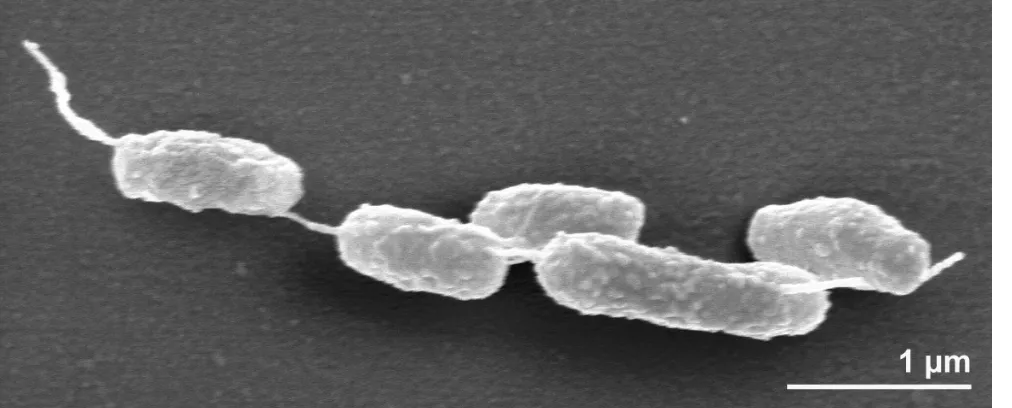
The cells of strain E9I37-1
Tare generally
rod-shaped of 2.5 µm in length and 0.6 µm in width
(Figure 2) and usually occur singly or in pairs
(Figure 2) [1]. Strain E9I37-1
Tis a Gram-negative,
non-motile and non spore-forming bacterium
(Table 1). The organism is anaerobic to
microae-rophilic (0.09-0.55% O
2(v/v)) and
chemolithoau-totrophic, growing by respiratory nitrate
reduc-tion with H
2as the electron donor, forming N
2as a
metabolic end product [1]. The main electron
ac-ceptors are NO
3-or O
2[1]. Strain E9I37-1
Tuses S
0as a source of sulfur [1]. The doubling time of
strain E9I37-1
Twas about 2.5 h [1]. The NaCl
range for growth is between 1.5% and 3.5%, with
an optimum at 3%; no growth was observed
be-low 1.0% NaCl or above 4.0% NaCl [1]. The
tem-perature range for growth is between 28ºC and
40ºC, with an optimum at 37ºC [1]. The pH range
for growth is between 5.6 and 7.6, with an
opti-mum at pH 7; no growth could be detected below
pH 5.2 or above pH 8.1 [1]. Strain E9I37-1
Twas
unable to use any organic compounds as energy or
carbon sources [1]. The organism was sensitive to
ampicillin, rifampicin, streptomycin,
chloramphe-nicol (each at 50 µg ml
-l) and kanamycin (200 µg
ml
-1), and insensitive to approximately 150 µg ml
-1kanamycin [1]. Enzymatic and genetic analyses
demonstrated that strain E9I37-1
Tuses the
reduc-tive TCA (rTCA) cycle for carbon assimilation [21].
This was confirmed by the presence of all genes
encoding the three key rTCA cycle enzymatic
ac-tivities, namely ATP-dependent citrate lyase,
py-ruvate:ferredoxin oxidoreductase, and
2-oxoglutarate:ferredoxin oxidoreductase [21], but
it was found to lack the gene for ribulose
1,5-bisphosphate carboxylase (RubisCO) activity, the
key enzyme in the Calvin-Benson cycle [21].
Chemotaxonomy
The major cellular fatty acids of strain
E9I37-1
Tare C
18:1(42.3% of the total fatty acid), C
16:1(30.7%) and C
16:0(24.3%), C
14:0 3-OH(1.1%), C
14:0(0.9%) and C
18:0(0.7%) [1]. It should be noted that
no information is given on the position of double
bonds in the unsaturated fatty acids. No attempt
has been made to examine the type strain for the
presence of respiratory lipoquinones or to
deter-mine the polar lipid composition.
Genome sequencing and annotation
Genome project history
This organism was selected for sequencing on the
basis of its phylogenetic position [22], and is part
of the
G
enomic
E
ncyclopedia of
B
acteria and
A
rc-haea
project [23]. The genome project is
depo-sited in the Genome On Line Database [10] and the
complete genome sequence is deposited in
Gen-Bank. Sequencing, finishing and annotation were
performed by the DOE Joint Genome Institute
(JGI). A summary of the project information is
shown in Table 2.
Table 1. Classification and general features of N. salsuginis E9I37-1T according to the MIGS recommendations [13].
MIGS ID Property Term Evidence code
Current classification
Domain Bacteria TAS [14]
Phylum Proteobacteria TAS [15]
Class Epsilonproteobacteria TAS [16,17]
Order Nautiliales TAS [18]
Family Nautiliaceae TAS [18]
Genus Nitratifractor TAS [1]
Species Nitratifractor salsuginis TAS [1]
Type strain E9I37-1 TAS [1]
Gram stain negative TAS [1]
Cell shape rod shaped, occurring singly or in pairs TAS [1]
Motility non-motile TAS [1]
Sporulation none TAS [1]
Temperature range 28-40ºC TAS [1]
Optimum temperature 37°C TAS [1]
Salinity 1.5-3.5% NaCl TAS [1]
MIGS-22 Oxygen requirement anaerobic and microaerobic TAS [1]
Carbon source probably CO2 NAS
Energy metabolism strictly chemolithoautotrophic TAS [1]
MIGS-6 Habitat deep-sea hydrothermal vent chimneys TAS [1]
MIGS-15 Biotic relationship not reported NAS
MIGS-14 Pathogenicity not reported NAS
Biosafety level 1 TAS [19]
Isolation deep-sea hydrothermal vent water of ‘E9’ chimney (inside part) TAS [1,2] MIGS-4 Geographic location Iheya North hydrothermal field in the Mid-Okinawa Trough in Japan TAS [1,2]
MIGS-5 Sample collection time 2002 or before TAS [1,2]
MIGS-4.1 Latitude 27.78 TAS [1,2]
MIGS-4.2 Longitude 126.88 TAS [1,2]
MIGS-4.3 Depth 984 m TAS [1,2]
MIGS-4.4 Altitude not reported NAS
Evidence codes - IDA: Inferred from Direct Assay (first time in publication); TAS: Traceable Author Statement (i.e., a direct report exists in the literature); NAS: Non-traceable Author Statement (i.e., not directly observed for the living, isolated sample, but based on a generally accepted property for the species, or anecdotal evidence). These evidence codes are from of the Gene Ontology project [20]. If the evidence code is IDA, the property was directly observed by one of the authors or an expert mentioned in the acknowledgements.
Growth conditions and DNA isolation
N. salsuginis
E9I37-1
T, DSM 16511, was grown
anaerobically in DSMZ medium 1024 (
Nitratirup-tor
and
Nitratifractor
medium) [24] at 37°C. DNA
was isolated from 0.5-1 g of cell paste using Jetflex
Genomic DNA Purification Kit (GENOMED
600100) following the standard protocol as
rec-ommended by the manufacturer. Cell lysis was
enhanced by adding 20 µl proteinase K for two
hours at 58°C. DNA is available through the DNA
Genome sequencing and assembly
Illumina GAii sequencing data (158.03 Mb) was
assembled with Velvet [28] and the consensus
sequences were shredded into 1.5 kb overlapped
fake reads and assembled together with the 454
data. The 454 draft assembly was based on 60.3
Mb 454 draft data and all of the 454 paired end
data. Newbler parameters are -consed -a 50 -l
350 -g -m -ml 20. The Phred/Phrap/Consed
software package [27] was used for sequence
as-sembly and quality assessment in the subsequent
finishing process. After the shotgun stage, reads
were assembled with parallel phrap (High
Per-formance Software, LLC). Possible
mis-assemblies were corrected with gapResolution
[26], Dupfinisher [29], or sequencing clones
bridging PCR fragments with subcloning. Gaps
between contigs were closed by editing in
Con-sed, by PCR and by Bubble PCR primer walks
(J.-F. Chang, unpublished). A total of 135 additional
reactions were necessary to close gaps and to
raise the quality of the finished sequence.
Illumi-na reads were also used to correct potential base
errors and increase consensus quality using a
software Polisher developed at JGI [30]. The
er-ror rate of the completed genome sequence is
less than 1 in 100,000. Together, the combination
of the Illumina and 454 sequencing platforms
provided 106.7 × coverage of the genome. The
final assembly contained 274,574 pyrosequence
and 2,079,398 Illumina reads.
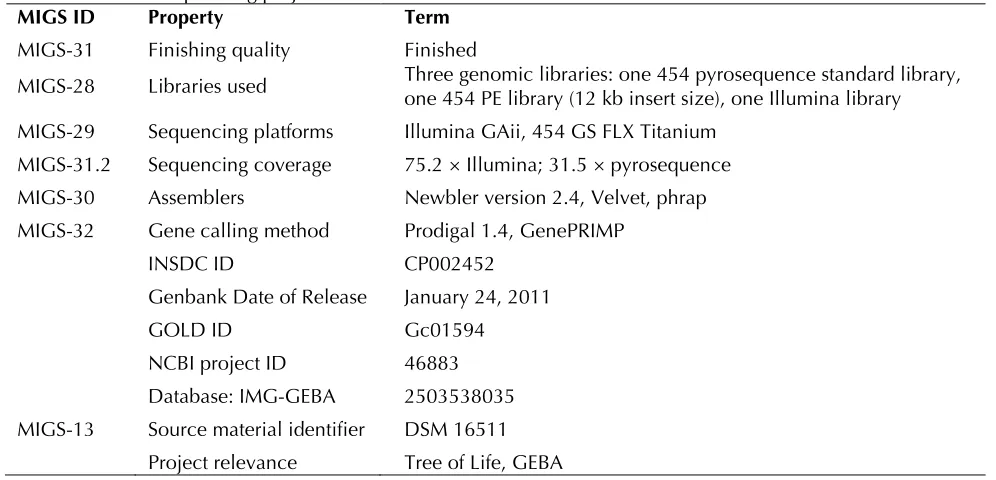
Table 2. Genome sequencing project information
MIGS ID Property Term
MIGS-31 Finishing quality Finished
MIGS-28 Libraries used Three genomic libraries: one 454 pyrosequence standard library, one 454 PE library (12 kb insert size), one Illumina library MIGS-29 Sequencing platforms Illumina GAii, 454 GS FLX Titanium
MIGS-31.2 Sequencing coverage 75.2 × Illumina; 31.5 × pyrosequence MIGS-30 Assemblers Newbler version 2.4, Velvet, phrap MIGS-32 Gene calling method Prodigal 1.4, GenePRIMP
INSDC ID CP002452
Genbank Date of Release January 24, 2011
GOLD ID Gc01594
NCBI project ID 46883 Database: IMG-GEBA 2503538035 MIGS-13 Source material identifier DSM 16511
Project relevance Tree of Life, GEBA
Genome annotation
Genes were identified using Prodigal [31] as part
of the Oak Ridge National Laboratory genome
an-notation pipeline, followed by a round of manual
curation using the JGI GenePRIMP pipeline [32].
The predicted CDSs were translated and used to
search the National Center for Biotechnology
In-formation (NCBI) non-redundant database,
Uni-Prot, TIGR-Fam, Pfam, PRIAM, KEGG, COG, and
In-terPro databases. Additional gene prediction
anal-ysis and functional annotation was performed
within the Integrated Microbial Genomes - Expert
Review (IMG-ER) platform [33].
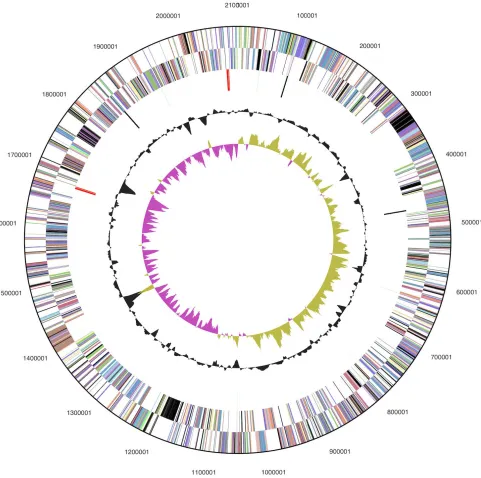
Genome properties
Table 3. Genome Statistics
Attribute Value % of Total
Genome size (bp) 2,101,285 100.00%
DNA coding region (bp) 1,916,093 91.19% DNA G+C content (bp) 1,132,843 53.91%
Number of replicons 1
Extrachromosomal elements 0
Total genes 2,175 100.00%
RNA genes 54 2.48%
rRNA operons 2
Protein-coding genes 2,121 97.52%
Pseudo genes 33 1.52%
Genes with function prediction 1,456 66.94%
Genes in paralog clusters 144 6.62%
Genes assigned to COGs 1,525 70.11%
Genes assigned Pfam domains 1,616 74.30% Genes with signal peptides 411 18.90% Genes with transmembrane helices 501 23.03%
CRISPR repeats 2
Table 4. Number of genes associated with the general COG functional categories Code value %age Description
J 149 9.0 Translation, ribosomal structure and biogenesis A 0 0.0 RNA processing and modification
K 64 3.9 Transcription
L 114 6.9 Replication, recombination and repair B 0 0.0 Chromatin structure and dynamics
D 20 1.2 Cell cycle control, cell division, chromosome partitioning Y 0 0.0 Nuclear structure
V 25 1.5 Defense mechanisms
T 69 4.2 Signal transduction mechanisms
M 133 8.1 Cell wall/membrane/envelope biogenesis N 15 0.9 Cell motility
Z 0 0.0 Cytoskeleton
W 0 0.0 Extracellular structures
U 43 2.6 Intracellular trafficking, secretion, and vesicular transport O 89 5.4 Posttranslational modification, protein turnover, chaperones C 131 8.0 Energy production and conversion
G 58 3.5 Carbohydrate transport and metabolism E 136 8.3 Amino acid transport and metabolism F 50 3.0 Nucleotide transport and metabolism H 97 5.9 Coenzyme transport and metabolism I 37 2.3 Lipid transport and metabolism
P 81 4.9 Inorganic ion transport and metabolism
Q 18 1.1 Secondary metabolites biosynthesis, transport and catabolism R 183 11.1 General function prediction only
Acknowledgements
We would like to gratefully acknowledge the help of
Andrea Schütze (DSMZ) for growing N. salsuginis
cul-tures. This work was performed under the auspices of the US Department of Energy Office of Science, Biologi-cal and Environmental Research Program, and by the University of California, Lawrence Berkeley National Laboratory under contract No. DE-AC02-05CH11231,
Lawrence Livermore National Laboratory under Con-tract No. DE-AC52-07NA27344, and Los Alamos Na-tional Laboratory under contract No. DE-AC02-06NA25396, UT-Battelle and Oak Ridge National La-boratory under contract DE-AC05-00OR22725, as well as German Research Foundation (DFG) INST 599/1-2.
References
1. Nakagawa S, Takai K, Inagaki F, Horikoshi K, Sa-ko Y. Nitratiruptor tergarcus gen. nov., sp. nov. and Nitratifractor salsuginis gen. nov., sp. nov., nitrate-reducing chemolithoautotrophs of the ep-silon-Proteobacteria isolated from a deep-sea hy-drothermal system in the Mid-Okinawa Trough. Int J Syst Evol Microbiol 2005; 55:925-933
2. Takai K, Inagaki F, Nakagawa S, Hirayama H, Nunoura T, Sako Y, Nealson KH, Horikoshi K. Isolation and phylogenetic diversity of members of previously uncultivated ε-Proteobacteria in deep-sea hydrothermal fields. FEMS Microbiol Lett 2003; 218:167-174
3. DeSantis TZ, Hugenholtz P, Larsen N, Rojas M, Brodie E, Keller K, Huber T, Dalevi D, Hu P, An-dersen G. Greengenes, a chimera-checked 16S rRNA gene database and workbench compatible with ARB. Appl Environ Microbiol 2006;
72:5069-5072
4. Porter MF. An algorithm for suffix stripping. Pro-gram: electronic library and information systems. 1980; 14:130-137.
5. Teske A, Hinrichs KU, Edgcomb VP, Gomez AD, Kysela DT, Sogin ML, Jannasch HW. Microbial diversity of hydrothermal sediments in the Guay-mas Basin: evidence for anaerobic methanotroph-ic communities. Appl Environ Microbiol 2002; 68:1994-2007
6. Castresana J. Selection of conserved blocks from multiple alignments for their use in phylogenetic analysis. Mol Biol Evol 2000; 17:540-552
7. Lee C, Grasso C, Sharlow MF. Multiple sequence alignment using partial order graphs. Bioinformat-ics 2002; 18:452-464
8. Stamatakis A, Hoover P, Rougemont J. A rapid bootstrap algorithm for the RAxML Web servers.
Syst Biol 2008; 57:758-771
9. Pattengale ND, Alipour M, Bininda-Emonds ORP, Moret BME, Stamatakis A. How many bootstrap replicates are necessary? Lect Notes Comput Sci
2009; 5541:184-200
10. Liolios K, Chen IM, Mavromatis K, Tavernarakis N, Hugenholtz P, Markowitz VM, Kyrpides NC. The Genomes On Line Database (GOLD) in 2009: status of genomic and metagenomic projects and their associated metadata. Nucleic Acids Res 2009; 38:D346-D354
11. Campbell BJ, Smith JL, Hanson TE, Klotz MG, Stein LY, Lee CK, Wu D, Robinson JM, Khouri HM, Eisen JA, et al. Adaptations to submarie hy-drothermal environments exemplified by the ge-nome of Natilia profundicola. PLoS Genet 2009;
5:e1000362
12. Yarza P, Ludwig W, Euzéby J, Amman R, Schlei-fer KH, Glöckner FO, Rosselló-Mora R. Updates of the All-Species-Living-Tree Project based on 16S and 23S rRNA sequence analyses. Syst Appl Microbiol 2010; 33:291-299
13. Field D, Garrity G, Gray T, Morrison N, Selengut J, Sterk P, Tatusova T, Thomson N, Allen MJ, An-giuoli SV, et al. The minimum information about a genome sequence (MIGS) specification. Nat Biotechnol 2008; 26:541-547
14. Woese CR, Kandler O, Wheelis ML. Towards a natural system of organisms: proposal for the do-mains Archaea, Bacteria, and Eucarya.Proc Natl Acad Sci USA 1990; 87:4576-4579
Sys-tematic Bacteriology, Second Edition, Volume 2, Part B, Springer, New York, 2005, p. 1.
16. Validation List No. 107. List of new names and new combinations previously effectively, but not validly, published. Int J Syst Evol Microbiol 2006;
56:1-6
17. Garrity GM, Bell JA, Lilburn T. Class V. Epsilon-proteobacteria class. nov. In: Bergey’s Manual of Systematic Bacteriology, 2nd edn, vol. 2 (The Pro-teobacteria), part C (The Alpha-, Beta-, Delta-, and Epsilonproteobacteria), p. 1145. Edited by D. J. Brenner, N. R. Krieg, J. T. Staley & G. M. Garri-ty. New York: Springer. 2005.
18. Miroshnichenko ML, L'Haridon S, Schumann P, Spring S, Bonch-Osmolovskaya EA, Jeanthon C, Stackebrandt E. Caminibacter profundus sp. nov., a novel thermophile of Nautiliales ord. nov. with-in the class 'Epsilonproteobacteria', isolated from a deep-sea hydrothermal vent. Int J Syst Evol Mi-crobiol 2004; 54:41-45
19. BAuA. Classification of bacteria and archaea in risk groups. TRBA 2010; 466:150.
20. Ashburner M, Ball CA, Blake JA, Botstein D, But-ler H, Cherry JM, Davis AP, Dolinski K, Dwight SS, Eppig JT, et al. Gene Ontology: tool for the unification of biology. Nat Genet 2000; 25:25-29
21. Takai K, Campbell BJ, Cary SC, Suzuki M, Oida H, Nunoura T, Hirayama H, Nakagawa S, Suzuki Y, Inagaki F, et al. Enzymatic and genetic charac-terization of carbon and energy metabolisms by deep-sea hydrothermal chemolithoautotrophic isolates of Epsilonproteobacteria.Appl Environ Microbiol 2005; 71:7310-7320
22. Klenk HP, Göker M. En route to a genome-based classification of Archaea and Bacteria?Syst Appl Microbiol 2010; 33:175-182
23. Wu D, Hugenholtz P, Mavromatis K, Pukall R, Dalin E, Ivanova NN, Kunin V, Goodwin L, Wu M, Tindall BJ, et al. A phylogeny-driven genomic encyclopaedia of Bacteria and Archaea. Nature
2009; 462:1056-1060
24. List of growth media used at DSMZ:
25. Gemeinholzer B, Dröge G, Zetzsche H, Haszpru-nar G, Klenk HP, Güntsch A, Berendsohn WG, Wägele JW. The DNA Bank Network: the start from a German initiative. Biopreservation and Biobanking 2011; 9:51-55.
26. JGI website
27. The Phred/Phrap/Consed software package.
28. Zerbino DR, Birney E. Velvet: algorithms for de novo short read assembly using de Bruijn graphs. Genome Res 2008; 18:821-829
29. Han C, Chain P. Finishing repeat regions auto-matically with Dupfinisher. In: Proceeding of the 2006 international conference on bioinformatics & computational biology. Arabnia HR, Valafar H (eds), CSREA Press. June 26-29, 2006: 141-146. 30. Lapidus A, LaButti K, Foster B, Lowry S, Trong S,
Goltsman E. POLISHER: An effective tool for us-ing ultra short reads in microbial genome assem-bly and finishing. AGBT, Marco Island, FL, 2008 31. Hyatt D, Chen GL, LoCascio PF, Land ML,
Lari-mer FW, Hauser LJ. Prodigal: prokaryotic gene recognition and translation initiation site identifi-cation. BMC Bioinformatics 2010; 11:119
32. Pati A, Ivanova NN, Mikhailova N, Ovchinnikova G, Hooper SD, Lykidis A, Kyrpides NC. Gene-PRIMP: a gene prediction improvement pipeline for prokaryotic genomes. Nat Methods 2010;
7:455-457
33. Markowitz VM, Ivanova NN, Chen IMA, Chu K, Kyrpides NC. IMG ER: a system for microbial ge-nome annotation expert review and curation. Bio-informatics 2009; 25:2271-2278
![Figure 1. Phylogenetic tree highlighting the position of other type strains within the family ters [6,7] of the 16S rRNA gene sequence under the maximum likelihood criterion [8] and rooted N](https://thumb-us.123doks.com/thumbv2/123dok_us/683179.2066679/2.612.89.504.316.559/figure-phylogenetic-highlighting-position-strains-sequence-likelihood-criterion.webp)
![Table 1. Classification and general features of N. salsuginis E9I37-1T according to the MIGS recommendations [13]](https://thumb-us.123doks.com/thumbv2/123dok_us/683179.2066679/4.612.58.559.58.498/table-classification-general-features-salsuginis-according-migs-recommendations.webp)