https://doi.org/10.5194/gmd-11-4085-2018 © Author(s) 2018. This work is distributed under the Creative Commons Attribution 4.0 License.
Development and evaluation of a variably saturated flow model in
the global E3SM Land Model (ELM) version 1.0
Gautam Bisht1, William J. Riley1, Glenn E. Hammond2, and David M. Lorenzetti3
1Climate & Ecosystem Sciences Division, Lawrence Berkeley National Laboratory, 1 Cyclotron Road, Berkeley, CA 94720, USA
2Applied Systems Analysis and Research Department, Sandia National Laboratories, Albuquerque, NM 87185-0747, USA 3Sustainable Energy Systems Group, Lawrence Berkeley National Laboratory, 1 Cyclotron Road, Berkeley, CA 94720, USA Correspondence:Gautam Bisht ([email protected])
Received: 16 February 2018 – Discussion started: 2 March 2018
Revised: 6 September 2018 – Accepted: 11 September 2018 – Published: 11 October 2018
Abstract. Improving global-scale model representations of near-surface soil moisture and groundwater hydrology is im-portant for accurately simulating terrestrial processes and predicting climate change effects on water resources. Most existing land surface models, including the default E3SM Land Model (ELMv0), which we modify here, routinely em-ploy different formulations for water transport in the vadose and phreatic zones. Clark et al. (2015) identified a variably saturated Richards equation flow model as an important ca-pability for improving simulation of coupled soil moisture and shallow groundwater dynamics. In this work, we devel-oped the Variably Saturated Flow Model (VSFM) in ELMv1 to unify the treatment of soil hydrologic processes in the un-saturated and un-saturated zones. VSFM was tested on three benchmark problems and results were evaluated against ob-servations and an existing benchmark model (PFLOTRAN). The ELMv1-VSFM’s subsurface drainage parameter, fd, was calibrated to match an observationally constrained and spatially explicit global water table depth (WTD) product. Optimal spatially explicitfdvalues were obtained for 79 % of global 1.9◦×2.5◦ grid cells, while the remaining 21 % of global grid cells had predicted WTD deeper than the ob-servationally constrained estimate. Comparison with predic-tions using the default fd value demonstrated that calibra-tion significantly improved prediccalibra-tions, primarily by allow-ing much deeper WTDs. Model evaluation usallow-ing the In-ternational Land Model Benchmarking package (ILAMB) showed that improvements in WTD predictions did not de-grade model skill for any other metrics. We evaluated the computational performance of the VSFM model and found
that the model is about 30 % more expensive than the de-fault ELMv0 with an optimal processor layout. The modu-lar software design of VSFM not only provides flexibility to configure the model for a range of problem setups but also al-lows for building the model independently of the ELM code, thus enabling straightforward testing of the model’s physics against other models.
1 Introduction
Groundwater, which accounts for 30 % of freshwater re-serves globally, is a vital human water resource. It is esti-mated that groundwater provides 20–30 % of global fresh-water withdrawals (Petra, 2009; Zektser and Evertt, 2004), and that irrigation accounts for∼70 % of these withdrawals (Siebert et al., 2010). Climate change is expected to impact the quality and quantity of groundwater in the future (Alley, 2001). As temporal variability in precipitation and surface water increases in the future due to climate change, reliance on groundwater as a source of fresh water for domestic, agri-culture, and industrial use is expected to increase (Taylor et al., 2013).
Kundzewicz and Doli, 2009). Although global climate mod-els predict changes in precipitation over the next century (Marvel et al., 2017), few global models that participated in the recent Coupled Model Intercomparison Project (CMIP5; Taylor et al., 2012) were able to represent global groundwa-ter dynamics accurately (e.g., Swenson and Lawrence, 2014) Modeling studies have also investigated impacts, at wa-tershed to global scales, on future groundwater resources associated with land-use (LU) and land-cover (LC) change (Dams et al., 2008) and ground water pumping (Ferguson and Maxwell, 2012; Leng et al., 2015). Dams et al. (2008) predicted that LU changes would result in a small mean de-crease in subsurface recharge and large spatial and temporal variability in groundwater depth for the Kleine Nete basin in Belgium. Ferguson and Maxwell (2012) concluded that groundwater-fed irrigation impacts on water exchanges with the atmosphere and groundwater resources can be compa-rable to those from a 2.5◦C increase in air temperature for
the Little Washita basin in Oklahoma, USA. By performing global simulations of climate change scenarios using CLM4, Leng et al. (2015) concluded that the water source (i.e., sur-face or groundwater) used for irrigation depletes the corre-sponding water source while increasing the storage of the other water source. Recently, Leng et al. (2017) showed that the irrigation method (drip, sprinkler, or flood) has impacts on water balances and water use efficiency in global simula-tions.
Groundwater models are critical for developing under-standing of groundwater systems and predicting impacts of climate (Green et al., 2011). Kollet and Maxwell (2008) identified critical zones, i.e., regions within the watershed with water table depths between 1 and 5 m, where the in-fluence of groundwater dynamics was largest on surface energy budgets. Numerical studies have demonstrated im-pacts of groundwater dynamics on several key Earth sys-tem processes, including soil moisture (Chen and Hu, 2004; Liang et al., 2003; Salvucci and Entekhabi, 1995; Yeh and Eltahir, 2005), runoff generation (Levine and Salvucci, 1999; Maxwell and Miller, 2005; Salvucci and Entekhabi, 1995; Shen et al., 2013), surface energy budgets (Alkhaier et al., 2012; Niu et al., 2017; Rihani et al., 2010; Soylu et al., 2011), land–atmosphere interactions (Anyah et al., 2008; Jiang et al., 2009; Leung et al., 2011; Yuan et al., 2008), vegetation dynamics (Banks et al., 2011; Chen et al., 2010), and soil biogeochemistry (Lohse et al., 2009; Pacific et al., 2011).
Recognizing the importance of groundwater systems on terrestrial processes, groundwater models of varying com-plexity have been implemented in land surface models (LSMs) in recent years. Groundwater models in current LSMs can be classified into four categories based on their governing equations. Type-1 models assume a quasi-steady state equilibrium of the soil moisture profile above the wa-ter table (Hilberts et al., 2005; Koswa-ter et al., 2000; Walko et al., 2000). Type-2 models use aθ-based (whereθ is the water volume content) Richards equation in the unsaturated
zone coupled with a lumped unconfined aquifer model in the saturated zone. Examples of one-dimensional Type-2 models include Liang et al. (2003), Yeh and Eltahir (2005), Niu et al. (2007), and Zeng and Decker (2009). Examples of quasi-three-dimensional Type-2 models are York et al. (2002), Fan et al. (2007), Miguez-Macho et al. (2007), and Shen et al. (2013). Type-3 models include a three-dimensional rep-resentation of subsurface flow based on the variably satu-rated Richards equation (Maxwell and Miller, 2005; Tian et al., 2012). Type-3 models employ a unified treatment of hydrologic processes in the vadose and phreatic zones but lump changes associated with water density and un-confined aquifer porosity into a specific storage term. The fourth class (Type-4) of subsurface flow and reactive trans-port models (e.g., PFLOTRAN, Hammond and Lichtner, 2010; TOUGH2, Pruess et al., 1999; and STOMP, White and STOMP, 2000) combine a water equation of state (EoS) and soil compressibility with the variably saturated Richards equation. Type-4 models have not been routinely coupled with LSMs to address climate change relevant research ques-tions. Clark et al. (2015) summarized that most LSMs use different physics formulations for representing hydrologic processes in saturated and unsaturated zones. Additionally, Clark et al. (2015) identified the incorporation of variably saturated hydrologic flow models (i.e., Type-3 and Type-4 models) in LSMs as a key opportunity for future model de-velopment that is expected to improve simulation of coupled soil moisture and shallow groundwater dynamics.
The Energy, Exascale, Earth System Model (E3SM) is a new Earth system modeling project sponsored by the US Department of Energy (E3SM Project, 2018). The E3SM model started from the Community Earth System Model (CESM) version 1_3_beta10 (Oleson et al., 2013). Specif-ically, the initial version (v0) of the E3SM Land Model (ELM) was based off the Community Land Model’s (CLM’s) tag 4_5_71. ELMv0 uses a Type-2 subsurface hydrology model based on Zeng and Decker (2009). In this work, we developed in ELMv1 the Type-4 Variably Saturated Flow Model (VSFM) to provide a unified treatment of soil hydro-logic processes within the unsaturated and saturated zones. The VSFM formulation is based on the isothermal, single phase, variably saturated (RICHARDS) flow model within PFLOTRAN (Hammond and Lichtner, 2010). While PFLO-TRAN is a massively parallel, three-dimensional subsurface model, the VSFM is a serial, one-dimensional model that is appropriate for climate-scale applications.
model and VSFM against multiple observations using the International Land Model Benchmarking package (ILAMB; Hoffman et al., 2017); and (6) a summary of major findings.
2 Methods
2.1 Current model formulation
Water flow in the unsaturated zone is often described by the
θ-based Richards equation:
∂θ
∂t = −∇ ·q−Q, (1)
whereθ(m3of water m−3of soil) is the volumetric soil water content,t(s) is time,q(m s−1) is the Darcy water flux, and
Q(m3of water m−3of soil s−1) is a soil moisture sink term. The Darcy flux,q, is given by
q= −K∇(ψ+z), (2)
whereK(m s−1) is the hydraulic conductivity,z(m) is height above some datum in the soil column andψ(m) is the soil matric potential. The hydraulic conductivity and soil matric potential are modeled as non-linear functions of volumetric soil moisture following Clapp and Hornberger (1978):
K=2iceKsat
θ θsat
2B+3
, (3)
ψ=ψsat
θ θsat
−B
, (4)
whereKsat (m s−1) is saturated hydraulic conductivity,ψsat (m) is saturated soil matric potential,B is a linear function of percentage clay and organic content (Oleson et al., 2013), and2iceis the ice impedance factor (Swenson et al., 2012). ELMv0 uses the modified form of the Richards equation of Zeng and Decker (2009) that computes Darcy flux as
q= −K∇(ψ+z−C), (5)
where C is a constant hydraulic potential above the water table,z∇, given as
C=ψE+z=ψsat
θ
E(z)
θsat
−B
+z=ψsat+z∇, (6) whereψE(m) is the equilibrium soil matric potential,z(m) is height above a reference datum,θE(m3m−3) is volumetric soil water content at equilibrium soil matric potential, andz∇
(m) is the height of the water table above a reference datum. ELMv0 uses a cell-centered finite volume spatial discretiza-tion and backward Euler implicit time integradiscretiza-tion. By de-fault, ELMv0’s vertical discretization of a soil column yields 15 soil layers of exponentially varying soil thicknesses that reach a depth of 42.1 m Only the first 10 soil layers (or top
3.8 m of each soil column) are hydrologically active, while thermal processes are resolved for all 15 soil layers. The non-linear Darcy flux is non-linearized using Taylor series expansion and the resulting tri-diagonal system of equations is solved by LU factorization.
Flow in the saturated zone is modeled as an unconfined aquifer below the soil column based on the work of Niu et al. (2007). Exchange of water between the soil column and unconfined aquifer depends on the location of the water table. When the water table is below the last hydrologically active soil layer in the column, a recharge flux from the last soil layer replenishes the unconfined aquifer. A zero-flux bound-ary condition is applied to the last hydrologically active soil layer when the water table is within the soil column. The un-confined aquifer is drained by a flux computed based on the SIMTOP scheme of Niu et al. (2007) with modifications to account for frozen soils (Oleson et al., 2013).
2.2 New VSFM model formulation
In the VSFM formulation integrated in ELMv1, we use the mass conservative form of the variably saturated subsurface flow equation (Farthing et al., 2003; Hammond and Lichtner, 2010; Kees and Miller, 2002):
∂(φswρ)
∂t = −∇ ·(ρq)−Q, (7)
whereφ(m3m−3) is the soil porosity,sw (-) is saturation,
ρ(kg m−3) is water density,q(m s−1) is the Darcy velocity, andQ(kg m−3s−1) is a water sink. We restrict our model formulation to a one-dimensional system and the flow veloc-ity is defined by Darcy’s law:
q= −kkr
µ ∇(P+ρgz), (8)
wherek(m2) is intrinsic permeability,kr(-) is relative per-meability,µ(Pa s) is viscosity of water,P (Pa) is pressure,g
(m s−2) is the acceleration due to gravity, andz(m) is eleva-tion above some datum in the soil column.
In order to close the system, a constitutive relationship is used to express saturation and relative permeability as a func-tion of soil matric pressure. Analytic water retenfunc-tion curves (WRCs) are used to model effective saturation (se)
se=
s
w−sr 1−sr
, (9)
Genuchten (1980; Eq. 11) WRCs:
se=
−P c P0 c −λ
if Pc< Pc0, 1 if Pc≥Pc0,
(10)
se=
1+(α|Pc|)n
−m
if Pc<0,
1 if Pc≥0,
(11)
where Pc (Pa) is the capillary pressure, Pc0 (Pa) is the air entry pressure,α(Pa−1) is inverse of the air entry pressure,
λ (-) is the exponent in the Brooks and Corey parameteri-zation, and n (-) and m(-) are the van Genuchten param-eters. The capillary pressure is computed as Pc=P−Pref wherePrefisPc0for Brooks and Corey WRC and typically the atmospheric pressure (=101 325 Pa) is used for the van Genuchten WRC. In addition, a smooth approximation of Eqs. (10) and (11) was developed to facilitate convergence of the nonlinear solver (Appendix A). Relative soil perme-ability was modeled using the Mualem (1976) formulation:
κr(se)=
(
se0.5h1−1−se1/m
mi
if P < Pref, 1 if P ≥Pref,
(12)
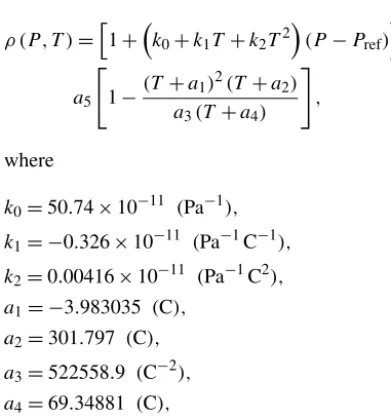
wherem=1−1/n. Lastly, we used an EoS for water den-sity,ρ, that is a nonlinear function of liquid pressure,P, and liquid temperature,T, given by Tanaka et al. (2001):
ρ (P , T )=
h
1+
k0+k1T+k2T2
(P−Pref)
i
a5
"
1−(T+a1) 2(T+a
2)
a3(T+a4)
#
, (13)
where
k0=50.74×10⁻¹¹ (Pa−1),
k1= −0.326×10⁻¹¹ (Pa−1C−1),
k2=0.00416×10⁻¹¹ (Pa−1C2),
a1= −3.983035 (C),
a2=301.797 (C),
a3=522558.9 (C−2),
a4=69.34881 (C),
a5=999.974950 (kg m−3).
The sink of water due to transpiration from a given plant functional type (PFT) is vertically distributed over the soil column based on area and root fractions of the PFT. The top soil layer has an additional flux associated with balance of in-filtration and soil evaporation. The subsurface drainage flux is applied proportionally to all soil layers below the water table. Details on the computation of water sinks are given in Oleson et al. (2013). Unlike the default subsurface hy-drology model, the VSFM is applied over the full soil depth
(in the default model, 15 soil layers). The VSFM model re-places both theθ-based Richards equation and the uncon-fined aquifer of the default model and uses a zero-flux lower boundary condition. In the VSFM model, water table depth is diagnosed based on the vertical soil liquid pressure profile. Like the default model, drainage flux is computed based on the modified SIMTOP approach and is vertically distributed over the soil layers below the water table.
2.2.1 Discrete equations
We use a cell-centered finite volume discretization to decom-pose the spatial domain,, into N non-overlapping control volumes,n, such that= ∪Nn=1i and0n represents the boundary of thenth control volume. Applying a finite vol-ume integral to Eq. (7) and the divergence theorem yields
∂ ∂t
Z
n
(φswρ)dV = −
Z
0n
(ρq)·dA−
Z
n
QdV . (14)
The discretized form of the left-hand-side term and first term on the right-hand side of Eq. (14) are approximated as
∂ ∂t
Z
n
(φswρ)dV ≈
d
dt(φswρ)
Vn, (15)
Z
0n
(ρq)·dA≈X n0
(ρq)nn0·Ann0, (16)
whereAnn0 (m2) is the common face area between thenth
andn0th control volumes. After substituting Eqs. (15) and (16) in Eq. (14), the resulting ordinary differential equation for the variably saturated flow model is
d
dt(φswρ)
Vn= − X
n0
(ρq)nn0·Ann0−QnVn. (17)
We perform temporal integration of Eq. (17) using the backward-Euler scheme:
(φswρ)tn+1−(φswρ)tn 1t
!
Vn= − X
n0
(ρq)tnn+01·Ann0.
−Qtn+1Vn (18)
Rearranging terms of Eq. (18) results in a nonlinear equa-tion for the unknown pressure at time stept+1 as
(φswρ)tn+1−(φswρ)tn 1t
!
Vn+ X
n0
(ρq)tnn+10 ·Ann0
within the Portable, Extensible Toolkit for Scientific Com-puting (PETSc) library (Balay et al., 2016). PETSc pro-vides a suite of data structures and routines for the scal-able solution of partial differential equations. VSFM uses the composable data management (DMComposite) provided by PETSc (Brown et al., 2012), which enables the poten-tial future application of the model to solve tightly cou-pled, multi-component, multi-physics processes as discussed in Sect. 3.4. A smooth approximation of the Brooks and Corey (1964; SBC) water retention curve was developed to facilitate faster convergence of the nonlinear solver (Ap-pendix A). ELMv0 code for subsurface hydrologic processes only supports two vertical mesh configurations and a single set of boundary and source–sink conditions. The monolithic ELMv0 code does not allow for building of code for indi-vidual process representations independent of ELMv0 code, thus precluding easy testing of the model against analytical solutions or simulation results from other models. The mod-ular software design of VSFM overcomes ELMv0’s software limitation by allowing VSFM code to be built independently of the ELM code. This flexibility of VSFM’s build system al-lows for testing of the VSFM physics in isolation without any influence from the rest of ELM’s physics formulations. Ad-ditionally, VSFM can be easily configured for a wide range of benchmark problems with different spatial grid resolu-tions, material properties, boundary condiresolu-tions, and source– sink forcings.
2.3 VSFM single-column evaluation
We tested the VSFM with three idealized 1-dimensional test problems. First, the widely studied problem for the 1-D Richards equation of infiltration in dry soil by Celia et al. (1990) was used. The problem setup consists of a 1.0 m long soil column with a uniform initial pressure of−10.0 m (=3535.5 Pa). The time invariant boundary conditions ap-plied at the top and bottom of the soil column are−0.75 m (= 93989.1 Pa) and −10.0 m (=3535.5 Pa), respectively. The soil properties for this test are given in Table 1. A vertical discretization of 0.01 m is used in this simulation.
Second, we simulated transient one-dimensional vertical infiltration in a two-layered soil system as described in Sri-vastava and Yeh (1991). The domain consisted of a 2 m tall soil column divided equally into two soil types. Except for soil intrinsic permeability, all other soil properties of the two soil types are the same. The bottom soil is 10 times less permeable than the top (Table 1). Unlike Srivastava and Yeh (1991), who used exponential functions of soil liquid pressure to compute hydraulic conductivity and soil satu-ration, we used Mualem (1976) and van Genuchten (1980) constitutive relationships. Since our choice of constitutive relationships for this setup resulted in absence of an an-alytical solution, we compared VSFM simulations against PFLOTRAN results. The domain was discretized in 200 con-trol volumes of equal soil thickness. Two scenarios,
wet-ting and drying, were modeled to test the robustness of the VSFM solver robustness. Initial conditions for each sce-nario included a time invariant boundary condition of 0 m (=1.01325×10⁵Pa) for the lowest control volume and a constant flux of 0.9 and 0.1 cm h−1at the soil surface for wet-ting and drying scenarios, respectively.
Third, we compare VSFM and PFLOTRAN predic-tions for soil under variably saturated condipredic-tions. The 1-dimensional 1 m deep soil column was discretized in 100 equal thickness control volumes. A hydrostatic initial con-dition was applied such that the water table is 0.5 m below the soil surface. A time invariant flux of 2.5×10⁻⁵m s−1is applied at the surface, while the lowest control volume has a boundary condition corresponding to the initial pressure value at the lowest soil layer. The soil properties used in this test are the same as those used in the first evaluation. 2.4 Global simulations and groundwater depth analysis We performed global simulations with ELMv1-VSFM at a spatial resolution of 1.9◦(latitude)×2.5◦(longitude) with a 30 (min) time step for 200 years, including a 180-year spin-up and the last 20 years for analysis. The simulations were driven by CRUNCEP meteorological forcing from 1991 to 2010 (Piao et al., 2012) and configured to use prescribed satellite phenology.
For evaluation and calibration, we used the Fan et al. (2013) global∼1 km horizontal resolution WTD dataset (hereafter F2013 dataset), which is based on a combination of observations and hydrologic modeling. We aggregated the dataset to the ELMv1-VSFM spatial resolution. ELM-VSFM’s default vertical soil discretization uses 15 soil lay-ers to a depth of∼42 m, with an exponentially varying soil thickness. However,∼13 % of F2013 land grid cells have a water table deeper than 42 m. We therefore modified ELMv1-VSFM to extend the soil column to a depth of 150 m with 59 soil layers; the first nine soil layer thicknesses were the same as described in Oleson et al. (2013) and the remaining layers (10–59) were set to a thickness of 3 m.
2.5 Estimation of the subsurface drainage parameterization
In the VSFM formulation, the dominant control on long-term ground water depth is the subsurface drainage flux,qd (kg m−2s−1), which is calculated based on water table depth,
z∇ (m), Niu et al. (2005):
qd=qd,max exp (−fdz∇) , (20)
Table 1.Soil properties and discretization used in the three test problems described in Sect. 2.3.
Problem
number φ(–) m(–) α(Pa−1) k(m2) dz(m) dt(s)
1 0.368 0.5 3.4257×10⁻⁴ 8.3913×10⁻¹² 0.001 180
25281×10−12(top layer)
2 0.4 0.5455 4×10⁻⁴ 2.5281×10⁻¹³(bottom layer) 0.01 100
3 0.368 0.5 3.4257×10⁻⁴ 8.3913×10⁻¹² 0.01 3600
derived qd,maxas a function of lateral hydraulic anisotropy, hydraulic conductivity, topographic index, and decay fac-tor controlling vertical saturated hydraulic conductivity, Niu et al. (2005) defined qd,maxas a single calibration parame-ter. ELMv0 usesfd=2.5 m−1as a global constant and es-timates maximum drainage flux when WTD is at the sur-face asqd,max=10 sin(β)kg m−2s−1, whereβ (radians) is the mean grid cell topographic slope. Of the two parameters,
fd and qd,max, available for model calibration, we choose to calibrate fd because the uncertainty analysis by Hou et al. (2012) identified it as the most significant hydrologic pa-rameter in CLM4. To improve on thefdparameter values, we performed an ensemble of global simulations withfdvalues of 0.1, 0.2, 0.5, 1.0, 2.5, 5.0, 10.0, and 20 m−1. Each ensem-ble simulation was run for 200 years to ensure an equilibrium solution, and the last 20 years were used for analysis. A non-linear functional relationship between fd and “WTD” was developed for each grid cell and then the F2013 dataset was used to estimate an optimalfdfor each grid cell.
2.6 Global ELM-VSFM evaluation
With the optimalfd values, we ran a ELM-VSFM simula-tion using the protocol described above. We then used the ILAMB package to evaluate the ELMv1-VSFM predictions of surface energy budget, terrestrial water storage anomalies (TWSAs), and river discharge (Collier et al., 2018; Hoff-man et al., 2017). ILAMB evaluates model prediction bias, RMSE, and seasonal and diurnal phasing against multiple observations of energy, water, and carbon cycles at in-situ, re-gional, and global scales. Since ELM-VSFM simulations in this study did not include an active carbon cycle, we used the following ILAMB benchmarks for water and energy cycles: (i) latent and surface energy fluxes using site-level measure-ments from FLUXNET (Lasslop et al., 2010) and globally from FLUXNET-MTE (Jung et al., 2009); (ii) TWSA from the Gravity Recovery And Climate Experiment (GRACE) observations (Kim et al., 2009); and (iii) stream flow for the 50 largest global river basins (Dai and Trenberth, 2002). We applied ILAMB benchmarks for ELMv1-VSFM simula-tions with default and calibratedfdto ensure improvements in WTD predictions did not degrade model skill for other processes.
-12 -10 -8 -6 -4 -2 0
Pressure head [m] 0
0.2
0.4
0.6
0.8
1
Depth [m]
Pressure at t = 0 [h]
Pressure from VSFM at t = 24 [h]
Pressure from Celia et al. (1980) at t = 24 [h]
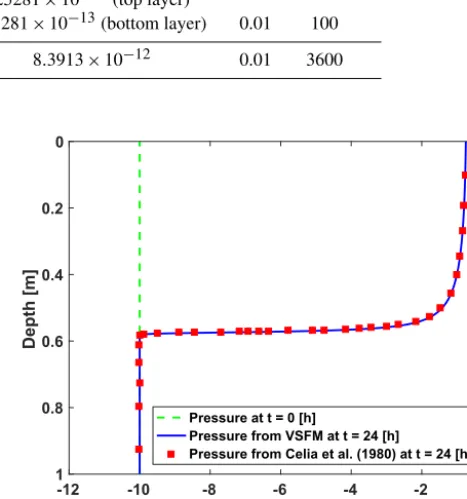
Figure 1.Comparison of VSFM simulated pressure profile (blue
line) against data (red square) reported in Celia et al. (1990) at time=24 h for infiltration in a dry soil column; Initial pressure con-dition is shown by green line.
3 Results and discussion
3.1 VSFM single-column evaluation
For the 1D Richards equation infiltration in dry soil compar-ison, we evaluated the solutions at 24 h against those pub-lished by Celia et al. (1990; Fig. 1). The VSFM solver accu-rately represented the sharp wetting front over time, where soil hydraulic properties change dramatically due to nonlin-earity in the soil water retention curve.
For the model evaluation of infiltration and drying in lay-ered soil, the results of the VSFM and PFLOTRAN are es-sentially identical. In both models and scenarios, the higher permeability top soil responds rapidly to changes in the top boundary condition and the wetting and drying fronts pro-gressively travel through the less permeable soil layer until soil liquid pressure in the entire column reaches a new steady state by about 100 h (Fig. 2).
ta--0.5 -0.4 -0.3 -0.2 -0.1 0 Pressure head [m] 0 0.2 0.4 0.6 0.8 1 1.2 1.4 1.6 1.8 2 Depth [m]
(a) Wetting scenario
Time = 0 [h] Time = 1 [h]
Time = 5 [h] Time = 10 [h]
Time = 20 [h]
Time = 100 [h]
VSFM PFLOTRAN
-0.5 -0.4 -0.3 -0.2 -0.1 0
Pressure head [m] 0 0.2 0.4 0.6 0.8 1 1.2 1.4 1.6 1.8 2
(b) Drying scenario
Time = 0 [h] Time = 1 [h]
Time = 5 [h] Time = 10 [h]
Time = 20 [h]
Time = 100 [h]
VSFM PFLOTRAN
Figure 2.Transient liquid pressure simulated for a two-layer soil
system by VSFM (solid line) and PFLOTRAN (square) for(a) wet-ting and(b)drying scenarios.
-0.5 0 0.5
Pressure head [m]
0 0.1 0.2 0.3 0.4 0.5 0.6 0.7 0.8 0.9 1 Depth [m] (a)
VSFM at t = 0 [day] PFLOTRAN at t = 0 [day] VSFM at t = 1 [day] PFLOTRAN at t = 1 [day]
0.6 0.7 0.8 0.9 1
Saturation [-] 0 0.1 0.2 0.3 0.4 0.5 0.6 0.7 0.8 0.9 1 (b)
VSFM at t = 0 [day] PFLOTRAN at t = 0 [day] VSFM at t = 1 [day] PFLOTRAN at t = 1 [day]
Figure 3.Transient(a)liquid pressure and(b)soil saturation
simu-lated by VSFM (solid line) and PFLOTRAN (square) for the water table dynamics test problem.
ble rises to 0.3 m depth by 1 day and reaches the surface by 2 days, and the VSFM and PFLOTRAN predictions are es-sentially identical (Fig. 3). Soil properties, spatial discretiza-tion, and time step used for the three single-column problems are summarized in Table 1 These three evaluation simula-tions demonstrate the VSFM accurately represents soil mois-ture dynamics under conditions relevant to ESM-scale pre-diction.
3.2 Subsurface drainage parameterization estimation The simulated nonlinear WTD–fd relationship is a result of the subsurface drainage parameterization flux given by
0.1 0.2 0.5 1 2.5 5 10 20 50
10-1
100
101
102
WTD [m]
(a) (37°N, -82.5°W)
WTD
F2013
0.1 0.2 0.5 1 2.5 5 10 20 50
10-1
100
101
102
(b) (6.6°N, -70°W)
WTD
F2013
0.1 0.2 0.5 1 2.5 5 10 20 50
10-6 10-5 10-4 Flux [m s -1]
(c) (37°N, -82.5°W)
Drainge ET Infiltration
0.1 0.2 0.5 1 2.5 5 10 20 50
10-6 10-5
10-4 (d) (6.6
°N, -70°W)
Drainge ET Infiltration
Figure 4. (a–b)The nonlinear relationship between simulated water
table depth (WTD) andfdfor two grid cells within ELM’s global grid. WTD from the Fan et al. (2013) dataset and optimalfdfor the
two grid cells are shown with dashed red and dashed black lines, respectively.(c–d)The simulated drainage, evapotranspiration, and infiltration fluxes as functions of optimalfdfor the two ELM grid
cells.
Est imat edfd
0.10 0.16 0.25 0.40 0.63 1.00 1.58 2.51 3.98 6.31 10.00
[m-1]
Figure 5.Global estimate offd.
Eq. (20; Fig. 4a and b). For 0.1≤fd≤1, the slope of the WTD–fdrelationship for all grid cells is log–log linear with a slope of−1.0±0.1. The log–log linear relationship breaks down for fd>1, where the drainage flux becomes much smaller than infiltration and evapotranspiration (Fig. 4c and d). Thus, at largerfd, the steady statez∇ becomes indepen-dent offdand is determined by the balance of infiltration and evapotranspiration.
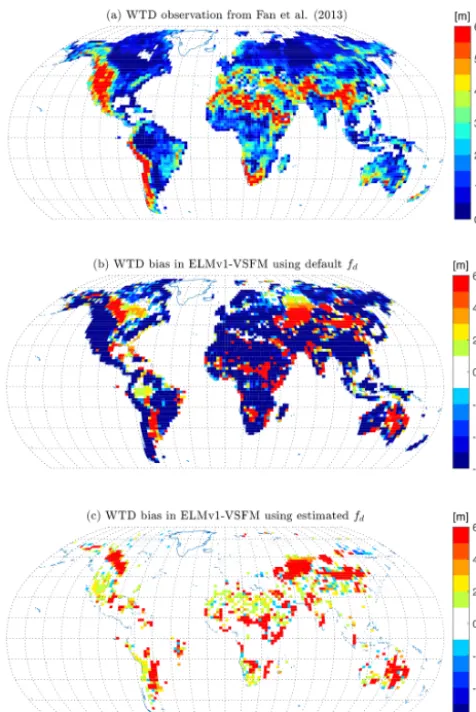
Figure 6. (a)Water table depth observation from Fan et al. (2013); (b) water table depth biases (=Model–Obs) from ELMv1-VSFM using default spatially homogeneousfd; and(c)water table depth
biases from ELMv1-VSFM using spatially heterogeneousfd.
one that resulted in the lowest absolute WTD error (e.g., Fig. 4b). At large fd values, the drainage flux has negligi-ble effects on WTD, yet simulated WTD is not sufficiently shallow to match the F2013 observations, which indicates that either evapotranspiration is too large or infiltration is too small. There was no difference in the mean percentage of sand and clay content between grids cells with and without an optimalfdvalue. The optimalfdhas a global average of 1.60 m−1±2.68 m−1and 72 % of global grid cells have an optimalfdvalue lower than the global average (Fig. 5). 3.3 Global simulation evaluation
The ELMv1-VSFM predictions are much closer to the F2013 dataset (Fig. 6a) using optimal globally distributed fd val-ues (Fig. 6c) compared to the defaultfdvalue (Fig. 6b). The significant reduction in WTD bias (model – observation) is mostly due to improvement in the model’s ability to accu-rately predict deep WTD using optimalfdvalues. In the
sim-Figure 7. (a)Annual range of water table depth for ELMv1-VSFM
simulation with spatially heterogeneous estimates offdand(b)
dif-ference in annual water table depth range between simulations with optimal and defaultfd.
ulation using optimal globally distributedfdvalues, all grid cells with WTD bias>3.7 m were those for which an op-timalfd was not found. The mean global bias, RMSE, and
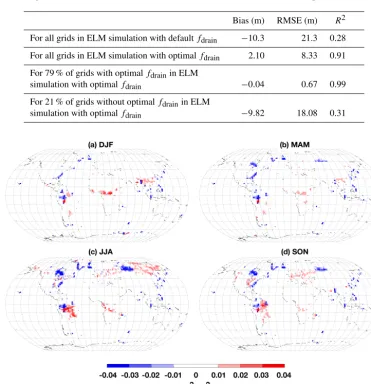
R2values improved in the new ELMv1-VSFM compared to the default model (Table 2). The 79 % of global grid cells for which an optimalfd value was estimated had significantly better water table prediction with a bias, RMSE, andR2 of −0.04, 0.67, and 0.99 m, respectively, as compared to the re-maining 21 % of global grid cells that had a bias, RMSE, and
R2of−9.82, 18.08, and 0.31 m, respectively. The simulated annual WTD range, which we define to be the difference be-tween maximum and minimum WTD in 1 year, has a spatial mean and standard deviation of 0.32 and 0.58 m, respectively, using optimalfdvalues (Fig. 7a). The annual WTD range de-creased by 0.24 m for the 79 % of the grid cells for which an optimalfdvalue was estimated (Fig. 7b).
Table 2.Bias, root mean square error (RMSE), and correlation (R2) between simulated water table depth and Fan et al. (2013) data.
Bias (m) RMSE (m) R2
For all grids in ELM simulation with defaultfdrain −10.3 21.3 0.28
For all grids in ELM simulation with optimalfdrain 2.10 8.33 0.91
For 79 % of grids with optimalfdrainin ELM
simulation with optimalfdrain −0.04 0.67 0.99
For 21 % of grids without optimalfdrainin ELM
simulation with optimalfdrain −9.82 18.08 0.31
Figure 8.Seasonal monthly mean soil moisture differences for top 10 cm between ELMv1-VSFM simulations with optimal and defaultfd
values.
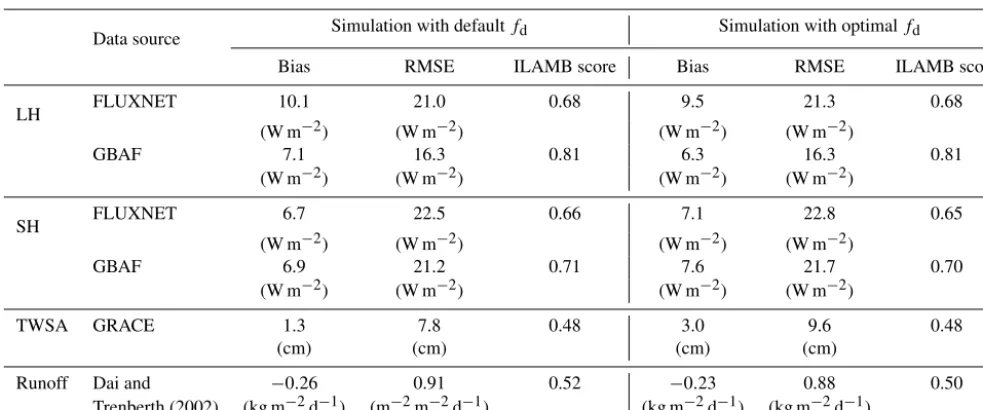
The ILAMB package (Hoffman et al., 2017) provides a comprehensive evaluation of predictions of carbon cycle states and fluxes, hydrology, surface energy budgets, and functional relationships by comparison to a wide range of observations. We used ILAMB to evaluate the hydrologic and surface energy budget predictions from the new ELMv1-VSFM model (Table 3). Optimalfdvalues had inconsequen-tial impacts on simulated surface energy fluxes at site-level and global scales. Optimalfdvalues led to improvement in prediction of deep WTD (with a mean value of 24.3 m) for grid cells that had an average WTD of 8.7 m in the simula-tion using default fdvalues. Thus, negligible differences in surface energy fluxes between the two simulations are con-sistent with the findings of Kollet and Maxwell (2008), who identified decoupling of groundwater dynamics and surface processes at a WTD of ∼10 m. There were slight changes in the bias and RMSE for predicted TWSA, but the ILAMB
score remained unchanged. The TWSA amplitude is lower for the simulation with optimal fd values, consistent with the associated decrease in annual WTD range. ELM’s skill in simulating runoff for the 50 largest global watersheds re-mained unchanged. Two additional 10-year-long simulations were performed to investigate the sensitivity of VSFM sim-ulated WTD to spatial and temporal discretization. Results show that simulated WTD is insensitive to temporal dis-cretization, and has small sensitivity to vertical spatial res-olution. See the Supplement for details regarding the setup and analysis of results from the two additional simulations.
lay-Table 3.ILAMB benchmark scores for latent heat flux (LH), sensible heat flux 640 (SH), terrestrial water storage anomaly (TWSA), and surface runoff. The calculation of ILAMB metrics and scores are described at http://redwood.ess.uci.edu/ (last access: 4 October 2018).
Data source Simulation with defaultfd Simulation with optimalfd
Bias RMSE ILAMB score Bias RMSE ILAMB score
LH FLUXNET 10.1 21.0 0.68 9.5 21.3 0.68
(W m−2) (W m−2) (W m−2) (W m−2)
GBAF 7.1 16.3 0.81 6.3 16.3 0.81
(W m−2) (W m−2) (W m−2) (W m−2)
SH FLUXNET 6.7 22.5 0.66 7.1 22.8 0.65
(W m−2) (W m−2) (W m−2) (W m−2)
GBAF 6.9 21.2 0.71 7.6 21.7 0.70
(W m−2) (W m−2) (W m−2) (W m−2)
TWSA GRACE 1.3 7.8 0.48 3.0 9.6 0.48
(cm) (cm) (cm) (cm)
Runoff Dai and −0.26 0.91 0.52 −0.23 0.88 0.50
Trenberth (2002) (kg m−2d−1) (m−2m−2d−1) (kg m−2d−1) (kg m−2d−1)
out, we found that ELMv1-VSFM is∼30 % more expensive than the default ELMv1 model (the Supplement, Fig. S1). We note that the relative computational cost of the land model in a fully coupled global model simulation is generally very low. Dennis et al. (2012) reported computational cost of the land model to be less than 1 % in ultrahigh-resolution CESM simulations. We therefore believe that the additional bene-fits associated with the VSFM formulation are well justified by this modest increase in computational cost. In particular, VSFM allows for a greater variety of mesh configurations and boundary conditions, and can accurately simulate WTD for the ∼13 % of global grid cells that have a water table deeper than 42 (m) (Fan et al., 2013).
3.4 Caveats and future work
The significant improvement in WTD prediction using op-timalfdvalues demonstrates VSFM’s capabilities to model hydrologic processes using a unified physics formulation for unsaturated–saturated zones. However, several caveats re-main due to uncertainties in model structure, model parame-terizations, and climate forcing data.
In this study, we assumed a spatially homogeneous depth to bedrock (DTB) of 150 m. Recently, Brunke et al. (2016) incorporated a global ∼1 km dataset of soil thickness and sedimentary deposits (Pelletier et al., 2016) in CLM4.5 to study the impacts of soil thickness spatial heterogeneity on simulated hydrological and thermal processes. While inclu-sion of heterogeneous DTB in CLM4.5 added more realism to the simulation setup, no significant changes in simulated hydrologic and energy fluxes were reported by Brunke et al. (2016). Presently, work is ongoing in the E3SM project to include variable DTB within ELM and future simulations
will examine the impact of those changes on VSFM’s pre-diction of WTD. Our use of the “satellite phenology” mode, which prescribes transient leaf area index profiles for each PFT in the grid cell, ignored the likely influence of wa-ter cycle dynamics and nutrient constraints on the C cycle (Ghimire et al., 2016; Zhu et al., 2016). Estimation of soil hydraulic properties based on soil texture data is critical for accurate LSM predictions (Gutmann and Small, 2005) and this study does not account for uncertainty in soil hydraulic properties.
straightforward. The current VSFM implementation can also be easily extended to account for subsurface transport of wa-ter among grid cells that are distributed across multiple pro-cessors by modeling lateral flow as source/sink terms in the 1-D model. Tradeoffs between approaches to represent lat-eral processes and computational costs need to be carefully studied before developing quasi- or fully three-dimensional LSMs (Clark et al., 2015).
Transport of water across multiple components of the soil-plant-atmosphere continuum (SPAC) has been identified as a critical process in understanding the impact of climate warm-ing on the global carbon cycle (McDowell and Allen, 2015). Several SPAC models have been developed by the ecohy-drology community and applied to study site level processes (Amenu and Kumar, 2008; Bohrer et al., 2005; Manoli et al., 2014; Sperry et al., 1998), yet implementation of SPAC models in global LSMs is limited (Clark et al., 2015). Sim-ilarly, current generation LSMs routinely ignore advective heat transport within the subsurface, which has been shown to be important in high-latitude environments by multiple field and modeling studies (Bense et al., 2012; Frampton et al., 2011; Grant et al., 2017; Kane et al., 2001). The use of PETSc’s DMComposite in VSFM provides flexibility for solving a tightly coupled multi-component problem (e.g., transport of water through the soil-plant-atmosphere contin-uum) and multi-physics problem (e.g., fully coupled conser-vation of mass and energy equations in the subsurface). DM-Composite allows for an easy assembly of a tightly coupled multi-physics problem from individual physics formulations (Brown et al., 2012).
4 Summary and conclusion
Starting from the climate-scale land model ELMv0, we in-corporated a unified physics formulation to represent soil moisture and groundwater dynamics that are solved using PETSc. Application of VSFM to three benchmarks problems demonstrated its robustness to simulate subsurface hydro-logic processes in coupled unsaturated and saturated zones. Ensemble global simulations at 1.9◦×2.5◦were performed for 200 years to obtain spatially heterogeneous estimates of the subsurface drainage parameter,fd, that minimized mis-matches between predicted and observed WTDs. In order to simulate the deepest water table reported in the Fan et al. (2013) dataset, we used 59 vertical soil layers that reached a depth of 150 m.
Appendix A: Smooth approximation of Brooks–Corey water retention curve
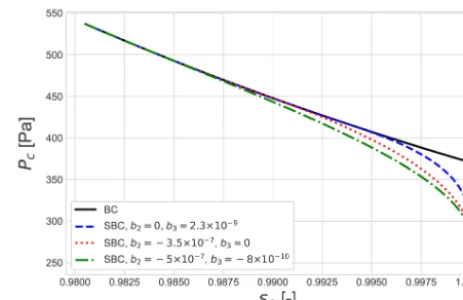
The Brooks and Corey (1964) water retention curve of Eq. (10) has a discontinuous derivative at Pc=Pc0. Fig-ure A1 illustrates an example. To improve convergence of the nonlinear solver at small capillary pressures, the smoothed Brooks–Corey function introduces a cubic poly-nomial,B(Pc), in the neighborhood ofPc0.
se=
(−αPc)−λ if Pc≤Pu,
B (Pc) if Pu< Pc< Ps, 1 if Ps≤Ps,
(A1)
where the breakpointsPuandPs satisfyPu< Pc0< Ps≤0. The smoothing polynomial
B (Pc)=b0+b1(Pc−Ps)+b2(Pc−Ps)2
+b3(Pc−Ps)3 (A2) introduces four more parameters, whose values follow from continuity. In particular, matching the saturated region re-quiresB (Ps)=b0=1, and a continuous derivative atPc=
Ps requiresB0(Ps)=b1=0. Similarly, matching the value and derivative atPc=Purequires
b2= −1
12
3−(αPu)−λ
3+λ1
Pu
, (A3)
b3= −1
13
2−(αPu)−λ
2+λ1
Pu
, (A4)
where1=Pu−Ps. Note thatPu≤1 <0.
In practice, settingPutoo close toPc0can produce an un-wanted local maximum in the cubic smoothing regime, re-sulting inse>1. Avoiding this condition requires thatB (Pc) increase monotonically from Pc=Pu, where B0(Pc) >0, to Pc=Ps, where B0(Pc)=0. Thus a satisfactory pair of breakpoints ensures
B0(Pc)=[Pc−Ps] [2b2+3b3(Pc−Ps)]>0 (A5) throughoutPu≤Pc< Ps.
LetPc∗denote a local extremum ofB, so thatB0 Pc∗= 0. If Pc∗6=Ps, it follows Pc∗−Ps= −2b2/(3b3). Rewrit-ing Eq. (22), B0(Pc)=(Pc−Ps)3b3 Pc−Pc∗
shows that
B0(Pu) >0 requires either: (1) b3<0 and Pc∗< Pu; or (2) b3>0 and Pc∗> Pu. The first possibility places Pc∗ outside the cubic smoothing regime, and so does not con-strain the choice ofPuorPs. The second possibility allows for an unwanted local extremum at Pu< Pc∗< Ps. In this case,b3>0 impliesb2<0 (sincePc∗< Ps≤0). Then since
B00 Pc∗= −
2b2, the local extremum is a maximum, result-ing inse Pc∗
>1.
Given a breakpoint Ps, one strategy for choosing Pu is to guess a value, then check whether the resulting b2 and
b3producesPu< Pc∗< Ps. If so,Pushould be made more
Figure A1.The Brooks–Corey water rendition curve for
estimat-ing liquid saturation,se, as a function of capillary pressure, Pc,
shown in solid black line and smooth approximation of Brooks– Corey (SBC) are shown in dashed line.
negative. An alternative strategy is to choose Pu in order the guarantee acceptable values forb2 andb3. One conve-nient choice forcesb2=0. Another picksPuin order to force
b3=0. Both of these reductions (1) ensureB (Pc)has a pos-itive slope throughout the smoothing interval, (2) slightly re-duce the computation cost of findingse(Pc)for Pc on the smoothing interval, and (3) significantly reduce the compu-tational cost of inverting the model, in order to findPcas a function ofse.
As shown in Fig. A1, the two reductions differ mainly in that settingb2=0 seems to produce narrower smoothing re-gions (probably due to the fact that this choice gives zero curvature atPc=Ps, whileb3=0 yields a negative second derivative there). However, we have not verified this obser-vation analytically.
Both reductions require solving a nonlinear expression, either Eqs. (A3) or (A4), forPu. While details are beyond the scope of this paper, we note that we have used a brack-eted Newton–Raphson method. The search switches to bisec-tion when Newton–Raphson would jump outside the bounds established by previous iterations, and by the requirement
Appendix B: Residual equation of VSFM formulation The residual equation for the VSFM formulation att+1 time level fornth control volume is given by
Rnt+1≡ (φswρ) t+1
n −(φswρ)tn 1t
!
Vn+ X
n0
(ρq)tnn+10
·Ann0+Qt+1
n Vn=0, (B1)
whereφ(mm3mm3) is the soil porosity,sw(-) is saturation,
ρ (kg m−3) is water density,
nn0 (m s−1) is the Darcy flow
velocity betweennth andn0th control volumes,Ann0 (m s−1)
is the interface area between nth andn0th control volumes, andQ(kg m−3s−1) is a sink of water. The Darcy velocity is computed as
qnn0= −
kk r µ nn0 P
n0−Pn−ρnn0(g·dnn0)
dn+dn0
nnn0, (B2)
whereκ(m−2) is intrinsic permeability,κr(-) is relative per-meability,µ(Pa s) is viscosity of water,P (Pa) is pressure,g (m s−2) is the acceleration due to gravity,dn(m) anddn0(m)
are the distances between centroid of the nth andn0th con-trol volume to the common interface between the two concon-trol volumes,dnn0is a distance vector joining centroid ofnth and
n0th control volume, andnnn0 is a unit normal vector joining
centroid of thenth andn0th control volume.
The density at the interface of control volume, ρnn0, is
computed as the inverse distance weighted average by
ρnn0=ωn0ρn+ωnρn0, (B3)
whereωnandωn0 are given by
ωn= dn dn+dn0
=(1−ωn0). (B4)
The first term on the right-hand side of Eq. (27) is com-puted as the product of distance-weighted harmonic average of intrinsic permeability,knn0, and upwinding ofkr/µ(=λ)
as kk r µ nn0
=knn0
k r µ nn0 = k
nkn0(dn+dn0)
kndn0+kn0dn)
λnn0, (B5)
where
λnn0=
(kr/µ)n if qnn0>0,
(kr/µ)n0 otherwise.
(B6)
By substituting Eqs. (28), (29), and (30) in Eq. (27), we obtain
qnn0= −
k
nkn0
kndn0+kn0dn)
λnn0
[Pn0−Pn−ρnn0(gd
nn0)]nnn0. (B7)
Appendix C: Jacobian equation of VSFM formulation The discretized equations of VSFM leads to a system of nonlinear equations given by Rt+1 Pt+1
=0, which are solved using Newton’s method using the Portable, Extensible Toolkit for Scientific Computing (PETSc) library. The algo-rithm of Newton’s method requires solution of the following linear problem
Jt+1,k(Pt+1,k)1Pt+1,k= −Rt+1,k(Pt+1,k), (C1) whereJt+1,k(Pt+1,k)is the Jacobian matrix. In VSFM, the Jacobian matrix is computed analytically. The contribution to the diagonal and off-diagonal entry of the Jacobian matrix fromnth residual equations are given by
Jnn= ∂Rn ∂Pn = V n 1t ∂(ρφs w) ∂Pn +X n0
∂(ρq)nn0
∂Pn Ann0
+∂Q t+1 n ∂Pn
Vn, (C2)
Jnn0=
∂Rn ∂Pn0
=X
n0
∂(ρq)nn0
∂Pn0
Ann0
+∂Q t+1 n ∂Pn0
Vn. (C3)
The derivative of the accumulation term in Jnn is com-puted as
∂(ρφsw)
∂Pn
=φsw
∂ρ ∂Pn
+ρsw
∂φ ∂Pn
+ρφ∂sw ∂Pn
. (C4)
The derivative of flux betweennth andn0th control volume with respect to pressure of each control volume is given as
∂(ρq)nn0
∂Pn
=ρnn0∂
qnn0
∂Pn
+qnn0ωn∂ρn
∂Pn
, (C5)
∂(ρq)nn0
∂Pn0
=ρnn0
∂qnn0
∂Pn0
+qnn0ωn0
∂ρn0
∂Pn0
. (C6)
Lastly, the derivative of the Darcy velocity between the
nth andn0th control volume with respect to pressure of each control volume is given as
∂qnn0
∂Pn =
k
nkn0
kndn0+kn0dn)
λnn0
1+ωn(g.dnn0)
∂ρn ∂Pn
nnn0+qnn0
∂ (ln (λnn0))
∂Pn
, (C7)
∂qnn0
∂Pn0
=
knkn0
kndn0+kn0dn)
λnn0
−1+ωn(g.dnn0)∂ρn 0
∂Pn0
nnn0+qnn0
∂ (ln (λnn0))
∂Pn0
. (C8)
Appendix D: Numerical checks in VSFM
– Stage-1: at any temporal integration stage, the model at-tempts to solve the set of nonlinear equations given by Eq. (19) with a given time step. If the model fails to find a solution to the nonlinear equations with a given error tolerance settings, the time step is reduced by half and the model again attempts to solve the nonlinear prob-lem. If the model fails to find a solution after a maxi-mum number of time step cuts (currently 20), the model reports an error and stops execution. None of the simu-lations reported in this paper failed this check.
Code availability. The stand-alone VSFM code is available at https://github.com/MPP-LSM/MPP (last access: 25 September 2018) and the DOI for the code is https://doi.org/10.5281/zenodo. 1412949 (last access: 25 September 2018). Notes on how to run the VSFM for all benchmark problems and compare results against PFLOTRAN at https://bitbucket.org/gbisht/notes-for-gmd-2018-44 (last access: 25 September 2018). The research was performed us-ing E3SM v1.0 and the code is available at https://github.com/ E3SM-Project/E3SM (last access: 25 September 2018).
Supplement. The supplement related to this article is available
online at: https://doi.org/10.5194/gmd-11-4085-2018-supplement.
Author contributions. GB developed and integrated VSFM in ELM
v1.0. GB and WJR designed the study and prepared the manuscript. GEH provided a template for VSFM development. DML imple-mented smooth approximations of water retention curves in VSFM.
Competing interests. The authors declare that they have no conflict
of interest.
Acknowledgements. This research was supported by the Director,
Office of Science, Office of Biological and Environmental Research of the US Department of Energy under contract no. DE-AC02-05CH11231 as part of the Energy Exascale Earth System Model (E3SM) programs.
Edited by: Jatin Kala
Reviewed by: Minki Hong and two anonymous referees
References
Alkhaier, F., Flerchinger, G. N., and Su, Z.: Shallow groundwater effect on land surface temperature and surface energy balance un-der bare soil conditions: modeling and description, Hydrol. Earth Syst. Sci., 16, 1817–1831, https://doi.org/10.5194/hess-16-1817-2012, 2012.
Alley, W. M.: Ground Water and Climate, Ground Water, 39, 161– 161, 2001.
Amenu, G. G. and Kumar, P.: A model for hydraulic redistribution incorporating coupled soil-root moisture transport, Hydrol. Earth Syst. Sci., 12, 55–74, https://doi.org/10.5194/hess-12-55-2008, 2008.
Anyah, R. O., Weaver, C. P., Miguez-Macho, G., Fan, Y., and Robock, A.: Incorporating water table dynamics in climate mod-eling: 3. Simulated groundwater influence on coupled land-atmosphere variability, J. Geophys. Res.-Atmos., 113, D07103, https://doi.org/10.1029/2007JD009087, 2008.
Balay, S., Abhyankar, S., Adams, M. F., Brown, J., Brune, P., Buschelman, K., Dalcin, L., Eijkhout, V., Gropp, W. D., Kaushik, D., Knepley, M. G., McInnes, L. C., Rupp, K., Smith, B. F., Zampini, S., Zhang, H., and Zhang, H.: PETSc Users Manual,
Argonne National LaboratoryANL-95/11 – Revision, 3.7, 1–241 pp., 2016.
Banks, E. W., Brunner, P., and Simmons, C. T.: Vegeta-tion controls on variably saturated processes between sur-face water and groundwater and their impact on the state of connection, Water Resour. Res., 47, W11517, https://doi.org/10.1029/2011WR010544, 2011.
Bense, V. F., Kooi, H., Ferguson, G., and Read, T.: Permafrost degradation as a control on hydrogeological regime shifts in a warming climate, J. Geophys. Res.-Earth Surf., 117, F03036, https://doi.org/10.1029/2011JF002143, 2012.
Bernhardt, M., Schulz, K., Liston, G. E., and Zängl, G.: The in-fluence of lateral snow redistribution processes on snow melt and sublimation in alpine regions, J. Hydrol., 424–425, 196–206, 2012.
Beven, K. J. and Kirkby, M. J.: A physically based, variable contributing area model of basin hydrology/Un modèle à base physique de zone d’appel variable de l’hydrologie du bassin ver-sant, Hydrol. Sci. Bull., 24, 43–69, 1979.
Bisht, G., Huang, M., Zhou, T., Chen, X., Dai, H., Hammond, G. E., Riley, W. J., Downs, J. L., Liu, Y., and Zachara, J. M.: Coupling a three-dimensional subsurface flow and transport model with a land surface model to simulate stream-aquifer-land interactions (CP v1.0), Geosci. Model Dev., 10, 4539–4562, https://doi.org/10.5194/gmd-10-4539-2017, 2017.
Bisht, G., Riley, W. J., Wainwright, H. M., Dafflon, B., Yuan, F., and Romanovsky, V. E.: Impacts of microtopographic snow re-distribution and lateral subsurface processes on hydrologic and thermal states in an Arctic polygonal ground ecosystem: a case study using ELM-3D v1.0, Geosci. Model Dev., 11, 61–76, https://doi.org/10.5194/gmd-11-61-2018, 2018.
Bohrer, G., Mourad, H., Laursen, T. A., Drewry, D., Avis-sar, R., Poggi, D., Oren, R., and Katul, G. G.: Finite ele-ment tree crown hydrodynamics model (FETCH) using porous media flow within branching elements: A new representa-tion of tree hydrodynamics, Water Resour. Res., 41, W11404, https://doi.org/10.1029/2005WR004181, 2005.
Brooks, R. H. and Corey, A. T.: Hydraulic properties of porous me-dia, Colorado State University, Fort Collins, CO, 1964. Brown, J., Knepley, M. G., May, D. A., McInnes, L. C., and Smith,
B.: Composable Linear Solvers for Multiphysics, 2012 11th In-ternational Symposium on Parallel and Distributed Computing, Munich, 55–62, https://doi.org/10.1109/ISPDC.2012.16, 2012. Brunke, M. A., Broxton, P., Pelletier, J., Gochis, D., Hazenberg, P.,
Lawrence, D. M., Leung, L. R., Niu, G.-Y., Troch, P. A., and Zeng, X.: Implementing and Evaluating Variable Soil Thickness in the Community Land Model, Version 4.5 (CLM4.5), J. Cli-mate, 29, 3441–3461, 2016.
Celia, M. A., Bouloutas, E. T., and Zarba, R. L.: A general mass-conservative numerical solution for the unsaturated flow equa-tion, Water Resour. Res., 26, 1483–1496, 1990.
Chen, J. and Kumar, P.: Topographic Influence on the Seasonal and Interannual Variation of Water and Energy Balance of Basins in North America, J. Climate, 14, 1989–2014, 2001.
Chen, X. and Hu, Q.: Groundwater influences on soil moisture and surface evaporation, J. Hydrol., 297, 285–300, 2004.
Clapp, R. B. and Hornberger, G. M.: Empirical equations for some soil hydraulic properties, Water Resour. Res., 14, 601–604, 1978. Clark, M. P., Fan, Y., Lawrence, D. M., Adam, J. C., Bolster, D., Gochis, D. J., Hooper, R. P., Kumar, M., Leung, L. R., Mackay, D. S., Maxwell, R. M., Shen, C., Swenson, S. C., and Zeng, X.: Improving the representation of hydrologic processes in Earth System Models, Water Resour. Res., 51, 5929–5956, 2015. Collier, N., Hoffman, F. M., Lawwrence, D. M., Keppel-Aleks, G.,
Koven, C. D., Riley, W. J., Mu, M., and Randerson, J. T.: The In-ternational Land 1 Model Benchmarking (ILAMB) System: De-sign, Theory, and Implementation, J. Adv. Model. Earth Syst., in review, 2018.
Dai, A. and Trenberth, K. E.: Estimates of Freshwater Discharge from Continents: Latitudinal and Seasonal Variations, J. Hy-drometeorol., 3, 660–687, 2002.
Dams, J., Woldeamlak, S. T., and Batelaan, O.: Predicting land-use change and its impact on the groundwater system of the Kleine Nete catchment, Belgium, Hydrol. Earth Syst. Sci., 12, 1369– 1385, https://doi.org/10.5194/hess-12-1369-2008, 2008. Dennis, J. M., Vertenstein, M., Worley, P. H., Mirin, A. A., Craig, A.
P., Jacob, R., and Mickelson, S.: Computational performance of ultra-high-resolution capability in the Community Earth System Model, The Int. J. High Perform. Comput. Appl., 26, 5–16, 2012. E3SM Project: DOE, Energy Exascale Earth System Model, Com-puter Software, available at: https://github.com/E3SM-Project/ E3SM.git, last access: 23 April 2018.
Fan, Y., Miguez-Macho, G., Weaver, C. P., Walko, R., and Robock, A.: Incorporating water table dynamics in climate modeling: 1. Water table observations and equilibrium wa-ter table simulations, J. Geophys. Res.-Atmos., 112, D10125, https://doi.org/10.1029/2006JD008111, 2007.
Fan, Y., Li, H., and Miguez-Macho, G.: Global Patterns of Ground-water Table Depth, Science, 339, 940–943, 2013.
Farthing, M. W., Kees, C. E., and Miller, C. T.: Mixed finite element methods and higher order temporal approximations for variably saturated groundwater flow, Adv. Water Resour., 26, 373–394, 2003.
Ferguson, I. M. and Maxwell, R. M.: Human impacts on terres-trial hydrology: climate change versus pumping and irrigation, Environ. Res. Lett., 7, 044022, https://doi.org/10.1088/1748-9326/7/4/044022, 2012.
Frampton, A., Painter, S., Lyon, S. W., and Destouni, G.: Non-isothermal, three-phase simulations of near-surface flows in a model permafrost system under seasonal variability and climate change, J. Hydrol., 403, 352–359, 2011.
Ghimire, B., Riley, W. J., Koven, C. D., Mu, M., and Randerson, J. T.: Representing leaf and root physiological traits in CLM im-proves global carbon and nitrogen cycling predictions, J. Adv. Model. Earth Syst., 8, 598–613, 2016.
Grant, R. F., Humphreys, E. R., and Lafleur, P. M.: Ecosystem CO2
and CH4exchange in a mixed tundra and a fen within a hydro-logically diverse Arctic landscape: 1. Modeling versus measure-ments, J. Geophys. Res.-Biogeosci., 120, 1366–1387, 2015. Grant, R. F., Mekonnen, Z. A., Riley, W. J., Wainwright, H. M.,
Graham, D., and Torn, M. S.: Mathematical Modelling of Arctic Polygonal Tundra with Ecosys: 1. Microtopography Determines How Active Layer Depths Respond to Changes in Temperature
and Precipitation, J. Geophys. Res.-Biogeosci., 122, 3161–3173, 2017.
Green, T. R., Taniguchi, M., Kooi, H., Gurdak, J. J., Allen, D. M., Hiscock, K. M., Treidel, H., and Aureli, A.: Beneath the surface of global change: Impacts of climate change on groundwater, J. Hydrol., 405, 532–560, 2011.
Gutmann, E. D. and Small, E. E.: The effect of soil hydraulic prop-erties vs. soil texture in land surface models, Geophys. Res. Lett., 32, L02402, https://doi.org/10.1029/2004GL021843, 2005. Hammond, G. E. and Lichtner, P. C.: Field-scale model for the
natural attenuation of uranium at the Hanford 300 Area using high-performance computing, Water Resour. Res., 46, W09527, https://doi.org/10.1029/2009WR008819, 2010.
Hilberts, A. G. J., Troch, P. A., and Paniconi, C.: Storage-dependent drainable porosity for complex hillslopes, Water Resour. Res., 41, W06001, https://doi.org/10.1029/2004WR003725, 2005. Hoffman, F. M., Koven, C. D., Keppel-Aleks, G., Lawrence, D. M.,
Riley, W. J., Randerson, J. T., Ahlstrom, A., Abramowitz, G., Baldocchi, D. D., Best, M. J., Bond-Lamberty, B., Kauwe, M. G. D., Denning, A. S., Desai, A. R., Eyring, V., Fisher, J. B., Fisher, R. A., Gleckler, P. J., Huang, M., Hugelius, G., Jain, A. K., Kiang, N. Y., Kim, H., Koster, R. D., Kumar, S. V., Li, H., Luo, Y., Mao, J., McDowell, N. G., Mishra, U., Moorcroft, P. R., Pau, G. S. H., Ricciuto, D. M., Schaefer, K., Schwalm, C. R., Serbin, S. P., Shevliakova, E., Slater, A. G., Tang, J., Williams, M., Xia, J., Xu, C., Joseph, R., and Koch, D.: International Land Model Benchmarking (ILAMB) 2016 Workshop Report, U.S. Department of Energy, Office of Science, 159 pp., 2017. Hou, Z., Huang, M., Leung, L. R., Lin, G., and Ricciuto, D. M.:
Sensitivity of surface flux simulations to hydrologic parame-ters based on an uncertainty quantification framework applied to the Community Land Model, J. Geophys. Res.-Atmos., 117, D15108, https://doi.org/10.1029/2012JD017521, 2012. Hwang, T., Band, L. E., Vose, J. M., and Tague, C.:
Ecosys-tem processes at the watershed scale: Hydrologic vegetation gradient as an indicator for lateral hydrologic connectivity of headwater catchments, Water Resour. Res., 48, W06514, https://doi.org/10.1029/2011WR011301, 2012.
Ji, P., Yuan, X., and Liang, X.-Z.: Do Lateral Flows Matter for the Hyperresolution Land Surface Modeling?, J. Geophys. Res.-Atmos., 12077–12092, https://doi.org/10.1002/2017JD027366, 2017.
Jiang, X., Niu, G.-Y., and Yang, Z.-L.: Impacts of vegetation and groundwater dynamics on warm season precipitation over the Central United States, J. Geophys. Res.-Atmos., 114, D06109, https://doi.org/10.1029/2008JD010756, 2009.
Jung, M., Reichstein, M., and Bondeau, A.: Towards global empirical upscaling of FLUXNET eddy covariance obser-vations: validation of a model tree ensemble approach using a biosphere model, Biogeosciences, 6, 2001–2013, https://doi.org/10.5194/bg-6-2001-2009, 2009.
Kane, D. L., Hinkel, K. M., Goering, D. J., Hinzman, L. D., and Outcalt, S. I.: Non-conductive heat transfer associated with frozen soils, Global Planet. Change, 29, 275–292, 2001. Kees, C. E. and Miller, C. T.: Higher order time integration methods
for two-phase flow, Adv. Water Resour., 25, 159–177, 2002. Kim, H., Yeh, P. J. F., Oki, T., and Kanae, S.: Role of
stor-age over global basins, Geophys. Res. Lett., 36, L17402, https://doi.org/10.1029/2009GL039006, 2009.
Kollet, S. J. and Maxwell, R. M.: Capturing the influence of ground-water dynamics on land surface processes using an integrated, distributed watershed model, Water Resour. Res., 44, W02402, https://doi.org/10.1029/2007WR006004, 2008.
Koster, R. D., Suarez, M. J., Ducharne, A., Stieglitz, M., and Ku-mar, P.: A catchment-based approach to modeling land surface processes in a general circulation model: 1. Model structure, J. Geophys. Res.-Atmos., 105, 24809–24822, 2000.
Kundzewicz, Z. W. and Doli, P.: Will groundwater ease freshwater stress under climate change?, Hydrol. Sci. J., 54, 665–675, 2009. Lasslop, G., Reichstein, M., Papale, D., Richardson, A. D., Ar-neth, A., Barr, A., Stoy, P., and Wohlfahrt, G.: Separation of net ecosystem exchange into assimilation and respiration using a light response curve approach: critical issues and global evalu-ation, Global Change Biol., 16, 187–208, 2010.
Leng, G., Huang, M., Tang, Q., and Leung, L. R.: A modeling study of irrigation effects on global surface water and groundwater re-sources under a changing climate, J. Adv. Model. Earth Syst., 7, 1285–1304, 2015.
Leng, G., Leung, L. R., and Huang, M.: Significant impacts of irri-gation water sources and methods on modeling irriirri-gation effects in the ACMELand Model, J. Adv. Model. Earth Syst., 9, 1665– 1683, 2017.
Leung, L. R., Huang, M., Qian, Y., and Liang, X.: Climate–soil– vegetation control on groundwater table dynamics and its feed-backs in a climate model, Clim. Dynam., 36, 57–81, 2011. Levine, J. B. and Salvucci, G. D.: Equilibrium analysis of
groundwater–vadose zone interactions and the resulting spatial distribution of hydrologic fluxes across a Canadian Prairie, Wa-ter Resour. Res., 35, 1369–1383, 1999.
Liang, X., Xie, Z., and Huang, M.: A new parameterization for surface and groundwater interactions and its impact on water budgets with the variable infiltration capacity (VIC) land surface model, J. Geophys. Res.-Atmos., 108, 8613, https://doi.org/10.1029/2002JD003090, 2003.
Lohse, K. A., Brooks, P. D., McIntosh, J. C., Meixner, T., and Hux-man3, T. E.: Interactions Between Biogeochemistry and Hydro-logic Systems, Ann. Rev. Environ. Resour., 34, 65–96, 2009. Manoli, G., Bonetti, S., Domec, J.-C., Putti, M., Katul, G., and
Marani, M.: Tree root systems competing for soil moisture in a 3D soil–plant model, Adv. Water Resour., 66, 32–42, 2014. Marvel, K., Biasutti, M., Bonfils, C., Taylor, K. E., Kushnir, Y., and
Cook, B. I.: Observed and Projected Changes to the Precipitation Annual Cycle, J. Climate, 30, 4983–4995, 2017.
Maxwell, R. M. and Miller, N. L.: Development of a Coupled Land Surface and Groundwater Model, J. Hydrometeorol., 6, 233–247, 2005.
McDowell, N. G. and Allen, C. D.: Darcy’s law predicts widespread forest mortality under climate warming, Nat. Clim. Change, 5, 669–672, 2015.
Miguez-Macho, G., Fan, Y., Weaver, C. P., Walko, R., and Robock, A.: Incorporating water table dynamics in cli-mate modeling: 2. Formulation, validation, and soil mois-ture simulation, J. Geophys. Res.-Atmos., 112, D13108, https://doi.org/10.1029/2006JD008112, 2007.
Milly, P. C. D., Malyshev, S. L., Shevliakova, E., Dunne, K. A., Findell, K. L., Gleeson, T., Liang, Z., Phillipps, P., Stouffer, R. J.,
and Swenson, S.: An Enhanced Model of Land Water and Energy for Global Hydrologic and Earth-System Studies, J. Hydromete-orol., 15, 1739–1761, 2014.
Mualem, Y.: A new model for predicting the hydraulic conductivity of unsaturated porous media, Water Resour. Res., 12, 513–522, 1976.
Niu, G.-Y., Yang, Z.-L., Dickinson, R. E., and Gulden, L. E.: A simple TOPMODEL-based runoff parameterization (SIMTOP) for use in global climate models, J. Geophys. Res.-Atmos., 110, D21106, https://doi.org/10.1029/2005JD006111, 2005. Niu, G.-Y., Yang, Z.-L., Dickinson, R. E., Gulden, L. E., and Su,
H.: Development of a simple groundwater model for use in cli-mate models and evaluation with Gravity Recovery and Cli-mate Experiment data, J. Geophys. Res.-Atmos., 112, D07103, https://doi.org/10.1029/2006JD007522, 2007.
Niu, J., Shen, C., Chambers, J. Q., Melack, J. M., and Riley, W. J.: Interannual Variation in Hydrologic Budgets in an Amazo-nian Watershed with a Coupled Subsurface–Land Surface Pro-cess Model, J. Hydrometeorol., 18, 2597–2617, 2017.
Oleson, K. W., Lawrence, D. M., Bonan, G. B., Drewniak, B., Huang, M., Koven, C. D., Levis, S., Li, F., Riley, W. J., Subin, Z. M., Swenson, S. C., Thornton, P. E., Bozbiyik, A., Fisher, R., Kluzek, E., Lamarque, J.-F., Lawrence, P. J., Leung, L. R., Lipscomb, W., Muszala, S., Ricciuto, D. M., Sacks, W., Sun, Y., Tang, J., and Yang, Z.-L.: Technical Description of version 4.5 of the Community Land Model (CLM), National Center for Atmo-spheric Research, Boulder, CO, 422 pp., 2013.
Pacific, V. J., McGlynn, B. L., Riveros-Iregui, D. A., Welsch, D. L., and Epstein, H. E.: Landscape structure, groundwater dynamics, and soil water content influence soil respiration across riparian– hillslope transitions in the Tenderfoot Creek Experimental For-est, Montana, Hydrol. Process., 25, 811–827, 2011.
Pelletier, J. D., Broxton, P. D., Hazenberg, P., Zeng, X., Troch, P. A., Niu, G.-Y., Williams, Z., Brunke, M. A., and Gochis, D.: A gridded global data set of soil, intact regolith, and sedimentary deposit thicknesses for regional and global land surface model-ing, J. Adv. Model. Earth Syst., 8, 41–65, 2016.
Petra, D.: Vulnerability to the impact of climate change on renewable groundwater resources: a global-scale assessment, Environ. Res. Lett., 4, 035006, https://doi.org/10.1088/1748-9326/4/3/035006, 2009.
Piao, S. L., Ito, A., Li, S. G., Huang, Y., Ciais, P., Wang, X. H., Peng, S. S., Nan, H. J., Zhao, C., Ahlström, A., Andres, R. J., Chevallier, F., Fang, J. Y., Hartmann, J., Huntingford, C., Jeong, S., Levis, S., Levy, P. E., Li, J. S., Lomas, M. R., Mao, J. F., Mayorga, E., Mohammat, A., Muraoka, H., Peng, C. H., Peylin, P., Poulter, B., Shen, Z. H., Shi, X., Sitch, S., Tao, S., Tian, H. Q., Wu, X. P., Xu, M., Yu, G. R., Viovy, N., Zaehle, S., Zeng, N., and Zhu, B.: The carbon budget of terrestrial ecosystems in East Asia over the last two decades, Biogeosciences, 9, 3571–3586, https://doi.org/10.5194/bg-9-3571-2012, 2012.
Pruess, K., Oldenburg, C., and Moridis, G.: TOUGH2 User’s Guide, Version 2.0, Lawrence Berkeley National Laboratory, Berkeley, CALBNL-43134, 1999.
Salvucci, G. D. and Entekhabi, D.: Hillslope and Climatic Controls on Hydrologic Fluxes, Water Resour. Res., 31, 1725–1739, 1995. Shen, C., Niu, J., and Phanikumar, M. S.: Evaluating controls on coupled hydrologic and vegetation dynamics in a humid con-tinental climate watershed using a subsurface-land surface pro-cesses model, Water Resour. Res., 49, 2552–2572, 2013. Siebert, S., Burke, J., Faures, J. M., Frenken, K., Hoogeveen, J.,
Döll, P., and Portmann, F. T.: Groundwater use for irrigation – a global inventory, Hydrol. Earth Syst. Sci., 14, 1863–1880, https://doi.org/10.5194/hess-14-1863-2010, 2010.
Sivapalan, M., Beven, K., and Wood, E. F.: On hydrologic similar-ity: 2. A scaled model of storm runoff production, Water Resour. Res., 23, 2266–2278, 1987.
Soylu, M. E., Istanbulluoglu, E., Lenters, J. D., and Wang, T.: Quan-tifying the impact of groundwater depth on evapotranspiration in a semi-arid grassland region, Hydrol. Earth Syst. Sci., 15, 787– 806, https://doi.org/10.5194/hess-15-787-2011, 2011.
Sperry, J. S., Adler, F. R., Campbell, G. S., and Comstock, J. P.: Limitation of plant water use by rhizosphere and xylem conduc-tance: results from a model, Plant, Cell Environ., 21, 347–359, 1998.
Srivastava, R. and Yeh, T. C. J.: Analytical solutions for one-dimensional, transient infiltration toward the water table in ho-mogeneous and layered soils, Water Resour. Res., 27, 753–762, 1991.
Swenson, S. C. and Lawrence, D. M.: Assessing a dry surface layer-based soil resistance parameterization for the Community Land Model using GRACE and FLUXNET-MTE data, J. Geophys. Res.-Atmos., 119, 10299–210312, 2014.
Swenson, S. C., Lawrence, D. M., and Lee, H.: Improved simulation of the terrestrial hydrological cycle in permafrost regions by the Community Land Model, J. Adv. Model. Earth Syst., 4, M08002, https://doi.org/10.1029/2012MS000165, 2012.
Tanaka, M., Girard, G., Davis, R., Peuto, A., and Bignell, N.: Rec-ommended table for the density of water between 0◦C and 40◦C based on recent experimental reports, Metrologia, 38, 301, 2001. Taylor, K. E., Stouffer, R. J., and Meehl, G. A.: An Overview of CMIP5 and the Experiment Design, B. Am. Meteorol. Soc., 93, 485–498, 2012.
Taylor, R. G., Scanlon, B., Döll, P., Rodell, M., Van Beek, R., Wada, Y., Longuevergne, L., Leblanc, M., Famiglietti, J. S., and Edmunds, M.: Ground water and climate change, Nat. Clim. Change, 3, 322–329, 2013.
Tian, W., Li, X., Cheng, G.-D., Wang, X.-S., and Hu, B. X.: Cou-pling a groundwater model with a land surface model to improve water and energy cycle simulation, Hydrol. Earth Syst. Sci., 16, 4707–4723, https://doi.org/10.5194/hess-16-4707-2012, 2012. van Genuchten, M. T.: A Closed-form Equation for Predicting the
Hydraulic Conductivity of Unsaturated Soils1, Soil Sci. Soc. Am. J., 44, 892–898, 1980.
Walko, R. L., Band, L. E., Baron, J., Kittel, T. G. F., Lammers, R., Lee, T. J., Ojima, D., Sr., R. A. P., Taylor, C., Tague, C., Trem-back, C. J., and Vidale, P. L.: Coupled Atmosphere-Biophysics-Hydrology Models for Environmental Modeling, J. Appl. Mete-orol., 39, 931–944, 2000.
White, M. and Stomp, O. M.: Subsurface transport over multiple phases; Version 2.0; Theory Guide, Pacific Northwest National Laboratory, 2000.
Yeh, P. J.-F. and Eltahir, E. A. B.: Representation of Water Table Dy-namics in a Land Surface Scheme. Part I: Model Development, J. Climate, 18, 1861–1880, 2005.
York, J. P., Person, M., Gutowski, W. J., and Winter, T. C.: Putting aquifers into atmospheric simulation models: an example from the Mill Creek Watershed, northeastern Kansas, Adv. Water Re-sour., 25, 221–238, 2002.
Yuan, X., Xie, Z., Zheng, J., Tian, X., and Yang, Z.: Effects of wa-ter table dynamics on regional climate: A case study over east Asian monsoon area, J. Geophys. Res.-Atmos., 113, D21112, https://doi.org/10.1029/2008JD010180, 2008.
Zektser, I. S. and Evertt, L. G.: Groundwater resources of the world and their use, United Nations Educational, Scientific and Cultural Organization7, place de Fontenoy, 75352 Paris 07 SP, 2004. Zeng, X. and Decker, M.: Improving the Numerical Solution of
Soil Moisture–Based Richards Equation for Land Models with a Deep or Shallow Water Table, J. Hydrometeorol., 10, 308–319, 2009.