STUDENTS
by
Brittany Maxine Price
A thesis
submitted in partial fulfillment of the requirements for the degree of
Master of Science in Kinesiology Boise State University
© 2017
DEFENSE COMMITTEE AND FINAL READING APPROVALS
of the thesis submitted by
Brittany Maxine Price
Thesis Title: Effects of the FitDesk on Work Performance in College Students Date of Final Oral Examination: 25 September 2017
The following individuals read and discussed the thesis submitted by student Brittany Maxine Price, and they evaluated her presentation and response to questions during the final oral examination. They found that the student passed the final oral examination. Shawn R. Simonson, Ed.D. Chair, Supervisory Committee
Scott A. Conger, Ph.D. Member, Supervisory Committee Stephanie Greufe-Hall, Ph.D. Member, Supervisory Committee
iv
v
Being sedentary is a behavior that is practiced far too often by individuals. This is worrisome because evidence suggests that uninterrupted periods of sitting can be harmful to one’s health. The purpose of this study was to examine the effects of a cycling
workstation, the FitDesk, on work performance, blood pressure, heart rate, and the energy expenditure of college students. It was hypothesized that pedaling with the FitDesk would not have an effect on college students’ typing performance, reading
comprehension, and attention/information processing when compared to those sitting at the FitDesk. In addition, an acute reduction in blood pressure, increase in heart rate, and increase in energy expenditure was anticipated in those pedaling with the FitDesk. Twenty sedentary college students randomly assigned to complete a 30-min. pedaling condition and a 30- min. sitting condition using the FitDesk while performing three randomized tasks: a reading comprehension task, typing task, and an
vii
ACKNOWLEDGEMENTS ... iv
ABSTRACT ...v
LIST OF TABLES ...x
LIST OF FIGURES ... xi
LIST OF ABBREVIATIONS ... xii
CHAPTER ONE: INTRODUCTION ...1
Sedentary Behaviors ...1
Effect of Sedentary Behaviors on Health...1
College Students’ Sedentary Behavior ...2
Active Workstations...2
Need of the Study...3
Purpose ...4
Hypothesis...4
Significance of the Study ...5
CHAPTER TWO: LITERATURE REVIEW ...6
Sedentary Behaviors ...6
Sedentary Behaviors Effects on Health ...6
Breaking Up Sedentary Behaviors ...9
viii
Effects of Active Workstations on Performance ...14
Conclusion ...19
CHAPTER THREE: METHODS ...20
Participants ...20
Measures ...20
Non-invasive Physiological Measures ...20
Student Performance Measures...21
FitDesk ...22
Procedures ...22
Orientation/Informed Consent/Assessments (1.5hrs.) ...22
Data Analysis ...24
CHAPTER FOUR: RESULTS ...25
CHAPTER FIVE: DISCUSSION ...32
Major Findings ...32
Limitations ...36
Practical Implications...37
Future Directions ...38
REFERENCES ...40
APPENDIX A ...45
IRB Approval Protocol ...46
APPENDIX B ...47
ix
Image of FitDesk...54
APPENDIX D ...55
Informed Consent...56
APPENDIX E ...61
Health History Questionnaire ...62
APPENDIX F...64
Post Survey ...65
APPENDIX G ...66
x
Table 1. Descriptive statistics and paired-sample t-tests to determine if there was a significant difference in energy expenditure and heart rate for the pedaling and sitting conditions on the FitDesk. Significance level was p≤ 0.017 .. 28 Table 2. Participants’ perceptions about pedaling and sitting on the FitDesk. ... 31 Table 3. Descriptive statistics and paired-sample t-tests to determine if there was a
significant difference in resting heart rate before completing the tasks between conditions. Significance level was p≤ 0.017. PED=pedaling condition/SIT=sitting condition ... 48 Table 4. Descriptive statistics and paired-sample t-tests to determine if there was a
significant difference in the change in systolic blood pressure and diastolic blood pressure before and after completing work performance tasks in sitting condition. Significance level was p≤ 0.017. SIT=sitting condition 49 Table 5. Descriptive statistics and paired-sample t-tests to determine if there was a
significant difference in the change in systolic blood pressure and diastolic blood pressure before and after completing work performance tasks in pedaling condition. Significance level was p≤ 0.017. PED=pedaling condition ... 50 Table 6. Descriptive statistics and paired-sample t-tests to determine if there was a
significant difference in work performance between conditions. Significance level was p≤ 0.017. PED=pedaling condition/SIT=sitting condition ... 51 Table 7. Descriptive statistics and paired-sample t-tests to determine if there was a
significant difference in blood pressure for the pedaling and sitting
xi
Figure 1. The difference in reading times in sitting condition versus pedaling
condition. ... 26 Figure 2. The number of correct questions in the reading task in sitting condition
versus pedaling condition. ... 26 Figure 3. Typing speed in words per minute and the number of typing errors in
sitting condition versus pedaling condition. ... 27 Figure 4. The number of items completed within 45-seconds of each attention task
in sitting condition versus pedaling condition. ... 27 Figure 5. The change in systolic and diastolic blood pressure before and after
reading comprehension, typing performance, and attention/ information processing speed tasks in sitting and pedaling condition. The asterisk represents significance in that condition. ... 29 Figure 6. Pedaling speed at the beginning and conclusion of the various tasks
completed on the FitDesk. The asterisk represents significance.
xii BSU Boise State University
SBP Systolic blood pressure
DBP Diastolic blood pressure
HR Heart Rate
HPL Human Performance Laboratory
KCALS Kilocalories
PED Pedaling Condition
CHAPTER ONE: INTRODUCTION Sedentary Behaviors
Long periods of sedentary behavior are being practiced far too often by
individuals.5 Sedentary behaviors are described as either being 1) physically inactive or 2) as activities that involve sitting, lying down, and using very little energy (1.5 Metabolic Equivalent Total [METs]).5,6
Evidence suggests that uninterrupted periods of sitting could be harmful to one’s health.1 As much as 57% of a person’s waking hours are spent in sedentary behaviors
which could be due to one’s occupation, type of transportation used to get to and from, and the decline of physically active occupations.2,3 Healy, et al. examined sitting time in a workplace setting and results indicated that 75% of an 8-hour workday was spent in sedentary activities.4
Effect of Sedentary Behaviors on Health
This phenomenon has been termed the "Active Couch Potato" because even those who meet the daily recommendations for physical activity may still be at risk for lifestyle diseases due to too much time passively sitting.6 Along these lines, Katzmarzyk and Lee demonstrated that limiting sitting to <3 hours/day and limiting television watching to <2
hours/day may increase life expectancy by 2 years.8 College Students’ Sedentary Behavior
Decreasing sedentary behavior can be a challenge, especially if one’s occupation requires sitting for long periods of time. College students practice large amounts of sedentary behavior during classes that have no physical activity breaks and spending lots of time studying – a generally passive activity. Maher,, et al. showed that college students spent 66.9% of their waking time in sedentary activities.9 And according to the American College Health Association, only 46% of students’ report meeting the recommended amount of daily physical activity of at least 30 minutes of moderate-intensity exercise ≥ 5 days/ week or 20 minutes of vigorous-intensity exercise ≥ 3 days/ week.10 Lack of time, fatigue, and not having the appropriate facilities are the most common barriers preventing college students from decreasing their sitting time.11
Active Workstations
Active workstations, which are workstations that have integrated physical activity (walking or pedaling) have been used in previous studies to decrease sedentary
behaviors.12 Examples include treadmill workstations, pedaling workstations, and sit-to-stand desks. All have been shown to decrease sedentary behaviors in participants.12
Koepp, et al13 examined the use of treadmill workstations verses traditional
treadmill quickly, physical activity increased, and daily sedentary time decreased. Larsen, et al14 examined the effect of prolonged sitting, combined with taking walk breaks on a
treadmill on blood pressure in overweight/obese adults. Results showed that both systolic and diastolic blood pressures were significantly lower by 2-3 mmHg and 2 mmHg
respectively.14 Treadmill workstations, however, may be cost and space prohibitive and pose a barrier for those who are overweight or obese and/or have lower extremity and/or back problems.15
An alternative option is using a non-weight bearing active workstation, such as a cycling workstation. Elmer and Martin15 examined the effects of a cycling workstation and the metabolic cost associated with self-selected pedaling used by recreationally active men in their work settings. Results demonstrated that those using cycling
workstations reduced their sedentary behaviors and their risk of metabolic disease while at work, and still accomplished their jobs with no effect on work performance.15 In
addition; the metabolic cost of pedaling was 2.5 times greater when compared to sitting.15 Need of the Study
who are sedentary and looking for ways to increase energy expenditure during traditionally passive activities.
Purpose
The purpose of this study was to examine the effect of a cycling workstation, the FitDesk, on blood pressure, heart rate, work performance tasks, and the energy
expenditure of college students. Specifically assessing the influence of pedaling on typing speed and error rates, reading comprehension, attention/information processing, systolic and diastolic blood pressures, heart rate, and energy expenditure.
Hypothesis
It was hypothesized that using the FitDesk would not have an effect on college students’ reading comprehension, typing speed, and attention/information processing when compared to those sitting. In addition, an acute reduction in blood pressure,
increase in heart rate, and increase in energy expenditure would be seen in those using the FitDesk. 16 The first hypothesis was that there would be no effect on reading
comprehension when using a cycling workstation. Cho, et al17 study showed that reading comprehension was not affected by the cycling workstation. The second hypothesis was that there would be no decrease in typing speed when using a cycling workstation when compared to a traditional workstation. It was found that typing speed did not decrease while using a bicycle ergometer.16 The third hypothesis was that there would be no effect in attention/information processing. John, et al18, found that there were no significant differences between walking and sitting conditions in the attention/information
blood pressures were reduced when breaking up prolonged sitting with either 2-minute bouts of light-intensity walking or 2-minute bouts of moderate-intensity walking when compared to uninterrupted sitting. The fifth hypothesis was there would be an increase in heart rate and energy expenditure in the pedaling condition when compared to the sitting due to the body’s response to movement.
Significance of the Study
CHAPTER TWO: LITERATURE REVIEW Sedentary Behaviors
It has been stated that people are becoming increasingly sedentary.19 Two
definitions are often used to describe sedentary behavior: physical inactivity or time spent sitting19. Researchers have suggested that a consistent definition is needed to describe sedentary behavior and inactivity. In general, sedentary behaviors are activities that involve sitting, gaming, watching television, and/or any other behaviors that produce little movement.19
Tremblay, et al19 discussed sedentary behavior, measures of assessing sedentary behavior, and self-reports of sedentary behavior. It was concluded that the word
sedentary should not be used in place of inactivity and vice versa because sedentary behavior has independent effects on health outcomes and physical function, and thus should be treated separate from physical activity.19
Sedentary Behaviors Effects on Health
It is important to limit the amount of time spent sitting because long durations of sitting have been linked to metabolic syndrome, type 2 diabetes, obesity and
cardiovascular disease.7 In the past, there has been a focus on the health outcomes of the
following: 1) too much sitting and too little exercise independently increase disease risk, 2) sedentary behavior is distinct, with effects on health risk separate from leisure-time exercise, 3) the molecular and physiological responses to large amounts of sitting are different than the responses following physical activity, and 4) those who are not
physically active will increase their risk even more by practicing large amounts of sitting. The research supporting sedentary behavior’s independent effects on health is very small, but consistent and that future research focus should not only be on increasing physical activity, but the risks associated with excessive sitting and decreasing sedentary behavior.21
Insulin action has also been examined during periods of limited muscle activity. Stephens, et al22 examined the effect of sitting on insulin action in relatively fit and non-obese participants. Insulin action was assessed in the morning following three, 24-hr conditions: not sitting, having a balance between sitting and expending energy, and sitting. Results showed that whole body insulin action was 39% lower in the sitting condition and 18% lower in the balanced condition when compared to the no sitting condition. It was concluded that one day of sitting can significantly reduce whole body insulin action.22
Hu, et al23 examined the relationship between sedentary behaviors (including long periods of television viewing) and risks of obesity and type 2 diabetes in women.23
2-h/day increment of television watching was associated with a 23% increase in obesity and 14% increased risk of diabetes.23 In contrast, standing or walking at home 2h/day was
associated with a 9% decrease in obesity and 12% decrease in diabetes.23
Sedentary behavior can also increase the risk of developing cardiovascular disease. Chomistek, et al24 examined the associations between sitting time and physical activity with the risks of developing cardiovascular disease in women. Participants were part of the Women’s Health Initiative Observational Study and provided hours sitting per day and their physical activity at baseline (1993 to 1998) and during a follow up
(September 2010). Results showed that those who sat for 10h/day had an increased risk for cardiovascular disease when compared to those who sat for 5h/day.24 Those with
low amounts of physical activity also had a 2% higher risk of developing cardiovascular disease.24 In addition, the least active who reported sitting for 10h/day had the highest risk of developing cardiovascular disease.24 Similar results were found when examining the risk of coronary heart disease and stroke in the same participants.24 This study
demonstrated that long durations of sitting are associated with a higher risk of developing cardiovascular disease independent of physical activity levels in women.
Clemes, et al25 examined sedentary behavior during and after work and measured whether participants balanced their time spent sedentary at work with being less
were no significant differences between gender and time spent in moderate to vigorous activity during non-working hours.25 Therefore, those who are extremely sedentary at
work, continue to be so outside of work. Breaking Up Sedentary Behaviors
Healy, et al2 examined the effects of sedentary behavior on the body and the association of interrupting sedentary behavior. Data included anthropometric measures, an oral glucose tolerance test, a behavioral assessment, and tracking of daily physical activity with an accelerometer. Results showed that during the hours that participants were awake, 57% of their time was spent being sedentary, with moderate-vigorous activity only 4% of the time.2 Also, those who had more breaks in sedentary activities had a lower waist circumference by 5.95cm and a lower 2-hr plasma glucose by 0.88mmol/L.2 This study suggests that more breaks in sedentary time benefited the
participants by reducing their metabolic risk factors.
Larsen, et al14 examined the effect 7 hours of uninterrupted sitting had on resting blood pressure in comparison to sitting with brief bouts of light and moderate intensity physical activity. Nineteen overweight or obese adults were recruited to participate in a randomized, three-condition crossover trial, with one week in between conditions: uninterrupted sitting, sitting with 2-minute bouts of light-intensity walking every 20 minutes, and sitting with 2-minute bouts of moderate-intensity walking every 20 minutes. After 2-hours of sitting, subjects consumed a test meal followed by continuing the
conditions over another 5 hours. Resting blood pressure was measured every hour and 5 minutes before each activity bout and postprandial blood glucose and insulin responses were measured following test meal. Results showed that those who interrupted sitting with walking had lower systolic blood pressure by 2-3mmHg when compared to uninterrupted sitting.27 There were no significant differences between both activity
groups. Additionally, those in the uninterrupted group had a 24-29% higher post-meal glucose AUC and a 23% higher insulin AUC when compared to both activity groups. These results suggest that breaking up periods of prolonged sitting may lower systolic and diastolic blood pressure in overweight/obese adults.
Are College Students Sedentary?
What about those in a college/university setting? Buckworth, et al28 took a closer look at college students by examining the relationship between physical activity,
longer duration of exercise than females (61.89 minutes vs 37.21 minutes), while at the same time, males spent more time than females practicing sedentary activities (31.62 minutes vs 28.43 minutes). Though there are limitations with this self-report study, it can be concluded that college students spend a lot of time being sedentary.
Gomez-Lopez, et al11 examined the potential barriers to being physically active that college students face. Three hundred and twenty-three University of Almeria students participated. Potential barriers were measured with a questionnaire analyzing sports habits and lifestyles. Results showed that external barriers were greater than internal barriers with lack of time, being tired, and lack of access to appropriate facilities, being the most common external barriers. Gender played a role in internal, motivational, differences. In conclusion, universities could use this information to create healthier campuses and promote active lifestyles by encouraging students to break up prolonged sitting.
Common limitations observed when reviewing the literature discussing college students having high amounts of sedentary time were the use of self-reporting. Measuring daily activity levels with use of an accelerometer would provide more reliable results and verify self-reported information. However, using accelerometers may not be the most cost-effective choice, especially when using a large sample size.
Active Workstations
have integrated physical activity (walking or pedaling), include treadmill workstations, cycling workstations, sit-stand desk, and under the desk cycling, can be used to provide an avenue to combat sedentary behaviors.12
Alkhajah, et al29 studied the sit-stand workstation and its effect on reducing office worker sitting time. Thirty-two office workers (n=18 intervention; n=14 control) were recruited and those in the intervention group had the sit-stand workstation installed. The intervention group was given instructions on how to use the desk, instructions on correct posture, and the importance of postural change throughout the day. Participants wore an activPAL3 activity tracker to measure time spent sitting and standing, and step count while at work and outside of work and were assessed at baseline, with 1-week and 3-month follow-ups. In addition, fasting total cholesterol, HDL cholesterol, triglycerides, and glucose levels were measured at baseline and at the 3-month follow-up. Results showed that those in the intervention group decreased their sitting time at the 1-week assessment by 143 minutes/day at the workplace and maintained those results at 3 months (-137 minutes/day). The intervention group that used the sit-stand workstation improved their HDL cholesterol levels (+0.26, 95% CI 0.10, 0.42 mmol/L; p=0.003) when
compared to the control group that used normal workstations. There were no significant differences between groups in fasting total cholesterol, triglycerides, and glucose. It was concluded that the sit-stand workstation can reduce sitting time in office workers and improve health.
performed two 10-minute typing trials that involved sitting or pedaling. Energy
expenditure was assessed using open circuit spirometry and the station-estimated power output was compared to measure output. Results showed that the energy expenditure when typing while pedaling was 25514 kcal in comparison to the energy expenditure when typing while sitting, 10011 kcal throughout the 10-minute trial. There were no differences in typing time (pedaling: 7.71.5; sitting: 7.61.6 min) and number of errors (pedaling: 3.34.6; sitting: 3.82.7 errors) between conditions. The power measurement of the workstation overestimated actual work output by 14-138% when compared to actual power (r=0.998, p< 0.01).15 It was concluded that cycling workstations can be used without hindering typing performance, but that the inaccuracy of the workstation may mislead users as to how much physical work they are actually doing.
Koepp, et al13 examined the use of treadmill workstations to help decrease sedentary behavior and increase physical activity. Thirty-six employees used treadmill desks in their office for 1 year. Participants wore an accelerometer to track their daily physical activity and completed surveys to assess work performance. Participants were assessed on their daily physical activity, work performance, body composition, and blood work at baseline and six and 12 months. Results showed that those using the treadmill desk increased physical activity from baseline, 3,3531,802 activity units/day, to 4,4602,376 activity units/day at six months, to 4,2052,238 activity units/day at 12 months. Time spent sedentary also decreased across time (1,02075 min/day, 92984 min/day, 97895 min/day; at baseline, six months, and 12 months respectively).13 There
significant changes were observed in triglycerides, glucose, and total cholesterol. It was concluded that using a treadmill workstation, decreases sitting time and increases step count.
Schuna, et al30 also examined the use of a treadmill workstation. Physical activity and sedentary behavior of overweight and obese office workers were assessed via
accelerometer before and after a 3-month intervention for 41 participants (n=21
intervention; n=20 control). Results showed that the treadmill group increased daily steps (1622 steps/day) and light physical activity (2.5 km/hour to 2.9 km/hour) when compared to the control group. The treadmill group also reduced sedentary time (-3.6 minutes/hour) when compared to the control group.30 It was concluded that treadmill workstations can effectively promote a change in physical activity and sedentary behavior amongst overweight and obese office workers.
There are some limitations to be aware of with using active workstations. One limitation is the cost. Active workstations can range anywhere from $29 to well over $1,199. Some employers may not have it in their budget to provide active workstations. Space may be another restriction. Also, there may be those who have physical limitations that prevent them from using an active workstation. Additionally, previous studies mainly focused on treadmill workstations, with little research done on the cycling workstations. Overall, more studies should be done to explore the options that active workstations must offer to decrease the amount of time spent sitting.
Effects of Active Workstations on Performance
falls. John, et al18 examined the effects of a treadmill workstation on work performance. Attention and processing speed, cognitive function, and fine motor movement were assessed during two visits separated by 2 days for 20 college students with no previous treadmill workstation experience. Results showed that those in the sitting group had better results with typing speed (40.2±9.1 vs. 36.9±10.2), mouse clicking (26.6±3.0 vs. 28.2±2.5s), drag and drop tests (40.3±4.2 vs. 43.9±2.5s), and math reasoning tests (71.4±15.2 vs. 64.3±13.4%). However, there were no significant differences between groups for reading or attention and processing speed. Perhaps the results would have been different if the study had been done if the participants were allowed to become familiar with movement while working.
Contrary to John, et al18, Bantoft, et al31 found no effect of working while sitting, standing, and walking on memory, attention, and information processing speed.
Participants completed a cognitive assessment battery (estimated intellectual capacity screening, anxiety and depression scale, memory/attention/information processing measures) while using the workstations in sitting, standing, or walking conditions separated by 7 days using both a treadmill workstation and sit-stand workstation.32 Results showed no change in performance on cognitive tests in relation to work position. It was concluded that altering work position (sit, stand, or walking) produced no change in cognitive function and as a result, students can use active sit-stand and treadmill workstations without having a change in cognitive function while gaining the additional physical health benefits associated with active workstations.
Labonté-LeMoyne, et al32 also examined the effects of a treadmill workstation on
effect of memory and attention after using the treadmill workstation. Eighteen college students either sat or walked while reading a text and receiving emails, followed by performing a recall task and completing a self-perceived on-task attention questionnaire. Results showed that those who walked had a short-term increase in memory and attention (memory: 0.750.10; attention: 6.330.72) when compared to those who sat (memory: 0.700.09; attention: 5.501.08). It was concluded that there is a delayed effect, which is when the individual has stopped walking, when using a treadmill workstation and that that could be beneficial for workers’ work performance.
What about the effect of a cycling workstation on work performance? Cho, et al17 examined the effect that a desk-compatible recumbent bike workstation would have on reading and typing. Twelve college students with experience in using a mouse and keyboard completed a reading comprehension and typing task while sitting and while cycling across 3 different cycling conditions: low-level (10 watts), high-level (25 watts), and self-selected level, with 2-minute rest periods between conditions. Results showed no effect on reading comprehension while pedaling and that typing was affected at higher watts (no cycling: >52 average words/minute high-level cycling: <46 average
words/minute). It can be concluded that using a desk-compatible recumbent bike in a workstation will not influence reading comprehension, but typing may be effected if pedaling at higher workloads.
Straker, et al3 also observed the effects of walking and cycling workstations on keyboard and mouse performance. Thirty office workers performed 3 different
3.2 km/hour, and cycling at 5 and 30 watts). Participant performance, perceived performance, and heart rate were measured. Results showed a 6% decrease in actual typing speed and 3% increase in error rate in both walking groups when compared to those in the sitting group. In addition, the cycling group that pedaled at 5 watts had a 3% decrease in actual typing speed and 0.7% increase in error rate when compared to the sitting group. There was no significant effect on typing performance in the cycling group that pedaled at 30 watts. There was a 14% decrease in mouse pointing speed in both walking conditions, a 5% decrease in mouse pointing speed in cycling conditions, and no difference in mouse pointing speed during standing and sitting conditions. Both walking conditions had a 15% decrease in speed in the combined keyboard and mouse task, a 3% decrease in speed in cycling conditions, and no difference in speed in standing and sitting conditions. The slower walking condition and standing workstation yield the same heart rate while the faster walking condition and faster cycling condition yield the same heart rate as well. The values for this variable was not reported. To conclude, there were decrements in performance. However, it could have been due to the speed selected for both walking and cycling conditions. One walking condition in this current study was at 3.2 km/hour and one cycle condition was at a power output of 30 watts. Future research should examine if decrements in performance occur at a relative workload and at the effects of acclimation.
reading, telephone, and mouse clicking) and four attention tests across the five conditions at in one day. Results showed a significant difference in mouse performance (speed) in the different active workstations (walk: p=0.000, elliptical: p=0.04, cycling 25%: 0.027, cycling 40%: 0.025) when compared to those in the sitting condition. A significant difference was also seen in mouse task accuracy in the active workstations (walk: p= 0.001, elliptical: p= 0.029, cycling 25%: 0.038, cycling 40%: p= 0.003). Typing performance was only affected in the walking condition (p= 0.000), while reading was affected in none of the conditions. There was also no effect on cognitive performance in any of the conditions. It was concluded that office tasks were hardly affected when using standing and active workstations. However, the results may have been different if testing was split into two days as opposed to testing one day for several hours or if the
participants could become more familiar with each condition.
Being able to maintain work performance is of concern when using an active workstation. There is contradictory research showing no effect or an effect on work performance due to the active workstation. This may be related to differences in mode and intensity.
The current study will take into consideration these limitations to prevent any effect on results.
Conclusion
CHAPTER THREE: METHODS Participants
Boise State University’s Institutional Review Board approved this study and participation was completely voluntary. Participants read and signed an informed consent and completed a brief healthy history questionnaire prior to starting the experimental trials (Appendix C & D). After performing a power analysis that estimated the amount of participants needed, 20 college male and female (age 18 – 64 years) sedentary students were recruited from the Boise State University campus. Participants were limited to those with a height between 147cm-198cm due to the FitDesk manufacturer’s guidelines. There were no restrictions on bodyweight. To prevent any false low scores in typing,
participants self-reported sufficient experience with a computer keyboard to be a part of this study.
Measures
Non-invasive Physiological Measures
airtight seal between the mouthpiece and the lips. A breathing tube was attached to the outlet of the valve and nose clips were placed on the participants' nostrils so that the only air that could go in or out was through the mouthpiece. The headgear was tightened so that it was secured around the participants’ head so that it would not move throughout the trials. Calibration was performed via the manufacturer’s specifications prior to each session.
Student Performance Measures
Reading Comprehension Task: To measure reading comprehension, participants read a short article and answered five multiple-choice questions (four different choices each). Articles were randomly selected and were taken from a reading comprehension workbook: Reading for Comprehension Level H, (Continental Press, Elizabethtown, Pennsylvania)which is written at an 8th grade level. This was chosen because the average
U.S. adult reading level is eighth grade.17 Reading time and number of correct answers were recorded for each passage.
Typing Task: Typingtest.com (TypingMaster Inc., Helsinki, Finland) was used to assess typing speed and accuracy. It has a split screen display, so that the participant can see the text required to be typed at the top and then a blank text box for the text to be typed in at the bottom. Participants were given 3 minutes to type the required passage and once the participant was done typing, accuracy and words per minute (WPM) were displayed.
to complete as many items as possible per section.18 The first section requires participants to read the names of colors printed in black ink. The second section has four items
represented by four consecutive X symbols printed in red, blue, or green and participants have to identify the color of the print. The last section are names of colors (red, blue, green) printed in a color not represented by the word (i.e. the word red printed in green ink). The number of correct items for each section were recorded.18
FitDesk
The FitDesk (Revo Innovations LLC; Antioch, TN) is a cycling workstation providing light physical activity (<3 METs). It is quiet, easy to maneuver, and equipped with a performance meter that displays time on bike, mileage pedaled, speed in meters, and estimated calories. Resistance was sat at 3 out of 8, which was very light for participants.
Procedures
This study involved one visit to the Human Performance Laboratory (HPL), located on Boise State University campus inside of the Norco Building.
Orientation/Informed Consent/Assessments (1.5hrs.)
Prior to testing, participants were given the opportunity to familiarize themselves with the FitDesk and given directions on how to complete the different work performance tasks. The order of the tests and the interventions were randomized. Participants were then connected to the metabolic cart and heart rate monitor chest strap. A blood pressure cuff was placed on their upper left arm and remained in place throughout the
experimental trials. Blood pressure was measured prior to the start of each task and at the end of each task.
In the sitting condition, participants were required to place their feet on the floor while sitting on the FitDesk and complete the randomly ordered reading comprehension, typing, and attention/information processing tasks. When participants finished each task, a 5-minute rest period was provided before starting a new task to ensure that heart rate and energy expenditure were back at resting levels. During this 5-minute rest period, participants were instructed to leave on the facemask that was hooked up to the metabolic cart. In addition, there was a 10-minute rest period between switching conditions. During this 10-minute break, participants were allowed to take off the facemask and get off the FitDesk. The metabolic cart was paused so that no further readings were recorded. Prior to the end of the 10-minute break, participants placed the metabolic facemask back on and were ready to complete the next condition once the 10 minutes were up.
Data Analysis
Statistical analysis was performed using IBM SPSS Statistics 24 software (Chicago, Illinois). Descriptive statistics were calculated for all variables: typing speed and number of errors, reading comprehension time to complete and accuracy,
attention/information processing score, blood pressure, heart rate, and energy
expenditure. Paired-sample t-tests were performed to assess any differences in typing performance (WPM and errors), reading comprehension (time to complete and accuracy), and attention/information processing score between pedaling and sitting conditions. Additional paired-sample t-tests were completed to determine any differences in the change in blood pressure before and after performing a task, heart rate, and energy expenditure between the pedaling and sitting conditions. Because of the many variables and high correlation, a Bonferroni correction was used. A p value less than or equal to 0.017 was considered statistically significant. This was determined by dividing the
standard p value 0.05 by 3, in which 3 represents the three performance tasks and also the three physiological measures. A test of order effect was also performed by doing a
CHAPTER FOUR: RESULTS
Twenty participants (Age: 22.45±5.94yrs; 3M/17F, Height: 166.25±8.453cm, Weight: 71.52±21.51kg) were recruited from Boise State University to determine if using the FitDesk would have an effect on work performance and physiological measures. One participant's energy expenditure (kcals) was excluded from the final data set because of an error with the metabolic cart, preventing an accurate measurement of expended energy. Additionally, a different participant's attention/information processing score was excluded from the final data set due to incorrectly completing the task.
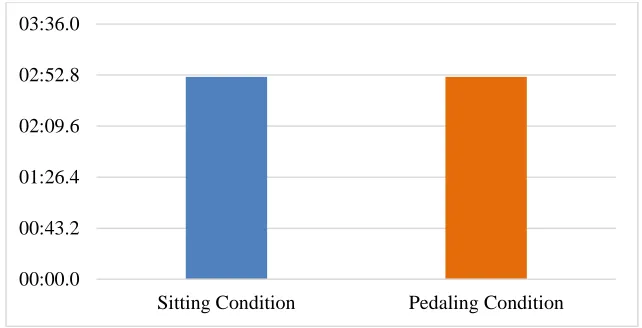
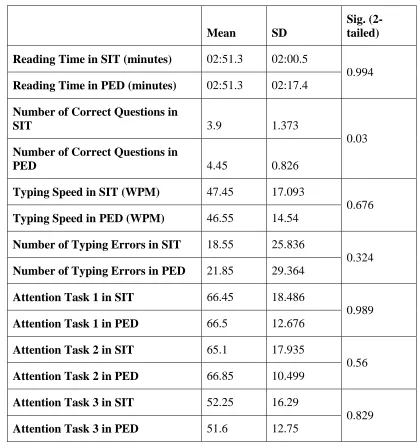
Figures 1 and 2 show that there were no significant differences (p≤ 0.017) in the reading comprehension task between sitting and pedaling conditions. Results from the reading time (minutes) were 02:51±02:00 and 02:51±02:17;t=-0.007,p=0.994
Figure 1. The difference in reading times in sitting condition versus pedaling condition.
Figure 2. The number of correct questions in the reading task in sitting condition versus pedaling condition.
Typing performance was not significantly different between sitting and pedaling conditions. Figure 3 shows how similar the typing speed was in sitting and pedaling conditions (47.45±17.09 WPM and 46.55±14.54 WPM;t=-1.50,p=0.676, respectively). The number of typing errors was less in the sitting condition, however it was statistically significant (18.55±25.84 and 21.85±29.36;t=1.01,p=0.324).
00:00.0 00:43.2 01:26.4 02:09.6 02:52.8 03:36.0
Sitting Condition Pedaling Condition
3.6 3.7 3.8 3.9 4 4.1 4.2 4.3 4.4 4.5
Figure 3. Typing speed in words per minute and the number of typing errors in sitting condition versus pedaling condition.
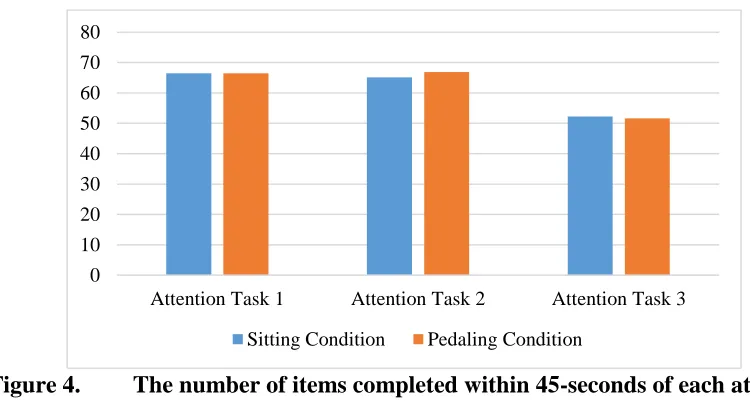
There also was no significant difference in attention/information processing tasks between sitting and pedaling conditions (Figure 4). Results from attention task 1,
attention task 2, and attention task 3 are as follows for sitting and pedaling conditions: 66.45±18.49 and 66.5±12.68;t=0.014,p=0.989, 65.1±17.94 and
66.85±10.50;t=0.594,p=0.56, and 52.25±16.29 and 51.6±12.75;t=-0.219,p=0.829.
Figure 4. The number of items completed within 45-seconds of each attention task in sitting condition versus pedaling condition.
Energy expenditure for the complete trial in the pedaling condition was
significantly greater (p≤0.017), 63.24±17.70 kcals (x ±SD), than in the sitting condition, 0 10 20 30 40 50
Typing Speed (WPM) Number of Typing Errors
Sitting Condition Pedaling Condition
0 10 20 30 40 50 60 70 80
Attention Task 1 Attention Task 2 Attention Task 3
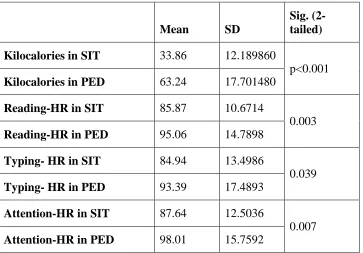
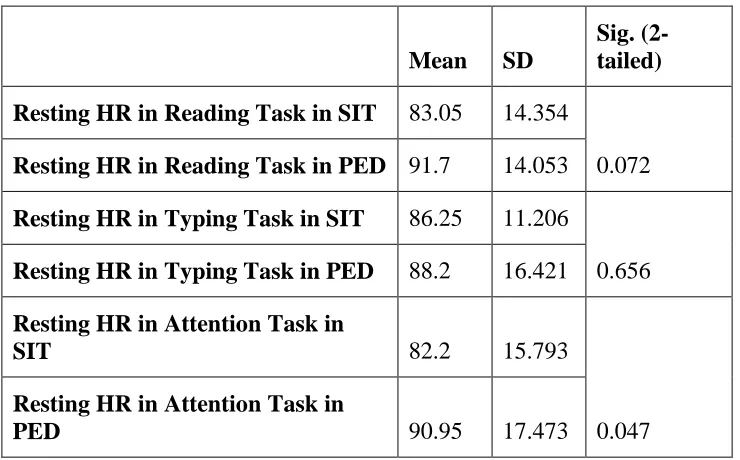
33.86±12.19 kcals; t(19)= -12.228, p< 0.001 when resistance was set at 3 and participants were instructed to pedal continuously (Table 1). There were no significant differences in resting heart rates prior to the start of completing the reading comprehension, typing performance, and attention/ information processing tasks between conditions (Table 3). Significant increases were seen when comparing heart rates in the last minute of both reading comprehension (95.06±14.79 bpm and 85.87±10.67 bpm; t(19)=3.45, p=0.003, pedaling and sitting, respectively) and attention/ information processing (98.01±15.76 bpm and 87.64±12.50 bpm; t(19)=3.00, p=0.007, pedaling and sitting, respectively) tasks (Table 1).
Table 1. Descriptive statistics and paired-sample t-tests to determine if there was a significant difference in energy expenditure and heart rate for the pedaling and sitting conditions on the FitDesk. Significance level was p≤ 0.017
Mean SD
Sig. (2-tailed) Kilocalories in SIT 33.86 12.189860
p<0.001 Kilocalories in PED 63.24 17.701480
Reading-HR in SIT 85.87 10.6714
0.003 Reading-HR in PED 95.06 14.7898
Typing- HR in SIT 84.94 13.4986
0.039 Typing- HR in PED 93.39 17.4893
Attention-HR in SIT 87.64 12.5036
0.007 Attention-HR in PED 98.01 15.7592
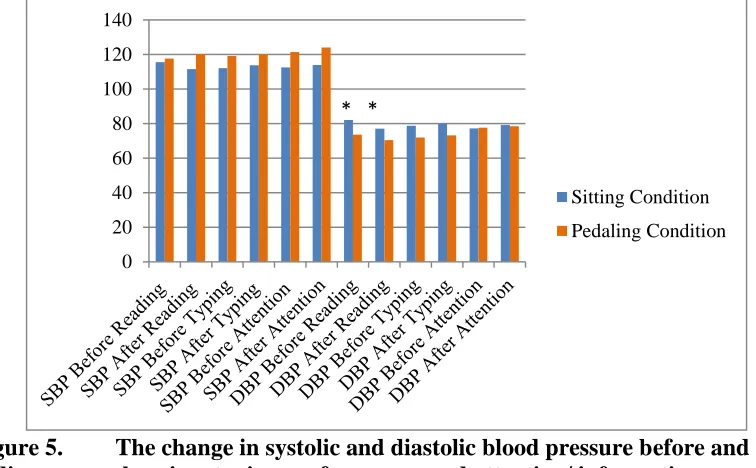
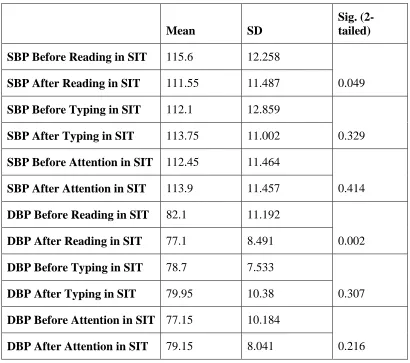
Diastolic blood pressure significantly decreased before and after completing the reading comprehension task in the sitting condition (82.1±11.192mmHg and
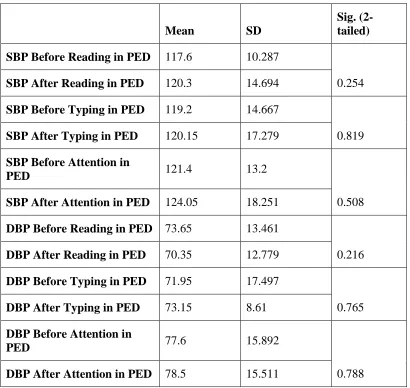
77.1±8.491mmHg, t(19)=3.517, p= 0.002) (Figure 5). There were no significant
tasks in the sitting condition (Table 4). Additionally, there were no significant differences in diastolic blood pressures before and after completing the typing performance and attention/ information processing tasks in the sitting condition (Table 4). There were no significant differences in both systolic and diastolic blood pressures before and after completing the work performance tasks in the pedaling condition (Table 5).
Figure 5. The change in systolic and diastolic blood pressure before and after reading comprehension, typing performance, and attention/ information processing speed tasks in sitting and pedaling condition. The asterisk represents significance in
that condition.
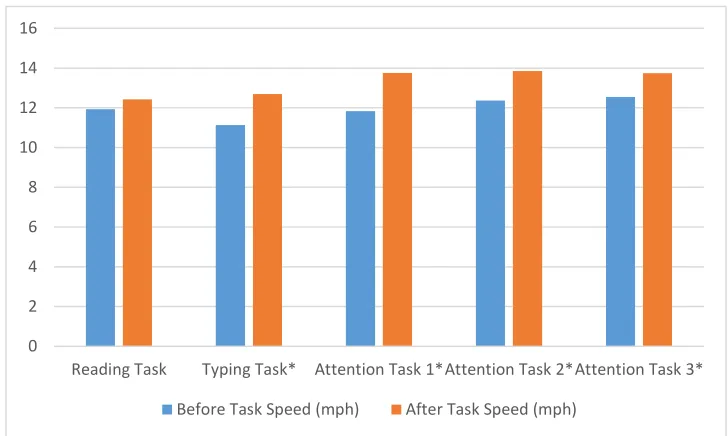
Pedaling speed was recorded before the start of each task and at the end of each task as an observational measure. Participants were not required to pedal for a certain amount of time prior to recording their pedaling speed. Participants significantly increased their pedaling speed while completing both typing and attention/information tasks (Figure 6). Pedaling speed before starting typing task was 11.14±2.47 mph and 12.70±3.03 mph upon finishing. Before starting attention task 1, attention task 2, and attention task 3, pedaling speed was 11.83±2.14 mph, 12.37±2.31 mph, and 12.55±2.28
mph collectively. Upon completing attention task 1, 2, and 3, pedaling speed was 13.76±3.39 mph, 13.86±3.38 mph, and 13.75±3.12 mph collectively.
Figure 6. Pedaling speed at the beginning and conclusion of the various tasks completed on the FitDesk. The asterisk represents significance. Significance level
was p≤ 0.017
The test of order effect showed there was an order effect in attention task one (60.75±19.63 and 71.2±10.42, t(19)=-3.39, p= 0.003), attention task two (62.6±17.45 and 69.4±10.28, t(19)=-2.67, p= 0.015), and attention task three (47.8±16.35 and
56.05±11.18, t(19)=-3.60, p= 0.002) between trial one and trial two. This test showed that participants performed better in the second trial when compared to the first trial due to the order of the tests.
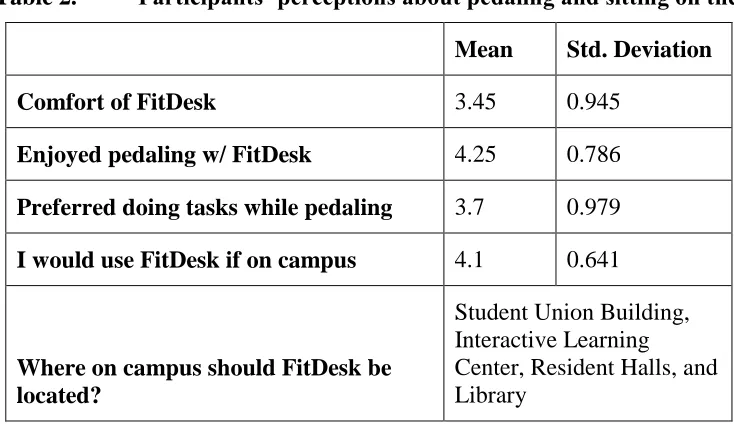
Table 2 shows results from the survey about the FitDesk with 1= strongly
disagree, 2= disagree, 3= neither agree nor disagree, 4= agree, and 5= strongly agree. The post survey showed that participants were indifferent towards the comfort of the FitDesk and that they did not have a preference when asked if they preferred performing the tasks while pedaling or while feet were placed on the ground. Participants agreed that they
0 2 4 6 8 10 12 14 16
Reading Task Typing Task* Attention Task 1*Attention Task 2*Attention Task 3*
enjoyed performing the work tasks while pedaling using the FitDesk and that they would use the FitDesk if it were available on campus.
Table 2. Participants’ perceptions about pedaling and sitting on the FitDesk.
Mean Std. Deviation
Comfort of FitDesk 3.45 0.945
Enjoyed pedaling w/ FitDesk 4.25 0.786 Preferred doing tasks while pedaling 3.7 0.979 I would use FitDesk if on campus 4.1 0.641
Where on campus should FitDesk be located?
Student Union Building, Interactive Learning
CHAPTER FIVE: DISCUSSION
The purpose of this study was to examine the effects of using the FitDesk on reading comprehension, typing, attention/information processing tasks and physiological measures (energy expenditure, heart rate and blood pressure) in college students during a one-session, randomized crossover study. It was hypothesized that pedaling at a self-selected pace on a resistance set at 3 on the FitDesk would not influence college students' reading comprehension, typing speed, and attention/information processing when
compared to sitting uninterrupted at the FitDesk. Additionally, it was hypothesized that an increase in energy expenditure, increase in heart rate, and acute reduction in blood pressure would be seen in those pedaling the FitDesk.
The hypotheses that self-selected pedaling with the FitDesk would not influence college students’ reading comprehension, typing speed, and attention/information processing when compared to sitting condition were accepted. Additionally, the
hypotheses that an increase in energy expenditure and heart rate in the pedaling condition when compared to the sitting condition were accepted. However, the hypothesis that there would be an acute reduction in blood pressure was rejected.
Major Findings
performance during exercise on three dynamic workstations (treadmill, elliptical, and cycling) and a standing condition. The authors also found no statistical different in reading performance.16 Commissaris, et al16 asked the participants in the cycling condition to pedal at two different intensities (25% and 40% of participants’ heart rate reserve) whereas the current study allowed participants to pedal at their own self-selected speed and not at a percentage of their heart rate reserve.
The results of this study indicated that there were no significant differences of pedaling on typing speed and the number of typing errors. Commissaris, et al16 examined the effect of cycling on typing performance and showed that typing speed and typing errors were not affected when cycling at 25% and 40% of their heart rate reserve when compared to treadmill walking – which showed a deterioration in typing performance. It was suggested that this was due to the upper body being more stable during seated workstations.16 Elmer, et al15 also found no significant differences in typing performance in the pedaling condition when compared to the sitting condition. Thus, typing ability is not affected by using a cycling workstation.
There were no significant differences on attention/information processing during pedaling when compared to the sitting condition. John, et al18 also did not find any
There was significantly higher energy expenditure in the pedaling condition when compared to the sitting condition. Each condition’s duration was an average of 24
minutes and the average total kilocalories expended while pedaling was 63.24 kcals across that time when compared to the sitting condition, which expended an average of 33.86 total kcals (p≤0.017). Because of the amount of kilocalories expended, this activity would be considered a low intensity activity. The kilocalories expended in the sitting condition and pedaling condition were converted into metabolic equivalents (METs) to make it easier to classify this type of activity (equation used can be found in Appendix F). It was found that the average METs used during the sitting condition was 1 and the average METs used in the pedaling condition was 2. Both conditions' METs would be considered as very light activity.10 This is significant because the additional energy expenditure results in less accumulated sedentary time, which could have long term benefits for one’s health. Because it is recommended that individuals perform a minimum of 150 minutes of exercise per week, this additional energy expenditure and lifestyle change could help reduce the risk of developing cardiovascular disease and reduce mortality from these conditions while improving cardiovascular and functional capacities and quality of life.10,34 A sedentary lifestyle reduces functional capacity that are
equivalent to the effects of aging.34 Also, breaking up sedentary behavior may help improve overall health long-term.29 However, more research is needed in examining the long-term health outcomes of limiting sedentary behavior.35
pressure is expected to rise and diastolic blood pressure is expected to stay the same or decrease insignificantly in response to dynamic exercise in healthy people.36 Heart rate
increases during physical activity due to the increased cardiac output that is required for the working muscles.34
Though a significant reduction was seen in the change in diastolic blood pressure before and after completion of the reading comprehension task in the sitting condition (82.1±11.192mmHg and 77.1±8.491mmHg, t(19)=3.517, p= 0.002), results showed that there were no significant changes in diastolic blood pressure before and after completion of the reading comprehension task in the pedaling condition. Systolic blood pressure before and after completion of the work performance tasks in both sitting and pedaling conditions were not significantly different. Additionally, there were no significant changes in diastolic blood pressure before and after completion of typing performance and attention/ information processing tasks in both sitting and pedaling conditions. The decrease in diastolic blood pressure is primarily due to the vasodilation of the arteries from the exercise bout.37
on speed and accuracy, thus causing them to similarly increase their pedaling speed as their attentional intensity increased. Eysenck suggested that humans are single-minded and have a unity of purpose or single goal in mind, which provides a contrast with human behavior. 38 It is theorized that because of this single-minded behavior, participants increased their pedaling speed throughout the task due to being focused on completing the task with high accuracy and fast as possible.
Lastly, results from the post survey indicated that participants enjoyed pedaling with the FitDesk and that they would use it if it were available on campus. Participants were neutral about the comfort of the FitDesk and their preference for completing tasks while pedaling. Additionally, when asked where students would like to see this active workstation on Boise State University campus, results showed two common locations that students preferred: Student Union Building and Interactive Learning Center. Both areas have food franchises within them that students frequent, as well as, study areas. These results can provide useful information for the university to help students reduce sedentary behavior.
Limitations
One limitation in the study design was being limited to one exercise intensity. This limited the results to just that intensity as opposed to being able to use multiple exercise intensities. Another limitation was the order effect testing. Though all three tasks were randomized, there was an order effect seen in the attention/information processing task. This could be due to performing both sitting and pedaling conditions on the same day as opposed to completing the conditions on separate days like John et al.18 had done
advantage of becoming better with the requirements of the tasks. Additionally, having a small sample size was a limitation in the study design. Being able to have more
participants would have given more data and improved the results of the study.
There were issues with measuring the blood pressure with an automated machine, which may have skewed the blood pressure data that were reported. There were times were the automatic blood pressure monitor may have given an inaccurate reading and/or take several minutes to display a reading. Doing so manually with a stethoscope and sphygmomanometer could have helped improve the accuracy of the measurements. However, because this limitation was not observed until after the start of data collection and on select participants, the automatic blood pressure monitor was continued to be used to prevent skewing the results.
Some participants had a problem with the size of the mouthpiece that was worn to collect expired gasses and determine energy expenditure. The mouthpiece should have had a tight seal when in the participant’s mouth; however, some participants were able to breathe out of the corner of their mouth, therefore skewing the results. This could have caused the results to be lower or higher than it should have been.
Practical Implications
cardiovascular disease because they would be decreasing the amount of time spent sedentary.7
Future Directions
Future research could determine the effects of the FitDesk on academic
performance (test anxiety/test performance) and retention in college students. Knowing how active workstations affect students’ learning ability and performance would be beneficial for universities and institutions to learn as a recruitment tool. It would be interesting to examine how much use an active workstation would be used when it is completely voluntary. In addition, observing the effect the FitDesk would have on test anxiety and if it could be used as a tool to help decrease it. If using the FitDesk during solitary studying would limit the number of distractions and promote greater
concentration on homework would be interesting to learn more of when compared to studying at a normal desk. Furthermore, learning the effect of the FitDesk on glucose levels, total cholesterol, and triglycerides would be important to know as a preventative measure for those that may be at risk for developing metabolic disease and dyslipidemia. The university could also use this information by incorporating these active workstations on campus. In addition, the university could observe the use of the FitDesk in classroom settings and determine the effect it has on academic performance and test anxiety. Doing this could help with recruitment, retention, and the student experience.
Conclusions
Practicing sedentary behaviors can be harmful to one’s health, regardless of meeting the daily recommended guidelines for physical activity.1 In addition, most adults
workstation may help to prevent sitting for long durations. In agreement with most previous research, the current study found that pedaling with the FitDesk did not
influence work performance in college students when compared to sitting uninterrupted. Furthermore, results from the post-survey showed that students are willing to use the FitDesk if available on campus and that they enjoyed pedaling with the FitDesk.
REFERENCES
1. Straker L, Healy GN, Atherton R, Dunstan DW. Excessive occupational sitting is not a “safe system of work”: time for doctors to get chatting with patients. Medical Journal of Australia.2014;201(3):138-410.
2. Healy GN, Dunstan DW, Salmon J, Cerin E, Shaw JE, Zimmet PZ,, et al. Breaks in sedentary time beneficial associations with metabolic risk. Diabetes
Care.2008;31(4):661-666.
3. Straker L, Levine J, Campbell A. The effects of walking and cycling computer
workstations on keyboard and mouse performance. Human Factors: The Journal of the Human Factors and Ergonomics Society.2009;51(6):831-844.
4. Healy GN, Eakin EG, LaMontagne AD, Owen N, Winkler EA, Wiesner G,, et al. Reducing sitting time in office workers: Short-term efficacy of a multicomponent intervention. Preventative Medicine.2013;57(1):43-48.
5. Hamilton MT, Healy GN, Dunstan DW, Zderic TW, Owen N. Too little exercise and too much sitting: Inactivity physiology and the need for new recommendations on sedentary behavior. Current Cardiovascular Risk Reports.2008;2(4):292-298. 6. Owen N, Healy GN, Matthews CE, Dunstan DW. Too much sitting: the
population-health science of sedentary behavior. Exercise and Sport Sciences Reviews.2010;38(3):105-113.
7. Hamilton MT, Hamilton DG, Zderic TW. Role of low energy expenditure and sitting in obesity, metabolic syndrome, type 2 diabetes, and cardiovascular disease.
Diabetes.2007;56(11):2655-2667.
9. Maher JP, Doerksen SE, Elavsky S, Conroy DE. (2014). Daily satisfaction with life is regulated by both physical activity and sedentary behavior. Journal of Sport & Exercise Psychology.2014;36(2):166-178.
10. American College of Sports Medicine. ACSM's guidelines for exercise testing and prescription. Lippincott Williams & Wilkins.2013.
11. Gomez-Lopez M, Gallegos AG, Extremera AB. Perceived barriers by university students in the practice of physical activities. Journal of Sports Science and Medicine.2010;9:374-381.
12. Torbeyns T, Bailey S, Bos I, Meeusen R. Active workstations to fight sedentary behaviour. Sports Medicine.2014;44(9):1261-1273.
13. Koepp GA, Manohar CU, McCrady‐Spitzer SK, Ben‐Ner A, Hamann DJ, Runge CF, et al. Treadmill desks: A 1‐year prospective trial. Obesity.2013;21(4):705-711. 14. Larsen RN, Kingwell BA, Sethi P, Cerin E, Owen N, Dunstan DW. Breaking up
prolonged sitting reduces resting blood pressure in overweight/obese adults.
Nutrition, Metabolism and Cardiovascular Diseases.2014;24(9):976-982. 15. Elmer SJ, Martin JC. A cycling workstation to facilitate physical activity in office
settings. Applied Ergonomics.2014;45(4):1240-1246.
16. Commissaris DA, Könemann R, Hiemstra-van Mastrigt S, Burford EM, Botter J, Douwes M, Ellegast RP. Effects of a standing and three dynamic workstations on computer task performance and cognitive function tests. Applied
Ergonomics.2014;45(6):1570-1578.
17. Cho J, Freivalds A, Rovniak L, Sung K, Hatzell J. Using a desk-compatible
recumbent bike in an office workstation. Proceedings of the Human Factors and Ergonomics Society Annual Meeting.2014;58(1):1662-1666.
19. Tremblay MS, Colley RC, Saunders TJ, Healy GN, Owen N. Physiological and health implications of a sedentary lifestyle. Applied Physiology, Nutrition, and Metabolism.2010;35(6):725-740.
20. Hamilton MT, Hamilton DG, Zderic TW. Exercise physiology versus inactivity physiology: an essential concept for understanding lipoprotein lipase regulation.
Exercise and Sport Sciences Reviews.2004;32(4):161-166.
21. Ekblom-Bak E, Hellénius ML, Ekblom B. Are we facing a new paradigm of
inactivity physiology?. British Journal of Sports Medicine.2010;44(12):834-835. 22. Stephens BR, Granados K, Zderic T, Hamilton M, Braun B. Effects of day of
inactivity on insulin action in healthy men and women: Interactionwith energy intake. Metabolism.2011;60:941–949.
23. Hu FB, Li TY, Colditz GA, Willett WC, Manson JE. Television watching and other sedentary behaviors in relation to risk of obesity and type 2 diabetes mellitus in women. Jama.2003;289(14):1785-1791.
24. Chomistek AK, Manson JE, Stefanick ML, Lu B, Sands-Lincoln M, Going SB,, et al. Relationship of sedentary behavior and physical activity to incident
cardiovascular disease: Results from the Women's Health Initiative. Journal of the American College of Cardiology.2013;61(23):2346-2354.
25. Clemes SA, O'Connell SE, Edwardson CL. Office workers' objectively measured sedentary behavior and physical activity during and outside working hours.
Journal of Occupational and Environmental Medicine.2014;56(3):298-303. 26. Bailey DP, Locke CD. Breaking up prolonged sitting with light-intensity walking
improves postprandial glycemia, but breaking up sitting with standing does not. Journal of Science and Medicine in Sport.2015;18(3):294-298.
27. Dunstan DW, Kingwell BA, Larsen R, Healy GN, Cerin E, Hamilton MT,, et al. Breaking up prolonged sitting reduces postprandial glucose and insulin responses.
Diabetes Care.2012;35(5):976-983.
29. Alkhajah TA, Reeves MM, Eakin EG, Winkler EA, Owen N, Healy GN. Sit-stand workstations: a pilot intervention to reduce office sitting time. American Journal of Preventive Medicine.2012;43(3):298-303.
30. Schuna Jr JM, Swift DL, Hendrick CA, Duet MT, Johnson WD, Martin CK, et al. Evaluation of a workplace treadmill desk intervention: A randomized controlled trial. Journal of Occupational and Environmental Medicine. 2014;56(12):1266-1276.
31. Bantoft C, Summers MJ, Tranent PJ, Palmer MA, Cooley PD, Pedersen SJ. Effect of Standing or Walking at a Workstation on Cognitive Function A Randomized Counterbalanced Trial. Human Factors: The Journal of the Human Factors and Ergonomics Society.2016;58(1):140-149.
32. Labonté-LeMoyne É, Santhanam R, Léger PM, Courtemanche F, Fredette M, Sénécal S. The delayed effect of treadmill desk usage on recall and attention. Computers in Human Behavior.2015;46:1-5.
33. Cho J, Freivalds A, Rovniak LS. Utilizing anthropometric data to improve the usability of desk bikes, and influence of desk bikes on reading and typing performance.Applied Ergonomics.2017;60:128-135.
34. McArdle WD, Katch FI, Katch VL. Exercise physiology: nutrition, energy, and human performance. Lippincott Williams & Wilkins.2010;8:202-203,840-842. 35. Kozey Keadle S, Lyden K, Staudenmayer J, Hickey A, Viskochil R, Braun B,, et al.
The independent and combined effects of exercise training and reducing sedentary behavior on cardiometabolic risk factors. Applied Physiology, Nutrition, and Metabolism.2014;39(7):770-780.
36. Wielemborek-Musial K, Szmigielska K, Leszczynska J, Jegier A. Blood Pressure Response to Submaximal Exercise Test in Adults. BioMed Research
International.2016:1-9.
IRB Approval Protocol
Tables
Table 3. Descriptive statistics and paired-sample t-tests to determine if there was a significant difference in resting heart rate before completing the tasks between conditions. Significance level was p≤ 0.017. PED=pedaling
condition/SIT=sitting condition
Mean SD
Sig. (2-tailed) Resting HR in Reading Task in SIT 83.05 14.354
0.072 Resting HR in Reading Task in PED 91.7 14.053
Resting HR in Typing Task in SIT 86.25 11.206
0.656 Resting HR in Typing Task in PED 88.2 16.421
Resting HR in Attention Task in
SIT 82.2 15.793
0.047 Resting HR in Attention Task in
Table 4. Descriptive statistics and paired-sample t-tests to determine if there was a significant difference in the change in systolic blood pressure and diastolic blood pressure before and after completing work performance tasks in sitting condition. Significance level was p≤ 0.017. SIT=sitting condition
Mean SD
Sig. (2-tailed) SBP Before Reading in SIT 115.6 12.258
0.049 SBP After Reading in SIT 111.55 11.487
SBP Before Typing in SIT 112.1 12.859
0.329 SBP After Typing in SIT 113.75 11.002
SBP Before Attention in SIT 112.45 11.464
0.414 SBP After Attention in SIT 113.9 11.457
DBP Before Reading in SIT 82.1 11.192
0.002 DBP After Reading in SIT 77.1 8.491
DBP Before Typing in SIT 78.7 7.533
0.307 DBP After Typing in SIT 79.95 10.38
DBP Before Attention in SIT 77.15 10.184
Table 5. Descriptive statistics and paired-sample t-tests to determine if there was a significant difference in the change in systolic blood pressure and diastolic blood pressure before and after completing work performance tasks in pedaling condition. Significance level was p≤ 0.017. PED=pedaling condition
Mean SD
Sig. (2-tailed) SBP Before Reading in PED 117.6 10.287
0.254 SBP After Reading in PED 120.3 14.694
SBP Before Typing in PED 119.2 14.667
0.819 SBP After Typing in PED 120.15 17.279
SBP Before Attention in
PED 121.4 13.2
0.508 SBP After Attention in PED 124.05 18.251
DBP Before Reading in PED 73.65 13.461
0.216 DBP After Reading in PED 70.35 12.779
DBP Before Typing in PED 71.95 17.497
0.765 DBP After Typing in PED 73.15 8.61
DBP Before Attention in
PED 77.6 15.892
Table 6. Descriptive statistics and paired-sample t-tests to determine if there was a significant difference in work performance between conditions. Significance level was p≤ 0.017. PED=pedaling condition/SIT=sitting condition
Mean SD
Sig. (2-tailed) Reading Time in SIT (minutes) 02:51.3 02:00.5
0.994 Reading Time in PED (minutes) 02:51.3 02:17.4
Number of Correct Questions in
SIT 3.9 1.373
0.03 Number of Correct Questions in
PED 4.45 0.826
Typing Speed in SIT (WPM) 47.45 17.093
0.676 Typing Speed in PED (WPM) 46.55 14.54
Number of Typing Errors in SIT 18.55 25.836
0.324 Number of Typing Errors in PED 21.85 29.364
Attention Task 1 in SIT 66.45 18.486
0.989 Attention Task 1 in PED 66.5 12.676
Attention Task 2 in SIT 65.1 17.935
0.56 Attention Task 2 in PED 66.85 10.499
Attention Task 3 in SIT 52.25 16.29
Table 7. Descriptive statistics and paired-sample t-tests to determine if there was a significant difference in blood pressure for the pedaling and sitting conditions on the FitDesk. Significance level was p≤ 0.017
Mean SD
Sig, (2-tailed)) Speed Before Reading Task (mph) 11.935 2.6925384
0.182 Speed After Reading Task (mph) 12.425 2.887883
Speed Before Typing Task (mph) 11.14 2.4741612
0.002 Speed After Typing Task (mph) 12.695 3.0301077
Speed Before Attention Task 1 (mph) 11.83 2.1442948
0.001 Speed After Attention Task 1 (mph) 13.755 3.385336
Speed Before Attention Task 2 (mph) 12.365 2.3074878
0.001 Speed After Attention Task 2(mph) 13.855 3.3808244
Speed Before Attention Task 3 (mph) 12.545 2.2795371
Informed Consent
Study Title: Effects of FitDesk on Work Performance in College Students Principal Investigator: Brittany Price Co-Investigator: Dr. Shawn Simonson
Sponsor: N/A
This consent form will give you the information you will need to understand why this research study is being done and why you are being invited to participate. It will also describe what you will need to do to participate as well as any known risks,
inconveniences, or discomforts that you may experience while participating. We encourage you to ask questions at any time. If you decide to participate, you will be asked to sign this form and it will be a record of your -
PURPOSE AND BACKGROUND