USF Scholarship: a digital repository @ Gleeson Library | Geschke
USF Scholarship: a digital repository @ Gleeson Library | Geschke
Center
Center
Master's Theses Theses, Dissertations, Capstones and Projects
1998
An Exploration of the Growth of Moral Judgment in Eighth Grade
An Exploration of the Growth of Moral Judgment in Eighth Grade
Students Through Process Drama
Students Through Process Drama
Michael McCambridge
AN EXPLORATION OF THE GROWTH OF MORAL JUDGMENT
IN EIGHTH GRADE STUDENTS THROUGH PROCESS DRAMA
A Dissertation Presented to
the Faculty of the School of Education Private School Education
In Partial Fulfillment
of the Requirements for the Degree Doctor of Education
by
Michael ~Cambridge San Francisco, California
candidate's dissertation committee and approved by the members of the committee, has been presented to and accepted by the Faculty of the School of Education in partial fulfillment of the requirements for the degree of Doctor of Education. The content and research
methodologies presented in this work represent the work of
the candidate alone.
~1/, /tit>~
IDate Dissertation Committee
?JJ~~
ff
~mk4/L!,If'?6
Chai
;son
for daring to go into the drama world and risking to share their experiences.
The completion of this document has been a fascinating journey of discovery, significant learning, detours, and lots of old-fashioned hard work. It represents the passion and diligence of the researcher, but also clearly demonstrates how an
accomplishment of this order can not be achieved alone. The destination was reached only with a circle of friends supporting me along the often-perilous process.
My appreciation, thanks, and admiration first go to Sister Mary Peter Traviss, O.P. Without her encouragement, time, expertise, and care, this successful end to this_ part of my educational journey would not have been possible. She is a master teacher who empowers all her students to reach for the best, and to always explore new horizons, pathways, and possibilities for moral education. It has been a privilege to be her student.
To my family, I will forever be grateful for the support they gave me and the sacrifices they made toward the completion of this journey. Special thanks go to my wife, Marty, for her constant encouragement and faith, and her remarkable ability to keep the home fires burning during the many weekends and summers of study at the
University of San Francisco. My heartfelt appreciation goes to my three daughters. Casey and Jocelyn showed great interest and gave unending support, even at a time where they are focusing on their own pathways of career and family, and my youngest daughter, Lindsay, who had to endure my time away from home, remained ever there for me, continually giving me reassuring hugs and many words of encouragement.
My thanks go to my parents for all their prayers, encouragement, and belief that
motivation particularly during the rough spots of the journey.
I had many mentors guiding me through this process. I might never have arrived at this point without the kind and generous support of my committee members, Father Denis Collins and Dr. Gini Shimabukuro. Their ability to go the extra mile with encouragement and needed direction kept me inspired. I am eternally grateful to Dr. Brian Edmiston for taking time to share the power of process drama, guide me through the research, and being ever so helpful during a time of crisis. Special thanks go to all my teachers, but particularly to Rose Marie Hennessey, O.P. who reminded me about the power of reflection, Mary Angela Shaughnessy, O.P. who taught me how law and gospel can work together, Father Ed McDermott, who dynamically modeled each day what passion we should all have for our schools, John Martin Fixa, O.P., who showed me that raising funds was more a function of the heart rather than the twisting of the arms, and Michael Sipusic, who revealed to me a panoramic picture of what education once was and what it now needs to be.
Tremendous thanks go to those who were on the team that made this document happen. My respectful appreciation to Kathleen Haworth for providing me a place to do the study and the generosity of Jill Moorman for sharing her eighth grade classes with me. My continuing thanks for the wise counsel of Dr. Ed Tronis, whose wisdom and insight about research methods and the dissertation process, proved to be of great assistance to me in this effort. My unending gratitude goes to Pearl Huber, whose
diligence and artistry took the many drafts and countless changes and processed them into
outlook, overcame the many time challenges, and inspired me to keep on writing.
Finally, I must thank my working-partner in this endeavor, Julie Sieger. Julie and
I have long shared a great interest in teaching and learning. From day one of this journey, we both agreed that we would support each other to reach this level of education. I can safely say without her support and encouragement none of this would have been possible.
Acknowledgments . . . iv
I. THE RESEARCH PROBLEM . . . 1
Statement of the Problem . . . 1
Purpose of the Study . . . 2
Background and Need for the Study ... 2
Theoretical Rationale . . . 4
Research Questions . . . 8
Limitations . . . 8
Significance of the Study . . . 11
Definition of Terms . . . 14
II. REVIEW OF THE LITERATURE . . . 18
Overview . . . 18
Moral Development Theories . . . 18
Discussion and Role-Play as Instructional Strategies . . . 24
Development of Process Drama as an Instructional Approach for Increasing Moral Growth in Students . . . 31
Summary ... 38
Ill. METHODOLOGY ... 40
Restatement of the Problem . . . 40
Research Design and Method . . . 40
Population and Sample ... 41
Intervening Variable ... 42
Reliability . . . 49
Validity ... 50
Data Collection Procedures ... 53
Data Analysis ... 55
IV. ANALYSIS OF FINDINGS ... 60
Restatement of the Problem . . . 60
Review of the Methodology and Research Sample . . . 60
Findings . . . 63
Summary ... 78
V. CONCLUSIONS AND IMPLICATIONS ... 81
Restatement of the Problem . . . 81
Summary of the Findings . . . 81
Conclusions . . . 83
Implications for the Classroom . . . 92
Recommendations for Professional Practice . . . 95
Recommendations for Future Research . . . 94
Summary ... 96
Appendices . . . 97
A. Kohl berg's Stages of Moral Development . . . 98
B. The Defining Issues Test ... 101
C. Focus Interview Questions . . . I 03
E. Parent Permission Form . . . 107
F. Natural Units and Emergent Themes as Identified Using
the Meaning Condensation . . . 109
References 125
1. P Score Analysis of Moral Growth . . . 64
2. D Score Analysis of Moral Growth . . . 64
3. P Score Analysis for Gender ... 65
4. D Score Analysis for Gender . . . 66
5. P Score Analysis for Academic Achievement ... 66
6. D Score Analysis for Academic Achievement . . . 67
7. P Score Analysis for Attendance ... 68
8. D Score Analysis for Attendance ... 68
THE RESEARCH PROBLEM
Statement of the Problem
Throughout the history of moral education in the United States, educators have sought effective instructional approaches to develop students morally (McClellen, 1992). Berkowitz ( 1997) pointed out that this contentious issue of how to ethically raise and educate good citizens has remained a vigorously debated topic among educators, parents, and civic leaders. An investigation of teaching strategies for moral development within the cognitive development approach revealed that discussion and role-play based on moral dilemmas were the most used and researched strategies (Blatt, 1969; Selman, 1971; Traviss, 1974; 1985; Duska & Whelan, 1975; Kohlberg, 1981; Reimer, Paolitto & Hersh,
1983). Oliver and Bane (1971) expressed concerns that these strategies do not sufficiently involve the students in a manner that affects moral development while rewarding verbal ability and heated conflict and encouraging a game-playing attitude by second guessing the teacher. The more significant criticism was that these teaching methods only affected moral awareness or judgment and had little impact on moral action (Dykstra, 1981; Sichel, 1988; Carr, 1991; Burton & Kunce, 1995; Pelaez-Nogueras &
Gewirtz, 1995).
approach has been used sparingly within the classroom and has received limited research
attention; yet according to Edmiston, its use addresses the criticism leveled at moral
discussion and role-play, and affects the students' behavior by connecting words with
deeds. This study investigated Edmiston's claim.
Purpose of the Study
The purpose of this research was to investigate whether process drama as an
instructional approach increases the level of moral judgment in eighth grade students.
This study also examined whether gender, academic achievement, and/or years of
attendance in a Lutheran school affected the increase of moral judgment of eighth grade
students. Finally this study explored how students' perceptions of the process drama
experience enabled them to connect words with deeds and thereby expose and affect their
ethical understanding.
Background and Need for the Study
When looking for an effective instructional approach several factors come into
play. Teachers play a critical role in the development process. As Chenfeld dramatically
stated, "Every teaching moment is either life or death, either opening up or down, either
connecting or disconnecting" (Wilhelm & Edmiston, 1998, p. 56). Peter Singer (1991)
further argued:
We cannot avoid involvement in ethics, for what we do- and what we don't do-is always a possible subject of ethical evaluation. Anyone who thinks about what he or she ought to do is, consciously or unconsciously, involved in ethics. (p. 5)
Reimer, Paolitto, and Hersh (1983) asserted that teachers need to become aware of the
curriculum. "A moral dimension is inherent in both the process and the content of schooling. Teachers and students encounter values and moral issues constantly, yet the issues are often hidden and thus are not perceived as important concerns" (p. 2).
Jackson's (1993) research has shown that there are moral messages and meanings in every classroom interaction and every teacher choice. Durkheim ( 1925/1973) believed that it was essential to use the hidden curriculum for moral development by making it explicit and investing it with moral meaning by treating the classroom as a small society with its own rules, obligations, and a sense of social cohesion.
Further, Reimer, Paolitto, and Hersh (1983) indicated that teachers need to develop the necessary skills in order to meet the demands placed on them as moral educators and facilitators of the hidden curriculum. They pointed out that "even when teachers are aware of these issues, they may feel they lack the necessary skills to help students develop more adequate value positions and moral perspectives" (p. 2). It is essential, they claimed, that these moral moments are not lost to oversight and lack of skill to properly respond. Examining process drama as an instructional approach for use in the classroom offers teachers a way to respond to the challenge of being moral
educators, effectively using the hidden curriculum and developing creative skills, which build ethical understandings in adolescent students.
with a crime and put them on trial by using students to act as judge, jury, and witnesses with the purpose of exploring and reflecting on stealing as the abstract concept and a day-to-day behavior that some participate in and the rest tolerate. Five students were accused of overlooking the stealing that was taking place in their community. These students were arrested, charged, and handed over for classroom trial. Lawyers were assigned, a judge appointed, and a jury selected. The lawyers argued, the witnesses testified, and the jury listened. At the end of the trial the student defendants stood in front of the judge and jury and heard the verdict: Guilty!
"Guilty! What do you mean guilty?" shouted David. "We all have to tolerate stealing. It is the only way we will survive."
David's realization, coming out in dramatic style after being convicted, became the focal point for a lively and insightful discussion about stealing and why it continues to happen at school. These are the opportunities that are created by using the process drama approach that Edmiston ( 1995) maintained construct ethical understandings in adolescent students. These are the dialogic interactions that could enable students to grow morally, connecting words with deeds, and thereby exposing and affecting ethical
understandings.
Theoretical Rationale
of moral development. He argued that children play an active not passive role in their moral development. Children's moral growth takes place by moving through a series of distinct and universal stages. As children progress through these stages, they develop an increasing ability to understand another's perspective, integrate conflicting points of view, and embrace universal ethical principles.
The cognitive development approach is realized in the classroom through moral dialogue within a moral environment. Facilitating moral dialogue for students in the classroom provides the impetus, through a process of disequilibrium, assimilation, and accommodation, to move from one stage to another (Kohlberg & Blatt, 1975; Piaget,
1977). This process works best when there exists a supportive environment that allows for honest and fair discussion (Kohlberg, 1972). Kohlberg's (Power, Higgins &
Kohlberg, 1989) "Just Community Schools" were designed to be places that would engage students and teachers in these types of discussions in an atmosphere of fairness, reciprocity, and respect. Kohl berg maintained that if students were to develop morally, they needed to grow in the ability to view other perspectives (empathy), integrate conflicting points of view, and embrace universal principles. He suggested that this was accomplished by appropriately challenging moral dialogue in a supportive environment.
As a student of Kohlberg, Gilligan (1982) supported the cognitive development approach but argued that students have two voices: one of justice and the other of care.
central insight that self and others are interdependent" (p. 74). Further, Gilligan argued for an ethic of justice and care with:
... the vision that self and other will be treated as of equal worth, that despite differences of power, things will be fair, the vision that everyone will be responded to and included, that no one will be left alone and hurt. (p. 63) Power (1995) advanced the belief that the Just Community Schools already provide what Gilligan maintained was needed. Power, Higgins, and Kohlberg (1989) asserted that both the affective and cognitive domains exist within the original theory and are not separated into two voices. Power (1997) shifted his view to include responsibility as suggested by Gilligan to be added to the Just Community's requirements of fairness, reciprocity, and respect. It is through this sense of responsibility to the community that students develop what Power called moral self-esteem or an ethical self. Power
concluded "the best approach to character education is one that provides a communal environment supportive of the virtues of trust, care, participation, and responsibility"
(p. 7).
Edmiston (1991,1995; Wilhelm & Edmiston, 1998) influenced by Bakhtin (1981), Heathcote (1984), Bolton (1985), and O'Neill (1989) described how process drama can create unique opportunities for students to develop ethical understandings. He argued that there are three conditions that must exist within the classroom to make this possible. First, there must be a supportive caring community in the classroom. Edmiston (Wilhelm
Secondly, students must feel free to participate using their imaginations in dramatic dialogue that contains conflict between ideas and views. By participating in dramatic dialogues, students can do more than engage and talk about actions they might choose. They are able to take action and, in imagination, actually do that which in discussion they might only contemplate. Finally, students, Edmiston theorized, must reflect on and critique their own moral choices and the actions of others within the imagined context of the drama. Edmiston stated that students do not just act in drama, they must reflect on the meanings of actions as they consider the consequences for different people. This
reflection is dialogic when students evaluate actions from the point of view of a person affected. Students can evaluate not only other's actions, but for the development of an ethical self in drama, they can evaluate their own actions. It is through this process that students are able to reconsider their own positions and develop new understandings.
Cognitive and affective ethical development within a caring responsible
community that allows for reflection and critique provides the theoretical underpinnings for process drama. This rationale guided the research which examined the effectiveness of process drama as it was implemented in the classroom.
Research Questions
Data was gathered to respond to the following questions:
1. To what degree will the level of moral judgment in eighth grade students increase when the process drama instructional approach is used?
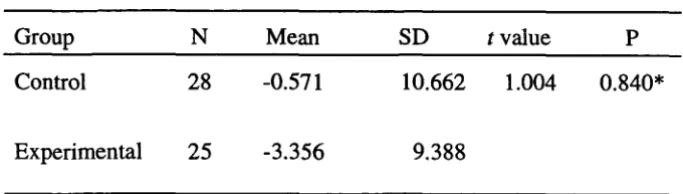
2. To what degree will gender differences (male and female) affect the increase of moral judgment among eighth grade students?
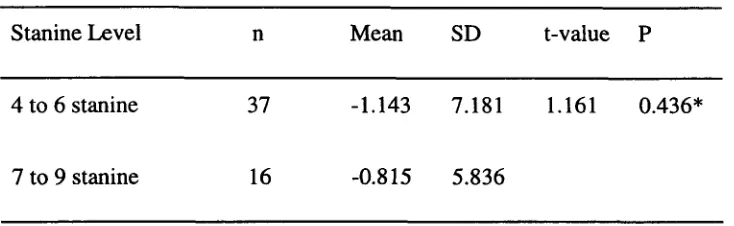
3. To what degree will academic achievement differences (above average, average) as reported on the Stanford Achievement Tests (Laurel Hall, 1997) for the students at the end of the seventh grade affect the increase of moral judgment among eighth grade students?
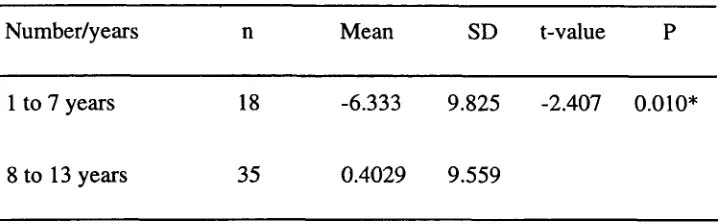
4. To what degree will the number of years of attendance (one to seven, eight to thirteen) in a Lutheran school affect the increase of moral judgment among eighth grade students?
5. How do the students perceive that their process drama experiences connect words with deeds and thereby expose and affect their ethical understandings?
Limitations Limitations
the instruments selected for measuring moral judgment. The first limitation concerned the length of time the study was conducted. This study took place over a seven-week period with instruction occurring in two 60-minute sessions per week. When using a test-retest design, it is important to allow for enough time between testing dates so other extraneous variables such as a student becoming "test wise" do not influence the results. The Defining Issues Test [DIT], the quantitative instrument for this study, does not have different forms, so the students took the same test before and after the experience of process drama. Although the stage designations for moral judgment on the DIT are not easily discerned, taking the tests in this close time frame could have provided
questionable insights into answering the test questions and could have prevented students from expressing an accurate assessment of their moral judgment. Rest ( 1987) pointed out that the DIT has demonstrated high validity even when the test-retest period was limited to three weeks; however, an analysis of educational intervention studies (Schlaefli, Rest
& Thoma, 1985; Thoma, 1984) revealed that the increase of moral judgment within the experimental group was slow and gradual.
The sample size provided three statistical analysis limitations. This research was limited to the 58 eighth graders who made up the entire eighth grade population of the
experimental group at the time of the posttest. The missing students further reduced the already less than adequate numbers and could have affected the statistical analysis. Finally, the numbers of students in two of the groups concerning academic achievement and years in a Lutheran school only had 16 and 18 students. Again, this small number could have affected the statistical analysis.
The use of the DIT brought with it two limitations. Rest ( 1987) acknowledged that for the best results, the students need to be reading on the grade level or above, and that English should be the primary language for the student. One student had extreme problems reading the pretest and chose not to take the posttest. The researcher observed that 12 students were challenged with the complexity of the examples and the directions. These difficulties could have affected the responses of the students. A further limitation concerning the DIT was advanced by Sutton (1992) who pointed out that the DIT, although a well-constructed test, may not fully address the diverse learning styles and experiences that wide ranges of ethnic and cultural backgrounds bring to the classroom.
The composition and background of the sample was limited when making
generalizations about the results of the study. This sample contained some diversity, but there were no African-Americans present and the sample still remained 73% white. A further limitation was that the students in the sample attended a Lutheran school; however, this school is representative of the 187 Evangelical Lutheran Church of America [ELCA] schools across the United States.
posed limitations. All reported results and conclusions must reflect the researcher taking into account indirect data filtered through the views of the interviewees, the various levels of the students' abilities to perceive and articulate their experiences, and the ability of the researcher to account for the dynamics of bias for research participation in the interviews and research interpretation of the meaning condensation analysis for interviews.
Delimitations
There are two delimitations that concerned this research. The researcher and most of the students have known each other over time. The researcher has been the school principal for all but eight of the students in the identified sample. During the research, the researcher was not in any authority position at the school, but was working with most of the students in a high school entrance workshop. This prior and ongoing relationship could bias the responses that students give on the DIT and the subsequent interviews.
Secondly, the discovery of the possibility that the inherent nature of process drama, the ability to enter the drama world that blurs reality and fiction thus allowing students to reframe their perspectives through dialogue and reflection, might not be congruent with the objective of the DIT and may delimit the findings of that measurement instrument.
Significance of the Study
O'Neill (1995), have suggested that drama can and will encourage moral growth but have chosen to direct their research to focus on curriculum and instruction in general. Colby (1984) recommended that drama would be a viable approach that may complement moral discussion and role-play. Edmiston ( 1995) has been most instrumental in using process drama as an instructional approach for moral development. The quantitative analysis of the data collected by this research did not find any statistically significant differences between instructional treatments; however the qualitative analysis indicated that the students perceived that process drama did connect words with deeds and, thereby, expose and affect ethical understandings. At the very least, this expansion of the research will stimulate feedback and discussion among theorists, which will extend the theoretical base and clarify the descriptive elements of the process, thus making a clear and useful approach, which can be put into practice more effectively. Finally, this feedback and discussion will generate a need to do more research which will further develop the
thinking about the theory and the practice in both the moral education and the educational drama areas.
Teachers involved in constructive discussions about their experiences as they use the process drama approach will be of great help in strengthening its effectiveness.
Teacher-researchers will be encouraged to run experiments within their
Definition of Terms
Cognitive Development Approach to Moral Development: An approach that
stresses the judgmental aspect of morality and implies a moral structure, which includes the underlying propositions of a particular moral system and content. This view sees students as active, spontaneous, unique agents in their own moral development rather than as passive recipients of external influence and teachings. It suggests that students spontaneously formulate moral ideas that form organized patterns of thought, that these patterns do not come directly from the culture, and that these patterns go through a series of qualitative transformations as the child develops (Traviss, 1974).
Just Community Approach: An educational approach designed by Kohl berg in
1974, which focuses on promoting individual moral development through building a group-based moral atmosphere. This means that moral education not only consists of extensive discussion of moral issues within the classroom, but that students and faculty would be directly involved in all moral issues throughout the school (Reimer, Paolitto, Hersh, 1983).
Hidden Curriculum: This is a curriculum in every school that parallels the
academic. Within this curriculum students learn to live as members of the crowd of peers, work hard to gain praise and avoid the censure of their peers and teachers, and learn to either abide by or dodge the rule and authority structure set up by the
Zone of Proximal Development [ZPD]: The distance between the actual
development level as determined by independent problem-solving and the level of potential development as determined through problem-solving under adult guidance or in collaboration with more capable peers (Vygotsky, 1978).
Metaxis: The term used by Bolton (1984) to describe the two worlds, the real and
fictitious, that the drama participants must hold simultaneously in their minds in order to achieve the full meaning of the drama.
Liminal Servant: The teacher is a liminal servant in the process drama approach
when he or she, working in role, leads students across the threshold into the imagined world of drama, a place of separation and transformation where the rules and
relationships of classroom life are suspended (O'Neill, 1995).
Cognition: An active structuring, transforming, and creating of relations and
inferences by a person based on his or her own perceptions and experiences with the world and the meaning they have for him or her (Higgins, 1995).
Drama World: This is a shared world in which participants create as they interact
with other participants during the drama (Edmiston, 1991).
Dream Sequence: A strategy where participants usually divided into groups will
create dreams that a character or characters in the drama may have. These dreams are presented with sound and movement. These dreams are often used to reflect on the depth
of thought or personality of a character or a group of related characters (O'Neill, 1995). Episodes: An important element in the structural transformation of any story into
step toward solving the problem of structure in process drama lies in conceiving of the development of the work in units or episodes (O'Neill, 1995).
Forum Theatre: A strategy where two or more participants improvise a situation within an episode and allow for that improvisation to be halted, modified, and
transformed by the spectators or percipients (O'Neill, 1995).
Hunter and the Hunted: A strategy where two people are blindfolded and one hunts for the other within a circle of watchers. This activity is designed to reestablish drama tension within the framework of the pre-text and developing episodes (O'Neill,
1995).
Inner Voices: A strategy that allows for the identification of and reflection on the thoughts of a character or characters within a particular episode. Within the interaction between characters, the leader may call from the participants in the scene or from the participants in the audience to add the thoughts (inner voices) of the character or characters at any moment. The participants would then discuss and reflect on those thoughts (O'Neill, 1995).
Pre-text: The source or impulse for the drama process. It is the reason for the drama work. Pre-text also carries the meaning of a text that exists before the event
(O'Neill, 1995).
Tableaux: A strategy where an image (part of an episode) is prepared and
REVIEW OF THE LITERATURE Overview
This research investigated the use of process drama as an instructional approach to promote the growth of moral judgment in eighth grade students. Process drama, as Edmiston (Wilhelm & Edmiston, 1997) maintained, has the ability to connect words with deeds and thereby expose and affect students' ethical understandings. This review of the literature is divided into three sections: moral development theories,
discussion and role-play as instructional strategies, and the development of process drama as an instructional approach to increase moral growth in students.
Moral Development Theories
A review of the literature on moral education before the 20th century revealed that most moral educators chose religious or didactic instruction designed to promote moral behavior (Colby, 1984). McClellen (1992) observed that a new era of educational
thought began in the early 1900s and ultimately had a great impact on future instructional methods used in American schools. Dewey (1916/44, 1938/63) rejected the notion that knowledge exists only "out there" with facts and figures to be accumulated and
memorized by the passive learner. Dewey believed that the student could be a powerful creator of knowledge who learned through doing, through directed integration of personal experience and so-called objective realities, and through the continual process of critical inquiry. Dewey ( 1909) advanced a theory of moral development that relied on students'
abilities to think critically and reflectively. Schools, Dewey maintained, needed to be
learning communities. These communities, he wrote, act as agencies of individuals bent
on changing individuals' habits and minds so as to change and reconstruct society itself.
Dewey (1898) argued that this change would take place developmentally:
No one can estimate the benumbing and hardening effect of continued drill in reading as mere form. It should be obvious that what I have in mind is not a Philistine attack upon books and reading. The question is not how to get rid of them, but how to get their value-how to use them to their capacity as servants of the intellectual and moral life. To answer this question, we must consider what is the effect of growth in a special direction upon the attitudes and habits which alone open up avenues for development in other lines. (p. 29)
Dewey ( 1944) claimed that this kind of development for each student is the aim of
education:
The aim of education is growth or development, both intellectual and moral. Ethical and psychological principles can aid the school in the greatest of all constructions, the building of a free and powerful character. Only knowledge of the order and connection of the stages in psychological development can insure this. Education is the work of supplying the conditions, which will enable the psychological functions to mature in the freest and fullest manner. (p. 47)
As Dewey was advancing his theory of moral development, Piaget in his study of
children developing moral judgment challenged Durkheim' s ( 192511965) view as simply
a direct internalization of norms and values of a particular culture. Piaget ( 1932) insisted
that the essence of mature morality is fairness or justice, which he defined as "an ideal
equilibrium ... born of the actions and reactions of individuals upon each other" (p. 318).
Piaget believed that children naturally construct ideas of equality and reciprocity as they
engage in the interaction (cooperating, sharing, competing) normal to growing up in any
reason cannot help but tend as it is gradually refined through exchanges of viewpoints in
peer interaction" (p. 317). Piaget championed justice as the essence of morality,
however, he did acknowledge that justice in its initial appearance is less than mature.
Children's first notion of fairness developed through peer interaction. Normally, by late
childhood, this kind of justice gives way to a more contextual and ideal justice in which,
"the circumstances of the individual are taken into account" (p. 272). Children's
construction of this kind of justice is more idealistic, as they conceptually reverse roles
and achieve a "do as you would be done by" morality. Piaget believed in two
conceptions of justice, reciprocity as a fact and reciprocity as an ideal. Gibbs ( 1995)
summarized this by stating:
In the 'fact' or pragmatic version of reciprocity, the child calculates whether his or her prospective action has been or will be matched by a reciprocal action; that is, one's action and its effects on another person are considered in terms of a
tit-for-tat exchange of rewards or punishments. In the 'ideal' version of reciprocity, one evaluates one's prospective action as if it were the reciprocal action; that is one's action and its effects on another person are hypothetically inverted ('if you were to treat me that way, how would I feel?') and used as a guide to conduct. (p. 29)
Piaget ( 1932) noted the presence of considerable overlap from superficial to more
mature moral judgment. Due to such variability, Piaget refrained from referring to his
modes of moral judgment as stages, instead he used the term phases. With age, the
mixture in children's moral judgment increasingly favored the maturer phase. Piaget
concluded that there is, in general, a definite direction in moral judgment from primitive
to more involved phases of moral judgment.
Piaget' s (1932) work provided the stimulus for Kohl berg's ( 1981) contribution to
dissertation on moral development was initially meant to be a replication study of Piaget' s research incorporating a different methodology that included adolescents. Kohlberg's work, however, developed into a much more elaborate sequence of moral judgment stages (Kohlberg & Kramer, 1968). Piaget described a definite direction of three overlapping phases. Kohlberg replaced the term phase with stage, arguing that a given subject's use of a particular phase is pervasive and consistent enough to justify the
use of the term, stage. He expanded the three phases into the six stages of moral development (Appendix A). Further, Kohlberg claimed that the stages progressed in an invariant sequence, meaning that subjects over the course of moral development should evidence the six stages in consecutive order, without stage skipping or stage reversal. Finally, Kohlberg broadened Piaget's emphasis on peer interaction to include an enlarged
conception of the social interaction processes mediating moral judgment development. Higgins (1995) believed that Kohlberg used the assumptions of cognitive
development theory that were put forth by Piaget as bootstraps to pull up his own theory
of moral development. These assumptions included:
1. Each stage is a distinctive or qualitatively different mode or way of thinking that still serves the same function, like solving moral problems, or has the same focus,
like justice, at various times in development.
2. The stages form an invariant sequence, that is, they occur in the same order in
each person's development. Cultural factors may speed up, slow down, or even stop
development, but not change the order. There can be no regressions or moving backward
3. Each stage or way of thinking forms a "structured whole." Each way of thinking is a coherent and organized "worldview" or perspective, and is used to solve
various kinds of problems in a whole domain, such as the moral domain.
4. Stages fit together in a hierarchy of increasing complexity and organization.
One stage is integrated into the next one, and each stage is more advanced than the
previous one.
Kohl berg ( 1984) concluded:
... that mature thinking emerges through a process of reorganization of
psychological structures or stages and development is dependent upon experience. Using this model, moral development is also dependent upon interpersonal and social experiences including role taking. It [cognitive development] is a 'dialogue' between the structures of the human mind. (p. 57)
Gilligan (1982) claimed, through her research, that the understanding of the moral
domain is incomplete if the only consideration is the morality of justice as put forth by
Piaget (1932) and extended by Kohlberg (1981). She believed that the ethic of care and
responsibility, primarily in the voices of women, was not adequately described in
Kohlberg's developmental model. Gilligan (1988) argued that the two meanings of the
word responsibility, commitment to obligations and responsiveness in relationships, were
central to the mapping of the moral domain. Since moral judgments reflected the logic of
social understanding and formed a standard of self-evaluation, a conception of morality
was the key to the conception of self in relationships.
Gilligan has been challenged for her views on care and responsibility (Power,
Higgins & Kohlberg, 1989; Snarey, 1995; Walker, 1995). These criticisms are centered
believed her initial premise was worthy of consideration, when based on a male-female
continuum the force of her argument was weakened. Power (1997), however, admitted to
the importance of the development of responsibility within the Just Community. He
stated that this sense of responsibility was defined as a particular kind of moral
orientation and judgment much along the lines suggested by Gilligan.
Although not considered a moral development theory, Vygotsky's (1986) learning
theory as an alternative to Piaget' s ( 1932) theory provided an additional developmental
framework for this research. Vygotsky believed in the primacy of culture in shaping
development and, in particular, the importance of language in mediating thought. "The
relation between thought and word is a living process; thought is born through words. A
word devoid of thought is a dead thing and a thought unembodied in words remains a
shadow" (p. 255). Vygotsky asserted that a person might have an unconscious
understanding of a concept before being able to express it in language. He believed that
concepts are formed not by interplay of associations or by repeated experience, but by an
intellectual construction. Thus, the construction of meaning requires personal activity
such as reflective dialogue by students as they acquire competence across a variety of
developmental domains.
Vygotsky ( 1976) conceived instruction as interaction with adults or more
advanced peers, believing the interaction to be essential for development. He asserted
that teaching is a form of support and challenge that leads to development. Within this
perspective, Vygotsky formulated the zone of proximal development [ZPD] within which
... the distance between the actual developmental level as determined by independent problem solving and the level of potential development as
determined through problem solving under adult guidance or in collaboration with more capable peers. (p. 86)
Vygotsky maintained that development always takes place within this social interaction
as defined by Davidov (1995) as a true collaboration between persons in which the
teacher guides, directs and encourages a student's activity and reflection.
Discussion and Role-Play as Instructional Strategies
The first recognized practitioner to take the theories of Kohlberg (1969) and apply
them in a classroom setting in order to promote moral development was Blatt ( 1969), a
student of Kohlberg. Blatt believed that if children were systematically exposed to moral
reasoning at one stage above their own, they would be positively attracted to that
reasoning and would, in attempting to approximate that reasoning as their own, be
stimulated to develop toward that next higher stage of moral development. Blatt
designed a pilot project to test this hypothesis by using sixth grade students in a Jewish
Sunday school. The children were exposed to a moral dilemma and then asked to discuss
the solution to the dilemma. Each child was encouraged to put forth his or her solution
and the reasons behind that choice. Using the Kohlberg Interview Instrument as a way to
measure growth, Blatt reported that 64% of the students increased one full stage.
Blatt's (1969) study demonstrated three points essential to the endeavor of
developmental moral education:
1. The development of moral judgment is amenable to educational intervention; the movement from one stage to the next, which naturally occurs over a span of several years, can be effected in a concentrated period of time.
and is generalized to new dilemmas not covered in the classroom. 3. The stimulated development occurs when the intervention sets up the conditions, which promote stage progression. These involve providing
opportunities for cognitive conflict, moral awareness, role taking, and exposure to moral reasoning above one's own stage of reasoning. (Power, Higgins, &
Kohlberg, 1989, p. 12)
Kohlberg (1971) realized that "moral discussion classes ... are limited, not
because they do not focus on moral behavior, but because they have only a limited
relation to the 'real life' of the school and the child" (p. 82). It was Kohlberg's belief that
developmental moral education occurs when there is a change in the life of the school, as
well as the individual students. Just as reading, writing, and arithmetic are taught within
the context of the classroom, Kohlberg asserted that the teaching of justice is influenced
by the same parameters. The classroom environment will have a shaping effect on what
the students learn from what the teacher teaches.
Kohlberg (1970) turned to the work ofDurkheim (1925/1973), Dreeben (1968),
and Jackson (1968) to better conceptualize the whole school as the context for learning.
These theorists believed that the school is seen by the role it plays in providing the setting
and the occasion of the child's first formal entry into society at large. Corning from a
home where the student is the center of attention and where adults are heavily invested in
the child's well being, the student must adjust to school life, which is quite different from
home life. Jackson (1968) referred to this transition as part of the hidden curriculum,
which includes the crowds, the praise and the power. Durkheim (1925n5) advanced the
need to embrace the hidden curriculum, make it explicit and use it for purposes of moral
hidden curriculum into a curriculum of justice as he stated:
The crowds, the praise, and the power are neither just nor unjust in themselves. As they are typically used in the schools, they represent the values of social order and of individual competitive achievement. The problem is not to get rid of the praise, the power, the order, and the competitive achievement, but to establish a more basic context of justice which gives them meaning. In our society authority derives from justice, and in our society learning to live with authority should derive from and aid learning to understand and to feel justice. (p. 122)
In searching for a way to achieve this, Kohlberg, influenced by Blatt's (1969) research on
the use of moral discussion as an instructional approach, applied this method to rules,
regulations and social relations that define the process of schooling. Kohlberg (Power,
Higgins & Kohlberg, 1989) advanced:
To extend classroom discussions of justice to real life is to deal with issues of justice in the school. Education for justice, then, requires making schools more just, and encouraging students to take an active role in making the school more just. (p. 82)
The other important element in the Just Community School is the concept of
democracy. An examination of Kohl berg's ( 1971) pedagogy of the Just Community
revealed the influence of Dewey (1916/44) and his progressive ideology, which
postulated development and democracy. The following six statements (Power, Higgins,
& Kohlberg, 1989) capture Kohlberg's practical argument for the Just Community
School:
1. Democratic meetings deal with real-life problems and resolutions, because
they may more effectively promote moral development than discussions of hypothetical
dilemmas.
2. Democracy, by equalizing power relations, encourages students to think for
3. If we accept the Deweyan principle of learning by doing, then the most
effective way of teaching students the democratic values of our society is to give them the opportunity to practice them.
4. Errors are more likely to be corrected in a democratic society that encourages open expression and examination of opinions than in a closed, authoritarian society.
5. Democracy can help to overcome the breach between adult and peer cultures in the school by creating a shared sense of ownership of and responsibility for the school rules.
6. Democracy encourages students to follow the rules of the school. Having publicly voted for rules, individuals experience personal and social pressure toward
consistency in their actions.
In summary, Kohl berg ( 1981) demonstrated his theory that moral concepts are essentially concepts of social relationships as found in institutions such as the Just Community School. For Kohlberg, common to these institutions are conceptions of
complementary roles defined by rules or shared expectations. The principles for making rules and distributing roles in any institution are principles of justice or fairness. The most basic principle of justice is equality; it is treating every person's claim within the
community equally. This was the basis for the Just Community School.
Kohlberg ( 1981) extended his application of moral discussion by utilizing role-taking, recognizing that moral judgment is based on sympathy for others. Reimer,
Paolitto and Hersh (1983) stated that role-taking means taking another's perspective. In
real. For these scholars, moral development requires that a person realize that people are
different with respect to attitudes, thoughts, abilities, feelings, and viewpoints. Selman's
( 1971) research demonstrated a close relationship between moral reasoning and
role-taking ability. He concluded that:
The significant relation of the role-taking tasks and the moral judgment measure at each age level and with intelligence statistically controlled supports the hypotheses that, in middle childhood, the greater ability to take another's perspective is related to higher levels of moral judgment. (p. 9)
Traviss (1974) advocated the notion that role-play as an instructional approach
has the prescribed elements that Kohlberg (1981) identified and Reimer et al. (1983) later
reinforced in role-taking as necessary for moral growth. Shaftel and Shaftel (1982)
claimed that the goal of role-play is to educate for ethical behavior, more specifically for
the individual integrity and group responsibility of students. They found that role-play is
a kind of reality practice. It enables students to relive critical incidents, to explore what
happened, and to consider what might have happened if different choices had been made.
This practice offers students the opportunity to learn from their mistakes under conditions
that protect them from any actual penalty. It also offers the sympathetic help of others in
the class as together the class explores the consequences of various choices of behavior.
Mattox (1975) maintained that role-playing creates an opportunity to experience
the feelings involved in a moral dilemma, to explore emotions that are sometimes hidden,
and to express feelings safely in the guise of someone else. Duska and Whelan (1975)
suggested that any dilemma, hypothetical or real, can be role-played with effective
results. Participants may take roles spontaneously and act in the manner they think the
stage which is to influence all of the participants' dialogue. This process provides
opportunities for confronting different levels of reasoning as well as for gaining another's
perspective. Traviss (1974) found when investigating the influence of role-playing of
moral and social dilemmas on the development of the moral judgments of fifth grade
students that over a three-month period, the average growth was approximately one-half
stage on Kohl berg's Moral Maturity Scale.
Oliver and Bane (1971) pointed out some difficulties that surfaced when using
moral dilemma discussion and role-playing techniques. Concerning moral discussion,
they noted that while the issues that were raised by the dilemmas excited students, they
seldom took these issues seriously in a personal sense. They also claimed that students
appeared to enjoy expressing previously-held opinions related to the issues in the
dilemmas, but they [the students] were often poor listeners and insensitive to the opinions
of others. This approach also seemed to encourage a game-playing attitude where the
goal was to arrive at the right answer by second-guessing the teacher. Further, Oliver and
Bane believed that role-play was nothing more than taking an idea and standing it up on
its feet. In practice, they admitted, the role-play process may appear to be a more deeply
involving experience than mere discussion, but, in fact, for Oliver and Bane its internal
form of examination was no different. They also felt that verbal ability was rewarded and
conflict in the form of heated arguments was encouraged. Oliver and Bane concluded
that role-play allows opinions that are already formed to be rehashed and a sense of
While this research dealt with the level of engagement of the participants in the activities, the varying ability of the students to communicate, and the adeptness of the teachers to properly focus the students' discussions, other critics pointed out that these teaching strategies did not affect the moral behavior of the students and were limited in
effectiveness. Some moral educators (Brooks & Goble, 1997; Wynne & Ryan, 1997) disputed Dewey's ( 1916/44) contention that students are the creators of their own
knowledge. They argued that there is a body of information that is outside the individual, and that if an individual is to become and act moral, he/she must master this body of knowledge. Instructionally, Wynne and Ryan argued, a solid program of moral education must include the "great tradition" of direct instruction and a solid system of rewards and punishments, if the students are to learn what moral is and to perform moral acts. Any
kind of instruction, they continued, that includes transformational activities or cooperative learning is at best an uncertain remedy and at worst dangerous and
uncontrollable. Brooks and Goble (1997) concurred that Kohlberg's (1971) method of moral discussion only provided a small part of the necessary content needed for moral growth. They maintained that there must be direct teaching of values in order for those
values to take root and change behavior.
Dykstra ( 1981) agreed by criticizing the use of hypothetical dilemmas. These
dilemmas, he argued, present a world that is objective, reversible, and manipulative in which students are not involved as real selves. Thus responses to these hypothetical dilemmas, Dykstra pointed out, shed little light on the level of a person's moral judgment
references to the virtues (content) in moral training in favor of a theory of moral
reasoning was simply incoherent and ineffective. Sichel's (1988) research claimed that the structural model advanced by Kohlberg delimits moral education and moral
development to only a portion of morality and wholly ignores moral action, a leading component of actual moral life.
Burton and Kunce's (1995) model of moral education, which stressed direct
instruction of moral content and the establishment of rewards and punishments to direct students to moral action, contained the assumption that moral development must go beyond the exclusive emphasis on reasoning and judgment and address students' actual conduct. The research of Pelaez-Nogueras and Gewirtz ( 1995) concluded that Kohl berg's explanation that increased moral judgment leads to proper moral action could be true, but just as often reasoning/judgment and moral action could be wholly unrelated. Edmiston
(Whileim and Edmiston, 1998) claimed that process drama as an instructional approach can provide students with opportunities to deal with both judgment and action by allowing the students to connect words and deeds and thereby expose and affect their ethical understandings. This claim is investigated in the next section.
Development of Process Drama as an Instructional Approach for
Increasing Moral Growth in Students
A review of the literature revealed that there are four major contributors to the
development of process drama as an instructional approach: Heathcote ( 1984 ), Bolton (1985), Edmiston (1995), and O'Neill (1995). Edmiston (1991) reported that Heathcote
classroom drama, redefined the relationship between drama and education, and recast the
role of the teacher. Heathcote's ( 1984) aim was to build on the pupils' past experiences
and give them a deeper knowledge, not just of themselves, but of what it is to be human,
as well as an understanding of the society they live in and its past, present and future.
She claimed that drama in education is a learning medium. The critical element that
allows learning to take place is structuring for reflection in the drama process. Heathcote
believed that it is only when students reflect that they create meanings for themselves and
construct their own understanding about the events in the drama. Further, Heathcote
recognized that it is not enough for students to take action and be involved as participants
in drama, they also have to reflect upon their actions and the events in the drama in order
to discover what these experiences mean for them.
Additionally, Heathcote (1984) argued from her experience as a teacher that it is
the responsibility of the teacher to construct the drama for experiences and reflection by
shaping it from the inside as well as the outside. Heathcote maintained that the teacher
will make structuring decisions with the students outside the drama, when the students
are not in role, and the teacher will also do so from within the drama by taking on roles in
the same way the students do. She believed this is the way to ensure that the students will
learn. Further, Heathcote asserted that the teacher should use his or her power to enable
the students to complete tasks, to create drama experiences which will achieve
educational aims, and to bring about some change in the students' understanding.
Heathcote insisted that she wanted students to exercise power in the classroom, but not to
students] to take over her power ... not the power to control the quality of the experience (no teacher can abdicate from that) but the power to influence their own construct of the meaning in the event" (p. 132).
Bolton (1985) reported that Heathcote (1984) understood that all artists (and therefore all children, for she treats them as fellow artists) must look outward before they can look inward. Neither art nor education is about subjectivity. Heathcote did not automatically offer children the freedom to express themselves, believing that the right to express one's self is earned; it is not given. Heathcote knew that children must work for autonomy. They must find resources within themselves to earn power. Heathcote believed that teachers must constantly open up opportunities for their pupils to earn that
power.
In reflecting on this theme, Heathcote (1990) referred to Freire (Freire and Shor, 1987) who distinguished between the manipulating, authoritative educator, who retains power and the liberating educator who, when necessary, assumes the responsibility for initiating learning, but at the same time seeks to hand over that responsibility to the
students. Freire echoed Vygotsky ( 1978) who noted that adults could guide the children so they may become what they not yet are. Freire ( 1970) argued that learning happens in
praxis, which he defined as a dialectical moment which goes from action to reflection and
from reflection to action. Heathcote (1984) maintained that this is also how drama should be structured. Edmiston ( 1991) pointed out that Heathcote was the first practitioner who
the students and interacting with them in the drama world, she could help the students
create the situations they want and also enable them to reflect on their own experiences.
Bolton ( 1985) contributed an important overview of the core concept found in
drama in education. Bolton found that core concept was best described by using
Norman's (1981) definition of Drama in Education: the core concept of drama in
education is making personal meaning and sense of universal abstract, social, moral, and
ethical concepts. Two aspects of Bolton's examination are related to this research. First,
Bolton advanced the importance of metaxis. This Greek term, as interpreted by Boal
(1985), signified two worlds, the real and the fictitious, which are simultaneously held in
mind by a participant or percipient of drama. Bolton claimed that the meaning of the
drama lies in the interplay between these two worlds. For example, it is obvious that a
child using a stick as a sword in drama is aware of both the stick and the sword. For
Bolton, what is less obvious, is that when the real object is used, the child is still aware of
the difference between the "sword as prop" and a real sword. Thus even when reality and
fiction merge in the physical world a distinction must be mentally retained for drama to
operate. Above all, for Bolton, drama is a mental state. He pointed out that the slogan of
the progressives that "drama is doing" is to visualize its concreteness as absolute,
whereas, even when expressed concretely in action, drama is essentially an abstraction.
Therefore, due to the concreteness of its medium of expression, drama feels real and real
emotion is expressed. The level of abstraction of the raw emotion of reality is also
tempered by the duality of feeling as Vygotsky ( 193311976) wrote, " ... the child weeps in
position between fiction and reality is what creates drama's potency.
Bolton's (1985) second point of analysis was his description of dramatic learning, essentially reframing the knowledge a pupil already has and placing it in a new
perspective. For Bolton, to take on a role is to detach one's self from what is implicitly understood and to blur, temporarily, the edges of a given world. This invites
modification, adjustment, reshaping and realignment of concepts already held. Bolton maintained that through the detachment of experiencing, one can look at one's
experiencing anew.
O'Neill's contribution (1995) to the development of process drama as an instructional approach to increase moral growth in students was the concept that
characterized teachers as liminal servants. As a liminal servant the teacher joins the students to co-create fictional roles in context in order to explore and reflect on some issue, concept, relationship or event. McLaren (1988) was the first to portray teachers as
liminal servants by building on the concept ofliminality from Turner (1982). Turner described liminality as a social state, often an initiation or rite of passage in which participants lose their usual roles and status. Liminality defines a time and space "betwixt and between" one context of meaning and action, and another. In this state,
literally on the threshold, participants are neither what they have been nor what they will be. They are caught up in a process of separation, transition and transformation. In the liminal state people play with familiar elements and disarrange and defamiliarize them.
notice, to help them to see anew, and to promote novel perspectives on the world. For O'Neill (1995), the teacher who uses process drama is a liminal servant.
Working in role, teachers can lead the students across the threshold into the imagined world of drama, a place of separation and transformation where the rules and
relationships of classroom life are suspended. In this dramatic world, O'Neill believed that participants are free to alter their status, to choose to adopt different roles and
responsibilities, to play with the elements of reality, and to explore alternate existences. When the dramatic world takes hold and acquires a life of its own, all of the participants will return across the threshold, changed in some way, or at least not quite the same as when they began.
Edmiston (Wilhelm & Edmiston, 1998) argued that process drama is an effective instructional approach in increasing moral growth, advancing that drama is a powerful tool that allows students to think about what they ought to do and uncover the moral complexities of situations. Not only can students engage and talk about action/moral reasoning, about what they might do if they were people in a particular circumstance but
moreso, in process drama students take action and, in imagination do that which in discussion they might only superficially contemplate. Influenced by Heathcote's (1984) view of the necessity of constant reflection throughout the drama, Bolton's ( 1985) argument that process drama is potent (metaxis), and transforming (reframing), and
O'Neill's ( 1995) description of the teacher acting as a liminal servant, Edmiston ( 1995) advanced the challenge that process drama enables students to connect words with deeds
(1995), using Gilligan's (1982) ethic of care and Noddings' (1984) caring as a basic reality, maintained that a community is necessary to building and maintaining
relationships among students and teachers in a place that is engaging yet safe, demanding yet fair, challenging yet respectful.
Edmiston ( 1995) underpinned his view of process drama as it affects ethical understanding by Bakhtin's (1981) prosaic view of ethics. In defining the prosaic view of ethics, Bakhtin relied on three concepts: dialogue, answerability and imagination.
Bakhtin (1984) argued that one cannot separate self from other. One is who one is, how one thinks, what one understands, and how one acts based on present and past
relationships with other people. Bakhtin maintained that even a person's consciousness is social and not individual. If one is conscious, then one will engage in dialogue with others. It is in these dialogic interactions that one affects and is affected by other points of view. Bakhtin claimed:
To live means to participate in dialogue: to ask questions, to heed, to respond, to agree and so forth. In this dialogue if a person participates wholly and
throughout his whole life ... He invests his entire self in discourse, and this discourse enters into the dialogic fabric of human life, into the world symposium. (p. 293)
Bakhtin (1990, 1993) rejected the idea that people can rely on moral codes or other people to tell them how to act. He insisted that ethical responsibility is unavoidable. Bakhtin stated quite clearly that "everyone occupies a unique and never repeatable place, any being is once occurrent" (1993, p. 40). Edmiston (1995) reasoned that each person is
matters as they create ethical understandings. Using Bakhtin's (1981) notion of
imagination, Edmiston (Wilhelm & Edmiston, 1998) argued that drama is most dramatic when participants contemplate specific urgent action rather than talk about generalities or abstractions. He posited that drama can create powerful dialogic spaces in which
students' ethical imaginations change their moral understandings in making their views more multi-faceted, interwoven and complex. Edmiston concluded that drama, which is dialogic, is a powerful tool in pursuing challenging discourses. The purpose is not to discover the right way to look at an issue, but to uncover fresh perspectives, explore new points of view and, in dialogue, forge new ethical understandings.
Combining the theories of Heathcote (1988), Bolton ((1985), O'Neill (1985) and Bakhtin ( 1981 ), Edmiston (Wilhelm & Edmiston, 1998) summarized his approach by
concluding that "In drama students can explore and encounter multiple voices [perspectives]. As teachers we can enable our students to deepen and extend the
conversations they have with each other, with us and with themselves" (p. 40). Through this process of connecting words with deeds, ethical understandings are exposed and
affected, and moral growth occurs.
Summary
In summary, the review of the literature indicated that Kohlberg's cognitive development theory and Edmiston's process drama overlap at several junctures. Both defined the learner as one who is a creator of knowledge and does so through an active
learners are challenged with conflicting data and they must reconstruct this knowledge to gain equilibrium with their environment. Both points of view looked for change within cognitive and affective domains and this change occurred developmentally. Finally, both the cognitive developmentalists and the process drama proponents believed that by developing broader personal and social perspectives, words will connect with deeds thus joining together moral judgment and moral action.
The nature of these theoretical overlays offered compelling motivation to investigate whether the process drama instructional approach would affect moral
judgment and action. This study, conducted in the classroom, examined whether the use of process drama actually increases moral judgment in adolescent students. Further, this research, using student reactions to their classroom process drama experiences, explored
METHODOLOGY Restatement of the Problem
Throughout the history of moral education, scholars have investigated a variety of instructional approaches that develop students morally (McClellen, 1992). Within the cognitive development approach, discussion and role-play based on moral dilemmas as instructional strategies have been the most commonly used in the classroom and widely-researched (Blatt, 1969; Selmen, 1971; Traviss, 1974, 1985; Duska & Whelan, 1975; Kohlberg, 1981; Reimer, Paolitto & Hersh, 1983). The major criticism of these
approaches was that they have little effect on moral action (Dykstra, 1981; Sichel, 1988; Carr, 1991; Burton & Kunce, 1995; Pelaez-Nogueras & Gewirtz, 1995). Edmiston
( 1995) asserted that process drama creates unique opportunities for students to connect words with deeds and thereby expose and affect their ethical understandings. This study investigated whether process drama affected the increase of moral judgment in eighth
grade students.
Research Design and Method
This study used a combined quantitative and qualitative design. Information
concerning the first four research questions was gathered through the use of a
pretest-posttest control group experimental design. A sample of 58 eighth grade students, randomly placed in two classes was used as an experimental group and a control group. Both groups were given the Rest Defining Issues Test [DIT] as a pretest. Using The
Diary of Anne Frank (Goodrich and Hackett, 1980) as a foundation and process drama as
an instructional approach, the experimental group participated in 14 class sessions of 60 minutes over a seven-week period examining ethical issues surrounding World War II and found in the play, The Diary of Anne Frank. During this same time period and using the same material, the control group received instruction based on the traditional
lecture/discussion approach. At the end of the seven weeks, both the control and the experimental groups were given the DIT as a posttest.
Data based upon students' perceptions of process drama was gathered from four focus interviews conducted with six to seven students each from the experimental group. These interviews took place at the end of the seven-week instructional period. The researcher asked five open-ended questions about how the students perceived their process drama experiences used to study the events surrounding World War II and The Diary of Anne Frank (Goodrich, F. & Frank, A., 1980). The students' responses to these questions were analyzed by the meaning condensation analysis developed by Giorgi (1975) to determine if the students connected words and deeds and, thereby, exposed and
affected their ethical understandings.
Population and Sample
The 58 eighth graders used in this research were students at a Lutheran school in Southern California. The school consists of grade kindergarten through eighth grade with
a student population of 500. This school is located in a middle class suburban area of Los