University of New Orleans University of New Orleans
ScholarWorks@UNO
ScholarWorks@UNO
University of New Orleans Theses and
Dissertations Dissertations and Theses
Spring 5-18-2018
A Jython-based RESTful Web Service API for Python Code
A Jython-based RESTful Web Service API for Python Code
Reflection
Reflection
John A. Nielson
University of New Orleans, [email protected]
Follow this and additional works at: https://scholarworks.uno.edu/td
Part of the Software Engineering Commons
Recommended Citation Recommended Citation
Nielson, John A., "A Jython-based RESTful Web Service API for Python Code Reflection" (2018). University of New Orleans Theses and Dissertations. 2480.
https://scholarworks.uno.edu/td/2480
This Thesis is protected by copyright and/or related rights. It has been brought to you by ScholarWorks@UNO with permission from the rights-holder(s). You are free to use this Thesis in any way that is permitted by the copyright and related rights legislation that applies to your use. For other uses you need to obtain permission from the rights-holder(s) directly, unless additional rights are indicated by a Creative Commons license in the record and/or on the work itself.
A Jython-based RESTful Web Service API for Python Code Reflection
A Thesis
Submitted to the Graduate Faculty of the University of New Orleans
in partial fulfilment of the Requirements for the degree of
Master of Science In
Computer Science
by John A. Nielson
ii
Table of Contents
Table of Figures ... iii
Abstract ... iv
1. Introduction ... 1
2. System Background and Problem Statement ... 3
2.1 The Legacy Systems... 3
2.1.1 Legacy System – TIMS Reserves Component ... 4
2.2 The New System ... 6
3. Related Work and Technical Background ... 6
3.1 Server Technologies ... 6
3.2 Development Frameworks ... 7
3.3 Development Tools ... 8
3.4 Database ... 8
4. The Probabilistic Reserves System: Design, Development, and Key Technology ... 9
4.1Development Process ... 9
4.1.1 Initiation ... 10
4.1.2 Discovery ... 10
4.1.3 Construction ... 11
4.1.4 Transition ... 13
4.2 Challenges ... 13
4.3 Business Workflow ... 14
4.4 Data Model ... 17
4.5 Design – Jython Web Service Protocol for Code Reflection ... 18
5 Future Considerations ... 29
5.1 GIS Integration ... 29
6. Conclusion ... 32
iii
Table of Figures
Figure 2-1: TIMS Oil and Gas screen ... 5
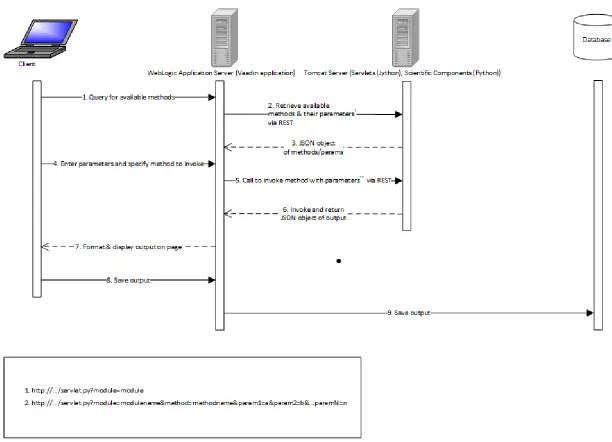
Figure 4-1: System architecture and sequence of requests ... 16
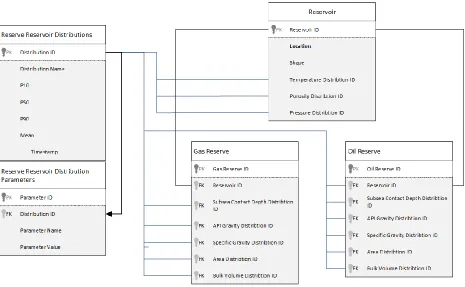
Figure 4-2: Legacy conceptual data model. ... 17
Figure 4-3: Updated data model ... 18
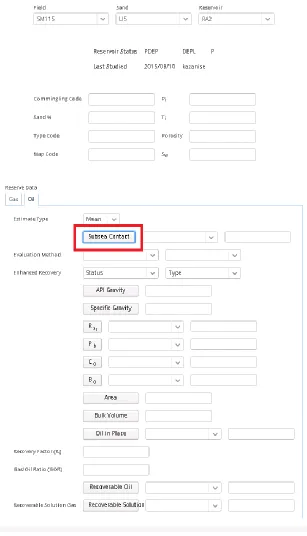
Figure 4-4: The Probabilistic Reserves Oil/Gas reserve data interface ... 23
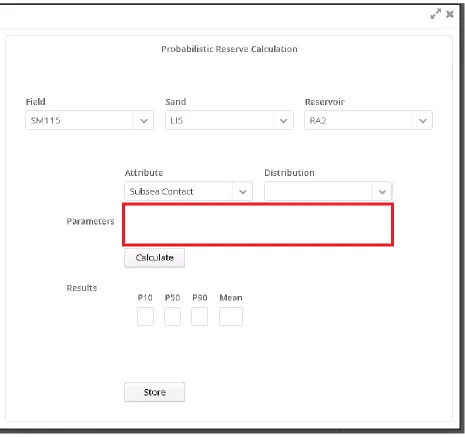
Figure 4-5: Reserve Calculation dialog - No distribution selected. ... 24
Figure 4-6: Reserve Calculation dialog - lgam distribution has been selected ... 25
Figure 4-7: Reserve Calculation dialog - the selected distribution was changed ... 26
Figure 5-1: The spatial update process. ... 30
iv
Abstract
Often times groups of domain experts, such as scientists and engineers, will develop their own software modules for specialized computational tasks. When these users determine there is a need to integrate the data and computations used in their specialized components with an enterprise data management system, interoperability between the enterprise system and the specialized components rather than re-implementation allows for faster implementation and more flexible change management by shifting the onus of changes to the scientific components to the subject matter experts rather than the enterprise information technology team. The Jython-based RESTful web service API was developed to leverage code reflection to provide access to Python scripts via RESTful web service calls, providing access to any function available in a Python script accessible to the REST server.
1
1.
Introduction
Enterprise software systems typically contain scientific or knowledge-based components that are developed by domain experts such as scientists, business analysts who are not IT
professionals. Their deep understanding of the specific process in the domain is often critical to the success of the entire business process and used by large number of end users in the related areas.
Integration of the scientific or knowledge-based components into the overall software system has been an active research topic with a number of approaches proposed such as End-User Programming (EUP) [Cypher et al. 2010], Web Mashup [Hoang et al. 2010], Scientific Workflow Management [Goecks et al. 2010], and End-User Process Modeling [Mukherjee et al. 2010]. The common idea adopted in these approaches is to provide the domain experts with some easy-to-use, half-done elements in order to reduce the efforts for the domain experts to make the elements in integration. Two essential requirements are inevitable: (1) The domain experts have to learn a software tool; the extent of success often depends on the learning depth. (2) Development and especially deployment need assistance of IT staff; as an element in the integrated software system, these activities are required to go through a software development process. Asking domain experts to study programming tools is never an efficient effort. Going through lengthy software process makes updates of scientific or knowledge-based components sluggish.
2
module name of the method to be invoked; the protocol provides a list of all methods within that module as well as the names of each of those methods’ parameters. The client can then invoke
the method by providing its module, method, and parameter names according to the web service protocol. To publish the services of the scientific or knowledge-based components, RESTful Web service wrappers are automatically generated according to program name and the module, method, and parameter names by software reflection technique. Compared to the software integration approach, the system interoperation approach allows the scientific or knowledge components to be developed in an independent system out of the scope of the IT team managing the Web services. Deployment of new services and modification of existing services are both automated without delay of manual processing.
The system interoperation approach to deployment of scientific components has been applied to an initiative of a government project, the Probabilistic Reserves system for use in federal oil and gas regulation.
3
2.
System Background and Problem Statement
2.1
The Legacy Systems
The Probabilistic Reserves project was originally proposed in 2012 as an Oracle Forms and Reports-based solution that would incorporate newly developed probabilistic models into the reserve analysis process. Previously, the Oracle Forms and Reports-based tool, comprised of two different forms, only provided the capability of either manual entry or simple deterministic calculations of various attributes of a particular oil or gas reservoir, such as porosity, bulk volume, subsea contact depth, etc. In each case, a single value for these attributes was stored in the TIMS Oracle database.
When the project was originally conceived the vision was for it to be implemented via functionality added to the existing TIMS components. However, in the time between the project’s inception in 2012 and its formal approval in 2016, the enterprise IT environment had
begun its transition from a monolithic Oracle Forms and Reports-based application (TIMS) to a suite of SOA-based Java web applications (NCIS/TIMS Web) written in a variety of frameworks (pure Java EE, Oracle Web ADF, Vaadin 7 and 8). Because of this, a decision was made to replace the Reserves components of TIMS with a newly designed NCIS/TIMS Web application.
While both the legacy TIMS and modern NCIS and TIMS Web applications are both driven by Oracle databases, they are not the same instances, with the primary difference being that NCIS is a consolidation of the four TIMS regional databases (see section Legacy
4
2.1.1 Legacy System – TIMS Reserves Component
The legacy system used for performing reserves calculations is a component of TIMS, an Oracle Forms & Reports based application with and Oracle Database backend that uses PL/SQL
packages for its calculations. Oracle Forms and Reports applications are Java applet based and require users to download Java code to be run on a client JVM.
Users log into one of the four TIMS databases, each one containing data from a different
5
Figure 2-1: TIMS Oil and Gas screen (legacy application)
6
2.2
The New System
The goal of the Probabilistic Reserves project is to replace the manual entry and deterministic calculations/formulae with a tool that will allow the user to choose a particular statistical
distribution and enter a number of parameters and generate the 90th percentile (P90), 50th
percentile/median (P50), 10th percentile (P10), and mean values for the selected distribution and parameters. In this case, four values – the P90, P50, P10, and mean – would be stored for each of these attributes, and the reservoir could be described by its probable characteristics. These estimates could then be used as input parameters for Monte Carlo simulations for forecasting; these simulations would also be included in the scientific code package provided by the subject matter experts. These reserve estimates are the basis for National Resource Assessments and the foundation for the United States’ energy plan and policy, and these statistically generated ranges
of values would allow analysts to better account for the uncertainty associated with oil and gas reserves estimation.
3.
Related Work and Technical Background
A number of different technologies were used for the implementation of the Probabilistic Reserves system. These tools include server technologies, IDE plug-ins, various programming languages, libraries, and frameworks that made the integration of the TIMS Web application with the SME-provided probabilistic model code (Python modules) possible.
3.1
Server Technologies
Two different server technologies were used for the implementation:
7
WebLogic was used for the Probabilistic Reserves application as accessed via the TIMS Web menu. WebLogic 12c was chosen because it is the organizational standard server technology for the enterprise environment, with all modern TIMS Web applications served via their own
WebLogic instance in a VMWare ESXi virtualized server environment.
Apache Tomcat was used as the server platform for the web services that provide access to the probabilistic models. This server technology was chosen because it provides an easy implementation of Python-based servlets via the Jython library. The Python-based servlets, actually developed using Jython which provided access to the Java servlet libraries, allowed native access to the SME-provided probabilistic models via direct calls to their containing Python modules.
3.2
Development Frameworks
The Probabilistic Reserves system is comprised of two main components: the web
application and the probabilistic model web services. The frameworks used for the development of these individual components are, respectively:
• Vaadin 8 • Jython Servlets
Vaadin 8 was chosen for the web application component of the system because it is an entirely Java-based development framework which does not require any separate HTML, JavaScript, or CSS to build a dynamic web application. Also, the framework’s Designer plug-in for Eclipse, the IDE used in the enterprise development environment, allows for drag-and-drop design and implementation of web components which facilitate rapid application development.
8
service endpoint that also allowed native access to the SME-provided Python modules containing the statistical distributions used to perform calculations within the system.
3.3 Development Tools
Different tools were used for the development of different components of the system. For the web application (Java/Vaadin) component as well as the web services (Python/Jython)
components, Eclipse Neon was used. This choice was made for the following reasons:
• Vaadin 8 Designer, a WYSIWYG Vaadin application plug-in for Eclipse • PyDev, an Eclipse plugin for Python development
• Easy WebLogic domain setup with existing enterprise test domain
Eclipse provides development tools for both main components of the system and therefore provided a centralized development environment particularly well-suited for this project.
For data modeling, Oracle SQL Developer was used. This tool is free and provides easy to use tools for data modeling/ERD generation that incorporates Oracle-specific features (data types, constraint types, etc.) as well as the generation of scripts used to build the physical data model in the database itself.
3.4
Database
The database technology providing access to the reserve reservoir data is Oracle Database 12c. The data model for the Probabilistic Reserves system was implemented in NCIS, the
enterprise relational database used by various regulatory agencies for their analysis and other activities.
9
addition, in order to preserve the functionality of some other enterprise applications that consume the legacy TIMS reserve reservoir data that was migrated to NCIS, Oracle Data Integrator (ODI) is in use to replicate data between the two environments.
4. The Probabilistic Reserves System: Design, Development, and Key
Technology
4.1Development Process
The Probabilistic Reserves system was developed over a series of distinct phases. These phases were:
• Initiation • Discovery • Development • Transition
• Operations and Maintenance
These phases allow a mixture of Agile principles of adaptive requirements gathering while also facilitating conformance with enterprise governance principles and project management standard operating procedures within the organization. By breaking the project’s development into those four stages, the project team was able to start the implementation with a well-defined set of requirements while still providing the SMEs with frequent opportunities to test and see
10
4.1.1 Initiation
The inception phase is when the highest-level planning of a new system occurs. This phase starts with a representative of the subject matter experts, typically the eventual end users of a system, preparing a document called a Mission Needs Statement that describes in general terms what the proposed system will do, an explanation of the need for the system, a description of some alternatives to the proposed system, and a description of the impact of not moving forward with the proposal. This document is what is presented to IT initiative decision-makers on whether or not to approve beginning the process of gathering further information regarding the development of a system.
If a Mission Needs Statement has been approved for further analysis, the assigned project manager will work with the subject matter experts to gather high-level requirements and build a tentative schedule and resource estimate for the development of the system. The estimated schedule and cost for the project are again presented for approval. If approved, the project moves to the Discovery phase.
4.1.2 Discovery
The discovery phase has two main outputs: the data model and the use cases. Both of these are produced through requirements elaboration sessions held with the subject matter experts. During these meetings the subject matter experts are interviewed to determine the workflows and business rules necessary to implement the processes required to reach the systems desired
11
various steps such as formulae or input validations are contained in the Business Rulessection of the document. While the use case does not serve the purpose of a design document, the Design Considerations section contains suggestions, mockups, and/or design notes from discussions as well as screenshots of existing/legacy user interfaces on which the system is based.
4.1.3 Construction
The construction phase is the phase of the development process in which the technical implementation occurs. The construction phase was managed using an Agile Scrum-based methodology that facilitates iterative development with regular user testing periods – User Acceptance Testing (UAT) - throughout the project, along with design and requirements sessions to continue the elaboration and clarification of the project requirements.
Before the first iteration of development, each use case defined in the Discovery phase is broken up into discrete work items, or Product Backlog Items (PBIs). Each PBI represents a deliverable piece of functionality that is assigned to a particular developer.
Sprint Planning
12
Sprint Development
After the completion of the technical implementation of the PBIs chosen for the Sprint, the application is deployed to the Build and Test (BAT) environment for testing by the development team. This internal testing is performed by the development team’s assigned tester via manual as
well as automated testing using the Selenium automated web application test tool. Any bugs or issues uncovered during this testing period are reported to the development team and resolved. Once all bugs found in BAT have been verified and resolved by the tester, the application is then deployed to the Staging environment.
Sprint Testing
Once deployed to Staging, the application undergoes another round of the same manual and automated tests performed in BAT. Once again, any bugs or issues uncovered during this testing period are reported to the development team and resolved by applying the fixes first in the BAT environment, retesting the application in BAT as per the BAT internal testing process,
redeploying to Staging, and tested internally once again.
Sprint UAT
Once all bugs found in Staging have been verified as resolved by the tester, the functionality developed in the preceding Sprint is demoed to the SMEs and made available to them for testing as part of the Sprint UAT. Just as the development team’s tester reports bugs during his/her
testing periods in BAT and Staging, all bugs uncovered by the SMEs during UAT are reported to the development team for verification and resolution. In addition to bug reporting, the SMEs also report any comments, concerns, clarifications on functionality, business rules, process flows, etc. All bugs and other feedback reported during this phase is tracked using a Sharepoint
13
items reported by the SMEs are reviewed and discussed, with the development team explaining what steps were taken to resolve any issues as well as to create new PBIs for any new
requirements identified or requested as part of UAT.
4.1.4 Transition
After completion of the final Sprint, the project moved into the Transition phase. During this period final steps are taken to verify the completeness of the application, i.e. whether all of the baselines requirements have been addressed and the project meets its high-level goals, and the application then enters its final UAT period, the Integrated UAT phase.
Integrated UAT is the final opportunity for the SMEs to test the functionality of the system in its entirety before it is released to Production. The version of the system tested during Integrated UAT includes all bug fixes discovered to date as well as any additional requirements requested and approved for development in preceding Sprint Planning meetings. After a successful
Integrated UAT phase in which all bugs are fixed, the SMEs determine that the system addresses all of its high-level requirements, and the ATD and ATC are approved, the system as it has been developed is considered to be accepted by the SMEs and is ultimately released to the Production environment.
4.2
Challenges
14
IT team managing the Web services of the Probabilistic Reserves project. If they are treated as components integrated into the system, then any change and update would have to go through the process described in Section 4.1, which will be lengthy and costly.
Furthermore, since the scientific components are developed in Python, but the web application is Java-based residing on WebLogic server, the application required the Jython PythonInterpreter object. This Java-native technique is troublesome in integration for several reasons.
1. PythonInterpreter works by invoking scripts stored on a filesystem and executing commands via string literals and its own Jython API, requiring cumbersome method and module calls from Java code
2. The web server on which the Probabilistic Reserves application resides, WebLogic, is bundled with its own distribution of Jython which is outdated and does not support the Python inspect module used for code reflection. Although bundled libraries can be overridden using the <prefer-application-packages> or <prefer-application-resources>, any Python errors thrown by the interpreter cause the application to revert to the bundled Jython library
Eventually, a separate web server was created to enable the Python code to be invoked by a web service to interoperate with the WebLogic-based application via RESTful web service calls.
4.3
Business Workflow
The Probabilistic Reserves system is composed of three major components:
15
• The Jython servlet and scientific component (Python scripts) server (Tomcat) • The database (Oracle)
As shown in the sequence diagram below, the client interacts directly with the web
16
17
4.4
Data Model
The conceptual data model that shows the relationship between reservoirs and their oil and gas reserves is below:
Figure 4-2: Legacy conceptual data model. The data model above shows the relationship between reservoirs and their oil and gas reserves as defined by the reservoir’s ID. The reservoirs as well as their reserves certain properties/attributes for which
statistical
Because the system now captures four different values – P10, P50, P90, and Mean – rather than a single value for each particular attribute, the data model was expanded. Each column in the reservoir and oil and gas reserve tables for the various attributes was replaced with a foreign key reference to a separate table of rows referencing that particular execution of the selected
18
change at any time, facilitating the flexibility allowed by Python scripts analyzed via code reflection and accessed by web services. The users can alter these Python scripts at any time to modify the code for the distributions as well as add or remove distributions. This can be done by a simple re-deployment of the Python code without any changes to the application. Below is the updated data model that accommodates the changes described:
Figure 4-3: Updated data model containing new tables to track distributions and their parameters
4.5
Design – Jython Web Service Protocol for Code Reflection
19
In order to expose Python code as web services on a Tomcat server, a couple of changes are required. First, the Jython JAR must be deployed to the application’s /lib directory
($CATALINA_HOME/webapps/$APP_NAME/lib). First, a servlet mapping entry in the application’s web.xml must be created to instruct the server to route requests to a Python script
rather than a WAR or other Java-based web application. [Juneau, Wierzbicki and Baker 2010]
<web-app>
<servlet-name>PyServlet</servlet-name>
<servlet-class>org.python.util.PyServlet</servlet-class> <load-on-startup>1</load-on-startup>
</servlet>
<servlet-mapping>
<servlet-name>PyServlet</servlet-name> <url-pattern>*.py</url-pattern>
</servlet-mapping> </web-app>
The servlet code itself is straightforward and familiar. Jython provides access to the Java servlet libraries via Python code. Below is an example of a Jython servlet that calls a method,
get_functions, that returns all functions defined in a specified module:
from javax.servlet.http import HttpServlet
import pr_util
class pr_servlet (HttpServlet):
def doGet(self,request,response):
self.doPost (request,response)
def doPost(self,request,response):
toClient = response.getWriter()
response.setContentType ("application/json")
map = request.getParameterMap()
print "map = %s" % map
module_name = map['module'][0]
functions = pr_util.get_functions(module_name)
20
This servlet returns a JSON object of all functions in the specified module mapped to their specified parameters. It does so by calling the function get_functions, which uses the Python inspect module for code reflection. The get_functions module is below:
import inspect import json
# Returns a dict that maps function names to a list of its arguments def get_functions(module_name):
print "Gettin' functions"
functions = {}
module = __import__(module_name)
members = inspect.getmembers(module)
print "Got members"
# The members of a module come back in this format:
# ('module_name', <type module_name at 0x73>) or some other hex
# address
for member in members:
if inspect.isfunction(member[1]):
# The function's name
func = str(member[0])
# Initialize the list of args
functions[func.encode('utf-8')] = []
argspec = inspect.getargspec(member[1])
# Build the list of args
for arg in argspec.args:
functions[func.encode('ascii')].append(arg.encode('utf-8'))
functions = json.dumps(functions)
return functions
21
response to get_functions, built from a Python dictionary, containing two defined functions for the log gamma and mean of Weibull calculations, respectively:
{"lgam":["z"], "weilm":["a","b"]}
In this example, you have two different distributions available to you, each with a different number of parameters. The log gamma distribution, labeled “lgam,” takes one parameter, z. The Mean of Weibull distribution, labeled “weilm,” takes two parameters, a and b.
When the user first opens the calculation dialog, the web application requests the methods and their parameters in the module “beta1.py” from the Tomcat server via the Java API for REST
services:
public static HashMap<String, ArrayList<String>> getMethods(String
moduleName) {
HashMap<String, ArrayList<String>> methods;
Client client = ClientBuilder.newClient();
WebTarget target;
String resp;
JsonObject jo;
JsonArray ja;
target = client.target(
"http://localhost:8080/tw-pythonservices/pr_servlet.py").queryParam("module", "beta");
resp =
target.request(MediaType.APPLICATION_JSON).get().readEntity
(String.class);
jo = Json.parse(resp);
System.out.println("jo = " + jo);
/*
* Each key of the JsonObject is the name of a method. The values * are JsonArrays of the names of the parameters for those
* methods. * /
methods = new HashMap<String, ArrayList<String>>();
for (String k : jo.keys()) {
methods.put(k, new ArrayList<String>());
22
for (int i = 0; i < ja.length(); i++) {
methods.get(k).add(ja.getString(i));
} }
return methods; }
23
Figure 4-4: The Probabilistic Reserves Oil/Gas reserve data interface
24
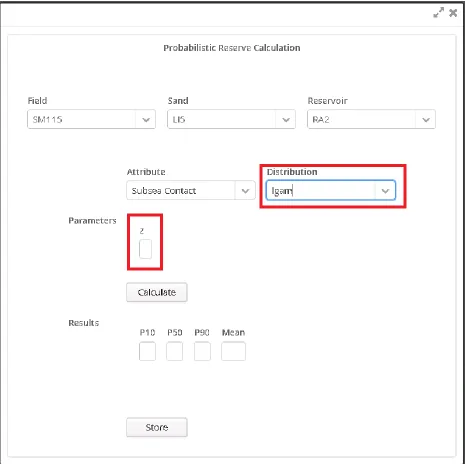
distribution has been selected, there are no parameters available for input in the Calculation dialog (empty area highlighted):
Figure 4-5: Reserve Calculation dialog. Because no distribution has been selected, no parameter input fields are displayed.
25
Figure 4-6: Reserve Calculation dialog. The lgam distribution has been selected, so its one parameter, 'z', is now available for input
26
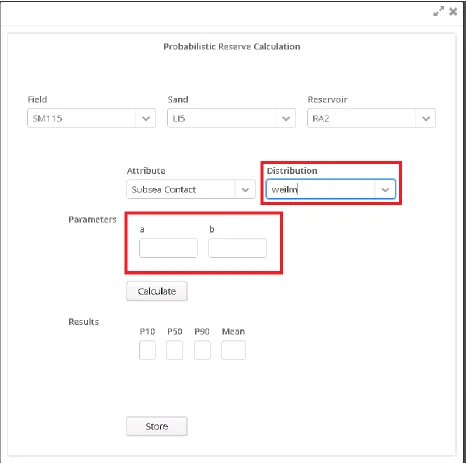
Figure 4-7: Reserve Calculation dialog. The selected distribution was changed to 'weilm,' so now its two parameters, 'a' and 'b,' are available for input
27
Then, using the Python inspect module, the Jython web service invokes the specified method by name with the specified parameters. Below is the Java web application code, the function
PythonUtil.invokeMethod(String moduleName, String methodName,
Map params)that calls the Jython web service via the request http://localhost:8080/tw-pythonservices/pr_servlet.py?module=beta1&method=weilm&a=1&b=2:
public static JsonObject invokeMethod(String moduleName, String methodName, Map
params) {
HashMap<String, ArrayList<String>> methods; Client client = ClientBuilder.newClient(); WebTarget target;
String resp; JsonObject jo; JsonArray ja; String url;
url = "http://localhost:8080/tw-pythonservices/pr_servlet.py";
// Build the initial WebTarget object with the method name specified
target = client.target(url).queryParam("module", moduleName);
target = target.queryParam("method", methodName);
// Iterate over parameters to set queryParams of WebTarget
for (Object param : params.keySet()) {
target = target.queryParam(param.toString(), params.get(param));
}
resp =
target.request(MediaType.APPLICATION_JSON).get().readEntity(String.class);
System.out.println("resp = " + resp);
jo = Json.parse(resp);
System.out.println("invokeMethod.jo = " + jo.toString());
return jo;
28
…which in turn calls the Jython servlet which calls the Python/Jython method invoke which uses
the inspect module to invoke the function by name:
# Invokes the specified method (string) in the specified module (string) with the specified parameters (dict: {string:string})
def invoke(module_name, method_name, param_map):
module = __import__(module_name)
method = getattr(module, method_name)
args = inspect.getargspec(method).args
print "param_map before: %s" % param_map
# Remove any invalid arguments
for key in param_map.keys(): if key not in args:
del param_map[key]
print "param_map after: %s" % param_map
output = method(**param_map)
print "output = %s " % output
return output
Here, the Python method invoke performs three major steps that utilize code reflection to call the specified function:
1. It imports the specified module via __import__(…) module = __import__(module_name)
2. It obtains a reference to the method via getattr(…) method = getattr(module, method_name)
29 output = method(**param_map)
The protocol effectively translates the GET string
http://...?module=beta1&method=weilm&a=1&b=2
into the Python method call
beta1.weilm(a=1, b=2)
The output is returned to the application in the form of the values for P10, P50, P90, and Mean. To store these values in the database and associate them with the selected reservoir/reserve, the user clicks ‘Store.’
5
Future Considerations
5.1 GIS Integration
30
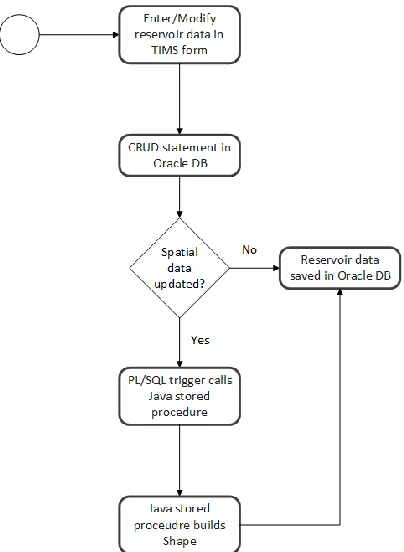
Figure 5-1: The spatial update process. When a record is updated/inserted/deleted in(to)/from tables with spatial data, a PL/SQL trigger is executed that initiates a Java stored procedure that creates the shape object according to application-specific business
rules. This data, along with the rest of the row, is stored in the SHAPE column of the modified table, in this case Reservoirs
The spatial features are stored as spatial data in the TIMS database using the ST Geometry data type in the TIMS Oracle database. Each feature is represented by a single row in the database, and the attributes of the feature – its location, coordinate system, geographic boundaries, etc, are stored in a ST Geometry data type column called Shape.
31
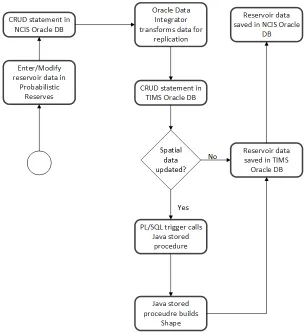
are created. When DML for a table is executed in NCIS, a corresponding DML statement is executed in TIMS via ODI which keeps the data in sync. Since a DML statement is executed, the trigger still fires which results in a call to the Java stored procedure. The updated spatial update process for data updated in TIMS via ODI is shown below:
32
6. Conclusion
33
References
CYPHER, A., DONTCHEVA, M., LAU, T., AND NICHOLS, J., Eds. 2010. No Code Required - Giving Users Tools to Transform the Web. Morgan Kaufmann.
GOECKS, J., NEKRUTENKO, A., TAYLOR, J., AND TEAM, T. 2010. Galaxy: a
comprehensive approach for supporting accessible, reproducible, and transparent computational research in the life sciences. Genome Biol 11, 8, R86.
HOANG, D., H., P., AND NGU, A. 2010. Spreadsheet as a generic purpose mashup development environment. In ICSOC. 273–287.
JUNEAU, J., WIERZBICKI, F., BAKER, J., SOTO, L., NG, V. 2010. Chapter 13: Simple Web Applications - Jython Book v1.0 documentation
http://www.jython.org/jythonbook/en/1.0/SimpleWebApps.html
34
Vita
John Nielson was born in Fayetteville, NC, but spent most of his life before college in
Watkinsville, GA. He received his B.S. in Mathematical Sciences with an emphasis in Applied and Computational Analysis from Clemson University in 2007. He then moved to New Orleans and began his career as a software engineer developing GIS applications. He currently works as a software development project manager with the Bureau of Safety and Environmental