R E V I E W
Open Access
Effect of workplace physical activity
interventions on the cardio-metabolic
health of working adults: systematic review
and meta-analysis
Rubina Mulchandani
1, Ambalam M. Chandrasekaran
2, Roopa Shivashankar
2, Dimple Kondal
2, Anurag Agrawal
3,
Jeemon Panniyammakal
4,5, Nikhil Tandon
6, Dorairaj Prabhakaran
2,5, Meenakshi Sharma
7and Shifalika Goenka
1,2*Abstract
Background:Adults in urban areas spend almost 77% of their waking time being inactive at workplaces, which leaves little time for physical activity. The aim of this systematic review and meta-analysis was to synthesize evidence for the effect of workplace physical activity interventions on the cardio-metabolic health markers (body weight, waist circumference, body mass index (BMI), blood pressure, lipids and blood glucose) among working adults.
Methods:All experimental studies up to March 2018, reporting cardio-metabolic worksite intervention outcomes among adult employees were identified from PUBMED, EMBASE, COCHRANE CENTRAL, CINAHL and PsycINFO. The Cochrane Risk of Bias tool was used to assess bias in studies. All studies were assessed qualitatively and meta-analysis was done where possible. Forest plots were generated for pooled estimates of each study outcome. Results:A total of 33 studies met the eligibility criteria and 24 were included in the meta-analysis.
Multi-component workplace interventions significantly reduced body weight (16 studies; mean diff:−2.61 kg, 95% CI:− 3.89 to−1.33) BMI (19 studies, mean diff:−0.42 kg/m2, 95% CI:−0.69 to−0.15) and waist circumference (13 studies; mean diff:−1.92 cm, 95% CI:−3.25 to−0.60). Reduction in blood pressure, lipids and blood glucose was not statistically significant.
Conclusions:Workplace interventions significantly reduced body weight, BMI and waist circumference. Non-significant results for biochemical markers could be due to them being secondary outcomes in most studies. Intervention acceptability and adherence, follow-up duration and exploring non-RCT designs are factors that need attention in future research.
Prospero registration number: CRD42018094436.
Keywords:Physical activity, Worksite interventions, Cardiovascular disease
© The Author(s). 2019Open AccessThis article is distributed under the terms of the Creative Commons Attribution 4.0 International License (http://creativecommons.org/licenses/by/4.0/), which permits unrestricted use, distribution, and reproduction in any medium, provided you give appropriate credit to the original author(s) and the source, provide a link to the Creative Commons license, and indicate if changes were made. The Creative Commons Public Domain Dedication waiver (http://creativecommons.org/publicdomain/zero/1.0/) applies to the data made available in this article, unless otherwise stated.
* Correspondence:[email protected]
1Indian Institute of Public Health-Delhi, Public Health Foundation of India,
Gurgaon, India
2Centre for Chronic Disease Control, New Delhi, India
Background
Physical activity as a modifiable health behavior for cardiovascular disease (CVD) prevention
According to the INTERHEART study, physical inactivity is one of the 9 major modifiable risk factors responsible for CVDs in both sexes worldwide [1]. It is responsible for 10% of the premature mortality, 6% of coronary heart dis-ease burden and 7% of the diabetes burden worldwide [2]. Approximately 3.2 million annual deaths are attributable to insufficient activity [3] and 25% reduction in inactivity can avert 1.3 million deaths annually [2]. Physical activity (PA) aids in better glycemic control and it is a vital compo-nent of diabetes prevention and management [4]. The World Health Organization (WHO) now recommends 150–300 min of moderate to vigorous aerobic physical ac-tivity (MVPA) for adults aged 18–64 [5]. Some of the most common reasons for inactivity among adults are an unsup-portive social and physical environment [6,7] and lack of time [8]. Adults in urban areas spend almost 77% of their waking time being inactive at work or otherwise, leaving little time for exercise [9,10].
Worksite physical activity programs are specifically designed with the aim of enhancing employee physical activity levels and improving their dietary behavior at the workplace [11]. Worksite settings provide effective channels to reach defined populations, disseminate in-formation, create an effective medium for program deliv-ery and study the impact to maximize benefits [12, 13]. These can be suitable settings for advocating an active lifestyle, improving employee productivity and reducing healthcare costs [14, 15]. Contemporary workplaces are thus ideal for interventions that promote higher levels of physical activity amongst employees, to improve health and optimize performance [16].
Rationale for the current systematic review and meta-analysis
A number of narrative and systematic reviews have demonstrated the positive effect of various worksite physical activity interventions on physical activity, productivity and cost outcomes [17–25]. However, only a handful of them have comprehensively evaluated the effects of these interventions on the major measurable cardiovascular disease markers. The last comprehensive review on the topic was done in 2010, included only randomized controlled trials (RCTs) and did not meta-analyze the effects [26]. Worksite PA interventions can provide an effective lever to address the CVD burden. However, the effectiveness of these interventions needs to be quantified. Given the availability of numerous pri-mary studies in the area, it becomes imperative to present not only an overview but also obtain an overall quantitative estimate of intervention effects from differ-ent studies, both randomized and non-randomized.
Therefore, we aimed to undertake a comprehensive and systematic synthesis of literature and meta-analysis of available evidence, to obtain a holistic view, of the po-tential of worksite PA interventions in improving the cardio-metabolic health of working adults.
Objective
To summarize evidence for the effect of worksite physical activity interventions on CVD risk markers (body weight, waist circumference, body mass index, blood pressure, lipids and blood glucose) among working adults and de-scribe the intervention approaches used in the different studies.
Research question
Do worksite physical activity interventions lower the cardio-metabolic disease risk of adults?
Methods
The review methodology was registered with PROS-PERO (registration ID: CRD42018094436) and has been described in detail in the protocol [27].
Search strategy and inclusion of studies
We searched Cochrane Central, PUBMED, CINAHL, PSYCINFO and EMBASE to identify relevant studies on workplace physical activity interventions published till March 2018 using keywords like“workplace”,“workers”, “physical activity”, “exercise”, “wellness”, “counseling”, “RCTs”, “trials” etc. A comprehensive strategy was pre-pared by one researcher (RM) and reviewed by the sec-ond (CS) researcher. The PUBMED search strategy is illustrated in the Additional File1. It was then modified as per the indexing system of other databases.
Eligibility criteria for inclusion of studies
Study designs- Experimental study designs with a comparator group including randomized controlled trials, controlled trials, cluster RCTs, quasi-experimental studies; a comparator could be no intervention, minimal intervention, usual care, waitlisted control.
Study populations- Studies involving individuals aged 18 and above; healthy populations as well as populations at risk of CVD were included
Study outcomes- Studies reporting any of the CVD outcomes (body weight, body fat, waist
circumference, BMI, blood pressure, plasma glucose, lipids and triglycerides)
Study interventions- Workplace studies
Exclusion criteria: Studies not published in the English language, those with a follow-up period of less than 6 months, observational studies and experimental studies without a comparator.
Referencing software Zotero was used to import the search results and remove the duplicates. Titles and ab-stracts of all the retrieved articles were screened inde-pendently by RM; CS indeinde-pendently screened 10% of the citations. The reference list of relevant studies obtained was further hand searched. Full texts of eligible studies were screened by RM and reviewed by CS. Wherever data for meta-analysis was unavailable in the public domain, the study authors were electronically contacted.
Data extraction, quality assessment and analysis
Data extraction was performed independently by the two researchers. Disagreements were resolved within the team. Items in the data extraction form were prepared by RM using the Cochrane Handbook recommendations and were verified by CS. Outcomes were appropriately converted to the International System of Units for stud-ies that reported them in other units. Findings from all the studies were included in the narrative synthesis. Re-view Manager (RevMan version 5.3) was used for the meta-analysis. The inverse-variance method was used to combine effect sizes using the random effects models (REMs) [28]. The treatment effect was reported as mean difference (MD) with 95% confidence intervals (CIs) wherein CIs excluding 0 were considered to be statistically significant. Forest plots were generated using RevMan to compare each of the proposed outcome measures in the intervention vs the control groups in the included studies. Studies that did not provide this data were excluded from the meta-analysis. REMs were used to report the overall mean difference with 95% CIs. The confidence intervals for each study in the meta-analysis were observed for their level of overlap, for a visual assessment of heterogeneity. I2values, defined as‘the percentage of variability in effect estimates that is due to heterogeneity rather than sam-pling error’, were used to determine the magnitude of variation beyond chance. It is calculated as [(Q-df)/Q]*100 where Q is the chi-square statistic and df is its degrees of freedom. A chi-square p-value of less than 0.05 was con-sidered statistically significant for the presence of hetero-geneity. Degree of heterogeneity was ascertained based on the cut-offs mentioned in the Cochrane handbook (0– 40%: not important, 30–60%: moderate, 50–90%: substan-tial, 75–100%:considerable heterogeneity) [29].
The intervention effects on various CVD markers were also assessed under the sub-groups of study design (RCTs vs cRCTs), duration (6–12 months vs > 12 months), inter-vention type (predominantly educational vs predominantly behavioral change vs predominantly environmental chan-ged based) and employee health status (all employees vs
those at risk of CVD). The chi-square test p-value for sub-group differences was assessed for significant sub-sub-group effects (ap< 0.05 indicates significant sub-group effect).
We classified the various intervention approaches used in the included studies based on a 2012 review by Heath et al. [30]. The interventions were broadly categorized as follows:
Campaigns and informational approaches: This involves information dissemination through different mediums like text messages, emails, newspapers, television, radio, to raise awareness and encourage a change in health behav-iors mainly increasing activity and improving diet.
Behavioral and social approaches: This involves a change in individual behavior to incorporate more phys-ical activity in their regular routine through goal setting, peer support and self-rewards. It can be implemented in groups (through technological means) as well as on an individual level with the help of a health provider/trainer and personalized activity plans.
Environmental and policy approaches: This involves making the office infrastructure and physical environ-ment more activity friendly through construction of walking paths, changes to the vending machines, intro-duction of ergonomic workstations, break rooms, fitness facilities etc.
The Cochrane risk of bias tool [31] was used to assess the bias in included studies. The assessment was inde-pendently performed by RM and CS and disagreements were resolved by consensus. Possible publication bias among the studies was visually assessed using funnel plots.
Results
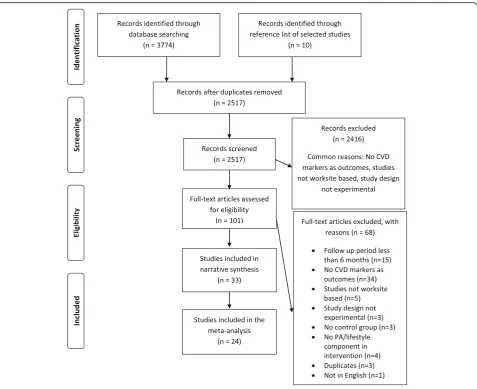
Literature search and characteristics of included studies Our search identified a total of 3774 records (Fig. 1). Out of these, 1873 were retrieved through Pubmed via MEDLINE, 696 through EMBASE, 922 through CEN-TRAL and 283 through CINAHL and PsychInfo. An additional 10 records were identified through other sources (identified by manually searching the reference list of included studies). After removal of duplicates, we screened 2517 records and identified 101 full text arti-cles for eligibility assessment. Of these, 33 studies were included in the narrative synthesis. Studies reported vari-ous outcomes: weight (n= 16) [32–47], BMI (n= 19) [32–37, 39–44, 46, 48–53], waist circumference (n= 13) [32–36, 39, 42, 43, 45–47, 51, 54], lipids (n= 15) [32,
34–37,39,42,44–47,49,51,52,55], triglycerides (n= 8) [37, 39, 44–47, 49, 52], blood pressure (n = 16) [32–37,
39, 42–47, 49, 51, 52] and glucose (n= 10) [32, 34, 37,
39,44–47,49,52]. A total of 24 studies were included in the meta-analysis. Data from other studies was not available.
[32–39, 49,54, 56,57], 15 cluster RCTs [40, 41,43, 44,
46–48, 50, 53, 58–63], 3 quasi experimental trials [42,
52,64], and 3 controlled trials [45,51,55] were included in the review. A total of 36,188 men and women aged 32 to 55 years participated in these studies with the study sample sizes ranging from 45 to 10,281.
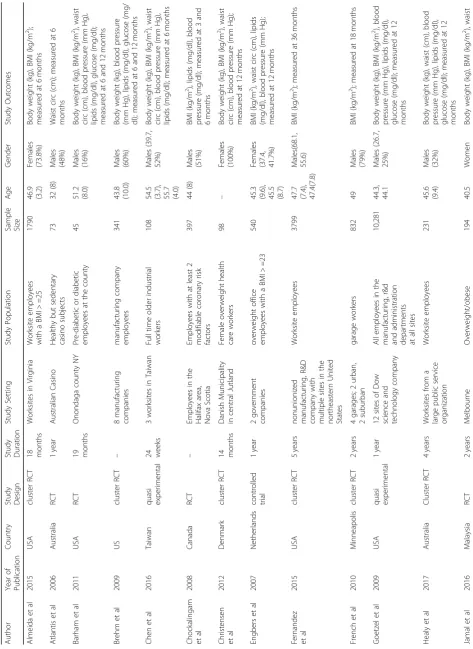
The descriptive characteristics of the included studies are presented in Table1. The studies had a varied popu-lation which included school and university personnel, employees of public and private sectors, blue collar workers (carpenters, bricklayers, road workers, crane op-erators, locomotive maintenance workers, gardeners, drivers, transportation workers, garage staff and factory workers), professional and technical, salaried and hourly workers, hospital staff, security guards, healthcare workers, casino employees and industry workers.
Out of the 33 studies reviewed, 13 studies [32–34, 36,
38–40, 43, 46, 49, 51, 56, 60] (8 RCTs, 4 cluster RCTs and 1 controlled trial) included only employees who had
at least one raised CVD risk factor while the other 20 studies [35, 37,41,42, 44,45,47, 48, 50,52–55,57–59,
61–64] included all employees irrespective of their health status.
Narrative analysis Study interventions
The studies used different types of interventions like campaigns, workshops and education; individual level behavioral change; and changes to the office environ-ment and policies. Out of the 33 studies reviewed, 28 studies [32, 36, 37, 39–47, 49–64] used a mix of the three approaches whereas the other 5 studies [33–35,38,
48] implemented any one of these three approaches. The intervention duration in all the studies ranged from 6 months to 5 years. Campaign approach included lifestyle coaches to educate on physical activity, workshops on cardiac risk factors, wellness fairs, point of choice prompts and information dissemination through
Table 1 Descriptive characteristics of the included studies Autho r Year of Pu blication Count ry Study Design Stud y D uration Stud y Setting St udy Popu lation Sampl e Size Age Gende r Study O utcome s Almei da et al 2015 USA cluste r RCT 18 mon ths Worksites in Virgini a Work site empl oyees wit h a BMI > =25 1790 46.9 (3.2) Fema les (73.8 %) Body weight (kg), BMI (kg/m 2 ); measured at 6 mon ths Atlant is et al 2006 Aus tralia RCT 1 year Aus tralian Cas ino H ealthy but se dentary cas ino subjects 73 32 (8) Males (48%) Waist circ (cm ); me asured at 6 month s Barham e t al 2011 USA RCT 19 mon ths On ondaga cou nty NY Pre -diabe tic or diabetic em ploye es at the coun ty 45 51.2 (8.0) Males (16%) Body weight (kg), BMI (kg/m 2 ), waist circ (cm), blood pressure (mm Hg), lipids (mg/dl), glu cose (mg/ dl); measured at 6 and 12 mont hs Brehm et al 2009 US cluste r RCT – 8 manu facturi ng com panies manu fact uring company em ploye es 341 43.8 (10.0 ) Males (60%) Body weight (kg), blood pressure (mm Hg), lipids (mg/dl), glu cose (mg/ dl); measu red at 6 and 12 mont hs Chen et al 2016 Taiwan quasi exper iment al 24 we eks 3 wo rksites in Tai wan Fu ll time older indu strial wo rkers 108
54.5 (3.7), 55.7 (4.0)
Males (39.7 , 52% ) Body weight (kg), BMI (kg/m 2), waist circ (cm), blood pressure (mm Hg), lipids (mg/dl); me asured at 6 mont hs Choc kaling am et al 2008 Canad a RCT – Empl oyees in the Hali fax area, Nova Scotia Em ploye es with at least 2 mod ifiab le coronary ris k fact ors 397 44 (8) Males (51%) BMI (kg/ m 2 ), lipid s (mg/ dl), blood press ure (m g/dl); measu red at 3 an d 6 mon ths Christe nsen et al 2012 Denm ark cluste r RCT 14 mon ths Dan ish Munic ipality in centr al Jutl and Fe male ov erweight health car e work ers 98 – Fema les (100% ) Body weight (kg), BMI (kg/m 2 ), waist circ (cm), blood pressure (mm Hg); measured at 1 2 mont hs Eng bers et al 2007 Nethe rlands contro lled trial 1 year 2 gove rnme nt com panies ov erwei ght office em ploye es with a BM I> =23 540
45.3 (9.6), 45.5 (8.7)
Fema les (37.4 , 41.7% ) BMI (kg/ m 2 ), wai st circ (cm), lipid s (mg/dl), blood press ure (mm Hg); measured at 1 2 mont hs Fernan dez et al 2015 USA cluste r RCT 5 years nonu nionize d manu facturi ng, R&D com pany with mu ltiple site s in the nor theaste rn United Stat es Work site empl oyees 3799
47.7 (7.4), 47.4(
Table 1 Descriptive characteristics of the included studies (Continued) Autho r Year of Pu blication Count ry Study Design Stud y D uration Stud y Setting St udy Popu lation Sampl e Size Age Gende r Study O utcome s em ploye es from a loc al univ ersity (9.3) (72.7 %) circ (cm), blood pressure (mm Hg), lipids (mg/dl), glu cose (mg/ dl); measured at 6 mon ths Kim et al 2015 Ko rea RCT 6 mon ths 3 K orean work sites Em ploye es from the K orean gas corporation, dis trict heating corp oratio n an d exp ressway corporation wit h a BMI > 25 kg/m 2 196 41.02 (6.82 ), 41.5 (6.98 ) Males (100% ) Body weight (kg); measu red at 6 month s Kram er et al 2015 USA RCT 18 mon ths Baye r corporation in Pittsb urgh Pre dia betic emplo yees both pro fessional and techni cal, sal aried and hou rly wo rkers wit h BMI > =24 89 52.3 (7.2) Males (45%) Body weight (kg), BMI (kg/m 2 ), waist circ (cm), blood pressure (mm Hg), lipids (mg/dl), glu cose (mg/ dl); measured at 6 mon ths Lemon et al 2010 USA cluste r RCT 3 years 6 hos pitals in mas sachusse ts H ospital empl oyees 806 – Males (19%) BMI (kg/ m 2); measu red at 12 and 24 month s Lemon et al 2014 USA cluste r RCT 3 years 12 centr al Massachu setts publi c high schoo ls Sch ool emplo yees 782 – Males (33%) Body weight (kg), BMI (kg/m 2 ); measured at 1 2 and 24 month s Limay e et al 2016 Indi a RCT 3 years tw o mu ltinat ional IT indu stries in Pun e Em ploye es with ≥ 3 risk fact ors (fam ily hist ory of CVD , ob esity, highb lood pre ssure, im paired glu cose, impaired lipid s) 265
36.8 (7.2), 35.7 (8.1)
Males (74, 71% ) Body weight (kg), BMI (kg/m 2 ), waist circ (cm), blood pressure (mm Hg), lipids (mg/dl), glu cose (mg/ dl); measured at 1 2 mont hs Linde e t al 2012 USA cluste r RCT 3 years Six worksi tes in the Tw in citi es area Min nesota Work site empl oyees 1672 – Males (39.3 %) BMI (kg/ m 2); measu red at 24 mon ths Milani et al 2009 USA cluste r RCT 1 year 2 ge ograp hically disparate work loc ations of a single empl oyer Work site empl oyees 339 40 (8), 43 (10) Males (52, 53% ) Body weight (kg), lipid s (mg/ dl), blood pre ssure (mm H g), gluc ose (mg/dl); me asured at 6 mont hs Morg an et al 2011 Aus tralia RCT 14 we eks Tom ago Alu minium com pany O ver-weight/ob ese mal e shif t workers 110 44.4 (8.6) Males (100% ) Body weight (kg), BMI (kg/m 2 ), waist circ (cm), blood pressure (mm Hg); measured at 1 4 mont hs Moy et al 2006 Malay sia quasi exper iment al 2 years publi c heal th univ ersity an d teac hing hos pital in KL Se curity gua rds 186 45.6 (7.2), 48 (4.7) Males (100% ) BMI (kg/ m 2 ), lipid s (mg/ dl), blood press ure (m m Hg), glu cose (mg/ dl); measured at 2 4 mont hs Muto et al 2001 Jap an RCT 18 mon ths build ing mai ntenan ce com pany in Jap an Bu ilding mainten ance com pany work ers with at le ast one abn ormal CVD ris k facto r 352
42.3 (4.5), 42.7 (2.7)
Table 1 Descriptive characteristics of the included studies (Continued) Autho r Year of Pu blication Count ry Study Design Stud y D uration Stud y Setting St udy Popu lation Sampl e Size Age Gende r Study O utcome s mon ths borg public sector driv ers or transport ation wo rkers with a CVD risk sc ore gre ater than 9 press ure (m m Hg), glu cose (mg/ dl); measured at 1 8 mont hs Prabh akaran et al 2009 Indi a contro lled trial 4 years Indu strial sites in Indi a indu stry em ployees 6889 40.8 (10.8 ), 38.6 (11.7 ) Males (58.7 %, 58.1) Body weight (kg), wai st circ (cm), lipids (mg/dl), blood press ure (mm Hg), gluc ose (mg/ dl); measu red at 48 month s Race tte et al 2009 USA cluste r RCT 1 year Worksites with in a larg e medi cal center in Missouri Me dical centr e empl oyees age d 18 and above 123 45 (9) Males (11.2 5) Body weight (kg), BMI (kg/m 2), lipids (mg/dl), blood press ure (mm Hg), glucose (mg/dl); me asured at 12 month s Sieg el et al 2010 USA cluste r RCT 2 years 16 elem entary sch ools in 2 area s of LA All sc hool empl oyees 413 40 (0.80 ) Males (17%) BMI (kg/ m2); me asured at 2 years Sh riv as ta va et al 2017 Indi a cluste r RCT 6 mon ths 4 wo rksites from Del hi-NCR ov erwei ght empl oyees 267 35.8 (7.6), 39 (8.7) Males (87.9 %) Body weight (kg), BMI (kg/m 2 ), waist circ (cm), blood pressure (mm Hg), lipids (mg/dl), glu cose (mg/ dl); measured at 6 mon ths Vies ter et al 2017 Nethe rlands RCT 12 mon ths Con struction com pany in Netherl ands Blu e collar workers (carp enters , ro ad work ers, cra ne op erators, an d fact ory workers.) 314 47 (9.5) – Body weight (kg), BMI (kg/m 2), waist circ (cm), blood pressure (mm Hg), lipids (mg/dl); me asured at 12 month s Weinho ld et al 2015 USA RCT 2 years Unive rsity in U S Work site pre-di abetic em ploye es with a BM I more than 25 69
51.6 (9.5), 51.0 (8.1)
newsletters, brochures, internet etc. Behavioral change in-cluded incentivized group activities or tailored-for-individual weight loss regimes through physical activity, goal setting and rewards. Organizational changes included making stairs and walls more aesthetic, mapping of walk-ing routes and more. Detailed description of the interven-tion and control groups is presented in Addiinterven-tional File2.
Risk of bias in included studies
Risk of bias among the included studies was assessed using the Cochrane risk of bias assessment tool as shown in Fig.2. The risk of bias summary for individual studies has been presented in Additional File4.
The highest risk of bias emanated from performance bias due to unblinded participants and study personnel. There was also a high unclear risk of selection bias and detection bias due to lack of adequate data reported on randomization, allocation concealment and blinding of study outcome assessors.
Meta-analysis
Intervention effects on cardio-metabolic risk markers We undertook exploratory meta-analyses to pool the ef-fect estimates for body weight, body mass index, waist cir-cumference, systolic and diastolic blood pressure, total cholesterol, low density lipoprotein (LDL-C) and high density lipoprotein (HDL-C) cholesterol, triglycerides and blood glucose. Review Manager Software (RevMan version 5.3) was used to generate forest plots. The random effects model was used to generate intervention effects.
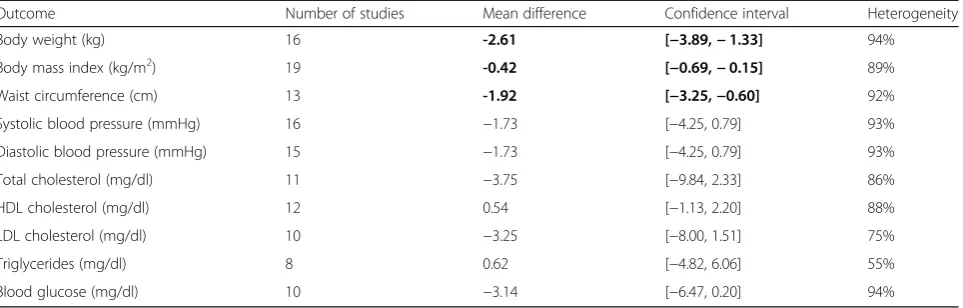
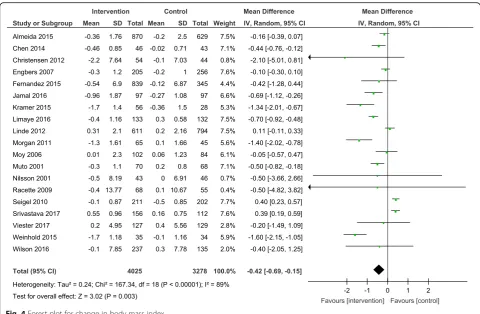
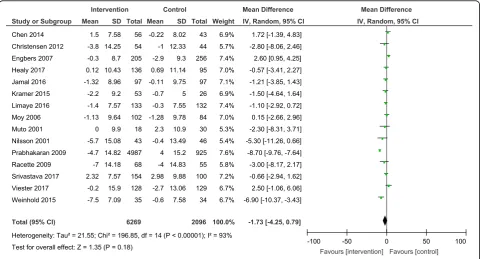
Results from the meta-analyses showed an overall signifi-cant intervention effect forbody weight(16 studies, Mean difference: -2.61, 95% CI- -3.89, −1.33), body mass index (19 studies, Mean difference: -0.42, 95% CI- -0.69, −0.15) andwaist circumference(13 studies, Mean difference: -1.92, 95% CI- -3.25,−0.60) but there was considerable heterogen-eity among estimates (I2= 94, 89 and 92% respectively; p -value < 0.0001). The pooled estimates for lipids, blood pres-sure and blood glucose were not statistically significant.
The overall mean difference and 95% CIs for each out-come, along with the heterogeneity in individual studies have been presented in Table 2. Exploratory sub-group analysis showed a significant sub-group effect by study de-sign for body weight (p= 0.0008) and BMI (p< 0.00001) and by intervention type for BMI (p= 0.008) and TC (p= 0.0007). However, there was no sub-group effect for the other outcomes (waist circumference and biochemical markers). (Additional File 3) In conclusion, sub-groups could not explain the high levels of heterogeneity respon-sible for the variability in study effect size estimates be-cause the I-squared values were not reduced substantially.
Also, since these analyses usually involve multiple test-ing in case of many outcomes and would ideally require a much smaller p-value cut-off for significance, sub-group analysis estimates are observational and should be interpreted with caution.
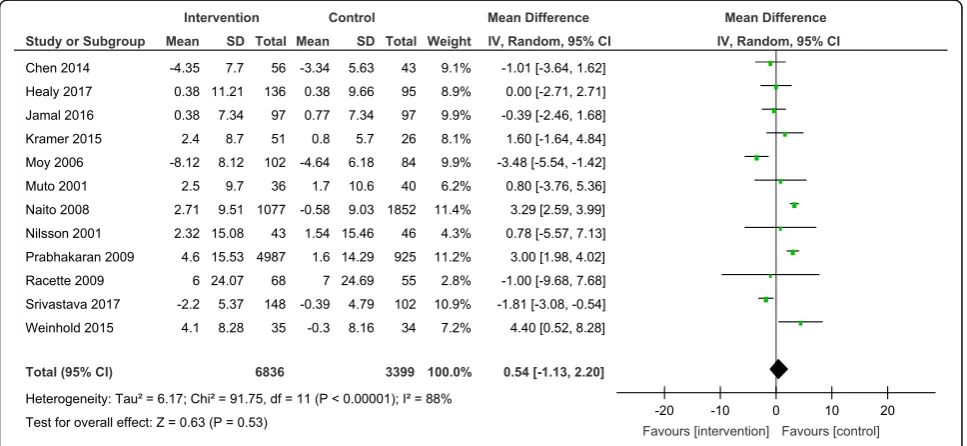
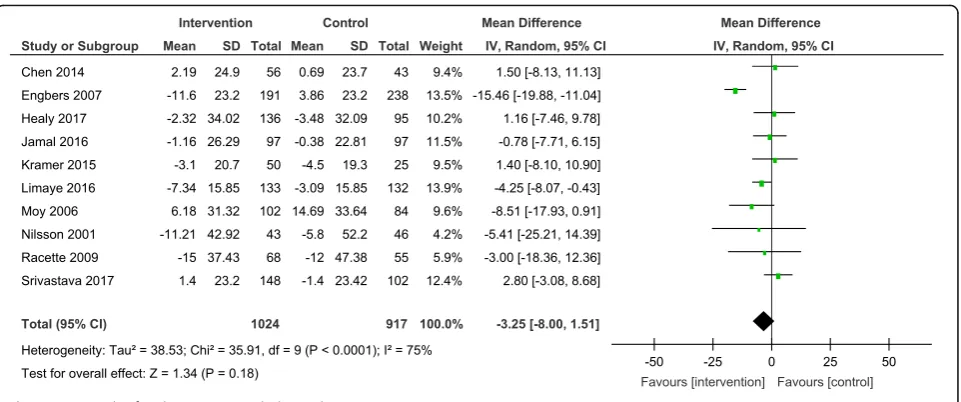
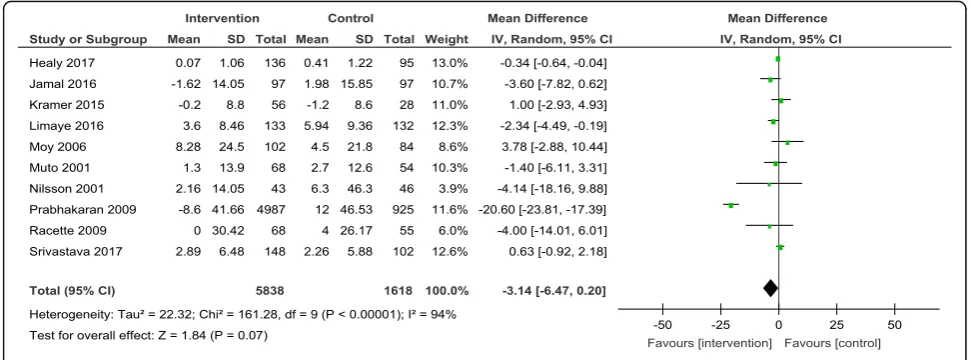
The forest plots for all the individual outcomes have been shown in the figures below. Each forest plot shows the individual effect estimates for the intervention and control groups and the mean difference in each study, along with the overall pooled mean difference and corre-sponding CIs. (Figs.3,4,5,6,7,8,9,10,11,12).
(A visual assessment of the funnel plots for each out-come showed the presence of some asymmetry for a few biochemical outcomes but we did not conduct any for-mal statistical tests to assess the same.)
Discussion
Based on the 33 studies reviewed, we found that changes in diet and physical activity at worksites had a significant and positive effect on body weight, body mass index and waist circumference of working adults. It can be concluded that workplace based physical activity interventions can posi-tively affect anthropometric outcomes and thus have the potential to alter the biochemical risk markers too. The results need to be interpreted with caution though, due to high heterogeneity among studies. Thep-values for the chi-square test for heterogeneity were quite significant, suggest-ing a high degree of variability in effect estimates due to
actual differences in studies and not due to sampling error (chance). This may be due to variability in sample sizes (they ranged from 45 to 10,281 participants) as well as the different study designs used in different studies. The various intervention approaches used across studies might also have contributed to the heterogeneity, as indicated by the exploratory sub-group analyses.
There could be a few reasons for the lack of a stronger evidence for the effect on biochemical variables. An-thropometric outcomes were the primary outcomes in almost all the studies whereas biochemical outcomes in a third, and only as secondary outcomes in half of the studies included in the meta-analyses. Those studies
were therefore not adequately powered to detect signifi-cant changes in blood pressure, lipids and glucose levels.
Some reviews done in the past have shown a similar pattern with most included studies focusing only on an-thropometric outcomes, which underscores the need for more high quality trials studying the effect of physical activity interventions on blood pressure and biochemical measures as well [65] [66].
A few previously done reviews such as the one by Fleming et al. [67],a 2010 review by Groeneveld et al. [26] and a brief overview of worksite health promotion programs and non-communicable disease prevention [68] have all suggested the possibility of greater intervention effectiveness among
Table 2Pooled estimates from meta-analysis of studies for change in each CVD risk outcome
Outcome Number of studies Mean difference Confidence interval Heterogeneity
Body weight (kg) 16 -2.61 [−3.89,−1.33] 94%
Body mass index (kg/m2) 19 -0.42 [−0.69,−0.15] 89%
Waist circumference (cm) 13 -1.92 [−3.25,−0.60] 92%
Systolic blood pressure (mmHg) 16 −1.73 [−4.25, 0.79] 93%
Diastolic blood pressure (mmHg) 15 −1.73 [−4.25, 0.79] 93%
Total cholesterol (mg/dl) 11 −3.75 [−9.84, 2.33] 86%
HDL cholesterol (mg/dl) 12 0.54 [−1.13, 2.20] 88%
LDL cholesterol (mg/dl) 10 −3.25 [−8.00, 1.51] 75%
Triglycerides (mg/dl) 8 0.62 [−4.82, 6.06] 55%
Blood glucose (mg/dl) 10 −3.14 [−6.47, 0.20] 94%
Estimates highlighted in bold indicate the effect sizes that were statistically significant
Fig. 5Forest plot for change in waist circumference
populations already at risk of CVDs compared to mixed populations. Hence, there is need for better quality studies to ascertain the role of employee health status in interven-tion effectiveness. A comparison of the effects of individual level behavior change on CVD risk reduction, compared to
educational approaches and changes to the office environ-ment is also an interesting facet that can be further explored.
Another aspect that needs consideration is participant compliance and barriers to intervention adherence.
Fig. 7Forest plot for change in diastolic blood pressure
Unlike clinical or medical interventions which can be constantly monitored for acceptability, the effectiveness of lifestyle based interventions is difficult to evaluate since intervention uptake is a complex measure [69]. Some studies concluded lack of compliance, issues with intervention adherence, low participation and retention rates and inadequately motivated employees as some of the reasons which could have affected the study results. Non-adherence could also be one reason for very small effect sizes in studies with larger sample sizes [70].
Long-term participation and employee adherence thus seem to be major challenges in implementation of work-site physical activity interventions [70] [71]. It becomes
paramount to devise innovative and practical ways to motivate the workforce and ensure sustained interest of the participants throughout the study [72]. Greater ad-herence and acceptability would ensure greater uptake that would in-turn result in more tangible health bene-fits to the employees.
Limitations and strengths
Our review has a few strengths. To the best of our knowledge, this is the first meta-analysis focused solely on the anthropometric and biochemical outcomes re-lated to physical activity interventions at worksite. Sec-ondly, the last review reporting the effects of worksite
Fig. 9Forest plot for change in HDL-cholesterol
interventions on anthropometric and biochemical CVD risk markers was done in 2010 and our work provides updated literature on the topic. Thirdly, considering that we were dealing with multi-component PA interventions with multiple outcomes (and not a drug trial) we used a broad search strategy and covered 5 different databases to obtain a synthesis of all the relevant literature for practical understanding and future research. Fourthly, unlike a majority of previous reviews assessing the effect of worksite PA interventions primarily on physical activ-ity, the proximal outcome, our review goes to the next level and summarizes the effects on the more distant an-thropometric and biochemical outcomes.
A limitation of our study was that assessment of bias in individual studies was based on the data as reported in them. In some studies, relevant information on as-pects of randomization and reporting of data was not presented which may have led to an underestimation of
their quality. Another limitation was that we could not include data from nine studies in our meta-analyses since the estimates required for the analysis were not available. We wrote to the study authors but unfortu-nately only one of them provided data for our analyses. Additionally, it is possible that the interventions caused a change in other health behaviors like diet too, apart from physical activity, which in-turn could have led to an improvement in CVD outcomes.
Conclusions
Worksite physical activity interventions were effective in im-proving anthropometric measures, namely body weight, BMI and waist circumference. We were however unable to demonstrate a significant effect on biochemical variables. A possible reason could be thatalmost two-thirdof the studies
were either not reporting the biochemical outcomes or not adequately powered to assess intervention effects on these
Fig. 11Forest plot for change in triglycerides
variables. The potential of such interventions to prevent CVD and overall non-communicable diseases (NCDs) needs attention by employers and policy makers for improving the health status of the population. This can significantly con-tribute to achieving the UN targets of a 25% relative reduc-tion in premature deaths from NCDs by 2025 [73].
Implications for future research
Overall, the evidence on the wide-ranging benefits of physical activity interventions is robust for action, and the absence of statistically significant biochemical im-provements should not act as a deterrent to adoption by worksites. Ways to enhance uptake of worksite physical activity interventions by employers, employees and the environment need to be studied. A robust process evalu-ation framework along with assessment of factors like dietary changes, frequency of sickness, back pain, absen-teeism etc., would provide greater insights into the rela-tive effecrela-tiveness and complementarity of the different types of interventions. A design based on a theoretical framework like the Medical Research Council framework [74] for designing and evaluating complex intervention studies is an option. Also, future worksite PA interven-tion studies should adequately power for the biochem-ical outcomes and have longer follow-up durations. Hard-endpoints should be strived for wherever possible.
Supplementary information
Supplementary informationaccompanies this paper athttps://doi.org/10.
1186/s12966-019-0896-0.
Additional file 1.Search terms. This file provides the search strategy used to obtain relevant articles from PUBMED.
Additional file 2.Study interventions. This file includes a table that describes the purpose, characteristics, interventions and results of each study included in the review.
Additional file 3.Exploratory Sub-group analyses. This file includes the tables describing the effects of workplace interventions on outcomes, analyzed under sub-groups.
Additional file 4.Risk of bias summary for individual studies in the review.
Abbreviations
BMI:Body Mass Index; CI: Confidence Interval; CVD: Cardiovascular Disease; HDL-C: High Density Lipoprotein Cholesterol; LDL-C: Low Density Lipoprotein Cholesterol; MVPA: Moderate to Vigorous Physical Activity; PA: Physical Activity; RCT: Randomized Controlled Trial; WHO: World Health Organization
Acknowledgements
SG was supported by Wellcome Trust (M-Wellcare Grant No: 096735/B/11/Z), (2015-17); Bernard Lown Scholars in Cardiovascular Health Program, Harvard School of Public Health (2015-17). RM was supported by SG’s fellowship ‘Bernard Lown Scholars in Cardiovascular Health Program’(2015-17) and partially from Wellcome Trust Grant No: 203124/Z/16/Z 2018.
Publication cost of the manuscript is supported by the Fogarty International Center of the National Institutes of Health Award Number D43TW009135. The content is solely the responsibility of the authors and does not necessarily represent the official views of the National Institutes of Health or Public Health Foundation of India.
Authors’contributions
All authors contributed to the manuscript. RM and CS conducted the data screening and assessment of methodological quality. RM conducted the data extraction, analysis and the initial draft of the manuscript with the help of CS. SG and CS authors critically shaped and modified the manuscript as we moved through multiple drafts. All the other authors reviewed the manuscript, provided critical inputs along the way. All the authors have read and approved the manuscript.
Funding
Not Applicable
Availability of data and materials
Not Applicable
Ethics approval and consent to participate
Not Applicable
Consent for publication
Not Applicable
Competing interests
The authors declare that they have no competing interests.
Author details
1Indian Institute of Public Health-Delhi, Public Health Foundation of India,
Gurgaon, India.2Centre for Chronic Disease Control, New Delhi, India.3CSIR Institute of Genomics and Integrative Biology, New Delhi, India.4Sree Chitra Tirunal Institute for Medical Sciences and Technology, Government Medical College, Thiruvananthapuram, Kerala, India.5Public Health Foundation of India, Gurgaon, India.6All India Institute of Medical Sciences, Delhi, India. 7Indian Council of Medical Research, New Delhi, India.
Received: 6 July 2019 Accepted: 4 December 2019
References
1. Yusuf S, Hawken S, Ôunpuu S, Dans T, Avezum A, Lanas F, et al. Effect of potentially modifiable risk factors associated with myocardial infarction in 52 countries (the INTERHEART study): case-control study. Lancet. 2004; 364(9438):937–52.
2. Lee I-M, Shiroma EJ, Lobelo F, Puska P, Blair SN, Katzmarzyk PT. Impact of physical inactivity on the World’s major non-communicable diseases. Lancet. 2012;380(9838):219–29.
3. WHO | Physical Inactivity: A Global Public Health Problem [Internet]. WHO. 2017 [cited 2017 Dec 27]. Available from:http://www.who.int/
dietphysicalactivity/factsheet_inactivity/en/
4. Diabetes mellitus and exercise [Internet]. [cited 2018 Jul 9]. Available from: http://care.diabetesjournals.org/content/diacare/25/suppl_1/s64.full.pdf 5. 2018 Physical Activity Guidelines Advisory Committee Scientific Report.
2018;779.
6. Andajani-Sutjahjo S, Ball K, Warren N, Inglis V, Crawford D. Perceived personal, social and environmental barriers to weight maintenance among young women: a community survey. Int J Behav Nutr Phys Act. 2004;1(1):15. 7. Anjali SM. Perceived barriers of young adults for participation in physical
activity. Curr Res Nutr Food Sci J. 2018;6(2):437–49.
8. Trost SG, Owen N, Bauman AE, Sallis JF, Brown W. Correlates of adults’ participation in physical activity: review and update. Med Sci Sports Exerc. 2002;34(12):1996–2001.
9. van Uffelen JGZ, Wong J, Chau JY, van der Ploeg HP, Riphagen I, Gilson ND, et al. Occupational sitting and health risks: a systematic review. Am J Prev Med. 2010;39(4):379–88.
10. Tudor-Locke C, Leonardi C, Johnson WD, Katzmarzyk PT. Time spent in physical activity and sedentary behaviors on the working day: the American time use survey. J Occup Environ Med. 2011;53(12):1382–7.
11. Jirathananuwat A, Pongpirul K. Promoting physical activity in the workplace: a systematic meta-review. J Occup Health. 2017;59(5):385–93.
12. Phillips D. A settings approach: Healthy@Work—a model of a health promoting workplace. :7.
13. The Settings Approach: A Guiding Framework for HECA [Internet]. [cited 2018 Jul 9]. Available from:http://www.who.int/heca/alliancebuilding/heca2 wg_draftsettings_180303.PDF
14. Proper K, van Mechelen W. Effectiveness and economic impact of worksite interventions to promote physical activity and healthy diet. :63. 15. Worksite Physical Activity | Physical Activity | CDC [Internet]. 2019 [cited
2019 Sep 15]. Available from: https://www.cdc.gov/physicalactivity/worksite-pa/index.htm
16. Pronk NP. Physical activity promotion in business and industry: evidence, context, and recommendations for a national plan. J Phys Act Health. 2009; 6(Suppl 2):S220–35.
17. Chu AHY, Ng SHX, Tan CS, Win AM, Koh D, Müller-Riemenschneider F. A systematic review and meta-analysis of workplace intervention strategies to reduce sedentary time in white-collar workers. Obes Rev Off J Int Assoc Study Obes. 2016;17(5):467–81.
18. Shrestha N, Harjula K, Verbeek J, Ijaz S. Workplace interventions for reducing sitting at work - Shrestha - 2016 - The Cochrane Library - Wiley Online Library [Internet]. 2017 [cited 2017 Aug 17]. Available from:http:// onlinelibrary.wiley.com/doi/10.1002/14651858.CD010912.pub3/full 19. Hutcheson AK, Piazza AJ, Knowlden AP. Work site–based environmental
interventions to reduce sedentary behavior: a systematic review. Am J Health Promot. 2016:0890117116674681.
20. Reed JL, Prince SA, Elliott CG, Mullen K-A, Tulloch HE, Hiremath S, et al. Impact of Workplace Physical Activity Interventions on Physical Activity and Cardiometabolic Health Among Working-Age Women: A Systematic Review and Meta-Analysis. Circ Cardiovasc Qual Outcomes. 2017;10(2).
21. Commissaris DA, Huysmans MA, Mathiassen SE, Srinivasan D, Koppes LL, Hendriksen IJ. Interventions to reduce sedentary behavior and increase physical activity during productive work: a systematic review. Scand J Work Environ Health. 2016;42(3):181–91.
22. Plotnikoff R, Collins CE, Williams R, Germov J, Callister R. Effectiveness of interventions targeting health behaviors in university and college staff: a systematic review. Am J Health Promot AJHP. 2015;29(5):e169–87. 23. To QG, Chen TTL, Magnussen CG, To KG. Workplace physical activity
interventions: a systematic review. Am J Health Promot AJHP. 2013;27(6):e113–23. 24. Barr-Anderson DJ, AuYoung M, Whitt-Glover MC, Glenn BA, Yancey AK.
Integration of short bouts of physical activity into organizational routine a systematic review of the literature. Am J Prev Med. 2011;40(1):76–93. 25. Chau JY, der Ploeg HP van, van Uffelen JGZ, Wong J, Riphagen I, Healy GN,
et al. Are workplace interventions to reduce sitting effective? A systematic review. Prev Med 2010;51(5):352–356.
26. Groeneveld IF, Proper KI, van der Beek AJ, Hildebrandt VH, van Mechelen W. Lifestyle-focused interventions at the workplace to reduce the risk of cardiovascular disease--a systematic review. Scand J Work Environ Health. 2010;36(3):202–15.
27. Prospero Review Protocol [Internet]. [cited 2018 Jul 9]. Available from: https://www.crd.york.ac.uk/prospero/display_record.php?RecordID=94436. 28. DerSimonian R, Laird N. Meta-analysis in clinical trials. Control Clin Trials.
1986;7(3):177–88.
29. 9.5.2 Identifying and measuring heterogeneity [Internet]. [cited 2019 Sep 16]. Available from:https://handbook-5-1.cochrane.org/chapter_9/9_5_2_ identifying_and_measuring_heterogeneity.htm
30. Heath GW, Parra DC, Sarmiento OL, Andersen LB, Owen N, Goenka S, et al. Evidence-based intervention in physical activity: lessons from around the world. Lancet Lond Engl. 2012;380(9838):272–81.
31. Assessing Risk of Bias in Included Studies [Internet]. [cited 2018 Aug 6]. Available from:https://handbook-5-1.cochrane.org/chapter_8/8_assessing_ risk_of_bias_in_included_studies.htm.
32. Kramer M, Molenaar D, Arena V, Venditti E, Meehan R, Miller R, et al. Improving employee health: evaluation of a worksite lifestyle change program to decrease risk factors for diabetes and cardiovascular disease. J Occup Environ Med Am Coll Occup Environ Med. 2015;57(3):284–91. 33. Morgan PJ, Collins CE, Plotnikoff RC, Cook AT, Berthon B, Mitchell S, et al.
Efficacy of a workplace-based weight loss program for overweight male shift workers: the workplace POWER (preventing obesity without eating like a rabbit) randomized controlled trial. Prev Med. 2011;52(5):317–25. 34. Limaye T, Kumaran K, Joglekar C, Bhat D, Kulkarni R, Nanivadekar A, et al.
Efficacy of a virtual assistance-based lifestyle intervention in reducing risk factors for type 2 diabetes in young employees in the information technology industry in India: LIMIT, a randomized controlled trial. Diabet Med J Br Diabet Assoc. 2017;34(4):563–8.
35. Viester L, Verhagen EALM, Bongers PM, van der Beek AJ. Effectiveness of a worksite intervention for male construction workers on dietary and physical activity behaviors, body mass index, and health outcomes: results of a randomized controlled trial. Am J Health Promot AJHP. 2017;1: 890117117694450.
36. Weinhold KR, Miller CK, Marrero DG, Nagaraja HN, Focht BC, Gascon GM. A Randomized Controlled Trial Translating the Diabetes Prevention Program to a University Worksite, Ohio, 2012–2014. Prev Chronic Dis [Internet]. 2015 Nov 25 [cited 2017 Dec 12];12. Available from:https://www.ncbi.nlm.nih. gov/pmc/articles/PMC4674443/
37. Muto T, Yamauchi K. Evaluation of a multicomponent workplace health promotion program conducted in Japan for improving employees’ cardiovascular disease risk factors. Prev Med. 2001;33(6):571–7. 38. Kim J-Y, Oh S, Steinhubl S, Kim S, Bae WK, Han JS, et al. Effectiveness of 6
Months of Tailored Text Message Reminders for Obese Male Participants in a Worksite Weight Loss Program: Randomized Controlled Trial. JMIR MHealth UHealth [Internet]. 2015 Feb 3 [cited 2017 Dec 12];3(1). Available from:https://www.ncbi.nlm.nih.gov/pmc/articles/PMC4342743/ 39. Jamal SN, Moy FM, Mohamed MNA, Mukhtar F. Effectiveness of a
40. Almeida FA, You W, Harden SM, Blackman KCA, Davy BM, Glasgow RE, et al. Effectiveness of a worksite-based weight loss randomized controlled trial: the WORKSITE study. Obes Silver Spring Md. 2015;23(4):737–45. 41. Wilson MG, DeJoy DM, Vandenberg R, Padilla H, Davis M. FUEL your life: a
translation of the diabetes prevention program to worksites. Am J Health Promot AJHP. 2016;30(3):188–97.
42. Chen M-M, Tsai AC, Wang J-Y. The effectiveness and barriers of implementing a workplace health promotion program to improve metabolic disorders in older workers in Taiwan. Glob Health Promot. 2016; 23(2):6–14.
43. Christensen J, Overgaard K, Carneiro I, Holtermann A, Søgaard K. Weight loss among female health care workers- a 1-year workplace based randomized controlled trial in the FINALE-health study. BMC Public Health. 2012;12:625.
44. Racette SB, Deusinger SS, Inman CL, Burlis TL, Highstein GR, Buskirk TD, et al. Worksite opportunities for wellness (WOW): effects on cardiovascular disease risk factors after 1 year. Prev Med. 2009;49(0):108–14.
45. Prabhakaran D, Jeemon P, Goenka S, Lakshmy R, Thankappan KR, Ahmed F, et al. Impact of a worksite intervention program on cardiovascular risk factors: a demonstration project in an Indian industrial population. J Am Coll Cardiol. 2009;53(18):1718–28.
46. Shrivastava U, Fatma M, Mohan S, Singh P, Misra A. Randomized Control Trial for Reduction of Body Weight, Body Fat Patterning, and
Cardiometabolic Risk Factors in Overweight Worksite Employees in Delhi, India. J Diabetes Res [Internet]. 2017 [cited 2018 9];2017. Available from: https://www.ncbi.nlm.nih.gov/pmc/articles/PMC5727835/
47. Healy GN, Winkler EAH, Eakin EG, Owen N, Lamontagne AD, Moodie M, et al. A cluster RCT to reduce workers’sitting time: impact on Cardiometabolic biomarkers. Med Sci Sports Exerc. 2017;49(10):2032–9. 48. Siegel JM, Prelip ML, Erausquin JT, Kim SA. A worksite obesity intervention:
results from a group-randomized trial. Am J Public Health. 2010;100(2):327–33. 49. Nilsson PM, Klasson EB, Nyberg P. Life-style intervention at the
worksite--reduction of cardiovascular risk factors in a randomized study. Scand J Work Environ Health. 2001;27(1):57–62.
50. Fernandez ID, Chin NP, Devine CM, Dozier AM, Martina CA, McIntosh S, et al. Images of a healthy worksite: a group-randomized trial for worksite weight gain prevention with employee participation in intervention design. Am J Public Health. 2015;105(10):2167–74.
51. Engbers LH, van Poppel MNM, van Mechelen W. Modest effects of a controlled worksite environmental intervention on cardiovascular risk in office workers. Prev Med. 2007;44(4):356–62.
52. Moy F, Sallam AAB, Wong M. The results of a worksite health promotion programme in Kuala Lumpur. Malaysia Health Promot Int. 2006;21(4):301–10. 53. Linde JA, Nygaard KE, MacLehose RF, Mitchell NR, Harnack LJ, Cousins JM,
et al. HealthWorks: results of a multi-component group-randomized worksite environmental intervention trial for weight gain prevention. Int J Behav Nutr Phys Act. 2012;9:14.
54. Atlantis E, Chow C-M, Kirby A, Fiatarone Singh MA. Worksite intervention effects on physical health: a randomized controlled trial. Health Promot Int. 2006;21(3):191–200.
55. Naito M, Nakayama T, Okamura T, Miura K, Yanagita M, Fujieda Y, et al. Effect of a 4-year workplace-based physical activity intervention program on the blood lipid profiles of participating employees: the high-risk and population strategy for occupational health promotion (HIPOP-OHP) study. Atherosclerosis. 2008;197(2):784–90.
56. Barham K, West S, Trief P, Morrow C, Wade M, Weinstock RS. Diabetes prevention and control in the workplace: a pilot project for county employees. J Public Health Manag Pract JPHMP. 2011;17(3):233–41. 57. Chockalingam A, Kishchuk N, LeLorier J, Alloul K, Makrides L, Richard J, et al.
Evaluation of a workplace health program to reduce coronary risk factors. Clin Gov Int J. 2008;13(2):95–105.
58. Milani RV, Lavie CJ. Impact of worksite wellness intervention on cardiac risk factors and one-year health care costs. Am J Cardiol. 2009;104(10):1389–92. 59. Lemon SC, Zapka J, Li W, Estabrook B, Rosal M, Magner R, et al. Step ahead.
Am J Prev Med. 2010;38(1):27.
60. Williams AE, Stevens VJ, Albright CL, Nigg CR, Meenan RT, Vogt TM. The results of a 2-year randomized trial of a worksite weight management intervention. Am J Health Promot AJHP. 2014;28(5):336–9.
61. Lemon SC, Wang ML, Wedick NM, Estabrook B, Druker S, Schneider KL, et al. Weight gain prevention in the school worksite setting: results of a multi-level cluster randomized trial. Prev Med. 2014;60:41–7.
62. Brehm BJ, Gates DM, Singler M, Succop PA, D’Alessio DA. Environmental changes to control obesity: a randomized controlled trial in manufacturing companies. Am J Health Promot AJHP. 2011;25(5):334–40.
63. French SA, Harnack LJ, Hannan PJ, Mitchell NR, Gerlach AF, Toomey TL. Worksite environment intervention to prevent obesity among metropolitan transit workers. Prev Med. 2010;50(4):180–5.
64. Goetzel RZ, Baker KM, Short ME, Pei X, Ozminkowski RJ, Wang S, et al. First-year results of an obesity prevention program at the Dow Chemical Company. J Occup Environ Med Am Coll Occup Environ Med. 2009;51(2):125–38.
65. A Systematic Review of Internet-Based Worksite Wellness Approaches for Cardiovascular Disease Risk Management: Outcomes, Challenges & Opportunities [Internet]. [cited 2018 Sep 26]. Available from:https://journals. plos.org/plosone/article?id=10.1371/journal.pone.0083594
66. Proper KI, Koning M, van der Beek AJ, Hildebrandt VH, Bosscher RJ, van Mechelen W. The effectiveness of worksite physical activity programs on physical activity, physical fitness, and health. Clin J Sport Med Off J Can Acad Sport Med. 2003;13(2):106–17.
67. Fleming P, Godwin M. Lifestyle interventions in primary care. Can Fam Physician. 2008;54(12):1706–13.
68. Kolbe-Alex T. E, Ev L. non-communicable disease prevention and worksite health promotion programs: a brief review. Occup Med Health Aff. 2013;1(7):1–8.
69. Visscher TL, Bell C, Gubbels JS, Huang TT, Bryant MJ, Peeters A, et al. Challenges in lifestyle and community interventions research; a call for innovation. BMC Obes [Internet]. 2014 21 [cited 2019 Sep 15];1. Available from:https://www.ncbi.nlm.nih.gov/pmc/articles/PMC4511431/ 70. Robroek SJ, van Lenthe FJ, van Empelen P, Burdorf A. Determinants of
participation in worksite health promotion programmes: a systematic review. Int J Behav Nutr Phys Act. 2009;6:26.
71. Linnan LA, Sorensen G, Colditz G, Klar DN, Emmons KM. Using theory to understand the multiple determinants of low participation in worksite health promotion programs. Health Educ Behav Off Publ Soc Public Health Educ. 2001;28(5):591–607.
72. Seifert CM, Chapman LS, Hart JK, Perez P. Enhancing intrinsic motivation in health promotion and wellness. Am J Health Promot. 2012;26(3):1–12. 73. WHO | About 9 voluntary global targets [Internet]. WHO. [cited 2019 Sep 15].
Available from:http://www.who.int/nmh/ncd-tools/definition-targets/en/ 74. MRC-Developing and evaluating complex interventions [Internet]. [cited
2019 Nov 4]. Available from: https://mrc.ukri.org/documents/pdf/complex-interventions-guidance/
Publisher’s Note