in the population sciences published by the Max Planck Institute for Demographic Research Konrad-Zuse Str. 1, D-18057 Rostock · GERMANY www.demographic-research.org
DEMOGRAPHIC RESEARCH
VOLUME 17 ARTICLE 7, PAGES 157-180
PUBLISHED 17 OCTOBER 2007
http://www.demographic-research.org/Volumes/Vol17/7/ DOI: 10.4054/DemRes.2007.17.7
Research Article
Fertility and union dissolution in Brazil:
An example of multi-process modelling using the
Demographic and Health Survey calendar data
Tiziana Leone
Andrew Hinde
© 2007 Leone & Hinde
This open-access work is published under the terms of the Creative Commons Attribution NonCommercial License 2.0 Germany, which permits use, reproduction & distribution in any medium for non-commercial purposes, provided the original author(s) and source are given credit.
1 Introduction 158
2 Union dissolution and fertility in Brazil 159
3 Data 161
3.1 The DHS calendar data and sample selection 162 3.2 Selection bias due to left-censoring and left-truncation 164
3.3 Variable selection 165
4 The model 166
5 Results 168
6 Discussion and conclusion 176
7 Acknowledgements 177
Fertility and union dissolution in Brazil:
An example of multi-process modelling using the Demographic and
Health Survey calendar data
Tiziana Leone1 Andrew Hinde2
Abstract
This study examines the union and conception histories of Brazilian women aged 15-49 using the 1996 Demographic and Health Survey’s calendar data.
The aim of the paper is twofold: firstly to explore the use of union histories in the DHS calendar data, which have not yet been used for union dynamics studies, secondly to analyse the relationship between union instability and fertility in Brazil which has been long understudied. Using the example of Brazil it investigates the potential strengths and biases of this data source. In particular it analyses the impact of union dissolution on fertility in Brazil using multiprocess event history analysis techniques as developed by Lillard (1993). This type of methodology has been widely used for the analyses of developed countries data. However, it has not been explored for developing countries mainly due to the lack of data.
The paper will demonstrate the positive effect of union instability on fertility.
1 London School of Economics, Department of Social Policy, Houghton Street London, WC2A 2AE,
United Kingdom. Tel: +44 (0) 20 79557515. E-mail: [email protected].
2 Southampton Statistical Sciences Research Institute, University of Southampton, Southampton SO17 1BJ,
1. Introduction
In countries with a high contraceptive prevalence the Demographic and Health Surveys (DHSs) include a calendar. The DHS calendar consists of a database that recalls information on union history, pregnancy and fertility, and contraceptive use for each month during the five years preceding the survey. The main goal of this instrument is to provide longitudinal data on contraceptive use. In some countries information on breastfeeding, migration and employment has been added. So far calendar-style data have mainly been used to analyse contraceptive dynamics (Curtis 1997, Goldman et al. 1989, Leite 1998, Magnani et al. 1996, Steele and Curtis 2001, Strickler et al. 1997; Westoff et al. 1990). To the best of our knowledge only one study (Leone & Hinde, 2005) has used the union history calendar to analyse the dynamics of union formation or dissolution, or combined the union history calendar with that dealing with the history of pregnancy and childbearing to examine the relationship between union dynamics and fertility.
This paper reports an analysis of the relationship between one aspect of union dynamics (union dissolution) and fertility in Brazil using data from the 1996 Brazilian Demographic and Health Survey calendar. It explores the biases and the strengths of this data source for the analysis of union histories. It is part of a larger study which aims to analyse the relationship between union dynamics as a whole and fertility. In order to allow for an extended discussion of methodological issues linked with the use of the DHS union history calendar data, we focus here on the relationship between union dissolution and fertility. In this paper we hypothesise that union instability has a positive impact on the level of fertility despite a lower exposure to the risk of conceiving. We will discuss this hypothesis in the following sections and the need to model fertility and union instability jointly.
2. Union dissolution and fertility in Brazil
Brazil has experienced a steep fertility decline in the last 40 years, the total fertility rate falling from 6.2 in 1960 to 2.0 in 2005 (US Bureau of Census 2005), despite the absence, for much of this period, of a government-sponsored family planning programme. Women’s increasing autonomy has played an important role in this decline, and a high reliance on female sterilisation (42% of women aged 15-49 in 1996 were sterilised) is one of its outstanding characteristics (Carvalho and Wong, 1996).
Brazilians have for many years commonly formed consensual unions rather than formal marriages. But these unions differ from unions in western societies described by the word ‘cohabitation’ because the partners in Brazilian consensual unions describe themselves as husband and wife, whereas in ‘cohabiting’ unions the partners define themselves as singles. In the past two decades, however, Brazilian unions have become less stable (that is, more likely to dissolve). An interesting question is whether this tendency towards union instability is part of the reason for the recent fertility decline.
Viewed from the perspective of the proximate determinants of fertility (Bongaarts and Potter, 1983), it might be supposed that increased union instability might be associated with women having fewer children. Other things being equal, increasing instability will lead to a rise in the proportion of the average woman’s childbearing years spent between or after unions and therefore a reduced exposure to the risk of conception. It is also possible that couples might avoid having children if they are doubtful about the future of their relationship in order not to involve their children in possible emotional trauma surrounding the separation of the parents.
However, there are both theoretical and empirical reasons to suppose that the opposite may be the case, especially in a society like Brazil. Theoretically, for example, it is possible that an increase in the proportion of consensual unions and the growth of more liberal sexual customs might lead to earlier exposure to the risk of pregnancy, and therefore higher fertility, unless this is compensated by increasing contraceptive knowledge and use and sterilisation at earlier ages. In addition, sexual activity could be linked to the stability of the union. If there is a negative relationship between the frequency of sexual intercourse and the duration of the union, then women whose lives are characterised by several unions might have, overall, a higher exposure to the risk of conception than women who only ever have one union because the time spent between unions is more than compensated by the increased frequency of intercourse during the periods they do spend in union.
one union (Figure 1). A qualitative analysis conducted by Greene (1994) showed that it is common in Brazil to have a child in each new union to fulfil the idea of having a proper family. Husband and wife may wish to have a child together regardless of the number of children either of them had before. This is particularly true for men who leave their children from previous relationships with the mothers (Greene 1994).
Figure 1: Age specific fertility rate (ASFR) by number of unions, Brazil 1996
0 0 . 0 5 0 . 1 0 . 1 5 0 . 2 0 . 2 5 0 . 3 0 . 3 5
1 5 - 1 9 2 0 - 2 4 2 5 - 2 9 3 0 - 3 4 3 5 - 3 9 4 0 - 4 4 4 5 - 4 9
A g e g r o u p
A
S
F
R
s
o n e u n i o n
m o r e t h a n o n e
Source: Leone, 2002
The status of Brazilian women is also fundamental to understanding the family dynamics underpinning fertility decisions. Brazilian women are still struggling to improve their position within relationships and union dynamics are vital to an understanding of their childbearing behaviour. The complex mechanisms that link a woman’s autonomy and her bargaining power to union instability and the increase of domestic violence that Brazil is experiencing, should raise more concern in particular from policy makers regarding this topic. The culture of ‘machismo’ is common in Brazil and men exhibiting this attitude are often in favour of casual sexual unions with little or no commitment. It is not uncommon for them to enter into more than one union and leave the children they had with the previous partner behind (Greene, 1991; Henriques, 1989).
3. Data
The relationship between union dissolution and fertility has been studied in depth in developed countries. In particular several studies have analysed the two way relationship that characterises union dynamics and childbearing by applying multi-process modelling to the relationship between union formation and dissolution and fertility (Aassve et al., 2004; Lillard, 1993; Lillard and Waite, 1993; Brien et al., 1999; Steele et al. 2005). The use of multi-process modelling has become attractive because it allows the simultaneous incorporation of correlated life course processes in order to better understand the ways in which people actually live their lives. An example of a pair of correlated processes is conception, on the one hand, and union formation and dissolution on the other. The trajectories of the two processes interact: when a woman is at risk of entering or leaving a union she is at risk of conceiving as well. The risk of a change of union status may influence the chance of conception, but the risk of conception may simultaneously affect the chance of entering or leaving a union.
However, this type of modelling has not been fully exploited in developing countries mainly due to the lack of data. In the case of Brazil the most recent data set containing complete information on union and childbearing histories is the 1984
Pesquisa Nacional por Amostra Domiciliar (PNAD). Greene (1994) and Henriques
3.1 The DHS calendar data and sample selection
The data used for this study come from the 1996 Brazil Demographic and Health Survey (BDHS). The 1996 BDHS interviewed a representative sample of more than 12,000 eligible women aged between 15 and 49 years. It includes information on demographic and socio-economic characteristics at the household and individual level (BEMFAM, 1997). In particular the calendar section is used to model union and reproductive histories.
The calendar consists of a matrix of rows and columns in which each row represents a month and the columns are used to record a particular type of information for each month. At the end of the birth history section the interviewers insert relevant births in the calendar and add eight months of gestation before each birth. At the same time pregnancies that did not result in live birth are entered. The contraceptive entries are therefore checked against the pregnancies that are already inserted in the calendar. The interviewer is allowed to insert only one code in each cell. In this way it is possible to record the type of contraceptive method that has been used, for how long and the reason why it has been discontinued, along with changes in union status. A woman is considered in a union if married or in a cohabiting relationship.
The main problem with using the DHS datasets for the analysis of union histories is that the only information available, beyond that collected in the calendar, is the start date of the first union and whether the woman had experienced no union, one, or more than one union by the time of the interview. No information is available which relates to the period before 1 January 1991 (the BDHS took place in 1996) apart from the start date of the first union. Therefore, women who reported more than one union and who were in their most recent union at the beginning of the calendar period are known to have had at least two unions, but the exact number is not known. For those who started a union before the beginning of the calendar, we only know the duration of that union if they had only ever been in one union.
A consequence of this is that many of the durations of unions extant during the period of the calendar are left-truncated (we do not know when they began). The way the multi-process model is specified necessitates the elimination of these unions from the exposure time being considered. However, we were concerned to try to extract as much information as possible from the calendar, and to find ways of minimising the proportion of women eliminated because of the left-truncation of union histories. We therefore carefully considered all the possible scenarios for the combinations of truncated and complete unions to try to achieve the maximum total exposure time for the sample.
for women who reported only one union and were in that union at the beginning of the calendar period; (3) all unions for women who reported more than one union, who started their first union during the 12 months before the beginning of the calendar period, who were in union at the beginning of the calendar period, and whose calendar history indicates that they started a second union within the calendar period (in this case we made the assumption that the union which these women were in at the start of the calendar was their first union, as it was less than 12 months old at the time - we accept that this assumption is somewhat arbitrary, but we felt that it was important to try to make the most of the available data); and (4) all unions started after the calendar period began for those women that completed their first union before the calendar period started and for which the duration of the first union is not known because the end date is not known.
Because we are interested in the link between union dissolution and fertility, we further restrict our analysis to women who are at risk of conception. Therefore we censored women at the time of sterilisation. We do however include the spells before the time of sterilisation as they were at risk of conceiving. For the same reason, women who said they had never had sexual intercourse have been excluded from the analysis. Due to the number of missing values in the variable ‘age at first sexual intercourse’, we assume that all women were at risk of conception during the whole calendar period even if they reported their first sexual experience after the beginning of the observation period. The months during which a woman was pregnant have been excluded from the conception analysis. We constructed the birth interval variable considering the time between births (given the exclusion of the pregnancy months it equals the time between conceptions). The birth interval for the first birth starts at menarche. Given the poor quality of data on terminations, we concentrate our analysis on conceptions that ended on live births only.
starts her second union during the calendar period the useable information starts from the beginning of this second union as we do not know when the previous one ended).
3.2 Selection bias due to left-censoring and left-truncation
We are aware of the fact that the exclusion of left-censored and left-truncated cases could lead to potential bias. As an initial approach to the problem the women that have been excluded were analysed. They were generally older than the rest of the sample and therefore less at risk of conception. Most of them had their last child before the beginning of the calendar period. The following groups of women were excluded from the analysis: (i) women that experienced only one union that ended before the beginning of the calendar (425 women, or 6 per cent of the women who experience only one union); (ii) women with more than one union who had all their relationships before the beginning of the calendar (65 women, 5 per cent of the women that experience more than one union); and (iii) women with more than one union who started their last union before the beginning of the calendar period (557 women, 46 per cent of the women that experience more than one union).
It is clear that the main selection bias is caused by the fact that we exclude half of the women that have experienced more than one union before the survey date but only 6 per cent of those who have experienced only one union.
Several authors report the treatment of left-censored cases to be computationally difficult to handle (Allison, 1984; Blossfeld et al., 1989; Kalbfleisch and Prentice, 1980; Yamaguchi, 1991). The main reasons for left-censoring being a problem are, first if the censored sample is a function of the unknown values of the outcome variable, and, second, when there is no pattern to the missing-data mechanism (Yamaguchi, 1991). The latter implies that it is not possible to identify easily a criterion to rebuild the missing cases. Excluding the cases that are left-censored is generally recommended, even though this may lead to a biased sample.
3.3 Variable selection
The variables that have been included in the models are socio-economic and demographic variables that have been found important in previous analyses of fertility and union dynamics in Brazil and elsewhere (Chen et al., 1974; Ebanks et al., 1974; Greene, 1994; Heaton, 1990; Henriques, 1989; Koo et al., 1984; Lazo, 1994; Onaka and Yaukey, 1973; Ribeiro, 1993; Weinstein et al., 1990). The demographic variables included are: age (time varying); parity (time varying); age at first birth; whether the first birth was out of wedlock and, if so, whether it was legitimised by a union within six months after the conception; age at first marriage; union order (time varying whether it is the first or higher order union); and number of unions (coded as ‘zero’, ‘one’ and ‘more than one’). We also included the date the women first entered a union, and the date when her first child was born, with an extra category added for women with no children.
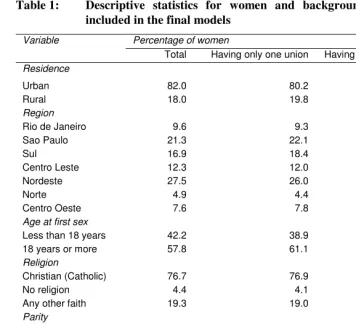
Table 1: Descriptive statistics for women and background characteristics included in the final models
Variable Percentage of women
Total Having only one union Having more than one union
Residence
Urban 82.0 80.2 83.2
Rural 18.0 19.8 16.8
Region
Rio de Janeiro 9.6 9.3 10.1
Sao Paulo 21.3 22.1 19.2
Sul 16.9 18.4 15.5
Centro Leste 12.3 12.0 9.0
Nordeste 27.5 26.0 32.5
Norte 4.9 4.4 5.2
Centro Oeste 7.6 7.8 8.5
Age at first sex
Less than 18 years 42.2 38.9 63.6
18 years or more 57.8 61.1 36.4
Religion
Christian (Catholic) 76.7 76.9 72.8
No religion 4.4 4.1 6.3
Any other faith 19.3 19.0 20.9
Parity
0 8.1 4.3 8.7
1-2 48.6 34.8 46.8
3+ 45.1 42.7 60.9
Ethnicity
White 44.4 46.0 33.9
Mixed 50.9 49.7 58.9
Other 4.7 4.3 7.2
4. The model
depends on the hazard of another process or on the actual current state or prior outcomes of a related multi-episode process. The analysis of this paper is based on Lillard’s (1993) multi-process model.
Specifically, our model consists of two equations, one for union dissolution and a second for conception within unions. Both equations define continuous-time event history models. The union dissolution equation may be written as follows:
0 1 2 3 4 5 6
logh tld( )=α +α C tl( )+α A t( )+α D tl( )+α P tl( )+α K tl( )+α Xd( )t +εd
where log d( )
l
h t is the hazard of union dissolution d for a woman’s lth union at time t.
Time is measured in months since the beginning of the union. The variables on the right-hand side of this equation fall into several groups. First, there are three variables that increase with duration within each union we are considering (these can be described as ‘clock’ variables): the length of the interval since the previous birth, Cl(t),
the woman’s age,A(t), and the duration of the current union, Dl(t). These three
variables were specified as piecewise linear splines. The entire interval under observation was divided into sub-intervals and the hazard assumed to vary as a linear function of duration within each of these sub-intervals. A range of subdivisions of the interval was tried. Second, there are two variables which describe the history of the related birth process: P tl( ) is a binary variable measuring the woman’s pregnancy status at time t, and K tl( ) is the number of children the woman has at time t. Third, there is a vector of exogenous variables,Xd(t), some of which may be time-varying. Because one woman may have more than one union, and therefore contribute more than one case to the analysis, some of the variables on the right-hand side will vary between unions for the same women. These are indexed by the subscript l. The term d
ε
measures the woman-specific residual (heterogeneity) affecting the hazard of leaving a union and it is normally distributed: ~ (0, 2)
d
N
d
ε
σ
ε . This error term is correlated across
all unions for the same woman. The conception equation is:
0 2 3 4 4 5 6
logh tlc( )=β +β C t( )+β A t( )+β D tl( )+β U+β K+β Xc( )t +εc
where log c( )
l
h t is the hazard of conception c leading to a live birth during a woman’s
lth union at time t, C(t) is the duration since the previous birth, Ul denotes whether the
current union l is a first or higher-order union, K is the woman’s parity, Xc( )t is a
residual (heterogeneity) affecting the hazard of conception, which is normally distributed: ~N(0, 2c)
c
ε
σ
ε .
The model as specified above is based on the assumption that all sources of correlation between the two processes are captured by the correlation between the unmeasured components εd
and εc
. Conditional on these, the outcomes of the two processes are independent except for the effects of the status and the cumulative outcome of the other process.
Fully simultaneous models, in which there is a reciprocal relationship between the outcomes, are a specific subclass of multi-process models. In these models, the simultaneity is expressed by the inclusion of one hazard in the other equation. In such models, there is a need to have at least one variable in each of the vectors Xd(t) and
( )
c
X t which is not in the other and which can be used to identify the model. Our
model is not of this type, so the inclusion of such variables is unnecessary (Brien, et al., 1999).
Estimation of the equations was achieved by Full Information Maximum Likelihood (Lillard, 1993). We began by fitting single equation models that included the fixed effects only. In a second stage, the unobserved heterogeneity was introduced separately to each equation in the model (we describe these as ‘single equation random effects’ models). Finally, the two equations were estimated jointly (the ‘joint’ model). Our modelling strategy was to begin by including all exogenous variables in each equation and eliminating those which did not achieve statistical significance at the 10 per cent level. We also considered several interactions, but none was found to be statistically significant.
5. Results
To present the results, we begin by examining the estimated variances of the woman-specific error terms in each equation and the correlation between εd
and εc
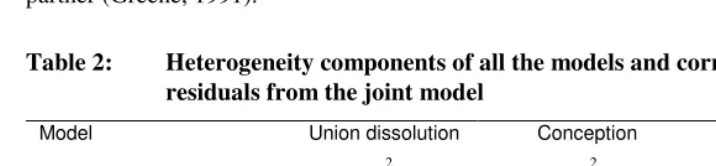
tendency towards unstable unions also have a tendency towards short conception intervals. That is, there are some unobserved woman-specific characteristics that have a positive effect on both the risk of her unions dissolving and her hazard of a conception. This result confirms our hypothesis that there is a positive relationship between union instability and conception outcomes. The relationship does not tell us the direction of the causality but it would be fair to assume that the instability of the relationship leads to a higher level of fertility. This is mainly due to an imbalanced relationship within the couple where women feel that having a child could raise their chances to keep their partner (Greene, 1991).
Table 2: Heterogeneity components of all the models and correlation of the residuals from the joint model
Model Union dissolution
2
d
ε σ
Conception
2
c
ε σ
Correlation between
d
ε and εc
Single-process model 1.231 (0.140)
0.919 (0.035)
Joint model 1.435
(0.123)
1.056 (0.054)
0.659 (0.073)
Note. Standard errors are in brackets
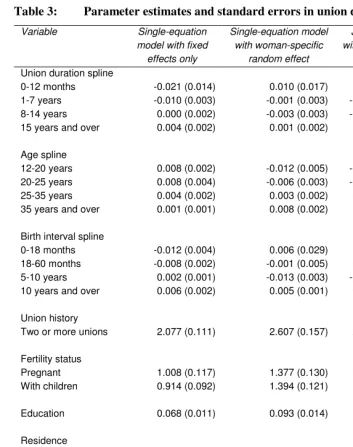
Table 3: Parameter estimates and standard errors in union dissolution models
Variable Single-equation model with fixed effects only
Single-equation model with woman-specific
random effect
Joint model with conception
N
Union duration spline
0-12 months -0.021 (0.014) 0.010 (0.017) 0.013 (0.018) 1-7 years -0.010 (0.003) -0.001 (0.003) -0.002 (0.003) 8-14 years 0.000 (0.002) -0.003 (0.003) -0.003 (0.003) 15 years and over 0.004 (0.002) 0.001 (0.002) 0.001 (0.002)
Age spline
12-20 years 0.008 (0.002) -0.012 (0.005) -0.006 (0.005) 20-25 years 0.008 (0.004) -0.006 (0.003) -0.004 (0.003) 25-35 years 0.004 (0.002) 0.003 (0.002) 0.003 (0.002) 35 years and over 0.001 (0.001) 0.008 (0.002) 0.009 (0.002)
Birth interval spline
0-18 months -0.012 (0.004) 0.006 (0.029) 0.002 (0.030) 18-60 months -0.008 (0.002) -0.001 (0.005) 0.002 (0.005) 5-10 years 0.002 (0.001) -0.013 (0.003) -0.013 (0.003) 10 years and over 0.006 (0.002) 0.005 (0.001) 0.005 (0.001)
Union history
Two or more unions 2.077 (0.111) 2.607 (0.157) 2.712 (0.178) 568
Fertility status
Pregnant 1.008 (0.117) 1.377 (0.130) 0.962 (0.141) 3,066 With children 0.914 (0.092) 1.394 (0.121) 1.069 (0.112) 2,725
Education 0.068 (0.011) 0.093 (0.014) 0.102 (0.015)
Residence
Urban 0.718 (0.126) 0.844 (0.149) 0.844 (0.149) 5,974
First sex took place before age 18 years
0.193 (0.090) 0.347 (0.101) 0.344 (0.120) 4,181
First birth out of wedlock
0.078 (0.088) 0.116 (0.113) 0.160 (0.116) 1,774
Constant -5.145 (0.872) -6.852 (1.285) -8.509 (1.185)
log-likelihood -5,676 -5,703 -28,424 7,548
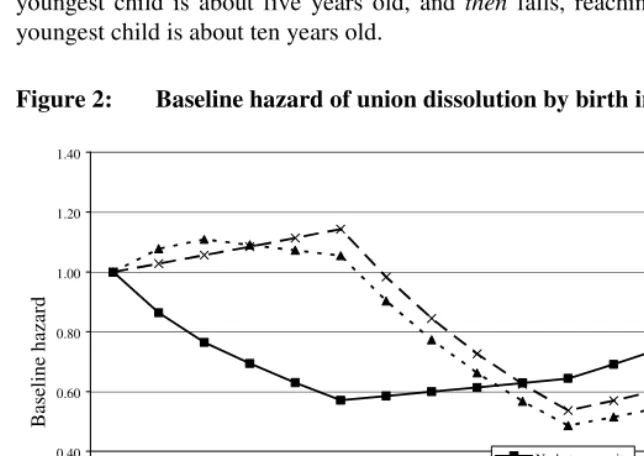
We now turn to the effect of fertility on the risk of union dissolution. In the single-equation fixed-effects model the risk of dissolution is relatively high shortly after a birth, but (assuming there are no further births) falls to a minimum round about the youngest child’s fifth birthday before rising again (figure 2). Once unobservables are controlled for, the effect of the time since the last birth remains relatively high until the youngest child is about five years old, and then falls, reaching a minimum when the youngest child is about ten years old.
Figure 2: Baseline hazard of union dissolution by birth interval
0.00 0.20 0.40 0.60 0.80 1.00 1.20 1.40
0 3 6 9 12 15
Birth interval (years)
B
as
el
in
e
h
az
ar
d
No heterogeneity No endogeneity Joint
In the single-equation models, the effect of both pregnancy and having children is greater when woman-specific unobserved heterogeneity is controlled for. The explanation of this is that women who are pregnant or already have children have a lower unobserved propensity to end their unions than those women who are not pregnant and do not have children. If we control for this, the effect of being pregnant or already having a child on the hazard of dissolution is increased. However, somewhat paradoxically the positive residual correlation between the risk of dissolution and the risk of conception means that women who have a high risk of dissolution are also more likely to become pregnant, and hence already to have children. In other words, women who are pregnant are selected for being at high risk of dissolution. This selection effect explains why in the joint model the effect of pregnancy and previous childbearing is lower than in the single-equation model controlling for unobserved heterogeneity.
Women that had their first sexual intercourse before the age of 18 show a higher risk of union dissolution. These women are more likely to be those that conceive a child earlier and enter into their first union earlier. It is interesting to note that they also have a lower unobserved tendency to end their unions (so that the effect of early sexual initiation grows stronger after controlling for woman-specific heterogeneity).
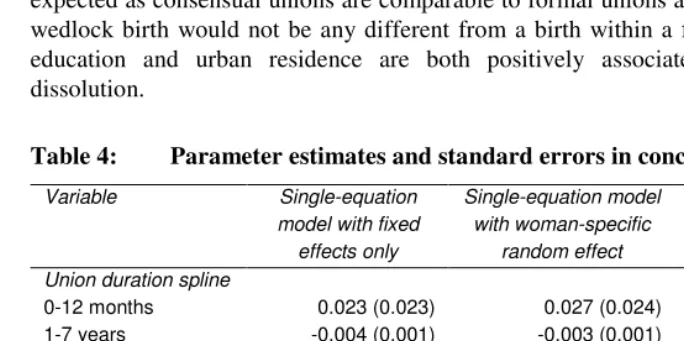
However, whether the first birth took place ‘out of wedlock’ has no significant impact on the risk of future union dissolution. In the Brazilian context this would be expected as consensual unions are comparable to formal unions and therefore an out of wedlock birth would not be any different from a birth within a formal union. Finally, education and urban residence are both positively associated with the risk of dissolution.
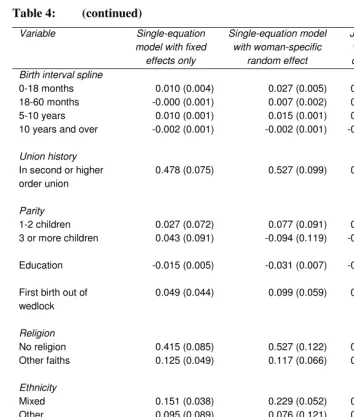
Table 4: Parameter estimates and standard errors in conception models
Variable Single-equation model with fixed effects only
Single-equation model with woman-specific
random effect
Joint model with union dissolution
N
Union duration spline
0-12 months 0.023 (0.023) 0.027 (0.024) 0.027 (0.024) 1-7 years -0.004 (0.001) -0.003 (0.001) -0.003 (0.001) 8-14 years 0.000 (0.001) -0.000 (0.001) -0.000 (0.001) 15 years and over 0.001 (0.000) 0.001 (0.001) 0.001 (0.001)
Age spline
Table 4: (continued)
Variable Single-equation model with fixed effects only
Single-equation model with woman-specific
random effect
Joint model with union dissolution
N
Birth interval spline
0-18 months 0.010 (0.004) 0.027 (0.005) 0.036 (0.005) 18-60 months -0.000 (0.001) 0.007 (0.002) 0.006 (0.002) 5-10 years 0.010 (0.001) 0.015 (0.001) 0.016 (0.002) 10 years and over -0.002 (0.001) -0.002 (0.001) -0.003 (0.001)
Union history
In second or higher order union
0.478 (0.075) 0.527 (0.099) 0.586 (0.104) 465
Parity
1-2 children 0.027 (0.072) 0.077 (0.091) 0.158 (0.095) 4,026 3 or more children 0.043 (0.091) -0.094 (0.119) -0.003 (0.124) 2,046
Education -0.015 (0.005) -0.031 (0.007) -0.030 (0.008)
First birth out of wedlock
0.049 (0.044) 0.099 (0.059) 0.103 (0.062) 1,833
Religion
No religion 0.415 (0.085) 0.527 (0.122) 0.516 (0.125) 378 Other faiths 0.125 (0.049) 0.117 (0.066) 0.124 (0.069) 1,148
Ethnicity
Mixed 0.151 (0.038) 0.229 (0.052) 0.247 (0.055) 4,210 Other 0.095 (0.089) 0.076 (0.121) 0.099 (0.127) 331
Region
North 0.491 (0.045) 0.645 (0.062) 0.652 (0.065) 3,688 Centre 0.332 (0.051) 0.448 (0.067) 0.476 (0.072) 1,851
Constant -8.545 (0.456) -9.468 (0.508) -9.893 (0.514)
log-likelihood -22,868 -22,657 -28,380 7,548
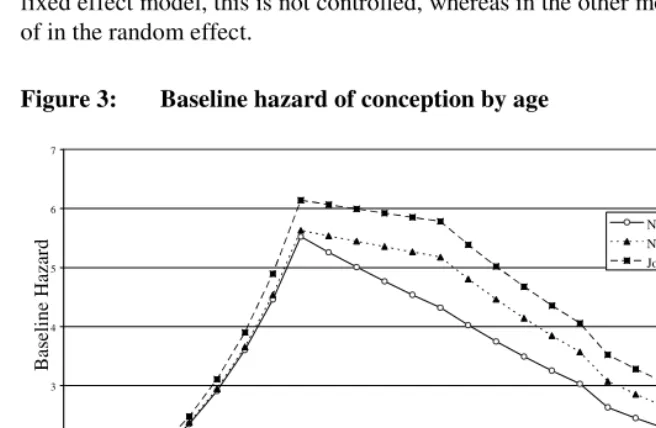
We now turn to the results of the conception model (Table 5). The effect of a woman’s age is as expected (Figure 3). The risk of conception increases with age up to about 20 years and then falls. The fall is rather more rapid in the single equation model without unobserved heterogeneity than in the other two models. This is probably because of the effect of secondary sterility and subfecundity. As age rises, an increasing proportion of women suffer from these conditions. In the single-equation fixed effect model, this is not controlled, whereas in the other models it is taken account of in the random effect.
Figure 3: Baseline hazard of conception by age
0 1 2 3 4 5 6 7
12 15 18 21 24 27 30 33 36 39
Age
B
as
el
in
e
H
az
ar
d
No heterogeneity No endogeneity Joint
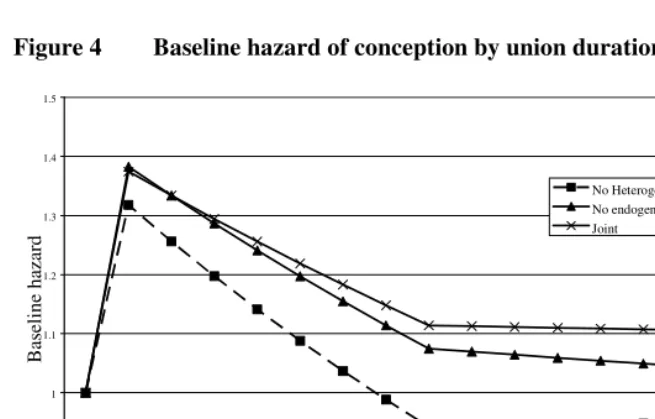
Figure 4 Baseline hazard of conception by union duration
0.8 0.9 1 1.1 1.2 1.3 1.4 1.5
0 3 6 9 12 15
Union duration
B
as
el
in
e
h
az
ar
d
No Heterogeneity No endogeneity Joint
If a woman is in her second or higher order union her hazard of conception is higher, a risk which is increased still further in the joint model. The effect of parity, however, is insignificant once the other covariates in the model are controlled. Women could remain pregnant in order to keep their relationship regardless of parity. Their behaviour could be the same at any stage of their reproductive life but it is more likely that this kind of behaviour is linked to the number of unions the women had.
The same is true of women of mixed ethnicity when compared with whites (the reference category). Geographical variations in the risk of conception are also evident: women in the north and centre of Brazil have higher fertility levels than do those in the south (the reference category).
In the case of the risk of conception, the results from the joint model are rather similar to those from the single equation random effects model, though there are differences between the two single equation models in the magnitude of the effects of certain covariates, notably region, being of mixed ethnicity, and being of no religion.
6. Discussion and conclusion
The most important result of this analysis is the demonstration that there is a significant positive relationship between union status change and fertility in Brazil. In particular the joint model has shown that there is a positive residual correlation between the risk of union dissolution and the associated hazard of conceiving. Thus the results have confirmed the importance of modelling events jointly in order to highlight the interaction of the events.
Brazilian women in second or higher order unions show a higher risk of conceiving, in particular when modelling the outcome jointly with union dissolution.
The modelling highlights the need for more information on union dynamics. In particular the DHS calendar does not give enough information on union histories preceding the calendar period. The calendar could be improved but there would still be the need for retrospective data with full information on union and childbearing histories. In addition more research is needed on the impact of union instability on conceptions according to the outcome (i.e.: terminations vs. live births).
Brazilian policy makers have too often regarded information on union histories as irrelevant. However the results of this analysis have a clear relevance for policy makers. The increasing risk of union dissolution during pregnancy could be a sign of the use of conception to keep the partner. This is particularly so for lower income classes. Despite the increase of women’s autonomy in Brazil, relationships are still strongly controlled by the man. Women’s bargaining power might be reduced to conception. In light of these issues more attention should be given in future to policies that regard women and families more in general.
The calendar data could be a valuable source of information for those countries like Brazil where there is no other information on union dynamics. This type of analysis could be replicated for other Latin American countries. The DHS that was planned for 2001 did not include the calendar section. Most researchers in Brazil claim that it is too difficult to handle and due to their limitations, the data do not justify complex analysis.
The main limitations of this analysis derive from the lack of full information in the DHS calendar. We feel that, in the future, more information should be added to the calendar and to the cross-sectional section as well. The calendar information could be improved simply by reporting the order of the union in the union section. So, the symbol ‘X’ would be replaced by the union order number. This would not add further stress to the interviewees, but would add important information to the dataset. Furthermore, in the case of the variable that reports the number of unions, it would be useful to report the actual number of unions instead of reporting the category ‘more than one union’. Ideally, for each union a start and an end date with the number of births in each union should be included. This information would allow us to reconstruct complete union histories along with reproductive histories. In practice however, it may prove impracticable to collect this information.
We do believe that this analysis could be replicated in other countries that have calendar data. In particular it would be important in Latin American countries where often data on both fertility and union dynamics are poor.
7. Acknowledgements
References
Aassve, A., Burgess, S., Propper, C. and Dickson, M. (2004) Employment, family union and childbearing decisions in Great Britain’, Working Paper, Institute of Economic and Social Research, University of Essex, UK.
Allison, P.D. Event history analysis: regression for longitudinal event data, London, Sage.
BEMFAM (1997) Pesquisa nacional sobre demografia e saude 1996. Calverton, MD, Macro International.
Blossfeld, H.-P., Hamerle, A. and Meyer, K.U. (1989) Event history analysis. London, Lawrence Erlbaum Associates.
Bongaarts, J. and Potter, R.G. (1983) Fertility, Biology and Behaviour: an Analysis of the Proximate Determinants, New York, Academic Press.
Brien, M.J., Lillard, L.A., and Waite, L.J. (1999) Interrelated family-building behaviours: cohabitation, marriage and non-marital conception. Demography 36, 535-551.
Carvalho, J.A.M.d., and Wong, L.R. (1996) The fertility transition in Brazil: causes and consequences. In Guzman, J.M., Sigh, S., Rodriguez, G. and Pantelides, E.A. (eds) The Fertility Transition in Latin America Oxford, Clarendon Press, pp. 27-47.
Chen, K.-H., Wishik, S.M. and Scrimshaw, S. (1974) Effects of unstable sexual unions on fertility in Guayaquil, Ecuador. Social Biology 21, 353-359.
Curtis, S. L. (1997) Using Calendar Data to Study Contraceptive Use Dynamics, Paper prepared for the IUSSP/EVALUATION Project seminar on Methods for Evaluating Family Planning Program Impact, Costa Rica, May 14-16 1997.
Ebanks, E.G., Nobbe, P.M.G. and Nobbe, C.E. (1974) Fertility and number of partnerships in Barbados. Population Studies 28, 449-465.
Goldman, N., Moreno, L. and Westoff, C.F. (1989) Collection of survey data on contraception: an evaluation of an experiment in Peru. Studies in Family Planning 20, 147-57.
Greene, M.E.(1994) Formal and informal marriage in Brazil: changes and consequences for family structure. Proceedings of the VIII Meeting of the ABEP 1994 , 165-206.
Heaton, T.B. (1990) Marital stability throughout the child rearing years. Demography 27, 55-63.
Henriques, M.H.F.T. (1989) Brazil: changes in nuptiality and their fertility implications. In International Population Conference, New Delhi, 1989, Vol. 3 163-174, Liège, International Union for the Scientific Study of Population,.
Kalbfleisch, J.D. and Prenctice, R.L. (1980) The statistical analysis of failure time data. New York, John Wiley.
Koo, H.P., Suchindran, C.M. and Griffith, J.D. (1984) The effects of children on divorce and re-marriage: a multivariate analysis of life table probabilities. Population Studies 38, 451-471.
Lazo, A.V. (1994) Marital fertility in Brazil: differential by type of union and its importance in the fertility transition, 1976-1991. Calverton, MD, Macro International.
Leite, I. da. C. (1998) Contraceptive dynamics in northeast Brazil. Unpublished PhD thesis, University of Southampton, Southampton, United Kingdom.
Leone, T. (2002) Fertility and union dynamics in Brazil. Unpublished PhD thesis, University of Southampton, Southampton, United Kingdom.
Leone, T. and Hinde, A. (2002) Sterilization and union dynamics in Brazil. Journal of Biosocial Science 37, 459-469.
Lillard, L.A. (1993) Simultaneous equations for hazards: marriage duration and fertility timing. Journal of Econometrics 56, 189-217.
Lillard, L.A. and Panis, C. (1998) Multi-process multilevel modelling. Paper presented at the Annual Meeting of the Population Association of America, Chicago, 1998.
Lillard, L.A. and Waite, L.J. (1993) A joint model of marital childbearing and marital disruption. Demography 30, 653-680.
Magnani, R.J., Ruttenberg, N. and McCann, H.G. (1996) Detecting induced abortions from reports of pregnancy terminations in DHS calendar data. Studies in Family Planning 27, 36-43.
Ribeiro, P.M. (1993) Comecar de novo: um estudo comparativo do descasamento e recasamento. Unpublished MSc thesis, Universidade Federal do Minais Gerais, Belo Horizonte, Brazil.
Steele, F. and Curtis, S.L. (2001) Appropriate methods for analyzing the effect of method choice on contraceptive discontinuation. Paper presented at the annual meeting of the Population Association of America, Washington DC.
Steele, F., Kallis, C., Goldstein, H. and Joshi, H. (2005) The relationship between childbearing and transitions from marriage and cohabitation in Britain. Demography forthcoming.
Strickler, J.A., Magnani, R.J., McCann, H.G., Brown, L.F. and Rice, J.C. (1997) The reliability of reporting of contraceptive behaviour in DHS calendar data: evidence from Morocco. Studies in Family Planning 28, 44-53.
US Bureau of the Census (2005) http://www.census.gov/cgi-bin/ipc/idbsprd.
Weinstein, M., Wood, J.W., Stoto, M.A. and Greenfield, D.D. (1990) Components of age-specific fecundability. Population Studies 44, 447-467.
Westoff, C. F., Goldman, N., and Moreno, L. (1990). Dominican Republic experimental study. Institute for Resource development/Macro systems.