RESEARCHARTICLE
Effects of short-term caffeine consumption on speech and sound
reception in individuals with normal hearing
Seyyed Mohammad Reza Taghavi1, Ahmad Geshani1*, Nematollah Rouhbakhsh1, Shoreh Jalaie2, Akram Pourbakht3, Abbas Kebriaeezadeh4, Mohammadsaleh Moosapour Bardsiri1
1- Department of Audiology, School of Rehabilitation, Tehran University of Medical Sciences, Tehran, Iran 2- Biostatistics, School of Rehabilitation, Tehran University of Medical Sciences, Tehran, Iran
3
- Department of Audiology, School of Rehabilitation Sciences, Iran University of Medical Sciences, Tehran, Iran
4- Department of Pharmacoeconomics and Pharmaceutical Administration, School of Pharmacy, Tehran University of Medical Sciences,
Tehran, Iran
Received: 29 Jan 2018, Revised: 5 Mar 2018, Accepted: 28 Mar 2018, Published: 15 Jul 2018
Abstract
Background and Aim: Caffeine consumes tar-geted attention to the signal, which is expected to lead to increased noise tolerance and ultima-tely improved speech perception. In the current study, the effect of short-term caffeine consum-ption on speech and noise simultaneous recep-tion funcrecep-tion was evaluated using acceptable noise level (ANL) test.
Methods: In this interventional double-blind study, 90 cases (45 male, 45 female) aged 18−34 years were randomly assigned into three groups: the test groups, 3 and 5 mg/kg caffeine, and the control group, just placebo. The ANL test was recorded before and one hour after intervention. The results were compared before and after taking caffeine in three groups.
Results: The statistical analysis revealed that there was significant difference in ANL result in dose 3 mg/kg caffeine before and one hour after intervention (p=0.043) and there was a signi-ficant difference in ANL result in dose 5 mg/kg caffeine before and one hour after intervention
(p=0.001). Also, there was a significant diffe-rence in ANL before and one hour after taking caffeine between the group receiving 3 mg/kg dose of caffeine and the 5 mg/kg dose of caff-eine (p=0.015).
Conclusion: According to the findings of the study, after an hour of caffeine consumption, the ANL decreases. In other words, the individuals tolerate higher levels of speech noise. This is also dependent on the dose of caffeine.
Keywords: Caffeine; noise acceptance; normal hearing; acceptable noise level test
Citation: Taghavi SMR, Geshani A, Rouhbakhsh N, Jalaie S, Pourbakht A, Kebriaeezadeh A, et al. Effects of short-term caffeine consumption on speech and sound reception in individuals with normal hearing. Aud Vestib Res. 2018;27(3):150-6.
Introduction
The responses in the central nervous system (CNS) as well as the central auditory area can be affected by drugs and chemical compositions [1]. Caffeine is a CNS stimulant [2] that reduces blood flow to the brain and helps with the dop-amine release. Dopdop-amine is a neurotransmitter that helps with concentration [3]. Caffeine, on the other hand, is the most widely used drug
*
among humans. Approximately 90% of humans use caffeine on a daily basis [4,5]. Although similar effects have already been reported in drugs such as Ritalin, caffeine is far less dan-gerous than Ritalin and has been used as an alternative to Ritalin in hyperactivity due to its significant clinical effects in some studies [6,7]. Caffeine exerts most of its biologic effects on CNS by blocking adenosine receptors [8]. It affects brain functions such as sleep, cognition, learning and memory and also alleviates disor-ders such as Alzheimer's, Huntington's, epilep-sy, migraine, depression, and schizophrenia by blocking these receptors [8]. Given that adeno-sine is present in all parts of the body, it is expected that caffeine, as an adenosine receptor antagonist, can adjust the mental and physio-logical state [8,9].
In particular, consuming moderate amounts of caffeine improves cognitive function, increases awareness and energy, reduces mental fatigue, increases the ability to focus and solve problems that need to be reasoned, increases the accuracy of responses to environmental stimuli, enhances short-term memory, increase the ability to focus and pay attention, increase the ability to make right decisions and ultimately increases cogni-tive skills [10]. In an animal study performed on hyperactivity and learning disorder in mice, sig-nificant results were found in caffeine consump-tion and it was found that caffeine improves spatial learning in mice with hyperactivity and learning disorder [11]. In another study, tea was recommended as an effective treatment for attention deficit hyperactivity disorder because of its caffeine contents [6].
The effect of this chemical compound has alrea-dy been studied on the auditory system. Recent studies have shown that caffeine significantly reduces the action potential (AP) and the summ-ation potential (SP) at low intensities. It also reduces the distortion product otoacoustic emis-sions (DPOAE) at low intensities and increases it in high intensities that eventually shortens the outer hair cells [12]. Caffeine can reduce the interval between the I-V waves of auditory bra-instem response (ABR) [13,14]. In higher level potentials, the results are controversial and the
effects of caffeine has been observed in the form of reduced middle latency responses (MLR) and P1 [14], decreased P300 latency [15], increased P1, P2 and P3b amplitudes with, no effect on their latency [16] as well as no effect on the vestibular responses of p13 and n23 [17].
Speech perception in noise and noise isolation are among the activities of the central auditory area [18]. Speech perception in noise depends on the interaction of the sensory and cognitive processes. The least part of the ability to create auditory object is to separate several sources of sound into separate streams top-down cogni-tive processing, such as attention and memory. Speech processing in a noisy environment is carried out in several steps. The role of the audi-tory brain stem is phase-locked responses to sti-mulation regulators, strong encoding, and the preservation of time resolution in the presence of noise. The auditory brainstem performance is modulated and adjusted through the top-down levels. This sensory-cognitive interaction is pos-sible through the afferent pathways that transmit sensory information to the inferior colliculus and the auditory cortex associated with the cor-ticofugal pathway. In other words, only the sig-nal input from the cochlea to the brain stem is not determinative in order to accurately receive the signal in the presence of noise, but it is actually the top-down processing that is invol-ved [18].
As a result, it can be said that the central areas of the auditory system are effective in the rec-eption of noise [19]. Given the fact that caffeine is a CNS stimulant, and given the effects of caffeine on the auditory system, it is likely that caffeine can increase the tolerance of people against noise.
et al. [22]. The present study aims to investigate the effect of short term caffeine consumption on noise reception in people with normal hearing using the Persian version of the acceptable noise level (ANL) test.
Methods
The current study is double-blind with a control group. It was approved by the Ethics Committee of Tehran University of Medical Sciences. The study population consisted of 90 patients (45 female and 45 male) including 15 female and 15 male in the placebo group, 15 female and 15 male in the 3kg/mg dose group and 15 female and 15 male in the 5kg /mg / dose group. These individuals aged 18 to 34 years old with a mean of 23.62 (SD=2.89) years for men and a mean of 22.00 (SD=2.86) years for female. All subjects had normal hearing thresholds with no history of neurological and psychological disorders. They did not use drugs that affect CNS, and did not have any history of alcohol and other oto-toxic drugs.
These people normally used less than 200 mg of caffeine per day, or a maximum of three cups of tea, four glasses of soda, or two cups of coffee per day (low caffeine consumer). After giving a full description of the purpose and method of study, the participants consented to the partici-pation in the study. To ensure the health of the auditory system, subjects underwent outer ear physical examination with an otoscope, an aco-ustic immittance testing, and pure tone and speech audiometry. The subjects were asked to refrain from drinking caffeine-containing subs-tances (tea, coffee and soda) at least six hours before the test [23]. Different doses of caffeine have been used in various studies [24]. The 3 mg/kg dose is the standard dose used in many studies that have examined the effect of caffeine on the nervous system [25]. In addition, the rec-ommended dose with no side effects is normally equal to or less than 5.71 mg/kg for a healthy adult. Therefore, 0, 3 and 5 mg/kg doses were used in this study [15]. The subjects were ran-domly divided into three groups based on caff-eine doses. In the groups receiving caffcaff-eine, this substance was dissolved in 100 ml of water, and
to improve the taste of the solution, dry milk and sugar was added, which, of course, was very little and the amount of dry milk added to water was the same in all the groups to make the solution even. For the group receiving placebo (0 mg dose), dry milk was used which has the highest similarity to pure caffeine [13,14]. In this study, the examiner and the participants were unaware of the dosage (double-blind), and only the research partner who recorded the inf-ormation was aware of the consumption dosage of the individuals. Prior to delivering caffeine or placebo, the standard method for performing the ANL test that was the method for obtaining the most comfortable level (MCL) and background noise level (BNL) was provided in a written form for the subjects. After placing the person to be tested in the acoustic room, the instruc-tions were also orally explained to the person once and then the ANL test was performed after ensuring that the person was justified.
The ANL test was performed using the standard method and its values were calculated [20,26]. Then, the participant received caffeine or place-bo. Since caffeine reaches its peak in the blood plasma for 30 to 60 minutes after consumption [27], an ANL test was re-performed one hour later.
Data was analyzed by SPSS 24. Normality of data (the difference in pre and post caffeine consumption at different doses) was investiga-ted using Kolmogorov-Smirnov test for diffe-rent doses. Due to the lack of normal distrib-ution of data, the Mann-Whitney test with Bonferroni correction was used to compare the differences between the three doses.
Results
To investigate the effect of inter-group caffeine consumption in each group, ANL test results were first calculated before and one hour after the intervention. To investigate the effect of caffeine consumption between groups, the resu-lts of both interventional and control groups were compared before and one hour after the intervention. The results of statistical calcula-tions are listed in the following Tables.
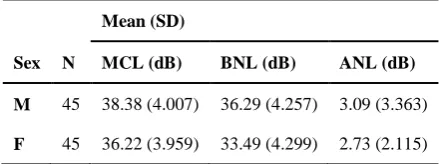
BNL, and ANL values before intervention in both sexes are shown in Table 1. There was no significant difference in ANL between two sexes (p=0.507).
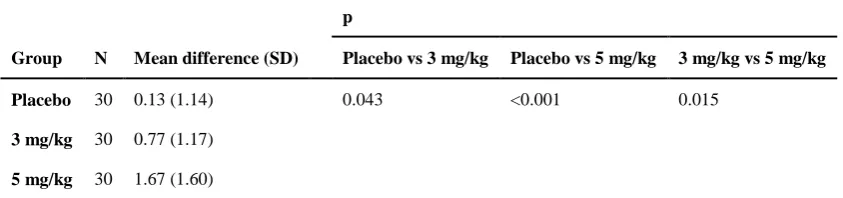
Table 2 shows the comparison of the ANL bef-ore and one hour after the intervention between the placebo group and the 3 mg/kg dose con-sumption group. These data indicate that the mean of ANL values in the 3 mg consumption group was significantly different from that of the placebo group one hour after caffeine con-sumption (p=0.043), so that ANL had signifi-cantly decreased after caffeine consumption in this group compared to the placebo.
Table 2 also shows the difference in ANL bef-ore and one hour after the intervention between the placebo group and the 5 mg/kg dose con-sumption group. These data indicate that the mean values of ANL in the 5 mg dose group were significantly different from that of the pla-cebo group one hour after caffeine consumption (p<0.001), so that ANL had significantly dec-reased after taking caffeine in this group com-pared to the placebo.
Finally, Table 2 shows the comparison of ANL before and one hour after intervention between the 3 mg/kg and 5 mg/kg dose groups. These data indicate that the mean of ANL values in the 3 mg dose group was significantly different from that of the 5 mg group one hour after caff-eine consumption (p=0.015).
Discussion
This research is intended to answer the
hypothesis that the use of caffeine can affect the reception of noise in individuals with normal hearing. In the present study, MCL, BNL, and ANL parameters were compared in the previous stages and one hour after taking 0 mg/kg, 3 mg/kg and 5 mg/kg doses of caffeine in three groups of normal subjects aged 18-34 years. The results indicated that the mean values of ANL in the 3 and 5 mg dose group were lower than the placebo group and also between the 3 and 5 mg groups, respectively one hour after caffeine consumption, and the level of this dec-rease was statistically significant (p<0.05). The results of this study are based on the effect of caffeine on MCL and ANL.
In the present study, the effect of caffeine on the MCL results was compared before and after intervention (caffeine or placebo consumption) and for intergroup analysis, these changes were compared in the three groups. The findings indi-cated no significant difference between the three groups in the MCL values in the groups recei-ving 3 mg of caffeine (mean=36.87, SD=3.66) or 5 mg of caffeine (mean=38.67, SD=4.30), compared to the placebo (mean=38.44, SD= 4.08). In a study similar to the present study, the effect of Ritalin on ANL was investigated and similar results indicated that the use of a brain stimulant does not affect MCLs [28]. Also, the MCL findings obtained in this study are comparable with those found in a study carried out by Ahmadi et al. in order to prepare the Persian version of the ANL test. In their study, the mean MCL was 45.78 (SD=5.18). In the present study, MCL was calculated 37.80 (SD= 4.26) before intervention. These results are in normal range, comparable and overlap with one another [22].
Speech perception in noise is one of the central auditory functions and depends on the interac-tion of sensory and cognitive processing. Spee-ch processing in a noisy environment is carried out in several steps. The auditory brain stem performance is modulated and adjusted through the top-down levels. This sensory-cognitive int-eraction is possible through the afferent neurons that transmit sensory information to the inferior colliculus and the auditory cortex associated
Table 1. Mean (standard deviation) of most comfortable level, background noise level, and acceptable noise levels in female and male before intervention
Mean (SD)
Sex N MCL (dB) BNL (dB) ANL (dB)
M 45 38.38 (4.007) 36.29 (4.257) 3.09 (3.363)
with the corticofugal pathways [18].
In the present study, intra-group effects of caffeine on ANL were compared before and after intervention (caffeine or placebo consum-ption) and for intergroup analysis, these changes were compared in the three groups. In this study, the effect of caffeine was investigated as a CNS stimulant on ANL for the first time and it was observed that ANL were significantly redu-ced with certain doses of caffeine. Since diffe-rent doses were used in our study, the results indicated that with the dose of 3 mg/kg of caffe-ine, the ANL decreased, and by increasing the dosage to 5 mg/kg of caffeine, the ANL reduc-tion rates was very significant.
In a study conducted by Freyaldenhoven et al. for the first time to investigate the effect of stimulant drugs (Ritalin) on the ANL, it was found that the use of these drugs significantly reduced the ANL [28]. Although another drug was used in that study, the important point is that both drugs are pharmacologically conside-red as brain stimuli. This finding is in perfect agreement with the results of this study. On the other hand, the ANL obtained in this study are in line with the ANL obtained in a study con-ducted by Ahmadi et al when preparing the Persian version of the ANL test. In their study, the mean ANL was calculated 1.77 (SD=2.32) which is comparable with our ANL values (mean 2.91, SD=2.32) before intervention [22]. Although there was no significant difference between the mean values of MCL, BNL, and ANL between the two studies in Persian, and the values obtained were overlapping, but some differences are acceptable due to the differences
in the population and also the variability of behavioral tests. Meanwhile, both of the find-ings fit into the group of people with low ANL according to the classification of Nabelek et al [29].
In another study, it was found that ANL wor-sened with decreasing speech intelligibility and the listeners tolerate lower levels of noise [30]. Reducing ANL with caffeine consumption can increase the tolerance of noise, focus, and thus increase speech perception in environments with undesirable noise. Therefore, it can be conclued that if people can tolerate more noise in a listening environment, they will ultimately imp-rove speech perception. The reason for these effects seems to be in the CNS signal processing approach, which facilitates or strengthens proce-sses such as suppressing noise activity or activa-ting inhibitory processes through inhibitory neu-ral networks.
Concerning the effect of sex on ANL, in the present study, there was no difference in the effect of caffeine on ANL in male and female. Regarding the findings of this study, it can be expected that by using drugs or chemical com-pounds, the response of the central system can be modulated in a way to increase the tolerance of people against loud noises by affecting the central auditory area in the brain. Consequently, there is a hope that users of hearing aids will be able to use their hearing aids more, especially in noisy environments and due to reduced back-ground noise. On the other hand, it is possible to increase the attention of the patient to speech signal by reducing the adverse effects of noise. The final result of this situation will increase the
Table 2. Mean difference (standard deviation) of acceptable noise level before and after caffeine consumption in the placebo, 3 mg/kg and 5 mg/kg groups
p
Group N Mean difference (SD) Placebo vs 3 mg/kg Placebo vs 5 mg/kg 3 mg/kg vs 5 mg/kg
Placebo 30 0.13 (1.14) 0.043 <0.001 0.015
3 mg/kg 30 0.77 (1.17)
patient's understanding. Given that this study is the first systematic study of caffeine's effects on normal people, it is suggested that this study be conducted in people who use a hearing aid in the future.
Conclusion
According to the results of this study, one hour after taking 3 and 5 mg/kg of caffeine, the ANL was significantly decreased. Also, there was a significant difference between the ANL in the two groups with 3 and 5 mg of caffeine intake compared to each other, indicating a greater effect of 5 mg caffeine intake compared to the 3 mg caffeine intake group. For further examina-tion, it is suggested to repeat the test for longer periods of time after caffeine consumption to determine long-term effects.
Acknowledgements
This paper is emerged from S. M. R. Taghavi’s M.Sc. dissertation submitted in Tehran Univer-sity of Medical Sciences and is confirmed by Ethic Code No. IR.TUMS.FNM.REC.1396.23 93.
Conflict of interest
The authors declared no conflicts of interest.
REFERENCES
1. Barkley RA. A review of stimulant drug research with hyperactive children. J Child Psychol Psychiatry. 1977; 18(2):137-65. doi: 10.1111/j.1469-7610.1977.tb00425.x
2. Benowitz NL. Clinical pharmacology of caffeine. Annu Rev Med. 1990;41:277-88. doi:
10.1146/annurev.me.41.020190.001425
3. Nehlig A, Daval JL, Debry G. Caffeine and the central nervous system: mechanisms of action, biochemical, metabolic and psychostimulant effects. Brain Res Brain Res Rev. 1992;17(2):139-70. doi: 10.1016/0165-0173(92)90012-B
4. Ruxton CHS. The impact of caffeine on mood, cognitive function, performance and hydration: a review of benefits and risks. Nutr Bull. 2008;33(1):15-25. doi:
10.1111/j.1467-3010.2007.00665.x
5. Heatherley SV, Hancock KM, Rogers PJ. Psycho-stimulant and other effects of caffeine in 9- to 11-year-old children. J Child Psychol Psychiatry. 2006;47(2):135-42. doi: 10.1111/j.1469-7610.2005.01457.x
6. Liu K, Liang X, Kuang W. Tea consumption maybe an effective active treatment for adult attention deficit hyperactivity disorder (ADHD). Med Hypotheses. 2011;76(4):461-3. doi: 10.1016/j.mehy.2010.08.049
7. Lara DR. Caffeine, mental health, and psychiatric disor-ders. J Alzheimers Dis. 2010;20 Suppl 1:S239-48. doi:
10.3233/JAD-2010-1378
8. Ribeiro JA1, Sebastião AM. Caffeine and adenosine. J Alzheimers Dis. 2010;20 Suppl 1:S3-15. doi:
10.3233/JAD-2010-1379
9. Snel J, Lorist MM. Effects of caffeine on sleep and cognition. In: Van Dongen HPA, Kerkhof GA, editors. Human sleep and cognition, Part II: clinical and applied research. 1st ed. New York: Elsevier; 2011. p. 105-18. 10. Angelucci ME, Vital MA, Cesário C, Zadusky CR,
Rosalen PL, Da Cunha C. The effect of caffeine in animal models of learning and memory. Eur J Pharma-col. 1999;373(2-3):135-40.
11. Prediger RD, Pamplona FA, Fernandes D, Takahashi RN. Caffeine improves spatial learning deficits in an animal model of attention deficit hyperactivity disorder (ADHD) -- the spontaneously hypertensive rat (SHR). Int J Neuropsychopharmacol. 2005;8(4):583-94. doi:
10.1017/S1461145705005341
12. Bobbin RP. Caffeine and ryanodine demonstrate a role for the ryanodine receptor in the organ of Corti. Hear Res. 2002;174(1-2):172-82. doi: 10.1016/S0378-5955(02)00654-8
13. Soleimanian S, Farahani S, Adel Ghahraman M, Kebriaiezadeh A, Faghihzadeh S. [Effects of caffeine on auditory brainstem response]. Audiol. 2008;17(1):45-52. Persian.
14. Dixit A, Vaney N, Tandon OP. Effect of caffeine on central auditory pathways: an evoked potential study. Hear Res. 2006;220(1-2):61-6. doi:
10.1016/j.heares.2006.06.017
15. Pan J, Takeshita T, Morimoto K. Acute caffeine effect on repeatedly measured P300. Environ Health Prev Med. 2000;5(1):13-7. doi: 10.1007/BF02935910
16. Barry RJ, Johnstone SJ, Clarke AR, Rushby JA, Brown CR, McKenzie DN. Caffeine effects on ERPs and performance in an auditory Go/NoGo task. Clin Neurophysiol. 2007;118(12):2692-9. doi:
10.1016/j.clinph.2007.08.023
17. Tavanai E, Farahani S, Adel-Ghahraman M, Jalaie S, Kouti L, Shidfar F. Effects of caffeine on cervical vesti-bular evoked myogenic potential: a pilot study. Aud Vest Res. 2015;24(1):3-10.
18. Anderson S, Kraus N. Sensory-cognitive interaction in the neural encoding of speech in noise: a review. J Am Acad Audiol. 2010;21(9):575-85. doi:
10.3766/jaaa.21.9.3
19. Harkrider AW, Tampas JW. Differences in responses from the cochleae and central nervous systems of females with low versus high acceptable noise levels. J Am Acad Audiol. 2006;17(9):667-76. doi:
10.3766/jaaa.17.9.6
20. Nabelek AK, Freyaldenhoven MC, Tampas JW, Burch-fiel SB, Muenchen RA. Acceptable noise level as a predictor of hearing aid use. J Am Acad Audiol. 2006;17(9):626-39. doi: 10.3766/jaaa.17.9.2
21. Freyaldenhoven MC, Nabelek AK, Burchfield SB, Thelin JW. Acceptable noise level as a measure of dir-ectional hearing aid benefit. J Am Acad Audiol. 2005; 16(4):228-36. doi: 10.3766/jaaa.16.4.4
Med. 2015;4(2):109-17. Persian.
23. Ghisolfi ES, Schuch A, Strimitzer IM Jr, Luersen G, Martins FF, Ramos FL, et al. Caffeine modulates P50 auditory sensory gating in healthy subjects. Eur Neuropsychopharmacol. 2006;16(3):204-10. doi:
10.1016/j.euroneuro.2005.09.001
24. Pasman WJ, van Baak MA, Jeukendrup AE, de Haan A. The effect of different dosages of caffeine on endurance performance time. Int J Sports Med. 1995;16(4):225-30. doi: 10.1055/s-2007-972996
25. de Carvalho M, Marcelino E, de Mendonça A. Elec-trophysiological studies in healthy subjects involving caffeine. J Alzheimers Dis. 2010;20 Suppl 1:S63-9. doi:
10.3233/JAD-2010-1377
26. Taghavi SMR, Geshani A, Rouhbakhsh N, Habibzadeh Mardani S. Acceptable noise level test: bases and theories. Aud Vest Res. 2017;26(4):184-94.
27. Carman AJ, Dacks PA, Lane RF, Shineman DW, Fillit
HM. Current evidence for the use of coffee and caffeine to prevent age-related cognitive decline and Alzheimer's disease. J Nutr Health Aging. 2014;18(4):383-92. doi:
10.1007/s12603-014-0021-7
28. Freyaldenhoven MC, Thelin JW, Plyler PN, Nabelek AK, Burchfield SB. Effect of stimulant medication on the acceptance of background noise in individuals with attention deficit/hyperactivity disorder. J Am Acad Audiol. 2005;16(9):677-86. doi: 10.3766/jaaa.16.9.5
29. Nabelek AK, Tucker FM, Letowski TR. Toleration of background noises: relationship with patterns of hearing aid use by elderly persons. J Speech Hear Res. 1991;34(3):679-85. doi: 10.1044/jshr.3403.679