Available online: http://internationaljournalofresearch.org/ Page| 548
A
STUDY ON THE KNOWLEDGE OF REPRODUCTIVE
HEALTH AMONG THE TANNERY WORKERS
Akkur Chandra Das
Master(s) of Population Sciences (MPS) Scholar, Department of Population Sciences, University of Dhaka, Bangladesh
Email: [email protected]
Abstract:
The aim of this study is to find the environmental pollution’s harmfulness of human health where the issues called the
major exposure to environmental
pollutants, which may pose the greatest threat to reproductive health. After all, literature in this respect is rare in our country context, so the present study aims to assess the basic knowledge among the tannery workers of Hazaribagh area regarding their reproductive health and whether it could be affected by working in presence of highly toxic chemicals in the tannery or not and what was probably of developing any kind of reproductive health
problems or diseases. Quantitative study
technique has been followed as a means of credible and reliable data collection methods. In absence of baseline data,
respondents have been selected
purposively. There was a significant relation between duration of working and developing various reproductive health problems both for male and female at 1% level of significance. It was also measured that workers those who are working in the tannery for more than one year are s more likely (4.57 times for male and 3.74 times for female) to develop RTIs in the tannery than those who work less than one year. For male workers there is significant dependency of reproductive health (RH) problems or disease development based on the type of exposure to chemicals, they involved in, at 1% level of significance. It
can be stated that female workers those who are working in the tannery in presence of much toxic chemicals are (1.49 times for female and 3.81 times for male) likely to develop RTIs than those who are working in the tannery in the presence of less toxic chemicals.
Keywords: Reproductive Health, Tannery Workers, World Health Organization, Tannery Industry, Reproductive Health Services, Bangladesh
1.
I
NTRODUCTIONThe world has changed by many scientific advantages where the modernization and rapid enhancement in chemical, hazardous, and polluting industries in recent years has not only resulted in unsafe working conditions but has created problems of occupational health hazards.
Available online: http://internationaljournalofresearch.org/ Page| 549
tanning processes that discharge about 6000 cubic meters of liquid effluent and 10 tons of solid waste every day. Numerous common health problems that tannery workers face—such as skin and respiratory diseases—result from repeated exposure to a hazardous mixture of chemicals when measuring (WHO, 2001). Exposures to such chemicals can cause various reproductive health problems such as decreased fertility, reproductive tract infections (WHO, 2001).
Reproductive health includes the right of men and women to be informed of and to have access to safe, effective, affordable and acceptable methods of fertility regulation of their choice, and the right of access to appropriate health care services that will enable women to go safely through pregnancy and childbirth and provide couples with the best chance of having a healthy infant (POPIN, 2001). Reproductive health care is the assemblage of information and services designed to help individuals attain and maintain the state of reproductive health by preventing and solving reproductive health problems. According to UNFPA, 1994 impoverished women, especially those living in developing countries, suffer disproportionately from unintended pregnancies, maternal death and disability, sexually transmitted infections including HIV, gender-based violence and other problems related to their reproductive system and sexual behavior. Although we are not aware of any epidemiological studies conducted in our country on tannery workers‘ knowledge regarding reproductive health and their present state of reproductive health problems.
The Objectives of this study:
1. The aim of this study is to find the facts that whether the tannery
workers have the basic knowledge regarding their reproductive health that it could be affected by working in presence of highly toxic chemicals in the tannery.
2. To explore the unveil workers present state of reproductive health whether it is affected by the toxic chemicals or not and what was probably of developing any kind of reproductive health problems or diseases.
3. To find what tannery workers‘ attitude towards health care services is, whether they have access to appropriate health care services that enable them to have safe and sound reproductive health system.
4. The purpose of the research is, therefore, to investigate the level of knowledge regarding reproductive health among the tannery workers.
2.
L
ITERATURE REVIEWSince independence, Bangladesh has achieved remarkable progress in important aspects of health, nutrition and family planning among many developing countries of the world. However, in particular the status of reproductive health remains unsatisfactory. Bangladesh still faces alarming obstruction in the path of goals of reproductive health and rights.
2.1NECESSITY TO FOCUS ON
REPRODUCTIVE HEALTH FOR
DEVELOPMENT
Available online: http://internationaljournalofresearch.org/ Page| 550
system at all stages of life (POPIN, 2001). Reproductive health implies that people are able to have a satisfying and safe sex life and that they have the capability to reproduce and the freedom to decide if, when, and how often to do so. Implicit in this definition are the rights of men and women to be informed and to have access to safe, effective, affordable, and acceptable methods of family planning of their choice, and the right to appropriate health-care services that enable women to safely go through pregnancy and childbirth.
In Bangladesh, the term Reproductive Health (RH) encompasses child or maternal health, family planning, and the prevention and treatment of AIDS/HIV and reproductive/sex related disease. A recent focus of local and international organizations has expanded the scope of reproductive health to include the roles and responsibilities of men, Adolescent Reproductive Health (ARH), and reproductive health rights.
Bangladesh among many South-Asian countries is a predominantly a patriarchal society where women‘s access to social, economic, politico-legal and health care institutions is largely mediated by men. Within the household and in the public sphere, men control women‘s sexuality, their choice of marriage partner, their access to labour and other markets and their income and assets (Baden et al., 1994 and Kotalová, 1996). This affects women‘s health and health-seeking behaviour in several ways, firstly, by controlling behaviours and decision-making authority of husbands and elderly members (Afsana and Rashid, 2003, Chakraborty et al., 2003), secondly, through neglect and low prioritization of women‘s health issues (Cook et al., 2003) and finally, because of cultural beliefs that consider morbidity
during pregnancy a normal consequence of pregnancy (Goodburn et al., 1995). Other prominent barriers to male involvement in maternal health are social stigma derived from notions of bad fate (awful happening linked with women‘s luck) associated with an abnormal pregnancy or delivery; shyness and embarrassment at having to deal with ‗women‘s matters‘ publicly; and job responsibilities (Mullany, 2006 and Shahjahan&Kabir, 2006).
Although Bangladesh has achieved a laudable progress in maternal and child mortality there are still poor access to services, both primary and tertiary care, low quality services, high rate of maternal mortality and child malnutrition are the key challenges in achieving MDGs in Bangladesh. Child malnutrition and maternal mortality rate still remain among the highest in the world. High maternal mortality rates are underpinned by the fact that a large majority of deliveries take place at home and most of which are attended to by untrained providers.
Available online: http://internationaljournalofresearch.org/ Page| 551
women to safely go through pregnancy and childbirth. Reproductive health care is a prerequisite for women‘s social, economic and human development. When women lack access to safe, comprehensive reproductive health care, the consequences can be damaging (POPIN, 2001). In this regard it is mandatory to have a proper knowledge and awareness regarding reproductive health issues both for men and women.
2.2TANNERY INDUSTRY IN BANGLADESH
Tanning industry is an old manufacturing sub-sector in Bangladesh with a long heritage of over six decades. About 90 percent tanneries of the country located at Hazaribagh of the Dhaka city. There are a handful of tanneries in Bangladesh outside Hazaribagh, located in other areas of Dhaka, as well as Jessore and Chittagong. This research does not address those tanneries. From the commencement of industrialization in Bangladesh, tanning industries have been playing a major role in the country‘s economy.
The value of leather exports in Bangladesh has grown by an average of $41 million per year (HRW, 2012). From June 2011 to July 2012, the country, India‘s key competitor in the leather sector, exported around $663 million of leather and leather goods, including footwear to some 70 countries, such as China, South Korea, Japan, Italy, Germany, Spain, and the United States.
2.3CURRENT STATE OF TANNERIES
Due to its importance as a labor based export oriented industry the full flourish of this industrial sector is indispensable. However due to the absence of appropriate waste management, using inferior technologies, lack of facilities for treating industrial wastes; the tanning industries of
Hazaribag, Dhaka are aggravating environmental problems day by day. According to Bangladesh Government estimated report, about 21,000 cubic metres of untreated effluent is released each day in Hazaribagh, located in the heart of Dhaka, which contains among other substances, animal flesh, sulphuric acid, chromium, and lead.
There are three stages of leather processing, initially converting raw hides to ―wet blue‖ leather, then to ―crust leather,‖ and finally finished leather. Some tanneries mainly large tanneries perform all stages of leather processing under the same roof, or sometime the tannery might have a number of different factory units specialized in each stage scattered throughout Hazaribagh. In other cases, a single hide will pass through two or three different tanneries before the tanning process is complete. Some tanneries only process raw hides to the ―wet blue‖ stage, or to the ―crust leather‖ stage, before selling on these hides to other tanneries which then complete the process (HRW, 2012).
Available online: http://internationaljournalofresearch.org/ Page| 552
pigments, binders, waxes, lacquers and formaldehyde. Various types of processes and finishing solvents and auxiliaries are used, as well.Socio-economic reasons would include, within the purview of the proposed law, unintentional pregnancy, rape, and desertion by husband or extreme poverty. Medical reasons would include risk of life or grave danger to the physical and mental health of the women or risk that the child will born with congenital abnormality (Akhter, 2001).
2.4IMPACT OF TANNERY ON WORKERS HEALTH
The Hazaribagh tanneries employ up to 15,000 workers. According to SEHD,1998 large numbers of the 8,000–12,000 workers at the tanneries suffer from gastrointestinal, dermatological and other diseases that could be related to the pollution and that 90% of them die before the age of 50 vs. less than 60% for the country as a whole. About a quarter of these workers are less than 11 years of age. Chromium, the SEHD, 1998 reported is one of the most harmful chemicals found in the tannery waste because of its carcinogenic potential. Acidic effluents, it adds, can cause severe respiratory problems. Gaseous emissions from the tanneries contain sulfur dioxide that is converted into sulfuric acid on contact with moisture and can damage lungs. The SEHD, 1998 stated that 58% of the tannery workers suffer from gastrointestinal disease (vs 24% for the country as a whole), 31% from dermatological diseases (vs 9%), 12% from hypertension (vs 0.9%) and 19% from jaundice (vs 0.07%).
2.5IMPACT OF TANNERY ON WORKER’S
REPRODUCTIVE HEALTH
Although many studies were conducted regarding health status of tannery workers
but study on reproductive health of tannery workers are unusual. Research has shown that exposure to environmental pollutants may pose the greatest threat to reproductive health. Exposures to some chemicals or to stressful conditions can cause both male and female workers to experience a decrease in their desire or ability to have sex (WHO, 2009). In 2006, ILO reported that chemicals which have depressant effects, such as certain solvents, may suppress the libido (sex drive). Occupational exposures can also cause menstrual problems, which may prevent ovulation from taking place. Stress, working on shifts or exposure to certain organic solvents can disrupt the normal menstrual cycle, which in turn can affect fertility (ILO, 2006).
Another possible effect of exposure to certain occupational hazards is their ability to cause direct damage to the germ cells (sperm and eggs) (EHC, 2001). Radiation and certain chemicals can cause decreased fertility or even sterility. Occupational risks can reduce the number of sperm to a level below the minimal necessary for fertilization. Skin exposure to chemicals has been shown to play a role in initial immunologic sensitization. (Petsonk EL. ,2002).
Several adverse reproductive outcomes associated with maternal exposure to leatherwork and included an increased risk of prenatal death, reduced female fertility, spontaneous abortion, preterm delivery, low birth weight, and cleft palate (Garcia and Fletcher, 1998).In a study in Leicestershire describes the relation between leatherwork and reproductive outcome (Kurinczuk and Clarke, 2001).
Available online: http://internationaljournalofresearch.org/ Page| 553
pregnancy, and infertility by comparing tannery employees to other workers (Greene et al.,2010).The results of this research suggest that tannery work may be associated with reduced fertility in males. The study had limited statistical power, and some factors are likely to have biased findings toward the null hypothesis; other limitations and possible sources of undetermined bias give reason for cautious interpretation.
There is limited literature to inform the understanding of what is the current level of knowledge regarding reproductive health among the tannery workers and impacts of toxic chemicals on reproductive health of those workers. To address these shortcomings, this study explores the knowledge of men and woman on reproductive health issues and their present state or level of reproductive health.
3.
METHODOLOGY
3.1STUDY AREA
The study was conducted in Hazaribagh tannery area, located in the capital city of Bangladesh named Dhaka. Hazaribagh lies in the south-western part of Dhaka city, surrounded by residential areas like Jhigatola, Dhanmondi and one of the main river of Dhaka i.e. Buriganaga lies just one kilometer away.
The present study was carried out among 8 tanneries. Selection of tanneries, tannery workers all were done purposively. The names of the tanneries were:
Apex tannery
Samina tannery
Shajalal tannery
Ruma tannery
Eastern tannery
Ideal tannery
S.B. tannery
Alam tannery
Among these 8 tanneries only Apex tannery was relatively a large tannery that employ near about 600 workers, while medium-sized tanneries like Samina, Shahjalal, Rupa and Western tannery employ around a hundred workers and finally small tanneries like Ideal, S.B., and Alam have just a dozen or so workers.
3.2RESEARCH DESIGN
Quantitative study technique has been followed as a means of credible and reliable data collection methods. In absence of baseline data, respondents have been elected purposively.
3.3SAMPLE SIZE
Sample size was determined by sample size determination formula. The following formula is used:
N = Z2 Ps × Qs
E2
Where,
N=Estimated sample size
Z= desired confidence level=1.96 with α= 95%
E=Tolerable error=0.05
Ps= Aware about reproductive health
=0.5%
Qs= Unaware about reproductive health
=0.5%
Therefore, N= (1.96)2× (0.5)× (0.5)/(0.05)2 = 384
Available online: http://internationaljournalofresearch.org/ Page| 554
After all, the estimated sample size was 384 but only 371 respondents‘ data have been collected in this study.
3.4SAMPLING METHOD
Because of difficulty in obtaining an adequate sampling frame from tanneries and also due to time and resource limitations, purposive sampling was used. After taking permission from the owner of tanneries or proper authorities, workers were chosen in this way that it meets the study criteria and to be as representative as possible.
3.5DATA COLLECTION INSTRUMENT
Data was collected by structured interview schedule containing a set of close ended and a few open-ended questions. To evaluate the knowledge on reproductive health, its present state or condition among the tannery workers, an assortment of questions were asked. The questions were brief and straightforward so that it would be convenient for the respondents to answer properly.
At first a pre-test was done with a draft questionnaire from 25th to 28th March, 2014 to get an idea on responses and to improve or make required amendment. After that the final questionnaire was prepared and administered from 1st to 28th April, 2014.
3.6DATA COLLECTION TECHNIQUE
Face-to-face interview method was used to administer the questionnaire. It took about 15 minutes on average to administer each interview. Before taking the interview, first of all the study and its purpose was explained to the respondents and then informed consent was taken from each respondent. Probing and prompting were used for some questions though the intend was keep it minimum and all the answers were recorded in the supplied questionnaire by the interviewer.
3.7DATA ANALYSIS
Statistical tests were used to analyze the relationship between dependent variables with independent variables. Particularly Chi-square tests were performed by computer software- SPSS version 21, MS- Excel and MS-Word where those were used for data analysis, making Tables and Graphs.
4.
F
INDINGS&
RESULTSAs the purpose of this study is to focus the level of Reproductive health knowledge and the level of specific reproductive health conditions among the tannery workers of Hazaribag, a quantitative study was carried out in tannery areas of Hazaribag. The findings of the studied area are presented in this section.
4.1BACKGROUND CHARACTERISTICS OF TANNERY WORKERS
Among the 371 respondents 282 (76%) are male and 89 (24%) are female (Figure 4.1). The low percentage of female involvement in tannery area is due to three reasons. First of all, women are mainly getting involved in this industry over last 5-6 years. Secondly, the heavy workload
Available online: http://internationaljournalofresearch.org/ Page| 555
Fig 4.1.Percentage of male and female working in the tannery
4.2AGE
The average age of the workers is 32 years for male and 26 years for female presented in the following Figure 4.2.
Fig 4.2. Average age of male and female working in the tannery
Among the workers the minimum age is 14 and maximum is 53. When the variable age was categorized into 5 categories, it was observed that most of tannery workers were age of 21 to 30. The numbers of tannery workers were found of that age
groups were 142. After that 119 tannery workers were from age 31 to 40 followed by age group 11-20 (76) and age group 41-50 (29). The lowest figure (5) was observed in the age group of 51-60 (Table 4.1).
Table 4.1. Age group of respondents
Age Category Numbers Percent
Age 11-20 76 20.5
Age 21-30 142 38.3
Age 31-40 119 32.1
Age 41-50 29 7.8
Age 51-60 5 1.3
Total 371 100.0
76% 24%
Male Female
32 years 26 years
MALE FEMALE
Available online: http://internationaljournalofresearch.org/ Page| 556
4.3 EDUCATION
In terms of academic education women are far behind than men as among the respondents 84% men had academic
education whereas only 16% women had (Figure 4.3).
Fig 4.3. Academic education among the tannery workers
Among the male 82% had completed primary education, 17% had completed secondary education and very negligible
percent e.g. around 1% had higher secondary education showing in the Figure 4.4.
Fig 4.4. Level of schooling among the male tannery workers
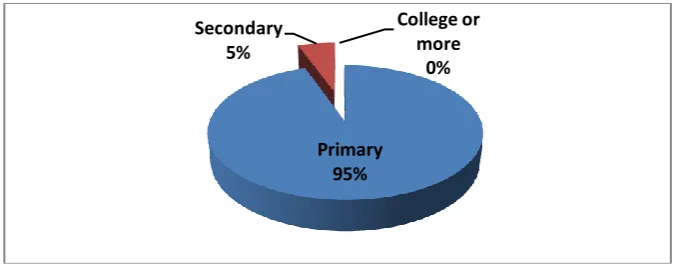
The scenario was quite different for female as 95% had completed primary education however only 5% had secondary education
and no one had reached up to higher secondary level (Figure 4.5).
Fig 4.5. Level of schooling among female tannery workers FEMALE (YES)
16%
MALE (YES) 84%
Primary 82% Secondary
17% College or more 1%
Primary 95% Secondary
5%
College or more
Available online: http://internationaljournalofresearch.org/ Page| 557
4.4MARITAL STATUS
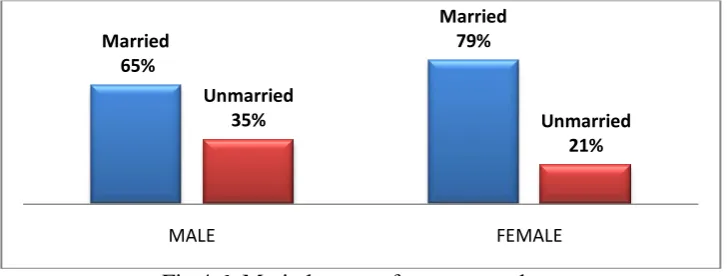
Most of the tannery workers were married where the percentage was greater for female than that of male. About 79%
female and 65% male tannery workers were married while 21% female and 35% male workers were unmarried (Figure 4.6).
Fig 4.6. Marital status of tannery workers
4.5TANNERY WORKERS EXPOSURE TO CHEMICALS IN THE TANNERY
4.5.1DURATION OF WORKING IN THE TANNERY
As it is obvious that even short-time exposure of these toxic chemicals can have serious health effect and someone continue working here, this will never heal. Therefore, it was assumed that these high toxic chemicals may certainly have impact upon reproductive health by causing different reproductive tract infections (RTIs). Thus in present study 1-year was considered as minimum time of exposure. From the study, it was found that among the 78% were working for more than
1-year whereas only 21% were working for less than one year. The situation was quite similar for female tannery workers where about 85% were working for more than 1 year while only 15% were working for less than one year (Figure 4.7).
Fig 4.7. Duration of working in the tannery for both male and female Married
65%
Married 79%
Unmarried
35% Unmarried
21%
MALE FEMALE
One Year
21% One Year15%
More than One Year 78%
More than One Year 85%
Available online: http://internationaljournalofresearch.org/ Page| 558
4.5.2TYPE OF EXPOSURE/WORK INVOLVED IN THE TANNERY
In the present study working in the tannery had been classified into three groups, first of all, working in presence of much or high toxic chemicals that involved converting raw hides to ―wet blue‖ leather, then to ―crust leather,‖ secondly in presence of less toxic chemicals that involved work related to finished products. Finally, in third groups i.e. other works
like carrying goods, cutting, sorting etc. Among the respondents 74% male and 52% female were involved working in presence of much or high toxic chemicals at the same time 26 % male and 48 female were working in presence of much less toxic chemicals. No one involved in third group of work among the respondent (Figure 4.8).
Fig 4.8. Type of exposure to toxic chemicals within the tannery
4.6KNOWLEDGE
4.6.1KNOWLEDGE OF PREGNANCY
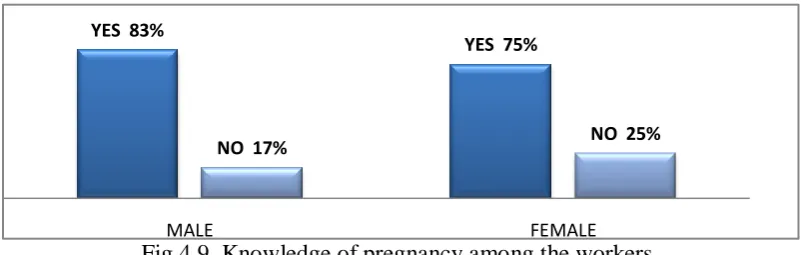
The present investigation reveal that 83% male and 75% female knew the process of having a child or the way women get pregnant whereas 17% male and 25%
female didn‘t know the process of getting pregnant or having a child (Figure 4.9).
Fig 4.9. Knowledge of pregnancy among the workers
There is a significant relationship between different age group and the knowledge of pregnancy (p<0.000). Among different age groups age11-20 had highest percentage (63.2%) of respondents those didn‘t have
knowledge of pregnancy but the percentage decreased as the group proceed and at age group 41-50 it become 24.24% and continues till the last group (Table 4.2).
MALE 74%
MALE 26%
0%
FEMALE
52% FEMALE48%
0%
In presence of much toxic chemicalsIn presence of less toxic chemicals Others
YES 83%
YES 75%
NO 17% NO 25%
Available online: http://internationaljournalofresearch.org/ Page| 559
Table 4.2. Knowledge regarding pregnancy among different age group
Category of age Knowledge of pregnancy Total N=371
Pearson Chi-Square (P- Value) Yes (%) No(%)
Age11-20
36.8% 63.2% 76 (100%)
.000 Age 21-30
84.5% 15.5% 142 (100%)
Age31-40
92.44% 7.56% 119 (100%)
Age 41-50
75.76% 24.24% 33 (100%)
4.6.2EFFECT OF TANNERY WORK/CHEMICALS ON KNOWLEDGE OF PREGNANCY
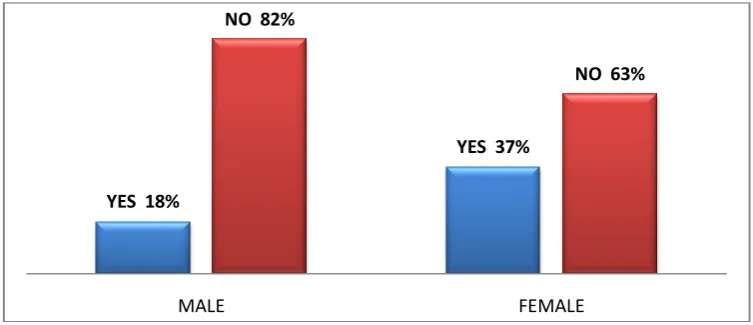
When the respondents were asked about their perception on that the chemicals used in the tannery have any effect upon the process of given birth to a child, 18 percent male and 37 percent female thought affirmatively. Meanwhile
a large portion of tannery workers (82% male and 63% were female) didn’t think that there is any effect of tannery chemicals upon the process of given birth to a child showing in the following Figure 4.10.
Fig 4.10. Effect of tannery work/chemicals on knowledge of pregnancy YES 18%
YES 37% NO 82%
NO 63%
Available online: http://internationaljournalofresearch.org/ Page| 560
4.6.3TYPE OF EFFECT
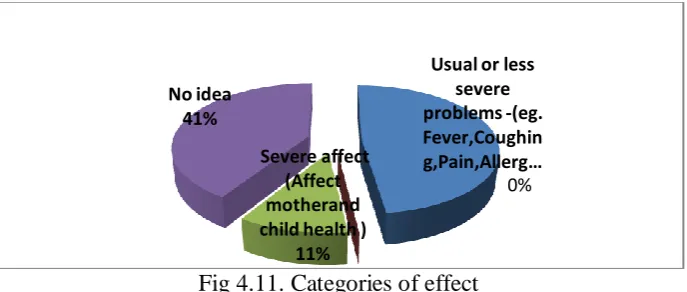
Among the respondents those who think that tannery work or chemicals have an impact on the process of giving birth to a child, they were asked to clarify or mention the effect. As it was an open ended question so it was coded into three categories- usual or less severe problems, badly or severe affect on mothers and child health and third one was those who had no
idea upon the effect. About 48% respondents thought that the effects may cause usual problems like- fever, coughing, pain in body etc. Severe affect such as longtime illness of mothers and child were mentioned by 11% respondents and rest i.e. 41% have no idea (Figure 4.11)
Fig 4.11. Categories of effect
4.6.4KNOWLEDGE ON POST-PARTUM COMPLICATION
In the present study eight types of problems that occur just after having baby i.e. post-partum complications were considered to assess the knowledge on reproductive health problems. The complications were- maternal death, premature birth, spontaneous abortion, stillbirth, low birth weight, bleeding, high level of childhood illness, and mental and physical disabilities in children.
Among the female respondents 43% know more than four types of post-partum complications, 18% know four, 9% know three, 6% know two and 1% know only one type of post-partum complications. However, about 23% respondents didn‘t have any idea about any kind of post-partum complications (Figure 4.12).
Fig 4.12. Knowledge on post-partum complication among female tannery workers Usual or less
severe problems -(eg. Fever,Coughin g,Pain,Allerg…
0%
Severe affect (Affect motherand child health )
11% No idea
41%
One 1%
Two 6%
Three 9%
Four 18%
>four 43%
Available online: http://internationaljournalofresearch.org/ Page| 561
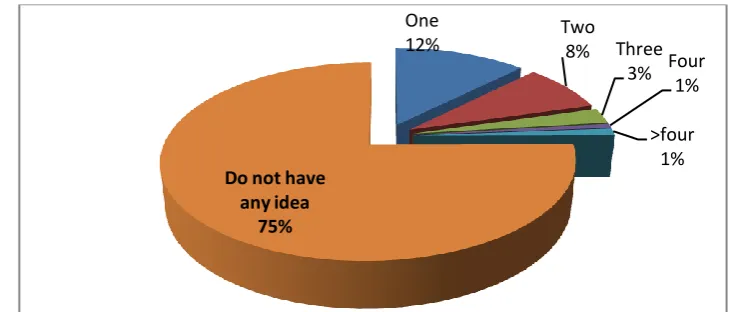
The picture was quite opposite for male respondents as a major portion of the respondents that is 75% didn‘t have any idea regarding problems that occur just after having a baby. About 12% know only
one type – maternal death, 8% know two, 3% know three and only 1% know four and more than four complications (Figure 4.13).
Fig 4.13. Knowledge on post-partum complication among male tannery workers
4.6.5KNOWLEDGE REGARDING MENSTRUAL HYGIENE
The female respondents were asked about how they manage their menstruation or more precisely what they use during their menstruation. Almost all i.e. 97% use
cloths and surprisingly 2% of respondents use nothing during their menstruation. No one use sanitary napkins although a very negligible percent i.e.1% uses cotton (Figure 4.14).
Fig 4.14. Knowledge regarding menstrual hygiene
One
12% Two8% Three
3% Four 1%
>four 1%
Do not have any idea
75%
Cotton 1%
Cloths 97% nothing
Available online: http://internationaljournalofresearch.org/ Page| 562
4.7REPRODUCTIVE HEALTH CONDITIONS
4.7.1SITUATION WITH MENSTRUAL CYCLE
To assess the reproductive health conditions respondents were asked about the state of their menstrual cycle in last one year. 71.9% of respondents had a
regular menstrual cycle whereas 28.1% had irregular menstrual cycle in last one year (4.3).
Table 4.3. Situation with menstrual cycle
Situation with menstrual cycle Number Percent
Regular 64 71.9
Irregular 25 28.1
Total 89 100.0
4.7.2SITUATION OF MENSTRUAL CYCLE BEFORE WORKING IN TANNERY
Among the 25 respondents who had irregular menstrual cycle, were again asked whether they had these irregularities before working in the tannery or not. 58%
replied ―no‖ and 42% replied ―yes‖ i.e. they had irregular menstrual cycle before working in the tannery (Figure 4.15).
Fig 4.15. Irregular menstrual cycle before working in the tannery
0% 10% 20% 30% 40% 50% 60%
Available online: http://internationaljournalofresearch.org/ Page| 563
4.7.3KNOWLEDGE REGARDING IRREGULAR MENSTRUAL CYCLE
When the respondents were asked what they thought about the reason behind the irregularities in menstrual cycle, 33% thought working load and working long time in a tannery were reasons behind the problem (Figure 4.16). However 11%
respondents thought it might be due to anxiety. Lastly, a major portion of respondent considered others reason and most probably it might be due to their contraceptive use.
Fig 4.16. Knowledge regarding irregular menstrual cycle
4.7.4SITUATION OF PREGNANCY DURING WORKING IN TANNERY
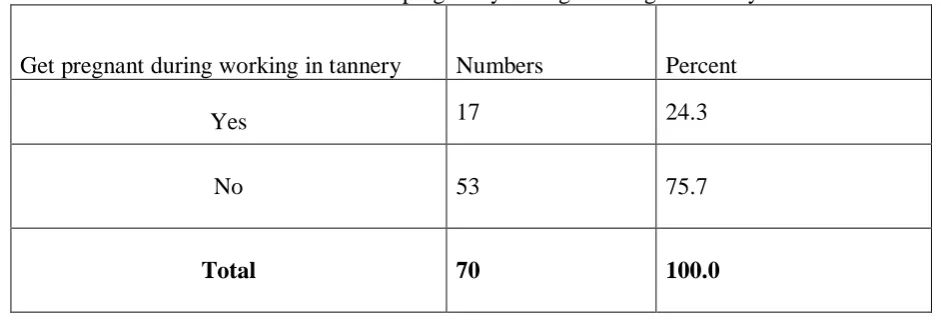
Among the female respondents 70 women were married and 19 were unmarried. Married women were asked whether they ever get pregnant during working in the
tannery. About 24.3 % replied as ‗yes‘ whereas 75.7% replied as ‗no‘ that means they never get pregnant while working in the tannery (Table 4.4).
Table 4.4. Situation of pregnancy during working in tannery
Get pregnant during working in tannery Numbers Percent
Yes 17 24.3
No 53 75.7
Total 70 100.0
Working load and working
for longer period in a
tannery 33%
Anxiety 11% Others
Available online: http://internationaljournalofresearch.org/ Page| 564
4.7.5SITUATION OF PREGNANCY
As 17 respondents answered ‗yes‘ that means they get pregnant while working in the tannery, then they were asked whether that was a live birth or not.7 respondents
(41.2%) answered as ‗yes‘ but 10 respondents (58.8%) replied as ‗no‘, it was not a live birth (Table 4.5).
Table 4.5. Situation of pregnancy
Live birth Numbers Percent
Yes 7 41.2
No 10 58.8
Total 17 100.0
4.7.6SITUATION OF BIRTH
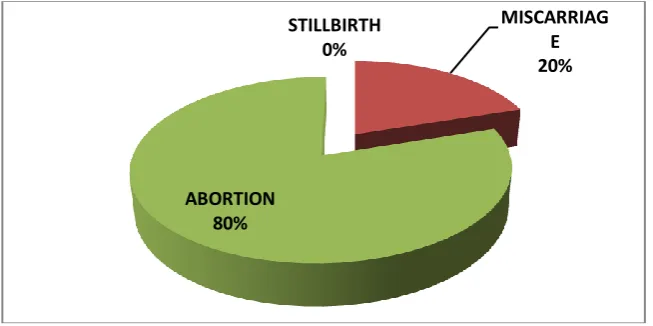
As 10 respondents said that it was not a live birth, therefore they were asked what the state of that birth was. Almost 80% (8) respondents answered that it was due to
abortion, 20% (2) respondents mentioned miscarriage was reason behind this but no one replied for still birth (Figure 4.17).
Fig 4.17. Situation of birth
When their (10 respondents) views were inquired on the effect of working in the tannery upon these above mentioned state
of the birth, all of them replied ‗no‘ means they didn‘t think that working in the tannery has any influence upon these abortions and miscarriages.
STILLBIRTH 0%
MISCARRIAG E 20%
Available online: http://internationaljournalofresearch.org/ Page| 565
4.8REPRODUCTIVE HEALTH PROBLEMS
4.8.1IN FEMALES
There are seven types of reproductive health problems or more specifically Reproductive Tract Infections were considered to assess the present state of reproductive health among the female tannery workers. They are- Burning sensation during urination, white discharge, itching genital region, pain in lower abdomen, small red soars, swelling of vaginal area and cervix infection (pain in time of intercourse).
In the present investigation, among the seven RTIs white discharge was more prevailing among the female tannery workers, 21 respondents (23.6%) had it.
After that, the common problems they faced were burning sensation during urination and itching in genital region accompanied with pain in lower abdomen. First one was found among 13 respondents (14.6%), second one among 11(12.4%) and third one among 7 respondents (7.4%). There were prevailing some other problems like small red soars among 6 respondents (6.7%) and Cervix infection (pain in time intercourse) in 1 respondent (1.1%). However, a major portion i.e. 30 respondents (33.7%) of the respondents didn‘t have any reproductive health problems (Table 4.6).
Table 4.6. Reproductive health problems among female workers
Reproductive health problems Frequency Valid Percent
Burning sensation during urination 13 14.6
White discharge 21 23.6 Itching in genital region 11 12.4 Pain in lower abdomen
7 7.9
Small red soars
6 6.7
Cervix infection (pain in time
intercourse) 1 1.1
Nothing
30 33.7
Available online: http://internationaljournalofresearch.org/ Page| 566
4.8.2IN MALES
There are eight types of reproductive health problems or more specifically Reproductive Tract Infections were considered to assess the present state of reproductive health among the male tannery workers. They are- Burning sensation during urination, itching genital region, pus discharge from urethra, ulcer on penis, ulcer on genital region, pain in testis, warts on genital region and semen discharge from the penis.
In the present study male respondents mainly faced the problem of burning
sensation during urination, 83 respondents (29.4%) mentioned that they have this problem. Then 76 respondents (27.0%) mentioned itching in genital region, 4 respondents (1.4%) had ulcer on genital region and a very negligible percent i.e. 1 respondent had the problem of semen discharge from penis. On the other hand, 118 respondents didn‘t have any of the above mentioned reproductive health problems (Table 4.7).
Table 4.7. Reproductive health problems among male workers
Reproductive health problems Numbers Percent
Itching in genital region 76 27.0
Burning sensation during urination 83 29.4
Ulcer on genital region 4 1.4
Semen discharge from the penis 1 .4
Nothing 118 41.8
Available online: http://internationaljournalofresearch.org/ Page| 567
4.9REPRODUCTIVE HEALTH PROBLEMS - AS A RESULT OF WORKING LONGER PERIOD IN TANNERY
4.9.1IN FEMALES
Among 59 female respondents those who had reproductive health problems almost half i.e. 49% thought that working in the tannery for longer period was the reason behind their specific reproductive health problems like Burning sensation during urination, itching genital region and pain
in lower abdomen etc. Nevertheless, 51% respondents thought that working in the tannery for longer period has no consequences upon their specific reproductive health problems (Figure 4.18).
Fig 4.18. Reproductive health problems as a result of working longer period in tannery (female)
4.9.2IN MALES
Among 164 male respondents those who had specific reproductive health problems like burning sensation during urination, itching genital region and others, 79% of them thought that working in the tannery for longer period was the reason behind
their specific reproductive health problems. Although 21% respondents thought that working in the tannery for longer period has no consequences upon their specific reproductive health problems (Figure 4.19).
48% 49% 49% 50% 50% 51% 51% 52%
Available online: http://internationaljournalofresearch.org/ Page| 568
Fig 4.19. Reproductive health problems as a result of working longer period in tannery (male)
To find out or measure the association of developing disease in tannery based on working year both for male and female, cross-tab analysis along with chi-square test was done.
For female respondents Chi square value is significant at 1% level of significance (p value= 0.001) (Table 4.8).
Table 4.8. Likelihood of developing RH problems or disease in tannery based on working year(For female)
Workers those are suffering from various problems
Workers those are not suffering from various problems
Pearson Chi-square (P-value) Working more than 1
year in the tannery
51 21
0.001 Working less than 1
year in the tannery
7 10
Total (Female) 58 31
Odd ratio: OR = 55×107×21 =3.74
Since OR >1 , it is suggesting that the respondents (female) who are working in the tannery for more than one year are 3.74 times likely to develop various reproductive health problems or diseases than those who are working in the tannery
for less than one year. So we can conclude that there is significant dependency of disease development on working duration in the tannery among the male tannery workers (Table 4.8).
YES 79% NO
Available online: http://internationaljournalofresearch.org/ Page| 569
Table 4.9. Likelihood of developing disease in ternary based on working year (for male) Workers those are
suffering from various problems
Workers those are not suffering from various problems
Pearson Chi-square
(P-value) Working more than
1 year in the tannery
147 75
1.226 Working less than 1
year in the tannery
18 42
Total (Male) 165 117
Odd ratio: OR = 147×4218×75 = 4.57
Since OR >1 , it is suggesting that the respondents (male) those are working in the tannery for more than one year are 4.57 times likely to develop specific reproductive health problems or diseases than those who are working in the tannery for less than one year. Another remarkable association or relation was measured between respondents those are suffering from various reproductive health problems based on the type of exposure to chemicals, respondents involved in.
For female respondents Chi square value is not significant at 1% level of significance (Table 4.9). So it can be stated that there is no significant dependency of reproductive health (RH) problems or disease development based on the type of exposure to chemicals, respondents involved in.
Table 4.10. Likelihood of developing of RH problem or disease development based on the type of exposure to chemicals (For female)
Workers those are suffering from various problem
Workers those are not suffering from various problem
Pearson Chi-square
(P-value) Working in presence
of much toxic chemicals
32 14
0.045 Working in presence
of less toxic chemicals
26 17
Available online: http://internationaljournalofresearch.org/ Page| 570
Odd ratio: OR = 32×17
26×14
=1.49
Since OR >1 , it is suggesting that the respondents (female) those who are working in the tannery in presence of much toxic chemicals are 1.49 times likely to develop various RH problems or diseases than those who are working in the tannery in the presence of less toxic chemicals.
For male respondents Chi square value is significant at 1% level of significance (Table 4.10). Therefore it can be concluded that there is significant dependency of developing of RH problem or disease development based on the type of exposure to chemicals, respondents involved in.
Table 4.11. Likelihood of developing of RH problem or disease development based on the type of exposure to chemicals (For male)
Workers those are suffering from various problems
Workers those are not suffering from various problems
Pearson Chi-square (p-value) Working in presence
of much toxic chemicals
139 70
3.432 Working in presence
of less toxic chemicals
25 48
Total (Male) 164 118
Odd ratio: OR = 139×4825×70 =3.81
Since OR >1 , it is suggesting that respondents (male) those who are working in the tannery in presence of much toxic chemicals are 3.81 times likely to develop various RH problems or diseases than
those who are working in the tannery in the presence of less toxic chemicals. (Table 4.11)
4.10KNOWLEDGE REGARDING REPRODUCTIVE HEALTH SERVICES
Again to assess their attitude towards health services, they were asked what would be their perception if any of their colleagues had any kind of RH problems, whether they should consult to a doctor or not. The reply was quite same both from
Available online: http://internationaljournalofresearch.org/ Page| 571
Fig 4.20. Knowledge of services respondents seek regarding RH including visiting doctors
Respondents those who had RH problems, they were asked whether they ever consulted a doctor for their specific RH problems or not. 70% of them never
consulted a doctor while 30% had consulted to a doctor for their specific RH problems (Figure 4.21).
Fig 4.21. Attitude regarding reproductive health services
5.
DISCUSSIONHazaribagh is considered a tannery as an independent factory unit. A relatively large tannery will employ a few hundred workers, while a medium-sized tannery will employ around a hundred workers, and small tanneries might have just a dozen or so workers. The present study was intended to assess the knowledge regarding reproductive health among the tannery workers of Hazaribagh area. In brief the study aims to find whether the tannery workers have the necessary
knowledge regarding their reproductive health that it could be affected by working in presence of highly toxic chemicals in the tannery. The study also likes to reveals workers present state of reproductive health conditions whether it is affected by the toxic chemicals or not and what was probably of developing any kind of reproductive health problems or diseases.
Knowledge on post-partum complication among the female workers was good as about 43% know more than four symptoms like maternal mortality, severe
YES 92% YES 93%
NO 8% NO 7%
MALE FEMALE
0% 20% 40% 60% 80%
Yes
No 30%
Available online: http://internationaljournalofresearch.org/ Page| 572
bleeding, low birth weight of baby, premature birth etc. However among the male the knowledge is poor, only 1% know more than four symptoms and 75% didn‘t have any idea regarding problems that occur just after having a baby (Figure 4.12 and 4.13). In 2000 Ashraf et al. reported that more than 60% of the men in the rural areas and about 80% in the urban areas had no knowledge about postpartum complications. Of those having knowledge, a small number could cite some symptoms. Excessive bleeding, convulsions, and fever for more than 3 days were the most cited post delivery-related complications.
In Bangladesh, women do not always have access to contemporary treatment materials such as sanitary napkins, tissues or clean cloths during their menstruation. Women can be infected by variety of bacterial, viral and protozoan infections (RTIs) not only through sexual intercourse but also the use of unclean menstrual cloths, insufficient knowledge on menstrual hygiene. Therefore, knowledge regarding menstrual hygiene is very important for women. In the present study knowledge regarding menstrual hygiene is also poor among the female workers as 97% use cloths and surprisingly 2% of respondents use nothing during their menstruation (Figure 4.14). Akhter, 2007 reported that a large portion- more than 87.3% of urban women and more than 90% of rural women use old cloths, during menstruation and they reuse them without washing properly and drying them thoroughly.
Among the female respondents 25 workers had irregular menstruation in last one year and 56% of them had irregular menstruation after working in the tannery. Of them 33% thought working load and working long time in a tannery were
reasons behind the problem (Figure 4.16). However 11% respondents thought it might be due to anxiety. Lastly, a major portion of respondent, considered others reason and most probably it might be due to their contraceptive use. Occupational exposures can also cause menstrual problems, which may prevent ovulation from taking place and stress, working on shifts, or exposure to certain organic solvents can disrupt the normal menstrual cycle, which in turn can affect fertility (WHO, 2009).
Tanneries in Hazaribagh utilize an enormous assortment of chemicals. As it is evident from literature that even short-time exposure of these toxic chemicals can have serious health effect and someone continue working here, this will never heal. Therefore, it was assumed that these high toxic chemicals may certainly have impact upon reproductive health by causing different reproductive tract infections (RTIs) even in short-time exposure. Thus in the present study 1-year was considered as minimum time of exposure and it was observed that most of the tannery workers were working in the tannery for more than one year (Figure 4.7).
Available online: http://internationaljournalofresearch.org/ Page| 573
indicates that more the duration, it‘s more likely to develop RTIs in the tannery. Chemicals used in tanning can be injurious to human health if proper safety precautions are not taken; some are known to be confirmed or potential human carcinogens, the effects of which can only be observed years after exposure (HRW, 2012). If the trend continues around more than 15 years, these can even cause cancer (WHO, 2009).
Leather technologists assumed each of the three stages (initially converting raw hides to ―wet blue‖ leather, then to ―crust leather,‖ and finally finished leather) of leather processing commonly involves around 20 chemicals (ImamulHuq, 1998). Tannery workers process animal hides with toxic chemicals but before tanning they work with chemical-mixed water, liming and de-liming, scrapping off meat and fat. They do it with bare hands Chromium, Sulfur, Manganese, Copper compound, Lead and others are used to tan which are very toxic for their health.
In the present study types of exposure to chemicals were classified into three groups according to the three stages in the tannery. The first group ―in presence of more toxic chemicals‖ consists of first two stages then second group ―in presence of less toxic chemicals‖ consist of third stage and finally ―others‖ means carrying leather goods from tannery to outsides, raw hides into tanneries. No respondents were interviewed who deals with the third group in the present study.
One more notable association was measured between the tannery workers those are suffering from various reproductive health problems based on the type of exposure to chemicals, they involved in. For female workers there is no significant dependency of reproductive
health (RH) problems or disease development based on the type of exposure to chemicals, they involved in, at 1% level of significance (Table 4.8). However for male workers there is significant association at 1% level of significance (Table 10). In addition from the Odds ratio it can be stated that female workers those who are working in the tannery in presence of much toxic chemicals are 1.49 times likely to develop RTIs than those who are working in the tannery in the presence of less toxic chemicals. For male the probability is higher, it is 3.81 times likely to develop various RTIs among those who are working in the presence of much toxic chemicals then to less toxic chemicals. As male workers are more involved to hazardous work means in presence of toxic chemicals so they are more likely to develop diseases or problems.
Wet blue leathers are made using these chemicals Most of the workers are directly use these chemicals each and every day because of being done the process manually. They don‘t like to use hand gloves or any other safety items. Most of the times the workers work with bear feet when they clean dirt, bloods and chemicals which cause various diseases.
The reproductive health problems of tannery workers—such as itching in genital area, burning sensation during urination, pain in lower abdomen etc- are the result of repeated exposure to hazardous chemicals when measuring and mixing chemicals, adding chemicals to hides in drums, or manipulating hides saturated in chemicals.
Available online: http://internationaljournalofresearch.org/ Page| 574
health risks and certain chemicals can cause decreased fertility or even sterility and it can reduce the number of sperm to a level below the minimal necessary for fertilization (EHC, 2001). Young men may be exposed to toxic chemicals that can affect the quality of their sperm, bring home workplace toxicants and expose their family members (e.g. pregnant wife, small children). During reproductive age, women may be exposed to hazards that can affect the outcomes of pregnancy and the health of their offspring (WHO, 2009).
Among all the respondents, only 17 female workers got pregnant during working in the tannery. Only 7 of them gave birth to a live birth but the rests 10 of them had abortion (80%) and miscarriage (20%) (Figure 4.17).
Although tannery workers knowledge regarding pregnancy as effect of tannery work is low means they do not think that tannery work has any effect upon their undesirable termination of pregnancy but literature reveals opposite views. Certain occupational hazards that are working in presence of radiation and hazardous chemicals can cause mutations in genetic material that can be passed on to future generations. Such hazards are called mutagens. Genetic mutations can result in birth defects, stillbirth or miscarriage, depending on the type of damage caused (EHC, 2001). Several adverse reproductive outcomes associated with maternal exposure to leatherwork and included an increased risk of prenatal death, reduced female fertility, spontaneous abortion, preterm delivery, low birth weight, and cleft palate (Garcia and Fletcher, 1998).
Almost 70% of the tannery workers never consulted a doctor while 30% had consulted to a doctor for their specific RH problems (Figure 4.21). A pervasive sense
of shame and embarrassment prevents female from seeking health care for their RH problems especially if the provider is male (Bhuiys et al., 2000). Prominent barriers to male is the notions of feelings (awful happening), shyness and embarrassment at dealing all these publicly (Shahjahanand Kabir, 2007).
6.
C
ONCLUSIONAvailable online: http://internationaljournalofresearch.org/ Page| 575
Failure to deal with reproductive health problems at any stage in life sets the scene for later health and developmental problems. Since reproductive health is such a vital component of general health it is a prerequisite for social, economic and human development. The highest attainable level of health is not only a fundamental human right for all; it is also a social and economic essential because human energy and creativity are the driving forces of development. Such energy and creativity cannot be generated by sick, exhausted people, and therefore a healthy and active population becomes a prerequisite of social and economic development. The government has not enforced environment and labour laws in the leather sector, owing to which workers' safety issues remain mostly ignored. It is recommended that Bagladesh‘s Labour Act should be more stringent so that each tannery must take the steps necessary for the prevention, treatment and control of occupational and other diseases. It also should ensure the right of everyone to the enjoyment of just and favorable conditions of work including safe and healthy working conditions as well as provide all the necessary protective equipments for the tannery workers.
Furthermore, there are no health care services are available near the Hazaribag tannery areas where tannery workers can seek proper health care. Appropriate services must be accessible and include information, education, counseling, prevention, detection and management of reproductive health problems, care and rehabilitation.
Pollution in Hazaribagh is physically noticeable: tannery effluent runs through the gutters, leather scraps litter the streets, and a strong odor of rotten eggs hangs in the air. Consequently the proper authority
like Department of Environment (DoE) should take appropriate initiatives to provide a healthy and sound environment not for the tannery workers but also for all the residents of Hazaribag area.
Finally to conclude it can be stated that Reproductive health is a health issue but encompasses more than biomedical aspects and goes beyond the health sector. The determinants of reproductive ill-health lie in poverty, gender and other forms of inequity, social injustice, and marginalization and development failures. All sectors affect and are affected by reproductive health. Coordination from all sectors and all agencies should be maintained and must perform properly their roles and responsibilities in promoting reproductive health.
Despite the fact that the present study was done in a very small scale due to limitations such as resources, time etc. but the study findings will certainly support as a base line study for further and extended research in this regard.
L
IMITATIONSAvailable online: http://internationaljournalofresearch.org/ Page| 576
measurement validity and certainly overcome all the limitations that poses in the study.
REFERENCES
[1] Afsana, K. and Rashid, SF. (2003). A women-centered analysis of birthing care in a rural health centre in Bangladesh. In Access to Quality Gender-Sensitive Health Services. Women Centered Action Research. ARROW, Kuala Lumpur. p. 43-60.
[2] Akhter, S. (2007). Knowledge, Attitudes and Practices on Reproductive Health and Rights of Urban and Rural Women in Bangladesh. Yokohama. Journal of Social Science. 12(3):131 150
[3] Ashraf, A., Tuñón, C., Hasan, Y., Reza, M., Saha, N.C. and Barkat-e-Khuda. (2000). Knowledge of men about reproductive health issues and services in Bangladesh. Edited by MSI Khan and MA Rahim. ICDDR,B working paper, 135. p. 44.
[4] Asociación Cluster de Industrias de Medio Ambiente de Euskadi (ACLIMA). (2008). Application of Innovative Technologies for the Reclamation and Environmental Improvement of Derelict Urban Areas in Dhaka City (Bangladesh). p. 11.
[5] Baden, S., Green, C., Goetz, A.M. and Guhathakurta, M. (1994). Background Report on Gender Issues in Bangladesh (BRIDGE Reports). IDS, University of Sussex, Brighton, UK. p. 21
[6] Bangladesh Society for Environment and Human Development (SEHD). (1998). Leather Industry: Environmental Pollution and Mitigation Measures. A report published by Society for Environment and Human Development, Dhaka, Bangladesh. p. 14-20
[7] Bhuiya, A. Ahmed, S.M., Adams, A.M. and Chowdhury, M. (2000). Reproductive Health Services for Adolescents: Recent Experiences from a Pilot Project in
Bangladesh. Dhaka:Population Council, Bangladesh.
[8] Chakraborty, N., Islam, M.A., Chowdhury, R.I., Bari, W. and Akhter, H.H. (2003). Determinants of the use of maternal health services in rural Bangladesh. Health Promotion International. 18(4):327-337.
[9] Cook, R.J., Dickens, B.M. and Fathalla, M.F. (2003). Reproductive Health and Human Rights: Integrating Medicine, Ethics, and Law. Clarendon Press, Oxford.
[10] Environmental Health Centre (EHC). (2001). Reproductive and Developmental Hazards. A Guide for Occupational Health Professionals. US Navy, Environmental Health Centre.
[11] Garcia, A.M. and Fletcher, T. (1998). Maternal occupation in the leather industry and selected congenital malformations. International Journal of Occupational Environmental Medicine. (55):284–6.
[12] Goodburn, E.A., Gazi, R. and Chowdhury, M. (1995). Beliefs and Practices Regarding Delivery and Postpartum Maternal Morbidity in Rural Bangladesh. Studies in Family Planning. 26(1):22-32.
[13] Greene, L.E., Riederer, A.M., Marcus, M., and Lkhasuren, O. (2010). Associations of fertility and pregnancy outcomes with leather tannery work in Mongolia: a pilot study. International Journal of Occupational Environ Health. 16(1):60-8.
[14] Hassan MR, Kabir AR, Mahmud AM, Rahman F, Hossain MA, Bennoor KS, Amin MR, Rahman MM. (2002). Self-reported asthma symptoms in children and adults of Bangladesh: findings of the National Asthma Prevalence Study. Int J Epidemiol;31:483–488. doi: 10.1093/ije/31.2.483.
Available online: http://internationaljournalofresearch.org/ Page| 577
[16] Imamul. Huq, S. M. (1998). Critical Environmental Issues Relating to Tanning Industries in Bangladesh. In: Naidu et al. (eds), Towards Better Management of Soils Contaminated with Tannery waste, ‖ in Proceedings of a workshop held at the Tamil Nadu Agricultural University, Coimbatore, India. p. 23
[17] International Labour Organization (ILO). (2006). Male and Female Reproductive Hazards in the Workplace.
[18] Kotalová J. (1996). Belonging to Others: Cultural Construction of Womanhood among Muslims in a Village in Bangladesh. University Press Ltd, Dhaka.
[19] Kurinczuk, J. J. and Clarke, M. (2001). Case-control study of leatherwork and male infertility. J Occup Environ Med. (58):217–224.
[20] Mullany, B. C. (2006). Barriers to and attitudes towards promoting husbands‘ involvement in maternal health in Katmandu, Nepal. Social Science and Medicine. 62(11):2798-2809.
[21] Petsonk EL. (2002) Work-related asthma and implications for the general public. Environ Health Perspect;110Suppl 4:569– 572.
[22] Shahjahan, M. and Kabir, M. (2007). Why males in Bangladesh do not participate in
reproductive health: lessons learned from focus group discussions. International Quarterly Journal of Community Health Education. 26(1):45-59.
[23] United Nations Population Fund (UNFPA). (1994). Report of the international conference on population and development. New York. p. 6-8.
[24] United Nations Population Information Network (POPIN). (2001). Guidelines on Reproductive Health. Population Division, Department of Economic and Social Affairs with support from the UN Population Fund. 220 East 42nd Street, New York, USA.
[25] World Health Organization (WHO). (2001). Tannery pollution threatens health of half-million Bangladesh residents. Bull World Health Organ.79 (1): 5-7.