© 2014, IJCSMC All Rights Reserved 722 Available Online atwww.ijcsmc.com
International Journal of Computer Science and Mobile Computing
A Monthly Journal of Computer Science and Information Technology
ISSN 2320–088X
IJCSMC, Vol. 3, Issue. 3, March 2014, pg.722 – 726
RESEARCH ARTICLE
Upgrade PIFS to Patterns Recognition
Firas Sabar Miften
Computer Department, College of Education, Thi_Qar University, Iraq
ـــــــــ ـــــــــــــــــــــــــــــــــــــــــــــــــــــــــــــــــــــــــــــــــــــــــــــــــــــــــــــــ ـــــــــــــــــــــــــــــــــــــــــــــــــــــــــــــــــــــــــــــــــــــــــــــــــــــــــــــــــــــــــــــ
ـــــــــــ
ــــــــــــــــــــــــــــــــ
Abstract-In this paper, proposed a new method for Patterns Recognition by upgrade PIFS (Partitioned Iterated Function
Systems) which used for image compression. PIFS represent affine transformations which when iteratively applied to the
range-domain pairs in an arbitrary initial image. In our method the domains construct from many image belong to same
class of original image rather than domain construct from one image.
Keyword- pattern; recognition; PIFS (Partitioned Iterated Function Systems); fractal
ـــــــــ ـــــــــــــــــــــــــــــــــــــــــــــــــــــــــــــــــــــــــــــــــــــــــــــــــــــــــــــــ ـــــــــــــــــــــــــــــــــــــــــــــــــــــــــــــــــــــــــــــــــــــــــــــــــــــــــــــــــــــــــــــ
ـــــــــــ
ــــــــــــــــــــــــــــــــ
I. INTRODUCTION
Now, all the research on pattern recognition has been conducted in two steps. The first step, called a feature extraction, is
the representation of an image by a discrete number of values called pattern features, seen as elements of a feature vector. These
features are typically areas, lengths, shape factors, Fourier descriptors and co-occurrence texture descriptors [2,4,7]. The second
step, called a classification, is the allocation of a wear particle represented by a feature vector to a particular class. Other
methods used to classifying surfaces are based on fractals, e.g. fractal dimension [3,5] . In this paper, a new pattern recognition
method, PIFS has been developed and applied to computer generated images of fractal surfaces. Images of fractal surfaces
were used to evaluate the classification accuracy of the method.
II. PARTITIONED ITERATED FUNCTION SYSTEMS (PIFS)
Fisher [6], Suppose we are dealing with a 256 x 256 pixel image in which each pixel can be one of 256 levels of
grey (ranging from black to white( . Let R1, R2,..., R1024 be the 8x8 pixel non-overlapping sub-squares of the image, and let D
© 2014, IJCSMC All Rights Reserved 723
image that most looks like the image above Ri. This domain is said to cover the range. Also, a square in D has 4 times as many
pixels as an Ri, so we must either subsample (choose 1 from each 2x2 sub-square of Di) or average the 2 x 2 sub-squares
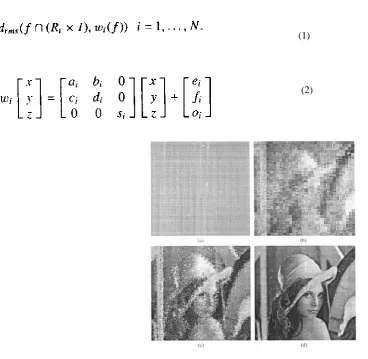
corresponding to each pixel of Ri, when we minimize (Equation 1). Minimizing (Equation 1) means two things. First, it means
finding a good choice for Di (that is the part of the image that most looks like the image above Ri,). Second, it means finding
good contrast and brightness settings si and oi for wi. For each D € D we can compute si and oi using least squares regression,
which also gives a resulting root mean square (RMS) difference. We then pick as Di the D € D with the least RMS difference. A
choice of Di, along with a corresponding si and oi, determines a map wi, of the form of (Equation 2). Once we have the
collection w1….w1024 we can decode the image by estimating xw. Fig. 1 shows four images: an initial image f0 chosen to
show texture; the first iteration W(f0), which shows some of the texture from f0; W°2(f0); and W°lo(f0). The result is
surprisingly good, given the naive nature of the encoding algorithm. Figure 1 shows how detail is added at each iteration. The first iteration contains detail at size 8x8, the next at size 4x4, and so on. Jacquin [1] originally encoded images with fewer grey
levels using a method similar to this example but with two sizes of ranges. In order to reduce the number of domains searched,
he also classified the ranges and domains by their edge (or lack of edge) properties. This is very similar to the scheme used by
Boss et al. [1] to encode contours.
(1)
(2)
© 2014, IJCSMC All Rights Reserved 724
III. UPGRADE PIFS (UPIFS)
The PIFS can be described as follows. We divide an image into fixed number of non-overlapping range blocks (R). We
create a list of a domain blocks (D). The list consists of an overlapping area of the image, larger than the range blocks (usually
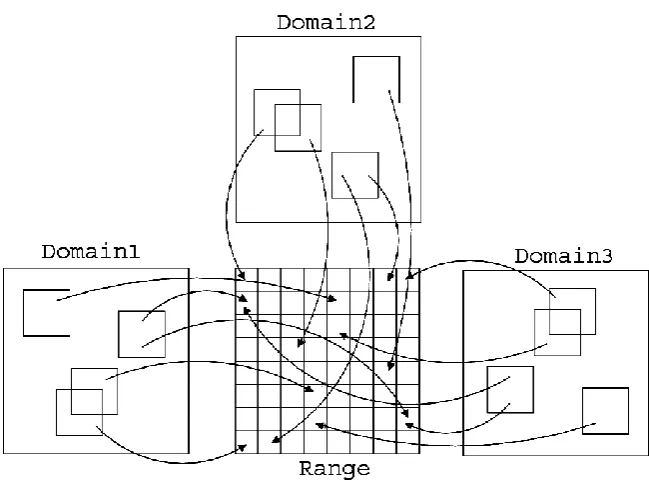
two times larger) see fig. 1. Next for every range block R we search for the domain block D such that the value ρ (R,F(D)) is the smallest, where ρ is a metric and F is a transformation determined by the position of the R and D blocks.
Now the upgrade on the PIFS is ,as an example we take four images and calculate the energy for all image when, as the
image that has the largest energy use it to extract the Range blocks where remained images using to extract Domain blocks
therefore, PIFSs constructed from one range and three Domains blocks as in Fig. 3.
Fig. 2: Domain and Range blocks
© 2014, IJCSMC All Rights Reserved 725
IV. RESEARCH METHOD
A pattern recognition system based on the PIFS method has been developed for the classification of images. The basic
idea behind this method is that UPIFSs constructed for classified images using are decoded using an unclassified image as the
initial image. If the unclassified image exhibits a similar morphology to the already classified image, then the decoded image
obtained just after one iteration will be ‘similar’ to the unclassified image. The unclassified image is assigned to the same class as the decoded image. If the decoded image is ‘different’, then the unclassified image belongs to a different class and a UPIFS
constructed for another image is used. This method consists of the following stages:
1. Read classified images.
2. For each class images do the flowing.
2.1. Calculate the Energy for all images.
2.2. Chose the image which has high energy as Range blocks.
2.3. Remained images using to extract Domain blocks.
2.4. UPIFSs constructed from one range and many Domains blocks.
3. Save all UPIFSs in database (one UPIFS for each class).
4. Read unclassified image.
5. For all UPIFSs in database do the flowing.
5.1. Constructed a new image by using an unclassified image as the initial for UPIFS after one iteration.
5.2. Calculate the PSNR between new image and unclassified image.
5.3. Save all calculate the PSNR.
6. The unclassified image is assigned to the class has high PSNR.
V. EXPERIMENTAL RESULTS
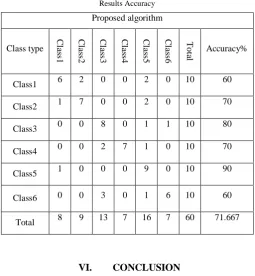
Experimental results proof a high level of accuracy. Our proposed method is tested on 84 image for attaining high
performance results. We have tested our technique on 60 different images out of which 84 are accurately enhanced giving an
© 2014, IJCSMC All Rights Reserved 726 TABLE 1 Results Accuracy Proposed algorithm Class type C la ss 1 C la ss 2 C la ss 3 C la ss 4 C la ss 5 C la ss 6 T ot al Accuracy%
Class1 6 2 0 0 2 0 10 60
Class2 1 7 0 0 2 0 10 70
Class3 0 0 8 0 1 1 10 80
Class4 0 0 2 7 1 0 10 70
Class5 1 0 0 0 9 0 10 90
Class6 0 0 3 0 1 6 10 60
Total 8 9 13 7 16 7 60 71.667
VI. CONCLUSION
The results of the performed experiments shows that the proposed upgrade of the PIFS give high accuracy . Moreover
we note that speed of the recognition process has also grown up. This speed improvement is caused by the fact that in the case
of decoding PIFS for all image in class rather than decoding PIFS for each image in class which we are doing the search
process are smaller than in the original case.
REFERENCES
1. E.W. Jacobs, R.D. Boss, and Y. Fisher. Fractal-based image compression ii. Technical Report 1362, Naval Ocean Systems
Center, San Diego, CA, June 1990.
2. F. Albregtsen, "Statistical Texture Measures Computed from Gray Level Co-occurrence Matrices ", University of Oslo, 1995.
3. J.C. Russ, Fractal Surfaces, Plenum Press, New York, 1994.
4. M. Cheong et al., "An Approach to Texture-Based Image Recognition by Deconstructing Multispectral Co-occurrence
Matrices using Tchebichef Orthogonal Polynomials ", IEEE, 2008.
5. T.R. Thomas, B.G. Rosen, N. Amini, Fractal characterisation of the anisotropy of rough surfaces, Wear 232 (1999) 41–50.
6. Y. Fisher Ed. , Fractal Image Compression. Theory and Applica-tion, Springer-Verlag, New York, 1995.