for congenital dislocation o f the hip
Sara Godward
Institute o f Child Health, University College London
All rights reserved
INFORMATION TO ALL USERS
The quality of this reproduction is dependent upon the quality of the copy submitted.
In the unlikely event that the author did not send a complete manuscript and there are missing pages, these will be noted. Also, if material had to be removed,
a note will indicate the deletion.
uest.
ProQuest U108564
Published by ProQuest LLC(2016). Copyright of the Dissertation is held by the Author.
All rights reserved.
This work is protected against unauthorized copying under Title 17, United States Code. Microform Edition © ProQuest LLC.
ProQuest LLC
789 East Eisenhower Parkway P.O. Box 1346
An epidemiological evaluation of the UKscieening programme for congenital
dislocation of the hip
In the United Kingdom (UK), a policy of universal clinical screening was formally adopted in 1969. This screening programme was established to detect infants with hip instability so that early conservative treatment could be applied, and congenital dislocation of the hip (CDH) averted. However, the effectiveness of clinical screening has not been evaluated in a randomised trial, and is controversial. National data on effectiveness are lacking and individual centres have reported conflicting results. Although ultrasound imaging of the newborn hip has been adopted as a universal primaiy screening test in some European countries, enthusiasm for its introduction in the UK has been tempered by the consequent fourfold increase in the number of children identified as requiring early treatment.
The extent of under ascertainment of cases was estimated by capture-recapture analysis.
œ N T E N T S
1: Introduction... 13
2: Literature rev iew ... 14
2.1 Screening: definition and terminology ... 14
2.2 Background... 19
2.2.1 Definition and term s... 19
2.2.2 Aetiology ... 20
2.2.3 H istory... 21
2.2.4 Clinical screening examination... 22
2.2.5 Current UK P olicy... 23
2.3 Screening and CDH ... 25
2.3.1 Is CDH an important public health problem?... 25
Sequelae of untreated C D H ... 25
Treatment of established CDH ... 26
Prevalence... 29
Prevalence of CDH before screening was introduced ... 29
2.3.2 Is there a recognisable latent or early symptomatic phase of CDH? ... 31
Prevalence of NHl ... 31
2.3.3 Is there a suitable te s t? ... 32
Risk factors for N H l... 33
Continued diagnosis of clinically presenting CDH ... 34
2.3.4 Is early conservative treatment effective? ... 34
2.3.5 How effective is the screening programme for C D H ?... 37
Natural history... 45
Failures of early treatment... 45
Economics ... 47
2.4 Ultrasound examination of the newbom h ip ... 48
2.5 Conclusion ... 50
3: M ethods... 52
3.1 National survey of screening and management... 52
3.1.1 Survey respondents... 52
3.1.2 Questionnaire design ... 53
3.1.3 Pretesting the questionnaire... 56
3.2 Surveillance study... 57
3.2.1 Introduction... 57
3.2.2 Routine data sources... 57
3.2.3 History of surveillance... 59
3.2.4 Definition of surveillance ... 59
3.2.5 Requirements of a surveillance scheme... 60
3.2.6 Ethical considerations... 61
3.2.7 The British Paediatric Association Surveillance U nit... 62
3.2.8 Case definition and study period ... 63
3.2.9 Development and maintenance of the orthopaedic reporting base ... 65
Development... 65
Maintenance ... 65
3.2.10 Surveillance methods ... 66
Case notification ... 66
3.2.11 Validation of the orthopaedic and paediatric reporting bases... 68
3.2.12 Follow up of notified cases ... 69
3.2.13 Pretesting the follow up form s... 70
3.2.14 Data entry and coding of forms ... 71
3.3 Validation of case ascertainment... 73
3.3.1 Background... 73
3.3.2 Capture recapture analysis... 73
3.3.3 Validation of the cases of abduction splinting ... 74
3.3.4 Validation of the cases of a first operative procedure ... 74
3.3.4.1 Validation areas... 74
3.3.4.2 Identification of cases of a first operative procedure from HES d ata... 75
3.3.4.3 Case definition ... 76
3.3.4.4 Preparation of HES d ata... 77
3.3.4.5 Ethical approval ... 77
3.3.4.6 Design of validation fo rm s... 78
3.3.4.7 Training... 78
3.3.4.8 Data storage and en try ... 79
4: R esu lts... 81
4.1 Survey of screening and management... 81
4.1.1 Response ... 81
4.1.2 Screening by clinical examination ... 82
4.1.3 Use of ultrasound... 83
4.1.4 High risk infants ... 85
4.1.5 Management... 85
4.2.1 The orthopaedic reporting base ... 88
4.2.2 The paediatric reporting b ase... : . . 90
4.2.3 Compliance with the reporting schemes ... 91
4.2.4 Cases of abduction splinting . . . ; ... 95
Prevalence... 95
Characteristics of confirmed cases of abduction splinting ... 96
Geographical distribution of cases of abduction splinting ... 98
Mode of presentation of cases of abduction splinting ... 99
Diagnostic tests prior to abduction splinting ... 100
Treatment of NHl ... 100
4.2.5 Cases of a first operative procedure ...101
Prevalence... 101
Characteristics of confirmed cases of a first operative procedure ...103
Geographical distribution of cases ... 104
Seasonality... 106
Hip affected ... 108
Clinical examination... 108
Imaging ...108
Mode of presentation... 110
Age at first operative procedure...110
Prior splinting... 112
Diagnostic te s ts ...112
Complexity of first operative procedure ...112
4.2.6 Children treated for CDH in the Republic of Ireland...113
Children who received abduction splinting ...114
4.3 V alidation... 115
4.3.1 Validation of cases of abduction splinting... 115
4.3.2 Validation of cases of a first operative procedure: HES data ... 116
4.3.3 Source by which children identified, by region... 117
4.3.4 Effectiveness of search strategies... 118
4.3.5 Ascertainment-adjusted estimate of the prevalence of a first operative procedure 119 4.3.6 Comparison of the characteristics of cases by source of identification... 120
4.3.7 Variable catchability...122
4.3.8 Application of results of the validation study to national figures... 122
5: Discussion... 124
5.1 Survey of screening practices... 124
5.1.1 Potential sources of b ia s ... 124
5.1.2 Comparison to previously published data ... 126
5.1.3 Performance and reporting of ultrasound imaging... 128
5.1.4 Management of infants with a presumptive positive screening t e s t ...129
5.1.5 Identification of infants at high risk of CDH ... 131
5.2 Surveillance study...132
5.2.1 Sources of bias ... 132
5.2.1.1 Completeness of the OS and BPASU reporting bases... 132
5.2.1.2 Retum of cards and forms ...133
5.2.1.3 Under ascertainment of cases ... 136
5.2.2 Comparison to the published literature on prevalence of a first operative procedure... 138
After screening was introduced ...139
5.2.3 Characteristics of infants and children who received a first operative procedure in the current study ... 142
5.2.4 Complexity of surgery ... 144
5.2.5 Prevalence of abduction splinting: comparison to the published literature ... 146
5.2.6 Characteristics of reported cases of abduction splinting... 150
6: Conclusion ...151
6.1 Summary of findings...151
6.2 Implications for the current screening programme ...152
6.3 Implications for potential routine surveillance of the screening programme 158 6.4 Implications for clinical practice... 159
6.5 Implications for future research ... 159
References ... 162
Acknowledgements ... 179
Tables Table 2.1 Wilson and Jungner^s criteria for an appropriate screening programme . . . . 18
Table 2.2: Summary of current UK recommendations [reproduced from 1986 SMAC report] ‘ ... 25
Table 2.3 Prevalence of a first operative procedure for C D H ... 39
Table 3.1 Coding frame for means of detection of children who received a first operative procedure ... 72
Table 4.1 Use of ultrasound...84
Table 4.2 Criteria used to identify infants at h i^ risk of CDH... 85
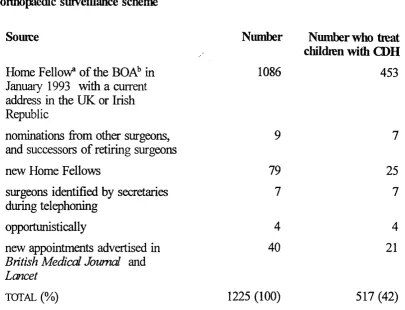
Table 4.3 Source from which surgeons were identified for inclusion in the orthopaedic surveillance scheme ... ! 90
Table 4.4 Reported special interest(s) of paediatricians not included in the BPASU scheme during the study period... 91
Table 4.5 Reasons for ineligibility for notified cases of abduction splinting... 95
Table 4.6 Characteristics of confirmed cases of abduction splinting ... 97
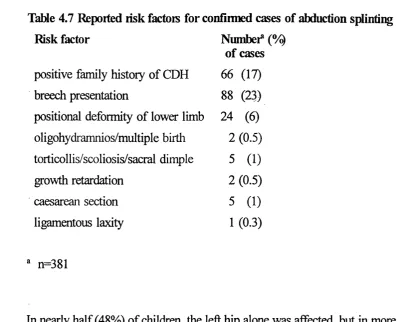
Table 4.7 Reported risk factors for confirmed cases of abduction splinting ... 98
Table 4.8 Geographical variation of confirmed cases of abduction splinting... 99
Table 4.9 Reasons for ineligibility of reported operative c a ses... 102
Table 4.10 Characteristics of confirmed cases of a first operative procedure ... 103
Table 4.11 Prevalence of known risk factors of cases of a first operative procedure reported to the Orthopaedic Surveillance Scheme ... 104
Table 4.12 Geographical distribution of cases ... 106
Table 4.13 Complexity of the first operative procedure... 113
Table 4.14 Background characteristics of children treated in the Republic of Ireland .115 Table 4.15 Reasons for ineligibility of children identified by HES data ...117
Table 4.16 Source by which children identified, by region...117
Table 4.17 Under ascertainment-adjusted prevalence of a first operative procedure, by source...119
Table 4.18 Geographical variation in the ascertainment-adjusted prevalence of a first operative procedure ... 120 Table 4.19 Comparison of characteristics of children identified by Hospital Episode
Surveillance (OS) Schem e... 121
Table 4.20 Complexity of first operative procedure, by source... 122
Table 5.1 Estimates of prevalence of CDH after screening was introduced: comparison to the literature by relevant region or county ...141
Figures 2.1 Test result and disease status ... 15
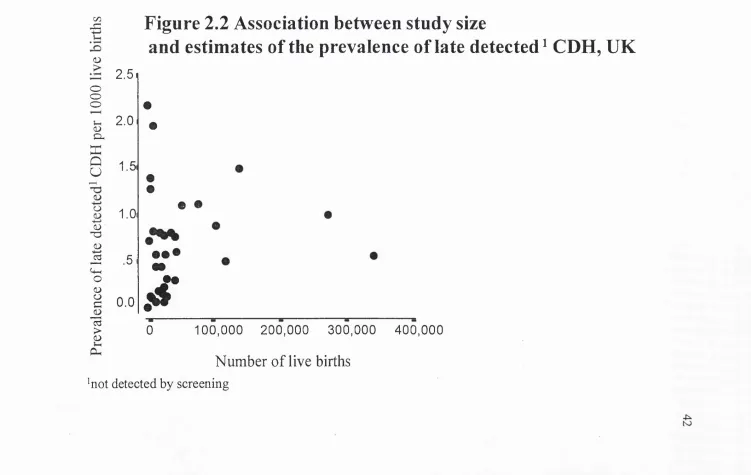
2.2 Association of study size and estimates of the prevalence of late-detected CDH, U K ... 42
2.3 Prevalence of late-detected CDH and length of follow up of cohort... 44
4.1 Percentage of maternity units in the UK and Irish Republic with access to ultrasound imaging, by year of introduction... 84
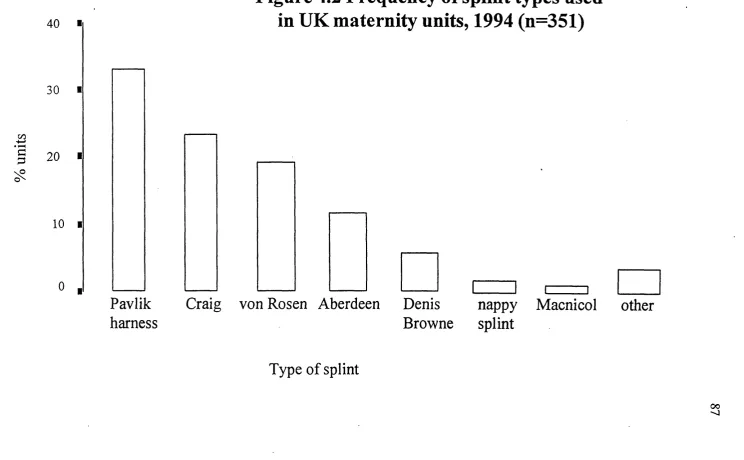
4.2 Frequency of splint types used in UK maternity units, 1994 ... 87
4.3 Monthly card retum rate of Orthopaedic Surveillance scheme... 92
4.4 Percentage of reporting cards returned, by country or former NHS region ... 94
4.5 Distribution of reported cases of a first operative procedure by month of birth . . . 107
4.6 Cases of a first operative procedure: side affected ... 109
4.7 Distribution of age at first operative procedure... I ll 5.1 Secular trends in the prevalence of abduction splinting in four UK centres, 1960- 1989 ... 145
5.2 Prevalence of abduction splinting in relation to policy of immediate treatment for neonatal hip instability, by region ...147
Appendices
2.1 current and past membership of the Medical Research Council Working Party . . . 180
3.1 questionnaire, survey of screening and management practices... 181
3.2 covering letter, survey of screening and management practices... 188
3.3 protocol card sent to paediatricians participating in the B PA SU ... 189
3.4 protocol card sent to orthopaedic surgeons participating in the OS scheme 190 3.5 article published in the British Orthopaedic News, spring 1993 ... 191
3.6 reporting card sent to orthopaedic surgeons ... 192
3.7 advance notification to paediatricians of CDH stu d y ... 193
3.8 questionnaire sent to surgeons identified by manpower census ... 194
3.9 questionnaire sent to paediatricians identified by manpower census ...195
3.10 follow up form for notified cases of abduction splinting... 196
3.11 follow up form for notified cases of a first operative procedure... 197
3.12 questionnaire to identify potential sources of abduction splinting... 198
1: ENTRODUCnON
Congenital dislocation of the hip is a potentially disabling condition Wiich affects approximately 1 in 1000 children in the United Kingdom. Universal screening by clinical examination was introduced more than twenty-five years ago in the expectation that it would reduce, if not eliminate, through early detection and conservative treatment, the need for invasive surgery. The outcome of the current screening programme has proved controversial, since some individual centres have reported a reduction, some no change and others an increase in the number of children requiring surgery, although more children have received conservative treatment than would be expected to later develop CDH.
Universal primary screening using ultrasound imaging of the hips, which provides otherwise unavailable information on hip morphology, has been advocated. However, its introduction in other countries has been associated with an increase in the number of children receiving conservative treatment. The failings of the programme based on screening by clinical examination attest to the problems of introducing screening before recognised criteria for screening programme are met. The emergence of ultrasound imaging provided the impetus to evaluate the current programme and the potential alternatives.
In Chapters 2 and 3, respectively, the methods and results of a national study undertaken to establish current screening and management practices for CDH in the UK and Irish Republic, and to establish the national prevalence of treatment, both conservative and surgical, are described. The former was achieved by postal questionnaire sent to paediatricians responsible in every maternity unit in the UK and Irish Republic. The latter was undertaken by means of active reporting through an established national surveillance scheme among paediatricians, and a similar scheme established in collaboration with orthopaedic surgeons specifically for this study. The reporting bases of the two surveillance schemes were validated by comparison to manpower census data. Ascertainment of cases receiving a first operative procedure was validated with Hospital Episode System data for 18% of births. The findings of the study are reviewed in the light of published data and the implications for future research are discussed in Chapter
5.
2: m ER A T lJR E REVIEW
2.1 SCREENING: DEFINITION AND TERMINOLOGY
obligation is to treat them in the best way possible, even if there is incomplete knowledge about the disease and its remedy.^ The screening of children, and especially of neonates, may be a more complex issue, since consent is sought from parents on a child's behalf.
Screening discriminates two groups of individuals based on a screening examination, those who are test positive and those who are test negative. Each group can be subdivided according to Wiether the test correctly allocates disease status (Figure 2.1).
Figure 2.1 Test result and disease status Disease status +
Test result + true positives false positives false negatives true negatives
The ability of a test to designate people with disease as positive is called the
sensitivity of the test or the detection rate, and the ability of a test to designate those
potentially to over treatment, which may be h i^ in human and financial costs.
The predictive value of a positive test is the probability that an individual is affected,
given a positive test result, but this measure can also be expressed as the odds ratio of the number of affected to the number unaffected among those with positive results. The latter may provide a better indication of the reliability of a test. For example, a better technique might increase the positive predictive value fi*om 95% to 98%. This appears to be a marginal improvement but the odds ratio is now 50:1 rather than 20:1. The proportion of a population that has detectable preclinical disease (or prevalence) is an important determinant of predictive value. Two tests for diseases of differing fi*equency may be equally sensitive and specific but the predictive value of the test for the less prevalent disease will be lower and hence the number of false positive test results higher. Thus, screening a large population in which few individuals are affected is less likely to be worthwhile. Prevalence itself depends on incidence, the rate at which new cases appear; on the rate at which cases disappear, through death or remission or cure; on the average length of the preclinical phase; and on whether the population has been screened previously.
The reliability or reproducibility of a test is its capacity to give the same result,
variation between and within observers may be difficult if an individual cannot be examined on multiple occasions. For example, it has been suggested that repeated examinations may increase the propensity of an initially normal neonatal hip to dislocation, and should be avoided."^’^
The lecd time is the interval from detection to the time at which diagnosis would have
been made without screening. For a screening programme to be effective in reducing morbidity, there must be sufficient lead time in a sufficient number of screen-detected cases as well as an effective treatment which can be begun in this time. For example, a CDH screening programme may not be justified if it prevents established CDH in only a small proportion of affected children, or detects CDH too late for earlier treatment to be effective. Lead times cannot be calculated for an individual, but the distribution can be estimated by comparing age at diagnosis in screened and unscreened populations. However, apparently long lead times may be the result of the detection of cases which would resolve spontaneously. Earlier treatment is not inherently of benefit and should be shown to improve outcome without serious side effects compared to the treatment of clinically presenting cases.
Table 2.1 Wilson and Jungnei's criteria for an appropriate screening programme
(1) The condition sought should be an important health problem.
(2) There should be an accepted treatment for patients with recognised disease. (3) Facilities for diagnosis and treatment should be available.
(4) There should be a recognisable latent or early symptomatic stage. (5) There should be a suitable test or examination.
(6) The test should be acceptable to the population.
(7) The natural history of the condition, including development from latent to declared disease, should be adequately understood.
(8) There should be an agreed policy on whom to treat as patients.
(9) The cost of case-finding (including diagnosis and treatment of patients diagnosed) should be economically balanced in relation to possible expenditure on medical care as a whole.
2.2 BACKG3ROÜND
2.2.1 Definition and terms
Congenital dislocation of the hip (CDH) has been defined as "a congenital deformation of the hip joint in which the head of the femur is (or may be) partially or completely displaced from the acetabulum. The term embraces secondary hip dysplasia whether or not hip instability or dislocation persists."^
Acetabular dysplasia is used to describe a poorly formed and shallow acetabulum
(socket in the bony pelvis). The term luxated may be used synonymously with
dislocated, and subluxated with partially dislocated. Hips which can be induced
to dislocate under provocation are considered dislocatable or subluxatable,
although the latter term encompasses lesser degrees of displacement.
CDH as a disorder poses problems, as limited understanding of its natural history and the timing of the critical events leading to dislocation^'^ has created uncertainty about how the condition should be defined. At least fifteen different descriptors of CDH have been advocated or used in the literature. It has long been assumed that CDH develops before birth, and is detectable at birth, but even with conscientious and expert screening, CDH has continued to present after the neonatal period. This, together with medico-legal considerations, has led to use of the adjective developmental rather than congenital (existing at birth). In addition, the term CDH also includes hips which, while not strictly dislocated at the onset of treatment, are assumed would progress to dislocation in the absence of treatment. The word displacement is therefore sometimes substituted for
dislocation. Since the debate continues about whether a dysplastic acetabulum
produces a dysplastic acetabulum, the term developmental dysplasia o f the hip may also be used.^^
2.2.2 Aetiology
The aetiology of CDH remains unknown*^ but is considered the result of interacting genetic and environmental factors. The results of family studies, which report an increased prevalence of CDH between siblings and parents of probands, indicate that there may be a genetic predisposition to CDH based on polygenic multifactorial inheritance. Twin studies have found the prevalence in the co-twins of dizygotic pairs to be no more than for siblings but in monozygotic pairs to be up to 34%.*^ Differences in prevalence between different ethnic groups have been reported and this cannot be wiiolly attributed to cultural differences in child care practices, e.g. the use of swaddling, although after a national campaign in Japan to avoid prolonged extension of the hips and knees of infants during the early postnatal period, the prevalence of CDH was reported to have fallen fi'om 5- 6% to less than 0.4%.^®
dislocate. In some, although not all, studies, a higher prevalence has been reported among winter- and first- bom children.^
2.2.3 Histoiy
Although it is said that more than 2,400 years ago Hippocrates believed CDH could be cured by early treatment,^ it was not until 1847 that Dupuytren^'^ gave the first modem account of CDH. He was the first to demonstrate the lack of development of the acetabulum, later referred to as dysplasia. Roser proposed a test for the early diagnosis of CDH in 1879,^^ which was supported by the work of Le Damany and Hilgenreiner.^^’^^ However, it was Qrtolani's paper of 1937^* that was widely acknowledged and the clinical test for a reducibly dislocated hip bears his name. Nearly thirty years later, Barlow^^ proposed a modification to this test to allow the detection of dislocatable hips with the inference that these hips might later spontaneously dislocate and remain dislocated. This modification is now in general usage and is widely known as the Ortolani-Barlow (O-B) test.
all neonates in England and Wales. These recommendations stipulated that examination for congenital dislocation of the hip should be carried out and recorded for every infant in the early neonatal period, using the O B test, as described below, with a further examination before 3 months of age. In 1986, the Standing Medical Advisory Committee and the Standing Nursing and Midwifery Advisory Committee revised these recommendations and produced a more detailed report.^
2.2.4 Clinical screening examination
over the lesser and greater trochanter with the thumb and middle finger respectively. In each part of this examination, the movement of a dislocated or dislocatable femoral head should be palpable but may not exceed 0.5cm, and may easily be missed by an inexperienced examiner. In larger infants, full abduction may be more difficult. This may be due to increased muscle tone, but may also reflect an irreducibly dislocated femoral head. The O-B manoeuvre may not detect an irreducibly dislocated femoral head^ and thus leg length and thigh and buttock creases should be examined for asymmetry that may be indicative of CDH. Infants with bilateral irreducibly dislocated hips may therefore be particularly difficult to detect at birth.
2.2.5 Cunent UK Policy
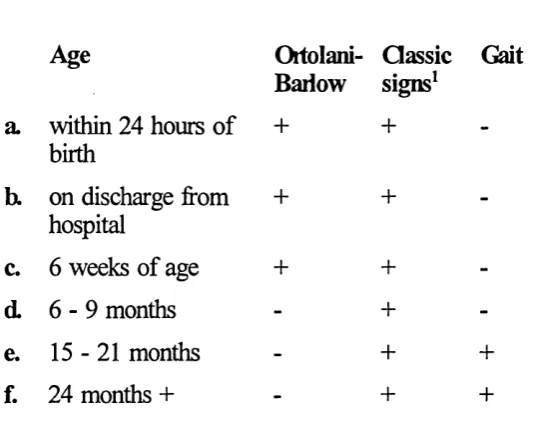
Table 2.2: Summaiy of ciment UK ^commendations [reproduced from 1986
SMAC report]^
Examination for CDH
Age
Ortolani-Bariow
Classic signs^
Gait a. within 24 hours of
birth
+ +
-b. on discharge from hospital
+ +
-c. 6 weeks of age + +
-d. 6 - 9 months - +
-e. 15-21 months - + +
f. 24 months + + +
^ limited abduction, leg shortening, asymmetry of t h i ^ , flattening of buttock,
2.3 SCREENING AND CDH
This section considers the current UK policy for screening for CDH, described above, in the light of the Wilson and Jungner criteria, as listed in Table 2.1.
2.3.1 Is CDH an important public health problem?
Sequelae o f untreated CDH
deformity, or degenerative changes in the hip joint - will develop in those with untreated hip dislocation is uncertain but they are considered more likely to occur in those with bilateral dislocations and in those who have developed a ’false’ acetabulum between the femoral head and the ileum."^ Published reports, based on small numbers of non-randomly selected cases of untreated CDH,'’^ indicate that functional impairment is common and increases with age but is not inevitable. Between 11 and 41% of those with untreated complete dislocation remained free of pain when followed for an average of 50 years,*^*'^ and, in one 74 year old, hip dislocation was first diagnosed post mo r t e m . I n addition, it has been estimated that 40% of cases of osteoarthritis are due to unrecognised and untreated hip dislocations."^^
Individuals with subluxed hips tend to develop symptoms at an earlier age and are thought to have a worse prognosis than those with complete dislocation.*^ In one series, mean age of symptom onset with untreated subluxation was 37 years in women and 54 years in men, with radiological onset of degenerative joint disease usually occurring during the following decade.*^ In severe subluxation, hip pain may start as early as the second decade."*^
Treatment o f established CDH
classified as either 'closed' (manipulative reduction without direct surgery to the hip jointy^'^^ or 'open' (direct surgery to the hip joint)/^'^ Since surgical practice in the treatment of CDH has changed substantially in the last half century/^'^^ the prognosis for current treatment is likely to differ from that of the treatment available 30-40 years ago. Evaluation is further complicated by the lack of trial evidence and the small size of case series.
has improved/^'^^'^^
While the quality of the initial reduction is considered an important prognostic factor/^ subluxation, dysplasia and premature onset of degenerative joint disease have been reported to develop despite an apparently satisfactory initial reduction.^’^* Overall, prognosis is considered better in those diagnosed and treated at a younger age because the potential to remodel the acetabulum may be lost in the older child,"**’^®’^^ although the possibility of avascular necrosis may be lower in an older child/^ If treatment is not started until the end of the first year of life, the chance of the child having a functional pain-free hip may be reduced to about
15%P Bilateral dislocations, which have a worse prognosis than unilateral dislocation, are usually diagnosed at a later age/^^^
Avascular (or ischaemic) necrosis is an iatrogenic and potentially serious complication of treatment where the blood supply to the femoral head is reduced and the normal development of the hip joint impeded. While in some series, up to two-thirds of treated hips have been affected^*’^, this proportion has fallen recently, possibly reflecting the adoption of the 'human' rather than the 'frog* position during post-reduction immobilisation"*^'^ and the use of routine pre operative skin traction.^** In the earliest series,^^ only 21% of hips treated by open reduction were considered radiologically normal after 20 years and 41% had developed avascular necrosis. In those treated more recently,^®’^^ radiological normality was observed in 51-78% after 20 years and avascular necrosis in 2-11%.
despite multiple operations which entail prolonged hospital admission or immobilisation at home, frequently during a critical period of growth and development.
Prevalence
The prevalence of CDH is usually presented as the number of affected children,
rather than number of affected hips, per 1000 live births. This is termed birth prevalence, the proportion of children affected, rather than incidence, the frequency with which new cases arise, because the denominator excludes still births, deaths and terminations of pregnancy.^^ Children with hip dislocation acquired secondary to another disorder, such as cerebral palsy, or spina bifida, or those with CDH as part of a syndrome, are generally excluded from the numerator.
Prevalence o f CDH before screening was introduced
A further consideration is the precision of the studies cited. Although CDH is considered a relatively common malformation of childhood, a large population needs to be studied to estimate the prevalence with confidence. Most studies have bem small in relation to the rarity of the condition and the estimates of prevalence sensitive to the identification of one or two additional cases, and vulnerable to migration. Incompleteness of case ascertainment may arise from the practical difficulties of ensuring all members of a birth cohort who develop CDH are identified, and not allowing sufficient time for all cases of a cohort to have presented. Premature publication of study findings may mean that some later- presenting children are omitted from published reports of prevalence. For example, 13 late presenting cases had not been ascertained at the time of the first publication of one Aberdeen series and prevalence, initially reported as 1.8 per 1000 live births,^^ was subsequently estimated to be 2.1 per 1000 live births.^^ Knowledge of the background prevalence is fundamental when evaluating a screening programme.
1000 live births has been reported in Biimingham,^^ Liverpool/^ and Wales^^ respectively. It would appear from these and subsequent studies^^’^^’^^ that the prevalence in Scotland is unusually high and in England and Wales lower, ranging from 0.66 to 0.91 per 1000 live births.
2.3.2 Is there a recognisable latent or eariy symptomatic phase of CDH?
To be suitable for prevention by screening, a disease must pass through a preclinical stage during which it is undiagnosed clinically but may be detectable. The preclinical phase begins when the pathologic process is first present, which in the case of CDH, is believed to be before birth. In the absence of screening, the preclinical phase ends when the affected person seeks medical attention, which is likely to be when a child with CDH is discovered to limp or waddle on walking, and is usually in early childhood. The O B test is not, strictly speaking, a test for CDH but rather for neonatal hip instability which is thought to be the preclinical stage of CDH.
Prevalence o f NHI
prevalence of NHI was reported as 2.5 per 1000 live births, but an additional 9.2 per 1000 live births were reported to have instability in which the femoral head could be moved to the rim of the acetabulum but not further.^* Some variation may be attributed to the age at examination, since most neonatal instability is known to resolve spontaneously (without treatment) shortly after birth.^^'^^'^^ These children are not always treated, although it has been suggested that such infants are at risk of subsequent dislocation and should therefore be treated.^^’"^^’^^
2.3.3 Is there a suitable test?
It has been suggested that poor test performance may reflect lack of expertise on the part of the primary screener/^'^'^^ although cases have been missed by expert examiners.^^'^ A poor level of agreement between different examiners was reported from one study^^ in which hip instability was independently diagnosed by a paediatric orthopaedic surgeon and a neonatal paediatrician in 51 of 12 891 newborn infants examined, but was not detected by one of the examiners in a further 25. Another 28 infants, judged by both examiners to have stable hips at birth, were subsequently referred for orthopaedic treatment. There is limited consensus among experts as to what constitutes an acceptable clinical examination.^^ In one study, only 40% of those responsible for hip screening could correctly identify both the dislocated and dislocatable hips of a hip simulator model.^ The need for formal training and expert supervision of those responsible for primaiy clinical screening has been emphasised.^^’^^’^^ In one study, screening performance was better when undertaken by trained senior physiotherapists supervised by orthopaedic surgeons than by junior paediatricians.^
Risk factors fo r NHI
The term risk factor has been defined^ as "an aspect of personal behaviour or lifestyle, an environmental exposure, or an inborn or inherited characteristic, which on the basis of epidemiological evidence is known to be associated with a health- related condition". It need not be a causal factor. Determining risk status itself constitutes an additional screening test.^
retardation and breech presentation; congenital abnormalities affecting the skeletal and neuromuscular system; a positive family history of CDH; and being firstborn or a Genetic factors and differences in postnatal infant swaddling practices are also thought to contribute to the observed variations in prevalence.^®’® The effectiveness of selective programmes of follow up for children at high risk depends on the predictive ability of the risk factors chosen and on the ease of eliciting the risk factor information. For example, gender and mode of delivery are evident at birth, but a positive family history may be missed. However, although CDH occurs several times more frequently in girls than boys, gender is not sufficiently predictive of CDH to be a useful risk factor. Similarly, CDH is found more often in White and first bom children but these characteristics are too common to be of practical value as risk factors in a screening programme.
Continued diagnosis o f clinically presenting CDH
A negative impact of screening on the continued diagnosis of clinically presenting CDH has been reported which has been attributed to a reduced index of clinical suspicion.®^’®® Although increased vigilance for dislocated hips during later infancy and around walking age has been advocated,®’®^ the implications for training of those responsible for child health surveillance have not been addressed. The Hall report discusses the key role of parents in the detection of abnormalities and stresses that some conditions require a special search by health professionals.® CDH falls into this category.^®
2.3.4 Is eariy conseivative treatment effective?
earlier diagnosis that facilitates earlier conservative treatment. Conservative treatment is undertaken with the expectation that the trauma and potential complications of invasive surgery will be avoided and outcome be improved. It is usually undertaken on an outpatient basis.
A variety of plastic splints may be used for early conservative treatment, but each is designed to hold the infant's hips flexed in abduction, to encourage concentric reduction of the femoral head within the acetabulum.^®’^ Except for one trial in Thailand^^ in which a plaster of Paris hip spica was compared to a plastic splint appliance, the performance of the various splints has not been assessed in clinical trials, but only in a few 'before and aflef studies of outcome. Criteria for failure may vary^, and both the rate of failure and rate of complications need to be considered. In addition, full reduction by a splint may not be possible in some children'^, in which case conservative treatment, if attempted, may be harmful.
The infant hip is sensitive to ischaemia resulting from undue pressure. Avascular necrosis of the femoral head has been reported to affect up to 28% of the hips of infants treated with a splint appliance^^’^®^'^®^ and has also been documented in the contralateral normal hip.*'° Other hazards of splinting, such as pressure sores, tibial torsion and femoral nerve palsy have been r e p o r t e d . T h e implications of even a short period of splinting for motor, social and psychological development are not known. Evidence from a British-based support group for parents of infants with lower limb abnormalities, including indicates that for some families at least, the psychological, social and financial sequelae of hip instability may be considerable. Poor parental adherence is cited as a factor in unsuccessful splinting^ and although the extent of this is unknown, has lead some authors to propose the use of nonremovable splints. However, the Frejka pillow, 'frog* casts and others which enforce flexion and full 90° abduction are thought to have higher rates of iatrogenic complications.^ The Pavlik harness, which is a removable non-rigid splint, is associated with a lower rate of complications^®^ attributed to the greater degree of mobility it allows within a controlled range. The age at which conservative treatment becomes ineffective or is no longer feasible is not clear, although in one study, outcome did not differ between those initially treated at birth and those initially treated at up to 5 months of age.^^^
ultrasound), which are assumed to be preclinical stages of CDH. However, the association between early hip instability and acetabular dysplasia is u n c le a r,'a s is the relation of either of these conditions to the later development of established hip dislocation.
In screened populations, the prevalence of neonatal splinting is anywhere from 3
to 30 times more common than the prevalence of established dislocation in
unscreened populations which represents a positive predictive value of, at best,
34%. Thus, relatively large numbers of infants may be receiving unnecessary treatment as a result of the current screening policy, with the consequent restrictions and potential complications associated with splinting. An adverse psychological impact on families given a false positive screening result in their newborn child has been reported in other neonatal screening program m es,but there seem to be no similar studies in relation to screening for CDH.
2.3.5 How effective is the screening programme for CDH?
Measuring outcome
A national evaluation of the current screening programme for CDH has not been attempted but several interested centres have undertaken local evaluations. These studies are all retrospective or prospective cohort studies which use surgery for partial or complete hip dislocation as a measure of outcome.^^’^’*^^ The figures are vulnerable to the ascertainment issues discussed above (section 2.3.1) and to the varying definitions of a 'late' case of CDH, which might, Tor example, include all children detected after the initial screening examination at birth or only those detected after 2 months of age. It is important to distinguish between surgery required following late detection of CDH (the false negatives of the screening programme)^^’^^ and that required following the unsuccessftil conservative treatment of a screen-detected hip abnormality.
A summary of the published reports of the prevalence of surgery for CDH in the UK, identified through searches of the MEDLINE and BEDS computer databases and
Table 2.3 Prevalence of a fîist operative procedure for CDH
puUication year
fiist author I^ace period prevalence
(to 2dp)
Size
A; Prevalence o f a first operative piocedure fo r author-defined late CDH
1962 ^^Barlow Salford 1957-60 0 3647
1963 ^Barlow Salford 1957- 0.10 9680
1964 ^'Barlow Salford - 1964 0.07 14960
' 1967 ^Vinlay Uxbridge 1962-66 0.07 14594
1972 '^McKenzie Aberdeen 1960-69 0.91 76675
1972 ‘"'Mitchell Edinburgh 1962-68 0.12 31961
1972 Wilkinson Southampton 1965-68 1.28 6272
1972 Williamson Northem
Ireland
1960-70 0.56 337700
1977 130 TJones Norwich 1968-72 0.58 29366
1978 "N oble Newcastle 1964-74 0.15 25921
1978 ‘"place Leeds 1974-76 0.78 26908
1980 ‘""Calasko Salford 1975-78 0.83 11980
1981 1 3 3 ^Dunn Essex 1972-76 0.81 36918
1981 "McKenzie Aberdeen 1970-79 1.11 53033
1982 ‘"Bertol Edinburgh 1969-78 0.62 44953
1982 ^^Catford Southampton 1965-78 0.87 76724
1984 ^“Cunningham Nottingham 1979-81 0.89 7864
1985 "D unn Bristol 1970-79 0.44 23002
1985 "D unn Bristol 1970-79 0.88 103431
1987 '^Bemard Solihull 1977-83 0.71 21004
1987 ‘^Dwyer Birmingham 1976-86 0.07 28000
1988 ""McKibbin Wales 1981-84 0.58 15561
1989 ‘" c la rk e Coventry 1977-86 0.77 44073
1989 ‘"'Kemohan Northem
Ireland
1976-85 1.00 271240
1990 139^Jones Swansea 1987 0 3789
^ 1990 139Jonest Swansea 1979-85 2.20 n/a
1990 ^"Macnicol Edinburgh 1962-86 0.50 117256
1990 140. . ,Myles Peterborougli 1980s 2.18 3205
1990 140. . ,Myles Peterborough 1980s 0.73 5456
publication year
fiist author place period pievalence
lO"^ (to 2dp)
Size
1992 *"Krikler Birmingham 1980-90 0.32 31350
1993 ^*Lennox Aberdeen 1980-89 1.30 67093
1994 '^Boeree Southampton 1988-92 0.22 26952
1994 *^Fiddian Poole 1982-92 0.31 42421
1994 ^Fiddian Poole 1979-82 1.96 11251
1995 ^^^Patterson Northem
Ireland
1983-87 1.65 138600
1995 '^Vedantam Sheffield 1989-91 0.13 7827
B: Prevalence o f a fiist operative pioceduie for CDH after a conservative ùeaùnent
late di^nosis or the failure of
1972 ''^McKenzie Aberdeen 1960-69 1.12 76675
1972 "'Mitchell Edinburgh 1962-68 0.19 31961
1978 '"Noble Newcastle 1964-74 0.46 25921
1981 ^"McKenzie Aberdeen 1970-79 1.83 53033
1982 Bertol Edinburgh 1969-78 0.82 44953
1982 "^Catford Southampton 1965-78 1.28 76724
1984 ^Cunningham Nottingham 1979-81 2.80 7864
1985 "Dunn Bristol 1970-79 0.65 23002
1987 ^^Bemard Solihull 1977-83 1.19 21004
1987 “ Knox Birmingham 1974-83 0.67 14426
1988 ""McKibbin Wales 1981-84 1.09 15561
1992 '^Krikler Birmingham 1980-90 0.45 37511
1992 '^Krikler Birmingham 1980-90 0.48 31350
1993 ^'Lennox Aberdeen 1960-69 1.10 76675
1993 “ Lennox Aberdeen 1980-89 2.10 67093
1994 '^'Boeree Southampton 1988-92 0.41 26952
1994 '^Fiddian Poole 1982-92 0.47 42421
1994 ' 's n a p Scotland 1986-91 1.10 388182
<u o o o
(U Dh
n: Q U
CD
O
CD
'O
I
C+H O <D O
C
15 > <D &4
'not
and estimates of the prevalence of late detected ^ CDH, UK
2.5, •
2.0 e
1.5 a #
1.0 0
c , • • •
. 3 1
00
0.0
.<T
0 100,000 200,000 300,000 400,000
and length of follow up of cohort
2.0 I
Û u
(D
4— *
o
II
(4-4 (D 0 > (U ^
l§
C3 r-41
I1.51
1.0,
.5 •
t
e
0.0 * ® •
-m
11
0 1 3 5 7 9
Years o f follow up o f youngest cohort member
Naturd history
The natural history of CDH is not fully understood. Cases of CDH have continued to present after the neonatal period despite expert and conscientious screening. These false negatives may include cases not preceded by instability by 6 weeks of age, reflecting variability in the natural history of CDH.^’^^’^"^^ Onset of CDH may not be from birth but from weight-bearing age, or some children who were not detected by screening may have had irreducibly dislocated hips which may not be detectable on the O-B test. Conversely, NHI is found in far greater numbers of children than is CDH.
Fdlnres o f early treatment
Based on the studies included in Table 2.3, section B, the median crude prevalence of surgery for CDH including children in whom early treatment did not resolve the abnormality was 0.82 per 1000 live births (95% Cl: 0.48, 1.1), generally higher than the prevalence of late diagnoses and similar to the prevalence of surgery before screening was introduced. Leek reported the prevalence of surgery in children previously treated with abduction splinting to range from 0.11 to 0.25 per 1000 live births.^^ This raises questions about the efficacy of abduction splinting treatment. Surgery may be needed in up to 5% of infants treated with a splint appliance,^^'^^'^^'^'^^'^^'ios,119,i41,i46 higher figures have been reported.
premature removal of the splint appliance by parents.^^'^^^'^^^ However, case ascertainment is likely to be higher in children already under medical supervision and those children who have been previously splinted may contribute proportionally less to the true crude prevalence of surgery than it appears from these figures.
English and Welsh populations but an underestimate for Scottish populations (section 2.3.1). This method cannot be applied where a centre reports a prevalence of surgery that is h i^er than the estimated background prevalence of CDH, and it is clear that these data must be interpreted with caution.
Economics
A successful screening programme requires that the resources emended in the identification and earlier treatment of a condition are less than the resources averted and benefits gained. Since screening is conducted on a large scale, financial costs may be high even if the cost per individual screened is low.^"*^ The marginal cost of clinical screening for CDH as part of the routine neonatal examination is likely to be low. However, the average cost of treating a child with late CDH was calculated as Can$13,700 in British Columbia in 1984,^"^^ as GB£6,674 in Northem Ireland in 1 9 9 1 , and most recently, as US$6,977.6 in Norway in 1993.'^^ Costs will vary over time with changing treatment and trends to earlier discharge home, but the current cost to the health service of treating a child with late detected CDH is likely to be more than £4000, even before potential negligence claims.
2.4 ULTRASOUND EX A M IN A Tim OF THE NEWBORN HIP
The perceived failures of the current screening policy, together with the implementation of universal primaiy ultrasound screening in some European c o u n t r i e s , h a v e generated interest in the use of ultrasound as a primary screening test in the Selective primary ultrasound screening of infants at high risk of CDH (for example, those with a positive family history or breech presentation) has been proposed, but experience in the UK has not so far confirmed the success of this approach in reducing the prevalence of late cases. Ultrasound may also have a role in reducing the number of false positives associated with clinical screening’ and is, in addition, used in some centres to confirm concentric reduction of the femoral head with the splint appliance in situ, and to determine treatment duration.
observed in 10 of 14 children.
Clinical screening based on the O-B test identifies hip instability rather than dysplasia. Some studies have compared clinical to ultrasound a s s e s s m e n t , b u t the level of agreement between tests that detect differing 'pre-clinical' phases is of less interest than their respective or combined predictive value for established dislocation. As with the O-B test, assessment of test performance is limited by the absence of a 'gold standard'. There may be wide variation in the level of agreement achieved even when standardised procedures for performing, measuring or reporting either static or dynamic hip ultrasound images are employed by well-trained examiners. In the UK, there is currently no nationally agreed system for training and accreditation in neonatal hip ultrasonography, in contrast to Europe and North America.
Norway and Ger many, r ai ses questions about the role and appropriate timing of this procedure. Universal ultrasound screening at birth and again at 4-5 weeks of age has been formally adopted in Germany. The cost effectiveness of primary screening based on clinical or ultrasound examination, or some combination of both, was assessed as part of the Norwegian trial.^^’^^^ It was suggested that the most cost-effective approach was a strategy of screening all girls, but only those boys with NHI, breech presentation or a positive family history. However, another cost-efifectiveness study, which used decision analysisfound neither universal nor selective ultrasound screening to be cost- effective. Neonatal acetabular dysplasia without hip instability has been characterised only since the 1980s with the advent of ultrasound and the study of large numbers of children will be needed to establish natural history.
2.5 CmaUSIQN
earlier and to be less invasive.^^ The effectiveness of clinical screening has been questioned for at least a decade, but there has been little progress in establishing whether it is worthwhile. Evaluation of the current policy is complicated by a number of factors which relate not only to the disorder and to the screening test but also to its management and implementation within the current UK programme. Centres with a special interest in managing CDH have reported their results, but a national picture of the performance of the screening programme is lacking.
3: METHODS
To identify current UK screening and management practices for CDH and to ascertain the potential for future trials.
3.1 NATiaVAL SURVEY OF SCREENING AND MANAGEMENT
3.1.1 Survey respondents
In the absence of unequivocal and comprehensive recommendations for the screening and management of neonatal hip instability, and with little expert consensus, considerable between-centre variation in screening practices was expected. All maternity units in the UK and Republic of Ireland were therefore included in the survey population.
In December 1993, a single named consultant paediatrician in each maternity unit was sent a postal questionnaire (Appendix 3.1) with a covering letter (Appendix 3.2) and reply-paid envelope, requesting information on the unit's current practices for the screening and management of CDH. Non-respondents were sent up to three reminders at seven week intervals, with further copies of the questionnaires in case the originals were not to hand. All secretaries of non-respondents were telephoned to ensure that addresses were correct and that questionnaires had been sent to the most appropriate paediatrician. The information departments of hospitals for which a questionnaire was not returned were telephoned, to confirm that they had maternity beds and to ascertain the annual number of births.
3.1.2 Questionnairc design
In the absence of clear evidence regarding best practice, this study was not intended to constitute an audit, but the current guidelines were used as a basis for the formulation of questions. Although the SMAC report of
1986 was written to clarify policy primarily for England and Wales, its recommendations were similarly implemented by Scotland, Northern Ireland and the Republic of Ireland.
response to surveys between groups of professionals has been shown to exhibit wider variation than the response by patients and the general population/^ greater familiarity with technical terms can be assumed. In one study, shortening a questionnaire improved response among general practitioners. Care was taken to keep questions in this survey to a minimum.
The front of the four page questionnaire clearly identified the study, the researchers and research institution, and assured confidentiality. Respondents were asked to confirm whether they had been a consultant responsible for neonatal care in the past year, to list all maternity units for which they provided neonatal cover, the approximate number of live births in each unit for 1992 and to confirm whether the practices described applied to all units for which they were responsible.
Each subsequent page related to a different aspect of the screening programme to facilitate completion of the questionnaire, and in particular, to allow a respondent to skip easily the questions not applicable to their unit. The second page related to the organisation of routine clinical screening for neonatal hip instability, the third to screening by ultrasound imaging, the fourth to the management of infants at high risk of CDH and the remainder to the management of infants with clinically detected hip instability.
minimum. Filtered questions were indented and consistent sub lettering used. The last page provided space for additional comments, thanked the respondent for completing the questionnaire, and requested its return. The study address was included in case the reply-paid envelope was lost, and to aid the questionnaire's return Wien a paediatrician passed the questionnaire to another specialist for completion.
Details of second and third hospitals covered by a single respondent, in which practices differed from the first hospital, were requested from the respondent or other nominated paediatrician on an additional questionnaire unless details of the other units had been obtained independently. The responding paediatrician was asked to nominate a person responsible for the hip ultrasound service and a person responsible for the management of infants with dislocated or dislocatable hips who could be contacted for further details if necessary.
3.1.3 Pretesting the questionnaire
3.2 SURVEILLANCE STUDY
To estimate a nationally representative prevalence of treatment for CDH and NHI.
3.2.1 Introduction
As discussed in Chapter 2, the reported prevalence of CDH in unscreened populations in the UK ranges from 0.66 to 1.5 per 1000 live births while the median prevalence of CDH detected after the neonatal period in screened populations is 0.62 per 1000 live births, and the prevalence of abduction splinting for NHI ranges from 2.5 to 20 per 1000 live births. The variable success of the implementation of the screening programme locally is not readily explained, and is likely to be complicated by the heterogeneity of case definitions, periods of follow up and methods of case ascertainment. A national picture was required.
3.2.2 Routine data sources
within 7 days of birth were not notified to OPCS/^^ Conversely, presumptive positive cases are reported to the OPCS scheme and diagnosis may not be confirmed. Similarly, the Scottish Morbidity Record, SMRl 1, which is completed for every Scottish infant discharged or transferred in the neonatal period, has been shown to contain a high proportion (78%) of incorrect diagnoses of congenital anomalies, despite identifying only 28% of all confirmed cases.
Hospital Episode System (HES) data are collected for administrative purposes as a measure of hospital in-patient activity. One episode comprises a single period in hospital within a specialty. Its reliability as a means of identification of cases has been questioned^^^ and it has been recommended that cases thus identified should be confirmed by reference to the original medical records. The expense of this on a national basis precluded the use of national HES data for this study. Furthermore, since HES documents in-patient episodes, periods of abduction splinting, usually managed on an out-patient basis are not included.
3.2.3 Histoiy of surveillance
The term siaveîllance was used until around 1950 to describe the activity of monitoring the contacts of persons with serious communicable diseases to identify symptoms sufficiently early to allow prompt isolation and containment of d i s e a s e . I n 1963, Langmuir defined surveillance as the collection, analysis and dissemination of data'^^ but by 1968, this definition was extended, as the result of discussions at the 21st World Health Assembly, to include epidemiological surveillance and the responsibility to ensure that effective action was taken, and the application of the concepts to non-communicable diseases. Surveillance is currently defined by the World Health Organization as:
"1. The systematic measurement of health and environmental parameters, recording, and transmission of data.
2. The comparison and interpretation of data in order to detect possible changes in the health and environmental status of populations."^^^
3.2.4 Definition of surveillance
Today, surveillance may have many purposes: to quantify the extent of a health problem, to detect epidemics, to document the distribution and spread of a health problem, to facilitate epidemiological and laboratory research, to test hypotheses, to evaluate control and prevention measures, to monitor changes in infectious agents or in health practice, and to plan for the health needs of a population. It is distinct from monitorin^^^
form is performed specifically to identify persons at risk. Registers for research purposes are one form of s u r v e i l l a n c e , b u t have différent requirements and purposes compared to a system for the detection of changes in incidence which m i^ t accept lower quality case reports in the interests of speed and e c o n o m y . T h e costs of a surveillance scheme may also be reduced by sentinel disease surveillance, which involves only a selected representative sample of eligible respondents.^^
3.2.5 Requirements of a surveillance scheme
appropriate respondents. For example, moving the responsibility for the reporting of congenital malformations from the mother's to the newborn's physician, and having a centralised single hospital medical records person to review the reports, improved the notification of malformations with a false-positive rate of only 5%.^^ A scheme is not likely to succeed unless it has independence from political or commercial pressures and a totally committed person or group of people at its core.^^^ The success of a surveillance scheme is heavily dependent on a clear case definition^^ and a well-defined population under study. Apparent epidemics may reflect changes in registration practices, as for example in the reporting of CDH and limb a n o m a l i e s . Wh i l e high sensitivity and specificity in a surveillance scheme are both desirable, one is often at the expense of the other; a specific scheme is more likely to be accurate. Consistency of definitions should be used to allow comparison to other data sources, for example, one difficulty with some international comparisons is the differing definitions of a live birth.
3.2.6 Ethical considemtions
purposes: for the follow up of individuals and to link data systems. When identifiers are justified, these should be scrambled and the files relating identifiers and individuals maintained securely and separately. Identifying data should be destroyed once it has served its linkage function. The collection of identifying data that will not be used should be avoided. Only aggregated data should be published which precludes identification of individuals but wide dissemination of results is essential. In addition, a scheme should be regularly evaluated to justify its continued existence.^^
3.2.7 The British Paediatric Association Surveillance Unit
to allow children treated by orthopaedic surgeons to be reported.
3.2.8 Case definition and stu(fy period
In evaluating the CDH screening programme, three groups of children are of interest: those who would develop normal hips without treatment and are treated unnecessarily (false positives); those who would develop a dislocated hip and are not detected by screening (false negatives or failures of detection); and those who would require surgeiy after the failure of early conservative management (failures of early treatment).
A case definition needed to be clear and precise, both to provide reliable data, and to avoid confusion which might dissuade cooperation. Reports of all initially presumptive positive infants, irrespective of subsequent diagnosis, would have been of interest in measuring the extent of clinical workload but would have imposed too great a reporting burden on clinicians and might have resulted in under reporting. Thus treatment was chosen as a proxy for definitive diagnosis.
Paediatricians and orthopaedic surgeons were requested to report d l infants known to them in whom abduction splinting (including double ncppies) fo r
CDH was initiated during the preceding month In addition, surgeons were
asked to report infants and young children aged 5 and under receiving a first operative procedure fo r CDH in that month, with or without generd
anaesthesia (Appendices 3.3 and 3.4). From these data, inferences about
could be made. Criteria for exclusion of cases with CDH secondary to another condition were not listed so that the case definitions were as simple and clear as possible. Reports of a first operative procedure in children aged 0-4 years inclusive were requested, since routine births data is supplied in 5-year age bands. However, the protocol card specified children 'aged 5 and under* to ensure children in the fifth year of life were clearly included in the case definition.
A three-month reporting period for cases of abduction splinting and a twelve-month reporting period for cases of a first operative procedure were chosen. Each reporting period was subsequently extended for a month as the BPASU initially reported a lower card retum rate for April 1993.^°^ Assuming a prevalence of splinting of 10 per 1000 births and a prevalence of a first operative procedure of 1 per 1000, approximately 2000 cases of abduction splinting and 800 cases of a first operative procedure were e^qpected over the reporting periods, corresponding to approximately one case per surgeon or paediatrician.
3.2.9 Development and maintenance of the orthopaedic reporting base
Development
In January 1993, a list of consultant orthopaedic surgeons currently practising in the UK and Irish Republic was collated from the British Orthopaedic Association (BOA) and the British Society of Children's Orthopaedic Surgery (BSCOS). Prior notice of the study was provided by an article (Appendix 3.5) in the newsletter of the BOA, the British
Orthopædic News. Surgeons were sent details of the study, and requested
to complete and retum a form indicating whether they ever treated children. A reminder letter and second form were sent after three weeks, and the secretaries of non-respondents were telephoned after a further two weeks. Surgeons who treated children were eligible for inclusion in the surveillance scheme and a surgeon was included if there was doubt about his or her eligibility. If the information was not volunteered, secretaries were asked to name any orthopaedic consultant in the department specialising in the treatment of children. New surgeons thus identified were added to the reporting base. All requests for information throughout the study could be sent to a FREEPOST address.
Mcdntenance
whether the job description included a paediatric workload. Successful candidates for posts with an anticipated paediatric workload were subsequently contacted with details of the study and reporting scheme, and asked whether they were responsible for treating children with CDH. Those eligible were added to the reporting base and asked to report any children treated at any time during the study period. Surgeons were removed from the reporting base if retirement, sickness or death occurred during the study period, or if they subsequently informed the study coordinator that they did not treat children with hip instability or CDH. No surgeon requested to be withdrawn from the scheme.
3.2.10 Suiveillance methods
Case notification
(Appendix 3.7) and sent a protocol card (Appendix 3.3). A one page form requesting further details of the child was sent for each case notified. Special reporting arrangements were made for some surgeons with a high CDH caseload. These included providing forms in advance, and/or arranging for a nominated person such as an orthopaedic nurse or physiotherapist to report cases and complete forms on their behalf. In some centres duplicate reporting was minimised by either an orthopaedic surgeon or paediatrician undertaking to report all cases for that centre.
Encouraging response
Monthly reminders were sent to surgeons not returning OS reporting cards, offering a further opportunity to state whether children with CDH were not treated. The BPASU scheme usually sends reminders to only those paediatricians with three consecutive outstanding cards but, for this study, a single reminder requesting notification of children treated with abduction splinting was sent to paediatricians with one or more outstanding cards for April to July 1993 in March 1994. Surgeons received progress reports twice during the study period and, if appropriate, were prompted for outstanding cards and follow up forms. Surgeons who were members of the BSCOS and/or were named as a surgeon responsible for treating children with neonatal hip instability on the screening practices questionnaires, and who returned few or no reporting cards were identified.