Green Infrastructure
Disclaimer: The materials and information contained in this document are provided for informational/guidance purposes only and do not constitute legal advice. Users of this information assume all responsibility and risk for the use of the materials. Victoria University, and any contributors to the development of this document, do not assume any legal liability or responsibility for the accuracy, completeness, or usefulness of any material contained within this package and in no event shall Victoria University be liable for any damages resulting from the application of this information, however caused. You should not act or omit to act on the basis of this publication without first obtaining appropriate advice in respect of your particular circumstances.
Recommended citation: Victoria Institute of Strategic Economic Studies (VISES). (2015). Green Infrastructure Economic Framework. Victoria University, Melbourne. ISBN: 978-1-86272-705-2
© 2015. Victoria Institute of Strategic Economic Studies, Victoria University and the Government of Victoria.
Contributors
Celeste Young, Roger Jones and John Symons.
Green Infrastructure Economic Framework Page 3
Executive summary 4
The purpose of the framework 6
The purpose of this document 6
The economic basis for this framework 7
Policy groupings related to green infrastructure 9
The operational process 10
The GI economic framework process 13
Scoping and initial development 14
Economic considerations 15
Planning and development 16
Economic considerations 16
Setting up and establishing the baseline 17
Collating costs and benefits and select valuation methods 20
Assess project value and prepare business case 21
Procure and construct (implementation) 23
Project evaluation 23
Asset valuation 24
Maintain and monitor 25
Review, retire, renew 26
Case Study 1 28
Case Study 2 31
Case Study 3 32
Appendix A GI benefits and valuation tools 33
Appendix B Parks and open space 35
Appendix C GI valuation methods 43
Appendix D Valuation of costs and benefits 46
Appendix E Asset planning and valuation 48
Green infrastructure glossary 50
References 52
‘In Australia, our pressing issues of water, energy, environment, healthcare, productivity, mobility, safety and security all stem from four global megatrends – climate change, demographic change, urbanisation and globalisation.... We look into the future to see what kind of world we want to live in. Then, we work backwards to see how we can bring these big ideas to life.’
— Picture the Future, Siemens Australia and New Zealand
The world is changing and so are the cities we live in. Changes in population, demographics, technology and the environment are shaping our communities in a way that is beyond our historical context and require new ways of seeing and thinking. For local government there are a number of emerging challenges such as reduced available revenue, increasing risks as a result of changing internal and external environments and an increasing demand for council services. Decision makers in local government are faced with the daunting task of trying to understand how to make the best decision today within these constraints, in a way that supports the future sustainability of their communities.
Resilient infrastructure (both hard infrastructure such as bridges, roads and buildings, and soft infrastructure such as social systems, connectivity and communication) is recognised as being central to helping communities respond effectively to these changes. Understanding the true worth of all infrastructure and assets is crucial to understanding the choices available and what the best one may be.
What is green infrastructure?
Green infrastructure describes the green spaces and water systems which intersperse, connect and provide vital life support for humans and other species within our urban environments. Green infrastructure exists across a range of scales – from residential gardens to local parks and housing estates, streetscapes and highway verges, services and communications corridors, waterways and regional recreation areas. Green infrastructure includes features that are multifunctional, networked and natural, and they have multiple benefits for society and the environment.
Why is green infrastructure important?
Green infrastructure is a key aspect of our towns and cities. It underpins our economy in areas such as health, liveability and industry. It protects and rejuvenates
communities by providing essential services such as clean air and water and healthy ecosystems. It can also help reduce the impacts of climate events such as flooding and heat waves. Communities who successfully maintain these assets are more likely to be resilient and able to adapt more effectively to future shocks and changes.
Historically, this type of infrastructure has often been developed in response to emerging needs of communities. In some cases, this has been a reactive process that aims to address a specific issue. In other cases, it may
Executive summary
fulfil a particular need at the expense of others. For example, a choice may be made to develop an area of high environmental value to meet the needs of a growing population.
To date, the role and value of green infrastructure has not been well understood in Australia and it is seen in many councils as peripheral to other forms of more established forms of infrastructure. These types of infrastructure and assets also differ from grey infrastructure in that they can offer multiple benefits and services – for example, strategically positioned green areas can reduce heat in surrounding areas, increase property value and improve community health.
Some of the associated benefits are intangible (non-monetary) which are often overlooked as they are difficult to quantify, particularly in relation to future savings. This is, in part, because it is a relatively new area of practice so evaluation tools and methods have not been developed fully. As a result, business cases for this area do not include all the relevant information and can result in decision makers being unable to make fully informed decisions. This has meant that opportunities to improve these assets or maximise their benefits have not been taken up.
Working toward an economic understanding for
green infrastructure
Although there are an increasing number of tool kits and methods for valuing green infrastructure, there has not been a clear process outlined for achieving this that aligns with current operational practices in local government in Australia.
This document has three key aspects:
Q It provides an economic process-based framework that outlines the key steps needed to value green infrastructure.
Q It provides a full life cycle management process that is already established in practice and aligns aspects of the economic process to support integration of the framework into day-to-day operational decision making.
Q It provides an explanation of some of the economic methods and approaches that are available to assist practitioners in the area of valuing and evaluating green infrastructure.
The full life cycle management of assets and infrastructure is best practice and aligns with the current federal initiative to improve this area of management in local government bodies. This provides a unique window of opportunity for local government to embed the new knowledge emerging as part of this initiative in a way that can enhance current activities.
Green Infrastructure Economic Framework Page 5
Making better decisions for the future
‘Growth is inevitable and desirable, but destruction of community character is not. The question is not whether your part of the world is going to change. The question is how.’
— Edward T McMahon
Planning for and providing services that facilitate the development of communities that are resilient to future economic, social and environmental shocks is a key function of local government. Because the risks facing cities and the communities that live in them are systemic and some are increasing, there is a need to think beyond current conditions if this expectation is to be fulfilled. It also requires decision makers to understand the full spectrum of economic values so they can evaluate both monetary and non-monetary values across both short- and long-term time frames. In this way, they can maximise investment opportunities in this area through a more comprehensive understanding of what the benefits and costs are. They can also more clearly assess the possible impact and legacy of their decision.
Integrated infrastructure that incorporates and values green infrastructure is at the heart of the places we make and inhabit, and provides the fabric that supports our economies and our communities. It is an investment that,
once established will, in most cases, increase in value. Well maintained, healthy green infrastructure can continue to provide services and benefits that improve the liveability of our communities in a cost-effective manner. This is why integrating green infrastructure into the established investment processes for general infrastructure is key to being able to develop smart cities that maintain our communities’ liveability, resilience and wellbeing.
This framework aims to provide a foundation which will support greater understanding of the value of green infrastructure, in a way that is practical and works with current operational processes. Green infrastructure offers many opportunities because it is an area of innovation that has yet to reach its full potential. Understanding more fully how to develop and manage this effectively will help increase these opportunities. It will also help ensure that communities now and in the future, have the infrastructure they need to continue to grow and prosper in a sustainable way through supporting better decision making and smarter investment.
The purpose of the
framework
The purpose of this framework is to help local government value the benefits of green infrastructure (GI), especially for the purpose of adapting to climate change. This document outlines a framework that enables local council asset managers and officers to address the multiple benefits of GI projects. It does this by building guidance for developing business cases and asset management into existing decision-making processes for developing GI.
By understanding more fully the costs and benefits of GI, decision-makers can make better informed decisions that are both fiscally and environmentally responsible without sacrificing long-term goals for short-term financial contingencies. In the long run, the entire community will benefit by investing in GI which, by reducing risk and increasing resilience, can provide sustained social returns. It does so by providing better places for people and the rest of nature to live. By addressing a wide portfolio of climate change impacts, local government can make strategic choices about where, when and how to invest in adaptation responses designed to minimise risk and maximise
benefits and liveability.
This framework has two main tasks:
1. To value the benefits of GI on a project and program basis to support the development of business cases for GI investment, and
2. To identify opportunities to incorporate GI into current operational systems, using a life cycle asset management process. This can be used to establish and maintain GI asset quality and service delivery on an ongoing basis.
The purpose of this
document
The framework is designed to fit into the standard project development and asset management systems used by local government with a minimum of extra modification. We have also tried to keep technical terms to a
minimum, although speaking the language of economics is a useful skill when putting GI on a similar footing to conventional infrastructure. Its purpose is to provide a foundation which can be developed and added to by local government bodies as their practice matures.
The two approaches being followed are business case development following the full life-cycle from scoping through to the planned life-cycle of the assets developed by the project and the asset management process that aims to maintain asset quality and service delivery.
The document consists of a general introduction, an introduction to the economic framework for GI development along with key policy settings that help classify the diverse values GI provides. The major part of the document outlines a broad, generic process used by councils for developing GI projects and managing assets. Mapped onto this is a procedure for developing business cases at the project or program scale and for assessing asset value, taking into account the full asset life cycle.
The following reports provide the evidence base used to develop the process-based economic framework:
Q Investing in Growth: Understanding the Value of Green Infrastructure Context Paper (2014)
Q Investing in Growth: Understanding the Value of Green Infrastructure Workshop Report (2014)
Q Assessing the Economic Value of Green Infrastructure Literature Review (2015)
Q Assessing the Economic Value of Green Infrastructure. Green Paper (2015).
Green Infrastructure Economic Framework Page 7
The greatest difference between green and conventional infrastructure are the multiple benefits that GI provides. Conventional infrastructure is generally single purpose. For example, roads are built mainly for motor transport and pipes for liquid transport. The economic benefits are assessed by analysing the direct monetary
benefits of increased economic activity. The additional flow-on benefits to the community of that added economic activity are then assessed by multiplying the direct benefit by a factor.
The most important difference with GI is that many of the direct benefits are not market benefits, but values that flow directly to people and the environment in the form of things such as liveability, resilience and nature conservation. These are so-called intangibles because they don’t have a direct market value. Intangible values are costed using indirect methods, what people are willing to pay for a service, or by so called shadow pricing, what people might pay commercially for a ‘free service’ provided by GI. For example, the value of a beach might be calculated by what people are willing to spend to drive there, pay for parking, accommodation, and beach wear and equipment. Indirectly many of these benefits do flow through to the economy in the form of social returns. These are difficult to quantify but there is a great deal of evidence for their importance to the economy. The potential to use dividends from social returns to re-invest in more GI to encourage further social returns has been called a ‘virtuous cycle’.
Key aspects of GI that need to be accounted for include intangible benefits, biological growth patterns and life cycles, the unique nature of species and ecosystems that cannot easily be substituted for, all benefits delivered on a range of time scales that produce long-term social returns. This places greater demands on the economics needed to assess these benefits, compared to conventional economic assessments. Many of the policy aims of local government are also non-commercial. However, economic tools will be needed to assets the cost-effectiveness of measures used to fulfil these policy aims.
The uncertainty around quantifying benefits produced by GI projects means they are at a disadvantage when compared to conventional projects that have strong commercial elements. However, they may be no less valuable.
The economic approach being used here uses different types of value rather than trying to convert all values into dollars. These values range from market through to ethical values, not all of which can, or should, be converted into dollars.
The economic basis for this framework
The benefits of GI can be grouped under monetary, social and environmental headings.
1. Monetary benefits come from the direct supply of goods and services. Indirect monetary benefits are many but difficult to quantify. For example, by improving amenity, GI can increase adjacent property values and improve consumer activity in some precincts. Ecosystem services also provide a ‘free service’ that can support other economic activities such as recreation, sport and tourism.
2. Social benefits are diverse and often hard to measure because many, such as community identity, amenity and equity, are indirect. Health benefits include mental, physical and spiritual health. The provision of clean air and water, and places to walk and exercise provide the basis for improved community health. Green infrastructure can also play a role in connecting communities through social activities in the spaces provided.
3. Environmental benefits can contribute directly to environmental protection or improvements in environmental health that may also have social and or/economic aspects. Direct benefits include healthy ecosystems, healthy populations of flora and fauna, connectivity of different spaces and structure that promotes and protects species diversity. The provision of these benefits can also flow through to the conventional economy.
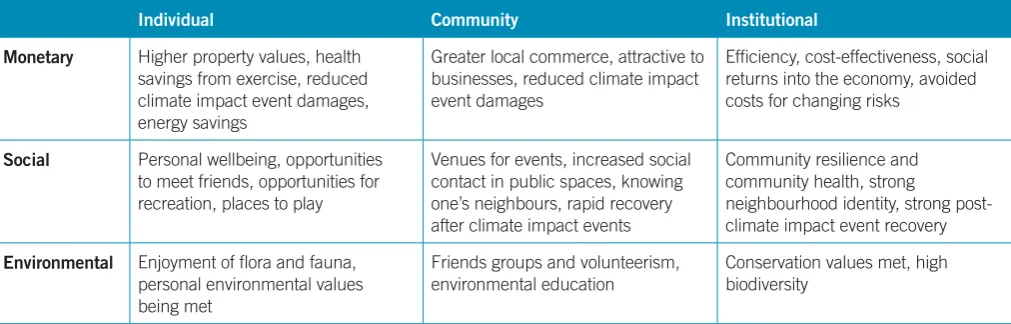
Table 1, overleaf, shows examples of these different types of benefit and the scale at which those benefits take effect.
The three levels of benefit are:
1. Individual benefits contribute to personal welfare. These make up the market economy as personal utility (e.g., market price, willingness to pay) and individual wellbeing.
2. Community benefits contribute to the welfare of the community and are things like connectedness, shared values and goals, and access to cultural and natural heritage
Individual Community Institutional
Monetary Higher property values, health savings from exercise, reduced climate impact event damages, energy savings
Greater local commerce, attractive to businesses, reduced climate impact event damages
Efficiency, cost-effectiveness, social returns into the economy, avoided costs for changing risks
Social Personal wellbeing, opportunities to meet friends, opportunities for recreation, places to play
Venues for events, increased social contact in public spaces, knowing one’s neighbours, rapid recovery after climate impact events
Community resilience and community health, strong
neighbourhood identity, strong post-climate impact event recovery
Environmental Enjoyment of flora and fauna, personal environmental values being met
Friends groups and volunteerism, environmental education
Conservation values met, high biodiversity
Table 1 Examples of individual, community and institutional values as they relate to monetary, social and environmental values provided by GI.
Green Infrastructure Economic Framework Page 9
Institutional values are those values that an institution such as local government, invests in and uses to measure its success. With respect to GI, these relate particularly to environmental and social policies.
Local government has three main policy groupings relating to GI. Sustainability is a common over-arching policy, but does not always result in the integration of economic, social and environmental values at the project and program scale. Integrating these values within business cases for GI is one practical way of achieving this aim (Young, et al., 2014b).
The other two main policy areas are safety and liveability. One aspect of safe communities is risk reduction, aiming to prevent or avoid loss from damaging events and processes. Liveability aims to improve the quality of urban spaces for individuals, communities and nature. The key economic difference between risk reduction and liveability is that the first is measured as avoided loss, whereas the second addresses overall gain.
1. Sustainability
> Achieving social, environmental and economic sustainability for future communities.
> Ensuring the sustainability and continuity of council finance and service provision.
> Maintaining the ecological resilience of GI in urban settings is challenging because of other pressures, but it is reasonable to assume that many of the qualities for doing so are consistent with other forms of resilience.
> Strategic resource use to maximise return on investment through development of integrated infrastructure that serves multiple purposes compared to single purpose infrastructure.
2. Safe communities
> Climate impact risk reduction is central to adaptation. Key risks identified in the urban environment are flash flooding, drought, extreme heat, storms including hail storms, and windy and exposed environments.
> Conventional infrastructure can withstand external disturbances and shocks to known tolerance levels, but when the system fails, the impacts are costly. In some cases, GI can provide added resilience with the same or additional level of service. GI can also reduce the physical, emotional and monetary cost of damaging events.
> Green infrastructure can be added to conventional infrastructure to soften it and lessen its impacts.
Policy groupings related to green infrastructure
3. Liveability
> GI contributes to healthier and happier communities.
> GI that improves liveability will expand the services available within urban areas.
> Urban environments are not always comfortable places. The exterior environment needs the same of level of consideration to people’s use of space as is given to building interiors.
> Key design elements include the provision of shelter, urban cooling in summer and reduced exposure in winter (if well designed).
Considerations for using the GI economic
framework
Green infrastructure development is a relatively new area of practice so needs to be highly innovative. Accordingly, the following aspects need to be considered at the beginning of each project:
Q How is GI different to other forms of infrastructure?
Q What current tools/systems in use can be used to make GI operational?
Q What new and different tools may need to be used?
Q How should they be applied?
The use of economic methods and tools in developing business cases for GI and building that knowledge into operational systems and asset management will help develop and deliver innovative practice.
Policy environment
Policy can be both a constraint and enabler of GI development. At the start of a project, it is important to identify the policies supporting GI at all levels of government. It is also important to understand where GI can support other policy agendas. For example, with respect to health policy, GI can provide health benefits, such as improved air quality and urban cooling, and be used to reduce the impacts of extreme weather events, improving personal safety.
It is also essential to identify barriers resulting from current policy or strategic priorities and develop strategies for addressing them. By identifying a wider range of benefits and identifying long-term social, economic and environmental returns to society, the use of an economic framework can help to build stronger business cases that are consistent with council policies and goals.
How a project is framed is a key part of obtaining buy-in and engagement. Potential stakeholders include council executive, councillors, the community, business and state government agencies. For example, an organisation may place a low value on environmental activities, but may place a high value on community health and wellbeing. Directly linking these benefits to GI in a business case can potentially gain the support needed within council and the community. For example, if you are proposing a green business precinct, you may wish to promote aspects such as increased economic activity or employee health and productivity to local business. If you are developing parkland areas in a residential area you may wish to frame it through improved amenity, increased property values and increased health benefits.
Level of understanding
Green infrastructure and its benefits are not well understood by many people. It is also an area of innovation, which means that new technologies and
The operational process
ways of doing things are needed. At the beginning of each project, it is important to assess how well key individuals and groups understand the needs and benefits of GI. Education may be needed to develop a shared understanding of the project and gain the support needed to ensure the acceptance of GI during and after the project. Lack of knowledge and lack of familiarity can both pose risks to innovative projects where outcomes and potential benefits seem uncertain. This often requires extra time to work through and is an ongoing process that requires feedback, adjustment and negotiation with the different parties involved. However, a deeper level of engagement also helps to ensure that decisions are well informed and that the best decision in relation to expenditure for infrastructure can be made.
Resources and needs
As many GI projects involve new technology and ways of thinking, they may have different requirements to standard grey infrastructure projects. The operational infrastructure and learned practice is often being developed and ‘built’ through these projects. Appropriate resources, time and strategic planning are central where learning is an important component. Ongoing actions such as monitoring and evaluation to measure asset performance is also needed to inform asset management. Modifying existing processes is an efficient way to do this. For example, adding in extra checks during tree health and infrastructure assessments can help reduce long-term costs, making the project more financially sustainable in the long term. Managing and negotiating the different expectations in relation to resources and needs is crucial.
Planning projects and programs
Green infrastructure projects and programs have two levels of benefit:
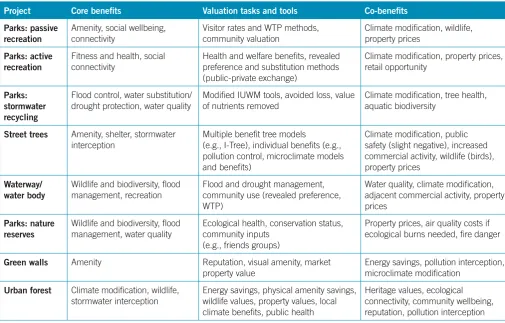
1. Core or direct benefits: a project should generally identify up to three core benefits, only identifying more if the planners are expert and well-practised. The type of core benefit will largely dictate the major economic tools needed. The resulting economic assessment will form the central part of the project business case. Examples are shown in Table 2, and a larger number of benefits are listed in Appendix A (see pages 33–34).
Green Infrastructure Economic Framework Page 11
Investment in GI at the local government level can serve a wide range of purposes. Examples include:
Q Locating and prioritising natural interventions where they are most needed.
Q Where the need for GI has been identified (e.g., a park, a wetland, tree planting), and council wants to maximise its potential benefits (e.g., as climate change adaptation, community health) with targeted investment.
Q Where a site or neighbourhood with the potential for additional GI has been identified and council would like to select the most suitable kind using an economic assessment.
Q Where council has identified the most suitable type of GI for a site and needs an evidence base to support the proposal.
Q Where GI is being targeted to maximise specific socio-economic benefits (e.g., health and wellbeing, active exercise, public access).
Q Where council would like to weigh up the social, economic and environmental benefits of both GI and non-GI investments for a particular site in order to choose a preferred option.
Q Where council has an organisational strategy or target that requires the selection and evaluation of a range of individual actions (e.g., an urban forest strategy).
Q Where there is a need to provide an estimate of monetary returns for a planning decision to fulfil regulatory obligations (e.g., for a planning tribunal, mandatory open space in a development).
Examples of potential core benefits and some of the tasks and tools needed to evaluate these are provided in Table 2.
Project Core benefits Valuation tasks and tools Co-benefits
Parks: passive recreation
Amenity, social wellbeing, connectivity
Visitor rates and WTP methods, community valuation
Climate modification, wildlife, property prices
Parks: active recreation
Fitness and health, social connectivity
Health and welfare benefits, revealed preference and substitution methods (public-private exchange)
Climate modification, property prices, retail opportunity
Parks: stormwater recycling
Flood control, water substitution/ drought protection, water quality
Modified IUWM tools, avoided loss, value of nutrients removed
Climate modification, tree health, aquatic biodiversity
Street trees Amenity, shelter, stormwater interception
Multiple benefit tree models
(e.g., I-Tree), individual benefits (e.g., pollution control, microclimate models and benefits)
Climate modification, public safety (slight negative), increased commercial activity, wildlife (birds), property prices
Waterway/ water body
Wildlife and biodiversity, flood management, recreation
Flood and drought management, community use (revealed preference, WTP)
Water quality, climate modification, adjacent commercial activity, property prices
Parks: nature reserves
Wildlife and biodiversity, flood management, water quality
Ecological health, conservation status, community inputs
(e.g., friends groups)
Property prices, air quality costs if ecological burns needed, fire danger
Green walls Amenity Reputation, visual amenity, market property value
Energy savings, pollution interception, microclimate modification
Urban forest Climate modification, wildlife, stormwater interception
Energy savings, physical amenity savings, wildlife values, property values, local climate benefits, public health
Heritage values, ecological connectivity, community wellbeing, reputation, pollution interception
Table 2 Examples of projects, core benefits valuations tasks and tools, and co-benefits for GI at the local government level. (WTP – willingness to pay; IUWM – integrated urban water management)
Embedding it in the process
A key part of enabling the economic framework is ensuring that it becomes part of day-to-day practice by embedding it in the current operational systems through the most relevant process area. Operational systems within participating councils were assessed and the most appropriate process identified for the economic framework was asset management. This was divided into four key areas as shown in Figure 1.
Figure 1 Four key areas of local government operational processes.
Plan/develop
Maintain and monitor Retire/
Green Infrastructure Economic Framework Page 13
Identify core functions: what is the project’s main purpose?
What is the context? Select type of business case needed
Select valuation tools
Scope rough project costs and benefits
(if needed)
Assess baseline (costs and benefits)
Assess future costs under business as usual
(if needed)
Collate project costs and benefits
Value costs and benefits
Construct supporting business case
Review and update plans and business case
(as needed)
Establish asset value
Collect data to support future projects and re-evaluate
current project
Green Infrastructure Economic Framework Page 13
s
The GI economic framework process
BUILD BASELINE 1: survey current and
future risks
BUILD BASELINE 3: identify key eco-services
and their benefits BUILD BASELINE 2:
determine most suitable types of GI
Scoping and initial development
Key task
Ascertain whether GI assets and services are relevant to the current project.
Key considerations
Q Is GI applicable to this project?
Q How is it applicable?
Q What services does it provide?
Q What policy/strategic objectives does it fulfil?
Q Who are the key stakeholders and how can this project address their needs?
Q What sort of education may be needed to gain buy-in and support for the project?
Q Can GI enhance the performance of other infrastructure or assets? If so how?
Q Why is GI a better alternative to other possible infrastructure options?
Q What is the best GI option?
Where you start
Where you start will often depend upon the following factors:
Q Your organisation’s operational maturity.
Q The resources available.
Q The policy and strategic environment.
Q The conditions attached to project funding.
It is important to work with an understanding of the challenges and opportunities you face and to think
strategically about what actions are needed to progress this activity to the next phase. It is also important to generate
a shared understanding of the project and obtain the necessary buy-in from key stakeholders internally and externally. It can help to develop a brief summary of what you propose that includes the areas outlined below:
Q Relevance – what is the value of the action in relation to other primary stakeholders’ needs and other regulatory and policy needs?
Q Efficiency – how will the project use the resources in the most cost-effective manner to achieve its objectives?
Q Effectiveness – how will the project achieve its objectives?
Q Impact – what are the projected outputs and outcomes of this project?
Q Sustainability – what are the factors needed to ensure that the asset and their impact will to continue when the activity is completed?
This involves working within identified constraints, such as resources, but also to think beyond them. This project may also support other long-term visions for your community including your overall plan for GI. You then need to ascertain how GI fits in and adds values to these plans. It is also good to look at how your project value-add to other areas of policy and strategy within and external to your organisation. In terms of the scope of the project, it is always better to work within the constraints of the budget and do a part of the project well and then seek further funding rather than do a whole project badly.
Where you need to build to
An organisational culture where GI understanding is embedded, understood and has equal consideration in planning as other more established forms of infrastructure.
Green Infrastructure Economic Framework Page 15
Economic considerations
Key task
Determine what kind of business case is required to support the proposed GI and the resources required to develop it.
Key considerations
Q What are the core benefits that GI is planned to deliver?
Q Is there existing GI upon which a business case can be based?
Q What resources are available to assess potential projects and build a business case (skills, personnel and budget)?
Q What partnerships and external resources may be needed?
Q What time frame does the economic analysis need to be completed within?
Q What kind of economic analysis is required? Simple to complex?
Where you start
Ideally, valuation will consider a project from the R&D stage through its entire life cycle. A barrier is that different potential options may address different benefits, so are hard to compare. The relative size of a benefit may also be uncertain because of the wide range of possible futures that may be encountered. An example is where a town vulnerable to sea level rise, storm surge and groundwater contamination may weigh up the different benefits of protection and relocation.
The scoping of projects can range from investigating alternatives within a single set of design guidelines to assessing a range of different alternatives to see which provides the best return on investment (that may include both green and conventional infrastructure). At this stage, it is worth considering the question: what type of business case is needed to support the proposal?
Every economic assessment will have some form of business case, whether as a brief memo describing the physical benefits that accompanies a project design, to a fully comprehensive cost-benefit analysis that captures the long-term returns on investment, including intangibles. The above questions, those to the left and the next few steps help identify the information from which a business case can be constructed.
Two types of business case can be considered here:
1. Physical economy – this is a physical description of the project that does not monetise the benefits because it either does not need to, or the information is not available. A business case of this type will describe the proposed assets to be built, and the services and major benefits it will provide and what the project will cost.
2. Monetary economy – this type of case estimates benefits in dollar terms, and can be developed on three levels:
a. Basic: a basic business case will estimate total benefits over the life of the project or representative annual benefits, preferably net of operating costs.
b. Intermediate: an intermediate business case will estimate the stream of benefits and costs over the life of the project, where numbers are generally available and a discount rate can be applied to estimate return on investment. This application is fairly static, but will want to show a positive return on investment.
c. Fully applied: a full business case will cover the full life cycle of the GI where asset condition and growth phases are modelled, to accurately represent ongoing costs and benefits; for example, covering tree growth and the relevant streams of benefits.
Even at this early stage, it may be worthwhile creating a rough idea of costs and benefits to scope the viability of the proposal. This may assist in internal approvals to go ahead with planning the project.
Business cases usually provide a mixture of economic outcomes. The case study examples presented here (two from the UK and one local) show both qualitative and quantitative outcomes. The Brooklyn case study emphasises the scoping stage, where previous work and stakeholder visions have a significant impact on business case development (see pages 28–30).
Where you need to build to
Planning and development
Key task
To plan and develop the proposed GI project or program, outlining the key functions and services provided, providing costings and benefits for the full life cycle of the assets produced.
A successful business case will result in a set of GI assets with the potential for delivering a wide range of services. It will also need to show why the option proposed offers a better value proposition than alternatives.
Key considerations
Q What services will this asset provide?
Q What will it cost to plan, develop, build, monitor and maintain over the full asset life cycle?
Q What are the tangible (monetary) and intangible benefits?
Q What are the most appropriate tools, methods, systems for assessing the value of GI?
Q What is the value proposition for this project?
Where you start
The project scoping and planning stage will have provided the major design elements for the project. The planning stage will need to provide the next level of detail for services and the benefits of those services to be properly assessed. Detailed plans are also required to provide accurate assessment of costs over the life of the project.
All these factors will contribute to developing a sound evidence base to support your business case. Because some areas may be new to potential co-investors or to the assessors who sign off the business case, it is very important not to embellish the benefits or understate cost of projects as this can impact on the viability of current and future projects. It is also important to cost in ongoing maintenance and monitoring and evaluation and show how they can be effectively managed. Creative solutions to reducing costs through adapting current systems or cost sharing with other organisations can be used to strengthen the business case. Policy and community agendas are also an important part of the business case as they provide context for the intangible costs and institutional values associated with the project.
Where you need to build to
Comprehensive business case and project management templates that step practitioners through the process. Governance and systems that support this.
Economic considerations
Key task
Build the business case by identifying core and co-benefits of the proposed GI, developing an economic baseline, assessing life cycle costs and benefits and if feasible, carrying out a cost-benefit analysis to assess the potential return on investment.
Many current cases for GI are advocacy cases assessing the major benefits but lack a sound economic basis. This is for a range of reasons including lack of data, lack of know-how in economics and an imbalance between the economic ‘credibility’ of GI versus conventional infrastructure.
Key considerations
Q What major services will the proposed GI provide (including adaptation)?
Q What are the major climate risks that the adaptation component is expected to manage?
Q What are the core benefits and co-benefits of those services?
Q Who will benefit from the project?
Q What is the planned life cycle of the GI?
Where you start
The previous section has scoped many of the questions needed to set up a business case. After scoping, there are three main stages to setting up a business case:
a. Setting up and establishing the baseline.
b. Selecting methods and collating costs and benefits. c. Analyse and assess costs and benefits.
These are described in the following three sections. The Brooklyn case study (see pages 28–30) also outlines how this was carried out for an area of industrial renewal.
Where you need to build to
Green Infrastructure Economic Framework Page 17
Setting up and establishing the
baseline
Key task
An economic baseline serves as the platform from which future costs and benefits can be calculated. It can also be used to assess the business-as-usual case – the future stream of costs that would occur if the project was not developed.
Key considerations
Q What major services will the proposed GI provide (including adaptation)?
Q What are the major climate risks that the adaptation component is expected to provide?
Q What are the core benefits and co-benefits of those services?
Q Who will benefit from the project?
Q What is the planned life cycle of the GI?
Where you start
The major services provided by a GI project will form the core of the business case and are the priority for providing benefits in dollar values.
There are two major groups of services:
1. Avoided costs: measure the benefits of avoided risks through adaptation. Climate risks include extreme heat, flash, river and coastal flooding, storms and peak winds, hail and fire. Additional avoided costs may include avoided health costs from a fitter, healthier community, energy savings and so on.
2. Net benefits: additional benefits that the project may provide include community benefits, higher worker productivity, increased visitors, and commercial opportunities.
Other considerations include providing greater benefits from a higher standard of GI than the minimum required (e.g., accompanying another project). GI may also be used to provide required levels of service, substituting for other infrastructure (e.g., flood mitigation services).
One purpose of this framework is to assist councils in developing the business case to adapt now to climate change. If a council has carried out an adaptation strategy, then the information on existing and potential future exposure to climate risk may be readily available. If it has been identified as an important area for investment, then further specific costing of current and future risk may be needed (e.g., flooding, heat waves).
What are the core benefits of the services provided
by the project?
The core benefits are provided by the main services delivered by the project. Core benefits can be measured in dollars to straightforward physical measures depending on what type of information is needed and/or available.
At this stage, it is useful to identify core benefits along with a full list of the co-benefits that will also be provided.
Figure 2, on page 18, shows the major breakdowns for use and non-use values, which help to distinguish market (tangible) from non-market (intangible) values.
Appendices A and B (pages 33–42) present a guide to some evaluation tools. Appendix A gives a brief description of some tools and these are linked to particular types of green infrastructure in Appendix B, with each tool being allocated a particular number. As can be seen in Appendix B, there are many gaps as this field is still developing. For types of green infrastructure where there are no identified evaluation tools for a particular benefit, it is recommended the user search the EVRI database to identify a suitable evaluation tool.
What is the timescale of the full GI lifecycle?
Green infrastructure produces a combination of long-lived natural and built assets that will be expected to deliver services over their lifetime. The planning stage will need to account for not only the planning, development and implementation stages, but also the benefits delivery, maintenance and monitoring stages, ideally extending for the useful life of the assets in question.A business-as-usual baseline will extend over this period, and may also include projected socio-economic and risk data. This is commonly carried out for climate adaptation, where changes in climate risks and exposure are extended into the future, with and without adaptation measures.
Who will benefit from the project?
Identifying who benefits from the project can help identify potential co-funders and collaborators. It will also identify what demographic and socio-economic data may be required to support the business case. Knowing who benefits will also inform how those benefits can best be communicated in the business plan (e.g., as dollars, health, community benefits).
The major groupings of beneficiary are individuals and businesses, communities and institutions.
> Individuals and businesses – individuals can receive direct and indirect benefits that can be market or welfare (non-market) related. Beneficiaries can be residents, regular visitors (e.g., workers) or tourists (internal and external). Each will need to be identified and depending on the type of information needed to construct a baseline, may require some detail (e.g., demographics, income).
> Communities – have a set of democratic rights and functions around people and place that relate to social connectivity, community resilience and neighbourhood pride. These are hard to monetise but will feed into the economy through long-term social returns and will also contribute to resilience. Sometimes putting a dollar value on this is double-counting if social returns are addressed separately, but identifying the specific benefit(s) value chain is useful.
Figure 2 Total economic value system with health and wellbeing additions. Adapted from ten Brink et al. (2011) and Young et al. (2014a).
Distinguishing public and private benefits is important, because the relationship between ‘Who pays?’ and ‘Who benefits?’, may become important in determining what local government is expected to support financially. This can also identify co-funding opportunities. In particular, public-private and public-community collaborations are under-utilised.
It is important to identify the stream of benefits from the GI and the services it provides through to its eventual end point. It can help to map the services and benefits provided by the project through a small set of value chains. A visual representation of these chains will link the services that GI provides with the various benefits and beneficiaries. This can help simplify the various benefits and will also help to avoid double-counting when valuing the benefits.
Establish economic baseline
The previous topics can be brought together to create an economic baseline. This serves as the platform from which future costs and benefits can be calculated. It can also be used to assess the business as usual case, where the future stream of values without the proposed GI projects can be assessed.
Included in the baseline are:
Q The existing level of services
Q Current exposure to risk
Q Social, environmental and economic goals
Q The values that will be affected
Q People and existing assets affected
Q The geographic scope
Q Time frame of the project
Q Projections of key socio-economic and risk data relevant to the assessment.
Information included or omitted from the baseline can heavily influence the conclusions of the economic analysis. The rigour and scope of the baseline description determines the type of analysis that can be conducted on proposed projects, with more complex and expensive projects requiring more data and rigour.
Where you need to build to
Systems that have the tools and integrated data needed to be able to comprehensively ascertain the cost and value of GI and its benefits. Established stakeholder networks that support ongoing work and development in this area.
TOTAL ECONOMIC VALUE
Use value
Direct use Options Indirect use Philanthropic value Existence value
Non-use value
Direct benefits from use of primary goods
Benefits from secondary goods and
services (including non-consumptive use)
Bequest value (value for future generations)
Altruistic value (value for others)
Value of existence with use/consumption of goods and services
Provisioning services
Timber and fuel Food, fodder Other forest products Bio-prospecting Bio-chemical medicines Fresh water Cultural services Recreation Tourism Education/science Health Provisioning services Bio-prospecting Fresh water Regulating services Carbon storage Air quality Water purification Erosion control Natural hazard management Cultural services Visual amenity Cultural services
Health and wellbeing
Provisioning services Fresh water Regulating services Carbon storage Air quality Cultural services Recreation Tourism Education/science Health Liveability Equity Provisioning services Scenery/landscape Community identity Community integrity Spiritual value Health (especially mental health) Direct and indirect
options for future use of goods and
Green Infrastructure Economic Framework Page 19 Green Infrastructure Economic Framework Page 19
s
Principles of baseline specification
Given the context of the project (e.g., resources, time constraints), the following principles should guide the requirements of the baseline:
Q Specify the current and future state of relevant economic variables, and the social and environmental issues impacted by the project
Q Identify all assumptions made in calculating the baseline
Q Specify the start point (in space and time) of the baseline and project
Q Specify the end point of the baseline and project
Q Specify the uncertain parameters of the baseline, and
Q Use the baseline assumptions for the assessment of costs and benefits.
Collating costs and benefits and
select valuation methods
Key task
Collate costs and benefits (both tangible and intangible) for the whole life cycle of the project and assets
produced, and select valuation methods and tools.
Key considerations
Q What are the costs?
Q What are the benefits?
Q What valuation methods are most appropriate to asses project value?
Where you start
Collate project costs
Project costs that need to be collated cover the planning, implementation and full life cycle costs of ongoing maintenance and monitoring. This will create a stream of costs that ideally, can be allocated on an annual basis over the life of the project (e.g., 50 years).
The following questions are relevant to addressing ongoing costs:
Q What resources (e.g., water) does this asset require, and are there any concerns over possible resource restrictions over its lifetime?
Q What are the projected upkeep and maintenance costs?
Q What are the costs of the monitoring and evaluation needed to effectively manage the service delivery, asset condition and reporting requirements? (Taking account of building that into current activities and the benefits it provides.)
Q Are there risks to either the asset or its ability to deliver services that need to be costed (e.g., contingencies, insurance)?
Collate project benefits
The collation of benefits for further analysis can build on the information collection during the project scoping stage. Four major value types that benefits can be grouped under, are:
Q Direct market values.
Q Indirect market values that can be costed.
Q Indirect markets values that can be identified but not costed.
Q Institutional values (e.g., levels of community health or connectivity, resilience, sustainability).
The Brooklyn case study includes examples, and all three case studies include a wide range of benefits. Additional considerations include:
Q What is the division between public and private benefits?
Public benefits such as health and liveability often have aspects that can be allocated to individuals, the
community and institutions without necessarily being allocated directly to direct market benefits. These are often collated under the heading of social returns.
Q Can these assets and/or services be easily substituted for by other means or are they highly exclusive to this particular project?
Assets or essential services that are not easily
substitutable have a higher value, potentially reaching the ‘priceless’ level of ethical, non-monetisable values (e.g., rare species). Assets that are unique because of their age or situation will also have a high value.
Q Is this project likely to acquire further value over time?
High quality GI will very quickly acquire community value and over decades can acquire heritage value if high profile species are used or natural values are enhanced.
Q What is the likely stream of benefits over the life of the project?
The full stream of costs and benefits need to be projected for several decades or up to a century or more. Some of the considerations that may be needed here are:
> Factoring in growing GI where benefits increase over time.
> Accounting for socio-economic changes over time; population, demographics and property value. > Accounting for climate change risks and
adaptation needs. For example, running two plausible scenarios where the first is the minimum level of risk that needs to be avoided and the second is close to the highest plausible, will generally be sufficient.
Select valuation methods
Valuation methods range from market-based tools, such as cost benefit analysis, through to simple ranking methods (see Appendix C). As markets do not exist for many of the types of benefits produced by GI, a variety of tools may be needed. Different methods can be used to address different subsets of total benefits or to compare alternative measures of value for the same categories of benefit (if resources permit).
It is important to avoid double counting, i.e., calculating the same benefit twice, in dollars. Any potential overlap in benefits should be noted when presenting the results. This can be managed by carefully assessing the stream of benefits and describing intermediate and/or uncertain benefits in qualitative terms.
Valuation methods are listed in Appendix C and can be found using the EVRI database search engine (also in Appendix C).
Where you need to build to
Green Infrastructure Economic Framework Page 21
Assess project value and prepare
business case
Key task
To assess project value by analysing costs and benefits and prepare the business case for project approval.
Key considerations
Q What costs are likely to be incurred if this project is not developed?
Q Have the costs of innovation been factored in? (see page 23)
Q What is the balance between monetary and non-monetary benefits, and how will they be presented?
Q What is the value proposition from a policy perspective?
Q What level of economic detail is needed for project approval?
Q Does this project open up future options for achieving greater value down the track (e.g., improving water quality, linking urban forest canopy, broad scale flood protection, transport links)?
Where you start
A business case will be helped by additional current and future savings that can be made. For example, savings made through reducing damage sustained as a result of flooding or the capture and reuse of water through the development of wetlands and water harvesting projects. As the benefits and outcomes often continue over long time frames, it is important to include projected cost increases of any services currently provided through other means that can be replaced by GI.
Look to other areas of your organisation for data that may help support your business case in related areas such as community wellness and satisfaction and productive economic areas with GI. Current tools such as online tools such as iTree Eco (https://www.itreetools.org/eco/ international.php) and research reports (Appendix C) are also useful resources. In terms of intangible values associated with GI, where there is not sufficient data available it is important to still note these in the business case.
Value costs and benefits
An economic analysis should, as much as possible, estimate a project’s benefits in monetary terms. Using a consistent measure allows different types of benefits to be compared in the same units. It also allows the total costs over the project life cycle to be subtracted from the sum of benefits in order to assess net benefits from alternative proposals, which can be evaluated against each other and with the baseline scenario. Methods for valuing costs and benefits are described in more detail in Appendix D.
However, some benefits cannot be monetised due to lack of data or too great uncertainty, and other benefits because they should not be monetised for ethical reasons (e.g., the cost of species extinction, human mortality). Non-substitutable values should not be traded off by making
them made invisible through conversion into a single metric. The Brooklyn business case prioritises a number of GI projects within a broader framework using both monetary and non-monetary criteria (see pages 28–30).
Establish the present value
The stream of costs and benefits over the life of the project need to be communicated in today’s dollars to outline (Appendix D):
Q The project costs in today’s dollars
Q Expected future benefits in today’s dollars
Q The anticipated return on investment over the life of the asset
The economic baseline, calculated earlier, serves as the baseline for calculating this.
Future dollar values are less than those of today’s values for a wide range of reasons, the simplest being that inflation will reduce its value over time. This process is called discounting. Discounting rates for GI will be much lower than those for many other purposes, because of its long-lived nature, high social and environmental values and high intrinsic values.
The most common methods of discounting involves estimating net present values, annualised values or alternatively net future value.
Net present value (NPV)
The NPV of a projected stream of current and future benefits and costs relative to the initial baseline is calculated by applying a discount rate to the benefits and costs in each year, and summing all of the values.
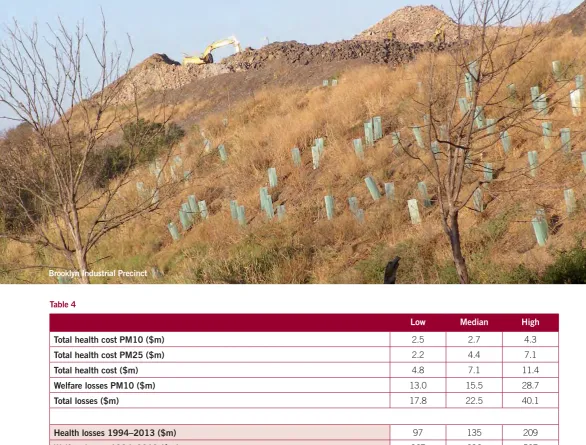
The NPV of health and welfare benefits of reducing dust pollution over 30 years are assessed in the Brooklyn business case on pages 28–30.
Annualised values (AV)
An annualised value is the amount one would have to pay at the end of each time period (usually each year) so that the sum of all payments in present value terms equals the original stream of values. This is how insurance risk is calculated, where a stream of estimated costs over time (e.g., 50 years) is converted into an annualised value. A premium paid that avoids those costs effectively therefore yields a benefit. The annual cost of GI that reduces risk in that way can be seen as a form of insurance.
Net future value (NFV)
Instead of discounting all future values to the present, it is possible to estimate value in some future time period, for example, at the end of the last year of the project’s effective life. One example is to estimate the community benefits of a part in 2050, compared to today.
For more traditional parks, nature parks are areas with high ecological values and those areas that are anticipated to exist over very long timescales, very low discount rates of 1.5% or even less may be justified (e.g., Gollier, 2010). Street trees that have a finite life and that will need replacement after a few decades will sit somewhere in the midst of this range. Undertaking an uncertainty analysis and presenting the results with a preferred and justified option is widely recommended.
For most GI projects, we recommend undertaking a sensitivity analysis at 1% and 3.5%, only going higher if the project is competing with a conventional infrastructure project that attracts a higher rate, say 5%.
Depending on the circumstances, one method might have certain advantages over the others. NPV of future benefits can be compared to the NPV of costs to calculate the ration of benefits to cost (e.g., for every dollar spend, the project expects x dollars in return). Annualised returns as a percent of the initial investment may also be of interest to finance professionals. Discounting to the present to get the total yield may be the most informative procedure
when assessing a project that offers a stream of highly variable future benefits. Methods that use total benefits are preferred. For example, two projects with different benefit streams may reveal that the project that has a higher capital cost actually has a lower annual cost and offers greater benefits because of its longer lifetime.
The Brooklyn business case shows a roughly one-to-one return on water savings and direct pollution benefits, but multiple returns of community health and welfare is included in the business case. Business cases that combine social, environmental and economic returns are much more likely to be successful than those that concentrate on single aspects (see pages 28–30).
Where you need to build to
Systems that have the tools and integrated data needed to be able to comprehensively ascertain the cost and value of GI and its benefits. Established stakeholder networks that support ongoing work and development in this area.
Green Infrastructure Economic Framework Page 23
Project evaluation
Key task
To evaluate the cost-effectiveness of the implementation stage.
Key considerations
Q How cost effective was the project implementation?
Q Were there any unexpected costs and what were they?
Q Has there been any unexpected benefits associated with the implementation and did they add value to the project?
Where you start
Evaluation of these projects has two key areas of assessment:
1. Project implementation performance, and 2. Outputs and outcomes from the project to date.
Evaluation provides an opportunity to look at what has worked and what hasn’t worked and why. It is important to document and share learnings out of these evaluations. That way knowledge can be built to support better decision making and management of assets in this area. This can also potentially reduce future costs by identifying new ways of undertaking projects to improve outcomes.
It is also important to look at outputs and check for quality of service delivery. Appropriate mechanisms are needed to ensure that there is appropriate data to assess whether medium and long-term outcomes are meeting the aims of the initial project.
Where you need to build to
Well-defined criteria for evaluating GI projects that are established and accepted across the organisation. This evaluation system should not only ensure continuous improvement but should also integrate knowledge within councils and with the broader stakeholder group.
Procure and construct
(implementation)
Key task
To manage costs associated with the project implementation, particularly those associated with innovation.
Key considerations
Does your plan involve any of the following areas that result in additional costs:
Q The use of new technologies?
Q The application of a technology in a new context?
Q The adaptation of current technology?
Q Behaviour change or change management?
Q The generation of new knowledge?
Q Transformation or adaptation of current operational systems?
Q New operational processes or practices?
Q Uncertainty regarding the outcome of the project?
If any of the above factors are present, the project plan, budget and business case will need to ensure that potentially unexpected outcomes during implementation can be addressed effectively.
Where you start
Project plans are a key part of managing innovative projects. Pre-existing templates may need to be adjusted to reflect this. In some cases, it will simply mean adding in a new section or questions that ensure that this is appropriately managed.
Project risk management may also need to account for potential new risks due to uncertain outcomes that may not be catered for in current systems. The presence of increased risk also requires that interactions with internal and external stakeholders by carefully managed by factoring in the appropriate communication systems and processes needed to support this. Flexible governance that supports collaborative decision making will allow some level of autonomy, whilst still maintaining oversight.
Mechanisms for ongoing feedback and adjustment will need to be factored in to ensure that adjustments can be made throughout the process. Ongoing learning, communication and knowledge exchange may all be needed to support project evaluation and delivery.
Where you need to build to
Asset valuation
Key task
To value assets and incorporate them on an asset register that monitors condition, service delivery, expected life, value and provides a record of upkeep.
Key considerations
Q Is there a current asset register in operation at council level?
Q How much modification would this register require to incorporate GI assets not currently included?
Q Is there scope to incorporate biological assets into a register?
Q Do tools that map growth phases of biological assets need to be developed?
Q Are there important ecological functions and/or conservation aspects that are essentially irreplaceable on human timescales?
Where you start
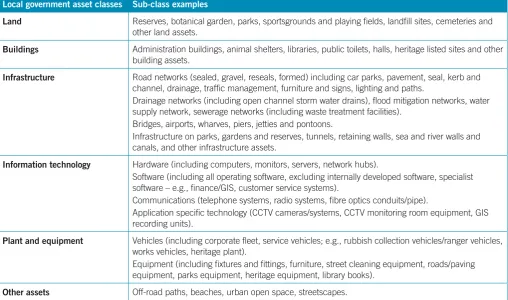
Classes, subclasses and types of GI can be based on those developed for local government for conventional infrastructure, which can be adapted to better suit the different types of GI (Appendix E). Assets can also be linked to the delivery of goods and services by using an asset valuation and maintenance program that addresses infrastructure development, maintenance, upkeep and replacement. Asset condition can be linked to specific service levels. By adopting life cycle investment, an asset management program can focus on sustainable service delivery throughout an asset’s life.
Green infrastructure assets have a number of similarities and differences with conventional infrastructure that need to be accounted for when valuing assets. For example:
Q Methods of conventional asset valuation include market fair price, value of land with restricted uses, replacement cost and reproduction cost, and income approach all with various applications of depreciation or expected service.
Q Many elements of GI grow after establishment; some are very long-lived and others may have finite lives (e.g., street trees). Fair asset value in these cases, will be a combination of establishment cost, upkeep, benefit flow and expected life. A fair value for natural assets needs to be developed taking into account the difficulty of replacing ecological services and biodiversity.
Q Market valuations make a number of assumptions about substitutability and highest realisable value that misses out ‘hidden’ values or intangibles, challenging the placement of markets as the arbiter of fair value.
Q Asset value ideally should allow for maintenance and upkeep, which preserve asset value and maintain a level of service delivery. This may also accommodate a data gathering role (see next section).
The simplest way to value infrastructure assets is through the cost of replacement, but this may not capture lost services if an asset is lost prematurely. GI can depreciate through lack of maintenance, but can also be extended long beyond its design life by ongoing upkeep and renewal. An asset may also be linked to specific levels of service, which cannot be met if infrastructure is allowed to degrade.
The preferred method of infrastructure reporting as expressed by public and private infrastructure asset managers is to assess the physical condition of assets, combined with current estimates of costs to bring to a satisfactory condition, taking account of written-down replacement costs for degraded assets (e.g., drought-stricken street trees).
This methodology links infrastructure condition to service delivery, vitally important for GI, which is more dynamic than most conventional infrastructure. Its condition at any time is important for understanding levels of service delivery, stage of biological development, potential stress factors and senescence (old age and loss of function). Valuing replacement of biological assets should ideally account for growth stage (juvenile to mature), because of the time it would take to regain a given level of service. For example, street trees have finite lifetimes because of the safety aspect whereas nature parks have planned lifetimes greater than a century and may have levels of ecosystem function that would take decades to centuries to recreate, if at all.