Western University Western University
Scholarship@Western
Scholarship@Western
Electronic Thesis and Dissertation Repository
5-27-2016 12:00 AM
Assessing Climate Change Adaptation and Health in Coastal
Assessing Climate Change Adaptation and Health in Coastal
Cambodia: The Human-Environment Interaction
Cambodia: The Human-Environment Interaction
Mengieng UngThe University of Western Ontario
Supervisor
Dr. Isaac Luginaah
The University of Western Ontario Graduate Program in Geography
A thesis submitted in partial fulfillment of the requirements for the degree in Doctor of Philosophy
© Mengieng Ung 2016
Follow this and additional works at: https://ir.lib.uwo.ca/etd
Part of the Human Geography Commons
Recommended Citation Recommended Citation
Ung, Mengieng, "Assessing Climate Change Adaptation and Health in Coastal Cambodia: The Human-Environment Interaction" (2016). Electronic Thesis and Dissertation Repository. 3778.
https://ir.lib.uwo.ca/etd/3778
This Dissertation/Thesis is brought to you for free and open access by Scholarship@Western. It has been accepted for inclusion in Electronic Thesis and Dissertation Repository by an authorized administrator of
i
Abstract
This thesis examines the relationship between humans and their environment in the context of climate change in coastal Cambodia. Specifically, this thesis focuses on household energy consumption behavior, climate change adaptation and subjective human health impacts. A cross-sectional survey of 1823 individuals in four coastal provinces in Cambodia was conducted. A series of quantitative analyses, including complementary log-log regression, ordered logistic regression and logistic regression analysis, were employed to analyze the data. The results showed that both past
experience of extreme climatic events and awareness of climate change had a positive relationship with household energy reduction behavior. Females and rural residents were less likely to report reduction in household energy. Perceived self-efficacy, education and duration of residence had positive relationships with both anticipatory and reactive adaptation to climate change although to varying degrees. Perceived socio-ecological impact of climate change and barriers to protect against the impact of climate change had negative associations with self-rated health. Furthermore, older individuals, females and higher income households had negative associations with self-reported health. However, individuals who had attained higher formal education and those who were employed reported better health status.
This study makes contributions to theory, methodology and more importantly policy issues around climate change in coastal Cambodia. Using theoretical constructs from the Social Cognitive Theory, the findings show that direct personal agency (first-hand experiences) of climatic hazard events plays a key role in behavior response to climate change through a reduction in household energy consumption. Perceived self-efficacy also plays an important role in both anticipatory and reactive adaptation to climate change. The overall interaction between personal and social-environment in this context influences self-rated health. The utilization of a plurality of statistical techniques in this study contributes to a deeper understanding of the interaction of coastal
ii
findings of this study may serve as a potential road map for policy makers on household
energy reduction, climate change adaptation and coastal community health in Cambodia.
iii
The Co
-
Authorship Statement
This thesis is made up of a collection of papers, which have been submitted for publication and are currently under peer review process. The study questions, objectives and other relationships among the various manuscripts are outlined in the introductory chapter, while the study context is described in Chapter two. The research manuscripts are as follows:
Chapter Three: Ung, M., Luginaah, I., Chuenpagdee, R., & Campbell, G. (2016). First-Hand Experience of Extreme Climate Events and Household Energy Conservation Behavior in Coastal Cambodia. Climate and Development (Under Review).
Chapter Four: Ung, M., Luginaah, I., Chuenpagdee, R., & Campbell, G. (2015). Perceived Self-Efficacy and Adaptation to Climate Change in Coastal Cambodia.
Climate, 4(1), 1. DOI:10.3390/cli4010001.
Chapter Five: Ung, M., Luginaah, I., Chuenpagdee, R., & Campbell, G. (2016). Perceptions of Environmental Impacts and Self-Rated Health in Coastal Cambodia.
International Journal of Environmental Studies (Revision).
While all the papers are co-authored with my thesis supervisor and some members of the Indian Ocean World Centre team, as the first author, I conducted the actual
research, which involved problem identification, literature review, data entry, data analysis and writing.
iv
Acknowledgments
It took a village to get to this important milestone, and I would like to take this opportunity to formally express my gratitude to all those villagers.
First of all, I would like to express my sincere gratitude to my supervisor,
Professor Isaac Luginaah, for his endless and tireless support and guidance since day one. I cannot thank him enough for the warm-hearted care and support he provided to me. He is absolutely one of a kind. Thank you for transforming me from a Medical Geographer to a Health Geographer.
I also would like to express my sincere gratitude to my committee members, Dr. Godwin Arku and Dr. Jamie Baxter and Dr. Ratana Chuenpagdee for their valuable advice and suggestions throughout the entire process.
Special thanks goes to Indian Ocean World Center at McGill University for financial support through the Social Sciences and Humanities Research Council of Canada (SSHRC), without which the fieldwork would not have been possible; to the research participants who took their time to assist and made this study possible; to my field research assistants for their dedication and hard work regardless of the situation, through both monsoon rains and poor road conditions; to local authorities who
cooperated and made the approval of the study speedy, and who generously loaned me the much needed documentation; to the Department of Geography for providing me with funding and TA opportunities; to the department chair, Professor Dan Shrubsole for his support throughout the program and for being my second reader providing very insightful comments to my work; to the department staff for their support; to the Geography
v
previous and current sisters and brothers in the Environmental Hazards and Health Lab (EHHL): Dr. Jenna Dixon, Andrea Rishworth, Sarah Mason, Siera Vercillo, Yvonne Rollins, Faith Mambulu, Lydia Osei, Lucia Hussey, Jamima Baada, Jenny Tjhin, Emily Eyle, Dr. Vincent Kuuire, Chad Walker, Dr. Tor Oiamo, Dr. Paul Mkandawire, Kilian Atuoye, Roger Antabe, Joseph Kangmennaang, Joseph Braimah and ESPECIALLY Dr. Frederick Armah for all the help and guidance throughout our four years here; to the Sociologist brothers: Dr. Godfred Boateng and Jonathan Amoyaw; to Dr. Eric
Tekonrang; to my sister from the Nursing Department, Sheila A. Boamah, for checking on me just to see if I am doing well and for the good food when I much needed; to all my other friends in the department and outside the department (Riley Dillon) here at Western (Key Cortes); to the late Dr. Mickey Sampson for every single opportunity you provided me with, and for your guidance, during my very first amazing job; to Mr. Tuot
Sovannary, my ‘brother’, a colleague and my mentor for the support throughout, especially for helping me get the research ethics in Cambodia approved; to Dr. Kim Irvine for his friendship for over a decade, for the great opportunity to be part of his important projects during my first amazing job, for being part of my Canadian journey since hour 1 and for his hilarious family for having me over, and especially for
Khmeristmas (that’s Khmer celebrating Christmas) in Canada; to all my amazing roommates; to Phally for encouraging me to apply for a Ph.D. program in Canada in the first place; and to the rest of my best friends around the globe including Sokphally Ky, Dr. Kagna O. Sampson, Dr. Kongkea Phan, Sereirath Sim, Kunthy Run, Lyvann Samoeun, Dr. Samantha, Lai and Dallim Park for your valuable friendship and inspiration that came in every possible shape and form.
My humblest and sincere gratitude goes to Dr. Killian Ying, my idol and my American ‘father’, for his endless and tireless care and support for all these years and for inspiring me to be a Geographer at first and then a Medical Geographer.
My deepest and most sincere gratitude goes to my parents and the rest of the Ung family for all the support both emotionally and financially. Thank you for silently
vi
vii
Dedication
viii
Table of Contents
Abstract ... i
The Co-Authorship Statement ... iii
Acknowledgments ... iv
Dedication ... vii
Table of Contents ... viii
List of Tables ... xii
List of Figures ... xiii
CHAPTER 1 ... 1
1. INTRODUCTION ... 1
1.1 Problem Statement ... 5
1.2 Study Objectives ... 6
1.3 Theoretical Framework ... 6
1.4 Social Cognitive Theory ... 8
1.5 Health Geography and Climate Change Research ... 12
1.6 Study Design ... 14
1.7 The Organization of the Thesis ... 16
1.8 References ... 18
CHAPTER 2 ... 28
2. STUDY CONTEXT ... 28
2.1 Introduction ... 28
2.2 Political History of Cambodia in the Post-Colonial Era ... 28
2.3 Geographic, Demographics and Climate Profiles of the Kingdom of Cambodia 30 2.3.1 Geographic and Demographic Characteristics of Cambodia ... 30
2.3.1 Climate profile of Cambodia ... 32
ix
2.3.3 Current Situation and Socio-Economic Profiles ... 35
2.3.4 Disease and Health Profiles of Cambodia ... 36
2.3.5 Coastal Provinces ... 37
2.4 Summary ... 41
2.5 References ... 43
CHAPTER 3 ... 48
3. FIRST-HAND EXPERIENCE OF EXTREME CLIMATE EVENTS AND HOUSEHOLD ENERGY CONSERVATION IN COASTAL CAMBODIA ... 48
3.1 Introduction ... 48
3.2 Theoretical framework: Direct Personal Agency ... 51
3.3 Method ... 52
3.3.1 Data and Participants ... 52
3.3.2 Measures ... 52
3.3.3 Data Analysis ... 54
3.4 Result ... 54
3.5 Discussion ... 60
3.6 Conclusion ... 62
3.7 References ... 64
CHAPTER 4 ... 69
4. PERCEIVED SELF-EFFICACY AND ADAPTATION TO CLIMATE CHANGE IN COASTAL CAMBODIA ... 69
4.1 Introduction ... 69
4.2 Theoretical Framework: Perceived Self-Efficacy ... 72
4.3 Method ... 74
4.3.1 Study Context and Data Collection ... 74
4.4 Measures ... 75
4.4.1 Outcome Variables ... 75
4.4.2 Predictor Variables ... 75
x
4.6 Results ... 78
4.6.1 The Chi-square Statistics and Cramer’s V Statistics ... 78
4.6.1 Bivariate Analysis ... 81
4.6.2 Multivariate Analysis ... 82
4.7 Discussion ... 86
4.8 Conclusion ... 88
4.9 References ... 89
CHAPTER 5 ... 95
5. PERCEPTIONS OF CLIMATE CHANGE IMPACTS AND SELF-RATED HEALTH IN COASTAL CAMBODIA ... 95
5.1 Introduction ... 95
5.1.1 Theoretical Context: Perception of Environmental Impacts and Human Health 97 5.2 Method ... 98
5.2.1 Study Context and Data Collections ... 98
5.2.2 Measures ... 99
5.2.3 Data Analysis ... 102
5.3 Results ... 103
5.4 Discussion ... 107
5.5 Conclusion ... 110
5.6 References ... 112
CHAPTER 6 ... 119
6. SUMMARY AND CONCLUSION ... 119
6.1 Introduction ... 119
6.2 Summary of the Findings ... 121
6.2.1 Objective 1: To evaluate past experiences of extreme climate events and current household energy consumption behavior in coastal Cambodia. ... 121
xi
6.2.3 Objective 3: To examine the association between perceived climate change
impacts and self-rated health in coastal Cambodia ... 123
6.3 Contributions of the Study ... 123
6.3.1 Theoretical and Methodological Contributions ... 123
6.3.2 Practical Contributions, Policy Recommendations and Direction of Future Research ... 127
6.4 References ... 131
APPENDIX A ... 135
RESEARCH ETHICS APPROVAL ... 135
APPENDIX B ... 150
SURVEY QUESTIONNAIRE ... 150
APPENDIX C ... 171
xii
List of Tables
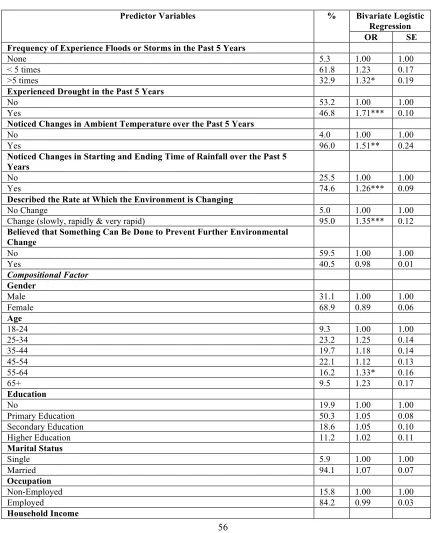
Table 1-1: Research Questions and Statistical Techniques Used in the Three Manuscripts of the Thesis ... 16 Table 2-1: Coastal Province Profiles ... 38 Table 3-1: Descriptive and Bivariate Logistic Regression Analysis on Reducing
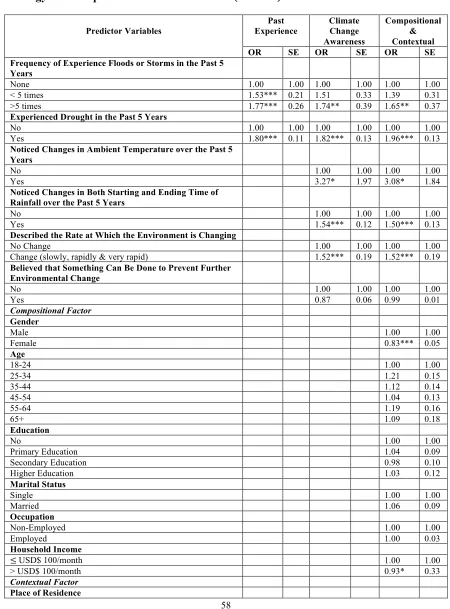
Household Energy Consumption in Coastal Cambodia (N=1823) ... 56 Table 3-2: Multivariate Logistic Regression Analysis on Reducing Household Energy
Consumption in Coastal Cambodia (N=1823) ... 58 Table 4-1: Descriptive Statistics of Anticipatory Adaptation to Climate Change Reported
by Individuals in Coastal Cambodia (N=1823) ... 79 Table 4-2: Descriptive Statistics of Reactive Adaptation to Climate Change in Coastal
Cambodia (N=1823) ... 80 Table 4-3: Bivariate Ordered Logistic Regression Analysis on Anticipatory and Reactive
Adaptation to Climate Change in Coastal Cambodia (N=1823) ... 82 Table 4-4: Multivariate Ordered Logistic Regression Analysis on Anticipatory
Adaptation to Climate Change in Coastal Cambodia (N=1823) ... 84 Table 4-5: Multivariate Logistic Regression Analysis on Reactive Adaptation to Climate
Change in Coastal Cambodia (N=1823) ... 85 Table 5-1: Descriptive and Bivariate Logistic Regression Analysis on Self-Rated Health
Status in Coastal Cambodia (N=1823) ... 104 Table 5-2: Multivariate Logistic Regression on Self-Rated Health Status in Coastal
xiii
List of
Figures
Figure 1-1: Schematic Framework of Anthropogenic Climate Change Drivers, Impacts and Responses Representing the Complexity of Human-Environment System
Interaction ... 8
Figure 1-2: The Triadic Reciprocal Causation Model ... 10
Figure 2-1: Map of Cambodia ... 31
Figure 2-2: Annual Minimum and Maximum Temperature from 1960 to 2006 ... 33
Figure 2-3: Total Annual Rainfall for Dry and Rainy Season from 1960 to 2006 ... 33
1
CHAPTER
1
1.
INTRODUCTION
Climate change has become, possibly, the greatest threat to public health and well-being in the 21st century (Costello et al., 2009; Galvão et al., 2009; Watts et al., 2015; WHO, 2014). Strong evidence suggests that climate change makes it more difficult to control a wide range of climate-sensitive health outcomes, and thus poses serious threats to human health (Costello et al., 2009; Lorey, 2002; McMichael et al., 2003; WHO, 2013). While some health impacts result from direct changes in the intensity and frequency of extreme weather conditions, such as heat and cold, storms and droughts, others result from the indirect impacts of climate change on social and ecological systems that include changes in infectious disease occurrences and patterns, changes in local food production, population displacement and economic disruption (Lorey, 2002; Semenza et al., 2011). The World Health Organization (WHO) projected that the modest climate change that occurred from the mid-1970s to 2000 is responsible for over 150,000 deaths and 5.5 million disability-adjusted life years (DALY) annually and mostly in developing countries (Ezzati et al., 2002; McMichael et al. 2004, WHO, 2002).
2
Increasingly, adaptation is emerging as an issue of critical importance in studies that examine the climate change-human health relationship. In the climate change literature, adaptation specifically refers to ‘adjustment in natural or human systems in response to actual or expected climate stimuli or their effects, which moderates harm or exploits beneficial opportunities’ (McCarthy, 2001:982). Adaptation and vulnerability are intrinsically linked. People’s adaptation determines how vulnerable they are to the health impacts of climate change. Similarly, the nature and scope of people’s vulnerability influences their capacity to adapt. Although health impacts of climate change will affect everybody, different geographical locations will have different vulnerability in terms of frequency and intensity of the impacts. Vulnerability to climate change depends on people’s personal characteristics (e.g., age, income, education, and health status), their broader social and environmental contexts, their access to resources (e.g., health services) and their level of exposure to climate change (Balbus & Malina, 2009; Barros et al., 2014; Bunyavanich et al., 2003). These attributes also influence the capacity of different individuals and groups to adapt to climate change. It has been suggested that children are particularly vulnerable because of their physiological and cognitive immaturity and their greater potential for long-term exposure (Barros et al., 2014; Bunyavanich et al., 2003). Similarly, poor and marginalized groups are also especially vulnerable to climate change impacts (Adger, 2006).
Over the past 10 years, Cambodia has experienced more frequent negative
impacts of climate change including direct effects of severe climate events such as storms and floods resulting in considerable fatalities and significant economic losses (MoE, 2006; Resurreccion & Sajor, 2008). For instance, the National Committee for Disaster Management (NCDM) of Cambodia reported that flooding in 2011 caused 247 deaths and affected 1.2 million people, mainly poor and marginalized population. NCDM further estimated the cost of destruction at $521 million with 220,000 ha of rice fields destroyed (Mekong River Commission-MRC, 2011). Since a large proportion of the Cambodian population is dependent on climate-sensitive livelihoods, such as agriculture and
3
Geographic disparities of the impacts of current climate variability suggest that the populations that are considered to be at greatest risk are those living in densely-populated cities or water-stressed areas or along coastal environments (Barros et al., 2014; Bunyavanich et al., 2003). Coastal areas have been the choice of settlement and the center of human activity throughout history due to transportation options and abundant natural resources to sustain populations (Gosling et al., 2011). Migration toward coastal zones continues today. Although the world’s coastal areas represent only 20% of the total available land, they are home to close to half of the world population (Kura et al.,2001). In fact, the majority of the world’s urban population lives in coastal cities including megacities such as Dhaka, Lagos, Mumbai, Shanghai and Tokyo (Dankelman, 2010). Coastal zones are therefore important areas in which to examine the relationship among a changing climate, uneven human health outcomes and differential capacities of people to adapt.
4
intense rainfall in the region (Boening et al., 2012; Chotamonsak et al., 2011; Preston et al., 2006; Stocker et al., 2013). In coastal Cambodia which is home to over 1 million people, climate change impacts will be exacerbated by abrupt climate shifts, with vulnerable population groups feeling the effects most intensely (MoP, 2013).
Understanding the complex and multi-faceted interactions between adaptation to climate change and disparities in human health outcomes remains both a research and a policy challenge, and requires knowledge at the local level (Bai et al., 2012).
5
to climate change and human health impacts, which are found to be complementary to the currently available qualitative, smaller scale and often descriptive climate change
adaptive response and human health related research that has been done in the areas (Heltberg et al., 2012; Campbell et al., 2005; Miller & Bowen, 2013; Van Aalst et al., 2008).
1.1
Problem Statement
Given that the impacts of climate change, climate adaptation and human health are inherently local, there is a need to better understand how individuals are responding locally on a day-to-day basis to the changes in their climate-sensitive livelihoods. Much of the scholarly work on the relationship between climate change and health has focused almost exclusively on broad and objective health impacts such as heat waves, or
infectious diseases. There remains little knowledge on how experience and perceptions of climate change may influence individuals’ capacities to adapt to climate change and their perceived health status. Furthermore, our knowledge on quantitative aspects of the relationship between experience and the perceptions of climate change at the local level is rather limited. Pasgaard and Strange (2013) also suggest that there is a geographical knowledge gap on climate change research particularly as it relates to developing countries. This is the case for the coastal Cambodian context. Improving our
6
1.2
Study Objectives
1. To evaluate past experiences of extreme climate events and current household energy consumption behavior in coastal Cambodia (manuscript one).
2. To assess the relationship between perceived self-efficacy and climate change adaptation among coastal residents in Cambodia (manuscript two).
3. To examine the association between perceived climate change impacts and self-rated health in coastal Cambodia (manuscript three).
1.3
Theoretical Framework
The foregoing objectives are situated within the broader framework of human-environment interaction since they relate to how humans interact with their human-environment and the disparities in health outcomes. According to Turner et al. (2003), the interaction between humans and the biophysical environment is dynamic and interdependent. The human-environment system conceptualizes a mutualism between human and
environmental sub-systems, which are conceived as two different sub-systems. The two systems are tightly and dynamically intertwined in such a way that when one sub-system affects the structure and operation of the other, it is constantly adjusting outcomes for both sub-systems (Turner et al., 2003). Drawing on the work of C.S. Holling and his colleagues (Holling, 1978; Gunderson et al., 1995),various researchers have examined the dynamics of complex human-environment systems, including Berkes and Folke’s socio-ecological systems (1998), Turner et al.’s human-environment systems (2003) and Adger’s (2006) vulnerability and resilience frameworks.
7
both social and ecological perspectives in understanding environmental change and human health outcomes. Sociocultural and environmental change relationships are often mediated through insulated layers, complex and large scale processes (Costanza et al., 2007; Levy et al., 2012; Plowright et al., 2008). Therefore, a holistic approach of human-environment systems is necessary to relate complex and non-linear linkages between social and environmental change (Anderies et al., 2004). The difference among the various conceptualizations by Adger (2006), Berkes and Folkes (1998) and Turner et al. (2003) is the degree of emphasis on either the social or the ecological sub-system.
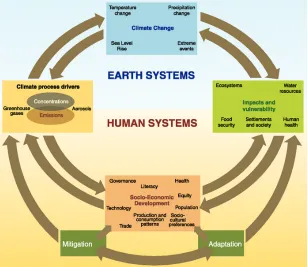
In the climate change literature, the Human and Earth Systems framework proposed by the IPCC (Barker et al., 2007) is used to understand the complex human-environment interaction (Figure 1-1). In many ways, the framework is a variant of Turner et al.’s (2003), which has been applied to climate change. Therefore, the two frameworks are used interchangeably in this thesis. The Earth and Human Systems framework
illustrates a complex two-way interaction between humans and the environment, which differs over time and space. It consists of four inter-linked components: climate change, impacts and vulnerability, socio-economic development and climate process drivers. It also captures the positive feedback loop of one driver to the next. The positive feedback loop, unlike the name suggests, enhances or amplifies changes, which tends to make the system more unstable (Ise et al., 2008). For instance, increased greenhouse gas emissions and concentration may lead to warmer global average temperature, and in turn, to polar ice melting, elevated sea-level, more frequent and severe floods and storm or drought episodes. This will eventually affect food security, changes in production and
8
Using elements from both sub-systems in the framework, this thesis investigates adaptive response to climate change and human health in the context of coastal
Cambodia. Elements such as personal experiences and perceptions of temperature and precipitation changes and extreme climate related events such as floods, storms or droughts; household food security, socio-demographics, household energy consumption, adaptation and human health were used.
Figure 1-1: Schematic Framework of Anthropogenic Climate Change Drivers, Impacts and Responses Representing the Complexity of Human-Environment System Interaction
(Source: Barker et al., 2007).
1.4
Social Cognitive Theory
9
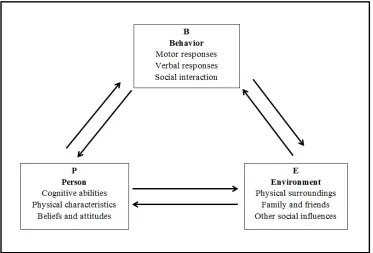
self-efficacy and an interaction between personal and socio-environmental are used to inform each of the three study objectives respectively. The SCT, developed by Albert Bandura in 1986 (Bandura, 1986), is a comprehensive theory explaining psychosocial functioning using the triadic reciprocal causation model (Bandura, 1988; Betz & Hackett, 1986) (Figure 1-2). In the model, a person’s cognitive abilities, behavioral and
environmental factors all operate as interacting determinants that influence overall behavior bi-directionally (Bandura, 1988). The theory not only explains how people acquire competencies, values and styles of behavior, but it also explains how people motivate and regulate their behavior (Bandura, 1986). Due to the bi-directionality of influence in the triadic model, people are both products and producers of the environment (Wood & Bandura, 1989a, 1989b). The theory takes into account environmental and social factors in addition to individual attributes and emphasizes the reciprocal interaction among human-environment behavior and learning (Redding et al., 2000). This theory is well suited to the broader overarching Human-Environment Interaction framework, where the environment shapes the way people live, while human’s activities, in turn, can alter the natural environment.
10
Figure 1-2: The Triadic Reciprocal Causation Model
(Source: Bandura, 1988)
Agentic perspective is one of the key theoretical constructs in the SCT. Agentic perspective distinguishes 3 modes of agency: direct personal, proxy and collective agency. While proxy relies on others to act to secure desired outcomes, and collective agency acts through socially coordinative and interdependent effort, direct personal agency uses individual’s past experiences (Bandura, 2001; Paul, 2012) as key
determinants of whether and why individuals engage in certain behavior.Direct personal agency theory points out that past experience, which influences reinforcements,
expectations and expectancies, is the most important source of information about behavior control as it stands to reason that perceived behavior control could play an important role in mediating the effect of past experience on later behavior (Paul, 2012). For instance, past experience with climate hazard events would likely trigger individual’s consciousness to prepare or do things that potentially could reduce such unwanted
11
Although perceived self-efficacy is a central concept in health communication research (Moriarty, 2009; Smit et al., 2000), it has recently become significant in our understanding of responses to climate change (Kellstedt et al., 2008). Perceived self-efficacy is defined as “people’s beliefs about their capabilities to produce designated levels of performance that exercise influence over events that affect their life” (Bandura, 1994:71). Those beliefs produce diverse effects through four major processes: selection, motivation, affective and cognitive (Bandura, 1994, 1997, 2001). Bandura suggests that perceived self-efficacy influences cognitive processes in various forms, one of which is anticipatory scenarios that individuals construct and rehearse. He further suggests that individuals with a higher sense of efficacy visualize success scenarios and thus, tend to take action compared to those whose efficacy is low (Bandura, 1994). Hence, the concept of perceived self-efficacy is considered crucial in understanding human agency and behavior in general and climate change adaptation behavior in particular (Hanson-Easey et al., 2013). In the climate change literature, according to Grothmann & Patt (2005), cognitive appraisal processes that individuals would undertake include risk and
adaptation. Risk appraisal is “the perceived probability of being exposed to risk and its perceived severity,” and adaptation appraisal is “the ability to avert being harmed by the threat, along with the costs of taking such action and results in an awareness of perceived adaptive capacity” (Grothmann & Patt, 2005:5).
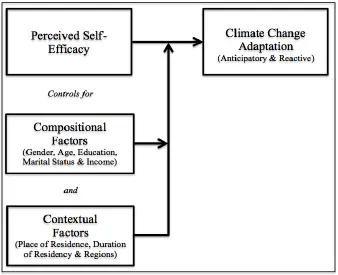
Bandura (2001) suggests that the interaction between personal and
12
Perry (1993) argue that individuals do not actually need to understand the impact in order to be motivated enough to prepare for change. They need to believe that the risks or impacts really exist.
1.5
Health Geography
and Climate Change Research
Health geographers emphasize the relationship between the environment (e.g., natural, built and social) and human health (Brown, 2011; Gatrell & Elliott, 2014), a notion that can be traced back to Hippocrates’ insight on the influences of air, water and places on human health (Barrett, 2000). Within the sub-discipline of health geography, the roles of compositional and contextual factors in shaping health outcomes have also been recognized. That is “where people live, characteristics of persons and the place are tightly interrelated” (Cummins et al., 2007:1829). Compositional factors, such as socio-demographics, and contextual factors of where people live often play an important role in predicting health impacts of climate change (Balbus & Malina, 2009). For instance, the work of Peek (2008) and Sheffield and Landrigan (2010) suggest that there are age and gender differences when it comes to susceptibility to health effects of extreme climate events. Similarly, Costello et al. (2009) and Patz et al. (2005) suggest there are contextual differences in exposure to climate change impacts.
13
structure with health and health care. And finally, place-awareness stresses the hierarchy and the nesting of people within place. Analysis in this realm favors multi-level modeling techniques (Pickett & Pearl, 2001). Multi-level or contextual analysis takes into account both individual and ecological approaches to examine both individual and group level effects in health geography research (Pickett & Pearl, 2001).
Health geography research on climate change underlines the significance of global processes for human health and originally dealt with both infectious and non-infectious disease risks (Asthana et al., 2002). While climate change-related non-infectious disease risks include water, air and food-borne illnesses, the non-infectious disease risks associated with climate change include exposure to environmental pollutants (Lake et al., 2009). Recently, the broad interests of health geographers regarding climate change also include issues of mitigation, adaptation, psychological perception in addition to the physical impacts of climate change (Brown, 2011). The global processes are illustrated in research that explored how actual changes and perceptions of changes in climate hazards such as floods and droughts, particularly in the global south nations, combined with other underlying social, political and economic conditions to contribute to the way populations mitigate and adapt in response to climate-related hazards (Curtis & Oven, 2012).
14
1.6
Study Design
This study is part of a larger project called Indian Ocean World Centre (IOWC): Making the First Global Economy. IOWC focuses on settlement, history, trade, economy and human environment interaction along the Indian Ocean from East Africa to East Asia, where it is home to more than 50% of the world population. The project consists of many teams of scientists from various discipline including Anthropology, Economics,
Geography, History, Political Science and Sociology to name a few. This study is part of the Environment, Health and Medicine team, which emphasizes how human-environment interaction feeds into inequalities in health outcomes of population over time and in the context of climate change in the macro-region.
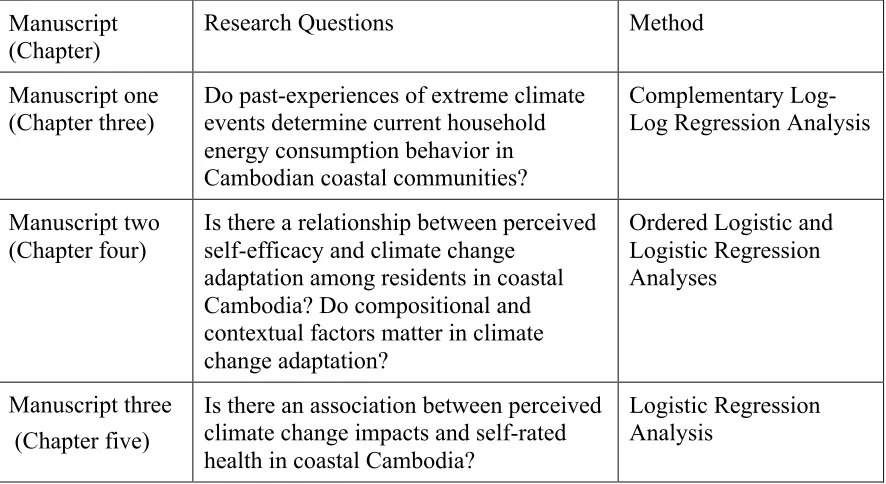
Using a cross sectional study design to answer the research questions (Table 1-1), the field research took place in coastal provinces in Cambodia, located in the Gulf of Thailand, from April to September 2013. Data on lists of districts, communes and villages were derived from the Cambodia 2008 Census database. Using a multi-stage random sampling technique, a total of 1823 residents aged 18 years old or older were surveyed from 39 villages in 17 communes in nine districts in four coastal provinces. Non-response rate was less than 1% (eight participants). Time constraints were the major reason why those participants decided not to participate. Once the sampling frames were developed, five research assistants and I held meetings with village chiefs to go through the village map and to conduct random sampling for each village through aerial sampling using the village map. The village chiefs were involved in sampling by guiding us
15
About half of the respondents have completed primary education. Approximately 72% of respondents resided in rural areas. Most respondents (94%) were married. About 84% of respondents were employed and the same percentage earned over USD$100 monthly household income. About 53% of those were poor subsistence farmers, fishers or fishmongers, depend on coastal resources that are sensitive to climate change for their livelihoods. This therefore makes such people more vulnerable to the impacts of climate change. Approximately 28% of respondents were in Kampot province, 16% were in Kep province, 33% were in Kok Kong Province and 23% were in Preah Sihanouk province.
16
Table 1-1: Research Questions and Statistical Techniques Used in the Three Manuscripts of the Thesis
1.7
The Organization of the
Thesis
This dissertation, written in the integrated article format, consists of six chapters including this introductory chapter. Chapter two provides the research context that details the geographic, socio-cultural, economic, current political landscape of the country and the four coastal provinces where the study took place. The next three chapters consist of manuscripts already submitted for publication in peer-reviewed journals. Although each of the three manuscripts can be read on its own terms as a discrete piece, they collectively provide a comprehensive spectrum of the study objectives and; therefore, serve to address the overarching question that motivated this study: what is the relationship between humans and their environment in coastal Cambodia in the context of climate change?
Chapter three (manuscript one) assesses first-hand experience of climate hazards such as floods, storms or droughts and household energy conservation behavior. This chapter draws on Bandura’s theoretical construct of direct personal agency to link first-Manuscript
(Chapter)
Research Questions Method
Manuscript one
(Chapter three) Do past-experiences of extreme climate events determine current household energy consumption behavior in
Cambodian coastal communities?
Complementary Log-Log Regression Analysis
Manuscript two (Chapter four)
Is there a relationship between perceived self-efficacy and climate change
adaptation among residents in coastal Cambodia? Do compositional and contextual factors matter in climate change adaptation?
Ordered Logistic and Logistic Regression Analyses
Manuscript three (Chapter five)
Is there an association between perceived climate change impacts and self-rated health in coastal Cambodia?
17
18
1.8
References
Acquah, H. D. (2011). Farmers perception and adaptation to climate change: A
willingness to pay analysis. Journal of Sustainable Development in Africa, 13(5), 150-161.
Adger, W. N. (2006). Vulnerability. Global Environmental Change, 16(3), 268-281.
Anderies, J. M., Janssen, M. A., & Ostrom, E. (2004). A framework to analyze the robustness of social-ecological systems from an institutional perspective. Ecology and Society, 9(1), 18.
Andrews, G. J., & Moon, G. (2005). Space, place, and the evidence base: Part I—an introduction to health geography. Worldviews on Evidence-‐Based Nursing, 2(2), 55-62.
Asthana, S., Curtis, S., Duncan, C., & Gould, M. (2002). Themes in British health geography at the end of the century: A review of published research 1998–2000.
Social Science & Medicine, 55(1), 167-173.
Bai, X., Nath, I., Capon, A., Hasan, N., & Jaron, D. (2012). Health and wellbeing in the changing urban environment: Complex challenges, scientific responses, and the way forward. Current Opinion in Environmental Sustainability, 4(4), 465-472.
Balbus, J. M., & Malina, C. (2009). Identifying vulnerable subpopulations for climate change health effects in the United States. Journal of Occupational and Environmental Medicine, 51(1), 33-37.
19
Bandura, A. (1986). Social foundations of thought and action: A social cognitive theory.
New York: Prentice-Hall, Inc.
Bandura, A. (1988). Organizational applications of social cognitive theory. Australian Journal of Management, 13(2), 275-302.
Bandura, A. (1994). Self‐efficacy. New York: John Wiley & Sons, Inc..
Bandura, A. (1997). Self-efficacy: The exercise of control. New York: W. H. Freeman. Bandura, A. (2001). Social cognitive theory: An agentic perspective. Annual Review of
Psychology, 52(1), 1-26.
Barker, T., Davidson, O., Davidson, W., Huq, S., Karoly, D., Kattsov, V., ... & Wratt, D. (2007). Climate change 2007: Synthesis report. Valencia; IPPC.
Barrett, F. A. (2000). Disease & geography: The history of an idea. North York, Ont.: Atkinson College, Department of Geography.
Barros, V. R., Field, C. B., Dokken, D. J., Mastrandrea, M. D., Mach, K. J., Bilir, T. E., ... & White, L. L. (2014). IPCC, 2014: Climate change 2014: Impacts, adaptation, and vulnerability. Part B: Regional aspects. Contribution of working group II to the fifth assessment report of the Intergovernmental Panel on Climate Change.
Berkes, F., & Folke, C. (1998). Linking social and ecological systems for resilience and sustainability. Linking Social and Ecological Systems: Management Practices and Social Mechanisms for Building Resilience, 1, 13-20.
Betz, N. E., & Hackett, G. (1986). Applications of self-efficacy theory to understanding career choice behavior. Journal of Social and Clinical Psychology, 4(3), 279-289.
20
Brown, T. (2011). ‘Vulnerability is universal’: Considering the place of ‘security’ and ‘vulnerability’ within contemporary global health discourse. Social Science & Medicine, 72(3), 319-326.
Bunyavanich, S., Landrigan, C. P., McMichael, A. J., & Epstein, P. R. (2003). The impact of climate change on child health. Ambulatory Pediatrics, 3(1), 44-52. Campbell, J., Townsley, P., Whittingham, E., Ward, A., Sem, V., Sim, B., Heng, P., Em,
D., Nut, L., Phork, P., Chhun, S., Chap, S., King, S., Lem, M., So, S. and Nith, C. (2005). “Understanding the factors that support and inhibit livelihood
diversification in coastal Cambodia.” Phnom Penh: IMM Ltd, Community Fisheries Development Office and Community-Based Natural Resource Management Learning Institute.
Chotamonsak, C., Salathé, E. P., Kreasuwan, J., Chantara, S., & Siriwitayakorn, K. (2011). Projected climate change over Southeast Asia simulated using a WRF regional climate model. Atmospheric Science Letters, 12(2), 213-219.
Confalonieri, U., Menne, B., Akhtar, R., Ebi, K. L., Hauengue, M., Kovats, R. S., ... & Woodward, A. J. (2007). Human health. In: M. L. Parry et al. (Eds.), Climate change 2007:Impacts, adaptation and vulnerability. Contribution of working group II to the fourth assessment report of the Intergovernmental Panel on Climate Change. (pp. 391–431). Cambridge: Cambridge University Press. Costanza, R., Graumlich, L., Steffen, W., Crumley, C., Dearing, J., Hibbard, K., ... &
Schimel, D. (2007). Sustainability or collapse: What can we learn from
integrating the history of humans and the rest of nature?. AMBIO: A Journal of the Human Environment, 36(7), 522-527.
Costello, A., Abbas, M., Allen, A., Ball, S., Bell, S., Bellamy, R., ... & Lee, M. (2009). Managing the health effects of climate change. The Lancet, 373(9676), 1693-1733.
21
Curtis, S. E., & Oven, K. J. (2012). Geographies of health and climate change. Progress in Human Geography, 36(5), 654-666.
Dankelman, I. (2010). Gender and climate change: An introduction. Washington, DC: Earthscan.
Dany, V., Bowen, K. J., & Miller, F. (2015). Assessing the institutional capacity to adapt to climate change: A case study in the Cambodian health and water
sectors. Climate Policy, 15(3), 388-409.
Eyles, J. (1985). Senses of place. Warrington: Silverbrook Press.
Ezenwa, V. O., Milheim, L. E., Coffey, M. F., Godsey, M. S., King, R. J., & Guptill, S. C. (2007). Land cover variation and West Nile virus prevalence: Patterns, processes, and implications for disease control. Vector-Borne and Zoonotic Diseases, 7(2), 173-180.
Ezzati, M., Lopez, A. D., Rodgers, A., Vander Hoorn, S., & Murray, C. J. (2002).
Selected major risk factors and global and regional burden of disease. The Lancet,
360(9343), 1347-1360.
Field, C. B., Barros, V. R., Mach, K., & Mastrandrea, M. (2014). Climate change 2014: Impacts, adaptation, and vulnerability (Vol. 1). IPCC. Cambridge, New York, NY: Cambridge University Press.
Galvão, L. A. C., Edwards, S., Corvalan, C., Fortune, K., & Akerman, M. (2009). Climate change and social determinants of health: Two interlinked agendas.
Global Health Promotion, 16(1), 81.
Gatrell, A. C., & Elliott, S. J. (2014). Geographies of health: An introduction. New York: John Wiley & Sons.
22
The global-scale impacts of climate change. Progress in Physical Geography,
35(4), 443-464.
Grothmann, T., & Patt, A. (2005). Adaptive capacity and human cognition: The process of individual adaptation to climate change. Global Environmental Change, 15(3), 199-213.
Gunderson, L. H., Holling, C. S., & Light, S. S. (1995). Barriers and Bridges to the Renewal of Ecosystems and Institutions. New York: Columbia University Press.
Hale, J., & Dillard, J. (1995). Fear appeals in health promotion campaigns: Too much, too little, or just right? In E. Maibach, & R. Parrott (Eds.), Designing health
messages: Approaches from communication theory and public health practice.
(pp. 65-81). Thousand Oaks, CA: SAGE Publications, Inc.
Hales, S., De Wet, N., Maindonald, J., & Woodward, A. (2002). Potential effect of population and climate changes on global distribution of dengue fever: An empirical model. The Lancet, 360(9336), 830-834.
Hanson-Easey, S., Bi, P., Hansen, A., Williams, S., Nitschke, M., Saniotis, A., ... & Hodgetts, C. (2013). Public understanding of climate change and adaptation in South Australia. National Climate Change Adaptation Research Facility: Southport, QLD, Canada.
Heltberg, R., Gitay, H., & Prabhu, R. G. (2012). Community-based adaptation: Lessons from a grant competition. Climate Policy, 12(2), 143-163.
Hess, J. J., McDowell, J. Z., & Luber, G. (2012). Integrating climate change adaptation into public health practice: Using adaptive management to increase adaptive capacity and build resilience. Environmental Health Perspectives, 120(2), 171. Holling, C. S. (1978). Adaptive environmental assessment and management.
23
Ise, T., Dunn, A. L., Wofsy, S. C., & Moorcroft, P. R. (2008). High sensitivity of peat decomposition to climate change through water-table feedback. Nature
Geoscience, 1(11), 763-766.
Kearns, R. A. (1993). Place and health: Towards a reformed medical geography*. The Professional Geographer, 45(2), 139-147.
Kearns, R., & Moon, G. (2002). From medical to health geography: Novelty, place and theory after a decade of change. Progress in Human Geography, 26(5), 605-625. Kellstedt, P. M., Zahran, S., & Vedlitz, A. (2008). Personal efficacy, the information
environment, and attitudes toward global warming and climate change in the United States. Risk Analysis, 28(1), 113-126.
Koerth, J., Vafeidis, A. T., Hinkel, J., & Sterr, H. (2013). What motivates coastal households to adapt pro-actively to sea-level rise and increasing flood risk?.
Regional Environmental Change, 13(4), 897-909.
Kura, Y., Kassem, K., Revenga, C., Spalding, M., & McAllister, D. (2001). Coastal ecosystems. Washington, DC: World Resources Institute.
Lake, I. R., Nichols, G., Harrison, F. C., Bentham, G., Kovats, R. S., Grundy, C., & Hunter, P. R. (2009). Using infectious intestinal disease surveillance data to explore illness aetiology; a cryptosporidiosis case study. Health & Place, 15(1), 333-339.
Levy, K., Daily, G., & Myers, S. S. (2012). Human health as an ecosystem service: A conceptual framework. In Integrating ecology and poverty reduction (pp. 231-251). New York: Springer.
Lindell, M. K., & Perry, R. W. (1993). Risk area residents’ changing perceptions of volcano hazard at Mt. St. Helens. In Prediction and perception of natural hazards (pp. 159-166). Netherlands: Springer.
24
Marschke, M., Lykhim, O., & Kim, N. (2014). Can local institutions help sustain livelihoods in an era of fish declines and persistent environmental change? A Cambodian case study. Sustainability, 6(5), 2490-2505.
Martin, C., Curtis, B., Fraser, C., & Sharp, B. (2002). The use of a GIS-based malaria information system for malaria research and control in South Africa. Health & Place, 8(4), 227-236.
McCarthy, J. J. (2001). Climate change 2001: Impacts, adaptation, and vulnerability: Contribution of Working Group II to the third assessment report of the
Intergovernmental Panel on Climate Change. New York: Cambridge University Press.
McMichael, A. J., Campbell-Lendrum, D. H., Corvalán, C. F., Ebi, K. L., Githeko, A. K., Scheraga, J. D., & Woodward, A. (2003).Climate change and human health: Risks and responses. Geneva, Switzerland:World Health Organization. McMichael, A. J., Campbell-Lendrum, D., Kovats, S., Edwards, S., Wilkinson, P.,
Wilson, T., ... & Schlesinger, M. (2004). Comparative quantification of health risks: Global and regional burden of disease due to selected major risk
factors. World Health Organization, Geneva, 1543-1649.
Meade, S.M., & Earickson, R.J. (2002). Medical Geography. New York: The Guilford Press.
Mekong River Commission. (2011). Flood Situation Report. MRC Technical Paper, (36). Mileti, D. S. (1993). Communicating public earthquake risk information. In Prediction
and perception of natural hazards (pp. 143-152). Netherlands: Springer.
Miller, F., & Bowen, K. (2013). Questioning the assumptions: The role of vulnerability assessments in climate change adaptation. Impact Assessment and Project Appraisal, 31(3), 190-197.
Ministry of Environment. (2006). National adaptation programme of action to climate change. Retrieved on May 7th, 2015 from
25
Ministry of Planning. (2013). Ageing and migration in Cambodia: A CRUMP series report. Retrieved on July 7th, 2015 from
http://countryoffice.unfpa.org/cambodia/drive/Ageing&MigrationinCambodia26D ec2013.pdf
Moriarty, C. M. (2009). Effects of self-efficacy and response efficacy messages in health news: Changing health attitudes and behavioral intentions. ProQuest LLC.
Pasgaard, M., & Strange, N. (2013). A quantitative analysis of the causes of the global climate change research distribution. Global Environmental Change, 23(6), 1684-1693.
Patz, J. A., Campbell-Lendrum, D., Holloway, T., & Foley, J. A. (2005). Impact of regional climate change on human health. Nature, 438(7066), 310-317. Paul, B. K. (2012). Factors affecting evacuation behavior: The case of 2007 Cyclone
Sidr, Bangladesh. The Professional Geographer, 64(3), 401-414.
Peek, L. (2008). Children and disasters: Understanding vulnerability, developing capacities, and promoting resilience-an introduction. Children Youth and Environments, 18(1), 1-29.
Pickett, K. E., & Pearl, M. (2001). Multilevel analyses of neighbourhood socioeconomic context and health outcomes: A critical review. Journal of Epidemiology and Community Health, 55(2), 111-122.
Plowright, R. K., Sokolow, S. H., Gorman, M. E., Daszak, P., & Foley, J. E. (2008). Causal inference in disease ecology: Investigating ecological drivers of disease emergence. Frontiers in Ecology and the Environment, 6(8), 420-429.
Preston, B. L., Suppiah, R., Macadam, I., & Bathols, J. (2006). Climate change in the Asia/Pacific region. A consultancy report prepared for the climate change and development roundtable. Aspendale, Australia: CSIRO Marine & Atmospheric Research.
26
Resurreccion, B. P., Sajor, E. E., & Fajber, E. (2008). Climate adaptation in Asia: Knowledge gaps and research issues in South East Asia. Kathmandu: ISET International and ISET Nepal.
Resurreccion, B.P., & Sajor, E.E. (2008). Climate adaptation in Asia: Knowledge gaps and research issues in South East Asia. Southeast Asia.
Semenza, J. C., Ploubidis, G. B., & George, L. A. (2011). Climate change and climate variability: personal motivation for adaptation and mitigation. Environmental Health, 10(1), 46.
Sheffield, P. E., & Landrigan, P. J. (2010). Global climate change and children’s Health: Threats and strategies for prevention. Environmental Health Perspectives, 119(3), 291-298.
Smit, B., Burton, I., Klein, R. J., & Wandel, J. (2000). An anatomy of adaptation to climate change and variability. Climatic Change, 45(1), 223-251.
Spence, A., Poortinga, W., Butler, C., & Pidgeon, N. F. (2011). Perceptions of climate change and willingness to save energy related to flood experience. Nature Climate Change, 1(1), 46-49.
Starr, G., Langley, A., & Taylor, A. (2000). Environmental health risk perception in Australia: A research report to the Commonwealth Department of Health and Aged Care. Adelaide, Australia.
Stocker, T. F., Qin, D., Plattner, G. K., Tignor, M., Allen, S. K., Boschung, J., ... & Midgley, B. M. (2013). IPCC, 2013: Climate change 2013: The physical science basis. Contribution of working group I to the fifth assessment report of the intergovernmental panel on climate change.
Tol, R. S., Klein, R. J., & Nicholls, R. J. (2008). Towards successful adaptation to sea-level rise along Europe's coasts. Journal of Coastal Research, 432-442.
Turner, B. L., Kasperson, R. E., Matson, P. A., McCarthy, J. J., Corell, R. W.,
27
in sustainability science. Proceedings of the National Academy of Sciences, 100
(14), 8074-8079.
Van Aalst, M. K., Cannon, T., & Burton, I. (2008). Community level adaptation to climate change: The potential role of participatory community risk
assessment. Global Environmental Change, 18(1), 165-179.
Watts, N., Adger, W. N., Agnolucci, P., Blackstock, J., Byass, P., Cai, W., ... & Cox, P. M. (2015). Health and climate change: Policy responses to protect public
health. The Lancet, 386(10006), 1861-1914.
Wood, R., & Bandura, A. (1989a). Impact of conceptions of ability on self-regulatory mechanisms and complex decision making. Journal of Personality and Social Psychology, 56(3), 407.
Wood, R., & Bandura, A. (1989b). Social cognitive theory of organizational management. Academy of Management Review, 14(3), 361-384.
World Health Organization. (2002). Attributable DALYs by Risk Factor and WHO Sub-region, 2000. Retrieved on March 2st, 2015 from
http://www.who.int/quantifying_ehimpacts/global/en/dalys.pdf
World Health Organization. (2009). Protecting health from climate change: Global research priorities. Geneva, Switzerland: Author.
World Health Organization. (2013). Protecting health from climate change: vulnerability and adaptation assessment. World Health Organization. Retrieved on January 25th, 2015 from
http://www.who.int/globalchange/publications/Final_Climate_Change.pdf World Health Organization. (2014). About the Global Burden of Disease (GBD) project
Retrieved on March 1st, 2014 from
28
CHAPTER 2
2.
STUDY CONTEXT
2.1
Introduction
Perceptions and behavioral responses to climate change in coastal Cambodia are intimately connected to a variety of unique, diverse and highly contextual
pan-Cambodian factors. Spatial and temporal heterogeneities in the specific study locations, as well as key socio-ecological, demographics, economic, political and social elements associated with the realities of living in this region, all contribute to individual
experiences of climate change and associated health impacts. This chapter introduces contextual factors beginning with a brief history of Cambodia during the post-colonial period and describing significant geographic and demographic characteristics of the country. Discussion of the specific socio-ecological characteristics of the coastal zones where the fieldwork for this study took place will follow.
2.2
Political History of Cambodia in the Post
-
Colonial E
ra
After being under colonization for almost a century, Prince Sihanouk proclaimed independence from the French in 1953 (Chandler, 1992). Although post-colonial
29
era came to an end. The Kampuchean People’s Revolution Party (Later named
Cambodian People’s Party-CPP) was the sole legal party in Cambodia during the post Khmer Rouge from 1979 to 1989, during which the country began the struggle to rebuild the nation.
The Paris Peace Agreement in 1991 marked a watershed moment in Cambodia’s history as the transition from an absolute monarchy to a constitutional monarchy
government and parliamentary representative democracy began around this time. The Royal Government of Cambodia (RGC) was created based on the principles of
democracy and multi-party politics with the first democratic election held in 1993 after the collapse of the Khmer Rouge (Guimbert, 2010). Structurally, the government is composed of several levels of administration. At the central government level, the royal family appoints a monarch as head of state. This position is largely ceremonial. The Prime Minister, on the other hand, is selected by the political party with the majority of seats in parliament, and serves as the head of the central government for a five year term (RGC, 1993). The CPP won all the national elections and Hun Sen has been the Prime Minister of Cambodia ever since.
30
councilors can be elected by the same procedures applied to electing other councilors (RGC, 2001; 2008). By law, any Cambodian citizen could potentially run for councilor. The current political climate in Cambodia is stable with Hun Sen as the Prime Minister and His Majesty King Norodom Sihamoni as the monarch.
2.3
Geographic, Demographics and Climate Profiles of the
Kingdom of Cambodia
2.3.1
Geographic and Demographic Characteristics of Cambodia
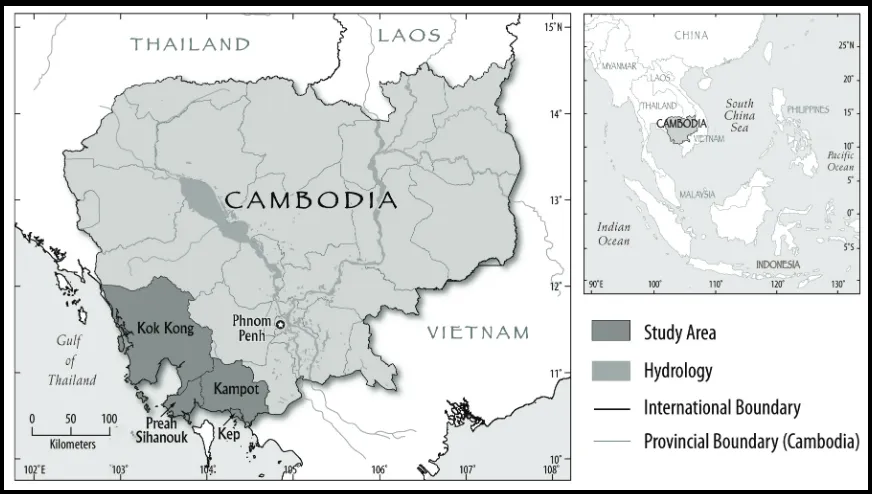
According to the Ministry of Planning (MoP, 2008), the Kingdom of Cambodia is situated in mainland Southeast Asia in the Lower Mekong region with an area of 181,035 km2 and lies between parallels of 10oN and 15oN and meridians of 102oE and 108oE. It is bordered by Laos PDR and Thailand to the north, the Gulf of Thailand to the south, Vietnam to the east, and Thailand and the Gulf of Thailand to the west (MoP, 2008) (Figure 2-1). The Ministry of Environment (MoE, 2006) asserts that the physical
31 Figure 2-1: Map of Cambodia
(Source: Cartography Unit, Department of Geography, Western University, Canada)
32
2.3.1
Climate profile of Cambodia
Temperature: Cambodia has a tropical climate with the average temperature ranging from 26 to 30oC.The mean annual temperature for Cambodia has increased accompanied by an increase in the frequency of hot days and hot nights (McSweeney et al., 2010a, b). Monthly temperature records for Cambodia from 1960 to 2006 were retrieved from the UNDP Climate Change Country Profiles data bank (McSweeney et al., 2010a, b). Monthly temperature data were used to calculate annual minimum and
maximum temperature. Figure 2-2 shows that both annual minimum and maximum temperatures have increased since 1960 at a rate of 0.94oC and 0.89oC per decade, respectively.
The main impact of climate change in this region is a predicted increase of mean temperature over most land surface and sea-surface areas. This leads to altering the hydrologic cycle including changes in evaporation and evapotranspiration thus, changes in rainfall patterns. Higher temperatures are likely to lead to an increase in drought conditions in some areas, as less rainfall and increased evaporation combine with reduce surface water availability. Several climate projection models have been designed for the climate in Southeast Asia. For instance, the Global Climate Models projections show that the mean annual temperature is expected to increase by 0.7 to 2.7oC by 2060s and by 1.4 to 4.3oC by 2090 (McSweeney et al., 2010a, b). The projections further indicate
substantial increases in the frequency of hot days and nights. Similarly, IPCC predicts temperature increases in the Southeast Asia region in the range of 1.5oC to 3.7oC for the period of 2031 and 2100 (MoE & UNDP, 2011). This indicates that the country and the region are likely to experience more negative impacts of climate change, such as
33
Figure 2-2: Annual Minimum and Maximum Temperature from 1960 to 2006
(Source: UNDP Climate Change Country Profiles (McSweeney et al., 2010b))
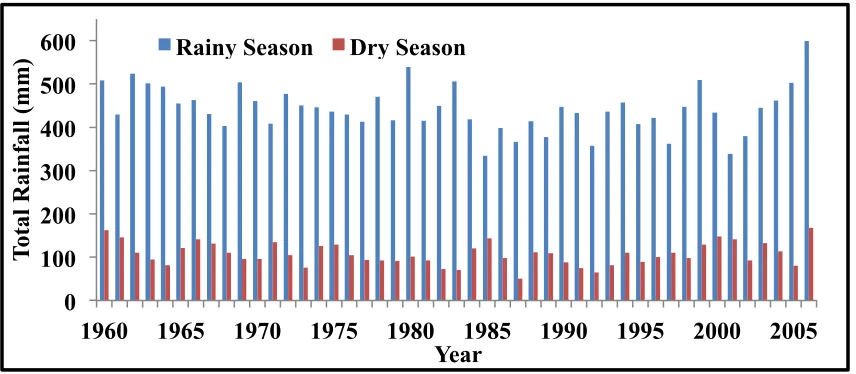
Figure 2-3: Total Annual Rainfall for Dry and Rainy Season from 1960 to 2006
(Source: UNDP Climate Change Country Profiles (McSweeney et al., 2010b))
Precipitation: Cambodia has a tropical climate and is subject to both southeast and northwest monsoons. The southeast monsoon (rainy monsoon), extends from May to October, when the wind direction is from the Gulf of Thailand towards the continental land mass bringing precipitation (MoE, 2006). With the rising temperature projected by various climate models, the monsoon system is likely to be affected whereby rainfall
21 23 25 27 29
1960 1965 1970 1975 1980 1985 1990 1995 2000 2005
T emp er atu re ( o C ) Year
Annual Maximum Temperature Decadal Trend= 0.89oC
Annual Minimum Temperature Decadal Trend= 0.94oC
0 100 200 300 400 500 600
1960 1965 1970 1975 1980 1985 1990 1995 2000 2005
34
patterns will likely fluctuate in both intensity and duration (MoE & UNDP, 2011). This puts the population, especially those who engage in climate sensitive livelihoods, at greater exposure to the negative impacts of climate change such as flooding or storms.
Cambodia monthly rainfall data from 1960 to 2006 were retrieved from the UNDP Climate Change Country Profiles data bank (McSweeney et al., 2010a, b). Rainfall for Cambodia does not show any consistent changes since 1960 (Figure 2-3). However, precipitation will be directly impacted by changes in atmospheric circulation and increases in water vapor and evaporation associated with warmer temperatures (MoE & UNDP, 2011). This will result in an overall increase in precipitation, though the magnitude of this increase is uncertain (McSweeney et al., 2010a, b), and most models agree that precipitation will increase the most over high-latitude regions, while
precipitation will decrease in most subtropical areas. Equatorial regions, however, show a high level of uncertainty (MoE & UNDP, 2011).
2.3.2
Cambodia Climate Change Responses
As part of global efforts to address climate change, the government acceded to the United Nations Framework Convention on Climate Change (UNFCCC) in December 1995 and ratified the Convention in December 1996. The nation began its first climate change related three-year project in 1999 with the aim to prepare the Initial National Communication (INC) to the UNFCCC. The first INC report was developed in 2002 and the second report was developed in 2011 by the Ministry of Environment (MoE, 2013). Cambodia established the National Climate Change Committee (NCCC) in 2006. This committee has the mandate to determine national policies and strategies to participate in climate change negotiation at an international level. As a high level inter-ministerial mechanism, NCCC is composed of senior policy-makers from 19 ministries, agencies and the Department of Climate Change (MoE, 2013).
35
Group (JLG), an informal forum exchanging information and exploring opportunities for the Conventions. The National Adaptation Programs of Action (NAPAs) was developed for the least developed countries of the UNFCCC. The Cambodia NAPA project, which acts as the political framework for the NCCC, was first to be developed in 2003 and was finalized in 2006 and focuses on agriculture, water resources, rural development and human health (Cuccillato et al., 2013; Käkönen et al., 2014; MoE, 2013). The core objectives of the Cambodian NAPA are: “to understand the characteristics of climate hazards; to understand coping mechanisms to climate hazards and climate change at the grassroots level; to understand existing programs and institutional arrangements for addressing climate hazards and climate change; and to identify priority adaptation
activities to climate hazards and climate change” (MoE, 2013:2). Part of the national and global effort to address continuing climate change issues, the Cambodia Climate Change Strategic Plan (CCCSP) 2014-2023 was developed during the current term of the
government with a view to addressing both near and long term climate change related issues. The CCCSP consists of eight strategic objectives: promoting climate resilience through improving food, water and energy security; reducing gender vulnerability and health risks; ensuring climate resilience of critical ecosystem, biodiversity and protected areas; promoting low carbon planning and technologies; improving capacities, knowledge and awareness for climate change responses; promoting adaptive social protection and participatory approaches; strengthening collaboration and coordination; and
strengthening collaboration and active participation in regional and global climate change processes (RGC, 2013:13-18). It is divided into three phases for implementation: the immediate, the medium and the long term (RGC, 2013).
2.3.3
Current Situation and Socio-Economic Profiles
36
main sectors: garments, tourism, construction and agriculture. Agriculture remains a crucial part of the country’s economy where growth in this sector is largely driven by crops (paddy and non-paddy), livestock and fisheries both inland and coastal (Guimbert, 2010). The income per capita was USD$ 1,000 in 2013. The Gross Domestic Product (GDP) has grown at 6 to 7% annually since the 1990s. However, according to the Cambodia Socioeconomic Survey in 2009, 23% of the population survives below the poverty line (MoP, 2013b).
To address poverty issues, the Royal Government of Cambodia (RGC) adopted a comprehensive reform agenda called the “Rectangular Strategy” in 2003. The strategy, as the name suggests, was built on four fundamental pillars: (i) creating high economic growth and enhancing the nation’s competitiveness; (ii) creating employment; (iii) improving social equity; and (iv) increasing the effectiveness of the public sector. The Rectangular Strategy phase II (2008-2013) and phase III (2014-2018) include the focus on the strengthening of natural resource conservation and taking serious action against illegal natural resource extractors, effective management of protected areas and climate change actions (RGC, 2013).
2.3.4
Disease and Health Profiles of Cambodia
According to the WHO and the UN partners, the health care sector in Cambodia has made significant progress in recent years accompanied by improvements in many health indicators (Global Health Observatory, 2015). For instance, the population using improved water and sanitation has increased from below 20% in 1990 to about 60% in 2013. Life expectancy has also improved steadily for both sexes although females still have a relatively higher average life expectancy. Deaths due to HIV reduced from 39 to 17 per 100,000 people, whereas malaria-related deaths declined from 13.2 to 1.7 per 100,000 people.
37
improving maternal health are particularly at risk. While under-five mortality and maternal mortality rates are declining, there remains a wide gap between rural and urban areas. Limited access to quality health care, especially in Maternal and Child Health (MCH) in rural and remote areas, and the lagging improvement in the Maternal Mortality Ratio were driving forces behind the strategies announced in the second Health Strategic Plan 2008-2015, and in the declaration of a Fast Track Initiative in MCH in October 2008 (Global Health Observatory, 2015).
Situated in the tropic coupled with poverty, infectious disease remains one of the top causes of Disability Adjusted Life Years (DALYs) in Cambodia and the disease distribution vary across geographic areas (Global Health Observatory, 2015). With a projected shift in both macro and micro climate patterns in the region, it is expected that the number of infectious disease incidents will rise (MoE & UNDP, 2011). This puts those who are already vulnerable to greater risk of climate related health outcomes.
2.3.5
Coastal Provinces
The Cambodian coastal zone is approximately 435km stretching along the northeastern shore of the Gulf of Thailand between the Thai and Vietnamese borders (Figure 2-1). It consists of four provinces: Kampot, Kep, Kok Kong and Preah Sihanouk and 64 offshore marine islands. The total coastal area is between 17,791km2 and
18,477km2 with a total population of 1.02 million and an annual growth rate of 1.26 in 2013 (Table 2-1) (MoP, 2013a).Cambodia’s coastal zone consists of deep seaports, beaches, aquatic resources such as fish, mangrove forests, seagrass and coral reef, and therefore plays an extremely important role in the country’s development supporting transport, tourism, fisheries and agriculture (MoE, 2014).
38
infrastructure, a very low level of adaptation capacity and more importantly, the high percentage of the population engaged in climate sensitive occupations (MoE, 2014). The vulnerabilities, which vary from province to province, include floods, storm surges and heavy rainfall, increase in temperature, elevated sea-level which leads to sea water intrusion and salinity, and drought. Extreme climatic events recorded over the past five years included heavy rain and electrical storms hitting the coastal zones in 2008 (Vong, 2008); a tropical storm in September 2009 with up to two-meter high waves brining heavy rain and lightning resulting in floods in some parts of the four coastal provinces (Chhay, 2009); tropical storm Haima, which originated in the South China Sea with wind speeds between 41 and 63 kilometres per hour, brought heavy rain and flash floods that hit coastal Cambodia as well as the northern and northeaster highlands part of the country in June 2011 (Sherrel & Kim, 2011). These extreme climate phenomena have a
significant impact on both paddy and non-paddy agriculture, and communities whose livelihoods depend on fisheries, and socio-economic development of coastal residents (Marschke et al., 2014; MoE & UNDP, 2011; MoE, 2013; MoE, 2015a-d).
Table 2-1: Coastal Province Profiles
Province Kampot Kep Kok Kong Preah Sihanouk Cambodia
Total Areas (km2) 4,687 188 11,008 2,614 181,035
Total Population 611,557 38,701 122,263 250,180 14,676,591
Population Density 125 115 12 129 82
Population Growth Rate 0.86 1.58 0.80 2.44 1.83