System for Methanol Feeding in 30L High Cell Density Pichia pastoris Fermentations. (Under the direction of Dr. Michael Flickinger.)
Methylotrophs are organisms that grow on reduced carbon substrates such as methanol. Some methylotrophs like Bacillus methanolicus and Pichia pastoris have the ability to reach very high cell densities during fed-batch fermentation which may
considerably improve product concentration on every production batch. However,
high protein yields require an integral sensing and control system for the maintenance of optimal conditions inside a bioreactor’s complex environment. The
purpose of this study was to design and implement a reliable sensing and control
system for methanol feeding by translating the knowledge from a 2L bioreactor
model using Bacillus methanolicus into a 30L steam sterilizable bioreactor for Pichia pastoris cultivation. The design, construction and testing of an in situ silicone-tubing methanol probe was essential to complement the existing inlet and exhaust gassing
system in the 30L bioreactor. The sensing and control system will utilize the
manufactured probe and will be the basis for future research in high cell density
cultivation of methylotrophic microorganisms. Throughout this project, skills including
procurement of materials, cross functional communication and technical applications
by
Juan Pablo Cueva Tello
A thesis submitted to the Graduate Faculty of North Carolina State University
in partial fulfillment of the requirements for the degree of
Master of Science
Biomanufacturing
Raleigh, North Carolina
2012
APPROVED BY:
Dr. Gisele Passador Gurgel Dr. Jennifer Ruiz
Dr. John Douglas Sheppard Dr. Michael C. Flickinger
DEDICATION
BIOGRAPHY
The author of this research was a fellowship award graduate student at North
Carolina State University pursuing a Master of Science Degree in Biomanufacturing
at the Golden Leaf Biomanufacturing Training and Education Center (BTEC). He is
qualified by several years of experience in the design and optimization of
biotechnological processes with special ability in data analysis and technical writing.
Also, he has hands-on experience in development, scale-up and control of upstream
and downstream production-scale bioprocesses in a cGMP environment for the
biopharmaceutical industry. He obtained his BS from Escuela Politécnica del
Ejército, Ecuador, where he headed a research project to determine the efficacy of
silkworm extracts as hypoglycemic agents. Currently, he is a manufacturing scientist
and works for Biogen Idec, a prestigious biologics large-scale manufacturing facility
ACKNOWLEDGMENTS
I would like to thank Dr. Michael Flickinger for his valuable guidance throughout this
research. I also would like to express my gratitude to Kit Yeung who helped me with
several challenging technical tasks along the way. Special thanks to Driss Elhanafi,
Michael Ray, Haiwei Zhang and Jennifer Sasser from BTEC staff who shared their
knowledge and assisted with key aspects of this project. I am very thankful for the
TABLE OF CONTENTS
LIST OF TABLES………..………...….vii
LIST OF FIGURES………..…….….….viii
LIST OF ABBREVIATIONS……….…...…..ix
1 INTRODUCTION ... 1
1.1 Heterologous gene expression in yeast ... 1
Methanol assimilation in Pichia pastoris ... 1
Advantages of the Pichia pastoris expression system ... 2
The AOX1 promoter ... 3
Phenotype of AOX1 mutants ... 4
Fed-batch fermentation with P. pastoris ... 5
1.2 Bioreactor instrumentation and control ... 6
Monitoring and control of active fermentations ... 6
Methanol on-line sensing and control ... 9
2 PROJECT GOALS ... 10
2.1 General Objectives ... 10
3 EXPERIMENTAL METHODS ... 11
3.1 Microbial cultures ... 11
Media preparation ... 11
Cryoconservation of Pichia pastoris ... 13
Cultivation of Pichia pastoris in shaker flasks and growth curves ... 13
3.2 Methanol sensing and control system ... 14
Description of the 2L bioreactor system ... 14
Methanol probe design ... 21
3.3 Sensor and data acquisition system setup ... 23
Methanol sensor circuit construction ... 23
Data acquisition system ... 24
LabVIEW™ platform for documentation and control of methanol ... 26
4 RESULTS ... 27
4.1 Pichia pastoris growth rate ... 27
4.2 Data acquisition system ... 29
4.3 Methanol probe ... 32
4.4 Methanol probe calibration ... 34
4.5 Methanol probe response time ... 38
4.6 Methanol evaporation or stripping rate monitoring ... 41
5 CONCLUSION ... 43
6 FUTURE WORK ... 44
LIST OF TABLES
Table 1. Advantages of Pichia pastoris over other eukaryotic and prokaryotic
expression systems. ... 3
Table 2. Methanol requirements and specific growth rate of P. pastoris strains ... 5
Table 3. Summary of Pichia pastoris fermentation parameters ... 6
Table 4. Approaches to sensing and control of a fermenter’s chemical environment 9 Table 5. YPD medium for yeast. ... 11
Table 6. Minimal glycerol + histidine medium composition ... 12
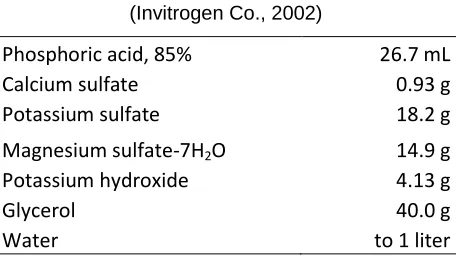
Table 7. Fermentation basal salts medium recipe... 13
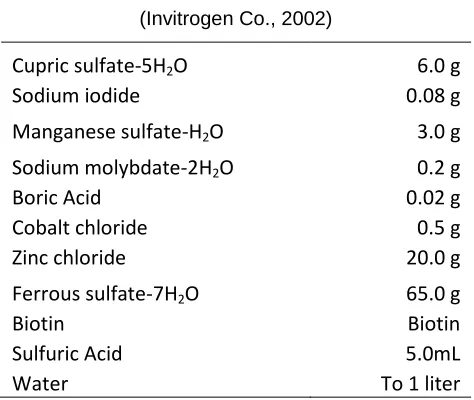
Table 8. PTM1 trace salts solution ... 13
LIST OF FIGURES
Figure 1. One-carbon assimilation pathways in methylotrophs ... 1
Figure 2. Insertion of the plasmid 3’ to the intact AOX1 locus (Mut+). ... 4
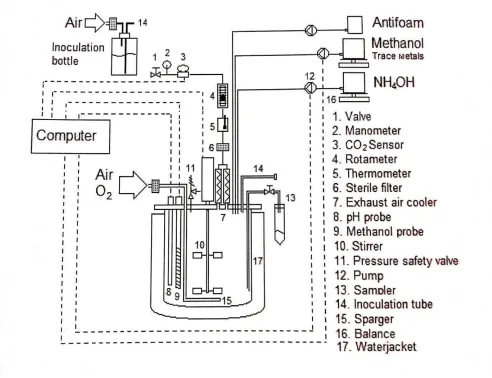
Figure 3. Small-scale 2L bioreactor schematic ... 15
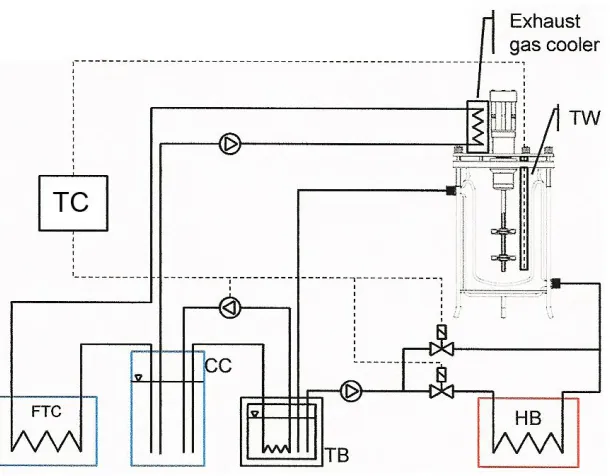
Figure 4. Temperature control scheme of the 2L bioreactor system ... 17
Figure 5. Pilot-scale 30L bioreactor geometry. ... 18
Figure 6. BlueSens™ sensors for inlet and exhaust gas monitoring ... 19
Figure 7. 30L bioreactor sensing and control system proposal ... 20
Figure 8. Dissolved methanol probe scheme and prototype ... 22
Figure 9. Hydrocarbon sensor basic circuit diagram ... 23
Figure 10. Shielded I/O connector block connections ... 24
Figure 11. PCI -6229 card connector terminals map. ... 25
Figure 12. Pichia pastoris strain BEC7 growth curve ... 28
Figure 13. TGS-822 sensor basic circuit connection box ... 30
Figure 14. LabVIEW™ program for methanol data acquisition ... 31
Figure 15. LabVIEW™ program front panel for methanol data acquisition ... 32
Figure 16. Dissolved methanol probe for the 30L bioreactor system ... 33
Figure 17. Methanol probe configuration in head plate of bioreactor ... 33
Figure 18. LabVIEW™ calibration wizard interface ... 34
Figure 19. Calibration curve using 120mL/min N2 flow rate ... 36
Figure 20. Calibration curve using 500mL/min N2 flow rate ... 37
Figure 21. Sensitivity characteristics of the TGS-822 sensor ... 38
Figure 22. Methanol probe response time at two different N2 flow rates ... 40
LIST OF ABBREVIATIONS
AOX Alcohol oxidase
BSM Basal salts medium
C1 One-carbon compounds
CCP Critical control parameters
CIP Clean in place
COM Serial communication port
DO Dissolved oxygen
Daq Data acquisition
HPLC High-performance liquid chromatography
LabVIEW™ Laboratory Virtual Instrumentation Engineering Workbench
MeOH Methanol
MGYH Minimal glycerol medium + histidine
OD Optical density
PCI Peripheral component interconnect
SIP Steam in place
VI Virtual instrument
vvm Vessel volumes per minute
WCW Wet cell weight
XuMP Xylulose monophosphate pathway
YNB Yeast nitrogen base
1 INTRODUCTION
1.1 Heterologous gene expression in yeast
Methanol assimilation in Pichia pastoris
Methylotrophs are microorganisms that can grow on compounds without
carbon-carbon bonds such as methane or methanol. Obligate methylotrophs specifically
grow on one-carbon (C1) compounds only. Pichia pastoris is a methylotrophic yeast,
capable of using methanol as its only carbon source by using the xylulose
monophosphate (XuMP) pathway. The diagram in Figure 1 shows the conversion of
methane and methanol to C3 compounds by going different biosynthetic pathways:
Hydrogen peroxide and formaldehyde are both generated from the oxidation of
methanol through the catalysis of the enzyme alcohol oxidase (AOX). The methanol
metabolism reactions take place in a specialized cellular organelle known as the
peroxisome in order to avoid hydrogen peroxide toxicity for the cell. Given that
alcohol oxidase has a low affinity for oxygen, microorganisms such as Pichia pastoris compensates for this deficiency by generating large amounts of the enzyme. Therefore, heterologous protein expression in Pichia can be regulated by the same cellular mechanism as the regulation of alcohol oxidase (Invitrogen Co.,
2002).
Advantages of the Pichia pastoris expression system
Pichia pastoris is a well-suited microorganism for high cell density growth and has the ability as other eukaryotic systems of protein processing, protein folding and
posttranslational modifications. In addition, it is faster and less expensive to grow
than insect and mammalian cell cultures and is easy to genetically manipulate such
as Escherichia coli and Saccharomyces cerevisiae. Moreover, the ability to reach very high cell concentrations can significantly improve overall protein yields (Pingzuo
et al., 2007; Invitrogen Co., 2000). It has been observed that Pichia pastoris can reach 10-to-100-fold higher heterologous protein concentration levels when
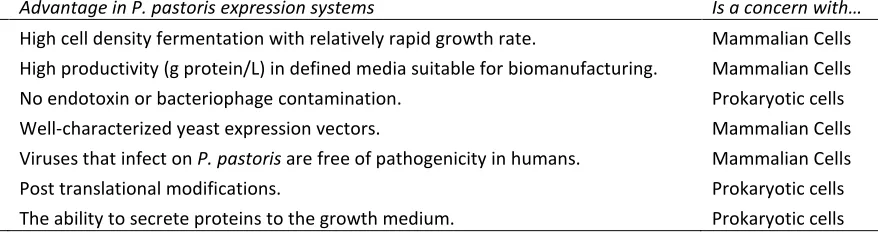
Table 1. Advantages of Pichia pastoris over other eukaryotic and prokaryotic expression systems. (Adapted from Pingzuo et al., 2007)
Advantage in P. pastoris expression systems Is a concern with…
1 High cell density fermentation with relatively rapid growth rate. Mammalian Cells 2 High productivity (g protein/L) in defined media suitable for biomanufacturing. Mammalian Cells 3 No endotoxin or bacteriophage contamination. Prokaryotic cells
4 Well-characterized yeast expression vectors. Mammalian Cells
5 Viruses that infect on P. pastoris are free of pathogenicity in humans. Mammalian Cells
6 Post translational modifications. Prokaryotic cells
7 The ability to secrete proteins to the growth medium. Prokaryotic cells
The AOX1 promoter
Expression in Pichia pastoris is controlled by a methanol-inducible promoter allowing high cell density biomass to be generated before induction. Linear DNA can yield
stable transformants via homologous recombination with high stability even with
multiple copies in the absence of selective pressure (Cregg et al, 1989).
The AOX1 promoter has a well-known genetic sequence used widely in research and commercial applications since its patent usage rights have already expired
(Sreekrishna, 2010) and is part of the expression cassette in Pichia. The AOX1 and AOX2 genes code for alcohol oxidase in Pichia and are regulated by methanol concentration. Therefore, the AOX1 gene was isolated and the AOX1 promoter is commonly used to drive expression of heterologous genes (Ellis et al., 1985). A mature mRNA structure derived from the above mentioned expression cassette,
ensures that the yeast cellular machinery recognizes the genetic sequence as
familiar and does not contain cryptic sequences that may affect message stability or
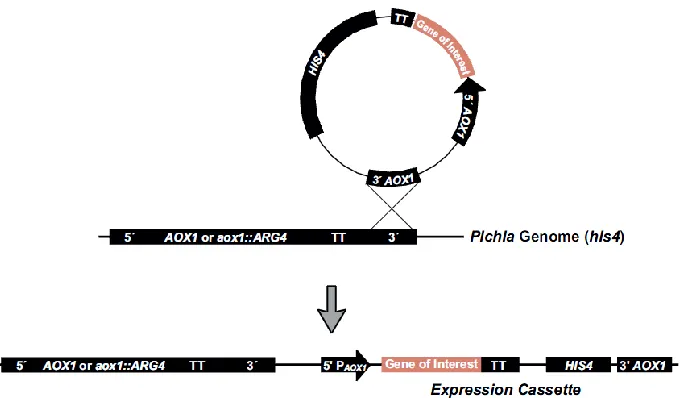
Figure 2. Insertion of the plasmid 3’ to the intact AOX1 locus (Mut+). (Invitrogen Co., 2002)
A disadvantage of using the AOX1 promoter in a large manufacturing facility is the potential fire hazard when storing large quantities of methanol and all the associated
safety requirements. Even though methanol toxicity is not a concern for the integrity
of therapeutic products, there are alternative patent-protected P. pastoris promoters available that do not use methanol as the inducer and can be licensed from
companies (Pingzuo et al, 2007; Sreekrishna, 2010).
Phenotype of AOX1 mutants
(Pingzuo et al, 2007). The most commonly used expression host of P. pastoris is GS115 (his4) which has a Mut+ phenotype (Cregg et al., 1985). Table 2 shows the different properties for various phenotype strains of Pichia pastoris.
Table 2. Methanol requirements and specific growth rate of P. pastoris strains (Li et al., 2007)
Fed-batch fermentation with P. pastoris
Pichia pastoris can be grown in fed-batch mode by applying a two-phase fermentation process. During the first phase, the microorganism grows in batch
mode with glycerol as the carbon source. This first phase is maintained until glycerol
is depleted. The second phase includes the addition of a methanol feed so cells can
be induced for heterologous protein expression. The level of recombinant protein
expression in Pichia is comparable to that of Escherichia coli fermentation processes and considerably higher than Saccharomyces cerevisiae (Romanos et al., 1992) with the ability to secrete post-translationally processed proteins into the medium.
Factors such as medium composition and strain type can impact productivity. In
addition, fermentation strategy and control parameters are important to increase
enhanced periods of protein production (Curvers et al., 2001). Table 3 summarizes Pichia pastoris fermentation parameters:
Table 3. Summary of Pichia pastoris fermentation parameters (Adapted from Invitrogen Co., 2002)
Parameter Reason
Temperature (30.0°C) Growth above 32°C is detrimental to protein expression Dissolved oxygen (>20%) Pichia needs oxygen to metabolize glycerol and
methanol
pH (5.0-6.0 and 3.0) Important when secreting protein into the medium and for optimal growth
Agitation (500 to 1500 rpm) Maximizes oxygen concentration in the medium Aeration (0.1 to 1.0 vvm for glass
fermenters)
Maximizes oxygen concentration. Oxygen feed might be needed for high-cell densities
Antifoam (the minimum needed to eliminate foam)
Excess foam may cause denaturation of secreted protein and it also reduces headspace
Carbon source (variable rate) Must be able to add different carbon sources at different rates during the course of fermentation
1.2 Bioreactor instrumentation and control
Monitoring and control of active fermentations
The degree at which the optimal conditions for microbial growth and product
formation in a bioreactor can be maintained is a function of the control of critical
process parameters (CCP) (Shuler and Kargi, 2001). The information generated by
monitoring the process is of high value since it can be used by automated systems
to correct CCPs and provide the best environment for cells to grow. Thus, the need
of dynamically accurate (able to measure true values in changing conditions),
reliable models and appropriate on-line sensors to provide a state of control in an
On-line and in-line measurements of process parameters can be performed with
various techniques. For instance, insertable in situ steam sterilizable probes are the most common but use invasive methods that are a potential risk for bioreactor
contamination. Non-invasive methods such as vent-gas analyzers and
measurements from liquid slip streams are also an alternative. However some of
these methods such as mass spectrometers can be costly and have not been used
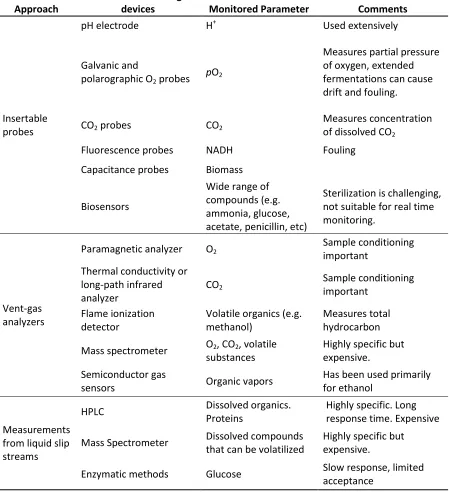
Table 4. Approaches to sensing and control of a fermenter’s chemical environment (Adapted from Shuler and Kargi, 2001)
Approach
Possible measuring
devices Monitored Parameter Comments
Insertable probes
pH electrode H+ Used extensively
Galvanic and
polarographic O2 probes pO2
Measures partial pressure of oxygen, extended fermentations can cause drift and fouling.
CO2 probes CO2 Measures concentration
of dissolved CO2
Fluorescence probes NADH Fouling Capacitance probes Biomass
Biosensors
Wide range of compounds (e.g. ammonia, glucose, acetate, penicillin, etc)
Sterilization is challenging, not suitable for real time monitoring.
Vent-gas analyzers
Paramagnetic analyzer O2 Sample conditioning
important Thermal conductivity or
long-path infrared analyzer
CO2 Sample conditioning
important Flame ionization
detector
Volatile organics (e.g. methanol)
Measures total hydrocarbon Mass spectrometer O2, CO2, volatile
substances
Highly specific but expensive. Semiconductor gas
sensors Organic vapors
Has been used primarily for ethanol
Measurements from liquid slip streams
HPLC Dissolved organics. Proteins
Highly specific. Long response time. Expensive Mass Spectrometer Dissolved compounds
that can be volatilized
Highly specific but expensive.
Methanol on-line sensing and control
Due to the strict regulatory environment that the biopharmaceutical industry is
constantly challenged with, consistency from batch to batch is an important
consideration. Therefore, high-level control strategies must be implemented in
bioprocessing. Many of the control strategies make use of computers in closed-loop
systems based on estimates of secondary parameters. For example, cell density can
be estimated by measuring the off-gas composition and dissolved CO2 concentration
with a mass spectrophotometer. The computer estimates cell concentration with the
above information and mass balance calculations. However, this strategy can be
prone to error accumulation (Shuler and Kargi, 2001).
A common strategy for methanol-feeding rate control is the monitoring of the
dissolved oxygen value combined with the knowledge of growth kinetics. The
change of the dissolved oxygen concentration indicates when an increase or
decrease in methanol feeding should be performed. Even though this strategy has
been proven effective (Minning et al., 2001), the dissolved methanol concentration cannot be precisely calculated via the dissolved oxygen and therefore, the dissolved
methanol concentration may exceed the growth limiting values (Li et al., 2007).
The advantage of on-line monitoring strategies such as an insertable dissolved
methanol probe or an in-line gas analyzer for O2 and CO2 (BlueSens™™) is that
systematic error can be mitigated and the response time improved. Both strategies
require no sampling or pre-treatment of sample and allow for simple automated
2 PROJECT GOALS
The purpose of this research was to design and implement a reliable sensing and
control system for dissolved methanol concentration in high-density, fed-batch
fermentations. The system will be further used for research in the production of
recombinant proteins in a 30L stainless steel bioreactor. The above problem will be
approached by translating the knowledge from an existent 2L glass bioreactor model
using Bacillus methanolicus which had a completely functional sensing and control system for methanol.
2.1 General Objectives
To understand and learn the existing 2L Bacillus methanolicus methanol feed control system and to be able to program a work schedule including ordering
all required parts, installation and setup of the system.
To design an on-line methanol probe compatible with the stainless steel 30L reactor geometry and its environment.
To construct a stainless steel probe based on the above design that allows sensing a voltage signal to correlate and control the bioreactor’s dissolved
methanol concentration.
To design and implement the methanol sensing and control system in a 30L
stainless steel bioreactor after procuring all necessary parts.
To install and learn the programming and utilization of the LabVIEW™ (Laboratory Virtual Instrumentation Engineering Workbench) platform
software to visualize the analog signal from the sensor probe.
To assess the methanol probe response and describe a procedure to calibrate the instrument.
3 EXPERIMENTAL METHODS
3.1 Microbial cultures
Media preparation
Chemically defined media and YPD were used to culture Pichia pastoris BEC7. A minimal glycerol medium + histidine (MGYH) was also used for growing starter
cultures. YPD medium is a complex medium often used for growing S. cerevisiae. It is composed of yeast extract (for vitamins and other nutrients), peptone (peptides
derived from enzymatically digested proteins), and glucose (the energy source for
the yeast). However, this medium is not suitable for drug production due to its animal
components and was used as a reference only. In contrast, chemically defined
media is appropriate for therapeutic product manufacturing and was also tested for
Pichia pastoris growth.
YPD media can be stored at room temperature with a shelf life of several months.
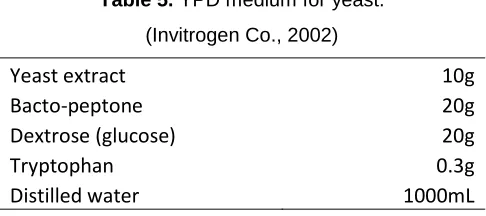
The recipe for YPD media used in this study is shown in Table 5.
Table 5. YPD medium for yeast. (Invitrogen Co., 2002)
Yeast extract 10g
Bacto-peptone 20g
Dextrose (glucose) 20g
Tryptophan 0.3g
Distilled water 1000mL
For MGYH media preparation, 800mL of autoclaved water was combined with
100mL of 13.4% yeast nitrogen base (YNB) with ammonium sulfate without amino
0.4% histidine. The media was stored at 4oC until use. The final composition of MGYH medium is shown in Table 6.
Table 6. Minimal glycerol + histidine medium composition (Invitrogen Co., 2002)
YNB 1.34%
Glycerol 1%
Biotin 4 x 10⁻⁵%
Histidine 0.004%
For the chemically defined medium preparation, the appropriate amount of
fermentation basal salts and PTM1 Trace salts solutions were prepared. 75mL per
liter initial fermentation volume of 50% glycerol containing 12mL PTM1 trace salts
was added to the fermentation basal salts medium and then filter sterilized. The
recipes are shown in Table 7 and Table 8.
Table 7. Fermentation basal salts medium recipe (Invitrogen Co., 2002)
Phosphoric acid, 85% 26.7 mL
Calcium sulfate 0.93 g
Potassium sulfate 18.2 g Magnesium sulfate-7H2O 14.9 g
Potassium hydroxide 4.13 g
Glycerol 40.0 g
Table 8. PTM1 trace salts solution (Invitrogen Co., 2002)
Cupric sulfate-5H2O 6.0 g
Sodium iodide 0.08 g
Manganese sulfate-H2O 3.0 g
Sodium molybdate-2H2O 0.2 g
Boric Acid 0.02 g
Cobalt chloride 0.5 g
Zinc chloride 20.0 g
Ferrous sulfate-7H2O 65.0 g
Biotin Biotin
Sulfuric Acid 5.0mL
Water To 1 liter
Cryoconservation of Pichia pastoris
Pichia pastoris Mut+ was plated on YP base agar medium to form colonies. After 24 hours of growth, an isolated colony was scraped and used to inoculate 50mL of YPD
media in a 250mL baffled shake flask. The culture was incubated at 30°C and 300rpm for 12 hours until the OD600 was in the range of 1.2 to 1.8. Then, 32mL of
the above culture was mixed with 8mL of 50% glycerol and aliquoted into 1mL sterile
vials. The vials were stored at -70oC until use.
Cultivation of Pichia pastoris in shaker flasks and growth curves
Pichia pastoris Mut+ BEC6.1 and BEC7 strains were cultivated in baffled 250mL Erlenmeyer shake flasks with milk filter disk closures into a final volume of 50mL
using chemically defined and YPD media. First, starter culture is grown from
cryopreserved stocks in minimal glycerol + histidine medium in order to acclimatize
overnight period or 16 to 24h, an appropriate amount of cells based on OD600
readings were transferred into 50mL of either chemically defined or YPD media to a
final concentration of 0.1 OD600. Growth conditions were 30°C and a rotational speed
of 300rpm. In order to maintain the viability of cultures and prevent contamination, all
work was conducted using aseptic conditions in a vertical laminar flow biological
safety hood. OD600 measurements were performed every 2 hours in order to assess
for cell concentration. To accurately measure cell density, samples with OD600 higher
than 1.0 were diluted down before reading.
3.2 Methanol sensing and control system
Description of the 2L bioreactor system
A 2L scale-down model was used for the design and implementation of a methanol
feed sensing and control system into a 30L bioreactor setting. The small-scale
model is a self-constructed autoclavable 2L bioreactor, P140 series (Applikon,
Schiedam, Netherlands) that utilizes a diverse set of probes, sensors and mass flow
controllers connected to a single data acquisition system for fermentation monitoring
and control. The geometry of the bioreactor was measured and is represented in
Figure 3. Small-scale 2L bioreactor schematic (Gutmacher, 2009)
A data acquisition system (LabVIEW™ 8.6, National Instruments) receives analog
and digital signals for process monitoring. The software is also a platform for
instrument control and automation. Table 9 summarizes all types of signals
Table 9. Two-liter system analog and digital signals acquired with LabVIEW™ (Hart, 2010)
Analog Signals Digital Signals Signals read manually
Temperature Exhaust gas CO2
concentration Thermometer (exhaust gas) pH Inlet air flow rate Scale (base mass)
Inlet oxygen flow rate Gauge (back pressure) Dissolved O2
concentration
Gauge (outlet pressure of the nitrogen tank regulator) Agitation speed
Exhaust gas flow rate Methanol
concentration
Digital signals are directly acquired by serial communication (COM) in the back
panel of a Dell Precision T3400 workstation. Analog signals are acquired with a
peripheral component interconnect card (PCI-6229) with capacity for 32 analog
inputs. The PCI card is connected to a shielded I/O connector block with 68
pin-connectors that accommodates all analog signal wiring into a single array of inputs.
The bioreactor temperature is controlled by an independent operating temperature controller. The circulating water within the bioreactor’s jacket exchanges heat
through the use of a heated bath and a cooling circulation system. The cooling
system utilizes a pump controlled by the temperature controller to cool down the
heat transfer fluid tempering box with non-freezing liquid of the cooling container. In
the same manner, a solenoid valve is actuated to let hot water into the jacket. A thermocouple uses the bioreactor’s thermowell on the head plate filled with water for
data acquisition with LabVIEW™ and control with the independent temperature
controller. Figure 4 shows a schematic representation of the temperature regulating
Figure 4. Temperature control scheme of the 2L bioreactor system
Solid lines = liquid flow; dashed lines = electrical control of solenoid valves; TC = Temp. controller; FTC = Flow through cooler; CC = Cooling container; B = Tempering box; HB = heat bath; TW =
Thermowell with thermocouple. (Hart, 2010)
Proposed 30L bioreactor sensing and control system
A pilot-scale, 30L bioreactor system (Biostat® DCU3, Braun Biotech International) was modified for dissolved methanol concentration monitoring. A schematic diagram
of the 30L bioreactor and its geometry measurements are shown in Figure 5. An
existing inlet and exhaust gas lines panel using BlueSens™ technology (Herten,
Germany) was already in place before this study (Figure 6). However the
procurement of additional parts such as rotameters and mass flow controllers was
expedited in order to complete the proposed sensing and control system shown in
Figure 5. Pilot-scale 30L bioreactor geometry.
Figure 6. BlueSens™ sensors for inlet and exhaust gas monitoring
The proposed 30L bioreactor sensing and control system is mostly controlled by the
computer attached to the 30L bioreactor which uses proprietary software to control
process parameters. However, the dissolved methanol concentration sensing and
feeding control was designed to be an independent closed-loop system. A nitrogen
gas line regulated with a rotameter was installed for feeding inert nitrogen gas
through the methanol probe. In addition, a connector box was used to house the
circuit of a TGS-822 sensor for the detection of methanol vapors. The methanol
sensor was placed near the probe to minimize the path length from where the
methanol diffuses through the silicone tubing to the sensor to improve response time. The LabVIEW™ platform would function from an adjacent computer to sense
Methanol probe design
In biomanufacturing, bioreactor sterile conditions are required in order to ensure the
cultivation of an axenic culture. Clean in place (CIP) and steam in place (SIP)
procedures are widely used in a biomanufacturing setting to prevent contaminating
microorganisms that would consume nutrients and negatively impact the producer microorganism’s growth. The utilization of on-line probes significantly increases the
probability of contamination (Shuler and Kargi, 2001). Therefore, the benefit of
adding a new probe to the fermentation system should outweigh the risk associated
with contamination and the economic losses they might generate. The methanol
probe design took into consideration the above described risk. The probe was
designed to withstand high temperatures (121°C) and humidity levels of 100% with
the use of 316 grade stainless steel. All seals and parts were assembled following a
minimalist design to allow for cleanability and to minimize areas of contaminant
accumulation.
The 30L bioreactor geometry was also taken into consideration for the design. A
head plate probe was preferred since all four ports in the bioreactor probe
penetration belt will be occupied with pH, DO and OD probes, including a free port
for bioreactor sampling. However, sampling could also be performed using a dip
tube from the head plate. The probe was constructed with a hollow stainless steel
rod with two 1.59 mm o.d. diameter stainless steel tubes inside. One of the stainless
steel tubes exits the probe through the side while the other tube exits at the bottom
of the probe. 220 cm of laboratory-use silicone tubing (1.57 mm internal diameter x
2.41 mm outer diameter, wall thickness = 0.84mm) was spiraled around the stainless
steel rod and each end was connected to one of the 1.59 mm tubes in such a way
that the nitrogen gas will flow in one single path throughout the probe. The probe
allow operating at the minimum vessel volume (9L) and position the tubing into an adequate turbulent location. Thick-wall Tygon™ tubing was used to connect the
probe gas outlet to the sensor box. Figure 8 provides a schematic of the dissolved
methanol probe and shows the prototype fabricated by the machine shop.
Figure 8. Dissolved methanol probe scheme and prototype a) Methanol probe scheme (Adapted from Austin et al, 1992)
b) Head plate methanol probe prototype for 30 liter reactor
When comparing the 2L lab-scale model probe design with the 30L bioreactor
methanol probe, most significant differences are the silicone tubing wall thickness
thickness of 0.55 mm whereas the 30L bioreactor methanol probe tubing wall
thickness is 0.84 mm. In the same manner, the exposed surface areas are 35.5cm2 and 83.3cm2 for the 2L and 30L dissolved methanol probe respectively. The tubing surface area per liter for each reactor is 35.5 cm2/L (at 1L working volume) and 3.2 cm2/L (at 26L working volume).
3.3 Sensor and data acquisition system setup
Methanol sensor circuit construction
A plastic connector box was used to house the circuit for a TGS-822 hydrocarbon
sensor (Figaro USA, Wilmette, Illinois) for the detection of methanol vapors. This
circuit box was built as a replica of the one installed in the 2L bioreactor system
model. Figure 9 shows the circuit connections for the hydrocarbon sensor:
Figure 9. Hydrocarbon sensor basic circuit diagram
The above circuit was powered with a multiple output voltage linear power supply
(Power-One, model HTTA-16W-AG) according to the basic circuit diagram. The
sensor was preheated for more than seven days before testing. This preheat time is necessary when the sensor’s heating element has not been continuously connected
to the 5V current from the power supply.
Data acquisition system
The independent closed-loop system for methanol sensing and control required of a
data acquisition (Daq) system for analog signal acquisition. A peripheral component
interconnect card (PCI-6229) with capacity for 32 analog inputs was installed with its
respective drivers into an adjacent computer in the same room as the 30L
bioreactor. The PCI card was connected to a shielded I/O connector block with 68
pin-connectors that accommodates all analog signal wiring into a single array of inputs. The connector block accommodated the ‘VRL’ signal and ground reference
from the sensor circuit box. The connection scheme is represented in Figure 10.
Pins 68 and 67 corresponded to pins ‘AI 0’ and ‘AI GND’ respectively in the PCI card terminal (Connector 0) in ‘RSE’ mode (measurement made with respect to ground).
This nomenclature is used within the configuration of the analog signal when using the ‘Measurements and Automation Explorer’ tool installed with LabVIEW™. All
connection channels might be changed if necessary to include new signals. The PCI
card terminals are represented in Figure 11.
LabVIEW™ platform for documentation and control of methanol
LabVIEW™ 2011 programmable platform was utilized to write a program that allows
the acquisition of a voltage signal from the TGS-922 sensor basic circuit and
translate it to a graphical representation. LabVIEW™ automatically recognizes the
4 RESULTS
4.1 Pichia pastoris growth rate
Pichia pastoris strain BEC6.1 was grown initially in chemically defined media in shake flasks. However, after successfully subculturing the strain in MGYH medium,
the cells did not grow in minimal basal salts medium. Therefore, a different strain
(BEC7) was evaluated for growth curves. Unfortunately, Pichia pastoris BEC7 did not grow in the chemical defined media as well, even though the medium was
prepared in two separate types, one containing histidine and a second one with no
histidine. Even though basal salts medium is the most common medium for high cell
density fermentation for Pichia pastoris, it may not be the optimum due to its composition which results in precipitates when changing ionic strength, among other
Figure 12. Pichia pastoris strain BEC7 growth curve on YPD medium
The semi-logarithmic plot shows a good fit (R = 0.9966) and a maximum growth rate
of 0.146 h-1 on YPD medium.If the growth kinetics of a Pichia production strain are pre-established, then the maximum methanol feed rate can be adjusted according to
the specific growth rate during the induction phase. This can be an effective way to
maintain optimal methanol concentration in the bioreactor (Sreekrishna et al., 2010). However, the culture may not always grow at this maximum growth rate on
methanol. The maximum specific growth rate constant can be used to calculate the
methanol uptake rate with Equation 1.
⁄
Pichia pastoris has been observed to reach cell densities of 450 g WCW/L in BSM medium supplemented with PTM1 trace salts in a quasi-steady state (Zhang et al., 2011). Therefore, assuming cell concentrations in the range of 30g/L (Sreekrishna et al., 2010) to 450 WCWg/L and a biomass yield on methanol of 1.19 g WCW/g MeOH (Zhang et al., 2011), the methanol uptake rate value could be as high as 3.5 g MeOH/L·h to 52.9 g MeOH/L·h. Therefore, a dissolved methanol probe would need
to sense changes in dissolved methanol concentration fast enough to respond within
this timeframe to be useful to control dissolved methanol concentration.
4.2 Data acquisition system
A data acquisition system was installed and assembled in an adjacent PC computer
for closed-loop control of methanol feed. A basic circuit was replicated from the 2L
bioreactor system and is shown in Figure 13. The sensor was pre-heated with 5V
DC for at least seven days before calibration. A stream of nitrogen gas was diverted from the main nitrogen line on the back panel and flowed through the probe and the
basic circuit with the TGS-822 sensor during pre-heating time.
The voltage signal emitted by the circuit box was then wired into the National
Instruments connector block along with a ground reference cable in order to record
Figure 13. TGS-822 sensor basic circuit connection box a) Circuit replica adapted for the 30L bioreactor system; b) Original connection box from the 2L bioreactor model
A basic LabVIEW™ VI program was written using the graphical interface and is
shown in Figure 14. The algorithm converts the analog signal in digital format and filters it before displaying it into a waveform chart at a sampling rate of 1000 hz. The
Figure 15 shows the screen front panel interface of the programmed VI. It displays a
numeric value for methanol concentration in mM and displays the data in a
waveform chart that updates every second.
Figure 15. LabVIEW™ screen program front panel for methanol data acquisition
4.3 Methanol probe
The constructed methanol probe is shown in Figure 16. 220cm of silicone tubing
were used which resulted in a calculated area of 83.3 cm2. The tubing connections
were secured with RTV sealant on both sides. It was possible to use a cable tie only
in the bottom end connection otherwise any additional parts on the top connection
end would increase the probe diameter. The probe was screwed onto the bioreactor’s head plate as shown on Figure 17. The distance from the silicone coil to
Figure 16. Dissolved methanol probe for the 30L bioreactor system
4.4 Methanol probe calibration
The analog signal from the sensor circuit was measured in volts. In order to translate
the above voltages into a concentration value (mM), a calibration assay was
performed. An appropriate amount of neat methanol was weighted and mixed with
50g of water. Then, it was poured to the bioreactor containing 26kg of water through
a funnel using an opening port on the head plate. The final methanol concentrations
were 0.00, 12.3, 24.6, 36.9, 49.0, 97.5, 146 194 and 241 mM that correspond to
percentage values in the range of 0.05% to 1.00%. The aeration rate, the agitation
rate and the temperature were set to 0.6 vvm, 275 rpm and 23°C respectively.
A built-in calibration wizard program was run to calibrate the probe (right-click on
Daq assistant>Properties>Calibration>New Calibration) as shown in Figure 18.
Before committing to a new calibration value each time additonal methanol was
added, the voltage reading had to stabilize within ±5%. The calibration wizard
program automatically scales the readings to mM after the calibration process is
finished.
The probe was calibrated using 120mL N2/ min and 500mL N2/min nitrogen flow at
275rpm and no air flow through the sparger. However, the ideal conditions should
include air sparging to mimic normal operations. It was observed that the change in
nitrogen flow rate affected the initial voltage signal, the slope of the calibration curve,
and thus, the sensor’s working voltage range. The sensing element is a tin dioxide
semiconductor with low conductivity in clean air; any amount of organic gas would
change this conductivity value. Therefore, it is suspected that the current house
nitrogen gas line may not provide hydrocarbon-free “clean” nitrogen. Figure 19
shows the calibration curve with a nitrogen flow rate of 120mL/min. The
concentration values were converted to their natural logarithm value to help visualize
Methanol Conc. ln(Methanol Conc.) Signal Output
[mM] [mM] [V]
0 0.00 2.81
12.33 2.51 4.81
24.59 3.20 5.74
36.8 3.61 6.24
48.95 3.89 6.57
97.52 4.58 7.12
145.72 4.98 7.37
193.55 5.27 7.47
241.01 5.48 7.55
Figure 19. Calibration curve using 120mL/min N2 flow rate without aeration Red data points are not part of the linear fit
Figure 20 shows the calibration curve with a nitrogen flow rate of 500mL/min. The
concentration values were converted to their natural logarithm value to help visualize
Methanol Conc. ln(Methanol Conc.) Signal Output
[mM] [mM] [V]
0 0.00 5.69
12.33 2.51 6.85
24.59 3.20 7.25
36.8 3.61 7.4
48.95 3.89 7.52
97.52 4.58 7.68
145.72 4.98 7.77
193.55 5.27 7.81
241.01 5.48 7.86
Figure 20. Calibration curve using 500mL/min N2 flow rate without aeration Red data points are not part of the linear fit
Note how both curves have a region of methanol concentration that is nonlinear
(>100mM). Therefore, the sensitivity of the sensor is best when measuring dissolved
the vendor of the sensitivity loss of the TGS-822 sensor when using different
hydrocarbon gas concentrations:
Figure 21. Sensitivity characteristics of the TGS-822 sensor Rs = Sensor resistance of displayed gases at various concentrations
Ro = Sensor resistance in 300ppm ethanol (Figaro USA)
4.5 Methanol probe response time
Earlier research has shown that during fed-batch fermentations, the silicone tubing
sensing method for monitoring dissolved methanol operated independently of
fermentation aeration and agitation and that the silicone tubing was not altered by repeated sterilizations (Yano et al., 1976). However, there are other factors that would affect the response time of the methanol probe. If an analogy to a galvanic
DO probe is made, the factors affecting probe performance can be summarized as
[ ]
Equation 2. Factors affecting the methanol probe response
A = Silicone tubing area; P = Permeability coefficient of the silicone tubing for methanol b = tubing wall thickness; [MeOH] = Methanol concentration
Figure 22 demonstrates that there is no change in response time when changing the
flowing nitrogen rate as both curve shapes remain practically the same with respect
to response time to a step change in methanol concentration of approximately 10 to
12.5 minutes. The mixing time, which is approximately 1.5 minutes, has been
subtracted from this calculated response time. In a similar experiment with the 2L
bioreactor model, a 150mM pulse at 700rpm (same tip velocity), at 23ºC and 105mL
N2/min, the response time was 12 minutes, which is comparable to the results with
Figure 22. Methanol probe response time to a methanol pulse at two different N2 flow rates
It is necessary to prove that the probe will respond effectively in high-density
fed-batch fermentations with Pichia pastoris. It has been observed that P. pastoris can reach cell densities of up to 450 g WCW/L in BSM medium supplemented with
PTM1 trace salts in a quasi-steady state (Zhang et al., 2011). Therefore, assuming cell concentrations in that range and a biomass yield on methanol of 1.19 g WCW/g
MeOH, the calculated methanol uptake rate would be 52.9 g MeOH/L.h.
methanol concentration limits, then 0.5% (120mM) can be established as the lower
set point. At a methanol uptake rate of 52.9 g MeOH/L.h, (27.5 mmol MeOH/L·min),
the cells would consume the entire 0.5% of dissolved methanol in 4.4 minutes.
Therefore, the response time of this methanol probe may need to be further
optimized because it may be too slow to be able to sense and control dissolved
methanol concentration in high-cell density fermentations. The methanol uptake rate
calculation is shown below:
(
) ( )
( )
4.6 Methanol evaporation or stripping rate monitoring
In addition to the methanol uptake rate, the methanol evaporation or stripping rate is
a consideration when calculating the methanol feed rate. Not only do the cells
consume the methanol, but some methanol is lost due to evaporation into the head
space. The following equation shows the mass balance for methanol:
MeOHFeed = MeOHX + MeOHStripped + MeOHDissolved
where the total methanol fed is equal to the sum of the consumed methanol, the
In order to determine the methanol stripping rate, 26 liters of 100mM methanol
solution was prepared inside the 30L bioreactor. The solution was agitated at
275rpm and air was sparged at 0.6 vvm during an overnight period at constant
temperature (23ºC). The resulting plot of the dissolved methanol probe signal
response (Figure 23) allowed the determination of the methanol stripping rate, which was 0.89mmol/L∙h. This value is lower than the value determined for the 2L bioreactor model at 50ºC (4.8mmol/L∙h) (Hart, 2010). For the Pichia systems, the methanol stripping rate value is not significant when compared to the methanol
uptake rate value described in the previous section.
5 CONCLUSION
An existing 2L bioreactor sensing and control system for monitoring and controlling
the dissolved methanol concentration in Bacillus methanolicus fermentations was used as a model to implement a similar scheme for a pilot-scale, 30L steam
sterilizable bioreactor. The latter system will be used for conducting research in high-density, fed-batch Pichia pastoris fermentations for the production of recombinant proteins, by complementing the current inlet and exhaust gas monitoring control
panel.
This research demonstrated that technology transfer from one system to another is
feasible and the components can be adapted accordingly. A silicone-tubing
dissolved methanol probe was scaled-up and was tested with an inexpensive
hydrocarbon sensor circuitry and data Labview data acquisition software. The results
showed that dissolved methanol concentrations can be quantified but it is necessary
with further research to optimize the design of the probe and to adjust operating
parameters to obtain a reliable, accurate methanol concentration reading with an
effective response time capable of responding to changes in the methanol uptake
rate during rapid exponential growth. Finally, the programmed LabVIEW™ Virtual
Instrument algorithm along with the data acquisition system will serve as the basis
for further I/O signal implementation.
All in all, this study provided deep understanding of the principles of fermentation
sensing and control and allowed me to gain experience in the science and
6 FUTURE WORK
All the design, construction and testing of the sensing and control system for the 30L
steam sterilizable bioreactor obtained through this research will serve as a starting
point for future projects with the 30L bioreactor. Even though a thoughtful design and
basic testing was performed, the results showed that it may be necessary to further
optimize the probe, test the probe for stability during SIP and to adjust operating
parameters in order to obtain reliable, accurate dissolved methanol concentration
readings, before implementing a control and methanol feeding strategy to optimize
growth of P. pastoris
The ideal probe and hydrocarbon sensor reading when a dry and pure carrier gas
stream is passed through the sensor should be approximately zero volts when using
medium without methanol, which was not the case observed in this study. To expand the sensor’s dynamic signal range, it will be necessary to test different
nitrogen sources and methods to obtain the purest carrier gas stream. Also, more
testing should be performed with different nitrogen flow rates to confirm if this affects
the probe response time and determine the effect on signal strength.
Different strategies can be adopted to shorten the probe’s response time. The
distance from the silicone-tube coil to the sensing element could be a factor affecting
response time. Also, a thinner walled silicone-tubing could improve the transfer of
methanol from the liquid phase through the silicone tube wall into the carrier gas
stream. Moreover, the equilibrium of the liquid and gas phase through the
membrane might be affected by process parameters such as temperature, agitation
rate, pH, among other factors.
Finally, once the 30L bioreactor sterilization and temperature control features are
steam in place (SIP) cycles with the probe in place. When exposed to sterilization
temperatures the silicone tubing integrity and sealing to the stainless steel tubing
needs to be studied. Also, with the ability to sterilize the reactor, a chemically defined media could be used to grow P. pastoris and to test the probe response to decreasing methanol concentration with temperature, aeration and agitation
conditions similar to high-cell density fermentations, as opposed to this preliminary
7 REFERENCES
Austin, G.D., S.K. Sankhe and G.T. Tsao. 1992. Monitoring and control of methanol
concentration during polysaccharide fermentation using an on-line methanol sensor. Bioprocess Engineering 7, 241-247.
B. Braun Biotech International. Biostat C-DCU3: Operating Manual. Sartorius Group.
Buckholz, R. G., and Gleeson, M. A. 1991. Yeast systems for the commercial
production of heterologous protein. Bio/Technology 9, 1067-1072.
Cregg, J. M., Barringer, K. J., Hessler, A. Y., & Madden, K. R. 1985. Pichia pastoris as a host system for transformations. Molecular and Cellular Biology 5, 3376– 3385.
Cregg, J. M., Madden, K. R., Barringer, K. J., Thill, G., and Stillman, C. A. 1989.
Functional characterization of the two alcohol oxidase genes from the yeast,
Pichia pastoris. Molecular and Cellular Biology 9, 1316-1323.
Curvers, Brixius, Peter Brixius, Thomas Klauser, Jörg Thömmes, Dirk Weuster-Botz,
Ralf Takors and Christian Wandrey. 2001. Human Chymotrypsinogen B
production with Pichia pastoris by integrated development of fermentation and downstream processing. Part 1. Fermentation. Biotechnology Progress 17, 495–502.
Dijkhuizen, L., P.R. Levering and G.E. de Vries. 1992. The physiology and
biochemistry of aerobic methanol-utilizing gram-negative and gram-positive
Ellis, S. B., Brust, P. F., Koutz, P. J., Waters, A. F., Harpold, M. M., and Gingeras, T.
R. 1985. Isolation of Alcohol oxidase and two other methanol regulatable genes from the yeast, Pichia pastoris. Molecular and Cellular Biology 5, 1111-1121.
Gutmacher, 2009. Insights into carbon flux in Bacillus methanolicus. Thesis Report. Beuth Hochschule für Technik. Berlin, Germany.
Hart, Felix A. 2010. Design of a fermentation system to accurately measure carbon
dioxide dissimilation from methanol by Bacillus methanolicus. Thesis Report. Beuth Hochschule für Technik. Berlin, Germany.
Invitrogen Co. 2002. Pichia Fermentation Process Guidelines. Invitrogen Co.,San Diego, CA, USA. Available online: www.invitrogen.com/content/sfs/
manuals/pichiaferm_prot.pdf
Invitrogen Co. 2002. Pichia Expression Kit: A manual of methods for expression of
recombinant proteins in Pichia pastoris. Invitrogen Co., San Diego, CA, USA. Catalog #K1710-01.
Li, Pingzuo, Anukanth Anumanthan, Xiu-Gong Gao,Kuppusamy Ilangovan, Vincent V. Suzara, Nejat Düzgüneş and V. Renugopalakrishnan. 2007. Expression of
recombinant proteins in Pichia pastoris. Applied Biochemistry and Biotechnology 142, 105–124.
Romanos, Michael, Carol Scorer and Jeffrey Clare 1992. Foreign gene expression in
Shuler, Michael L. and Fikret Kargi. 2001. Bioprocess Engineering: Basic Concepts (2nd Edition). Prentice Hall. Upper Saddle River, NJ.
Sreekrishna, Koti. 2010. Pichia, optimization of protein expression. In M.C. Flickinger (ed.) Encyclopedia of Industrial Biotechnology: Bioprocess, Bioseparation and Cell Technology. Hoboken, NJ: John Wiley & Sons.
Yano, T., Kobayashi, T. and Shimizu, S. 1976. Silicone tubing sensor for detection of
methanol. Journal of Fermentation Technology 56, 421-427.
Zhang, Wenhui, Mark A. Bevins, Bradley A. Plamtz, Leonard A. Smith and Michael
M. Meagher. 2000. Modeling Pichia pastoris growth on methanol and optimizing the production of a recombinant protein, the heavy-chain fragment C