ScholarWorks
Walden Dissertations and Doctoral Studies Walden Dissertations and Doctoral StudiesCollection
2018
Assessment of Evidence-Based Practice Readiness
and Plan for Implementation of Clinical Practice
Guidelines in a Tertiary Hospital
Linda Keller
Walden University
Follow this and additional works at:https://scholarworks.waldenu.edu/dissertations Part of theNursing Commons
This Dissertation is brought to you for free and open access by the Walden Dissertations and Doctoral Studies Collection at ScholarWorks. It has been accepted for inclusion in Walden Dissertations and Doctoral Studies by an authorized administrator of ScholarWorks. For more information, please [email protected].
Walden University
College of Health Sciences
This is to certify that the doctoral study by
Linda Keller
has been found to be complete and satisfactory in all respects, and that any and all revisions required by
the review committee have been made.
Review Committee
Dr. Barbara Niedz, Committee Chairperson, Nursing Faculty Dr. Cassandra Taylor, Committee Member, Nursing Faculty
Dr. Mary Verklan, University Reviewer, Nursing Faculty
Chief Academic Officer Eric Riedel, Ph.D.
Walden University 2018
Abstract
Assessment of Evidence-Based Practice Readiness and Plan for Implementation of Clinical Practice Guidelines in a Tertiary Hospital
by Linda Keller
Proposal Submitted in Partial Fulfillment of the Requirements for the Degree of
Doctor of Nursing Practice
Walden University May 2018
Abstract
Using evidence-based practice (EBP) to deliver patient care in a hospital setting improves patients’ care and their outcomes. The use of clinical practice guidelines (CPG) enables nurses and other healthcare professionals to translate current evidence into bedside care. However, there continue to be barriers for hospitals in adopting and implementing evidence-based care using CPGs, including a lack of understanding about EBP by nursing staff. The purpose of this project was to explore readiness of registered nurses in a tertiary hospital to use EBP and provide recommendations for a plan to implement CPGs successfully. Melnyk’s research identified EBP as an approach to care, and the concept of using CPGs to shape patient care served as a foundation for the project. In addition, Kotter’s theory of change was used to guide the recommendations to promote implementation. The Academic Center for Evidence-Based Practice-Readiness Inventory (ACE-ERI) created by Stevens was used to survey nurses’ EBP readiness and knowledge at one Florida tertiary hospital. Data were analyzed using descriptive and inferential statistics. Survey results revealed the nurses’ overall moderate level of confidence in using EBP, but limited EBP knowledge. Therefore, recommendations to develop education programs for EBP as well as guidance on follow-up assessments were proposed to nursing leadership. Educating the nurses will increase the likelihood of adoption of the CPGs, which will promote positive social change by improving the
Assessment of Evidence-Based Practice Readiness and Plan for Implementation of Clinical Practice Guidelines in a Tertiary Hospital
by Linda Keller
Proposal Submitted in Partial Fulfillment of the Requirements for the Degree of
Doctor of Nursing Practice
Walden University Spring 2018
Dedication
I would like to dedicate this doctoral project and paper to my mother. Her pride in me as a daughter and as a nurse was always apparent. She instilled the value of life-long learning in me as well as the determination to see this project through to completion. I am sure she is smiling down from heaven as I complete this journey.
Acknowledgments
This project and paper would not have been possible without the support of several key individuals. First, I would like to acknowledge my husband, David. He has always believed in my abilities. His love and support have provided ongoing strength throughout this journey. Next, I would like to thank my mentor and preceptor, Dr. Melanie Shatzer. I am grateful for her guidance, wisdom and friendship which have served to keep me focused and grounded. Lastly, I would like to express my gratitude to my department chair and academic advisor, Dr. Barbara Niedz. Her expertise, support, and advice have guided the project from the beginning to the end. Thank you all for your help and assistance.
i
Table of Contents
List of Tables ... iii
List of Figures ... iv
Section 1: Nature of the Project ...1
Introduction ...1
Problem Statement ...2
Purpose ...4
Nature of the Project ...5
Significance...5
Summary ...6
Section 2: Nature of the Project ...7
Introduction ...7
Concepts, Models, and Theories ...7
Academic Center for Evidence-based Practice Readiness Inventory ... 8
Kotter’s Theory of Change ... 9
EBP Using CPGs ... 10
Barriers and Obstacles ... 15
Definition of Terms... 18
Relevance to Nursing Practice ...19
Local Background and Context ...20
Role of the DNP Student...22
ii
Section 3: Collection and Analysis of Evidence ...25
Introduction ...25
Practice-Focused Question...26
Sources of Evidence ...27
Published Outcomes and Research ... 27
Evidence Generated for the Doctoral Project ... 28
Analysis and Synthesis ...32
Summary ...33
Section 4: Findings and Recommendations ...34
Introduction ...34
Findings and Implications ...35
Recommendations ...44
Strengths and Limitations ...45
Summary ...47
Section 5: Dissemination Plan ...48
Dissemination Plan ...48
Analysis of Self ...48
Summary ...50
References ...51
Appendix A: ACE EBP (ACE ERI 2016©) Readiness Inventory...57
Appendix B: Copyright Permission for Stevens’ Star Model of Knowledge Transformation ...62
iii List of Tables
Table 1 Characteristicsof RNs Participating in ERI-ACE Survey...36
Table 2 Frequency of Correct Answers for EBP Knowledge Test Scores ...39
iv List of Figures
Section 1: Nature of the Project
Introduction
Nursing and the delivery of patient care have evolved since the mid-1850s during the time of Florence Nightingale and the rise of the nursing profession. The advancement of nursing care continues to progress. Over the past several decades, evidence-based practice (EBP) has been a focus in the nursing profession. Winters and Echeverri (2012) identified that both the American Association of Colleges of Nursing (AACN) and the Institute of Medicine (IOM) recognize EBP is a necessary core competency for nursing practice. EBP has been described as the purposeful use of the best evidence and
integrating it into the decision-making process related to providing patient care (Sackett, Straus, Richardson, Rosenberg, & Haynes, 2000). EBP is an approach to care that combines the use of evidence from current research with the nurse’s clinical expertise and the patient’s preferences and values (Melnyk, Fineout-Overholt, Gallagher-Ford, & Stillwell, 2011). Using EBP is an essential strategy that enables nurses and other
healthcare providers to provide the best quality care to patients.
Developed from EBP, clinical practice guidelines (CPGs) are recommendations that guide care (Agency for Healthcare Research and Quality, 2014). CPGs can be an essential resource used by nurses and other healthcare providers to make care delivery decisions. They serve to interpret and translate a wealth of literature related to EBP into well-defined and clear guidance for patient care (White & Spruce, 2015). The project’s purpose was to explore readiness of registered nurses (RNs) in a tertiary hospital to use
EBP and provide recommendations for a practical plan to successfully implement CPGs. Using guidelines will stimulate a positive social change for patients, promoting better care outcomes by supporting consistent use of EBP throughout the facility, eliminating variation and outdated practices that are guided by habits instead of evidence in care delivery.
Problem Statement
EBP is crucial to improve patient quality, safety, and outcomes. Melnyk, Fineout-Overholt, Gallagher-Ford, and Kaplan (2012) demonstrated that EBP decreases medical errors, morbidities, and mortality throughout the United States, yet nurses in many hospitals and healthcare systems still do not consistently implement it. In many
healthcare organizations, nursing practice is dictated by policy and procedures. However, in some hospitals, care is provided based on outdated policies and procedures, obsolete guidelines, and in some instances habitual behaviors. Nurses may be relying on concepts learned in nursing school many years prior as well as old clinical habits, outdated
resources, or nursing traditions to guide care delivery. Locally, this is currently true of the site selected for the DNP project. The organization adopted initial general practice
guidelines in 2004. However, these guidelines have not been updated to reflect contemporary nursing practices that are supported by current research and evidence. Consequently, the current content is 14 years old. Knowledge in nursing and medicine continues to expand rapidly; therefore, to be effective and valid, CPGs must be updated routinely to keep pace with the changes in knowledge; as such, this represents a
nursing care that is less than optimal and could potentially even be harmed by care that is not based on evidence. One particular example of an outdated guideline in the facility is the use of a generic stroke recommendation that does not distinguish between ischemic versus hemorrhagic strokes. Nursing care and interventions will vary greatly depending on the cause of the stroke. Therefore, it is important to have specificity in the stroke guidelines. Additional examples of outdated or incomplete guidelines include the lack of standardized assessment in fall risk assessment, and lack of any consistent policy or guidance in caring for the patient experiencing seizures. These examples illustrate the importance of implementing current CPG to support the RNs’ ability to deliver safe care that result in better quality and improved outcomes. There is an assumption held by the site’s nursing leadership that there is a limited knowledge base of EBP within the current nursing staff (B. Seymour, personal communication, June 22, 2017). There is a
significant need for the organization to establish and support the nurses in understanding and using EBP by implementing up to date CPGs. Adopting up to date practice
guidelines will drive an increased use of EBP.
The use of EBP requires nurses to use new thought processes and skills. New behaviors and competencies must be established and used. The nurse must be able to assess, analyze, and understand research results and apply them to his or her practice. To effectively plan for and implement EBP through the use of CPGs, an assessment and evaluation of the readiness of RNs in the facility is crucial as well as an analysis of current state and nursing practices. Awareness of the staff’s EBP readiness is instrumental in their engagement and willingness to own and implement EBP
(Newhouse, 2010). Adoption of EBP requires nurses, healthcare workers, and organizational leaders to create and support a culture that endorses its clinicians to understand the processes involved in EBP. Nurse and system leaders must have an
understanding of the baseline status to appropriately plan for the organizational resources, support, and education that will be needed for implementation.
The doctoral project demonstrated significance and value by supporting the organization in their quest to improve patient care by using EBP through CPGs. In 2010, the IOM declared and advocated that by the year 2020, 90% of clinical decisions should be evidence-based (Orta et al., 2016). Consequently, while the project afforded benefits to the organization in determining readiness and providing recommendations for
implementation, it also served to promote the IOM’s goal of EBP use for clinical care as well.
Purpose
The purpose of the project was to determine the current state of understanding and readiness to use EBP with CPGs by RNs in an acute tertiary hospital setting. As part of their quality improvement, the site also conducted a gap analysis of the nurses’ current practice guidelines and policies for new or modified standards of care. Upon completion of the assessment of nurses’ readiness, recommendations for resources and education that may be required for successful implementation and adoption of guidelines for medical surgical nursing staff were proposed to the nursing leadership. Concepts that were explored and evaluated included the nurses’ perceptions, knowledge and confidence in clinical practice guidelines, and EBP.
Nature of the Project
The project was completed as a quality improvement (QI) initiative for the organization. The development of EBP is an organizational priority and was included in the QI plan for 2017-2018. Using a quality improvement approach provided a structured and systematic foundation for identifying the current state of EBP awareness and use. It also provided the organization with essential information which could be used as the basis for future improvement.
Sources of evidence or data used for collection included the basic version of the Academic Center for Evidence-Based Practice Readiness Inventory (ACE-ERI). The ACE-ERI measures self-reported competencies in EBP. It was developed based on nationally established EBP competencies with strong validity, reliability, and sensitivity. The survey has been used on both clinicians and students to provide a score of their readiness to employ EBP. The first step of the project involved using the ACE-ERI tool to survey the RNs working in the hospital’s medical surgical, progressive, and critical care departments. Next, the results were analyzed and reviewed for determination of recommendations.
Significance
The project had significance for several stakeholders. Benefits of successful implementation and adoption of CPGs are realized by patients, nurses and the
organization. For patients, EBP at the bedside in a hospital setting elevates the quality of care and promotes the best possible outcomes. The use of evidence to guide medical care and treatment allows the medical and nursing team to achieve optimal patient outcomes
with the most efficient use of resources (Molony & Samuels, 2012). Using resources more efficiently lowers the cost of healthcare and promotes value in services that ultimately benefits the organization. The project moves the organization forward in its desire to support EBP use for the nursing staff. Using EBP improves and enhances a nurse’s clinical performance and abilities, which can ultimately lead to higher levels of job satisfaction and fulfillment. Use of EBP provides nurses with greater sense of control of the processes in their work environment and afford them the ability to revise and change policies which can improve patient care and outcomes (Barton et al., 2012). While the project was focused on the nursing staff in one hospital, it was also likely to be transferable to other nursing areas of the organization as well as in specialty departments. On a broad level, the project promoted social change by supporting the nurses to use CPGs based on research which will improve care to patients in the local community.
Summary
EBP provides many benefits for patients, organizations, and nurses. Clinical practice guidelines can be used to translate current evidence into care that increases safety and improves outcomes. However, many healthcare systems continue to lag in adoption and implementation related to barriers within systems as well as because of attitudes and lack of EBP understanding from nursing staff. The project assessed and determined the readiness of the RNs to employ EBP through implementation of CPGs. Recommendations based upon the results of the readiness survey were proposed to nursing system leaders to support and promote successful implementation and adoption of CPGs by the nursing staff.
Section 2: Nature of the Project
Introduction
The practice problem for the project was a lack of use of EBP by acute care nurses in the delivery of nursing care to hospitalized patients. In part the problem was the result of the use of outdated and in some cases obsolete CPGs which are available to the nursing staff. While there is a plan in place to update the available CPGs through an implementation of an upgrade to a knowledge-based documentation system, nursing leadership believed that the nurses had limited knowledge of EBP. Without an understanding of the basic tenets of EBP and how CPGs are directly reflective and supportive of current evidence, the implementation will have little effect in promoting nurses to use EBP in their daily practice. The question posed for the project was: What is the current state of readiness of the RNs to implement EBP with CPGs? The scope of the project included an exploration of the readiness of the nurses to implement and use EBP. In addition, the assessment provided insight and understanding of the hospital’s EBP and research culture. Ultimately, it delivered recommendations to nursing leadership within the organization regarding resources and education, which could enhance the success of implementation and adoption of CPGs.
Concepts, Models, and Theories
Melnyk’s work that identifies EBP as an approach to care that combines the use of evidence from current research with the nurse’s clinical expertise and the patient’s preferences and values was a driving principle of the project. However, while Melnyk’s work has established that using EBP to deliver care is beneficial for patient outcomes, it
also identified that nurses do not consistently implement evidence-based best practices (Melnyk et al., 2012). Melnyk and her colleagues acknowledge and provide the background that identifies many barriers including lack of EBP knowledge and
understanding that continue to exist for organizations in the implementation of evidence-based care.
The second crucial framework for the project was the concept of using CPGs to guide and shape patient care. CPGs provide clinicians with recommendations for the care of patients with certain medical conditions. Specific rigorous standards are used to develop evidence-based CPGs. The IOM notes eight essential standards for developing CPGs that support sound practice guidelines. Standards such as establishing transparency about the processes and funding of a CPG development, managing conflicts of interest, establishing the foundation and strength of the evidence that support the CPG, and ensuring that CPGs are updated ensure that guidelines are reliable and credible for use by clinicians (IOM, 2011).
Academic Center for Evidence-based Practice Readiness Inventory
Next, a scientifically established model was used to guide the completion of the readiness assessment. The ACE-ERI created by Stevens and Byers in 2006 was best suited for this project. Stevens (2009) evaluated essential EBP competencies as a
foundation to develop an EBP knowledge and readiness tool using a paper-based survey. The survey has been used in multiple sites including hospitals and schools established the reliability, strength, and validity of the tool.
The inventory has been used in many studies by all levels of nursing clinicians, educators, and students to assess and measure self-efficacy related to essential EBP competencies (Stevens, 2009). Orta et al. (2016) used the ACE-ERI to measure nursing faculty’s EBP knowledge and competency after developing and implementing EBP educational resources. They used a pre and post design survey to assess and determine the effectiveness of the education delivered. While there was no significant change to the faculty’s EBP knowledge scores, self-confidence about their competency in using EBP increased significantly from the pre- to post-survey (Orta et al., 2016).
The ACE-ERI has been used internationally to assess readiness for EBP. Saunders, Stevens, and Vehvilainen-Julkunen (2016) used the ERI in a cross-sectional descriptive survey of 943 nurses in a convenience sample to determine nurses’ readiness for EBP at Finnish university hospitals. The survey was translated into Finnish in
accordance with standardized guidelines for translation of research instruments. Responses were analyzed using both descriptive and inferential statistics. While the nurses were familiar with EBP concepts, they lacked knowledge and the self-efficacy to employ EBP and integrate the best evidence into clinical care (Saunders et al., 2016).
Kotter’s Theory of Change
The last theory to be used in the project was Kotter’s theory of change. Even when changes will result in improved outcomes, work processes, and increased efficacy and efficiency, there can be resistance. Change management helps organizations identify and anticipate barriers and create strategic solutions to resolve obstacles and resistance. Kotter (2007) listed eight essential steps to support successful change: Create a sense of
urgency, build a guiding coalition, create a strategic vision, communicate the vision, empower others, generate and celebrate small wins, sustain efforts of change, and
institutionalize the change implemented. The results of the project aided the organization in establishing baseline information about the nurses’ EBP readiness and knowledge. Using the information helped the organization create the strategic vision and empower others as initial steps of change through Kotter’s theory. In addition, recommendations developed through the project used Kotter’s theory of change as guidance for the
organization to be used in the implementation phase, which was beyond the scope of this project.
EBP Using CPGs
The research demonstrates that CPGs can produce positive results for a variety of acutely ill hospitalized patients from pediatric to adult populations. Flores, Busen, Smout, and Velasquez (2015) implemented a bronchiolitis CPG based upon
recommendations from the American Academy of Pediatrics for pediatric patients. Flores et al. (2015) hypothesized their research would result in the following key outcomes: more consistent care delivered to infants and children with bronchiolitis and a cost reduction per admission related to decreasing unnecessary diagnostics and medication. The third anticipated outcome was that there would not be a significant increase in the need for patients to be transferred to a higher level of care. Lastly, there would be meaningful data in relation to the prevalence of risk factors and the effect on patient outcomes for the high-risk pediatric population. Data on 153 patients receiving care after implementing CPG guidelines was then compared to 169 patients who had been treated
in the hospital without the bronchiolitis guideline during the previous bronchiolitis season. The researchers used a retrospective chart review for pediatric patients using a pre and post implementation design. Statistical analysis was completed and the results showed that implementation of the CPGs led to statistically significant reductions in the
cost per day from $2621.30 to $2253.80 (p =. 024). Although the decreases in both the
use of antibiotics and chest x-rays without increasing the length of stay or pediatric transfers to a higher level of care were not statistically significant, they were
economically and clinically significant (Flores et al., 2015). Analysis of the eligible post-implementation CPG patient group revealed the adoption rate to be 63%. Patients that were admitted through the emergency department (ED) were excluded as the ED
physicians were not educated and briefed on the use of the new evidence-based CPG. It was noted that higher adoption of CPGs could have further improved the results and numbers.
Robinson et al. (2017) also demonstrated the impact of using CPGs for pediatric patients that resulted in both improved outcomes and a reduction in the costs of care. Researchers compared the costs and clinical outcomes for children with perforated appendicitis pre and post CPG implementation. The study was completed with children treated at a children’s hospital affiliated with Vanderbilt University Medical Center. The pre-implementation pediatric population used for comparison included 191 patients treated for perforated appendix in a 30-month time-period prior to CPG implementation. These children were treated according to the surgeon’s preference and usual care. Implementation of the guidelines began July 1, 2013, at this time all cases (122 patients)
and their clinical outcomes were prospectively measured for 30 months. Researchers reviewed the cases for adverse events, which included surgical site infections, emergency department visits, hospital readmissions, additional operative or interventional radiology (IR) procedures and other complications in treatment documented in the record within 30 days of the surgery. Costs for the entire episode of care were also compared. Robinson et al., (2017) completed all statistical and economic analyses using multilevel generalized estimating equation models with an exchangeable correlation and robust standard errors. A Bayesian approach was used to assess the cost effectiveness of CPG relative to usual practice. Results showed that the use of CPGs lowered the rate of any adverse events with a specific decrease in the rate of intra-abdominal abscess occurrences (95% confidence interval [CI] 0.26-0.75), additional operative and IR procedures by 56%. The research also found a decrease in hospital stay by almost 1.0 day and a reduction in total hospital costs per patient by 33% with a mean total hospital costs decreasing from $16,466 to $10, 528. Costs were analyzed and compared using data from the hospital accounting system to data from the Pediatric Health Information System (PHIS). While the study noted that the findings were limited to one single institution and the sample size was somewhat small, the development and implementation of the CPG should likely be generalizable to larger groups (Robinson et al., 2017).
Studies of the utilization of CPGs in adult hospitalized patients have also been documented to enhance clinical outcomes and even improve mortality. Arabi et al., (2010) examined the effects of implementing practice guidelines for patient with severe traumatic brain injuries (TBI) in relation to hospital and intensive care mortality.
Additionally, researchers assessed the association of the use of the clinical practice protocols with the need for tracheostomies, mechanical ventilation duration and ICU and hospital length of stay for survivors. A retrospective analysis of data and outcomes for patients both pre and post implementation were used. All 434 patients were adults older than 12 years of age who received treatment for a TBI in a 21-bed tertiary care medical– surgical ICU located in a large Saudi Arabia teaching hospital trauma center with a Glasgow Coma Scale of 8 or less. The control group of 72 patients received care and treatment prior to the CPG implementation from March 1999 to January 2001 while the protocol group of 362 patients received treatment with guidelines derived from the Brain Trauma Foundation from February 2001 to December 2006. The assessment and outcome data were extracted from the ICU electronic database. Descriptive statistics were used to describe patients’ baseline information and characteristics. Stepwise multiple logistic regressions models were used to assess the effects of the protocols on categorical and continuous outcomes (Arabi et al., 2010). Odds ratio (OR) and a 95 % confidence interval (CI) were determined. The study results showed that utilization of the CPGs
demonstrated a significant reduction in ICU (OR, 0.47; 95% CI, 0.23-0.96; p=.04) and
hospital mortality (OR, 0.45; 95% CI, 0.24-0.86; p= .02). In addition, the use of the CPG
did not demonstrate an increased need for tracheostomy, prolonging the duration of mechanical ventilation or an increased length of stay in the ICU or hospital (Arabi et al., 2010).
Another study completed in a 167-bed Veterans Affairs (VA) medical center demonstrates the effect of CPGs to improve patient outcomes by reducing urinary
catheter insertions and reducing catheter device days. Andreessen, Wilde, and Herendeen, (2012) implemented evidence-based guidelines and a urinary catheter bundle to address and improve catheter associated urinary tract infections (CAUTI) for hospitalized patients. The 8-month project included collection of baseline data from a convenience sample of electronic records prior to implementing the guidelines, which were based on evidence from the Centers for Disease Control and Prevention Healthcare Infection Control Practices Advisory Committee. Prior to CPG implementation, staff were
educated in regards to appropriate indications for urinary catheter use, proper techniques of inserting a urinary catheter, alternative bladder management methods, maintenance guidelines and computerized catheter documentation. After implementation, a statistical comparison was made between the data from 90 patient records for the 3 weeks prior to CPG utilization and 51 electronic patient records for the 3 weeks post intervention. Measurements included process measures such as compliance and documentation rates
and outcome measures such as catheter device days. T tests were done to assess and
determine significant changes of mean duration of catheter use. Andreessen et al. (2010) found that implementing guidelines for urinary catheter use and care reduced catheter use by 57% and noted a significant decrease in catheter duration by 71% on three of the
hospital’s medical units (p = .002 pre to post intervention). Unfortunately, the study did
not have rates for comparison for CAUTI rates, as the hospital did not track this prior to the project. However, the researchers noted that they believed the results would likely contribute to reductions in the occurrence of CAUTIs.
Barriers and Obstacles
While there is a plethora of literature and research that support the positive effects that are garnered both for patients and for organizations when nurses and other healthcare providers utilize EBP and EBP driven CPGs; barriers and obstacles to utilization and adoption continue to exist. Important research has and continues to be completed to identify these barriers. Abrahamson, Fox, and Doebbeling (2012) explored the barriers and the facilitators to CPG use by nurses. The study used a final sample of 575 direct care RNs at 134 Veterans Affairs medical centers asking open-ended questions to assess what the nurses felt were the facilitators and barriers to CPG use. Abrahamson et al., (2012) utilized data that was provided from an initial survey the researchers completed in 2003 which was done to investigate organizational factors influencing the use of clinical practice guidelines. A conventional content analysis on the free test responses provided information to determine themed categories and subcategories. The main categories entailed internal and external facilitators and barriers. The internal barriers were further categorized into attitude based and knowledge based. The external barriers consisted of attitude-based, knowledge-based, organizational characteristics and patient
characteristics. Abrahamson and colleagues (2012) found 91% of the nurses sampled acknowledged external barriers that were outside of the nurses’ control, with 53% identifying more than one external barrier. Only 10% of the nurses identified internal barriers and of this, less than 1% noted more than one internal barrier. The five most prevalent identified barriers were external and included:
• education/orientation/training
• communication
• administrative support
• technology.
The results indicated organizational and social factors are critical to successful guideline implementation since the majority of both the facilitators and barriers are externally driven (Abrahmson, Fox, & Doebbeling, 2012).
Stavor, Zedreck-Gonzalez, and Hoffman (2017) investigated the relationship between perceived barriers to research use and the implementation of EBP by rural hospital nurses. Their aim in conducting the study was to determine barriers and develop an implementation plan for future EBP initiatives. The researchers used a convenience sampling of 80 RNs with a response rate of 63.8 % in completing paper questionnaire surveys. The surveys included the BARRIERS scale to measure nurses’ perceptions of barriers to research and an Evidence –Based Practice Questionnaire to measure nurse’s attitudes toward knowledge of and implementation of EBP. The BARRIERS scale has been used in multiple studies and is established to be reliable and valid. Demographic information about the study participants was also obtained. Stavor et al., (2017) found that based on the surveys four issues or topics arose: lack of knowledge, limited resources in a small hospital, challenges to multidisciplinary collaboration, and the ability of the nurse to change and the nurse’s authority to impact or influence change with physicians and other staff. Researchers identified the size of the hospital and the use of multiple questionnaires likely impacted the sample size. Ultimately, Stavor and fellow
researchers noted that building a basic understanding to EBP, increasing
multidisciplinary collaboration that advocates change, and support by administration to show the importance of evidence and set expectations on using evidence-based practice to improve care will decrease barriers and promote better utilization of research and evidenced based care.
Yoder et al., (2014) queried RNs in an acute care multihospital system in south Texas to investigate their use of research findings in their practice and what personal, professional and organizational factors affected their research utilization. While over 2900 nurses were invited to complete the survey, the response rate was 38% for completed useable surveys. Of this, 794 nurses indicated that they were staff nurses spending greater than 50% of their time delivering direct patient care. Those respondents were the focus of the research and the results. A cross-sectional descriptive online survey with questions that assessed and evaluated research utilization, demographic and
professional characteristics, nurses’ use of knowledge in practice, factors that affected nurses’ decision to apply research findings, and the available organizational resources to support using research in practice was utilized (Yoder et al., 2014). The survey results revealed that 37% of the staff nurses surveyed reported using overall research in some aspect of their nursing practice within the past year as “sometimes”, while 45% noted this to be “often” or “very often”. The respondents reported they relied most on personal experience with patients, conferences, hospital policies and procedures, physician
colleagues and their peers in nursing for their forms of knowledge for nursing practice. Yoder et al., (2014) also found that although a variety of resources and tools were
available to the nursing staff to locate research and implement findings into EBP the participants reported lack of time, lack of knowledge and lack of resources as a barrier. These findings are similar and remain consistent with other studies about barriers and obstacles to EBP for nurses even though the hospital system studied had expended significant resources in the years prior to the survey preparing the nurses to understand EBP and its importance as well as providing access to resources for research and EBP activities. Yoder and colleagues (2014) concluded that even though the overall opinions of EBP were positive, most nurses expected educators or clinical nurse specialists to collect, synthesize, and disperse the information and evidence. Therefore, much work is still needed to inform, educate and engage staff nurses to use research and implement EBP.
Definition of Terms
The following phrases will be defined; as these terms will be used throughout the course of the project: based practice, clinical practice guidelines, and evidence-based practice readiness.
Evidence-based practice (EBP) has been described as the purposeful use of the best evidence and integrating it into the decision-making process related to providing patient care (Sackett et al., 2000). EBP is an approach to care that combines the use of evidence from current research with the nurse’s clinical expertise and the patient’s preferences and values (Melnyk et al., 2011).
Clinical practice guidelines (CPG) are statements formed from a systematic review of current evidence and the assessment of potential benefits and harms of different
care options that include specific guidelines or recommendations aimed to enhance patient care (Institute of Medicine, 2011).
Evidence-based practice readiness is an assessment of the individual nurse’s readiness for employing EBP and confidence in performing EBP competencies (Stevens, 2012). The competencies were identified under the framework of the ACE Star model as the specific skills required clinicians to employ EBP (Stevens, 2012).
Relevance to Nursing Practice
Clinical practice guidelines serve as an integral way for clinicians to employ EBP into their practice. Using clinical guidelines often enables nurses the ability to speed up the translation of evidence into clinical practice by using guidelines, which summarize complex, and often rapidly changing evidence (Taylor, et al., 2014). Melnyk et al. (2012) have shown that even though evidence-based practice improves healthcare quality, costs and patient outcomes and decreases unnecessary variation in the delivery of care; it is not widely implemented by nurses in the United States. Melnyk et al. (2012) utilized a descriptive survey of 1,015 American Nurses Association nurses to assess the needs and the state of EBP within the United States. The results revealed that only 35% of
participants agreed or strongly agreed that their peers consistently implemented EBP in their nursing practice and 76% of the nurses surveyed agreed or strongly agreed that more education and skills to build EBP practice are vitally important (Melnyk et al., 2012). Melnyk and colleagues found that the actions and support of nursing executives, leaders, managers, and educators is essential to address lack of time, knowledge, mentors, and organizational support as long standing barriers for implementing EBP.
A gap in practice and hesitance to adopt and effectively implement EBP and/or CPGs currently exists in the local setting. The barriers and challenges associated with implementing EBP and successful adoption of clinical guidelines are well documented in current literature. Researchers have identified the following to be barriers for EBP and use of CPGs in practice, nurses’ knowledge, skills, attitudes about research, education, time, financial constraints and other resources (Jansson, et al., 2013, Johnston et al., 2016, Melnyk et al., 2012).
Nursing researchers have identified that recognizing the challenges that hinder adoption and implementation will help nurses, nurse leaders and organizations to
overcome these barriers (Jun, Kovner, & Stimpfel, 2016) . To develop strategies that will improve this gap in practice, identification of the obstacles is fundamental. Assessment of the current state is foundational to determine the obstacles. While there are many facets of assessing current state, one of the first steps and most basic aspects is understanding the nursing staff, their knowledge, understanding, beliefs and willingness to embrace EBP. The project will address and explore the registered nurses’ readiness and
knowledge to implement EBP using CPGs. In addition, recommendations will be made for successful adoption of the guidelines, which will ultimately advance the nurses’ practice in the organization.
Local Background and Context
The setting for the project will be a 514 bed tertiary hospital in central Florida, which is part of an integrated delivery system that also includes three community hospitals, outpatient clinics, physician offices, insurance plan, hospice, homecare and
three health/fitness clubs. The site is a well-respected hospital in the local community as a Joint Commission accredited facility. The hospital is a full service, not for profit, community minded facility. It is the only Level II trauma center in the county and functions as a Primary Stroke Center. Other services provided at the facility include medical surgical services, cardiac care, orthopedics, emergency and obstetrics per the description on the organization’s website.
The mission of the organization is to deliver excellent and compassionate health care to patients and their families. Their vision is to have skilled and dedicated people delivering high quality, patient centered care that improves lives and communities
(Health First, 2017). Both the vision and the mission supported the purpose of the project as a means to identify the current state of the hospital nurses’ readiness for EBP and willingness to utilize CPGs to improve the quality of care. The project served to promote a successful implementation of current, up to date evidence-based guidelines for care by delivering and recommending strategies to enhance adoption. Adopting and employing CPGs in hospitals and healthcare systems requires a multifaceted approach that includes focused interventions and strategies (Grinspun, Melnyk, & Fineout-Overholt, 2014). In a personal conversation with the hospital’s CNO, she revealed the anticipated long-term goal of implementing current CPGs to be a pivotal point for the nurses in moving from a task- oriented practice to one that supports inquiry, critical thinking and using evidence as the basis for practice, clinical decisions and care (B. Seymour, personal communication, June 22, 2017).
Role of the DNP Student
I was previously employed for over 17 years by the healthcare system and live in the local community. With close ties to the organization as a previous employee and a community resident, I am connected to their mission to improve care in the local area. My pursuit of the DNP degree has led me to understand the importance of supporting nurses in their ability to deliver the highest quality care that is based on current research and evidence. The project served as a building block to promote increased levels of knowledge about EBP and the capacity to improve patient care and nursing satisfaction by using current research based CPGs.
My preceptor is a strong advocate for nurses utilizing an evidence-based practice approach. She is the Director of Learning Innovations for the system and was
instrumental in allowing me to observe and participate in the initial organization discussions on the plan to upgrade to a knowledge-based documentation system that includes the use of clinical practice guidelines for care. Since the upgrade is not
scheduled to be completed until 2018, these discussions have revolved around the dialog of the early planning stages. The project provided essential insight, details and additional information from the nursing staff that will stimulate the success of adoption and the capability of a sustainable model of EBP delivery. To develop a strategic plan for a positive implementation, the system’s culture and environment must be assessed for strengths and potential barriers (Melnyk, 2015).
My motivations for the project stem from a long-standing interest in supporting new and experienced nurses to apply evidence to the care they deliver at the bedside. In
my experience as an educator both in the university setting as well as in staff
development, I have seen nurses struggle with understanding the core concepts of EBP and its application. The project lays the groundwork to transition away from old habits, task oriented behaviors and care that lacks a scientific foundation to consistent care that is rooted in evidence.
While my longevity with the system as a previous employee serves as a strong motivator in my desire to assist the hospital in improving nursing care by promoting the success of EBP CPG adoption, it could also create a potential bias. In my past years with the organization, I have had numerous experiences with the nursing staff, which could lead me to develop assumptions and opinions or views about what I think the readiness assessment results will reveal. However, realization of this potential barrier led me to be intentional and focused in my inquiry for the project. Ensuring that I was comprehensive in my search for literature related to EBP CPG, and nurses’ readiness provided me with a sound background for the development of the project, one that was based objectively on the strong foundations from other nurse researchers not built on personal beliefs.
Summary
Clinical practice guidelines have the capacity to improve patient care and outcomes as their application in the clinical setting ensures consistency and uniformity. Compliance with CPG utilization provides clinicians with efficient ways to improve quality of care and medical or nursing treatments (Kogan & Tabak, 2012). However, implementation in a hospital or system does not rapidly or without its challenges. Many factors affect the success of adoption. Guidelines require that nurses and other health care
professionals change their behavior (Taylor et al., 2014). Therefore, to optimize and prepare for a successful implementation, an assessment of the staff and environment must be completed.
Section 3: Collection and Analysis of Evidence
Introduction
Over the past decade, it has become common knowledge in healthcare and the nursing profession, that using EBP enables nurses and other healthcare providers to provide the highest quality of care to patients. Delivering nursing care that is based on evidence promotes safer care that improves patient outcomes such as decreased medical errors, morbidities, and mortality (Melnyk et al., 2012). Nurses’ use of CPGs at the bedside serves as one method to deliver evidence-based care. CPGs are based on recent research and the best available evidence. The guidelines provide patient care
recommendations and guidance and enable providers to employ EBP (AHRQ, 2014). While the benefits of utilizing EBP and CPGs are documented and well known, many organizations and hospitals struggle to implement and employ the use of EBP care. Nursing care at many healthcare institutions is still being provided based on habits, dated policies and procedures, and obsolete CPGs. Organizations must take specific action to support nurses and other providers to practice and deliver care that is based on current guidelines and evidence. The purpose of the project was to determine the hospital’s current state of its nurses understanding and readiness to use EBP through CPGs for nurses in an acute tertiary hospital setting. Assessing the readiness of an organization is vital in supporting and accelerating evidence-based practice initiatives (Newhouse, 2010). Therefore, having an understanding and an awareness of the nursing staff’s readiness was crucial to the successful implementation of EBP. The assessment also
provided a foundation for specific recommendations and a plan to support effective adoption of CPGs and ultimately the ability to implement EBP at the patient’s bedside.
Existing research and literature supports the value of using evidence-based clinical practice guidelines to improve patient outcomes and promote better and more cost effective care for a variety of patient populations. However, barriers exist on both an organizational and individual level to accomplishing delivery of EBP at the bedside. Another significant guiding platform for the project were the EBP competencies as the specific skills which are required for clinicians to employ EBP and the EBP-Readiness Inventory (ERI) to assess and evaluate the nurses’ beliefs, attitudes, and readiness to use EBP/CPGs in their practice. Secondary frameworks that also guided the project included the concept of clinical practice guidelines to direct and drive evidence-based care and Kotter’s theory of change to promote successful adoption and implementation of CPGs by intentionally and proactively addressing change management.
Practice-Focused Question
As is the case in many other organizations, the site for this project has struggled with implementing EBP. There is a gap in practice and historically there has been a hesitance to adopt and effectively implement EBP and/or CPGs. Current CPGs in the organization are outdated and obsolete. Nursing leaders at the hospital site theorized that in addition to a disparity in the delivery of care created by outdated CPG resources, this gap in practice was likely also related to the nursing staff’s limited knowledge of EBP. The organization has a commitment and desire to establish and support the nurses in understanding and using EBP by implementing up to date CPGs. Therefore, the purpose
of the project served to ask the practice-focused question: What is the current state of readiness for RNs to implement EBP with CPGs? Asking this question provided the hospital with specific information and insight that led to recommendations which would increase the capacity for successful adoption and implementation of EBP/CPGs.
Sources of Evidence
Current literature and evidence guided the direction and planning of the project to answer the practice-focused question. Evidence that identifies what EBP is and how CPGs drive positive patient outcomes were instrumental to the focus of the project. Sackett et al. (2000) described EBP as the purposeful use of the best evidence and integrating it into the decision-making process to deliver and provide patient care.
Published Outcomes and Research
A comprehensive literature review was critical to identify and describe current published research relevant to the topic of the project. The review assessed, investigated, and evaluated the current information that is known and disseminated about EBP/CPGs as well as barriers and clinicians’ readiness to employ EBP in nursing care. To complete an effective and exhaustive review, a thorough literature search was completed using the following databases: CINAHL, OVID Nursing Journals, MEDLINE, PubMed, ProQuest, Joanna Briggs Institute EBP, and National Guidelines Clearinghouse. Search terms that
were used included the following: Nurses, hospital nursing, acute care hospital nurses,
EBP, evidence-based practice, evidence-based care, evidence-based nursing care,
clinical practice guidelines, CPG, practice guidelines, clinical pathways, clinical protocols, EBP barriers, challenges, obstacles, facilitators, implementation, adoption,
EBP readiness, assessment, evaluation, surveys, instruments, and tools.To insure the review of published outcomes and research was current, the search was limited to sources published between 2007 and 2017. Using the search terms and date specifications
outlined provided a strong foundation of literature that ensured information containing the historical context of EBP was included and also promoted a review, which included the latest and most current publications on the topic of EBP and nurses’ readiness. By using a variety of databases, search terms, and a broad range of dates, the search was comprehensive and exhaustive.
Evidence Generated for the Doctoral Project
The results obtained from the ACE-ERI was used as a primary source of evidence for this project. The collection was completed through the administration of the ACE-ERI survey to the hospital nurses to address the practice-focused question and determine their readiness to employ and utilize EBP/CPGs.
Participants
The target population for the project consisted of RNs currently employed at the tertiary hospital site. The hospital is part of an integrated healthcare delivery system that includes four hospitals. As the largest hospital in the system with 514 beds, it also has the largest percentage of the systems’ 1600 nurses (Health First, 2017). Approximately 240 nurses were targeted for survey completion. The desired goal for survey response and
return rate was 40%. However, the actual response rate for return was 26% (n = 62). The
survey was administered to nurses who deliver care at the bedside as well as nurses who were in leadership and management roles. Medical-surgical, progressive, and critical care
nurses were included in the sample. The only other inclusion criteria was the ability to read and write English to complete the survey. Exclusions to the sample included specialty nurses such as emergency, obstetrical, special procedures, and hemodialysis nurses as they will not be included in the system’s planned CPG implementation project.
Procedures
The first step in the project was to seek and obtain approval from the Walden University Institutional Review Board (IRB) as well as from the organization. Approval was granted through the Walden IRB and documented as number 11-22-17-0040270. Next, the ACE-ERI survey was used to collect the data and evidence for the practice-focused question. Prior to the deployment of the survey, I attended the organization’s leadership huddle meeting where the purpose and process of the survey as a part of the quality improvement project were discussed and explained to the hospital’s nursing managers. A recruitment letter and an informed consent introductory letter were used. They were distributed to all potential participants by the organization’s nursing managers and were used to explain the purpose, objectives, and processes of the survey.
Participation for the survey was voluntary. The survey was administered via paper questionnaire after the nursing managers provided background and context about the survey to the nursing staff during team meetings or huddles. Data was collected over a two-week period in December 2017. Upon completion, each survey was submitted in a sealed envelope and surveys were submitted into a secure collection device located on the nursing unit by the respondent to maintain confidentiality and security. After collection, the survey results and data were manually reviewed and evaluated for any missing data
prior to being coded and uploaded for analysis in Statistical Package for the Social Sciences (SPSS).
Instrument
The ACE-ERI uses two constructs of readiness (see Appendix A). These constructs are self-efficacy (confidence) and subject matter knowledge, which is a reflection of competency. The instrument is a reliable tool that has been used widely in both clinical and educational nursing environments (Saunders et al., 2016). The
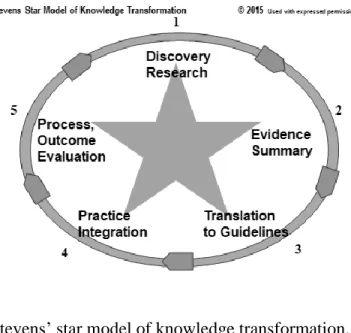
instrument was initially developed based on Bandura’s nursing theory of self-efficacy and a national consensus on EBP competencies with sound psychometrics of validity, reliability and sensitivity (Saunders et al., 2016). The tool uses the Stevens Star Model of Knowledge Transformation for its framework and scoring which, can be broken down into five areas or subscales (figure 1). Used with permission
Figure 1. Stevens’ star model of knowledge transformation. Used with permission. ©2015 Stevens.
The composite subscale scores for internal consistency reliability coefficients created for EBP self-efficacy in the basic competencies were found to be >0.90 (Stevens, 2009). Saunders et al., (2016) confirmed face and content validity of the instrument by an expert panel of nursing scientists, clinicians, educators, and leaders. Permission to utilize the survey tool was received on September 18, 2017 from the survey author prior to deployment of the instrument to the site’s nurses on December 11, 2017.
The initial segment of the survey contained 20 basic EBP self-efficacy or confidence questions with seven of these questions specifically related to CPGs. The survey aligns with the Stevens Star Model of Knowledge Transformation. Stevens (2009) notes that the model shows various kinds of knowledge in a cycle as evidence from research is combined with other knowledge to be integrated and put into practice. The five points of the Star Model of Knowledge Transformation are discovery research, evidence summary, translation to guidelines, practice integration, and process, outcome evaluation (Stevens, 2009). Survey questions called for the participant to rate or score his/her level of confidence with each statement on a Likert type scale from 1 (very little confidence) to 6 (a great deal of confidence). Total scores could potentially range from 20-120. The next portion of the survey assessed EBP knowledge and evaluated the number of correct answers from 15 multiple-choice questions. The last component of the survey assessed participant demographic information. This included information such as age, years of nursing experience, current role in nursing, longevity in the organization, and educational preparation.
Institutional Review Board (IRB) approval was obtained from the Walden IRB. Support for the project was also obtained from the site’s hospital executive leadership. An introductory letter, which outlined the details and process of the survey, was provided to all potential respondents prior to participation. Completion of the survey indicated the participant’s informed consent. To protect the respondents, minimal personal identifiers were used. The survey was confidential and anonymous without the use of specific identifiers. Additionally, the survey results were aggregated to add another layer of protection toward the participant’s anonymity.
Analysis and Synthesis
Analysis of the survey data was completed using SPSS statistical software. The surveys were screened manually for completeness and missing values. The number and distribution of missing data were evaluated. Only questionnaires that had completed information in both the self-efficacy (confidence) scale and the EBP subject matter knowledge assessment were used in data analysis. One of the 62 surveys returned was deemed incomplete and not used for analysis.
The data was analyzed using both descriptive and inferential statistics.
Descriptive analysis used the total summative scores for self-reported EBP knowledge and self-efficacy levels. Frequencies, means and standard deviation were determined. One way ANOVA testing was utilized to assess if there was a relationship between nurses with different levels of educational preparation and different nursing specialties and levels of EBP knowledge and confidence levels which taken together are measures of readiness. Parametric bivariate correlational analysis was utilized to assess for a
correlation between the overall mean of self-reported confidence scores and the results of EBP knowledge test.
Summary
Using the ERI survey for the registered nurses in the tertiary hospital provided information that explored and provided answers to the current state of readiness to employ EBP/CPGs. The survey was administered to employed nurses in a paper format. Participation was voluntary and participants’ identities were protected. Data was secured and the integrity maintained. Descriptive and inferential statistics was used for data analysis. The data provided the evidence necessary to develop plan recommendations that will ultimately enhance the potential for successful CPG implementation and adoption.
Section 4: Findings and Recommendations
Introduction
Use of EBP to deliver bedside care is limited at the hospital site. The hospital’s nursing leaders surmise that this gap in providing EBP is in part related to the current lack of appropriate and up to date CPG resources. Currently, the CPGs in use at the facility are outdated and over 13 years old. Nursing leaders at the site also believe that the hospital’s nurses may possess a lack of EBP knowledge, thereby contributing to the limited use of EBP. While the organization is dedicated to supporting the use of EBP for patient care and plans to implement updated CPGs in the future, the success of
implementation and adoption of EBP through CPGs are not guaranteed and use can be influenced by many factors. One of these factors is the current state of nurses’ EBP knowledge and readiness to use and employ CPGs. Therefore, the purpose of the project was to assess and answer the practice-focused question: What is the current state of readiness for registered nurses to implement evidence-based practice with clinical practice guidelines? Results from the current state assessment provide essential insight that will enhance the organization’s success with implementation and adoption of EBP/CPGs.
Current evidence that supported the context of the project was obtained by searching through databases, which included CINAHL, OVID Nursing Journals, MEDLINE, PubMed, ProQuest, Joanna Briggs Institute EBP, and National Guidelines Clearinghouse. A comprehensive list of topics was created prior to beginning the project
to ensure the sources of evidence in published articles and literature supported the premise of the project. These topics included EBP/CPGs, barriers, and readiness to employ EBP in nursing care.
In addition to previous published research, new evidence was generated using the ACE-ERI. The paper-based survey was administered to medical-surgical, progressive, and critical care nurses. Original evidence was obtained that included information and data specific to the nurses’ beliefs and attitudes related to the use of CPGs and knowledge of EBP. The data obtained from the survey results were assessed and analyzed using both descriptive and inferential statistics.
Findings and Implications Respondent Demographic Characteristics
A total of 61 RNs completed the ACE-ERI survey. Nurses from medical-surgical,
progressive care, and critical care settings participated. The majority (52%, n = 32) of
nurses who responded work in a progressive care setting, with the next highest response
rate from critical care nurses (33%, n = 20; see Table 1). Medical-surgical nurses had the
lowest response rate (15%, n = 9). However, this is most likely related to a greater
proportion of progressive care units in comparison with medical-surgical units in the
hospital. Most of the respondents were female (85%, n = 52). The vast majority of nurses
(95%, n = 56) were identified as bedside nurses or clinicians, while only a small
percentage (5%, n = 3) were identified to be in administrative type roles.
There was a wide range of years of nursing experience for the respondents (see
nursing experience, while 12% (n = 7) reported more than 21 years of nursing experience.
In addition, 72% (n = 42) reported they have only been employed at the tertiary hospital 5
years or less. A little less than half (49%; n = 29) of the respondents reported a
baccalaureate degree as their highest level of education. More than three quarters (76%, n
= 46) of the nurses responded that they work full time between 36-40 hours per week,
while 15% (n = 9) work part time between 20-35 hours weekly and 8% (n = 5) reported
working more than 40 hours per week. The average number of hours worked per week is approximately 37 (Standard Deviation (SD) 5.9).
Table 1
Characteristicsof RNs Participating in ERI-ACE Survey
Characteristics N (%) Characteristics N (%)
Age (years) Gender
19-25 3 (5%) Female 52 (85%)
26-35 33 (54%) Male 9 (15%)
36-50 17 (28%) Highest Degree Earned
51-60 6 (10%) Associates Degree/Diploma 25 (42%)
Over 60 2 (3%) Baccalaureate 29 (48%)
Years of nursing experience Masters 3 (5%)
0-5 34 (56%) Doctorate 0
6-10 13 (21%) Other 3 (5%)
11-15 5 (8%) Race/Ethnicity
16-20 2 (3%) Caucasian 46 (82%)
21+ 7 (12%) African-American 3 (5.4%)
Primary role in nursing Asian 4 (7.1%)
Administrator 3 (5%)
An assessment of the internal consistency reliability of the ACE-ERI survey tool used for the project was completed using Cronbach’s alpha. The overall alpha reliability for the tool was .97. Alpha reliability using Cronbach’s alpha was also used to assess the subscale scores of the tool that were categorized based on Stevens Star Model of
Knowledge Transformation which are discovery research, evidence summary, translation to guidelines, practice integration, and process, outcome evaluation. The alpha reliability results for each category were as follows: discovery .92, evidence summary .93,
translation .87, interpretation .93 and evaluation .86.
Respondents’ Perceived and Actual EBP Knowledge
The nurses were divided into four groups based on their self-reported perceived rating of EBP knowledge. The groups were defined as no knowledge, beginning,
intermediate, and advanced levels. The results showed that 47% (n = 28) of the nurses
rated their personal EBP knowledge at a beginner level. The next largest group, 45% (n
= 27) reported their EBP knowledge to be at an intermediate level. 5% (n = 3) and 3% (n
= 2) rated their EBP knowledge as no knowledge and advanced knowledge respectively. The nurses’ actual knowledge was assessed and analyzed using the ACE-ERI EBP knowledge test, which consisted of multiple choice questions (see Table 2). Understanding the nurses’ EBP knowledge level is a significant consideration as the organization plans to move forward with implementation of EBP through CPGs. Evaluation and analyses were completed using the total number of questions answered
correctly with a potential range from 0 to 15. The actual range of correct responses from
the nurse respondents was 1 to 12 (n = 61). The average number of correct responses to
the EBP knowledge questions was 7.86 (SD 2.3, n = 61). If these findings were viewed as
a test or examination in a school environment, the mean total score would reveal a non-passing score of 52%. 10% of the nurses (n=6) would have achieved a non-passing exam score. The mean total correct score was also analyzed by nursing specialty and
educational preparation. Critical care nurses showed the highest mean 8.3 (SD 1.7, n =
20,) followed by medical-surgical nurses at 8.0 (SD 2.4, n = 9) and progressive care at
7.56 (SD 2.6, n = 32). However, a one-way analysis of variance (ANOVA) test did not
reveal the nurses’ area of specialty to have a statistically significant impact on the actual
EBP knowledge score F (2,58) = .635, p =.534. Nurse prepared at the Masters level had
the highest correct score mean of 10.3 (SD .57, n = 3). The next highest mean was found
in the Baccalaureate nurses at 7.96 (SD 2.1, n = 29), followed by ADN prepared nurses at
7.76 (SD 2.06, n = 25). The educational preparation of the nurses also did not reveal a
statistically significant impact on the EBP knowledge score through one way ANOVA at
F(3,56) = 1.32, p = .275.
Examining the individual EBP Knowledge Test responses revealed the nurses’ highest knowledge level supports an understanding that using a summary of research generated knowledge provides a strong basis for clinical decision-making and that evidence-based CPGs are a form of EPB practice most useful to clinicians in the practice setting. The nurses’ responses showed the lowest number of correct answers in
additional area of concern was reflected by the number of nurses (59%, n = 36) who were not able to identify patient preferences as a source of knowledge needed to individualize care during evidence-based interventions (see Appendix A).
Table 2
Frequency of Correct Answers for EBP Knowledge Test Scores
Question Respondents (n=) Frequency (f) Percentage (%)
1 61 50 82.0% 2 61 29 47.5% 3 61 46 75.4% 4 61 37 60.7% 5 61 23 37.7% 6 61 39 69.9% 7 61 50 82.0% 8 61 25 41.0% 9 61 35 57.4% 10 61 14 23.0% 11 61 13 21.3% 12 61 16 26.2% 13 61 17 27.9% 14 61 48 78.7% 15 61 38 62.3%
Results of the EBP knowledge test do not fully align with the nurses’ self-identified rating of EBP knowledge. These results showed 50% of the nurses surveyed reported a perceived knowledge of either intermediate or advanced knowledge of EBP.
While in actuality, the low scores reflect a limited knowledge base, which indicates that the organization may be well served to provide some foundational education related to EBP prior to implementing the CPGs. Without a sound foundation of EBP knowledge, it may be unrealistic to expect and achieve successful adoption and/or full comprehension of what evidenced based practice means.
Respondents’ Confidence Levels
Nurses’ self-efficacy levels were obtained by the results of respondents’ utilizing a Likert type scale to answer 20 questions pertaining to skill level in employing EBP. The total possible scores could range from 20-120, the higher the score the more confident the nurse felt to employ the skills of EBP. The actual range for the respondents was 24-120. The mean self-efficacy score for all respondents was 78.93 (SD 21.98, n=61).
Mean self-efficacy scores were differentiated by specialty and educational
preparation of the nurses. Med-surg nurses held the highest confidence mean scores at 87 (SD 15.14, n=9) followed by critical care nurses at 82 (SD 20.39, n=20) and progressive care nurses at 74.68 (SD 24.02, n=32). One-way ANOVA assessing the nurses’ specialty did not support a statistically significant impact on the confidence scores, F(2,58) = 1.43, p=.247. Masters prepared nurses were identified to have the highest mean score at 100.66 (SD 17.78, n=3). The next highest mean score was 80.37 (SD 19.01, n=29) held by the Baccalaureate prepared nurses, followed by 75.08 (SD 22.18, n=25) by ADN prepared nurses. It was also noted the nurses’ educational preparation did not have a significant impact on the confidence level through one-way ANOVA analysis F(3,56) = 1.94, p=.132. It should be noted that utilizing the educational preparation as a