A SUPPLEMENTAL READING MODEL AND THE READING ACHIEVEMENT OF SECOND GRADE STUDENTS
by
M. Kennedy Norungolo Liberty University
A Dissertation Presented in Partial Fulfillment Of the Requirements for the Degree
Doctor of Education
Liberty University October 2011
A supplemental reading model and the reading achievement of second grade students By M. Kennedy Norungolo
A Dissertation Presented in Partial Fulfillment Of the Requirements for the Degree
Doctor of Education
Liberty University, Lynchburg, VA October, 2011
APPROVED BY: Dr. Kenneth Gossett, Chair_________________________________ October 2011
Dr. Meredith Farrow, Committee____________________________ October 2011
Dr. Ron Garner, Committee_________________________________ October 2011
Dr. Scott Watson,
ABSTRACT
M.Kennedy Norungolo. A SUPPLEMENTAL READING PROGRAM AND THE READING ACHIEVEMENT OF SECOND GRADE STUDENTS (under the direction of Dr. Ken Gossett) School of Education, Liberty University, October 2011.
This research examined the effects of implementing a supplemental reading model in second grade in a small rural school. A quasi-experimental design was employed to compare the reading achievement of students who participated in the model and those who did not as measured by growth using the Measures of Academic Progress (MAP) assessment tool. Both groups were from the same rural school district. One group participated in the Language Enrichment and Acceleration Program (LEAP) in addition to regular classroom instruction; the second group participated in independent reading time. Post-test scores for each group were compared using ANCOVA, with pre-test scores statistically controlled. Achievement differences depending on gender and the interaction between research group and gender were also examined. No significant differences were found between the groups. Limitations and implications are discussed and suggestions for further research are included.
Descriptors: Guided Reading, Language Enrichment and Acceleration Program (LEAP), supplemental instruction, small group, second grade.
ii
Dedication and Acknowledgements
This manuscript is dedicated to my family-immediate, extended, and adopted. Thanks to Mom for your constant encouragement and words of wisdom and being my biggest cheerleader. Thanks to my church family, especially David and Shelia, for being my tireless prayer warriors. I thank God daily for being placed on your path-I am a better person for knowing all of you! Thanks to my family of friends for just being there. I am so blessed to be part of such a fabulous circle!
To Kathryn and Dillon, thanks for your patience and understanding when Mom had homework, too, and not complaining too much! You really are the best! And finally, to my awesome husband; thanks for not giving up on me when I wanted to give up on myself. I love you more than words can express. I would not be where I am today without your love and support. You rock!
Much time and effort went into this project above and beyond the work I did and without the following people, this manuscript would not have been possible. Many heartfelt thanks go to Dr. Keen, Dr. Ray, Dr. Levitt and Kathy Johnson, Gena D., Debbie Bullock and Patsy Brown, Myra Elvington, my SAC family, Larry Rogers, Dr. Szapkiw, and my committee-Dr. Gossett, Dr. Farrow, and Dr. Garner. I could not have done it without all of you!
iii
Table of Contents
Dedication and Acknowledgements ... ii
List of Tables ... v
List of Figures ... vi
List of Abbreviations ... vii
CHAPTER ONE: INTRODUCTION ... 1
Background ... 1
Problem Statement ... 5
Purpose Statement ... 6
Significance of the Study ... 6
Research Questions ... 7
Research Hypotheses ... 8
Identification of Variables ... 9
Definition of Key Terms ... 9
CHAPTER TWO: REVIEW OF THE LITERATURE ... 12
Introduction ... 12
Theoretical Framework ... 13
Review of the Literature ... 15
Background ... 15
Teacher preparation ... 17
Reading Recovery ... 18
Balanced Literacy ... 20
Guided Reading ... 23
Small group instruction ... 24
LEAP ... 27
Male and Female Learners ... 29
Conclusion ... 32
CHAPTER THREE: METHODOLOGY ... 34
Introduction ... 34
Participants ... 35
iv
Instructional settings ... 37
Instrumentation ... 38
The assessment... 38
The scoring instrument ... 39
Validity ... 40
Procedures ... 40
Research Design ... 41
Data Analysis ... 42
CHAPTER FOUR: RESULTS AND FINDINGS ... 43
Introduction ... 43
Data Analysis Procedure ... 44
Data Cleaning ... 45
Missing data and univariate outliers ... 45
Tests of normality ... 46
ANCOVA Analysis of Hypotheses 1-3 ... 48
Hypothesis 1 Findings... 49
Hypothesis 2 Findings... 50
Hypothesis 3 Findings... 51
Summary ... 52
CHAPTER FIVE: DISCUSSION OF FINDINGS ... 54
Summary of Findings ... 56
Discussion of Findings ... 57
Implications ... 58
Limitations ... 60
Recommendations for Future Research ... 61
Conclusions ... 62
v List of Tables
Table 1: Inferential Statistics Related to Hypothesis 1 Indicating No Significant Difference Between Groups………49
vi List of Figures
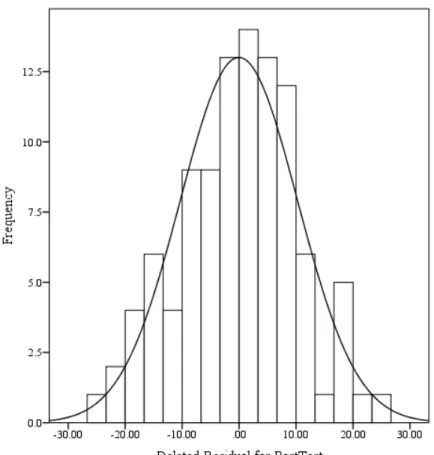
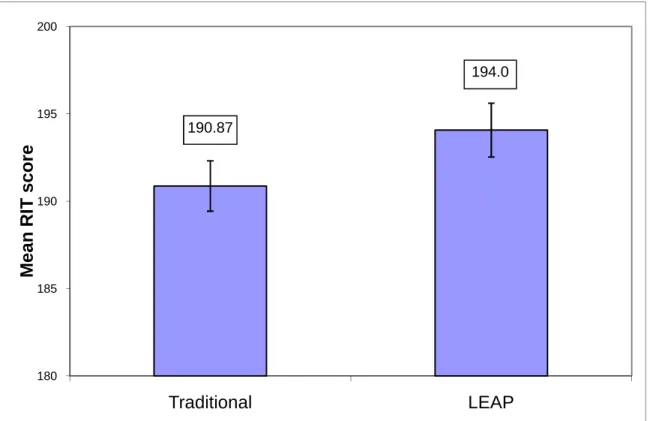
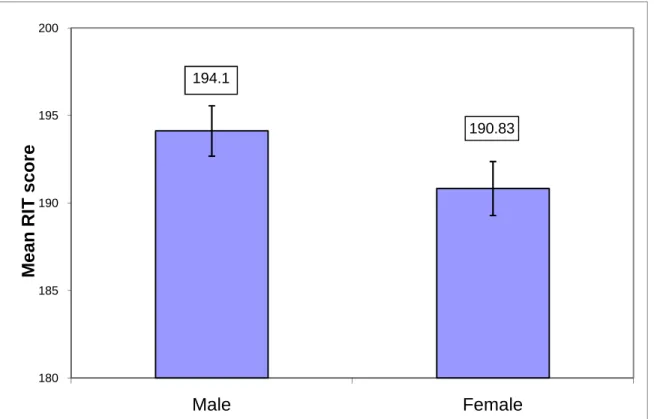
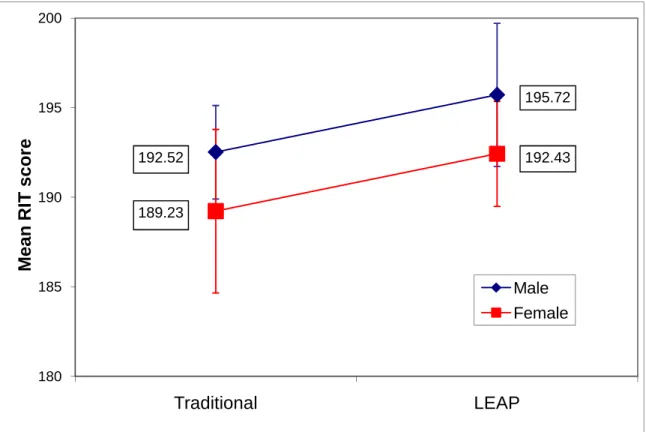
Figure 1: Histogram of the Studentized Deleted Residual Variable with Normal Curve Superimposed………46 Figure 2: Mean RIT scores as a function of LEAP or traditional instruction……….50 Figure 3: Mean RIT scores as a function of sex………..51 Figure 4: Means Plot Indicating no Main Effect of Condition of Sex or Research Group after Controlling for Reading Pre-test Scores………..52
vii
List of Abbreviations Language Acceleration and Enrichment Program (LEAP) Measures of Academic Progress (MAP)
Northwest Evaluation Association (NWEA) Rasch Units (RIT)
1
CHAPTER ONE: INTRODUCTION
Reading is one of, if not the most important, components of school success, and the way reading is taught in the early grades appears to have an effect on later learning (Morgan, Fuchs, Compton, Cordray, & Fuchs, 2008). The best way to teach young children to read has long been debated. Some experts have claimed that children need phonics instruction exclusively, and others claim that a whole language approach is best (Pressley, Roehrig, Bogner, Raphael, & Dolezal, 2002). Evidence is mounting, however, that both sides may be incorrect. Instead, Pressley’s et al. (2002) work indicates that there needs to be a balance between phonics and whole language, and that is where the balanced literacy approach has gained attention. Components of balanced literacy are providing instruction a) on the student's ability level, b) in a small group setting, and c) in a supportive learning environment. This current research examines the effects of a supplemental model, Language Enrichment and Acceleration Program (LEAP), which reflects the components of the balanced literacy approach, including its intent to provide a rich literature experience for children. Implementing such an approach may increase student success in reading performance and foster a love of reading for future enjoyment and growth.
Background
Educators may sometimes seem impatient when it comes to seeing results because they want programs that work and they want them yesterday. If new programs do not immediately deliver expected or promised results, teachers feel extra pressure to find something that will work (Jeynes, 2008). Lack of immediate results can create an endless
2
cycle of moving from program to program, sometimes without giving a solution time to work effectively. In addition, teachers may not have been encouraged to blend methods and strategies to find best practices. On the other hand, some teachers can be so insecure about change that they have continued to teach “their” way, even if that way did not produce desired results. As Pressley et al. (2002) discovered in their research, some teachers continue to flounder when it comes to reading instruction.
There have been two primary camps in reading education- phonics and whole language (Pressley et al., 2002). Some teachers taught phonics as an isolated subject and relied on drill and practice and repetitive sentences to teach children how to read.
Reading, spelling, and writing were taught separately. Some children were successful; far too many of those who were not successful were referred for special education (Clay, 1993). Later, in the late 80s, the pendulum swung in the opposite direction and educators claimed that the only way to teach children reading was to give them “real books” to read. Unfortunately, some of these educators also believed that children would pick up words if they were exposed to them, foregoing skills instruction. They indicated that children would learn spelling by using “invented spelling” and that they should not be corrected when words were misspelled as that would stifle their creativity. After reading and writing did not improve, educators were once again scrambling to find yet another method to teach reading.
Finally, programs that encompass both phonics and whole language have emerged because researchers were finding that children needed a balance to be successful readers (Pressley et al., 2002). One program adopted by schools in the United States was Reading Recovery (Clay, 1993). Reading Recovery is a very specific, one on one
3
intervention technique. Right away it was easy to see that its greatest benefit (one on one instruction) was also its greatest weakness; not enough children were able to receive the benefit of one on one instruction. As a response to this problem, Classrooms That Work (4-Blocks) was created to give all children the benefit of Reading Recovery strategies in the kindergarten through second grade classrooms (Cunningham & Allington, 1994).
The Balanced Literacy model was later introduced. It seems to include the best of 4-Blocks and appear to have increased effectiveness of reading instruction. It is showing much promise in improving literacy achievement in the early grades (Pressley et al., 2007). The balanced literacy model is also enjoying a long life as it is continuously improved upon and modified; teachers are interweaving all areas of reading and writing instruction. Components of balanced literacy model have demonstrated that providing instruction on a student's ability level in a small group setting and in a supportive learning environment can influence student success in reading performance (Pressley et al., 2002).
In an effort to enhance guided reading in the regular classroom, a supplemental reading model, Language Enrichment and Acceleration Program (LEAP) was created. LEAP has been incorporated in kindergarten and first grade classrooms in some schools (LEAP, 2008). Based on this perceived successful implementation, one school has decided to extend this model into second grade and is the foundation for this research. The LEAP instructional model is similar to two models that were developed earlier (Begoray, 2001; St. John & Loescher, 2001). One model, Early Intervention in Reading (EIR) was adopted by schools in Indiana. In this model, teachers acted as coaches and small group instruction focused on word recognition, fluency, vocabulary, and reading comprehension (St. John & Loescher, 2001). The second model, the Literacy Group
4
Project, grew out of Begory’s (2001) recognition of the inherent flaw in Reading
Recovery; the expense of providing this one-on-one intervention was criticized by many. The Literacy Group Project was developed to incorporate Reading Recovery skills with small groups of children instead of individuals. The LEAP model also attempts to incorporate the Reading Recovery strategies with small groups of children. LEAP combines phonetic work, comprehension skills, and writing with daily small group instruction. These strategies are not limited to the LEAP model, and examining their effectiveness with second grade students will add to the body of literature discussed in Chapter 2. Students are able to work with a teacher on a daily basis in addition to regular classroom instruction, and thus far the response in both kindergarten and first grade has been positive. Unlike the previous two models, all children participate in LEAP, not just those in the bottom quartile (Begory, 2001; St.John & Loescher, 2001) Similar
intervention programs have been researched in the past, but have not included all students in a grade (Begeny, Krouse, Ross, & Mitchell, 2009; Kamps, Abbott, Greenwood, Wills, et al., 2008; McIntyre et al., 2005; University of Oregon, 2008). And even fewer have investigated student achievement above first grade level (Hayward, Das, & Janzen, 2007; Kamps, Abbott, Greenwood, & Arreaga-Mayer, 2007). This research is not a program evaluation, but an examination of strategies that support and enhance regular classroom instruction. No quantitative studies have been done on such a program and determining if the elements of LEAP benefit second grade students will add to the body of literature regarding early reading strategies.
Research also indicates that boys are often less successful than girls in their reading performance, especially in the early grades (Chudowsky & Chudowsky, 2010;
5
Husain & Millimet, 2009; Limbrick, Wheldall, & Madelaine, 2008; Logan & Johnston, 2010; Watson, Kehler, & Martino, 2010). However, the researchers disagree on degree of gap and causes and solutions (Geske &Ozola, 2009; Logan & Johnston, 2010; Tinklin, Croxford, Ducklin, & Frame, 2001). Therefore, a secondary investigation of this current research is to examine the effects of LEAP instruction on male and female students. Problem Statement
Even with implementation of early literacy skills instruction in kindergarten and first grades, there are still students struggling with reading when they get to second grade (Begeny et al., 2009). Research suggests that daily small group instruction (as opposed to weekly small groups) minimizes reading difficulties in kindergarten and first grade students (Bailet, Repper, Piasta, and Murphy, 2009; Kampset al., 2007; Menzies, Mahdavi, & Lewis, 2008). Logically, it follows that such instruction in second grade would continue to improve reading skills in struggling students and enhance reading content for higher achievers (Begoray, 2001). Bailet et al. (2009) taught reading skills in small group settings, noting that small group instruction was 10 times more effective than whole group and found very favorable results from early literacy instruction; thereby, reinforcing the idea that early literacy instruction is important. Because of the lack of research on second grade students, it may be assumed that many interventions are discontinued in second grade (Kamps et al., 2007). Reading instruction is then done in the regular classroom with one teacher either in whole group or in rotating, weekly small groups. The problem that needs to be addressed is whether or not this daily small group instruction would also benefit students in second grade and whether this effectiveness is related to or affected in any way by gender.
6 Purpose Statement
The purpose of this quantitative research is to examine the effectiveness of the LEAP model on the reading achievement of second grade students and to see if there are any differences in the reading achievement of boys and girls. A quasi-experimental design was employed to compare the reading achievement of second grade students who participate in the LEAP model and those who do not as measured by growth using the Measures of Academic Progress (MAP) assessment tool. Differences in MAP scores depending on gender was also evaluated. Two rural schools in the same district were identified for participation in the study. The first school engaged in LEAP instruction for second grade students (experimental or treatment group). Students from the second school engaged in extra independent reading time instead (traditional reading instruction or control group). There were 47 students in the LEAP group and 54 traditional reading instruction group.
Significance of the Study
Small group instruction has been shown to be very beneficial to struggling readers and is one strategy used by many during guided reading instruction (Bailet et al., 2009; Kamps et al., 2007, Pressley et al., 2002; Pressley et al, 2007;). The University of Oregon (2008) conducted a study to show that intensive, small group instruction could enhance reading development in young children. Menzies et al. (2008) notes that the instruction should be focused and comprehensive and related to the child’s needs; the students in that study showed significant improvement with 90% reading on grade level at the end of the year. Sixty-one percent of those were above grade level (Menzies et al., 2008). As part of a grant initiative, some elementary schools in Indiana adopted several
7
literacy programs including Early Intervention in Reading (EIR) (St.John & Loescher, 2001). The EIR program was conducted in small groups and focused on word
recognition, fluency, vocabulary, and reading comprehension, but no numerical data have been reported. All of these studies only conducted the small groups with low achieving students. Conversely, LEAP provides small group instruction for all students, not just struggling readers.
There is ample research on different models and programs of teaching reading (Amendum et al., 2009; Begeny et al., 2009; Vaughn et al., 2009). However, LEAP is a result of infusing Reading Recovery and other teaching models and has therefore not been studied as a whole. Furthermore, LEAP has not been implemented in second grade, so this research provides timely information about the program, its components, and its effects on second grade students’ reading achievements.
Wheldall (2010) found that boys did have more reading problems than girls, but that the difference is not as prevalent as previously thought. LEAP has not been
evaluated from a research standpoint to address the issue of whether it is more or less effective for some students based on their gender, so findings from this study could add to earlier studies.
Research Questions
Three research questions guided this study.
1. To what extent will the reading achievement of second grade students who participate in LEAP be different than those students who do not as measured by the reading assessment portion of the Measures of Academic Progress (MAP)?
8
2. To what extent does gender affect the reading achievement of students who participate in LEAP and those who do not participate in LEAP as measured by the reading assessment portion of MAP?
3. Is there an interaction between LEAP and gender of the student as measured by the reading assessment portion of MAP?
Research Hypotheses
HA1. After controlling for pre-test scores, there is a significant difference in reading achievement for second grade students, as measured by the reading assessment portion of the Measures of Academic Progress (MAP), depending on whether students participated in LEAP, or if they received traditional reading instruction.
H01. After controlling for pre-test scores, there is not a significant difference in reading achievement for second grade students, as measured by the reading assessment portion of the Measures of Academic Progress (MAP), depending on whether students participated in LEAP, or if they received traditional reading instruction.
HA2. After controlling for pre-test scores, there is a significant difference in reading achievement for second grade students, as measured by the reading assessment portion of the Measures of Academic Progress (MAP), depending on gender.
H02. After controlling for pre-test scores, there is a significant difference in reading achievement for second grade students, as measured by the reading
9
assessment portion of the Measures of Academic Progress (MAP), depending on gender.
HA3. After controlling for pre-test scores, the differences in reading achievement for second grade students, across groups (LEAP or traditional reading
instruction), changes depending on gender. There is an interaction between group and gender.
HO3. After controlling for pre-test scores, the differences in reading achievement for second grade students, across groups (LEAP or traditional reading
instruction), does not change depending on gender. There is not an interaction between group and gender.
Identification of Variables
In this study, the independent variables were the daily supplemental instruction in LEAP and the gender of the students (males and females). The supplemental instruction included phonics, fluency drills, written work, and comprehension skills and was
conducted in small groups for 30 minutes daily. Student achievement in the area of reading is the dependent variable and was measured using the Measures of Academic Progress (NWEA, 2010). Previous knowledge, measured as scores on the MAP prior to participating in the intervention, served as a covariate.
Definition of Key Terms
Balanced Literacy- A curriculum approach that incorporates explicit skills
10
Guided Reading- One component of a balanced literacy model when instruction
takes place. Students practice applying skills during this time with a gradual release of responsibility.
Language Enrichment and Acceleration Program (LEAP)- an early intervention,
enrichment, and acceleration program designed for kindergarten and first grade students. It combines the structures and rigorous instruction of Balanced Literacy and Reading Recovery strategies to provide students with an intensive reading and writing program.
Measures of Academic Performance (MAP)- Computerized, adaptive assessments
created by the Northwest Evaluation Association (NWEA) that provide teachers with a grade-independent analysis of a child’s progress. It is given in the fall, winter, and spring in the school district where this research took place.
RIT (Rasch Units)- The scale that is used to measure a student’s academic growth
over time on the MAP. It is divided into equal units and is independent of grade level.
Target Growth- The RIT score a child is expected to make from fall to spring.
This is based on average growth of students of the same age across the country. Summary
This research examined the effectiveness of a supplemental reading model in second grade. A quasi-experimental design was employed to compare the reading achievement of students who participated in the model and those who did not as
measured by growth using the Measures of Academic Progress (MAP) assessment tool. Both groups were from the same rural school district. One group participated in the Language Enrichment and Acceleration Program (LEAP) in addition to regular classroom instruction; the second group participated in independent reading time instead of LEAP.
11
Post-test scores for each group were compared using ANCOVA, with pre-test scores statistically controlled. Achievement differences depending on gender and the interaction between research group and gender were also examined.
Chapter One has provided a brief background of this study and how it relates to the reading achievement of second grade students. Chapter Two discusses relevant literature regarding Balanced Literacy, small group instruction, and male and female learners. Chapter Three outlines the research design and methodology that was used to evaluate the LEAP model’s effectiveness on students’ reading achievement. Chapters Four and Five present the data analyses and the conclusions.
12
CHAPTER TWO: REVIEW OF THE LITERATURE Introduction
How should reading be taught so that children will be successful readers? The literature addresses a wide range of topics and concerns. For example, Wollstonecraft encouraged teaching children to read when they are young to increase their chances of success (Wollstonecraft, 1787). Pestalozzi and Froebel (Brosterman, 1997) pointed out that young children have a thirst for knowledge. Children by nature, want to learn and are excited about learning; teachers have a moral responsibility to encourage that love (Gutek, 2005). The way reading is taught in the early grades appears to have an effect on later learning (McIntyre et al., 2005; Morgan et al., 2008). Examples of effective
reading instruction include differentiated grouping, positive learning environments, explicit instruction, high expectations, and student accountability (Pressley et al., 2007). Skills instruction should be balanced with holistic reading and writing in an effort to maximize learning. Children need explicit instruction and immersion in abundant, enriching literature. They need instruction on their ability level in small group settings, and they require a positive learning environment that encourages a love of reading that will extend past the early years (Pressley et al., 2002). These strategies are apparent in the current research. This chapter will review the literature regarding teacher preparation and practice, Reading Recovery strategies, balanced literacy, supplemental instruction, small group instruction, intervention programs and LEAP, and gender differences in reading achievement.
13 Theoretical Framework
Reading Recovery relies on several theoretical constructs to explain its purpose for literacy instruction (Cox & Hopkins, 2006). Reading Recovery advocates assume that reading and writing are learned behaviors and that building on a child’s strengths makes learning easier. Advocates also assume that systematic observation of students’ reading behaviors and accelerated learning are instrumental for success (Cox & Hopkins, 2006). Many of the same developmental theories support this research because LEAP is based on Reading Recovery strategies.
Vygotsky’s sociocultural theory encompasses problem solving, language, and social interactions (Vygotsky, 1978). He stresses the importance of children being engaged in activities and the importance of increasing a child’s problem solving skills. Vygotsky recommends that children be able to move faster or slower, according to their potential, and he determines that interactions with adults are fundamental to a child’s cognitive growth.
Reading Recovery reflects Vygotsky’s theory in several areas. Reading Recovery works from the belief that children have different levels of understanding in the reading process and that they come to literacy with a wide scope of knowledge (Cox & Hopkins, 2006). The instruction in LEAP is conducted in small groups with children having similar abilities. As Vygotsky recommends, LEAP groups are dynamic; enabling children to move at a pace suitable to their potential. LEAP encourages engagement by incorporating prompts and cues, modeling, participation and encouragement, just as the sociocultural model suggests (Vygotsky, 1978; Wang, 2007). Vygotky’s theory also establishes that social relations and community play a big role in learning (Wang, 2007).
14
LEAP, with its small group setting and frequency of contacts, provides opportunities for student interaction with adults; opportunities which are fundamental to the child’s cognitive growth, according to Vygotsky (Vygotsky, 1978).
The sociocultural theory notes the importance of oral language in the reading process (Cox, Fang, & Schmitt, 1998). Children learn through discussion and transfer the spoken word to the written word (Cox et al., 1998; Cox & Hopkins, 2006). Children need to talk about what they are thinking and doing and this is more effective in a small group setting, as LEAP provides (Wang, 2007).
Closely tied to the sociocultural theory is the social learning theory. According to Bandura, there are four requirements for learning behaviors: attention, retention,
reproduction, and motivation (Bandura, 1989). In LEAP, attention is increased because of the proximity of the students to the source of instruction and to each other; retention is enhanced because of the daily practice of reading skills. Students continually discuss and write about what is read- reproducing the information and motivation is instilled as a function of the successes experienced. The social learning theory takes into account such concepts as observational learning, self-efficacy, and peer reaction to promote learning (Bandura, 1989). The effects of these concepts are particularly noted in LEAP because the small group instruction enables the students to model/observe the instructor’s behaviors and to respond not only to the instructor but to their peers.
Another theory that supports Reading Recovery (and therefore LEAP) is the information processing theory which describes the way children manipulate symbols (Klahr & Wallace, 1976). This theory examines the functions of memory, acquiring strategies, storing knowledge, encoding, generalization, and automaticity (Miller, 2002).
15
All of these functions are addressed in LEAP instruction- on each child’s developmental level. Several media are used in LEAP to teach phonetic structure such as pictures, chunks and sound boxes, magnetic letters, bendable letters, and dry erase markers. Comprehension and fluency strategies are modeled and practiced daily. All of the concepts that are taught in LEAP are carried over to the regular classroom to increase generalization and automaticity.
Review of the Literature
Background. There have been two primary camps in reading education- phonics and whole language (Pressley et al., 2002). The teaching of phonics includes the
decoding and encoding of language components and the relationship between letters and sounds (Ehri, 2003; Mesmer & Griffith, 2005). In the past, phonics was taught as an isolated subject and relied on drill and practice and repetitive sentences to teach children how to read. Phonics was usually taught before sight words and set apart from connected reading. Reading, spelling, and writing were all taught as discrete subjects with basal readers and worksheets (Jeynes, 2008; Mesmer & Griffith, 2005). The primary goal was to teach words in or out of context, apart from comprehension. Phonics instruction had its merits; systematic phonics is particularly helpful for struggling readers who had difficulty decoding words (Daise, 1994; Drecktrah & Chiang, 1997; Ehri, 2003; Jeynes, 2008). Smith (2003) agrees that direct phonics instruction is best for beginning readers, but is only one component of a good reading program. Teachers preferred the direct phonetic instruction, but as Jeynes (2008) points out- it became boring and students lost interest.
16
The pendulum swung in the opposite direction and educators focused on getting children to enjoy reading instead of focusing on correct phonemes and direct phonetic instruction and the whole language movement began (Jeynes, 2008). The whole
language approach emphasizes a literature rich environment as opposed to the traditional skills based instruction. Whole language stresses authentic reading experiences instead of relying on isolated reading skills (Daise, 1994). Whole language lessons embrace a) moving from whole to part, b) a learner-centered attitude, c) reading for meaning and purpose, and d) engaging interaction of groups of students (Adunyarittigun, 1993). Proponents of whole language programs claimed that the best way to teach children reading was to give them “real” books to read. Unfortunately, many also believed that children would pick up words if they were exposed to them, bypassing skills instruction entirely. Ehri (2003) noticed that in many whole language programs instruction in phonics occurred rarely, if at all. Drecktrah and Chiang (1997) found that although a large number of teachers were using the whole language approach, only half considered it to be effective. Some teachers using the whole language methodology indicated that children would learn spelling by using “invented spelling” and should not be corrected when words were misspelled as that would stifle their creativity (Pressley et al., 2002). Studies indicate that this approach can be particularly detrimental to children with learning disabilities (Daise, 1994; Drecktrah & Chiang, 1997; Kamps et al., 2008; Sencibaugh, 2007). Despite these shortcomings, the whole language approach has many favorable characteristics. It introduced high-quality literature to young children instead of repetitive and dull basal books. Students were able to connect to more meaningful texts in whole language (Adunyarittigun, 1993). However, reading and writing
17
improvement continued to be inconsistent and educators once again were searching to find “the” way to teach reading.
Teacher preparation. “Does wisdom not call out?” (Prov. 8:1) It not only calls out to teachers, but it is commanded that teachers impart their knowledge so that others can learn from them (Prov. 15:7). Learning to teach reading is difficult and complex (Leko & Brownell, 2011). There are many factors that contribute to successful reading instruction. Teachers typically have not blended teaching methods and strategies when searching for best practices. Some teachers jump on the bandwagon when a new trend comes along, or they continue to teach “their” way, even if student achievement is static or failing (Podhajski, Mather, Nathan, & Simmons, 2009).
Drecktrah and Chiang (1997) indicated that the most important factor that influenced how teachers teach reading is their teacher training program. However, research has found that many teachers are underprepared to teach reading, even though they are likely to overestimate their knowledge of reading and language skills (Podhajski et al., 2009). Jeynes (2008) also noted that many teacher education programs tend to favor one method or another and do not prepare new teachers adequately to teach
reading. Teachers need an understanding of the structure of the language before they can teach it. Podhajski et al. (2009) suggest that teacher preparation programs should include a solid foundation in theory, concepts for understanding literacy development, and
structure of both spoken and written language. Cox and Hopkins (2006) agree that developing teachers’ knowledge is vital to improve literacy in the schools. It is imperative that teachers understand how the literacy process develops, including emergent and proficient strategies. Teachers have to realize the importance of how
18
theoretical principles relate to good literacy and build on that knowledge to help children be successful readers (Cox & Hopkins, 2006).
Research suggests intensive practicum training for preservice teachers so they will be able to understand how reading ability develops in young children (Leko & Brownell, 2011; Morris, 2011; Podhajski et al., 2009). Morris (2011) believes that if education students are placed in supervised training experiences similar to those of Reading Recovery training, they will better understand how reading ability develops in young children and will be able to adapt instruction to meet children’s needs. Cox and Hopkins (2006) agree that the components of Reading Recovery provide good literacy instruction for all children, not just those struggling to read. Some education students found a gap in what they learn in their coursework and what they actually saw in classrooms (Leko & Brownell, 2011). Many education students do not see the benefit of what they are learning until they are able to apply it in real life settings. Education students need practical and guided experiences in real classrooms with real children where they can reflect on their own efforts and receive feedback from experienced mentors (Cox & Hopkins, 2006; Leko & Brownell, 2011; Morris, 2011). Solid education programs are including Reading Recovery strategies as best practices for all reading teachers (Cox & Hopkins, 2006).
Reading Recovery. Reading Recovery is a program that was adopted by American schools in the early 80’s to bring those lowest readers in the first grade up to grade level with intensive one-on-one supplemental instruction (Pinnell, DeFord, & Lyons, 1988). Clay (1993) stresses that Reading Recovery is not a remediation. This supplemental help is short term, lasting 12 to 16 weeks in most cases, and is designed to
19
increase the child’s independent reading strategies. It only targets those students who are in the lowest 20 percentile of learners. Students are selected based on need and
performance noted on An Observation Survey (Cox & Hopkins, 2006). The Observation Survey includes six measures of reading and writing aptitudes: letter identification, word identification, concepts about print, writing vocabulary, dictation, and text reading. Reading Recovery builds on the child’s strengths and teaches problem solving skills in reading. A wide range of level appropriate books are used and children are actively engaged in writing and reading during the daily 30 minute lesson (Pinnell et al., 1988). The six components assessed in the Observational Survey make up a Reading Recovery lesson and are designed to connect a child’s reading skills with writing skills (Cox & Hopkins, 2006). Students begin with rereading a familiar text, then reading the previous day’s book, word work, writing, reassembling a cut up story, and introduction to a new book. Research has shown that a large percentage of students who discontinued (or graduated from) Reading Recovery were reading at proficient or advanced levels in later grades (Cox & Hopkins, 2006; Gapp, Zalud, & Pietrzak, 2009).
As stated previously, Reading Recovery works with individual students, and only four to ten are serviced during a school year (with one Reading Recovery teacher). Due to the limited number of children who could benefit from Reading Recovery, Classrooms that Work (4-Blocks) was developed in North Carolina (Cunningham & Allington, 1994). This program integrated phonics and “real” reading with writing, encouraged small group instruction, and was probably the first balanced model to be introduced for general classroom instruction. The premise behind 4-Blocks was to immerse disadvantaged children in the literature rich environments that their more advantaged peers already
20
enjoyed. As the name 4-Blocks implies, there are four components to Classrooms That Work: guided reading, self selected reading, writing, and word work (Cunningham & Allington, 1994). This model appears to be very beneficial for children with learning disabilities or other reading difficulties because it encompassed all areas of reading and combined the best of phonics and whole language approaches and equipped children with strategies to improve their own reading (Cunningham & Allington, 1994). The 4-Blocks model continues to be used in some schools (St.John & Loescher, 2001).
Balanced Literacy. With the intention of continuing the effectiveness of reading instruction, the Balanced Literacy model emerged in the late 90’s (Pressley et al., 2002). This model is similar to the 4-Blocks model, but it seems to have been more widely acknowledged as a tool to increase literacy in young children. It is showing considerable promise in improving literacy achievement in the early grades (Pressley et al, 2007). It is also enjoying a long life as it is being improved upon and modified.
Like Reading Recovery, Balanced Literacy is grounded in the belief that a) all children can learn to read and write, b) literacy is a social process, c) oral language is the foundation of literacy development, d) modeling is crucial, and e) student learning is maximized when they assume responsibility (Linder, 2009). Balanced Literacy has definitely caught on with educators, especially those in the lower grades (Pressley et al., 2002). Schools that are consistently producing high reading and writing achievement scores attribute that to a balanced reading approach. Researchers note that teachers in those schools could just be very skilled at teaching reading and writing, but they noticed similarities in other high achieving classrooms they visited (Pressley et al., 2007).
21
Pressley et al. (2002) suggest that balanced instruction actually means a lot of skills instruction in the context of a holistic environment and that has been shown to positively impact reading achievement. In addition, the National Reading Panel argued in its 2000 report that balanced programs were the preferable method to teach reading (Iaquinta, 2006). Even during the whole language movement, Joslin (1994) noticed that a modified whole language approach- one that included intensive instruction in phonics- was more beneficial to students than a pure whole language model. Another study concluded that 70% of teachers believed that a combination of direct instruction and whole language approaches was most effective and often overlap (Drecktrah & Chiang, 1997). More recent research has also indicated that when direct skills instruction is combined with comprehension strategies, positive effect on student achievement is significant (Ehri, 2003). Linder (2009) examined several successful models of reading instruction and stated that they all had balanced frameworks. The ones she reviewed included some form of guided reading instruction, independent reading, writing
components, and small group configurations. She also expressed that oral language is the foundation of literacy development and is essential to the learning process (Linder, 2009). The importance of well developed oral language skills was also noted in earlier research as a bridge to written literacy (Cox et al., 1998). Learning (and therefore literacy) begins with listening, as shown by the framework for Balanced Literacy. It was the job of the priests in the Old Testament to read Scripture to the people because they could not read it themselves. The people had to listen, just as young children have to listen to learn today. As Linder (2009) points out, oral language is an integral part of the balanced literacy model and teachers read aloud to students every day (many more than once). Reading
22
and writing are extensions of oral language, so communication should be modeled and practiced regularly (Cox & Hopkins, 2006). Children in balanced classrooms appear to have more opportunities to increase their oral expression, especially if working in small groups. They learn what good reading sounds like and will be able to internalize those voicing techniques when they read.
Effective reading instruction in balanced classrooms includes differentiated grouping, positive learning environments, explicit instruction, high expectations, and student accountability (Pressley et al., 2007). Skills instruction is balanced with holistic reading and writing. In balanced classrooms, children are encouraged to monitor and reflect on their own learning (Pressley et al., 2007). Reading is a priority and small group instruction is predominant. The curriculum is reading and writing focused. Students experience many, many books and there is explicit instruction in phonics skills. Spelling and vocabulary are taught continuously and in context. Students are taught
comprehension strategies by modeling and frequent practice and there is a commitment to individualized instruction (Pressley et al., 2007). Sencibaugh (2007) notes the
importance of reinforcing basic reading skills and suggests that these specific interventions can produce significant results in reading.
Another strategy that is included in Reading Recovery, balanced literacy, and in LEAP is connecting reading with writing. Writing is the slowest activity of the literacy process as children transcribe their ideas into words (Cox & Hopkins, 2006). In years past, some teachers have taught writing as a separate subject, and may continue to do so today. In a balanced classroom, however, the two are integrated and also correlated to other subject areas. Teachers are establishing one focus across the disciplines so that
23
students can make the connection between what they have read and what they write (Rickards & Hawes, 2006). Establishing this focus helps students a) set a purpose for reading, b) see how it affects their own writing, c) read like writers, and d) notice what is common in good writing (Rickards & Hawes, 2007). Children need to see how
everything fits together and that will, in turn, increase their production and achievement. Reading and writing are interrelated processes and children can make a wealth of
connections when doing both (Cox & Hopkins, 2006). Reading and writing about what is read are important daily components of Reading Recovery and LEAP.
Guided Reading. Guided Reading is an important instructional element of Balanced Literacy and was a component of 4-Blocks. It is cited as being best practice for reading instruction (Iaquinta, 2006). It is teacher directed and done in small groups. The purpose of guided reading is to teach students to read increasingly difficult texts with understanding and fluency (Iaquinta, 2006). In this component, students are taught comprehension strategies; it is most beneficial in groups of children with similar strengths and needs (Avalos, Plasencia, Chavez, & Rascon, 2008). The guided reading component allows students to learn and practice applying reading strategies while the teacher provides a gradual release of responsibility. The goal is to equip students with a self-extending system that includes self-monitoring, searching for clues, self-correcting, and checking their sources (Iaquinta, 2006). It is also a time for teachers to observe and document reading behaviors and assess students’ learning. In Reading Recovery, daily running records are taken so that teachers can see what mistakes the child is making and then tailor instruction to fit his/her needs (Cox & Hopkins, 2006). Likewise, observations in LEAP can be collected on a more regular basis because the students are in small
24
groups. Avalos et al. (2008) encourage using an interactive reading model to relate students’ backgrounds to the texts or discussing the story and the vocabulary as the text is read to ensure understanding. If done correctly, guided reading is the last stepping stone to independent reading (Guastello & Lenz, 2005).
In the regular classroom, however, these small groups can only meet with the teacher once or twice a week. Ankrum and Bean (2008) found that most teachers agreed that small homogeneous groups were most effective, but they were difficult to manage. Because implementing guided reading into their program was a practicality and
management challenge, Guastello and Lenz (2005) established “kidstations” for the groups that were not meeting with the teacher. All of the activities are centered on
speaking, listening, writing, and reading and are introduced and modeled in the beginning of the program. These stations sound interesting for middle to high achieving students, but are the struggling learners improving as much when working independently? Is the teacher-student connection being met?
Small group instruction. Researchers have noted the importance of small group instruction to the reading success of young children (Amendum et al., 2009; Bailet et al., 2009). They note that students in small groups have more opportunities to practice skills and receive more feedback from the teacher (Helf, Cooke, & Flowers, 2008). Bailet et al. (2009) held that successful interventions could begin as early as 4K. In their study, the instruction was developmentally appropriate for 4 and 5 year olds and included lots of movement, multisensory lessons, oral language, and emergent writing activities. They found very favorable results from the early literacy instruction, thereby reinforcing the idea that early literacy instruction in small groups is important (Bailet et al., 2009).
25
Kamps et al. (2008) found similar results when 40% of the kindergarten students reached reading benchmarks because of the intensive instruction done in small groups. Research agrees that whole group teaching cannot meet the needs of all the students. When groups are arranged homogeneously, teachers can target the skills that those children need to use more effectively (Ankrum & Bean, 2008). Iaquinta (2006) agrees that small group instruction is most beneficial because teachers are able to focus
specifically on what the students need to ensure progress.
Small group instruction has also been shown to be very beneficial to struggling readers and children with learning disabilities and it is a strategy used by many teachers, especially in special education. Sencibaugh (2007) suggests using a scaffolding
technique in small groups because it increases active participation in the learning process and therefore increases reading achievement. In his model, students learn comprehension strategies with simple materials to ensure success. Then students practice strategies with increasingly difficult text as the teacher fades instructional supports. LEAP lessons are similarly structured.
Two factors that are related to effective reading instruction are how much time and knowledge general educators have to devote to teaching reading and to what extent other personnel are able to provide daily instruction to students (Helf et al., 2008). To utilize personnel and optimize small group instruction, co-teaching with a special educator is an option that some schools are taking. Co-teaching in the LEAP model has had several positive attributes. In this cooperative model, the classroom teacher, the special educator and the reading specialist share the teaching of all the students. Having more than one teacher enhances the instruction for both children with learning disabilities
26
and their at risk peers by providing a wider range of instructional practices and reducing the stigma associated with needing help in the classroom. Co-teaching has been one way to intervene and give extra support to children who are not receiving special services, or children who are at risk of failing.
One popular co-teaching method is the station or parallel teaching. Station teaching occurs when both the classroom and the special education teachers are teaching small groups and the children rotate through the groups during the class time. Parallel teaching is similar in that both teachers are teaching the same subject matter to smaller groups of children, but students do not rotate through the groups (Kloo & Zigmond, 2008). These methods are more appealing than other co-teaching models such as the “one teaching/ one assisting” method or the “team approach” method, when both teachers teach the whole group together. Station or parallel methods appear to offer a greater benefit to children with learning disabilities and students with other difficulties that have not yet been identified. Of the co-teaching methods, parallel teaching is cited as the best one to reach struggling students (Kloo & Zigmond, 2008). LEAP classes are similarly structured. There are three to four instructors in a LEAP class, including a special
educator, and they are teaching similar material and skills while still meeting the needs of students in their particular small group. As Kloo and Zigomond (2008) suggest, utilizing other staff is a creative, yet effective way to meet the needs of young students.
Could continuing this daily, small group instruction using LEAP in second grade further improve students’ reading achievement? Research suggests that it can, although it has not yet been demonstrated with second grade students (Begoray, 2001). One study found that students who received daily supplemental instruction scored significantly
27
higher than those who did not receive extra instruction (McIntyre et al., 2005). Helf et al. (2008) found that small group instruction was even more effective than one-on-one instruction. McIntyre et al. (2005) suggest that some children need more time in smaller groups to progress, regardless of the quality of the regular classroom instruction.
Another study proposed that small group instruction may be more effective than whole group instruction because it increases active responses and student engagement (Amendum et al, 2009). They also found in that study that grouping students according to their needs and providing more coaching was even more beneficial to struggling readers. Ankrum and Bean (2008) also point out that the formation of these groups is flexible and changes according to the skill or the strategy that is needed. Dynamic groups accommodate different learning paths and allow students to support one another and feel a part of a community (Iaquinta, 2006). A different study found that reading gaps decreased in classes that utilized small groups of three to six students as opposed to whole class groupings (Lo, Wang, & Haskell, 2009). Additionally, Begeny et al. (2009) evaluated several aspects of small group instruction including repeated reading, listening passage review, and listening only strategies. They found that the repeated reading feature yielded higher gains in second grade students’ reading achievement. Kuhn and Schwanenflugel (2006) agree: repeated reading is especially beneficial for struggling readers. LEAP instruction makes use of all of these strategies and appears to be a promising model for increasing student reading achievement in second grade.
LEAP. As an extension of the guided reading component, Language Enrichment and Acceleration Program (LEAP) was developed to meet not only the needs of students who are weak in reading and writing, but also those who are reading at or above grade
28
level, which has not been addressed in previous research (LEAP, 2008). LEAP
coordinators merge Reading Recovery strategies with 4-Blocks instruction. Students are tested and placed in groups according to similar ability levels. The groups are flexible and assessments are given on a regular basis during the year. There are three to four teachers in each LEAP class, including the special education teacher, and the coordinator plans for and assigns the groups.
LEAP has been a welcome addition to the regular classroom instruction in several ways. Every child in kindergarten and first grade benefits from Reading Recovery strategies. All students are challenged at their instructional level and each child is able to work with a teacher daily in addition to having regular classroom instruction. Effective lessons are planned and an increased number of first graders are leaving the program reading at or above grade level (LEAP, 2008). So, it stands to reason that this small group instruction would continue to benefit children when they are in second grade.
LEAP is similar to some other reading models. The Early Intervention in Reading (EIR) was an initiative to improve reading achievement in Indiana (St. John & Loescher, 2001). Like Reading Recovery (which those schools also use), EIR is a pull out program that targets the students falling in the 20th percentile for reading achievement. Teachers are considered as coaching students in areas of decoding and comprehension. Lessons include choral or echo reading, discussion of reading, and writing (St. John & Loescher, 2001). Again, this program targets those students who are struggling in reading and that is the major difference between EIR and LEAP; LEAP groups are designed to increase reading achievement in all students, not just struggling readers.
29
A second, even more comparable, program has been implemented in Canada (Begoray, 2001). This program also targeted those students who were struggling readers in second grade. Like LEAP, this program was also based on Reading Recovery and used those strategies with small groups instead of individual students (Begoray, 2001). In the second year of the program, all but one of the students met or exceeded the standard achievement. Resource teachers who had previously been trained in Reading Recovery planned for and implemented the treatment (Begoray, 2001). Likewise, the LEAP coordinator at the current research setting is a trained Reading Recovery teacher. She plans all lessons for all groups and also teaches a group during the LEAP times. One coordinator plans for all the classes, freeing the classroom teacher to focus on classroom instruction. LEAP productively utilizes all personnel to maximize learning and relationships.
Male and Female Learners
Research suggests that boys more so than girls experience difficulty in reading (Geske & Ozola, 2009; Limbrick, Wheldall, & Madelaine, 2008; Logan & Johnston, 2010; Tinklin, et al., 2001). Studies have previously noticed that girls have tended to outperform boys in reading, but not math (Chudowsky &Chudowsky, 2010; Husain & Millimet, 2009). In a 2008 report, girls outperformed boys in reading at every grade level tested and boys have made less progress in catching up to the girls since
(Chudowsky & Chudowsky, 2010). The reasons for their differences, however, are less clear. Some researchers feel that it is because the definition of reading disability varies significantly among educators (Limbrick et al., 2008). Logan and Johnston (2010) say that there is a cognitive difference between boys and girls and that they learn to read
30
differently; boys appear to benefit more from phonetic strategies when reading. Still other research found that there were multiple factors affecting boys’ reading
achievement: school environment, preschool skills, parents’ education, and reading outside of school (Geske & Ozola, 2009; Tinklin et al., 2001).
How teachers teach reading will obviously have an effect on how students learn. One study recommended using a learning style inventory so that teachers could
accommodate for the different learning styles (Reiff, 1984). The Reiff study (1984) found that 31% of children prefer visual learning in a structured environment. LEAP uses many visual modalities and should appeal to visual learners. A later study found that boys tend to prefer practical reading as opposed to fiction which is what is used in most elementary classrooms (Boltz, 2007). There is a movement from fictional stories to non-fiction articles in the lower grades and this is evidenced by the type of texts that the LEAP coordinator selects for each group. LEAP instructors use reading material from several different genres, including non-fiction.
Another study offers similar recommendations: teach by using a wide variety of learning styles and review learning at the end of the lesson (Tinklin et al., 2001). The study conducted in Scotland found that students’ interaction with as well as
teacher/student relationships played a major role in the performance of both genders. LEAP softens the environment and enhances these relationships due to the intimate nature of the small group setting.
Other suggestions to consider include classroom interactions, providing a variety of assessment models, flexibility and effects of peer pressure (Tinklin et al., 2001). Several studies contend that the school environment can have an effect on students’
31
motivation and achievement (Mann, 1994; Watson, Kehler, & Martino, 2010). Geske and Ozola (2009) also suggest that the school environment has a significant effect on boys’ reading achievement, so the smaller group size of LEAP should provide more successful instruction.
Peer pressure can be more detrimental to boys’ success in whole class situations. Watson et al. (2010) feared that many boys shy away from reading because it made them look nerdy or feminine. Tinklin et al. (2001) suggest that boys tend to dominate in whole group settings either positively or negatively. Mann (1994) agrees that boys command more attention in whole group settings, therefore reinforcing the idea that smaller groups of students will perform better. Only a few older studies addressed how girls acted in whole group settings (Mann, 1994; Theberge, 1994). Theberge (1994) contends that girls talk much less than boys in whole group situations and Mann (1994) says that boys tend to answer out more while girls raise their hands and wait to be called on. She also found that girls receive less attention and less constructive feedback in whole class situations (Mann, 1994). Watson et al. (2010) later confirmed this and suggest learning
environments where both genders are free to express themselves without social repercussions. Conversely, both boys and girls should benefit from the small group interaction that does not happen in whole group settings. LEAP promotes a more intimate atmosphere for social interaction so that students can become more independent learners. Building strong teacher-student relationships is a recommendation for increased student success and can be more effectively achieved in a smaller group (Tinklin et al., 2001). LEAP also encourages more interaction and engagement that can improve attention problems that might occur in a whole class setting (Logan & Johnston, 2010).
32
Sullivan (2009) advises finding creative programming ideas to match boys’ interests and establishing a blueprint for boys and reading. This could include non-fiction sources that appeal to boys as Boltz (2007) recommends. Because LEAP is done in addition to regular reading instruction, both boys and girls benefit from two different environments and teaching arrangements. The LEAP coordinator carefully selects reading material for each group and LEAP also uses a variety of formats to actively engage every child.
Conclusion
As previously stated, all students in kindergarten and first grade are being touched by Reading Recovery strategies as presented in LEAP. However, budget cuts and
financial woes threaten to eliminate the LEAP model in some schools. The anticipated finding that the daily small group instruction is significant in producing high reading achievement is important because the existence of the program is at stake. Currently, most intervention and supplemental models thathave been researched have only done so using the bottom quartile of learners (Avalos et al., 2008; Begeny et al., 2009; Begeny et al., 2010; Begoray, 2001; Kamps et al, 2007; Kamps et al, 2008; Lo et al., 2009; Vaughn et al., 2009). LEAP plans for all students in kindergarten, first, and now second grades. Providing information that indicates growth in student reading performance should underline the value of LEAP and could result in its continuance and expansion into more second grade classrooms.
Positive results from the school year 2009 indicate that this model enhances the instruction that takes place in regular kindergarten and first grades. Similar results could be found in the second grade classrooms. By employing the quasi-experimental design,
33
results from the treatment school can be compared to those of another school that do not have the daily small group instruction in second grade; such comparison should further indicate the strength of the LEAP model.
Teachers are always analyzing and evaluating their effectiveness as reading instructors (Linder, 2009). One local school appears to have improved their reading program by utilizing the balanced literacy framework and incorporating LEAP in
kindergarten and first grade. The resource teacher noticed a marked improvement in how children attack words, how they are more motivated to read, and how they are making connections in their reading and writing. It is also exciting for the classroom teachers to see their students learning and growing. Expanding the LEAP into second grade can only further increase student achievement and teacher satisfaction.
34
CHAPTER THREE: METHODOLOGY Introduction
The purpose of this research study was to examine the effects of a supplemental reading program, LEAP, on the reading achievement of second grade students.
Furthermore, the impact of gender on student’s achievement outcomes is addressed. The LEAP model has enjoyed success in the kindergarten and first grade classrooms in increasing student reading achievement by incorporating targeted instruction in a daily small group setting. Research suggests that this continued supplemental instruction in second grade could continue to improve reading achievement and bridge the gap more smoothly from second to third grade (Amendum et al., 2009; Begeny et al., 2009; Vaughn et al., 2009). Research also suggests that the strategies in the LEAP model are specifically more supportive of boys’ learning styles (Tinklin et al., 2001).
Three research questions guided this study. First, will there be significant
differences in the reading achievement of second grade students who participate in LEAP and those students who do not as measured by the reading assessment portion of the Measures of Academic Progress (MAP)? Secondly, to what extent does gender affect the reading achievement of second grade students as measured by the reading assessment portion of MAP? Lastly, is there an interaction between group and gender, meaning do differences in post-test achievement scores for each group, change depending on gender? This chapter will discuss the procedures, the research design, and the data analysis of this study.
35 Participants
The participants for this study were selected from a larger population of second grade students from elementary schools in one rural upstate South Carolina school district. Power School, the district’s attendance program, provided the demographic information without compromising student anonymity. The design of this study was quasi-experimental. A true experimental design was not possible because group
membership (LEAP or traditional reading instruction) and gender (male or female) were both preexisting variables and were not manipulated by the experimenter. A convenience sampling method was used to sample students. Three, intact second grade classes from a school that used the LEAP method in addition to classroom reading instruction were identified and used as the experimental group and three intact second grade classes from a school that used a traditional method of reading instruction and no supplemental instruction were identified and used as the control group. The control school was selected because it was most similar to the treatment school in terms of class sizes, race, and student socioeconomic status. Students were also similar based on free and reduced lunch status. It should be noted that the terms experimental and control are only used to differentiate between students who participated in LEAP and those who did not; there was no manipulation of any independent variables including treatment. The groups were pre-existing in the population.
The treatment group included 16 males and 31 females. Two students were of Asian descent, six were black, two were mixed races and 37 were white. Nine students received special education services. The control school included 34 males and 20 females. One student was of Asian descent, four were black, two were Hispanic, three
36
were mixed races and 44 were white. Nine students received special education resources. Each second grade sample had an average 65% enrolled in free or reduced lunch.
Setting
The setting for this study is a small, rural school district in upstate South Carolina. There are four elementary schools, two middle schools, and one high school in this
district. This district serves approximately 17, 000 students in the seven schools. Forty-two percent of the adults in this district have less than a 12th grade education. Nine percent of families with school age children are living below the poverty level and 54% the students qualify for free or reduced meals. Fifty-six percent of this district’s
graduates enter college or trade schools and 44% enter the work force after high school. The four elementary schools are small, serving 302-412 students in grades 4K through 5th grades. The treatment school has 47 children in three second grade classrooms; the control school has 54 students in three second grade classes. The treatment school has one LEAP coordinator trained in Reading Recovery with 32 years experience; three second grade classroom teachers with an average 19 years experience; three assistants (not specifically second grade) trained by the LEAP coordinator with an average 13 years experience. The control school does not implement LEAP in second grade but does have a LEAP coordinator for kindergarten and first grades. The second grade classroom teachers have an average 22 years experience. Class sizes in both schools are similar; the treatment school’s average class size is 15 and the control school’s average class size is 18. This site was chosen because it is representative of a larger population of middle to lower income children living in rural communities. Results from this study could benefit
37
other elementary schools with similar populations in determining appropriate supplemental reading programs.
Instructional settings. The classroom procedures for both the control and the experimental settings are similar. All students in both the treatment and the control groups participated in LEAP in kindergarten and first grades. Both schools use a balanced reading approach in a 90 minute daily block. Teachers start with Read Aloud and have a central purpose in their reading. These 15-20 minute blocks are used for modeling, questioning, and communication and provide students access to the same texts in a whole group setting. Next is Shared Reading. Shared reading is also done with the whole group and is 20-30 minutes. During this time, students are exposed to different genres and formats. Included in shared reading are poems, basal stories, newspaper or magazine articles, and novels. This section is also used for modeling and practicing, learning text features, decoding and predicting, and for reinforcing reading strategies. The Guided Reading block is next and is done in small homogeneous groups. These 15-30 minutes allow students to practice and apply the reading strategies from Shared Reading with texts on their instructional level. One group works with the teacher; other small groups work at their seats with their reading material. The groups that do not work with the teacher usually have a writing assignment that goes along with their reading. The last 15 minutes of the reading block is Independent Reading when students select their own books and read individually. The teacher conducts reading conferences with students during this time. Writing is either interspersed in each block or done after the reading block but is typically related to the reading topic. During the research study, the