TRAINING RESOURCE MANUAL
The Use of Economic Instruments for
Environmental and
Natural Resource Management
Preface
This Training Resource Manual provides step-by-step guidance to assist instructors in training policymakers and practitioners in the use of economic instruments for environmental and natural resource management. The Manual offers substantial flexibility for trainers to custom design courses to meet local needs and priorities.
The United Nations Environment Programme (UNEP) designed this Manual for use by trainers who have some background in resource management or a basic understanding of environmental economics. Trainers will be able to use the Manual to produce a range of training courses from short introductory programmes for government officials to intensive programmes for practitioners.
As natural resources come under increasing pressure and countries face ongoing budget constraints, economic instruments – pollution taxes, user fees and other incentives to improve environmental quality – can provide an important tool to complement command-and-control measures to ensure sustainable development.
The challenges, however, arise in the practical application. Understanding the nature and baseline conditions of the problem to be solved as well as choosing instruments most suited to address that structural problem can greatly increase the likelihood of success. However, many countries lack the capacity to do this. Building the capacity of planners, environmentalists and decision makers to design and implement economic instruments is critical to their success. This requires high quality training. Member governments, through the UNEP Governing Council, have specifically requested that UNEP provides assistance so that countries – especially developing countries and countries with economies in transition – can effectively use economic instruments at the national level. In response to this request, UNEP has developed an integrated range of activities to advances both theory and use of economic instruments in achieving sustainable development including this Training Resource Manual.
Acknowledgements
This Training Resource Manual is the result of a collaboration between UNEP’s Division of Environmental Policy Implementation (DEPI) and the Economics and Trade Branch (ETB) of the Division of Technology, Industry and Economics (DTIE).
The Training Manual builds on a report on ‘The Use of Economic Instruments in Environmental Policy: Opportunities and Challenges’ published by UNEP in 2004 and on a range of standard literature on environmental economics. The 2004 report was prepared under the auspices of the UNEP Working Group on Economic Instruments consisting of twenty-five developed and developing country experts from research institutions, relevant international and non-governmental organization and governments. Hussein Abaza created the Working Group in 2001 in response to a Governing Council request and Anja von Moltke served as the group’s coordinator. The Working Group served as advisory body to UNEP’s work programme on economic instruments.
Building on this report and soliciting additional research and practical field experience, UNEP commissioned the Kenya Institute for Public Policy Research and Analysis (KIPPRA), based in Nairobi to develop a first draft of the Manual. UNEP would like to extend special thanks to Moses Muriira Ikiara and Erick Mungatana from KIPPRA for their substantive contribution to the first draft of the Manual.
UNEP and KIPPRA presented the first draft to the participants of the regional “Capacity Building Workshop for Policy Makers on the Use of Economic Instruments for Sustainable Development for Africa”, held at UNEP Headquarters in Nairobi from 23-25 February 2004. UNEP expresses its gratitude to the participants of this workshop for their critical review and contribution to the preparation of the Manual. Participants included representatives from environmental authorities and research and training institutes from Egypt, Ethiopia, Ghana, Kenya, Nigeria, Senegal, South Africa, Tanzania, Uganda, and the International Food Policy Research Institute (IFPRI).
After further elaboration of the Manual by UNEP, sections of the second draft, including the group exercises, were tested in a “Training-of-Trainers Workshop on the Use of Economic Instruments in Asia” organised by the International Research and Action for Development (IRADe) from 27 to 29 April 2005 in Delhi, India. UNEP would like thank the participants for their comments and feedback provided at the workshop. Participants included representatives from environmental authorities, research and training institutions, universities, and non-governmental organisations in Bangladesh, China, India, Japan, Mongolia, Nepal, Pakistan, Philippines, South Korea, Sri Lanka, and Thailand.
Many thanks are also extended to Doug Koplow and Andrea Smith and for their revision and comments on the second draft of the Manual.
iv The Use of Economic Instruments for Environmental and Natural Resource Management At UNEP, the development of the Manual was initiated under the overall supervision of Hussein Abaza and Nirmal Andrews. Anisur Rahman and Vera Weick coordinated the activities. Desta Mebratu, Anja von Moltke, Fulai Sheng, Anantha Duraiappah and Levis Kavagi provided input at different stages of the development of the Manual. Building on the experiences of practical application, the final version of the Manual was developed by Vera Weick, receiving extensive support from Gary Moore, Tobias Leipprand and Fulai Sheng. Desiree Leon facilitated the processing of the Manual for editing and printing.
About This Manual
This is a training resource manual. It supports the development of training in the use of economic instruments – pollution taxes, user fees, property rights, etc, – for sustainable development in general and for environmental and natural resource management in particular.
It is designed for use by trainers with some background experience and understanding of environmental and natural resource management and at least intermediate level economics. It is meant to assist such trainers prepare and deliver training courses that provide an understanding of economic instruments and a basic capability to use such instruments in a practical setting.
Specifically, the Manual is designed to assist trainers to: • Identify needs and priorities,
• Custom design training to meet those needs,
• Conduct training to develop new skills among key players,
• Encourage information exchange among policymakers and practitioners.
The Manual offers concepts, tools, and examples for use by trainers, particularly for those in developing countries and economies in transition. It is intended that the concepts and tools be adapted and applied to country-specific environmental and natural resource management needs and priorities.
Local needs and priorities should be identified before the training begins so that they can be incorporated into the training. A training needs analysis could also incorporate local sources of information, contacts, and case studies to make the training more relevant, useful and interesting to course participants. A range of courses can be prepared using this Manual; for instance, a short programme for high-ranking government officials to introduce them to the benefits of using economic instruments for sustainable development. Alternatively, longer courses can be designed for environmental and natural resource management practitioners who require a detailed understanding of the use of economic instruments for environmental and natural resource management.
Rationale and Background
Various organizations have conducted environmental management training in developing countries over the years. However, these training activities have rarely emphasized the use of economic instruments for environmental and natural resource management. In general, such training has lacked coherence and consistency and has often remained unconnected to broader capacity building efforts.
vi The Use of Economic Instruments for Environmental and Natural Resource Management UNEP developed the Manual to address these issues and to respond to requests for training assistance, particularly from developing countries. The sponsors hope that this Manual will stimulate a wider interest in the use of economic instruments for environmental and natural resource management.
Target Audience
UNEP designed this Manual primarily to aid instructors in training policymakers, their advisers, and practitioners on effective use of economic instruments in designing and implementing environmental policy.
Policymakers and practitioners with a basic understanding of economics and environmental or natural resource issues can make use of the Manual directly to design and implement policy using the tools provided in Part III, though training is highly recommended.
Principles
This Manual reflects a set of core principles. To this end, the Manual:
Adheres to sound training principles. It emphasizes that local trainers take the lead in implementing training using the best principals of instructional design in doing so;
Addresses the needs of participants. It offers a training needs analysis package in Part I to help identify the participants’ requirements and relate them to the environmental and natural resource management situation in the countries concerned;
Facilitates the training of instructors. It provides information and tools to design and deliver in-country training courses;
Encourages local institutions and individuals to take ownership throughout the Manual to adapt training on the use of economic instruments to local conditions to facilitate a sense of ownership among trainees and their institutions.
Design of the Manual
The authors designed this Manual to serve as an interactive working document composed of flexible modules that can evolve with use and experience. The training modules can be updated, revised and added to as appropriate as new background materials, case studies, relevant reading materials, or training activities become available.
The Manual consists of Four Parts:
Part I: Preparing the Course provides information necessary for designing a course. The tools contained in Part I can be used to establish training for the use of economic instruments as part of a broader strategy for capacity building appropriate to a given country.
Part II: Trainer’s Guide includes suggestions about how to present the materials, lead plenary discussions, and conduct training exercises.
Part III: Training Modules provides text and materials to be adapted to local requirements and realities. The materials draw upon international experience in the use of economic instruments for environmental and natural resource management. Numerous case descriptions and applications of economic instruments are available throughout.
The annexes provide detailed information to be used as a resource both during and following the training. They include a comprehensive glossary, detailed case studies, references and other material.
Part I: Preparing the Course
Introduction: Capacity Building and the Environment The introduction describes the role of capacity building, and training in particular, in the development of effective environmental and natural resources management policy.
Training Needs Analysis This chapter provides guidance on collecting background information and materials on local conditions. The latter can identify specific training requirements and highlight the economic, political and social contexts that should influence the design of the course. The chapter describes several aids and tools that are used for this purpose.
Course Design, Delivery and Evaluation This section provides tools to: • Develop course outlines,
• Present courses effectively,
• Prepare participants’ handbooks, and • Evaluate the success of a course.
viii The Use of Economic Instruments for Environmental and Natural Resource Management
Part II: Trainer’s Guide
The trainer’s guide offers specific advice for trainers on how to conduct a course based on the text provided in the training modules (Part III), including organising work groups and conducting plenary discussions. Part II includes instructions for the following material:
Course Material The trainer’s guide describes the purpose and offers a synopsis of each module of the proposed training course.
Participant Involvement Tools The training involves a considerable number of group exercises and plenary discussions.
Group Exercises at the end of Modules 1, 2, 3, 10 and the case study exercise reviewing Modules 5 to 8 (following Module 8) are designed to reinforce participants’ appreciation of the concepts by application to concrete situations. The trainer may wish to use other examples if they are more relevant to the participants in a particular training course.
Discussion Questions are povided for the Modules 4, 5, 6, 7, 8, 9, and 11 to help trainers stimulate discussion among participants on the topic of the module. Trainers should use the discussion to allow participants to share their experiences.
To assist trainers and participants in getting the most out of these exercises, the Manual includes: • Instructions for trainers for the organization of the group exercises,
• Instructions for group exercises for participants to be used as handouts (in Part III), • Discussion questions for use in plenary session discussions
All the modules encourage the incorporation of local materials and information. The trainer may add or delete materials to suit the needs of the participants as identified during training needs analysis.
Part III: Training Modules
Part III provides a series of eleven training modules for use by the trainers and training course participants. The text covers various aspects of environmental and natural resource management policy with a focus on the use of economic instruments.
Each module generally consists of several parts:
Defining Terms at the beginning of each module provides the definitions of terms used in the module in the order they appear in the text. The trainer may wish to use these in the training presentation or distribute them to participants at the beginning of the session as reference. (A comprehensive Glossary of all terms related to the training in alphabetical order is available in Annex I of this Manual.)
The Main Text provides a brief review of the major concepts under consideration in the module. The text will help the trainer prepare speaking notes for presentations. Trainers could also distribute the main module texts to participants as part of the training packet.
Case Study Summaries For Modules 6, 7, 8 and 9, the training materials contains specific applications of various economic instruments in countries around the world. These case studies can be used as examples to illustrate points in general presentations or discussions, as the basis of group work sessions, or as background reading material. The Manual provides advice on their use throughout.
Participant Involvement Tools A module either ends with a group exercise or a plenary discussion. Trainer instructions for group exercises for Modules 1, 2, 3, 10 and the case study exercise reviewing Modules 5 to 8 (following Module 8) are provided in Part II, and handouts for participants are provided in Part III. For Modules 4, 5, 6, 7, 8, 9, and 11 guiding questions for plenary discussions are provided in Part II.
The Annexes
Seven Annexes at the end of the Manual provide detailed information to be used as additional material for training course participants during the course or for the development of a more intensive course. The Annexes are:
I. A comprehensive glossary of terms organized in alphabetical order for general reference as a companion to the Defining Terms section provided at the beginning each Module.
II. A primer on economic instruments summarizing the uses and benefits of economic instruments and related to content covered in Module 5.
III. A matrix for analysing the impact of economic instruments on incentives of firms and individuals.
IV. An extended analysis of selected economic instrument case studies. V. A template for assessing important factors affecting instrument choice. VI. A table of common applications of economic instruments by resource area. VII.A list of additional sources of information and references.
United Nations Environment Programme
The United Nations Environment Programme (UNEP) is the overall coordinating environmental organization of the United Nations system. Its mission is to provide leadership and encourage partnerships in caring for the environment, by inspiring, informing, and enabling nations and people to improve their quality of life without compromising that of future generations. In accordance with its mandate, UNEP works to observe, monitor, and assess the state of the global environment; improve the scientific understanding of how environmental change occurs; and in turn, determine how such change can be managed by action-oriented national policies and international agreements. UNEP’s capacity building work thus centres on helping countries strengthen environmental management in diverse areas, which include freshwater and land resource management; the conservation and sustainable use of biodiversity, marine and coastal ecosystem management; and cleaner industrial production and eco-efficiency, among many others. UNEP, headquartered in Nairobi, Kenya, marked its first 30 years of service in 2002. During this time, in partnership with a global array of collaborating organizations, UNEP achieved major advances in the development of international environmental policy and law, environmental monitoring and assessment, and our understanding of the science of global change. This work also supports the successful development and implementation of the world’s major environmental conventions. In parallel, UNEP administers several multilateral environmental agreements (MEAs), including the Vienna Convention’s Montreal Protocol on Substances that Deplete the Ozone Layer, the Convention on International Trade in Endangered Species of Wild Fauna and Flora (CITES), the Basel Convention on the Control of Transboundary Movements of Hazardous Wastes and their Disposal (SBC), the Convention on Prior Informed Consent Procedure for Certain Hazardous Chemicals and Pesticides in International Trade (Rotterdam Convention, PIC), the Cartagena Protocol on Biosafety to the Convention on Biological Diversity, and the Stockholm Convention on Persistent Organic Pollutants (POPs).
Division of Technology, Industry and Economics
The mission of the Division of Technology, Industry and Economics (DTIE) is to encourage decision makers in government, local authorities and industry to develop and adopt policies, strategies, and practices that are cleaner and safer, make efficient use of natural resources, ensure environmentally sound management of chemicals, and reduce pollution and risks for humans and the environment. In addition, it seeks to enable implementation of conventions and international agreements and encourage the internalization of environmental costs. UNEP DTIE’s strategy in carrying out these objectives is to influence decision-making through partnerships with other international organizations, governmental authorities, business and industry, and NGOs; facilitate knowledge management through networks; support implementation of conventions; and work closely with UNEP regional offices. The Division, with its Director and Division Office in Paris, consists of one centre and five branches located in Paris, Geneva and Osaka.
xii The Use of Economic Instruments for Environmental and Natural Resource Management Economics and Trade Branch
The Economics and Trade Branch (ETB) is one of the five branches of DTIE. Its mission is to enhance the capacities of developing countries and transition economies to integrate environmental considerations into development planning and macroeconomic policies, including trade policies. ETB helps countries develop and use integrated assessment and incentive tools for achieving poverty reduction and sustainable development. The Branch further works to improve our understanding of environmental, social, and economic effects of trade liberalization and the effects of environmental policies on trade, and works to strengthen coherence between Multilateral Environmental Agreements and the World Trade Organization. ETB also helps enhance the role of the financial sector in moving towards sustainability. Through its finance initiatives, ETB also helps enhance the role of the financial sector in moving towards sustainability. Division of Environmental Policy Implementation
The objective of the Division of Environmental Policy Implementation (DEPI) is to promote and support the sustainable management of ecosystems for human well-being. Based on its core competencies, DEPI’s responsibility lies in addressing Ecosystem management; Economics of ecosystems; Conflicts, disaster and ecosystem recovery; and Adaptation to climate change. DEPI facilitates implementation of its programmatic areas in developing countries and countries with economies in transition through capacity building, mainstreaming of ecosystem services, technology support, knowledge management, up-scaling from pilot to programme phase, and partnerships for institutional strengthening.
DEPI’s activities are implemented by a number of Branches/Units which are principally located in Nairobi and Geneva, namely: Programme Planning and Project Services; Freshwater and Terrestrial Ecosystems; Ecosystems Services Economics; Climate Change Adaptation; Environmental Education and Training; Coastal and Marine Ecosystems - the Global Programme of Action for the Protection of the Marine Environment from Land-based Activities and Regional Seas Programme; and Post-Conflict and Disaster Management with focus on assessment and environmental emergencies preparedness and response.
Table of Contents
Preface i
Acknowledgements iii
About This Manual v
Design of the Manual vii
United Nations Environment Programme xi
Table of Contents xiii
PART I - PREPARING THE COURSE
11. Introduction 3
1.1 Basic Terminology 3
1.2 The Need for Training 4
1.2.1 International Support for Capacity Building 4
1.2.2 Necessary Conditions for Capacity Building 5
1.3 Basic Components of Capacity Building 5
1.4 Essentials of Quality Training 6
1.5 Quality Training Practices 6
1.6 Achieving High Quality Training 7
1.7 Choosing Trainers 8
2. Training Needs Analysis 9
2.1 Objectives 9
2.2 Target Groups 9
2.3 Conducting the Needs Analysis 10
2.4 Using Training Needs Workshops 11
2.4.1 Preparing for the Workshop 11
2.4.2 Selecting Workshop Participants 11
2.4.3 Facilitation and Structure 12
2.4.4 Timing and Funding 12
2.4.5 Choosing a Workshop Location 12
2.4.6 Designing a Course Programme 12
2.4.7 Evaluation and Training Needs Summary 13
2.5 Gathering Information without a Workshop 13
3. Design, Delivery and Evaluation 15
3.1 Developing a Course 15
3.1.1 Preparing the Course Programme 16
xiv The Use of Economic Instruments for Environmental and Natural Resource Management
3.3.1 Choosing a Venue 17
3.3.2 Setting Course Dates 18
3.3.3 Providing Pre-Course Information 18
3.4 Recruiting Trainers 18
3.5 Presenting the Training Course 19
3.5.1 Getting Ready 19
3.5.2 Making Presentations Relevant and Interesting 19
3.5.3 Getting Started 19
3.5.4 Managing Group Training Activities 20
3.5.5 Using Case Studies 20
3.6 Evaluating the Training Course 21
4. Resource Aids and Templates 23
4.1 Discussion Guides 23
4.1.1 Analysing the Political and Legal Context 23
4.1.2 Analysing the Social Context 24
4.1.3 Analysing the Economic Context 24
4.1.4 Analysing the Environmental Context 24
4.2 Sample Training Needs Summary 26
4.3 Pre-Course Questionnaire 27
4.4 Session Planning Form 28
4.5 Preparing a Case Study 29
PART II - TRAINER’S GUIDE
310. Preview of Trainer’s Guide 33
0.1 Overall Course Design 33
0.2 Training Format 34
0.3 Format of the Modules 35
0.3.1 The Defining Terms 35
0.3.2 The Main Text 35
0.3.3 Participants Involvement Tools 35
0.4 Trainer’s Tools 36
0.4.1 Overhead Projection Cells 36
0.4.2 Charts and Graphs 36
0.4.3 Case Study Summaries 36
0.4.4 Participants Involvement Tools 36
0.5 Pre-Training Activities Guide 36
0.5.1 Environmental Problem Identification Questionnaire 36
0.5.2 Pre-Training Reading Assignment 37
Trainer’s Guide: The Modules 39
Module 1: Introduction to Course 39
1.1 Introduction of Trainers and Participants 39
1.2 Discussion of Participant Expectations 39
1.3 Overview of Course 39
1.4 Introduction to Interactive Exercises 41
1.5 Trainer’s Tools 41
1.6 Module 1 Group Exercise – Instructions for trainers 41
Module 2: Framing the Discussion 45
2.1 Format of Module 2 45
2.2 Trainer’s Tools 45
2.3 Module 2 Group Exercise – Instructions for trainers 46
Module 3: The Policy Context 47
3.1 Format of Module 3 47
3.2 Trainer’s Tools 47
3.3 Module 3 Group Exercise – Instructions for trainers 47
Module 4: Command and Control Instruments 49
4.1 Format of Module 4 49
4.2 Trainer’s Tools 49
4.3 Plenary Discussion Questions 50
Module 5: Introduction to Economic Instruments 51
5.1 Format of Module 5 51
5.2 Trainer’s Tools 51
5.3 Plenary Discussion Questions 52
Module 6: Price-Based Instruments 53
6.1 Format of Module 6 53
6.2 Trainer’s Tools 53
6.3 Plenary Discussion Questions 54
Module 7: Property Rights Based Instruments 55
7.1 Format of Module 7 55
7.2 Trainer’s Tools 55
7.3 Plenary Discussion Questions 56
Module 8: Legal, Voluntary and Information-Based Instruments 57
8.1 Format of Module 8 57
8.2 Trainer’s Tools 57
8.3 Plenary Discussion Questions 57
Modules 5 to 8 Review Exercise:
Case Studies on the Use of Economic Instruments (Instructions for Trainers) 59
Aim 59
Group Size 59
Duration 59
Preparation 60
Resources Required 60
Procedures for the Group Work 60
Modules 9: Economic Instruments for Global Environmental Problems 61
xvi The Use of Economic Instruments for Environmental and Natural Resource Management
Module 10: Policy Design and Implementation 63
10.1 Format of Module 10 63
10.2 Trainer’s Tools 63
10.3 Module 10 Final Group Exercise – Instructions for trainers 64
Module 11: Evaluation and Follow-up 65
11.1 Format of Module 11 65
11.2 Evaluation 65
11.3 Follow-up 66
11.4 Trainer’s Tools 66
11.5 Possible Questions on Follow-up Activities 67
PART III - TRAINING MODULES
690. Pre-Training Activities 71
Module 1: Introduction to the course 73
Module 1 Group Exercise:
Describe Environmental Problems (Handout) 74
Module 2: Framing the Discussion 75
2.1 Defining Terms 76
2.2 The Economy and the Environment 77
2.2.1 Identifying Environmental Concerns 78
2.2.2 Managing Renewable Resources 79
2.2.3 The Economics of Pollution 80
2.2.3.1 Trade-offs 80
2.2.3.2 Efficient Allocation of Pollution 81
2.2.3.3 Minimization of Costs 81
2.3 Measuring the Value of Environmental Assets 82
2.3.1 Value and the Functions of the Environment 83
2.3.2 Stakeholders and Value 83
2.3.3 The Use of Valuation Techniques 83
2.4 Typical Failures Leading to Environmental Problems 84
2.4.1 Market Failure 84
2.4.2 Policy Failure 85
2.4.3 Institutional Failure 85
2.5 Reconciling Economy and Environment 86
2.6 Policy Tools 86
2.6.1 Purpose of Environmental Instruments 86
2.6.2 Command and Control Instruments 87
2.6.3 Economic Instruments 87
2.6.4 Benign Policy Fusion 88
2.6.5 Potential Conflict Among Instruments 88
2.7 Charting Environmental Economics 88
2.7.1 The Environment as an Economic Asset 88
2.7.2 Renewable Resources Growth Curves 89
2.7.3 The Rate of Resource Exploitation 91
2.7.4 Resource Overuse 93
2.7.5 The Taxonomy of Pollutants 93
2.7.6 Efficient Allocation of Fund Pollutants 94
Module 2 Group Exercise:
Shortage of Clean Drinking Water (Handout) 97
Module 3: Policy Context 99
3.1 Defining Terms 100
3.2 Baseline Legal and Administrative Conditions 100
3.2.1 Governmental Authority 101
3.2.2 The Rule of Law 101
3.2.3 Property Rights 102
3.2.4 Fiscal Systems 102
3.3 Nature and Extent of Environmental Problems 103
3.3.1 Evaluating Environmental Problems 103
3.3.2 Policy Implications 103
3.4 The Economy, Culture and Population 104
3.4.1 Economic Conditions 104
3.4.2 Vested Interests 105
3.4.3 Cultural Values 105
3.4.4 Demographic Conditions 105
Module 3 Group Exercise:
Analyse Policy Context of Identified Environmental Problems (Handout) 106
Module 4: Command and Control Instruments 107
4.1 Defining Terms 108
4.2 Direct Provision of Public Goods 108
4.2.1 Examples of Public Goods Provided 108
4.2.2 Potential Drawbacks of Direct Services 109
4.3 Regulation of Technology 109
4.3.1 Designating Technologies 109
4.3.2 Zoning 110
4.3.3 Uses of Technology Regulation 110
4.3.4 Attraction of Technology Regulation 111
4.3.5 Potential Drawbacks of Technology Regulation 111
4.4 Regulation of Performance 111
4.4.1 Performance Standards 111
xviii The Use of Economic Instruments for Environmental and Natural Resource Management
Module 5: Introduction to Economic Instruments 113
5.1 Defining Terms 114
5.2 Types of Economic Instruments 115
5.3 Functions of Economic Instruments 115
5.3.1 Establish, Clarify or Improve Property Rights 116
5.3.2 Finance Costs of Pollution and Resource Use 117
5.3.2.1 Recovery of the Costs of Government Provided Services 117 5.3.2.2 Assurance of Adequate Return on Sale or Lease of Public Assets 117
5.3.2.3 Compensation for Environmental Damage 117
5.3.3 Subsidize Sustainable Alternatives 117
5.4 Benefits of Economic Instruments 118
5.4.1 Cost-Effectiveness and Flexibility 118
5.4.2 Incentives to Use Innovative Abatement Technologies 119
5.4.3 Efficient Allocation of Natural Resources 120
5.4.4 Self-Enforcement by Aligning Public and Private Interests 120
5.4.5 Increased Transparency 120
5.4.6 Cost Recovery for Publicly-Provided Services 120
Module 6: Price-Based Instruments 123
6.1 Defining Terms 124
6.2 Introduction to Price-Based Instruments 125
6.3 Price-Based Instrument Theory 125
6.4 Taxing Natural Resources 126
6.5 Pollution Taxes and Charges 126
6.5.1 Taxes vs. Charges 127
6.5.2 Potential Problems of Application 127
6.6 Input and Output Pollution Taxes 127
6.6.1 Tax Expenditures 128
6.6.2 Combining Instruments 128
6.7 Subsidies and Subsidy Removal 128
6.7.1 Varieties of Subsidies 128
6.7.2 Perverse Subsidies 129
6.7.3 Combined Instruments 130
6.7.4 Potential Problems of Application 130
6.8 Deposit Refund Systems 130
6.8.1 Rationale for Deposit Refunds 130
6.8.2 Potential Advantages of Deposit Refund Systems 130
6.8.3 Potential Problems with Deposit Refund Systems 131
6.9 Refunded Emissions Payments 131
Price-Based Instruments Cases 132
Module 7: Property Rights Based Instruments 137
7.1 Defining Terms 138
7.2 Introduction to Property Rights Based Instruments 139
7.3 Establishing, Clarifying and Enforcing Property Rights 139
7.3.1 Common Property Rights and the Environment 141
7.3.2 Potential Problems with Common Property Solutions 142
7.4 Tradable Permits 142
7.4.1 Establishing Tradable Permit Systems 142
7.4.2 Types of Tradable Permits 143
7.4.3 Empirical Applications 143
7.4.4 Potential Problems of Application 144
Property Rights Based Instruments Cases 144
Module 8: Legal, Voluntary and Information-Based Instruments 153
8.1 Defining Terms 154
8.2 Legal Instruments 155
8.2.1 Fines 155
8.2.2 Liability 155
8.2.3 Performance Bonds 155
8.2.4 Use of Legal Instruments 156
8.2.5 Potential Problems with Legal Instruments 156
8.3 Voluntary Environmental Agreements 156
8.3.1 Nature of Voluntary Agreements 157
8.3.2 Characteristics of the Agreements 157
8.3.3 Perceived Benefits 157
8.3.3.1 Benefits to Firms 158
8.3.3.2 Benefits to Government and Society 158
8.3.4 Applications 158
8.3.5 Potential Problems with Voluntary Agreements 159
8.4 Information-Based Instruments 159 8.4.1 Forms of Disclosure 159 8.4.2 Categories of Disclosure 160 8.4.3 Targets of Disclosure 160 8.4.3.1 Products 160 8.4.3.2 Firms or Plants 161
8.4.3.3 Processes and Management Procedures 161
8.4.4 Potential Problems with Information-Based Instruments 161
Legal, Voluntary and Information-Based Instruments Cases 162
Module 5 to 8 Review Exercise:
Case Studies on the Use of Economic Instruments (Handouts) 163
Module 9: Economic Instruments for Global Environmental Problems 171
9.1 Defining Terms 172
9.2 Global Reach of Economic Instruments 173
9.2.1 Role of Developing Countries 173
9.2.2 Ownership vs. Development Rights 174
9.3 Mechanisms for Global Environmental Protection 174
9.3.1 Direct Financial Exchanges 174
9.3.2 International Environmental Taxation 175
9.3.3 Transferable Development Rights 175
xx The Use of Economic Instruments for Environmental and Natural Resource Management
9.3.5.2 Joint implementation 177
9.3.5.3 Clean Development Mechanism 178
Economic Instruments for Global Environmental Problems Cases 178
Module 10: Policy Design and Implementation 181
10.1 Introduction to Policy Design and Implementation 182
10.2 Phase 1 - Conduct Policy Analysis 182
10.2.1 Establish and Use Data Systems 183
10.2.2 Set Priorities 183
10.2.3 Define Problem Clearly 184
10.2.4 Clarify Policy Goals 184
10.2.5 Determine Baseline Conditions 184
10.2.5.1 Governmental Capacity 185
10.2.5.2 Environmental Agency Power 185
10.2.5.3 Fiscal Cash Flow Implications 185
10.2.5.4 Social, Cultural, and Demographic Implications 185
10.2.5.5 Economic Conditions 186
10.2.6 Evaluate Trade-offs in Choosing Instruments 186
10.2.6.1 Environmental Effectiveness 186
10.2.6.2 Availability of Policy Windows 186
10.2.6.3 Ease of Introduction 187
10.3 Phase 2 – Engage Stakeholders 187
10.3.1 Identify Stakeholders 188
10.3.2 Organize Stakeholder Input 189
10.3.3 Use Stakeholder Input to Refine Policy Options 191
10.4 Phase 3 - Make Policy Choices 191
10.4.1 Choose the Simpler Approach 191
10.4.2 Match the Policy to the Problem 191
10.4.3 Mitigate Hardships 193
10.4.4 Avoid Inappropriate Use of Economic Instruments 194
10.4.5 Use Subsidies Carefully 195
10.4.6 Prioritise Options 195
10.4.7 Finalize Policies 196
10.5 Phase 4 - Implement and Evaluate 199
10.5.1 Reach Political Agreement 199
10.5.2 Enact Legislation 199
10.5.3 Provide Resources 200
10.5.4 Promote Collaboration 200
10.5.5 Market the Programme 200
10.5.6 Continuously Monitor and Evaluate 200
10.5.7 Enforce the Law 200
10.5.8 Stay on Course 201
Module 10 Group Exercise on Identified Environmental Problems:
Finding a Policy Solution (Handout) 203
Module 11: Course Evaluation and Follow-Up 205
ANNExES: ADDITIONAL TRAINING MATERIALS
209 Annex I: Comprehensive Glossary of Terms Related to Economic Instruments 211Annex II: A Primer on Economic Instruments 221
Annex III: Impacts of Economic Instruments on Incentives of Firms and Individuals 229
Annex IV: Detailed Case Studies 235
Annex V: Template for Assessing Important Factors Affecting Instrument Choice 251 Annex VI: Common Applications of Economic Instruments by Resource Area 259
Annex VII: References and Additional Sources of Information 265
Boxes
Box I-1: Basic Principles for Effective Training 7
Box I-2: Main Target Groups for Training 10
Box I-3: Checklist to Facilitate Group Training Activities 20
Box I-4: Principles for Preparing Training Case Studies 21
Box III-2-1: The Logic behind the Effort-Growth Diagram 92
Box III-5-1: The Algebra of Cost-Effectiveness 121
Box III-7-1: Tragedy of the Commons and Prisoner’s Dilemma 140
Box III-10-1: Common Environmental Problems and Useful Policy Responses 192
Box III-10-2: When not to Use Economic Instruments 194
Box III-10-3: Evaluating Economic Instruments 198
Figures
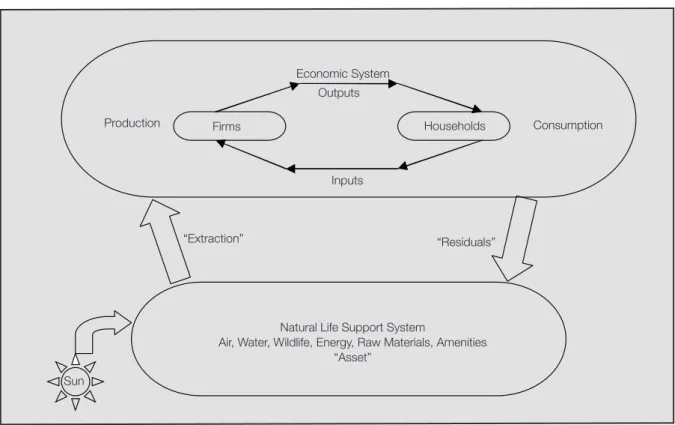
Figure III-2-1: The Economic System and the Environment 89
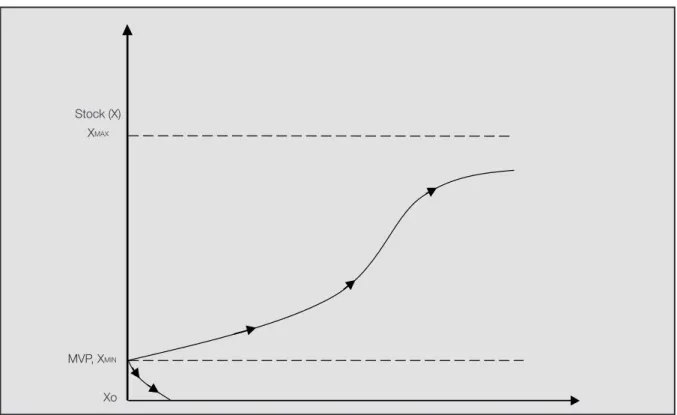
Figure III-2-2: Logistic Growth Curve of a Renewable Resource 90
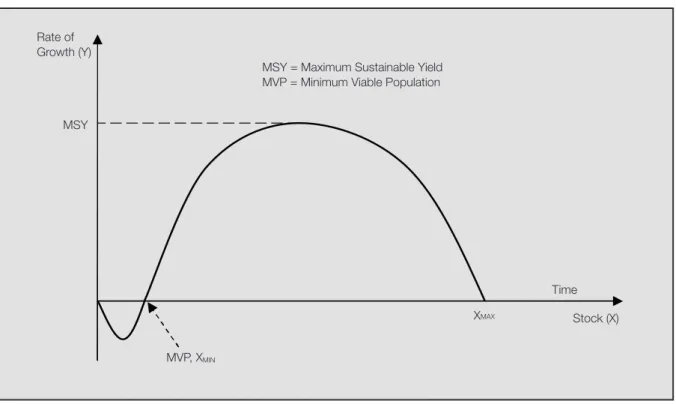
Figure III-2-3: Pure Compensation Growth Curve 91
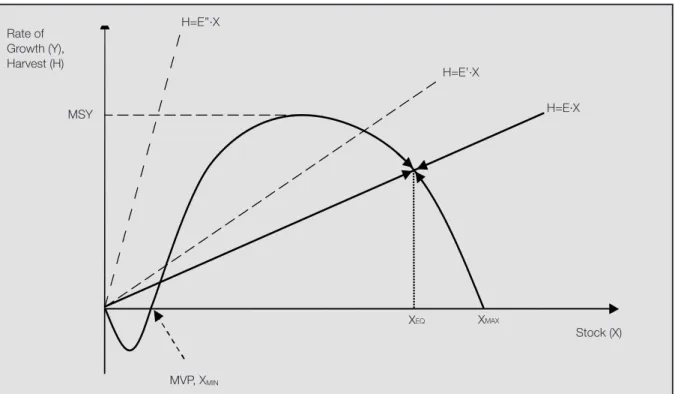
Figure III-2-4: Effort-Growth Equilibrium 92
Figure III-2-5: Relationship of Emissions to Pollution Damage 94
Figure III-2-6: Efficient Allocation of a Fund Pollutant 96
Tables
Part I
Preparing the Course
1. Introduction
3
2. Training Needs Analysis
9
3. Design, Delivery and Evaluation
15
P
AR
T I
1. Introduction
1
This section addresses basic terminology, the context, necessary conditions, and the essentials of quality training.
1.1 Basic Terminology
To understand the subject of this Manual, it is first necessary to understand the meaning of key terms used including:
Economic Instruments are measures that provide economic incentives for sustainable economic development and disincentives for practices that degrade the environment or deplete natural resources. Economic instruments include charges, pollution taxes, tradable pollution permits, transferable development rights and payments for environmental services, among others.
Sustainable Development is development that meets the needs of the present without compromising the ability of future generations to meet their own needs.2
Command and Control Measures are legal prohibitions of undesirable practices accompanied by the policing power of the state to control violations of law.
Capacity means the knowledge, skills, and organizational capability necessary to achieve a stated goal. It may also include the political, social, and cultural willingness to support the practical requirements of sustainable development.
Capacity building is the long-term, voluntary process for increasing a country’s ability to identify and solve environmental and natural resource problems, to minimize risks, and maximize opportunities. It requires the strengthening, development, and mobilization of human, institutional, and other resources. Training is a means of developing the knowledge and skills of public officials and practitioners through classroom instruction or self-study combined with practical exercises in the development and application of economic instruments for environmental and natural resource management.
For the training content itself, there are many more terms that both the trainers and trainees will need to understand. Many of these are defined within the Modules provided in Part III of this Manual as well as in a Glossary at the end.
4 The Use of Economic Instruments for Environmental and Natural Resource Management
1.2 The Need for Training
National governments and international organizations alike generally recognize sustainable development as an important and desirable goal. It provides for the long-term welfare of the people without destroying the environment or depleting natural resources, which, over time, undermine all economic growth. However, failure of markets to prevent or address problems, poor government policy, weak public or private institutions, and failure of command and control measures can undermine the best intentions for sustainable development. Too often the result is environmental degradation; permanent loss of valuable natural resources and, in the end, unsustainable development.
Thus, achieving sustainable development requires not only good intentions, but also skilful management. Economic instruments can serve as valuable tools in addressing market, policy, and institutional failures. They integrate environmental and economic policy, are inexpensive, can be targeted to specific environmental problems, and can change private sector behaviour by altering economic incentives. Yet economic instruments are sophisticated and often require considerable knowledge and skill to implement. Their use requires that government and non-governmental organizations have the capacity to develop and effectively apply these instruments. This Manual provides guidance for the development of training necessary to build that capacity.
1.2.1 International Support for Capacity Building
The United Nations Environment Programme supports the proposition that all countries should have the capacity to address environmental issues and manage their own natural resources.
The global plan to achieve sustainable development agreed to at the UN Conference on Environment and Development (1992) in Rio de Janeiro3, Agenda 214, stressed the need for capacity building for
environmental management generally and for developing countries in particular. To this end the major international lending aid agencies have promoted the capacity development for environmental and natural resource management in developing countries ever since the Rio Summit.
Capacity building measures supported by UNEP emphasize collaboration between international organizations and local organizations. UNEP encourages local organizations to take progressively greater responsibility for long term, structural changes that are necessary to integrate environmental concerns into the mainstream of development activities.
Requests from developing countries for training on the use of economic instruments for environmental management have multiplied over the years. Every indication is that demand for this training will continue to grow. New international requirements and evolving management practices are driving demand for more – and more diverse – training. Trainers will need to keep pace with these developments.
3 This conference is often referred to as The Earth Summit.
4 http://www.un.org/esa/sustdev/documents/agenda21/english/agenda21toc.htm
P
AR
T I
1.2.2 Necessary Conditions for Capacity Building
This Manual focuses on training. To be effective, however, training cannot be provided in isolation of other initiatives to strengthen environmental stewardship or their overall relation to the economic and social fabric.
Capacity building encompasses a range of activities in addition to training including enactment of enabling legislation, provision of budget support, and organization of appropriate government agencies.
In countries that have little economic growth, limited finances, lack of political commitment, and public indifference to protecting the environment, the usefulness of training alone can be severely constrained. If training is to be successful, a minimum level of these enabling conditions must be in place already. One vital prerequisite for building capacity is public awareness of environmental problems and support for measures necessary to address those problems. In many developing countries, capacity building will need to address inadequate public concern for the environment, which is often the underlying cause of depletion of natural resources and deterioration of the environment.
Ways of promoting environmental awareness include:
• Establishing environmental awards in the community and the workplace • Organizing conferences and meetings to address environmental issues • Holding an environment ‘day’ or ‘week’ or events
• Soliciting public participation in environmental projects and activities
• Recognizing the particular contribution of women, NGOs and local communities • Encouraging corporate environmental policies and programmes, and
• Promoting environmental stewardship and community-based resource management
1.3 Basic Components of Capacity Building
A comprehensive programme of capacity building for the environment should address five issues: Training and Education—needed to develop the skills and competencies necessary for environmental and natural resource management good practice.
Organization and Management—needed to strengthen the structures, processes and delivery systems for the application of economic instruments for environmental and natural resource management implementation.
Networks and Linkages—needed to foster cooperation, information exchange and professional development among environmental and natural resource management stakeholders, both individuals and organizations within and outside the public sector.
6 The Use of Economic Instruments for Environmental and Natural Resource Management Policy and Institutional Framework—needed to enact legislation, promulgate regulations and institute procedures, and manage programmes to establish economic instruments.
Sensitivity to Social and Economic Context—needed for effective support within the broader society and the political culture of decision-making in the country.
1.4 Essentials of Quality Training
This section provides information to assist in-country trainers to assume this role of training their fellow citizens directly. The training of trainers is particularly important because it allows the primary trainers to transfer their expertise to local personnel who, in turn, can train others within the country.
The purpose of training is to develop knowledge and skills needed by participants. Training will be most effective when carried out within a strategic framework, consistent with the principles of capacity building described above.
In addition, to be effective, training on economic instruments needs to:
Raise Awareness The value of economic instruments for environmental and natural resource management is now recognized in developing countries. This is expected to grow in the coming years. But there is still a general lack of understanding among the general public and key constituencies in most countries. The training should raise the awareness among policymakers and practitioners alike of economic instruments and their effective uses.
Instil Core Competencies Many countries have begun to establish procedures and regulations for use of economic instruments but lack a broad base of policymakers and practitioners who understand the uses of economic instruments to effectively apply them. To address these deficiencies, training should address technical and administrative matters as well as techniques for increasing public participation in developing environmental policy. The latter is acknowledged as a particular weakness in many developing countries.
1.5 Quality Training Practices
The need for consistently high quality training cannot be overemphasized. In this regard, it is important to identify principles of good practices for training on the use of economic instruments and the key aids and measures that support such an approach. The following provides an initial framework for ensuring quality training with an emphasis on four questions:
1. What are the basic requirements for high quality training? 2. What should the training aim to provide for its target audience? 3. Who should provide the training?
4. How should this activity be designed and delivered?
P
AR
T I
Box I-1: Basic Principles for Effective Training
Have Clear Objectives
The purpose of training on the use of economic instruments for environmental and natural resource management is to promote good practice. Therefore, guidance should be sought as to what constitutes good practice in order to clarify the objectives and content of training.
Target the Right People
Environmental and natural resource management training programmes and courses should focus on the needs of well-defined target groups and take, when necessary, sufficient account of their varied background.
Use Appropriate Teaching Methods
These should be practical in nature, action-oriented and emphasize problems and conflict-solving situations, as well as technical skills (including the use of information technology).
Use Effective Training Aids
Effective use should be made of real-world case studies and simulation exercises, role-playing situations, etc.
Choose Trainers Carefully
Develop a roster of suitable environmental and natural resource management trainers to deliver the course. Trainers should possess practical environmental and natural resource management experience and sound pedagogical skills.
Source: Adapted from UNEP, 2002
1.6 Achieving High Quality Training
One approach to understanding the basic requirements of quality training is the ‘KITS’, which requires that trainers impart all Knowledge, Information, Tools and Skills (KITS) necessary for the target audience to perform to internationally agreed or locally defined standards. The elements of the KITS approach are: • Appropriate knowledge of environmental and natural resource management good practice at the level
necessary for those being trained to undertake their roles and responsibilities effectively;
• Up-to-date information on relevant developments and case experience in environmental and natural resource management, procedure and methodology;
• Best-practice tools and lessons that are applicable and work in the situation and setting in question; and
8 The Use of Economic Instruments for Environmental and Natural Resource Management
1.7 Choosing Trainers
The issues of who should provide training and how to assure their competency are sensitive ones. However, to maintain training quality, the training must address these issues head on. Preferably, those designing and delivering a major programme (for ‘training the trainers’) should meet basic ESP qualifications, namely: • Experience in environmental and natural resource management training and/or practice (and ideally
both) in a given country or region;
• Sensitivity to local needs and cultural considerations and their reflection in environmental and natural resource management trends and issues; and
• Professionalism as demonstrated by a proven record of environmental and natural resource management training and practice in similar contexts and settings.
P
AR
T I
2. Training Needs Analysis
The goal of this section is to assist the course designer to compile the information necessary to designing an effective training strategy for the use of economic instruments for environmental and natural resources management objective(s):
By the end of this section, the trainer will be able to: • Identify the groups who require training,
• Conduct a Training Needs Analysis,
• Establish the purpose and scope of the training.
2.1 Objectives
Whatever the means of gathering information, the main objective is to identify environmental and natural resource management training needs. These include:
• The target groups to be trained, • The content of the training,
• The most effective format for training,
• The expected benefits (bearing in mind the larger social, political, economic and cultural context and its likely influence on the planning, and implementation of training courses.
2.2 Target Groups
Anyone with an involvement or an interest in the use of economic instruments for environmental and natural resource management can benefit from the training. However, experience indicates that the demand for training is more frequent from those stakeholders who have key roles in environmental and natural resource management.
Such stakeholders require training that is more intensive and they stand to gain the most benefit from the training. Other participants in environmental and natural resource management, such as development planners, local administrators and public, community and environmental interest groups may also require and benefit from training, but usually not in as much detail as the above groups.
10 The Use of Economic Instruments for Environmental and Natural Resource Management
Box I-2: Main Target Groups for Training
This Manual can assist trainers in developing courses for four main target groups. These are: Practitioners who need to develop or strengthen their technical expertise in some or all of the different aspects (For example, this group could include staff of major development or proponent bodies, private sector consultants, officials from competent authorities responsible for environmental and natural resource management, etc.);
Decision Makers and Their Policy Advisers, some of whom may have little or no previous exposure to environmental and natural resource management, who need to understand the objectives, procedure and outcomes of economic instruments on environmental and natural resource management and their own role and obligations within the environmental and natural resource management;
Other Stakeholders including members of non-government organizations, interest groups and the public affected by the proposals, who may need to be introduced to environmental and natural resource management to better understand their role and relationship to others; and
Trainers and Course Designers who are identified as candidates to develop and deliver situation-specific training courses.
2.3 Conducting the Needs Analysis
5An assessment of national capacity is the first step in selecting an appropriate training strategy. Capacity assessment identifies constraints and opportunities. In many cases, there will be a range of previous activities and ongoing initiatives upon which to build. The scope of training requirements will depend, in part, on the extent to which these other components are in place.
The training needs analysis should assist the trainer/course designer in compiling the information required to design an effective economic instruments training strategy, one that will build institutional and human capacity. Even if specific training needs have already been identified, undertaking all or part of this analysis will still be useful.
Current or recent training and capacity building activities on the use of economic instruments for environmental and natural resource management in the country or region should be reviewed. This will help to determine the feasibility of any proposed training, for example by identifying demands for which there is insufficient provision.
For training to be effective, it should meet:
• The requirements for improving environmental and natural resource management practice in the region or country and
• The specific needs of the people who will attend the training session or course.
5 The analysis of training needs in this Manual requires that the course designer have at least some training and experience in course design.
P
AR
T I
Training needs analysis should examine the influence of the broader setting (the political, institutional, social, and environmental conditions) on the feasibility of, and options for training on the use of economic instruments for environmental and natural resource management.
Some of these conditions may constrain the introduction and/or implementation of the economic instruments while others may provide opportunities for their use. This information indicates how the design of the training relates to its delivery.
2.4 Using Training Needs Workshops
A training needs workshop is the preferred means of gathering information on training requirements6
especially when developing a comprehensive country or region-wide training programme. Before holding such a workshop, the trainer/course designer needs to collect information about the environmental and natural resource management situation in the country and discuss the potential training needs with a wide range of people involved in environmental and natural resource management.
2.4.1 Preparing for the Workshop
A full training needs analysis workshop requires several weeks of planning, analysis and review. In some cases, this process may take longer, such as when defining environmental and natural resource management training needs for varied regions with different problems.
Beyond being a tool for gathering information, the needs analysis workshop can serve, in part, as a consensus building exercise. A consensus building approach helps:
• Identify the groups requiring training on the use of economic instruments for environmental and natural resource management, their specific needs and the expected benefits of the type of training to be provided,
• Consider the influence of the political, social and environmental situation on the training that is being developed, therefore ensuring it is a feasible and effective means of capacity building,
• Avoid tensions and disputes that may arise from a more confrontational or majority rule approach. The outcomes of the workshop should comprise:
• A set of summaries of training needs for selected target groups (in table form),
• Feedback notes for the trainer/course designer that will assist in planning and delivering the training course or programme.
2.4.2 Selecting Workshop Participants
Preparing a one-day workshop requires bringing together a range of relevant stakeholders. It is important to ensure a good cross-section of stakeholders active in environmental and natural resource management, including, where possible, some senior decision makers. At a local level, it may be helpful to include members of the community who are involved and knowledgeable about environmental and natural resource management.
12 The Use of Economic Instruments for Environmental and Natural Resource Management If the training needs analysis is focused on a particular sector, then a more specialized list of participants may be appropriate. A national level workshop may have between 15 and 50 participants, with representation from both environmental and natural resource management administrators and policy specialists from key implementing agencies.
The choice of appropriate participants is crucial to the success of the workshop. Workshop representatives could include people from the following groups:
• Administrators/practitioners from environmental, natural resource ministries and agencies, • Elected officials and government ministers,
• Representatives of non-government organizations (NGOs), • Aid agencies,
• Special groups e.g. minority indigenous peoples, women, • Academics, lawyers, engineers, health professionals, • Trainers and training organizations,
• The media, and
• Members of community groups. 2.4.3 Facilitation and Structure
A national level workshop should probably have an experienced facilitator to manage and structure the process. At the local level, less structured meetings could still be very valuable, covering the same ground and pooling the knowledge of available representatives.
2.4.4 Timing and Funding
The trainer should make sure that there is sufficient lead-time to make arrangements, identify, invite and confirm participants, brief participants and produce workshop materials. This may take months rather than weeks. If funding is needed, then probably the planning time line will be longer.
2.4.5 Choosing a Workshop Location
If at all possible, the training designers should hold the workshop in a location away from work places to avoid distractions. In addition, the venue must be large enough to accommodate the whole group comfortably, and allow the group to break into smaller working groups.
2.4.6 Designing a Course Programme
During the phase of the training needs analysis, the training designers need to decide on the length and content of the training course depending on the professional background of the participants who will take part in the course. They will also need to design the specific session of the course programme. For this purpose, they can take use of the training needs workshop discussion guide provided in section 4.1 of Part I.
If the list of participants of the training course is already known before the training needs analysis workshop, the pre-course questionnaire provided in section 4.3 of Part I can be mailed out before the workshop. The responses can then feed into the training needs workshop.
P
AR
T I
2.4.7 Evaluation and Training Needs Summary
The trainers should conduct an evaluation of the workshop. All participants should receive copies of final training needs summaries and the contact details of the other participants. The workshop leader should distribute these at the end of the workshop rather than sending them out later. A sample of the information that should be included in such a training needs summary can be found in section 4.2 of Part I.
2.5 Gathering Information without a Workshop
If a training needs workshop is not conducted, the trainer/course designer will need to gather the information that will provide an understanding of current conditions for training and insights that can usefully be passed on to course participants. This may be done by interviewing key stakeholders conference call, by telephone conversations with individual stakeholders, or by e-mail, using the same questions that would be put to the Training Needs Workshop. The sample training needs summary provided in section 4.2 of Part I should be completed even if the training needs analysis is conducted without holding a workshop.
P
AR
T I
3. Design, Delivery and Evaluation
The goal of this section is to provide information and guidance on planning and implementing a course programme. By the end of this section, the trainer/course designer will be able to:
• Develop a Course
• Prepare a Participant Handbook • Address Logistical Concerns • Present a Course Effectively • Evaluate the Course.
3.1 Developing a Course
Training designers should use results of the training needs analysis as the basis of a course outline and build up from the materials contained in the guidance and modules provided in Part II and Part III of this Manual. Not all modules will need to be used for each training course, nor is it expected that all of the materials relating to a topic will be used.
Trainers are encouraged to adapt the Manual and to develop their own materials in order to meet the specific needs of prospective course participants.
A customized training course can be designed by:
• Establishing objectives that reflect the priorities already established for training (as indicated in the training needs summary);
• Selecting the modules, topic materials and training activities that are appropriate for the target groups; and
• Amending and adding to the materials as necessary to meet the participants’ needs.
The training course can be developed from the training needs summaries and discussion sheets produced during the training needs workshop (sections 4.1 and 4.2 of Part I). Taking the information for one target group at a time, the trainer/course designer can select the appropriate modules, topics and training activities. In doing so, the trainer needs to keep in mind the specific training needs of the group and the depth of training required. In this context, it will be very helpful to use the responses on the pre-course questionnaire (section 4.3). The questionnaire should be sent out to participants at this stage if this has not been done before the training needs analysis workshop already.
The choice of training activity depends on the time and resources available and the identified training needs. For example, the emphasis in specialized training should be on practical activities, case examples and relevant tools in the use of economic instruments in environmental and natural resource management. This approach is important especially where participants are required at the end of the course to
16 The Use of Economic Instruments for Environmental and Natural Resource Management A session planning form should be completed, an example of which is presented at the end of Part I in section 4.4. The trainer/course designer should ensure that the course length is approximately the same as the time available, making appropriate adjustments accordingly.
Do not forget the importance of the opening and closing sessions. If possible, use an interesting and significant person to formally commence and conclude the proceedings.
3.1.1 Preparing the Course Programme
The next step is to complete the programme within the course outline. The required sessions and activities should be fitted into an ordered and logical structure, allowing sufficient time for networking during lunch and tea breaks. Usually, the times indicated for topics in the Session Planning Form will require some juggling or adjustment to fit into a suitable schedule.
Such a programme should be included in the course brochure or participants’ handbook discussed in this section. However, much more detailed information, including course notes and resource lists, will be necessary for the trainer to present the course.
3.1.2 Developing Course Materials
Once the programme is finalized, the materials on the topics and training activities should be prepared. This can be done by:
1. Working through the information checklist for each topic to collect the necessary documents and materials;
2. Contacting the speakers required to support each training activity (do not forget to draw on the experience of course participants);
3. Adapting the session presentations for each topic to suit the needs of the participants; 4. Preparing overheads and handouts;
5. Selecting and copying materials to include in the pre-training assignment;
6. Reviewing the related literature to identify any relevant case studies and/or lessons of application and use of economic instruments for environmental and natural resource management 7;
7. Preparing a participant’s handbook.
3.2 Preparing a Participants’ Handbook
A participants’ handbook should be prepared for each training course. The handbook should preferably be available on the website or as a hard copy. The handbook provides information and guidance on course presentation and can be kept as a resource for future use.
Handbooks can be prepared in loose-leaf form (in a binder), as a booklet, or even as stapled sheets. Regardless of how the material is presented, it needs to be consistent in format.
7 A list of sources of information is given in Annex VII.