ACADEMIC PERFORMANCE OF LEARNERS WITH HEARING
IMPAIRMENT; A CASE OF KAMBUI SCHOOL FOR THE DEAF-
KIAMBU COUNTY-KENYA
MUIRURI LUCY WAMBUI
E55/21788/2012
A THESIS SUBMITTED IN PARTIAL FULFILMENT FOR THE
DEGREE OF MASTER OF EDUCATION (SPECIAL NEEDS
EDUCATION) IN THE SCHOOL OF EDUCATION OF
KENYATTA UNIVERSITY
DECLARATION
This Thesis is my original work and has not been presented for a degree in any other university or any other award.
Sign: ________________________ Date: ___________________ Lucy W. Muiruri
E55/21788/2012
Supervisors’ Approval
This Thesis has been submitted with our approval as University Supervisors:
Sign: ________________________ Date: ___________________ Dr. Beatrice Bunyasi Awori
Department of Special Needs Education Kenyatta University
Sign: ___________________________ Date: ___________________ Dr. John Ng’asike
Department of Early Childhood Studies Kenyatta University
DEDICATION
This work is dedicated to God Almighty for giving me sufficient strength and grace. To my family and friends who encouraged me to complete the hard work.
ACKNOWLEDGEMENT
It would be impossible to thank everyone who has made either a direct or indirect contribution to this research report. There are however, several individuals whose influence and help warrant some special recognition in a special way. My hearty felt appreciation goes to my supervisors Dr. B. Bunyasi and Dr. J. Ngasike of Kenyatta University for the invaluable guidance they gave me in realization of this study.
Thanks to all who volunteered and participated in this study, without whom this study would not have been a success. Lastly special thanks goes to my dear family ;my husband and our two children Teresiah and Isaac, whom I left behind when they needed me most for care and love, for patience, love and encouragement all through the study.
TABLE OF CONTENT
TITLE PAGE ………..………...i
DECLARATION ………..………...ii
DEDICATION…………..………..……….iii
ACKNOWLEDGEMENT………..………..…………...iv
TABLE OF CONTENT ………...v
LIST OF TABLES………..viii
LIST OF FIGURES ………ix
ABBREVIATION AND ACRONYMS……….x
ABSTRACT……….……….………xi
CHAPTER ONE:INTRODUCTION 1.0. Introduction………..1
1.1. Background to the Study………..1
1.2. Statement of the Problem……….6
1.3. Purpose of the Study………7
1.4. Objectives of the Study………7
1.5. Research Questions………..8
1.6. Significance of the Study……….8
1.7. Limitation and delimitation………..………9
1.7.1 Limitations of the Study………..…….………..……….9
1.7.2 Delimitation of the Study ………..……10
1.8. Theoretical and Conceptual Framework………10
1.8.1. Theoretical Framework………..………...10
1.8.2. Conceptual Framework………..…...………12
CHAPTER TWO: LITERATURE REVIEW
2.0. Introduction………15
2.1. Communication modes for Learners with Hearing Impairment……….…...15
2.1.1. Verbal Communication (Oral/Aural)………..………..….………. 19
2.1.2. Manual Communication……….……….………… 21
2.1.3. Kenyan Sign Language………..………...……….26
2.2. Classroom Environment and Classroom Communication………...…….…29
2.3. Effects of Classroom Communication on Academic Performance …..………31
2.4. Teaching and Learning materials………36
2.5. SUMMARY………38
CHAPTER THREE: RESEARCH DESIGN AND METHODOLOGY 3.0. Introduction……….………39
3.1. Research Design……….……….39
3.2. Research Variables……….……….39
3.3. Location of the Study……….……….40
3.4. Target Population……….………...41
3.5. Sample Size and Sampling Technique……….………...42
3.6. Research Instruments……….……….………43
3.6.1. Questionnaires for Learners with Hearing Impairment…….….………..43
3.6.2. Interview Schedules for Head teacher and Teachers……….……..……….44
3.6.3.Observation Schedules………..……….45
3.6.4. Documentation ………...…….………...………..45
3.7. Pilot Study………..….….………..46
3.8. Reliability and Validity………..….….………..47
3.8.2. Reliability………...………..48
3.9. Data Analysis……….……….………...48
3.9.1. Quantitative Analysis………..………..………..………49
3.9.2. Quantitative Data Collection Procedure………..………49
3.10. Logistics and Ethical Considerations………...………51
CHAPTER FOUR: PRESENTATION ANALYSIS AND DISCUSSION 4.0 Introduction………..………...51
4.1. Communication modes used in Classroom for Learners with HI………..………52
4.2. Communication Challenges Teachers encounter during Lesson Presentation……….60
4.3. Communication Challenges encountered by Learners with HI………...62
4.4. Supportiveness of Classroom Environment to Effective Classroom Communication…...67
4.5. Effects of Classroom Communication on Academic Performance ………...………71
4.6. SUMMARY………....…………73
CHAPTER FIVE: SUMMARY CONCLUSIONS AND RECOMMENDATIONS 5.0 Introduction……….………..……74
5.1. Summary……….……….……74
5.2. Conclusion……….……….…….77
5.3. Recommendations……….……...78
5.4. Suggestions for Further Research……….……….……..79
REFERENCES……….……..80
Appendix I: Questionnaire for Pupils……….………88
Appendix II: Interview Guide for Teachers……….…..………90
Appendix III: Interview Guide for Head Teacher………...…91
LIST OF TABLES
Table 1.1 K.C.P.E Exam Analysis for 2010-2014 ……… 3
Table 1.2 Classroom communication and academic performance ……….. 13
Table 3.1 Shows target population as per the year 2014 ……… 42
Table 3.2 Sample size ……… 43
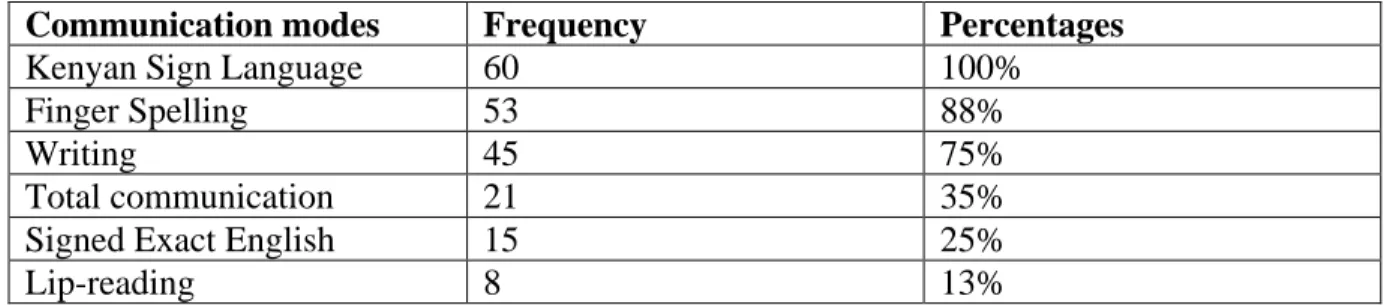
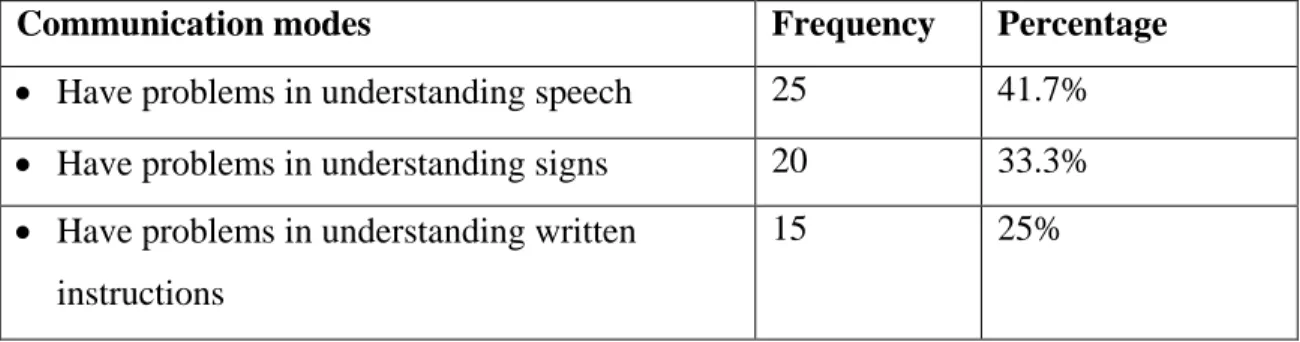
Table 4.1 Communication modes used in classroom for learners with Hearing Impairment (N-60)………. 52
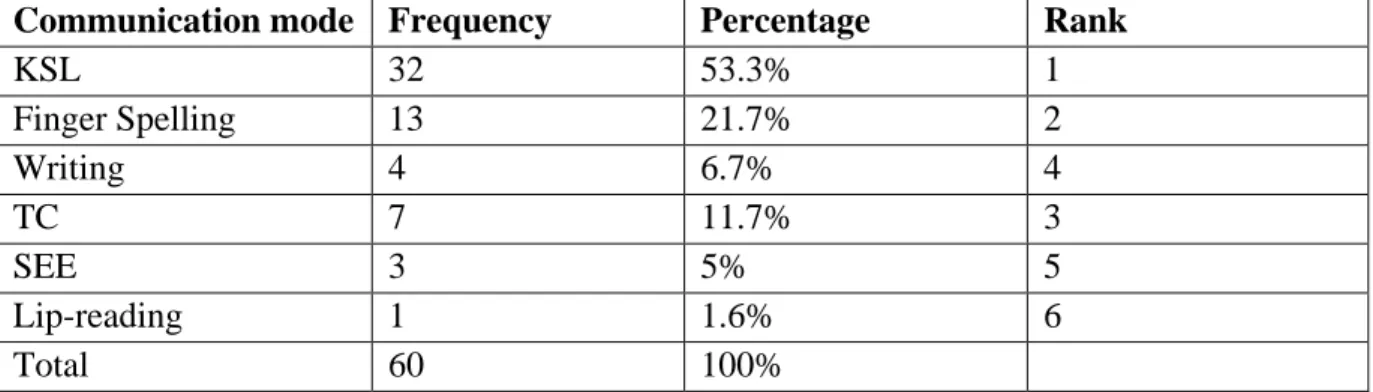
Table 4.2 Communication modes preferred by learners with HI ……… 53
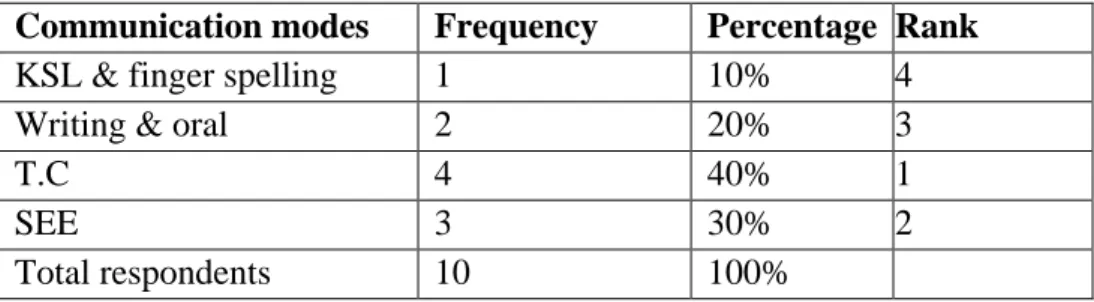
Table 4.3 Communication modes preferred by teachers during lesson presentation ……. 54
Table 4.4 Communication challenges encountered by learners with HI ……… 59
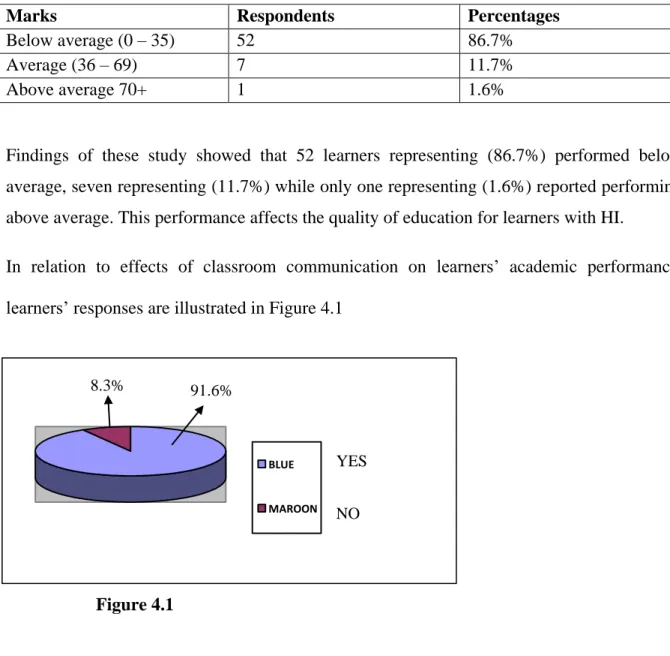
Table 4.5 Academic Performance for leaners with HI ………... 63
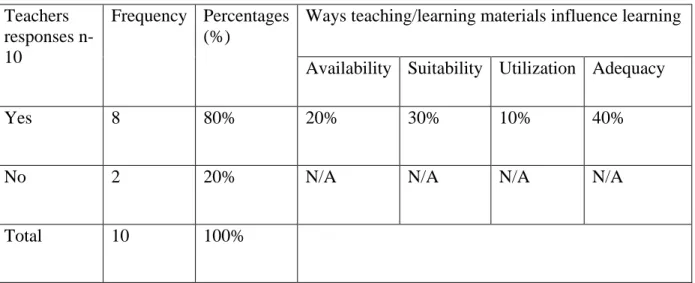
Table 4.6 Teachers responses to teaching/learning materials……….. 68
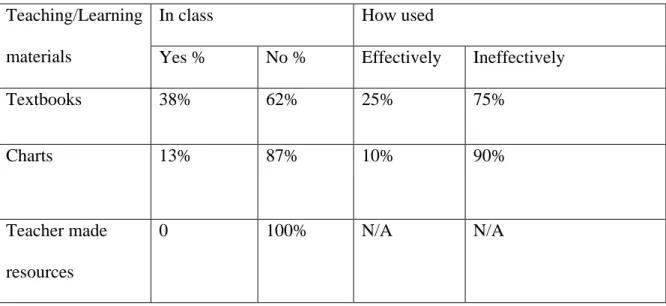
Table 4.7 Teaching/Learning materials used in observed lessons……… 69
LIST OF FIGURES
Figure 1.1……… 13
ABBREVIATIONS AND ACRONYMS
ASL - American Sign LanguageC1 - Cochlear Implants
EQUIP3 - Educational Quality Improvement Program
HI - Hearing Impairment
ICFD - International Classification of Function and Disability (ICFD) KCPE - Kenya Certificate of Primary Education
KIE - Kenya Institute of Education
KNAD - Kenya National Association for the Deaf KSDC - Kenya Society for Deaf Children
KSL - Kenyan Sign Language
MS - Manual Signs
MoEST - Ministry of Education Science and Technology
M/Sc - Mean Score
NDCS - National Deaf Children Society NMS - Non Manual Signs
SEE - Signed Exact English
SL - Sign Language
SPSS - Statistical Package for Social Science
TC - Total Communication
T/L - Teaching/Learning
TSC - Teachers Service Commission WHO - World Health Organization
ABSTRACT
Determining classroom communication and academic performance of learners with hearing impairment was central to this study. While language and communication are perceived as the main problems encountered by learners with HI, it is assumed that, if teachers and learners are able to communicate, learners with HI can learn. The main argument of this study is that, although proficiency in SL among teachers does play a great role in the education of learners with HI, it is not sufficient in offering quality education in this context. Other needs of learners with HI should be addressed during the teaching and learning process through T/L materials and classroom environment. The study was conducted in Kambui School for the Deaf. The study employed descriptive case study design, utilizing both quantitative and qualitative in gathering data. The study was guided by Total Communication theory. The study took an exploratory approach and focused on the quality of communication during T/L processes in special school. Data was collected mainly through lesson observation, questionnaire and interviews with teachers and learners with HI. English and KSL were the main language used in data collection. The study found that, assessment practices seemed not to be suitable for learners with HI to express what they knew. Although teaching and learning took place in SL assessment was through reading and writing in English .In addition, while Deaf teachers did not generally encounter communication problems in teaching, most hearing teachers lacked sufficient proficiency in KSL (the language of instruction) a phenomenon that affected dialogue in teaching. A few teachers used appropriate T/L materials. This contributed to lack of learners’ participation in T/L process that could affect their academic performance. On the basis of these study findings, the study concluded that, classroom communication is one of the most important aspects to consider when discussing the successful teaching and learning of learners with HI. Therefore, recognizing the expert knowledge of Deaf teachers gained from their experiences as teachers and formerly as learners with HI, and their proficiency in SL would contribute towards providing the learners with opportunities to learn more. In addition, a combination of a general quality improvement of educational resources which would be relevant for all learners and specific interventions for learners with HI is an approach that would support learners with HI to achieve more in their learning.
CHAPTER ONE:
INTRODUCTION
1.0. Introduction
This chapter presents background to the study on determining classroom communication and academic performance of learners with hearing impairment. It further presents the statement of the problem, purpose of the study, research objectives, research questions, significance, scope, limitations, delimitations, theoretical framework and conceptual framework. It ends with operational definition of operational terms used in the study.
1.1. Background to the Study
Communication between people is the sending and receiving of message, it can involve two or more people. According to Hunt and Marshal (2002), communication is the exchange of ideas or information that involves the decoding of intended message by the sender and receiver. Through communication, needs, feelings, desires and ideas are expressed. Information is given and received through communication and in this way one establishes one’s own identity.
Determining classroom communication on academic performance of learners with hearing impairment was central to this study, as rightly noted by Marschark (2003) classroom communication is one of the most important aspects to consider when discussing the
successful teaching and learning of learners with hearing impairment. Realizing that to some extent that classroom communication exists between learners and teachers, it becomes
necessary to determine classroom communication and academic performance of learners with hearing impairment.
Hearing Impairment is experienced in all parts of the world, although with varying degree of severity (WHO, 2012). It is estimated that, 5.3% of the world’s population suffer from hearing disabling problem with about 91% and 9% of those people being adults and children respectively. About 56% of persons suffering from hearing impairment are males’ compared to 44% females. The problem is most prevalent in South Asia, Asia pacific and sub-Saharan Africa in that order (WHO, 2012). Although, there are no comprehensive statistics on the number of children with hearing impairment in Kenya, it was estimated over five years ago that the number of children with HI was about 23,000 countrywide (NDCS, 2008). However, this only represents less than 10% of the number of persons with hearing impairment in the entire country if WHO (2012) approximations of the adult to children prevalence of hearing impaired are anything to go by.
The number of learners in the schools for Deaf according to KSDC (2001) statistics has tremendously increased over the years from 1,710 in 1982 to 6,000 in the year 2001. No empirical study has been carried out to ascertain reasons for the steady rise but it is
speculated that it could either be due to the increasingly high prevalence of diseases causing deafness such as malaria, measles, meningitis or could be due to effective campaigns, awareness and establishment of Educational Assessment and Resource Services (EARS) across the country and the sub-sequent availability of educational opportunities for the deaf. Despite the improvement there are still about 30% of deaf children not attending school (KSDC, 2001). For the purpose of this study, the term hearing impairment is used as an umbrella term that refers to all degrees of hearing loss from slight to profound.
Findings over the years (Marschark 2003, Duncan 2006, Borefoot 2011, Adoyo 2004 and Lewis 2009) have shown that, learners with hearing impairment have consistently trailed behind their hearing counterparts in academic performance. While education of learners with
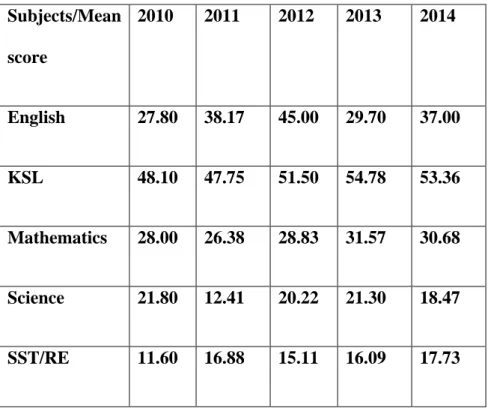
hearing impairment in Kenya is not a recent development, it has not shown significant improvement on their academic performance as was expected. For instance, in Kenya certificate of primary education (KCPE) National examination pass rate for learners with hearing impairment in schools for learners with hearing impairment from the year 2010 to 2014 ranged between 11% and 35% (MoEST 2010-2014) KCPE analysis. This performance is worry some because it is too low. The results are as in Table 1:1
Table 1:1 KCPE Exam Analysis (2010-2014) for Kambui Sch for the Deaf
Subjects/Mean score 2010 2011 2012 2013 2014 English 27.80 38.17 45.00 29.70 37.00 KSL 48.10 47.75 51.50 54.78 53.36 Mathematics 28.00 26.38 28.83 31.57 30.68 Science 21.80 12.41 20.22 21.30 18.47 SST/RE 11.60 16.88 15.11 16.09 17.73
In educational institutions, success is measured by academic performance or how best a learner meets the standard set out by the government and the institution itself. The emphasis on academic performance is made to identify, track, encourage and evaluate the progress of learners in schools. As rightly stated by Borefoot (2011) areas of achievement and failure in a learners academic life need to be evaluated in order to foster improvement and make full use of the learning process. As a result discussions of quality education for learners with hearing
impairment have turned towards communication modes and the experiences of these learners in the various types of classrooms and schools in which they are enrolled .However, not much is known about the classroom communication and academic performance of learners with hearing impairment in Kenya.
Education of learners with hearing impairment worldwide has been one of the most controversial topics. This is because it has been difficult to come up with an agreed upon communication mode(s) that best suits learners with hearing impairment. Classroom communication involves interactive communication and responses between teachers and learners (Marschark, M, Convertino, C. and LaRock, D. 2006). This implies that classroom communication for learners with hearing impairment should comprise a special education teacher, medium of communication such as Kenyan Sign Language and learners with hearing impairment. Classroom communication may also encompass interaction between two or more learners. A study carried out in western region of Kenya by Adoyo (2004), on how to utilize Kenyan Sign Language (KSL) as the language of instruction in classroom for learners with hearing impairment found out that, it was difficult to find appropriate classroom communication mode(s) that effectively provides access to curriculum content. Subsequently there have been changes in search for a better teaching methodology from pure oralism to manualism to Total Communication and now to Bilingual/Bi-cultural (Bi-bi) approach. Despite the changes in teaching methodology, the question has remained unresolved as to which particular method best suits learners with hearing impairment. A number of studies have reported that, learners with hearing impairment still finish school semi-illiterate. For Instance, existing studies by Duncan (2006), Ekwama (2003) and Borefoot (2011), have pointed to the inappropriate language of instruction as the key issue, which must be strongly and urgently addressed.
Hearing impairment, like any other sensory impairment could pose serious academic, communication and social problems. According to Duncan (2010), the sense of hearing plays a key role in the use and development of verbal language and communication. Similarly, Ainscow (2007) asserts that communication has to do with acquisition and abstraction of meaningful information processing and storing in short term and long term memory and retrieval of informational. It includes language components of phonology, syntax morphology, semantics and pragmatist. It can be seen from the analysis that, classroom communication is a very important component in teaching and learning processes of all learners with or/and without special education needs. This is because classroom communication enables learners to understand the content of the lesson and also to
communicate effectively with the teacher as well as their fellow counterparts. Ainscow (2007) asserts that classroom instruction that produces positive results acknowledge
the need for a liberal use of non-verbal cues, learner’s involvement and team communication.
However, there is an observable increasing gap in vocabulary growth, complex sentence comprehension and construction among learners with hearing impairment to the point of posing a challenge on their academic performance. For instance, learners with hearing impairment are observed to have limited vocabulary as compared to hearing learners. This is because learners with hearing impairment enter school with limited knowledge of vocabulary. The discrepancy broadens overtime between hearing learners who have rich knowledge of vocabulary and learners with hearing impairments (Malunga, 2007).
There is emphasis by the Kenya Institute of Education (KIE) teachers who teach learners with hearing impairment to engage as many classroom communication mode(s) such as KSL, finger spelling, writing, visual aids, gestures and body language as possible (KIE, 2004). Kenya Institute of Education has even gone a step further by making it mandatory for each
and every lesson to have talking walls so as to stimulate continuous visual influences. These include diagrams, charts, maps, pictures and learners work. Marschark (2003) opined that classroom communication is the most important issue to consider when discussing successful teaching and learning experiences with the learner with hearing impairment. This is because it is the very aspect where his or her disability poses the most challenge for him or her and his or her teacher. On the basis of this background it remained unknown about classroom communication and academic performance of learners with hearing impairment in Kenya.
1.2. Statement of the problem
Education of learners with hearing impairment has been one of the most controversially discussed topics worldwide. The issue has been the difficulty in finding an appropriate classroom communication mode that effectively provides access to curriculum content (Marschark, M. Convertino, C., LaRock, D., 2006). Findings over the years {(Adoyo (2004), Borefoot (2011), Duncan (2006), Lewis (2009) and Marschark et al (2006)}, have shown that learners with hearing impairment have consistently trailed behind their hearing counterparts in academic performance. This is a challenge to the quality of education learners with hearing impairment receive at primary school level as earlier discussed.
Advances that have been made in this field relating to the education of learners with hearing impairment often have been led by scientific studies on topics such as Instructional Method (Adoyo,2001:2:4) Self–esteem (Bunyasi,2010) Interaction of language and cognition (Marschark, 2003) and circles of influence (Duncan,2010). In the same way many of these basic studies clearly have been driven by the need to understand the complex learning processes necessary for educational, personal and vocational success of hearing impaired individuals (Duncan, 2010). Their findings attribute this to factors such as rigid curriculum, social related, cultural among others. In response to these problems, the government of
Kenya introduced Free Primary Education (FPE) and additional funds to support learners with Special Needs. In addition, trained teachers in Special Education were employed in Special schools. Kenya Institute of Education (KIE) has addressed issues that were a challenge to learners with hearing impairment such as developing sign language dictionary, KSL was made language of instruction and it was also made examinable subject at primary and secondary level (MoEST, 2004). Despite these efforts academic performance of learners with hearing impairment in special schools remain constrained such that few of these learners graduate to high school and within the expected time period (UNESCO, 2005). This means that there are other crucial factors relating to academic performance of these learners that deter their academic performance in Special schools, which needed to be investigated in the Kenyan context. This study contended that such factors could be linked to classroom communication. The possibilities of such factor had not been established through systematic research as possible cause to the decimal`` academic performance of learners with hearing impairment in Kenya.
1.3. Purpose of the Study
The purpose of the study was to determine classroom communication and academic performance of learners with hearing impairment.
1.4. Objectives of the Study
The Study was guided by the following objectives:
1. To establish the teachers knowledge and skills level in the use of communication modes in teaching learners with hearing impairment.
2. To establish the supportiveness of classroom environment to effective classroom communication.
3. To establish effects of classroom communication on academic performance of learners with HI.
4. To find out whether teaching and learning materials used by teachers influence the learners’ academic performance.
1.5. Research Questions
The following research questions were used to guide the study:
1. To what extent does the teachers knowledge and skills level of communication modes affect the academic performance of learners with hearing impairment
2. How does the classroom environment support effective classroom communication for learners with hearing impairment?
3. How does classroom communication affect academic performance of learners with hearing impairment?
4. How adequate are learning materials for learners with HI?
1.6. Significance of the Study
Poor academic performance implies undesirable results through dropout and repeating classes. It was therefore hoped that, the findings of this study may motivate policy makers and curriculum planners to place due emphasis on the importance of classroom communication towards the improvement of academic performance of learners with hearing impairment.
At a time when there is so much emphasis on quality education by the MOE (2009), a study of this nature is necessary. It is therefore hoped that its findings may contribute to knowledge of classroom communication that would enhance academic performance of learners with
hearing impairment. It is also hoped that, the findings may enhance classroom communication between teachers and learners with hearing impairment. It may also assist the Teachers Service Commission (TSC) while deploying and posting teachers to special schools for learners with hearing impairment, for not every teacher who has a certificate in Special Needs Education can teach learners with hearing impairment.
The Quality Assurance and standards division may use the findings of this study to formulate KSL in-service programs for teachers. In addition, the findings may motivate policy makers and curriculum planners to place due emphasis on the importance of effective classroom communication towards the improvement of the academic performance of learners with hearing impairment.
1.7. Limitation and Delimitation of the study
1.7.1. Limitation of the study
Academic achievement is a multi-dimensional concept. It depends on interactive of very many factors. The factors under study were influenced by intervening variables which were hard to control. Lack of control of extraneous factors which contribute to the academic performance of learners with hearing impairment such as learners
intelligence, anxiety, learners’ degree of hearing impairment and school environment were hard to control.
Communication constraints are many and diverse, however, the researcher was only limited to a few of them due to limited time. One of the limiting factors was that, learners with hearing impairment were not formerly assessed to ascertain the degree of their hearing losses. As a result, the communication needs of the individual learners were not conclusively
investigated. Despite these limitations, the findings of the study were still consistent with the reviewed literature.
1.7.2. Delimitations of the Study
The study was conducted at Kambui School for the Deaf in Kiambu County-Kenya. The school was chosen because it’s a special boarding school for learners with HI. The study involved the head teacher, teachers and learners with hearing impairment of Kambui School for the Deaf only.
1.8. Theoretical and Conceptual Framework
1.8.1. Theoretical Framework
The study was guided by Holcomb’s (1967) Total communication Theory (Scouten, 1984). Total communication may involve one or several modes of communication (Manual, Oral, auditory and written) depending on the particular needs of the child. The original expectation of total communication was for teachers to use the communication mode(s) most appropriate for a particular child at a particular stage of development. Therefore, there would be situations where signing might be appropriate, others that would call for written communication and still others where simultaneous communication might work best (Reed, 2009).
According to Heward (2006), most learning occurs through interaction with other people. Such learning is possible only when individuals are able to communicate with understanding. Likewise, the quality of the relationship between a learner with HI and her/his teachers is dependent on the quality of communication existing between them. Thus, the choice of communication mode that will be most effective is utmost importance. The main benefit of total communication is that it can open all avenues and modes of communication for learners with H.I. Teachers might be reluctant to choose one mode of communication over another. Total communication however, allows a variety of combination.
Total communication therefore, assisted learners with HI by giving them a number of options for communication. This in turn helped the learners to express themselves; moreover TC the teachers to engage all possible modes of communication to enhance the learning experiences.
Another contribution by the theory to this study is that, it contributed to the understanding that modes of communication needed to be adjusted based on the situation. For instance, sometimes signing is the right method to use; other situations writing may be the best mode to use. In addition, some teachers favored TC as a catch all that ensured that a learner with HI had access to some means of communication. For instance a learner with HI who could not communicate well orally got additional support of sign language and vice versa. Using TC reduced the pressure on teachers to choose one mode over another. One limitation of TC is that, while the theory may be sound, it may not be put into practice accurately enough in some situations. In classroom, TC often becomes a simultaneous practice of combining manual components (signs and finger spelling) with spoken components used in English word order. The very nature of the two modes (spoken and visual) may cause signers or speakers to alter their message to accommodate one or the other mode causing a compromise between the two methods (Ekwama, 2003). Although the idea of individualization is at the heart of total communication, teachers are limited to how many different modes they can use at one time. Therefore, Total Communication guided this study on determining classroom communication and academic performance of learners with hearing impairment.
1.8.2. Conceptual Framework
The conceptual framework presents the frame of reference for this study. The major concepts underlying the study were classroom communication, Communication modes and academic performance of learners with hearing impairment. As far as the Total Communication theory was concerned a learner with HI with good communication skills was likely to have a high level of motivation to perform well in school. A learner who got encouragement to complete his/her classwork whose teachers understand various communication modes was likely to have a high motivation to achieve success and is likely to perform well in school. Learners who are able to communicate well and understand what teachers communicate to them tend to have a high need for achievement as compared to learners who are not able to understand their teachers while communicating with them. The inter-relationship between academic performance and classroom communication can be presented diagrammatically as follows.
Figure 1.1
To interpret the diagram, academic performance was influenced by effective communication skills. Teachers of learners with hearing impairment who are conversant with different communication modes and have good signing skills and competence in communicating with learners with hearing impairment are motivated to give extra work and complete syllabus and are likely to enhance the learners level of motivation to excel which in turn influence learners academic performance.
1.9. Definition of operational term
For the purpose of this study, key terms were used as follows:
Academic Performance: The outcome of education. The extent which a student, teacher or institution has achieved their educational goals.
Classroom Communication: The interaction inside the formal classroom that is initiated by the learners and/or the teacher.
Classroom Communication Communication modes Academic performance
Communication modes: Communication methods or techniques used in combination with others to communicate or instruct learners with hearing impairment.
Learning Process: These terms as used in this study refers to ways of acquiring right behaviors that boost the acquisition of kills and knowledge in life.
Manual Signs: Signs whose formation involves the signer’s hands
Non-manual Signs: Signs that are formed with the movement of the eyes, face, head and body, normally used along with the manual ones.
CHAPTER TWO:
LITERATURE REVIEW
2.0. Introduction
This chapter highlighted review of related literature basing on earlier researchers findings, directly or indirectly, related to classroom communication and academic performance of learners with hearing impairment. The chapter was organized in line with the study objectives:-
Communication modes. Classroom Environment. Classroom Communication. Teaching and Learning Materials.
2.1. Communication modes
Communication between people is the sending and receiving of message, it can involve two or more people. Communication is the exchange of ideas or information that involves the decoding of intended message by the sender and receiver (Hunt and Marshal, 2002).Through communication, needs, feelings, desires and ideas are expressed. Information is given and received through communication and in this way one establishes one’s own identity. Effective communication is an important step towards building good relationship and involvement in the community. According to Hunt and Marshal, (2002) hearing impairment in children cause delay in the development of receptive and expressive communication skills. The language deficit causes learning problems that result in reduced academic performance. Communication difficulties often lead to social isolation and poor self-concept. It may have an impact on vocabulary choices and sentence structure (American Speech-Language-Hearing Association, 2010). Communication is the cohesive, compelling force in biological
survival of all human beings as well as in our social, cultural and personal lives. The ultimate purpose of communication in human beings is pursuit of knowledge (Lewis, 2009). The importance of communication in human species cannot be over-emphasized for it is the fundamental aspect of all human interaction. It is through language that humanity has been able to record its history and transmit its cultures from one generation to the next. Furthermore, the ability to communicate has enabled humans to build societies, organizations and social groups that are needed for survival and better living (Okeke, 2003).
The need to communicate is clearly indicated by the fact that all human societies have developed signal system for communication based on the spoken word, using the aural/oral channel for reception and expression. According to Reed (2009), most members of societies acquire language of their group in an apparently effortless fashion during the first few years of life. He pointed out that a child will effortlessly internalize on auditory-based language system if the infant has a reasonably intact sensory system. The infant must also not have severe intellectual or cognitive deficit, and should be exposed to a reasonably stimulating environment. The parents or care givers of the infant also ought to be reasonably verbal, providing a reasonably warm and loving atmosphere and communicate reasonably fluently with the infant. This internalized effortless language system will serve as a foundation of the child’s receptive and expressive language in early childhood and as a base on which reading
and writing and all education factors related to them will later be developed. Lewis (2009), in view of the foregoing, severe and prolonged deprivation in any of these
areas will eventually produce communication and language problems (Duncan, 2006). The primary problem seems to be interference with the immediate figures in his/her environment.
Classroom communication involves interactive communication and responses between learners and teachers (Marschark, M, Convertino, C. and LaRock, D; 2006). This implies that
classroom communication for learners with hearing impairment involves special education teacher, medium of communication such as KSL and learners with hearing impairment. It may also encompass interaction between two or more learners. A study carried out in Kenya by Adoyo (2004) on how to utilize KSL as the language of instruction in classroom for learners with hearing impairment, found that it was difficult to find an appropriate classroom communication mode(s) that effectively provide access to curriculum content. Subsequently there have been changes in teaching methodology from pure Oralism, Manualism to Total Communication and now to Bilingual/bicultural/approach. Despite the changes in teaching methodology, the question has remained unresolved as to which particular mode best suits learners with hearing impairment.
Communication modes are communication methods or techniques used in combination with others to communicate or instruct learners with hearing impairment. Professionals have developed educational programming along three different lines of thought, the oral/aural approach, emphasizing listening, speaking and speech reading (lip-reading). The manual mode, teaching finger spelling, or some form of sign language as the primary mode of communication and the philosophy of TC approach, incorporating a combination of methods which are individually developed to meet the needs of a specific person (Duncan, 2006). There have been a lot of controversies on the best approach to be used in educating learners with hearing impairment. The electric approach makes use of most components, from both sides that are Oralism and Manualism. In order to ensure effective communication with and among learners with hearing impairment, the educator should adjust to any mode to make sure learners with hearing impairment responds to the message (Reed, 2009).
In Kenya there was a controversy over which medium of instruction was suitable for learners with hearing impairment. Different modes such as Oral, Sign Language, Sign Extract English
and Sign English were tried out, but they seemed not to fulfill communication need for these learners. This was because Signed Exact English proved hard for learners with hearing impairment to comprehend (Adoyo, 2001). In 1986, the ministry of education established Machakos School for the Deaf as a pilot school to try out TC; a philosophy which allows learners with hearing impairment with their teachers to use various modes of communication to facilitate better understanding.
It comprises of Signed Exact English, Signed English, KSL, Finger spelling, Lip-reading, drawing, pointing among others being used interchangeably, T.C proved an effective method of communication hence it was officially adopted by the Ministry of Education Science and Technology (MoEST, 1988).
The KIE however observed that during the piloting of TC, KSL was used more often by learners as they interacted in the classroom discussions and during their free time. KIE therefore recommended for a research on the relevance and development of KSL as a medium of instruction (Ndurumo, 2008). These views backed the Kamunge report of 1988 which suggested that, research needed to be conducted to develop the most appropriate sign language for Kenyan learners with hearing impairment.
Kenyan Sign Language was then gradually developed by KIE in conjunction with adult persons with hearing impairment (Ndurumo, 2008). The ministry of education in 2004 recognized the use of KSL as an effective medium of communication for learners with hearing impairment. It was therefore adopted as a national language; same level as the national Kiswahili language. KSL was further declared examinable in schools for learners with hearing impairment as from the year 2010 (Kenya National Examination Council, 2009).
Owiko (2009), in his study in Nyanza province on factors contributing to poor performance at KCPE among standard eight pupils in primary school for learners with hearing impairment,
reveals that there was need for research on the use of KSL as a tool to enhance better performance among learners with hearing impairment. This is backed by Bunyasi (2010), who revealed teachers lack of skills in KSL and inadequacy of resources in classes for learners with hearing impairment. For the purpose of this study the researcher discussed the following; Verbal (oral/Aural), Finger spelling, Total Communication, Kenyan Sign Language, Sign Exert English and Sign Language.
2.1.1. Verbal Communication (Oral/Aural)
Verbal communication is an oral approach which emphasizes auditory training, articulation ability and lip-reading (Duncan, 2006). In the US, the oral/aural approach is historically the oldest. Oralist advocates have believed that learners with hearing impairment are best served by instruction in reading, maximum use of residual hearing (through amplification and auditory training) and in articulation to improve speech (Marschark et al; 2006). Pure oralism strongly emphasizes no signing and speech is the only acceptable means of response. The goal of auditory verbal practice is for learners with hearing impairment to grow up in “typical” learning and living environment that enables them to become independent participating and contributing citizens in a complete mainstream society. This is because all learners with hearing impairment deserve an opportunity to develop the ability to listen and use verbal communication with their families and communities, (Marschark et al, 2006). Listening skill is developed to increase spoken language competence. In this case speech is the primary stimulus for communication.
A study by Okeke (2003) carried out in Ghana highlighted that undoubtedly, educators were aware of the unrivaled importance of oral language in teaching and learning processes. Similarly Ekwama (2003) who carried out a study in Nigeria reported that oral
communication facilitated meaningful teacher-learner interactions than any other form of communication. This made learning more readily mediated than writing, signing, gesticulating pantomiming or whatever medium. Research conducted in schools for learners with hearing impairment especially in United States of America showed that this approach performed quite poorly in academic achievement apart from less than 10% who performed well since they were partially hearing (Reed, 2009). Oralism requires patience and in most cases learners with hearing impairment feel frustrated and humiliated in the process of learning. Though it’s difficult to lip-read, many learners with hearing impairment naturally try to lip-read. From 1958 to 1985, Kenya used pure oralism.
Lip-reading is the ability to read lip patterns Duncan (2010) reported that, it was very difficult for most learners with HI to rely solely on lip-reading to communicate as they could only pick up a small percentage of what was being said. Therefore, lip-reading was usually used alongside other communication modes. Duncan (2010) noted that lip-reading involved utilizing clues from the topic of conversation, facial expression, the eyes, the rhythm of speech and body language. It must be noted that learners with moderate hearing usually did not understand what the teacher said without using hearing aids. When they were not using hearing aids, the learners with HI relied on lip-reading. However some learners could only lip-read for a certain period of time. Duncan (2010) also found that, learners who only used lip-reading for a long period of time lagged behind in their comprehension, had limited vocabulary poor pronunciation of words and speech sounds and felt fatigued towards the end of a lesson and lost concentration. Not only did such learners misinterpret verbal speech but they also frequently misinterpreted written lessons and reading materials.
A study carried out by the University of Cambridge (2003) highlighted that, to some extent, many learners with HI relied on lip-reading despite being aware that only about 30% of
words could be lip-read clearly. In addition, not all people with a hearing impairment could lip-read well. Lip-reading can be used in line with facial expressions, for instance, much information can be conveyed with a smile or a frown. Facial expression, can convey a message to learners with HI in that, as the learners lip-read, the facial expressions tell the context in which the message is delivered. In addition facial expression for happiness, sadness, anger and fear are similar throughout the world. Since oralism did not produce expected academic improvement, educators turned to manualism modes of communication.
2.1.2. Manual Communication
Manual communication is a way of communicating by use of signs and finger spelling. This include, Finger selling, Total Communication, writing. Sign Exact English, Sing language to mention but a few. This study discusses the following; Finger Spelling, Total Communication, writing, Sign Language and Kenyan Sign Language.
Finger spelling is writing in the air. It forms hand shapes representing the 26 English alphabetical letters and can be used to spell words manually. It warrants for an exact presentation of written language when communicating with learners with HI. A single benefit of finger spelling is the absence of the limitation of the number of words that can be spelled. A conflict which may result between the English signing and the learners with HI mother tongue (sign language) may be solved by the application of finger spelling. Heward (2006) indicated that communication by finger spelling for learners with HI is one of the oldest known forms. He observes that finger spelling is sometimes used to connect signs into sentences, or to odd stress in sign languages. Finger spelling is particularly useful for introducing names, neologisms and technical terms. The manual alphabet is one-to-one cipher for letters of an alphabet on the fingers. In the United Kingdom, the manual alphabet is two-handed, but elsewhere it is usually displayed on one hand. In Kenya, the one-handed
American manual alphabet has been adopted. There are twenty six positions or combination of finger placements and hand shapes corresponding to the twenty six letters of the English alphabet. These, therefore, are shown without ambiguity and can be used to spell out a word with the fingers, as with the conventional spelling of English letters.
Finger spelling is a slow form of communication, Heward (2006) reported a maximum transmission rate of about “sixty words per minute, roughly three times slower than rather fast speech or signed communication. It is for this reason that instructors ought to use finger spelling together with signs; such knowledge will enable clear and precise communication with learners with HI. Finger spelling can be used in other ways. Besides its direct use for names and technical terms, it has a role as a lexical tool for learning of such items, and can reinforce the written form of new words (ASHA, 2001). ASHA (2001) also observed that, signs tend to communicate content words, whereas finger spelling is useful for function words, such as articles and prepositions. It plays a complementary role to signs when it may significantly increase understanding of the signed message. Studies in comparison of Rochester method (fingerspelling and speech) and oral method come up with TC.
Total communication means all the full spectrum, speech, formal signs, finger-spelling, speech reading, writing as well as other methods that may be developed in future (Reed, 2009). Ainscow (2007), suggested that intervention procedures aimed at developing speech reading skills should use T.C. Total Communication may involve one or several modes of communication (manual, oral and written) depending on the particular needs of the learner (Scouten, 1984). The original expectation of TC was for teachers to use the communication mode most appropriate for a particular learner at a particular stage of development. Therefore, there would be situations where signing might be appropriate, others that would call for written communication and still others where simultaneous
communication might work best, (Reed, 2009).Total communication should help to reduce the dominant position taken in class by the teachers of learners with HI. It should help to induce rapport between teachers and learners, besides assisting a learner with hearing impairment to communicate with hearing learners and adults. TC offers a prospect of the learners with hearing impairment participating in an educational curriculum more like that of the hearing learner. It also promises insights into spoken language, by providing continuity opportunities for learners with hearing impairment to analyze and compare spoken and manual/languages. TC is valued because it can provide both a means of communication and away of assisting oral communication. It is as well as by stimulating learner’s attention span, motivation and social interaction. It could also decrease behavior problems (Reed, 2009).
According to Heward (2006), most learning occurs through interaction with other people such learning is possible only when individuals are able to communicate with understanding, likewise, the quality of the relationship between a learner with hearing impairment and his/her teachers is dependent on the quality of communication existing between them. Thus the choice of communication mode that will be most effective is utmost importance.
The main benefit of Total Communication is that, it can open all avenues of communication for learners with hearing impairment. Teachers might be reluctant to choose one mode of communication over another. Total Communication however, allows a variety of combination. One limitation of TC is that, while the mode may be sound, it may not be put into practice accurately enough in some situations. In classroom, TC often becomes a simultaneous practice of combing manual components (signs and finger spelling) with spoken components used in English word order. The very nature of the two mode(s) (spoken and visual) may cause signers or speakers to alter their message to accommodate one or the other mode causing a compromise between the two modes (Ekwama, 2003). Although the
idea of individualization is at the heart of TC, teachers are limited to how many different modes they can use at one time.
Language of instruction policy in schools for learners with hearing impairment in Kenya has changed over the years. From 1958 to 1985, Kenya used a pure oral system of education (MoEST, 2004). From 1986 to date teachers are using TC which according to Adoyo (2002) is simultaneous communication. The communication mode has not produced the wide scale expected academic improvement, although there had been a marked improvement in curriculum access and academic improvement. There is still however dissatisfaction on the type of education for the Kenyan hearing impaired graduates as they have continued to lag behind their hearing counterparts in all academic achievements. As a way of improving learners with hearing impairment education, suggestions have currently been offered to implement the sign bilingual approach, a strategy in which sign language and spoken (written) language are used complementarily as languages of instruction (Adoyo, 2004). Ademokoya (2008) found that even when speaking and signing simultaneously, as was often the practice while engaging TC (speech and signs) to teach learners with hearing impairment, more things were said than signed. Actually the adherent of total communication argues that, TC promotes communication.
Writing is also part of mode of communication in total communication. It plays a vital role in classroom communication for learners with hearing impairment. This is because learners with hearing impairment who were not very proficient in sign language benefited from written communication (Duncan, 2006).
Sign Language is a visual language expressed by hands, arms and eye movement. It is a language for persons with hearing impairment. SL was the only language that a learner with hearing impairment could acquire from others without special education. In the same way a
learner without a hearing impairment uses spoken language (Ekwama, 2003). Enns (2007) asserts that, sign language could be used as a mode to improve pre-linguistic skills such as eye contact, attention control, imitative and social behaviors. Though SL became the accepted language of communication for learners with hearing impairment, Okeke (2003) found that, this choice was more of necessity than of preference. The incontestable superiority of speech over signs had been confirmed as far back as 1880 at the international conference on Deafness held in Milan. A study carried out by Heward (2006) also found that sign language was practiced in many schools for learners with HI in United States, although it was not very effective in educational circles. A study by Marschark et al (2006) revealed that regardless of teaching pedagogy, philosophy or classroom management, effective communication was fundamental to the instructional process.
Recognition of the potential of SL came from the oral failures, an unfortunately large proportion of learners with hearing impairment who had been educated orally did not perform well in academic achievement tests and their speech was intelligible. Those mentors who based academic attainment on the development of good communication skills argued that, learners with hearing impairment signers who were expert in their native SL could benefit educationally from good signed communication with their teachers (Enns, 2007). However this attitude quickly ran into problems because few of the teachers who were mainly hearing, were not fluent in sign language, rather they used form of signed English. (Enns, 2007) The educational attainment of learners with hearing impairment as a whole continued to be unacceptably low, whether the learners were educated orally or manually.
Enns (2007) asserts that, curriculum objectives are well understood by learners if they are delivered in the respective learners’ first language. The teachers’ ability to communicate clearly in sign language has been characterized as being unique to learners with hearing
impairment and as being the most favored characteristics of effective teaching. The fluent use of sign language in explaining scientific concepts, for example, has led to active learner classroom engagement, participation and innovativeness among learners with hearing impairment. Moreover the results emerging from studies of reading, writing and academic achievement indicated that, learners with HI of deaf parents are more successful academically than learners with HI of hearing parents are (Lang, McKee, and Conner, 1993).
2.1.3. Kenyan Sign Language
There is no international sign language, but different national sign languages due to the fact that signs are culturally determined. Different sign languages have therefore developed in different parts of the world. For example, Germany Sign Language, Ugandan Sign Language, American Sign Language among others. Kenyan Sign Language is therefore the visual gestural language that serves as the primary means of communication for learners with hearing impairment in Kenya (MoEST, 2003). While many Kenyans still doubts KSL as a complete language, research done by Adoyo (2004) show that, like other sign languages it is a formal, socially agreed on rule governed symbol system that is generative in nature. The components of Kenyan Sign Language are not phoneme (sound) combinations that form words as in spoken languages, but rather are phonological combinations (i.e. hand shapes, hand positions, hand movements and orientation of the palm) that form signs (Lewis, 2009).
Kenyan Sign Language was adopted as a medium of instruction for learners with hearing impairment in 2004 after various modes were tried out and seemed not to fulfill the communication need of learners with hearing impairment (MoEST, 2003). Teaching and learning of KSL must be addressed, because though learners with hearing impairment may acquire sign language in the natural setting provided by the school community, the degree of competence they require for educational purposes, and for complex discourse in their adult
life after school, cannot be achieved from mere exposure to a language spoken or signed. The pertinent question is; “how competent are the teachers in KSL, to not only teach the language but also to use it in curriculum delivery”. As a way of improving academic performance of learners with hearing impairment, suggestions have currently been offered to advocate for KSL as language of instruction (Owiko, 2009). Adoyo (2002) in his research comparing bilinguals and monolinguals noted that bilinguals have high cognitive flexibility, are more sensitive to semantic relation among words, and are creative in solving problems. One way of approaching sign bilingualism in the education of learners with HI in Kenya, is to let KSL and English share the role of medium of instruction in the teaching at all levels of education. Improving English literacy would lead to improve academic performance (Adoyo, 2004).
Lewis (2009) carried out a study on sign languages of the world, in his findings on KSL, he reported that 32 schools out of 71 were using KSL, they included Kerugoya, Nyangoma, Bondo, Karen, St, Angela Mumias, St. Antony Webuye, Machakos, Sakwa and St. Martin Mumias for learners with hearing impairment among others. In his study in Nyanza Province on factors contributing to poor performance at KCPE among standard eight pupils in primary schools for learners with HI, Owiko (2009) reveals that, there is need for research on the use of KSL as an instructional mode to enhance better performance among learners with hearing impairments. This is backed by Bunyasi (2010) who revealed teachers lack of skills in KSL.
In Kenya, learners with hearing impairment need a lot of exposure to KSL for cognitive development and for second language acquisition. The school administration must ensure that the school environment is linguistically rich to facilitate rapid and easy sign language acquisition at the same time using it to deliver curriculum content (Lewis, 2009).In her doctoral dissertation; Bunyasi (2010) revealed that teachers proficient in KSL were inadequate. Bunyasi (2010) cited remarks from one principal who said that; “Teachers
require constant refresher courses in sign language because it is a language like any other language and it grows with time. Now we are introducing KSL in our curriculum yet not all teachers are good at it”. Bunyasi (2010) also observed that, most teachers were not conversant with KSL, but noted that most learners with hearing impairment preferred using KSL for purposes of interacting with one another outside the classroom. Muiti (2010) in her study on; Hindrances to effective learning of learners with hearing impairment in Meru North District, Kenya, asserted that most head teachers and teachers were not trained in the use of KSL and hence were ineffective in communicating using KSL. She suggested that all teachers in schools for learners with hearing impairment should be trained in KSL because learners with hearing impairment learn just like their hearing counterparts if given access to modes they need and the language they understand.
A study by Adoyo (2004) reports teacher’s lack of competence in KSL and attributes this to lack of interest in it. Adoyo (2004) argues that although teachers interact daily with learners with hearing impairment who are native KSL users and who can provide them with an ideal environment for signing, there is still a low attitude towards this language. This is contrary to other countries that have reported significant academic improvement through the use of their respective sign languages such as American Sign Language, Germany Sign Language, etc. Muiti (2010) and Adoyo (2004) findings reveal the existing gaps hence necessitate determining classroom communication and academic performance of learners with HI. It should be noted that KSL is not a written language. The function of Kenyan Sign Language is to transmit information visually between people and not on paper. While this helps learners with HI communicate effectively, it does create some confusion because signs are known and used by a small minority of people (Adoyo, 2004).
The Kamunge report (Republic of Kenya, 1988) on language policy states that, the mother tongue within the catchment area of a school is to be used as the language of instruction in pre-school, the first three years of school and in adult education programs. English is recognized as the official language and the language of instruction from classes 4 up to university. This justifies the use of bilingual approach (KSL) in instruction of learners with hearing impairment where KSL is their mother tongue (Republic of Kenya, 1988).
A report carried out in Nigeria by Ademokoya (2008) found out that, it was important to bear in mind that, learners with hearing impairment have varying degrees of understanding of English. Some learners could still be acquiring a full language base and errors could occur in their written expression. Teachers who are not proficient with signing can also use writing to express concepts. Findings by Malunga (2007) in a study carried out in Zambia showed that learners naturally try to learn a language that enabled them to be understood. The communication mode used by learners with hearing impairment was dependent on a number of factors such as the level of hearing impairment and which modes they were comfortable with. Research carried out by Ainscow (2007) in New York highlighted that without communication there would be no education, no matter how qualified a teacher and relevant of the adaptation of content. Opinions about the modes to use in programs for learners with hearing impairment should be used on best approaches to instruction.
2.2. Classroom Environment
The classroom environment and activities are what learners experience directly and they are the mechanism through which educational interventions are most likely to produce desired improvements in learner’s performance (Ekwama, 2003). Peters (2004) in a study titled inclusive education, and education for all strategy for all children; reveled that, environment played a significant role in disabling majority learners. Ademokoya (2008) in a study titled
classroom communication and placement of learners with hearing impairment in an inclusive class carried out in Nigeria found that, to support improved outcomes of learners with hearing impairment, it was important that, their direct experiences in the classroom were understood. A study carried out in Zambia by Malunga (2007) titled an investigation on the use of sign language and language by regular teachers teaching learners with hearing impairment showed that in relation to the learning environment, the best possible conditions were a quiet place with good lightening. This allowed learners with hearing impairment to concentrate and follow what was being lip-read. A study by Liwakala (2003) carried out in Mpika, Zambia, reported that, learners with HI were visual learners. As a result, an attractive classroom with talking walls such as interesting notice boards and charts around the room, visual teaching aids such as pictures, diagrams and world maps assisted the learners to learn. In relation to seating arrangement, Liwakala (2003) found that it was very cardinal that learners with HI sat on chairs so that they could see both the teachers and their peers as much as possible. This was attributed to the fact that, the learners are able to see the various signs, lip-read and interpret body language as they were in full view of all participants in the classroom.
A study carried out by Ekwama (2003) in Nigeria, found that, in order to accommodate learners with hearing impairment who used hearing aids, it was vital to minimize noise. If there was noise from outside, doors needed to be shut and in certain instances, windows were shut. These measures were put in place in order to reduce background noise. It was highlighted that background noise, reverberation and distance from the speaker were real issues for learners with hearing impairment, even those with mild or unilateral hearing loss who were able to hear in the classroom.
2.3. Effects of Classroom Communication on Academic Performance of
Learners with Hearing Impairment
Classroom communication is important for transmitting information and imparting knowledge. Communication process is vital for effective teaching and learning within a classroom environment. Classroom instruction that produce positive results, acknowledge the need for a liberal use of non-verbal cues, learner’s involvement and team communication (Ainscow, 2007). Luckner and Muir (2001) pointed out that learners performance was usually defined by a learners success in an academic discipline, an exhibited level of competency on some type of standardized test. Additional identifiers of learner’s performance included organization participation, leadership activities, and good conduct. Hearing contributed greatly to understanding especially in a world where oral communication dominates. Avoke (2005) revealed that hearing stimulated thinking. Thinking was an exercise that concerned the use of the brain and the brain developed in quality as enough stimulation is given. He also revealed that, those who did not hear lived in silence, in isolation from the world of sound and that sound was what guided us socially and intellectually.
A study by Educational Quality Improvement Program, (EQUIP3, 2006) titled building human capacity among at risk youth with HI through academic support targeted at persons with hearing impairment in Malawi, Namibia, DRC, Kenya and Zambia reported that, in developing nations like Kenya, Zambia, Uganda, most teachers working in schools for learners with HI were hearing and had inadequate skills in signing EQUIP3 (2006). Since sign language was rarely used in communication between teachers and learners, learners could not understand their lessons and found it very difficult to learn. Most teachers resorted to writing and pointing as their primary means of communication, Marschark et al; (2006). In his study in New York revealed that regardless of teaching pedagogy, philosophy or classroom management style, effective communication was fundamental to the instructional process.