27
The Complexity of Catastrophic Wind Impacts
on Temperate Forests
Weimin Xi
1,2and Robert K. Peet
1 1University of North Carolina at Chapel Hill
2
University of Wisconsin-Madison
USA
1. Introduction
Catastrophic wind disturbance events have profound impacts on forests in many parts of the world. As an ecological factor, catastrophic wind events not only cause extensive damage to trees, but also affect many aspects of the disturbed forests including community structure, individual tree growth, tree regeneration, species diversity, and ecosystem function (Coutts & Grace, 1993; Ennos, 1997; Martin & Ogden, 2006; Bellingham, 2008; Hoeppner et al., 2008; Zeng et al., 2009). Although catastrophic windstorms are easily seen to have major impacts on forest structure, the longer-term effects on less conspicuous ecosystem attributes such as species composition and diversity are more complex, and at smaller scales of observation are relatively unpredictable (DeCoster, 1996; McMaster, 2005; Xi et al., 2008a; Oswalt & Oswalt, 2008). Many factors, meteorologic, topographic and biologic, simultaneously interact to influence the complexity of patterns of damage and dynamics of recovery. A deep understanding of wind disturbance effects is essential for effective forest management and biodiversity conservation. This information is particularly important as ongoing climate change is likely to sustain the recent increased incidence of major windstorms for the foreseeable decades (Goldenberg et al., 2001; Emanuel, 2005; Xi, 2005; Xi & Peet, 2008a; Stanturf et al., 2007).
The effects of wind damage have long been recognized and observed by foresters and ecologists (e.g., Baker, 1915; Bromely, 1939; Curtis, 1943; Spurr, 1956; Webb, 1958) and extensive research has been conducted on the ecological impacts of catastrophic windstorms (Canham & Loucks, 1984; Foster, 1988; Webb, 1988, 1989; Boucher et al., 1990; Brokaw & Grear, 1991; Walker, 1991; Peterson & Pickett, 1991; Merrens & Peart, 1992; Bellingham et al., 1992, 1994, 1995; Boose et al., 1994; Vandermeer et al., 1995; Imbert et al., 1996; Turner et al., 1997; Herbert et al., 1999; Sinton et al., 2000; Burslem et al., 2000; Boose et al., 2001; Platt et al., 2002; Woods, 2000; Peterson, 2004; Uriarte et al., 2004; Zhao et al., 2006; Uriarte & Papaik, 2007; Xi et al., 2008b; Prengaman et al., 2008; Zeng et al., 2009). This work has greatly increased our understanding of the importance of wind disturbance for community composition and ecosystem function, and has led to the wide acceptance among researchers of a nonequilibrium perspective (Reice, 1994, 2001). As a consequence of this and related work, the traditional view of wind as a simple damage force has evolved into the contemporary view of wind as a spatially heterogeneous, multi-scale disturbance agent that affects forest structure, diversity, dynamics, and ecosystem processes (Xi, 2005).
Several reviews of windstorm impacts have collectively provided a general framework for viewing how various windstorm disturbances might influence forest patterns and processes, and several generalizations have emerged from those reviews (Brokaw & Walker, 1991; Tanner et al., 1991; Foster & Boose, 1995; Everham & Brokaw, 1996; Whigham et al., 1999; Webb, 1999; Peterson, 2000). In particular, important reviews by Webb (1999) and Peterson (2000) have shown highly variable forest responses to windstorm disturbances in temperate forests, but there has been a continuing increase in knowledge about the complexity of the impacts (Table 1). In this review we focus on the complex effects of large, infrequent windstorm disturbances in temperate forests and provide information for improving forest management that helps to minimize the timber loss under the increasing risk of catastrophic damage in temperate forest regions.
The purpose of this review is to present a synthesis of the complex array of forest responses to catastrophic windstorm disturbances and a framework for its interpretation and future study. We particularly focus on large, infrequent hurricane disturbances in temperate forests. The extensive literature cited in this review documents complex patterns of forest response to the highly variable windstorm disturbance regimes in temperate forests. We attempt to combine in one common conceptual framework several important concepts and theories pertaining to wind disturbance effects that have emerged in recent years. This synthesis is structured around four questions: 1) Are there consistent patterns in the damage exhibited by forest communities? 2) What factors influence damage patterns and predict damage risk? 3) How do forests respond to and recover from the catastrophic wind damage? 4) What are the long-term effects of wind disturbances on species diversity and succession?
2. Understanding catastrophic wind disturbance
2.1 Concepts
Despite extensive previous work on catastrophic wind disturbance and subsequent ecological effects, there has been no specific definition of wind disturbance. Defining catastrophic wind disturbance is difficult because wind varies within/between events in intensity, size and frequency. In this review, we refer to catastrophic wind disturbance as including high wind events, mainly hurricanes, tornados, downbursts, gales and severe windstorms that may result in substantial tree damage or mortality. In most cases, the catastrophic wind disturbances we focus on in this synthesis represent a form of large, infrequent disturbance (LID) such as described by Turner and others (1998) as natural, catastrophic events that are ‘large in spatial extent and infrequent in occurrence’.
Catastrophic wind disturbances can be identified from their high wind intensity and extreme maximum gusts (Foster & Boose, 1995; Everham & Brokaw, 1996; Peterson, 2000; Lugo, 2008). The strongest winds (maximum wind speed about 125 m/s and average speed about 100 m/s) characterize tornadoes. A hurricane is a tropical storm when its wind speed is higher than 35 m/s and a typical hurricane has an average wind speed of 70 m/s. Gales (average wind speed about 50 m/s) and severe windstorms (average wind speed about 30-50 m/s) more often produce winds of only moderate intensity, but in some cases, they can generate winds as destructive as tornadoes. A downburst is a straight-direction catastrophic surface wind in excess of 17 m/s caused by a small-scale, strong downdraft from the base of convective thundershowers and thunderstorms (Fujita, 1985), and can exceed 50 m/s (or even 75m/s) and cause tornado-like damage.
Location Forest type Windstorm type Reference Asia
Taiwan hardwoods typhoon Lin et al., 2003 China northern forests wind and snow Zhu et al., 2005 Japan Subtropical forests typhoon Xu et al., 2003b, 2004 Australia–New
Zealand
Australia Australian rain forests cyclones Bellingham, 2008 New Zealand planted forests windstorms Moore & Quine, 2003 Europe
United
Kingdom spruce forests windstorm Quine, 2003 Finland boreal forests wind and snow
damage
Pellikka &Järvenpää, 2003
North America
Canada boreal forests windstorm Mitchell et al., 2001 United States
Alaska coastal temperate rainforests
severe windstorm Kramer et al., 2001 Colorado Picea-Abies-Pinus
subalpine forests severe windstorm Veblen et al., 2001; Lidemann & Baker, 2002
Massachusetts hardwoods hurricanes Wilson et al., 2005 Michigan hardwoods windstorms Woods, 2000, 2001 Minnesota hardwoods severe windstorm Peterson, 2004 New England hardwoods hurricanes Boose et al., 2001 Wisconsin hemlock-north
hardwoods
severe windstorm Schulte & Mladenoff, 2005
New York mixed hardwood forests severe windstorm McMaster, 2005 Pennsylvania hemlock-hardwood
forests
tornados Peterson, 2000 North Carolina Piedmont
pine-hardwoods, Appalachian hardwoods hurricanes & downburst Elliott et al., 2002; Xi et al., 2008a, 2008b Florida slash pine savannas;
mixed-hardwoods hurricanes Platt et al., 2000, 2002; Batista & Platt, 2003
Texas southern mixed
hardwood forests hurricane & severe storm Harcombe et al., 2002 Table 1. Example case studies of catastrophic windstorms in temperate forests since 1998 by geographic locality, forest type, and windstorm type
Occurrences of catastrophic wind events vary greatly in frequency and return times among windstorm types and localities. Hurricanes are tropical, high-wind events and can be common in near-coast tropical regions, but are less frequent in the inland tropics. Catastrophic hurricanes (defined as Saffir-Simpson as category 4 or 5) reoccur for a
particular area of the coastal tropics on average every 20-60 years (Brokaw, 1991). The frequency of hurricanes decreases from tropical coasts to inland temperate regions. Major hurricanes only occasionally achieve landfall in temperate areas, and rarely reach the inland temperate areas (Webb, 1999).
The reoccurrence intervals of major hurricanes in temperate forests vary greatly from less than 20 years in the Southeastern US coastal regions (Gresham et al., 1991; Doyle, 1997; Platt et al., 2000), to about 50 years in the temperate Piedmont of the Southeastern US (Xi, 2005), to about 70-100 years in the Northeastern US (Foster & Boose, 1986, 1995). Storms like the 1938 hurricane (Category 5) that caused disastrous forest damage in the Northeastern US typically occur in the region only once per century. The reoccurrence rates of major hurricanes on a geological time scale for a specific location in a temperate region might be even longer. A sediment core study used to quantify hurricane activity in the Lake Shelby region of coastal Alabama showed a recurrence interval of about 300 years for catastrophic hurricanes during the last 5,000 years, and about 600 years during the last 10,000 years (Liu & Fearn, 1993). Compared to hurricanes, the frequencies of other types of catastrophic wind events (e.g., tornado, gales, downburst and severe storms) are highly variable in the temperate zone. Tornadoes have been reported widely in temperate North America, especially in the central Great Plains of the United States, where they can be particularly violent. In the Tornado Alley region (Oklahoma-Kansas, USA), the number of tornadoes can reach 38 per 100 km2
per year (Fujita, 1985). Downbursts are more frequent than tornadoes, but due to their isolated and sudden nature (lasting several minutes to half an hour), their recurrence rates are rarely reported in the literature. To date, few studies have reported the occurrences of gales, although Gallagher (1974) and Fraser (1971) reported 34 years and 75 years for return times in forest regions of Ireland and Scotland respectively. For windthrow, Zhang and others (1999) reported the average rotation period over the Upper Peninsula of Michigan to be 541 years. In the northern temperate forests of Wisconsin, severe windstorm return periods vary greatly with estimates ranging from 450 to 1200 years (Canham & Loucks, 1984; Schulte & Mladeoff, 2005).
The spatial extent or magnitude of catastrophic wind disturbances, which can be expressed as mean affected area per disturbance event, varies significantly among windstorm types. Sizes of hurricanes are generally large. The eye of a hurricane is normally 30-60 km in diameter and its influence often extends over an area 300-500 km in diameter along its path (Baldwin, 1995). One example that illustrates the potential large size of a hurricane is the 1989 Hurricane Hugo, one of the most catastrophic windstorms in United States history and which significantly damaged more than 18,210 km2 of timberland in South Carolina
(Sheffield & Thompson, 1992). Along its path in North Carolina, Hugo damaged more than 10,926 km2 of forests, with almost complete destruction of 275 km2 (Barnes, 2001). Another
example was the 1938 hurricane, which blew down more than 2,400 km2 of forestland in
central New England (Spurr, 1956). In contrast, a tornado usually causes substantial damage only along its long and narrow path. A typical tornado path is normally several dozen to several hundred meters wide, and 15-20 km long (Ruffner & Bair, 1984). The actual surface damaged by a tornado may be much less than its path owing to the way tornadoes skip across the landscape (Peterson, 2000).
2.2 Scales
Catastrophic wind damage and subsequent forest recovery are scale-dependent phenomena and both spatial and temporal scales are important in understanding effects of catastrophic
winds. As Levin (1992) pointed out, “no single mechanism explains pattern on all scales.” Consequently, it is essential to clarify both the spatial and temporal scale over which wind damage and recovery patterns occur and are examined.
Windstorms are often distributed over a broad range of spatial scales, and certain damage effects and recovery patterns can only be observed at a specific spatial scale in the context of specific processes (Foster & Boose, 1992, 1994, 1995, 2000). For example, the geographic and meteorological factors that control the formation and movement of hurricanes can be only be understood on a continental scale (~5000 km), whereas wind velocity, local topography (variation in site exposure), and individual stand attributes are the controlling factors of hurricane damage at the landscape scale (~10 km). At small scales biotic factors become more significant. For example, Peterson (2004) found that within-stand variation in damage can be largely explained in the context of tree size and species. Our study in the Piedmont forests of the southeastern United States also showed that at the stand scale, tree size (i.e., its vertical stratum) and resistance to wind are the most important indicators of mortality probability and damage type during a major hurricane (Xi, 2005; Xi et al., 2008a).
It is important to clarify the temporal scale across which the research is conducted and ecological patterns are compared. Recovery time from catastrophic windstorms varies tremendously between forests from a few years to a predicted period of several hundred years, depending on wind intensity and the regeneration capability of the damaged forest. Ecologists often divide windstorm impacts and post-disturbance forest responses into three temporal categories: immediate (a few months to one year, e.g., Walker et al., 1992), short-term (few months to several years, e.g., Vandermeer et al., 2000; Pascarella et al., 2004) and long-term (few decades to centuries, e.g., Hibbs, 1983; Foster, 1988; Burslem et al., 2000). Moreover, forest recovery processes also vary with time. For example, during and immediately after a hurricane, mortality processes dominate, whereas the recruitment process becomes important in the years immediately after the wind damage. Consequently, the timing of surveys of wind-disturbed forests is critical for understanding the damage, mortality and recovery.
The predictability of forest damage from catastrophic winds and the subsequent recovery pattern generally is scale-dependant. Although wind conditions are highly variable in all aspects during a windstorm, wind gusts are more random at smaller scales. The predictability of forest damage at the stand scale (~1 km) is, therefore, relatively low due to the random effects of wind gusts and the complex interactions among their neighbour individuals. The larger-scale forest damage patterns and recovery processes (e.g., at landscape and regional scale) can be predicted reasonably well (Fig. 1). For example, forest damage patterns across post-hurricane landscapes are predictable based on wind speeds, topography (site exposure), stand structure, disturbance, and land-use history (e.g., Foster, 1998; Foster & Boose, 1992; DeCoster, 1996; Xi, 2005; Xi et al., 2008a).
2.3 A framework for understanding large, infrequent catastrophic winds
Before reviewing past work, we briefly provide a conceptual framework for understanding the impact of large, infrequent catastrophic winds on temperate forests. Our proposed framework for understanding large, infrequent catastrophic winds includes the following key elements:
1. The catastrophic-wind-induced changes (including changes in community structure, tree mortality, and species diversity) are complex and highly variable. In temperate forests, the most conspicuous changes caused by catastrophic winds are structural changes. The effects on tree composition and species diversity vary greatly. The
predictability of damage varies among wind events across temporal and spatial scales of observation (Fig. 1).
2. The roles of factors influencing forest damage and tree mortality risks are scale-dependent, including wind characteristics (wind types, timing of events), topography, species and forest characteristics (tree size, resistance to wind, stand density etc.). The importance of variation in risk factors with wind intensity and other factors needs to be examined at ecologically relevant scales (Fig. 2).
3. Species differences in vulnerability to damage from wind are less important in higher wind events, but species traits are important in the recovery process.
4. Past catastrophic wind events have had significant, but highly variable long-term impacts on community composition and species diversity.
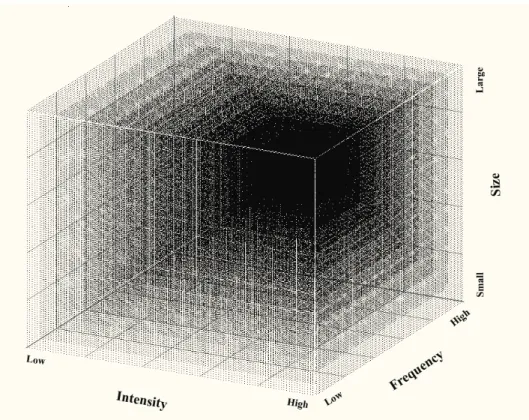
Fig. 1. A conceptual model of temperate forests in response to varied wind regime (wind intensity, frequency and size). The predictability of wind damage on forests varies with event and scale. The darker areas show lower predictability of forest response. Post-damage responses of forest structure, species composition, and diversity are more predicable (lighter in this graph) when wind frequency is high but wind intensity is low, and become less predictable (darker in this graph) when wind intensity increases and frequency decreases. As we described in the previous section, wind intensities of any catastrophic wind event can be complex and highly variable in space and time due the interactions between the unstable turbulence and the complex ground surface features over which the air moves (Barnes et al.,
1998). To understand the patterns of wind disturbance in forests, the risk factors need to be examined at relevant spatial and temporal scales and in the context of specific site conditions and stand history. Both abiotic (e.g., winds, topography, soil) and biotic factors (e.g., individual tree characteristics, tree species, stand attributes) interact to generate complex damage and mortality patterns. The features of a storm, forest location relative to the windstorm, pre-disturbance community attributes, disturbance history, and species susceptibility to wind all play a role in generating the complex and subtle patterns of damage.
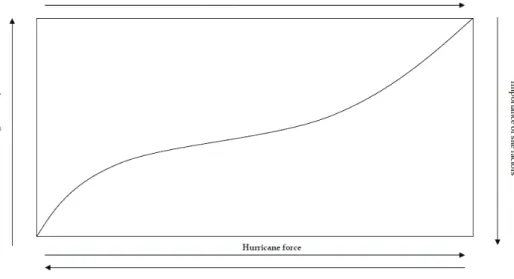
The importance of species traits and pre-disturbance community attributes decreases as wind intensity increases (Fig. 2). Moreover, the occurrence of windstorms may also interact with other disturbance forces such as subsequent wildfires, insect outbreaks, and fungal infections in complex ways to increase the degree of the complexity and unpredictability (Pickett & White, 1985; Webb, 1999; Platt et al., 2003; Peterson, 2007).
Fig. 2. Hypothesized relationships among hurricane force, forest damage severity, recovery time, and importance of site factors. Both forest damage and recovery time increase with hurricane force. The importance of site factors decreases when hurricane force increases (After Ackerman et al., 1991).
Catastrophic windstorms have various long-term effects on forest composition, dynamics and successional development. Those effects vary greatly from setting back forest succession by allowing establishment of early successional species to speeding up succession by releasing later-succession species already established in the understory. Change in species diversity following catastrophic wind disturbance ranges from increasing to decreasing to no change, depending on many factors such as damage intensity as well as the scale of the investigation. As a consequence, the long-term effects of catastrophic windstorms on forest composition, diversity, and succession are not well known and appear not particularly predictable. Additional long-term monitoring and predictive model development will be necessary to improve predictability.
3. Complexity of forest damage resulting from catastrophic wind
disturbances
3.1 Impacts on community structure
The most conspicuous forest changes caused by catastrophic winds are structural changes, which are often measured in terms of the changes in tree size or age distributions, basal area or biomass, stem density, or canopy heterogeneity. Three relatively consistent patterns in structural change that have been reported in both wind-damaged tropical and temperate forests are: 1) immediate increase in canopy heterogeneity, 2) short-term decrease in biomass, and 3) immediate decrease in density of all tree sizes followed by a dramatic increase in understory density a few years after wind damage. In temperate forests, the degree of structural change varies greatly depending on many abiotic and biotic factors including wind intensities, rainfall associated with the storm, community attributes, site conditions, and susceptibility to windstorm damage (DeCoster, 1996; Peterson, 2007; Xi et al., 2008a).
Studies of forest damage have reported loss of stand biomass following catastrophic wind disturbances to be highly variable and to depend on wind intensity, forest type, site exposure to wind, pre-disturbance species composition, and interactions of these major factors with subsequent risk factors such as fires and insect inflections. Reported losses of stand biomass vary greatly from 2% to 94% among forests and wind events. In several reported extreme cases, temperate forests have experienced high biomass loss due to the extreme intensities of windstorms and the high vulnerability of temperate forests to windstorm disturbances. Localized windstorms (e.g., downbursts) cause intensive damage across forest landscapes. For example, the 1977 Independence Day Storm, along a path 266 km long and up to 27 km wide, virtually leveled 240,000 ha mesic temperate forests in eastern Minnesota and northern central Wisconsin (Canham & Loucks, 1984). Hurricanes, on the other hands, often cause forest damage in much larger areas. The 1938 hurricane, for example, resulted in about 94% basal area loss in a 2000-ha survey area in New England (Spurr, 1956; Foster, 1988). Another example is the 1998 Hurricane Hugo, which reduced stocking by an average 66% in moderately to heavily damaged hardwood and oak-pine stands, and reduced the inventory of timber growing stock by about 20% in South Carolina as a whole (Sheffield & Thompson, 1992).
Catastrophic windstorms can substantially alter forest structure by simultaneously decreasing overall canopy height, increasing canopy patchiness, and increasing understory light heterogeneity. For example, hurricanes often result in a substantially increased gap size and a dramatic rise in understory light. Among studies of forest structural changes, canopy damage varies greatly from slight defoliation to about 90% increases in understory light (Turton, 1992; Veblen et al., 1989; Bellingham et al., 1996). In addition, catastrophic winds can increase within-stand spatial heterogeneity through clumped distribution of hurricane-induced tree mortality and aggregation patterns of surviving trees within the wind-damaged forest stands as a result of the uneven uprooting and stem snapping among different species and tree size classes (McDonald et al., 2003; Xi, 2005; Xi et al., 2008b). Catastrophic winds have profound impacts on the size distribution of trees and can induce substantial increases in the relative abundance of small size-class trees in the damaged forests during the subsequent years. Although catastrophic windstorms usually cause immediate reduction in tree densities of all sizes, especially for large canopy trees, they often result in a dramatic increase in the density of understory seedlings and saplings several years after the windstorms due to subsequent release of suppressed understory stems and
widespread sprouting. Sprouting is undoubtedly an important mechanism of tree recovery following windstorms in temperate forests. Studies have shown sprouting rates in the 20-80% percent range to be typical for temperate forests (Harcombe & Mark, 1983; Peterson & Pickett, 1991; DeCoster, 1996).
Our study on the effects of the 1996 Hurricane Fran on the Duke Forest in North Carolina has shown that hurricanes significantly diversify the live-tree size distribution in damaged forest stands. Overall, the predominant tree species of the upper canopy layer in both pine and hardwood forests decreased substantially due to the higher mortality of large-size trees. In the damaged pine stands, the mean size of the most dominant tree species (Pinus taeda) was increased and the density of pines decreased in all size classes. The hurricane also greatly affected pine stands by decreasing the relative abundance of small sized oaks (Quercus spp.) and hickories (Carya spp.). Several light-demanding and shade-intolerant hardwood species, such as tuliptree (Liriodendron tulipifera) and sweetgum (Liquidambar styraciflua), increased dramatically in density in the smallest size class (1-3 cm) during the 5 years following the hurricane, whereas dogwood (Cornus florida), the most damaged tree in the pine stands, decreased in stem density in all tree sizes (Xi, 2005; Xi & Peet, 2008a).
3.2 Complex patterns of tree mortality
The most obvious effect of catastrophic wind is tree mortality. Tree morality in general is positively related to wind intensity and inversely related to frequency, whereas no clear relationship has been identified between tree species and tree mortality (Everham & Brokaw, 1996; Xi et al., 2008b; Keeland & Gorham, 2009). Wind-induced mortality can be subtle, complex, and delayed, depending on several contributing factors such as the wind intensity, species of interest, individual size, and life form. In the literature, wind-induced tree mortality rates in temperate forests vary greatly among forest types and wind events, ranging up to around 80%.
In the tropics, tree mortality rates after a severe hurricane tend to be low. Walker (1991), for example, only recorded 7% mortality one year followed Hurricane Hugo (a category 3 hurricane) in Puerto Rica. Bellingham (1991) found 8% tree mortality 23 months after Hurricane Gilbert in Jamaica. Whigham and others reported 11.2 % in a Mexican forest 17 months after Hurricane Gilbert. These forests experience high hurricane return rates and the tree species that occupy them appear well adapted to these frequent disturbances.
Wind-induced tree mortality in temperate forests varies from low to extremely high. For example, Batista and Platt (2003) reported 7% mortality for the overstory trees after the relatively modest 1985 Hurricane Kate in an old-growth forest. However, high tree mortality by catastrophic winds have been reported for a number of temperate forests. Foster (1988) reported about 30% tree mortality for the 1938 hurricane in central New England, USA. Similarly, Hook and others (1991) found that Hurricane Hugo caused over 80% tree mortality in the Santee Experimental forest, South Carolina. In Piedmont forests, we found tree mortality of large-size trees to double in the period that spanned the hurricane event, in comparison to the pre-hurricane, although this increased mortality was not uniformly distributed across species. In addition, there was widespread delayed mortality of hardwood tree species following the hurricane (Xi et al., 2008b; Keeland & Gorham, 2009). These significant structural and dynamic changes appear likely to have a great and continuing influence on stand regeneration and forest development.
Tree mortality may vary among species. Several studies have assessed species-specific mortality caused by hurricanes in temperate forests (Foster, 1988, 1992; Bellingham et al., 1995, 1996; Batista & Platt, 2003; Chapman et al., 2008). In a comprehensive study of response of trees to the 1938 hurricane in central New England, Foster (1988, 1992) found large differences among tree species in their susceptibility to windstorm damage. However, species-specific mortality may not always be clearly distinguished since other mortality risk factors may interact to contribute to the complex patters of tree mortality. For example, in a study of the impact of a typhoon on Japanese warm temperate forests, Bellingham and others (1996) found that there was no consistent mortality pattern for most common species, but they found a few species, such as Symplocos prunifolia, sustained a high level of basal area loss, while others, such as Podocarpus nagi, had low mortality.
Understory morality patterns are less documented than those of the overstory, both in tropical and temperate forests. In some cases understory mortality may be low due to the shielding effects from high canopy trees (Imbert, 1996), but these effects vary among forests. Other factors such as leaf liter, woody debris, and light may also contribute to the mortality patterns of seedlings and saplings. In temperate Piedmont forests, the most rapid changes following catastrophic winds were seen in the understory seedling layer (Xi, 2005). Seedling density and species richness experienced an immediate drop. This was followed by a rapid rebound in seedling density and more gradual recovery and enhancement in richness and diversity. Seedling recruitment did not increase continuously over time and overall seedling density was relatively low compared to the pre-hurricane level. These disturbance-induced changes in the understory must be viewed in the context of variation in pre-disturbance tree species composition resulting from differences in habitat and stand history.
Observations of tree mortality are needed not just between forests but also across a time interval of several years following the event. One reason is the need to correct for variable background mortality rates among tree species, forest types, and successional phases. Another is that mortality following large catastrophic windstorms is often delayed (Walker, 1991, 1995; Sharitz et al., 1992; Xi, 2005; Xi & Peet, 2008a; Xi et al., 2008b). Temperate forest researchers have noticed that most damaged deciduous hardwood trees can remain alive for many years while still suffering enhanced mortality, plus a certain portion of the damaged trees might grow back through sprouting (e.g. Peterson & Pickett, 1991; DeCoster, 1996; Paciorek et al., 2000). Consequently, tree mortality must be examined over a long time period and in the context of background mortality of the specific species and successional phases. An immediately survey after a catastrophic wind event could significantly underestimate wind-induced tree death rates. We concur with the suggestion of Everham and Brokaw (1996) that “Mortality should be tracked for several years after catastrophic wind events to determine the extent of elevated mortality.” We further suggest that the 5-10 years of observation of the damaged plots is critical for a better understanding of long-term recovery process, particularly the underlying mechanisms of forest recovery from large disturbances.
3.3 Change in species composition and diversity
Changes in species composition and diversity following wind damage in temperate forests are often gradual and complex. Such subtle compositional changes can only be understood through longer-term observation, and in the context of baseline data at specific spatial and
temporal scales. To a large extent, these changes are difficult to detect without baseline data, which are rarely available.
A variety of patterns of change in species composition and diversity following large wind events has been reported in the literature. Relatively large changes in species composition and diversity are often, though not always, reported in temperate forests following catastrophic winds. Species diversity enrichment may occur during long periods of recovery in places where a canopy species has been heavily damaged, thereby releasing species present in the understory and perhaps allowing establish of new species in the less competitive environment (Spurr, 1956; Abrams & Scott, 1989). Severe wind intensities are needed to create large patches and to reconfigure the limiting resources such as light and soil nutrients. In these cases species diversity is enriched at the scales of the multiple-patch mosaic, and succession is set back (Webb, 1999).
Changes in species composition in temperate forests following wind disturbance can be modest if the same species that regenerate in disturbed patches are most heavily damaged. For example, after examining changes in two low canopy diversity Minnesota forests during 14 years following a catastrophic windthrow, Palmer and others (2000) concluded that the windstorm only affected understory species composition and that the forests increased in understory species richness, although the magnitude of the changes was modest. This is also the case for positive neighborhood effects suggested by Frelich and Reich (1995). Where the positive neighborhood effect is strong, little compositional change will occur because wind-thrown trees are often replaced by the same species (Webb, 1999).
The third possible outcome of wind disturbance commonly seen in temperate forests is loss of species diversity following large wind disturbance. This outcome results when shade-intolerant species sustain heavy mortality owing to concentration in the canopy and are unable to colonize disturbed patches because of a pre-established understory of shade-tolerant species. Sharitz and others (1992), for example, found that Hurricane Hugo reduced the tree diversity in the slough forest communities in a South Carolina riparian area by having disproportionably larger negative effects on shade-intolerant and transition species of the canopy than on the shade-tolerant species that dominated the subcanopy.
In Piedmont temperate forests, changes in sapling diversity following the 1996 Hurricane Fran were varied. Mostly, sapling diversity increased slightly following the hurricane. However, a decrease of sapling diversity was also observed where canopy damage was extremely high, though this may ultimately be compensated for by increased establishment of new seedlings of shade-intolerant species. The density of saplings initially decreased in most damaged plots, but sapling recruitment subsequently increased due to release of previously established seedlings. This observation is consistent not only with the hypothesized relaxation of competition, but also the hypothesis that windthrow can contribute greatly to tree diversity in temperate forests (Xi, 2005; Xi et al, 2008b).
4. Factors influencing mortality and their interactions
Severity of tree damage and mortality is related to both abiotic factors (e.g., winds, topography, and soil) and biotic factors (e.g., individual tree characteristics, tree species, stand attributes). Although wind speeds are the primary determinant of tree damage and mortality, topographic exposure, soil moisture and community attributes are the most important factors influencing differential damage across landscapes. Exposure to winds, saturated soil, and high stand density are all associated with high tree damage and mortality
risks. Tree species mixtures are also important for predicting landscape and stand-level damage severity, but evidence of species-specific damage and mortality is often less clear as species effects often interact with tree size.
4.1 Abiotic factors
Wind speed: Various studies have examined the relationship between wind speed and tree damage. In a broad sense, tree damage severity can be considered to be a function of wind speed. Fraser (1962) found that tree damage increases linearly with wind speed. Powell and others (1991) reported that little damage occurred below wind speeds of 17.5 m/s, and that trunk snapping and uprooting generally occurred at wind speeds above 33 m/s. Peltola (1996) found that the wind speed required to uproot a tree was much less than that required to cause the stem to break, and wind speeds of 12-14 m/s can to be strong enough to uproot Scots pines (slender individuals) located along a stand edge. Since even in flat terrain wind speed can vary substantially at scales of less than a kilometer, the local variation in wind speeds must be taken into account in examining landscape- and region-level wind damage (Foster & Boose, 1992; DeCoster, 1996; Peterson, 2000).
Topography: Topographic exposure has been shown to have major effects on wind damage at the landscape scale. In a Jamaican forest Bellingham (1991) found higher damage on southern slopes and ridge crests that were exposed to the hurricane-face winds, while minor damage occurred on protected northern slopes. Boose and others (1992) found a similar pattern of hurricane damage in New England, USA; higher damage occurred on southwestern slopes exposed to the hurricane winds, whereas minor damage occurred in a protected deep valley. They concluded that topographic exposure, combined with wind intensity and forest stand attributes, could largely explain damage patterns at landscape scale.
Soil features: Pre-hurricane soil moisture has been found to be a major factor in controlling whether uprooting or stem breakage is the dominant damage type (DeCoster, 1996). Where the soil is dry, uprooting is more difficult, and trees more common experience stem breakage. When the soil is wet, uprooting is more common (Xi, 2005). In the cold temperate forest zone such as in Finland, soil frost can reduce uprooting, and a decrease in the period or depth of frost can make trees more vulnerable to windthrow (Peltola, 1996).
4.2 Biotic factors
Individual tree architecture: Although not always true, the largest canopy trees often experience the most severe damage. Damage severity tends to increase approximately linearly with increasing tree height (e. g., Putz, 1983; Walker et al., 1992). Peltola (2006) found that the wind speed needed to cause uprooting or stem breakage of trees will decrease as the tree height or the tree height to dbh (diameter at breast height) ratio increases or the stand density decreases. For example, trees with tall, slim stems are usually extremely vulnerable. In addition to tree height, the shape and size of the tree crown and the shape of bole are important. Open-grown trees with large crowns could be extra vulnerable to high winds (Barry et al., 1993).
Species susceptibility: Tree species vary in their ability to withstand wind damage, their resistance depending on the interaction of several factors such as strength of wood, shape and size of the crown, extent and depth of root systems, shape of the bole (Barry et al., 1993), canopy characteristics, leaf features, and characters of root systems. Species with weaker
wood (Webb, 1989), lower leaf flexibility (Vogel, 1996, 2009), and shallower root systems (Lorimer, 1977; Whitney, 1986; Gresahm et al., 1991; Putz & Sharitz, 1991) generally suffer greater damage and mortality, although it is difficult to distinguish the effects of species from effects of tree size (Falinski, 1978; Johnsen et al., 2009). In the Duke Forest on the North Carolina Piedmont Hurricane Fran caused a higher incidence of damage in canopy hardwoods than pines. This was because hardwoods usually have broad spreading canopies and flat leaves that can catch the force of the wind much more readily than the smaller canopies and the needle leaves of pine trees. Moreover, hardwoods often have shallow, spreading root systems that increase their susceptibility to uprooting during hurricanes (Xi, 2005).
Tree species can be classified into different groups based on their susceptibility to wind disturbance (Xi & Peet, 2008a). Bellingham and Tanner (1995) studied tree damage and responsiveness in a Jamaican montane forest following Hurricane Gilbert. Based on indices of hurricane-caused damage (including short-term change in morality and percent of stem that lost crown) and species response following the hurricane (including change in recruitment rate, change in growth rate, and frequency of sprouting), they classified 20 tree species into four groups: resistant (low damage, low response), susceptible (high damage, low response), resilient (high damage, high response), and usurpers (low damage, high response). They further predicted that species classified as usurpers would increase their relative abundance in the forest in the next decades, whereas the susceptible tree species would decrease in relative abundance of adults. Similarly, in an old-growth forest damaged by hurricanes in southeastern USA, Batista and Platt (2003) classified 10 tree species into four similar syndromes of response to disturbance according to observed mortality, recruitment, and growth patterns: resilient, usurper, resistant and susceptible. Barry et al. (1993) have provided a rank of resistance of tree species to hurricane-related damage for the major tree species in the southern United States. Although a more complete classification is needed, these classifications provide helpful information for forest managers.
Community attributes: Community attributes such as stand height and age, stand density, and stand edge inevitably influence tree damage risk. Taller forests are generally subject to greater damage and mortality risk than shorter ones. This increase is thought to be primarily a result of greater exposure to wind in the canopy and the increased leverage achieved with canopy movement. Because wind speeds are much higher at and above the crown level than within the stand, taller trees are subject to higher damage risk than shorter ones (Fraser, 1964; Somerville, 1980). Another reason for increasing damage with increasing stand height is that smaller, younger trees are generally more flexible to wind flows (Vogel, 1996). Foster (1988, 1992) found where severe windthrow of more than 75% of the trees was reached, it mostly occurred in stands of > 25 m height. Similarly, DeCoster (1996) reported a positive relationship between stand height and tree damage for 1989 Hurricane Hugo in South Carolina and for a separate severe tornado event on the Carolina Piedmont.
Literature reports on the effect of stand density on tree damage risk have been variable. Most studies have shown a trend of increasing damage with decreasing stand density (Prior, 1959; Busby, 1965; Thomson, 1983; Jane, 1986; Foster, 1988b; Hook et al., 1991; Peterson & Leach, 2008a, 2008b), but there are contrasting results, in part because denser stands often consist of younger and more flexible trees. For example, Fraser (1965) found a dense stand would decrease the lateral spread of roots and thereby increase tree damage. Overall, the complex effect of stand density on tree damage is unclear, perhaps because the confounding
effects of stand density, tree size, tree species, and tree architectural characteristics have generally not been adequately separated. These relationships need to be examined through more comprehensive field experiments (e.g., Peltola, 1995; Vogel, 1996, 2009).
Interactions of factors: Much of the complexity of tree damage and mortality is caused by meteorological, topographical, and biological factors simultaneously interacting to create patterns of damage. Consequently, the interactions among factors must to be taken into account to better understand wind-damage relationships. Wind-induced effects and their interactions (e.g., insect breakouts, subsequent fires) need to be considered in evaluating indirect damage. For example, smaller trees sustain wounds caused by the falling tops of adjacent uprooted trees and the major branch breakages during the windstorm are often attacked by insects or affected by diseases (Barry et al., 1993). Similarly, trees with damaged root systems are often invaded by root rot organisms and subjected to higher risk to subsequent windstorms (Pickett & White, 1985).
In temperate forests, large wild fires often interact with hurricanes to cause greater forest damage (Platt et al., 2002). Myers and Lear (1998) in a literature review found that in temperate forests, conditions after exceptionally strong hurricanes promote the occurrence of fires of higher than normal intensity. Paleotempestological records also support this hurricane-fire interaction in the Holocene maritime pine-oak forests of the Gulf coast region (Liu, 2003). Conversely, Kulakowski and Veblen (2002), working in montane forests of Colorado, found fire history and topography can influence the severity of wind blowdown and the susceptibility of forest stands to wind damage.
Ackerman and others (1991) developed a graphic model depicting expected variation in forest damage and recovery following hurricanes (Fig. 2). The force exerted by a hurricane increases as a function of wind velocity and storm duration, and decreases with distance from the eye of the hurricane. Forest damage severity increases with intensity of a hurricane (i.e. wind speed), but the amplitude of the relationship depends on the physical and biotic factors of a given site, such as topography, geomorphology, soil moisture, species composition, vegetation structure, state of recovery since last disturbance, plant architecture, size, age, and anatomy. The influence of site factors on the extent of forest damage decreases as the magnitude of the hurricane increases.
Multiple factors simultaneously interact to contribute the observed damage complexity. Canham and others (2001), for example, examined the specific variation in susceptibility to windthrow as a function of tree size and storm severity for northern temperate tree species. In future studies, research should address the interplay of multiple factors, pre- and post wind disturbance event, through experiments, modeling, and cross-site comparison to separate the confound effects.
5. Forest responses
The distinct feature of wind-damaged forests, as compared with forests that have experienced other large, infrequent disturbances such as wild fires and volcano eruption, is that wind-damaged forests often have relatively rapid recovery through multiple recovery pathways. Foster and others (1991) identify two major regeneration pathways: 1) from surviving vegetation through advanced regeneration (advanced growth) and vegetative reproduction (sprouting), and 2) from seedling dispersal, recruitment and establishment (Fig. 3). The rapid recovery of wind-damaged forests largely results from stem sprouting and the advanced growth of the surviving trees in the new environment of increased light,
soil moisture, and nutrient resources. In addition, windthrow creates more diverse soil substrates and allows active seedling and sapling regeneration. Here we review studies of surviving trees and the understory response to canopy tree gaps and disturbed soil.
5.1 Regrowth of surviving trees by sprouting
Regrowth plays an important role in tree recovery from catastrophic wind disturbances, especially in temperate hardwood forests. After damage by intensive winds, a high portion of hardwood trees can regrow from sprouts. Although several researchers have reported differences among species in sprouting ability in both tropical (Walker et al., 1992; Zimmerman et al., 1994; Bellingham et al., 1994) and temperate forests (Perterson & Pickett, 1991; DeCoster, 1996; Busby et al., 2009), this capability appears common. In Piedmont forests of North Carolina, resprouting of damaged individuals and vegetative production of additional shoots were common for most hardwoods (Xi, 2005).
Fig. 3. Conceptual model of temperate forest regeneration following hurricane disturbance. Two major recovery pathways are represented by large arrows. The microsite environment influences each stage of the pathway of regeneration from seed but exerts less influence on the pathway of regeneration from surviving vegetation (Modified from Foster et al., 1991).
5.2 Understory response to canopy gaps
The understory of damaged forests plays a major part in forest response to windstorms in temperate forests (Webb, 1999). Three mechanisms have been often reported in the wind disturbance literature: release of understory plants, recruitment, and repression. “Release” refers to the rapid growth of suppressed understory plants following catastrophic disturbances. Reduced competition often allows an increased growth of established seedlings and saplings of primarily shade-tolerant species that were present in the understory at the time of disturbance. Most work on plant “release” after catastrophic winds has been done on samplings and small trees, though the release of established seedlings should also be expected (Fajvan et al., 2006). Piedmont forests have remarkable resilience to hurricane damage because of widespread advanced regeneration. In Piedmont North Carolina, most tree seedlings and saplings approximately doubled their relative growth
rates after the 1996 Hurricane Fran, although not uniformly across tree species (Xi, 2005; Xi & Peet, 2008a).
Recruitment is the addition of new individuals into a community (Ribbens et al., 1995). Previous post-disturbance observations on seedling establishment have shown an increase in seedling density following hurricanes, due probably to increased light and soil nutrient availability (Guzman-Grajales & Walker, 1991). In Puerto Rican forests, recruitment from seeds was promoted by the large increase in area of gaps and the increased understory light following Hurricane Hugo (Everham et al., 1998).
5.3 Ground features: mounds and pits, leaf litter, and woody debris
In addition to increasing light, windstorms generate a highly diverse substrate with treefall mounds and pits, stumps, leaf litter, and rotting logs. With increased light, the microsites play important roles, influencing understory composition, species diversity, growth, and dynamics (Peterson et al., 1990; Webb, 1999; Busing et al., 2009). These newly formed microsites often differ from intact forests in their greater soil moisture and nutrient availability, thereby allowing rapid establishment of species that require not only increased light, but also more abundant soil water and nutrients than typically found in an intact stand.
Although several studies have examined the roles of mounds and pits following windstorm disturbance, the results have varied greatly between forests. Walker and others (2000) examined seedling and saplings dynamics in treefall pits in a Puerto Rican rain forest and found that treefall pits significantly alter recruitment and mortality of many understory species, but not species richness. In some cases, mounds support more species than pits or un-damaged forests (e.g., Collin & Pickett, 1982). However, Peterson and others (1990), working in a temperate forest, found lower species richness on mounts than in pits.
Increased leaf litter can be an important factor influencing seed germination and seedling establishment after windstorm disturbance. In addition, woody debris can provide important sites for germination and establishment (Webb, 1999). Guzman-Grajales and Walker (1991) examined the effects of three litter treatments on seedling emergence, growth, density, and mortality during the year following Hurricane Hugo in a Puerto Rican forest. Their conclusion was that leaf litter is a major constraint to seedling recruitment. The role of leaf litter in temperate forests is still less known.
6. Long-term effects of catastrophic wind disturbance
Despite the fact that much has been learned about immediate damage patterns and short-term impacts of catastrophic winds, less is known regarding long-short-term effects on forest composition, diversity, and succession. Study of long-term effects of historical wind events is difficult because rarely have ecologists been able to combine long-term pre-event and long-term post-event data. Moreover, the few long-term datasets that are available for this purpose were generally not designed or initiated with disturbance events in mind (e.g., Xi & Peet, 2008b). Nonetheless, sufficient information is available to indicate that hurricanes can have long lasting effects on tree growth, species composition, diversity, and succession, and that these effects can vary greatly with wind intensities, pre-disturbance community attributes and the timing of the winds (Fig. 4).
6.1 Long-term effects on species composition and diversity
A widely accepted view among forest ecologists is that severe hurricanes have relatively minor long-term effects on species composition and diversity in tropical forest regions and coastal temperate regions where hurricanes are common. Many case studies in the tropics, including studies in Puerto Rico, Nicaragua, Jamaica, and Kolombangara, support this general conclusion (but see Vandermeer, 2000). For example, Burslem and others (2000) found that historical hurricanes had only limited effects on species composition after 60 years of forest recovery.
Fig. 4. Old-field succession on Piedmont and four-stage forest succession model and hypothesized tree species diversity curve (as showed in solid line) over time. The effect of a hurricane on tree species diversity is relatively low during the establishment and thinning phases due to the low species diversity at these two stages, whereas impacts are potentially higher at the transition and steady-state phases due to the increased species diversity. Hypothesized post-hurricane changes in species richness are showed as dash-lines. In the extremely damaged areas, local species diversity likely immediately drops to early
succession levels due to direct elimination of species by high winds and gradually recovery over time; When wind intensity is low, tree richness changes little due to the resilience of the forests. Modest wind intensity may cause temporary reduction in species diversity
following a hurricane but increase tree diversity over time due to more fragmented habitats for new species. These hypotheses need to be further examined by long-term field studies. In contrast with results from most coastal tropical studies, significant but highly variable results regarding long-term change in community composition and species diversity have been reported for temperate forests (Table 2). Large, infrequent wind disturbance events have played an important role in shaping regional vegetation and influencing dynamics in many temperate forests (Foster & Boose, 1995; Webb, 1999). Change in species diversity following catastrophic wind disturbance varies from increasing to decreasing, depending on many factors such as damage intensity and scale of the investigation. In the extremely damaged areas, local species diversity likely immediately drops to early succession levels
due to direct elimination of species by high winds and gradually recovers over time (Fig. 4). Large temperate-zone hurricanes generally have had a stronger impact on species richness in heavily damaged stands (Peet & Christensen, 1980; Foster et al., 1998; Boose et al., 2001). For example, Peet and Christensen (1980) reported increased species richness in a comparison study of two hardwood plots in the Duke Forest, North Carolina Piedmont, 23 years after the 1954 Hurricane Hazel. The permanent plots that were severely damaged had twice as many as tree species saplings as compared with the number before the 1954 Hurricane Hazel. This post-disturbance increase in regeneration of multiple species following an intense windstorm is consistent with a general pattern of dynamic, patch-driven regeneration and diversity maintenance in temperate forests.
Damage patterns and forest responses Reference Temperate
forests
Although geographically variable, generally a low frequency of hurricane damage, but less intense. Windstorms are frequent. Trees are more
susceptible to windthrows. In some cases damage severity can be extremely high. Release of advanced regeneration is common. Greater portion of uprooting than in other types.
Forster, 1992; Peterson, 2002; Xi et al., 2008b
Coastal tropical forests
Geographically variable, but in general more frequent catastrophic hurricanes. Trees are more wind-resistant. Less composition and diversity change; high and relatively stable tree species diversity. Regrowth and sprouting are common.
Walker, 2002; Whigham, 2003
Early succession forests
The young trees of secondary forests are typically more resistant to wind throw than the larger and more brittle trees of old growth. Increased pioneer species in the damaged forests.
Webb, 2000; Xi, 2005; Xi et al., 2008a; Xi & Peet, 2008a Late succession
forests
Forests are susceptible to windthrows. Diversified forest structure and dynamics; maintenance, increased or decreased tree species.
Mitchell et al., 2004; Xi et al., 2002, 2008b Table 2. Comparison of temperate forests and tropical forests, early succession forests and late succession forests in their responses to catastrophic wind disturbance events.
Species dominance may shift substantially after wind disturbance because early successional species thrive in the hurricane-created gaps, although the long-term term effects are less evident. Nonetheless, the addition of early succession species in those successional patches in some cases leads to short-term increases in landscape diversity. Moreover, the results may be scale dependent. For example, following the 1989 Hurricane Hugo, Everham (1996) found that the number of plant species increased in some sites when observed at an intermediate spatial scale (i.e. hectares), but was essentially constant at both larger and smaller scales. Over the several decades following a hurricane, the short life span of the early successional species, coupled with the self-thinning process, may again result in reduced dominance and landscape diversity. Thus, overall, catastrophic wind disturbance may have a limited small-scale effect on species diversity over time, while enhancing diversity at intermediate scales.
6.2 The lasting effects of windstorms on forest succession
Extreme windstorms tend to differentially remove the oldest and largest trees in a stand. As a consequence, large, catastrophic wind events have been concluded to significantly change forest structure and alter the rates of various processes in the temperate forests, even though their long-term effects on forest succession are uncertain (Waring & Schlesinger, 1985; Foster & Boose, 1995). Studies of long-term wind effects on temperate forest succession to date have shown that windstorms can have all possible effects from setting succession back to advancing successional stages, to initiating multiple-stages of succession, depending on wind intensity, frequency, forest types and pre-disturbance successional stage.
The traditional idea that wind disturbance sets back succession to some earlier seral stage may apply in temperate forests where extreme high winds create large forest openings and initiate secondary succession. The mechanism for this change is that severe windstorms substantially damage the late-successional, canopy-dominant tree species and lead to establishment of early successional species. Therefore, ‘setting back of succession’ often occurs in the later successional hardwood forests exposed to extreme wind intensity. The New England hurricane of 1938, for example, leveled many thousands of acres of mature and semi-mature hardwood forests and initiated new forest associations over a large area with the long-lasting effects (Wilson et al., 2005).
Wind disturbance can also accelerate succession when early successional canopy tree species are heavily disturbed (White & Jentsch, 2004; Xi, 2005). In temperate forests where early successional tree species such as various pines and oaks are dominants, instantaneous death of the even-aged canopy by intensive winds tends to advance forest succession and differentially favor the shade-tolerant understory species. Abrams and Scott (1989) in particular showed that windstorms, among other disturbances, can accelerate forest succession in some North American forest communities. The 1938 hurricane that caused in excess of 30% tree mortality and large areas of windthrow in New England heavily damaged successional Pinus strobus forests, accelerating successional turnover to hardwood species that were in some cases already present in the understory (Foster & Boose, 1992). Arevola and others (2000) examined the changes in both pine and hardwood stands 14 years following a catastrophic windstorm in Minnesota and concluded that the wind disturbance acted to accelerate the successional process in both forest types by increasing the rate of compositional change from early successional pines and hardwoods to late-successional hardwoods. Although this pattern may be somewhat simplistic, the patterns they found appear common in temperate forests.
When the dominants in temperate forests are damaged by windstorms but are replaced by same type of species, succession can be held at the same stage. In this regard, biotic factors such as propagule supply may strongly influence long-term forest recovery and succession following a large disturbance. In the case of intensive wind, the interactions of survivors and the pre-disturbance understory species (small trees and saplings) may determine the initial state in which the forest develops and the recovery pathways from the catastrophic wind event. Turner and others (1998) have argued that the abundance and spatial arrangement of the survivors and the arrival pattern of propagules may be the pivotal factors determining how succession differs between catastrophic disturbances of large and small extent. However, few studies actually examine this effect and the role of propagule availability in influencing forest regeneration and succession largely remains a matter of conjecture (Webb, 1999).
7. The role of the predictive models for evaluating wind impacts
Ecologists and foresters have increasingly used modeling approaches to evaluate damage-risk factors and predict forest responses to large disturbances such as windstorms. A major focus of such modeling work has been integration of remote sensing, aerial photo, and ground field data with GIS software to assess damage risk factors at various spatial scales. For instance, Foster and Boose (1992, 1994) took an integrative approach through analysis of remotely sensed, historical and field data to assess actual forest damage in both tropical and temperate forests. They also developed meteorological and topographic exposure models to reconstruct wind conditions and site exposure to windstorms. Pleshikov and others (1998) developed a computer system for evaluating and predicting pine stand resistance to hurricane-force winds in central Siberia. They attempted to analyze risk factor at landscape, stand, and single-tree scales. Lindemann and Baker (2002) used GIS with CART (Classification and Regression Tree) and logistic regression to analyze a severe forest blowndown in the Southern Rocky Mountains and found that the blowdown was most influenced by the factors pertaining to the physical setting. However, McMaster (2005) suggested that detailed site-specific factors such as average stem diameter, species, canopy height, and stand age are critical for improved accuracy of forest blowdown prediction. Several studies have focused on modeling forest dynamics after large hurricanes. Doyle (1997) developed the HURISIM model for modeling hurricane effects on mangrove forests. He used historical simulations that included actual hurricane tracks and tree conditions and found hurricanes account for much of the structural composition of modern-day mangrove forests across south Florida. He suggested that the occurrence of major storms with a contemporary recurrence interval of 30 years may be the most important factor controlling mangrove ecosystem dynamics in south Florida. Canham and others (2001) developed maximum-likelihood models for simultaneously estimating both local storm severity and the parameters of functions that define species-specific variation in susceptibility to windthrow.
Development of spatially-explicit and landscape-scale models is becoming an active research arena of forest disturbance dynamics. These models have proven especially useful for examination of windstorm impacts. Kramer and others (2001) built such a spatially-explicit model to examine abiotic controls on windthrow and forest dynamics in southeast Alaska. More recently, Schumacher and others (2004) developed a modified LANDIS landscape model to examine the interaction among species-specific responses, intra- and inter-specific competition, and exogenous disturbance regimes including winds. Landscape models have an important role as tools for synthesizing existing information and making projections of possible future vegetation dynamics at large spatial scales.
In summary, developing and applying predictive models provides a promising opportunity for evaluating and projecting windstorm-induced forest damage. The predictive models can project the loss/alteration of habitat and the resulting impact on species diversity, and thus can be effective evaluation tools that when used properly and in conjunction with other assessment techniques could be a valuable aid in understanding forest damage patterns and controlling factors at various temporal and spatial scales. These models can also be an effective tool for post-damage forest management decision-making (Kupfer et al., 2008).
8. Synthesis and future directions
A general framework is needed for understanding the complexity of windstorm effects on temperate forests and subsequent forest response. In this paper, we combine illustrative
examples to present a conceptual framework and then link them to several important themes that have emerged in recent years. Two relatively separated lines of investigation are apparent in the literature review, one focused on the complexity of forest damage patterns and their risk factors, and the other focused on the high degree of variation among forests in their structural and compositional responses to windstorm disturbances.
The variation among wind regimes and forest responses makes generalization a challenge. The literature here reviewed shows the complexity of pattern in forest damage and tree mortality following catastrophic wind, as well as the significant variation among forests in structural and composition responses. Many factors interact to influence the patterns of damage and dynamics of recovery. Therefore, evaluating the relative importance of multiple-factors and various recovery patterns across the full spectrum of disturbance severity levels will help elucidate these factors and their interactions. Nonetheless, there remains a clear need for additional studies that quantify wind disturbance severity and complexity of impact in high-wind damaged forests.
Windstorm-induced dynamics may vary at the different spatial and temporal scales. The ecological consequences of catastrophic winds are complex, subtle, and at smaller scales relatively unpredictable. Consequently, wind-induced changes must be viewed in the context of interaction and variations among multiple factors, especially species composition resulting from differences in habitat and stand history. Remarkably few studies have actually examined multiple factors and multiple-scale wind damage and forest recovery. Windstorm-induced effects should be examined across a gradient of spatial and temporal scales if we are to understand and explore these complicated and scale-dependent processes and patterns.
Long-term studies of forest response to different combinations of the wind disturbance severity are needed. The variable effects of windstorms on temperate forests largely depend on the wind intensity, size, specificity, frequency of individual windstorms in a given location, pre-disturbance species composition, and successional stage. The complex impacts of winds and variable forest recovery are more readily discerned when detailed, long-term pre-disturbance and long-term post-disturbance data are available. Certainly, more extensive long-term studies on permanent research sites will be important for understanding the long-term impacts.
Finally, better and more generally applicable models are needed for predicting the impacts of future catastrophic windstorm events on forests. Both population-based gap models and spatially explicit landscape models provide powerful tools for predicting forest disturbance and dynamics. Recent progress has been made in constructing such models applicable to temperate forests (Doyle, 1997; Schumacher et al., 2004), but parameterization of these models for species-rich systems presents considerable challenges. Direct estimates of colonization and mortality rates from long-term studies in temperate forests could be highly valuable for improving these models. Predictive models will ultimately provide the knowledge essential for understanding the role of windstorm disturbances in forest communities, in guiding conservation efforts, and in informing forest management decisions.
9. Acknowledgements
This work was supported by a grant from the National Science Foundation (DEB-97-07551). We thank Peter White, Seth Reice, Dean Urban, and Aaron Moody for providing valuable
comments on earlier versions of this manuscript. We thank Jie Zhao for her considerable help in refining the figures.
10. References
Abrams, M. D. & Scott, M. L. (1989). Disturbance-mediated accelerated succession in 2 Michigan forest types. Forest Science, Vol. 35, No. 1, 42-49, ISSN:0015-749X
Abrams, M. D.; Sprugel, D. G. & Dickmann, D. I. (1985). Multiple successional pathways on recently disturbed jack pine sites in Michigan. Forest Ecology and Management, Vol. 10, No. 1, 31-48, ISSN: 0378-1127
Ackerman, J. D.; Walker, L. R.; Scatena, F. N. & Wunderle, J. (1991). Ecological effects of hurricanes. Bulletin of the Ecological Society of America, Vol. 72,178-180, ISSN: 0012-9623
Akachuku, A. E. (1993). Recovery and morphology of Pinus resinosa trees 50 years after they were displaced by a hurricane. Forest Ecology and Management, Vol. 56, No. 1-4, 113-129, ISSN: 0378-1127
Allen, B. P.; Pauley, E. F. & Sharitz, R. R. (1997). Hurricane impacts on liana populations in an old-growth southeastern bottomland forest. Journal of the Torrey Botanical Society, Vol. 124, No. 1, 34-42, ISSN: 1095-5674
Arevalo, J. R.; DeCoster, J. K.; Mcalister, S. D. & Palmer, M. W. (2000). Changes in two Minnesota forests during 14 years following catastrophic windthrow. Journal of Vegetation Science, Vol. 11,833-840, ISSN: 1100-9233
Baker, G. T. (1915). A windfall problem. Forestry Quarterly, Vol. 13,317-324, ISSN: 0022-1201 Baker, W. L.; Flaherty, P. H.; Lindemann, J. D.; Veblen, T. T.; Eisenhart, K. S. & Kulakowski,
D. W. (2002). Effect of vegetation on the impact of a severe blowdown in the southern Rocky Mountains, USA. Forest Ecology and Management, Vol. 168,63-75, ISSN: 0378-1127
Barnes, J. (2001). North Carolina's hurricane history. The University of North Carolina Press, ISBN 978-0-8078-4969-9, Chapel Hill and London. USA
Barry, P.; Doggett, C.; Anderson, R. & Swain, K. (1993). How to evaluate and manage storm-damaged forest areas. United States Forest Service, Southern Region Management Bulletin R8-MB 63. 11 p
Batista, W. B. & Platt, W. J. (2003). Tree population responses to hurricane disturbance: syndromes in a south-eastern USA old-growth forest. Journal of Ecology, Vol. 91,197-212, ISSN: 0022-0477
Batista, W. B.; Platt, W. J. & Macchiavelli, R. E. (1998). Demography of a shade-tolerant tree (Fagus grandifolia) in a hurricane-disturbed forest. Ecology, Vol. 79,38-53, ISSN: 0012-9658
Battaglia, L. L.; Sharitz, R. R. & Minchin, P. R. (1999). Patterns of seedling and overstory composition along a gradient of hurricane disturbance in an old-growth bottomland hardwood community. Canadian Journal of Forest Research, Vol. 29,144-156, ISSN:0045-5067
Bazzaz, F. A. (1983). Characteristics of populations in relation to disturbance in natural and man-modified ecosystems, In: Disturbance and Ecosystems - Components of response, Mooney, H. A. & Godron, M. (Eds.), page 259-275, Springer-Verlag, ISBN-10: 3540124543, Berlin, Germany
Beatty, S. W. & Sholes, O. D. V. (1988). Leaf litter effect on plant-species composition of deciduous forest treefall pits. Canadian Journal of Forest Research, Vol. 18,553-559, ISSN:0045-5067