June 2012
Coastal Training Program
Strategic Plan
2012-2016
Lake Superior NERR CTP Strategic Plan
Page 2 of 9Table of Contents
Introduction ... 3
Program Context ... 3
Programmatic ... 3
Ecological and Social ... 3
Contribution to the Reserve’s Goals and Objectives ... 4
Supporting the Reserve’s Guiding Principles ... 5
Program, Mission and Goal ... 5
Priority Issues and Training Needs ... 6
CTP Focus Areas ... 6
Focus Area A: Shoreland Zoning and Water Law ... 6
Focus Area B: Watershed Management and Land Use Planning ... 6
Focus Area C: Water Quality and Stormwater Management ... 6
Focus Area D: Wetland Protection, Restoration and Mitigation ... 7
Focus Area E: Species of Interest ... 7
Focus Area F: Climate Change Adaptation Planning ... 7
CTP Objectives, Outcomes and Strategies ... 7
Objectives ... 8
Strategies ... 8
Training Tools and Identified Preferences... 9
Current and Anticipated Partnerships ... 9
Priority Audiences ... 9
Monitoring, Evaluation and Program Administration ... 9
List of Appendices
Appendix A. Logic Model
Appendix B. Advisory Committee Appendix C. Needs Assessment Appendix D. Market Analysis Appendix E. Marketing Plan Appendix F. Yearly Action Plan
Appendix G. Training Tools and Budget Appendix H. Current and Anticipated Partners
Lake Superior NERR CTP Strategic Plan
Page 3 of 9 It is situated on the freshwater estuary at the confluence of the St. Louis River and Lake Superior located on the southwestern tip of Lake Superiorand is bordered by Wisconsin and Minnesota. The Lake Superior NERR is in the pre-operational phase of
developing a Coastal Training Program (CTP) to complement the developing research and education programs by addressing the coastal resources management information and training needs of coastal decision makers in the Wisconsin and Minnesota portions of the Lake Superior basin. This document represents the strategic plan for the operational phase of the CTP and currently reaches out to six coastal counties located in Wisconsin (Ashland, Bayfield, Douglas and Iron) and
Minnesota (Carlton and St. Louis).
Program Context
Programmatic
The Lake Superior NERR CTP engages and informs resource management and decision-making
professionals, elected officials and volunteers in the maintenance and restoration of healthy Lake Superior coastal ecosystems. Coastal training efforts will target specific audiences and competency levels, and staff will work in partnership with existing organizations and entities that currently provide trainings to enhance local and regional training opportunities.
Ecological and Social
The Lake Superior NERR is located in the St. Louis River Freshwater Estuary (SLRFE) at the western end of Lake Superior. The Reserve, 16,697 acres in size, is comprised of publically held wetlands, beach, and upland forest habitats. The St. Louis River is the largest U.S. tributary to Lake Superior and is bordered by the states of Wisconsin and Minnesota. Historically, aquatic communities in this drowned river mouth freshwater estuary consisted mainly of shallow coastal wetland habitat. Many acres have been dredged and filled to accommodate the shipping industry. Though the St. Louis River watershed was extensively logged during the late 1800’s and into the early 1900’s the region’s land cover remains predominately forested. The location of this freshwater estuary, at the headwaters of the Great Lakes, together with the protection provided by an 11mi bay-mouth sand bar, make it the busiest U.S. port on the Great Lakes. Prior to European settlement, the region was home to the Fond du Lac Band of Lake Superior Chippewa and remains so today, with tribal reservation lands located adjacent to the City of Cloquet, Minnesota, approximately 20 miles west of Duluth, Minnesota. The Superior-Duluth region is one of the major urban areas on Lake Superior with a population of 279,771 (2010 census). Some 3.5 million visitors each year contribute more than $400 million to the local economy, drawn in large part by the beauty and natural amenities of the St. Louis River and Lake Superior.
Lake Superior NERR CTP Strategic Plan
Page 4 of 9 The soils within the watershed are predominantly clay and poorly drained. The relatively flat topography combined with loss of wetlands and forest cover have acted to disrupt stream hydrologic and channel erosion patterns, especially during high precipitation and flood events. Channel erosion also contributes to increased turbidity and high sediment delivery rates downstream. Though the freshwater estuary had serious water quality problems into the early 1970’s, water treatment by the Western Lake Superior Sanitary District began to reverse this trend in the mid to late 1970’s. Conditions have dramatically improved during the past 30 years and many fish and wildlife populations have recovered. The lower St. Louis River has been identified as an Area of Concern (AOC), one of seven on Lake Superior, and a Remedial Action Plan has identified nine beneficial use impairments. Delisting targets have beendeveloped and regulatory agencies in Wisconsin and Minnesota are developing research projects based on these targets. Recent projects have focused on fish and wildlife habitat restoration, contaminated
sediment remediation and ballast water treatment technology to reduce invasive species introductions.
Contribution to the Reserve’s Goals and Objectives
The mission of the Lake Superior NERR is to work in partnership to improve the understanding of Lake Superior freshwater estuaries and coastal resources and to address the issues affecting them through an integrated program of research, education, outreach and stewardship. The Reserve goals as stated in the management plan are:
1. Conduct applied research and monitoring to increase the understanding of Lake Superior freshwater estuaries and coastal ecosystems;
2. Educate youth, students, community members and visitors about Lake Superior freshwater estuaries and coastal resources and improve their ability to address coastal issues;
3. Increase the ability of community leaders and other decision makers to address critical Lake Superior coastal management issues; and
4. Protect and enhance the ecological health of the St. Louis River Watershed and Lake Superior coastal habitats.
The Reserve’s third goal to increase the ability of community leaders and other decision makers to address critical Lake Superior coastal management issues primarily involves the CTP. The CTP supports this goal by the commitment to integrate the program with the research and education sectors of the Reserve through the development and implementation of education, research and stewardship programs. The Reserve’s management plan contains seven objectives. These objectives are broad statements describing what the Lake Superior NERR intends to accomplish during the first five years. The CTP will strive to support four of those objectives within the framework of this strategic plan. These objectives, stated below, are also identified in parenthesis after the CTP outcomes in the following section of this plan.
Reserve Objective 1: Conduct baseline or foundational research and activities needed for longer-term research and monitoring directed at improving the understanding of the St. Louis River Freshwater Estuary, its interactions with Lake Superior, and the short and long-term ecological changes within Lake Superior freshwater estuaries and coastal ecosystems.
Reserve Objective 2: Improve understanding of the socio-economic aspects of the St. Louis River Freshwater Estuary.
Reserve Objective 3: Increase public awareness of the ecological and cultural significance of the St. Louis River Freshwater Estuary.
Reserve Objective 5: Provide research-based educational outreach programming and skills training that address the Lake Superior coastal management issues and needs of community leaders and other decision makers.
Lake Superior NERR CTP Strategic Plan
Page 5 of 9 the development of workshops, resources and services. The Guiding Principles include: Promote understanding, appreciation and protection of the unique freshwater estuary systems of Lake Superior
Demonstrate the application of watershed principles
Create a vital community asset and a destination for visitors
Become a model for long-term community involvement and inter-governmental cooperation
Conduct research of local, statewide, regional, national, and international importance
Provide leadership for integrated research, management and educational outreach related to freshwater estuaries.
The CTP will foster the application of these principles by engaging decision-makers in learning about the values and functions of Lake Superior freshwater estuaries, the importance of these ecosystems to their communities and the tools they can utilize to protect and sustain these systems.
Program, Mission and Goal
The Lake Superior NERR CTP will address coastal management issues and examine key coastal ecosystem processes that affect the SLRFE as well as other Great Lakes freshwater estuaries. Coastal management issues will be researched and the knowledge gained will be transferred to coastal decision makers through the education and CTP sectors in order to improve
their ability to address these issues. The CTP will address locally and regionally significant issues for coastal decision makers based on Lake Superior NERR and other peer-reviewed research. For example, trainings and training materials will be developed for municipal officials, planning boards, state and local government staff and natural resource managers to address the management issues such as watershed planning, stormwater management and climate change. This plan identifies several priority focus areas for programming that will address short term outcomes described in the Lake Superior NERR CTP logic model (Appendix A). The Lake Superior NERR CTP has established an ad-hoc advisory committee to provide input on the strategic plan, needs assessment, and workshop planning and implementation (Appendix B). Workshops, technical training and other outreach programs and techniques will be developed and implemented in order to further the mission and goals of the Lake Superior NERR. The strategic plan has incorporated the results of
the CTP Needs Assessment and CTP Market Analysis. The CTP Coordinator will plan and coordinate training events for local coastal decision-maker audiences and will work closely with the Education and Research Coordinators, and other Lake Superior NERR staff to translate research and monitoring
information and develop education programs based on Lake Superior NERR priority management issues. Materials will be jointly developed by sector coordinators to support workshop issue areas. Partnerships are being developed with regional and state agencies in order to maximize opportunities for training. Additional resources to address Lake Superior and Great Lakes coastal issues will continue to be identified and grant proposals developed to secure additional funding. The CTP staff will serve on national, state, and local boards, committees, and/or workgroups, contribute to the development of Lake Superior NERR management, education and research plans and administer the CTP grants and budgets.
CTP Mission and Goal
The mission of the Lake Superior NERR CTP is to enhance the protection and stewardship of Lake Superior coastal wetlands and watersheds by providing
science-based training and technical assistance to professionals, officials and
volunteers who make decisions impacting Lake Superior and its
watershed.
The goal of the Lake Superior NERR CTP is to increase the ability of community leaders and other decision makers to address critical Lake Superior
Lake Superior NERR CTP Strategic Plan
Page 6 of 9Priority Issues and Training Needs
LSNERR staff have completed two surveys that provide critical information to the development of the CTP: a needs assessment, to determine the priority issues and preferred delivery methods of coastal decision makers (Appendix C); and a market analysis of current coastal training providers in the region (Appendix D). Working in cooperation with a variety of local, regional, state and national partners (identified through the market analysis), the CTP will focus on the top-ranked topics identified by respondents of this survey. The market analysis provided an inventory of existing coastal training programs, topics offered and audiences served in the St. Louis River watershed and western Lake
Superior region. The goal is to identify potential partnership opportunities as well as potential overlaps in training programs, priority coastal management issues that have received inadequate attention by other training providers and audiences that have unmet training needs. Based on these assessments training events will be planned, developed and coordinated and technical assistance made available in cooperation with partnering agencies to address identified needs (Appendix E). The results of the needs assessment indicate that high priority training subject areas are watershed management, water quality, invasive species and stormwater. Specific topics of interest are climate change impacts, Great Lakes Areas of Concern, shoreland zoning and water law, wetland mitigation and banking, effective outreach and
education strategies, sustainable design and development, and community-based social marketing. Stated training needs in the technological tools area included map sharing and GIS techniques, stakeholder communication and social marketing, and data collection and management tools.
CTP Focus Areas
Focus Area A: Shoreland Zoning and Water Law
The St. Louis River watershed is located in both Wisconsin and Minnesota and water laws for each state determine riparian rights and shoreland regulations. Coastal planners, natural resource managers and decision makers would benefit from having a better understanding of the shoreline zoning and water laws for both states (and local jurisdictions) as they pertain to Lake Superior estuarine and coastal ecosystems.
Focus Area B: Watershed Management and Land Use Planning
Watershed management is a proactive approach coordinating land use and water management decisions to protect water resources and help communities define and prioritize local needs in relation to the regional issues and goals. Land-use planning concepts have evolved from a single approach to a more complex system that includes considering resource management goals and ecosystem values and increasingly incorporating integrated and holistic development approaches. Land-use planning provides a forum within which land-use management options can be identified and developed. Land cover changes in the Lake Superior basin have modified surface water runoff patterns that include increases in volume and velocity of runoff. Several factors contributing to this problem include reductions in forest cover and wetlands and increases in impervious surfaces. There continues to be a need for decision makers to coordinate beyond political jurisdictions in order to address watershed management and land use planning needs.
Focus Area C: Water Quality and Stormwater Management
The Clean Water Act identifies water quality goals for the nation and outlines processes and legal
foundations for monitoring, assessment, and management to ensure water protection and use for a variety of purposes. Water quality information is obtained by measuring current conditions against a set of criteria or quality guidelines that identify expected values for excellent quality versus poor quality waters. The guidelines are derived based on the water quality standards use designations and related water quality criteria established in code. The St. Louis River estuary is impacted by stormwater runoff that has contributed to its current status as a Great Lakes AOC. Identified Beneficial Use Impairments include beach closings due to bacterial contamination, excessive nutrient loading and loss of fish and wildlife
Lake Superior NERR CTP Strategic Plan
Page 7 of 9Focus Area D: Wetland Protection, Restoration and Mitigation
Due to its unique geography, geology and climate, the region surrounding the Lake Superior NERR has a large diversity and abundance of wetland ecosystems. Wetlands represent significant economic value because of the ecological services they provide to the community including flood prevention, water purification, and ecological support for fish and wildlife populations, recreation and tourism. Local decision makers, whether elected or appointed officials, volunteer committee members, or staff, face difficult questions about how to meet community needs for housing, public infrastructure, and economic development while also protecting sensitive natural resources. These audiences need to be provided with information about how wetlands benefit Wisconsin’s communities and practical steps they can take to improve consideration of wetlands and wetland laws in local land use decision-making. Local understanding the role of wetlands on the landscape will help in identifying and prioritizing sites for protection, restoration and mitigation.
Focus Area E: Species of Interest
The Lake Superior NERR lands and connecting waterways include numerous occurrences of rare species and community types. Within the Wisconsin portion of the St. Louis River watershed, there are records from the Wisconsin Department of Natural Resource Natural Heritage Inventory Program for nine rare natural communities and six endangered species, nine threatened species, and 37 species of special concern; of these, two are federally listed as threatened and one is federally listed as endangered. In addition, these areas are also being threatened or negatively impacted by invasive species, which can also take a toll on the local economy and decrease recreational opportunities. Invasive species can change ecological relationships among native species and can affect ecosystem function, structure, and economic value. Ballast water from Great Lakes and ocean-going ships are regularly exchanged in the working port throughout the shipping season and a variety of non-native species are introduced as a result of this water exchange. Also, boaters and fishermen also inadvertently transport invasive species from Lake Superior and SLRFE to smaller inland lakes and watersheds as well as transport invasive species to the SLRFE and Lake Superior.
Focus Area F: Climate Change Adaptation Planning
Climate change is a complex and often debated societal issue. Despite the complexity and associated challenges, communities and agencies find themselves having to address immediate climate impacts and needing to plan for future climate scenarios. As these planning processes move forward, it is important to provide individuals with locally-relevant, science-based information. Information and guidance is also needed related to the potential methods for incorporating evolving climate information into planning processes.
CTP Objectives, Outcomes and Strategies
The Lake Superior NERR CTP will strive to meet the following objectives and accomplish the following short and mid-term outcomes as stated in the CTP logic model during the first five years. The outcomes will be accomplished by the following strategies and will relate specifically to the focus areas identified in this plan. The annual plans to address these objectives and focus areas are described in the Yearly Action Plan (Appendix F).
Lake Superior NERR CTP Strategic Plan
Page 8 of 9Objectives
1. By 2015, 80% of participating CDM’s will be able to recognize coastal management issues and be able to describe them.
2. By 2017, 80% of CDM’s and training providers will recognize LSNERR as a primary resource for partnerships and networking opportunities and will regularly interact with LSNERR.
3. By 2017, 75% of CDM’s involved with LSNERR priority issues will apply science-based information through integration with reserve programs and the scientific community.
4. By 2015, 75% of CDM’s involved with LSNERR priority issues will utilize LSNERR workshops, focus groups, seminars and other meetings to meet their training needs.
5. By 2017, 75% of CDM’s involved in LSNERR priority issues will indicate that they have used LSNERR website to access tools, resources or register for trainings.
6. By 2013, 100% of trainings will be evaluated using a variety of tools and will include advisory committee input in order to refine and optimize the CTP.
Strategies
Outcome 1a: Lake Superior decision-makers acquire science-based knowledge and skills necessary to make informed decisions concerning Lake Superior and the St. Louis River watershed. (Supports the Reserve’s Management Plan Objective 5; CTP Objective 4)
Strategy 1a:The Lake Superior NERR CTP will provide training and technical assistance programs in the identified focus areas by providing a minimum of six workshops or technical assistance programs annually.
Outcome 1b: Decision-makers learn how to access and utilize reliable science-based information and tools needed to make informed decisions (Supports the Reserve’s Management Plan Objective 3; CTP Objectives 2 and 5)
Strategy 1b: An accessible library of resources and tools will be developed. This information will be available through multiple venues and coastal decision makers will be offered training on how to access and utilize information found in the library.
Outcome 1c: Coastal decision-makers recognize the environmental, economic and social value of Lake Superior and SLRFE coastal resources. (Supports the Reserve’s Management Plan Objective 2; CTP Objective 1)
Strategy 1c: The CTP will synthesize, interpret and make available research on economic benefits, ecosystem services, and environmental and social values of Great Lakes water quality and coastal resources. This
information will be made available to diverse audiences through the website, factsheets, audio-visual products and lecture series.
Outcome 2: A coordinated training market is developed that meets the needs of decision-makers in the Lake Superior watershed. (Supports the Reserve’s Management Plan Objective 5; CTP Objectives 2 and 5)
Strategy 2a: Training providers will meet to discuss and coordinate training needs, priorities and collaborative opportunities. Train-the-trainer courses will be facilitated to address effective outreach and education strategies and an evaluation of current audience needs will be completed for additional targeted audiences.
Strategy 2b: A CTP webpage on the Lake Superior NERR website will be developed. Resources will be
continually updated and will include a newsletter, workshop listings, and registration and will also provide access to library resources and tools.
Outcome 3: The scientific community is aware of decision-maker needs and works towards developing research to address resource management challenges. (Supports the Reserve’s Management Plan Objective 1; CTP Objective 3)
Strategy 3:The CTP will work at local and regional levels with researchers and coastal decision makers to encourage multiple avenues to address research on pertinent resource management issues.
Lake Superior NERR CTP Strategic Plan
Page 9 of 9 as additional in-depth assessments that will be conducted in the future. These preferences include training workshops that are: low cost, of short duration (one-day or less in length), occur during business day hours, and are held within 50 miles or less of the participant. These training opportunities will be developed in partnership with government agencies, non-profit organizations and academic institutions, through which funds will be leveraged to design, deliver and market programs. (Appendix G)Current and Anticipated Partnerships
The Lake Superior NERR CTP will work with local and regional stakeholders and partners to accomplish the goals and objectives as stated in this strategic plan. Working together with partners, the CTP will serve to coordinate of educational programs, disseminate scientific information, and compile resources and tools that will assist decision-makers in addressing coastal resource management issues. Current and anticipated partners are listed in Appendix H.
Priority Audiences
The priority audience for the CTP is coastal decision-makers who are identified as professionals, officials or volunteers who make decisions impacting Lake Superior and its watershed. The initial needs
assessment focused on elected and appointed government officials and natural resource planners,
regulators and managers. These groups were chosen based on the importance of their professional role in coastal management decisions at the municipal, county and regional and state levels. Additional in-depth needs assessments will be conducted for audiences identified through the market analysis. These
audiences could include planning and zoning boards, legislators, homeowner associations, real estate developers and contractors, commercial property owners and harbor, marina and port communities.
Monitoring, Evaluation and Program Administration
Training and technical assistance will be monitored and evaluated through the performance measures developed by the national CTP community. A logic model will be utilized to identify short, mid and long-term outcomes. Short-long-term outcomes will be measured mainly by participant evaluation surveys. Evaluation forms will be distributed to all training event participants to determine the overall participant satisfaction with the training and determine training effectiveness. Evaluation of training needs for new and emerging coastal resource issues or additional topics will be identified as well as follow-up
information from previous workshops. Mid to long term evaluations will be conducted for training events to evaluate the extent of CTP impact beyond the training event. These follow-up assessments will occur 6-24 months after selected training events and will include personal interviews and surveys that will provide information about how the information and techniques disseminated through trainings are used and implemented. All results will be reported in semi-annual outcomes, success stories and database submissions to Estuarine Reserves Division in accordance with the CTP performance monitoring manual. The Lake Superior CTP is staffed by a coordinator employed by UW-Extension at 1.0 FTE. As the program develops it would benefit from additional administrative and technical support from students, interns and/or paid staff. Assistance will be need for workshop and training coordination including registrations, name tags, assembling materials, facility reservations, and catering. Additional assistance is also needed to address CTP website needs, bibliography and resource compilation, newsletters, and factsheets.
Appendix A. CTP Logic Model
Program: LSNERR CTP Logic Model
CTP coordinator Speakers Partners Facilities Equipment LSNERR Staff Identify target audiences and develop contact database. Develop survey to identify other training providers and partnerships. Market analysis identifies regional training needs, opportunities and partnerships for training workshops
Develop survey for CDM’s to identify priority coastal issues and training needs. Needs assessment identifying priority coastal management issues. CDM’s acquire science-based knowledge and skills necessary to make informed decisions concerning Lake Superior and St. Louis River estuary watershed issues.
Resources
Activities
Outcomes
Short Medium Long
Develop workshop agendas, secure speakers, facility Develop support materials for training and outreach LSNERR research is informed by CDM needs. CDM’s recognize the environmental, economic and social value of Lake Superior and SLRE coastal resources.
CDM’s learn to how to access reliable science-based information needed to make informed decisions.
Advisory group formed and meeting
CDM’s recognize their decisions and actions can affect coastal resources.
CDM’s understand the impacts of watershed land use changes on coastal water quality Coastal wetland habitat is protected, enhanced and restored.
Outputs
Training workshops coordinated and implemented Support materials distributed to audiences. CDM’s apply LSNERR and other research to address priority coastal management issues.Goal
Promote informed decision-making and resource management among CDM’s in order to improve the condition and management of St. Louis River Estuary and Lake Superior coastal resources. Program marketing plan implementation CDM’s identify and allocate resources to address priority coastal resource issues. Scientific community is aware of CDM’s information needs.Scientific community develops and conducts research to address coastal issues of importance to CDM’s Coordinated training
market that meets the needs of decision makers in the Lake Superior basin
LSNERR Coastal Training Program Advisory Committee
The Coastal Training Program Advisory Committee (CT PAC) is a technical committee that
provides advice and input to the Lake Superior National Estuarine Research Reserve Coastal
Training Program regarding the program’s goals, objectives, and strategies. The members
formally meet 2 to 4 times annually and additionally respond to requests for advice and input
from the CTP coordinator in order to advance the Reserve’s goal of increasing the ability of
community leaders and other decision makers to address critical Lake Superior coastal
management issues.
Membership
Membership is comprised of 8 to12 individuals and organizations with expertise relative to
coastal issues and training needs, especially as it relates to Lake Superior freshwater estuary
issues. Membership in the committee is voluntary and, as a result, it is anticipated that
membership in the committee will evolve over time. Members may participate in any CTP
training at no cost.
Coastal Training Program Advisory Committee (2011)
Christine OsternDouglas County
Land Conservation Department
Mike Gardner
Northland College
Sigurd Olson Environmental Institute
[email protected] Diane Thompson City of Superior Environmental Services [email protected] Kate Kubiak
South St. Louis County
Soil and Water Conservation District
[email protected] Tracey Ledder
Wisconsin Department of Natural Resources
Travis Olson
Wisconsin Coastal Management Program
[email protected] Jane Anklam
University of Wisconsin-Extension West Wisconsin Land Trust
Jesse Schomberg
Minnesota Sea Grant
[email protected] Kari Jacobson-Hedin
Fond du Lac Band of Lake Superior Chippewa
Amber Westerbur
Minnesota Coastal Program
Appendix C. CTP Needs Assessment
Lake Superior National Estuarine Research Reserve
January 2012
Coastal Training Program
Needs Assessment
Lake Superior National Estuarine Research Reserve |Coastal Training Program Needs Assessment
Page 1 of 12
Table of Contents
Introduction ... 2
Needs Assessment Methods ... 3
Survey Audience ... 3
Survey Development and Dissemination ... 3
Survey Response Rate ... 4
Results ... 5 Topical Preferences ... 5 Training Categories ... 5 Coastal Science ... 6 Project Planning ... 6 Technological Tools ... 7
Regulatory Compliance and Permitting ... 8
Logistical Preferences, Incentives and Resources ... 8
On-Going Collaboration ... 10
Appendix C. Needs Assessment Final
Lake Superior National Estuarine Research Reserve |Coastal Training Program Needs Assessment
Page 2 of 12
Introduction
The five year management plan for the Lake Superior National Estuarine Research Reserve (NERR) identifies the need for development of research-based, educational outreach programming and skills training that address Lake Superior coastal management issues and the needs of community leaders and
decision makers. This document represents the initial needs assessment for the Lake Superior NERR
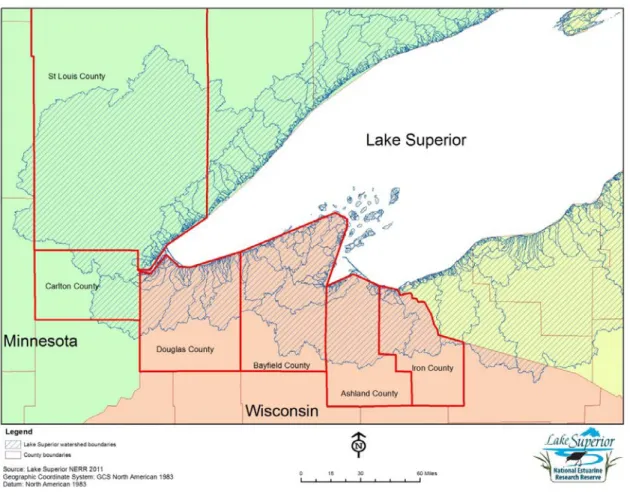
Coastal Training Program (CTP), a new Reserve in the NERR system, which was designated in October 2010. Information presented in this document was collected by an online survey and stakeholder interviews. This document identifies the coastal management issues important to decision makers in the Lake Superior basin and forms the basis for training and outreach priorities for the Lake Superior NERR CTP. The geographic area covered by the needs assessment includes six coastal counties within the Lake Superior and St. Louis River watersheds in Wisconsin and Minnesota (Fig. 1).
Lake Superior National Estuarine Research Reserve |Coastal Training Program Needs Assessment
Page 3 of 12
Needs Assessment Methods
Survey Audience
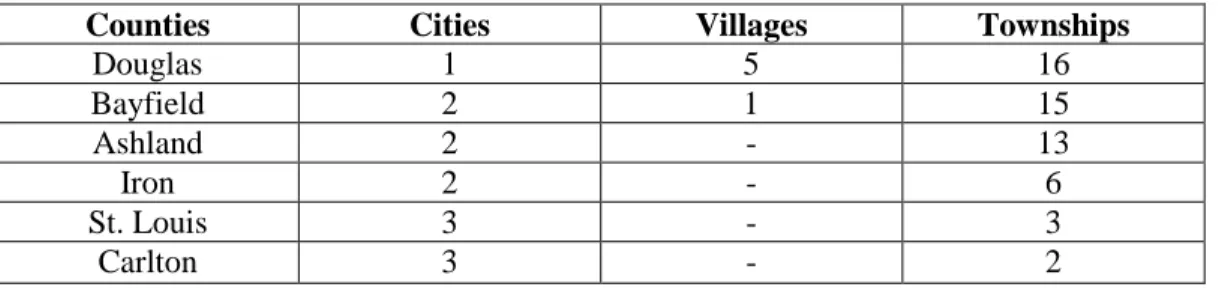
Lake Superior NERR staff completed a survey using a distribution list they compiled. The distribution list was composed of email, phone and addresses for elected and appointed officials, natural resource planners and managers from the six county area of interest (Fig. 1). While our initial focus for this needs assessment is within these six counties that include the majority of the land area and population centers of St. Louis River watershed and Wisconsin’s Lake Superior basin, other counties may be added in the future. The number of cities, villages and townships within each county are described in Table 1. This was a newly created distribution list; since this is the first time the Lake Superior NERR has reached out to this targeted audience it resulted in a large database of contact information. Wisconsin coastal contact information was created from existing lists of the four coastal county-based planners, managers and local government officials. The Minnesota contact list was obtained from the MN Coastal Management and Sea Grant Programs which includes the Lake Superior basin watershed in St. Louis and Carlton counties.
Table 1. Jurisdictions within Counties Covered in Needs Assessment
Counties Cities Villages Townships
Douglas 1 5 16 Bayfield 2 1 15 Ashland 2 - 13 Iron 2 - 6 St. Louis 3 - 3 Carlton 3 - 2
Survey Development and Dissemination
Coastal decision- makers were surveyed using an online tool. The survey was distributed to individuals involved at all levels of government and whose roles included elected and appointed officials, managers, planners and regulators (Table X). Several tribal communities, non-profits and private consulting businesses were also contacted. Nineteen questions were developed for these audiences based on experience working with local and regional decision makers over the past few years and resources available through the NERRS intranet that include CTP needs assessments from other Reserves. A copy of the survey questions is included in Appendix A. The online survey instrument Qualtrics (ref) was utilized to develop and distribute the needs assessment survey through the University of Wisconsin Superior as a weblink. The request to participate in the survey included both email and direct mailings, due to the limited number of email addresses for the targeted audience. The email and direct mailings
Appendix C. Needs Assessment Final
Lake Superior National Estuarine Research Reserve |Coastal Training Program Needs Assessment
Page 4 of 12
both included directions on how to complete the survey on-line as well as how to request a hard copy of the survey. A total of 275 emails and 227 direct mailed requests to participate were sent out on
September 19, 2011. Participants were asked to respond within two weeks. Reminders were sent on September 23, 2011. Due to a poor response rate during this time period the survey was reopened and reminder phone calls were made during the week of October 10-14th to city and county elected/appointed officials who were asked to respond by October 14, 2011, the final closing date for the needs assessment survey.
Survey Response Rate
This on-line survey was open for approximately four weeks. Twenty-seven of the 275 emails and 6 letters were returned making the final count 248 emails and 221 letters delivered making the total number of participants contacted 469. In several instances respondents used an alternate email addresses instead of the city or county addresses listed on websites and those corrections were made to the database. In addition, many community members are not yet familiar with our reserve and the contacts made through this survey resulted in increased visibility and awareness of LSNERR mission and goals.
The total number of survey responses was 79 representing an overall response rate for the survey of 16.8%. All responses were completed online; there were no hard copies of the survey completed. Elected and appointed officials, natural resource managers and planners (organizational roles) at the township, city, county and tribal levels (organizational affiliation) were the primary audiences of interest. Elected officials represented 57% of the overall responses by organizational role although only 11% of elected officials contacted responded to the survey. Managers represented 18% of the overall responses by organizational role even though 48% of managers contacted responded to the survey. Within each of the targeted organizational affiliations, approximately 25% responded to the survey. These targeted
affiliations represented 90% of the overall respondents. Therefore the results of this survey represent the intended (targeted) audience.
Lake Superior National Estuarine Research Reserve |Coastal Training Program Needs Assessment
Page 5 of 12
Results
Topical Preferences
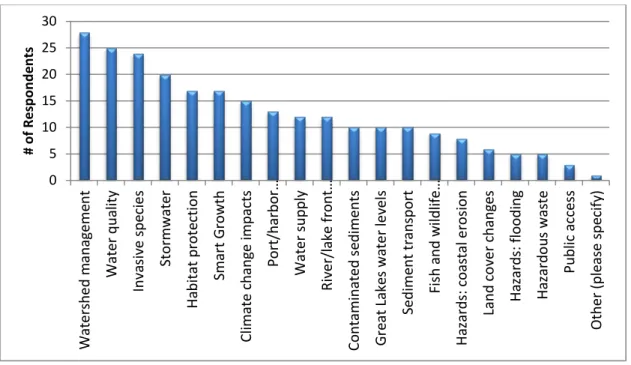
Respondents were asked to select three priority issues from a list of twenty broad topic areas for which they might benefit from additional training, technical assistance or knowledge transfer. The interest in these topics is shown in Table 2. (Topics < 10% omitted from table.)
Figure 2. Identified Issues for Additional Training, Technical Assistance or Knowledge Transfer
The topic areas that were identified as having the highest priority (> 25%) for training and technical assistance among respondents were:
Watershed management (35%) Water quality (32%)
Invasive species (30%) Stormwater (25%)
Additional topic areas of interest include ‘habitat protection’; ‘smart growth’; and ‘climate change impacts’.
Training Categories
The survey listed four broad training categories: coastal science, project planning, technological tools and regulatory compliance and permitting. Within each of these training categories, specific subject areas were listed and respondents were asked to rate their interest in learning more about each of the subjects on
W at er sh ed m an ag em en t W at er qualit y Inv as iv e s pe cie s St or m w at er Ha bi ta t p ro te cti on Sm ar t G ro w th Clim at e c hang e im pac ts Po rt /h ar bo r… W at er su pp ly Ri ve r/ la ke fro nt … Co nt am in at ed se di m en ts Gr eat L ak es w at er le ve ls Se di m en t t ra ns po rt Fis h and w ildlif e… Ha zar ds : c oas tal e ro sio n La nd co ve r ch an ge s Ha za rd s: fl oo di ng Ha za rd ou s w ast e Public ac ce ss Ot he r ( pl ea se sp eci fy ) 0 5 10 15 20 25 30 # o f Res po nd en ts
Appendix C. Needs Assessment Final
Lake Superior National Estuarine Research Reserve |Coastal Training Program Needs Assessment
Page 6 of 12
a 4-point (Likert) scale (1= top priority to 4 = not interested). They were asked to rate each of the topics listed. The top priority and very interested categories (1 and 2 on the scale) were combined and
percentages calculated as the number of responses indicating the subject was a top priority or very interested/total number of responses for that question. The top three topics within each category are indicated in bold print.
Coastal Science
The coastal science category included ten topics related to the physical, chemical and biological
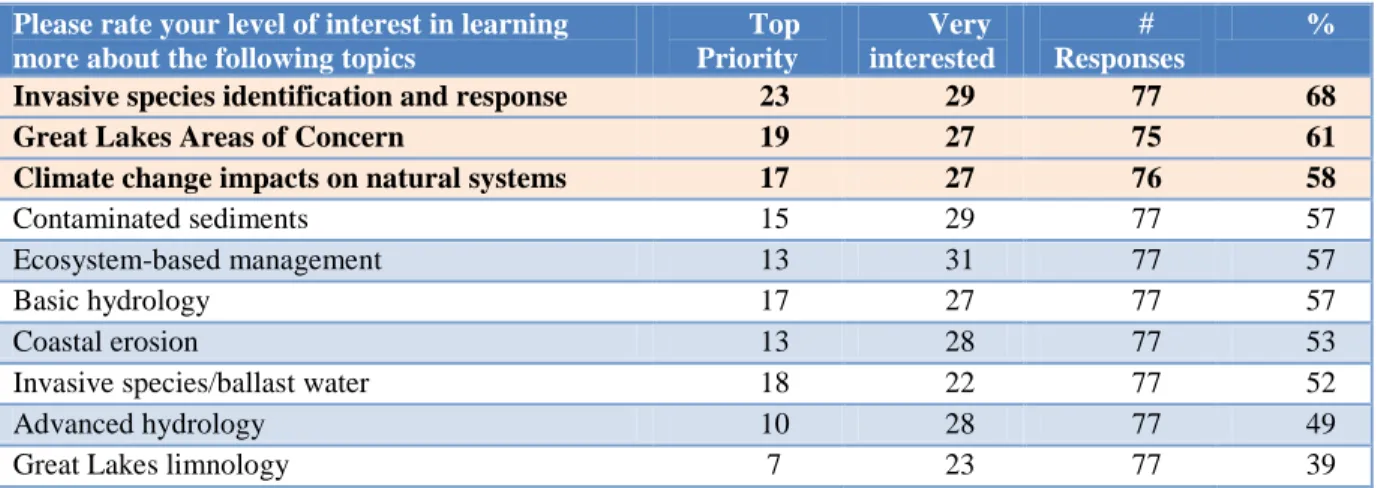
characterization, processes and contamination relevant to the St. Louis River estuary and Lake Superior. The three highest rated topics were invasive species identification (68%), Great Lakes Area of Concern (61%) and climate change impacts on natural systems (58%). Three additional topics that were also highly rated (57%) include contaminated sediments, ecosystem-based management and basic hydrology. It should also be noted that nearly all ten topics rated over 50%, with only advanced hydrology (49%) and Great Lakes Limnology (39%) having lower rankings. This is indicative of the interest in a wide range of topical issues for the Coastal Science category.
Table 3. Coastal Science Topics
Please rate your level of interest in learning more about the following topics
Top Priority Very interested # Responses %
Invasive species identification and response 23 29 77 68
Great Lakes Areas of Concern 19 27 75 61
Climate change impacts on natural systems 17 27 76 58
Contaminated sediments 15 29 77 57
Ecosystem-based management 13 31 77 57
Basic hydrology 17 27 77 57
Coastal erosion 13 28 77 53
Invasive species/ballast water 18 22 77 52
Advanced hydrology 10 28 77 49
Great Lakes limnology 7 23 77 39
Project Planning
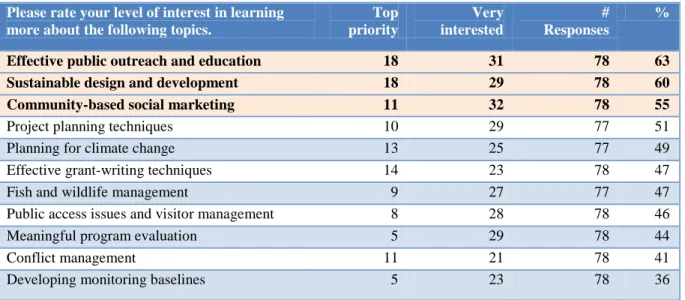
Project planning covered a wide range of topics relative to the skills needed for effective project planning including technical skills, such as grant-writing, project evaluation, conflict management, and more subject based planning issues such as climate change and sustainable design. Within the eleven topics listed effective public outreach and education (63%), sustainable design and development (60%) and community-based social marketing (55%) were the three topics identified by respondents as the highest interest for training.
Lake Superior National Estuarine Research Reserve |Coastal Training Program Needs Assessment
Page 7 of 12
Table 4. Project Planning Topics Result
Please rate your level of interest in learning more about the following topics.
Top priority Very interested # Responses %
Effective public outreach and education 18 31 78 63
Sustainable design and development 18 29 78 60
Community-based social marketing 11 32 78 55
Project planning techniques 10 29 77 51
Planning for climate change 13 25 77 49
Effective grant-writing techniques 14 23 78 47
Fish and wildlife management 9 27 77 47
Public access issues and visitor management 8 28 78 46
Meaningful program evaluation 5 29 78 44
Conflict management 11 21 78 41
Developing monitoring baselines 5 23 78 36
Technological Tools
The category of technological tools included eleven topics related to data collection and management, modeling and mapping tools as well as stakeholder communication. Survey respondents indicated that they would be very interested in training to increase their skills related to map sharing (57%), basic GIS mapping (52%) and data collection and management tools (51%). Interest in training on stakeholder communication, social marketing and engagement tool and project management tools were also highly rated at 50% and 49%, respectively.
Table 5. Technological Tools Topic Results
Please rate your level of interest in learning more about the following tools
Top priority Very interested # Responses %
Map sharing (Google maps, etc.) 11 32 75 57
GIS mapping (basic) 9 31 77 52
Data collection & management tools 7 33 78 51
Stakeholder communication, social marketing & engagement tools
17 21 76 50
Project management tools 7 30 76 49
Monitoring & assessment tools 8 27 76 46
Scenario visualization tools 9 26 76 46
GIS mapping (advanced) 11 22 74 45
Data processing tools 6 27 75 44
Modeling tools 11 22 77 43
Appendix C. Needs Assessment Final
Lake Superior National Estuarine Research Reserve |Coastal Training Program Needs Assessment
Page 8 of 12
Regulatory Compliance and Permitting
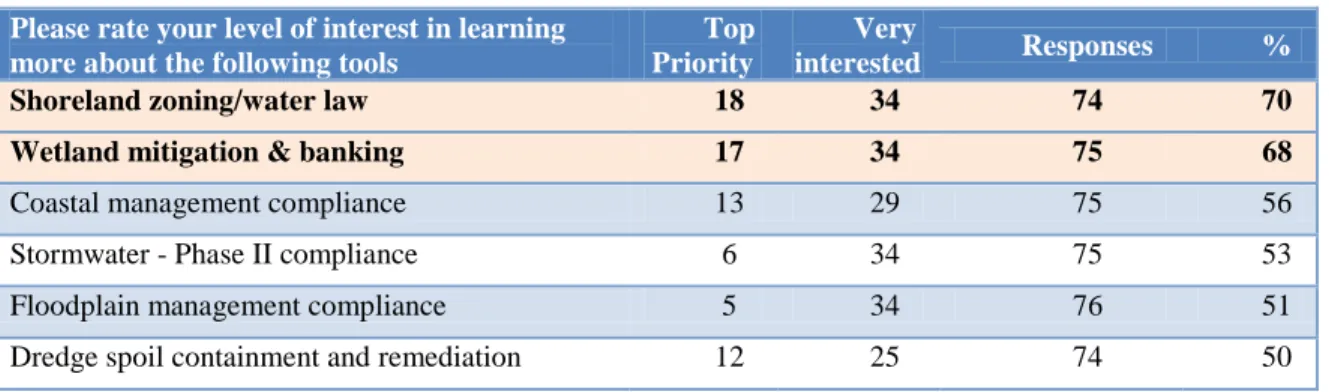
Interest in the regulatory compliance and permitting topics was the highest for the topics of shoreland zoning/water law (70%) and wetland mitigation and banking (68%). Unlike the previous sections, these two topics were separated from the other topics by a relatively wide margin. The other topics were grouped much lower and ranged from 56% (coastal management compliance) to 50% (dredge spoil containment and remediation).
Table 6. Regulatory Compliance and Permitting Topic Results
Please rate your level of interest in learning more about the following tools
Top Priority
Very
interested Responses %
Shoreland zoning/water law 18 34 74 70
Wetland mitigation & banking 17 34 75 68
Coastal management compliance 13 29 75 56
Stormwater - Phase II compliance 6 34 75 53
Floodplain management compliance 5 34 76 51
Dredge spoil containment and remediation 12 25 74 50
Logistical Preferences, Incentives and Resources
Getting a successful audience turnout for a training often depends on additional factors beyond the topic of the training. These factors can include individual preferences for logistics, specific incentives and resources offered by trainings. Therefore, survey participants were asked about their preferences for travel distance, time of day, length of trainings, and best month of the year for trainings. They were also asked to respond to which incentives would increase their likelihood of participating in trainings and what resources they would like to receive from training events.
While respondents prefer to drive 25 miles or less, 90% of respondents also find it preferred or acceptable to travel up to 50 miles to attend a training workshop. More than 50% of the respondents indicated evenings would not be acceptable for trainings, while any time before 5 pm was preferred or acceptable by more than 75% of respondents. The preferred time frame for workshops was 2 hours to ½ day, though 1-day workshops were also acceptable.
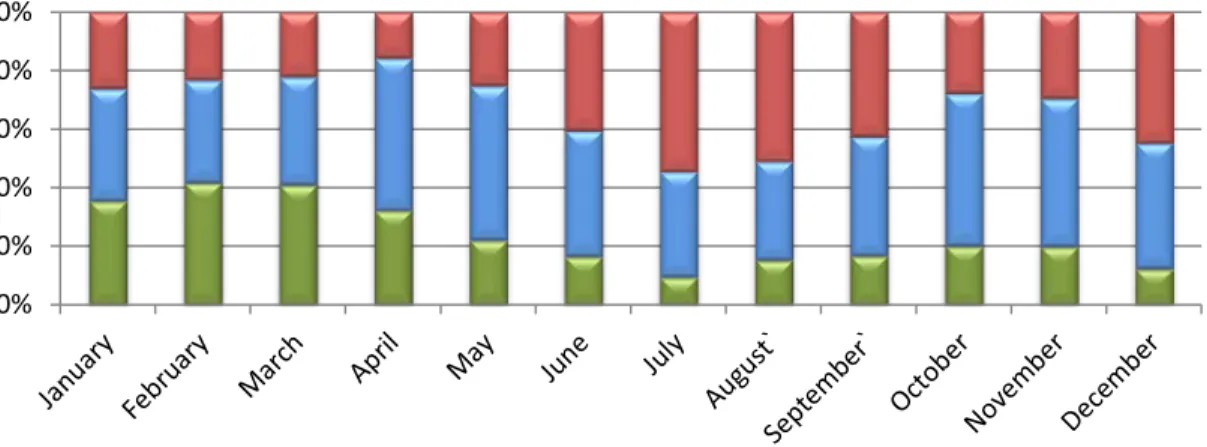
The months of January through April were the preferred months for trainings (23-31%) and May, October and November were also acceptable for over 50% of the respondents (Fig. 4). While 40% to 55% of the respondents indicated that the summer months of June, July, August and September, as well as December did not work well for trainings.
Lake Superior National Estuarine Research Reserve |Coastal Training Program Needs Assessment
Page 9 of 12
Figure 3. Preferred Months for Trainings
Seventy-five percent of respondents indicated that the additional resources that would complement training workshops would be for participants to receive copies of speakers’ presentations. Also more than half indicated that receiving the contact information for other attendees and DVDs of the workshop would be beneficial. Interest was also expressed for self-paced on-line modules or courses.
By far, the most important incentives that would assist respondents in deciding whether or not to attend a workshop included cost of the training and travel distance, while the majority indicated that receiving professional certification or having lunch provided was not as important for them. The low importance of professional certification within this population was confirmed through the Climate Adaptation Planning workshop held in September at which none of the 76 participants requested the AICP credits that were available. Many respondents (84%) also indicated that they might be willing to participate in a workshop or training session via a web-based format.
Figure 4. Incentives to Attend Trainings
0% 20% 40% 60% 80% 100%
Preferred Acceptable Bad
0% 20% 40% 60% 80% 100% Lunch
provided Low-costtraining distanceTravel your timeJob pays Supervisorapproval Professionalcertification Very important Somewhat important Not very important
Appendix C. Needs Assessment Final
Lake Superior National Estuarine Research Reserve |Coastal Training Program Needs Assessment
Page 10 of 12
On-Going Collaboration
The results of this needs assessment support water resource management priorities and training needs that LSNERRR staff has identified in the first year of operation. The LSNERR assisted with the organization of the St. Louis River Estuary (SLRE) Summit (February 2011) that provided a venue for research and management staff to share information about projects, priorities and data. Management agencies in both Wisconsin and Minnesota are currently focused on addressing the delisting targets for the St. Louis River Area of Concern - Beneficial Use Impairments (BUI’s). Natural resource managers encouraged
researchers to consider development of project proposals that would address these BUI’s. One of the beneficial use impairments is contaminated sediment and several restoration/remediation projects have been completed in the past few years. LSNERR will continue to assist in the development of research projects and CTP will work with natural resource managers to develop outreach programs for coastal decision makers that focus on the SLRE Area of Concern.
Douglas County Land Conservation Department (LCD) staff worked with LSNERR to develop a grant proposal for a wetland decision support tool as part of a larger Wisconsin Lake Superior basin watershed planning effort. Though this project was not funded the need for training on the appropriate citing of wetland mitigation and banking areas within the context of watershed planning at the town and county level was identified. In addition, state and federal water laws have undergone changes in the past few years that local planning boards are in need of information on in order to protect water resources. The WI DNR is responsible for administration of these federal and state mandates through regulatory programs such as shoreland zoning. CTP will continue to work with county LCD and zoning staff and WI DNR to provide training, GIS mapping tools and updated shoreland and floodplain requirements to town planning boards as they work to implement town land use plans.
The City of Superior has recently created a stormwater utility to help fund stormwater management and address the National Pollution Discharge Elimination System: Phase II permit requirements. The CTP coordinator has worked with city staff to develop and implement neighborhood presentations about stormwater impacts to the SLRE and the role of LSNERR in non-point pollution education. Additional training for municipal staff, city elected officials and community members are being planned and will continue to address needs identified through this assessment.
A successful Planning for Climate Change workshop was coordinated this fall (September 2011) and the local planning committee is interested in developing additional workshops for local audiences in the coming year. CTP will continue to work with regional and national partners including Old Woman Creek
Lake Superior National Estuarine Research Reserve |Coastal Training Program Needs Assessment
Page 11 of 12
NERR, WI and MN Sea Grant, US EPA, Fish and Wildlife Service, NOAA Coastal Services Center and UW-Extension to bring training on topics such as vulnerability analysis to the Lake Superior region. In addition, a national NERRs climate sensitivity analysis will provide site-specific information on socio-economic characteristics and anthropogenic stressors within reserve watersheds that will provide additional regional information for local adaptation planning efforts.
One of the highest-interest topics identified through this survey was invasive species identification and response. The UW-Superior/Lake Superior Research Institute (LSRI) is a leader in freshwater ballast water treatment technology with a state-of-the-art testing facility located in the SLRE. The vectors and habitat requirements for invasive species establishment in the SLRE, modes of transfer to inland lakes, citizen identification and response mechanisms have all become priority water management issues in the past few years. CTP will continue to work with educators and researchers at LSRI and other agencies to bring information and training opportunities to public audiences in the Lake Superior region.
Conclusion
The development of the Lake Superior NERR’s CTP Strategy from 2011-2015 will be guided by the needs identified in this assessment. Working in cooperation with a variety of local, regional, state and national partners, the CTP will address the top-ranked topics identified by respondents of this needs assessment survey. The results of this survey indicate that the main focus areas of training should be in the categories of coastal science and regulatory compliance and permitting. Topics to be addressed in the coastal science category will include invasive species, climate change impacts and Great Lakes Areas of Concern. Topics within the regulatory compliance and permitting category will include shoreland zoning/water law and wetland mitigation and banking. Additional topic areas of high interest within the project planning category include effective outreach and education strategies, sustainable
design/development and community-based social marketing. Training in the technological tools area will include map sharing and GIS techniques, stakeholder communication and social marketing, and data collection and management tools.
Appendix C. Needs Assessment Final
Lake Superior National Estuarine Research Reserve |Coastal Training Program Needs Assessment
Page 12 of 12
List of Figures
Figure 1. Needs Assessment’s Geographic Area
Figure 2. Identified Issues for Additional Training, Technical Assistance or Knowledge Transfer Figure 3. Preferred Months for Trainings
Figure 4. Incentives to Attend Trainings List of Tables
Table 1. Jurisdictions within Counties Covered in Needs Assessment Table 2. Coastal Science Topics
Table 3. Project Planning Topics Result Table 4. Technological Tools Topic Results
Table 5. Regulatory Compliance and Permitting Topic Results APPENDIX A. Needs Assessment Survey and Results
Lake Superior National Estuarine Research Reserve
January 2012
Coastal Training Program
Market Analysis
Appendix D. Market Analysis
Lake Superior National Estuarine Research Reserve| Coastal Training Program Market Analysis
Page 1 of 15
Table of Contents
Introduction ... 2 Methods ... 2 Survey Results/Findings ... 4 Discussion ... 12 Conclusions and Recommendations ... 14Lake Superior National Estuarine Research Reserve| Coastal Training Program Market Analysis
Page 2 of 15
Introduction
The Lake Superior National Estuarine Research Reserve (Lake Superior NERR) was designated in 2010 and is the 28th reserve in the NERR system and the 2nd freshwater estuarine reserve on the Great Lakes. It is situated on the freshwater estuary at the confluence of the St. Louis River and Lake Superior located on the southwestern coast of Lake Superior (Figure 1) and is bordered by Wisconsin and Minnesota. The reserve is 16,697 acres in size and consists of forested upland (7,886 acres), wetland (4,136 acres), and aquatic (4,675 acres) habitats (LSNERR Management Plan 2010).
The Lake Superior NERR is in the pre-operational phase of developing a Coastal Training Program (CTP) to complement the developing research and education programs by addressing the coastal resources management information and training needs of decision makers in the Wisconsin and Minnesota portions of the Lake Superior basin. The goal of the CTP is to improve decision-making related to coastal resource management at local and regional levels by allowing decision makers to understand the impact of their decisions on valued coastal natural resources. The Coastal Training Program works towards this goal through these objectives:
⋅
To provide current scientific information, science-based knowledge, and skill-building opportunities to individuals whose decisions- whether in a professional, elected or volunteer capacity- impact the estuary and its resources;⋅
To increase networking and collaboration across sectors and disciplines related to coastal management issues;⋅
And, to influence behavior change through increased understanding of the types of barriers that are present among target audiences.
The purpose of this market analysis is to identify the training roles and preferred venues that will guide the development of the Lake Superior NERR CTP. Existing training programs were inventoried, including organizations that currently offer coastal resource training, the topics covered and audiences served. The process also identified partnership opportunities for the CTP, overlaps in training programs to avoid duplication of effort, coastal management issues that have received inadequate attention by other training providers and audiences that have unmet training needs.
Methods
We developed an online survey utilizing Qualtrics Survey software and consisted of 12 strategic questions that were developed to gather the needed information. Examples of other NERR CTP surveys were used for guidance. Links to the survey were distributed via email to a distribution list of 110 individuals representing 39 organizations serving the six coastal county region of Lake Superior which included four counties (Douglas, Bayfield, Ashland, Iron) in Wisconsin and two (St. Louis and Carlton) in Minnesota (Figure 1). The distribution list for this survey was developed by Lake Superior NERR staff based on staff knowledge of training providers obtained through the Lake Superior NERR designation process and an informal phone survey of providers (Table 1). Organizations that have provided training and/or resources related to coastal resource management were included in this initial phone survey. While the survey may not have included all current providers it provided a substantive initial list to begin the assessment of training opportunities in the region. The on-line survey was distributed on Nov. 2nd and closed on Nov. 28, 2011. Reminder emails were sent and phone calls made between Nov. 15th and 22nd, 2011.
Appendix D. Market Analysis
Lake Superior National Estuarine Research Reserve| Coastal Training Program Market Analysis
Page 3 of 15
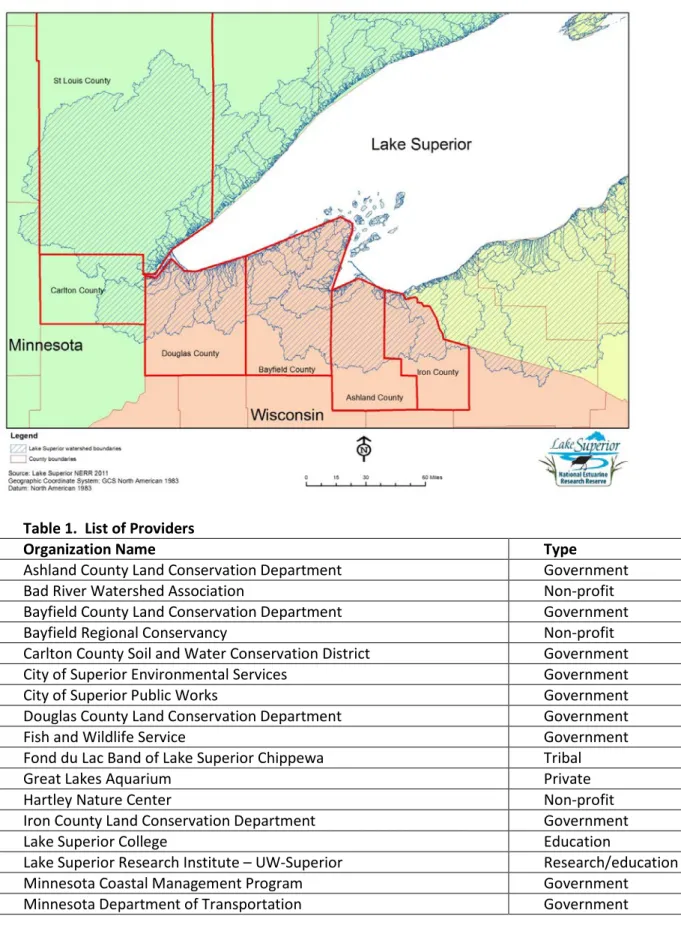
Figure 1. Market Analysis Geographic Area
Table 1. List of Providers
Organization Name Type
Ashland County Land Conservation Department Government Bad River Watershed Association Non-profit Bayfield County Land Conservation Department Government Bayfield Regional Conservancy Non-profit Carlton County Soil and Water Conservation District Government City of Superior Environmental Services Government City of Superior Public Works Government Douglas County Land Conservation Department Government Fish and Wildlife Service Government Fond du Lac Band of Lake Superior Chippewa Tribal Great Lakes Aquarium Private Hartley Nature Center Non-profit Iron County Land Conservation Department Government Lake Superior College Education
Lake Superior Research Institute – UW-Superior Research/education Minnesota Coastal Management Program Government Minnesota Department of Transportation Government
Lake Superior National Estuarine Research Reserve| Coastal Training Program Market Analysis
Page 4 of 15
Minnesota Pollution Control Agency Government National Park Service Government Northern Great Lakes Visitor Center Education Northland College – Sigurd Olson Environmental Institute Education Northwest Regional Planning Commission Government Regional Stormwater Protection Team (+7 municipalities) Non-profit South St. Louis County Soil and Water Conservation District Government St. Louis River Alliance Non-profit University of Minnesota – Duluth University University of Minnesota Extension University University of Minnesota Sea Grant Government University of Wisconsin – Superior University University of Wisconsin Extension University University of Wisconsin Sea Grant Government US Environmental Protection Agency Government West Wisconsin Land Trust Non-profit Western Lake Superior Sanitary District Government Wisconsin Association of Floodplain, Stormwater and Coastal
Management Non-profit
Wisconsin City/County Managers Association Non-profit Wisconsin Department of Natural Resources Government Wisconsin League of Municipalities Non-profit Wisconsin Towns Association Non-profit Wisconsin Wetlands Association Non-profit
Survey Results/Findings
Many of the providers listed are statewide organizations that provide training at the request of local agencies and organizations. The University of Wisconsin Extension programs include both university-based Centers located statewide and county-university-based Extension staff located within each of the coastal counties. University of Wisconsin Extension programs cover a variety of topics, not all concerned with coastal resources. Other organizations, such as Sea Grant, deliver training and resources primarily to coastal communities on coastal and natural resource topics. The Lake Superior NERR CTP geographical area includes portions of four coastal counties of Wisconsin and portions of two counties in Minnesota that are within the Lake Superior and St. Louis River watersheds.
Twenty-eight responses were received from the 110 requests sent to individuals to participate in the survey resulting in a response rate of 25%. A copy of the survey can be viewed in Appendix A and a list of questions and responses received are compiled in Appendix B. The responses for each question are listed below.
The first set of questions (Questions 1 through 6) address program logistics related to training workshops. The next group (Questions 7 & 8) addresses audiences marketed for training. Questions 9 & 10 relate to training topics and the final two questions (11 & 12) gauge interest in collaborations and leveraging of resources.
Appendix D. Market Analysis
Lake Superior National Estuarine Research Reserve| Coastal Training Program Market Analysis
Page 5 of 15
Q1: Relative to your organization’s mission, how important is providing training about coastal resource management?
Twenty-one respondents (81%) reported that training related to coastal resource management was ‘very important’ or ‘important’ to their organization’s mission. The positive response rate indicates that we were successful in reaching our intended audience.
Q2: In the past two years approximately how many training events have you offered to audiences in the Lake Superior region (WI and MN)
Most (42%; 11 respondents) training providers offered 1 to 5 training events over the past 2 years
followed by 27% (7 respondents) offering 10 to 20 events. While this seems to be a low rate of workshop offerings it is not unexpected for this relatively low population density in an economically depressed region of the Great Lakes.
54% 27% 15% 4% Very important Important Somewhat unimportant Unimportant 4% 42% 19% 27% 8% none 1 to 5 5 to 10 10 to 20 Over 20
Lake Superior National Estuarine Research Reserve| Coastal Training Program Market Analysis
Page 6 of 15
Q3. What are the two most common objectives of the events that your organization offers?
The training objectives most commonly identified were demonstration of a technique, tool or technology (13 responses) followed by offering dissemination of new scientific or technical information. Less commonly listed objectives include evaluation of alternatives/decision-making, sharing project results and collaborative proposal development.
Q4. Please tell us about the length and cost of the events that you offer. For each duration listed below, select the price range that your organization typically charges attendees.
The majority of workshops offered was available for $25 or less and lasted from ‘1-3 hrs.’ to a ‘full-day’. Training workshops lasting 2 days or more were offered by a few respondents with a cost ranging from $50 to $500.
0 2 4 6 8 10 12 14 Other
Upcoming project or proposal Share project results Decision making and Discussion Disseminate new information Demonstration
Responses
Two Most Common Training Objectives
0 5 10 15 20 25 30
1-3 hours Half-day Full-day 2 days Over 2 days
# of T rai n in gs
Length and Cost of Trainings Offered
Appendix D. Market Analysis
Lake Superior National Estuarine Research Reserve| Coastal Training Program Market Analysis
Page 7 of 15
Q5. In the past two years which types of events has your organization offered? (Check all that apply).
Most respondents identified ‘workshops’ and ‘round table discussions’ as the most common type of event offered by their organization ‘Field trips and demonstrations’ and ‘technical assistance ‘(17) were also regularly offered. There was a sharp decline in the number of trainings offered in the categories of professional conferences and symposiums and those offering professional certification and continuing education credits.
Q6. Do you offer other resources to people working on coastal issues? (Check all that apply)
The most common types of resources offered by respondents/agencies for people working on coastal issues included: ‘newsletters, listserves and websites’ (18) ‘professional assistance and consultation services’ (17) and ‘reference materials’ (13). Resources less commonly available to coastal resource decision-makers include ‘scientific studies’, ‘technical manuals’, ‘GIS and mapping resources’ and ‘data sets’. A role for the CTP could be to address this lack of available resources in the scientific and technical areas.
0 5 10 15 20 25 30 Other
Certification or continuing education Professional conferences Technical assistance Field trips and demonstrations Workshops and round table discussions
Responses 0 5 10 15 20 Other Data sets Technical manuals GIS/mapping resources Scientific studies Other reference materials Professional assistance/consultation Newsletters, listserves, websites
Lake Superior National Estuarine Research Reserve| Coastal Training Program Market Analysis
Page 8 of 15
Q7. During the past two years which of the audiences listed below have you marketed your training events to? (This question refers to the TYPES of audiences, not topics covered).
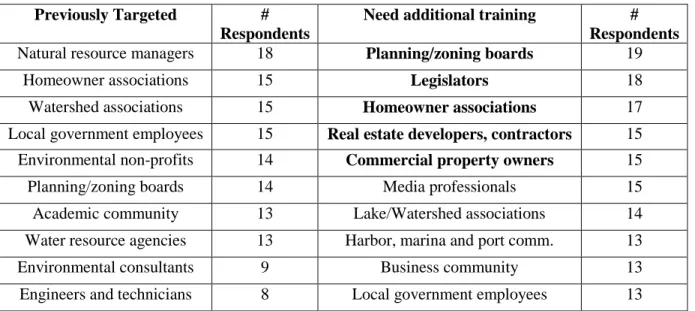
The audiences most often targeted for training by respondents included: ‘natural resource managers’ (72%); ‘homeowner and neighborhood associations’, ‘lake and watershed associations’, ‘local
government employees’ (60% each); ‘environmental non-profits’ and ‘planning/zoning boards or staff’ (56% each); and ‘academic community’ and ‘water resource agencies’ (52% each). Audiences that were the least often targeted for training included ‘legislators (state or federal)’; ‘agricultural sector’; ‘media professionals’; ‘land trusts’; and ‘conservancies’, ‘recreation businesses’, and ‘transportation personnel’ (< 12%).
0% 10% 20% 30% 40% 50% 60% 70% 80% Natural resource managers
Homeowner or neighborhood associations Environmental non-profits Academic community Environmental consultants Landscapers or nurseries Other Harbor, marina, port commissions Fishing organizations Wastewater management employees Transportation personnel Media professionals Agricultural sector
Appendix D. Market Analysis
Lake Superior National Estuarine Research Reserve| Coastal Training Program Market Analysis
Page 9 of 15
Q8. Please tell us if you think there is a high, medium or low need for additional training targeted to each of the audiences listed below. (This question also refers to audience TYPES, not topics).
Audiences perceived as having a high need for training (> 50%) included: ‘planning and zoning boards or staff ’ (79%); ‘legislators (state or federal)’ ( 78%); ‘homeowner or neighborhood associations’ (71%); ‘real estate developers, contractors, realtors’; ‘commercial property owners’, ‘media professionals’ ( 63-65%); ‘lake and watershed associations’ (58%); ‘harbor, marina and port commissions’, ‘business community and local government employees’ (57-59%); and ‘recreation businesses and business community’ (52%).
0 5 10 15 20 25
Land trusts and conservanciesAcademic community Environmental consultants Wastewater management employeesWater resource agencies Enforcement personnelFishing organizations Natural resource managersPublic works personnel Environmental non-profitsTransportation personnel Landscapers or nurseriesAgricultural sector Engineers and techniciansRecreation businesses Business community Harbor, marina, port commissionsBusiness community Local government employees Lake and watershed associations Real estate developers, contractors or realtorsCommercial property owners or associations Media professionals Homeowner or neighborhood associationsLegislators (state or federal) Planning/zoning boards or staff
Responses