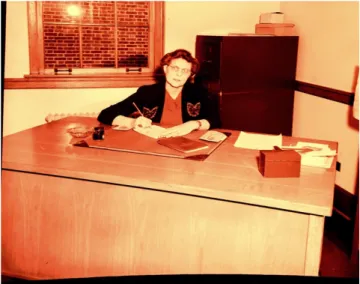
TRAILBLAZERS ON THE HILL:
A HISTORY OF THE ORIGIN OF WOMEN’S SPORT PROGRAMS AT THE UNIVERSITY OF NORTH CAROLINA AT CHAPEL HILL FROM 1921 TO 1972
Sarah James Sessoms
A thesis submitted to the faculty of the University of North Carolina at Chapel Hill in partial fulfillment of the requirements for the degree of Master of Arts in the Department of Exercise
and Sport Science (Sport Administration).
Chapel Hill 2019
ABSTRACT
Sarah James Sessoms: Trailblazers on the Hill: A history of the origin of women’s sport programs at the University of North Carolina at Chapel Hill from 1921 to 1972.
(Under the Direction of Barbara Osborne)
To my father, Jim Sessoms
Every little girl should have a dad that believes in her like you believe in me.
Thank you for telling me that I can do anything I set my mind to, no matter how crazy it seems; and for helping me become the strong, determined woman I am today.
TABLE OF CONTENTS
LIST OF FIGURES ... vii
CHAPTER I: INTRODUCTION ...1
Women’s Sport History ...1
Statement of Purpose ...2
Research Questions ...3
Assumptions ...3
Limitations ...3
Significance of Study ...4
CHAPTER II: REVIEW OF LITERATURE ...5
Three Distinct Periods ...5
History of Women’s Intercollegiate Athletics ...7
Previous Research on the History of Women and Women’s Athletics at UNC ...10
Waves of Feminism ...15
CHAPTER III: METHODOLOGY ...17
Archival Research ...17
Analysis ...19
CHAPTER IV: RESULTS ...20
Archival Research Findings ...20
The Beginnings of Women’s Athletics at Carolina: 1920s ...22
A Crucial Moment: the 1940s ...31
More Official: Participation in the 1950s ...35
The Winds of Change: the 1960s ...39
The Rise of AIAW and Title IX ...42
CHAPTER V: DISCUSSION ...45
Overview ...45
What was the first athletic participation for women at Carolina? How did this change and grow over the decades? ...45
Were the changing roles of women locally, regionally and nationally a factor in creating opportunities for women to play at Carolina? ...46
How did the success of these women in athletics translate into varsity status for seven sports teams under Title IX and AIAW? ...48
Summary ...49
Future Research ...50
Conclusion ...51
APPENDIX: TABLE OF COLLECTED PHOTOGRAPHS ...52
LIST OF FIGURES
Figure 1: Gladys Angel Beard Circa 1946 (UNC Photo Lab) ...28
Figure 2: Women Participating in Fencing, Circa 1946 (UNC Photo Lab) ...31
Figure 3: Women Swimmers in the 1940s (UNC Photo Lab) ...32
Figure 4: Field Hockey Circa 1947 (UNC Photo Lab) ...32
Figure 5: Women’s Diving Circa 1950 (UNC Photo Lab) ...34
Figure 6: Women’s Intramural Basketball Circa 1947 (UNC Photo Lab) ...35
Figure 7: Women’s Tennis During Physical Education in 1953 (UNC Photo Lab) ...36
Figure 8: Women’s Volleyball Team Circa 1951 (UNC Photo Lab) ...37
Figure 9: Women’s Tennis in 1953 (UNC Photo Lab) ...38
Figure 10: Women’s Basketball in 1951 (UNC Photo Lab) ...39
Figure 11: Women’s PE, March 1963 (UNC Photo Lab) ...40
Figure 12: Women’s Tennis in 1960 (UNC Photo Lab) ...41
CHAPTER I
INTRODUCTION
The University of North Carolina at Chapel Hill (UNC, the University or Carolina) is renowned for its excellence in collegiate athletics. As one of the most successful athletics programs in the country, UNC has seen success in many different sports, winning 44 NCAA Division I National Championships (NCAA, 2018). With 28 varsity sports with currently over 800 student athletes, Carolina is well known for having a broad-based athletics program that gives opportunities to male and female athletes alike. One of the mores storied teams in
Carolina’s rich athletic tradition is the women’s soccer team that holds the most NCAA national championships (21) in the sport. The standard of excellence set at Carolina is a tradition that is often celebrated, and the importance of the broad-based program continues to make an impact on student-athletes.
Carolina’s standard of excellence, however, did not happen overnight. It is a combination of the history of athletics and a testament to the many athletes who built Carolina’s success one practice or one game at a time to create the program that it is today. While many know the stories of the excellent athletes that have come through Chapel Hill, especially those of the Men’s Basketball program, there is a lot of history that has yet to be explored about UNC Athletics, especially as it pertains to the women’s programs.
Women’s Sport History
focusing on the many contributions that women have had on athletics (Borish, 2014). This is especially true at Carolina, where many stories of the women’s athletic programs have yet to be told. In 2018, over half of the 28 athletics teams and student-athletes are female. While the majority of the teams are female, there is not a good understanding of how these successful programs came to be, and how they originated.
Prior to becoming a founding member of the AIAW (Gunnells, 1988), and the advent of Title IX that helped seven women’s sports teams reach varsity status in 1972, Carolina has already had a rich history of women playing and competing in athletics. While many give credit to Title IX for giving women the opportunity to play, there were many women before this fighting for equal opportunities to play and win while at school. Decades before Title IX and the AIAW, there were dozens, if not hundreds, of women playing sports across the university, in intramurals, club teams and other ways in order to compete. Understanding the path to varsity status and the struggle of these women to create equal opportunity is the basis in understanding how Carolina has created a lasting, impactful culture of excellence in collegiate athletics. It is a microcosm of feminism in its most basic form: women fighting for the same opportunities afforded to men.
Statement of Purpose
one of the most successful collegiate athletics programs in the country. Understanding this foundation gives context to the monumental importance of Title IX to college athletics, helps to highlight the importance of women in athletics, and provides a glimpse of women’s pathway to equality.
Research Questions
Based on the review of literature, the following questions guided this study:
• What was the first athletic participation for women at Carolina? How did this participation change and grow over the decades?
• Were the changing roles of women locally, regionally, and nationally a factor in creating opportunities for women to play at Carolina?
• How did the success of these women in athletics translate into varsity status for seven sports teams under Title IX and AIAW?
Assumptions
1. The documents used are reliable and accurate. 2. The archives used are reliable and accurate.
Limitations
Significance of Study
CHAPTER II
REVIEW OF LITERATURE
Three Distinct Periods
Ellen Gerber (1974), a leading scholar on sport history for women, argued that “the emergent pattern of women’s sport went through three distinct periods” (p. 4). This work falls very succinctly into the three periods cited by Gerber, and will examine the history at Carolina through this framework. The first period, as discussed by Gerber, is considered the “early period,” at the turn of the 19th Century, which Gerber considers a “phenomenon” (p. 4). As
women did not appear at the University until after this first period, it will not be necessary to discuss, but the history of women’s participation in athletics during the turn of the century has many implications for the history of women in sport as a whole. Without the initial framework and participation of Victorian women in sport, the next two periods would not have been possible. In the early 19th Century, opportunities for sport for women were limited to
non-vigorous activities due to social constraints. Sports were for the “gentlemen and gentlewomen who had no taste for hard effort” and were constrained by clothing and a “Puritanical sexual morality” (Gerber, 1974, p. 4). The social constraints at the time kept sports a small aspect of culture for both men and women, but especially for the women who were considered too fragile and delicate to participate in anything other than ones “which could be performed without acquiring an indelicate sweat” (Gerber, 1974, p. 4).
women in Chapel Hill begins right around this decade. The “Golden Decade” saw an increase of available and acceptable sports for women, including: basketball, volleyball, softball and field hockey (Gerber, 1974, p. 6). The rise in the acceptance of sport is linked to the change in society post-World War I, with many social changes impending for women at the time. WWI kicked off a paradigm shift that led to the ratification of the 19th amendment, giving women the right to
vote. An important aspect in this time, Gerber notes, “were the attitudes of the American public towards women” as women were beginning to be accepted into the workforce, academia, and socially during the Jazz Age (p. 6). These social changes were reflected in sports in the United States as women were also organizing in sport leagues nationally and internationally. However, Gerber notes that an interesting divide was occurring as “sport in the colleges was being
circumscribed” as “activities were limited and the level of competition was lowered to the point of disappearing altogether” (p. 6). This is an interesting distinction, and will be explored, as women at UNC were fighting for, and organizing more options to participate during the Golden Decade.
Gerber’s third period is “the contemporary era, flourishing in the 1970s” (p. 4), which leads up to Title IX and the creation of varsity programs at the University. Gerber notes that by this era sport for women changed yet again, including even more opportunities for women to participate, and “the growth of organized competition continues to expand at a rapid rate with state, regional, national and international competition available in an even greater variety of sports” (p. 8). This is a trend that continues in the collegiate space with competition and participation for women expanding. While the Great Depression suppressed many of the gains created but the 19th Amendment and the 1920s, much happened post World War II that would
became more socially acceptable for women to depart from the Victorian ideal that was the norm in the beginning of the century. With this saw the rise of “new feminism” (now called second-wave feminism) in the 1960s. Women’s causes took flight in the rise of “new feminism”, including in the sphere of sport—a metaphor for women’s expanding roles in society yet again. Social changes occurring across the late 30s until the early 70s, including World War II and the rise of the feminist movement had a major impact on women, as their changing roles from homemaker to worker to liberated individual with legal rights granted nationwide was reflected in the participation of sport nationwide.
History of Women’s Intercollegiate Athletics
Women’s sport in the United States has had a long and contentious history. Tracing its beginnings to Victorian times of the early 19th Century, the idea of women’s participation in
sport was considered taboo, as women were expected not to participate in activities that took them outside of the home and away from raising children. Only activities that would not deplete their fixed energy were allowed, such as recreational horseback riding, but nothing that caused intense exertion was encouraged (Bell, 2007). Medical experts at the time considered rigorous exercise as a threat to a woman’s health, with the worry that she would become sterile if her participation in sports and physical activity was too intense. Consequently, women’s
Because of the medical dogma at the time, women were greatly limited prior to 1870, and many attempts of women to participate were short-lived (Bell, 2007).
In the late 1800s and early 1900s, however, women became more interested in athletic participation and competition. During these decades, women began to organize sports clubs in sports such as tennis and bowling in major cities like New York (Bell, 2007). During this time, as women began seeking higher education, women in colleges were beginning to organize sport participation on campus including intramural and club sports (Bell, 2007). By 1892, the first women’s competition of record took place at Smith College, in the form of a basketball game, beginning the popularity of the sport and starting a change in the perception of women in athletics (Gregg and Gregg, 2017). After this competition, the sport of basketball spread across the country, and more women participated in sports on campuses. By 1896, the first
intercollegiate games took place in women’s basketball as the University of California at Berkley played Stanford University, and the University of Washington played Ellensburg Normal School (Bell, 2007). By the 1920s, at the time of the women’s suffrage movement, women’s
participation was no longer seen as taboo, and more and more women took part in physical activity and competition.
However, the idea that women were fragile and that athletics were bad for their health was persistent, in part mostly to the NAAF’s views (Bell, 2007). On college campuses,
administrators attempted to eliminate competition for female students with the focus of a more recreational type of athletics. The new type of participation that was common were called “Play Days” where women would play sports only recreationally, without higher competition. These “Play Days” touted “a sport for every girl and every girl in a sport,” and sought to keep sports and athletics strictly as fun events on campus, rather than as a chance for women to compete against one another (Gregg and Gregg, 2017). Because of the limitations on competitive play for women by the NAAF and educators on campuses, participation again stalled (Bell, 2007) and by 1930, almost all participation for women in collegiate athletics had disappeared (Gerber, 1975). With the Great Depression, women’s participation in sports on campus remained low, as the prevailing thought was that women should remain in the home (Bell, 2007). With the onslaught of World War II however, women began to participate equally with men in the workplace and on the athletic fields yet again, and with this, intercollegiate and intramural sports flourished on campuses again (Bell, 2007). Although women performed admirably in a wide range of jobs throughout WWII, a push to return women to their traditional roles as wives, mothers and
homemakers after the war stalled women’s participation in sport. It was not until the push of the feminist movements and change of legislation beginning with the Civil Rights Act of 1964 and Title IX that women in collegiate sports began to take hold (Gregg and Gregg, 2017).
In 1957, the Division for Girls and Women in Sport (DGWS) amended their stance saying that intercollegiate athletics “may” exist for women, and by 1963 it was “desirable” for programs to have women’s athletics, effectively opening the door for many women in
country. In 1967, the DGWS created the Commission on Intercollegiate Athletics for Women (CIAW), and by 1969 national championships were being planned for track and field and gymnastics for female athletes (Bell, 2007). Because of this growth, leaders and administrators recognized a need for a governing body for women’s athletics in the collegiate space, and the Association for Intercollegiate Athletics for Women (AIAW) replaced the CIAW in 1971, months before the passage of Title IX (Gregg and Gregg, 2017). The creation of AIAW was crucial in helping to launch women’s collegiate athletics as the NCAA had stated in 1965 and 1966 that they had a no interest in governing women’s athletics and changed their bylaws to host postseason competitions for male student-athletes only (Gregg and Gregg, 2017). While the AIAW helped to popularize women’s athletics with its 278 charter members, it also pushed a well-rounded agenda of sport and academics (Bell, 2007).
Previous Research on the History of Women and Women’s Athletics at UNC
At the University of North Carolina at Chapel Hill, women were admitted as early as 1896, the same year of the first intercollegiate women’s basketball game. Although women were allowed admission, numbers remained small (Davis-Castro, 2013). In 1920, 57 women were enrolled, but by 1939, 504 women were enrolled at UNC (Davis-Castro, 2013). Prior to 1940, women were only allowed to enroll following their sophomore year of college, beginning their junior year in Chapel Hill, but women were admitted as underclassmen due to a Board of
same time as the beginnings of women’s athletics nationwide is no coincidence and will be explored in the research of this project.
Several others’ work predates this project about the history of athletics at UNC. Gersch (1971) examines the role of the Women’s Athletic Association at UNC from 1934 to 1970. Gunnells (1988), in her master’s thesis, explores from Title IX to 1988 and touches some of the history of prior to Title IX in Chapel Hill. Finally, Jackson (2015), in her doctoral dissertation, begins the sport history at Carolina circa the 1950s. All three compiled provide a foundational baseline to further explore with which the history of women’s athletics at the university can be explored.
The Women’s Athletic Association (WAA) began at the University of North Carolina in 1934, almost 20 years after the creation of the national organization in 1916 (Gersch, 1971). It is attributed to having an enrollment of 233 of the 340 women in 1933-1934, despite a lack of space for physical activities on campus. By the late 30s, the WAA had an established organization with presidents and officers, and sponsored activities for women on campus, including a “Play Days” (Gersch, 1971). The addition of Woollen Gynmasium and Bowman-Gray Pool “undoubtedly encouraged the program immensely” (Gersch, 1971, p. 24). This growth continued with the Women’s Gymnasium and Kessing Pool reaching completion in 1943, and through the leadership in the WAA in the 1940s. Enrollment of women also increased in the 40s, with 827 women enrolled in 1941-1942 and a wider variety of sports offering for these students, including basketball, softball, tennis, archery, swimming, (field) hockey, dancing, golf and fencing. Play Days continued as did many more intramural sports for women during the late 40s and early 50s, expanding these offerings into club sports. Under the leadership of
By 1961, 679 women were participating in athletics through the WAA, with established clubs for competition in basketball, golf, modern dance, swimming, tennis and field hockey (Gersch, 1971, p. 48). Just five years later, participation in athletics at Carolina increased for women, with 1186 participating in the WAA of the 2,860 women enrolled at Chapel Hill that year (p. 50). By the end of 1970, where Gersch completes her study, almost half of all women enrolled were participating (2,494 of 4,999), with a high importance being placed on the WAA from the students and campus alike. The WAA became the sponsor of eight clubs, allowing female students to compete with a high skill level in “basketball, field hockey, lacrosse, volleyball, archery, tennis, gymnastics, slimnastics, swimming, modern and folk dancing, badminton, table tennis, fencing and riflery” (Gersch, 1971, p. 58). The importance of the WAA is evident, as it encouraged and organized athletic participation by women students at UNC.
Gersch (1971) used primary sources in her study, from historical files from the WAA, yearbooks on campus, the Daily Tar Heel, and annual reports from departments on campus. She also conducted personal interviews with leaders from the University at the time. From these primary sources, she was able to create the timeline of the WAA and its impact on female students during their time at Carolina. While her research establishes a foundational
chronological history including the number of participants in the WAA, their names and the facilities used, she did not contextualize women’s participation within a broader sense, leaving a gap in the literature for more study to be completed. Her work was also limited by the archival sources used, and this study expands to include a variety of photographic archives over a longer time period.
WAA and looks into women’s athletics at Carolina in 1930 as well, with the first mention of the “Tar Heelettes” in the Daily Tar Heel. In 1935, these female athletes and members of the WAA were awarded monograms for their athletic contributions: the first time at Carolina that women had been able to do so (Gunnels, 1988, p 17). By 1935, the first ever Play Day was organized at Chapel Hill for extramural competition among local colleges. Just ten years later, in 1945, the WAA established the first clubs for competition: field hockey, swimming, modern dance, and then basketball and riflery followed in the next academic year. The role of sororities at Carolina for athletics is also noted, as in 1952 women were competing in a “Powder Bowl” to raise money for charities, though their request to play touch football on campus was denied by the
Department of Physical Education (Gunnells, 1988, p. 21).
In the 1960s, the club teams on campus flourished and grew, but there was a need for better facilities. The Physical Education Department requested more space for females to participate, and in 1967 women were given an additional locker room in Woollen Gym, and a fencing club for women was established (Gunnells, 1988, p. 27). By 1971, UNC granted 7 women’s teams (formerly sponsored by the WAA) full varsity status and became a charter member of the AIAW (Gunnells, 1988, p. 28). Gunnells continues to explore the role of athletics at Carolina post-Title IX with these 7 varsity programs with a particular focus on the facilities and opportunities given to female student-athletes.
as a starting point for her work. While Gunnells history fills in some pieces not explored by Gersch (1971), it also lacks a lens in which to view the role of women in society as well as in sport and is limited in the primary archival sources utilized.
Finally, Jackson (2015), in her doctoral dissertation, examines the role of “Big Time” athletics and its impact on women in collegiate sports (p. vii). She breaks down a timeline of the history of sports at Carolina and follows the path to the broad-based program and “Big Time” status that North Carolina currently holds. Jackson notes, “Intramural play with fellow Carolina students and extramural competition against teams from other schools thrived during the 1950s and 1960s, yet official histories published by the university and presented on the school’s websites note that an athletics program for women began in 1971” (Jackson, 2015, p. 1).
Jackson’s research begins with the establishment of the Department of Athletics, for men only, after World War II. Shortly thereafter, the Department of Physical Education was
established, including the hiring of Ruth Fink and Frances Hogan, who would oversee the
women’s side of Physical Education and the WAA. Jackson notes that the WAA was established in 1934, but the regular recordkeeping begins in 1951, with their handbooks coming into print the next year. The University of North Carolina became a member of the Athletic and
Jackson’s work used archival historical research, including the use of primary source documents and interviews to track the progression of women’s sport at Carolina from 1950-1992. She examined how one individual campus set a standard for a premier women’s athletics program in the NCAA, and builds and contextualizes this timeline in order to show the
development of women in athletics. Jackson also compares and contrasts the resources of both men’s and women’s programs through Title IX and into the world of “Big Time” athletics by using budgets and other documents in her historical analysis. While the comparisons with men’s athletics and the timeline of Jackson’s work extends beyond the scope of this research, her work furthers the research in this line, and the use of primary sources will be emulated in this work.
Waves of Feminism
The theoretical framework for this research is grounded in critical feminism, and the lens through which this work is based on will focus on first wave feminism and second wave
feminism.
As defined by the Oxford Dictionary of Gender Studies, first wave feminism is:
Dated roughly from the mid-nineteenth century until the early twentieth century, first-wave feminism denotes a period of women’s struggle predominantly associated with the fight to gain property rights (rights of ownership), of inheritance, and of the vote. First-wave feminism occurred at somewhat different times in diverse countries, and in its time other issues such as women’s rights over their bodies, fertility control, and the right to divorce were also part of the struggle (Griffin, 2017).
Athletics can be seen as a metaphor for property rights (use of facilities), and the vote
(governance over their competitions). Similarly, the struggle over ownership of their bodies and how they choose to compete also applies to first wave feminism. Examination of the historical record with this lens will be paramount.
Second wave feminism is defined by the Oxford Dictionary of Gender Studies as: A period of feminist activity and of the women’s liberation movement, roughly between 1965 and 1985, which began in the UK and the US and then spread to other western countries and beyond. Associated predominantly with identity politics and with
campaigns for equality, equal work for equal pay, women’s bodily autonomy, abortion on demand, wages for housework, and the acknowledgment and prosecution of sexual harassment, rape in marriage and domestic violence, feminist activity in the period was highly successful in making women’s voices heard through protests, strikes, street marches, and demonstrations, the establishment of feminist journals, publishing houses, and pamphlets, and through political activism such as consciousness-raising. Under initial banners such as ‘sisterhood is global’ women sought to unite against men as the holders of most positions of decision-making and power (Griffin, 2017).
The last decade of research will include this framework, as the change in sports status at UNC for women in the 1960s-1970s highlights many of the main issues discussed in second-wave feminism. Creating equality in opportunities to play and compete and leading up to the ratification and impact of Title IX is closely tied with second-wave feminism and will highlight the push for equality of athletics at Carolina by the female athletes who fought for the
CHAPTER III
METHODOLOGY
The purpose of this study was to use the photographic archives to discover more of the rich history of women’s athletics at the University of North Carolina at Chapel Hill prior to the enactment of Title IX. This study created a timeline of women’s participation in sport at UNC from the early 1920s to the 1970s, facilitating a deeper understanding of how women embodied the feminist movement locally in conjunction with regional and national efforts.
Archival Research
The primary method utilized was archival research, in order to provide a robust picture of the development of women’s sport at UNC. Using archival research on the often-forgotten stories of women in athletics helped to shed light and give life to the women who were fighting for equality as early as the 1920s. Previous research did not utilize many of the photographic archives available at the university, and this study adds richness and depth to previous research exploring women participating in athletics throughout the 50-year span. Similarly, some of the records and photos currently available were not catalogued or previously researched. This study uses archival research methods to help tell the story, and contribute to the history of the
university, the history of women’s intercollegiate athletics and the history of women fighting for equality.
Use of existing historical sources of data, numerical and non-numerical, that is the product of the commonplace administrative activities of businesses, governments, and other organizations. This type of information resource usually has not been collected for the specific purposes of research; instead it is a by-product of the managerial monitoring and control systems of the organization or other functional devices of governments and non-business organizations (Dunigan, 2016).
As there is a plethora of archival data at the University of North Carolina at Chapel Hill pertaining to the history of women’s sports, this will be the primary source of information. Yearbooks, student newspapers, documents, photographs and prior-collected oral histories were examined to create a comprehensive timeline, with historical research conducted to provide context for the historical implications of the women at Carolina in athletics. The archival data was coded by the primary researcher, who also supervised a team of research assistants. All researchers were trained by archival experts employed by Wilson Library at the University of North Carolina.
The research assistants were each assigned a collection to examine throughout the semester. The research assistants were trained in archival research, handling fragile photographs and negatives, as well as how to follow names in other historical records such as yearbooks and newspapers from the same time periods. For each collection, the research assistant was to take note of every photograph or mention of a woman participating in sport using keywords and submit the photos with a weekly report.
Department of Athletics Collection–Ronman Photos (40093) and the News Services Photos (40139).
Analysis
Progress within each collection was reported weekly, with the primary researcher validating the information. The data collected was then analyzed and used to help build the timeline for the following chapters. A summary of the findings with context, and reproductions of these primary sources is included in this work. Once data was collected and coded, the
CHAPTER IV
RESULTS
Archival Research Findings
Six collections were catalogued in order to find photographic evidence of women participating in athletics at the University of North Carolina: the UNC Photo Lab (P031), the Hugh Morton Collection (P081), The Herald Sun Collection (P105), The UNC-CH Collection (P004), The Department of Athletics Collection–Ronman Photos (40093) and the News Services Photos (40139). Each collection has its own character, and the findings varied based on the collections themselves.
Cheerleaders are also extremely prominent in the findings of the UNC Photo Lab at this time. By this decade, the Women’s Athletic Association has many more photographs as well, with the leadership being documented by photographers at the time. By the 1970s, the photos shift to more of cheerleaders in the decade, though there are many photos of co-ed teams participating in intramurals and competitions socially. One interesting shift in the content of the photos happens in 1972, where there are action shots of the women’s basketball team.
The Hugh Morton Collection in archives at Wilson Library, paints a different picture based on the photos collected. The earliest representation of women participating in athletics appears in the year 1941 with a wheelbarrow race on campus. 1941 also has photos of
participation of women in archery, field hockey, swimming and basketball. There are also a few pictures of a women’s basketball team, fencing, field hockey and archery all within the 40s, many of which appear in both the 1941 and 1942 editions of the UNC yearbook, the Yackety Yack. The 1950s see some photos of archery and a bit of intramural participation, but it is focused mostly around documenting cheerleaders at football and men’s basketball games. The bulk of the photos of the 1960s and 1970s are almost exclusively of women as cheerleaders at the bigger football games, instead of active participation in organized sport.
photos as other collections, P004 has a variety of physical activities from across the decades, but a much larger push towards the 1970s.
The Ronman Collection within the Department of Athletics archive was a challenge, as many of the photos only depicted male athletics for many of the years. There are some depictions in photographs of sports represented in Dormitory Sorority Cups or intramurals, including
volleyball, tennis, hockey, basketball, badminton, golf, ping pong, shuffleboard, swimming, archery, and softball. While women appear in active roles, it seems to focus on the social competitions. The Herald-Sun Collection is the archives of the local newspaper in Durham, the Herald-Sun. These photos were collected by photographers across the Triangle. While women are appearing in photograph coverage of sport, most of them are outside of UNC, such as golf tournaments at Hope Valley Country Club. When it came to documenting women’s athletics, almost no photographs were taken of women at UNC participating during the time frame constraints. If women are participating in athletics for Carolina, they do not come up in
photographs until very late in the 1970s. A similar outcome was found with the News Services collection, where no relevant photos were found that include women participating in athletics at Carolina.
The Beginnings of Women’s Athletics at Carolina: 1920s
Her narrative is one of the earliest findings of women participating in athletics at Carolina. Her article “The Co-Ed and Athletics” was published in Carolina Magazine highlighting what it was like to be a female student active in athletics at the time. Penned in 1922, Boyd reflects on the struggle to participate in sports at UNC as a woman in the 20s. While the first “co-ed” came to Carolina in 1898, Boyd comments that athletic women did not come in any great numbers until “the year 1921” when the women’s basketball team was formed. This first team included Nina Cooper and Ellen Lay, both transfers from St. Mary’s School; Addie Bradshaw from Lenoir, Mabel Bacon from Charlotte; and Alice Gattis and Nell Pickard from Chapel Hill. While they were not immediately successful, it is immensely important that there is a record of their participation in the 1920s. Boyd noted that that “women’s athletics in the University are managed by an Athletic Committee” that “functions under the supervision of the U. N. C. Woman’s Association” (Boyd, 22, p. 16). That year, 1922, the Woman’s Association was subdivided into a Literary Club and an Athletic Club, and the Athletic Committee became the head of the Athletic Club. These movements in the 20s are very relevant and important to the progression of women participating in athletics, as the Athletic Club and Committee are the precursor to the Women’s Athletic Association, the eventual governing body of women’s athletics at Carolina.
Boyd’s narrative explains the importance of physical education to the women
participating in athletics. Through the work of the Adviser of Women, Mrs. Stacy, the women were allowed to join Miss Patricia Parmelee’s Health-Exercise Course. However, to have the room to exercise, they had to move furniture in the “Co-ed Room in Peabody Building” so that their “attractive rest room was transformed into a veritable gymnasium” (p. 16). Under Miss Parmelee, the women were also able to organize an “inter-class tennis tournament, at the
as it demonstrates the women were beginning to organize competition versus other institutions, beginning a tradition of participation and competition at Carolina. This trend continues, as Boyd points out that “the women students of 1921 put us on the map as far as our athletics are
concerned” with their hard work in seeking ways to participate (Boyd, 1922, p 16).
“Since then we have been constantly receiving challenges from other colleges and letters asking information about our ‘gymnasium’ and other facilities. Just the other day Mrs. Stacy had a letter from the University of California, which, while serious in its intention was quite amusing to those aware of conditions here. They wrote to ask us what
swimming method were taught the women students in our swimming pool !” (p. 16). When the women would head to the tennis courts to play occasionally, “each time felt as if we were unwelcome and intruding.” So instead of tennis, the women pursued basketball as their “next resort”. Yet again the women found it hard to play, as there was not enough space for their usage. Even though a request to use the gymnasium was granted, they found that the timing was not useful and they “gave up the struggle for 1922 and took a walk in the park” instead. While this fight was frustrating for the women, when they returned to campus in the fall of 1922, things were beginning to change and there was a space for them to practice. Upon their return was, “a tennis court, and a huge sign, bearing the words ‘This Court Reserved for Co-eds,’ soon proved to all the world that the court was ours” (Boyd, 1922, p. 16). This is a big victory for the women, to finally have some space for participation without fear of ridicule.
would attend small private schools or Women’s College in Greensboro. Down the road in Raleigh, North Carolina State College enrolled its first female student in 1921, however it took until 1926 to award their first female student with a degree. There was some pushback from male students at the time, especially when it came to women’s dormitories in 1923. Many other
women faced discrimination in other fields of study as well. Ruth N. Henley’s account, archived in the Southern Oral History Project at UNC, mirrors that of Boyd’s, although it was in the field of medicine. Henley documented her struggles to be recognized by her peers in medical school (Henley, 1974). As one of the only females in medical school, she found derision and lack of support from her male counterparts, but also noted a lack of restrooms or space in the school for women which led to missing valuable class time just to use the facilities. Henley spearheaded the charge to get a women’s restroom added, just as Boyd worked to get space with her peers on campus for athletics.
Despite the evidence that women were participating in athletics at Carolina, and fighting for space, almost no pictures of women participating in sporting events or physical education during this decade exist in the archives. During this time, 22 percent of colleges and universities in the United States offered women’s athletic programs, and Carolina is included. Between Boyd’s narrative and the existence of classes and club sports for women during this time, the lack of pictures is historically relevant: even though women were participating in these collegiate sporting events, no one was documenting it. This limitation creates a gap in the history.
The active role that the women at Carolina in the 1920s mirrors the feminist movement happening in sport at the time. Gerber’s “Golden Decade” begins here: with the push from ladylike sport, to a more active female body. On the heels of the 19th Amendment and the rise of
Hill, though small in number, were keeping up with the feminist movement nationally.
Carolina’s Women Begin to Organize: the 1930s
Women students continued to grow in numbers in the 1930s, and it was not uncommon to see more athletic participants during this decade. By this point, there were enough women on campus to publish a handbook for the female students in Chapel Hill and the Woman’s
Association did just that with their handbook in the academic year of 1934-1935. This handbook is the first University mention of Physical Education for Women, the Director of Physical Education, Mrs. Gladys Angel Beard, and the President of the Woman’s Athletic Association, Elsie Lawrence. In the ten years since the first fight for space for women, an entire physical education system was put in place to continue the activity and participation in athletics for the “co-eds”. This major movement begins the framework for success and athleticism for women at Carolina.
In the handbook, the introduction of the physical education begins with “a knowledge of and interest in games and a program designed to promote physical development are as necessary for girls as for boys”. The transition from fighting for space to practice and take physical
At the same time as the intramural programs and required physical education were being solidified, the “Woman’s Athletic Association was formed to organize and promote, among other things, inter-class athletic games so that opportunities may be provides from every girl to
compete in major or minor sports" (Woman’s Association, 1934) and begins a rich history and strong foundation for women in athletics at this time, where women were, across the country, working to participate in athletics.
The WAA was a joint venture with the North Carolina Chapter of the American Association for University Women, colloquially known as the Women’s Association. The Women’s Association was formed in 1923, combining the Southern Association of College Women and the Association of Collegiate Alumnae—marking the organization of women in higher education at the time, and providing a framework for women to form subgroups such as the WAA to help women succeed at extracurriculars. The WAA was a focal point for women at the University in the 1930s and was a harbinger of the feminist movement at the time.
pivotal moment toward equality: women participating equally with men in sports on campus, with the same opportunities to play, compete and win.
One crucial figure in the history of the WAA was Gladys Angel (later, Mrs. Gladys Angel Beard), who spoke to the Women’s Association (“Women Athletes Request Funds”, 1930) and encouraged the women to push for more facilities and
opportunities when she became the Women’s Athletics Director. Angel Beard’s word had a major impact, as the women’s basketball
team that was established in the earlier decade grew in popularity and became a legitimate team. Women’s physical education flourished after “Gladys Angel Beard was hired as athletic director in 1932” (Dean, 1987). Beard’s words and impact as “athletic director” was crucial in getting women’s athletics off the ground. Under her guidance women gained a gym of their own instead of using Bynum Gymnasium, that was generally held exclusively for men until Angel Beard requested space for use (Dean, 1987). Angel Beard’s influence would be important in the years to come as well.
Another major figure in the history of the WAA was Coach Jane Smoot. In October of 1933, she was the only officer of the Athletic Association and despite little to no help from a cabinet and without other officers, she was able to organize teams and tournaments across sports, even opening up the idea of hosting tournaments with other schools (“Coach To Teach Tennis To Co-Eds”, 1933). In 1932 a freshman named Evelyn Barker sought out to create even more opportunities for women through the WAA. Over the course of her collegiate career, and by her
senior year in 1937, participation in sports was a requirement for graduation (Stoff, 1937). That year, twelve sports were added, and women were able to letter in each of them for the first time ever. The introduction of lettering for women is also a watershed feminist moment: women were being recognized for their athletic participation, even if it wasn’t realized on a varsity level (and would not for decades to come). Having the University formally recognize participation helped women get a little closer to full opportunities in athletics on campus and helped to add to the foundation of successful sports for women.
Although women were lettering in their sports, the competition rarely went beyond intramurals, with almost no athletic competition against other schools. By 1938, however, ten girls from the WAA headed to Durham to compete against Duke University for “Spring Play” where “a full representation from each of the nearby women’s and coed schools [was] expected, totally about 50 or 60 participants.” (“Local Coeds To Participate in Duke Play Day”, 1938). This is an important moment for the collegiate women of the time, while still only a “Play Day,” the women of Carolina were taking their talents to Durham to compete and be recognized for their achievements.
traveling for sport at the same time is no coincidence, as women were gaining power and independence in America.
Despite the creation of opportunities for women participating in athletics at Carolina, a strong push back still existed from male students. Paul Carroll, then a student at the University told the Daily Tar Heel, “boys will always laugh at girls playing basketball,” in his letter to the editor (Carroll, 1930). He continued, “it was not unkindly ridicule, but the attitude of
condescension that comes from the male’s pride in his own strength and athletic ability” (Carroll, 1930). Carroll takes on the role of the masculine—ideally limiting the participation of women and actively trying to control this participation for women at the time, mirroring the pushback that women were facing during the Great Depression as women were expected to have a more traditional caretaker role, rather than the active role they were occupying in the 1920s. The women on Carolina’s campus were mirroring the great push forward by women nationally—not just in athletics, but also nationwide in politics—as women throughout the 1930s were pushing for equality and equal opportunity. The movement in athletics in Chapel Hill and beyond is demonstrative of what was happening across the country at the time.
A Crucial Moment: the 1940s
By 1940, the number of women attending UNC had grown to 400, and by 1945 that number had more than doubled to 1000 (Dean, 1987). During this decade, women are
participating in greater numbers, and begin to appear in photographs across the archives from Physical Education classes to intramurals to Play Days. Women in the Women’s Association, WAA, sororities and clubs were all being active in some capacity, and sport participation grew in numbers along with the enrollment. By
1942, the University had completed the Women’s Gym on campus and it became the hub of women’s athletics at Carolina (Hogan, 1991). The Women’s Gym “was the only indoor athletic facility available to women students except for Bowman Gray pool” and was home to “all women's indoor physical education classes and
intramurals” with a capacity for 200 women (Hogan, 1991) The addition of the women’s gym gave active women a space to gather and host their competitions in the heart of campus. Participation in athletics at Carolina in the 1940s for women was a massively important part of the culture, but perhaps the most important thing that happened in the 1940s was the arrival of Frances Hogan. Hogan, who was hired as an instructor of Physical Education in 1946, came to Carolina when the Women’s Association was well established, run through a democratic system with active participants. By her arrival Carolina had “intramurals in badminton, tennis, golf, volleyball, table tennis, swimming, softball, and basketball… [and] even had intramurals in
dance,” (Hogan, 1991). Hogan noted that many women on campus were active and, “the percentage of participation was extremely high… it did afford an outlet for students to have some fun and just some real
vigorous activity” (Hogan, 1991). In the 40s, Carolina had clubs specifically for the skilled players, but also hosted intramural sports for athletes of all levels. Those club sports included “basketball, tennis, swimming and on and on” but because of the regulations and lack of recognition from the athletic department, the women had to “call them clubs rather than varsity teams” (Hogan, 1991). Despite the lack of varsity
recognition, the women pushed on, playing on and competing at the highest level they could at the time.
Field Hockey in the 1940s was an important part of the
history of women’s athletics at Carolina. According to Hogan, “in the forties, enthusiasm and excitement for the game [of field hockey] was as intense as now” and was covered by the Chapel
Figure 3: Women Swimmers in the 1940s (UNC Photo Lab)
Hill newspaper. One afternoon, while the field hockey club was playing in Kenan Stadium, a group of football players came out and started “heckling” the women. Hogan, then coach of the team said to them, “Listen you fellows, this isn't a sissy game. There are no substitutions and no time outs like in football. It's continuous running for thirty-five minute halves. Would you like to come on out and try to play with us?” and effectively ended the heckling from the men on the sidelines (Hogan, 1991). Hogan, by standing up for the women on her team, was ahead of her time and embodying the feminist movement by pushing back against the detractors and male dominance at the time. Not only that, but she set the example for how women should be respected while participating in athletics.
Hogan’s toughness with her field hockey team is reminiscent of the movement of women across the country in the 40s and wartime. During the war, beyond the stone walls of Carolina, women were participating in sports on a new level. This included the “All-American Girls Professional Baseball League,” that ultimately was noted as an “unlikely symbol of victory” for the country (Morris). Women were also taking a more active role in society and taking more jobs, a direct result of the World War—not only working in factories, but exploring new vocations. In a 1945 alumni survey at UNC, women reported that they were working in “47 different vocational fields” that included more masculine roles (pilots, engineers) and traditional female vocations (teaching) (Dean, 1987). The shift of women in the workplace mirrors what was occurring with women on the athletics fields: more diversified, tougher and more accepted during this
The changes in acceptance of women in traditionally un-female roles is heavily photographed and documented in archives
of the UNC-Chapel Hill Photo Lab.
Beginning the same year as Frances Hogan’s arrival in 1946, the project put many images on film and documented the participation of women in badminton, fencing, swimming, gymnastics, basketball, soccer, handball, tennis, archery, field hockey, golf and volleyball. This comprehensive capture of women participating in a wide range of sports shows the progression from just a few
small mentions of women in sport to a major representation by a campus entity. Finally, the documentation of participation and the recognition of women’s sport on campus start to line up, despite operating as a separate entity from the men’s athletics programs. The Yackety Yack also recognizes the WAA and their role in sport, with multiple pages dedicated to their athletics program. It is noted that the WAA received only one-to-two pages for their entire program as opposed to the one-to-two pages that each men’s team received in the yearbooks. Progress is always met with push-back, and while the WAA had two and a half pages in the 1946 Yackety Yack, there was only one page in the 1949 book. This shift mirrors national sentiment as wartime had ended and society’s expectations began to shift to a more conservative view of appropriate roles for women again, which did not include athletics.
While participation was growing for women on campus during the 40s, there was almost no funding for the programs run by the WAA. Hogan joked that, while there were positions of power in the WAA, “we didn't need a treasurer because there was no money” (Hogan, 1991). At the same time, the staff taught courses,
planned the intramural programs, officiated and ran club sports—all on a small salary (Dean, 1987). The women, despite a lack of financial resources were still active, fighting for their rights to play and compete. This small number of women, with an even smaller budget, was crucial in the creation of women’s sports at Carolina.
More Official: Participation in the 1950s
The WAA, though active throughout the 1940s, really began to collect records and become a force for women in athletics in the 1950s. Starting with the 1950-1951 academic year, more formal records were kept about the women participating and working towards athletic opportunity. In 1951, the WAA’s handbook noted its purpose as: “To develop qualities of leadership, to promote interest in women’s athletics, and to provide opportunities for participation in various recreational activities is the three-fold purpose of the Women’s Athletic Association” (WAA Handbook, 1951). Every female student in the 1950s was automatically a member of the WAA with the opportunity to compete and play, as well as
befriend other females on campus at this time. As in the prior decade, women were actively participating in a broad and diverse group of sports—often many that were not as socially acceptable at the time. Hogan notes that “there were only three advisors to the Women's Athletic Association” while she was a part of the program. Those three include herself, Doris Hutchinson (1950-1953) and later on Mary Louise
Cranford. These women all
volunteered their time to ensure that the women on campus had the
opportunity to participate in athletics. The 50s saw participation, but lagged behind other schools such as UNC Greensboro, Appalachian State and Meredith due to a smaller female population in Chapel Hill. This did not
stop the students from participating on club teams and continuing to seek out opportunities to compete (Jackson, 41). When Hogan took the WAA back over, after a break for maternity leave, as faculty advisor in 1953, the WAA grew in numbers. Hogan worked closely with Carolyn Johnson, the then-president of the WAA, and together they grew the club side of the association while still seeking out 100 percent participation from the women on campus (Jackson, p. 13). At the time, the women’s club teams were practicing twice a week and they began to organize traveling to play other schools like “Meredith, St. Mary's, Peace College, State, Duke” (Hogan, 1991) But despite having organized practices, there was a distinct lack of space for women. Hogan recalled,
“We had to fight for every little thing. We used to play, way back in the forties and early fifties, out in Kenan Stadium, and we weren't allowed to put any lines down on the fields. So, for the striking circle, Mr. ‘Hutch’, who was in charge of Kenan, would staple the circles down for me with rope, and any other markings I had to have were done with rope. And of course, by the end of the game, the players were all caught in the ropes and tripping around. But we had to do everything in Kenan. We couldn't use the field. We had to use the end zones, except for hockey. And it was just a hassle to haul everything up the hill, then get there and the gates would be locked. I can't tell you what I went through” (Hogan, 1991).
While the women participating had the Women’s Gym, which was now inadequate, there was also little to no room for them outdoors, despite their competitions against other schools. Even though this was an obstacle, they the women persisted and continued to play despite the rough times.
One team that went to great lengths to combat lack of space was Hogan’s tennis team: “Even after my tennis club became more of a team than a club, and we were practicing every day, it was a hassle. I had to use the worst tennis courts on campus. And even then I could hardly use them because the boys would come in the gates and sit around just waiting to get them. So, finally I
bought chains and every
afternoon when I went out there, I'd chain up every gate, and when we finished practice, I'd unlock them. That was the way I had to
Hogan again persisted in order to lay down the foundation for greatness at Carolina—no matter the obstacles, she and her women pushed through.
The role of tennis would prove to be even more important than chaining up gates so that the women could practice in peace as Hogan hosted “Tennis Days”
throughout her tenure. These Tennis Days were not just Play Days that were the standard physical activity at the time, but “highly competitive” events that brought the best athletes to Chapel Hill to compete with other schools from all over the state. Hogan noted that the “coaches loved it. And we would have as many as nineteen or more schools here, so you can imagine the crowd” (Hogan, 1991). Tennis competition set up the strong culture of sports participation at Carolina for the top-tier tennis programs and beyond. Hogan’s role of bringing premier events was expanded beyond tennis by spearheading the effort and successfully hosting the 15th Annual
Women’s Collegiate Golf Tournament in June of 1959. Bringing a national audience to Chapel Hill for this golf tournament after doing so with tennis was creating a pattern of excellence in collegiate participation for women at this time—relatively unheard of around the state without Hogan’s efforts.
The growth of the WAA during the 1950s as women also grew in numbers on campus is important to the history of women’s athletics, but not nearly as important as the herculean efforts by Frances Hogan to bring these exceptional events to Carolina at the same time. The dual processes of the WAA and Hogan aimed to make sure that women of all levels of talent and
interest had an opportunity to win, and that they could continue to explore their athletic sides for their time on campus and for years to come. The UNC Photo Lab also has many documented photos for these women participating, and there is a wealth of photos depicting women participating in intramurals and physical
education. These photos include swimming, basketball, field hockey, volleyball, tennis, dancing and other activities. Many of the teams that Hogan worked with are also seen in these photos, a trend that begins the recognition of teams on campus during the decade. An interesting change is the arrival of pictures of cheerleaders in many of the photos. Their arrival around 1954 starts a trend that will continue in the archives moving forward in the decades to come. Another interesting aspect in the UNC Photo Lab is the documentation of the Co-Rec Carnival of 1959 and 1960, where both male and female students socially participated in sporting events, reviving the practice from the 1930s. The documentation of women participating in athletics is massive during the 1950s, highlighting the shift of the acceptance of this participation as well as the changes on campus to build the athletic programs that still exist today.
The Winds of Change: the 1960s
The 1960s was a pivotal decade for many reasons for women because of the feminist movement taking hold across the United States. A turning point in second-wave feminism came with the publication of The Feminine Mystique by Betty Friedan in 1963, highlighting the
struggles of women who wanted more than the standard gender roles. Chapel Hill was a bastion for political change in the 1960s, and the women’s feminist movement was part of this major political change. Students across campus participated in “marches, sit-ins, and strikes to express their opposition to what they perceived as unjust policies” (“Student Protest Movements”)— embodying the spirit of the decade and second-wave feminism. Second wave feminism fought to break the “casual, systemic sexism ingrained into society,” (Grady, 2018), sexism that also existed deeply in athletics. The rise of second-wave feminism would have effects to benefit athletics, and women as a whole—but it would not come until the end of the decade and spill over into the early 1970s. The expansion of feminism into societal and cultural areas, beyond just legal issues, made athletics a major player in the rise of the role of women. This was also a major moment for women participating in sports as feminism was the perfect companion to aid for women’s athletics.
While Carolina was on the cutting edge for feminism and civil rights issues as a college campus, there was still much to be done in regards to women participating in sport. Hogan hosted state
championships for women’s tennis on campus, and even had access to the varsity courts for the day
(Hogan, 1991). Her Tennis Days persisted throughout the 60s, bringing the best talents on campus in order for them to play each other. The intramurals programs continued to flourish, but the club teams really gained strength and recognition. Hogan even noted, “by the end of the
sixties, we pretty much started calling the clubs teams, or we considered them teams. We would go up to one another and we'd say, ‘Well, who does the tennis team play today?’ Or that type thing. We never called them clubs.” (Hogan, 1991). Although the university did not officially recognize these clubs with varsity status, the club teams on campus for women considered themselves legitimate—a perfect metaphor for the changing roles of women in second-wave feminism.
The evolution in the narrative for
women’s athletics continued with the designation of seven sports that gained traction in the late 60s and barreled into the 70s. These teams met for practices every day by the late 60s. Hogan recalls, “the seven sports that we had going into the seventies were basketball, tennis, volleyball, fencing, field hockey, gymnastics and
swimming” (Hogan, 1991). These seven sports, ones that gained popularity and participation in the
60s would end up being the seven sports that gained full varsity status in 1971 when UNC became a charter member of AIAW. These clubs were very popular, and competition was
important to the women on these teams throughout the decade. Beyond this big push for teams in the 60s, not much changed in regards to the WAA and intramurals. Women still competed, but still in the same facilities and in the same instances as the decade prior.
Photographs from the UNC Photo Lab document roughly the same activities as in the 40s and 50s, with physical education, intramurals and club teams. At this time, another collection arrives in the archives: the Herald Sun Collection. Despite being the newspaper of record in the
Triangle, there is a lack of pictures in the archives depicting any of the women’s competitions that were occurring throughout the 60s. The most common photographs of women in the collection is of cheerleaders, not unlike the Photo Lab. However, the Photo Lab still has an emphasis of women participating in other ways while the Herald Sun misses much of what was occurring during the decade. While the women competing considered them as legitimate teams and were competing on campuses throughout the Triangle region, there is almost no recognition of legitimacy in coverage from the local photographers. The feminist movement was in full force, yet the men who determined what merited media coverage promoted primarily men, with limited sports coverage locally and on campus for women.
However, women at Carolina were competing on a huge level, despite budget issues and lack of recognition from the campus community and the Athletics Department. As the late 60s turned into the early 70s, big changes were on
the way, giving even more access for women to participate in sports and build a foundation of excellence in intercollegiate athletics that Carolina has embodied for decades.
The Rise of AIAW and Title IX
All of Frances Hogan’s work to have
competition for women paid off in 1971 when UNC became a charter member of AIAW. The seven club teams that were actively competing for Carolina “automatically became varsity teams” although they had existed “long before the University became affiliated with the AIAW” (Hogan, 1991). Although these teams were elevated to varsity status, they were not managed by the department of athletics because Women's Intercollegiate Athletics still fell under the
department and supervision of the Women's Physical Education Department. It wouldn’t be until 1974 that the women’s teams were placed under the supervision of the Department of Athletics. When UNC joined the AIAW, it was decided that the teams would compete at the highest level, Division I. However, there were no scholarships available that first academic year (1971-1972) for the teams and Hogan noted, “that was the rule and they prohibited athletic scholarships for women until 1973 when a lawsuit was filed and they finally allowed them” (Hogan, 1991).
The AIAW offered the opportunity for women to compete regionally and nationally at the highest level they could—a direct representation of women being granted more rights through the second wave of feminism. Paired with the ratification of Title IX in 1972, women at Carolina suddenly were able to legally demand the same opportunities in education and sport that they had been fighting for since their first organization in the 1920s.
The 70s continued to be pivotal for college athletics at Carolina, but mostly for the women’s programs. By joining the men’s athletic department, the women had access to better facilities and opportunities to compete nationwide for championships. Without Title IX, the women’s programs were held to the small, budget-limited and location-limited opportunities that Frances Hogan and the WAA were trying desperately to move past. Even Hogan recognized, in 1991, the importance of the legislation:
CHAPTER V
DISCUSSION
Overview
The compilation of photographs from the Wilson Library Archives, in conjunction with research of existing data including yearbooks, newspapers and the interview with Frances Hogan create a rich timeline that not only shows the history of women participating in athletics but also their role as feminists during pivotal years in the 20th Century. The archival and feminist research
of the years 1921-1972 helped to answer each of the research questions posed in Chapter I.
What was the first athletic participation for women at Carolina? How did this participation change and grow over the decades?
Catherine Boyd’s narrative in 1922 sets up the timeline of women at Carolina and their first participation of athletics on campus as 1921, where thy fought for opportunity and began a rich history for women in the century to come.
“We aren’t over-proud of our athletic record, but we’ve worked under disadvantages, and we hope that the co-eds of the future coming in greater numbers will follow in the footsteps of our brother athletes and bring glory to Carolina” (Boyd, 1922, p. 16). This statement summarizes the beginnings of greatness for women in athletics at Carolina—and while they may not have known it at the time, they were laying the groundwork for the most successful women’s program in history. Working under disadvantages and setting up the roadmap to create success is exactly what these women did—and this wish continued on and continues on almost 100 years later.
organize and live out Boyd’s dream of bringing glory to Carolina. On its face, the WAA was just a group organizing athletic participation, but it developed to be an organization for leadership using sports as the main driver, despite societal norms for women at the time. The 1930s and 1940s saw the structure being formed, and the latter saw the hire of Frances Hogan, perhaps the most important figure in establishing teams at Carolina. The WAA’s organization created opportunities for women and was the most massive shift in the development of athletics for women at UNC. The very framework for the eventual programs lies in the intramural programs created by the WAA that persisted through the 1950s and 1960s: the intramural teams that became full varsity status in 1971 through AIAW.
The co-eds fighting for opportunities to play and compete may not have realized the impact they were making, but if it hadn’t been for their work, AIAW and Title IX may not have had such an impact on Carolina. The culmination of the 50 years of hard work—from simply trying to find space to play, eventually moving to having a full varsity squad, is crucial to the DNA of Carolina Athletics.
Were the changing roles of women locally, regionally, and nationally a factor in creating opportunities for women to play at Carolina?
The women of Carolina embodied the changing roles of women during the 50 years prior to Title IX and used these changing roles as metaphor for sports participation during each
decade. From fighting for equal space in the 1920s, to taking seven teams to full varsity status in 1971, the women blazed a trail and led the way in feminist movements: whether they realized it or not.